

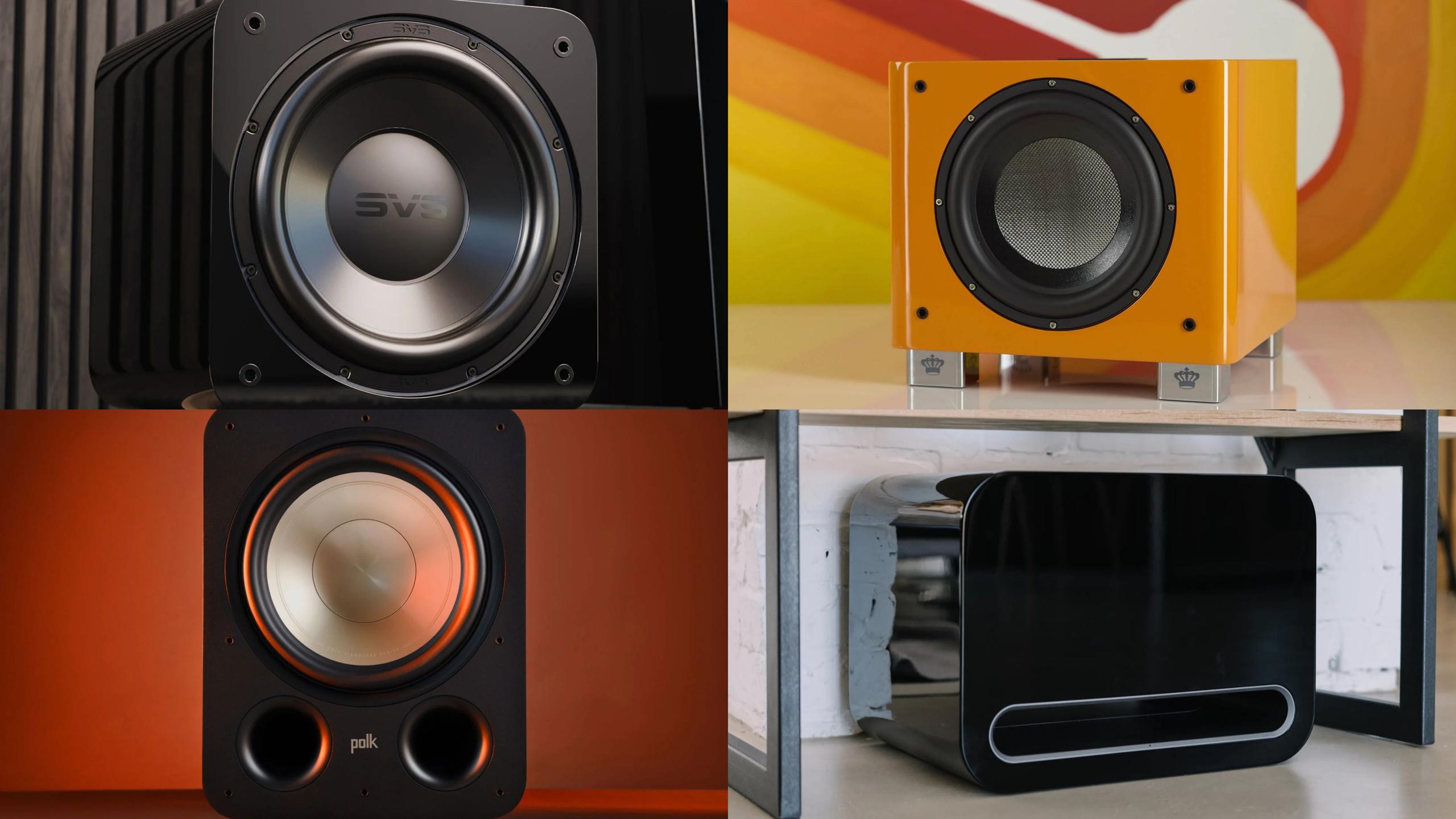
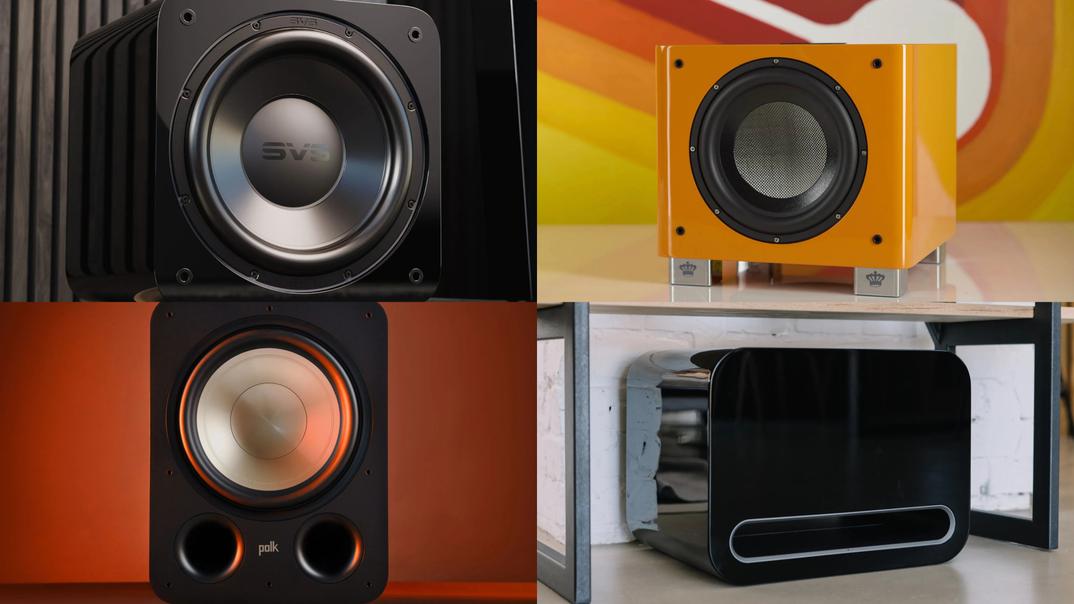
Let’s talk bass.
If you’ve got decent speakers but movies still feel a little flat and music doesn’t quite hit the way it should, you don’t need “better towers” — you need a subwoofer that actually pulls its weight.
Below is a lineup of 10 subs I’d happily put in my own systems in 2026, from $339 up to $1,999. I’ll walk through what each one does well, where it fits best, and the kind of listener or room it makes sense for.
Before we get into specific models, here’s the short version of what actually matters:
With that in mind, let’s go through the models, roughly from lowest to highest price.
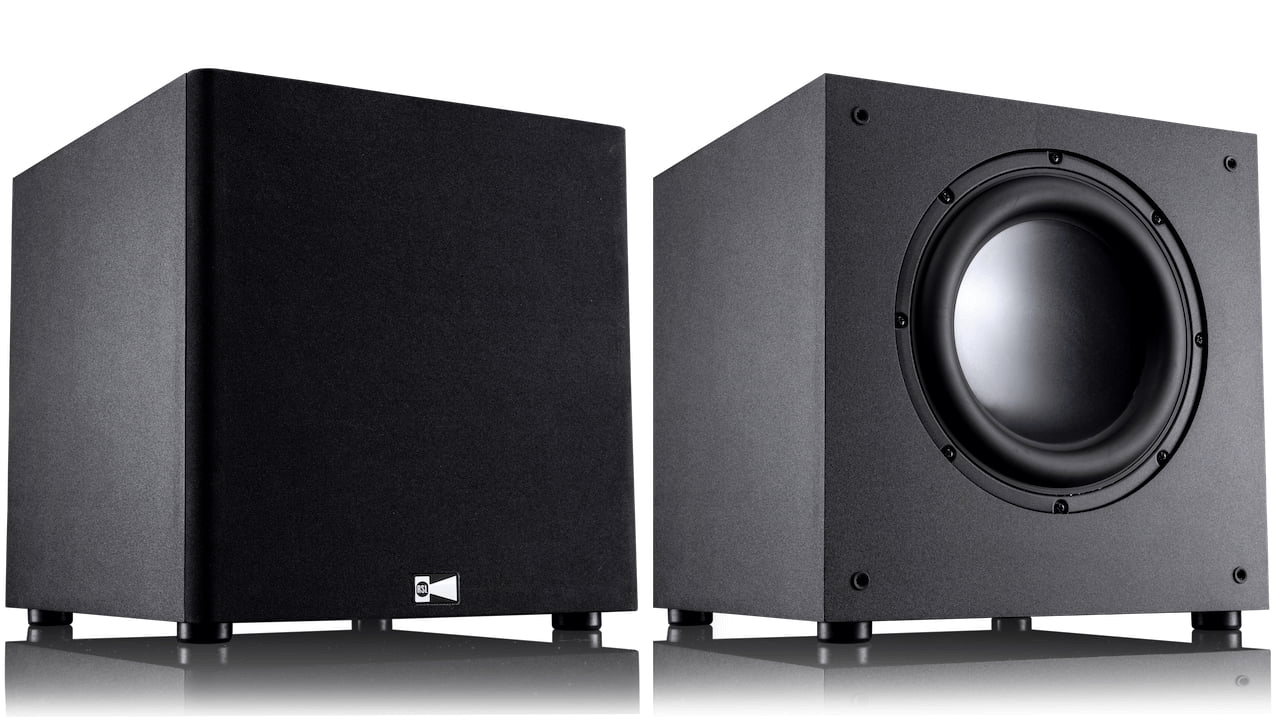
California-based RSL Speakers built its reputation on overachieving subs, and the Speedwoofer 10E is the poster child for “way better than the price suggests.” It uses a 10-inch driver and a 300-watt RMS amplifier (with peaks north of 800 watts) in a compact cabinet that’s very living-room-friendly.
Why I like it:
Best for:
Someone building their first serious 5.1 system on a budget, or upgrading from a cheap HT-in-a-box sub. Pair it with affordable bookshelves and you’ve got a legit little home theater.
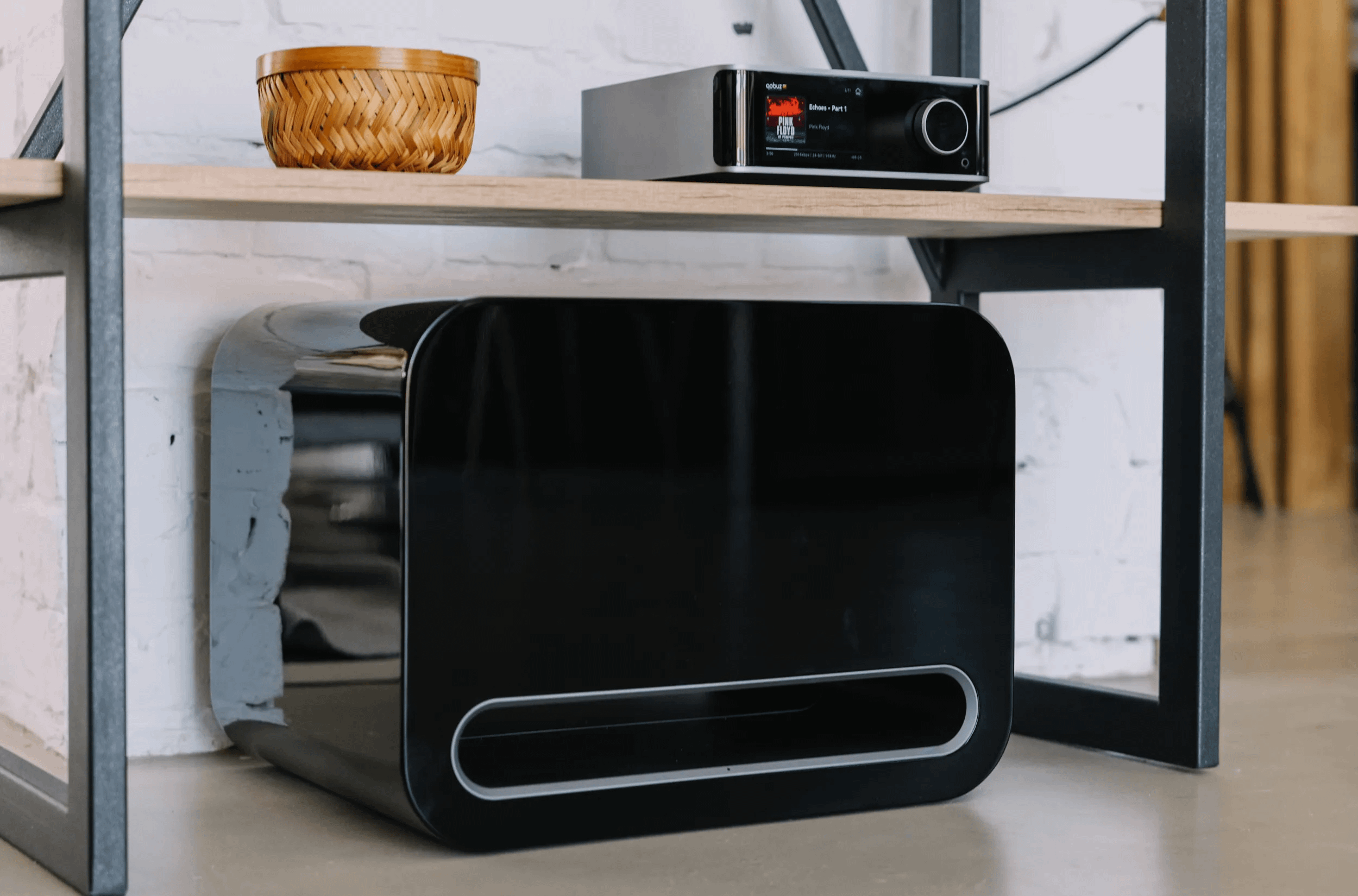
WiiM has been absolutely everywhere on the streamer side, and the Sub Pro basically does for bass what their streamers did for cheap network audio.
It’s an 8-inch, 250-watt smart subwoofer rated down to 25 Hz, with built-in Wi-Fi 6, Bluetooth 5.3, and AI RoomFit calibration.
Why I like it:
Best for:
Someone already invested in WiiM gear who wants simple, app-driven bass without getting into manual calibration, or a renter who wants wireless flexibility and modern connectivity.
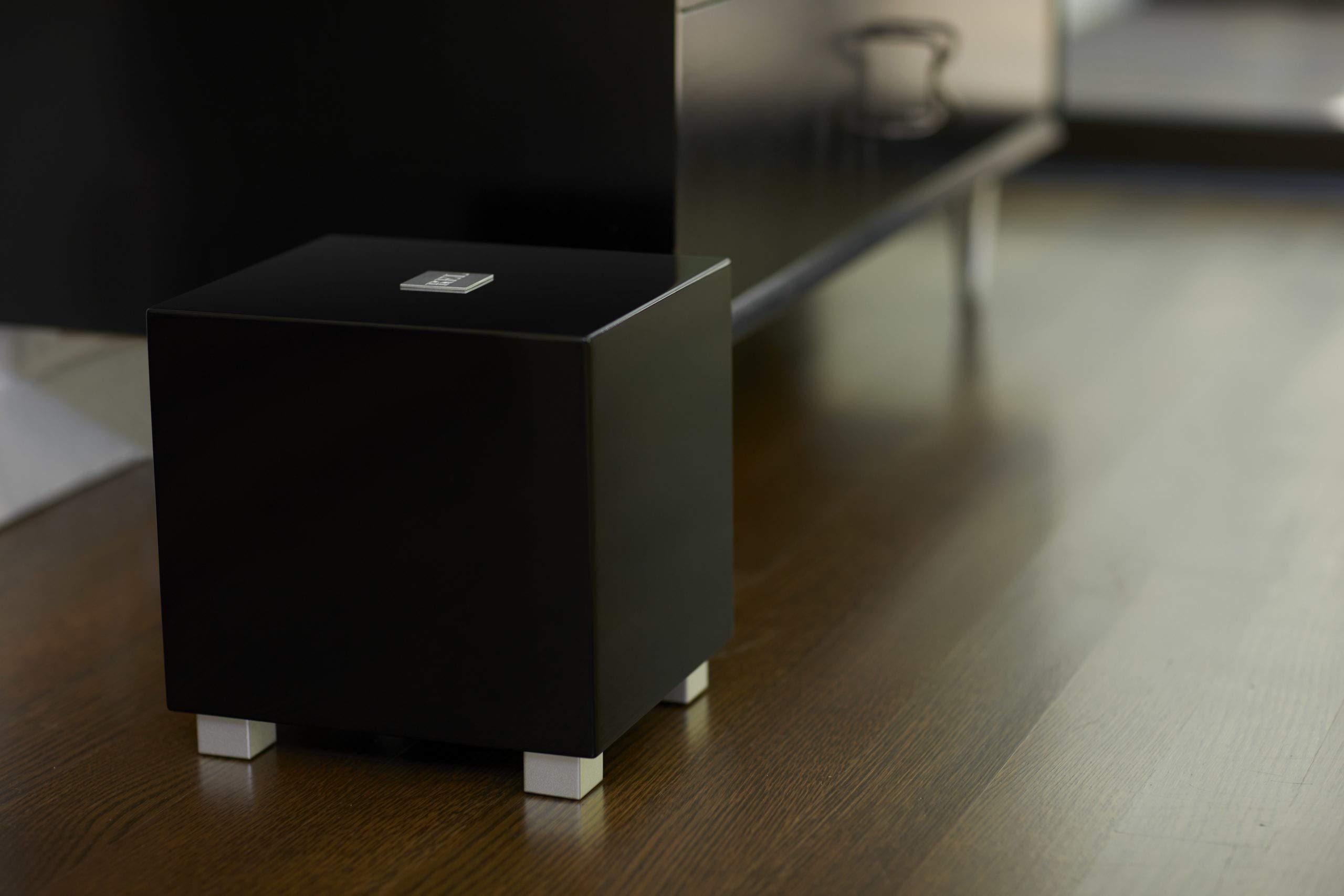
REL Acoustics basically lives for subs that disappear into two-channel systems. The Tzero MKIII is the baby of the line, a tiny sealed cube with a 6.5-inch long-throw driver and 100-watt Class D amp, rated to around 37 Hz in-room.
Why I like it:
Trade-offs:
This is not the one for shaking the foundation with action movies. Think “finesse and fill-in” rather than “explosions and earthquakes.”
Best for:
Desk setups, small living rooms, or hi-fi systems where you care more about musical integration and aesthetics than sheer output.
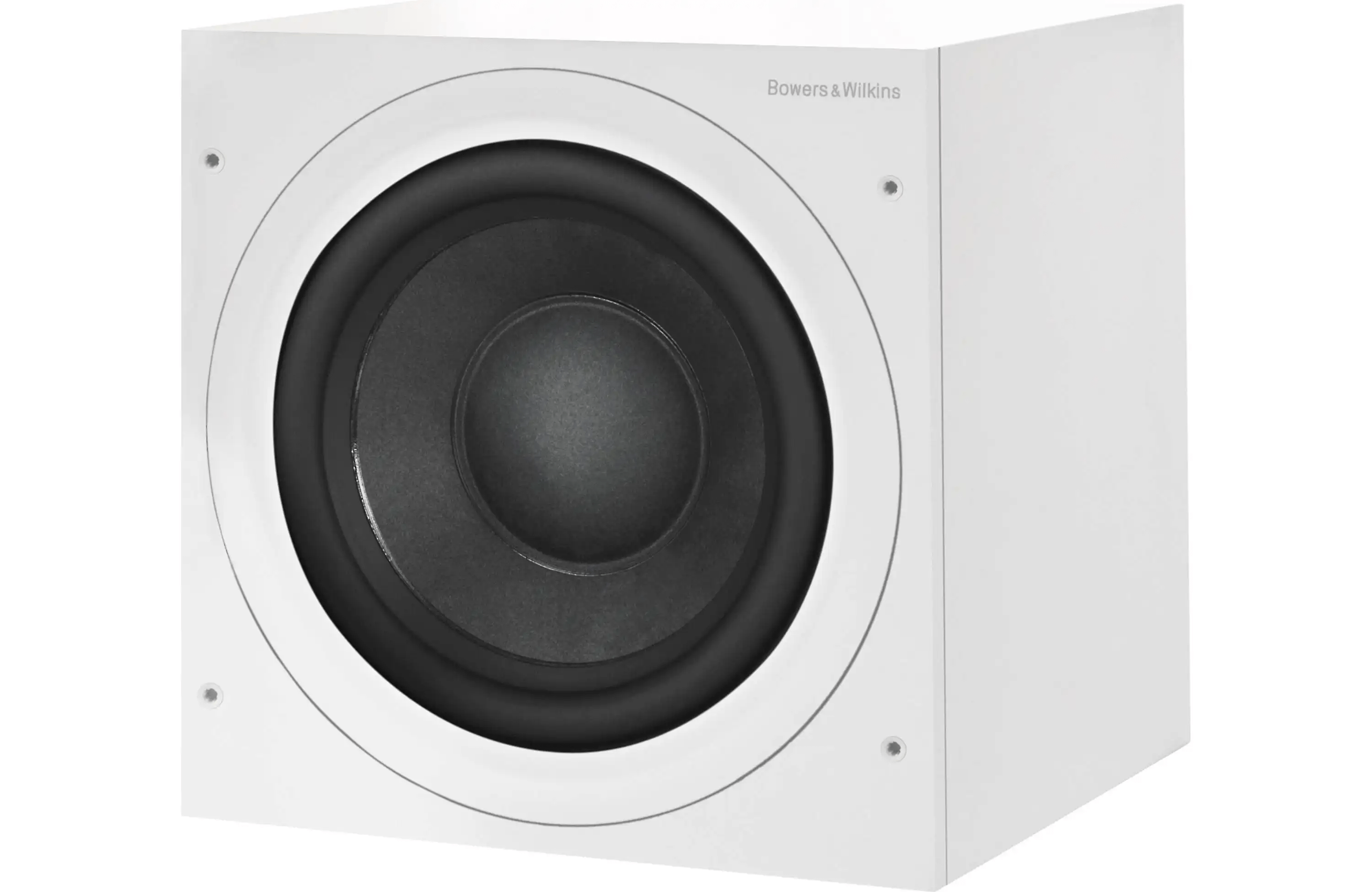
The ASW608 is the compact “mighty mini” sub from Bowers & Wilkins. It packs an 8-inch front-firing driver and 200-watt RMS amplifier into a cabinet that’s under a cubic foot in volume, aimed squarely at small to medium rooms.
Why I like it:
Trade-offs:
Like the REL Tzero, the ASW608 isn’t about extreme deep bass levels. It’s more of a “can’t tell it’s there until you turn it off” kind of sub, which is often exactly what you want in a hi-fi rig.
Best for:
Smaller media rooms, bedroom systems, or neat, minimalist hi-fi setups where the sub needs to be heard more than seen.
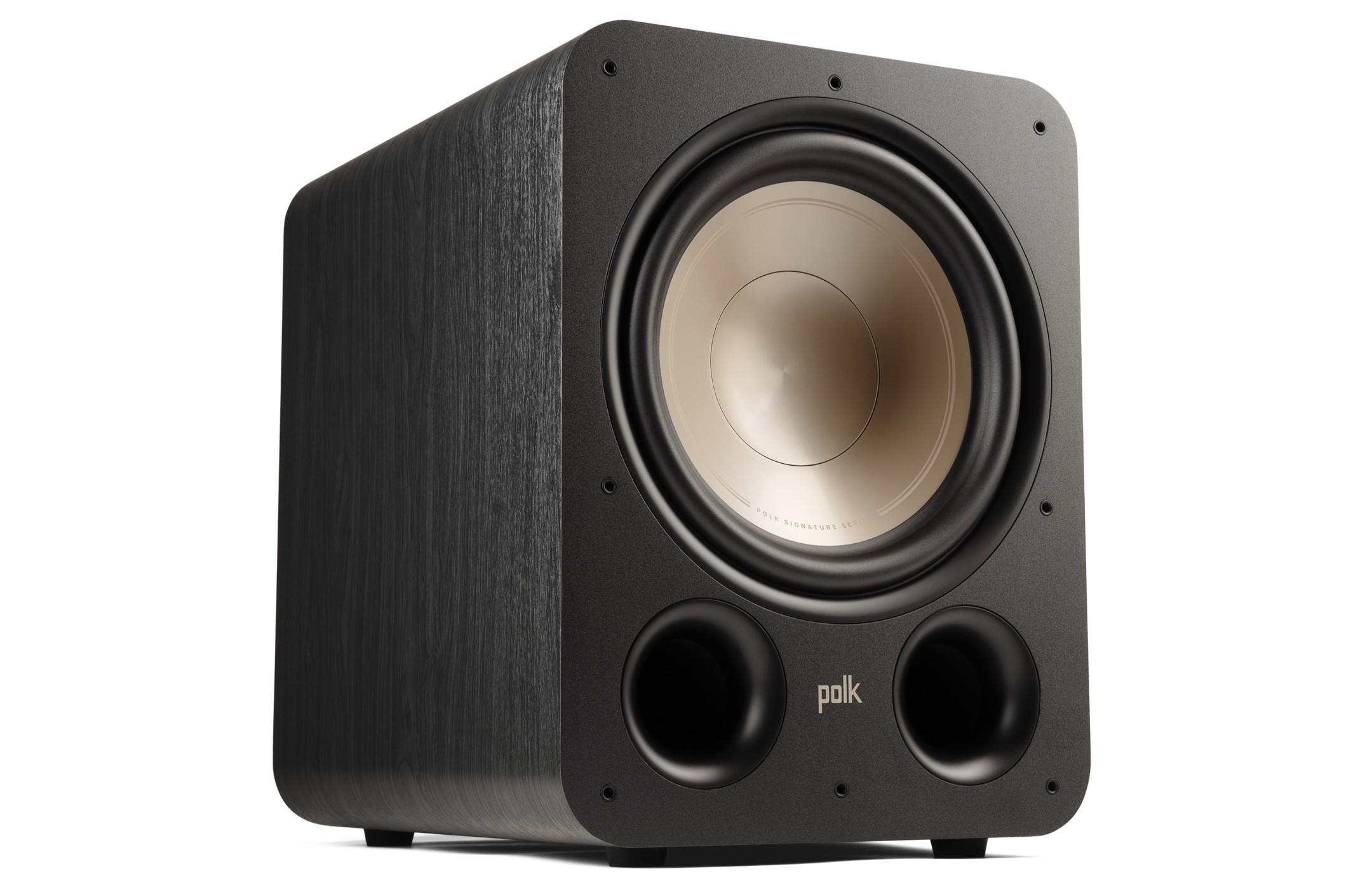
Polk Audio positioned the Signature Elite ES12 as the muscle sub for its Signature Elite speaker family — and it absolutely looks the part.
You get a 12-inch long-throw woofer, a 300-watt Class D amp, a front-firing port with Polk’s Power Port flare, plus Time-Smart Phase Control, which gives you much finer control over phase than the usual simple switch.
Why I like it:
Trade-offs:
It’s a big, heavy box, not something you casually slide around for placement experiments. And it doesn’t have app-based room correction like some competitors.
Best for:
People building a robust 5.1 / 7.1 system in a living room or dedicated media room who want one sub that can keep up with big mains and loud movie nights.
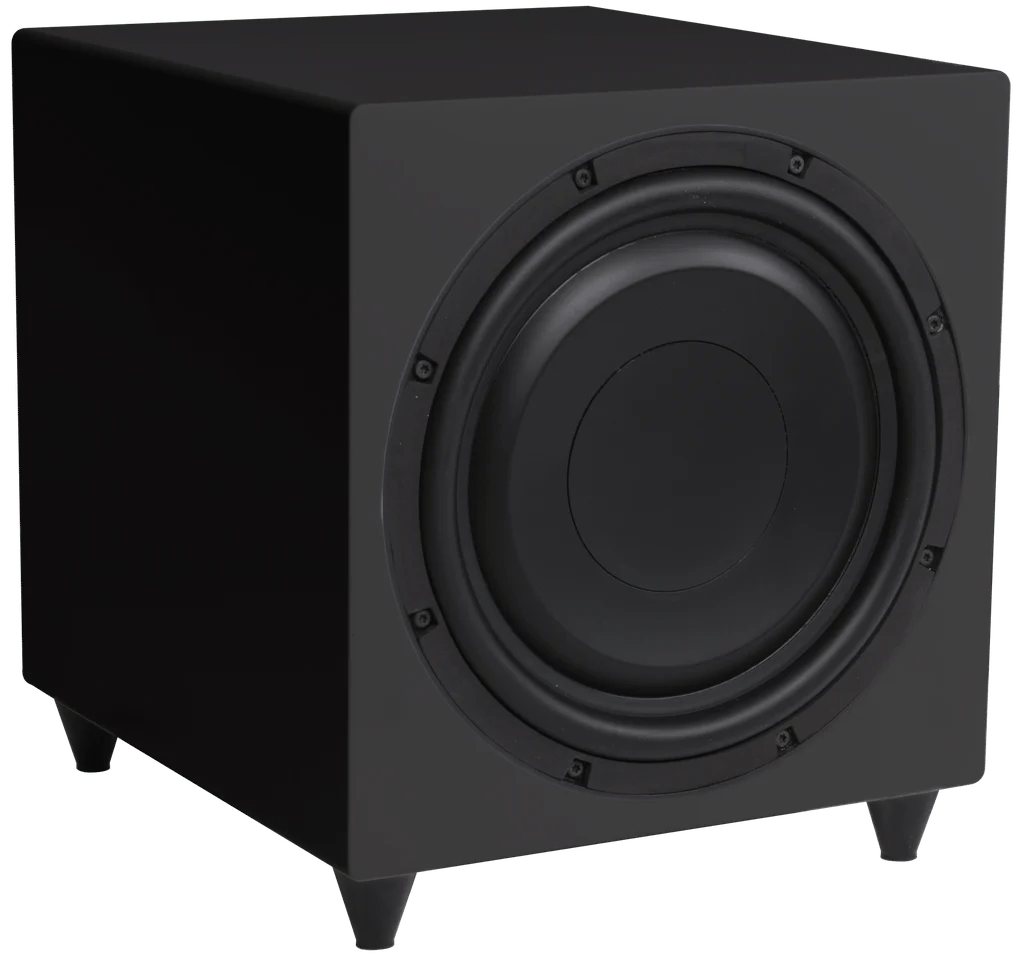
The 12-i is part of the Impression series from RBH Sound and takes a more classic audiophile approach: a 12-inch driver in a sealed enclosure, powered by a 350-watt amplifier.
Why I like it:
Trade-offs:
No fancy app control or built-in room correction — you’re relying on manual dialing-in and/or your AVR’s room EQ. And it’s more of a niche brand compared to Polk or SVS, so local demo options can be limited.
Best for:
Someone who leans hi-fi but still wants a sub that can handle home theater duties, and who prefers the sound of a sealed design over ported “boom.”
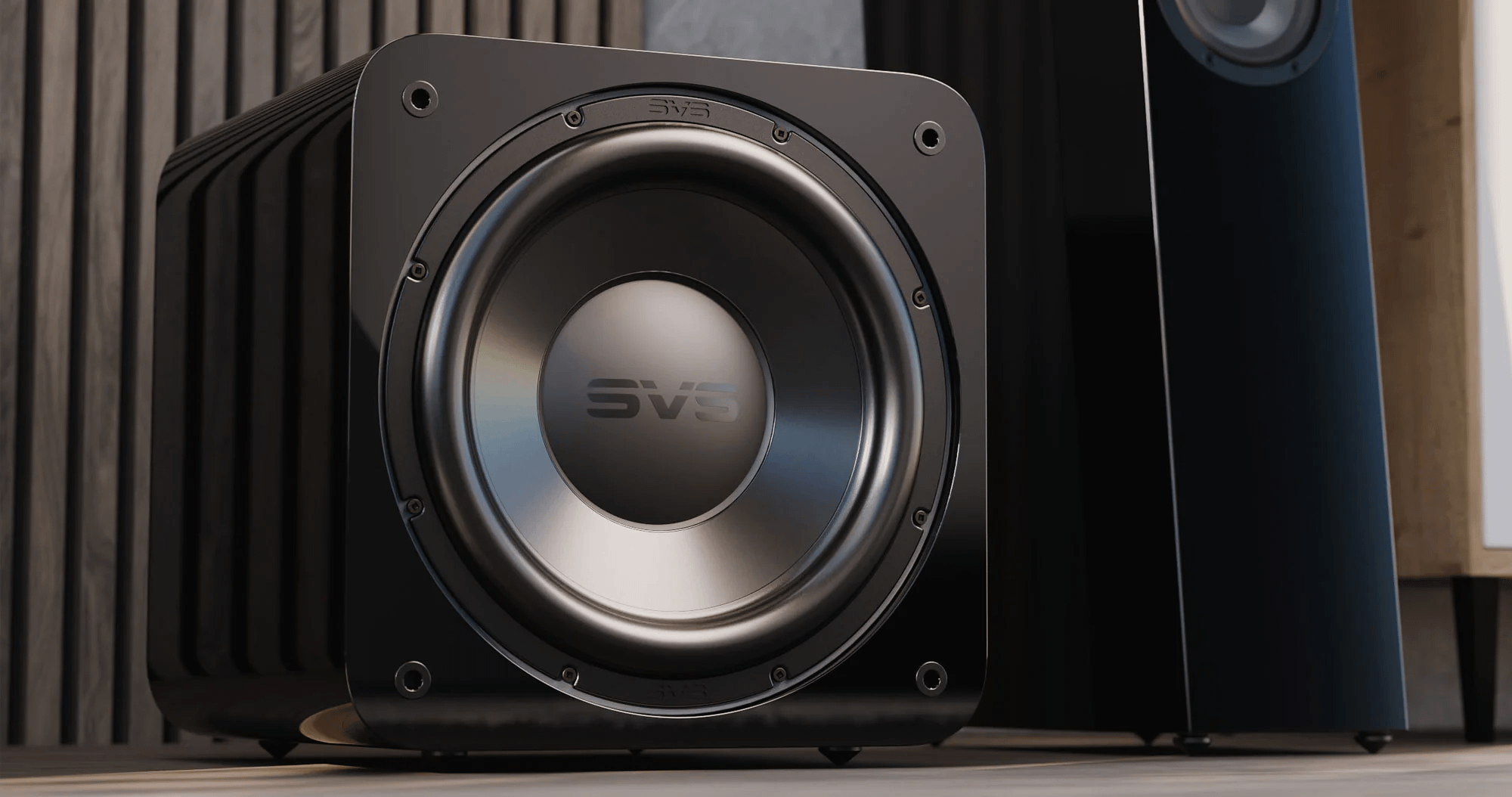
SVS launched the new 3000 R|Evolution series to bring some of its flagship tech down to a more attainable level. The SB-3000 R|Evolution is the sealed model with a 13-inch driver, 1,200-watt RMS (4,000+ watt peak) amp, and a rated frequency response down to 17 Hz (±3 dB).
Why I like it:
Trade-offs:
You’re paying a premium versus the budget picks, and to really exploit its low-frequency extension you’ll want a room and system that can keep up.
Best for:
Serious enthusiasts who want one sub that can do everything well, music, movies, gaming, without stepping into truly huge or expensive territory.
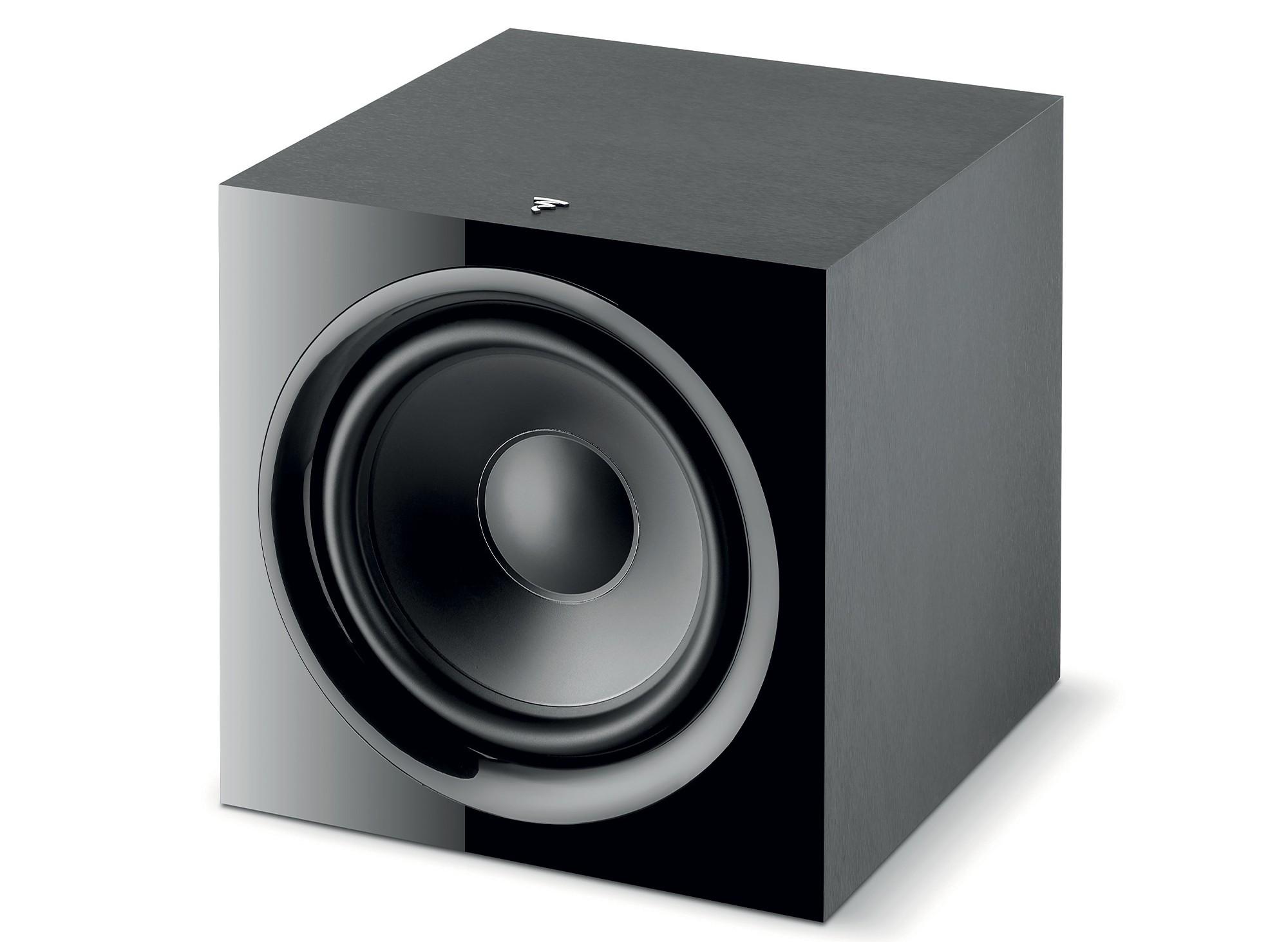
The Sub 600P is the heavy-hitting sealed sub from Focal, designed to complement its hi-fi and home-cinema ranges. It pairs a 12-inch Polyflex driver with a 600-watt Class D amp (300 watts RMS) in a sealed enclosure.
Why I like it:
Trade-offs:
No app control or smart features, and price-wise it’s nudging into territory where SVS and REL also compete aggressively.
Best for:
Focal owners, or anyone building a music-first system and then adding home theater on top of it, rather than the other way around.
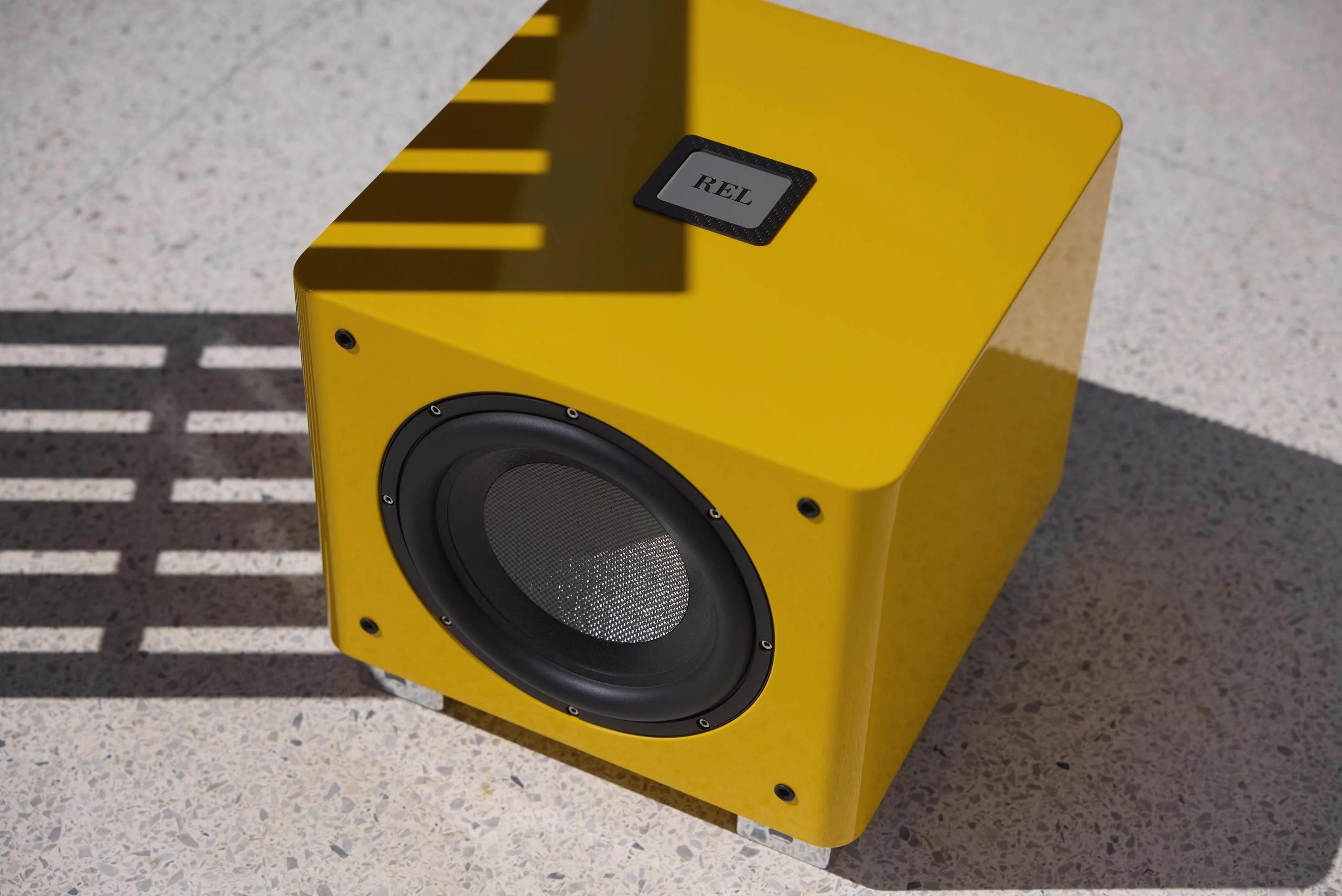
If the Tzero is REL’s “baby,” the T/9x SE is the dressed-up flagship of the T/x line, a front-firing 10-inch FibreCarbon driver plus a 10-inch down-firing passive radiator, powered by a 300-watt Class A/B amp, with in-room extension to around 27 Hz.
The Special Edition adds upgraded cosmetics and some subtle mechanical tweaks over the standard T/9x, making it feel more like a “final destination” sub in a high-end 2.1 or 5.1 setup.
Why I like it:
Trade-offs:
Not the cheapest way to get deep bass, and if your world is 100% home theater, there are options with more outright low-end grunt per dollar.
Best for:
Audiophile-leaning systems where aesthetics matter and you want that REL style of integration with high-end standmounts or floorstanders.
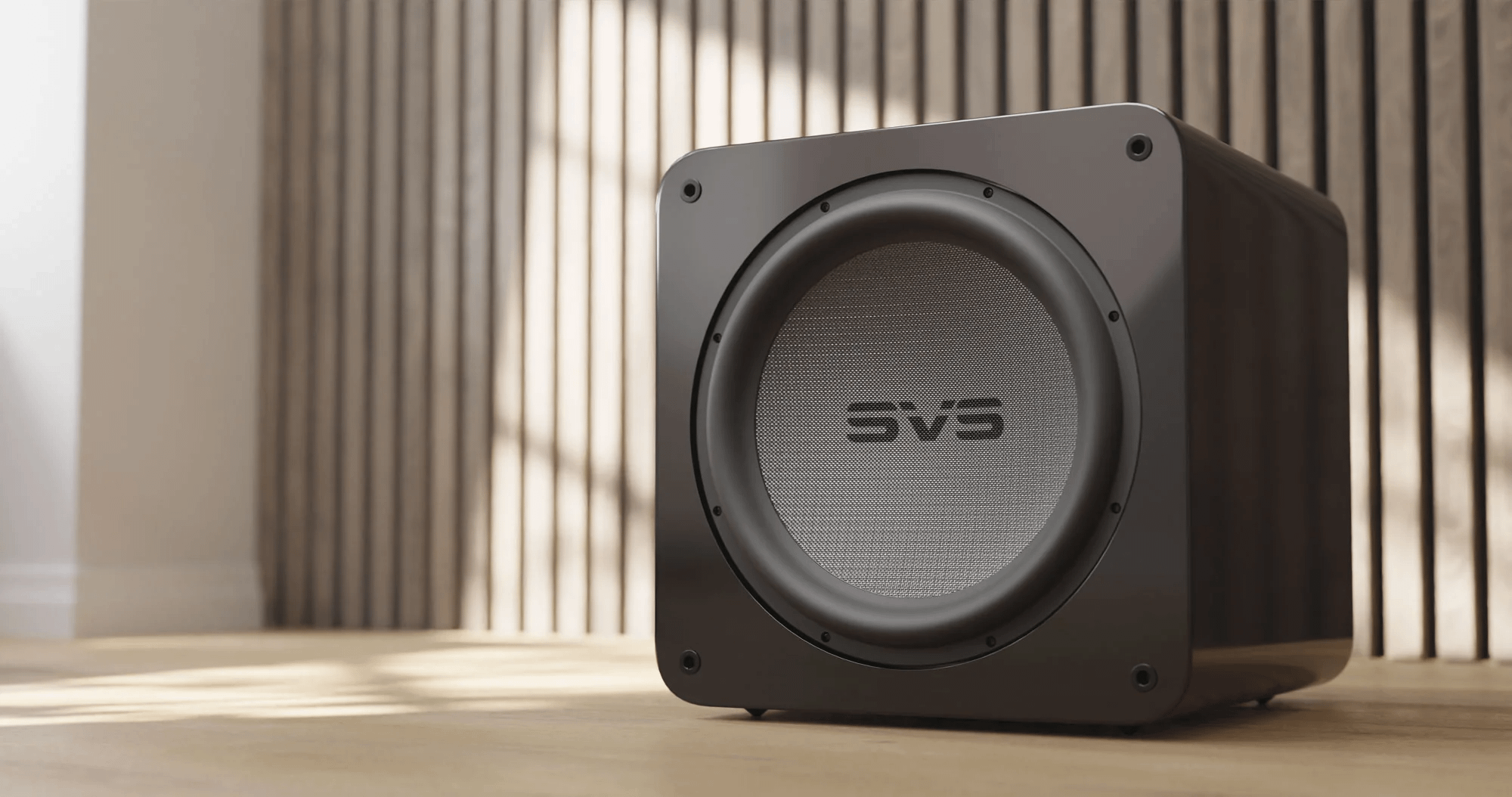
Think of the SB-5000 R|Evolution as the “no more excuses” sealed sub in SVS’s lineup. It uses a 15-inch high-excursion driver with dual edge-wound voice coils, driven by a 2,000-watt RMS (5,000+ watt peak) dual-monoblock Class D amplifier, with extension again down to about 17 Hz (±3 dB).
Why I like it:
Trade-offs:
Best for:
Dedicated theater rooms, large open-plan spaces, and bass-heads who want reference-level performance from a sealed sub without stepping into truly exotic pricing.
If you forced me to simplify it:
The good news: every model on this list is a solid choice if you match it to your room size, listening habits, and how much you actually want to shake the walls. From there, it’s mostly about how far down the rabbit hole you want to go... and how much your neighbors will tolerate.
Related Reading:




Privacy Policy
Terms and Conditions - Affiliate Policy
Home Security
© Copyright 2008-2026.
11816 Inwood Rd #1211, Dallas, TX 75244