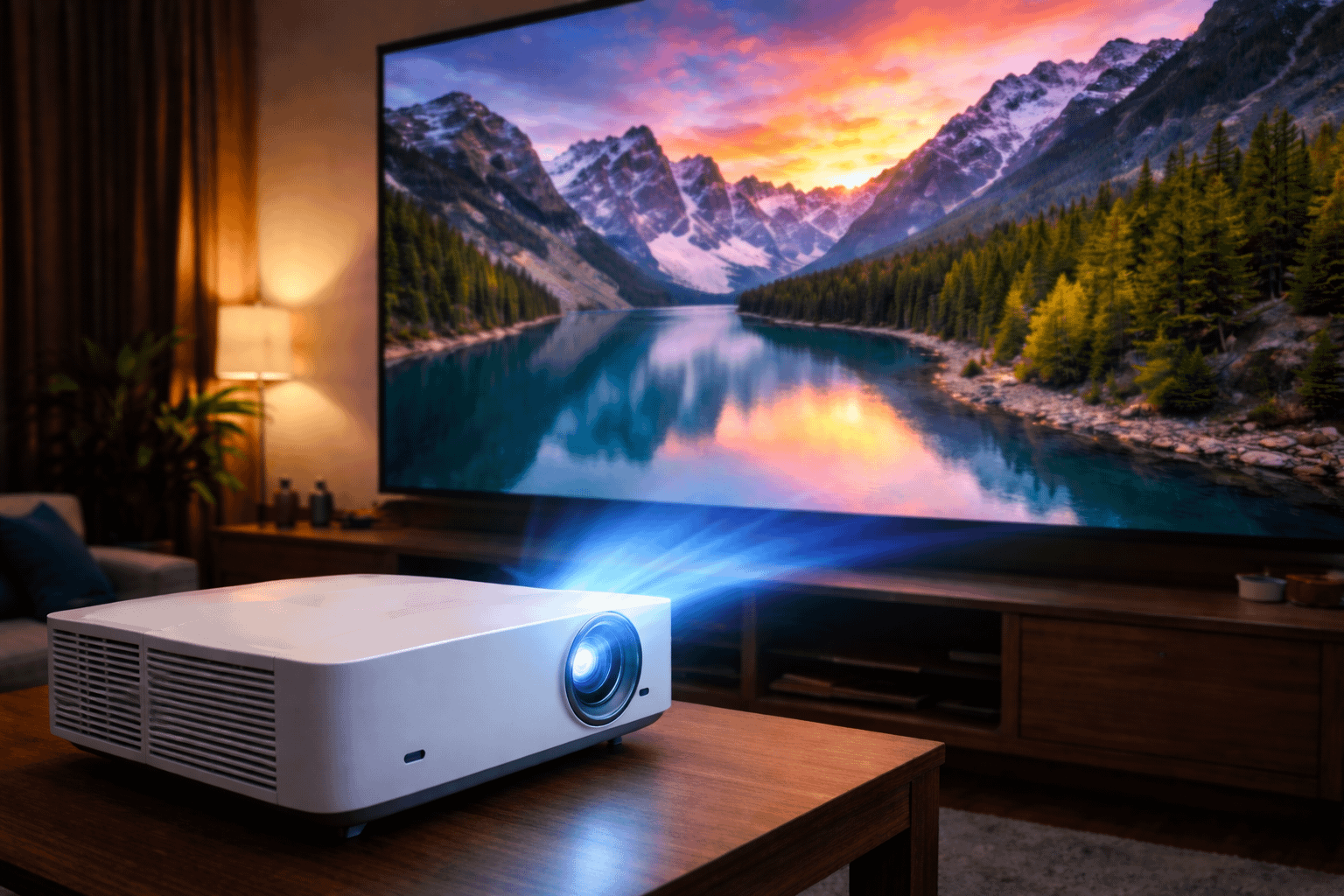
If you’ve been tracking projector releases lately (or you’ve simply walked past a demo and thought “okay, that’s way brighter than last year”), you’re not imagining it. A lot of the latest DLP-based projectors are showing up with real, noticeable brightness increases, the kind that changes how usable a projector is in a living room, on a bigger screen, or with HDR content.
It’s tempting to assume the jump is purely about the light source: “new laser, more lumens, done.” But there’s another big reason this is happening across multiple brands at the same time: Texas Instruments has been rolling out a new generation of DLP micromirror tech, commonly referred to in industry coverage as SST DMD (single springtip torsional DMD) alongside updated controllers.
That sounds like inside-baseball engineering (because it is), but the outcome is easy to understand: more efficiency, more usable brightness, and often better performance in areas people care about, like contrast and gaming responsiveness.
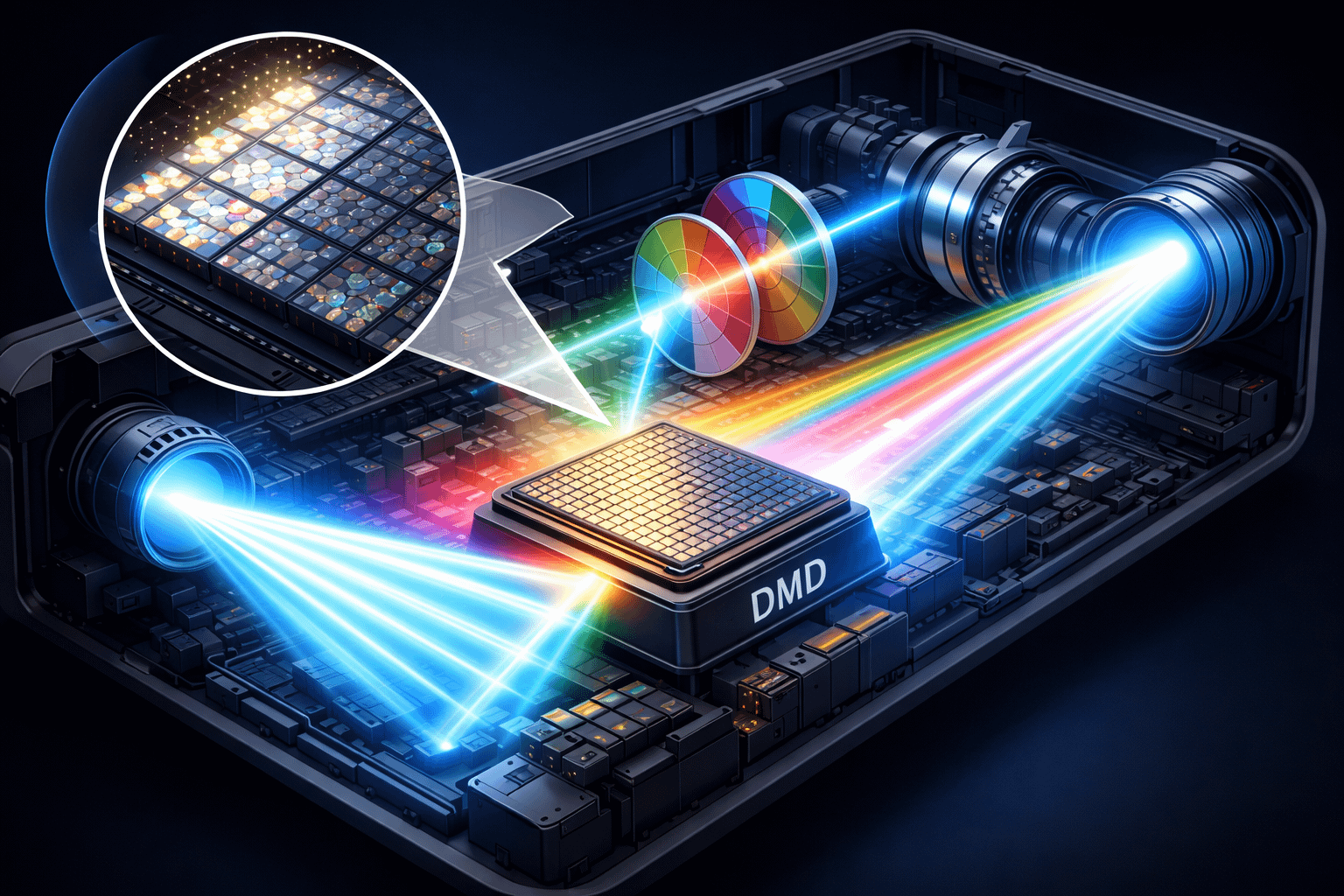
DLP projectors rely on a chip called a DMD (Digital Micromirror Device). It’s covered in microscopic mirrors—one per pixel—that tilt extremely fast to direct light toward the lens (on) or away from it (off). That mirror switching creates the image you see.
Here’s the important part: brightness isn’t only about how powerful the laser is. It’s also about how much of that light survives the trip through the optical system and how effectively the imaging chip can handle it without wasting it or throttling.
So when TI updates the DMD platform itself, it can have a ripple effect that shows up as brighter projectors across the entire market.
“SST” refers to a newer micromirror architecture used in the latest generation of DLP imaging chips. Rather than being a feature you turn on or off, it’s a foundational update to how the mirrors themselves are designed and how the DMD works with its controller.
In practical terms, this newer platform allows the DLP system to handle higher light levels more efficiently, switch mirrors more quickly, and maintain stability under heavier workloads. That combination opens the door to higher brightness, improved contrast behavior, and better responsiveness, without relying solely on a more powerful light source.
This is why SST isn’t something you’ll see listed as a picture mode or a bullet point on a retail box. It lives at the hardware level, shaping how the projector performs before any image processing or calibration comes into play. In other words, it’s not a tweak, it’s the engine room.
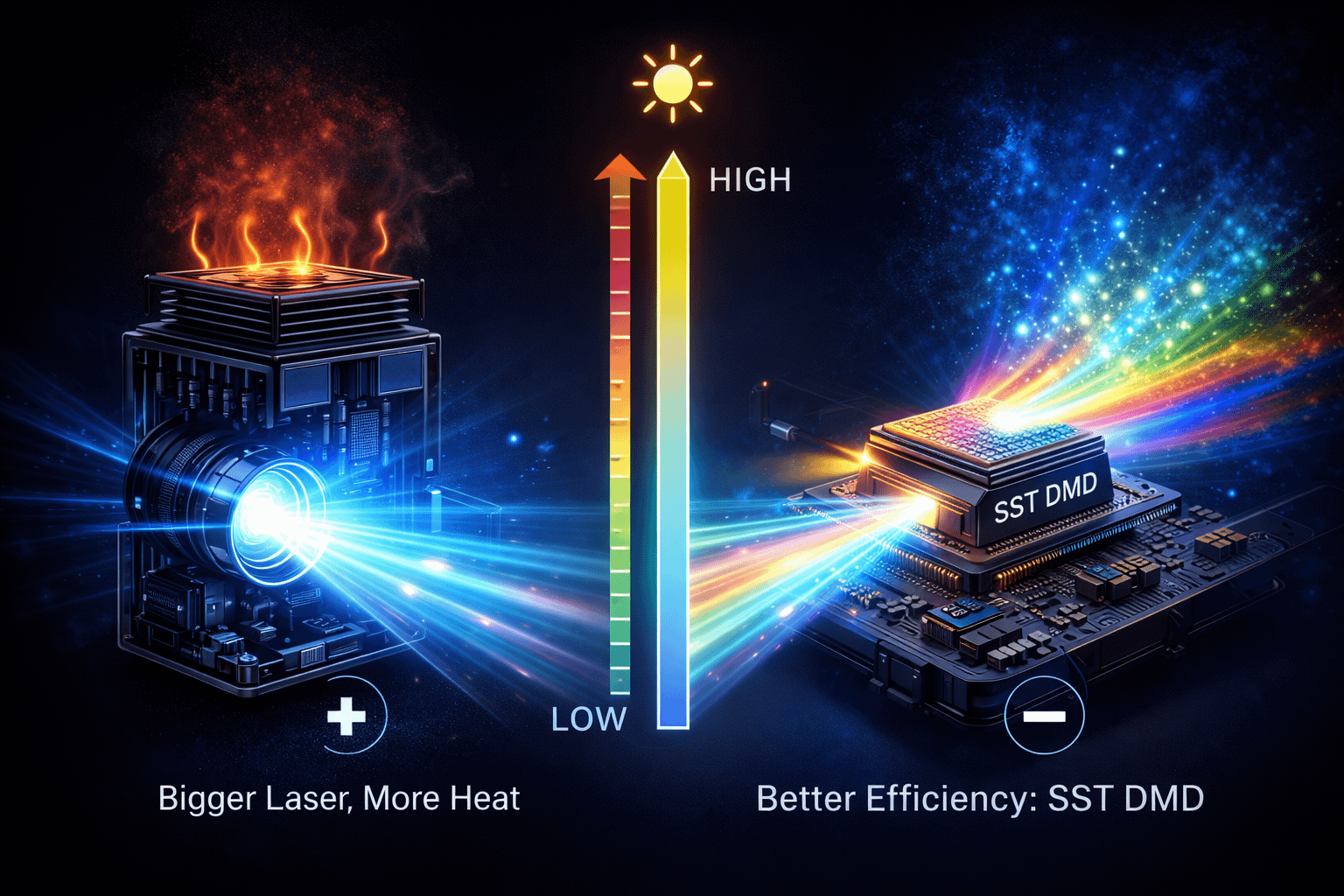
Projectors can get brighter in two broad ways:
SST DMD is largely about the second approach: improving how effectively the DLP system uses light. TI’s own materials describe SST chipsets enabling higher brightness without compromising color performance, largely due to high optical power density and the platform’s architecture.
That’s why you’re seeing brightness gains appear “everywhere” at once. When TI refreshes a core platform used across many brands, you get a market-wide wave instead of one company quietly improving their model.
Let’s be real: lumen numbers on spec sheets can be messy. Some projectors hit their highest brightness in modes you’d never want to watch a movie in. What matters is usable brightness—brightness that holds up with decent color and contrast.
This is why TI’s phrasing is interesting: the company isn’t only chasing raw lumens. They’re explicitly positioning SST as enabling more brightness without the usual tradeoffs to color performance.
In practice, that can show up as:
No, it won’t turn a projector into a mini-LED TV in daylight. But it can make the difference between “projector only at night” and “projector is usable most of the time.”
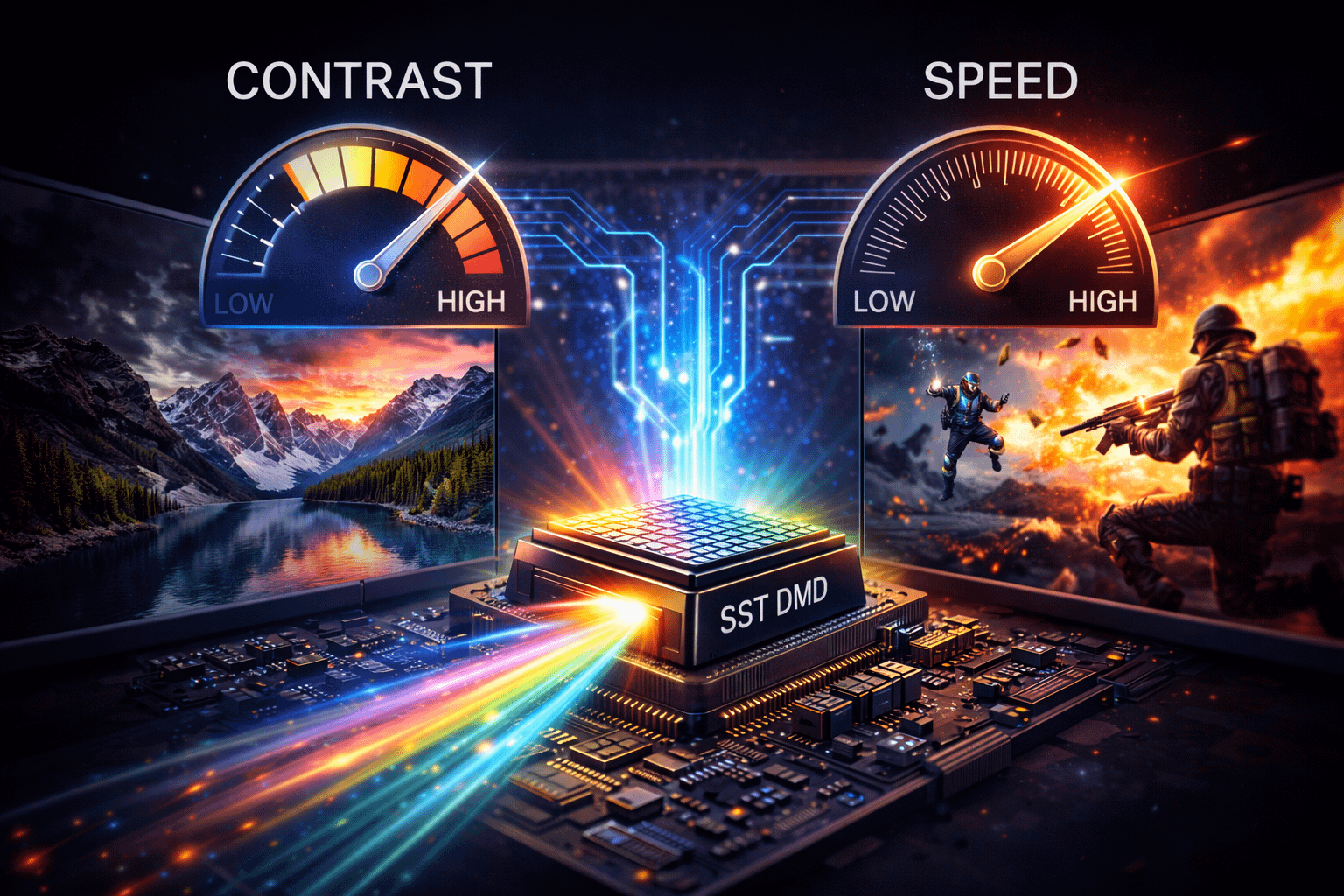
One reason SST matters is that it isn’t focused on a single spec. While the most obvious change people notice is higher brightness, the underlying platform update also affects how projectors handle contrast and motion.
By improving how efficiently the DLP system manages light and mirror switching, this newer DMD architecture can support better contrast behavior, both in terms of baseline contrast and how effectively dynamic light control is applied in darker scenes. The result is an image that doesn’t just look brighter, but also feels more balanced and less washed out when brightness ramps up.
There’s also a performance angle. Faster mirror switching and updated controller support open the door to lower input lag and smoother motion handling, which is why many newer DLP projectors are pairing brightness gains with features aimed at gamers, like high refresh rates and more responsive gameplay modes.
Taken together, this helps explain why many of the latest projectors don’t just look brighter on paper, but they feel more capable across movies, sports, and gaming, where contrast stability and responsiveness matter just as much as raw light output.
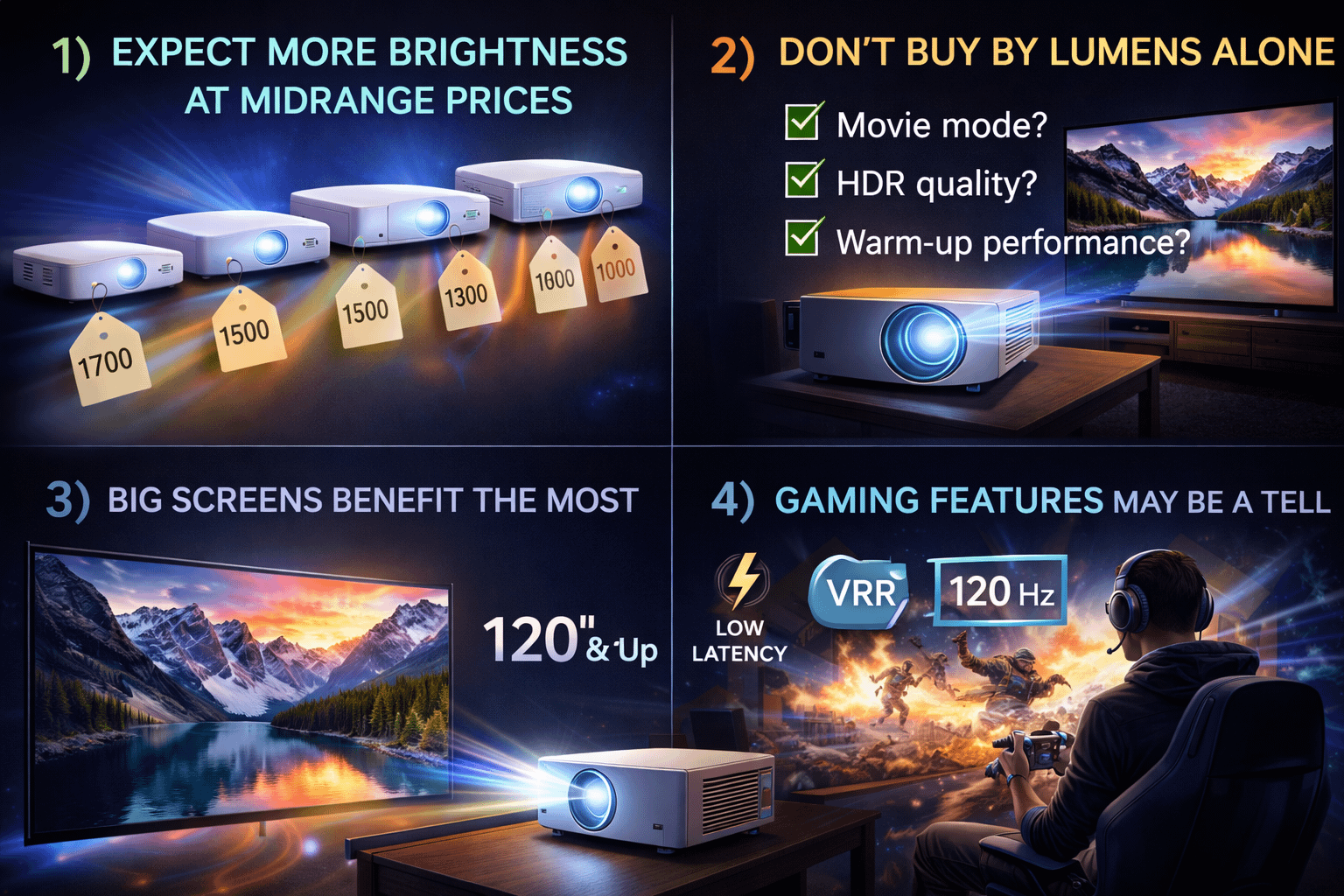
All of this chip-level talk is interesting, but it only matters if it helps you make a better buying decision. The good news is that you don’t need to understand micromirror architecture to benefit from it—you just need to know where to look and what questions to ask.
In short, brighter projectors are becoming easier to live with, but smart shopping still means looking beyond the headline specs and focusing on how a projector performs in real-world conditions.
A lot of people assume projector brightness jumps only happen when someone swaps in a more powerful laser. But the current wave of noticeably brighter DLP projectors is also being driven by a foundational update to the imaging chip platform itself.
TI’s newer SST DMD + controller direction is essentially about getting more useful light through the system, while also improving things like contrast behavior and responsiveness.
If you’ve been waiting for projectors to feel less “fragile” on bigger screens—or less dim when HDR kicks in—this is one of the behind-the-scenes reasons the latest generation is starting to look like a genuine step forward.
Related Reading:





Privacy Policy
Terms and Conditions - Affiliate Policy
Home Security
© Copyright 2008-2026.
11816 Inwood Rd #1211, Dallas, TX 75244