

When you're staring at a dirty pool wondering whether to grab the manual vacuum or invest in a robotic cleaner, you're facing one of those modern convenience decisions that can either save hours of weekly work or leave you frustrated with an expensive gadget that doesn't deliver. Robotic pool cleaners have evolved dramatically over the past few years, but not all robots are created equal—and the gap between budget and premium models has never been wider.
The world of robotic pool cleaners breaks down into three main camps: basic suction-only models, smart navigation units, and now AI-powered systems that can actually "see" your pool. At the time of writing, you'll find options ranging from a few hundred dollars to well over a thousand, but price alone doesn't tell the whole story about what you're actually getting for your money.
Before diving into specifics, it helps to understand what separates a good pool robot from a frustrating one. The most critical factors are navigation intelligence (how the robot moves around your pool), cleaning coverage (which surfaces it can actually clean), suction power and filtration quality, and the power source that determines runtime and convenience.
Navigation intelligence is perhaps the biggest differentiator. Basic models use what's essentially a "bump and go" approach—they move in random directions until hitting something, then change course. It's like watching a Roomba from 2005 wandering around your living room. Smart navigation robots use sensors to map your pool and follow more systematic patterns. The newest AI-powered models can actually identify different types of debris and hunt it down specifically.
Cleaning coverage determines which parts of your pool get attention. Some robots only clean floors, others can climb walls, and the most advanced models handle everything including the waterline where oils and scum accumulate. This matters because manual cleaning of missed areas defeats the purpose of automation.
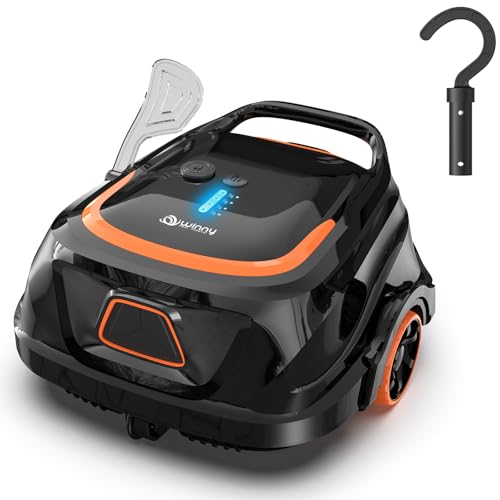
The WYBOT A1, released in 2023, represents the cordless pool cleaner approach to automation. WYBOT positioned this model as a solution for pool owners who wanted robotic convenience without the complexity or cost of premium systems. The key selling point is its completely wireless operation—no cords to manage, no need to find pool-side outlets, and the freedom to use it in above-ground pools where running power can be challenging.
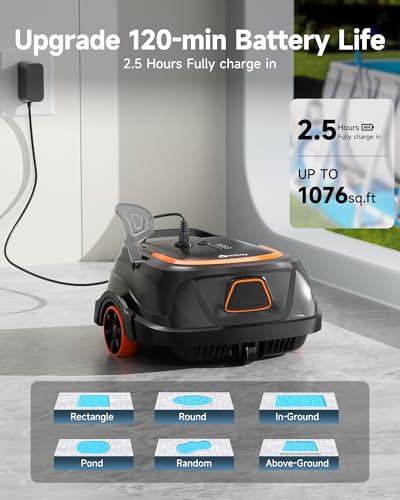
The A1 runs for up to 120 minutes on a single charge, which WYBOT claims is a 50-100% improvement over earlier cordless models that often died after an hour. The 2.5-hour charging time is genuinely impressive compared to older cordless cleaners that needed 6-7 hours to recharge. This fast-charge capability means you could theoretically run multiple cleaning cycles in a day if needed.
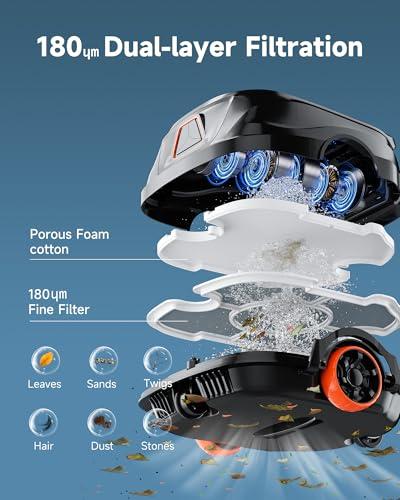
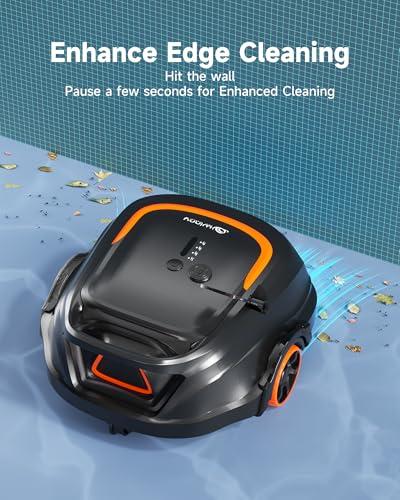
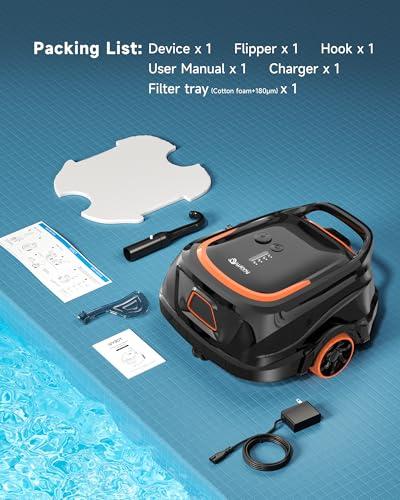
Where the A1 tries to punch above its weight is with "edge-enhanced cleaning"—a feature that makes the robot pause when it reaches pool walls to intensify suction along the edges. This addresses a common complaint with budget robots that they miss debris that accumulates around pool perimeters. The dual-layer filtration system combines a 180-micron mesh with cotton foam, which WYBOT claims increases filtration area by 70% compared to single-filter designs.
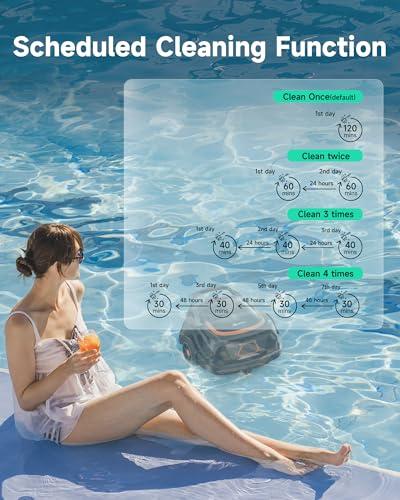
The robot includes cycle timer functionality that lets you schedule up to four cleaning sessions per week with different duration options. You can set it for one 120-minute deep clean, two 60-minute sessions, three 40-minute runs, or four 30-minute maintenance cycles. This scheduling happens through the unit itself, not an app, keeping things simple but limiting remote control options.
However, our research into user experiences reveals significant limitations. The A1 is strictly a floor-only cleaner designed for perfectly flat pool bottoms with slopes under 15 degrees. It won't climb walls or clean waterlines, and it lacks the brushes needed for effective scrubbing on textured surfaces. The navigation is essentially random—it bounces around until the battery runs out or the timer expires.
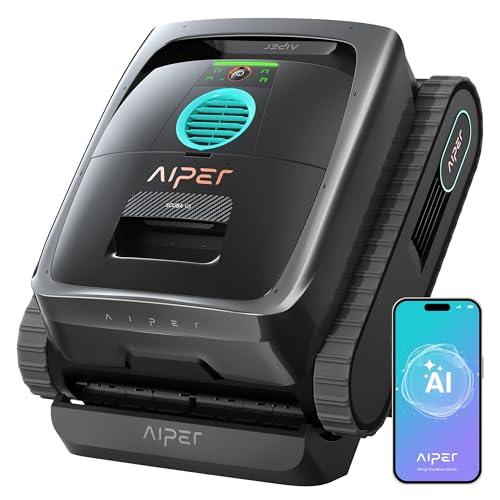
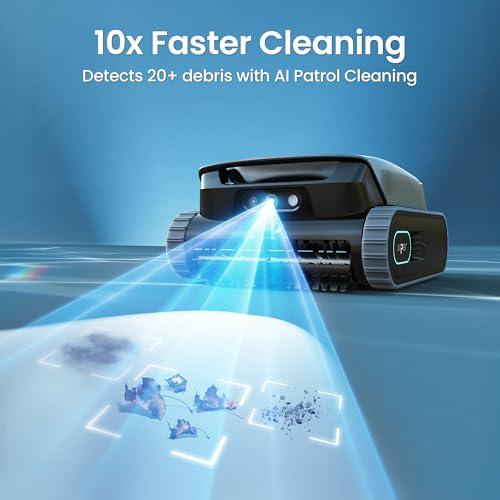
The Aiper Scuba V3, launched in 2024, represents what happens when pool cleaning meets modern artificial intelligence. Aiper built this robot around their "Cognitive AI Navium" system—essentially computer vision that can identify over 20 different types of pool debris within a 2-meter detection range. This isn't just marketing speak; the robot actually "sees" leaves, sand, dirt, toys, and other debris, then plans efficient routes to collect everything.
The VisionPath™ system uses what's called dToF (direct Time-of-Flight) sensors combined with AI computer vision. Think of it like giving the robot eyes and a brain that can process what it sees in real-time. Instead of wandering randomly, the Scuba V3 scans your pool, identifies problem areas, and creates a systematic cleaning plan. Aiper claims this results in cleaning speeds up to 10 times faster than traditional random-pattern cleaners.
What sets the V3 apart is its comprehensive coverage approach. While the WYBOT A1 only handles floors, the Scuba V3 cleans floors, walls, and waterlines. The JetAssist™ waterline cleaning technology is particularly noteworthy—it scrubs horizontally along the waterline at 1.5 meters per second to remove the oils, sunscreen residue, and grime that make pools look neglected even when the water is chemically balanced.
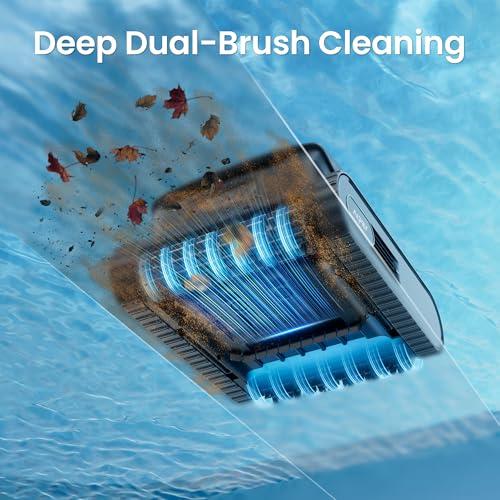
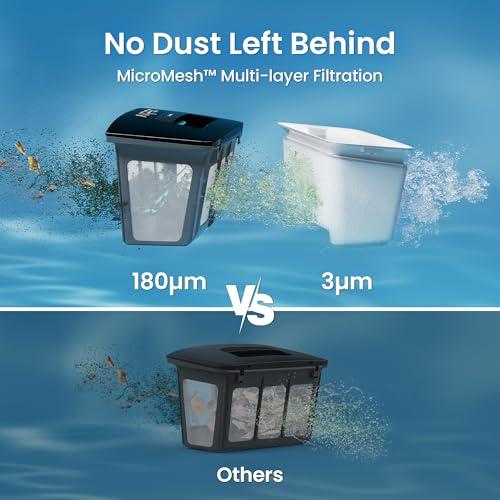
The robot packs 4800 GPH (gallons per hour) of suction power delivered through dual brushes, compared to the A1's brush-free suction-only approach. The MicroMesh™ filtration system captures particles as small as 3 microns—for perspective, most bacteria are 1-5 microns, so this is extremely fine filtration. The 3.5-liter debris basket is also notably larger and features single-click emptying.
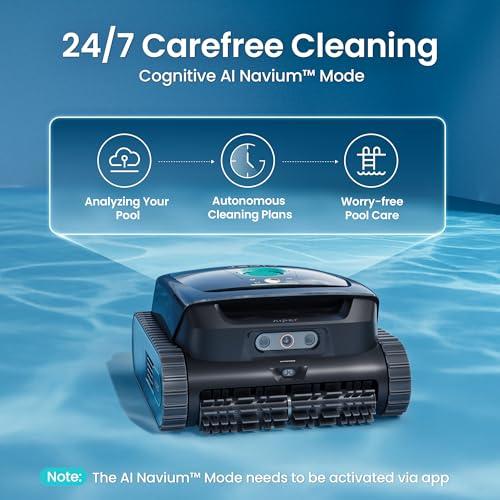
Perhaps most impressively, the Scuba V3 offers true autonomous operation through its Cognitive AI Navium™ mode. You can set it up once, and it will analyze your pool size, local weather patterns, and cleaning history to create optimized weekly cleaning plans. It runs these plans automatically for up to seven days without any input from you—it's the closest thing to "set it and forget it" pool maintenance available.
When evaluating pool robots, the most important performance metrics are cleaning effectiveness (how much debris gets removed), coverage completeness (whether all surfaces get attention), and operational efficiency (how much time and energy the process requires).
Based on our analysis of expert reviews and user feedback, the performance gap between these models is substantial. The WYBOT A1 struggles with systematic coverage due to its random navigation. Users report having to manually guide the robot to ensure complete floor cleaning, which defeats the automation purpose. The lack of brushes also limits its effectiveness on textured pool surfaces where debris gets embedded.
The Aiper Scuba V3, by contrast, excels at comprehensive cleaning efficiency. The AI vision system means it doesn't waste time re-cleaning already spotless areas or missing debris-heavy zones. Expert reviews consistently praise its ability to complete thorough pool cleaning in significantly less time than traditional random-pattern robots.
However, there's an important caveat about pool compatibility. The A1 works only in flat-bottom pools—it can't handle slopes, drop-offs, or complex pool shapes. The V3 adapts to varied pool geometries and can clean features like tanning ledges and benches, though it may not handle very specialized pool shapes perfectly.
Runtime comparison reveals interesting trade-offs. While the A1 offers respectable 120-minute cordless operation, users often report needing multiple cycles for complete cleaning due to the inefficient random navigation. The V3's 170-190 minute runtime, combined with smart path planning, typically completes comprehensive cleaning in a single cycle.
User feedback reveals stark differences in day-to-day ownership experience. WYBOT A1 owners frequently mention frustration with the robot's tendency to get stuck or miss large areas. The cordless convenience is appreciated, but many report reliability issues—units failing after just a few uses appears to be a common problem based on retailer review patterns.
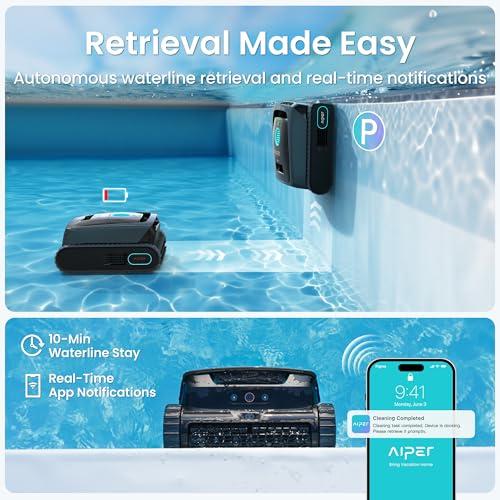
Aiper Scuba V3 owners report a fundamentally different experience. The robot's ability to notify you via app when cleaning is complete and automatically position itself at the waterline for easy retrieval eliminates the guesswork. The waterline cleaning capability, in particular, receives consistent praise—it's addressing a maintenance task that most pool owners either neglect or find tedious to do manually.
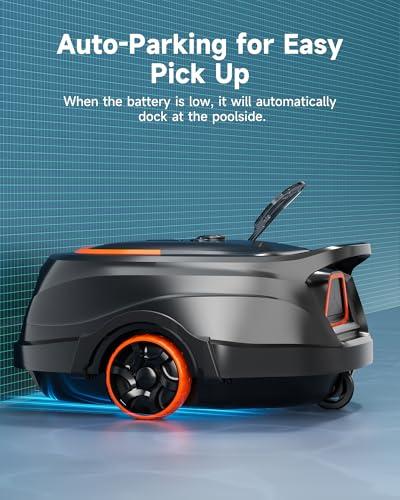
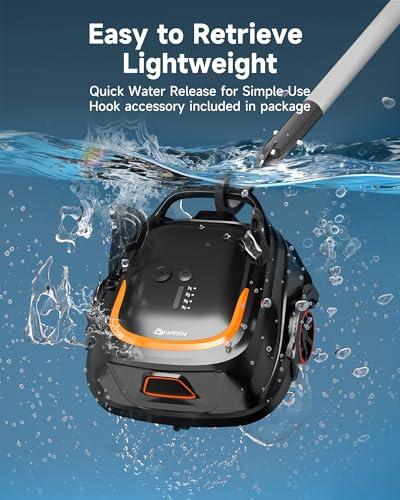
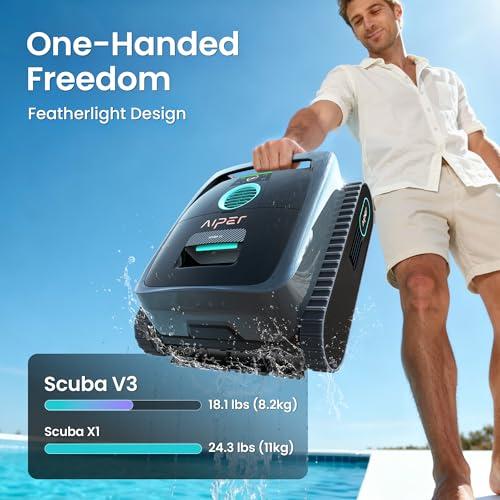
The weight difference also impacts daily use. At 15 pounds, the A1 is certainly manageable, but the V3 at 18.1 pounds isn't significantly heavier while offering much more capability. Both robots feature self-parking systems, but the V3's waterline positioning is more practical than the A1's edge parking.
The pool cleaning industry has undergone rapid technological advancement since 2020. Early cordless models suffered from poor battery life, weak suction, and primitive navigation. The WYBOT A1 represents solid improvement in cordless technology—the fast charging and decent runtime address major pain points from earlier generations.
However, the Aiper Scuba V3 represents a generational leap forward rather than incremental improvement. The integration of computer vision and AI processing power into pool cleaning is genuinely innovative. While other manufacturers have added basic smart features, Aiper's approach of teaching the robot to actually identify and hunt specific debris types is unique in the market.
This technology gap has implications for long-term value. The A1's simpler technology means fewer potential failure points, but it also means you're locked into current performance limitations. The V3's AI system can potentially improve through software updates—Aiper has already pushed updates that enhance debris recognition and path planning efficiency.
At the time of writing, these robots occupy very different price segments, reflecting their different approaches to pool cleaning. The WYBOT A1 targets budget-conscious buyers who want robotic convenience without premium pricing. For small, simple pools where perfect cleaning isn't critical, it offers reasonable value.
The Aiper Scuba V3 commands premium pricing but delivers genuinely premium performance. When you calculate the time savings from truly autonomous operation plus the comprehensive cleaning that eliminates manual touch-up work, the higher initial cost becomes more justifiable for many pool owners.
Consider the total cost of ownership beyond purchase price. The A1's reliability concerns from user reports suggest potential replacement or repair costs. The V3's more robust construction and comprehensive warranty support (including advance replacement service) provide better long-term value protection.
The decision between these robots ultimately depends on your pool characteristics, cleaning expectations, and budget priorities.
Choose the WYBOT A1 if you have a small, perfectly flat above-ground or in-ground pool under 800 square feet, prioritize cordless convenience over cleaning thoroughness, have budget constraints that make premium models unrealistic, and don't mind occasionally guiding the robot manually for complete coverage.
Choose the Aiper Scuba V3 if you want comprehensive automated pool maintenance, have a standard residential pool requiring wall and waterline cleaning, value your time highly and want true "set it and forget it" operation, can justify premium pricing for cutting-edge AI technology, or prioritize long-term reliability and support.
For most pool owners, the Scuba V3 represents the better long-term investment despite the higher upfront cost. The AI-powered cleaning, comprehensive coverage, and autonomous operation deliver the hands-off pool maintenance that robotic cleaners promise but budget models rarely achieve. The A1's cordless convenience is appealing, but its significant limitations make it suitable only for very specific use cases.
The pool robot market is rapidly evolving, with AI and computer vision becoming standard features in premium models. While the A1 offers solid cordless technology, the V3 represents the current state-of-the-art in intelligent pool cleaning—and likely the direction the entire industry is heading.
| WYBOT A1 | Aiper Scuba V3 |
|---|---|
| Navigation Intelligence - Determines cleaning efficiency and coverage quality | |
| Random navigation with basic infrared sensors and edge-enhanced cleaning | AI computer vision with VisionPath™ adaptive planning, detects 20+ debris types within 2-meter range |
| Cleaning Coverage - What surfaces get cleaned automatically | |
| Floor only, flat surfaces under 15° slope | Complete floor, wall, and waterline cleaning with JetAssist™ horizontal scrubbing |
| Power Source - Affects convenience vs performance trade-offs | |
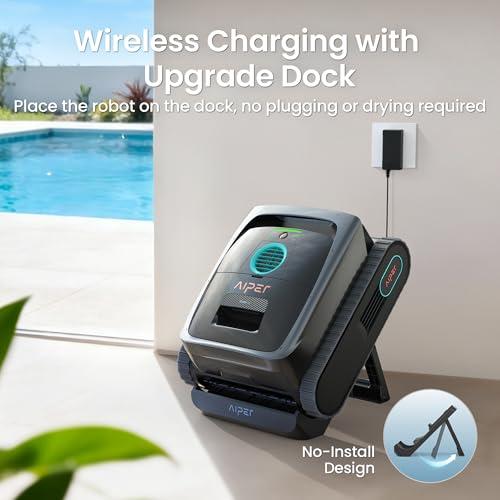
| Cordless with 120-minute runtime, 2.5-hour fast charging | Corded with 170-190 minute cycles, wireless charging dock included |
| Suction Power - Raw cleaning strength for debris removal | |
| Dual-motor suction only, no brushes | 4800 GPH with dual-brush scrubbing system |
| Filtration Quality - Determines water clarity after cleaning | |
| Dual-layer 180μm mesh + cotton foam | MicroMesh™ multi-layer down to 3 microns with 3.5L debris basket |
| Pool Size Compatibility - Maximum effective cleaning area | |
| Up to 1,076 sq ft (above-ground pools to 33' round) | Up to 1,600 sq ft (standard residential pools) |
| Automation Level - How hands-off the cleaning process becomes | |
| Basic cycle timer with 4 weekly scheduling options | Cognitive AI Navium™ mode with 7-day autonomous planning based on pool conditions |
| Weight & Handling - Affects daily use convenience | |
| 15 lbs with compact cordless design | 18.1 lbs with featherlight one-handed retrieval system |
| Smart Features - App connectivity and advanced controls | |
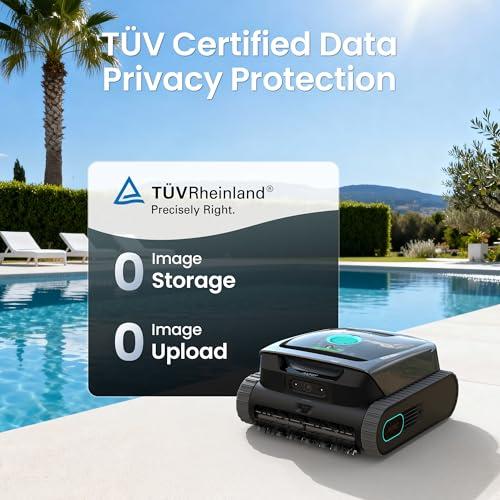
| LED status display, basic Bluetooth app (limited functionality) | Full app control with real-time alerts, waterline retrieval notifications, TÜV-certified privacy |
| Build Quality & Support - Long-term reliability considerations | |
| 2-year warranty, concerning user reports of early failures | 2-year warranty with advance replacement, 24/7 support, 20 global service centers |
The WYBOT A1 is specifically designed for above-ground pools up to 33 feet round and works well for smaller installations. However, the Aiper Scuba V3 offers superior cleaning performance even in smaller pools due to its AI navigation system that ensures complete coverage without missing spots.
The WYBOT A1 operates completely cordless for 120 minutes, offering convenience and portability without needing poolside electrical outlets. The Aiper Scuba V3 uses a corded design that provides unlimited runtime and consistent power for more thorough cleaning cycles.
No, the WYBOT A1 only cleans pool floors and cannot climb walls or clean waterlines. The Aiper Scuba V3 provides comprehensive cleaning of floors, walls, and waterlines using specialized JetAssist™ technology for complete pool maintenance.
The Aiper Scuba V3 features advanced AI computer vision that identifies debris and creates efficient cleaning paths, while the WYBOT A1 uses random navigation that may miss areas or clean the same spots repeatedly, making the V3 significantly more effective.
The WYBOT A1 offers flexible cycle times from 30-120 minutes depending on your scheduling preference, but may require multiple cycles for complete coverage. The Aiper Scuba V3 typically completes thorough cleaning in 170-190 minutes with its systematic AI-guided approach.
The Aiper Scuba V3 handles pools up to 1,600 square feet with comprehensive floor, wall, and waterline cleaning. The WYBOT A1 covers up to 1,076 square feet but only cleans flat floor surfaces, making the V3 better suited for larger or more complex pool shapes.
The WYBOT A1 uses a dual-layer system with 180μm mesh and cotton foam for basic debris capture. The Aiper Scuba V3 features MicroMesh™ filtration down to 3 microns with a larger 3.5L debris basket for superior water clarity.
The WYBOT A1 has basic Bluetooth connectivity with limited app functionality, while the Aiper Scuba V3 offers comprehensive app control with real-time notifications, cleaning status updates, and autonomous scheduling features.
The Aiper Scuba V3 provides truly autonomous operation with its AI Navium™ mode that can run for 7 days without user input. The WYBOT A1 requires more hands-on management and may need manual guidance to ensure complete pool coverage.
The WYBOT A1 only works on flat pool bottoms with slopes under 15 degrees and cannot handle complex pool shapes. The Aiper Scuba V3 adapts to varied pool geometries including tanning ledges, steps, and different surface textures.
Both the WYBOT A1 and Aiper Scuba V3 include 2-year warranties, but the V3 offers advance replacement service, 24/7 support, and 20 global service centers for more comprehensive coverage and faster issue resolution.
The WYBOT A1 provides budget-friendly cordless convenience for simple cleaning needs, while the Aiper Scuba V3 delivers premium AI-powered performance with comprehensive coverage that justifies its higher cost through superior cleaning results and time savings.
We've done our best to create useful and informative comparisons to help you decide what product to buy. Our research uses advanced automated methods to create this comparison and perfection is not possible - please contact us for corrections or questions. These are the sites we've researched in the creation of this article: bestbuy.com - thepoolfactory.com - roboticreviews.com - wybotpool.com - youtube.com - poolzoom.com - poolwarehouse.com - bestbuy.com - thepoolnerd.com - poolsupplyunlimited.com - youtube.com - eztestpools.com - youtube.com - iopool.com - homedepot.com - wybotpool.com - youtube.com - blogs.aiper.com - youtube.com - youtube.com - youtube.com - aiper.store - youtube.com - youtube.com - pocnetwork.net - youtube.com - aiper.com - geardiary.com - youtube.com - arsa.technology - ces.tech - aiper.com - piscinarium.com

Privacy Policy
Terms and Conditions - Affiliate Policy
Home Security
© Copyright 2008-2026.
11816 Inwood Rd #1211, Dallas, TX 75244