

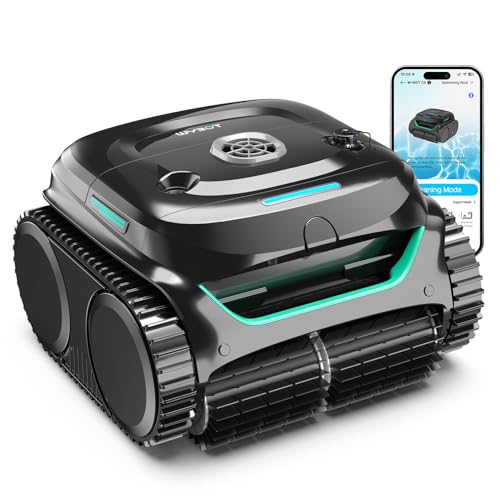
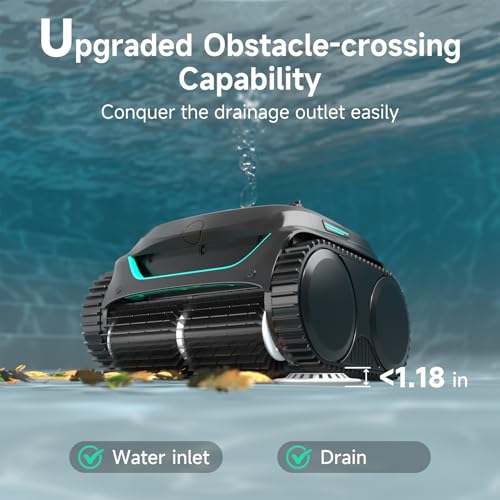
Cordless robotic pool cleaners have transformed how we maintain our pools, eliminating the frustration of tangled cords and the need to drag heavy equipment around your deck. But with this convenience comes important trade-offs that every pool owner should understand before making a purchase.
When WYBOT released the A1 around 2021, it represented an affordable entry into cordless pool cleaning technology. The C2, launched in 2022, built upon those foundations with significant upgrades that address many of the A1's limitations. Both cleaners share WYBOT's cordless philosophy, but they target very different user needs and budgets.
Before diving into the specifics, let's establish what separates good cordless pool cleaners from disappointing ones. The most critical factors are runtime (how long the battery lasts), suction power (measured in gallons per hour or GPH), filtration effectiveness (what size particles it can capture), and navigation intelligence (whether it cleans systematically or randomly).
Unlike corded models that can run indefinitely with consistent power, cordless cleaners must balance battery life against cleaning performance. More powerful suction drains batteries faster, creating an engineering challenge that manufacturers solve differently. The WYBOT A1 takes a conservative approach, prioritizing longer runtime over raw power, while the C2 attempts to deliver both through smarter power management.
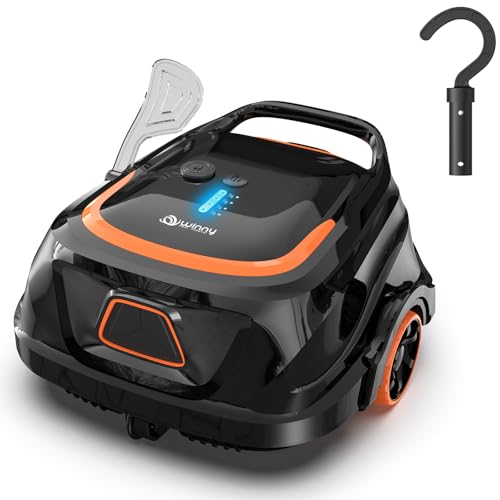
The most fundamental difference between these models is what they actually clean. The A1 is strictly a floor cleaner, designed for flat-bottom pools with minimal slopes. This isn't necessarily a dealbreaker—many pool owners do most of their manual cleaning on walls anyway—but it does mean you're getting half a solution.
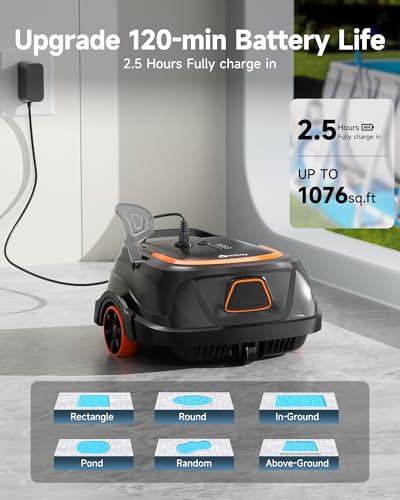
The A1 covers up to 1,076 square feet, which works well for most above-ground pools and smaller in-ground installations. However, its inability to climb walls or clean the waterline (where oils and debris often accumulate) means you'll still need to break out the brush and manual vacuum for complete maintenance.
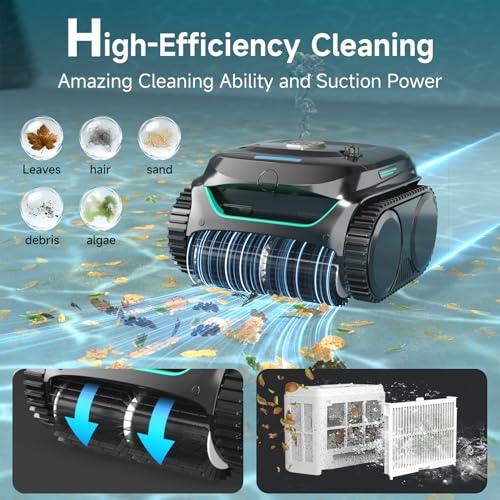
In contrast, the C2 delivers full-pool cleaning across floors, walls, and waterlines. It handles up to 2,152 square feet—double the A1's coverage—and works effectively on various surface types including tiles, concrete, vinyl, and fiberglass. The wall-climbing capability isn't just a nice-to-have feature; it's essential for maintaining proper water chemistry and preventing algae buildup in areas where circulation is naturally weaker.
This difference becomes particularly important for in-ground pools with deep ends, steps, or curved walls. The A1 will simply ignore these areas, while the C2 navigates them systematically.
Battery technology remains the Achilles' heel of cordless pool cleaners, and both WYBOT models handle this challenge differently. The A1 offers up to 120 minutes of continuous runtime with a relatively quick 2.5-hour recharge time—a significant improvement over earlier cordless models that required 6-7 hours to charge.
However, real-world runtime often falls short of advertised claims, especially in pools with heavy debris loads or when the battery ages. User reports suggest the A1 frequently operates for 60-90 minutes rather than the full 120 minutes, particularly when working harder to navigate obstacles or when suction power is maximized.
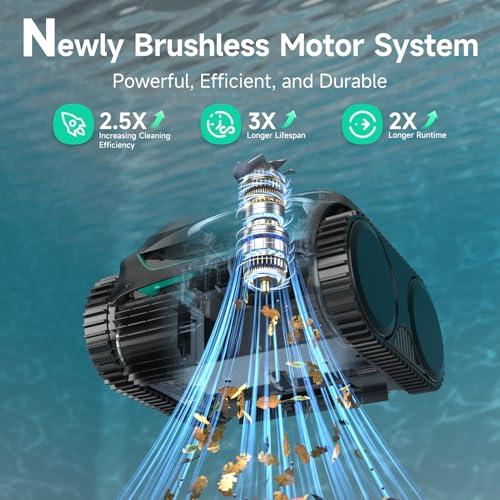
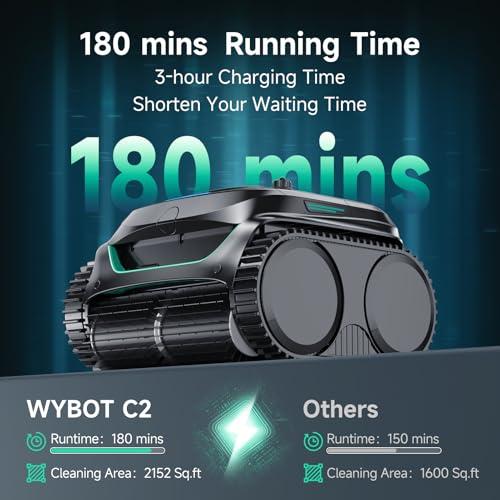
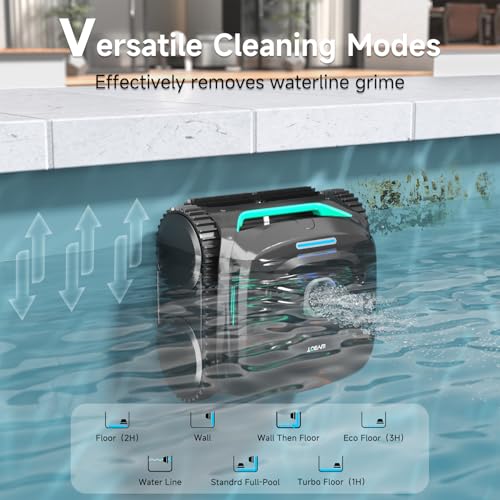
The C2 extends runtime to 180 minutes in Eco Mode, but here's where it gets interesting: it offers seven different cleaning modes that adjust power consumption based on need. Eco Mode maximizes battery life for routine maintenance, while Turbo Mode delivers maximum suction for heavily soiled pools but reduces runtime significantly. This flexibility allows you to match the cleaner's performance to your pool's current condition rather than accepting a one-size-fits-all approach.
The charging time difference is notable too. While the A1 recharges in 2.5 hours, the C2 requires 3-3.5 hours due to its larger battery capacity. In practice, this means planning your cleaning schedule around charging cycles, especially for larger pools that might need multiple sessions.
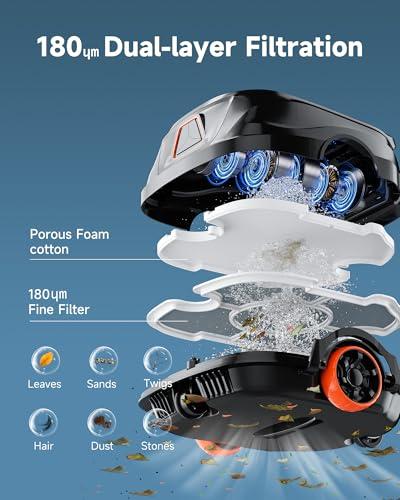
Filtration technology reveals another significant performance gap between these models. The A1 uses a dual-layer system combining a 180-micron mesh filter with cotton foam, which WYBOT claims increases filtration area by 70% compared to single-filter designs. This setup handles most visible debris like leaves, dirt, and sand effectively.
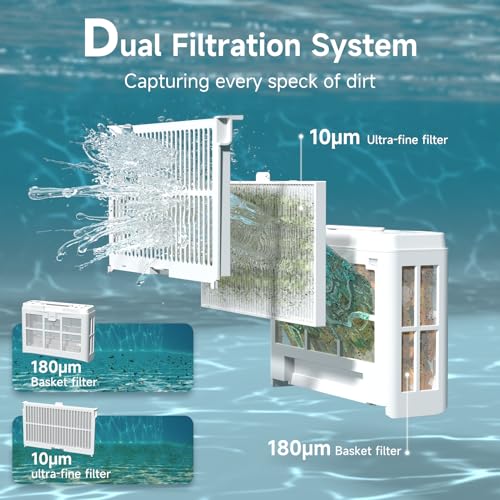
But the C2 takes filtration to another level with its dual-layer ultra-fine system. It combines the same 180-micron cartridge for large particles with an additional 10-micron ultra-fine filter. To put this in perspective, 180 microns can catch sand grains and small debris, while 10 microns captures pollen, algae spores, and fine dust particles that make water look cloudy.
This difference matters more than you might expect. Fine particles that pass through basic filters don't just make your water look less appealing—they can contribute to chemical imbalances and provide nutrients for algae growth. The C2's ultra-fine filtration addresses this comprehensively, while A1 owners might find themselves running their main pool filter more frequently to achieve similar water clarity.
The C2 also features a larger 3-liter filter capacity, reducing the frequency of mid-cleaning emptying that some users report with the A1's smaller capacity.
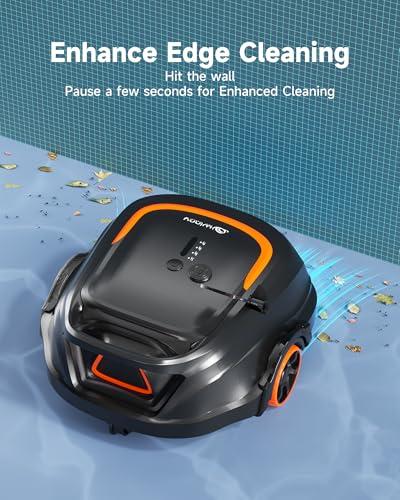
Navigation intelligence separates truly effective robotic cleaners from expensive toys, and this is where the generational difference between these models becomes apparent. The A1 relies primarily on random movement patterns, essentially bouncing around your pool floor until it eventually covers most areas. While it includes "patented edge-enhanced cleaning" that increases suction when it reaches pool walls, the overall approach lacks systematic coverage.
User reviews consistently criticize the A1 for missing spots, getting stuck in corners, or spending excessive time cleaning areas it's already covered while neglecting others. This random navigation works adequately for small, simple pools but becomes frustrating in larger or more complex layouts.
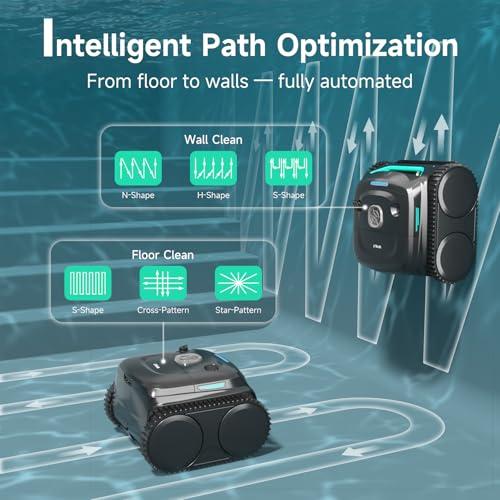
The C2 employs systematic navigation with integrated sensors that map cleaning paths rather than relying on random movement. It offers six different path patterns—including Star, Cross, and S-patterns for floors, plus specialized H and N patterns for walls. This isn't just marketing jargon; systematic cleaning ensures more consistent coverage and reduces the likelihood of missed spots.
More importantly, the C2's navigation system enables its multiple cleaning modes to work effectively. When you select "Wall-only" mode, it actually focuses on walls rather than randomly hoping to encounter them.
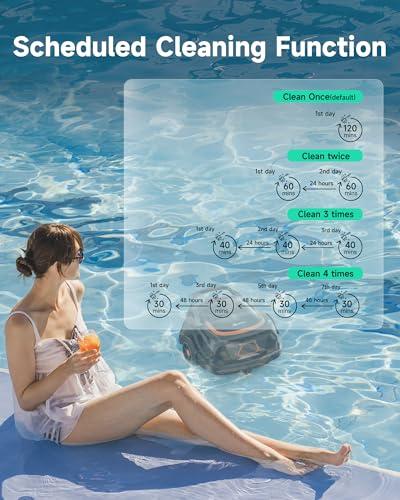
The technology gap extends to smart features and app integration. The A1 offers basic Bluetooth connectivity with simple scheduling options—you can set it to run up to four times per week with preset durations. The controls are straightforward but limited, essentially providing automated timing without sophisticated customization.
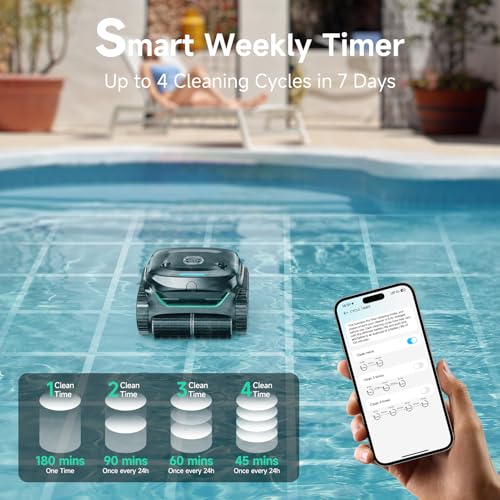
The C2 integrates with WYBOT's full-featured app, enabling detailed scheduling, mode selection, and monitoring. You can schedule different cleaning modes for different days (perhaps Eco Mode twice weekly for maintenance and Turbo Mode weekly for deep cleaning), set cycle timers that automatically repeat, and even activate an "extra-dirty pool" function when needed.
However, it's important to note that app control has limitations—you must set cleaning modes when the unit is out of the pool, not while it's operating underwater. This isn't unique to WYBOT but represents a current limitation of cordless pool cleaner technology.
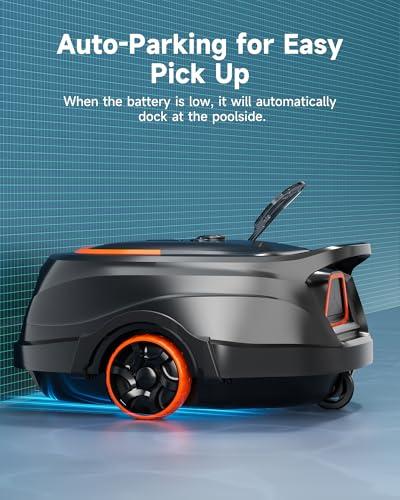
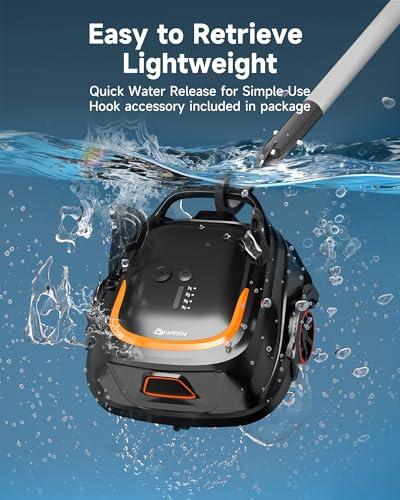
Both models feature self-parking systems that position the cleaner near the pool edge when cleaning completes or battery runs low, making retrieval easier without getting wet.
Our research into user experiences reveals important patterns about how these cleaners perform beyond manufacturer specifications. The A1 works well for its intended purpose—maintaining clean floors in flat-bottom pools with light to moderate debris. Users report satisfaction with routine cleaning of sand, dirt, and small leaves, particularly in above-ground pools where expectations align with capabilities.
However, the A1 struggles with several common scenarios. Textured pool surfaces, slopes greater than 15 degrees, and large debris like sweet gum balls or big leaves can cause problems. The lack of active scrubbing brushes means it relies entirely on suction, which isn't always sufficient for embedded dirt or algae buildup.
The C2 addresses many of these limitations through dual brushes that actively scrub surfaces, stronger suction power (3,592 GPH compared to the A1's unspecified but presumably lower rate), and the ability to clean vertical surfaces where debris often accumulates. Users report significantly better results with fine particles, pollen, and the slimy buildup that develops along waterlines.
Professional testing consistently shows that systematic navigation and wall-climbing capability translate to noticeably cleaner pools, particularly in the areas that matter most for water chemistry and visual appeal.
It's crucial to understand that cordless pool cleaner technology, while convenient, hasn't reached the performance levels of quality corded models. Industry experts who've tested dozens of robotic cleaners consistently recommend corded alternatives for users prioritizing maximum cleaning effectiveness.
Corded models like the Dolphin Escape deliver 4,000+ GPH suction consistently throughout their cleaning cycles, run for 2-3 hours without interruption, and include advanced features like NanoFilter technology—all typically at prices comparable to the C2. The trade-off is obvious: you get a cord to manage, but you also get superior cleaning performance and reliability.
Both WYBOT models represent the current state-of-the-art in cordless technology, but they're still compromised by battery limitations and reduced suction power compared to their corded counterparts. At the time of writing, cordless cleaners work best as convenience-focused solutions rather than maximum-performance tools.
The A1 positions itself as an affordable entry point into robotic pool cleaning, typically priced significantly below the C2. For budget-conscious buyers with simple cleaning needs, this represents reasonable value—you get automated floor cleaning that reduces manual maintenance, even if you still need to handle walls and waterlines yourself.
However, the value equation becomes more complex when you consider the A1's limitations. If you end up purchasing additional equipment or spending significantly more time on manual cleaning, the initial savings diminish. The floor-only cleaning also means you're not addressing some of the most important areas for maintaining water quality and visual appeal.
The C2 costs substantially more but delivers comprehensive cleaning that can genuinely reduce your overall pool maintenance workload. At the time of writing, it's priced in the mid-to-upper range for cordless cleaners but offers features typically found in more expensive models. The combination of wall-climbing, ultra-fine filtration, and intelligent navigation provides value that extends beyond simple cost comparison.
For most pool owners, the C2 represents better long-term value despite its higher upfront cost, particularly for in-ground pools where wall and waterline cleaning would otherwise require significant manual effort.
The decision between these models ultimately depends on your specific pool setup, cleaning expectations, and budget constraints.
Choose the A1 if you have a smaller above-ground pool (under 1,000 square feet) with minimal slopes, you're comfortable handling wall and waterline cleaning manually, and budget is your primary concern. It's also suitable if you're testing the waters with robotic cleaning and want to start with basic automation before potentially upgrading later.
The C2 makes more sense for larger pools, in-ground installations with varied surfaces, or any situation where you want comprehensive automated cleaning. It's particularly valuable if you deal with fine debris like pollen or if you prefer minimal manual intervention in your pool maintenance routine. The advanced filtration and systematic navigation justify the premium for most serious pool owners.
However, both models require realistic expectations about cordless technology limitations. If your pool exceeds 2,000 square feet, has extremely heavy debris loads, or requires maximum suction power for embedded dirt and algae, a quality corded model might serve you better despite the convenience trade-offs.
The C2 ultimately represents the better purchase for most pool owners who can afford the difference. Its comprehensive cleaning capability, advanced filtration, and intelligent operation provide functionality that approaches corded cleaner effectiveness while maintaining cordless convenience. The A1 serves a specific niche for budget-conscious buyers with simple needs, but its limitations become apparent quickly in real-world use.
Consider your long-term satisfaction and the true cost of ownership—including time spent on supplemental cleaning—when making your decision. In our experience researching pool maintenance solutions, investing in more comprehensive automation typically provides better value over time, even when the upfront cost is higher.
| WYBOT A1 Cordless Robotic Pool Cleaner | WYBOT C2 Cordless Robotic Pool Cleaner |
|---|---|
| Cleaning Coverage - Determines what parts of your pool get automated cleaning | |
| Floor only, up to 1,076 sq ft (requires manual wall cleaning) | Floors, walls, and waterlines up to 2,152 sq ft (complete automation) |
| Runtime - How long it cleans before needing a recharge | |
| Up to 120 minutes continuous (often 60-90 minutes in real use) | Up to 180 minutes in Eco Mode (varies by cleaning mode selected) |
| Filtration System - What debris sizes it can capture | |
| Dual-layer: 180μm mesh + cotton foam (catches visible debris) | Advanced dual-layer: 180μm + 10μm ultra-fine (captures microscopic particles) |
| Filter Capacity - How much debris it holds before emptying | |
| Not specified (smaller capacity, may need mid-cycle emptying) | 3L capacity (reduces interruptions during cleaning) |
| Navigation Intelligence - How efficiently it covers your pool | |
| Random movement with edge-enhanced cleaning (misses spots frequently) | Systematic paths with 6 patterns (consistent, thorough coverage) |
| Cleaning Modes - Flexibility for different pool conditions | |
| Basic cycle timer with limited customization | 7 modes (Full, Floor, Wall, Waterline, Turbo, Eco, Wall+Floor) |
| App Control - Smart features and scheduling options | |
| Basic Bluetooth with simple scheduling | Full WYBOT app with advanced scheduling and monitoring |
| Charging Time - Downtime between cleaning sessions | |
| 2.5 hours (faster turnaround for multiple sessions) | 3-3.5 hours (longer due to larger battery capacity) |
| Surface Compatibility - What pool types it works with | |
| Flat-bottom pools only, slopes under 15° (limited versatility) | Tiles, concrete, vinyl, fiberglass with wall-climbing ability |
| Suction Power - Debris removal effectiveness | |
| Not specified (weaker performance on embedded dirt) | 3,592 GPH (stronger debris removal and surface scrubbing) |
| Brushing System - Active cleaning vs suction-only | |
| No brushes (suction-only cleaning limits effectiveness) | Dual PVC brushes (actively scrubs surfaces for better results) |
| Target Pool Size - Optimal performance range | |
| Small to medium above-ground pools under 1,000 sq ft | Large pools up to 2,152 sq ft, ideal for in-ground installations |
| Value Proposition - Best use case for the price point | |
| Budget entry into robotic cleaning (supplemental manual work needed) | Premium cordless solution (comprehensive automation justifies higher cost) |
Neither the WYBOT A1 nor C2 matches the suction power and reliability of quality corded models. Cordless cleaners offer convenience but sacrifice performance due to battery limitations. The C2 comes closer to corded performance but still requires charging interruptions and has weaker suction than top corded alternatives.
The WYBOT C2 provides better overall value despite its higher cost because it delivers comprehensive cleaning that eliminates manual work. The A1 seems cheaper initially but requires supplemental manual cleaning of walls and waterlines. For most pool owners, the C2's complete automation justifies the price difference.
We've done our best to create useful and informative comparisons to help you decide what product to buy. Our research uses advanced automated methods to create this comparison and perfection is not possible - please contact us for corrections or questions. These are the sites we've researched in the creation of this article: bestbuy.com - thepoolfactory.com - roboticreviews.com - wybotpool.com - youtube.com - poolzoom.com - poolwarehouse.com - bestbuy.com - thepoolnerd.com - poolsupplyunlimited.com - youtube.com - eztestpools.com - youtube.com - iopool.com - homedepot.com - wybotpool.com - bestbuy.com - wybotpool.com - youtube.com - wybotpool.com - thepoolnerd.com - lowes.com - youtube.com - walmart.com - business.walmart.com - bestbuy.com - homedepot.com - target.com - eu.wybotpool.com - youtube.com - youtube.com - lowes.com - eftm.com - youtube.com - poolwarehouse.com

Privacy Policy
Terms and Conditions - Affiliate Policy
Home Security
© Copyright 2008-2026.
11816 Inwood Rd #1211, Dallas, TX 75244