

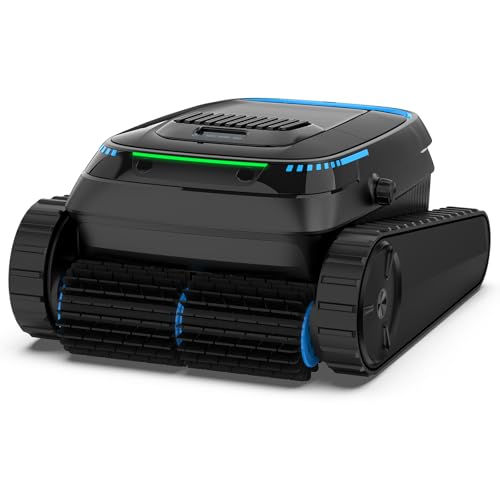
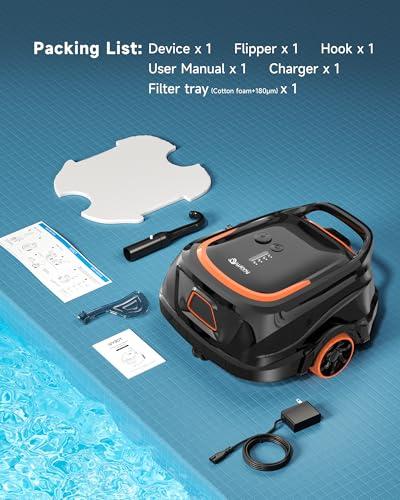
If you're tired of spending your weekends manually vacuuming your pool, you've probably considered investing in a robotic pool cleaner. These autonomous cleaning machines promise to keep your pool spotless while you relax, but choosing the right one can be overwhelming. Today, we're diving deep into two popular cordless models: the BOTLUXE PC10 and the WYBOT A1.
Both cleaners represent the latest generation of cordless robotic technology that emerged around 2022-2023, eliminating the hassles of tangled hoses and complicated setup procedures that plagued earlier models. However, these two machines take dramatically different approaches to pool cleaning, and understanding these differences is crucial for making the right choice.
Before we compare specific models, it's important to understand what separates excellent robotic pool cleaners from mediocre ones. The most critical factors are cleaning coverage (which areas of your pool get cleaned), suction power (how effectively debris gets picked up), navigation intelligence (how systematically the robot moves), and filtration capability (how well it captures different types of debris).
The best robotic cleaners use sophisticated sensor systems to map your pool and clean methodically, rather than bouncing around randomly like a bumper car. They also need enough suction power—measured in gallons per hour (GPH) or Pascals (Pa)—to pull debris off pool surfaces and into their filter baskets.
Think of robotic pool cleaners as underwater vacuum robots. Like a Roomba for your living room, they need to navigate intelligently, have strong suction, and capture debris effectively. The key difference is that pools present unique challenges: slippery surfaces, varying depths, and the need to clean not just floors but also walls and waterlines where algae and oils accumulate.
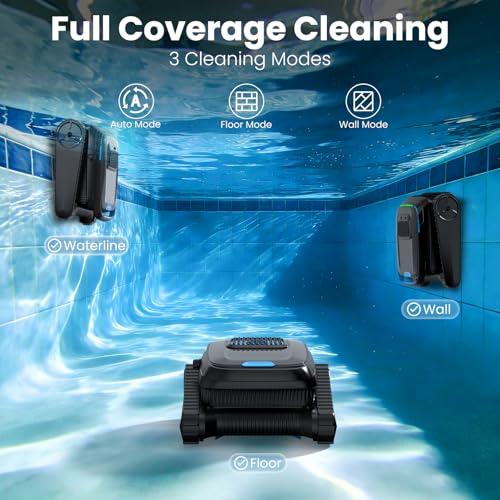
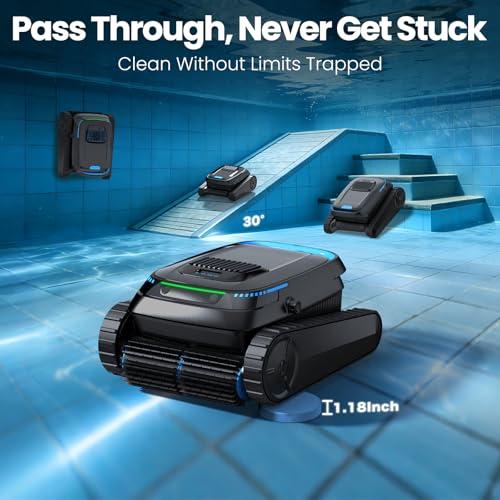
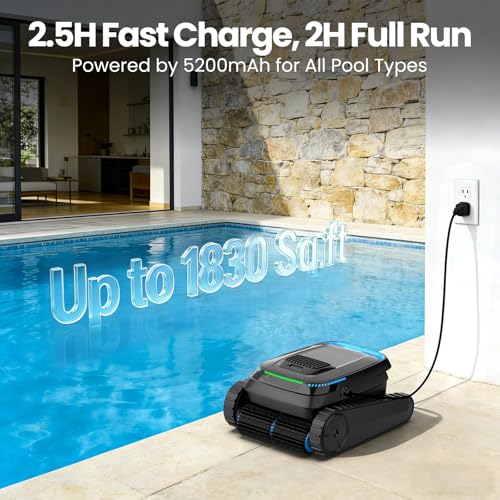
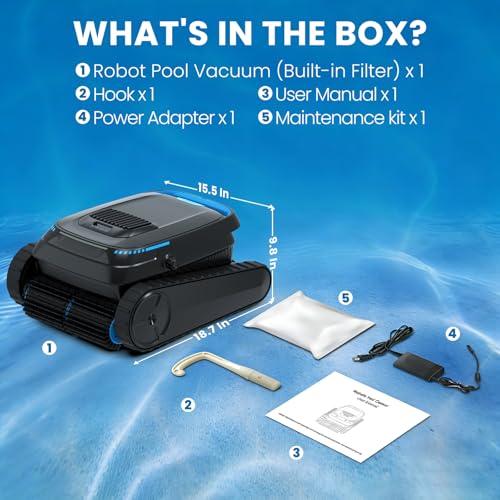
Here's where these two cleaners diverge most dramatically. The BOTLUXE PC10 is what we'd call a "full-service" pool cleaner, capable of cleaning your pool floor, walls, and waterline—that's the area where the water meets the pool edge where sunscreen, body oils, and early algae growth typically accumulate. The PC10 can handle pools up to 1,830 square feet and climb slopes as steep as 30 degrees using its caterpillar tread system.
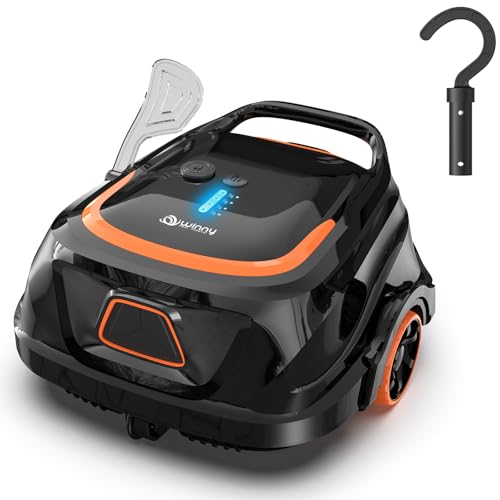
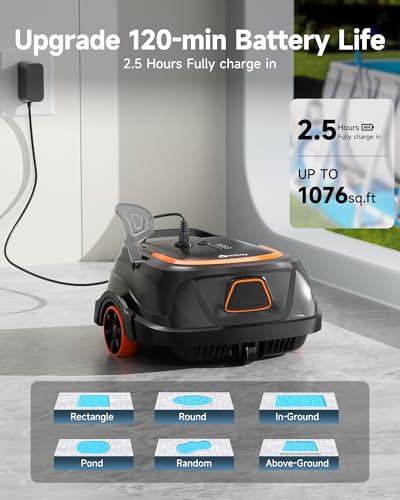
In contrast, the WYBOT A1 is strictly a floor-only cleaner. It's designed for flat-bottom pools with minimal slopes (15 degrees maximum) and covers up to 1,076 square feet. This fundamental difference shapes everything else about these machines.
Why does this matter? If you have an inground pool with sloped sides, steps, or varying depths, the BOTLUXE PC10 can navigate these features and clean areas the WYBOT A1 simply can't reach. The PC10's caterpillar treads—flexible track systems similar to those on construction equipment—provide the grip needed to climb pool walls without slipping.
The WYBOT A1, with its lightweight design and basic wheel system, is limited to flat surfaces. While this makes it simpler and more affordable, it means you'll still need to manually clean your pool walls and waterline regularly.
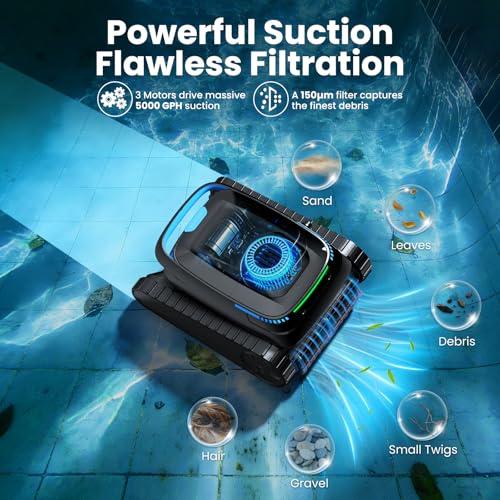
Raw cleaning power tells a compelling story here. The BOTLUXE PC10 generates 45,000 Pascals of suction (equivalent to about 5,000 GPH), powered by three separate motors: dual drive motors for movement and a dedicated pump motor for suction. This tri-motor design allows the PC10 to maintain strong suction while moving efficiently.
The WYBOT A1 operates with dual motors producing 2,140 GPH of suction power—roughly half the cleaning force of the PC10. This difference becomes apparent when dealing with stubborn debris like packed sand or embedded algae.
Beyond raw power, the cleaning mechanisms differ significantly. The BOTLUXE PC10 features dual active rotating brushes that actively scrub pool surfaces as they spin. These brushes work like the agitators in a carpet cleaner, loosening debris before the suction system pulls it away.
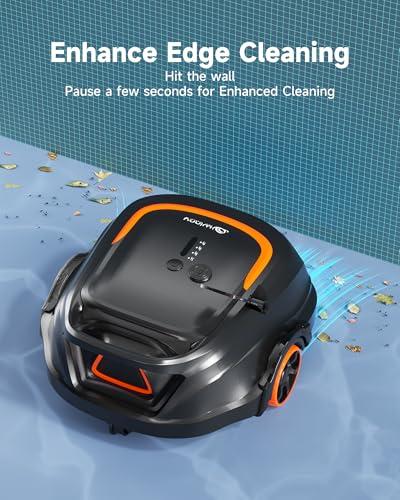
The WYBOT A1 takes a more passive approach with two bottom scrapers that rely primarily on suction to remove debris. While adequate for loose dirt and small leaves, this system struggles with debris that's adhered to pool surfaces.
Based on our research of user experiences, the performance difference is noticeable. BOTLUXE PC10 owners consistently report thorough cleaning that leaves visible track patterns showing complete coverage. WYBOT A1 users often mention needing to run multiple cleaning cycles or manually guide the robot to achieve similar results.
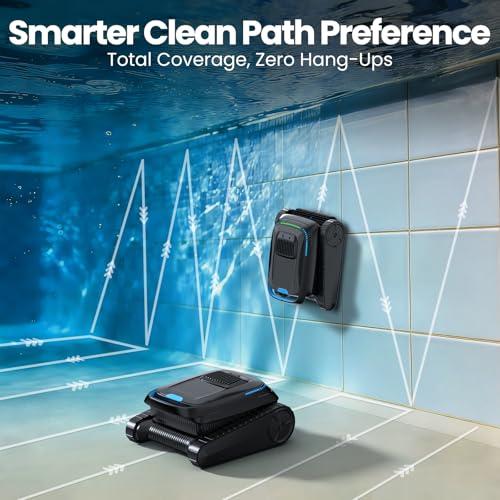
Modern robotic cleaners should clean systematically, not randomly. The BOTLUXE PC10 uses what the manufacturer calls "intelligent positioning and navigation technology" with multiple sensors including heat sensors for wall detection and front-scanning sensors for obstacle avoidance. This system creates systematic zig-zag cleaning patterns in N and S shapes, ensuring comprehensive coverage.
The navigation shows in the results. Users report that the BOTLUXE PC10 creates visible cleaning tracks across their pool bottom, indicating methodical coverage rather than random movement.
The WYBOT A1 uses basic infrared sensors for navigation, but our research reveals concerning feedback about its movement patterns. Multiple reviews describe the robot as "wandering aimlessly" and "bouncing off walls without systematic coverage." One detailed review noted that the A1 often requires manual guidance to achieve complete cleaning.
This navigation difference isn't just about convenience—it directly impacts cleaning effectiveness. A robot that misses areas consistently will leave you with an unevenly cleaned pool, defeating the purpose of automation.
Both cleaners take different approaches to debris capture. The BOTLUXE PC10 uses a single, large 4-liter filter basket with 180-micron mesh (some sources indicate 150-micron capability). Microns measure particle size—to put this in perspective, human hair is about 75 microns thick, so these filters capture particles much smaller than what you can see.
The large single-filter design means longer cleaning sessions without stopping to empty the basket, which is crucial for larger pools. The top-access design makes filter removal and cleaning straightforward.
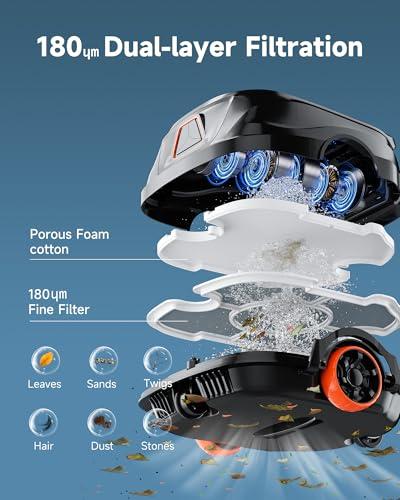
The WYBOT A1 employs a dual-layer filtration system combining 180-micron mesh with cotton foam, creating what the company claims is 70% more filtration area than single-filter competitors. The 3.5-liter capacity is smaller than the PC10's, but the dual-layer approach should theoretically capture finer particles.
In practice, the BOTLUXE PC10's larger capacity proves more practical for most users. You can complete full cleaning cycles without interruption, while the WYBOT A1's smaller basket may require mid-session emptying in heavily debris-laden pools.
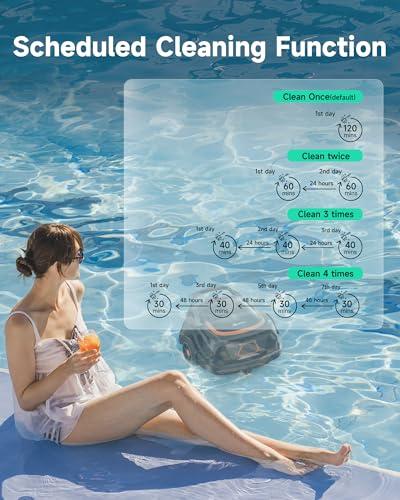
Both cleaners promise 120-minute runtime with 2.5-hour charging times, but how this translates to real-world performance differs significantly.
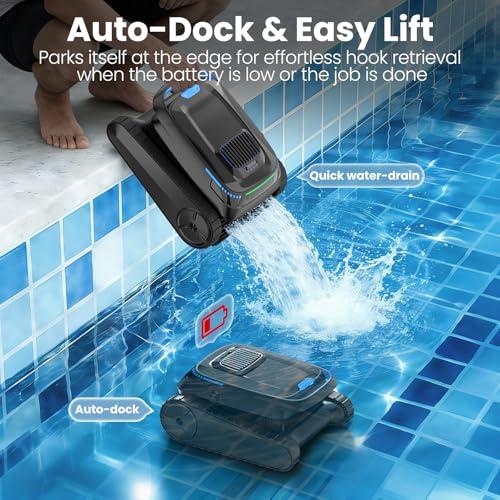
The BOTLUXE PC10 uses its battery power efficiently because its systematic navigation and powerful cleaning often complete the job in a single pass. Users consistently report getting the advertised 2+ hours of runtime, with the robot automatically returning to the pool edge when finished or when the battery runs low.
The WYBOT A1, despite similar battery specifications, often requires longer actual cleaning time due to its less efficient movement patterns. If the robot misses areas or requires multiple passes, you're effectively getting less cleaning per charge cycle.
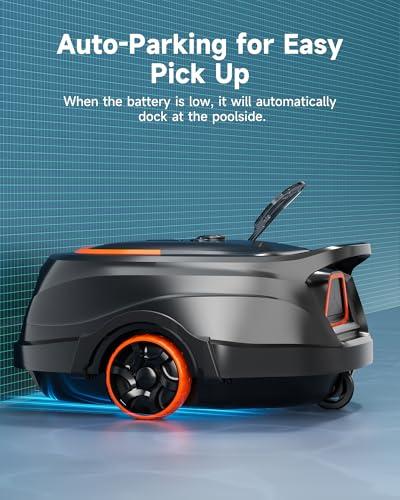
Both units feature self-parking systems that position the cleaner near the pool edge for easy retrieval, though the BOTLUXE PC10's heavier build (29.5 pounds vs. the A1's 7.7 pounds) makes it more stable in windy conditions.
Our research reveals a stark difference in long-term reliability between these models. The BOTLUXE PC10 consistently receives praise for build quality, with users noting its solid construction and reliable performance over time. The caterpillar tread system is user-replaceable, with DIY instructions included—a unique feature that extends the product's lifespan.
The WYBOT A1 presents more concerning reliability patterns. Multiple user reviews describe units failing after just a few uses, with some buyers reporting complete failure within weeks. While the lightweight design makes handling easier, it appears to come at the cost of durability.
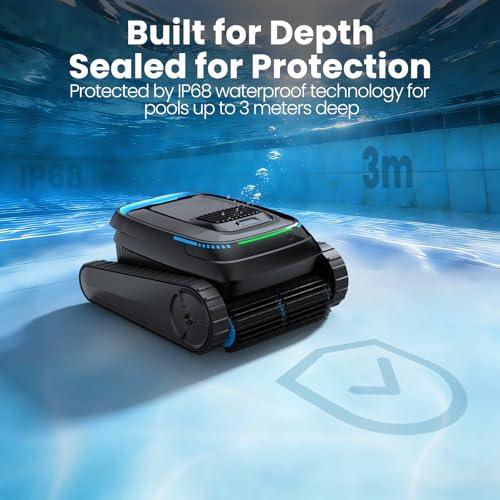
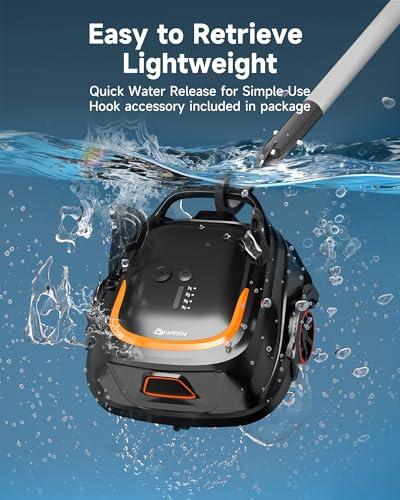
The IP68 waterproof rating on both units means they can handle submersion up to 3 meters deep, but the BOTLUXE PC10's more robust construction seems better suited for long-term pool use.
At the time of writing, the BOTLUXE PC10 commands a premium price, typically positioned in the mid-to-upper range of cordless robotic cleaners. The WYBOT A1 markets itself as the "most affordable cordless pool cleaning robot," targeting budget-conscious buyers.
However, value isn't just about upfront cost—it's about cost per cleaning capability over time. The BOTLUXE PC10 delivers comprehensive pool maintenance (floor, walls, waterline) with superior reliability. If it eliminates the need for manual wall and waterline cleaning, the time savings alone justifies the higher price for most pool owners.
The WYBOT A1 appears attractive initially, but its floor-only limitation means you'll still need to manually clean 60-70% of your pool's surface area. Factor in the reliability concerns, and the total cost of ownership becomes less compelling.
Both products represent the current generation of cordless technology that emerged around 2022-2023, addressing earlier problems with corded models that often tangled or required complex setup. The cordless revolution in robotic pool cleaning mirrors similar advances in household vacuum robots, bringing genuine convenience to pool maintenance.
The BOTLUXE PC10 represents what we consider the mature approach to cordless pool cleaning: comprehensive capability with proven reliability. Its tri-motor system and advanced navigation place it among the more sophisticated cordless cleaners available.
The WYBOT A1 seems designed to hit a specific price point rather than optimize performance, which isn't necessarily wrong but limits its applicability.
Choose the BOTLUXE PC10 if you have an inground pool, any pool with slopes or steps, or simply want comprehensive automated cleaning. The superior suction power, wall-climbing capability, and proven reliability make it the better choice for most pool owners. Yes, you'll pay more upfront, but you'll get a machine that actually replaces manual pool cleaning rather than just supplementing it.
The BOTLUXE PC10 also makes sense if your pool exceeds 1,076 square feet or if you prioritize long-term reliability over initial savings.
Consider the WYBOT A1 only if you have a small, perfectly flat above-ground pool and an extremely tight budget. Even then, factor in the ongoing need for manual wall and waterline cleaning, plus potential reliability issues.
For most pool owners, the BOTLUXE PC10 represents better long-term value despite the higher initial investment. Its comprehensive cleaning capability and superior reliability deliver the automated pool maintenance experience most buyers actually want.
In our assessment, the WYBOT A1 feels like a compromise too far—sacrificing too much capability to hit a lower price point. While budget considerations are real, spending less on a machine that can't properly maintain your pool often proves more expensive in the long run.
The robotic pool cleaner market has matured to the point where excellent options like the BOTLUXE PC10 deliver genuine value. Unless your specific circumstances perfectly match the WYBOT A1's limited capabilities, investing in more comprehensive cleaning technology pays dividends in time savings and pool enjoyment.
| BOTLUXE PC10 | WYBOT A1 |
|---|---|
| Pool Coverage Areas - Determines how much manual cleaning you'll still need | |
| Floor, walls, and waterline (complete automation) | Floor only (walls and waterline require manual cleaning) |
| Maximum Pool Size - Larger coverage means fewer missed spots | |
| Up to 1,830 sq ft | Up to 1,076 sq ft |
| Slope Handling - Critical for inground pools and pool steps | |
| Climbs slopes up to 30° with caterpillar treads | Flat-bottom pools only (max 15° slope) |
| Suction Power - Higher power removes stubborn debris more effectively | |
| 45,000Pa (5,000 GPH) with tri-motor system | 2,140 GPH with dual motors |
| Cleaning Brushes - Active brushes scrub surfaces vs. passive suction | |
| Dual active rotating brushes for aggressive scrubbing | Two bottom scrapers (no rotating brushes) |
| Filter Capacity - Larger filters mean longer uninterrupted cleaning | |
| 4L single filter basket (180-micron mesh) | 3.5L dual-layer system (180-micron + foam) |
| Navigation System - Smart navigation ensures complete coverage | |
| Intelligent sensors with systematic zig-zag patterns | Basic infrared sensors (reviews note random movement) |
| Battery Runtime - Both offer same advertised time | |
| 120 minutes (consistently delivers full runtime) | 120 minutes (may need multiple cycles for complete cleaning) |
| Build Quality - Affects long-term reliability and replacement costs | |
| 29.5 lbs, robust construction, user-replaceable treads | 7.7 lbs, lightweight but reliability concerns in reviews |
| Pool Types Supported - Determines if the cleaner works with your pool | |
| Inground and above-ground pools of all shapes | Simple above-ground and basic flat inground pools only |
| Value Position - Consider total cleaning capability vs. price | |
| Premium pricing for comprehensive automated cleaning | Budget-friendly but requires ongoing manual wall/waterline maintenance |
The BOTLUXE PC10 is significantly better for inground pools because it can climb slopes up to 30 degrees and clean walls and waterlines. Most inground pools have sloped sides and steps that the WYBOT A1 simply cannot navigate, as it's limited to flat surfaces with maximum 15-degree slopes.
No, only the BOTLUXE PC10 cleans floors, walls, and waterlines for complete pool maintenance. The WYBOT A1 is a floor-only cleaner, meaning you'll still need to manually scrub walls and waterlines where algae and oils typically accumulate.
The BOTLUXE PC10 has significantly stronger suction at 45,000Pa (5,000 GPH) compared to the WYBOT A1's 2,140 GPH. This means the PC10 can remove stubborn debris and embedded dirt more effectively than the A1.
Both the BOTLUXE PC10 and WYBOT A1 offer 120-minute battery runtime with 2.5-hour charging times. However, the PC10's more efficient cleaning often completes pools in fewer passes, making better use of the available battery time.
The BOTLUXE PC10 handles larger pools up to 1,830 square feet, while the WYBOT A1 is limited to 1,076 square feet. For pools over 1,000 square feet, the PC10's superior coverage and systematic navigation make it the better choice.
The BOTLUXE PC10 has consistently positive reviews for build quality and reliability, with user-replaceable parts like caterpillar treads. The WYBOT A1 has concerning reliability reports with multiple users experiencing failures within weeks of purchase.
For simple, flat above-ground pools, both cleaners can work, but the BOTLUXE PC10 still provides superior cleaning with wall and waterline coverage. The WYBOT A1 is adequate only for perfectly flat above-ground pools where you don't mind manual wall cleaning.
The BOTLUXE PC10 features intelligent navigation with systematic zig-zag patterns and multiple sensors for obstacle detection. The WYBOT A1 has basic infrared sensors, but user reviews frequently mention random, inefficient movement patterns.
The BOTLUXE PC10 has a larger 4L filter basket for longer cleaning sessions, while the WYBOT A1 uses a dual-layer filtration system with 3.5L capacity. Both capture particles down to 180 microns, but the PC10's larger capacity means fewer interruptions.
The BOTLUXE PC10 navigates steps, drain outlets, and obstacles effectively with its caterpillar tread system and advanced sensors. The WYBOT A1 is designed only for flat surfaces and cannot handle steps or significant obstacles.
While the WYBOT A1 has a lower upfront cost, the BOTLUXE PC10 provides better long-term value with comprehensive cleaning capability, superior reliability, and the elimination of manual wall and waterline maintenance.
The WYBOT A1 should be avoided for inground pools, pools with steps or slopes, pools larger than 1,076 square feet, and any pool where you want automated wall and waterline cleaning. It's only suitable for small, perfectly flat pools where budget is the primary concern.
We've done our best to create useful and informative comparisons to help you decide what product to buy. Our research uses advanced automated methods to create this comparison and perfection is not possible - please contact us for corrections or questions. These are the sites we've researched in the creation of this article: mryouwho.com - manuals.plus - youtube.com - youtube.com - youtube.com - youtube.com - youtube.com - youtube.com - youtube.com - the-gadgeteer.com - us.air-robo.com - youtube.com - youtube.com - youtube.com - us.air-robo.com - youtube.com - ubuy.tg - bestbuy.com - thepoolfactory.com - roboticreviews.com - wybotpool.com - youtube.com - poolzoom.com - poolwarehouse.com - bestbuy.com - thepoolnerd.com - poolsupplyunlimited.com - youtube.com - eztestpools.com - youtube.com - iopool.com - homedepot.com - wybotpool.com

Privacy Policy
Terms and Conditions - Affiliate Policy
Home Security
© Copyright 2008-2026.
11816 Inwood Rd #1211, Dallas, TX 75244