

If you're tired of manually vacuuming your pool or dealing with finicky suction cleaners that get tangled, robotic pool cleaners represent the ultimate upgrade in automated maintenance. These self-contained units operate independently, scrubbing and filtering your pool water without any connection to your pool's filtration system. Think of them as the Roomba equivalent for your swimming pool—they navigate autonomously, clean systematically, and return to a designated spot when finished.
The robotic pool cleaner market has evolved dramatically over the past few years, with artificial intelligence and advanced sensors transforming what used to be simple random-pattern cleaners into sophisticated mapping machines. Aiper has emerged as a significant player in this space, offering two distinct approaches to automated pool cleaning: the proven Scuba S1 released in 2023, and the upcoming AI-powered Scuba V3 launching in 2026.
Understanding the key performance metrics helps determine which cleaner fits your needs. The most critical factors include navigation intelligence (how efficiently the robot maps and covers your pool), cleaning power (measured in gallons per hour of water flow), filtration quality (the size of particles it can capture), and practical considerations like battery life, ease of retrieval, and maintenance requirements.
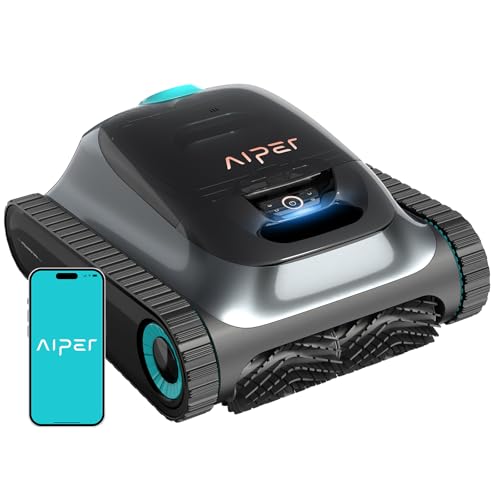
The Aiper Scuba S1 launched in 2023 as a mid-range robotic cleaner that promised comprehensive pool coverage including floors, walls, and the crucial waterline area where most bacteria and oils accumulate. At the time of writing, it sits in the middle tier of robotic pool cleaners price-wise—not the cheapest option, but significantly less expensive than premium corded models from established brands.
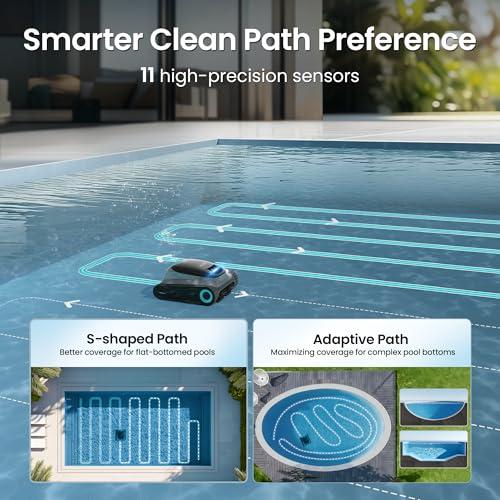
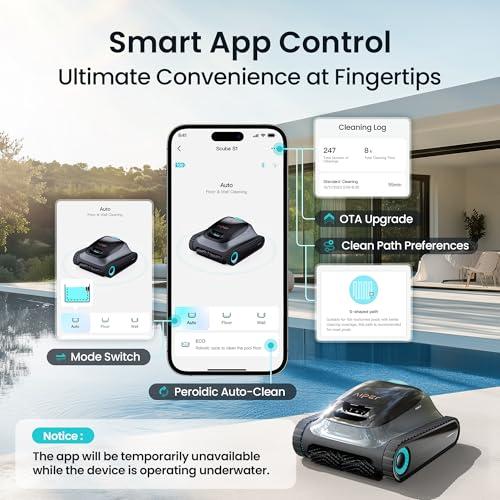
The S1's WavePath Technology 2.0 represents solid engineering rather than groundbreaking innovation. This system uses acceleration sensors (which detect movement and direction changes) combined with inertial sensors (which track rotation and orientation) to create systematic cleaning patterns. On pool floors, it follows an S-shaped pattern that ensures coverage without excessive overlap. For walls, it switches to an N-shaped pattern that works from bottom to top.
While this approach works reliably, it's essentially a more sophisticated version of programmed pattern cleaning. The robot doesn't truly "see" your pool or adapt to different debris conditions—it follows predetermined routes based on sensor feedback about its position and movement.
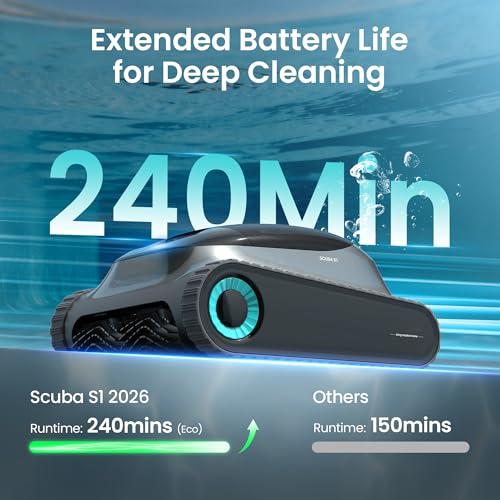
Our research into user experiences and expert reviews reveals a significant gap between the S1's advertised capabilities and real-world performance. The manufacturer claims up to 180 minutes of runtime, but actual testing consistently shows 60-70 minutes of effective cleaning time. This discrepancy matters enormously because suction power fades as the battery drains, meaning the final 30-40 minutes of operation become progressively less effective.
The 4,200 gallons per hour (GPH) suction rating sounds impressive, but this measurement reflects maximum theoretical flow rather than consistent real-world performance. Users report that the S1 struggles with fine debris like sand and silt, which often passes through the filtration system rather than being captured effectively.
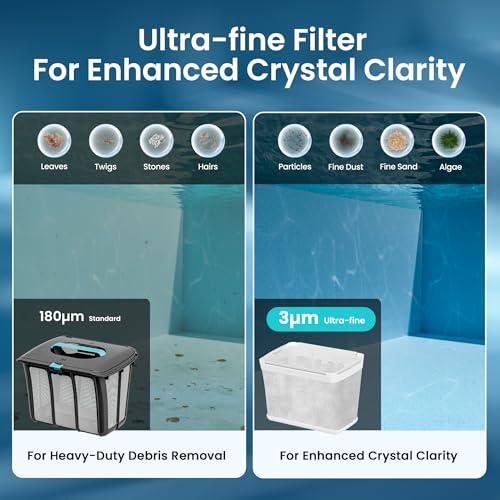
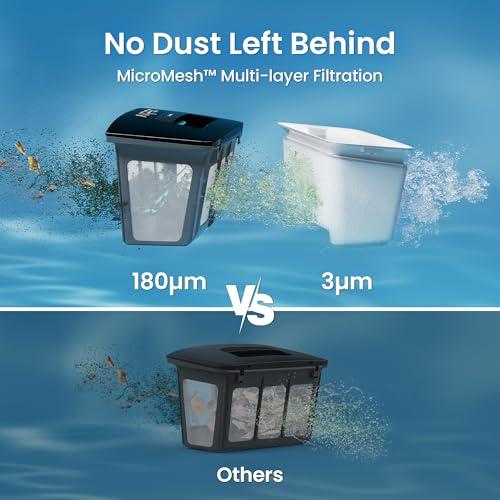
The Scuba S1's filtration approach involves a two-tier system. The primary filter uses a 180-micron mesh (roughly the width of a human hair) to capture visible debris like leaves, insects, and larger particles. An optional 3-micron MicroMesh ultra-fine filter can be added to catch microscopic particles invisible to the naked eye.
However, user feedback consistently indicates that even with the ultra-fine filter installed, fine particles slip through the system. The top-loading 3.5-liter debris basket design makes emptying convenient, but the filtration effectiveness falls short of expectations, particularly for pools dealing with dust, pollen, or algae blooms.
Perhaps the S1's most frustrating limitation involves its charging requirements. The robot must be manually dried before connecting to the DC charger, and the 3-4 hour charging time means multiple cycles are often needed for thorough pool cleaning. This creates a tedious routine: run the cleaner for an hour, retrieve and dry it, charge for 4 hours, then repeat.
For larger pools or those with significant debris loads, achieving a complete clean might require 2-3 charging cycles spread across multiple days—hardly the hands-free experience most buyers expect from a robotic cleaner.
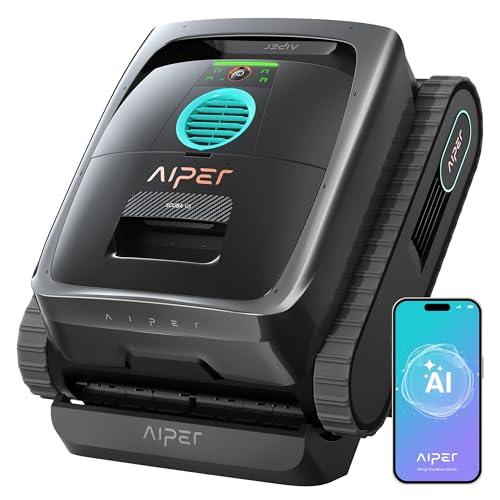
The Aiper Scuba V3, scheduled for release in 2026, represents a generational leap in pool cleaning technology. While we can't provide hands-on testing results for an unreleased product, the technical specifications and demonstrated capabilities suggest this robot addresses virtually every limitation of its predecessor.
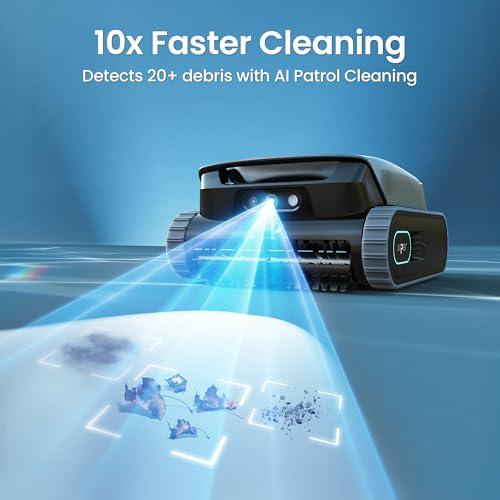
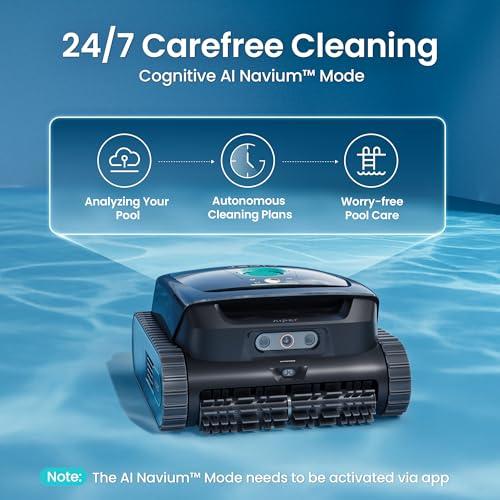
The V3's Cognitive AI Navium system fundamentally changes how robotic cleaners operate. Instead of following predetermined patterns, it uses computer vision (a camera system that can identify objects) combined with direct Time-of-Flight (dToF) sensors that measure distances using light pulses to create real-time maps of your pool.
This AI system can identify over 20 types of debris within a 2-meter detection range, including leaves, sand, twigs, toys, and even different types of organic matter. Rather than cleaning the entire pool every time, the AI Patrol mode scans for debris hotspots and targets only the areas that need attention. This selective approach reportedly reduces cleaning time and energy consumption by up to 40%.
The most impressive feature might be the autonomous weekly planning capability. The V3 analyzes factors like pool size, local weather patterns (which affect debris accumulation), and historical cleaning data to create optimized maintenance schedules. Once activated, it operates independently for up to 7 days without user intervention.
The Scuba V3 delivers 4,800 GPH of suction—a 14% increase over the S1—but more importantly, it maintains consistent performance throughout its cleaning cycle thanks to a larger 10,400 mAh battery (33% more capacity than the S1).
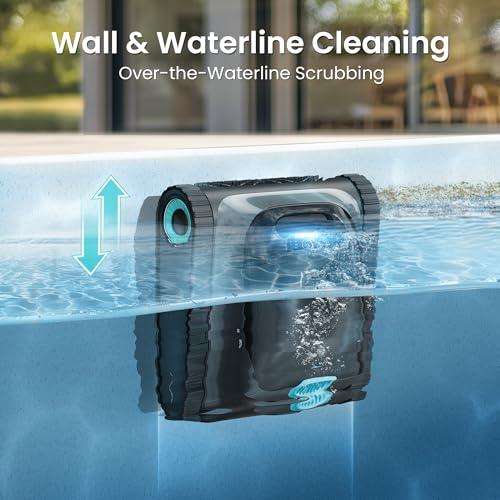
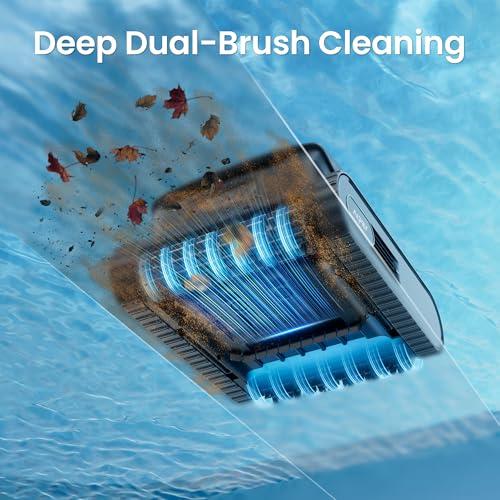
The dual-brush cleaning system works in tandem with specialized technologies like JetAssist, which provides horizontal scrubbing at the waterline at speeds up to 1.5 meters per second. This addresses one of the most challenging aspects of pool maintenance: removing the ring of oils, sunscreen residue, and organic matter that accumulates at the water's edge.
Unlike the S1's optional ultra-fine filtration, the V3 integrates its MicroMesh multi-layer system as standard equipment. This captures particles as small as 3 microns consistently, without the bypass issues that plague the earlier model. The same 3.5-liter debris basket capacity includes a single-click drain system for easier maintenance.
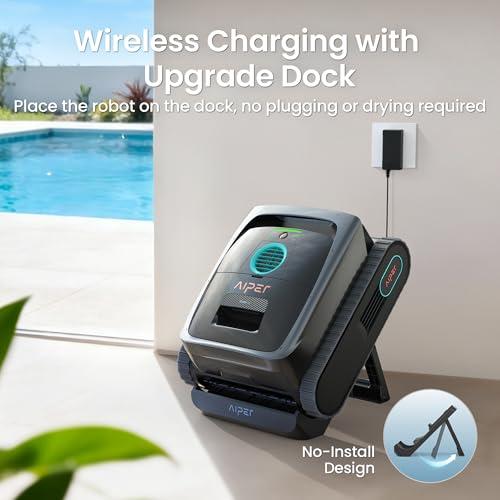
The V3 eliminates the S1's most annoying maintenance requirements through wireless charging. The included dock requires no setup and charges the robot without exposed electrical connections, eliminating the need to dry the unit before charging.
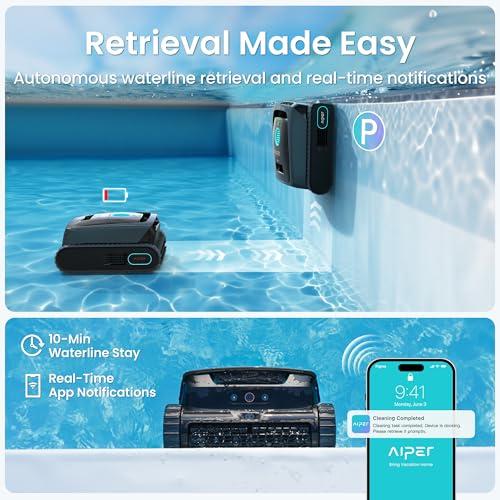
Even more cleverly, the V3 automatically returns to the pool's waterline when cleaning is complete and sends a push notification to your phone. This 10-minute retrieval window gives you time to collect the robot without it sinking to the bottom—a simple but brilliant solution to the awkward retrieval process that plagues most robotic cleaners.
The difference between the S1's programmed patterns and the V3's AI-driven approach becomes crucial in real-world use. Traditional pattern cleaning works adequately for rectangular pools with minimal obstacles, but struggles with irregular shapes, stairs, benches, or varying debris concentrations.
The V3's visual navigation system adapts to your specific pool layout and debris conditions. If leaves tend to accumulate in corners due to wind patterns, it learns these hotspots and adjusts accordingly. If your pool has complex features like tanning ledges or spa spillovers, the AI maps these areas and develops appropriate cleaning strategies.
Battery life represents the most critical performance metric for cordless robotic cleaners. The S1's advertised 180-minute runtime sounds generous, but real-world testing reveals significant degradation as the battery drains. By the final 30 minutes of operation, suction power drops noticeably, making those minutes largely ineffective.
The V3's 170-190 minute typical runtime might seem comparable on paper, but the larger battery capacity and AI optimization should maintain more consistent power output throughout the cleaning cycle. The selective cleaning approach also means the robot spends less time operating overall while achieving better results.
Filtration capability is measured in microns—one micron equals one millionth of a meter. For context, human hair measures about 50-100 microns, while fine sand particles range from 50-200 microns. The critical difference between the S1 and V3 lies not just in the specified micron rating, but in how effectively they maintain that filtration standard during operation.
The S1's optional 3-micron filter performs well initially but allows fine particles to bypass the system under higher flow conditions. The V3's integrated multi-layer approach should maintain consistent filtration even at maximum suction, preventing the "clean but cloudy" water that frustrates S1 users.
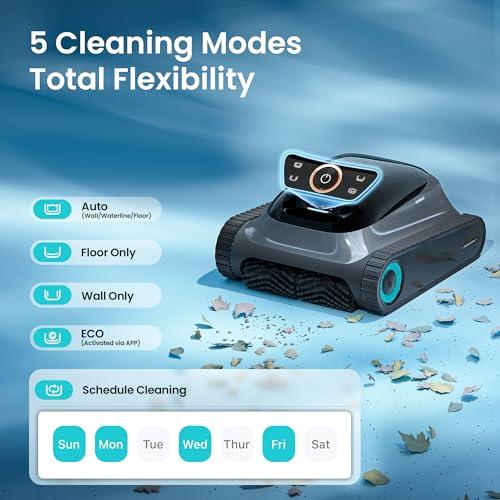
The S1 offers basic app connectivity with limited scheduling options. Users can select cleaning modes and monitor battery status, but must manually initiate each cleaning cycle and handle mode switching by retrieving the robot from the pool.
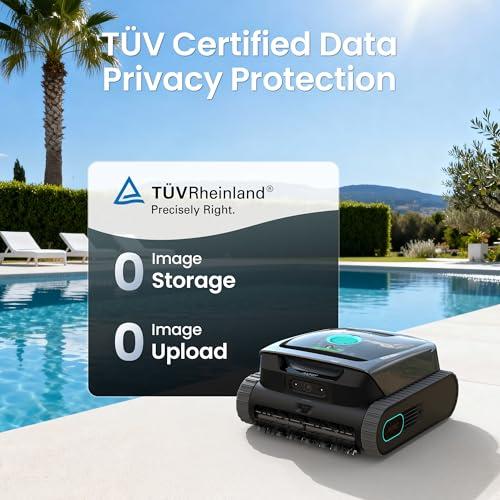
The V3's app integration represents a quantum leap in automation. Real-time alerts, detailed cleaning reports, and the ability to monitor progress remotely transform pool maintenance from a hands-on chore to a background process. The TÜV-certified data privacy protection addresses legitimate concerns about camera-equipped robots and data security.
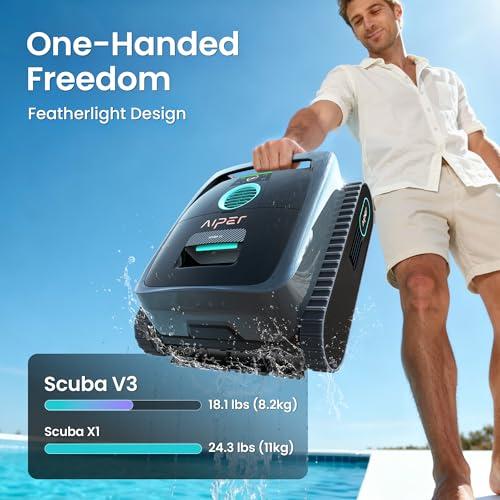
Both robots feature lightweight designs under 20 pounds, but the V3's "featherlight" construction at 18.1 pounds includes ergonomic considerations for one-handed retrieval. This seemingly minor difference becomes significant for daily use, particularly for older adults or anyone dealing with mobility limitations.
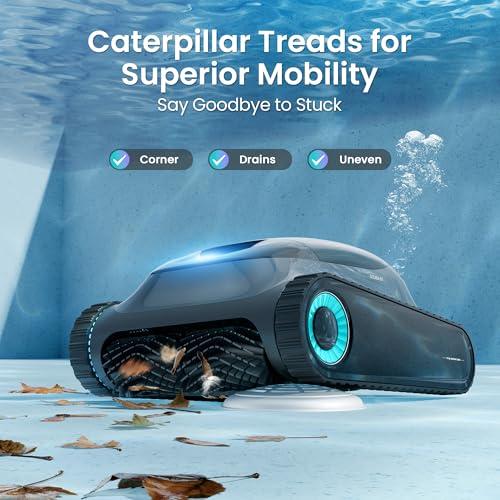
The S1's caterpillar tread system provides excellent traction and obstacle climbing but requires careful handling during retrieval to avoid damage to the treads or drive mechanisms.
At the time of writing, the Scuba S1 represents solid value in the mid-tier robotic cleaner market. Its proven track record, immediate availability, and reasonable pricing make it attractive for budget-conscious buyers willing to accept some limitations.
However, our research suggests the S1's real-world performance issues—particularly the battery life discrepancy and filtration problems—significantly impact its practical value. Many users find themselves supplementing the robot's work with manual cleaning or considering upgrades sooner than expected.
The V3's value proposition remains theoretical until release, but the technical specifications suggest it addresses every major S1 limitation while adding genuinely innovative features. The question becomes whether the presumably higher price justifies the enhanced capabilities and convenience.
You need a robotic cleaner immediately and can work within its limitations. The S1 works best for pool owners with relatively simple rectangular pools, light to moderate debris loads, and the flexibility to manage multiple cleaning cycles when necessary. If you're comfortable with hands-on pool maintenance and view the robot as an assistant rather than a complete solution, the S1's proven reliability and current availability make it a reasonable choice.
The S1 also suits buyers who prefer established technology over cutting-edge features, or those testing robotic pool cleaning for the first time without a significant financial commitment.
You can wait until 2026 and prioritize maximum automation and performance. The V3 targets users who want genuinely hands-free pool maintenance, have complex pool shapes or challenging debris conditions, and value the convenience of weekly autonomous operation.
The AI-powered features particularly benefit busy professionals, frequent travelers, or anyone who views pool maintenance as a necessary evil rather than an engaging hobby. The advanced app integration and smart scheduling align well with smart home ecosystems and modern lifestyle expectations.
Neither option perfectly matches your needs. Pool owners requiring immediate availability with advanced features might explore premium corded models from established manufacturers. Those with extremely large pools or commercial applications should investigate higher-capacity systems designed for intensive use.
Budget-conscious buyers concerned about the S1's performance limitations might consider traditional suction or pressure cleaners that, while requiring more setup, deliver consistent performance without battery constraints.
The robotic pool cleaner market stands at an inflection point between traditional programmed cleaning and AI-powered automation. The Aiper S1 represents the former approach refined to its practical limits, while the V3 pioneers the latter with genuinely innovative technology.
For most pool owners, the decision ultimately comes down to timing and priorities. The S1 offers immediate gratification with known limitations, while the V3 promises transformative performance with the uncertainty of new technology and delayed availability.
Based on our research and analysis of user feedback, the V3's technological advantages appear substantial enough to justify waiting for most buyers who can defer their purchase. The AI navigation, enhanced filtration, wireless charging, and autonomous operation address virtually every pain point identified in current robotic cleaner technology.
However, the S1 remains a viable choice for buyers with specific timing needs or budget constraints, provided they understand and accept its real-world performance characteristics. Either way, both represent significant upgrades over manual pool cleaning or basic suction systems, bringing the convenience of robotic automation to residential pool maintenance.
| Aiper Scuba S1 | Aiper Scuba V3 |
|---|---|
| Navigation Technology - Determines cleaning efficiency and coverage quality | |
| WavePath 2.0 with sensors and algorithmic patterns | Cognitive AI with computer vision and dToF sensors |
| Debris Detection - Ability to identify and target specific cleaning needs | |
| None (follows preset patterns regardless of debris) | Detects 20+ debris types within 2-meter range |
| Suction Power - Higher GPH means better debris pickup and water circulation | |
| 4,200 GPH (adequate for most residential pools) | 4,800 GPH (14% more powerful for thorough cleaning) |
| Real-World Runtime - Actual cleaning time, not advertised maximum | |
| 60-70 minutes (significantly less than 180min advertised) | 170-190 minutes (consistent with specifications) |
| Battery Capacity - Larger batteries maintain power longer during cleaning | |
| 7,800 mAh (requires multiple charges for complete cleaning) | 10,400 mAh (33% more capacity for full-cycle power) |
| Filtration System - Critical for water clarity and capturing fine particles | |
| 180μm standard + optional 3μm filter (fine particles often bypass) | Integrated MicroMesh multi-layer 3μm system (consistent fine filtration) |
| Charging Method - Convenience and maintenance requirements | |
| DC adapter (requires manual drying before charging) | Wireless dock (no exposed connections, charges wet) |
| Waterline Cleaning - Essential for removing oils, sunscreen, and bacteria buildup | |
| Basic waterline coverage during wall cleaning | JetAssist horizontal scrubbing at 1.5 m/s (specialized technology) |
| Retrieval System - How you get the robot out of the pool when done | |
| Manual retrieval required (sinks when cycle completes) | Auto-returns to waterline with app notification (10-minute window) |
| Autonomous Operation - Level of hands-free maintenance possible | |
| Manual mode selection and cycle initiation required | 7-day autonomous planning based on conditions and history |
| Weight - Affects ease of handling and daily use | |
| Under 20 lbs (manageable but requires two-handed lifting) | 18.1 lbs with featherlight design (true one-handed retrieval) |
| Release Status - When you can actually buy and use the product | |
| Available now (proven track record with 500,000+ users) | Launching 2026 (cutting-edge but unproven in real-world use) |
The biggest difference is the navigation technology. The Aiper Scuba S1 uses traditional sensor-based patterns to clean your pool, while the Aiper Scuba V3 features AI-powered computer vision that can actually see and identify different types of debris. The V3 can detect over 20 types of debris and target only the areas that need cleaning, making it much more efficient.
The Aiper Scuba V3 has stronger suction at 4,800 GPH compared to the S1's 4,200 GPH. More importantly, the V3 maintains consistent suction throughout its cleaning cycle thanks to a larger battery, while the S1 loses suction power as the battery drains during cleaning.
The Aiper Scuba S1 advertises 180 minutes but real-world testing shows only 60-70 minutes of effective cleaning time. The Aiper Scuba V3 delivers 170-190 minutes of consistent runtime, which matches its specifications and provides much more reliable performance for complete pool cleaning.
The Aiper Scuba V3 is significantly easier to retrieve. It automatically returns to the waterline when finished and sends you a phone notification, giving you 10 minutes to easily lift it out. The S1 requires manual retrieval from wherever it stops, often from the pool bottom, making it more difficult and inconvenient.
Yes, both the Aiper Scuba S1 and V3 clean floors, walls, and waterlines. However, the V3 features specialized JetAssist technology that scrubs the waterline horizontally at high speed, providing much better removal of oils, sunscreen, and bacteria buildup where most contamination occurs.
The Aiper Scuba V3 has superior filtration with its integrated MicroMesh multi-layer system that consistently captures 3-micron particles. The S1 offers optional ultra-fine filtration, but users report that fine particles often bypass the system, especially under higher flow conditions.
The Aiper Scuba S1 is available for purchase now and has been tested by over 500,000 users since its 2023 release. The Aiper Scuba V3 is launching in 2026, so you'll need to wait if you want the advanced AI features and improved performance.
The Aiper Scuba V3 is designed for true hands-free operation with 7-day autonomous cleaning plans and wireless charging. The S1 requires manual drying before charging, frequent recharging cycles, and manual mode switching, making it much more hands-on to operate effectively.
The Aiper Scuba S1 uses a traditional DC adapter that requires you to dry the robot before plugging it in, with 3-4 hour charging times. The V3 features a wireless charging dock with no exposed connections, allowing you to charge the robot even when wet, which is much more convenient for daily use.
The Aiper Scuba V3 is better suited for large pools due to its longer actual runtime, AI efficiency that targets only dirty areas, and stronger consistent suction. The S1 often requires multiple charging cycles to thoroughly clean larger pools, making the process tedious and time-consuming.
The Aiper Scuba S1 offers decent value if you need a cleaner immediately and can work with its limitations, but the real-world performance issues affect its practical value. The V3 appears to offer exceptional value by addressing every major limitation of current robotic cleaners, though the final pricing hasn't been announced yet.
Choose the Aiper Scuba S1 if you need a cleaner now, have a simple pool shape, and don't mind some manual involvement. Choose the Aiper Scuba V3 if you can wait until 2026 and want the most advanced, hands-free pool cleaning technology available with superior performance and convenience features.
We've done our best to create useful and informative comparisons to help you decide what product to buy. Our research uses advanced automated methods to create this comparison and perfection is not possible - please contact us for corrections or questions. These are the sites we've researched in the creation of this article: roboticreviews.com - youtube.com - reviewed.com - thepoolnerd.com - thepoolnerd.com - poolandspawarehouse.com.au - poolbots.com - youtube.com - youtube.com - youtube.com - youtube.com - youtube.com - thepoolnerd.com - aiper.com - gearbrain.com - aiper.com - poolandspawarehouse.com.au - youtube.com - aiper.store - pbtech.com - walmart.com - houseofexcellence.store - poolbots.com - piscinarium.com - youtube.com - nabridas.mu - youtube.com - factorypure.com - youtube.com - blogs.aiper.com - youtube.com - youtube.com - youtube.com - aiper.store - youtube.com - youtube.com - pocnetwork.net - youtube.com - aiper.com - geardiary.com - youtube.com - arsa.technology - ces.tech - aiper.com - piscinarium.com

Privacy Policy
Terms and Conditions - Affiliate Policy
Home Security
© Copyright 2008-2026.
11816 Inwood Rd #1211, Dallas, TX 75244