

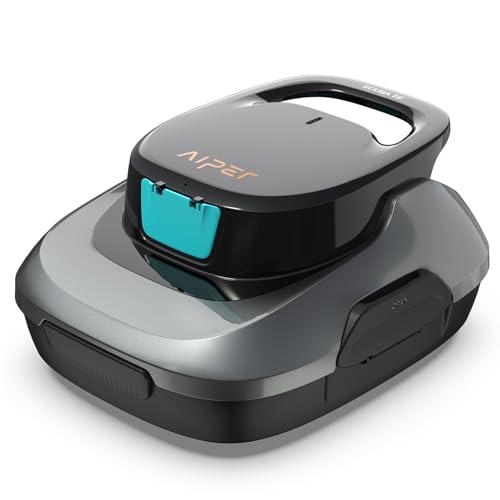
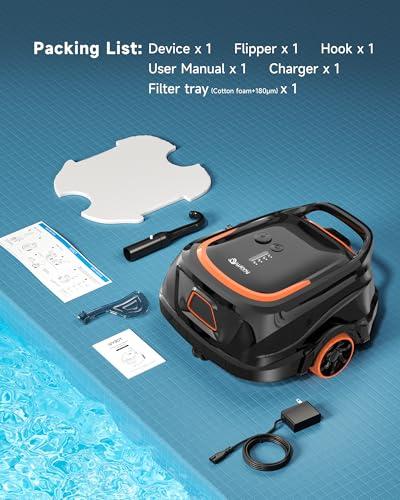
If you're tired of manually vacuuming your pool every week, cordless robotic cleaners promise a tempting solution. These battery-powered robots scoot around your pool floor, sucking up debris while you relax poolside. But here's the reality check: at the time of writing, both the Aiper Scuba SE and WYBOT A1 represent entry-level solutions with significant limitations compared to their corded cousins.
Released in recent years as manufacturers rushed to capitalize on the cordless trend, these robots target budget-conscious pool owners who want automation without the premium price tag of established brands like Dolphin. The technology has improved since the early cordless models that barely lasted 60 minutes, but fundamental physics still limits what battery power can accomplish in pool cleaning.
Before diving into the comparison, let's set realistic expectations. Both the Scuba SE and WYBOT A1 are floor-only cleaners, meaning they can't climb walls or clean waterlines like premium corded models. They're designed for flat-bottom pools – think typical above-ground pools or simple rectangular in-ground pools without significant slopes.
These robots use suction-based cleaning, which means they rely on internal pumps to create water flow that pulls debris into filter baskets. Unlike pressure-side cleaners that use your pool's return jets for power, or suction-side cleaners that connect to your skimmer, cordless robots are completely self-contained systems.
The trade-off for cordless convenience is substantial. Where a corded robot like the Dolphin Escape might generate 4,000+ GPH (gallons per hour) of suction, these battery-powered units max out around 2,000 GPH. It's like comparing a shop vacuum to a handheld dustbuster – both clean, but one does it far more effectively.
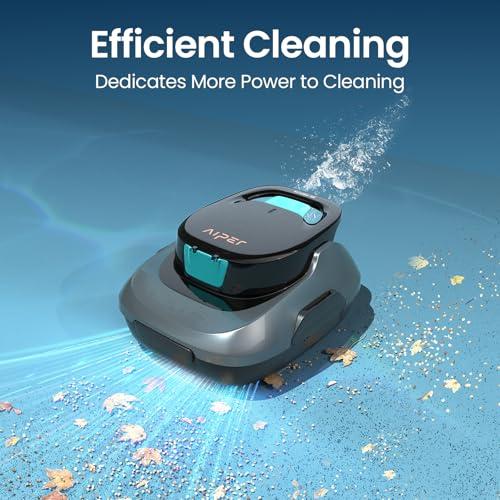
The most critical performance metric for any pool cleaner is suction power, measured in GPH or flow rate. Here, the WYBOT A1 shows a clear advantage with 2,140 GPH compared to the Scuba SE's 1,200 GPH. That's nearly 80% more suction power, which translates directly to better debris pickup.
In practical terms, this difference is immediately noticeable. The WYBOT A1 can handle small leaves, sand, and fine debris more effectively, while the Scuba SE often pushes larger particles around rather than collecting them. Both struggle with anything substantial – don't expect either to pick up large leaves, twigs, or bugs reliably.
The WYBOT A1's dual-motor system (one for propulsion, one for suction) allows it to dedicate more power to cleaning compared to single-motor designs that must balance movement and suction. This engineering approach, borrowed from higher-end models, explains much of its performance advantage.
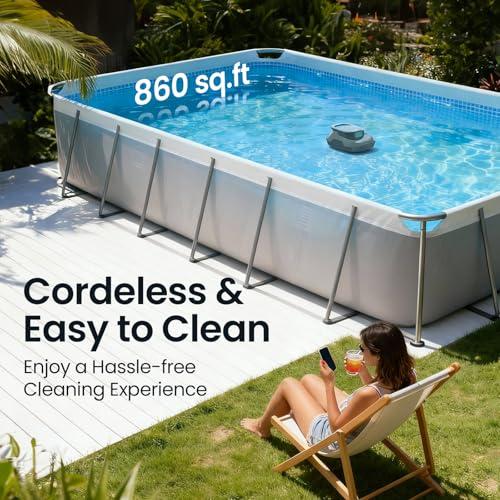
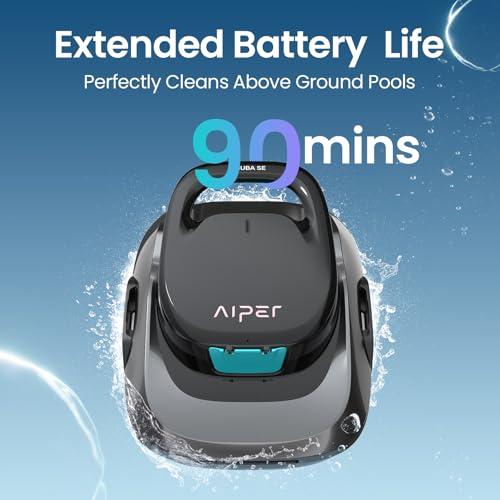
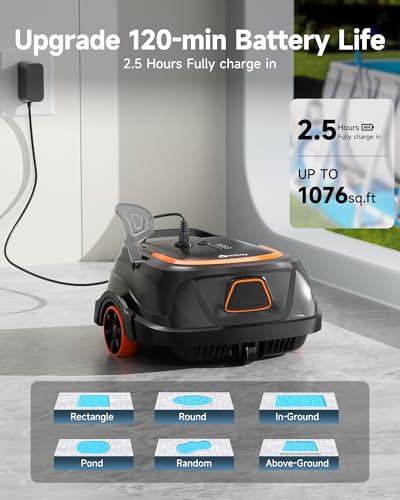
Pool coverage directly relates to battery life, and here the WYBOT A1 extends its lead. With 120 minutes of runtime covering up to 1,076 square feet, it outperforms the Scuba SE's 90-minute operation over 860 square feet. For reference, a typical 24-foot round above-ground pool covers about 450 square feet, while a 15x30-foot rectangular pool spans 450 square feet.
The extended runtime matters because these robots use random navigation patterns. Unlike smart robots that systematically map your pool, both units bounce around semi-randomly, relying on longer operation times to eventually cover most areas. The WYBOT A1's extra 30 minutes significantly improves the odds of complete floor coverage.
However, "coverage" is generous terminology. Both robots frequently miss corners, get stuck on pool fixtures, and require manual intervention. Based on user feedback we've researched, expect to guide either robot manually at least once per cleaning cycle, especially in pools with steps, ladders, or irregular shapes.
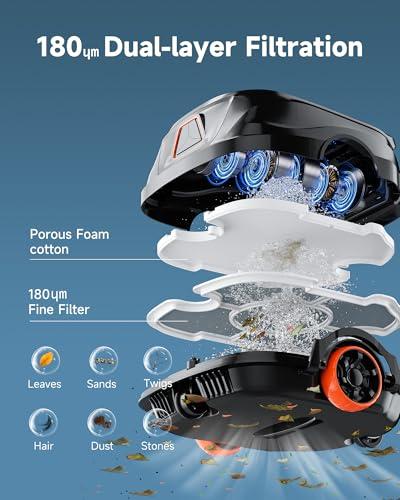
The WYBOT A1 introduces a clever dual-layer filtration system combining a 180-micron mesh screen with cotton foam backing. Microns measure particle size – for reference, fine sand particles range from 100-300 microns, so 180-micron filtration captures most visible debris while allowing water to flow freely.
This dual-layer approach increases filtration area by 70% compared to single-screen designs like the Scuba SE. The cotton foam acts as a secondary filter, trapping ultra-fine particles that might escape the mesh. It's similar to how high-end air purifiers use multiple filter stages – each layer captures different particle sizes for more thorough cleaning.
The WYBOT A1's 3.5-liter debris tank also holds significantly more than typical 2-liter baskets, reducing the frequency of filter cleaning during operation.
The Scuba SE uses a straightforward 180-micron filter tray with a 2-liter capacity. While simpler to clean and maintain, this basic setup gets overwhelmed quickly by heavy debris loads. Users report needing to empty and rinse the filter multiple times during cleaning cycles, especially in pools with significant leaf accumulation.
The trade-off between filtration sophistication and maintenance complexity is real. The WYBOT A1's dual-layer system requires more thorough cleaning but captures debris more effectively, while the Scuba SE's simple filter is easier to maintain but less capable.
Neither robot offers true smart navigation. Both use bump-and-turn algorithms – essentially bouncing off obstacles and changing direction randomly. This primitive approach works eventually but creates frustrating user experiences.
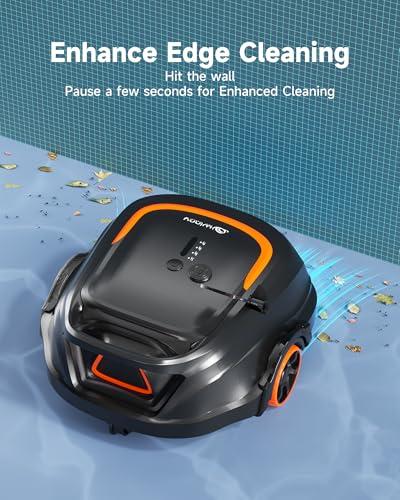
The WYBOT A1 attempts to address navigation limitations with its patented edge-enhanced cleaning feature. When the robot detects a pool wall, it pauses momentarily to intensify suction along the edge. This sounds clever in theory, but user reviews suggest it helps only marginally with edge debris.
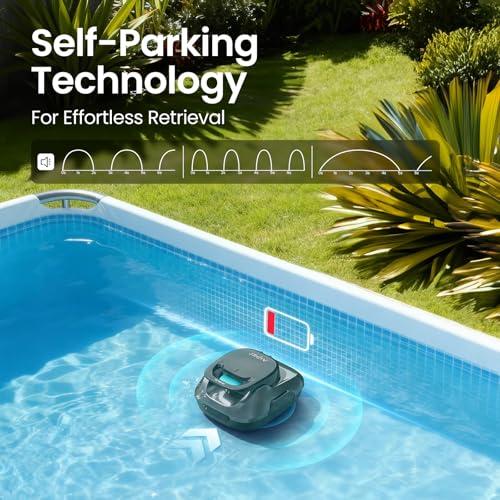
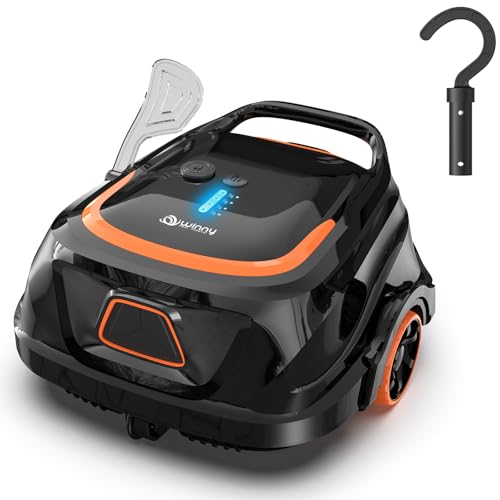
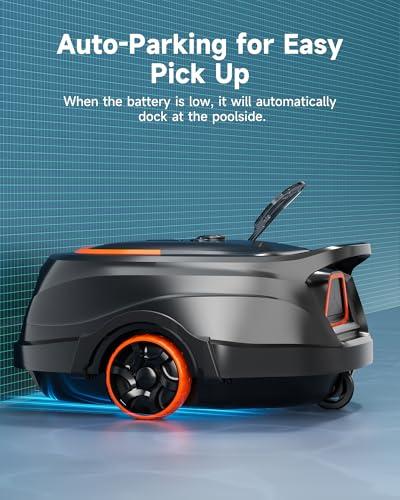
Both robots include auto-parking features that attempt to position them near pool edges when batteries run low. The Scuba SE uses audio alerts to communicate status, while the WYBOT A1 employs LED indicators. These convenience features work inconsistently based on pool shape and obstacles.
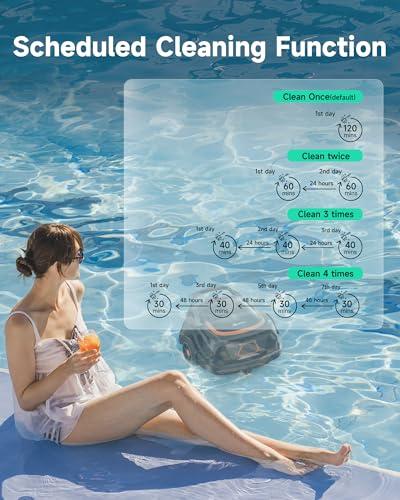
The WYBOT A1 includes programmable scheduling with four cleaning modes: single 120-minute sessions, two 60-minute sessions over two days, three 40-minute sessions over three days, or four 30-minute sessions spread across the week. This cycle timer functionality represents a significant convenience upgrade over the Scuba SE's manual-only operation.
For busy pool owners, the ability to set-and-forget cleaning schedules justifies the WYBOT A1's higher price point. The Scuba SE requires manual activation for each cleaning cycle, which inevitably leads to forgotten maintenance and dirtier pools.
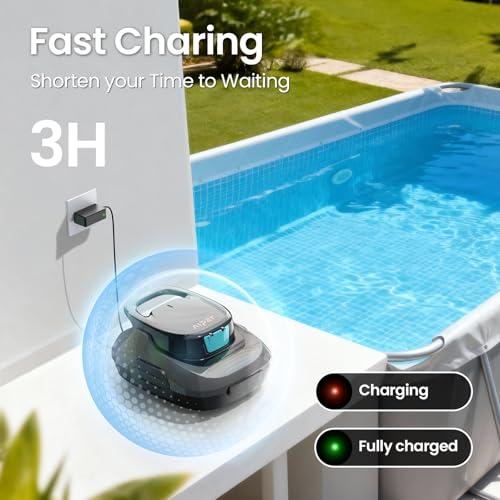
Both robots charge in approximately 2.5-4 hours, representing significant improvements over early cordless models that required overnight charging. The WYBOT A1 uses a higher-capacity 2600mAh lithium-ion battery compared to the Scuba SE's similar-capacity system.
Battery degradation remains a concern for cordless pool cleaners. Lithium-ion batteries typically lose 10-15% capacity annually, meaning your robot's runtime will decrease over time. Neither manufacturer provides clear guidance on battery replacement costs or procedures, which could create expensive maintenance requirements after 2-3 years.
Filter maintenance frequency directly impacts user satisfaction. The WYBOT A1's larger debris capacity and dual-layer system means less frequent emptying but more complex cleaning procedures. The cotton foam requires thorough rinsing and occasional replacement, adding to maintenance costs.
The Scuba SE's simpler filter system is easier to clean but needs attention more frequently. Users report emptying filters 2-3 times per cleaning cycle in heavily debris-laden pools, which defeats much of the automation benefit.
Both robots face significant reliability challenges based on user feedback we've analyzed. Common failure modes include motors stopping after minimal use, battery systems failing to charge properly, and filter assemblies breaking during maintenance. The WYBOT A1 offers a 2-year manufacturer warranty compared to the Scuba SE's standard coverage, providing some additional protection.
However, warranty support appears inconsistent for both brands, with users reporting difficulties obtaining service or replacement parts. This reliability uncertainty makes the total cost of ownership unpredictable.
At the time of writing, the WYBOT A1 typically costs 20-30% more than the Scuba SE, but delivers substantially better performance across most metrics. The price difference often amounts to the cost of a few manual pool cleanings, making the WYBOT A1 the better value for most users.
However, both products occupy a challenging market position. For slightly more money, consumers can access entry-level corded robots with dramatically superior cleaning performance, unlimited runtime, and better reliability records. The cordless convenience premium is substantial.
The Scuba SE works best for small above-ground pools under 600 square feet with minimal debris accumulation. If you have a simple round or oval pool in a relatively clean environment (few overhanging trees, light usage), the Scuba SE can provide adequate maintenance cleaning.
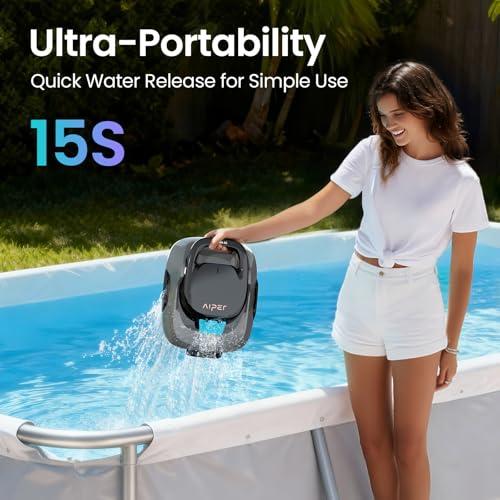
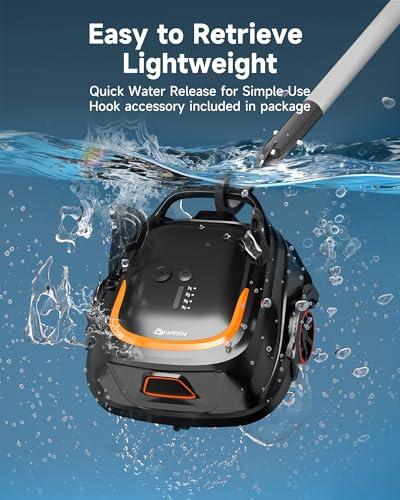
The robot's lighter weight (7.5 pounds) and rapid water-release system make it easier to handle for users with physical limitations. The simplified operation appeals to those who prefer basic functionality over complex features.
Budget-conscious pool owners who need occasional automated cleaning rather than regular maintenance might find the Scuba SE acceptable, understanding its limitations.
The WYBOT A1 suits medium-sized pools up to 1,000 square feet where the extended runtime and superior suction justify the higher price. Pool owners who value scheduling automation will appreciate the cycle timer functionality.
If your pool accumulates fine debris like sand, pollen, or small organic matter, the WYBOT A1's dual-layer filtration system provides noticeably better results than single-screen alternatives.
The larger debris tank reduces maintenance frequency, making the WYBOT A1 more suitable for pools with moderate leaf accumulation or regular use.
Both robots represent compromises between convenience and performance. While cordless operation eliminates dealing with long power cords and provides portability, the fundamental limitations of battery power create significant cleaning deficiencies.
Corded alternatives like the Dolphin Escape, while requiring electrical connections, offer 3-4 times the suction power, systematic navigation, wall climbing capabilities, and unlimited runtime. For pools larger than 800 square feet or those with slopes, walls, or heavy debris loads, corded robots provide far superior value despite higher upfront costs.
The cordless category works best as supplemental cleaning tools rather than primary pool maintenance solutions. Think of them like robot vacuum cleaners – helpful for regular light cleaning but insufficient for deep cleaning needs.
Between these two cordless options, the WYBOT A1 offers significantly better value despite its higher price. The improved suction power, extended runtime, dual-layer filtration, and scheduling capabilities justify the additional cost for most users considering cordless pool cleaners.
However, both products require realistic expectations. They're maintenance tools rather than comprehensive cleaning solutions, suitable for specific pool types and cleaning scenarios. Pool owners with complex shapes, significant debris challenges, or pools larger than 1,000 square feet should seriously consider corded alternatives despite the convenience trade-offs.
The cordless pool cleaner market continues evolving rapidly, with new models appearing regularly as manufacturers refine battery technology and motor efficiency. While current options like the Scuba SE and WYBOT A1 represent significant improvements over early cordless attempts, they still lag behind corded alternatives in fundamental cleaning performance.
For the right user with appropriate expectations, the WYBOT A1 provides a reasonable entry point into automated pool cleaning, while the Scuba SE serves budget-conscious users with minimal cleaning requirements.
| Aiper Scuba SE Pool Cleaner | WYBOT A1 Cordless Robotic Pool Cleaner |
|---|---|
| Pool Coverage Area - Determines which pool sizes each robot can handle effectively | |
| Up to 860 sq ft (suitable for smaller above-ground pools) | Up to 1,076 sq ft (handles medium-sized pools better) |
| Battery Runtime - Longer runtime means more thorough cleaning coverage | |
| 90 minutes (adequate for basic cleaning cycles) | 120 minutes (33% longer for better floor coverage) |
| Suction Power - Most critical spec for debris pickup effectiveness | |
| 1,200 GPH (struggles with larger debris, pushes particles around) | 2,140 GPH (78% more powerful, handles small leaves and sand better) |
| Filtration System - Affects water clarity and debris capture efficiency | |
| Single 180μm filter tray, 2L capacity (basic but easy to clean) | Dual-layer 180μm mesh + cotton foam, 3.5L capacity (70% more filtration area) |
| Charging Time - How long you wait between cleaning sessions | |
| 3-4 hours (standard for this category) | 2.5 hours (faster turnaround for frequent use) |
| Weight - Impacts ease of handling and removal from pool | |
| 7.5 lbs (lighter, easier to lift when full of water) | Approximately 7.7 lbs (slightly heavier but still manageable) |
| Smart Features - Convenience and automation capabilities | |
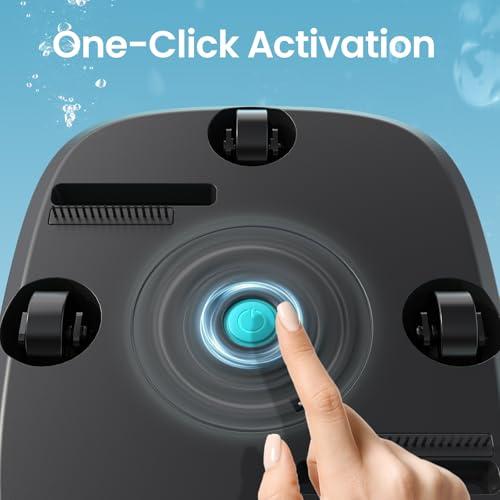
| One-click activation, audio alerts, auto-parking | Cycle timer scheduling, LED status display, auto-parking, edge-enhanced cleaning |
| Navigation Technology - How effectively the robot covers your pool floor | |
| Random bump-and-turn pattern (requires manual guidance) | Random bump-and-turn with edge-pausing feature (slightly better coverage) |
| Pool Compatibility - Which pool types work best with each robot | |
| Above-ground and flat in-ground pools only | Above-ground and flat in-ground pools, handles slopes up to 15° |
| Special Features - Unique selling points that differentiate each model | |
| Rapid water release (drains 80% water in 15 seconds) | Programmable weekly scheduling (up to 4 cleaning modes) |
| Warranty Coverage - Protection for your investment | |
| Standard manufacturer warranty | 2-year manufacturer warranty (better long-term protection) |
The WYBOT A1 is better suited for larger pools, covering up to 1,076 square feet compared to the Aiper Scuba SE's 860 square foot coverage. The WYBOT A1 also runs for 120 minutes versus 90 minutes, providing more thorough cleaning for medium-sized above-ground and in-ground pools.
The WYBOT A1 delivers significantly more suction power at 2,140 GPH compared to the Aiper Scuba SE's 1,200 GPH. This 78% increase in suction power means the WYBOT A1 handles small leaves, sand, and debris more effectively, while the Scuba SE often struggles with larger particles.
Both the Aiper Scuba SE and WYBOT A1 work on flat-bottom in-ground pools, but they're primarily designed for above-ground pools. Neither can climb walls or handle pools with significant slopes. The WYBOT A1 can manage slopes up to 15 degrees, while the Scuba SE requires completely flat surfaces.
The WYBOT A1 features superior dual-layer filtration with 180μm mesh plus cotton foam backing, increasing filtration area by 70%. It also has a larger 3.5L debris tank. The Aiper Scuba SE uses a simpler single 180μm filter with 2L capacity, which is easier to maintain but less effective at capturing fine particles.
The WYBOT A1 charges faster at 2.5 hours, while the Aiper Scuba SE takes 3-4 hours for a full charge. Both provide enough runtime for most pool cleaning sessions, but the WYBOT A1's quicker charging allows for more frequent use if needed.
Only the WYBOT A1 offers automatic scheduling with programmable cycle timers for up to 4 different cleaning modes per week. The Aiper Scuba SE requires manual activation for each cleaning session, making it less convenient for regular maintenance.
The Aiper Scuba SE features a rapid water release system that drains 80% of water in just 15 seconds, making it lighter and easier to lift out. The WYBOT A1 has auto-parking that positions it near the pool edge, but doesn't drain water as quickly.
Both the Aiper Scuba SE and WYBOT A1 can handle saltwater pools with salinity up to 5,000 ppm, which covers most residential saltwater systems. However, both are designed primarily for chlorinated pools and may have reduced longevity in saltwater environments.
The WYBOT A1 offers a 2-year manufacturer warranty, providing better long-term protection compared to the Aiper Scuba SE's standard warranty coverage. This extended warranty reflects greater confidence in the WYBOT A1's build quality and reliability.
Both the Aiper Scuba SE and WYBOT A1 struggle with large debris like full-sized leaves and twigs. The WYBOT A1 handles small leaves and fine debris better due to its stronger suction, but neither is ideal for pools with heavy leaf accumulation from overhanging trees.
No, both the Aiper Scuba SE and WYBOT A1 are floor-only cleaners that cannot climb walls or clean waterlines. They're designed specifically for flat pool floors and cannot handle steps, ladders, or vertical surfaces like premium corded models.
The WYBOT A1 provides better overall value despite its higher price, offering 78% more suction power, 33% longer runtime, superior filtration, and scheduling features. While the Aiper Scuba SE costs less upfront, the WYBOT A1's improved performance and features justify the price difference for most pool owners.
We've done our best to create useful and informative comparisons to help you decide what product to buy. Our research uses advanced automated methods to create this comparison and perfection is not possible - please contact us for corrections or questions. These are the sites we've researched in the creation of this article: thepoolnerd.com - aiper.com - roboticreviews.com - aiper.co.za - youtube.com - swim-fun.com - poolpad.com - robotshop.com - youtube.com - nabridas.mu - thepoolnerd.com - walmart.com - youtube.com - poolandspawarehouse.com.au - poolbots.com - vitafilters.com - bestbuy.com - thepoolfactory.com - roboticreviews.com - wybotpool.com - youtube.com - poolzoom.com - poolwarehouse.com - bestbuy.com - thepoolnerd.com - poolsupplyunlimited.com - youtube.com - eztestpools.com - youtube.com - iopool.com - homedepot.com - wybotpool.com

Privacy Policy
Terms and Conditions - Affiliate Policy
Home Security
© Copyright 2008-2026.
11816 Inwood Rd #1211, Dallas, TX 75244