

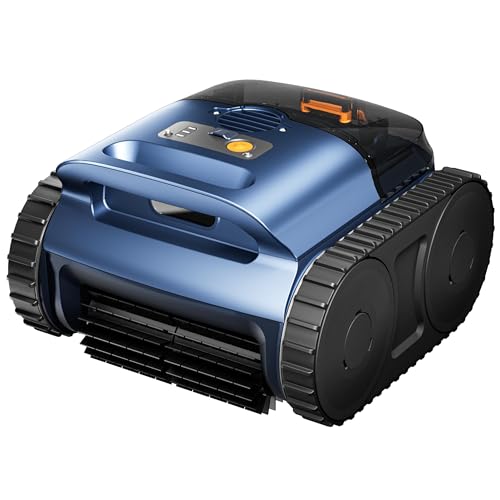
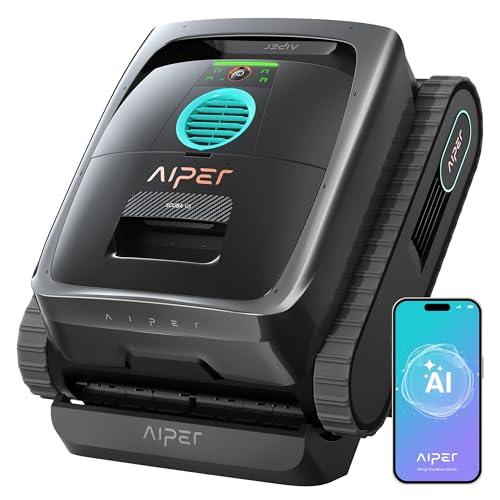
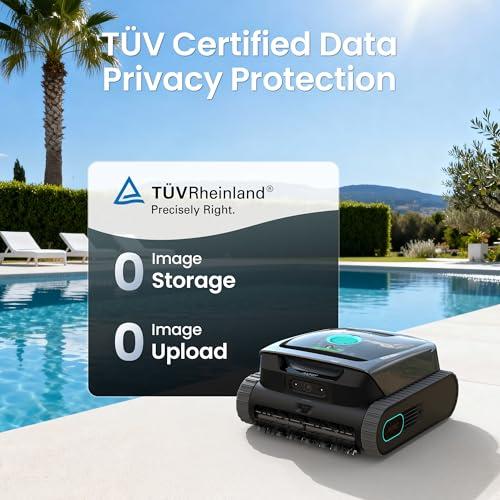
When it comes to keeping your pool crystal clear without the weekly hassle of manual cleaning, robotic pool cleaners have become the gold standard. But with technology advancing rapidly, choosing between different approaches can feel overwhelming. Today we're diving deep into two distinct philosophies in pool cleaning: the reliable, systematic approach of the Seauto Cordless Robotic Pool Cleaner and the cutting-edge AI-powered Aiper Scuba V3.
Robotic pool cleaners operate independently from your pool's filtration system, essentially acting as underwater vacuum robots. Unlike suction-side or pressure-side cleaners that rely on your pool pump, these self-contained units have their own motors, filtration systems, and navigation technology. This independence means they can clean more thoroughly without putting extra strain on your pool equipment.
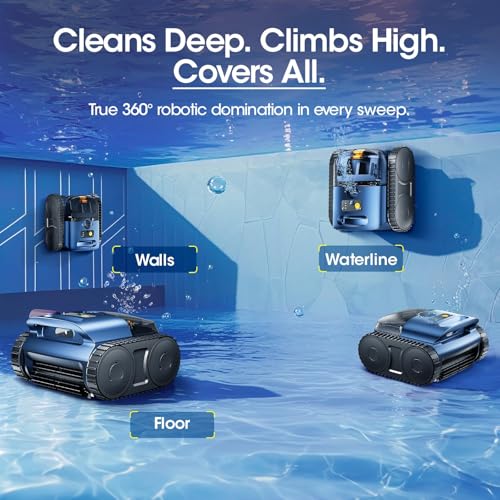
The most critical performance factors include navigation intelligence (how smart the robot is at covering every inch of your pool), suction power (measured in gallons per hour), filtration quality (how small particles it can capture), and coverage capability (floors, walls, and that tricky waterline where oils and debris accumulate).
What's particularly exciting about the current market is how dramatically navigation technology has evolved. Just a few years ago, most robotic cleaners used simple bump-and-turn patterns or basic gyroscopic sensors. Now we're seeing sonar mapping and even artificial intelligence entering the pool cleaning space, fundamentally changing how these machines operate.
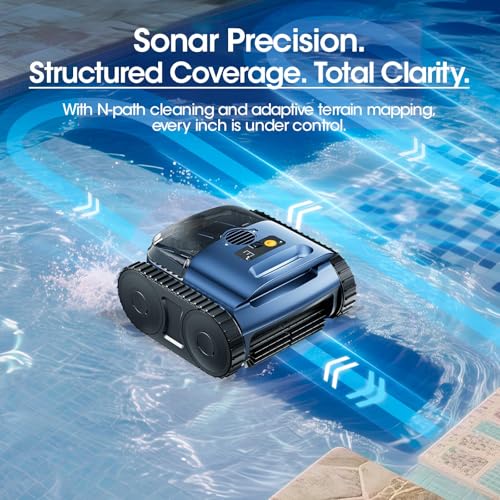
The Seauto Cordless Robotic Pool Cleaner, released in 2026, represents the refined evolution of sonar-based navigation technology. This approach uses ultrasonic sensors—the same basic technology that helps submarines navigate underwater—to map your pool's boundaries and create systematic cleaning patterns.
Here's how it works: sonar waves bounce off pool walls, steps, and obstacles, creating a real-time map that guides the robot's movement. Instead of wandering randomly like older models, the Seauto follows predetermined patterns—S-shaped routes for floors and N-patterns for walls. This systematic approach ensures comprehensive coverage without the frustrating dead spots that plagued earlier robotic cleaners.
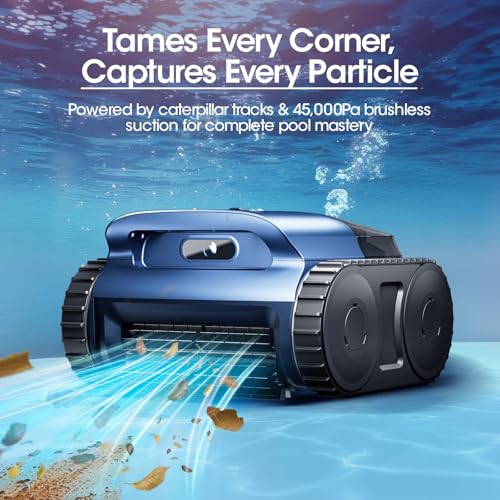
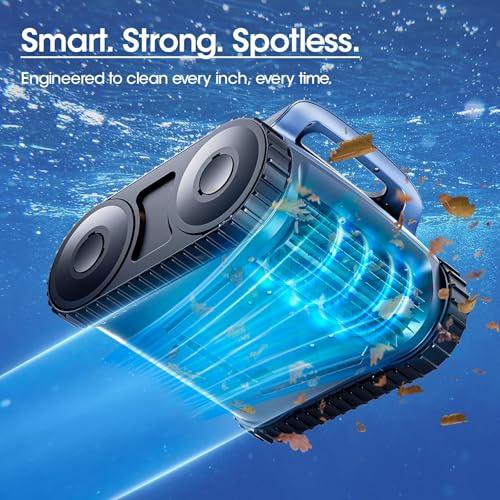
The dual 180W brushless motors deliver impressive 4,800 gallons per hour (GPH) of suction power. For context, that's enough to cycle through a typical backyard pool's worth of water in just a couple of hours. The brushless design is particularly significant because these motors run quieter, last longer, and maintain consistent power output compared to traditional brushed motors that gradually lose efficiency.
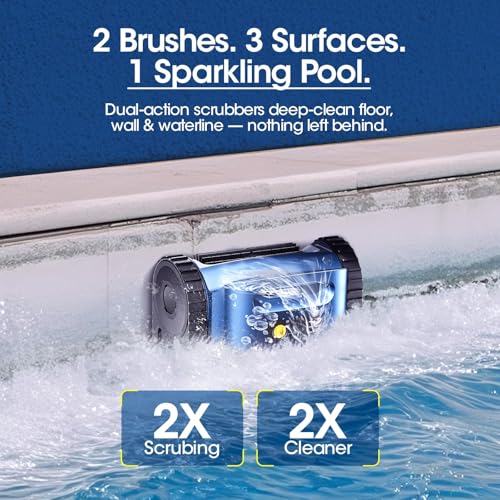
What sets the Seauto apart is its caterpillar tread design—those tank-like tracks you see on construction equipment. This isn't just for show; these treads provide exceptional grip on pool drains, around steps, and over uneven surfaces where wheeled cleaners often struggle or get stuck. The IP68 waterproof rating means every component is sealed against water ingress, crucial for reliability in the demanding pool environment.
The filtration system uses a 250-micron mesh, which captures everything from large leaves down to fine sand particles. To put this in perspective, human hair is about 70 microns thick, so this filter catches debris roughly 3-4 times thinner than hair.
The Aiper Scuba V3, also debuting in 2026, represents a fundamental shift toward artificial intelligence in pool cleaning. This isn't just marketing—the robot actually uses computer vision to "see" and identify different types of debris, then adapts its cleaning strategy accordingly.
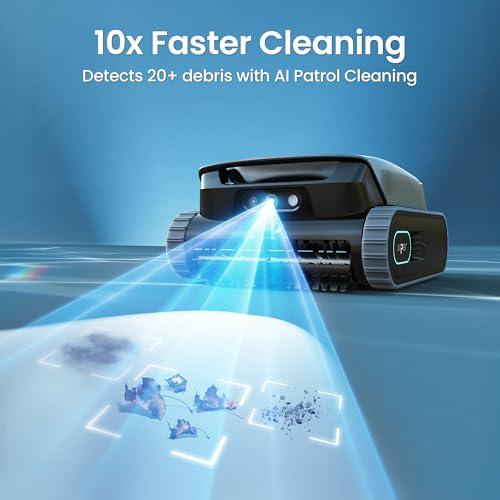
The VisionPath™ system combines AI computer vision with direct Time-of-Flight (dToF) sensors. Think of dToF as the same technology that helps your smartphone camera focus instantly—it measures how long light takes to bounce back from objects to determine distance and shape. Combined with visual recognition, this allows the Aiper to identify over 20 different debris types within a 2-meter detection range.
This capability transforms pool cleaning from a systematic "vacuum everything" approach to targeted debris hunting. When the robot spots leaves concentrated in one corner or notices algae buildup along a particular wall section, it can adjust its path to focus on problem areas while spending less time on already-clean sections. According to user reports, this reduces overall cleaning time by up to 40% compared to traditional systematic patterns.
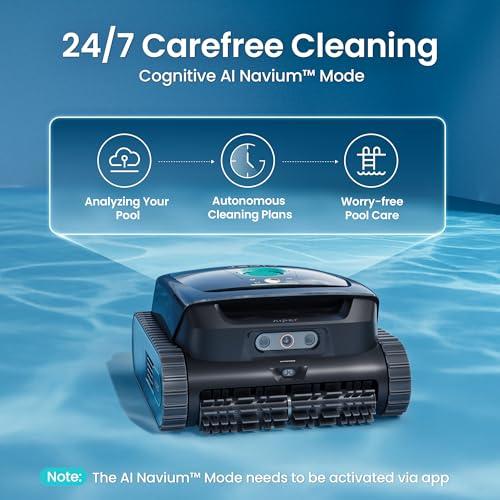
The Cognitive AI Navium™ Mode takes this intelligence further by learning your pool's specific characteristics over time. It considers factors like pool size, local weather patterns (which affect debris accumulation), and cleaning history to build autonomous weekly schedules. Once activated, it essentially runs your pool maintenance without further input for up to seven days.
The JetAssist™ waterline cleaning deserves special attention because this area is where most pool cleaners struggle. Oils from sunscreen, pollen, and organic matter create that unsightly ring just above the waterline that manual scrubbing usually requires. The Aiper uses a dedicated motor running at 1.5 meters per second to scrub horizontally along this zone, something no systematic cleaner can match.
Navigation Intelligence: This is where the philosophical differences become stark. The Seauto's sonar approach guarantees comprehensive coverage through methodical patterns. You know exactly what it's going to do, and it does it reliably every time. The Aiper's AI approach offers superior efficiency and adaptability but introduces some unpredictability—sometimes it might spend extra time on problem areas you didn't even notice needed attention.
From our research into user experiences, the AI approach works brilliantly when it correctly identifies problem areas, but sonar navigation provides more predictable, consistent results. For pool owners who prefer knowing exactly how their cleaner will behave, the systematic approach wins. For those who want maximum efficiency and don't mind some variability in cleaning patterns, AI offers clear advantages.
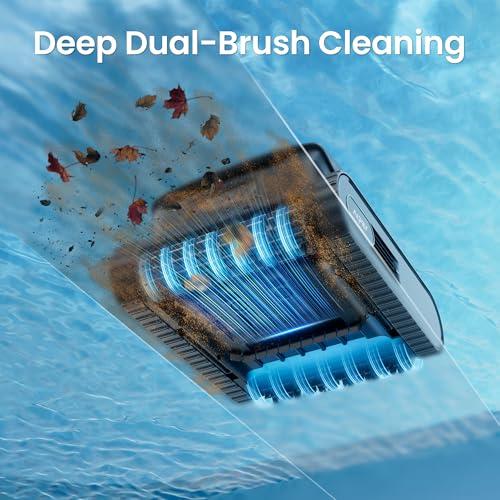
Suction Performance: Both units deliver identical 4,800 GPH suction power, but they implement this differently. The Seauto uses dual 180W motors working in tandem, providing redundancy and potentially more consistent power distribution. The Aiper achieves the same suction with its single motor system paired with optimized brush design.
In practical terms, both handle typical residential pool debris effectively. The dual-motor approach might have slight advantages with heavy debris loads or when one motor experiences resistance, but for normal maintenance cleaning, performance appears equivalent based on user feedback.
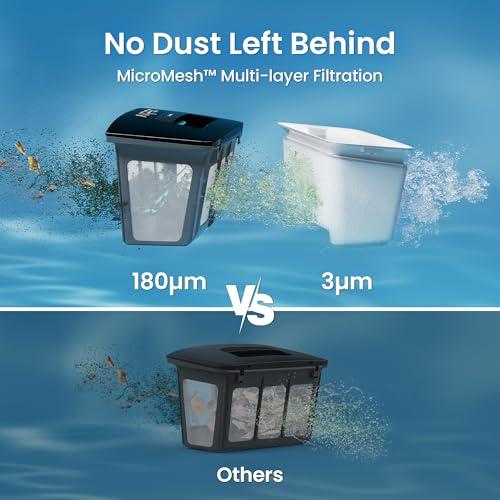
Filtration Quality: Here's where the Aiper takes a significant lead. Its MicroMesh™ system captures particles down to 3 microns—that's roughly 80 times finer than the Seauto's 250-micron filter. This difference matters tremendously for water clarity. While both remove visible debris effectively, the ultra-fine filtration captures microscopic particles that affect water sparkle and clarity.
The 3-micron capability means capturing things like fine dust, pollen particles, and even some bacteria-sized contaminants that pass right through coarser filters. Pool owners consistently report noticeably clearer water with ultra-fine filtration systems.
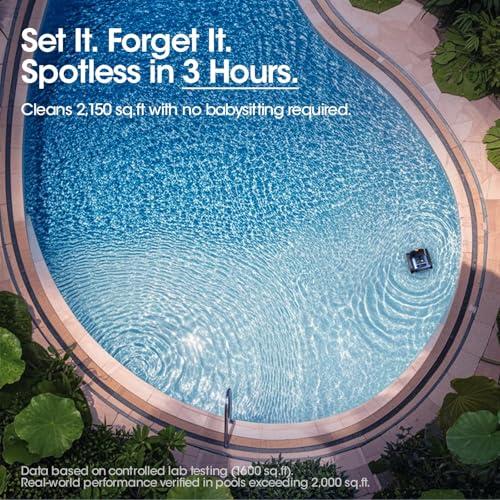
Coverage Capability: The Seauto handles larger pools, covering up to 2,150 square feet compared to the Aiper's 1,600 square foot capacity. This 35% difference in coverage area makes the Seauto better suited for larger residential pools or commercial applications.
However, the Aiper compensates with specialized capabilities like dedicated waterline cleaning and dual LED lights for night operation. The night cleaning feature is surprisingly valuable—running the cleaner overnight means your pool is ready every morning without daytime noise or interference with swimming.
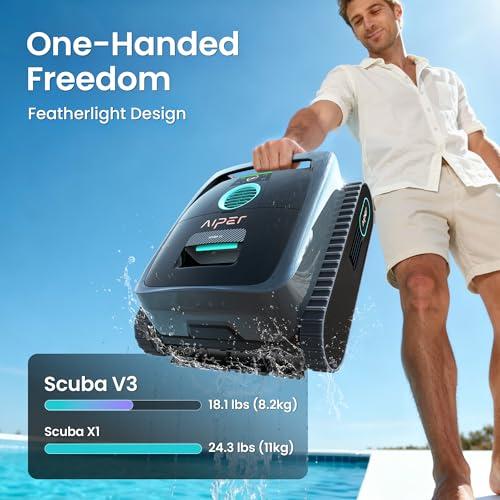
Weight and handling reveal interesting design philosophies. The Seauto weighs 13.2 pounds, making it relatively portable while maintaining robust construction. Its caterpillar treads and reinforced design suggest prioritizing durability and reliability over convenience features.
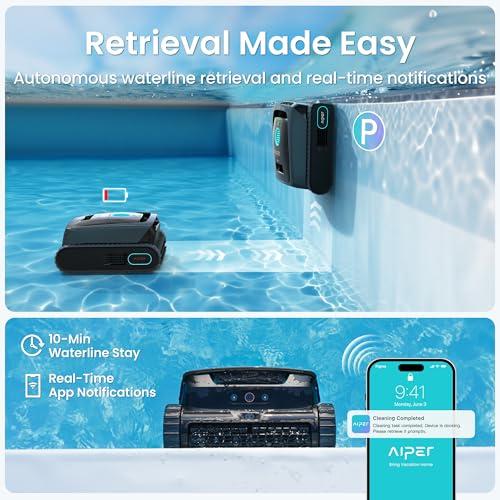
The Aiper at 18.1 pounds is heavier but incorporates thoughtful handling features like ergonomic design for one-handed retrieval and automatic waterline parking. When cleaning cycles complete, it climbs to the waterline and sends smartphone notifications, eliminating the need to dive in or use retrieval tools.
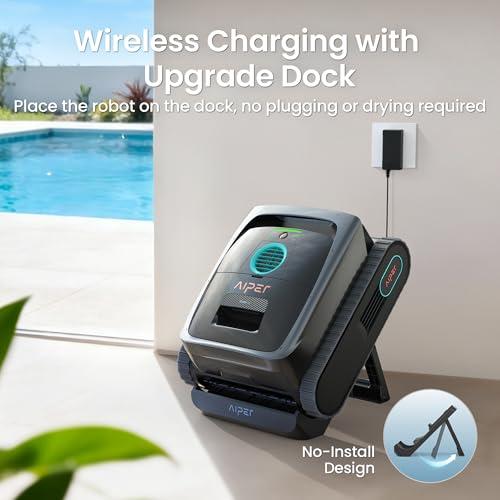
The wireless charging dock on the Aiper represents a significant convenience upgrade over traditional plug-in charging. No exposed electrical connections mean safer operation and easier maintenance—just drop the robot on the dock when charging is needed.
Both products represent 2026 technology, incorporating years of refinement in robotic pool cleaning. The Seauto builds on proven sonar navigation that has matured significantly since early implementations that often missed corners or got confused by complex pool shapes.
The Aiper pioneers AI integration in pool cleaning, following broader industry trends toward computer vision and machine learning. This technology will likely become more sophisticated over time, with software updates potentially improving performance without hardware changes.
From a longevity perspective, sonar-based systems tend to have fewer complex components that might fail, while AI systems offer more potential for capability improvements through software updates. The trade-off between proven reliability and cutting-edge features reflects different user priorities.
At the time of writing, these products sit in distinctly different price tiers, with the Seauto positioning as a premium value option while the Aiper commands premium pricing for its advanced features.
The Seauto delivers professional-grade cleaning capability at a more accessible price point. For pool owners prioritizing reliable, comprehensive cleaning without premium convenience features, it offers excellent value. The systematic sonar navigation, dual motors, and robust build quality provide capabilities that previously required much higher investment.
The Aiper justifies its premium pricing through advanced AI capabilities, ultra-fine filtration, and convenience features like wireless charging and automated scheduling. The 40% efficiency improvement alone could offset higher initial costs through reduced energy consumption over time.
Choose the Seauto if you:
Choose the Aiper if you:
The decision ultimately depends on your specific pool characteristics and personal priorities. Larger pools strongly favor the Seauto's expanded coverage capability, while the Aiper's AI advantages become more pronounced in pools with variable debris patterns or when maximum water clarity is essential.
Both represent significant technological advances over older robotic cleaners, offering capabilities that transform pool maintenance from weekly chores to largely automated processes. The choice between systematic reliability and adaptive intelligence reflects broader preferences in home automation—some users prefer predictable, consistent operation while others embrace smart systems that adapt and optimize automatically.
| Seauto Cordless Robotic Pool Cleaner 180W | Aiper Scuba V3 Robotic Pool Cleaner |
|---|---|
| Navigation Technology - How the robot maps and cleans your pool | |
| Sonar-based navigation with systematic S and N patterns for predictable, comprehensive coverage | AI VisionPath™ with computer vision and dToF sensors that identify 20+ debris types for targeted cleaning |
| Pool Coverage Area - Maximum pool size each can handle effectively | |
| Up to 2,150 sq ft (ideal for larger residential pools) | Up to 1,600 sq ft (sufficient for most standard pools) |
| Filtration Quality - How small particles each can capture | |
| 250 micron filter (captures visible debris and fine sand) | 3 micron MicroMesh™ system (captures microscopic particles for crystal-clear water) |
| Motor System - Power delivery and reliability | |
| Dual 180W brushless motors (4,800 GPH suction with redundancy) | Single motor system (4,800 GPH suction with optimized brush design) |
| Waterline Cleaning - Ability to clean the problem area where oils accumulate | |
| Standard wall climbing reaches waterline area | Specialized JetAssist™ horizontal scrubbing at 1.5 m/s for dedicated waterline cleaning |
| Weight and Handling - Impact on daily use and retrieval | |
| 13.2 lbs with caterpillar treads for enhanced traction | 18.1 lbs with featherweight design and one-handed retrieval capability |
| Charging System - Convenience and safety of power management | |
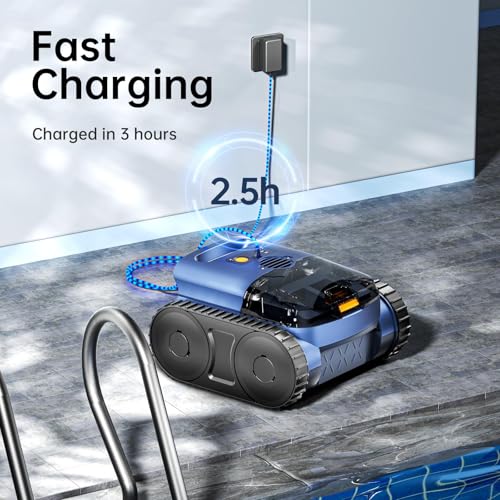
| Traditional plug-in charging (3 hours charge time) | Wireless charging dock with no exposed connections (5 hours charge time) |
| Runtime and Battery - How long each cleans per charge | |
| Up to 150 minutes of cleaning time | 170-190 minutes with 10,400 mAh battery |
| Smart Features - Automation and convenience capabilities | |
| One-touch activation with three cleaning modes (floor, wall, full) | Cognitive AI Navium™ mode for 7-day autonomous scheduling plus app control with real-time notifications |
| Night Operation - Ability to clean in low light conditions | |
| Standard operation (no lighting system) | Dual LED lights enable 24/7 cleaning including night operations |
| Build Quality - Durability and weather resistance | |
| IP68 waterproof rating with industrial caterpillar tread design | IP68 rating with TÜV-certified construction and 2-year warranty |
The Seauto Cordless Robotic Pool Cleaner 180W handles larger pools better, covering up to 2,150 square feet compared to the Aiper Scuba V3's 1,600 square foot capacity. If you have a large residential pool or commercial application, the Seauto provides superior coverage area.
The Seauto uses sonar navigation with ultrasonic sensors to map your pool and follow systematic cleaning patterns, ensuring predictable and comprehensive coverage. The Aiper Scuba V3 employs AI computer vision that can identify over 20 types of debris and adapt its cleaning path in real-time, potentially reducing cleaning time by up to 40%.
The Aiper Scuba V3 significantly outperforms the Seauto in filtration quality. The Aiper's MicroMesh™ system captures particles down to 3 microns, while the Seauto uses a 250-micron filter. This means the Aiper removes microscopic particles for noticeably clearer water.
Both cleaners handle floors and walls, but the Aiper Scuba V3 excels at waterline cleaning with its specialized JetAssist™ technology that scrubs horizontally at 1.5 m/s. The Seauto provides standard wall climbing and waterline coverage through its systematic patterns.
The Aiper Scuba V3 offers superior convenience with wireless charging, automatic waterline parking, smartphone notifications, and 7-day autonomous scheduling. The Seauto provides simpler operation with one-touch activation but requires traditional plug-in charging and manual scheduling.
The Aiper Scuba V3 runs for 170-190 minutes per charge, while the Seauto operates for up to 150 minutes. However, the Aiper's AI efficiency can reduce actual cleaning time needed, while the Seauto follows systematic patterns that ensure complete coverage.
The Aiper Scuba V3 is specifically designed for night operation with dual LED lights, enabling 24/7 cleaning capability. The Seauto operates during standard daylight hours without specialized lighting systems.
Both the Seauto and Aiper Scuba V3 work on concrete, fiberglass, gunite, and vinyl pool surfaces. The Seauto features caterpillar treads for enhanced traction on challenging surfaces like drains and steps, while the Aiper uses computer vision to navigate around obstacles.
The Seauto uses proven sonar technology with dual 180W brushless motors for redundancy and simplified electronics. The Aiper Scuba V3 incorporates more advanced AI components but includes TÜV certification and a 2-year warranty with global support coverage.
Both the Seauto and Aiper Scuba V3 deliver identical 4,800 gallons per hour (GPH) of suction power. The difference lies in implementation: the Seauto uses dual motors while the Aiper achieves the same performance with optimized single-motor design.
The Seauto provides excellent value with professional-grade sonar navigation and dual motors at a more accessible price point. The Aiper Scuba V3 commands premium pricing but justifies it through advanced AI features, ultra-fine filtration, and convenience technologies like wireless charging.
Both cleaners handle typical residential pool debris effectively. The Seauto's dual-motor system and caterpillar treads provide advantages with heavy debris or challenging terrain. The Aiper Scuba V3's AI system excels at identifying and targeting debris concentrations, making it highly efficient for variable debris patterns.
We've done our best to create useful and informative comparisons to help you decide what product to buy. Our research uses advanced automated methods to create this comparison and perfection is not possible - please contact us for corrections or questions. These are the sites we've researched in the creation of this article: youtube.com - walmart.com - walmart.com - seautorobots.com - youtube.com - youtube.com - protoolreviews.com - youtube.com - youtube.com - vipoutlet.com - seautorobots.com - seautorobots.com - business.walmart.com - seautorobots.com - bedwettingtherapy.com - poolpromag.com - walmart.com - wellbots.com - geekbuying.com - prnewswire.com - youtube.com - seautorobots.com - seautorobots.com - youtube.com - device.report - seautorobots.com - youtube.com - blogs.aiper.com - youtube.com - youtube.com - youtube.com - aiper.store - youtube.com - youtube.com - pocnetwork.net - youtube.com - aiper.com - geardiary.com - youtube.com - arsa.technology - ces.tech - aiper.com - piscinarium.com

Privacy Policy
Terms and Conditions - Affiliate Policy
Home Security
© Copyright 2008-2026.
11816 Inwood Rd #1211, Dallas, TX 75244