

When it comes to keeping your pool sparkling clean without the weekly hassle of manual vacuuming, robotic pool cleaners have become game-changers for homeowners. These autonomous cleaning machines have evolved dramatically over the past few years, transforming from simple random-pattern crawlers into sophisticated AI-powered systems that can think, plan, and execute cleaning strategies better than most humans could manage manually.
The robotic pool cleaner market now spans from budget-friendly options under $100 to premium models costing several times more. This creates an interesting decision point for pool owners: do you go with a reliable, straightforward cleaner that handles the basics well, or invest in cutting-edge technology that promises to revolutionize your pool maintenance routine?
Today we're comparing two cleaners that represent these different philosophies perfectly: the TALOSBO S2 (released in 2026) and the Aiper Scuba V3 (also 2026). These represent the current state of budget-conscious reliability versus premium innovation in pool cleaning technology.
Before diving into specifics, it's worth understanding what separates good robotic cleaners from mediocre ones. The most critical performance factors revolve around three core areas: cleaning power, navigation intelligence, and operational convenience.
Suction power, measured in GPH (gallons per hour), determines how effectively a cleaner can pull debris from pool surfaces and transport it to the filtration system. Higher GPH ratings generally mean better debris pickup, but the relationship isn't always linear—brush design, water flow dynamics, and filtration efficiency all play important roles.
Navigation systems have seen the biggest technological leaps recently. Basic cleaners use random patterns, essentially bumping around until they've covered most areas through sheer persistence. Advanced models employ sensors, mapping, and even AI to create systematic cleaning strategies. The difference in cleaning time and thoroughness can be dramatic.
Filtration quality affects not just what gets picked up, but how clean your water actually becomes. Micron ratings tell you the smallest particle size a filter can capture—for reference, fine sand particles are typically 50-100 microns, while algae and bacteria range from 1-50 microns. Multi-layer filtration systems combine coarse screens for large debris with fine filters for microscopic particles.
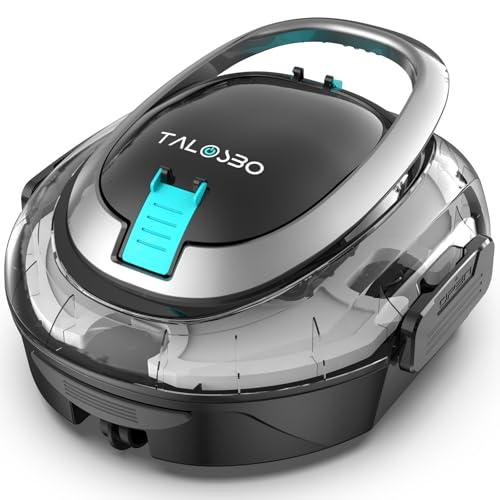
The TALOSBO S2 represents what happens when manufacturers focus on doing the fundamentals extremely well rather than chasing flashy features. Released in 2026, it builds on years of refinement in cordless pool cleaning technology, delivering reliable performance at a price point that makes robotic cleaning accessible to most pool owners.
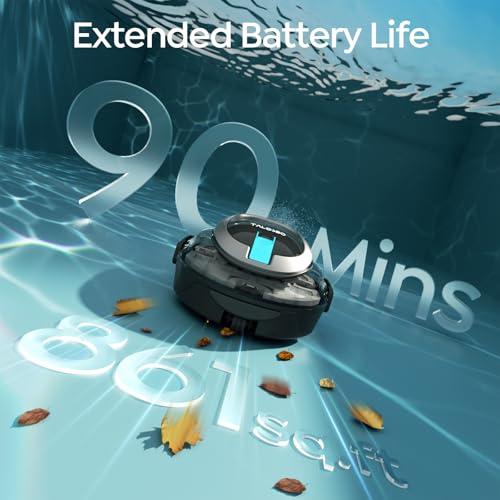
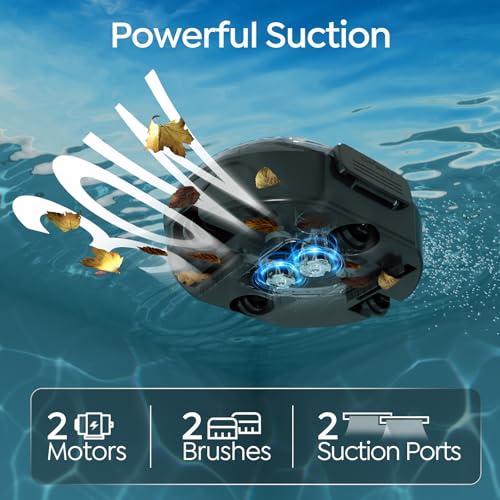
At its heart, the S2 features a dual-motor system generating 1,928 GPH of suction power. While this might seem modest compared to premium alternatives, it's actually well-suited for its intended use case. The dual motors split responsibilities—one handles propulsion while the other manages suction—creating consistent cleaning power throughout the 90-minute runtime without the performance degradation you sometimes see in single-motor designs.
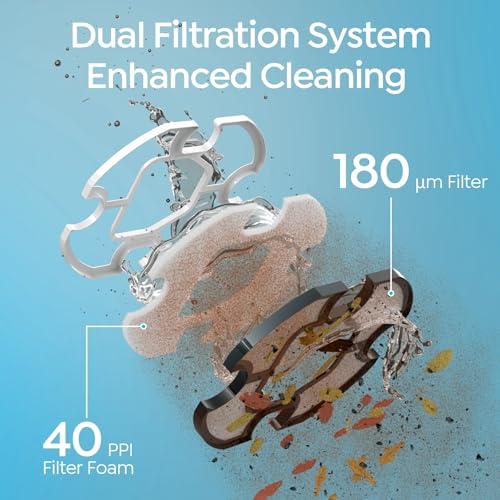
The dual-layer filtration system combines a 180-micron screen with a 40 PPI (pores per inch) sponge. This setup captures everything from large leaves down to fine sand particles effectively. The 180-micron screen handles the bulk debris, while the sponge provides secondary filtration that catches smaller particles that might otherwise recirculate into your pool water.
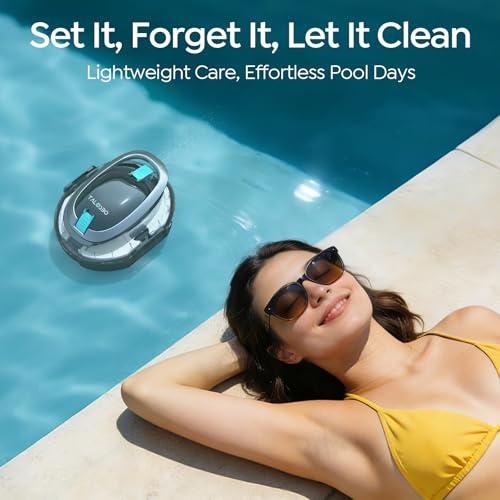
What makes the TALOSBO S2 particularly appealing is its transparent shell design. You can literally watch debris accumulation in real-time, which helps you understand your pool's cleaning needs and know exactly when the filter needs attention. This visual feedback, combined with the spacious filter basket, means fewer interruptions during cleaning cycles.
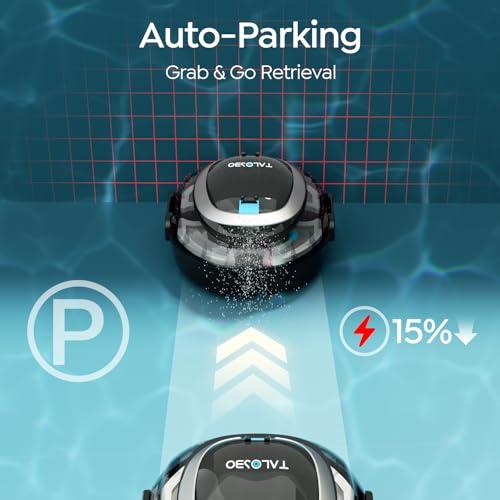
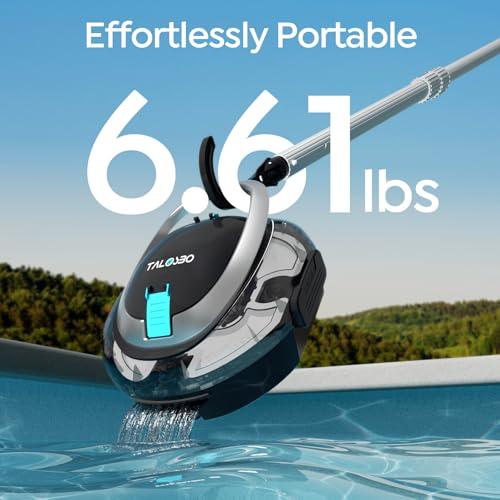
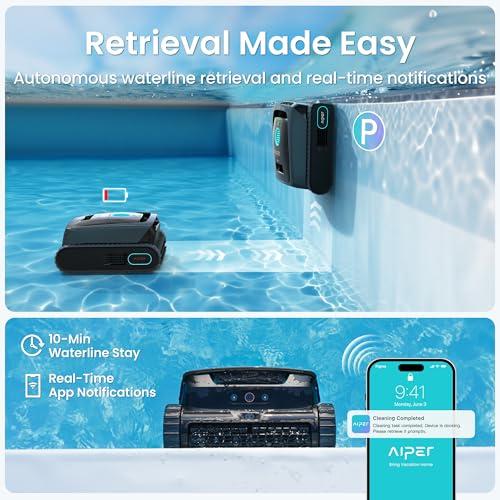
The auto-parking feature deserves special mention. When the cleaning cycle completes or battery runs low, the S2 automatically navigates toward the pool wall, making retrieval much easier than fishing around for a cleaner that died in the deep end. At 6.6 pounds, it's light enough for anyone to lift out with the included hook and pole.
However, the S2 has clear limitations that potential buyers need to understand. It's designed exclusively for flat-bottom pools—above-ground pools or in-ground pools without significant depth variations. Slopes, raised drains, or transition areas between shallow and deep ends frequently cause the cleaner to get stuck. It also only cleans floors, not walls or waterlines.
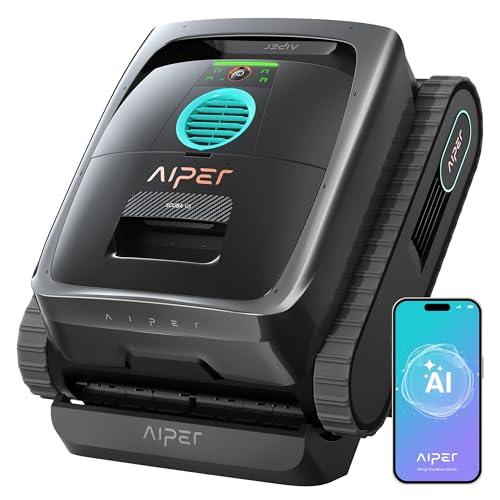
The Aiper Scuba V3 represents a fundamental shift in how pool cleaners approach their work. Released in 2026, it's among the first consumer pool cleaners to implement true computer vision and AI decision-making, moving beyond simple sensor navigation to actual visual analysis of pool conditions.
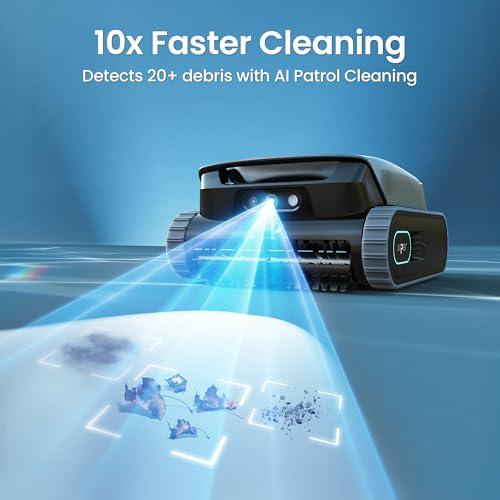
The standout feature is VisionPath™ Adaptive Path Planning, which uses a front-mounted AI camera combined with dToF (direct Time-of-Flight) sensors. This system can identify over 20 different types of debris within a 2-meter detection range—leaves, sand, twigs, toys, and even different types of algae formations. Rather than following predetermined patterns, the Scuba V3 actively hunts debris, moving directly toward problem areas it visually identifies.
This targeted approach, called AI Patrol Cleaning, can reduce cleaning time by up to 40% compared to random-pattern cleaners. Instead of spending time in already-clean areas, the V3 focuses its efforts where they're actually needed. The system builds a real-time understanding of your pool's layout and debris distribution patterns.
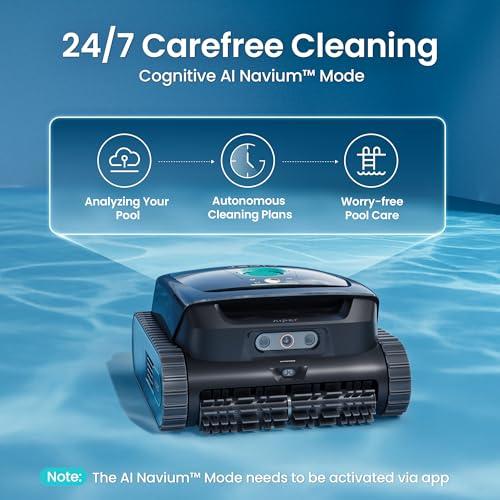
The Cognitive AI Navium™ Mode takes this concept even further, creating autonomous weekly cleaning schedules based on pool size, local weather data, and cleaning history. Once activated, the Scuba V3 can operate independently for up to seven days, automatically determining when cleaning is needed and executing optimized cleaning cycles without any user intervention.
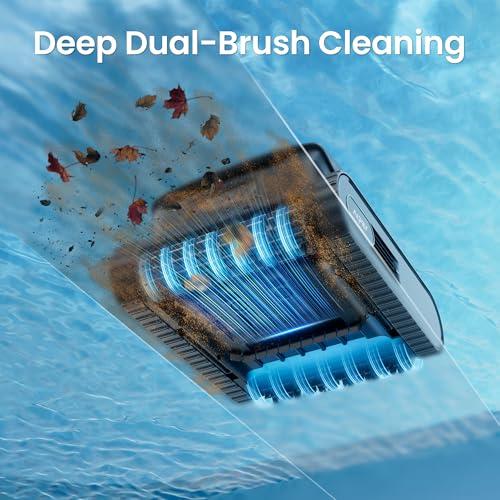
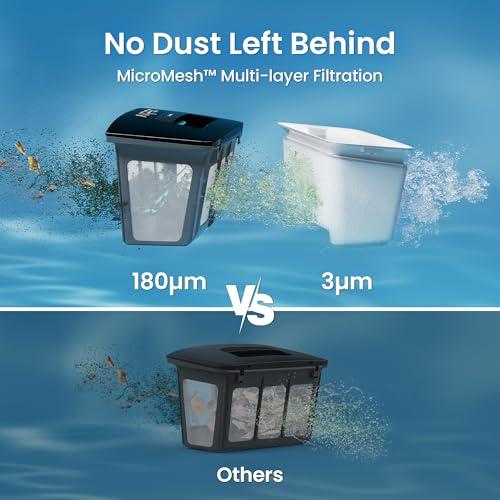
Cleaning performance backs up the intelligence with 4,800 GPH suction power—more than double the TALOSBO S2. The dual-brush system actively agitates debris while powerful suction channels it into the MicroMesh™ multi-layer filtration system. This setup captures particles down to 3 microns, which includes most bacteria and fine algae particles that contribute to cloudy water.
Unlike the S2, the Scuba V3 provides comprehensive pool coverage. It climbs walls smoothly and features JetAssist™ waterline cleaning technology that scrubs horizontally at water level—the area where sunscreen oils, pollen, and other contaminants typically accumulate. This waterline cleaning capability addresses one of the most challenging aspects of pool maintenance that typically requires manual scrubbing.
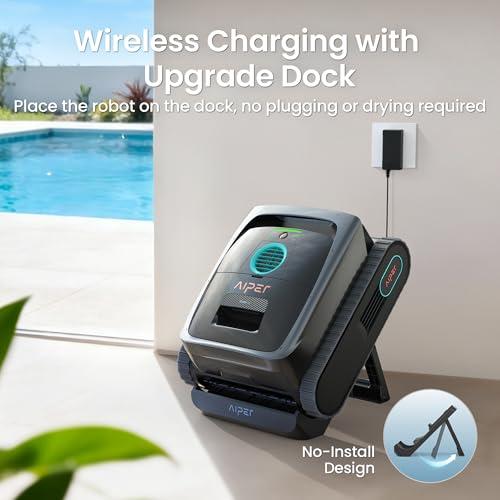
The 150-180 minute runtime from a 10,400 mAh battery supports extended cleaning sessions and multiple operational modes. You can run floor-only, wall-only, waterline-only, or comprehensive auto mode depending on current needs. The wireless charging dock eliminates exposed electrical contacts, reducing corrosion risks while providing convenient storage.
When evaluating pool cleaners, certain performance characteristics matter more than others, and the differences between these models become most apparent in real-world usage scenarios.
Debris Pickup Effectiveness represents the core function, and here the performance gap is significant. The TALOSBO S2's 1,928 GPH provides adequate suction for routine maintenance—it handles settled dirt, sand, and small leaves effectively on flat surfaces. User reviews consistently praise its ability to clear visible debris and maintain water clarity in smaller pools.
The Aiper Scuba V3's 4,800 GPH delivers noticeably superior pickup power, especially for challenging debris like wet leaves stuck to pool surfaces or fine sand that requires stronger suction to dislodge. The dual-brush agitation helps break loose stubborn debris that suction alone might miss. For pools that see heavy use or challenging debris loads, this extra power translates to visibly cleaner results.
Coverage Consistency reveals another crucial difference. The S2 uses random movement patterns that eventually cover most floor areas through persistence. While this approach works, it can leave some spots under-cleaned while over-cleaning others. The transparent shell lets you monitor progress, but you can't direct it to missed areas.
The V3's visual navigation creates systematic grid patterns that ensure complete coverage without redundant passes. The AI system remembers cleaned areas and focuses on remaining dirty zones. This methodical approach typically achieves better overall cleanliness in shorter timeframes.
Filtration Quality significantly impacts water clarity beyond just visible debris removal. The TALOSBO S2's dual-layer system effectively captures particles down to fine sand size, which handles most visible contamination. For typical residential pools with standard debris loads, this filtration level maintains acceptable water quality.
The Scuba V3's 3-micron filtration capability removes microscopic particles that contribute to water cloudiness and quality issues. This includes most bacteria, fine algae, and chemical precipitates that can make water appear dull even when free of visible debris. The difference in water clarity after cleaning cycles is often immediately noticeable.
Pool Compatibility determines which cleaner can actually work in your specific setup. The S2 excels in flat-bottom above-ground pools and simple rectangular in-ground designs without significant depth changes. Its limitation to floor cleaning keeps maintenance simple but incomplete.
The V3 handles complex pool geometries including kidney shapes, tanning ledges, steps, and varying depths. The wall-climbing capability addresses vertical surfaces where algae and staining commonly develop. For pools with these features, the V3 provides cleaning coverage that would otherwise require manual effort.
The 2026 release timeframe for both cleaners represents an interesting inflection point in pool cleaning technology. The TALOSBO S2 embodies the mature state of traditional cordless cleaning—reliable motors, efficient filtration, and practical features refined through years of iteration. This approach prioritizes proven functionality over experimental features.
The Aiper Scuba V3 represents the beginning of AI integration in pool maintenance. Computer vision processing, machine learning algorithms, and predictive scheduling were largely theoretical in pool cleaners just a few years ago. The implementation in the V3 suggests this technology will become standard in premium cleaners going forward.
From a future-proofing perspective, the S2 offers stability—it does what it does well and likely will continue doing so reliably for years. The V3 offers adaptability—its AI systems can potentially improve through software updates, learning better cleaning strategies over time.
At the time of writing, the TALOSBO S2 represents exceptional value for budget-conscious buyers, typically priced in the sub-$100 range. This price point makes robotic pool cleaning accessible to homeowners who previously relied on manual methods or basic suction cleaners. The performance-per-dollar ratio is genuinely impressive for appropriate pool types.
The Aiper Scuba V3 commands a significant premium, reflecting its advanced technology and comprehensive capabilities. While the absolute price is much higher, the value proposition becomes compelling when considering the labor savings from true autonomous operation and the superior cleaning results from AI-guided navigation and powerful suction.
The cost difference isn't just about features—it reflects fundamentally different approaches to pool maintenance. The S2 provides automation for basic floor cleaning, while the V3 approaches complete pool maintenance autonomy.
The decision between these cleaners largely depends on your specific pool characteristics, maintenance expectations, and budget considerations.
Choose the TALOSBO S2 if you have a smaller, flat-bottom pool and want reliable robotic cleaning without complexity. It's perfect for above-ground pools, simple rectangular in-ground designs, or as a backup cleaner for pools that occasionally need quick touch-ups. The straightforward operation appeals to users who prefer appliances that do their job without requiring app management or advanced setup.
The S2 also makes sense for pool owners testing robotic cleaning for the first time. The low entry cost lets you experience the convenience of automated cleaning before potentially upgrading to more sophisticated models later.
Select the Aiper Scuba V3 if you want comprehensive pool maintenance automation and have a budget that supports premium features. It excels in larger pools, complex shapes with multiple surfaces, or situations where debris loads vary significantly. The AI capabilities provide genuine convenience for busy homeowners who want their pool maintenance to truly run itself.
The V3 particularly appeals to tech-enthusiasts who appreciate cutting-edge features and users with demanding cleaning requirements that benefit from intelligent debris detection and comprehensive surface coverage.
Both cleaners excel in their intended roles, but they serve different needs and expectations. The TALOSBO S2 proves that effective pool cleaning doesn't require premium pricing or complex features—sometimes reliable execution of core functions provides the best user experience.
The Aiper Scuba V3 demonstrates how advanced technology can genuinely improve pool maintenance outcomes when implemented thoughtfully. The AI navigation and comprehensive coverage capabilities address real limitations of traditional cleaners rather than adding features for their own sake.
Your pool's specific characteristics should drive this decision more than brand preferences or feature comparisons. A simple above-ground pool will be perfectly maintained by the S2, while a complex in-ground design with multiple surfaces really benefits from the V3's advanced capabilities.
Consider your long-term maintenance goals as well. If you want to minimize ongoing pool care involvement, the Scuba V3's autonomous operation and comprehensive cleaning justify the premium. If you're comfortable with basic automation that handles the most tedious cleaning tasks, the TALOSBO S2 delivers excellent value and reliability.
| TALOSBO S2 Cordless Robotic Pool Cleaner | Aiper Scuba V3 Robotic Pool Cleaner |
|---|---|
| Suction Power - Determines debris pickup effectiveness and cleaning speed | |
| 1,928 GPH (adequate for routine maintenance) | 4,800 GPH (2.5x stronger for heavy debris loads) |
| Navigation Technology - Critical for cleaning efficiency and coverage completeness | |
| Random movement with auto-parking | AI vision with VisionPath™ adaptive planning |
| Pool Coverage - Defines what surfaces get cleaned | |
| Floor only (flat surfaces) | Floor, walls, and waterline comprehensive |
| Runtime - How long it cleans per charge cycle | |
| 90 minutes (suitable for smaller pools) | 150-180 minutes (handles larger pools in one cycle) |
| Pool Size Capacity - Maximum area effectively cleaned | |
| Up to 861 sq.ft (round pools 16ft diameter) | Up to 1,600 sq.ft (large residential pools) |
| Pool Compatibility - Which pool types work best | |
| Flat-bottom pools only (above-ground/simple in-ground) | All pool types including slopes, walls, complex shapes |
| Filtration System - Affects water clarity and maintenance frequency | |
| Dual-layer 180-micron + sponge (captures visible debris) | MicroMesh™ 3-micron multi-layer (removes microscopic particles) |
| Weight - Impacts ease of handling and retrieval | |
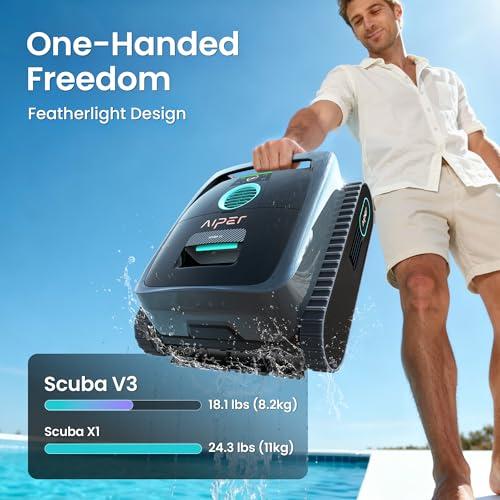
| 6.6 lbs (very lightweight, easy one-hand lifting) | 18.1 lbs (heavier but manageable with ergonomic design) |
| Smart Features - Convenience and automation level | |
| Basic operation, transparent debris viewing | App control, 7-day autonomous scheduling, wireless charging |
| Charging System - Affects convenience and maintenance | |
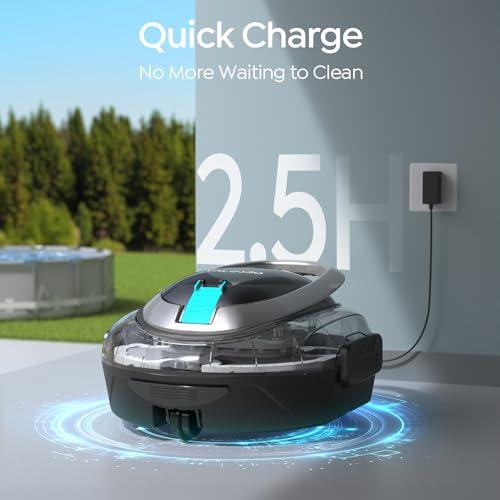
| 2.5-hour charge time with cable | 5-hour wireless dock charging (no exposed contacts) |
| Debris Detection - How it finds and targets dirt | |
| Cleans randomly until debris encountered | AI identifies 20+ debris types within 2-meter range |
| Setup Complexity - Time from box to cleaning | |
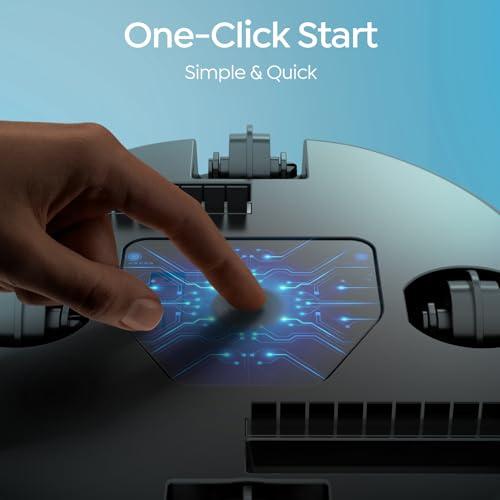
| Drop in pool and press button | One-click app activation with dock setup |
| Value Position - Who gets the best deal | |
| Budget-friendly reliability for basic needs | Premium technology for comprehensive automation |
The TALOSBO S2 is ideal for small pools up to 861 square feet, particularly round pools up to 16 feet in diameter. Its 90-minute runtime and lightweight 6.6-pound design make it perfect for above-ground and smaller flat-bottom pools. The Aiper Scuba V3 can handle small pools too but is designed for larger areas up to 1,600 square feet, making it potentially overkill for smaller installations.
The primary difference is navigation intelligence and cleaning scope. The TALOSBO S2 uses random movement patterns and cleans floors only, while the Aiper Scuba V3 features AI vision technology with VisionPath™ adaptive planning that cleans floors, walls, and waterlines. The Scuba V3 also offers 2.5x stronger suction power at 4,800 GPH versus the S2's 1,928 GPH.
The Aiper Scuba V3 has significantly stronger suction at 4,800 GPH compared to the TALOSBO S2's 1,928 GPH. This translates to better debris pickup, especially for challenging items like wet leaves or fine sand. However, the S2's suction power is adequate for routine maintenance in smaller, flat-bottom pools with typical debris loads.
Yes, both cleaners work on above-ground pools, but with different capabilities. The TALOSBO S2 is specifically designed for flat-bottom above-ground pools and excels in this application. The Aiper Scuba V3 also works on above-ground pools but offers additional wall cleaning capabilities that above-ground pool owners may find valuable for comprehensive maintenance.
The TALOSBO S2 is simpler to operate with drop-and-go functionality and basic controls. It requires no apps or complex setup - just charge, drop in the pool, and press a button. The Aiper Scuba V3 offers more convenience through automation but requires initial app setup and wireless dock installation. For pure simplicity, the S2 wins, but for hands-off automation, the V3 is superior.
The TALOSBO S2 runs for 90 minutes per charge, which is sufficient for most small to medium pools. The Aiper Scuba V3 provides 150-180 minutes of runtime, allowing it to clean larger pools in a single session. The V3 also features a wireless charging dock for convenient recharging without cable connections.
The Aiper Scuba V3 is better suited for most in-ground pools because it can handle varying depths, slopes, walls, and complex shapes. It also cleans waterlines where debris commonly accumulates. The TALOSBO S2 only works well with flat-bottom in-ground pools without significant depth variations or raised features, limiting its effectiveness in traditional deep-end pool designs.
The TALOSBO S2 uses dual-layer filtration with a 180-micron screen and 40 PPI sponge to capture visible debris and fine particles. The Aiper Scuba V3 features MicroMesh™ multi-layer filtration that captures particles as small as 3 microns, including bacteria and fine algae. The V3's superior filtration results in noticeably clearer water quality.
No, the TALOSBO S2 cannot climb walls - it's designed exclusively for floor cleaning on flat surfaces. The Aiper Scuba V3 can climb walls and features JetAssist™ technology for horizontal waterline cleaning. If you need wall and waterline cleaning capability, the Scuba V3 is the only option between these two models.
Value depends on your needs and budget. The TALOSBO S2 offers exceptional value for basic floor cleaning in flat-bottom pools, with reliable performance at a budget-friendly price point. The Aiper Scuba V3 provides premium value through AI automation, comprehensive coverage, and superior cleaning power, justifying its higher cost for users wanting complete pool maintenance automation.
Neither cleaner requires professional installation. The TALOSBO S2 needs no setup - simply charge it and drop it in your pool. The Aiper Scuba V3 includes a wireless charging dock that requires placement near your pool but no electrical work or plumbing modifications. Both are designed for easy DIY setup and operation.
The Aiper Scuba V3 handles heavy debris loads much better due to its 4,800 GPH suction power, dual-brush system, and AI debris detection that targets problem areas. The TALOSBO S2 is adequate for routine maintenance but may struggle with heavy leaf loads or challenging debris. For pools that frequently accumulate significant debris, the V3's superior power and intelligence provide better cleaning results.
We've done our best to create useful and informative comparisons to help you decide what product to buy. Our research uses advanced automated methods to create this comparison and perfection is not possible - please contact us for corrections or questions. These are the sites we've researched in the creation of this article: talosbo.com - pricehistory.app - talosbo.com - youtube.com - beta.walmart.com - youtube.com - youtube.com - youtube.com - youtube.com - talosbo.com - talosbo.com - talosbo.com - youtube.com - talosbo.com - talosbo.com - talosbo.com - bestbuy.com - walmart.com - talosbo.com - tiendamia.com.uy - talosbo.com - youtube.com - blogs.aiper.com - youtube.com - youtube.com - youtube.com - aiper.store - youtube.com - youtube.com - pocnetwork.net - youtube.com - aiper.com - geardiary.com - youtube.com - arsa.technology - ces.tech - aiper.com - piscinarium.com

Privacy Policy
Terms and Conditions - Affiliate Policy
Home Security
© Copyright 2008-2026.
11816 Inwood Rd #1211, Dallas, TX 75244