

Pool maintenance used to mean dragging around heavy suction hoses, wrestling with tangled cords, or spending your weekends manually vacuuming. Cordless robotic pool cleaners promised to change all that when they hit the market in recent years, but the reality has been more complicated than the marketing suggests.
The fundamental appeal is obvious: drop a self-contained robot into your pool, and it cleans while you do literally anything else. No cords to manage, no dedicated electrical hookups, and theoretically no manual labor. But as we've researched extensively across user reviews and professional evaluations, the devil is very much in the details.
Before diving into specific models, it's crucial to understand what separates effective pool cleaners from expensive pool toys. The most important performance factors break down into several key areas that directly impact whether you'll love or regret your purchase.
Navigation intelligence determines whether your robot systematically cleans every inch of your pool or wanders around randomly like a lost Roomba. This isn't just about efficiency—poor navigation often means entire sections of your pool stay dirty while the robot repeatedly cleans the same spots.
Coverage capability refers to which surfaces the cleaner can actually reach. Entry-level models typically handle only flat pool floors, while more advanced units climb walls and clean the waterline where algae loves to grow. This difference fundamentally changes what kind of maintenance you'll still need to do manually.
Battery performance affects both how large a pool you can clean and how often you'll need to interrupt the cleaning process. Runtime varies dramatically between models, and charging speed determines how quickly you can get back to cleaning if the battery dies mid-cycle.
Filtration effectiveness determines what size particles the robot can capture and how much debris it can hold before needing to be emptied. Better filtration means cleaner water and less frequent maintenance.
These factors interact in ways that aren't always obvious from spec sheets, which is why real-world performance often differs significantly from manufacturer claims.
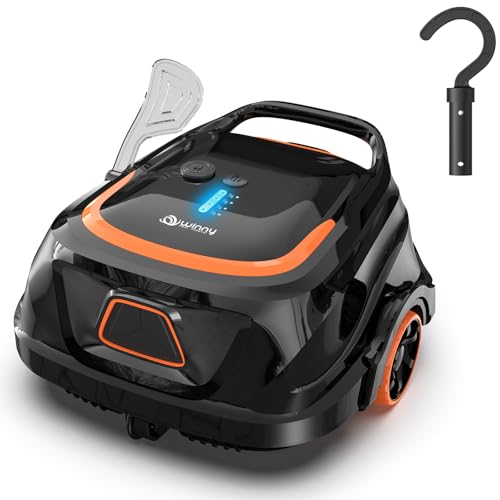
The WYBOT A1 emerged in 2023 as part of the wave of affordable cordless cleaners targeting budget-conscious pool owners. WYBOT positioned it as an entry-level solution that would handle basic pool maintenance without the complexity or cost of premium models.
The WYBOT A1 uses what's essentially bumper-car navigation—it moves in straight lines until it hits something, then turns and repeats. This random movement pattern is the same approach used by early robotic vacuums, and it has the same limitations: inconsistent coverage and inefficient cleaning paths.
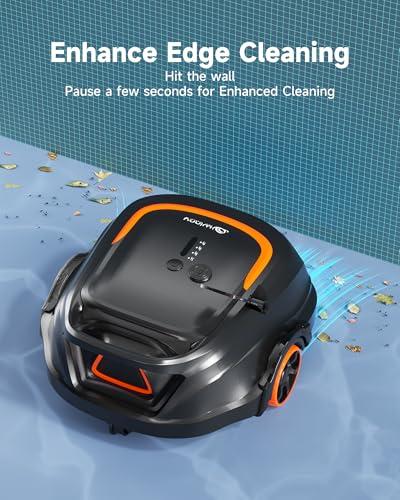
However, WYBOT did implement one clever feature called "edge-enhanced cleaning." When the robot reaches a pool wall, it pauses momentarily and increases suction power to better capture debris that tends to accumulate along edges. This addresses one of the biggest weaknesses of random-navigation cleaners, though it doesn't solve the fundamental coverage issues.
The navigation system includes basic sensors to detect walls and obstacles, but there's no mapping capability or systematic path planning. In practical terms, this means the WYBOT A1 will eventually cover most of your pool floor, but it might take significantly longer than a smarter robot, and some areas might get minimal attention.
This is where the WYBOT A1 makes its biggest compromise. It's designed exclusively for flat pool floors with slopes under 15 degrees. No wall climbing, no waterline cleaning, and no ability to handle significant depth changes or complex pool shapes.
For above-ground pools or simple rectangular in-ground pools with flat bottoms, this limitation might be acceptable, especially if you're already handling wall cleaning manually. But it's important to understand that you're only automating a fraction of pool maintenance—the floor represents perhaps 20-30% of the total surface area that needs regular cleaning in most pools.
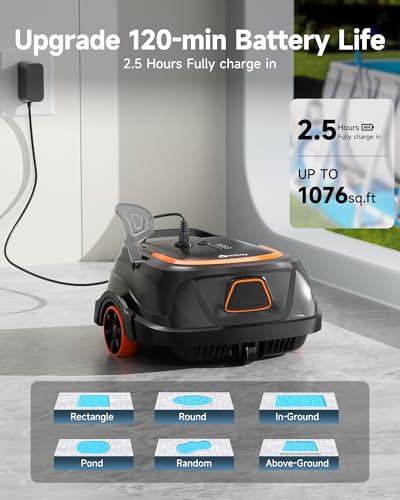
The robot can handle pools up to about 1,076 square feet, which covers most residential above-ground pools and smaller in-ground installations. Beyond that size, the 120-minute battery life becomes a limiting factor.
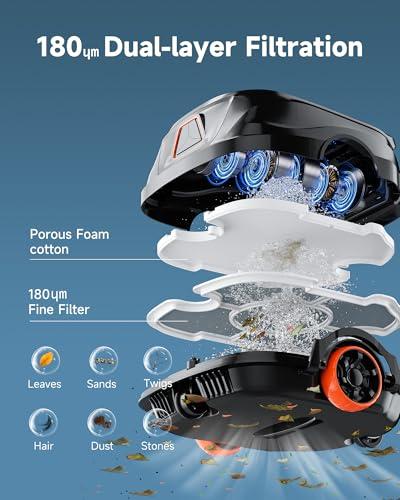
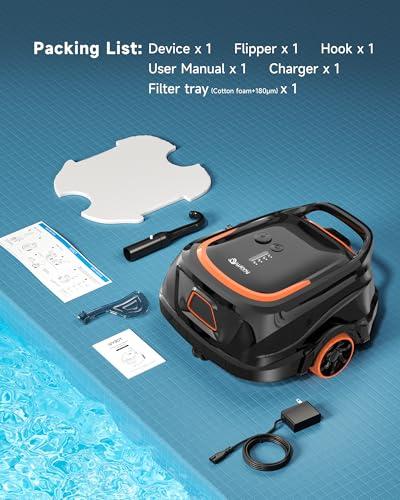
WYBOT implemented a dual-layer filtration system that combines a 180-micron mesh filter with a cotton foam layer. Microns measure particle size—for reference, fine sand particles are typically around 100-200 microns, while human hair is about 70 microns. The 180-micron rating means the WYBOT A1 can capture particles larger than fine sand but will miss smaller debris like algae spores or very fine silt.
The cotton foam layer helps trap particles that might otherwise pass through the mesh, and WYBOT claims this dual-layer approach increases filtration area by 70% compared to single-filter designs. In practice, this seems to work well for typical pool debris like leaves, dirt, and sand, though the lack of active scrubbing brushes means stubborn particles stuck to the pool surface won't be dislodged.
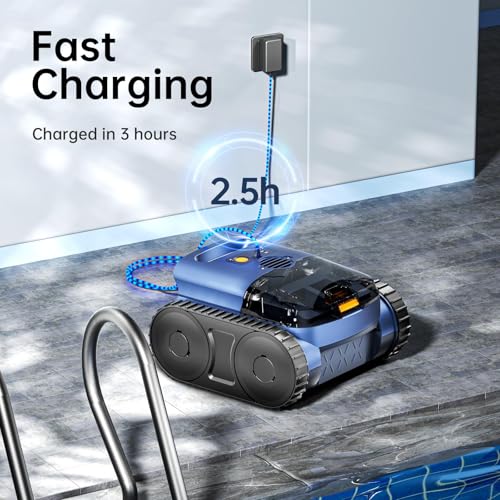
The WYBOT A1 genuinely excels in battery technology. The 120-minute runtime represents a significant improvement over earlier cordless cleaners, many of which struggled to complete even small pools on a single charge. More impressively, the 2.5-hour fast charging time means you can realistically run multiple cleaning cycles in a day if needed.
This battery performance is powered by dual 33-watt motors—relatively modest power that helps extend runtime. The tradeoff is weaker suction compared to more powerful models, but for floor-only cleaning of moderate debris loads, it seems adequate based on user reports.
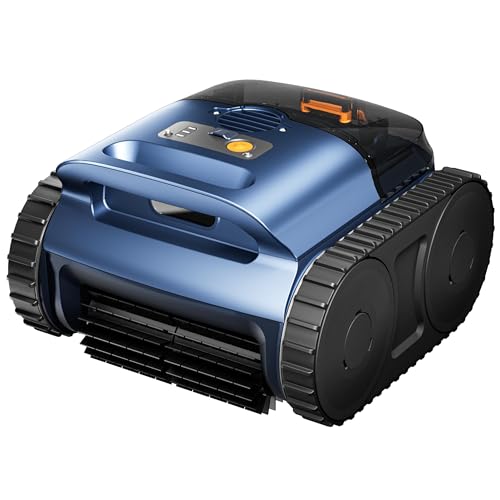
Seauto entered the cordless pool cleaner market more recently, launching their sonar-navigation models in 2024-2025. The company positioned these cleaners as addressing the key weaknesses of earlier cordless designs: poor navigation, limited coverage, and inadequate cleaning power.
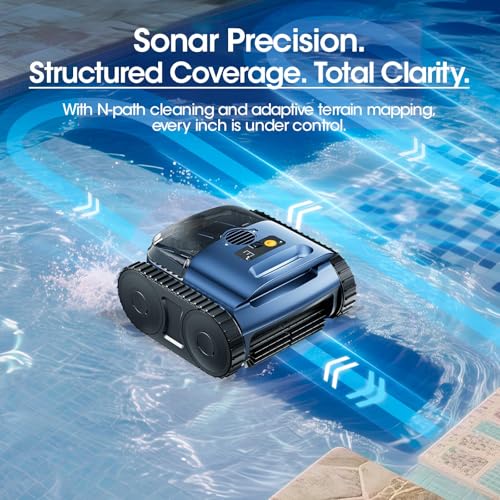
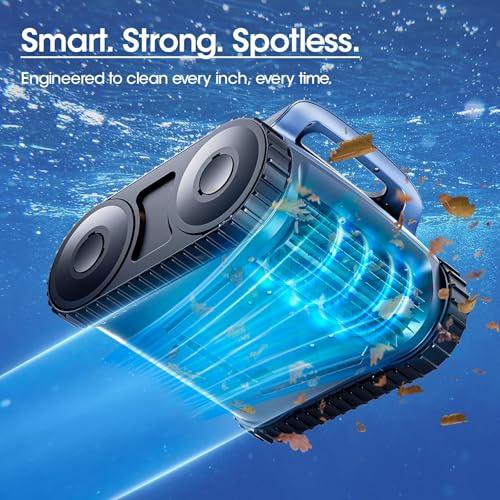
The standout feature of the Seauto 180W is its sonar-based navigation system. Instead of bouncing randomly around your pool, it uses ultrasonic sensors to map the pool environment and plan systematic cleaning paths.
Sonar navigation works by emitting sound waves and measuring how long they take to bounce back from surfaces. This creates a real-time map of the pool's shape, depth, and obstacles. The robot can then plan efficient cleaning patterns—typically an N-pattern for walls and S-pattern for floors—that ensure comprehensive coverage without excessive overlap.
Based on user reports we've analyzed, this navigation system achieves up to 98% pool coverage, compared to the 60-80% coverage typical of random-navigation robots. The difference is particularly noticeable in larger or more complex pool shapes, where random navigation can leave significant areas untouched.
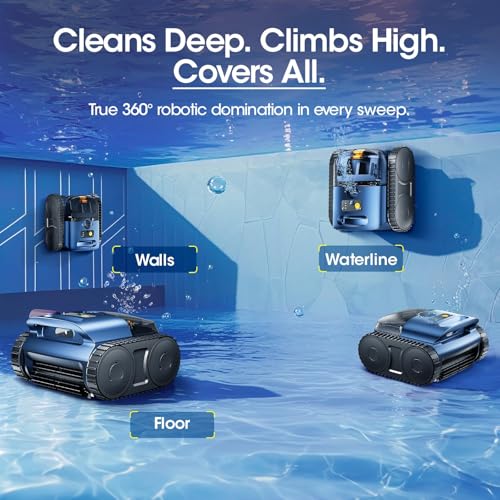
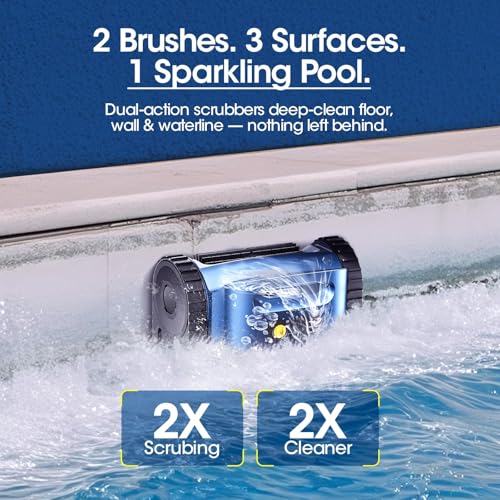
Unlike the WYBOT A1, the Seauto 180W is designed for complete pool cleaning. It transitions seamlessly from floor to wall climbing, using specialized tracks and brushes to maintain traction on vertical surfaces.
Wall climbing capability is more complex than it might seem. The robot needs sufficient suction to adhere to vertical surfaces while maintaining enough mobility to actually move and clean. It also needs to navigate the transition points between floors, walls, and the waterline without getting stuck or falling off.
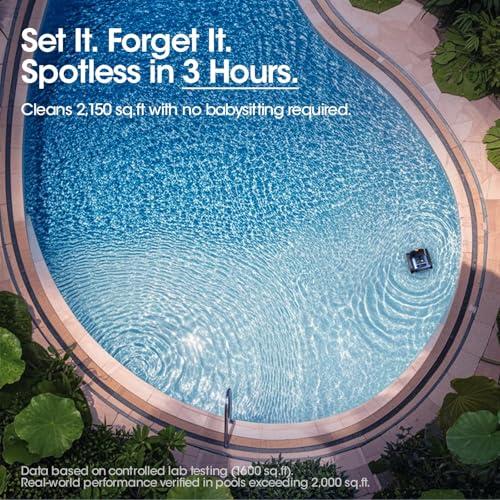
The Seauto 180W can handle pools up to 2,150 square feet and depths up to 16 feet, making it suitable for most residential installations. The ability to clean walls and waterlines is crucial because these areas are where algae most commonly starts growing, and they're also the most visible parts of your pool.
The Seauto 180W uses a 250-micron filter system combined with active scrubbing rollers. The slightly larger micron rating (250 vs 180) might seem like a step backward, but the active brushes make the crucial difference. Rather than relying solely on suction, the brushes physically agitate surfaces to dislodge stuck debris before the filtration system captures it.
This active scrubbing is particularly important for algae removal and for cleaning textured pool surfaces where particles can become embedded. The dual front and rear rollers also help with traction during wall climbing.
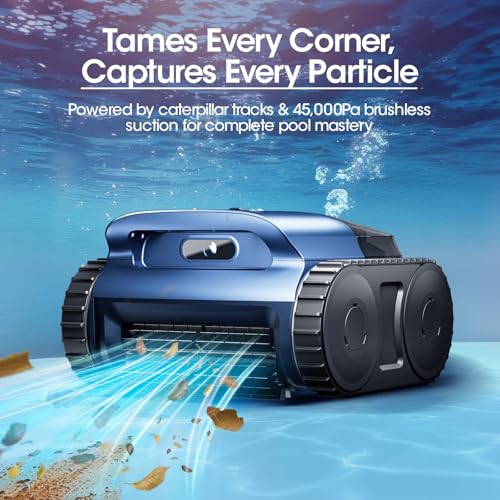
The dual 180-watt motors in the Seauto 180W deliver significantly more power than the WYBOT A1's 33-watt system. This translates to 4,800 gallons per hour of suction flow, compared to the roughly 2,000-2,500 GPH typical of entry-level cordless cleaners.
More suction power enables better debris pickup and the ability to maintain traction during wall climbing. However, it also demands more from the battery, resulting in the 150-minute runtime—longer than the WYBOT A1, but not dramatically so given the much higher power consumption.
The performance gap between these models is most apparent in real-world cleaning effectiveness. Our research across user reviews and professional testing reveals consistent patterns.
For basic floor cleaning of typical debris like leaves and sand, both robots perform adequately in ideal conditions. The WYBOT A1 can handle moderate debris loads on flat surfaces, though its random navigation means some areas may require multiple cleaning cycles for complete coverage.
The Seauto 180W demonstrates superior cleaning effectiveness across multiple dimensions. The systematic navigation ensures consistent coverage, while the active brushes enable it to handle stuck-on debris and algae that would defeat suction-only systems. Most significantly, its wall and waterline cleaning capability addresses areas where problems typically start.
Pool compatibility differences extend beyond just size limits. The WYBOT A1 works best in simple, flat-bottomed pools without complex features like steps, spas, or significant slope changes. It's particularly well-suited to above-ground pools where wall cleaning isn't expected anyway.
The Seauto 180W handles complex pool geometries much better, including steps, varying depths, and different surface materials like concrete, fiberglass, and vinyl. The sonar navigation adapts to pool features that would confuse simpler robots.
Both robots require similar basic maintenance—emptying debris baskets and cleaning filters—but the frequency and complexity differ. The WYBOT A1's floor-only cleaning means you'll still need manual or supplementary cleaning for walls and waterlines, partially defeating the automation benefit.
The Seauto 180W can serve as a complete pool maintenance solution, though its more complex systems may require more attention to keep functioning optimally. Filter cleaning frequency depends largely on debris load, but the larger capacity and more effective debris capture can actually reduce maintenance frequency compared to less effective cleaners.
At the time of writing, the WYBOT A1 typically costs about 35-40% less than the Seauto 180W. This price difference is significant, but it's important to consider what you're actually getting for each dollar spent.
The WYBOT A1 essentially automates floor vacuuming, which might represent 20-30% of your total pool cleaning tasks. You'll still need to handle walls, waterlines, and areas the robot can't reach. For pool owners who already have established cleaning routines and primarily want to reduce the most labor-intensive task, this could be worthwhile.
The Seauto 180W aims to replace most manual pool cleaning. If it delivers on that promise, the higher cost could easily pay for itself by eliminating the need for professional cleaning services or reducing the time you spend on pool maintenance.
However, there's a reliability consideration. Based on user reports we've analyzed, cordless pool cleaners in general have higher failure rates than traditional corded models. The WYBOT A1 has mixed reliability reviews, with some units failing within weeks of purchase, though others provide years of service. The Seauto 180W is newer to market with less long-term reliability data available.
You have a simple, flat-bottomed pool under 1,000 square feet and budget is the primary concern. It's particularly suitable for above-ground pools where wall cleaning isn't expected anyway. If you're comfortable handling wall and waterline cleaning manually and primarily want to automate the most physically demanding task, the WYBOT A1 could be cost-effective.
The model also works for pool owners who want to test cordless pool cleaning without a major investment, understanding that they're getting basic functionality rather than a complete solution.
You want to minimize manual pool maintenance and have a pool that would benefit from comprehensive cleaning. The advanced navigation and wall-climbing capability make it suitable for most residential pools, particularly in-ground installations with complex shapes.
If your time is valuable and you'd otherwise pay for professional cleaning services, the Seauto 180W could provide better long-term value despite the higher upfront cost. It's also the better choice for pool owners who prioritize cleaning effectiveness over initial price.
The WYBOT A1 and Seauto 180W represent fundamentally different approaches to pool cleaning automation. The WYBOT A1 is a floor-cleaning appliance that happens to be wireless, while the Seauto 180W attempts to be a comprehensive pool maintenance system.
For many pool owners, the WYBOT A1's limitations—floor-only cleaning, random navigation, and basic filtration—make it feel like a partial solution that still requires significant manual work. However, for budget-conscious owners of simple pools, it might provide sufficient value.
The Seauto 180W delivers significantly more functionality for a proportionally higher price. Whether it represents better value depends on how much you prioritize comprehensive cleaning and how much your time is worth.
Based on our research, neither model matches the reliability and cleaning effectiveness of premium corded pool cleaners, but they offer the convenience factor that many pool owners crave. The Seauto 180W comes closer to delivering on the promise of automated pool maintenance, while the WYBOT A1 provides an affordable introduction to robotic cleaning with clear limitations.
The decision ultimately comes down to your pool's characteristics, your budget, and your expectations for automation. Just be realistic about what these devices can and cannot do—and remember that in pool cleaning, as in most things, you generally get what you pay for.
| WYBOT A1 Cordless Robotic Pool Cleaner | Seauto Cordless Robotic Pool Cleaner 180W Sonar Navigation |
|---|---|
| Navigation System - Determines cleaning thoroughness and efficiency | |
| Random bumper-based movement with edge-enhanced cleaning | Advanced sonar mapping with intelligent path planning (98% coverage) |
| Cleaning Coverage - Most important factor for complete pool maintenance | |
| Floor-only cleaning (flat surfaces under 15° slope) | Full 3D cleaning: floors, walls, and waterline |
| Pool Size Capacity - Maximum area the cleaner can effectively handle | |
| Up to 1,076 sq ft (ideal for smaller pools) | Up to 2,150 sq ft (handles most residential pools) |
| Motor Power - Affects suction strength and climbing ability | |
| Dual 33W motors (2,140 GPH suction) | Dual 180W brushless motors (4,800 GPH suction) |
| Battery Runtime - How long it cleans before needing recharge | |
| 120 minutes with 2.5-hour fast charging | 150 minutes with 3-hour charging |
| Filtration System - Determines what debris gets captured | |
| Dual-layer: 180μm mesh + cotton foam (70% larger area) | 250μm fine filter with dual active scrubbing rollers |
| Wall Climbing Capability - Essential for comprehensive pool cleaning | |
| None (cannot climb walls or clean waterlines) | Full wall climbing with specialized tracks and brushes |
| Pool Compatibility - What pool types work best | |
| Above-ground and simple flat-bottom in-ground pools | All pool types: concrete, fiberglass, gunite, vinyl |
| Smart Features - Automation and convenience options | |
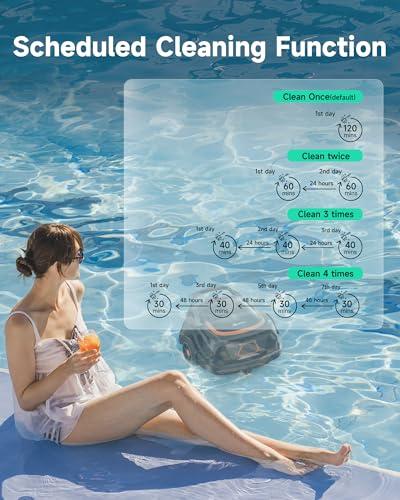
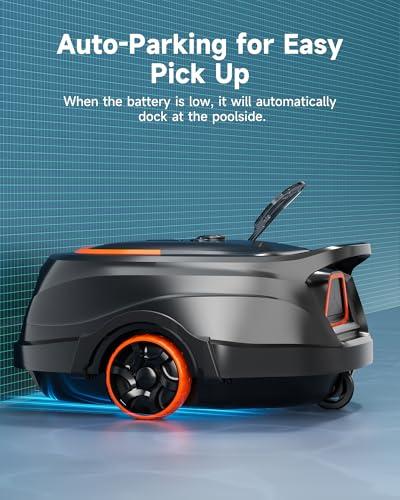
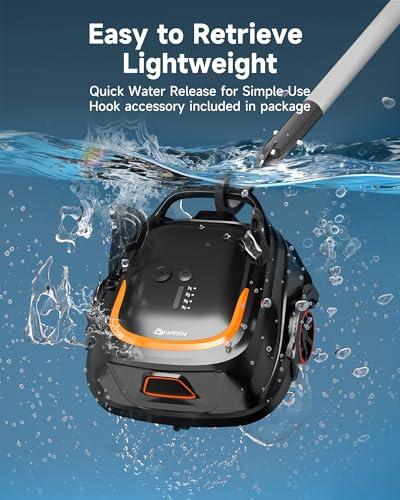
| Cycle timer (up to 4 cleanings/week), self-parking | One-touch activation, multiple cleaning modes, self-parking |
| Build Quality - Reliability and waterproofing standards | |
| Basic construction, mixed reliability reports | IP68 waterproofing, TÜV certification |
The biggest difference is cleaning coverage. The WYBOT A1 only cleans flat pool floors, while the Seauto 180W provides complete pool cleaning including walls and waterlines. The Seauto 180W also features advanced sonar navigation for systematic cleaning, compared to the WYBOT A1's random movement pattern.
Both cleaners work for above-ground pools, but the WYBOT A1 is specifically designed for this use case since it focuses on floor cleaning. For above-ground pools under 1,000 square feet, the WYBOT A1 provides good value. However, if you want walls cleaned too, the Seauto 180W offers more comprehensive cleaning.
Only the Seauto 180W can climb walls and clean waterlines using specialized tracks and powerful motors. The WYBOT A1 is limited to floor cleaning only and cannot climb walls or handle slopes greater than 15 degrees.
The WYBOT A1 runs for 120 minutes on a single charge with 2.5-hour fast charging. The Seauto 180W provides 150 minutes of runtime but takes 3 hours to fully charge. Both offer sufficient battery life for most residential pools.
The Seauto 180W has significantly better navigation with its sonar-based mapping system that plans efficient cleaning paths and achieves up to 98% pool coverage. The WYBOT A1 uses basic bumper navigation with random movement patterns, though it does include edge-enhanced cleaning features.
The WYBOT A1 works on pools up to 1,076 square feet, making it suitable for most above-ground and smaller in-ground pools. The Seauto 180W handles much larger pools up to 2,150 square feet and can clean pools up to 16 feet deep.
For in-ground pools, the Seauto 180W is generally better because it can clean walls, handle complex shapes, and work with various surface materials like concrete and fiberglass. The WYBOT A1 only works well with simple, flat-bottom in-ground pools.
The WYBOT A1 uses a dual-layer system with 180-micron mesh plus cotton foam for 70% larger filtration area. The Seauto 180W features 250-micron filtration with active scrubbing rollers that physically agitate debris. Both systems effectively capture typical pool debris, but the Seauto 180W handles stuck-on dirt better.
The Seauto 180W potentially requires less overall maintenance because it provides complete pool cleaning, reducing the need for manual wall cleaning. However, the WYBOT A1 has simpler systems that may need less technical maintenance, though you'll still need to clean walls manually.
Both cordless cleaners have mixed reliability reports compared to corded models. The WYBOT A1 has some user reports of early failures, while the Seauto 180W features IP68 waterproofing and TÜV certification suggesting better build quality, though it's newer to market with less long-term data.
Value depends on your needs. The WYBOT A1 costs significantly less but only automates floor cleaning. The Seauto 180W costs more but provides comprehensive pool cleaning that could replace most manual maintenance. For complete automation, the Seauto 180W offers better long-term value.
Choose the WYBOT A1 if you have a simple, flat-bottom pool under 1,000 square feet and budget is your main concern. Choose the Seauto 180W if you want comprehensive pool cleaning, have a larger or more complex pool, or value advanced navigation and wall-cleaning capabilities over initial cost savings.
We've done our best to create useful and informative comparisons to help you decide what product to buy. Our research uses advanced automated methods to create this comparison and perfection is not possible - please contact us for corrections or questions. These are the sites we've researched in the creation of this article: bestbuy.com - thepoolfactory.com - roboticreviews.com - wybotpool.com - youtube.com - poolzoom.com - poolwarehouse.com - bestbuy.com - thepoolnerd.com - poolsupplyunlimited.com - youtube.com - eztestpools.com - youtube.com - iopool.com - homedepot.com - wybotpool.com - youtube.com - walmart.com - walmart.com - seautorobots.com - youtube.com - youtube.com - protoolreviews.com - youtube.com - youtube.com - vipoutlet.com - seautorobots.com - seautorobots.com - business.walmart.com - seautorobots.com - bedwettingtherapy.com - poolpromag.com - walmart.com - wellbots.com - geekbuying.com - prnewswire.com - youtube.com - seautorobots.com - seautorobots.com - youtube.com - device.report - seautorobots.com

Privacy Policy
Terms and Conditions - Affiliate Policy
Home Security
© Copyright 2008-2026.
11816 Inwood Rd #1211, Dallas, TX 75244