

When you're staring at your dirty pool on a hot summer day, the last thing you want to do is spend an hour manually vacuuming. That's where robotic pool cleaners come in—they're supposed to handle all that tedious work while you relax. But here's the thing: not all pool robots are created equal, and the differences between entry-level and premium models can be absolutely massive.
Today we're diving deep into two cleaners from Aiper that represent opposite ends of the spectrum: the budget-friendly Scuba SE and the AI-powered Scuba V3. These aren't just different price points—they're fundamentally different approaches to pool cleaning that will give you completely different experiences.
Before we get into the nitty-gritty comparison, let's talk about what really matters in a pool robot. Think of these machines as underwater vacuum cleaners with some serious engineering challenges. They need to move around efficiently, suck up debris ranging from massive leaves down to microscopic particles, navigate obstacles without getting stuck, and do it all while completely submerged in water.
The key performance areas that separate good robots from frustrating ones are coverage capability (can it actually reach and clean your entire pool?), suction power (will it pick up debris or just push it around?), navigation intelligence (does it clean systematically or just bounce around randomly?), and filtration effectiveness (does it actually make your water cleaner or just move dirt around?).
Battery life and charging convenience matter too, especially since you don't want to babysit a robot that dies halfway through cleaning or takes forever to recharge. Finally, there's the question of maintenance—how easy is it to empty the debris basket and keep the thing running?
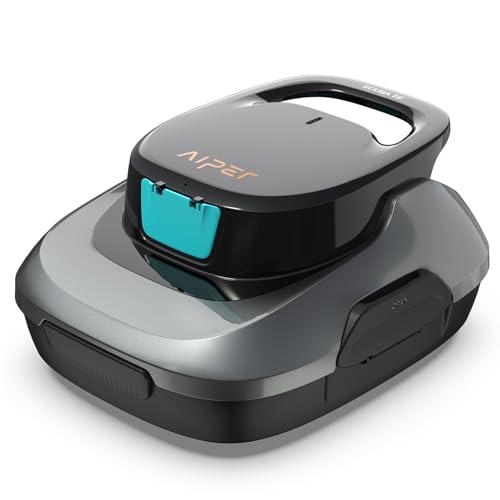
The Aiper Scuba SE, released in 2024, represents what happens when manufacturers try to make robotic cleaning accessible to everyone. At the time of writing, it sits in the budget category, typically costing less than what many people spend on a decent cordless vacuum for their house. It's designed specifically for small above-ground pools and focuses solely on floor cleaning.
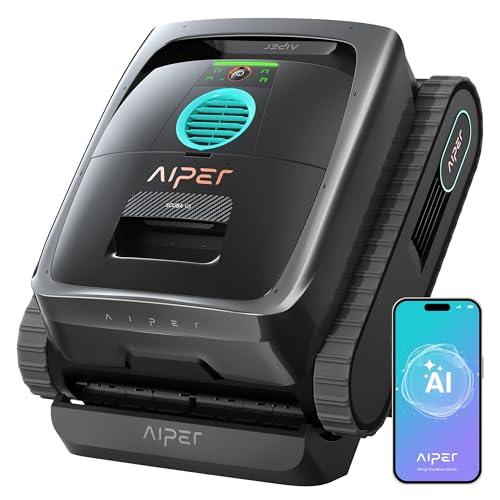
The Aiper Scuba V3, launched in 2025, showcases where pool cleaning technology is heading. This machine packs AI vision technology—literally a camera system that can recognize different types of debris—into a cleaner that costs several times more than the SE. The price difference reflects a completely different level of engineering and capability.
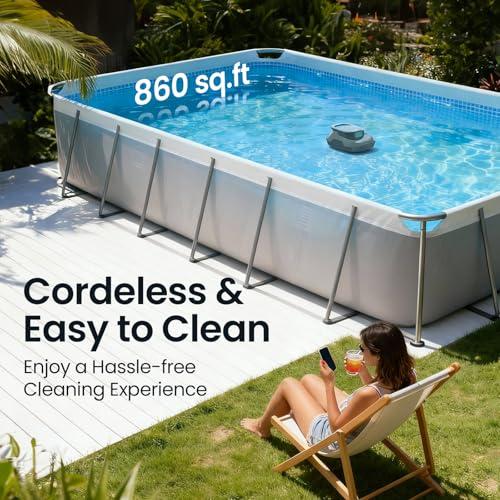
Here's where the differences become immediately obvious. The Scuba SE is strictly a floor cleaner. It's designed for pools up to 860 square feet (think a typical backyard above-ground pool), but only if that pool has a completely flat bottom. No slopes, no walls, no waterline cleaning—just the floor.
This limitation isn't just about convenience; it fundamentally affects how clean your pool stays. Pool debris doesn't just settle on the bottom—leaves and oils float at the waterline, algae grows on walls, and dirt accumulates in corners and on steps. A floor-only cleaner leaves most of your pool maintenance as manual work.
The Scuba V3 tackles this comprehensively with what Aiper calls multi-zone cleaning. It handles floors, climbs walls, and specifically targets the waterline—that tricky area where sunscreen, pollen, and oils create that gross ring around your pool. The waterline cleaning uses something called JetAssist technology, which is essentially a dedicated motor system that scrubs horizontally at water level at speeds up to 1.5 meters per second.
For pools up to 1,600 square feet, the V3 can handle the complete cleaning job that would normally require multiple tools or hours of manual scrubbing. That's nearly double the coverage area of the SE, making it suitable for most residential in-ground pools.
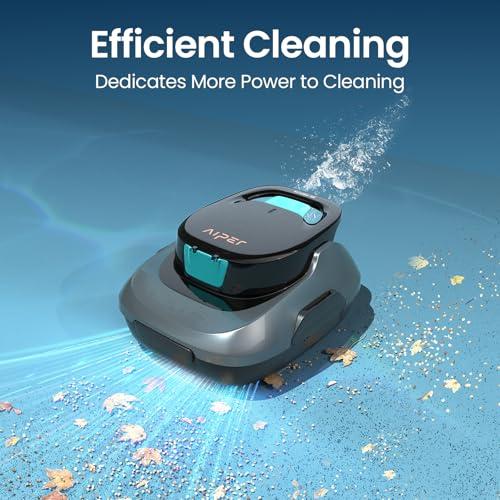
This is where our research into user experiences reveals the Scuba SE's biggest weakness. With 1,200 gallons per hour (GPH) of suction power, it sounds reasonable on paper. But real-world performance tells a different story entirely.
Users consistently report that the SE struggles with anything larger than fine debris. Leaves, twigs, dead bugs, and even sand often get pushed around rather than picked up. The problem isn't just the suction power—it's the entire debris-handling system. The robot uses basic dual brushes and a simple motor setup that can't generate enough force to properly capture and contain larger debris.
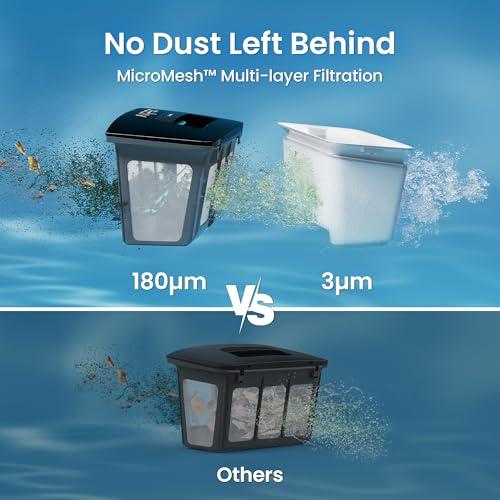
The filtration system compounds this issue. The SE uses a 180-micron filter, which is reasonably fine for a budget cleaner. But without adequate suction to force debris through the filter, even this basic filtration becomes ineffective. Users report that fine particles like algae and sand slip right through, leaving pools cloudy even after cleaning.
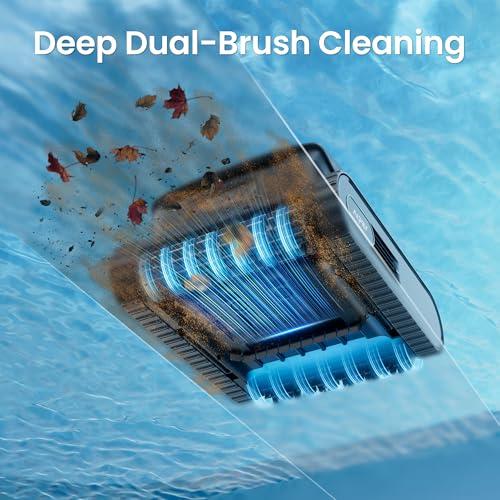
The Scuba V3 approaches this completely differently with 4,800 GPH of suction—four times more powerful than the SE. But raw power isn't the whole story. The V3 uses a dual-brush cleaning system specifically designed to agitate debris effectively before the suction system captures it.
More importantly, it features what Aiper calls MicroMesh multi-layer filtration. This system combines a coarse mesh for larger debris with an ultra-fine secondary filter that can capture particles down to 3 microns—about 60 times finer than the SE's filter. To put that in perspective, 3 microns is small enough to capture most bacteria and many particles that make water look cloudy.
The V3 also includes a larger 3.5-liter debris basket compared to the SE's 2-liter capacity, reducing how often you need to empty it during cleaning cycles.
This might be the most frustrating difference between these cleaners. The Scuba SE uses what's essentially random navigation—it bumps into walls and obstacles, changes direction, and hopes to eventually cover most of your pool floor. There's no intelligence, no systematic pattern, no memory of where it's been.
In practice, this means the SE frequently gets stuck in corners, repeatedly cleans the same areas while missing others entirely, and often needs manual intervention to complete a cleaning cycle. Even in ideal conditions—perfectly flat above-ground pools with no obstacles—users report inconsistent coverage.
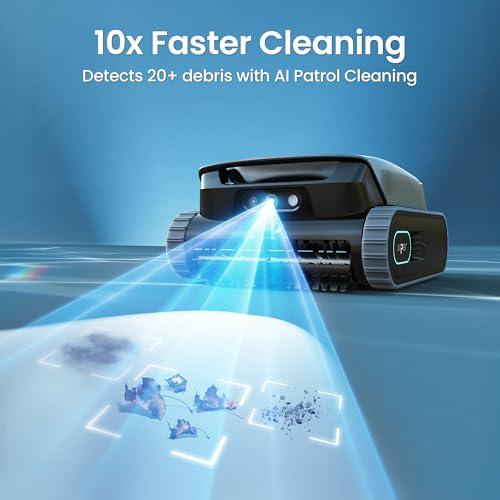
The Scuba V3 represents a massive technological leap with its Cognitive AI system and VisionPath navigation. Here's what makes it different: it actually has a front-facing camera that can identify over 20 different types of debris within a 2-meter detection range.
Think about that for a moment—this robot can literally see leaves, sand, dirt, twigs, and other debris, then navigate directly to those spots instead of wandering randomly. It's like the difference between someone cleaning a room methodically versus someone walking around blindfolded hoping to bump into dirt.
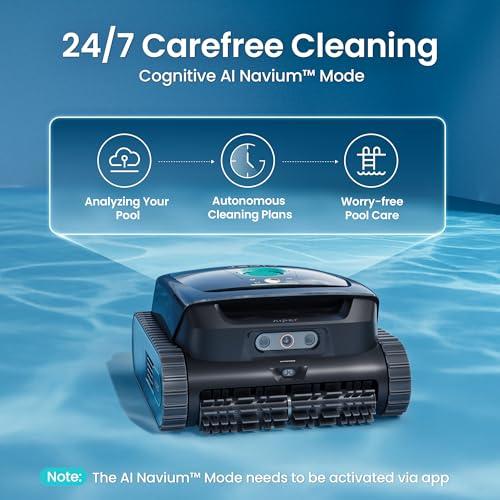
The AI system builds what Aiper calls Cognitive AI Navium Mode, which creates autonomous cleaning plans based on your pool's size, local weather patterns, and cleaning history. After learning your pool for a few cycles, it can optimize its cleaning patterns to focus on problem areas while avoiding unnecessary work in clean zones.
The V3 also includes dual LED lights for night operation, making it the first pool cleaner that can effectively work in low-light conditions—useful if you want it running during off-peak energy hours or when the pool isn't in use.
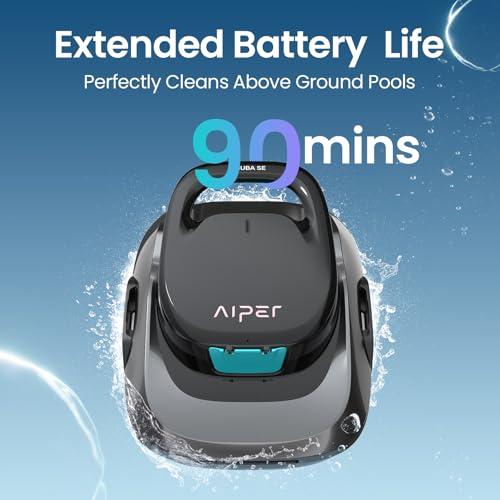
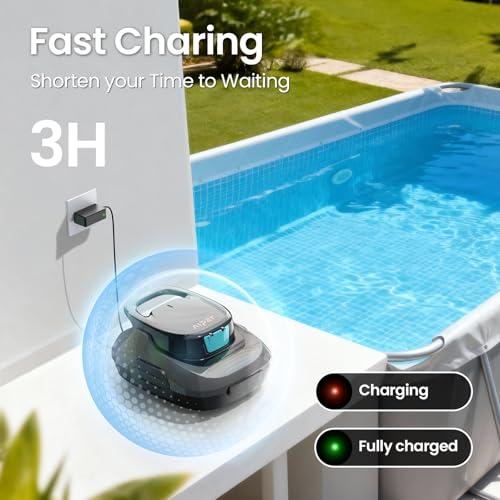
Battery performance reveals another fundamental difference in design philosophy. The Scuba SE promises 90 minutes of runtime from its 2,600 mAh battery, but real-world testing consistently shows 60-70 minutes as more realistic. For its target market of small pools, this might seem adequate, but the charging time of 3-4 hours means you're looking at daily recharging for regular use.
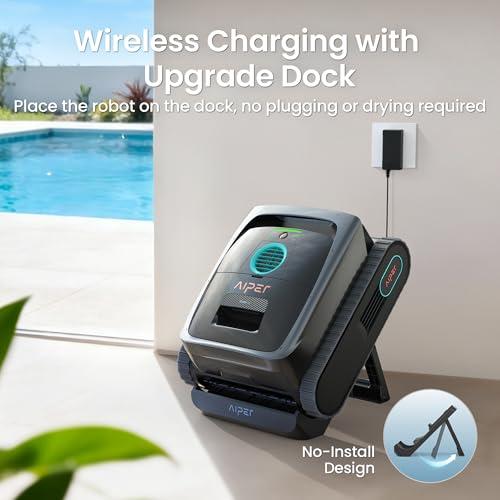
The SE also uses a basic plug-in charging system that requires you to dry the unit and connect cables—not particularly convenient for frequent use.
The Scuba V3 takes a completely different approach with its 10,400 mAh battery—four times the capacity of the SE. Typical cleaning cycles run 170-190 minutes, which is enough time for the systematic AI cleaning to cover even large pools completely.
More importantly, the V3 includes a wireless charging dock. You simply place the robot on the dock when it's done cleaning—no cables, no drying required, no exposed electrical connections. The charging system is also smarter, supporting the AI's optimization features to run shorter, more frequent cycles when full cleaning isn't needed.
Here's where the math gets interesting. At the time of writing, the Scuba SE costs a fraction of the V3's price, making it tempting for budget-conscious buyers. But our analysis of user experiences suggests this apparent savings often becomes false economy.
The SE's limitations mean it rarely delivers satisfactory cleaning results on its own. Users frequently report needing additional manual cleaning, chemical treatments to address poor water clarity, or supplementary equipment to handle the jobs the SE can't manage. When you factor in the time and frustration costs of dealing with a robot that gets stuck, misses debris, and requires constant intervention, the value proposition weakens significantly.
The V3, while substantially more expensive upfront, delivers what most users actually want from a robotic cleaner: hands-off operation that genuinely maintains pool cleanliness. The AI system's ability to optimize cleaning schedules can actually reduce overall runtime and energy consumption by up to 40% compared to traditional robots that clean everything every time.
For users with larger pools or any complexity (slopes, steps, walls), the V3's comprehensive coverage eliminates the need for additional cleaning tools or services that would be required with the SE.
The technology gap between these cleaners illustrates broader trends in pool maintenance. The SE represents traditional robotic cleaning—essentially a submersible vacuum with basic motors and filtration.
The V3's AI vision system represents genuine innovation in this space. The ability to recognize specific debris types and navigate purposefully changes the entire cleaning paradigm from "hopefully cover everything" to "identify and eliminate specific problems."
The VisionPath adaptive path planning isn't just marketing speak—it's a fundamentally different approach that makes cleaning 10 times faster according to Aiper's testing. Instead of the random patterns that might clean the same area multiple times while missing others, the AI creates systematic grid patterns that ensure complete coverage without redundancy.
The JetAssist waterline technology also addresses a real problem that most pool robots ignore. Waterline buildup isn't just cosmetic—it creates environments where bacteria and algae can thrive, affecting overall pool health.
The Scuba SE makes sense for a very specific set of circumstances. If you have a small (under 500 square feet), perfectly flat above-ground pool with minimal debris loads, and budget is absolutely the primary concern, the SE can provide basic floor cleaning. It's also potentially useful as a secondary cleaner for spas or small features where its limitations won't be as problematic.
However, our research suggests that most buyers who choose the SE expecting typical robotic cleaner performance will be disappointed. It's more accurately described as a basic floor sweeper than a comprehensive pool cleaner.
The Scuba V3 is for users who want robotic cleaning to actually replace manual pool maintenance. If you have a standard residential pool, deal with regular debris like leaves and pollen, or simply value your time more than the price difference, the V3 delivers the hands-off experience that most people expect from automation.
The AI features aren't just luxury additions—they solve real problems like getting stuck, missing debris, and inefficient cleaning patterns that plague simpler robots. For pools with any complexity (walls, slopes, steps, irregular shapes), the V3's multi-zone capability is essentially required for comprehensive cleaning.
After analyzing extensive user feedback and technical specifications, these products serve fundamentally different purposes despite both being labeled as pool cleaners. The Scuba SE is an entry-level floor sweeper with significant limitations, while the Scuba V3 is a comprehensive AI-powered maintenance system.
For most pool owners, the V3's superior performance justifies its premium pricing through eliminated manual labor, consistently clean water, and genuine convenience. The AI technology isn't a gimmick—it solves the core problems that make basic robots frustrating to own.
The SE only makes financial sense if your specific situation matches its limited capabilities and you can accept its substantial compromises. For everyone else, investing in proven, comprehensive cleaning capability will likely provide better long-term value and satisfaction.
The pool robot market has clearly moved toward intelligent, comprehensive systems, and the difference between basic and advanced models has never been more pronounced. Choose accordingly based on your actual needs rather than just initial price.
| Aiper Scuba SE Pool Cleaner | Aiper Scuba V3 Robotic Pool Cleaner |
|---|---|
| Pool Coverage - Determines what areas get cleaned without manual work | |
| Floor only, up to 860 sq ft, flat surfaces only | Floor, walls, and waterline up to 1,600 sq ft |
| Navigation Technology - Controls cleaning efficiency and coverage consistency | |
| Random bounce pattern, no obstacle detection | AI vision with camera, recognizes 20+ debris types, systematic grid patterns |
| Suction Power - Key factor for actually picking up debris vs. pushing it around | |
| 1,200 GPH (struggles with leaves and larger debris) | 4,800 GPH with dual-brush system (4x more powerful) |
| Filtration System - Determines water clarity after cleaning | |
| Basic 180μm filter, 2L debris basket | MicroMesh multi-layer down to 3 microns, 3.5L basket |
| Battery Performance - Affects cleaning completion and convenience | |
| 60-70 minutes actual runtime, 2,600 mAh, 3-4 hour plug-in charging | 170-190 minutes runtime, 10,400 mAh, wireless charging dock |
| Smart Features - Automation level and hands-off operation | |
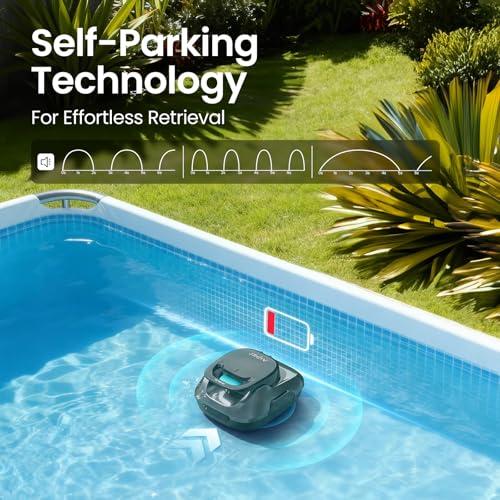
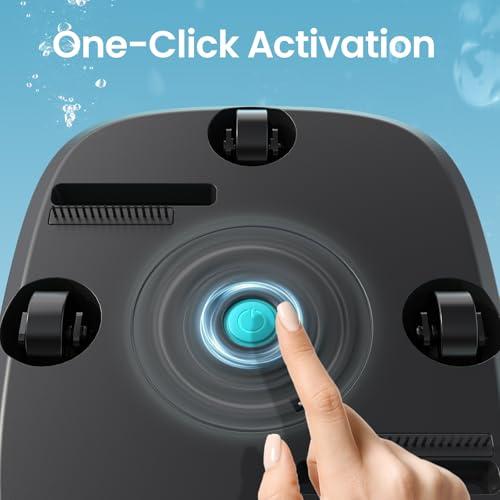
| One-click start, basic audio alerts, auto-parking | Cognitive AI planning, app control, 7-day autonomous scheduling, night cleaning with LED lights |
| Pool Compatibility - What types of pools work effectively | |
| Small above-ground pools only, struggles with slopes and textures | Standard to large residential pools, handles complex shapes and surfaces |
| Weight & Handling - Ease of deployment and retrieval | |
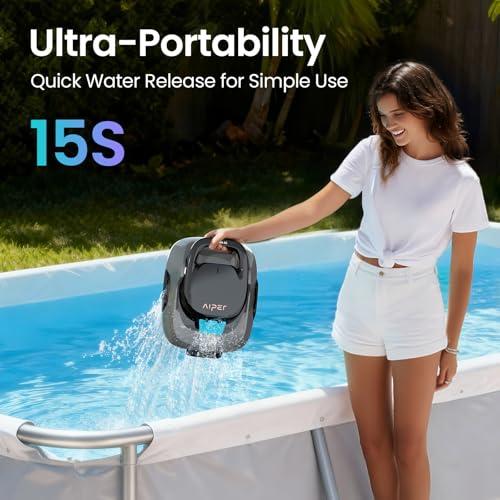
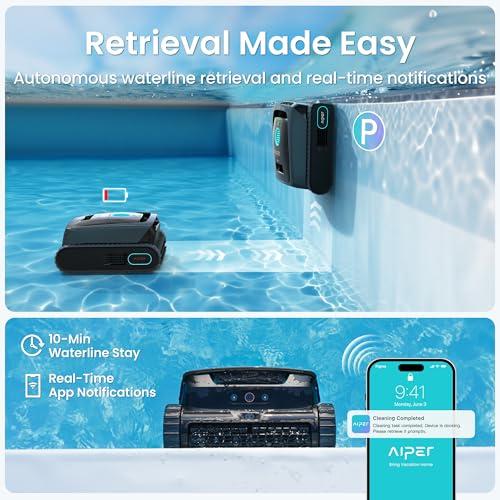
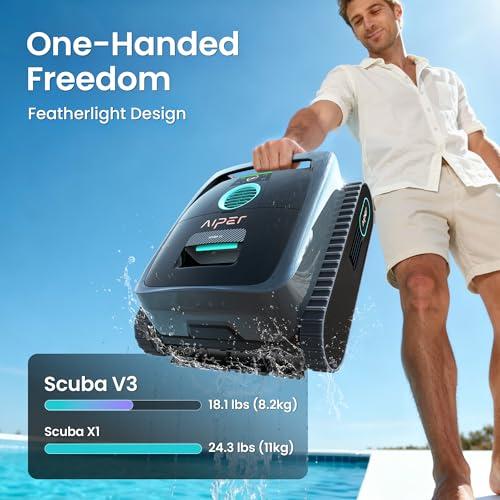
| 7.5 lbs but limited auto-parking reliability | 18.1 lbs but featherlight design with waterline retrieval and app notifications |
| Target User - Who gets the best value from each option | |
| Very small flat pools, minimal debris, budget priority | Comprehensive automated maintenance, larger pools, time-saving priority |
The Aiper Scuba SE is specifically designed for small above-ground pools up to 860 square feet with flat bottoms. However, even for its target market, the Aiper Scuba V3 often provides better results due to its superior suction power and AI navigation, despite being designed for larger pools. The SE frequently gets stuck and misses debris even in ideal conditions.
The biggest difference is cleaning capability and intelligence. The Aiper Scuba SE only cleans floors with basic random navigation, while the Aiper Scuba V3 features AI vision technology that can clean floors, walls, and waterlines systematically. The V3 has 4x more suction power and advanced filtration compared to the SE.
The Aiper Scuba V3 has significantly better suction at 4,800 GPH compared to the Aiper Scuba SE's 1,200 GPH. Users report that the SE often pushes debris around rather than picking it up, while the V3 effectively captures leaves, sand, and fine particles.
No, the Aiper Scuba SE is strictly a floor cleaner and cannot climb walls or clean the waterline. Only the Aiper Scuba V3 offers multi-zone cleaning including walls and waterline cleaning with its JetAssist technology.
The Aiper Scuba V3 has much longer battery life with 170-190 minutes of runtime compared to the Aiper Scuba SE's 60-70 minutes of actual use (despite advertising 90 minutes). The V3 also features convenient wireless charging, while the SE requires plug-in charging.
The Aiper Scuba SE appears budget-friendly initially, but its limitations often require additional cleaning equipment or manual work. Many users find the SE frustrating due to weak suction, getting stuck frequently, and poor coverage. The Aiper Scuba V3 offers better long-term value despite higher upfront cost.
The Aiper Scuba V3 is designed for pools up to 1,600 square feet and handles large residential pools effectively. The Aiper Scuba SE is limited to 860 square feet and struggles even in smaller pools due to weak suction and poor navigation.
The Aiper Scuba V3 features advanced AI technology with app control, autonomous scheduling, and can operate hands-free for up to 7 days. The Aiper Scuba SE has basic one-click operation and audio alerts but no smart features or app connectivity.
Both cleaners have removable debris baskets, but the Aiper Scuba V3 has a larger 3.5L capacity and single-click emptying system. The Aiper Scuba SE has a smaller 2L basket and more cumbersome filter maintenance. The V3 also offers wireless charging convenience.
The Aiper Scuba SE struggles with larger debris like leaves and often lets fine particles escape through its basic filtration. The Aiper Scuba V3 uses AI to identify 20+ debris types and has MicroMesh filtration that captures particles down to 3 microns, handling everything from leaves to fine sand effectively.
Based on user reviews, the Aiper Scuba V3 is significantly more reliable with its AI navigation preventing stuck situations and systematic cleaning ensuring consistent results. The Aiper Scuba SE frequently requires manual intervention and has questionable long-term reliability according to user feedback.
Choose the Aiper Scuba SE only if you have a very small, perfectly flat above-ground pool and can accept significant limitations. Most pool owners should choose the Aiper Scuba V3 for its comprehensive cleaning capability, AI technology, and reliable performance that actually eliminates manual pool maintenance work.
We've done our best to create useful and informative comparisons to help you decide what product to buy. Our research uses advanced automated methods to create this comparison and perfection is not possible - please contact us for corrections or questions. These are the sites we've researched in the creation of this article: thepoolnerd.com - aiper.com - roboticreviews.com - aiper.co.za - youtube.com - swim-fun.com - poolpad.com - robotshop.com - youtube.com - nabridas.mu - thepoolnerd.com - walmart.com - youtube.com - poolandspawarehouse.com.au - poolbots.com - vitafilters.com - youtube.com - blogs.aiper.com - youtube.com - youtube.com - youtube.com - aiper.store - youtube.com - youtube.com - pocnetwork.net - youtube.com - aiper.com - geardiary.com - youtube.com - arsa.technology - ces.tech - aiper.com - piscinarium.com

Privacy Policy
Terms and Conditions - Affiliate Policy
Home Security
© Copyright 2008-2026.
11816 Inwood Rd #1211, Dallas, TX 75244