

Robot vacuums have come a long way from those early puck-shaped devices that bounced around randomly, occasionally finding dirt by accident. Today's premium models combine powerful suction with intelligent mopping systems, creating genuinely useful cleaning companions. But the category has split into two distinct camps: ultra-innovative models pushing technological boundaries, and practical workhorses focused on reliable automation.
This divide perfectly captures the choice between the Roborock Saros Z70 and the Shark PowerDetect ThermaCharged RV2920XE. One represents the bleeding edge of home robotics with a mechanical arm that can actually move objects. The other focuses on perfecting the fundamentals with superior automation and sanitation systems. Both were released in 2024, but they take dramatically different approaches to solving the same problem.
When evaluating robot vacuums, several core factors determine whether you'll love or regret your purchase. Suction power matters most for debris pickup, but it's not just about the marketing numbers—actual airflow at the intake tells the real story. Navigation intelligence separates modern robots from their bump-and-go ancestors, using laser mapping (LiDAR) and camera systems to clean systematically rather than randomly.
Mopping effectiveness has become crucial as manufacturers realize that truly clean floors require both vacuuming and wet cleaning. The best systems use spinning pads with adjustable pressure, not just dragging a damp cloth behind the robot. Obstacle avoidance prevents your robot from getting tangled in cords or spreading pet accidents around your home—a capability that's evolved from basic bump sensors to sophisticated AI recognition.
Finally, automation level determines how hands-off your cleaning routine becomes. Self-emptying bases were revolutionary a few years ago, but today's premium models also wash and dry mop pads, refill water tanks, and even dispense cleaning solution automatically.
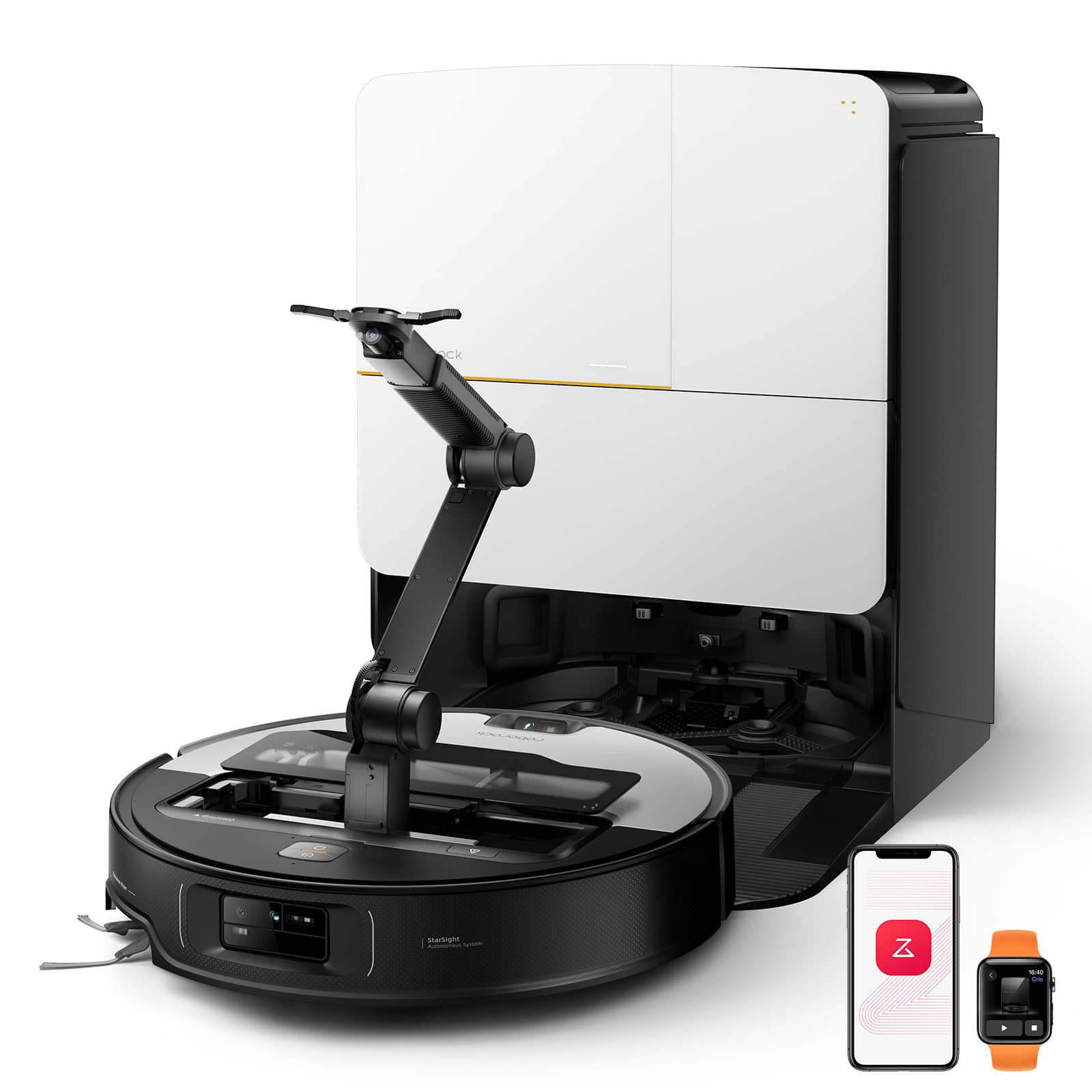
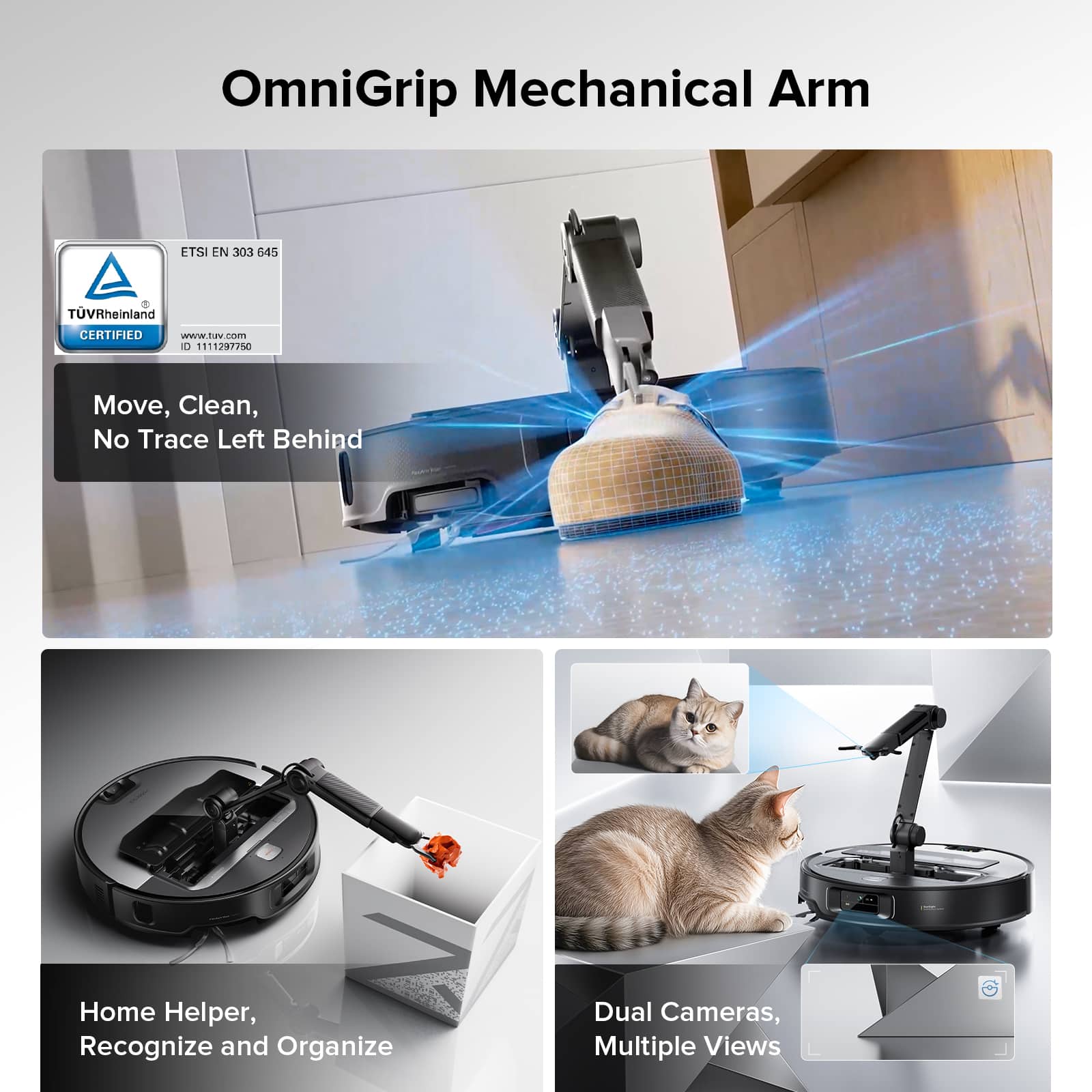
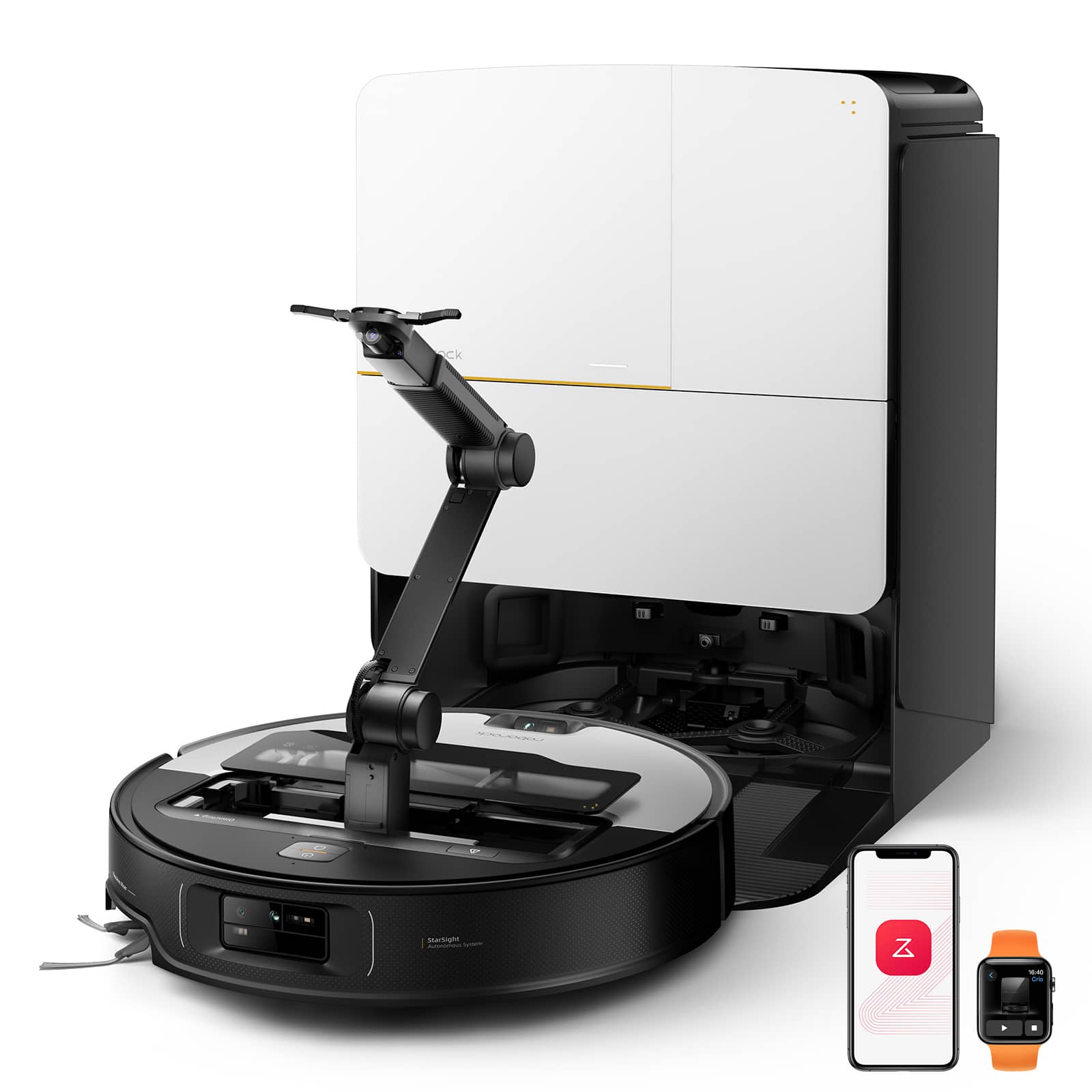
The Roborock Saros Z70 represents something genuinely new in home robotics. Released in 2024, it's the world's first mass-produced robot vacuum equipped with a foldable mechanical arm called OmniGrip™. This five-axis robotic arm can identify, grasp, and relocate small household objects—socks, sandals, towels under 300 grams—to user-defined locations before cleaning begins.
Think of it like having a robotic assistant that tidies up before vacuuming. The arm uses AI recognition to identify objects, then physically moves them out of the way. It's genuinely impressive technology, though our research into user experiences reveals it works reliably about half the time. The system currently recognizes a limited list of objects, but Roborock regularly adds new items through firmware updates.
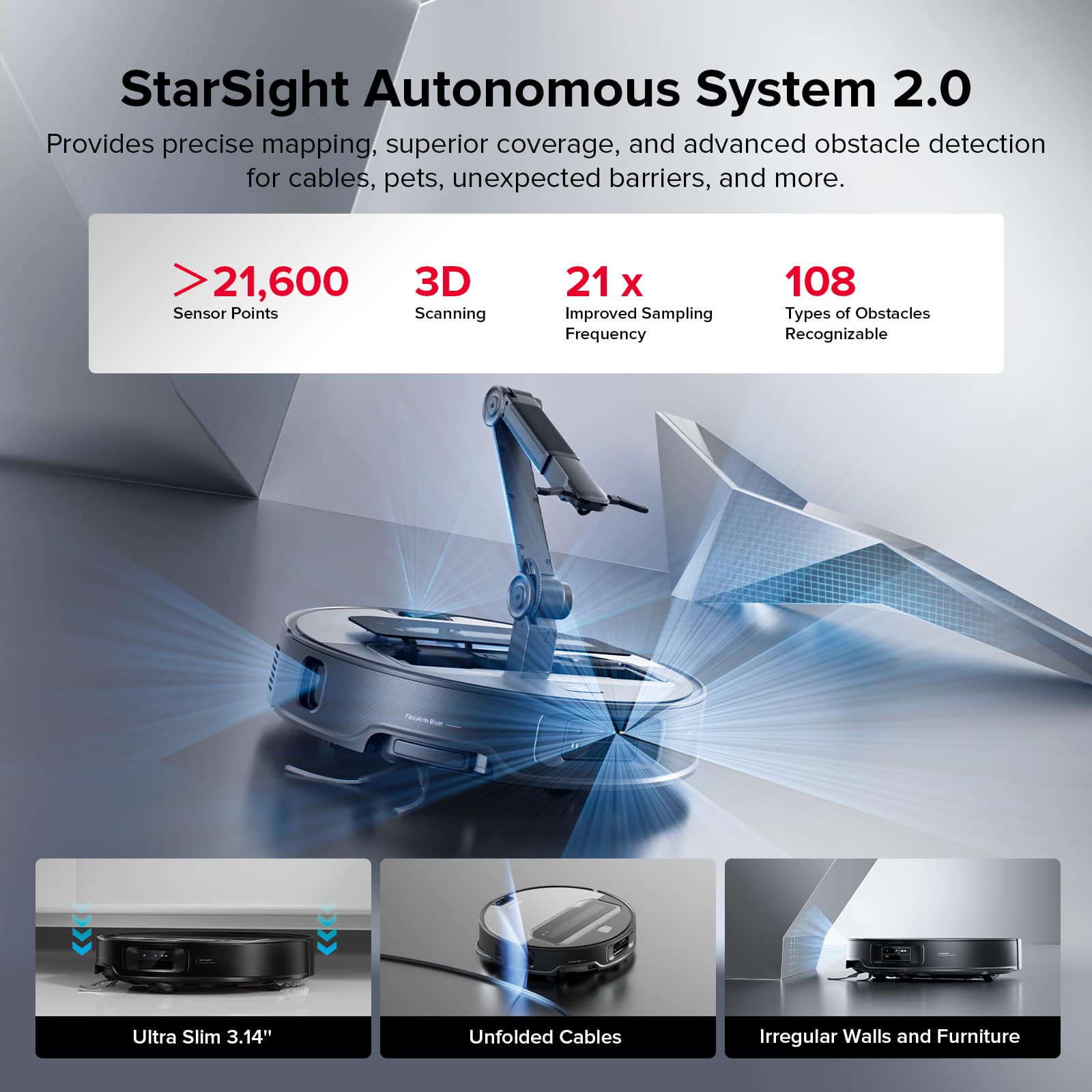
The Z70's StarSight™ Autonomous System 2.0 combines multiple sensing technologies for navigation that's genuinely impressive. The system uses 3D Time-of-Flight sensors (which measure distance by timing laser pulses) alongside VertiBeam lateral structured-light scanning to detect and avoid objects as small as 2cm square.
In professional obstacle avoidance testing, the Saros Z70 scored 22 out of 24 points—significantly above the category average of 16.6. This means it successfully navigates around common household obstacles like shoes, pet toys, and cables without getting stuck or pushing them around. The system recognizes 108 different object types and can learn up to 50 additional ones through the mobile app.
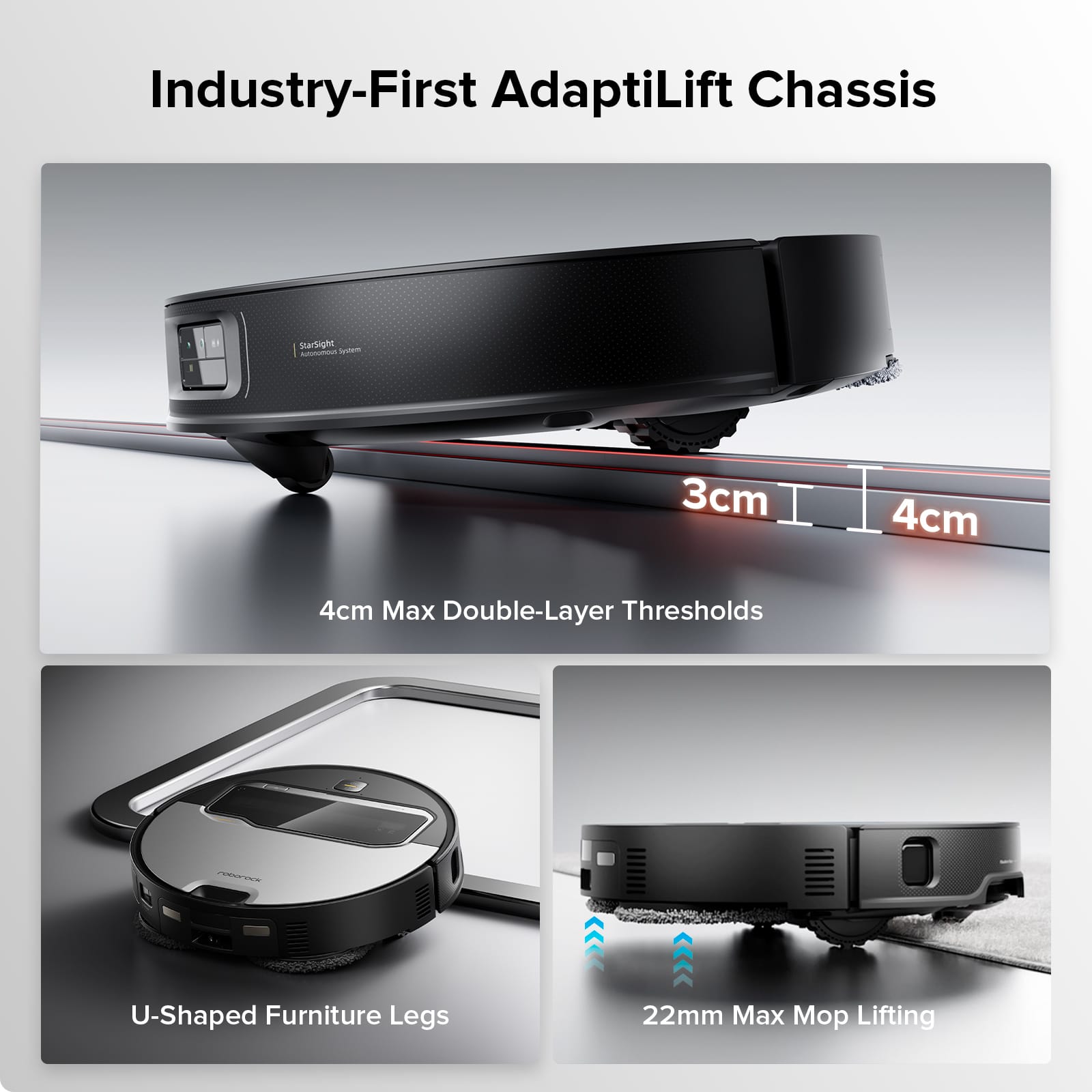
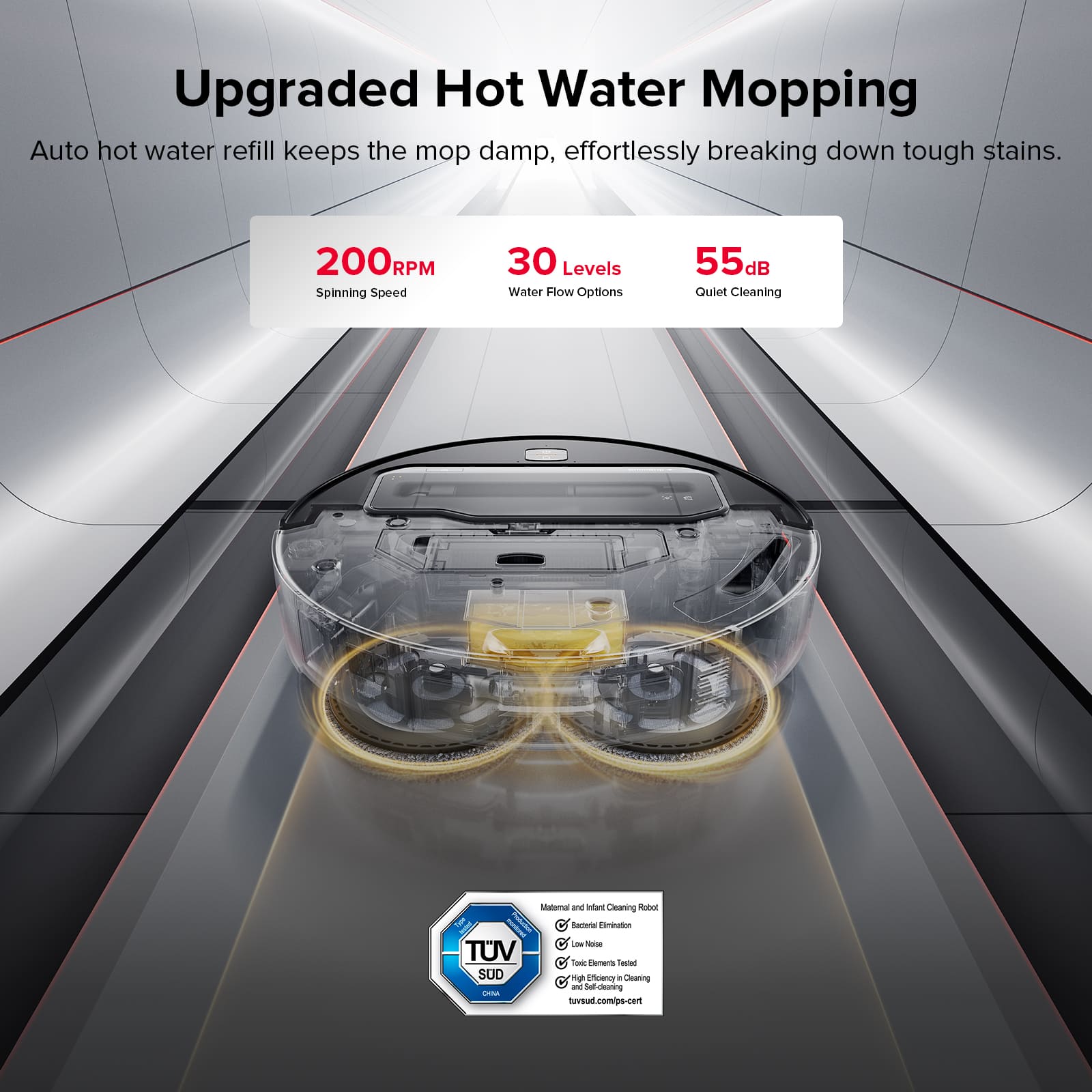
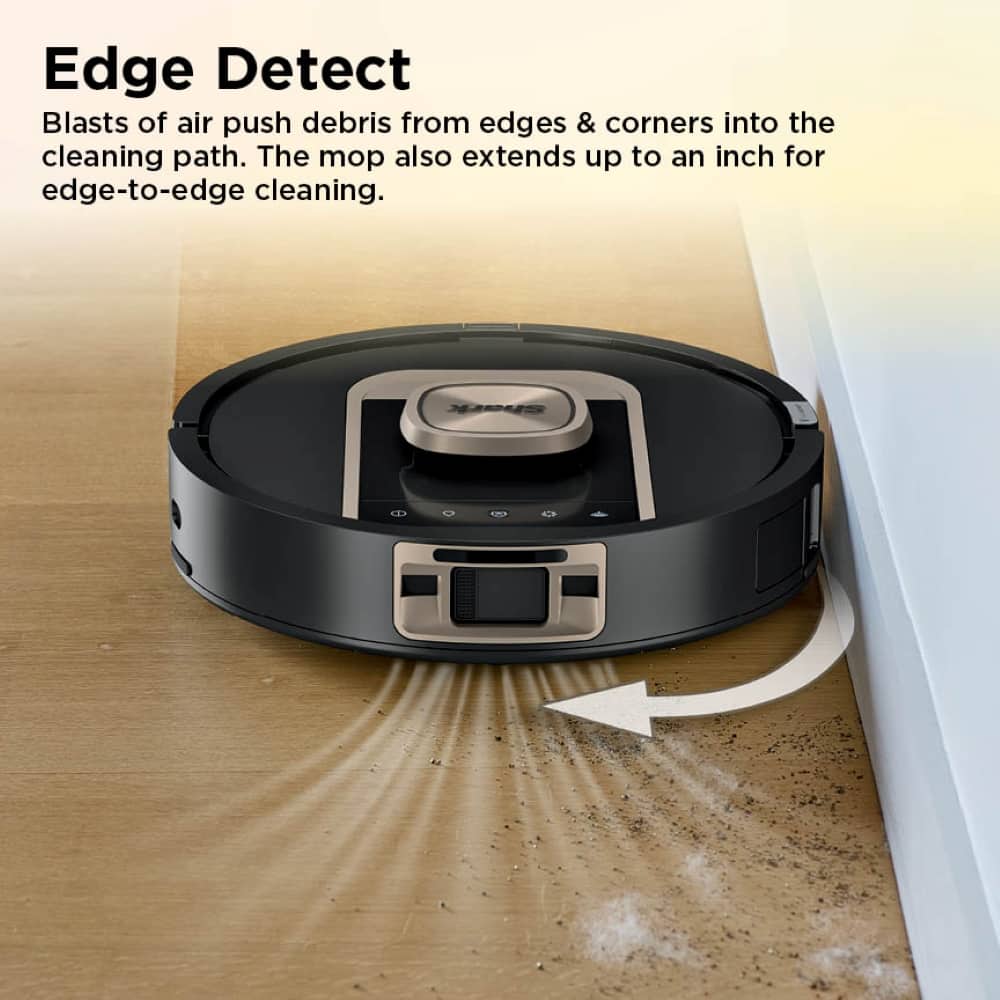
Where the Roborock Z70 truly excels is mopping effectiveness. The system achieved a test score of 269 out of 300 for dried-on stain removal—one of the highest scores ever recorded in professional testing. The dual spinning mop pads use VibraRise 4.0 technology, which automatically lifts the pads 22mm when transitioning to carpets and extends them outward for edge cleaning along baseboards.
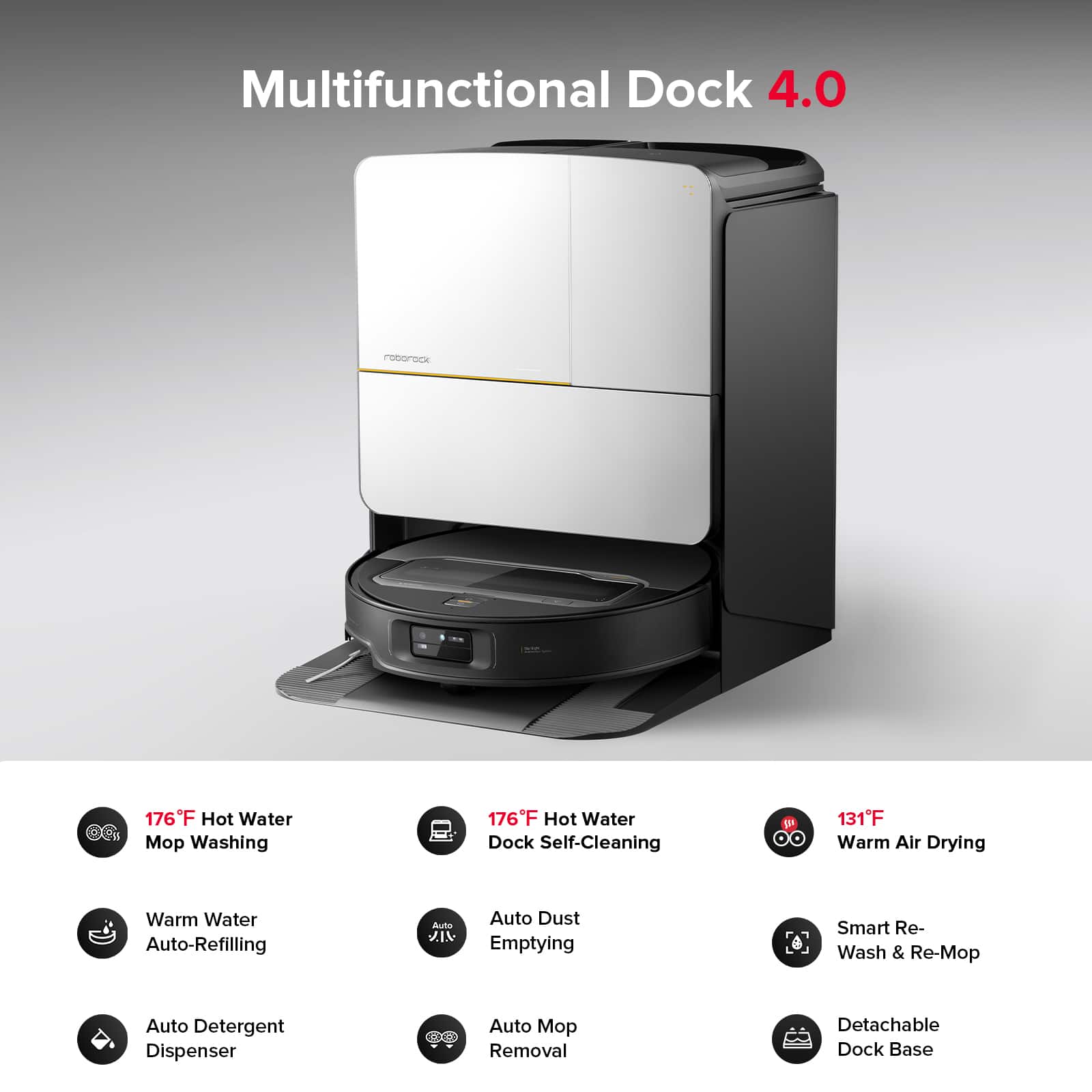
The Multi-functional Dock 4.0 washes mop pads with 176°F hot water and dries them with 131°F heated air. While not the hottest in the category, it's thorough enough to prevent odor buildup and bacterial growth between cleaning sessions.
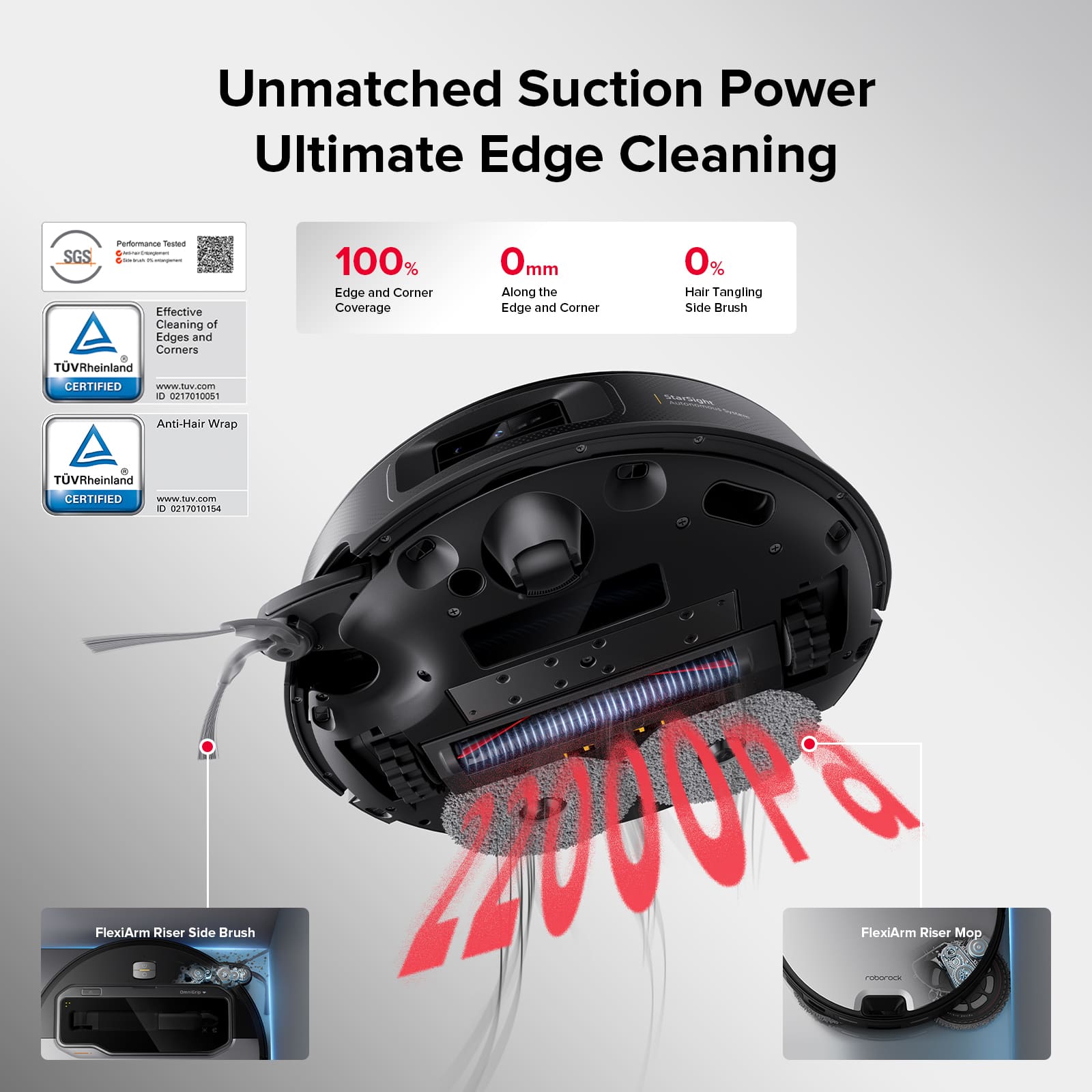
Here's where things get interesting with the Z70. Roborock advertises an impressive 22,000 Pa suction rating—among the highest in the industry. However, measured airflow at the intake tells a different story. Professional testing revealed just 0.3 kPa of actual suction versus the category average of 0.8 kPa.
This discrepancy means excellent performance on hard floors but disappointing results on carpets, especially for embedded debris and pet hair. The Free-Flow all-rubber brush works well for surface cleaning but lacks the deep-cleaning capability you'd expect from a premium robot vacuum.
At just 79.8mm tall (about 3.14 inches), the Saros Z70 slides under furniture that taller robots can't reach. This seemingly small advantage makes a significant practical difference—many competitor models measure 95-100mm tall, limiting their ability to clean under beds, couches, and low-clearance furniture.
The trade-off? The mechanical arm consumes internal space, leaving room for only a 180ml dustbin—the smallest capacity in the premium robot vacuum category. For larger homes or heavy debris loads, this means more frequent emptying despite the self-emptying base.
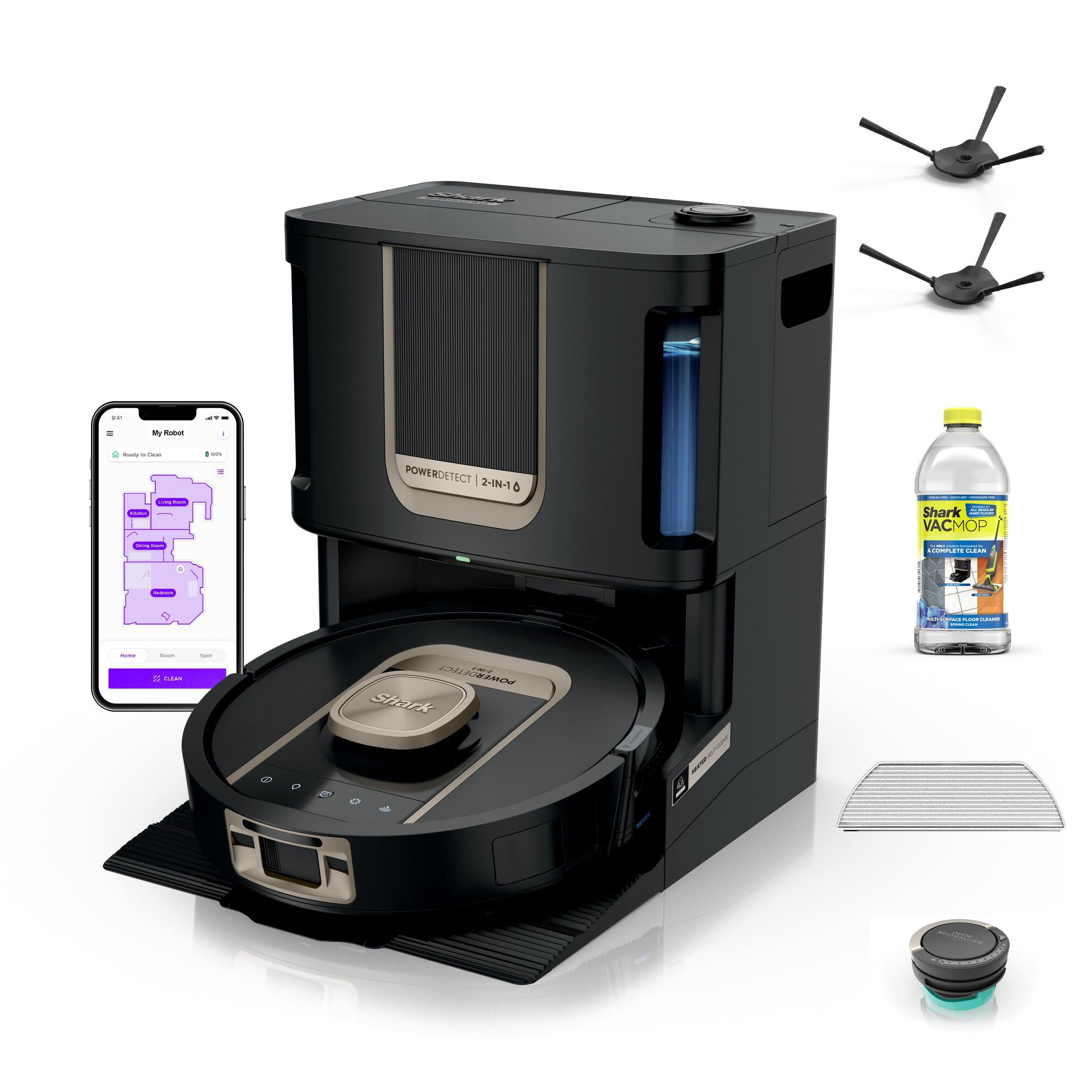
The Shark PowerDetect ThermaCharged RV2920XE, also released in 2024, takes a fundamentally different approach. Instead of revolutionary features, it focuses on perfecting proven technologies and maximizing automation. The result is a robot vacuum that prioritizes reliability and hands-off operation over cutting-edge innovation.
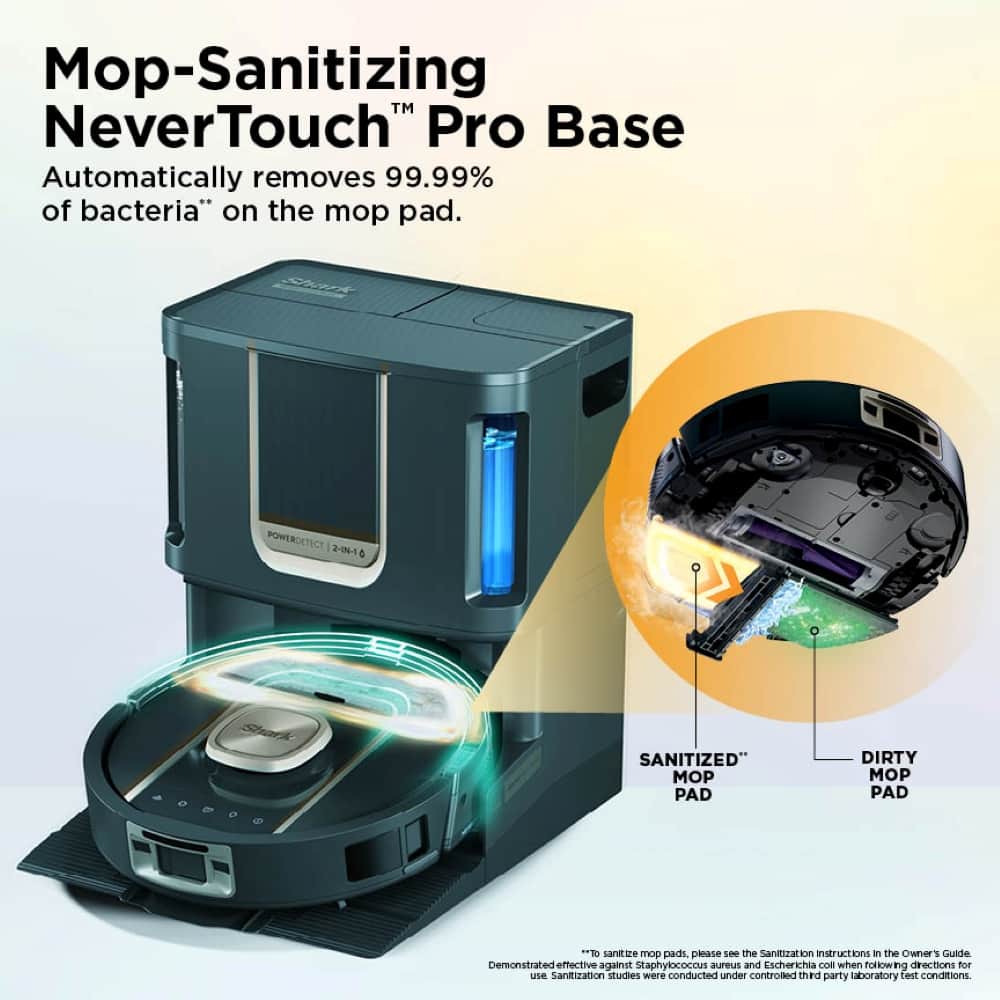
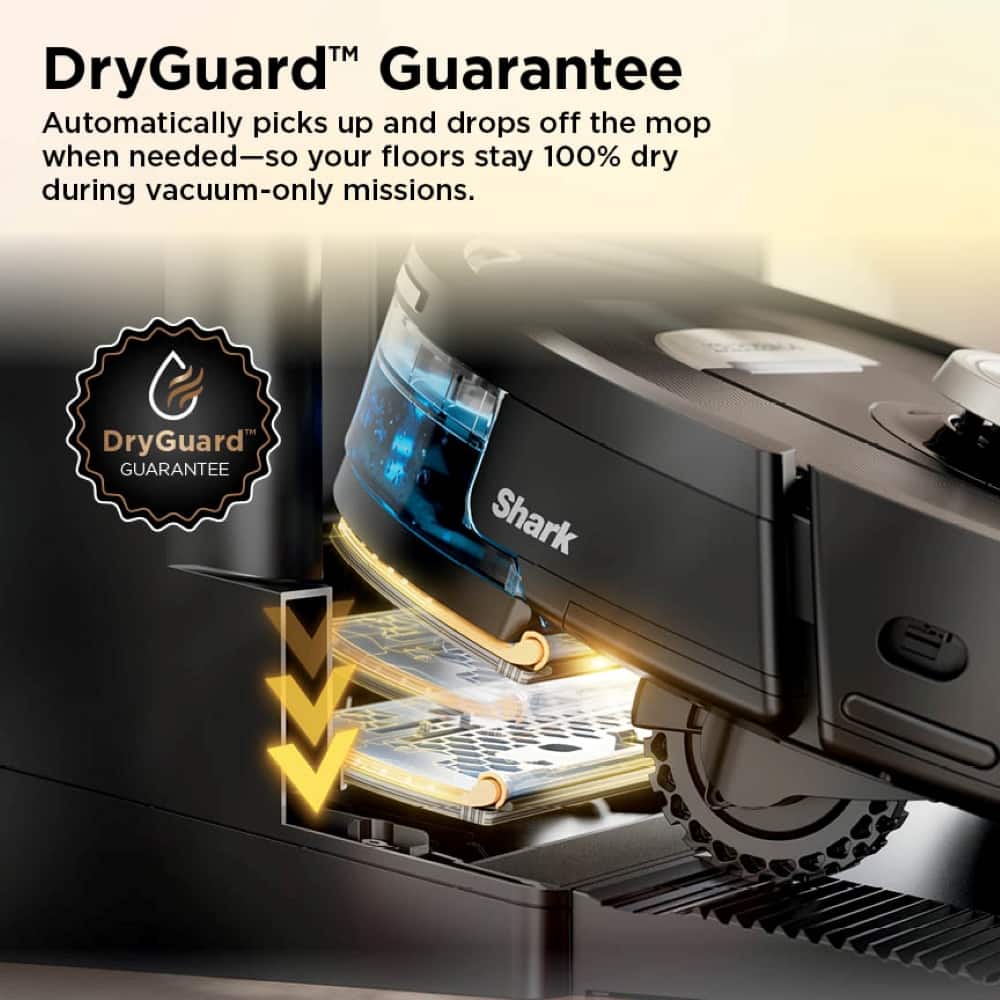
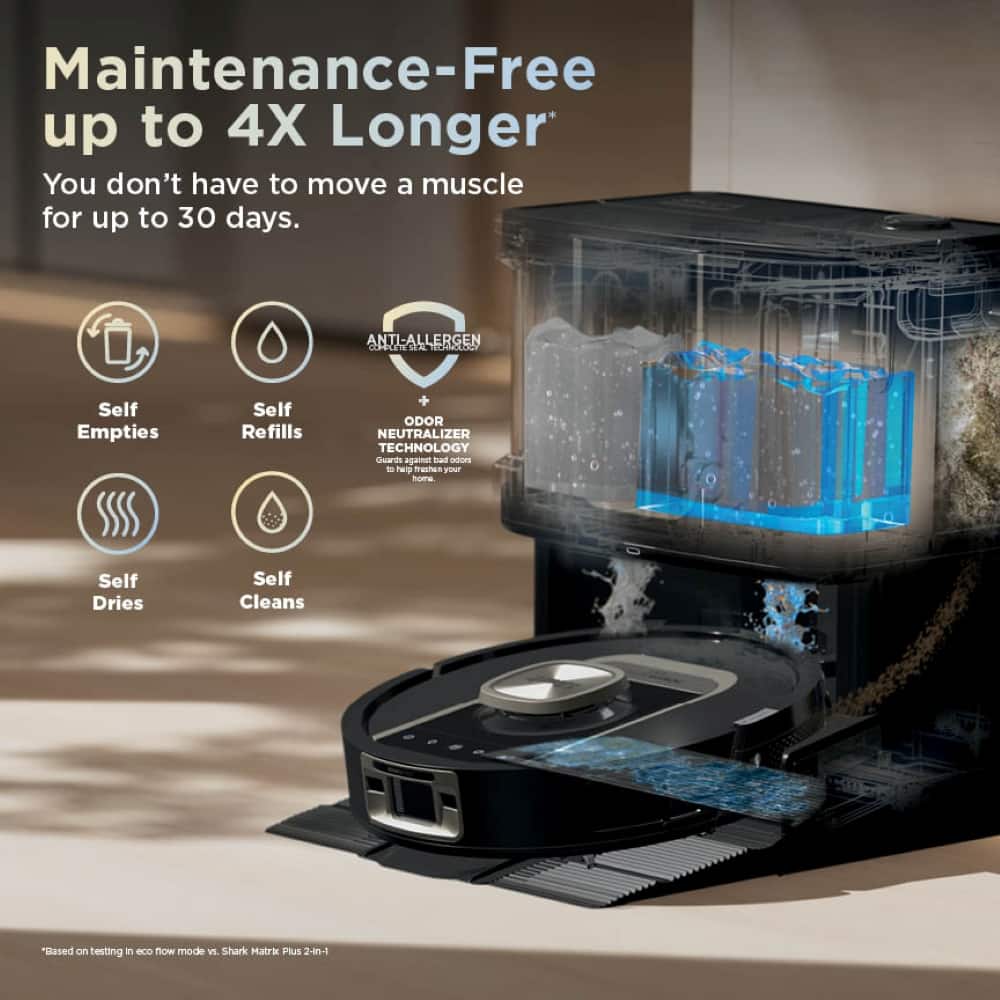
The standout feature of the Shark PowerDetect is its ThermaCharged mop sanitation system. The NeverTouch Pro base washes mop pads with 185°F water—the hottest in the category—then dries them with 175°F heated air. This temperature combination provides superior sanitation compared to competitors, effectively eliminating bacteria and odors that can build up in traditional mop systems.
From a practical standpoint, this means your floors aren't just visually clean but hygienically clean. The system also prevents the musty odor that plagues many robot mops, especially in humid climates or homes with pets.
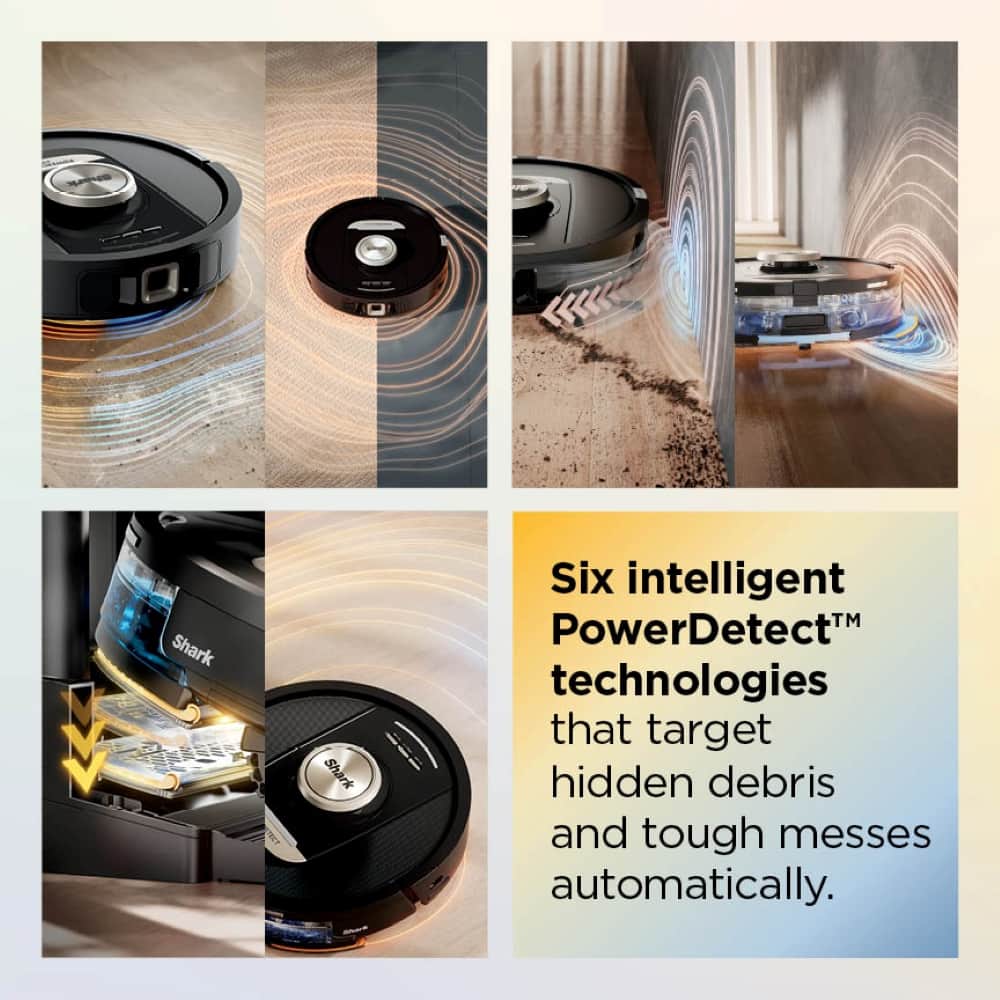
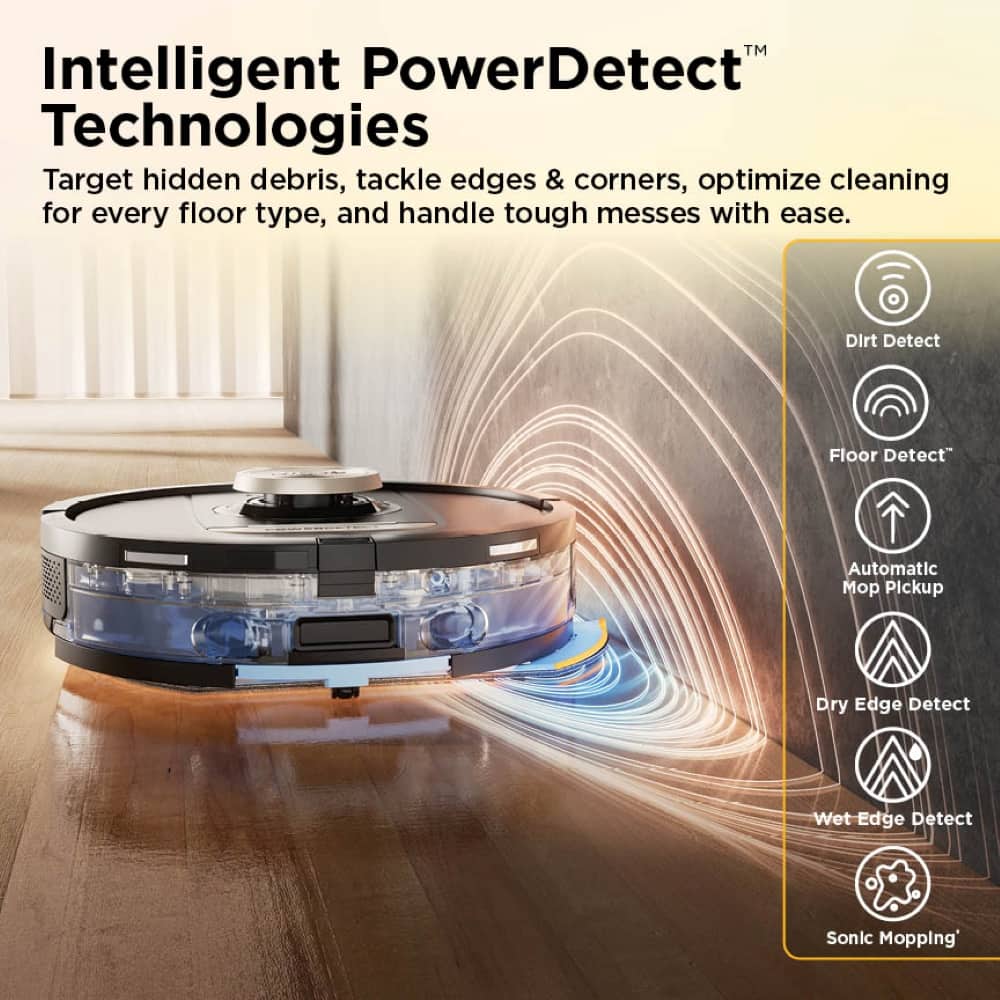
The Shark's PowerDetect sensor suite includes six intelligent systems that adapt cleaning behavior in real-time:
This adaptive approach means the PowerDetect spends more time and energy where it's actually needed rather than following a rigid cleaning pattern.
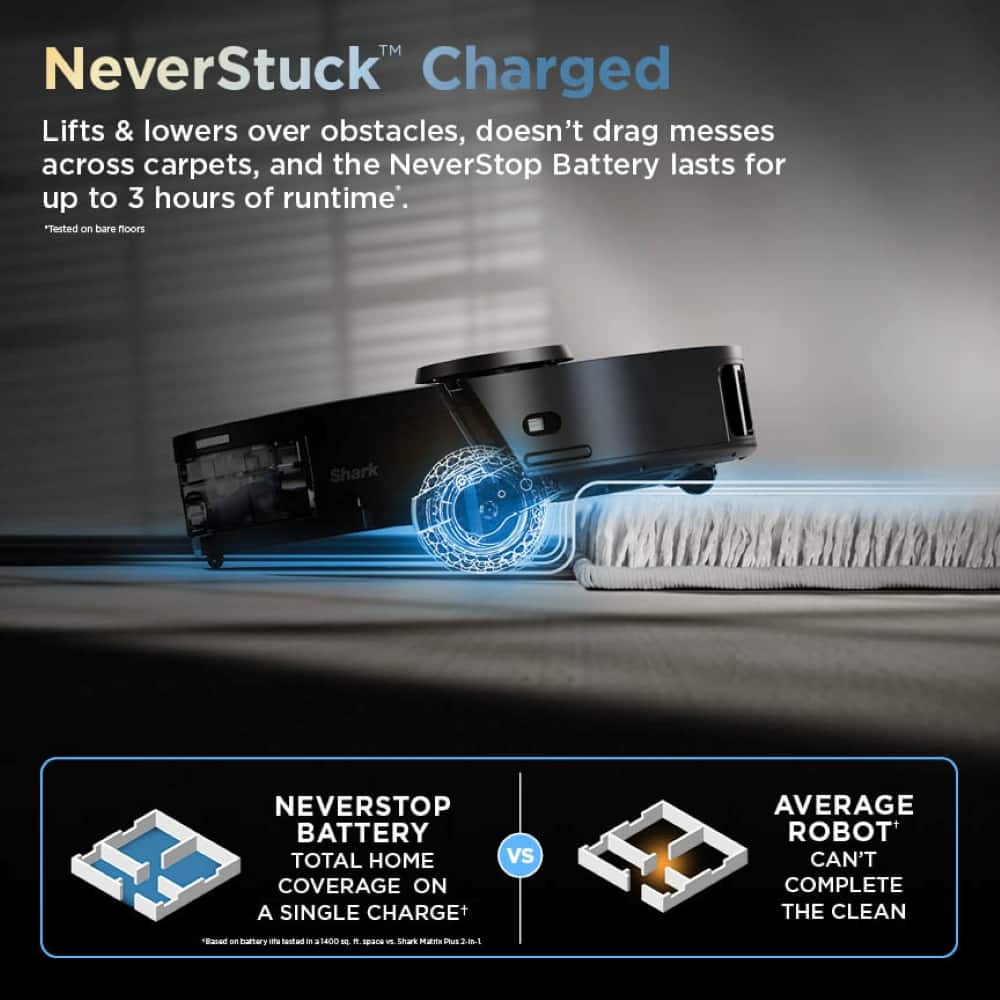
With up to 180 minutes of runtime per charge, the Shark PowerDetect covers more ground per cleaning session than most competitors. The 6,400 mAh battery provides enough power for larger homes without requiring mid-cleaning recharging stops.
The NeverStuck chassis lifting technology enables crossing thresholds up to 38mm—nearly identical to the Z70's 40mm capability. Both robots handle standard door transitions and minor floor level changes without manual intervention.
The NeverTouch Pro base holds 60 days of debris in a bagless dustbin and 30 days of clean water for mopping. This extended capacity reduces maintenance frequency significantly compared to robots requiring daily or weekly attention. The system also includes odor neutralizer technology and HEPA filtration to maintain air quality during the emptying process.
Unlike some premium models that require expensive proprietary cleaning solutions, the Shark works with standard multi-surface cleaners, reducing ongoing operational costs.
The performance gap between these robots varies dramatically by floor type. On hard floors, the Roborock Z70 delivers superior debris pickup thanks to its specialized brush design and precise navigation. The Free-Flow all-rubber brush effectively captures fine dust and larger debris without scattering particles.
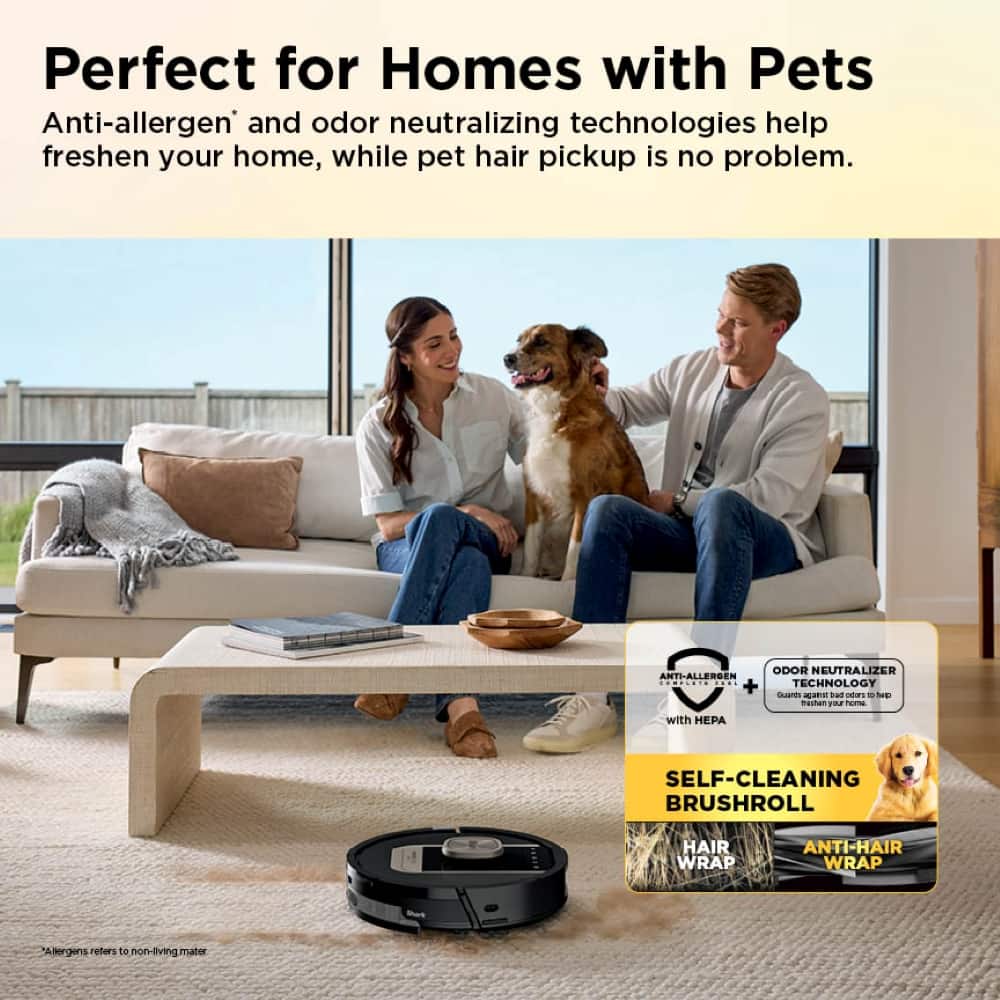
However, on carpets, the Shark PowerDetect takes the lead. Its adaptive suction system automatically increases power when detecting carpet fibers, while the anti-hair wrap brushroll prevents the tangles that plague many robot vacuums. The DirtDetect system also ensures heavily soiled areas receive extra attention.
For pet owners, both robots handle pet hair differently. The Z70 excels on hard floors but struggles with hair embedded in carpet fibers. The Shark provides more consistent performance across all surfaces, though neither matches the pet hair pickup of dedicated pet-focused models.
Here's where the Roborock Z70 clearly dominates. Professional testing shows its mopping system removes stuck-on stains more effectively than virtually any competitor. The dual spinning pads with edge extension technology ensure thorough coverage, while the precise pressure control adapts to different floor types.
The Shark PowerDetect's sonic mopping system provides adequate cleaning for routine maintenance but can't match the stain-removal capability of the Z70's more aggressive approach. However, the Shark's superior mop sanitation system means cleaner tools and better hygiene over time.
Both robots use sophisticated navigation systems, but they excel in different areas. The Z70's StarSight™ 2.0 provides unmatched obstacle recognition and avoidance, making it ideal for homes with lots of floor clutter or curious pets. The system can identify specific objects and even report their last-seen locations through the app.
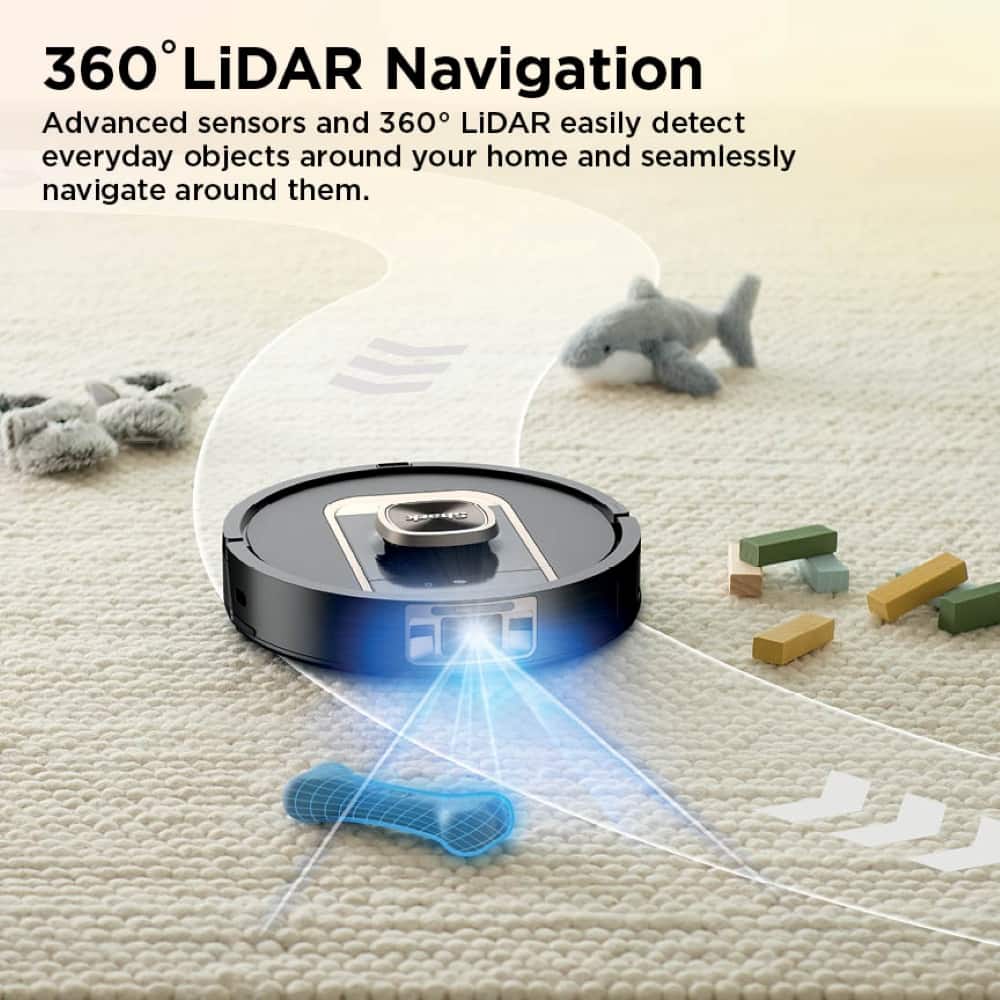
The Shark PowerDetect uses a more traditional but reliable approach with 360° LiDAR and 3D structured light sensors. While it can't identify specific objects like the Roborock, it navigates efficiently and rarely gets stuck or confused.
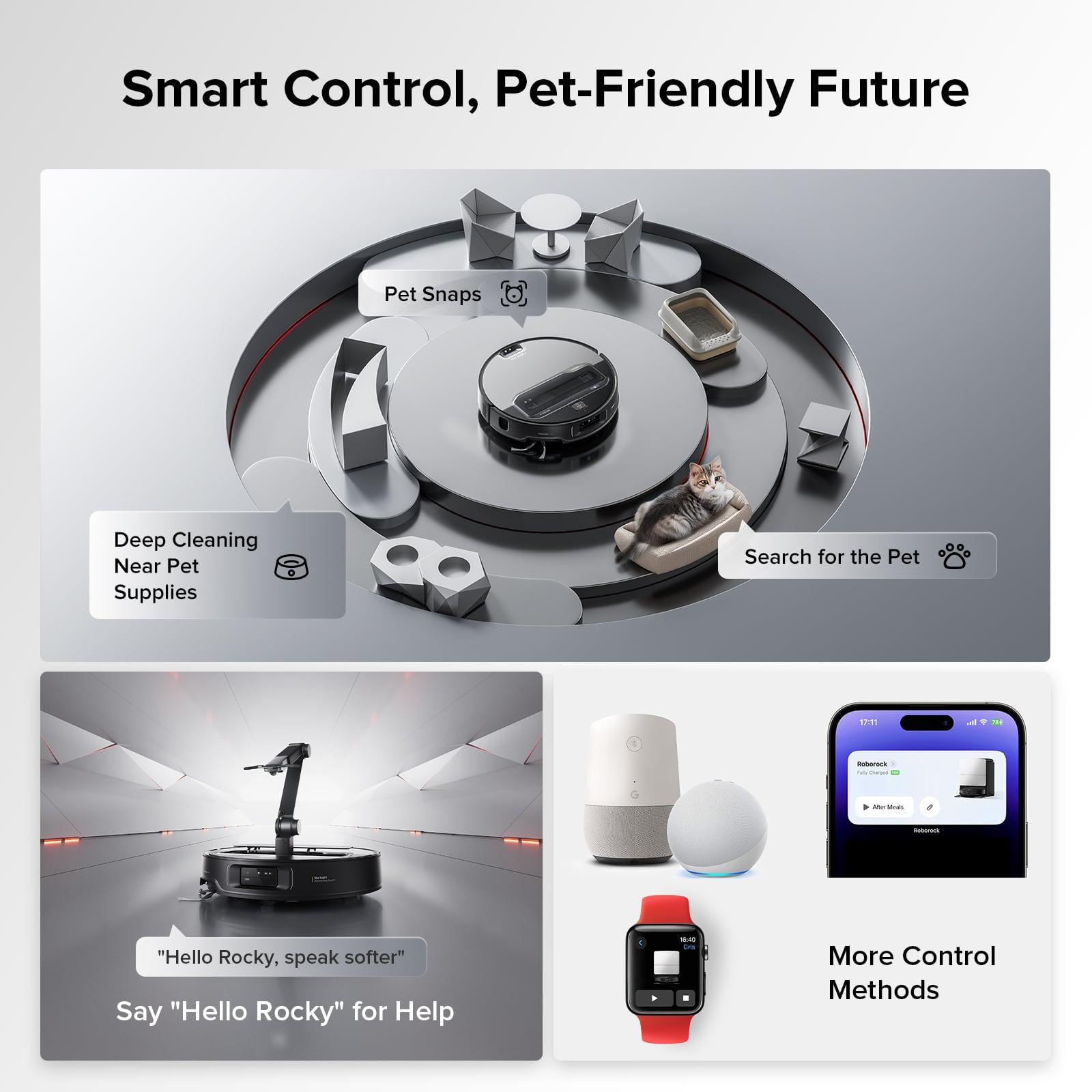
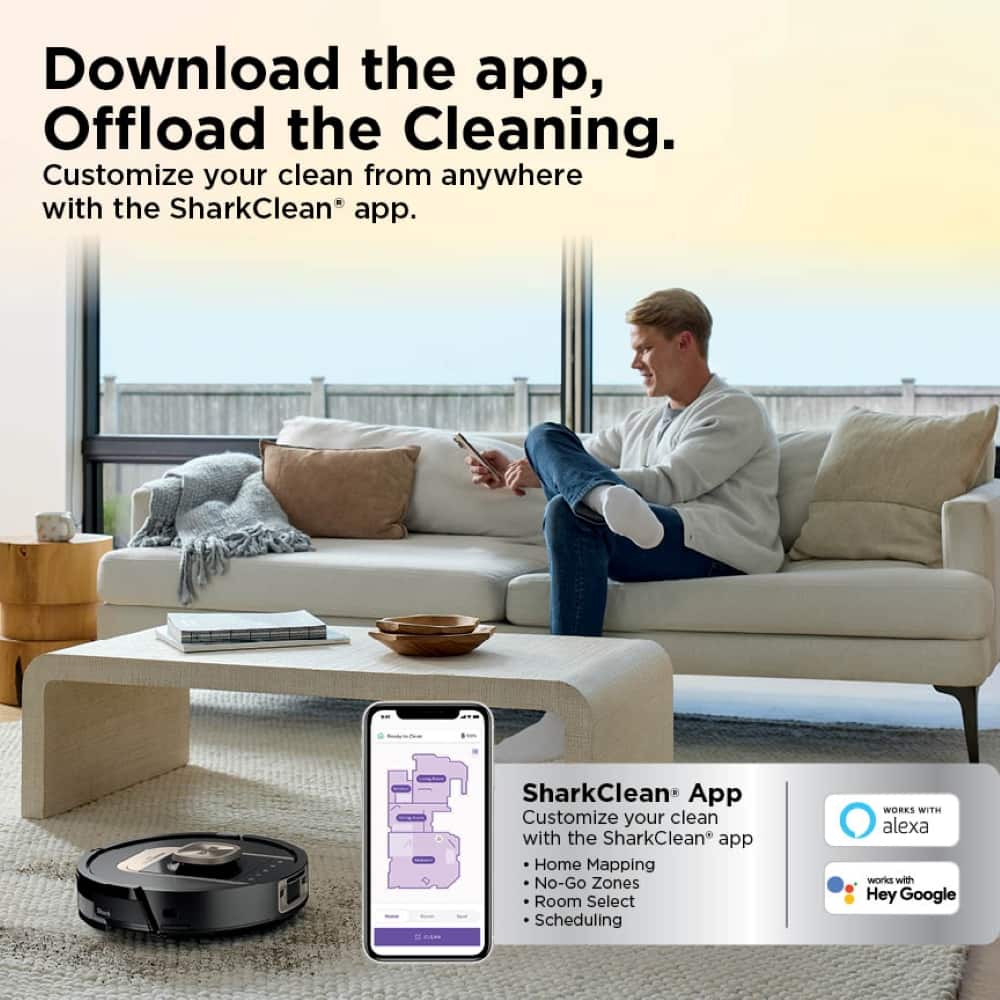
App experience strongly favors the Z70. The Roborock app offers extensive customization options, multi-level mapping, real-time progress tracking, and even pet monitoring features including video calls. The Shark app provides basic functionality but lacks advanced features like adjustable water flow or detailed cleaning reports.
For home theater enthusiasts, both robots present unique advantages and challenges. The Roborock Z70's ultra-slim profile allows it to clean under equipment racks and low-clearance furniture common in dedicated theater rooms. However, its mechanical arm and advanced sensors might interfere with infrared remote signals or sensitive audio equipment.
The Shark PowerDetect offers better compatibility with A/V setups due to its privacy-focused design (no cameras) and more predictable operation patterns. Its quieter operation during extended cleaning sessions also reduces interference with critical listening sessions or movie viewing.
Both robots can be scheduled to clean when theater systems are powered down, but the Shark's longer battery life provides more flexibility for thorough cleaning of larger entertainment spaces.
At the time of writing, these robots occupy vastly different price tiers. The Roborock Saros Z70 commands a significant premium—roughly five times the cost of the Shark PowerDetect ThermaCharged. This price difference fundamentally changes the value calculation.
The Z70 offers genuinely innovative technology with its mechanical arm and superior obstacle avoidance, but these features come with reliability concerns and practical limitations. The arm's 50% success rate and limited object recognition make it more of a tech demonstration than a reliable household tool.
The Shark PowerDetect delivers exceptional value by perfecting proven technologies rather than pioneering new ones. Its comprehensive automation, superior mop sanitation, and reliable performance provide tangible daily benefits without the quirks and inconsistencies of cutting-edge features.
Love cutting-edge technology and don't mind paying a premium for innovation. Early adopters who enjoy being first to experience new robotic capabilities will appreciate the mechanical arm's potential, even with current limitations.
Have primarily hard floors where the superior mopping performance and navigation precision provide clear advantages. Homes with minimal carpeting maximize the Z70's strengths while minimizing its carpet-cleaning weaknesses.
Need ultra-slim cleaning for low-clearance furniture or built-in entertainment centers. The 3+ inch height advantage opens cleaning access that taller robots simply cannot reach.
Value smart home integration and advanced app features. Tech-savvy users who customize automation routines and monitor cleaning progress will appreciate the comprehensive software experience.
Prioritize practical performance over experimental features. Users who want reliable, consistent cleaning without dealing with quirky new technologies will appreciate the proven approach.
Have mixed flooring types including significant carpet areas. The adaptive cleaning systems and superior carpet performance provide better overall coverage in typical homes.
Want maximum automation with minimal ongoing maintenance. The extended capacity and comprehensive self-cleaning systems require less frequent user intervention than most competitors.
Prefer proven value over premium pricing. Budget-conscious buyers who want premium features without paying for unproven innovations get exceptional capability per dollar spent.
The Roborock Saros Z70 represents the future of home robotics—impressive when it works perfectly, occasionally frustrating when experimental features don't perform as expected. Its mechanical arm and superior mopping make it genuinely unique, but reliability concerns and premium pricing limit its appeal to tech enthusiasts with specific needs.
The Shark PowerDetect ThermaCharged RV2920XE embodies mature technology executed exceptionally well. It may not grab headlines with revolutionary features, but it delivers consistent performance, comprehensive automation, and outstanding value. For most households, this practical approach provides better daily utility than cutting-edge features that work inconsistently.
If you're considering either robot, think carefully about whether you want to be an early adopter of potentially transformative technology or prefer a refined version of proven capabilities. Both are excellent robots, but they serve fundamentally different user preferences and priorities.
| Roborock Saros Z70 Robot Vacuum and Mop | Shark PowerDetect ThermaCharged 2-in-1 Robot Vacuum Mop RV2920XE |
|---|---|
| Mechanical Arm - Revolutionary object-moving capability | |
| OmniGrip™ five-axis arm moves objects up to 300g (works ~50% of time) | No mechanical arm (relies on navigation around obstacles) |
| Suction Power - Critical for debris pickup on all surfaces | |
| 22,000 Pa rated (but only 0.3 kPa measured intake - below average) | Not specified (adaptive DirtDetect boosts power when needed) |
| Mopping Performance - Essential for truly clean hard floors | |
| Industry-leading 269/300 test score with dual spinning pads | Sonic mopping with 100 vibrations/minute (adequate for maintenance) |
| Height Profile - Determines under-furniture cleaning access | |
| 79.8mm ultra-slim (fits under most furniture) | Standard height ~122mm (limited low-clearance access) |
| Navigation Technology - Affects cleaning efficiency and obstacle avoidance | |
| StarSight™ 2.0 with 3D ToF sensors (22/24 obstacle test score) | 360° LiDAR + 3D structured light (reliable but basic recognition) |
| Object Recognition - Prevents getting stuck on common household items | |
| Recognizes 108 object types, learns 50 more via app | Basic obstacle detection without specific object identification |
| Dustbin Capacity - Affects how often you need to empty | |
| 180ml internal (smallest in class due to arm mechanism) | 312ml internal (standard capacity for extended cleaning) |
| Battery Runtime - Determines cleaning coverage per charge | |
| Up to 180-300 minutes (varies by source) | Up to 180 minutes (consistent extended runtime) |
| Mop Sanitation System - Prevents odor and bacterial buildup | |
| Hot water wash at 176°F, heated air dry at 131°F | ThermaCharged wash at 185°F, dry at 175°F (highest temps available) |
| Base Station Automation - Reduces hands-on maintenance | |
| 7-week debris + auto mop wash/dry + detergent dispensing | 60-day debris + 30-day water + heated mop sanitation |
| Carpet Performance - Important for mixed flooring homes | |
| Below average due to low measured suction | Good with automatic carpet boost and FloorDetect |
| App Experience - Affects daily usability and customization | |
| Premium app with multi-floor mapping, pet features, Matter support | Basic app lacking multi-level maps and advanced controls |
| Threshold Climbing - Ability to move between rooms | |
| AdaptiLift™ crosses up to 40mm thresholds | NeverStuck technology handles up to 38mm thresholds |
| Price Positioning - Value consideration at time of purchase | |
| Premium pricing tier (5x cost of competitors) | Value-focused pricing with premium features |
The Roborock Saros Z70 excels on hardwood floors with its industry-leading mopping performance, scoring 269 out of 300 in professional stain removal tests. Its dual spinning mop pads with edge extension technology provide thorough cleaning along baseboards. The Shark PowerDetect ThermaCharged offers solid hardwood performance with sonic mopping and adaptive cleaning, but can't match the Z70's superior mopping capabilities for stuck-on stains.
The Shark PowerDetect ThermaCharged provides better carpet cleaning with its adaptive suction system that automatically boosts power when detecting carpet fibers. The Roborock Saros Z70 disappoints on carpets despite its 22,000 Pa rating, measuring only 0.3 kPa actual suction compared to the category average of 0.8 kPa. For homes with significant carpeting, the Shark delivers more consistent performance.
The Roborock Saros Z70 leads in obstacle avoidance with its StarSight™ 2.0 system, scoring 22 out of 24 in professional tests (well above the 16.6 average). It recognizes 108 object types and can detect items as small as 2cm. The Shark PowerDetect uses reliable LiDAR navigation but lacks the advanced object recognition capabilities of the Roborock.
Only the Roborock Saros Z70 features a mechanical arm - it's the world's first mass-produced robot vacuum with this technology. The OmniGrip™ arm can move small objects like socks and shoes weighing under 300g, though it works reliably about 50% of the time. The Shark PowerDetect ThermaCharged doesn't have a mechanical arm but focuses on navigating around obstacles efficiently.
Both robots offer similar battery performance, with the Shark PowerDetect ThermaCharged providing up to 180 minutes of consistent runtime. The Roborock Saros Z70 claims 180-300 minutes depending on cleaning mode. The Shark covers larger areas more reliably due to its extended runtime and efficient navigation patterns.
The Shark PowerDetect ThermaCharged requires less frequent maintenance with its 60-day debris capacity and 30-day water tank. Its ThermaCharged system washes mop pads at 185°F - the hottest available. The Roborock Saros Z70 has a smaller 180ml dustbin (the smallest in its class) requiring more frequent emptying, though it offers 7-week debris storage in the base and hot mop washing at 176°F.
The Roborock Saros Z70 excels for pet owners with superior obstacle avoidance that prevents spreading pet accidents and advanced pet monitoring features including video calls. However, the Shark PowerDetect ThermaCharged handles pet hair better across all surfaces with its anti-hair wrap brushroll and consistent suction performance on carpets where pet hair typically embeds.
The Roborock Saros Z70 offers a premium app experience with multi-floor mapping, extensive customization options, real-time progress tracking, and Matter smart home compatibility. The Shark PowerDetect provides basic app functionality but lacks advanced features like adjustable water flow, multi-level mapping, and detailed cleaning reports that the Roborock includes.
The Roborock Saros Z70 has a significant advantage with its ultra-slim 79.8mm height profile, allowing it to clean under low-clearance furniture that taller robots cannot reach. This 3+ inch height advantage over the standard-sized Shark PowerDetect ThermaCharged makes a practical difference for cleaning under beds, couches, and entertainment centers.
The Roborock Saros Z70 delivers superior mopping with dual spinning pads that lift 22mm to avoid carpets and extend for edge cleaning. The Shark PowerDetect ThermaCharged uses sonic mopping technology with 100 vibrations per minute and superior mop sanitation at 185°F wash temperature. While the Shark sanitizes better, the Roborock cleans more effectively.
The Shark PowerDetect ThermaCharged provides exceptional value with comprehensive automation, reliable performance, and premium features at a fraction of the Roborock Saros Z70's cost. The Z70 commands a significant premium for its innovative mechanical arm and superior mopping, but the inconsistent arm performance and limited practical benefits make the Shark the better value for most households.
Choose the Roborock Saros Z70 if you have primarily hard floors, want cutting-edge technology, need ultra-slim cleaning access, and don't mind paying a premium for innovation. Select the Shark PowerDetect ThermaCharged if you have mixed flooring including carpets, prioritize reliable performance and value, want maximum automation with minimal maintenance, and prefer proven technology over experimental features.
We've done our best to create useful and informative comparisons to help you decide what product to buy. Our research uses advanced automated methods to create this comparison and perfection is not possible - please contact us for corrections or questions. These are the sites we've researched in the creation of this article: rtings.com - vacuumwars.com - vacuumwars.com - youtube.com - techradar.com - youtube.com - youtube.com - rtings.com - youtube.com - versus.com - youtube.com - us.roborock.com - roborockstore.com.au - vacuumwars.com - bestbuy.com - robocleaners.com - us.roborock.com - us.roborock.com - prnewswire.com - youtube.com - vacuumwars.com - youtube.com - vacuumwars.com - vacuumwars.com - youtube.com - reviewed.com - sharkninja.com - reviewed.com - youtube.com - sharkninja.com - brandclub.com - ebay.com - costco.com - sharkninja.com - bestbuy.com - youtube.com - support.sharkninja.ca - camelcamelcamel.com

Privacy Policy
Terms and Conditions - Affiliate Policy
Home Security
© Copyright 2008-2026.
11816 Inwood Rd #1211, Dallas, TX 75244