

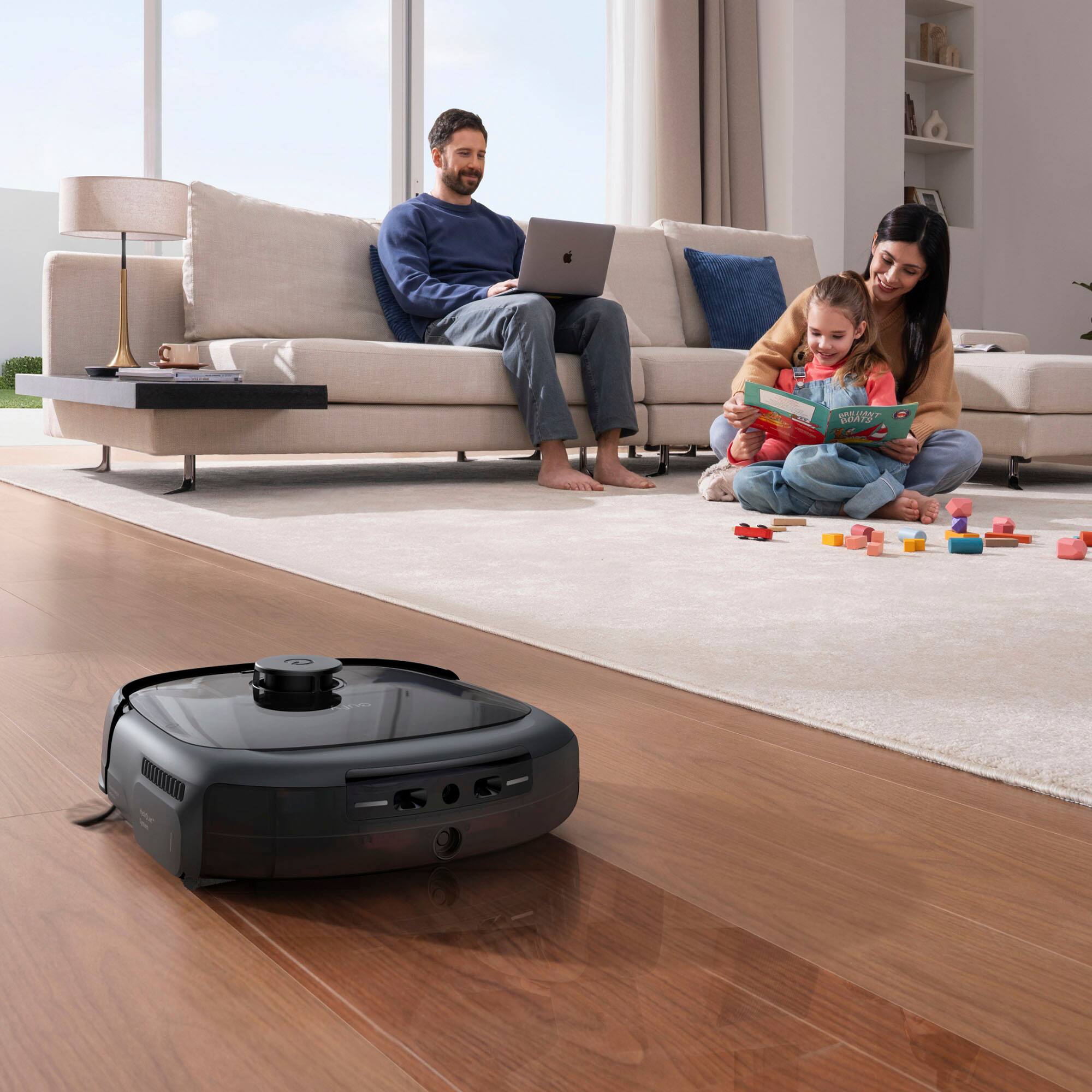
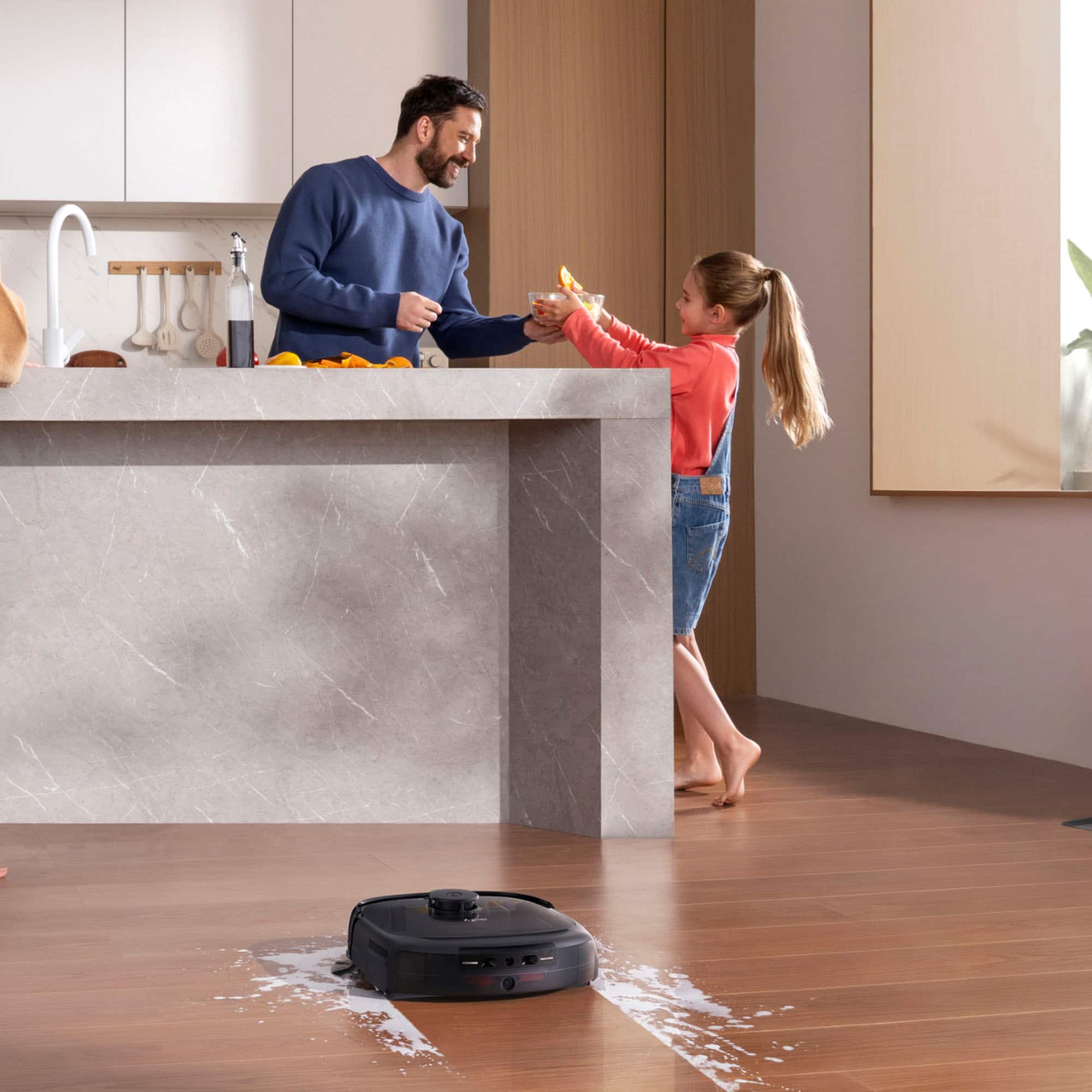
The premium robot vacuum market has exploded with innovation over the past few years, bringing us closer to the dream of truly hands-off home cleaning. Two models that perfectly illustrate this evolution are the groundbreaking Roborock Saros Z70 and the versatile Eufy Omni E28. Both launched in 2025, representing the latest thinking in automated cleaning technology, but they take dramatically different approaches to solving the same problem: keeping your floors spotless without you lifting a finger.
These aren't your basic robot vacuums that bump around randomly. We're talking about sophisticated machines that can map your entire home, recognize hundreds of different objects, and perform complex cleaning tasks while you're at work or sleeping. But which approach serves real families better?
Before diving into specifics, it's worth understanding what separates premium robot vacuum and mop combinations from their cheaper cousins. These high-end models feature multi-functional docking stations that act like automated cleaning command centers. Instead of just charging your robot, these stations empty the dustbin automatically, wash and dry mop pads, refill water tanks, and even dispense cleaning solution—all without your involvement.
The navigation systems in premium models use LiDAR (Light Detection and Ranging)—the same technology found in self-driving cars—to create precise maps of your home. Combined with cameras and advanced processors, these robots can identify and avoid obstacles as small as a USB cable or pet toy, something that was impossible just a few years ago.
Suction power has also dramatically increased. While basic models might offer 2,000-3,000 Pa (pascals, a measure of suction pressure), premium models now deliver 15,000-22,000 Pa. To put that in perspective, a typical handheld vacuum produces around 8,000-10,000 Pa.
The mopping systems have evolved from simple damp cloth dragging to sophisticated systems with spinning mop pads, adjustable pressure, and automatic carpet detection. These aren't just token features anymore—they can actually replace your traditional mop for most cleaning tasks.
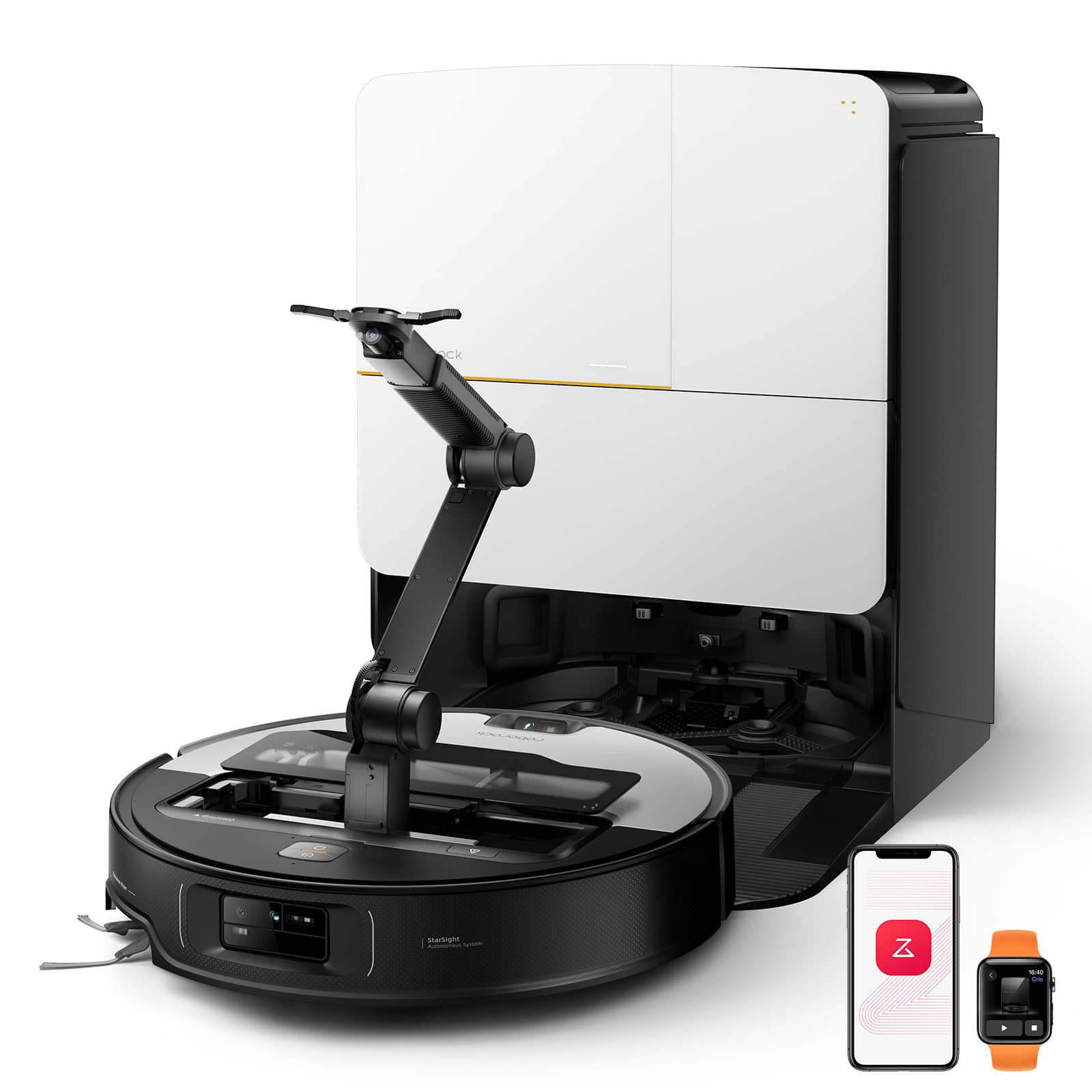
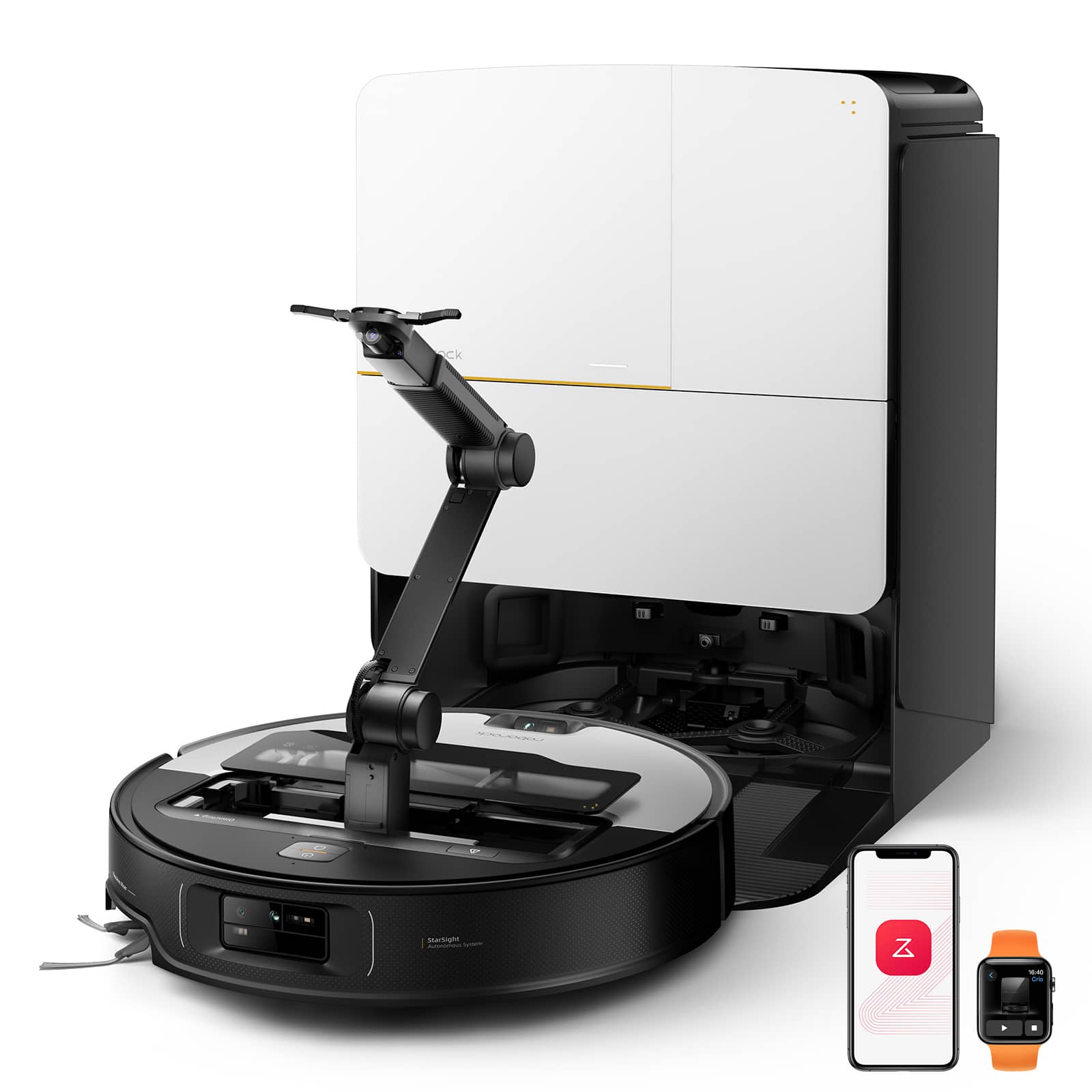
The Roborock Saros Z70 represents the bleeding edge of robotic innovation. Its headline feature—the world's first mechanical arm in a consumer robot vacuum—signals Roborock's bet that the future lies in robots that can manipulate their environment, not just navigate around it. This positions it as a premium flagship for early adopters willing to pay extra for groundbreaking technology.
The Eufy Omni E28, launched at a more accessible price point at the time of writing, takes a different approach. Instead of futuristic mechanical arms, it focuses on proven cleaning performance enhanced by practical innovations like a detachable spot cleaner. Eufy's philosophy seems to be: why experiment with unproven technology when you can perfect what already works?
Both approaches have merit, but they serve different user needs and risk tolerances.
When evaluating robot vacuums, vacuuming performance remains the most critical factor. All the smart features in the world won't help if the robot can't actually pick up dirt and debris effectively.
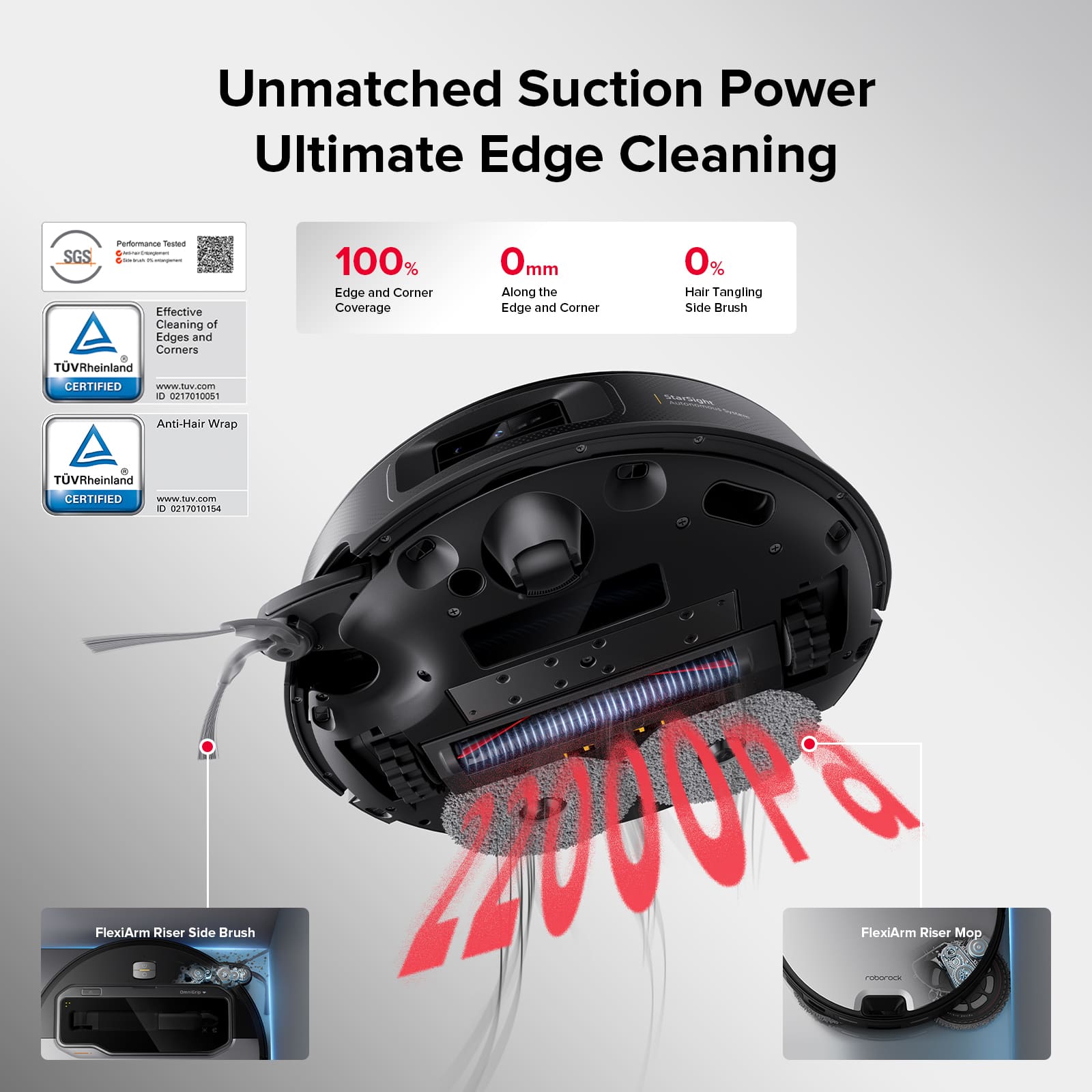
The Roborock Saros Z70 boasts an impressive 22,000 Pa HyperForce suction rating—among the highest in the industry. However, our research into professional testing reveals a concerning disconnect between advertised and measured performance. While the official suction rating is stellar, measured suction at the intake point registers only 0.3 Kpa, well below the industry average of 0.8 Kpa. Airflow measures a mediocre 16 cfm (cubic feet per minute).
What does this mean in practical terms? The Z70 excels on hard floors, where high-pressure suction can effectively lift debris. But on carpets—especially for embedded dirt and pet hair—the lower measured suction becomes problematic. The robot struggles with deep carpet cleaning, scoring below average in professional tests for embedded debris removal.
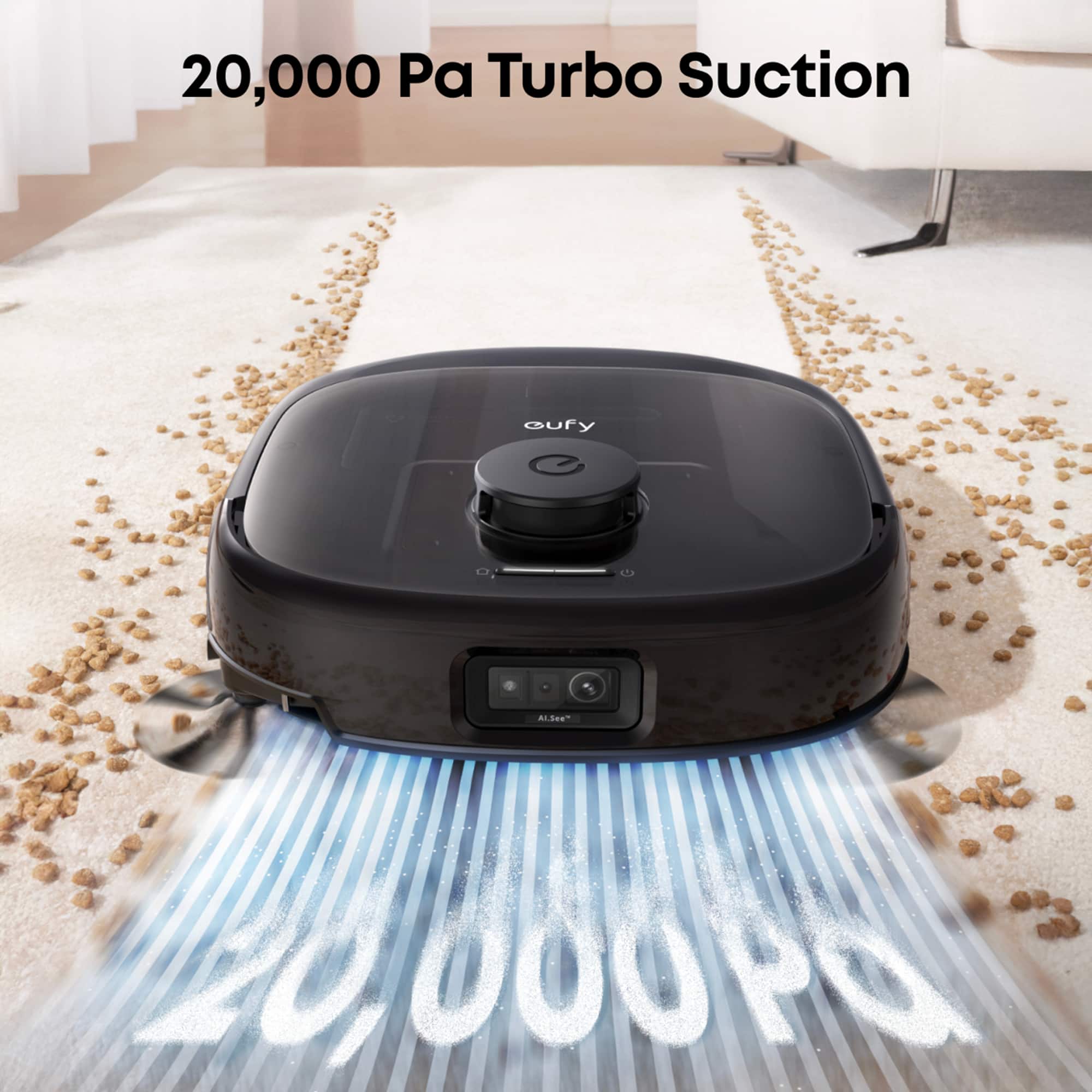
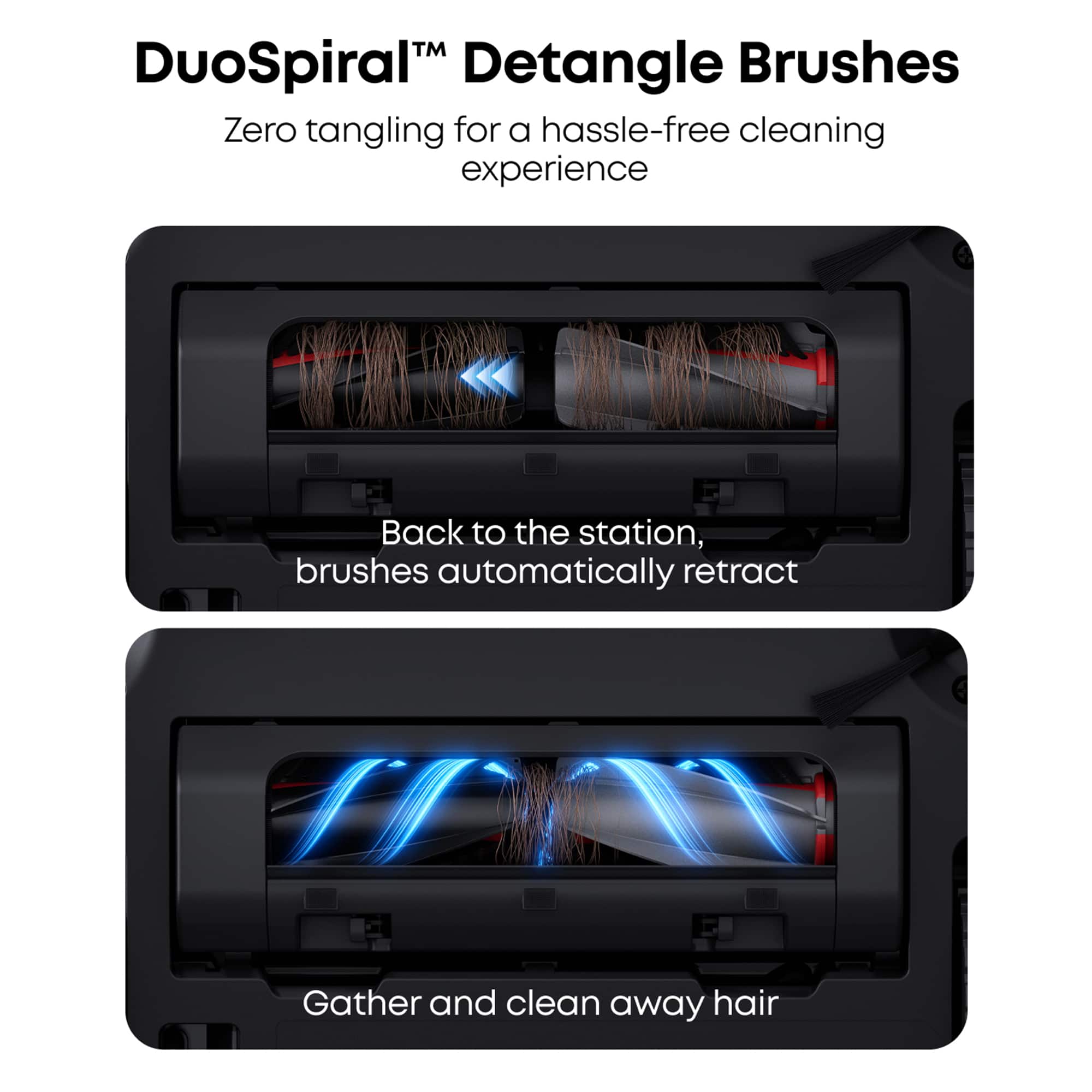
The Eufy Omni E28, with its 20,000 Pa rated suction, delivers more consistent real-world performance across all floor types. User reviews consistently praise its ability to handle everything from fine dust to pet hair on both hard floors and carpets. The DuoSpiral detangle brushes—a dual-brush system designed to prevent hair tangling—prove particularly effective for homes with pets or family members with long hair.
This performance difference matters enormously for mixed-surface homes. If you have area rugs, carpeted bedrooms, or thick carpeting throughout, the Eufy E28 will likely serve you better despite its lower advertised suction rating.
Modern robot mops have evolved far beyond simply dragging a damp cloth across floors. Both models feature sophisticated mopping systems, but with different strengths.
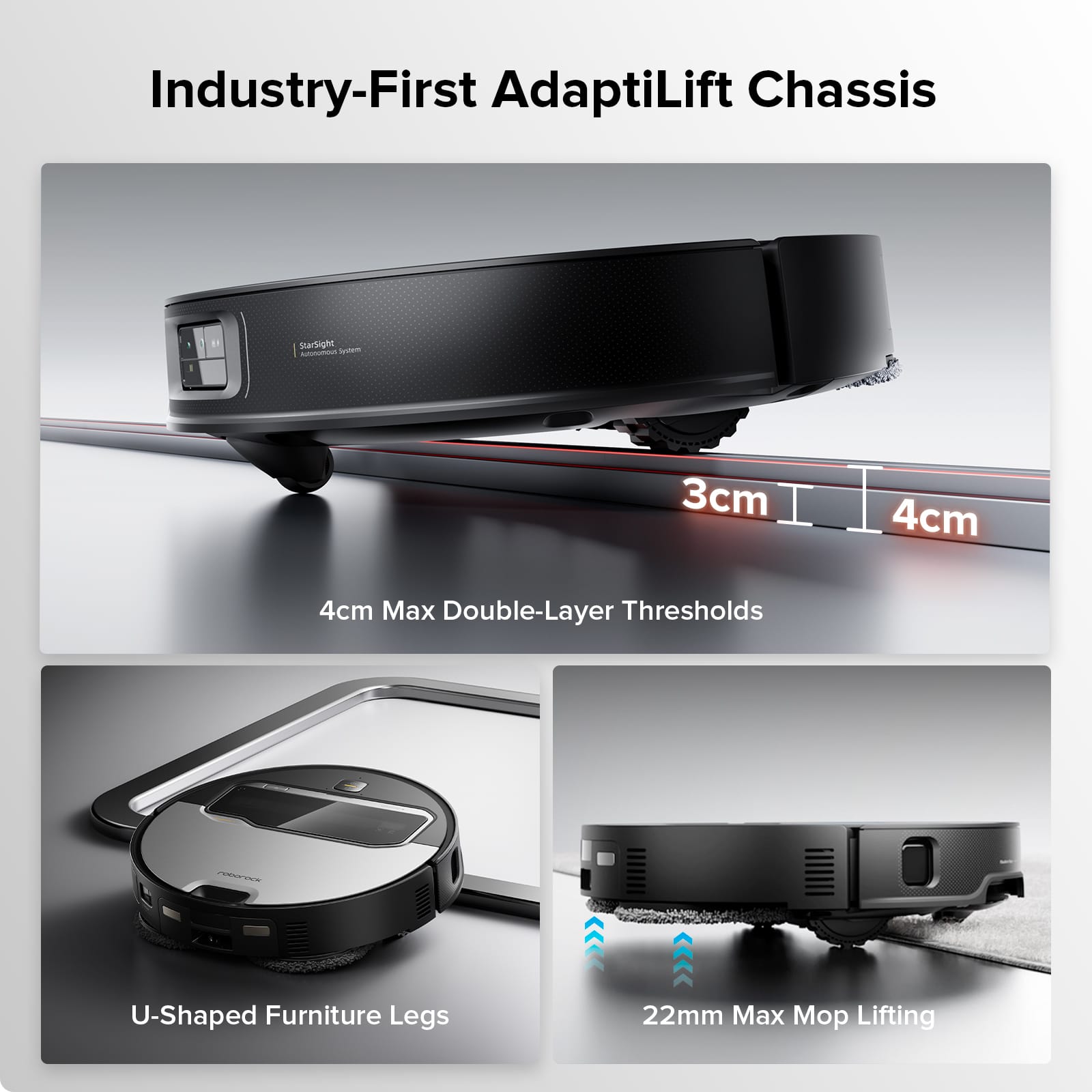
The Roborock Saros Z70 earned industry-leading mopping scores in professional testing, achieving 269 points and ranking second-best ever recorded for dried-on stain removal. Its dual spinning mop pads rotate continuously while applying consistent pressure. The system includes extending mop pads that reach into corners and along baseboards—areas where round robots traditionally struggle. When the robot detects carpet, the mop pads automatically lift 22mm to avoid getting carpets wet.
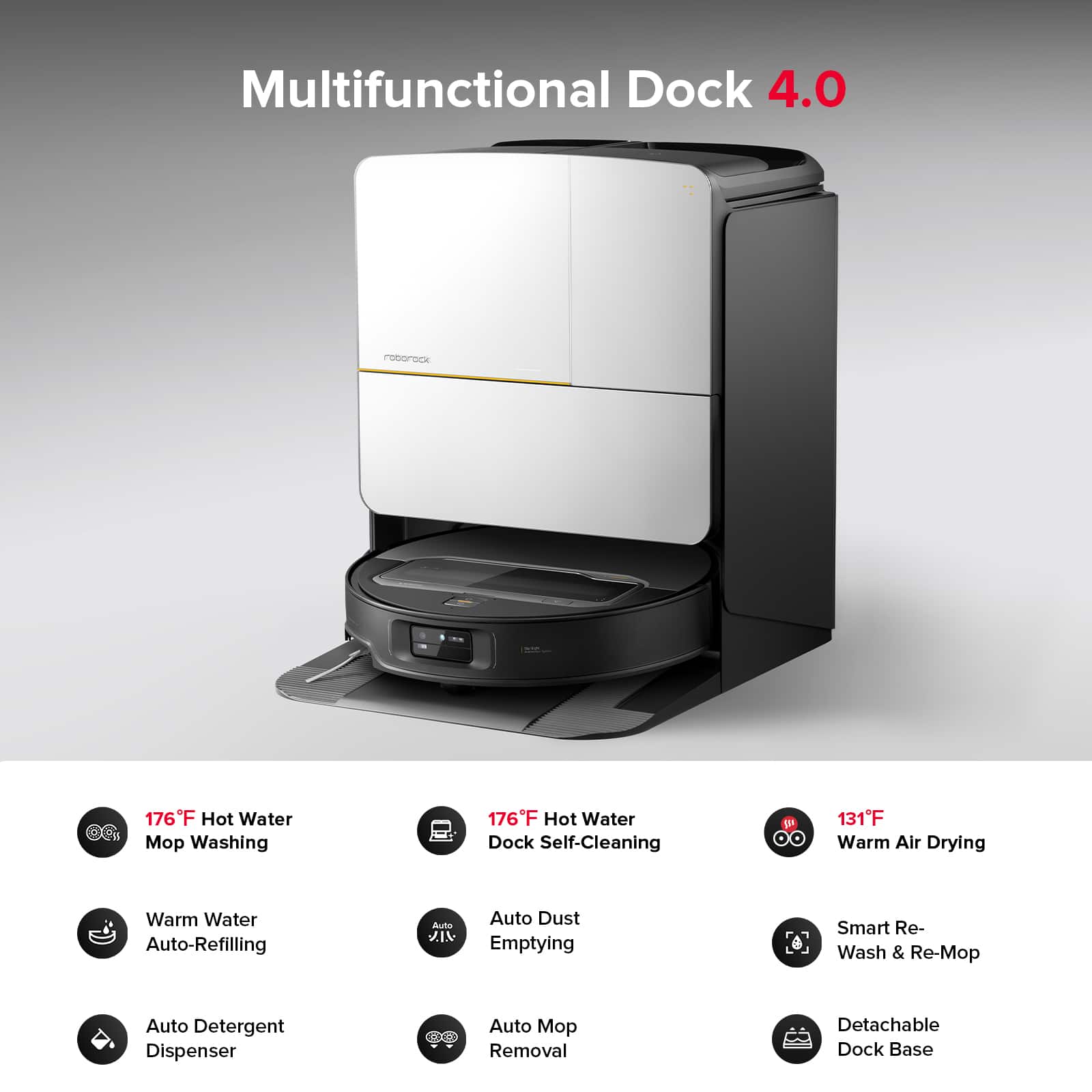
The mopping system connects to the multifunction dock, which washes the pads with 176°F hot water and dries them with heated air. This prevents odor and bacteria growth that plagued earlier robot mops.
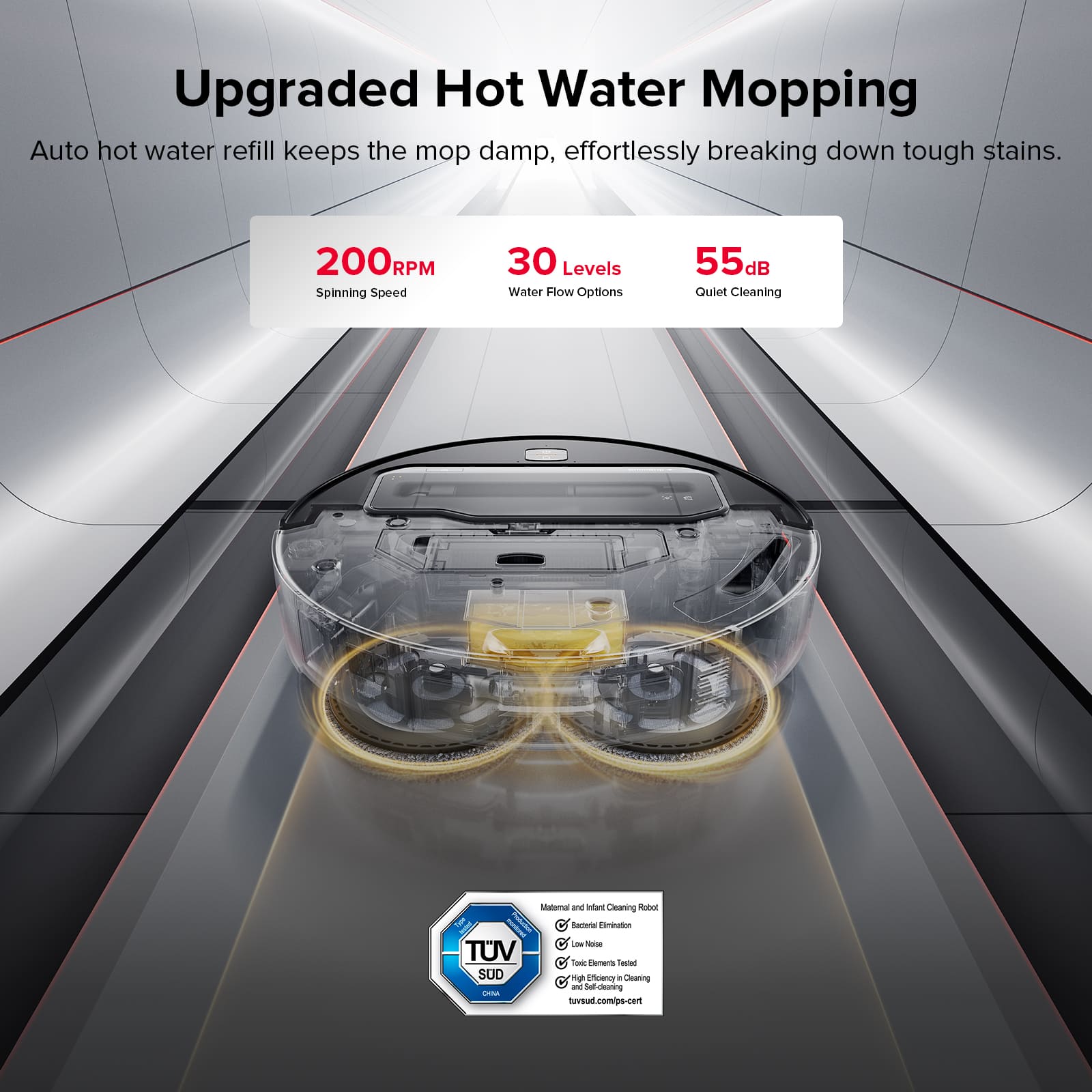
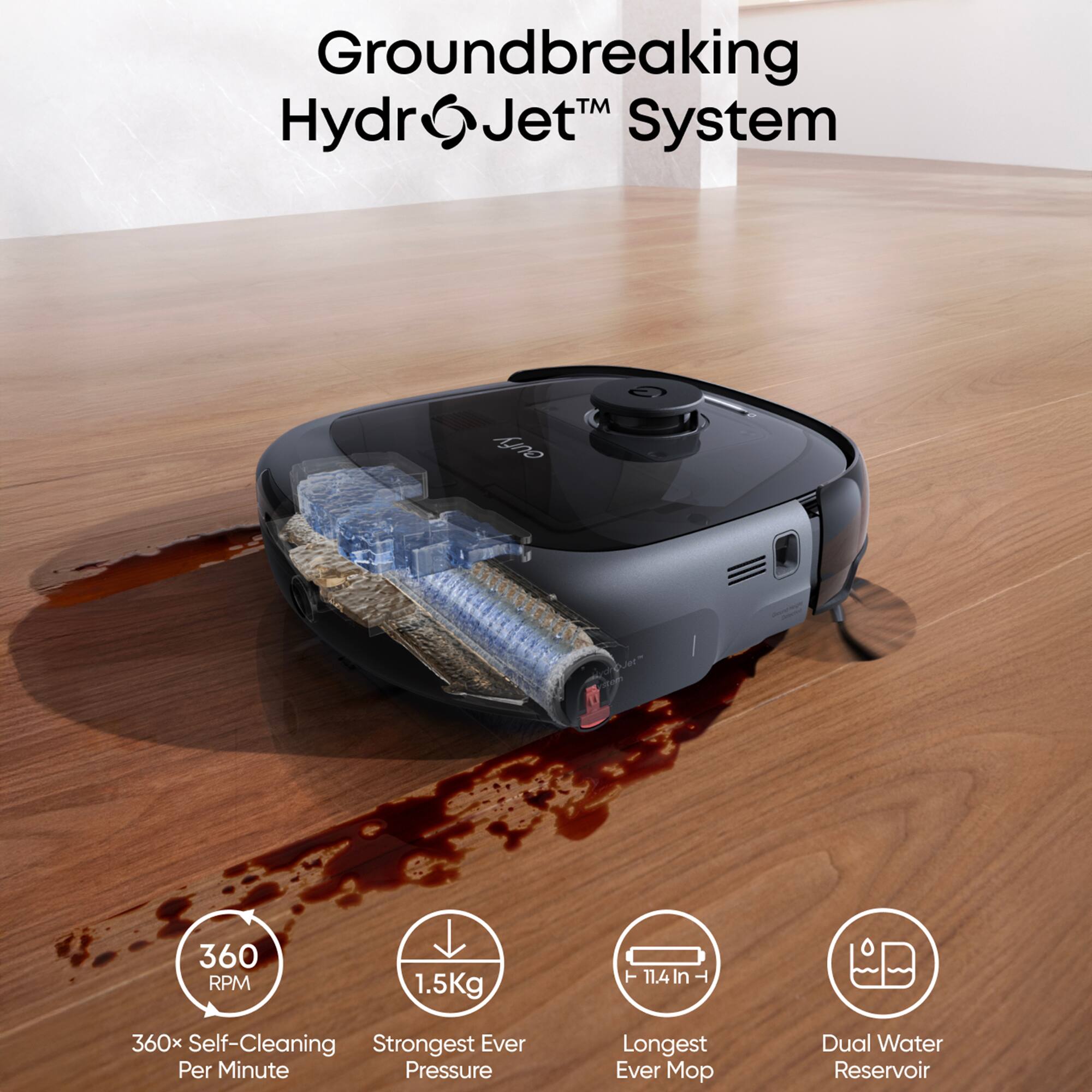
The Eufy Omni E28 takes a different approach with its HydroJet system. Instead of just spinning mop pads, it cleans the mop roller 360 times per minute during operation, ensuring the mop stays fresh throughout the cleaning cycle. The system applies 15N (about 1.5kg) of downward pressure, mimicking the scrubbing action of hand mopping.
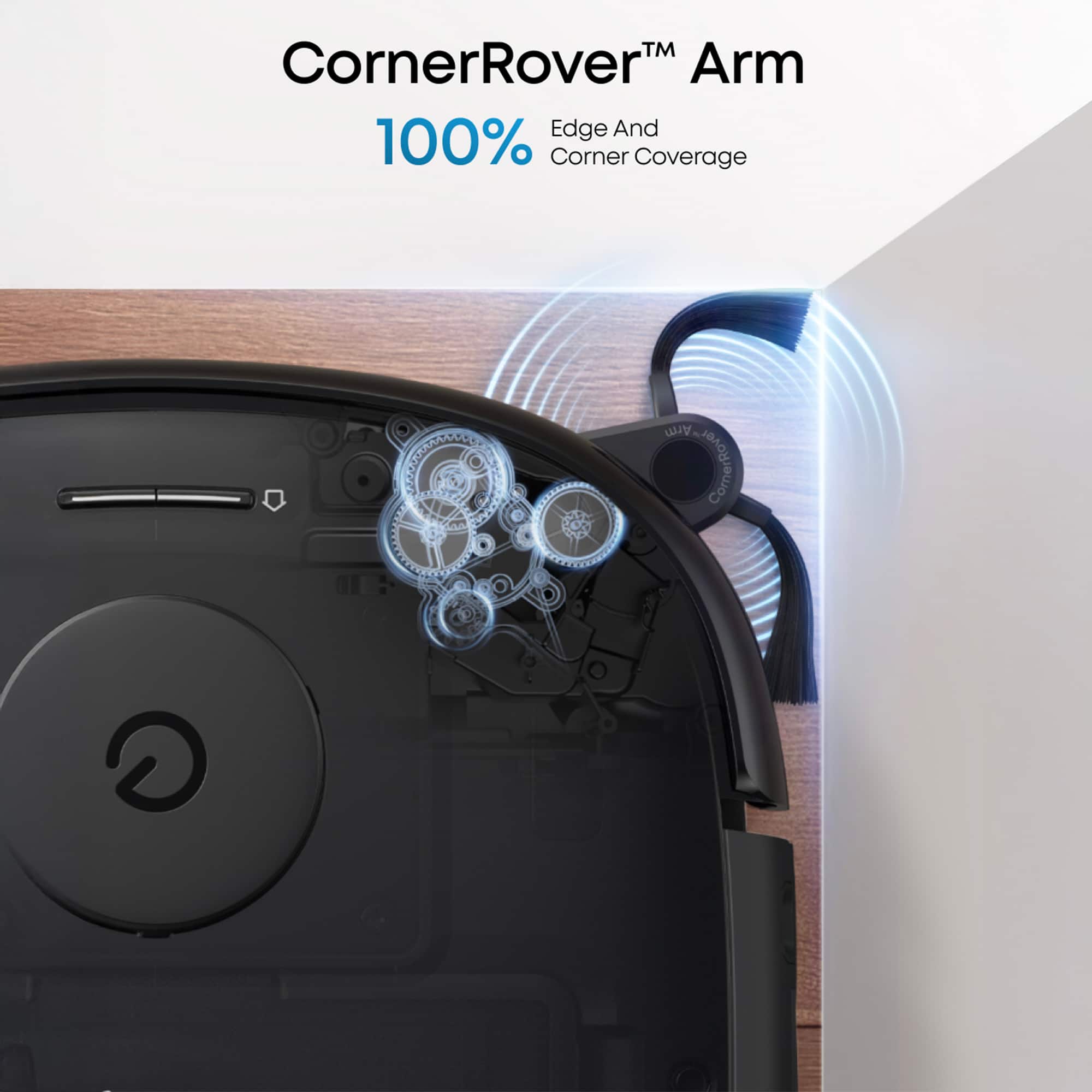
The E28's squared design provides an advantage over traditional round robots for edge cleaning. Combined with the CornerRover arm that automatically extends to reach corners, it can clean areas that round robots simply can't access effectively.
For pure mopping performance on open floor areas, the Roborock Z70 has a slight edge. But for comprehensive floor cleaning including edges and corners, the Eufy E28 provides more thorough coverage.
Both robots feature sophisticated navigation systems that would have been science fiction just a decade ago, but they take different approaches to mapping and obstacle avoidance.
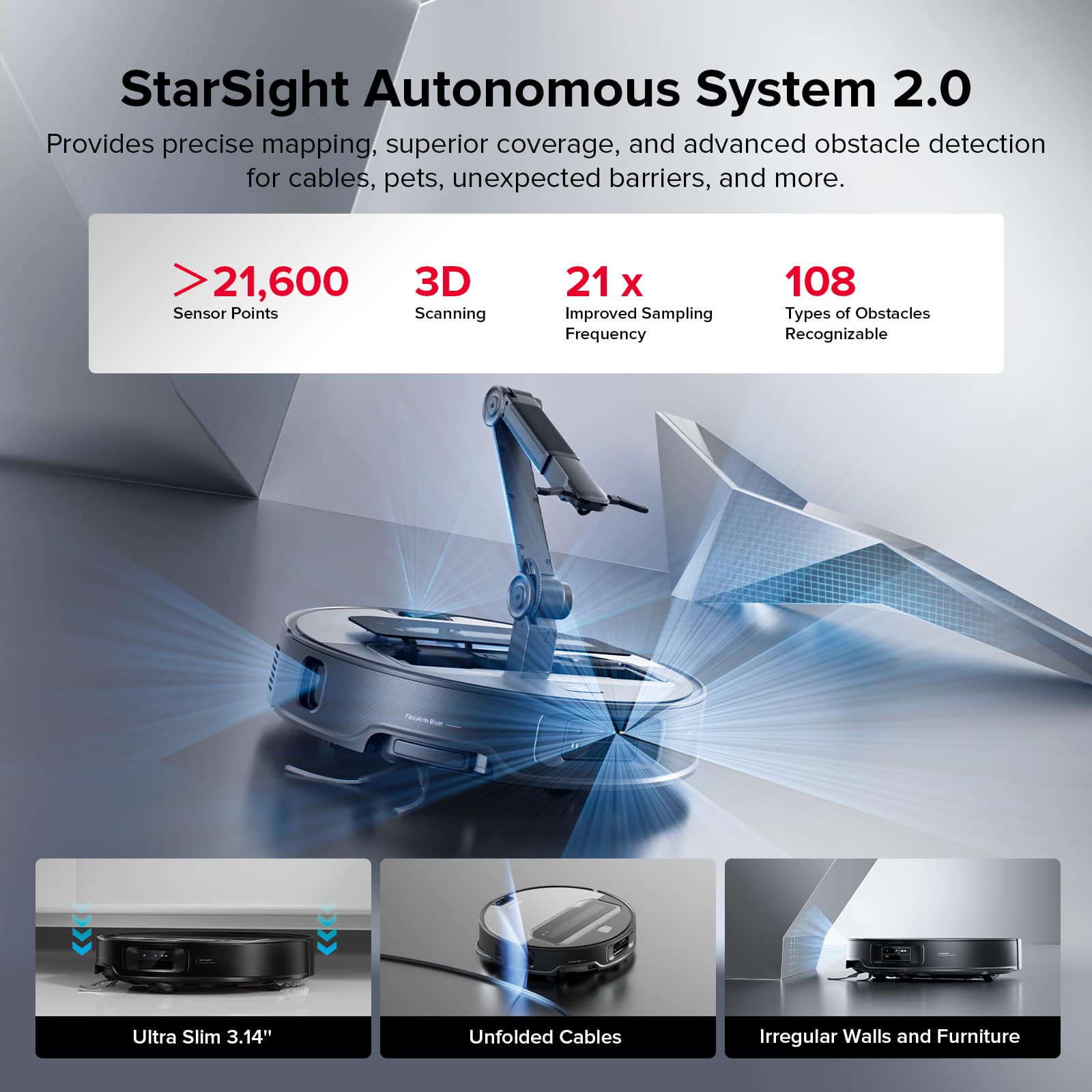
The Roborock Saros Z70 uses StarSight Autonomous System 2.0, combining 3D Time-of-Flight sensors with VertiBeam lateral structured-light technology. This system can identify 108 different object types and detect obstacles as small as 2cm × 2cm. In professional testing, it avoided 22 out of 24 test obstacles—significantly above the industry average of 16.6 successful avoidances.
The robot can also learn new objects through the app and remember where it last saw items like lost socks or toys. This learning capability means the system improves over time.
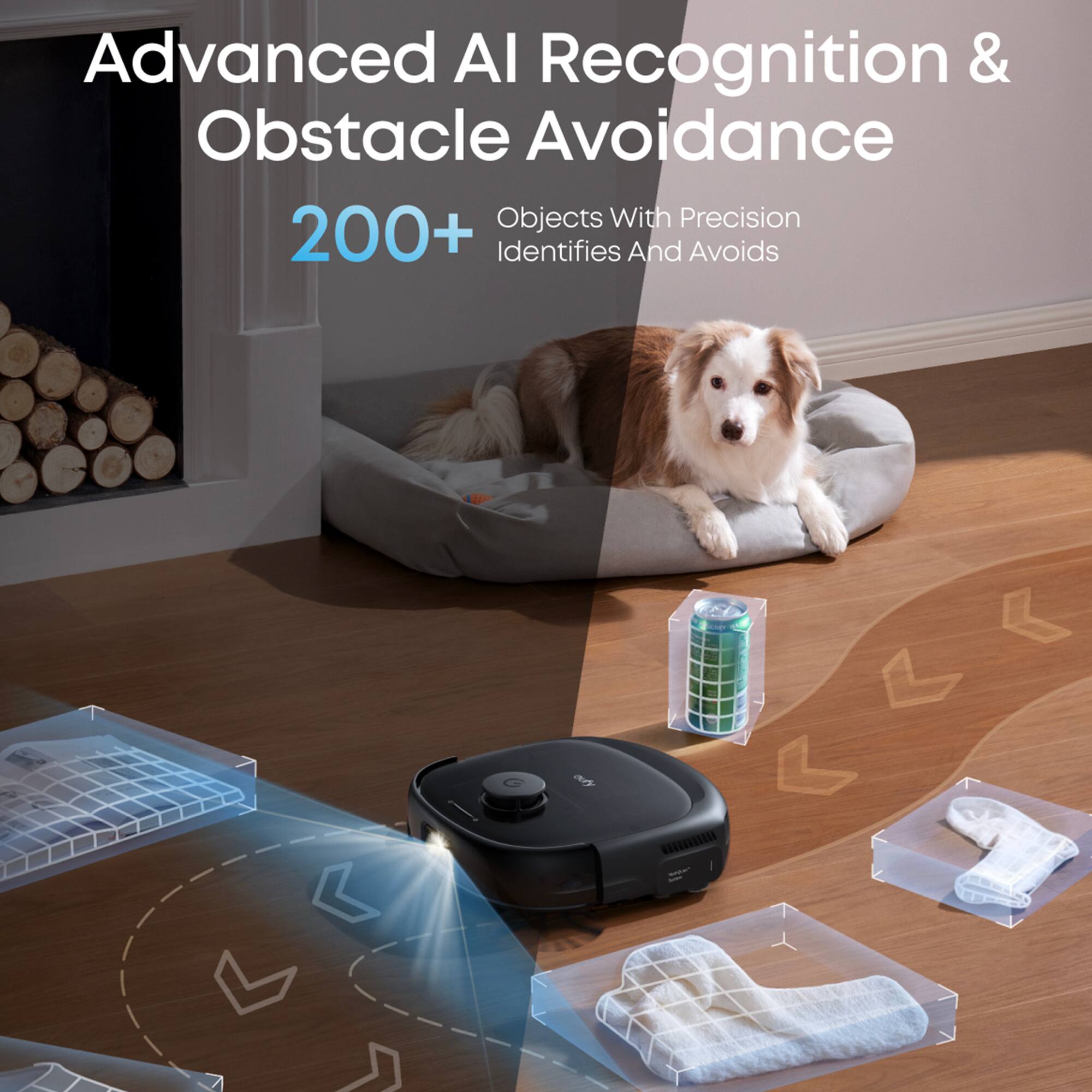
The Eufy E28 combines traditional LiDAR mapping with AI.See RGB visual recognition. It can identify over 200 object types—nearly double the Z70's capability—and achieved an even better obstacle avoidance score of 23 out of 24 in testing.
Both systems represent excellent navigation technology, but the E28's higher object recognition count and marginally better test performance give it a slight practical advantage in complex home environments.
The Z70's ultra-slim 7.98cm profile gives it a unique advantage for cleaning under low furniture. This is the slimmest Roborock model ever produced and allows access to spaces that other robots simply cannot reach. The AdaptiLift chassis can even raise itself to cross thresholds up to 40mm high.
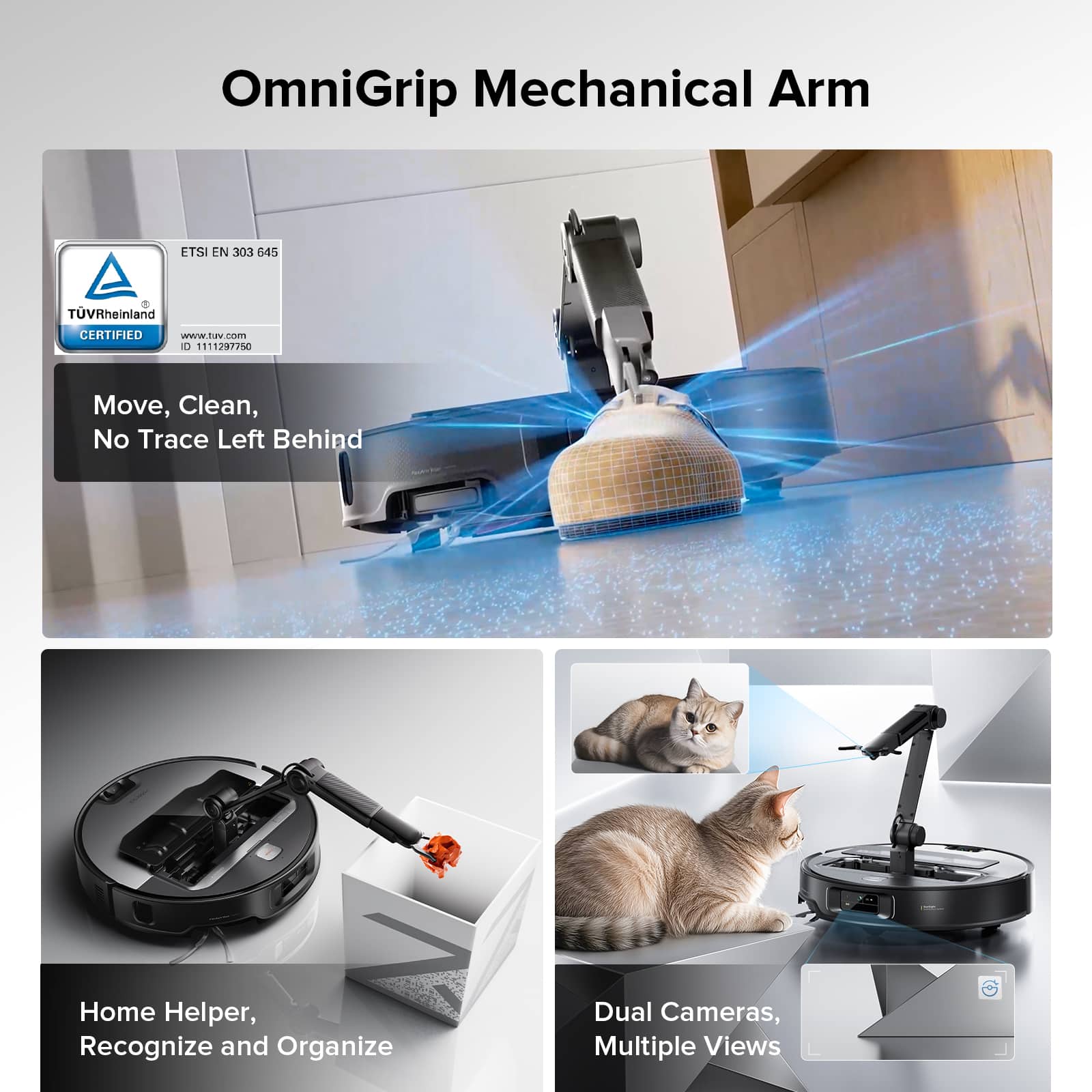
The Roborock Saros Z70's OmniGrip mechanical arm represents a genuine breakthrough in consumer robotics. This five-axis foldable arm can identify, grasp, and relocate small objects weighing under 300g—things like socks, sandals, towels, and crumpled tissues.
The concept is revolutionary: instead of avoiding obstacles, the robot moves them out of the way and then cleans the newly accessible area. It can even place moved items in user-defined locations, like a designated "sock basket."
However, our research into user experiences reveals the arm works reliably only about 50% of the time in real-world conditions. Currently, it can handle only a limited list of recognized fabric items under ideal conditions. The arm performs better under remote control via the app than in autonomous mode.
Roborock deserves credit for bringing this technology to market first, and they're actively expanding the arm's capabilities through firmware updates. But for now, it's more of a fascinating beta feature than a reliable core function.
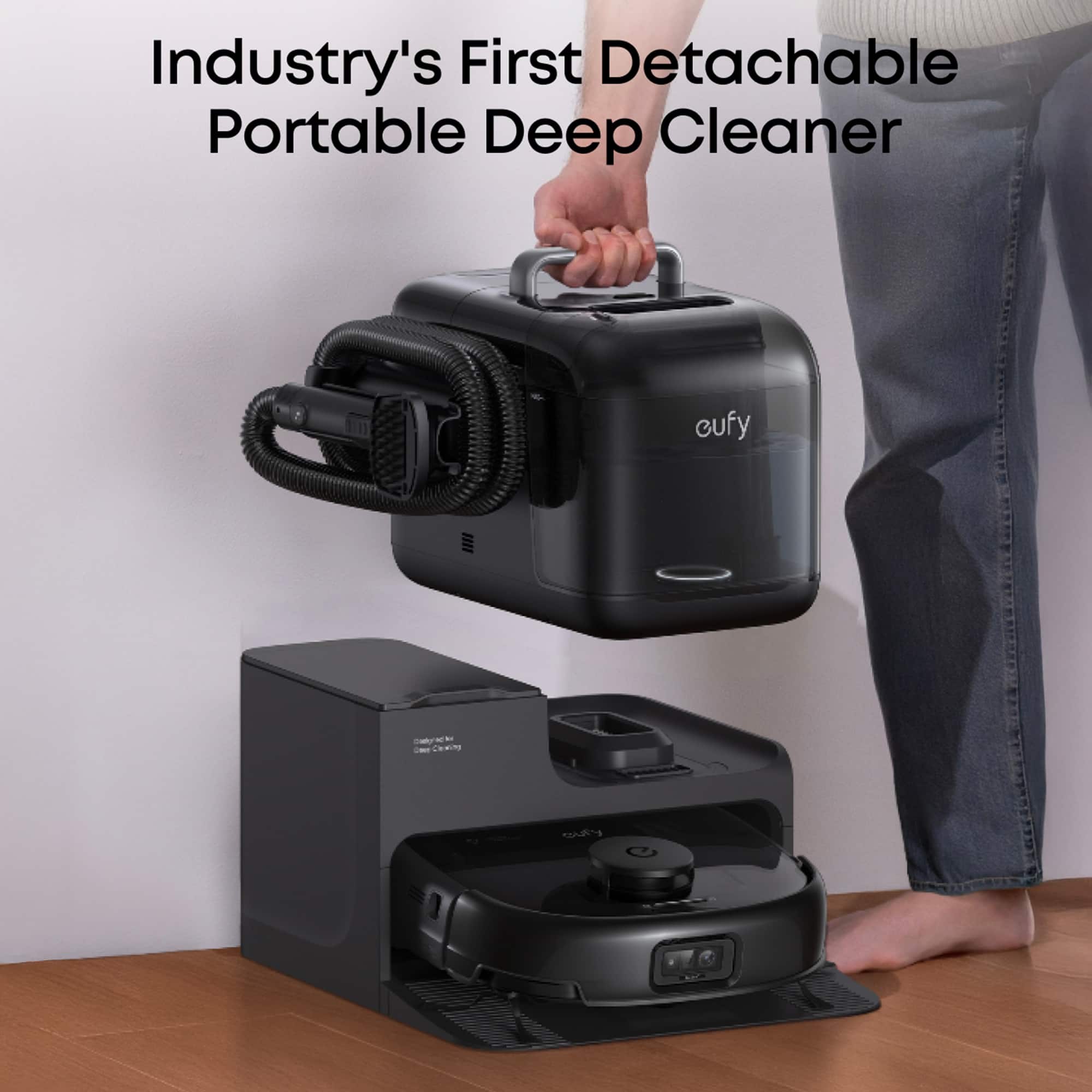
The Eufy Omni E28's FlexiOne portable deep cleaner takes a completely different approach to versatility. Instead of teaching the robot new tricks, Eufy added a detachable handheld spot cleaner that integrates with the base station.
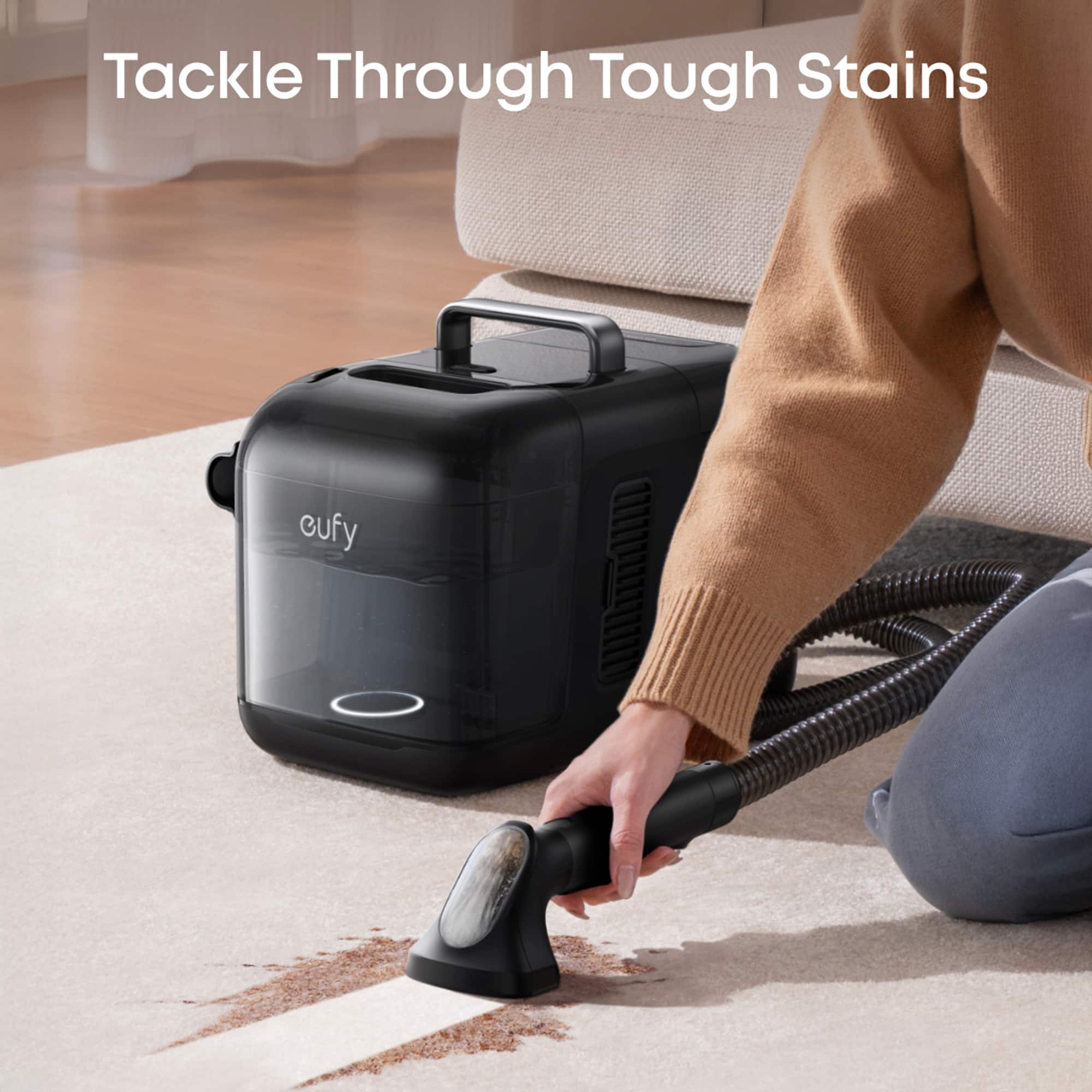
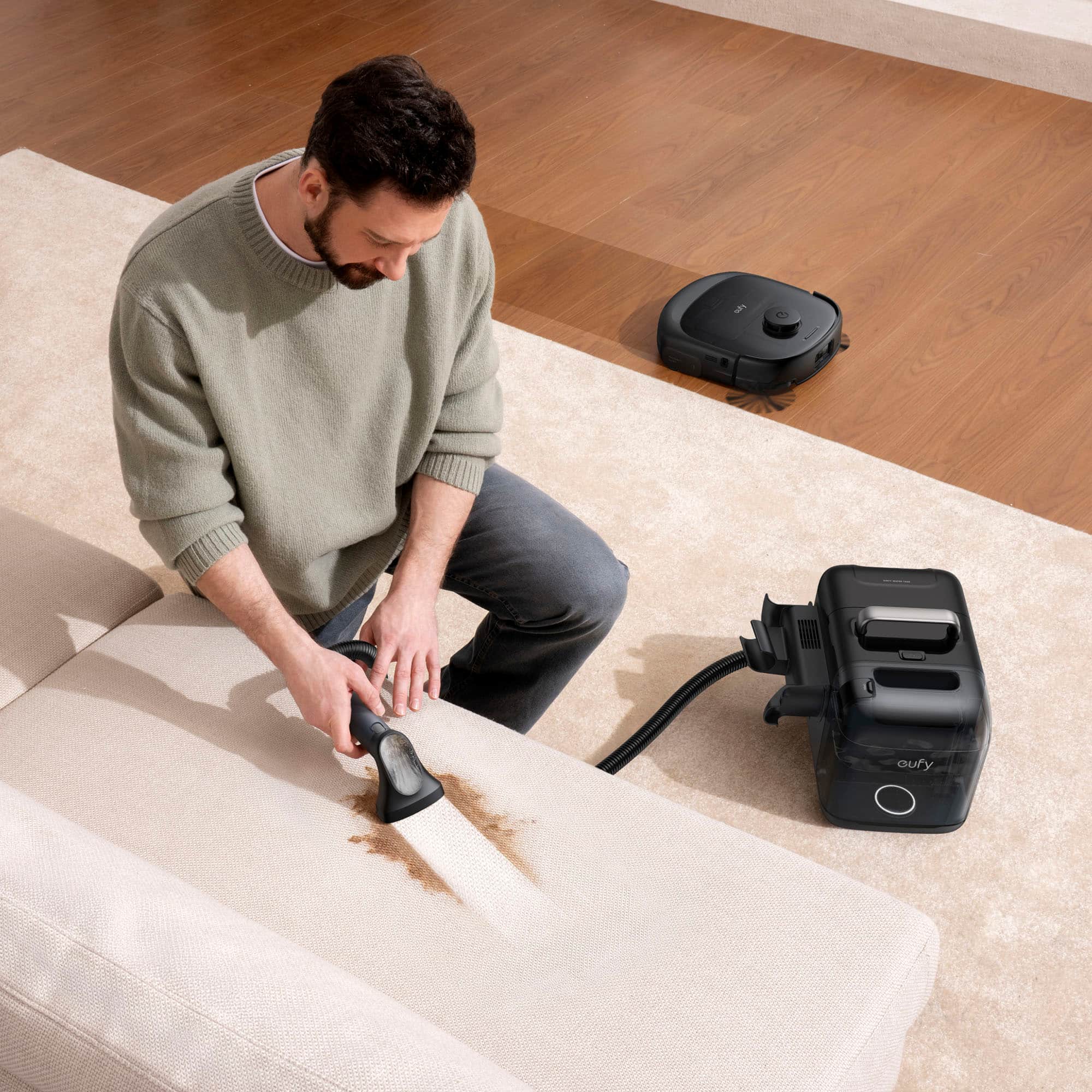
This portable cleaner can be removed and used independently to tackle liquid stains, deep-clean carpets, clean stairs, and even handle car interior cleaning. It connects to the base station's water supply and can use fabric cleaning solutions for targeted stain removal.
User reviews consistently praise this feature's effectiveness, with many comparing its performance favorably to dedicated carpet shampooers. Unlike the Z70's mechanical arm, the portable cleaner works reliably from day one and provides immediate practical value.
For families with children or pets—situations where spot cleaning is frequently needed—this feature alone can justify the purchase.
Both robots excel at automation through their sophisticated docking stations, but with different strengths and limitations.
The Roborock Z70's Multi-functional Dock 4.0 automatically empties the dustbin (providing up to 7 weeks of hands-off operation), washes mop pads with 176°F hot water, dries them with heated air, refills water tanks, and dispenses detergent. However, the robot's internal dustbin is unusually small at 180ml—the smallest we've encountered in a premium robot vacuum. This space constraint results from accommodating the mechanical arm mechanism.
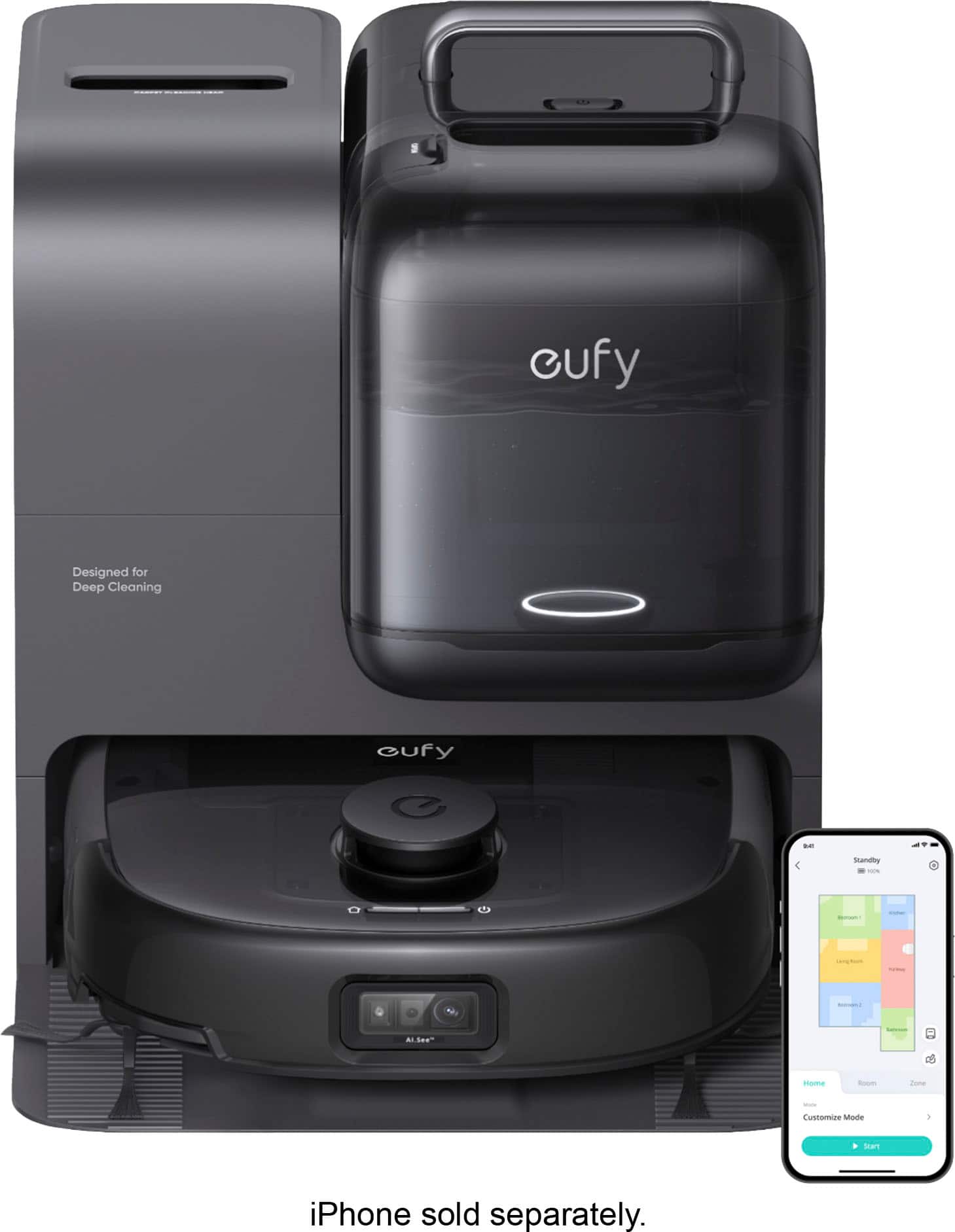
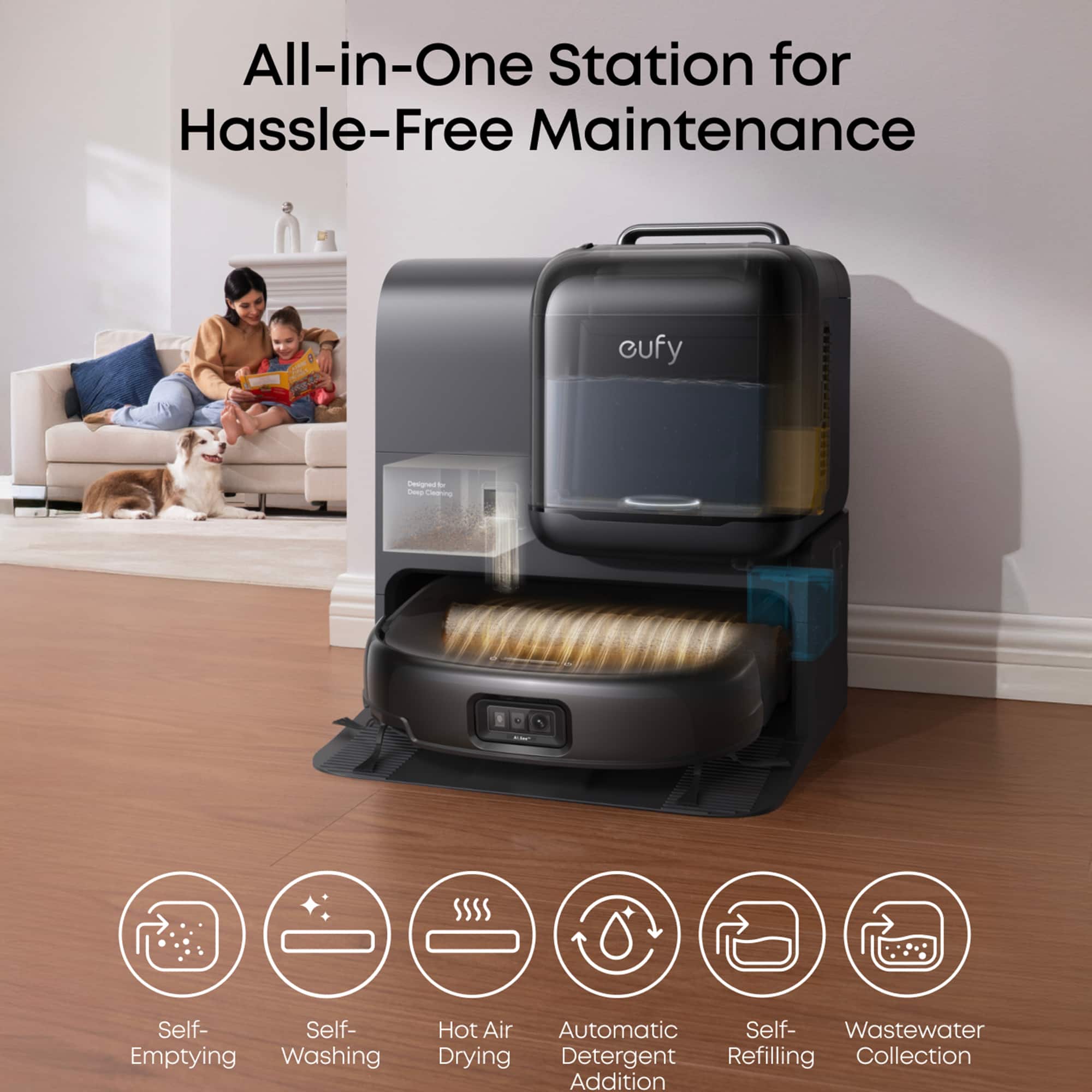
The Eufy E28's Omni Station provides similar automation with larger capacity systems. The 3L disposable dust bag can hold up to 75 days of debris, and the 2.5L clean water tank can handle up to 8,000 square feet of mopping. The station also charges and supplies the portable deep cleaner.
Both systems minimize manual intervention effectively, but the E28's larger capacities mean less frequent maintenance for larger homes.
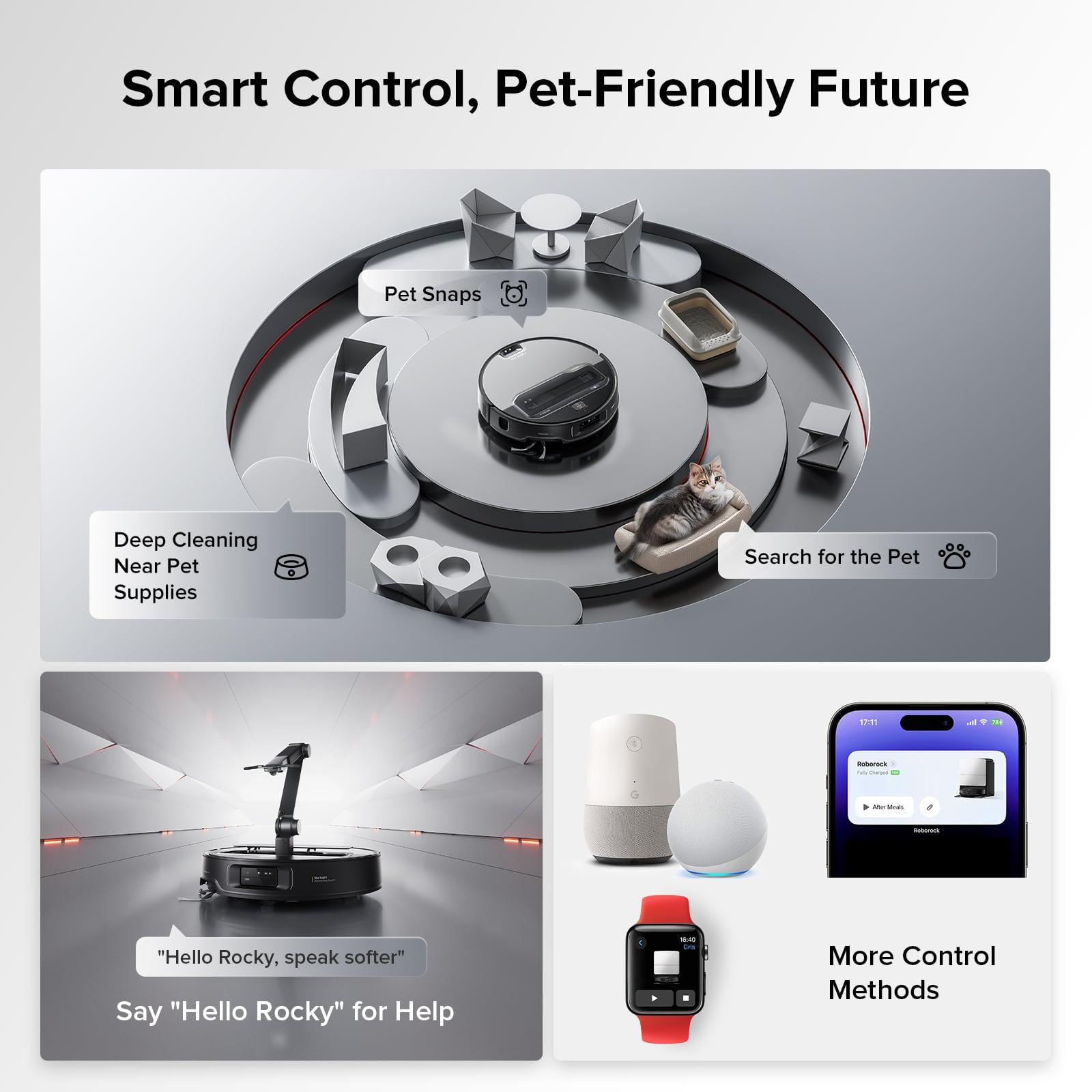
Both robots offer comprehensive smart home integration with support for major voice assistants and advanced mobile apps. The Roborock Z70 will receive Matter protocol support through over-the-air updates, eventually including Apple Home compatibility.
The robot's ultra-quiet operation (as low as 50 dB) makes it suitable for cleaning while family members sleep—a significant advantage for busy households.
The Eufy E28 already supports Matter protocol and operates at 60 dB during cleaning. While slightly louder than the Z70, it's still quiet enough for most situations. However, the self-emptying base station can be quite loud during operation, which may be disruptive in open-concept homes or during night cleaning cycles.
Both apps provide multi-floor mapping, virtual barriers, and scheduling, but the Z70's app includes unique features like pet video calling and "cruise mode" for checking on pets remotely.
For home theater enthusiasts, several factors matter beyond basic cleaning performance. The Roborock Z70's ultra-quiet 50 dB operation makes it ideal for cleaning during movie watching or late-night sessions. Its slim profile also helps it navigate around entertainment center equipment and low-clearance AV furniture.
The robot's advanced obstacle avoidance prevents damage to expensive cables and equipment. Its pet monitoring features could even serve as an additional security camera for valuable equipment.
The Eufy E28, while slightly louder during operation, still operates quietly enough for most home theater use. However, the base station's loud self-emptying cycle could be disruptive during quiet movie scenes, making scheduling important.
At the time of writing, these robots occupy different price segments, with the Roborock Z70 commanding a premium for its innovative mechanical arm technology. The Eufy E28 positions itself as offering flagship performance at a more accessible price point.
The value equation depends heavily on your priorities. The Z70 offers genuine technological innovation that may become incredibly valuable as the mechanical arm improves through software updates. Early adopters willing to pay premium prices for cutting-edge features will find the Z70 compelling despite its current limitations.
The E28 provides immediately useful versatility through its portable deep cleaner, combined with excellent cleaning performance across all floor types. For most families, this represents better immediate value and long-term utility.
You're fascinated by cutting-edge technology and don't mind paying premium prices for innovation. Your home has mostly hard floors where the robot excels, and you value ultra-slim design for under-furniture cleaning. You enjoy being an early adopter and are willing to accept beta-level performance from revolutionary features while they improve over time.
The Z70 also makes sense if you have a home theater setup where ultra-quiet operation is crucial, or if you want pet monitoring features for security or convenience.
You prioritize proven, consistent cleaning performance across all floor types. You have pets or children requiring frequent spot cleaning, making the portable deep cleaner immediately valuable. You want excellent performance without paying premium prices for experimental features.
The E28 suits practical users who need reliable daily cleaning performance and appreciate immediately useful versatility. It's particularly compelling for mixed-surface homes with both hard floors and carpeting.
The Eufy Omni E28 represents the better choice for most buyers at the time of writing. It delivers superior overall cleaning performance, practical versatility through the portable deep cleaner, and excellent value in the premium robot vacuum segment. Every feature works reliably from day one, providing immediate utility for busy families.
The Roborock Saros Z70 embodies the future of robotic cleaning with genuinely groundbreaking innovation. However, its current performance limitations, higher cost, and beta-level mechanical arm functionality make it better suited for technology enthusiasts than practical users seeking reliable daily cleaning performance.
Both robots represent significant advances in automated cleaning technology, but they serve different user needs and priorities. The E28 delivers on the promise of hands-off cleaning today, while the Z70 offers a glimpse of what robotic cleaning might become tomorrow.
| Roborock Saros Z70 | Eufy Omni E28 |
|---|---|
| Suction Power - Higher numbers don't always mean better real-world performance | |
| 22,000 Pa (highest rated, but measured performance below average) | 20,000 Pa (consistently strong performance across all surfaces) |
| Unique Innovation - What sets each model apart from competitors | |
| OmniGrip™ mechanical arm moves objects under 300g (~50% success rate) | FlexiOne™ detachable spot cleaner for carpets, stairs, upholstery |
| Vacuuming Performance - Most important for daily cleaning effectiveness | |
| Excellent on hard floors, below average on carpets and embedded debris | Excellent across all floor types with superior pet hair pickup |
| Mopping Performance - Critical for maintaining hard floors | |
| Industry-leading scores (269 points), extending mop pads for edges | HydroJet™ system with 360 cleanings/minute, superior corner access |
| Navigation & Obstacle Avoidance - Determines how well it navigates your home | |
| StarSight™ 2.0, recognizes 108 objects, 22/24 avoidance test score | AI.See™ system, recognizes 200+ objects, 23/24 avoidance test score |
| Robot Height - Affects ability to clean under furniture | |
| Ultra-slim 7.98cm (3.14") - industry-leading low profile | Standard height (specific measurement not disclosed) |
| Dustbin Capacity - How often you need to empty manually | |
| 180ml internal (smallest in class due to mechanical arm space) | 300ml internal, 3L base station bag (75 days capacity) |
| Battery Life - Runtime before returning to charge | |
| 180-300 minutes (manufacturer claims vary) | 195-216 minutes with 5200mAh battery |
| Noise Level - Important for cleaning while family is home | |
| 50 dB ultra-quiet mode (excellent for sleeping households) | 60 dB operation, loud base station during emptying |
| Base Station Features - Level of automation and maintenance | |
| 7 weeks dust capacity, hot water mop washing, detergent dispensing | 75 days dust capacity, hot air drying, portable cleaner charging |
| Smart Home Integration - Compatibility with your existing setup | |
| Matter support via future OTA update, pet monitoring features | Matter protocol ready, works with all major voice assistants |
| Best For - Who should choose this model | |
| Tech enthusiasts with mostly hard floors wanting cutting-edge innovation | Families with mixed surfaces needing reliable performance and spot cleaning |
The Eufy Omni E28 is significantly better for pet owners. It offers superior pet hair pickup across all floor types thanks to its DuoSpiral detangle brushes and consistent 20,000 Pa suction performance. The Roborock Saros Z70 struggles with pet hair on carpets due to below-average measured suction, though it performs well on hard floors. The Eufy E28 also includes a detachable spot cleaner perfect for muddy paw prints and pet accidents.
The key difference is their innovative features: the Roborock Saros Z70 features the world's first mechanical arm that can move small objects, while the Eufy Omni E28 includes a detachable portable deep cleaner. The Z70 excels in mopping and has an ultra-slim design, but struggles with carpet cleaning. The E28 delivers consistent performance across all surfaces with better overall vacuuming capability.
While the Roborock Saros Z70 has higher advertised suction at 22,000 Pa versus the Eufy E28's 20,000 Pa, real-world performance tells a different story. The E28 delivers more consistent suction across all floor types, especially on carpets. The Z70 measures only 0.3 Kpa at the intake versus the industry average of 0.8 Kpa, making the Eufy E28 more effective for deep cleaning.
Both offer excellent mopping, but with different strengths. The Roborock Saros Z70 achieved industry-leading mopping scores with dual spinning pads and extending edges for comprehensive coverage. The Eufy Omni E28 uses a HydroJet system that cleans the mop roller 360 times per minute with 15N downward pressure. The E28 excels at corner cleaning with its squared design, while the Z70 performs better on open floor areas.
The Eufy Omni E28 is significantly better for carpet cleaning. Despite the Roborock Saros Z70's higher advertised suction, it performs below average on carpets and embedded debris in professional testing. The E28 delivers consistent deep cleaning across all carpet types and effectively removes pet hair from carpet fibers, making it the clear choice for homes with significant carpeting.
Both feature advanced obstacle avoidance, with the Eufy E28 having a slight edge. The E28 recognizes 200+ objects and scored 23/24 in professional avoidance tests using AI.See RGB visual recognition. The Roborock Z70 recognizes 108 objects and scored 22/24 using StarSight 2.0 with 3D ToF sensors. Both systems are excellent, but the Eufy E28 identifies more object types for better navigation.
Both models minimize maintenance through automated base stations. The Eufy Omni E28 offers larger capacity with a 3L dust bag lasting 75 days and 2.5L water tanks. The Roborock Saros Z70 has a smaller 180ml internal dustbin due to its mechanical arm, requiring more frequent base station emptying. Both automatically wash and dry mop pads, refill water, and dispense detergent.
The Eufy Omni E28 is superior for mixed flooring because it delivers consistent performance on both hard floors and carpets. The Roborock Saros Z70 excels on hard floors but struggles with deep carpet cleaning. If your home has area rugs, carpeted bedrooms, or transitions between surfaces, the E28's balanced performance across all floor types makes it the better choice.
The Roborock Z70's mechanical arm works about 50% of the time and can move lightweight fabric items under 300g to designated locations. It's innovative but currently limited. The Eufy E28's portable deep cleaner works reliably from day one, allowing manual spot cleaning of stairs, upholstery, and car interiors. The E28's feature provides immediate practical value while the Z70's arm is more experimental.
The Roborock Saros Z70 is significantly quieter at 50 dB in ultra-quiet mode, making it ideal for cleaning while family members sleep. The Eufy Omni E28 operates at 60 dB, which is still reasonable but noticeably louder. However, the E28's base station is quite loud during self-emptying cycles, while the Z70 maintains quieter overall operation throughout all functions.
Both offer similar battery performance, with the Eufy E28 providing 195-216 minutes of runtime from its 5200mAh battery. The Roborock Z70 claims 180-300 minutes, though actual performance varies. Both can clean most homes on a single charge and automatically return to base for recharging. The E28 offers more consistent battery life estimates and reliable performance.
The Eufy Omni E28 provides better overall value with superior cleaning performance across all surfaces, a immediately useful portable cleaner, and reliable operation. The Roborock Saros Z70 commands a premium for its innovative mechanical arm, but current limitations and inconsistent carpet performance make it better suited for tech enthusiasts rather than practical daily use. The E28 delivers more reliable performance for most households.
We've done our best to create useful and informative comparisons to help you decide what product to buy. Our research uses advanced automated methods to create this comparison and perfection is not possible - please contact us for corrections or questions. These are the sites we've researched in the creation of this article: rtings.com - vacuumwars.com - vacuumwars.com - youtube.com - techradar.com - youtube.com - youtube.com - rtings.com - youtube.com - versus.com - youtube.com - us.roborock.com - roborockstore.com.au - vacuumwars.com - bestbuy.com - robocleaners.com - us.roborock.com - us.roborock.com - prnewswire.com - youtube.com - vacuumwars.com - bestbuy.com - vacuumwars.com - vacuumwars.com - youtube.com - youtube.com - youtube.com - tomsguide.com - youtube.com - youtube.com - youtube.com - homedepot.com - michaelsleen.com - youtube.com - youtube.com - bikmantech.com - rcwilley.com - crutchfield.com - eufy.com - eufy.com - bestbuy.com - eufy.com - vacuumwars.com - eufy.com

Privacy Policy
Terms and Conditions - Affiliate Policy
Home Security
© Copyright 2008-2026.
11816 Inwood Rd #1211, Dallas, TX 75244