

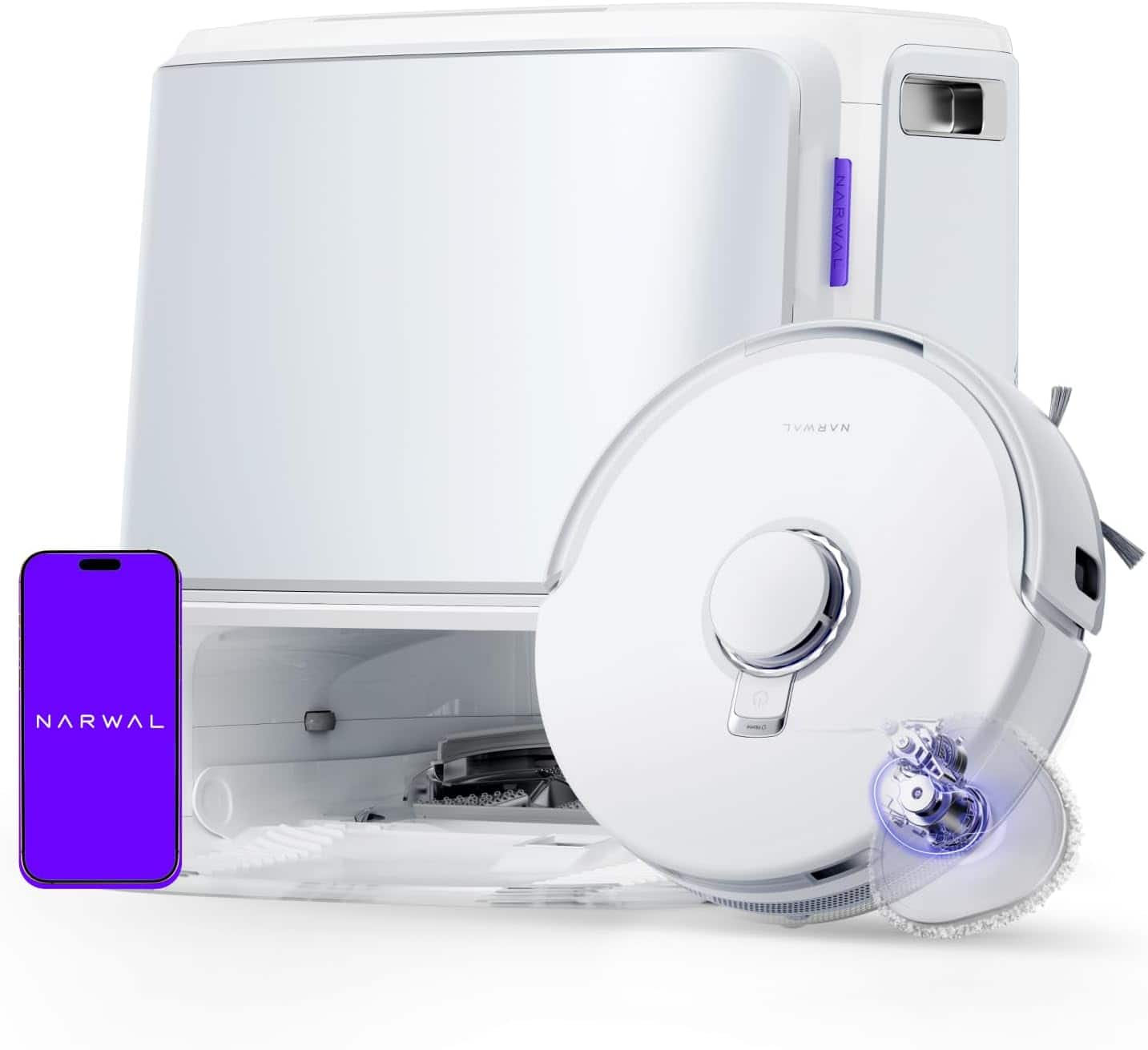
Robot vacuum mops have evolved dramatically since their introduction, transforming from basic cleaning gadgets into sophisticated home automation systems. These premium devices combine powerful vacuuming with intelligent mopping capabilities, promising to eliminate most manual floor cleaning from your routine. But with prices ranging from $800 to over $1,000 at the time of writing, choosing the right system requires understanding what separates good from great in this competitive category.
Today we're comparing two standout options: the Narwal Freo Z10 and the Shark PowerDetect ThermaCharged. Both represent the cutting edge of robot cleaning technology, but they take notably different approaches to achieving the same goal—keeping your floors spotless with minimal effort.
Modern robot vacuum mops are essentially autonomous cleaning stations that handle multiple floor care tasks. Unlike basic robot vacuums that only pick up debris, these systems also scrub and mop your floors using rotating pads, heated water, and intelligent pressure application. The key innovation lies in their self-maintaining base stations, which automatically empty debris, wash dirty mop pads, refill clean water, and dry everything hygienically.
When evaluating these systems, several factors matter most: cleaning performance across different surface types, automation level (how long they operate without your intervention), navigation intelligence, and overall value relative to the time and effort they save. The best models excel in all these areas while offering reliable operation that justifies their premium pricing.
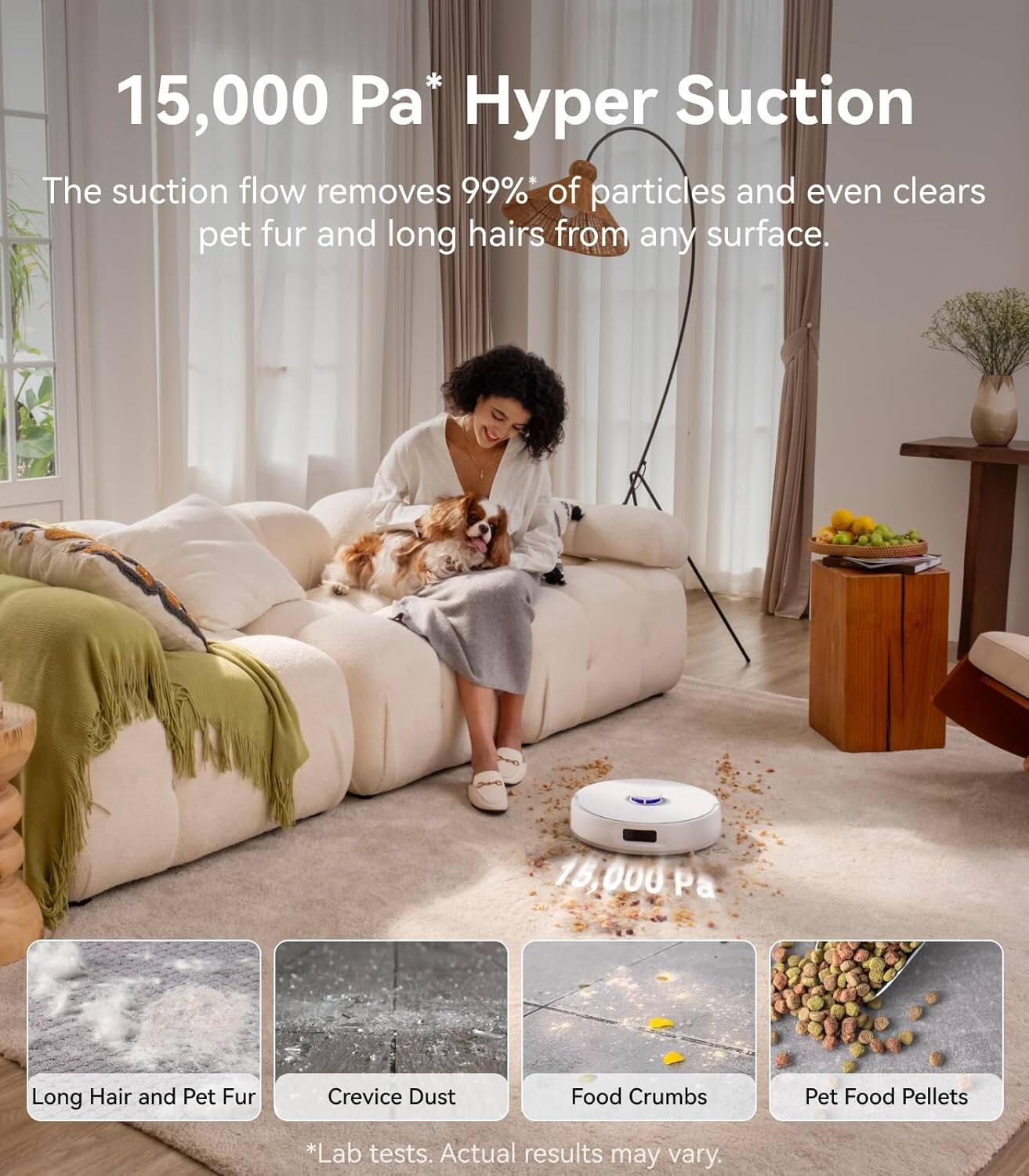
Suction power remains the foundation of effective robot cleaning, measured in Pascals (Pa)—the higher the number, the stronger the suction force. The Narwal Freo Z10 delivers an impressive 15,000 Pa of suction power, significantly outpacing most competitors in raw pulling force. This translates to better pickup of fine dust, pet hair, and embedded debris from carpet fibers.
However, our research into user and expert reviews reveals an interesting disconnect between specifications and real-world performance. While the Narwal Freo Z10 boasts higher suction numbers, the Shark PowerDetect ThermaCharged consistently demonstrates superior debris collection on carpets in independent testing. This highlights why raw suction power isn't everything—factors like brush design, airflow optimization, and cleaning pattern efficiency matter equally.
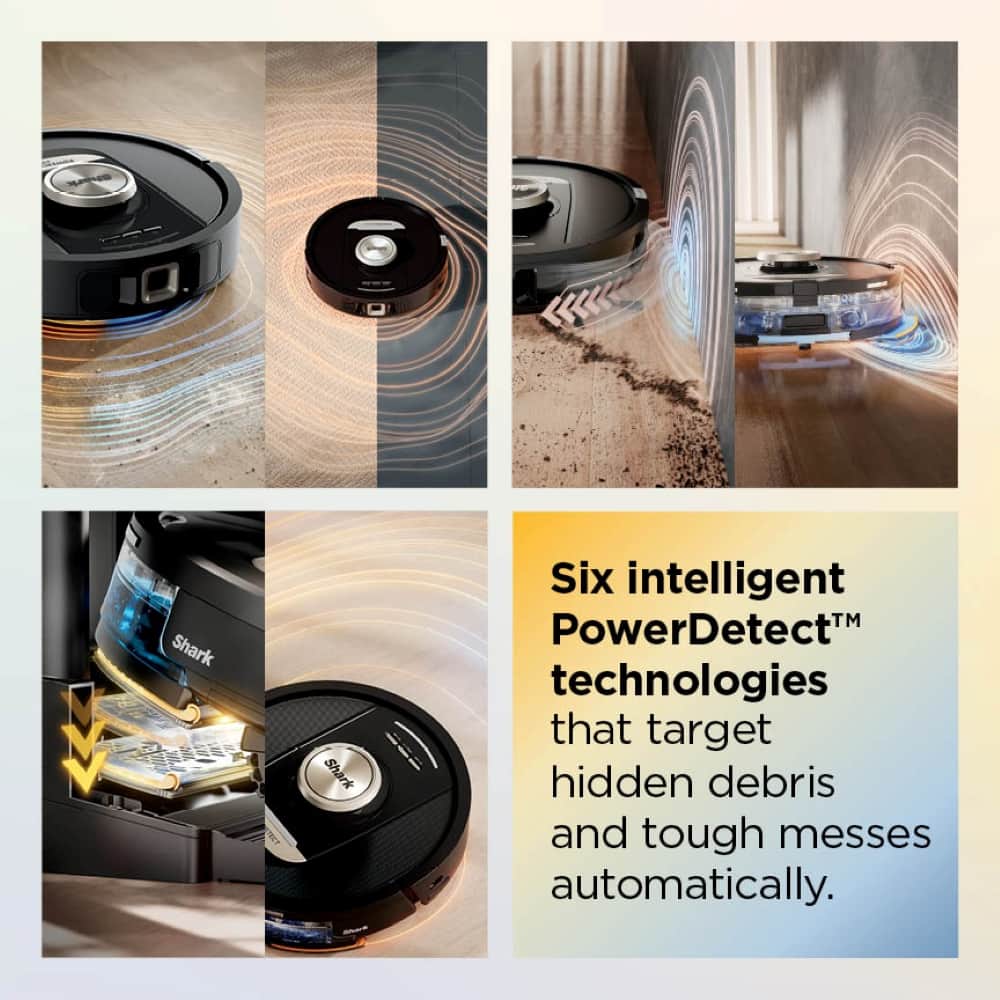
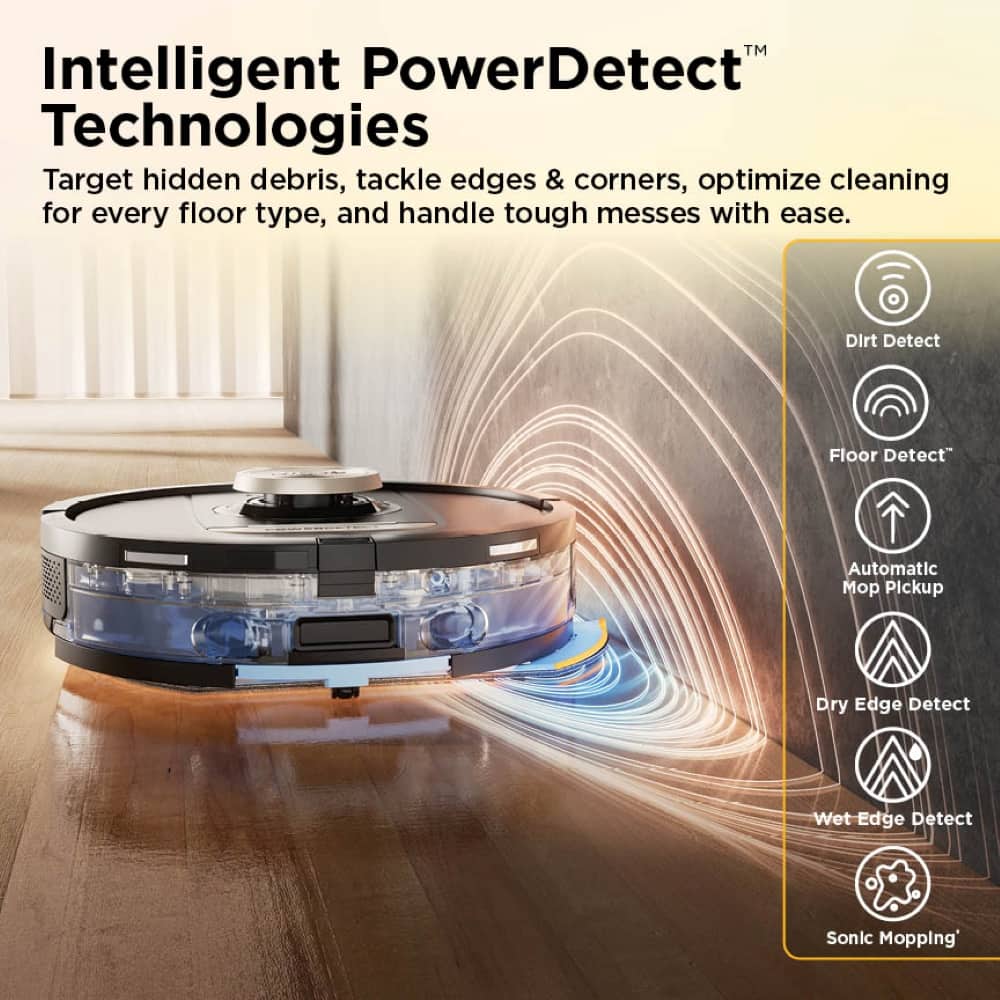
The Shark PowerDetect ThermaCharged incorporates PowerDetect sensors that identify extra-dirty areas and automatically increase suction while slowing down the robot's movement. This adaptive approach often proves more effective than simply cranking up suction everywhere. Think of it like a skilled cleaner who knows when to scrub harder versus when a gentle pass suffices.
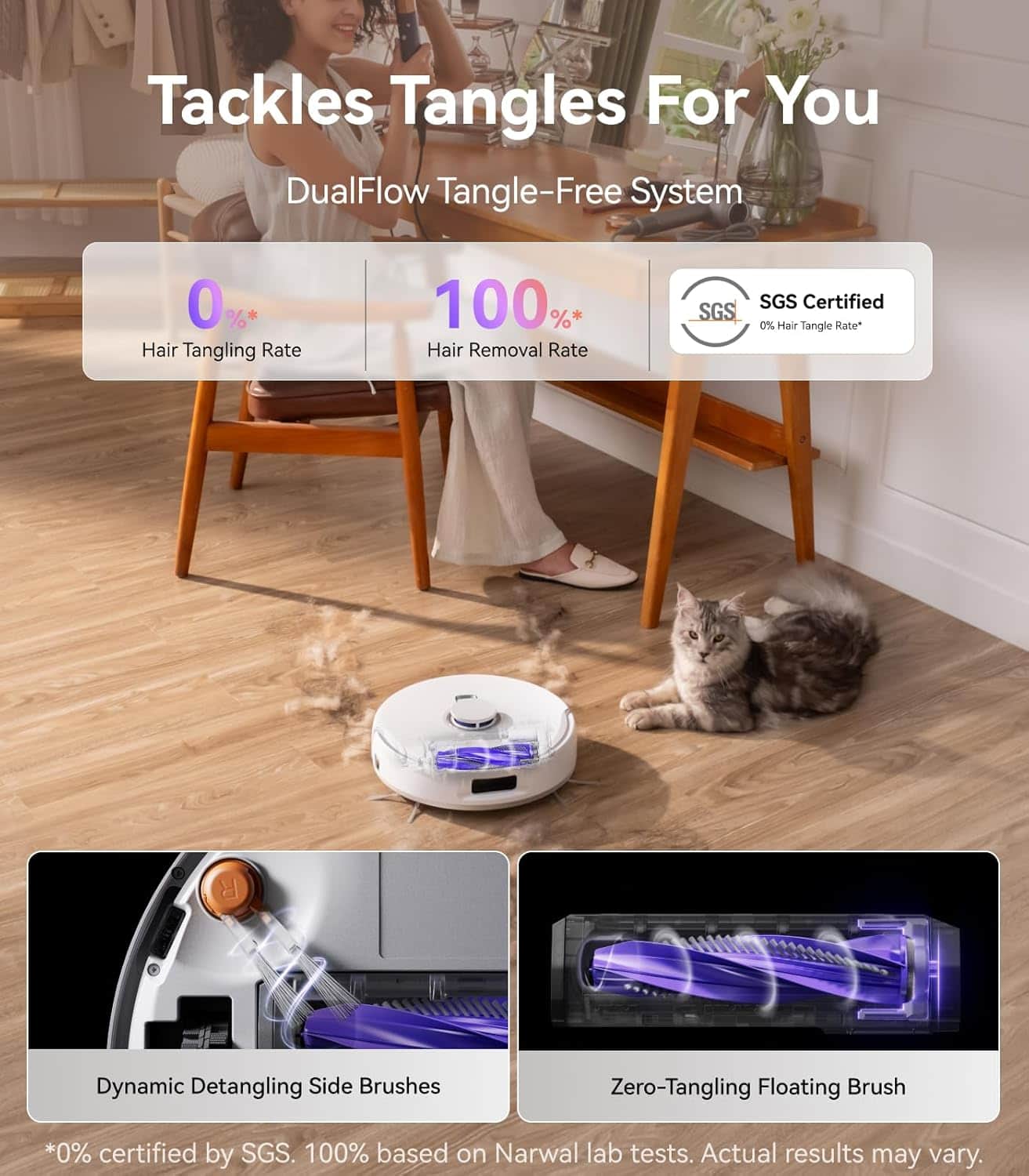
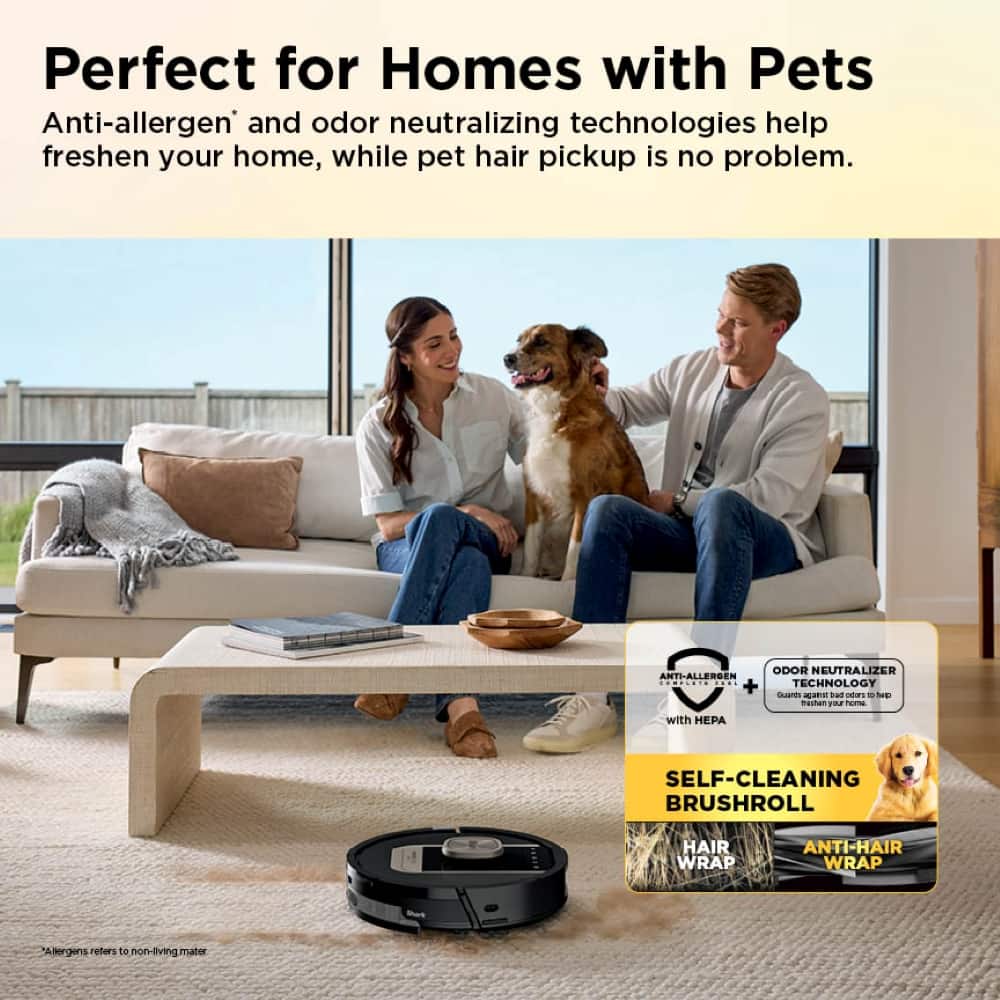
Both systems tackle the common frustration of hair tangling, but through different approaches. The Narwal Freo Z10 uses its DualFlow Tangle-Free System, which actively prevents hair from wrapping around brushes through strategic airflow design. The Shark PowerDetect ThermaCharged employs an anti-hair wrap brush design that reduces tangling frequency, though it may require occasional manual cleaning.
Mopping capability separates these premium systems from basic robot vacuums, and it's where the two products diverge most significantly. The Narwal Freo Z10 uses dual spinning triangular mop pads that rotate while applying 8 Newtons of downward pressure—roughly equivalent to firm hand pressure when scrubbing a stubborn stain.
What makes the Narwal Freo Z10 particularly impressive is its MopExtend and EdgeSwing technology. These systems physically extend and swing the mop pads outward to reach corners, edges, and around furniture legs—areas where most robots simply push dirt around rather than actually cleaning it. This addresses one of the biggest limitations of traditional round robot cleaners.
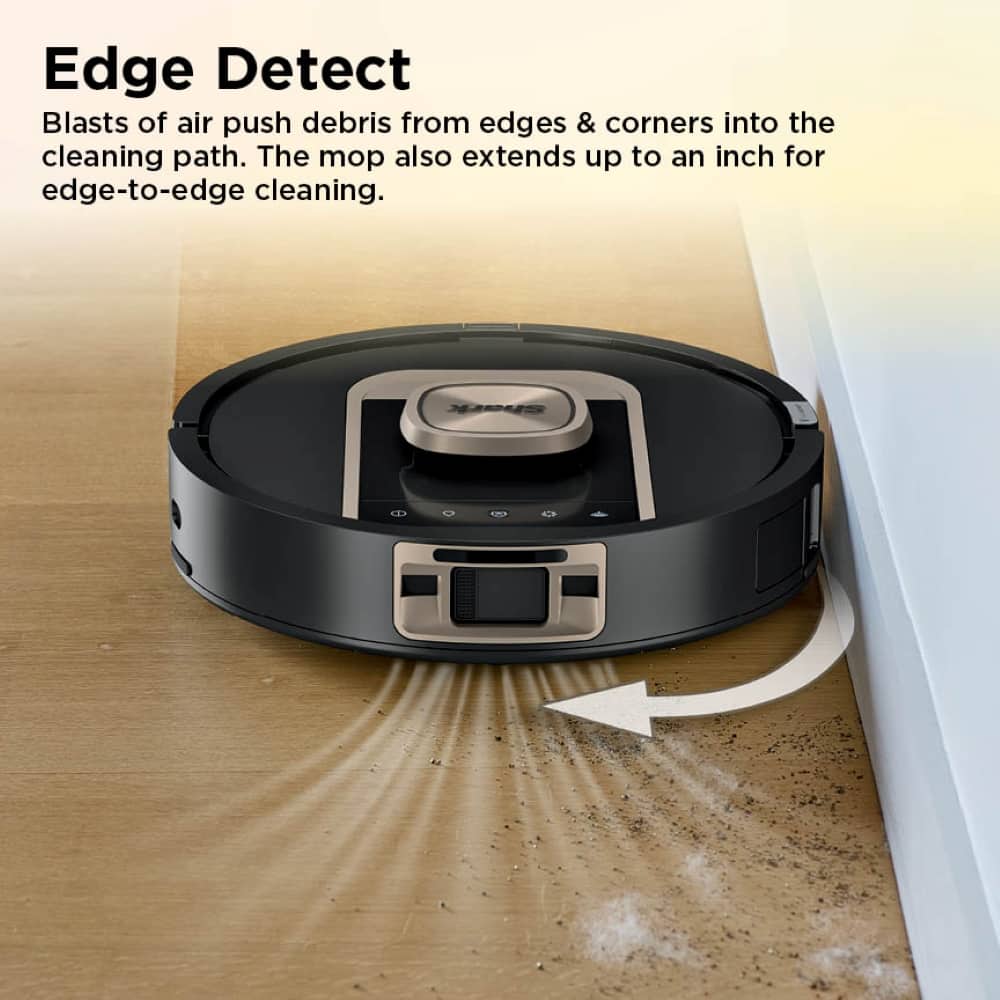
The Shark PowerDetect ThermaCharged takes a different approach with sonic mopping technology, vibrating its single mop pad up to 100 times per minute while extending it for edge cleaning. While effective for general floor cleaning, it lacks the comprehensive edge coverage of the Narwal Freo Z10's dual-pad system.
A critical performance difference emerged in our research: the Shark PowerDetect ThermaCharged uses approximately double the water output of standard robot mops, which frequently causes streaking on hard floors. More problematic, there's no way to adjust water levels through the app, making this issue difficult to resolve. This represents a significant design oversight for a premium cleaning system.
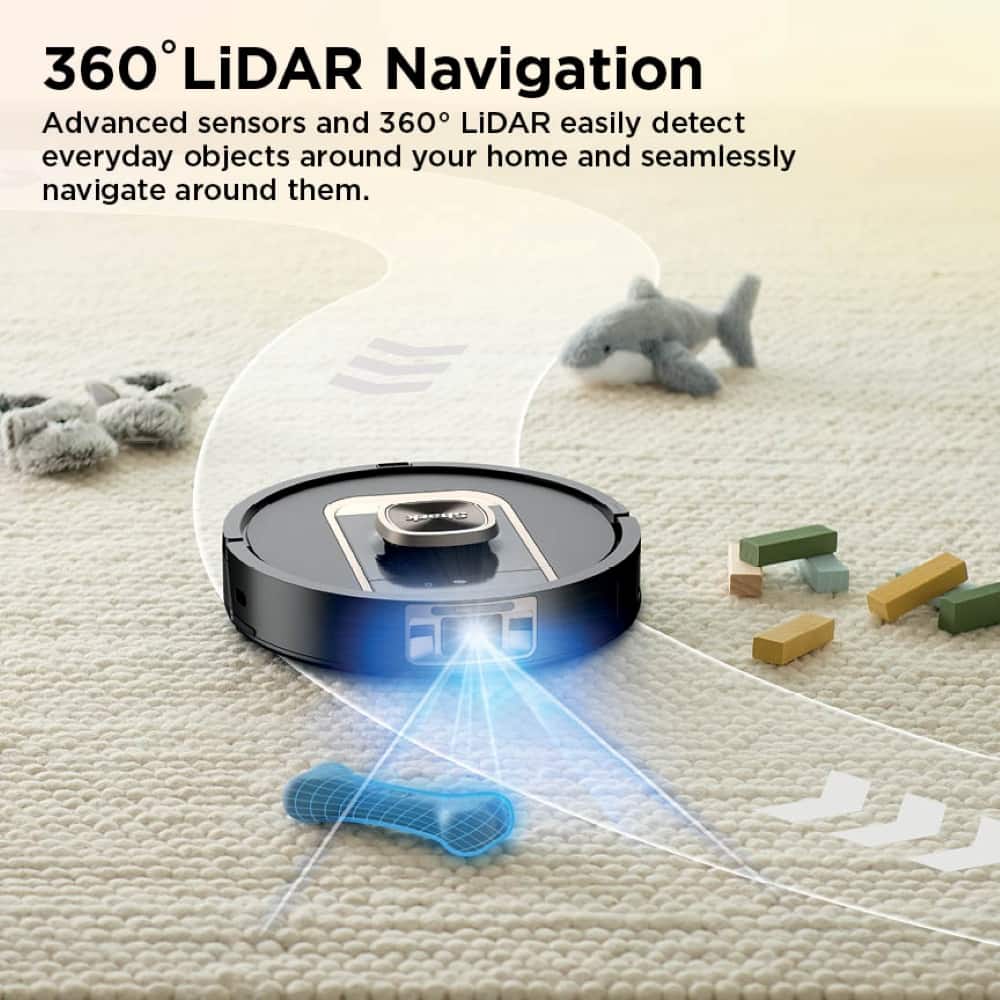
Both systems use LiDAR (Light Detection and Ranging) navigation, which creates detailed room maps using spinning laser sensors. However, they differ in their obstacle detection approaches, leading to notably different user experiences.
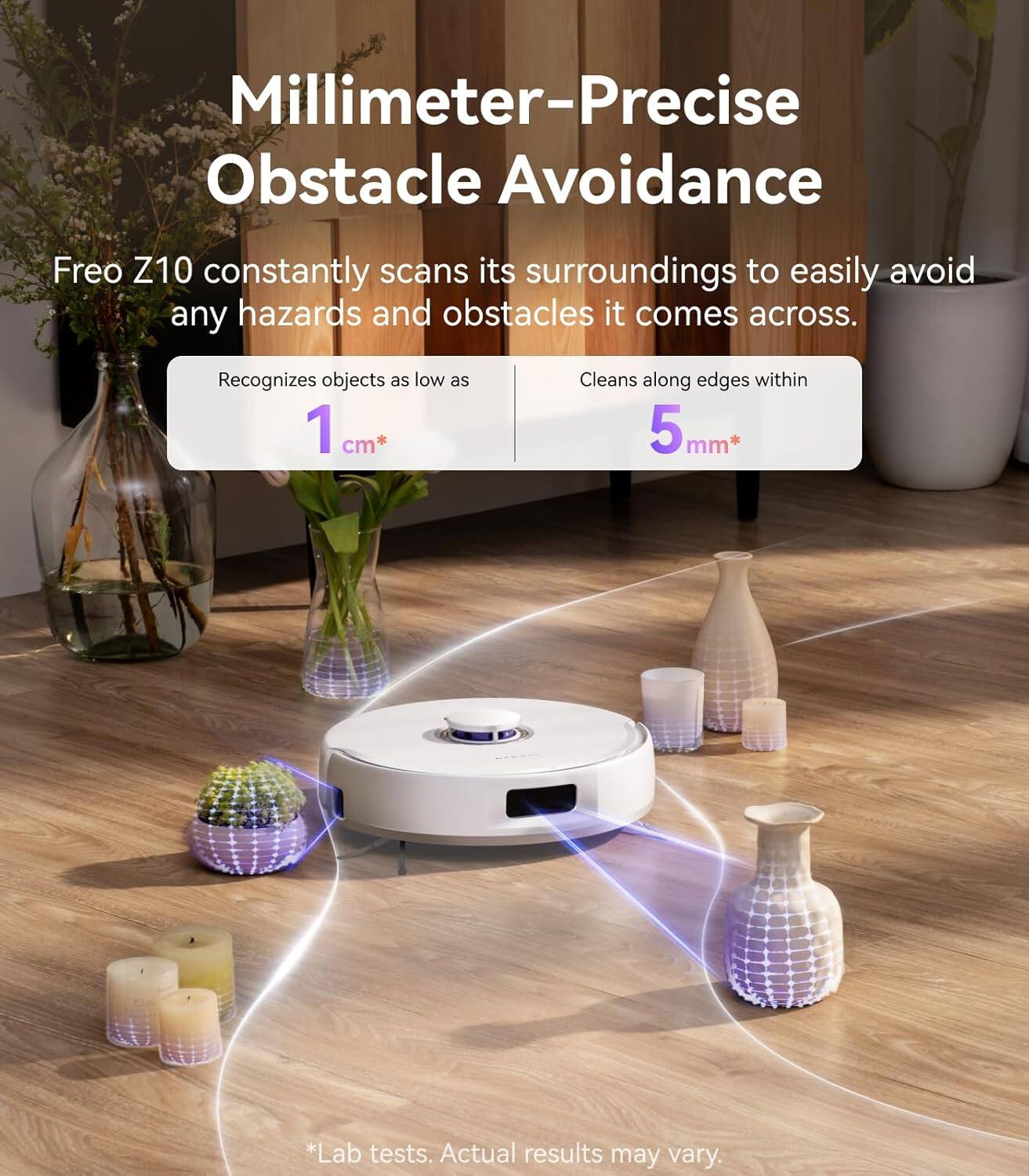
The Narwal Freo Z10 combines LiDAR with infrared sensors for obstacle detection, deliberately avoiding cameras to protect user privacy. This system provides millimeter-precise navigation around furniture, cables, and other household obstacles while creating accurate floor maps for efficient cleaning patterns.
The Shark PowerDetect ThermaCharged uses LiDAR combined with 3D structured light sensors and RGB cameras for more sophisticated object recognition. While this provides excellent obstacle avoidance, some users prefer the Narwal Freo Z10's camera-free approach, especially in bedrooms or other private spaces.
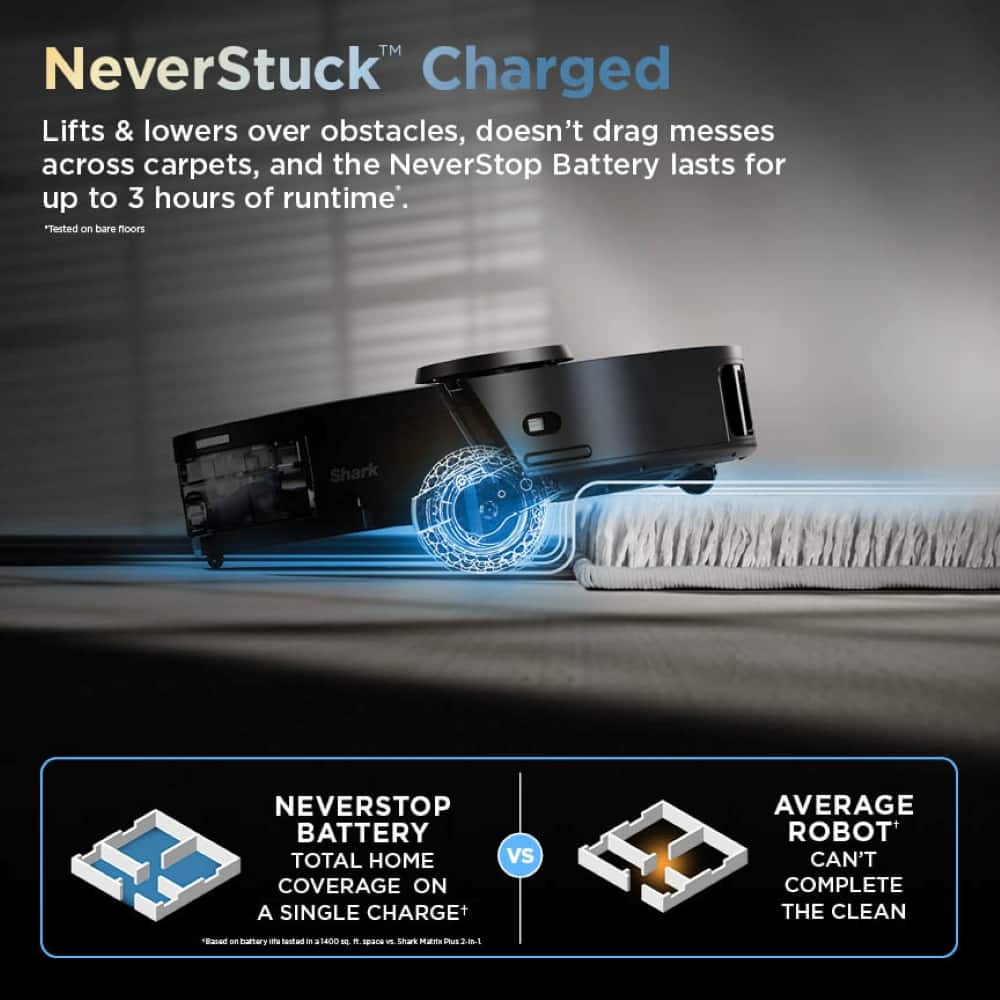
Physical mobility represents another key difference. The Shark PowerDetect ThermaCharged includes NeverStuck technology that can lift itself over thresholds up to 38mm high—significantly better than most competitors. This proves invaluable in homes with varied flooring transitions, reducing instances where you'll find your robot stuck at a doorway.
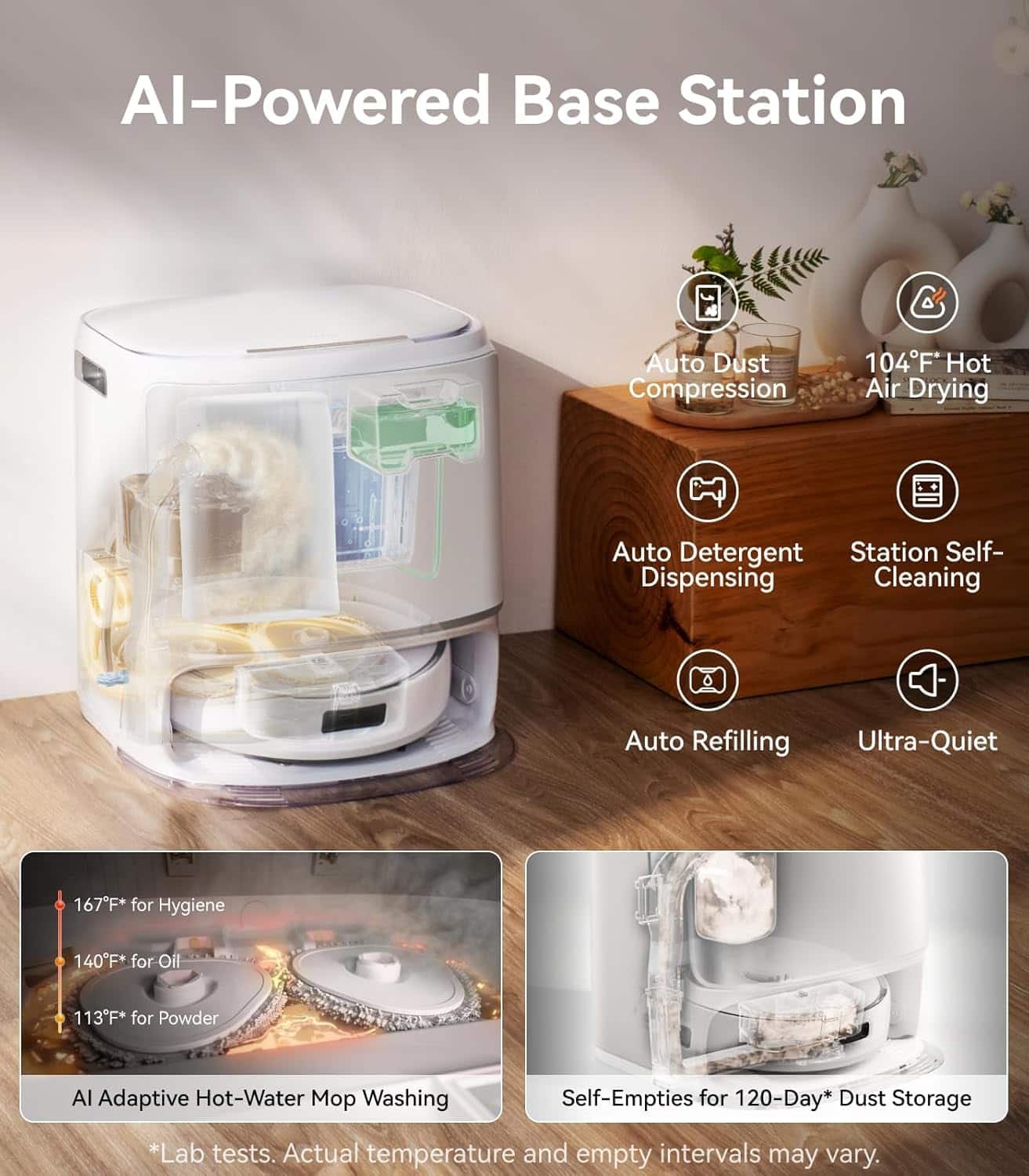
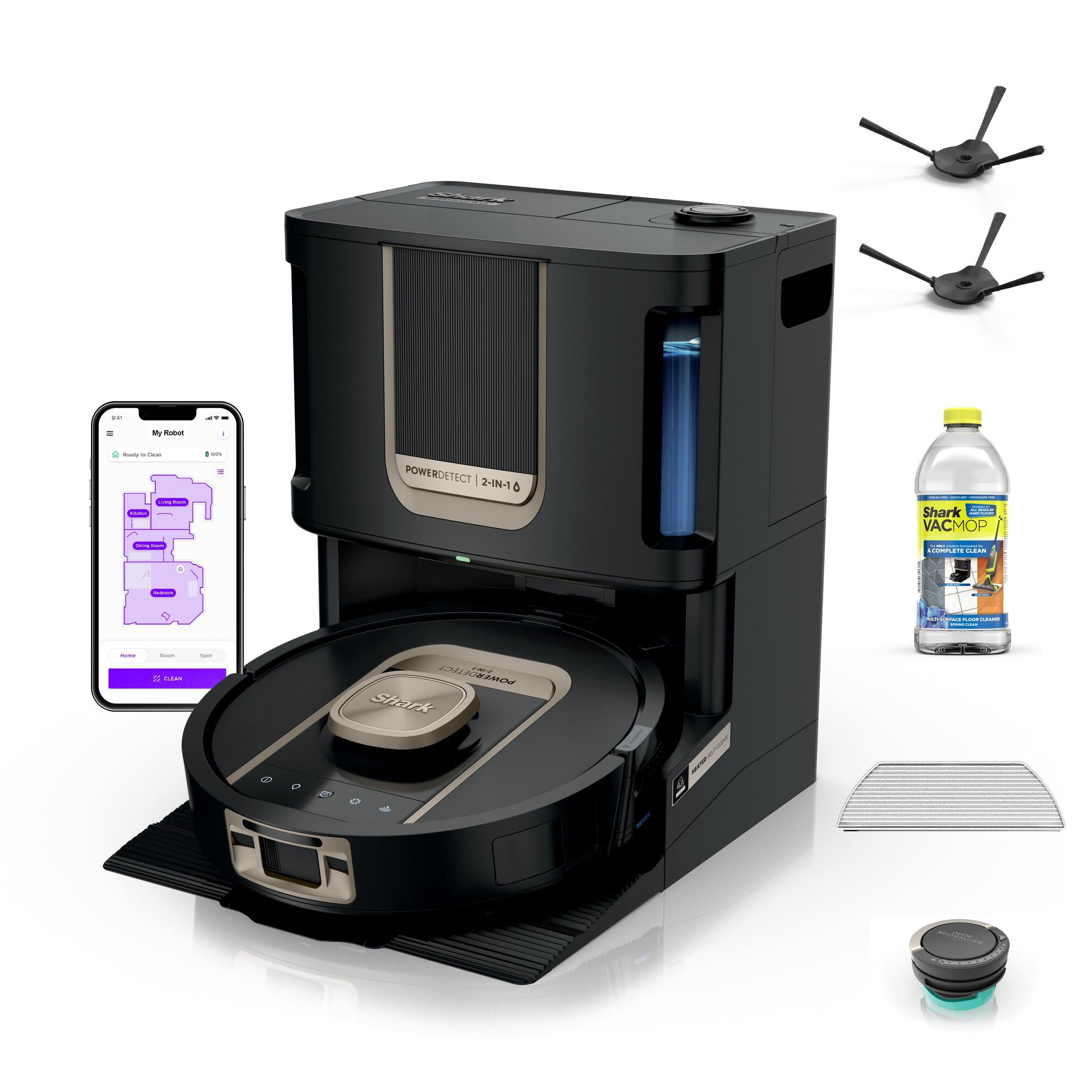
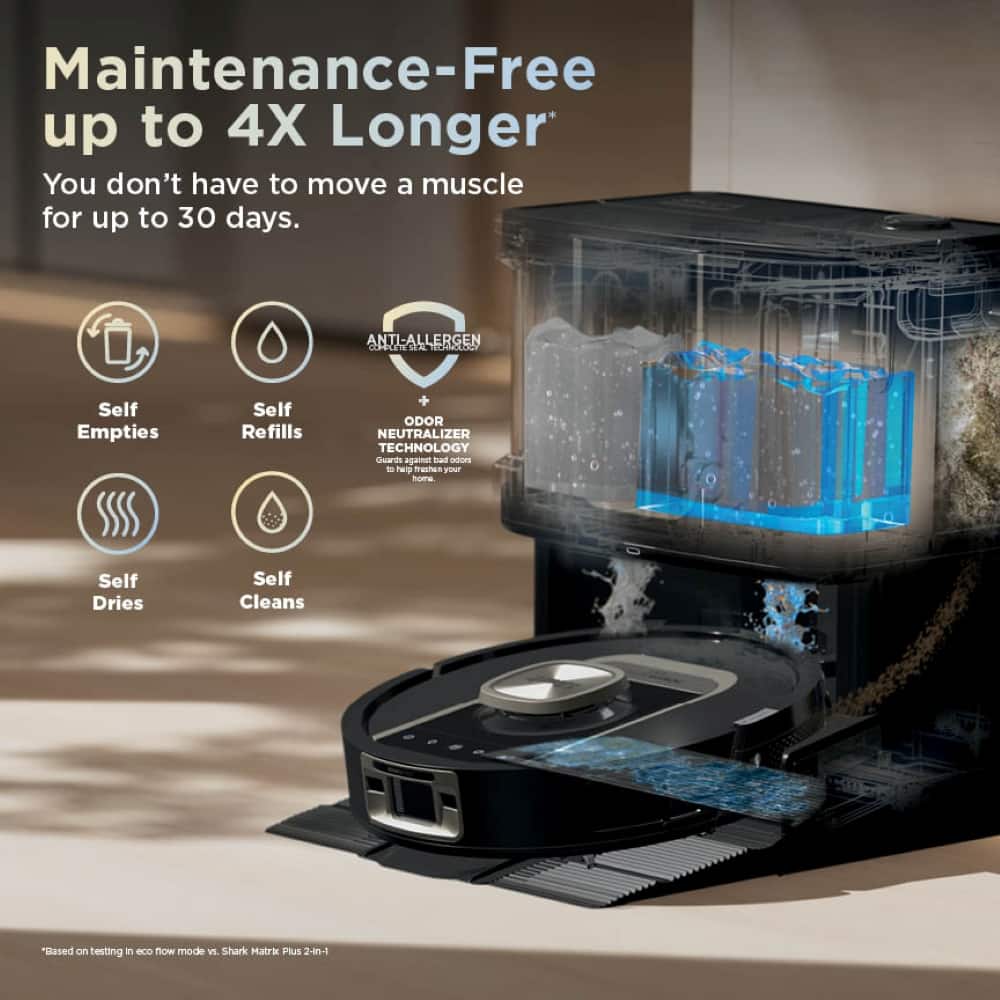
The true value of premium robot vacuum mops lies in their self-maintenance capabilities. Both systems feature sophisticated base stations that handle the dirty work of emptying debris, washing mop pads, and preparing for the next cleaning cycle.
The Narwal Freo Z10 offers up to 120 days of hands-free operation before requiring user intervention, compared to the Shark PowerDetect ThermaCharged's 60-day capacity. This difference stems from the Narwal Freo Z10's advanced dust compression technology, which increases storage density by 60% while using larger waste containers.
For busy households, this translates to checking on your robot cleaner only four times per year versus six times—a meaningful difference in long-term convenience. The Narwal Freo Z10 also features larger clean and dirty water tanks, extending mopping cycles before requiring refills.
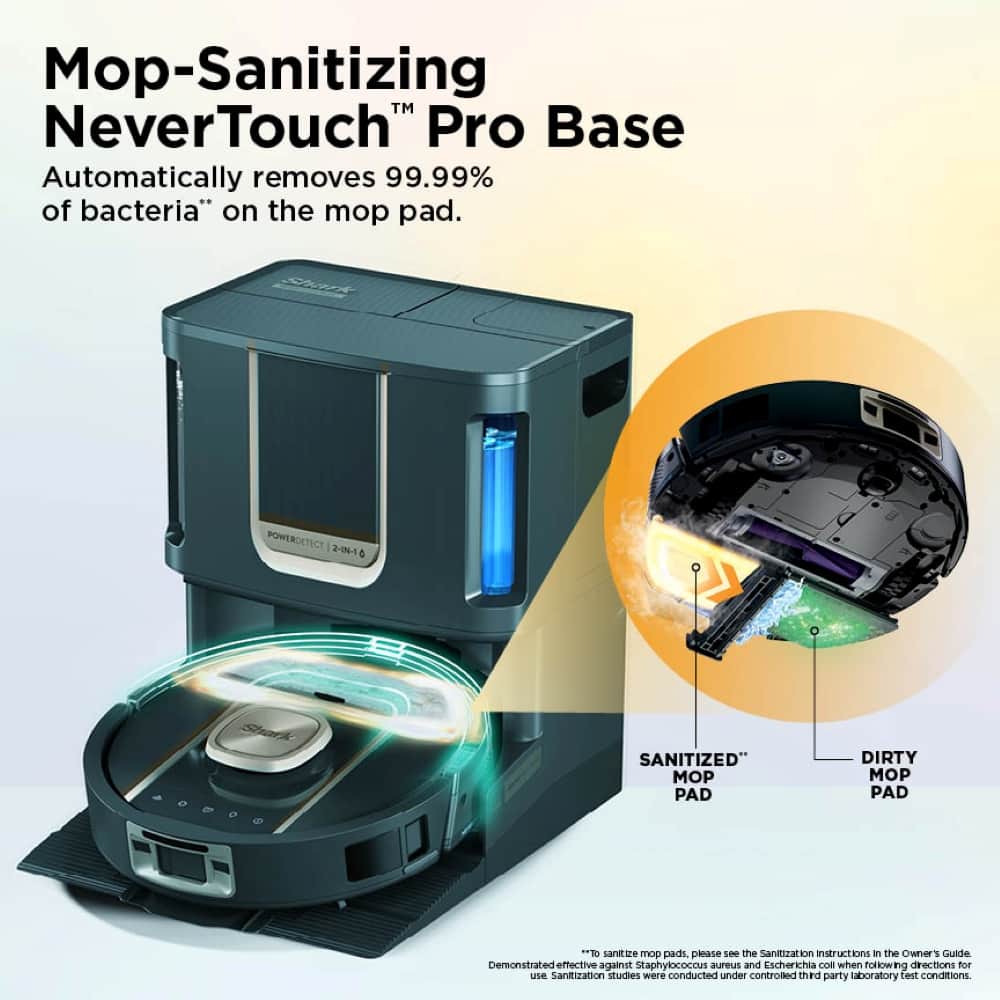
Both systems use heated water for mop cleaning, but with different temperature approaches. The Shark PowerDetect ThermaCharged washes mop pads with 185°F water and dries them with 175°F heated air—among the highest temperatures in the category. This aggressive sanitization effectively eliminates bacteria and odors.
The Narwal Freo Z10 uses adaptive hot water washing up to 167°F, automatically adjusting temperature based on the detected mess type. While slightly lower in maximum temperature, this intelligent approach provides appropriate cleaning intensity while potentially extending mop pad lifespan.
Both systems include heated drying cycles to prevent mold and odor formation—a crucial feature often overlooked in less expensive models.
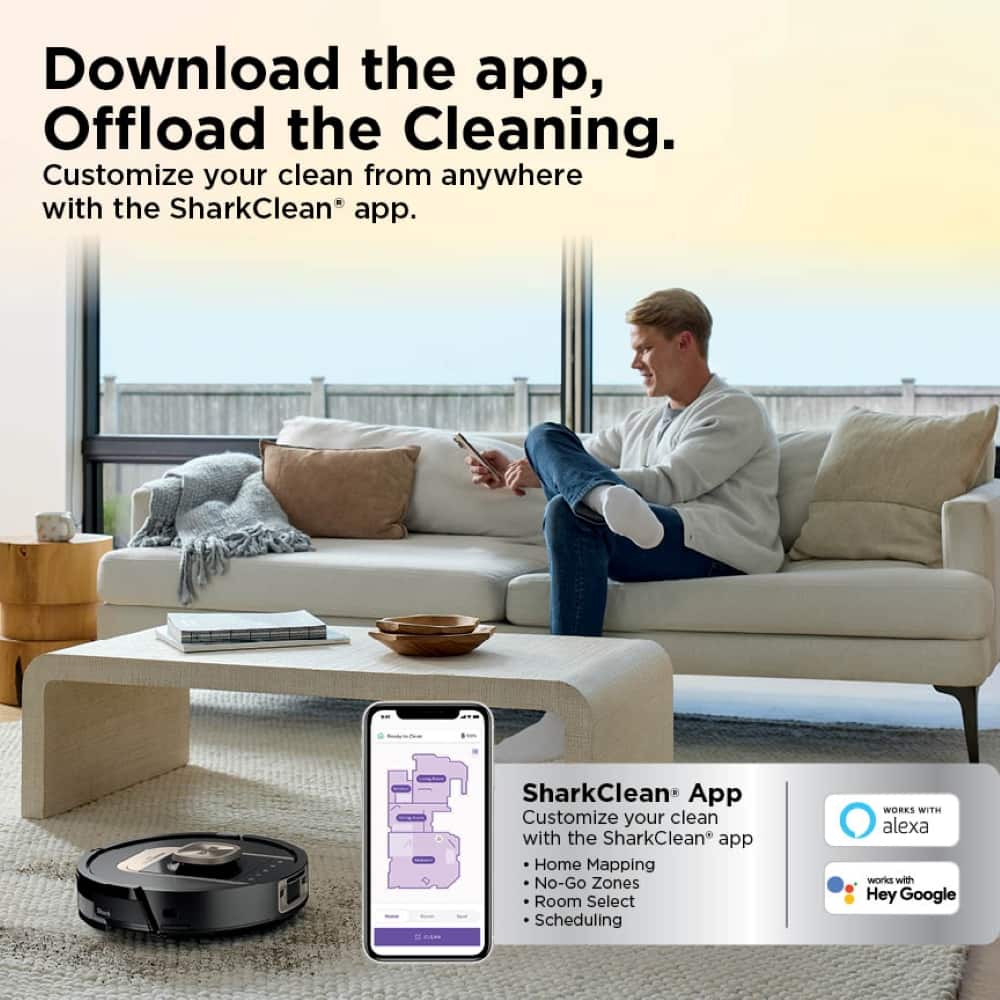
The smartphone app experience reveals a stark difference between these systems. The Narwal Freo Z10 offers comprehensive control over cleaning parameters, including suction levels, water output, cleaning patterns, and detailed scheduling options. Multi-level mapping supports homes with multiple floors, while customizable no-go zones prevent the robot from entering specific areas.
The Shark PowerDetect ThermaCharged presents a surprisingly limited app experience for a premium 2025 robot. Users cannot adjust power settings, water levels, or many basic parameters that have become standard in the category. The lack of multi-level mapping support feels particularly outdated, as most competing systems have offered this feature for several years.
This app limitation represents more than inconvenience—it fundamentally limits the Shark PowerDetect ThermaCharged's adaptability to different home environments and cleaning needs. The water streaking issue becomes especially problematic without app-based water level controls.
Operating noise significantly affects when and how often you'll run your robot cleaner. The Narwal Freo Z10 operates at approximately 53 decibels—quiet enough for conversation and similar to a quiet dishwasher. The Shark PowerDetect ThermaCharged produces around 60 decibels, noticeably louder and more intrusive during operation.
This 7-decibel difference matters more than it might seem. Decibel measurements follow a logarithmic scale, meaning the Shark PowerDetect ThermaCharged produces nearly twice the perceived noise level. For homes with open floor plans or families sensitive to background noise, this could influence usage patterns significantly.
The Narwal Freo Z10's 5,200 mAh battery provides up to 210 minutes of operation, compared to the Shark PowerDetect ThermaCharged's 180 minutes. This 30-minute difference allows the Narwal Freo Z10 to clean larger homes in a single cycle or handle more thorough cleaning sessions without interruption.
Both systems automatically return to their base stations for recharging and resume cleaning where they left off if needed. The Narwal Freo Z10's longer runtime reduces the frequency of these interruptions, contributing to more efficient overall cleaning cycles.
Robot cleaning technology has advanced rapidly since 2020, with major improvements in navigation accuracy, obstacle avoidance, and self-maintenance capabilities. The Narwal Freo Z10 represents 2024 technology with sophisticated AI-driven features like adaptive mop washing and intelligent dirt detection. The Shark PowerDetect ThermaCharged, released in 2025, focuses more on physical cleaning improvements like enhanced temperatures and sonic mopping.
However, the Shark PowerDetect ThermaCharged's limited app functionality feels outdated compared to current industry standards. This raises questions about long-term software support and feature updates that have become increasingly important as these devices integrate more deeply into smart home ecosystems.
At the time of writing, both systems occupy similar price ranges in the premium robot vacuum mop segment, though specific pricing varies based on promotions and availability. The value proposition depends heavily on your priorities and home environment.
Mopping is your primary concern. The dual spinning pads with edge extension provide superior coverage and cleaning effectiveness, especially around furniture and in corners where most robots fail. If you have mostly hard floors with occasional area rugs, this system excels.
You value long-term convenience. The 120-day maintenance interval versus 60 days means less frequent attention required. For busy professionals or anyone who prefers "set it and forget it" operation, this extended autonomy proves valuable.
Privacy matters in your home. The camera-free navigation system provides effective cleaning without introducing surveillance concerns, particularly important in bedrooms or homes with privacy-conscious family members.
You want comprehensive app control. The sophisticated smartphone interface allows fine-tuning cleaning parameters for different rooms and situations. This flexibility becomes increasingly valuable as you learn your robot's optimal settings.
Carpet cleaning is essential. Despite lower suction specifications, independent testing consistently shows superior carpet debris removal. Homes with significant carpeted areas benefit from this specialized capability.
You prioritize maximum sanitization. The 185°F washing temperature provides the highest level of mop pad sterilization available, important for households with young children, pets, or health concerns.
Threshold crossing is problematic in your home. The NeverStuck technology with 38mm climbing ability handles varied flooring transitions better than most competitors. Homes with multiple floor types or uneven transitions benefit significantly.
Simple operation appeals to you. While the limited app functionality frustrates power users, some prefer the straightforward, no-fuss operation without extensive customization options.
Several factors could eliminate one option from consideration:
The Shark PowerDetect ThermaCharged's water streaking issue represents a fundamental flaw for a premium mopping system. Without adjustable water levels, this problem affects daily usability on hard floors.
The Narwal Freo Z10's weaker carpet performance might disappoint households with primarily carpeted floors, despite its superior hard floor cleaning.
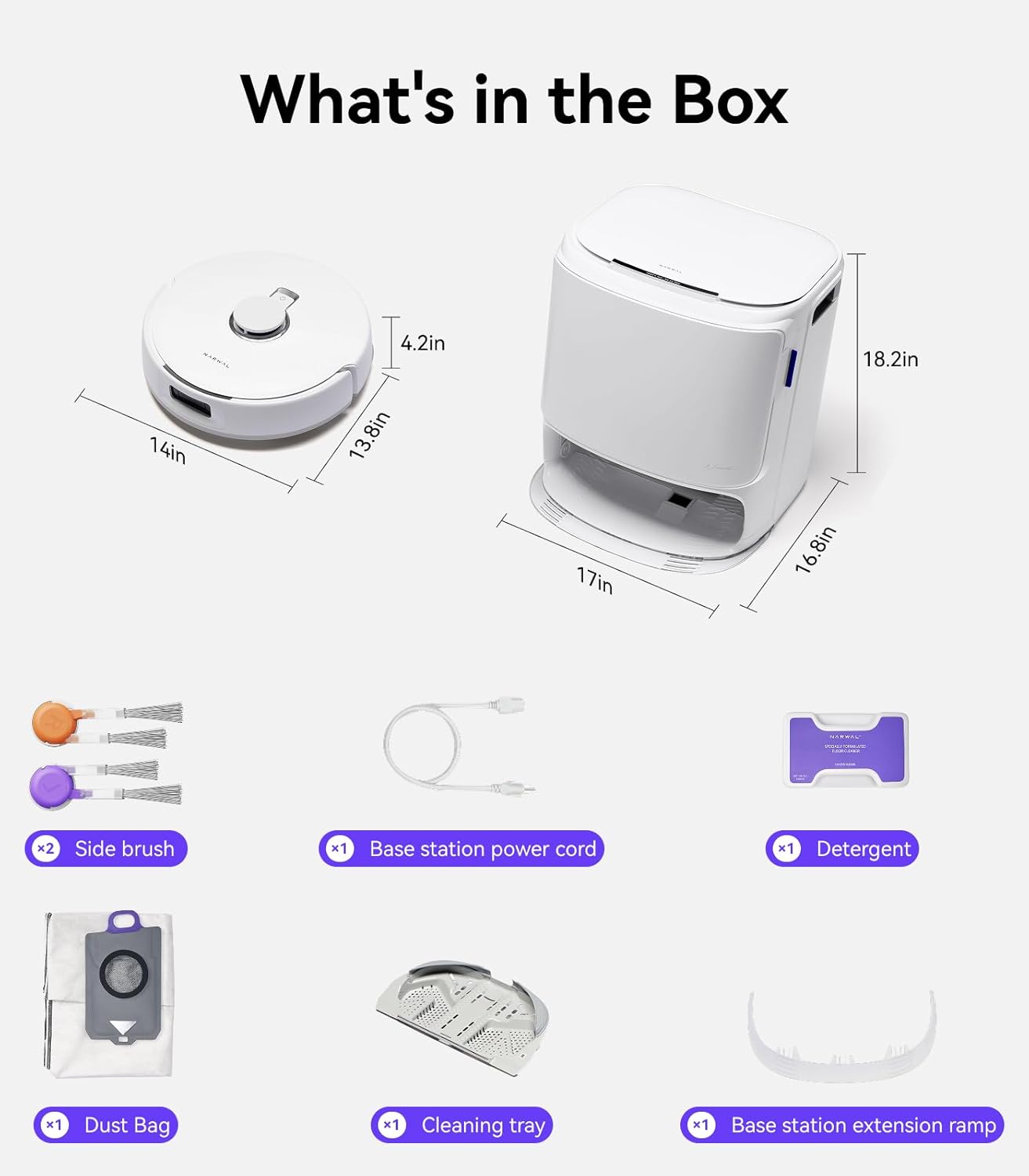
Both systems require dedicated floor space for their substantial base stations, measuring approximately 17-20 inches in width and depth. Ensure adequate space in your intended location before purchasing.
Based on our comprehensive research and analysis of user experiences, the Narwal Freo Z10 represents the stronger overall choice for most households. Its superior mopping technology, longer autonomous operation, comprehensive app control, and quieter operation create a more satisfying long-term ownership experience.
The Shark PowerDetect ThermaCharged excels in specific areas—particularly carpet cleaning and threshold navigation—but the water streaking issue and limited app functionality create daily frustrations that undermine its premium positioning.
For homes with mixed hard floors and moderate carpet coverage, the Narwal Freo Z10 provides the best balance of performance, convenience, and technological sophistication. However, carpet-heavy homes might justify the Shark PowerDetect ThermaCharged despite its limitations, provided the water output issues don't affect your primary floor types.
Both represent significant investments in home automation that can genuinely reduce cleaning workload when properly matched to your specific needs and expectations.
| Narwal Freo Z10 | Shark PowerDetect ThermaCharged RV2920XE |
|---|---|
| Suction Power - Higher numbers mean better carpet cleaning and debris pickup | |
| 15,000 Pa (excellent on paper, moderate real-world carpet performance) | Unspecified Pa (lower power but better actual carpet debris removal) |
| Mopping System - Critical for effective floor scrubbing and stain removal | |
| Dual spinning triangular pads with MopExtend edge cleaning | Single sonic vibrating pad (100x/min) with extension |
| Mop Washing Temperature - Higher heat kills more bacteria and removes stubborn dirt | |
| Up to 167°F adaptive hot water (adjusts based on mess type) | 185°F hot water wash, 175°F heated air dry (highest sanitization) |
| Hands-Free Operation Duration - How long before you need to empty/refill | |
| 120 days debris storage with dust compression | 60 days debris, 30 days water (bagless system) |
| Navigation System - Affects cleaning efficiency and obstacle avoidance | |
| LiDAR + infrared sensors (no cameras for privacy) | LiDAR + 3D structured light + RGB cameras (advanced object recognition) |
| Battery Runtime - Determines how much area cleaned per charge | |
| Up to 210 minutes (5,200 mAh battery) | Up to 180 minutes (unspecified battery capacity) |
| Noise Level - Important for running during occupied hours | |
| ~53 dB (quiet, conversation-friendly) | ~60 dB (noticeably louder, may interrupt activities) |
| App Control Features - Customization and smart home integration capabilities | |
| Full control: power, water levels, multi-floor mapping, scheduling | Limited control: no water adjustment, no multi-level mapping, basic features only |
| Edge and Corner Cleaning - How well it reaches areas other robots miss | |
| MopExtend + EdgeSwing technology reaches tight spaces | EdgeDetect air blasts with mop extension (less comprehensive) |
| Carpet Protection - Prevents wetting carpets during mop cycles | |
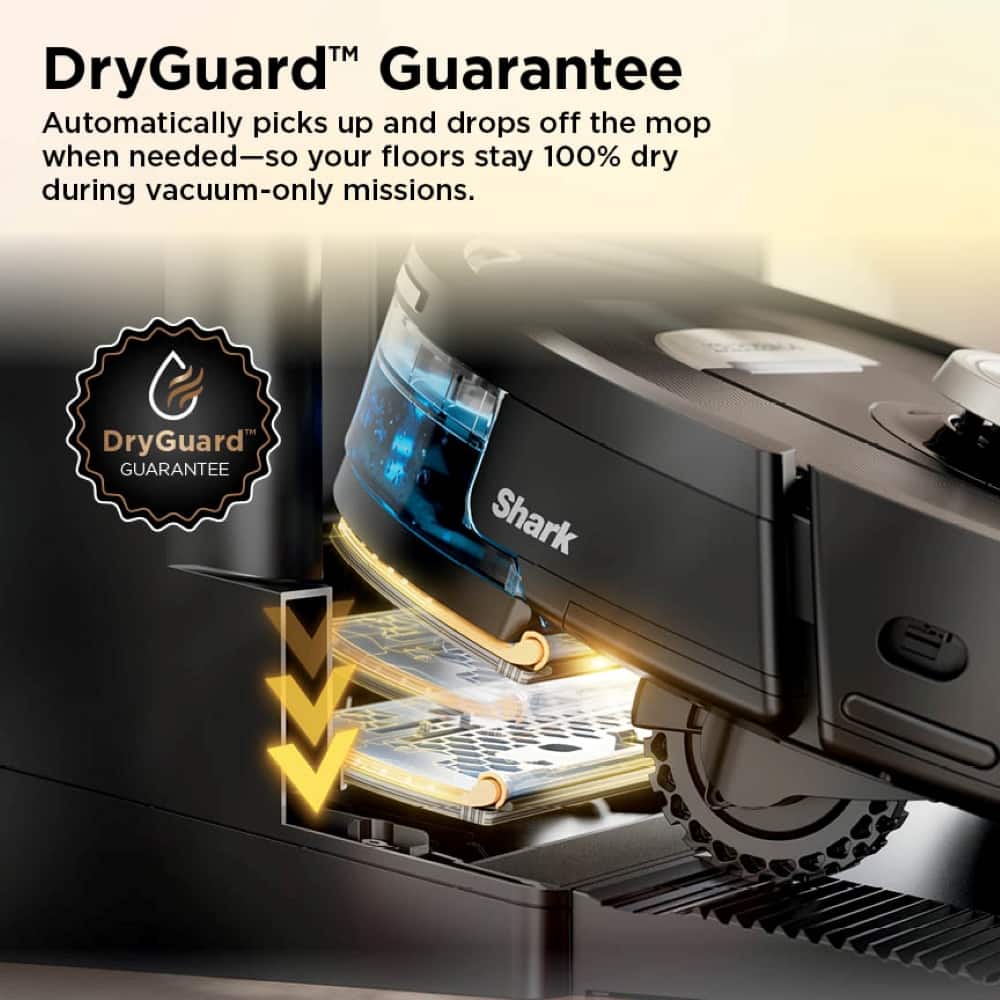
| 12mm auto mop lift with carpet detection | DryGuard mop lifting system |
| Water Output Control - Prevents streaking on hard floors | |
| Adjustable through app with intelligent mess detection | Fixed high output (causes streaking, no app adjustment) |
| Threshold Climbing - Ability to cross door transitions and room changes | |
| Standard threshold crossing (~20mm) | NeverStuck technology climbs up to 38mm (superior mobility) |
| Hair Tangle Prevention - Reduces brush maintenance for pet owners | |
| DualFlow Tangle-Free system (very effective) | Anti-hair wrap brushroll (good but may need occasional cleaning) |
The Narwal Freo Z10 offers 15,000 Pa of suction power, significantly higher than the Shark PowerDetect ThermaCharged. However, despite lower suction specs, the Shark PowerDetect ThermaCharged actually performs better on carpets in real-world testing due to its PowerDetect sensors and optimized airflow design.
The Narwal Freo Z10 excels at edge cleaning with its MopExtend and EdgeSwing technology that physically extends and swings mop pads into corners and around furniture legs. The Shark PowerDetect ThermaCharged uses air blasts and mop extension but can't match the comprehensive edge coverage of the Narwal Freo Z10's dual-pad system.
The Narwal Freo Z10 provides 120 days of hands-free operation before requiring emptying or refilling, while the Shark PowerDetect ThermaCharged offers 60 days for debris and 30 days for water. This makes the Narwal Freo Z10 more convenient for extended autonomous cleaning.
The Narwal Freo Z10 operates at approximately 53 dB, making it significantly quieter than the Shark PowerDetect ThermaCharged at 60 dB. The 7-decibel difference means the Narwal Freo Z10 produces about half the perceived noise level.
Yes, both feature heated mop washing, but with different approaches. The Shark PowerDetect ThermaCharged uses higher temperatures at 185°F for washing and 175°F for drying, while the Narwal Freo Z10 uses adaptive hot water up to 167°F that adjusts based on the type of mess detected.
The Narwal Freo Z10 offers comprehensive app control including adjustable power settings, water levels, multi-floor mapping, and detailed scheduling. The Shark PowerDetect ThermaCharged has surprisingly limited app functionality with no water level adjustment, no multi-level mapping, and basic control options only.
The Narwal Freo Z10 uses a DualFlow Tangle-Free system that actively prevents hair wrapping through strategic airflow design. The Shark PowerDetect ThermaCharged features an anti-hair wrap brushroll that reduces tangling but may occasionally require manual cleaning.
The Shark PowerDetect ThermaCharged superior with its NeverStuck technology that can climb thresholds up to 38mm high. The Narwal Freo Z10 handles standard transitions around 20mm, which works for most homes but may struggle with higher door transitions.
The Narwal Freo Z10 uses dual spinning triangular mop pads with 8N downward pressure and intelligent dirt sensing for targeted cleaning. The Shark PowerDetect ThermaCharged employs sonic mopping with 100 vibrations per minute but has a critical flaw: excessive water output that causes streaking with no way to adjust levels through the app.
The Narwal Freo Z10 provides up to 210 minutes of runtime with its 5,200 mAh battery, compared to the Shark PowerDetect ThermaCharged's 180 minutes. This extra 30 minutes allows the Narwal Freo Z10 to clean larger areas without interruption.
No, they use different approaches. The Narwal Freo Z10 relies on LiDAR and infrared sensors without cameras, preserving privacy while providing accurate navigation. The Shark PowerDetect ThermaCharged combines LiDAR with 3D structured light and RGB cameras for more advanced object recognition.
The Narwal Freo Z10 generally provides better overall value with superior mopping performance, longer autonomous operation, quieter operation, and comprehensive app control. The Shark PowerDetect ThermaCharged excels in specific areas like carpet cleaning and threshold climbing but has significant limitations with water streaking and basic app functionality that affect daily usability.
We've done our best to create useful and informative comparisons to help you decide what product to buy. Our research uses advanced automated methods to create this comparison and perfection is not possible - please contact us for corrections or questions. These are the sites we've researched in the creation of this article: techradar.com - youtube.com - us.narwal.com - vacuumwars.com - youtube.com - versus.com - twice.com - us.narwal.com - youtube.com - youtube.com - roboselector.com - us.narwal.com - vacuumwars.com - youtube.com - us.narwal.com - narwal-uk.co.uk - us.narwal.com - youtube.com - us.narwal.com - roboselector.com - digitalreviews.net - bestbuy.com - androidauthority.com - versus.com - youtube.com - roboselector.com - youtube.com - vacuumwars.com - vacuumwars.com - youtube.com - reviewed.com - sharkninja.com - reviewed.com - youtube.com - sharkninja.com - brandclub.com - ebay.com - costco.com - sharkninja.com - bestbuy.com - youtube.com - support.sharkninja.ca - camelcamelcamel.com

Privacy Policy
Terms and Conditions - Affiliate Policy
Home Security
© Copyright 2008-2026.
11816 Inwood Rd #1211, Dallas, TX 75244