Understanding Bowers & Wilkins: A Buyer’s Guide to the Most Iconic High-End Speakers
Bowers & Wilkins makes everything from entry-level audiophile speakers to iconic studio models. This guide explains the whole lineup and helps you find the right speakers for your space.
The staff at HomeTechnologyReview.com is comprised of experts who are dedicated to helping you make better informed buying decisions.
The first time I heard a pair of Bowers & Wilkins speakers, I remember thinking, “Oh—that’s what the song actually sounds like.” It’s that feeling of clarity and presence that has kept the company at the center of high-end audio for decades. But as with any legacy brand, the lineup can be confusing from the outside. The numbering, the series names, the special editions… it adds up quickly.
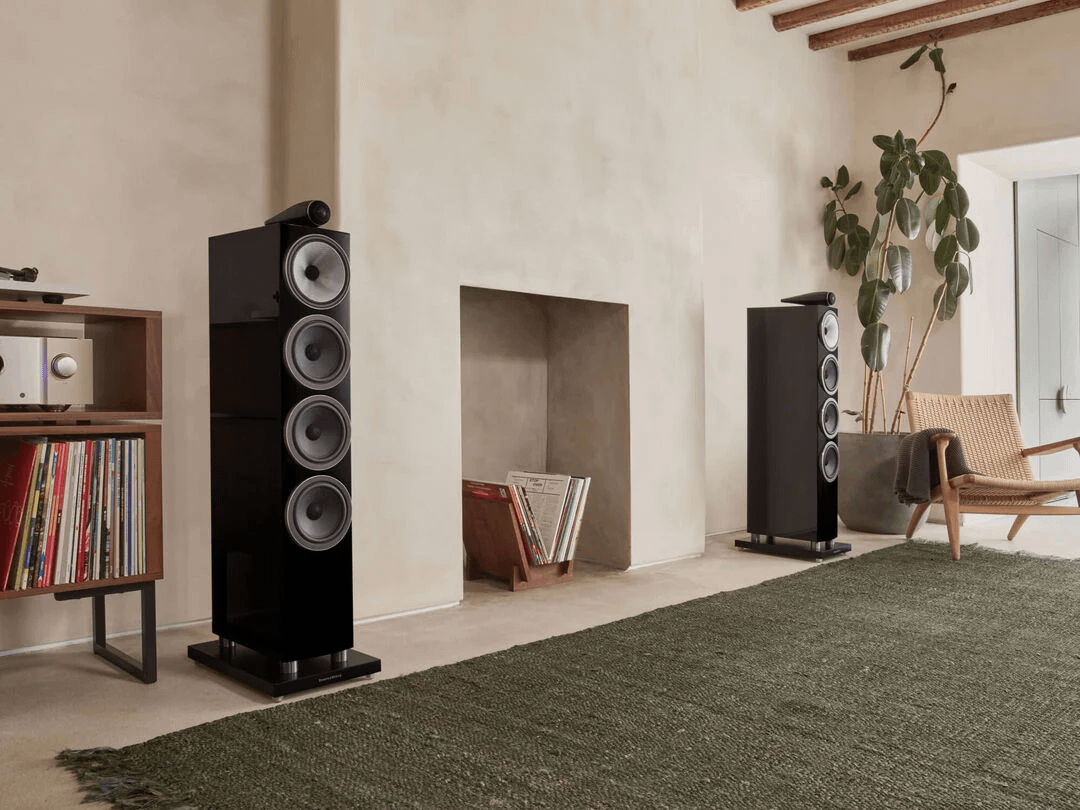
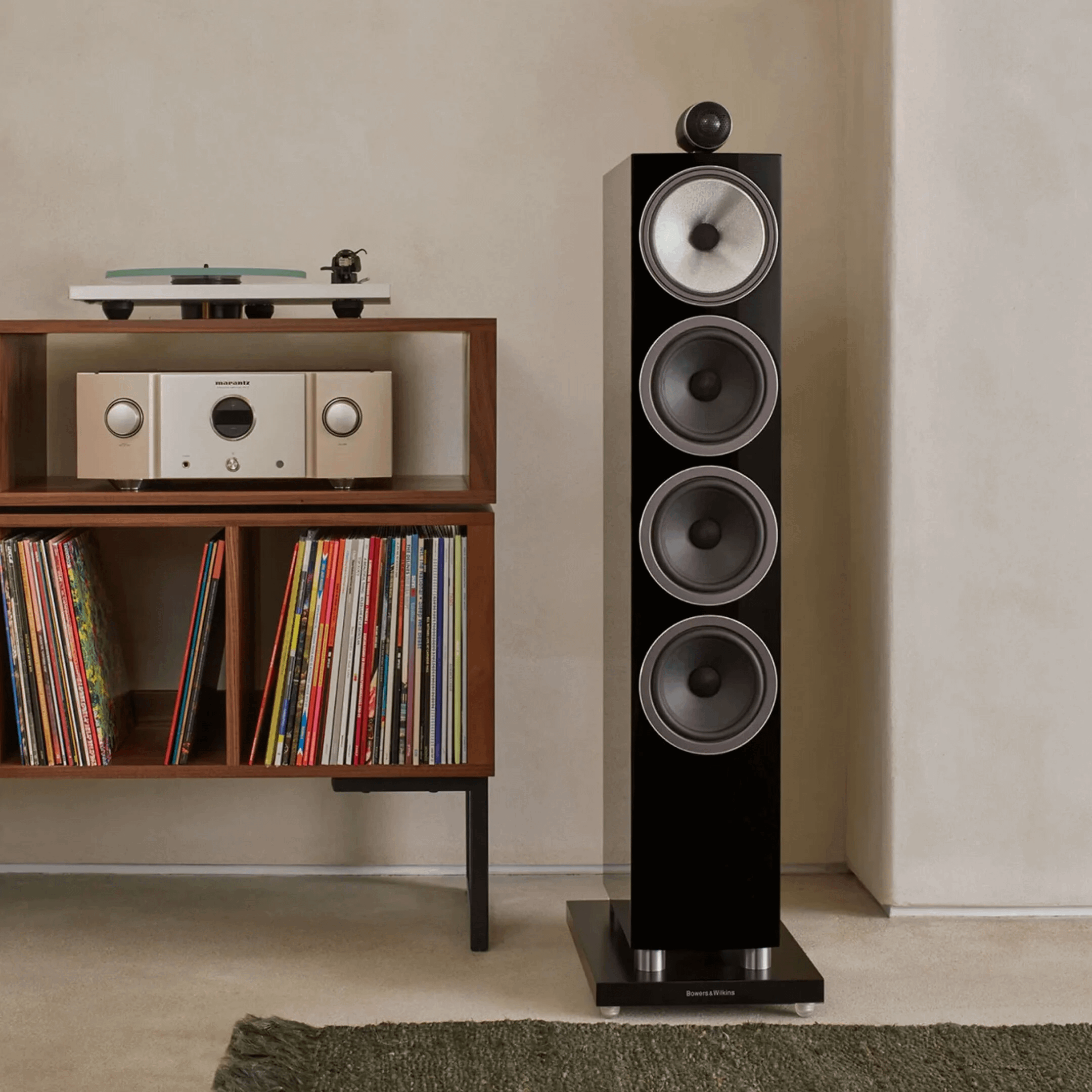
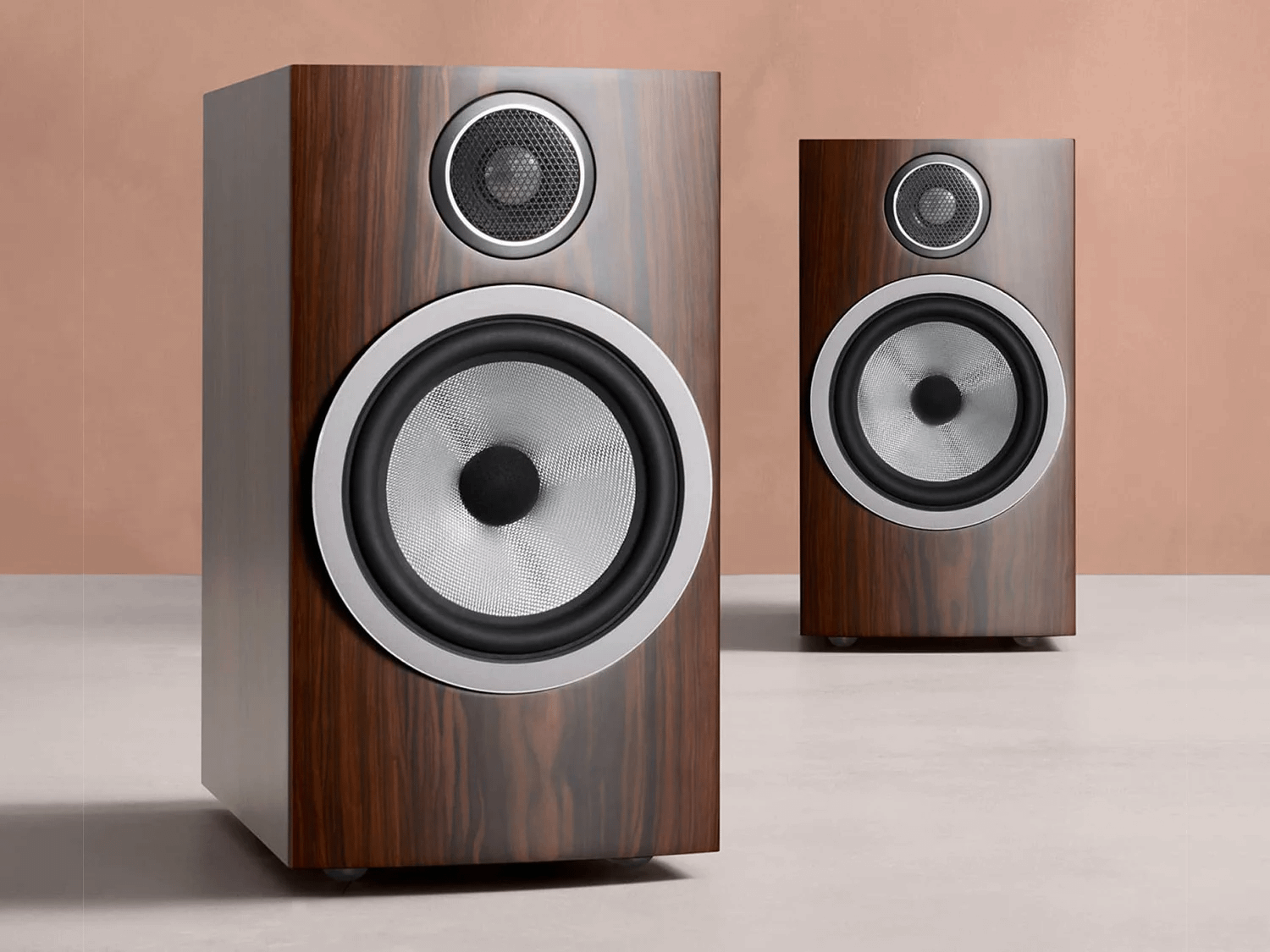
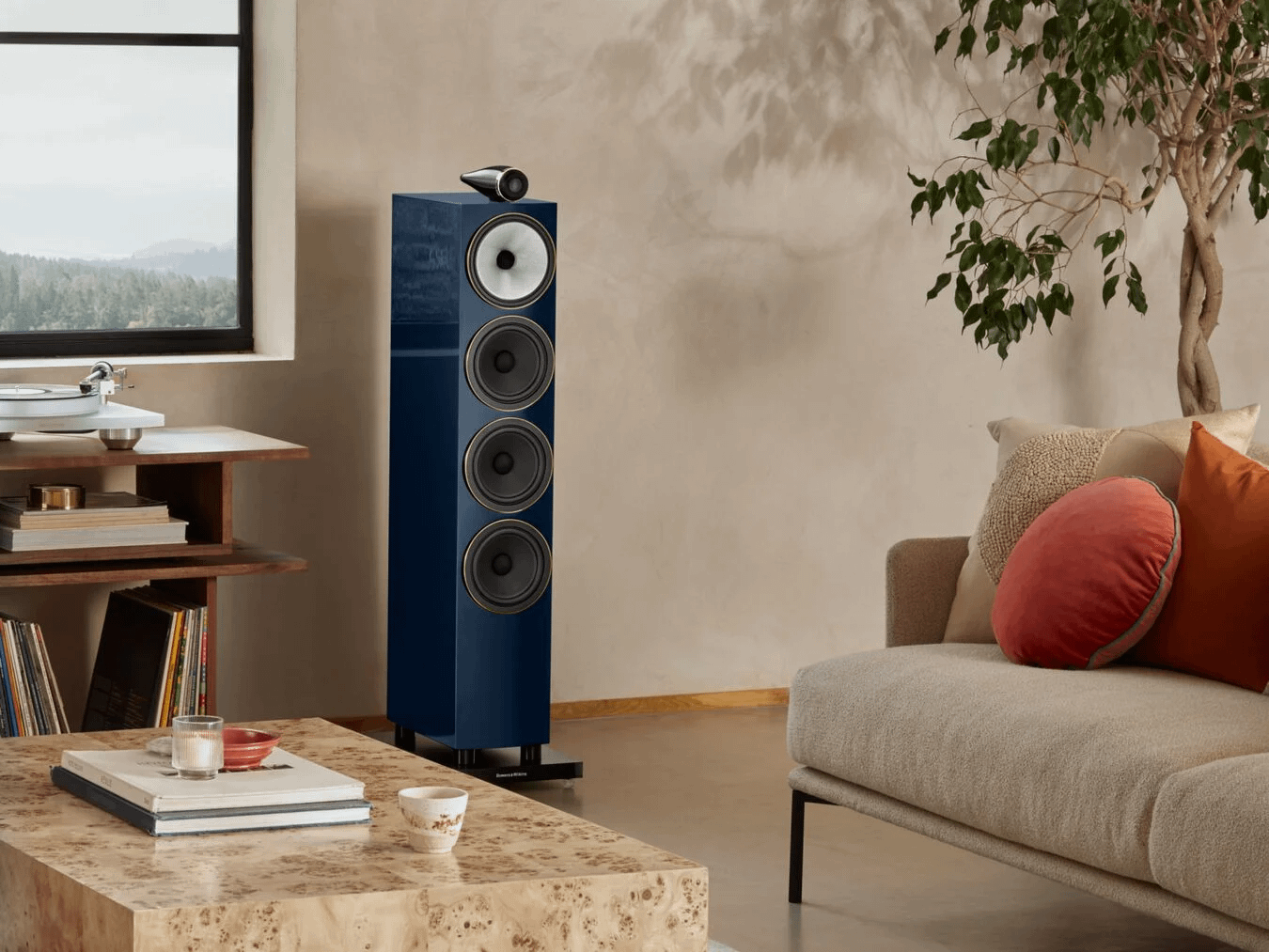
B&W’s lineup is huge at the high end: 600 Series, 700 Series, 700 & 800 Signatures, 800 Series Diamond, special Abbey Road editions, and then the wild, snail-shaped Nautilus on top of it all. The good news is that there is a logic to the range. Once you understand how the families stack up, it’s much easier to figure out which models make sense for your room, your system, and your budget.
So instead of leaving you to decode the catalog on your own, here’s a simple, structured breakdown of every major B&W series and what each model is built to deliver.
Step One: Understanding the B&W “Family Tree”
At a high level, Bowers & Wilkins’ passive speakers are arranged like this (from “entry” to full-blown insanity):
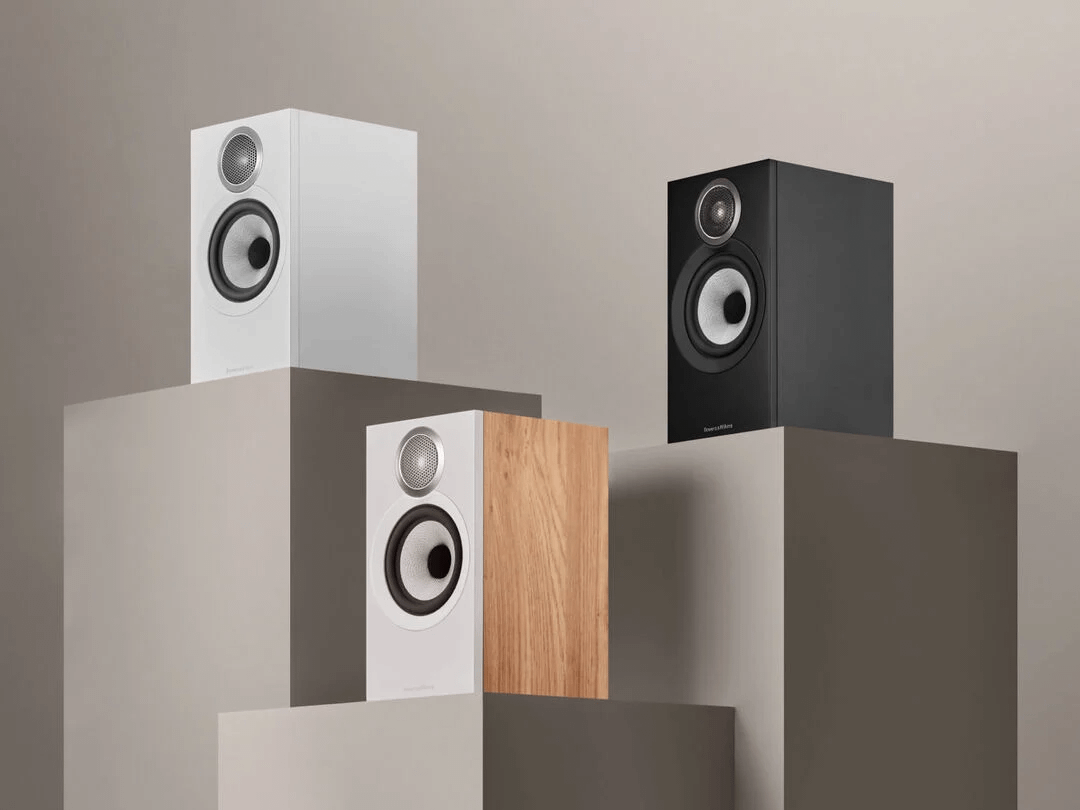
600 Series S3 – Most affordable, but already very serious hi-fi. Great starting point for high-quality stereo or home theater.
700 Series S3 – Mid-to-high-end line. Lots of tech borrowed from the 800 Series, but sized and priced for real living rooms.
700 Series Signature – Hot-rodded versions of the best 700 models with upgraded crossovers, finishes, and subtle tuning changes.
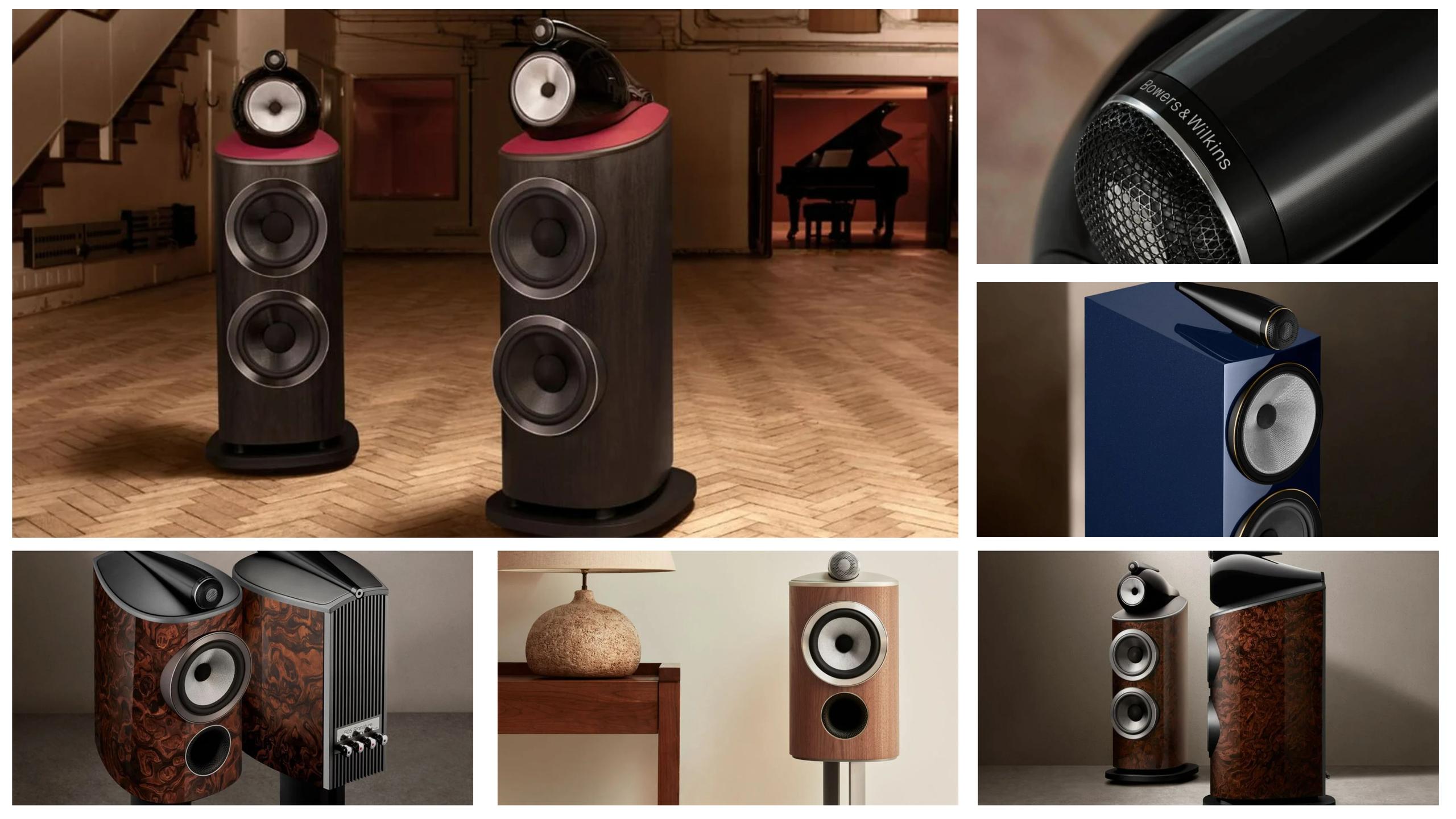
800 Series Diamond (D4) – Reference line used in actual studios, including Abbey Road. Diamond tweeters, complex cabinets, and big price tags.
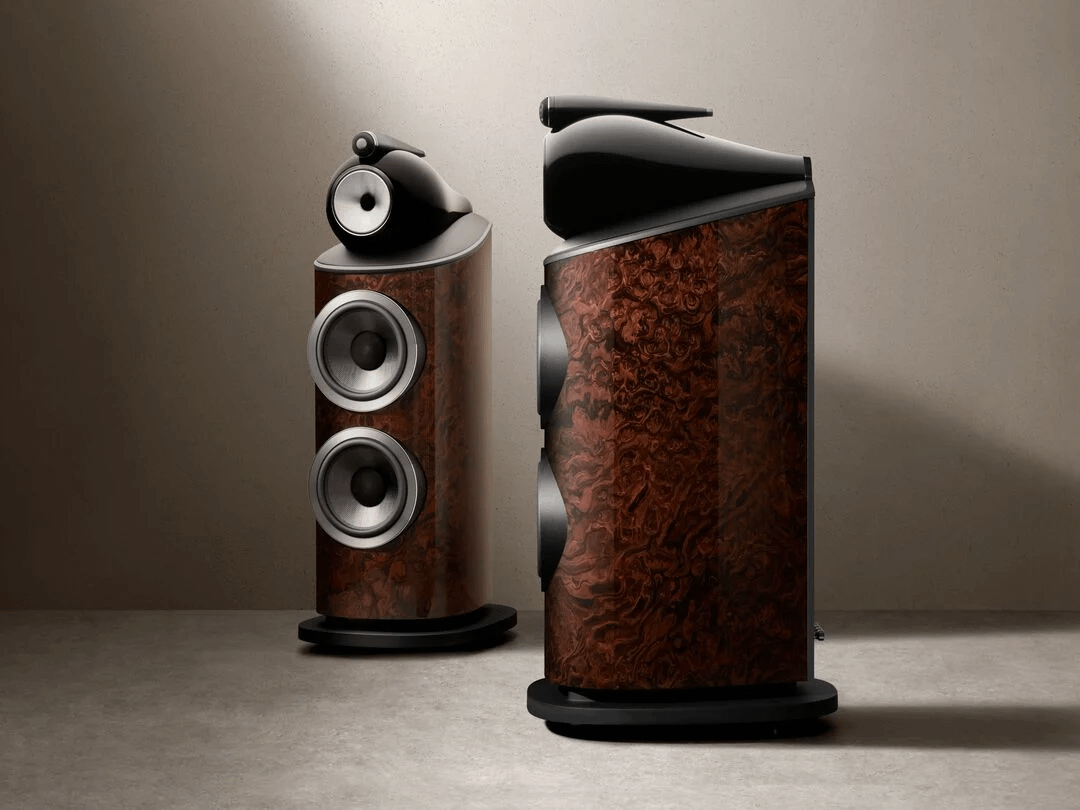
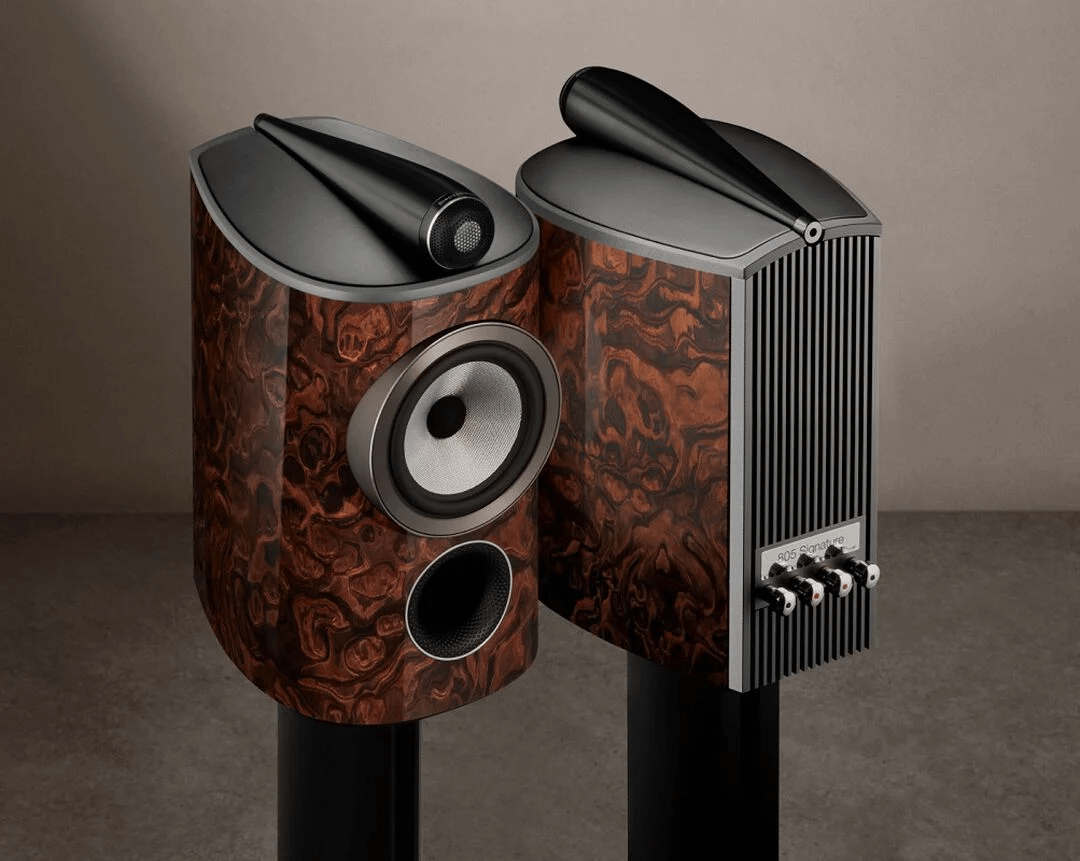
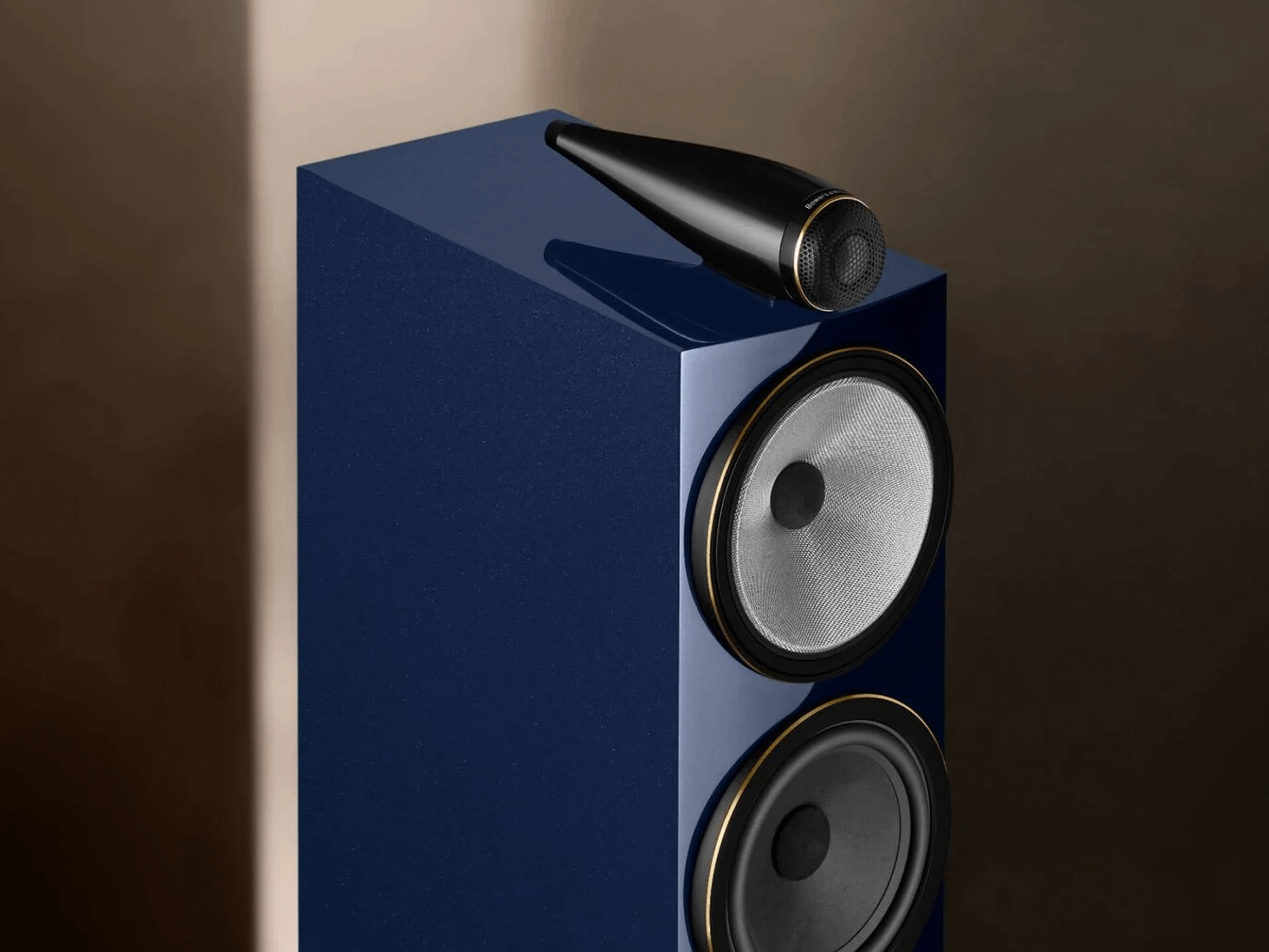
800 Series Signature – Enhanced 801 D4 and 805 D4 with improved parts and luxury finishes.
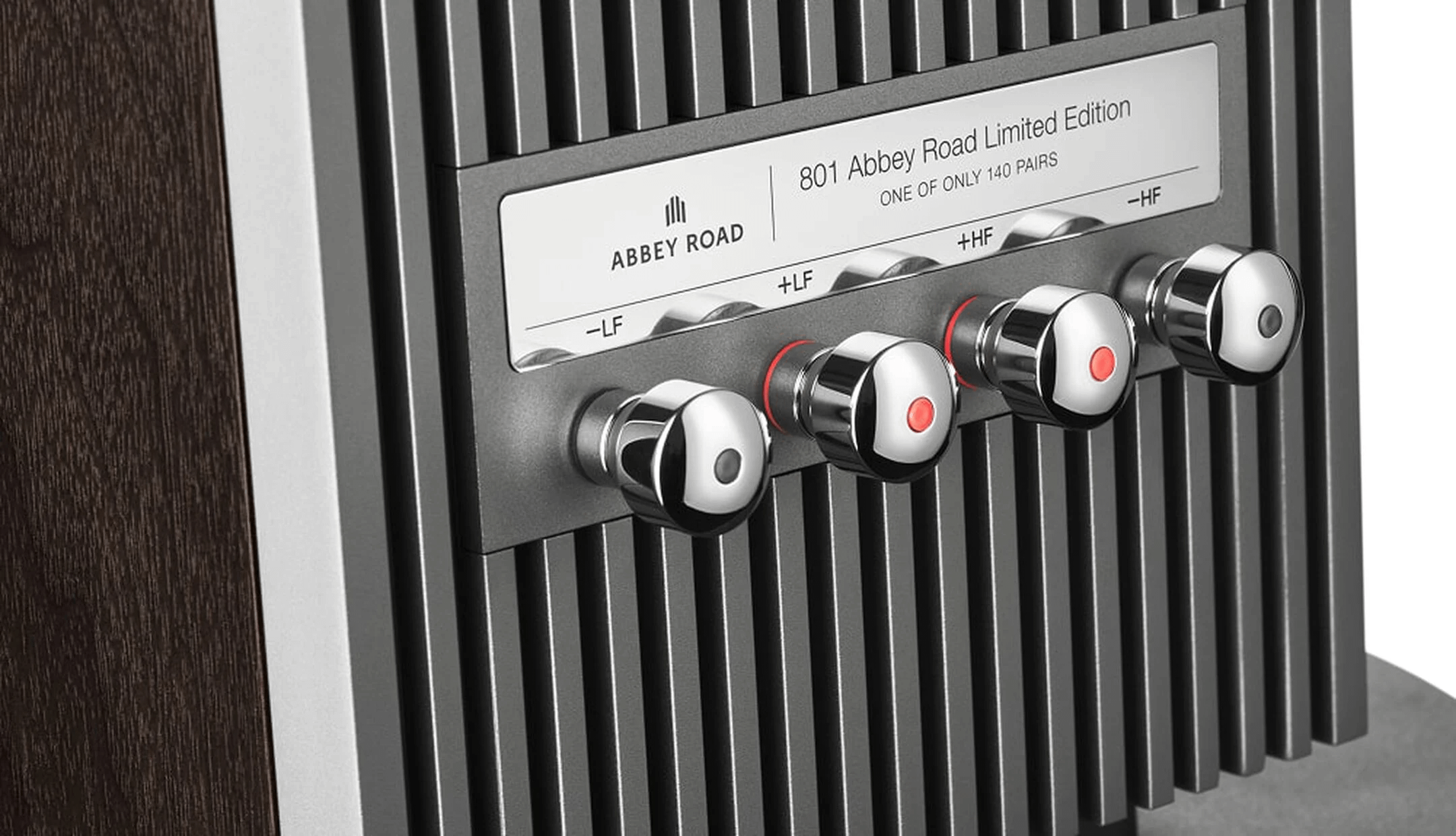
801 Abbey Road Limited Edition – A special run of the 801 built to celebrate B&W’s 45-year history at Abbey Road Studios.
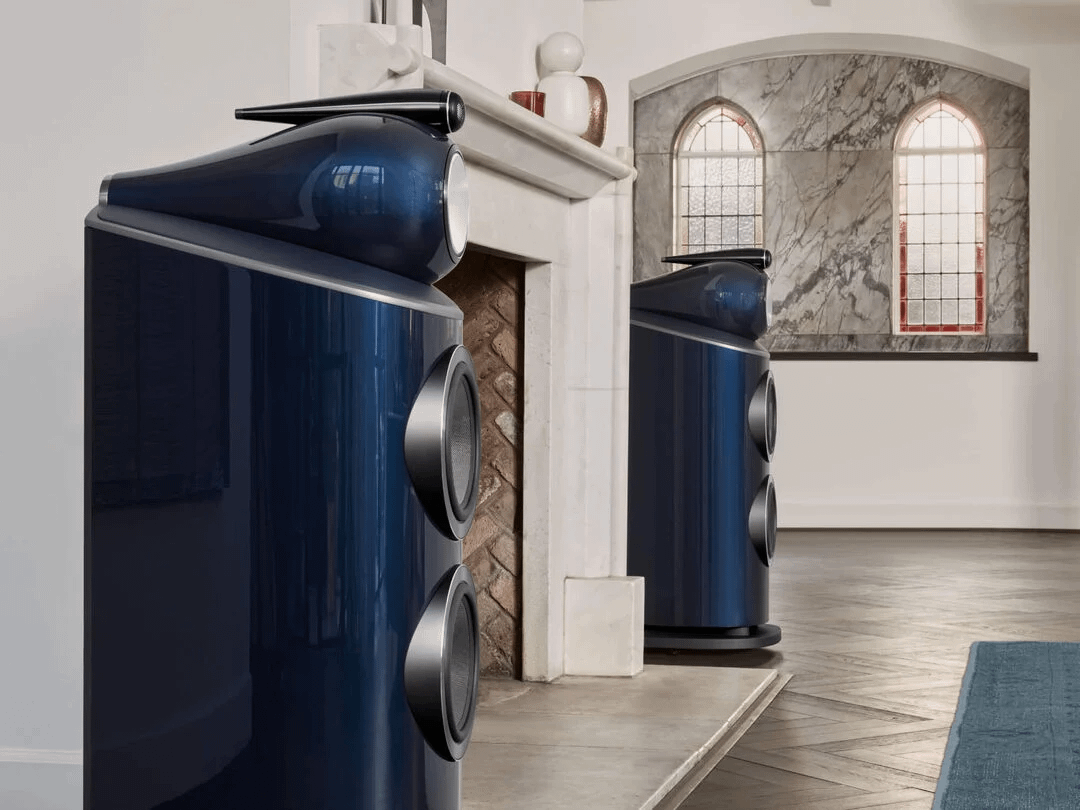
Nautilus – A four-way, fully active sculpture-speaker that’s more like a concept car you can actually buy.
Within each range, you’ll see:
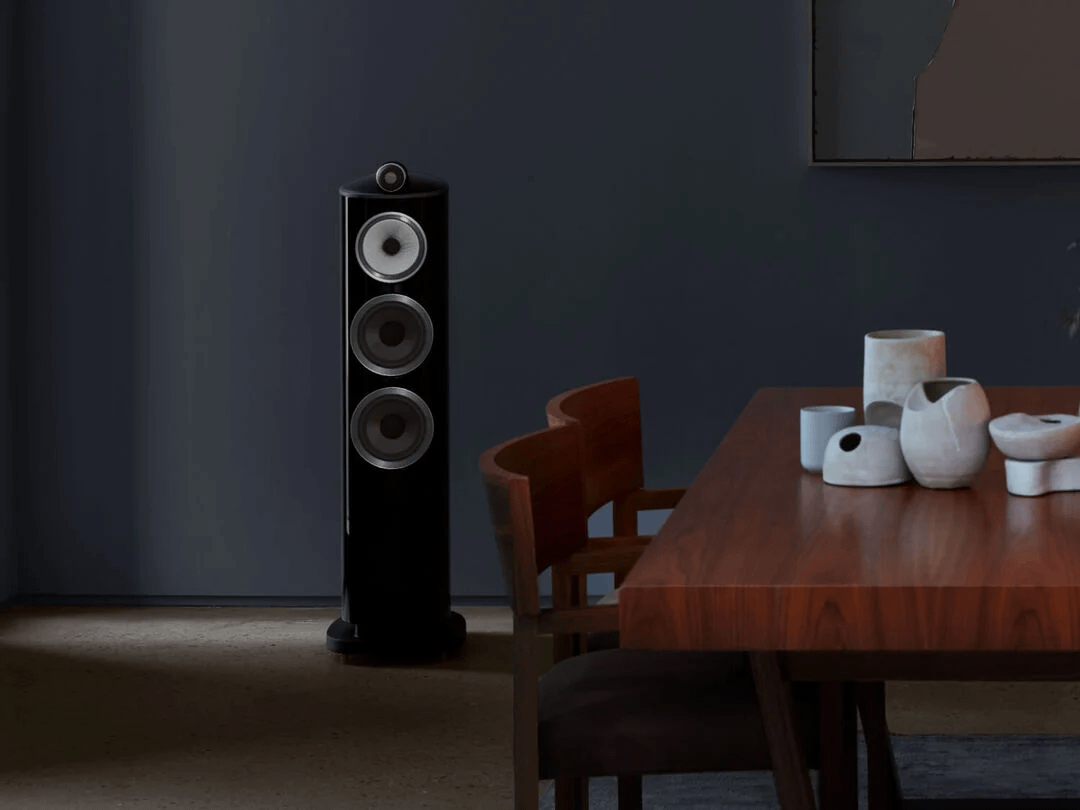
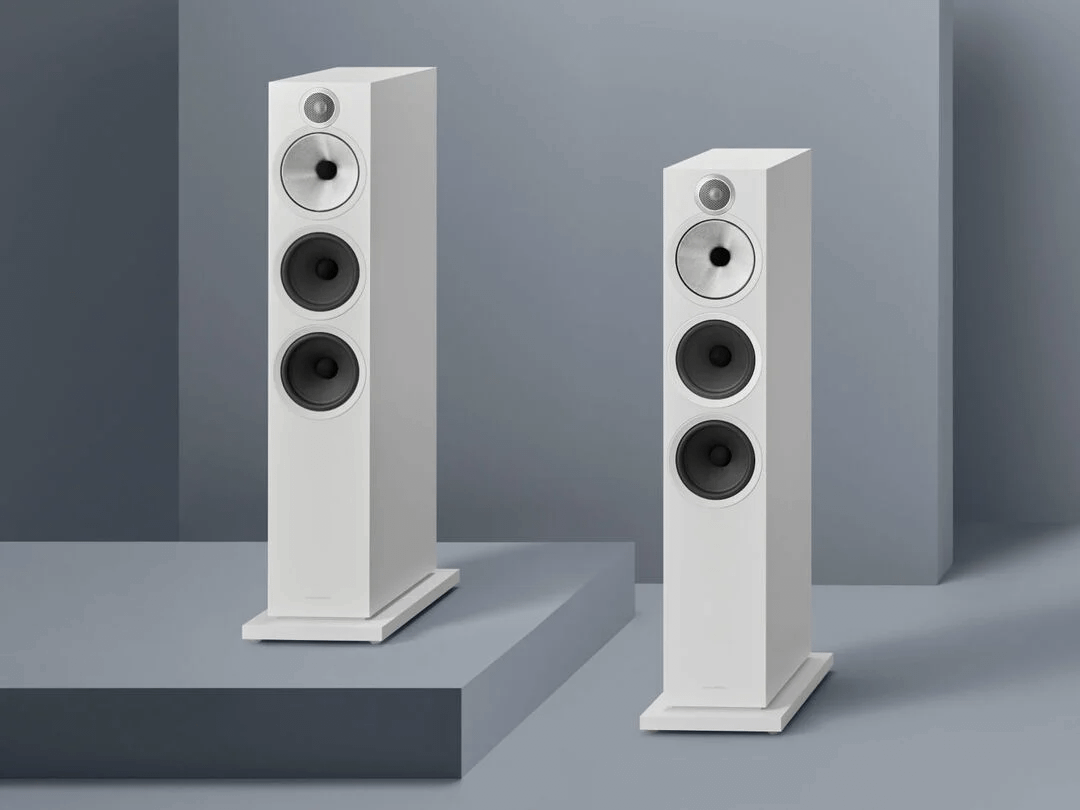
Floor-standing / tower speakers – Main left/right speakers for serious stereo or the front of a home theater.
Stand-mount / bookshelf speakers – Smaller speakers that sit on stands or furniture; great for smaller rooms or as rear/surround channels.
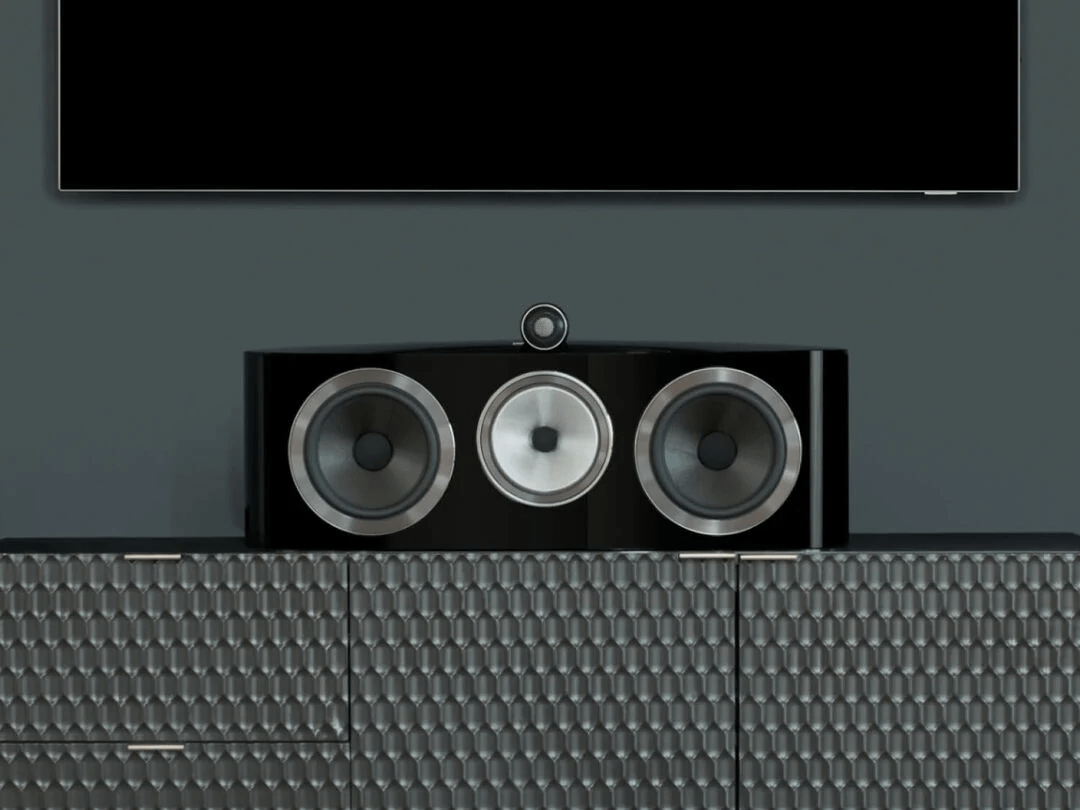
Center channels – Dedicated horizontal speaker that carries dialogue in a home theater system.
Let’s decode each range, starting from the top and working down.
800 Series Signature: When “Flagship” Isn’t Enough
Think of the 800 Series Signature models as “turbo” versions of the already insane 800 Series Diamond speakers. The standard D4 line already includes things like:
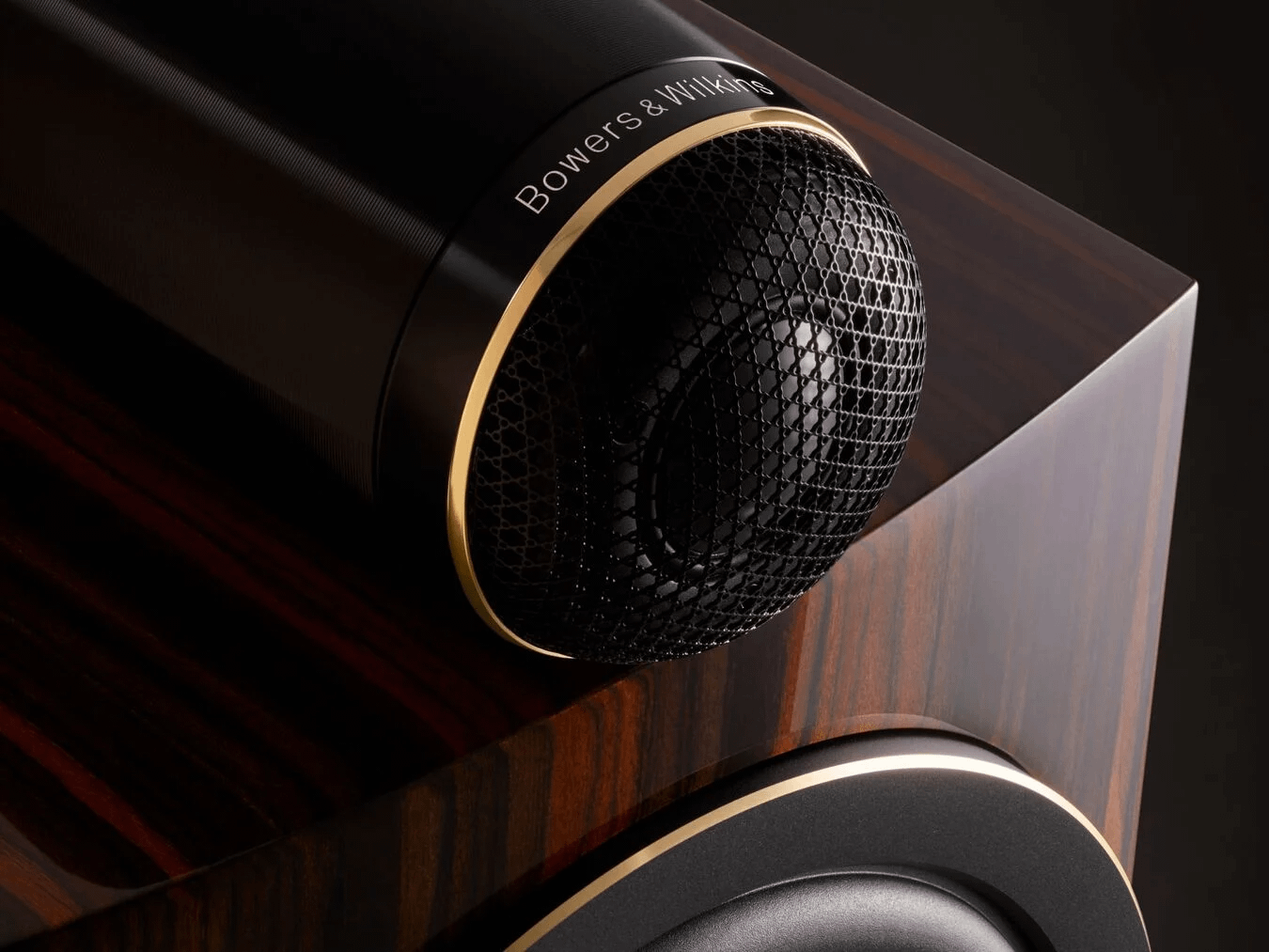
A diamond dome tweeter – ultra-stiff and lightweight, designed to push breakup frequencies way above the audible range for cleaner treble.
Continuum cone midrange driver in its own rigid “Turbine Head” enclosure on the larger towers, which helps reduce resonance and keeps vocals super clean.
Aerofoil Profile bass cones, shaped to be stiff where they need to be and lighter where they can be, to control deep bass at high volume.
An upgraded bass system with improved motor design and an aluminum rear port plate for extra rigidity and cleaner low frequencies.
Higher-grade crossover components to squeeze out a bit more resolution and transparency.
Exclusive finishes like Datuk Gloss and Midnight Blue Metallic, plus detailing you don’t get on the standard 800 line.
The 805 D4 Signature does a similar thing for B&W’s compact reference stand-mount: same core architecture as the 805 D4, but with upgraded crossover parts, internal bracing tweaks, and the same luxury finishes.
Who should consider 800 Series Signature?
You already know you want the 800 Series Diamond, and your system is at the “endgame” level.
You care as much about finishes and collectability as about sound.
Your room is properly treated and you have electronics (amps, DAC, source) that live in the same league.
For most people, these are dream speakers. For a small subset of listeners, they’re a final destination.
800 Series Diamond (D4): Studio-Grade in Your Living Room
This is the range that shows up in mastering rooms, mixing suites, and very expensive living rooms. Abbey Road Studios has used successive generations of 800-series speakers as their main monitors for decades, which tells you how much trust engineers place in them.
Key tech in the 800 Series Diamond
Across the range you’ll find:
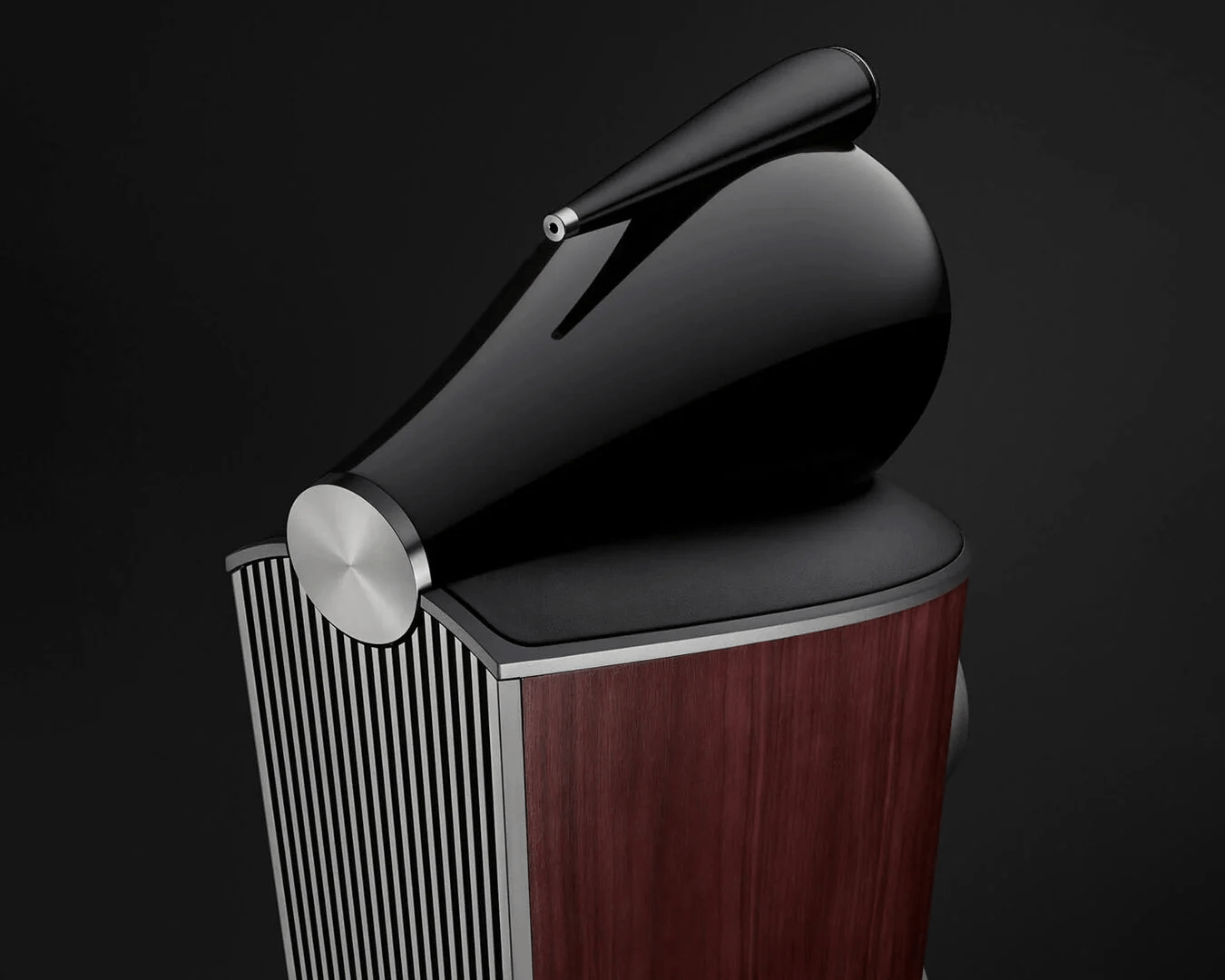
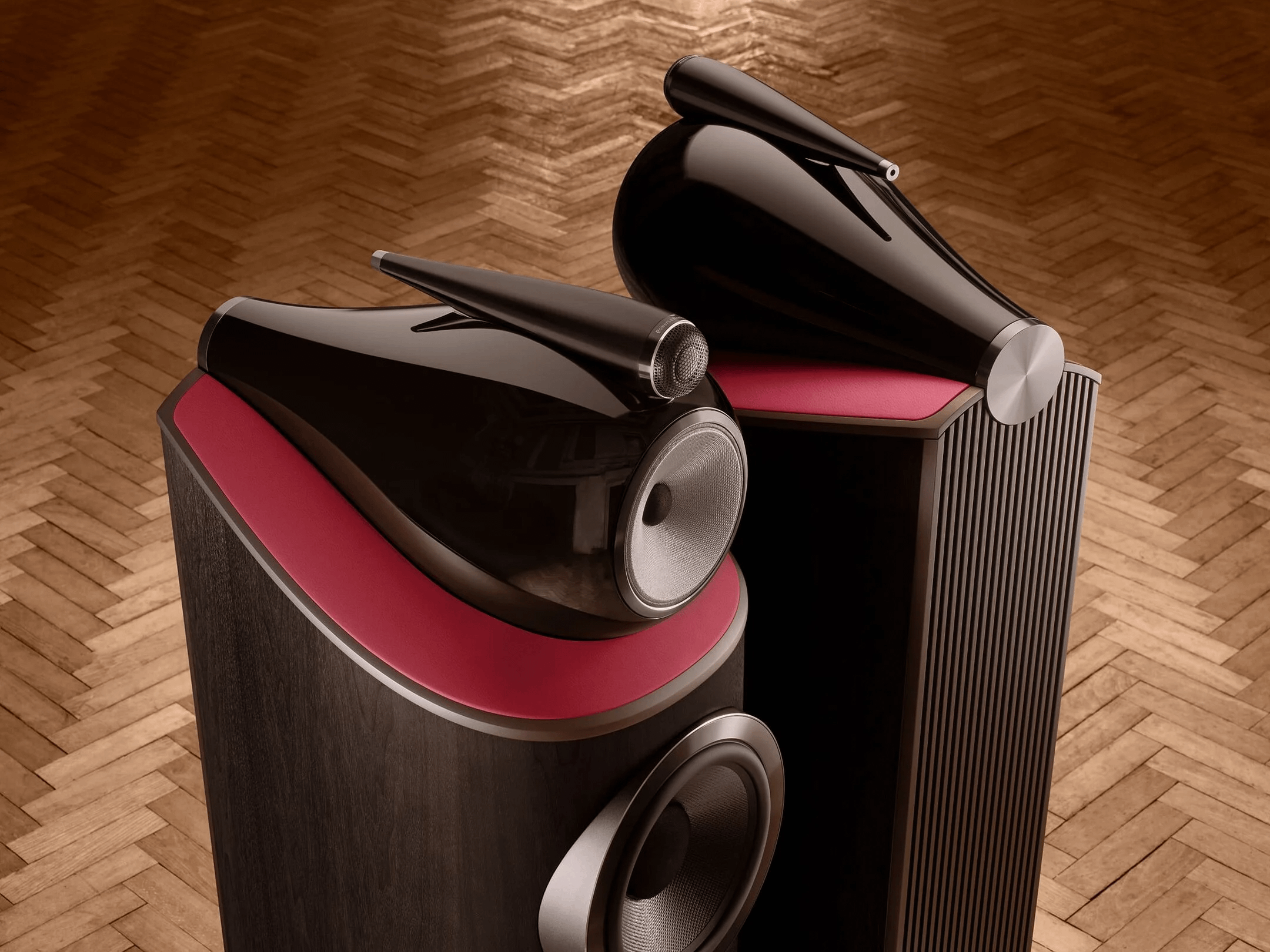
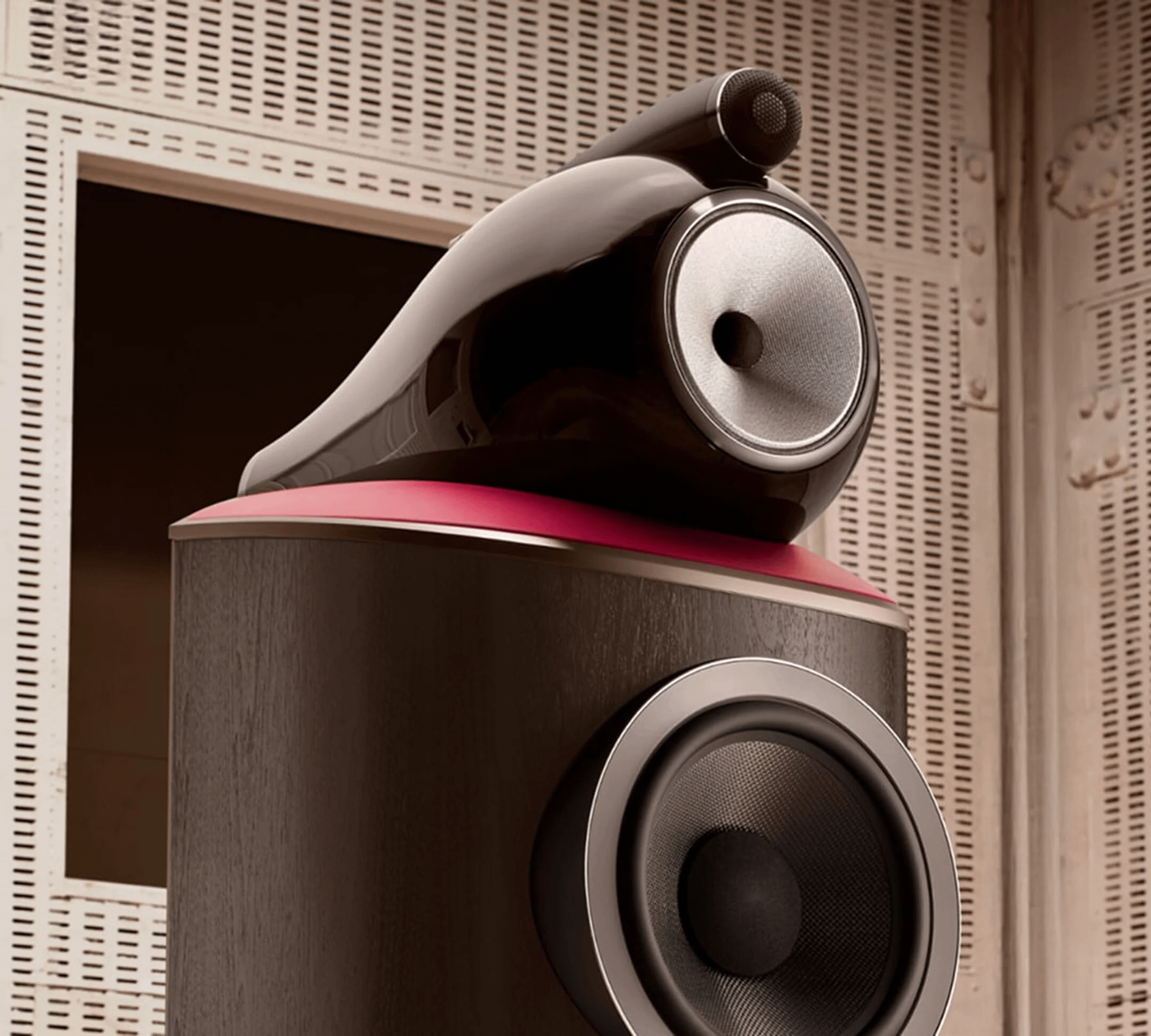
Diamond dome tweeter in a Solid Body Tweeter-on-Top housing – the tweeter sits in a rigid, decoupled aluminum bullet on top of the cabinet, which helps control resonances and improve imaging.
Continuum cone midrange in a separate Turbine Head (on 801/802/803 towers), decoupled from the bass cabinet to keep the critical midrange clean.
Matrix bracing inside the cabinet to stiffen the box and reduce vibration.
Aerofoil bass drivers with shaped cones for controlled, deep low-end.
Here’s how the main models break down:
801 D4 – The full-fat reference
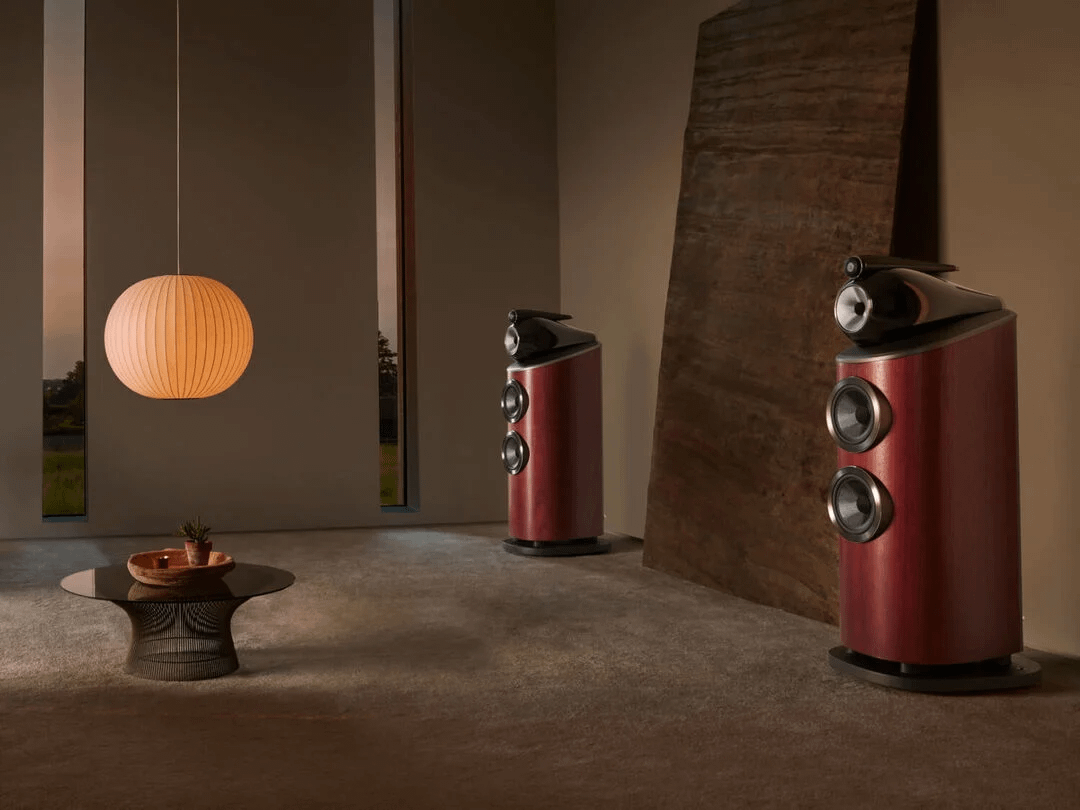
At $46,000 / pair, the 801 D4 is big, heavy, and built for serious rooms. Dual large Aerofoil bass drivers, Turbine Head midrange, and that diamond tweeter give you a full-range, full-scale sound that can easily anchor a large dedicated listening room or cinema. Think substantial amps, at least a few meters listening distance, and proper placement.
802 D4 – Slightly slimmer, still reference-level
The 802 D4 gives you most of the 801’s tech in a slightly smaller cabinet and at a lower price ($34,000 / pair). You still get the Turbine Head, diamond tweeter, and deep bass, but it’s a bit easier to fit into a living room or more modest dedicated space.
803 D4 – High-end tower for “normal” rooms
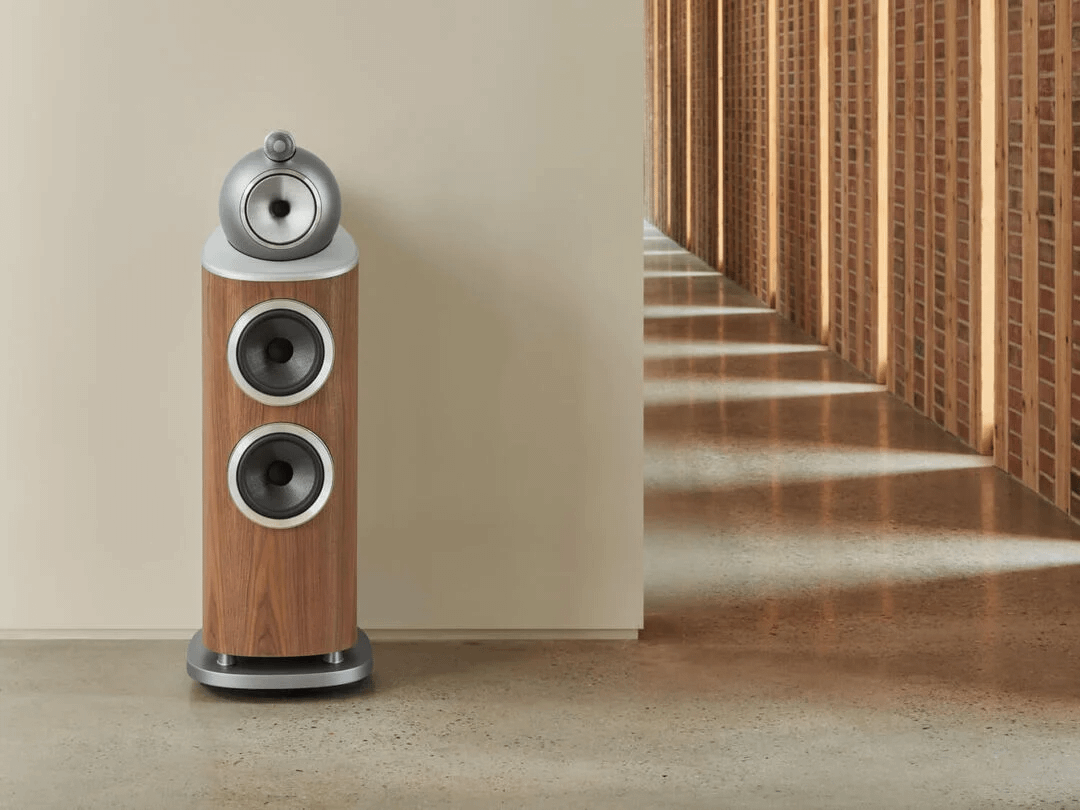
Drop down to the 803 D4 ($27,000 / pair) and you still get Diamond, Continuum, Turbine Head, and Aerofoil drivers, but in a narrower, shorter cabinet. This is a sweet spot if you want real 800-series performance without a massive footprint.
804 D4 – Slimline 800
The 804 D4 ($16,000 / pair) is the most living-room-friendly 800-series tower. It’s slimmer, keeps the diamond tweeter and Continuum driver, but trades the separate Turbine Head for an integrated cabinet design. You still get that clean, precise B&W top end and a full-range tower, just in a more compact, decor-friendly shape.
805 D4 – Compact reference stand-mount
The 805 D4 ($10,000 / pair) is the smallest 800-series model, but still uses the same diamond tweeter in a Tweeter-on-Top housing and a Continuum mid/bass driver.
Ideal if:
You have a smaller, high-quality room and don’t need huge bass.
You’re happy to add one or two good subwoofers for full-range performance.
You want the 800-series top end without the physical size of a tower.
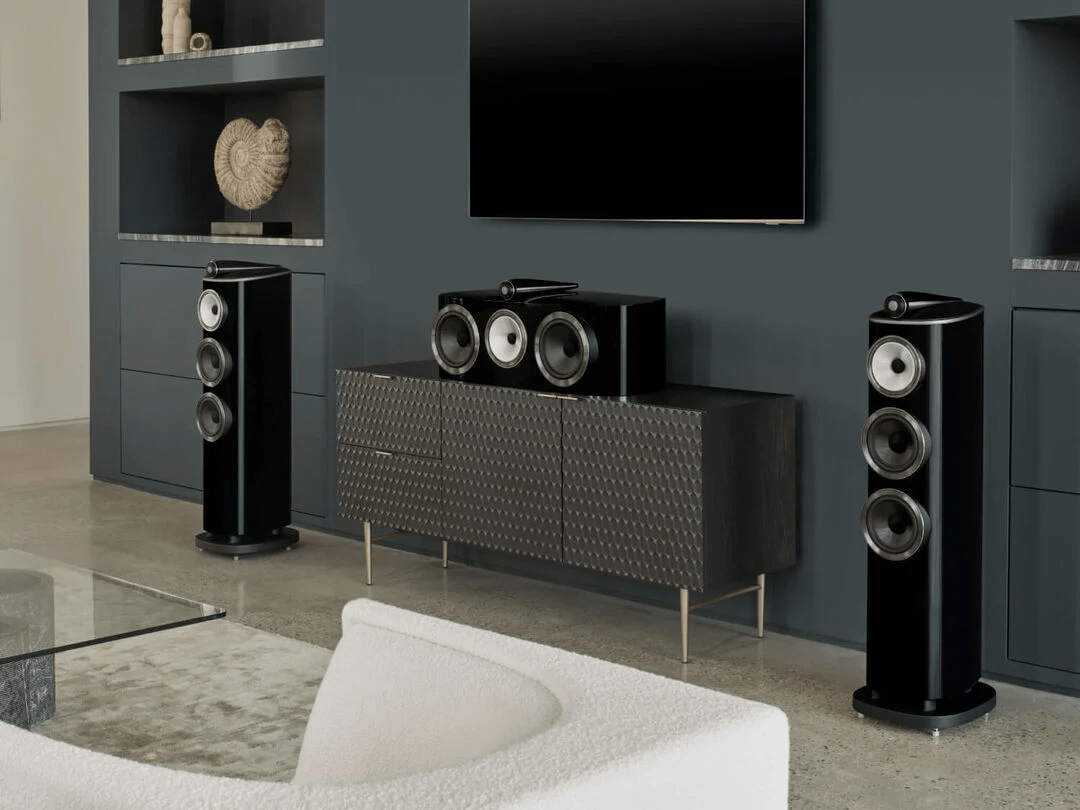
HTM81 D4 & HTM82 D4 – Matching centers
For home theater built around the 800 Series Diamond:
HTM81 D4 ($10,500) – The “reference” center, best matched with 801 D4 or 802 D4 fronts.
HTM82 D4 ($8,250) – Slightly more compact, ideal with 803/804/805 fronts.
They use the same diamond tweeters and Continuum midrange tech so panning and dialogue sound consistent across the front stage.
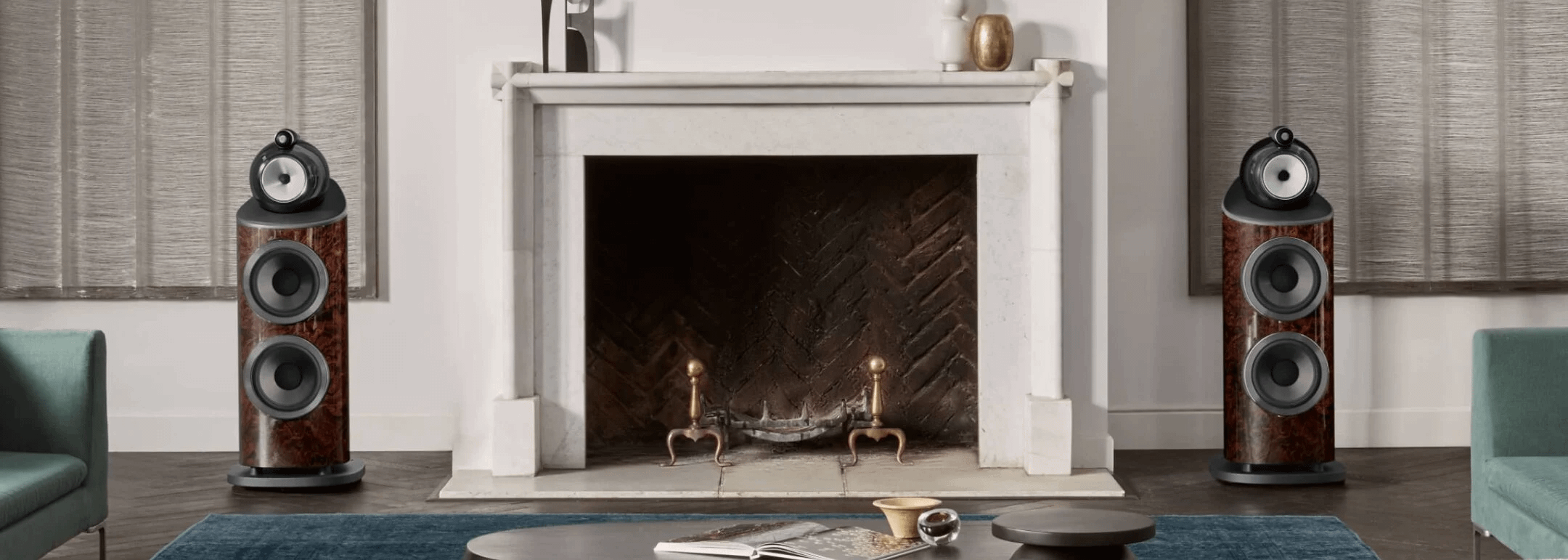
The 801 Abbey Road Limited Edition is basically the ultimate fan service for people who love both high-end audio and music history.
A few key points:
It’s a limited run (around 140 pairs worldwide) with unique finishing, including special veneers and detailing inspired by Abbey Road’s control rooms.
It’s based on the 801 D4 platform with the same core driver layout: diamond tweeter, Continuum midrange, and large Aerofoil bass units.
The model celebrates a 45-year relationship between Bowers & Wilkins and Abbey Road Studios, where multiple generations of 800 speakers have served as main monitors.
You’re paying more for exclusivity, finish, and the story than for a radically different sound compared with the standard 801 D4/Signature. This is for:
Hardcore collectors
People who love the Abbey Road connection
Very high-end systems where “limited edition” is part of the appeal
700 Series S3: Trickled-Down Tech for Real-World Rooms
The 700 Series S3 is where a lot of people land when they want serious, long-term high-end speakers but don’t have 800-Series money or a room that can handle something that large.
Shared technology in 700 S3
Across the 700 S3 range, you’ll see:
Carbon Dome tweeters, designed to push breakup frequencies higher than typical aluminum domes, for cleaner treble.
Continuum cone midrange / mid-bass drivers, trickled down from the 800 Series.
On the larger models, B&W’s Tweeter-on-Top design, which improves imaging and reduces cabinet reflections.
Aerofoil Profile bass drivers and Flowport for controlled, extended low-end.
702 S3 – Flagship 700 tower
The 702 S3 ($7,900 / pair) is the top of the standard 700 line:
3-way layout with Tweeter-on-Top, dedicated midrange, and triple bass drivers.
Ideal for medium-to-large rooms and for listeners who want big scale but don’t need 800-series bling (or budget).
For many buyers, this is the “sweet spot” tower for a serious system that might eventually grow into full home theater.
703 S3 & 704 S3 – Slimmer towers
703 S3 ($6,700 / pair) now also gets the Tweeter-on-Top and Continuum midrange, with twin Aerofoil bass drivers. It’s a little slimmer than the 702 but still very capable.
704 S3 ($4,500 / pair) is the most compact tower in the 700 line, still using a 3-way design, but much easier to fit into smaller rooms.
These are great if you want floor-standing speakers but don’t need 702-level bass output.
705 S3 ($3,800 / pair) is the premium stand-mount, with a Tweeter-on-Top and a Continuum mid-bass driver. It’s basically a baby 702 S3 for smaller rooms or desktop/nearfield setups.
706 S3 ($2,500 / pair) and 707 S3 ($2,000 / pair) are more compact stand-mount / bookshelf models with front-firing drivers and integrated tweeters, ideal for smaller rooms, rear channels, or setups where space and placement flexibility matter.
HTM71 S3 & HTM72 S3 – Matching centers
HTM71 S3 ($2,800) is the larger center, designed to complement 702/703 towers. It uses a Carbon Dome tweeter and Continuum mid/bass drivers.
HTM72 S3 ($1,650) is more compact and matches nicely with 704/706/707 systems.
If you’re building a high-quality home theater with a 700-series front stage, these centers keep the tonal balance consistent so dialogue and effects blend smoothly.
The 700 Series Signature models take the best 700 S3 speakers and give them a round of upgrades:
Refined crossovers with improved capacitors and resistors for slightly better transparency and control.
Additional cabinet tuning and cosmetic changes, most notably the Midnight Blue Metallic and Datuk Gloss finishes that echo the 800 Series Signature look.
In practice, think of the 702 and 705 S3 Signature models as “mini 800s”:
You still get carbon tweeters, Continuum drivers, and Tweeter-on-Top.
You get a little extra refinement, both visually and sonically, without jumping to diamond tweeters or 800-series prices.
These are ideal if you:
Want something truly high-end but your room or budget can’t justify 800 Series Diamond.
Care about aesthetics and want a finish that feels more bespoke.
Are building a reference-level 5.1/7.1 setup but want the speakers to stay in the mid-five-figure range instead of six.
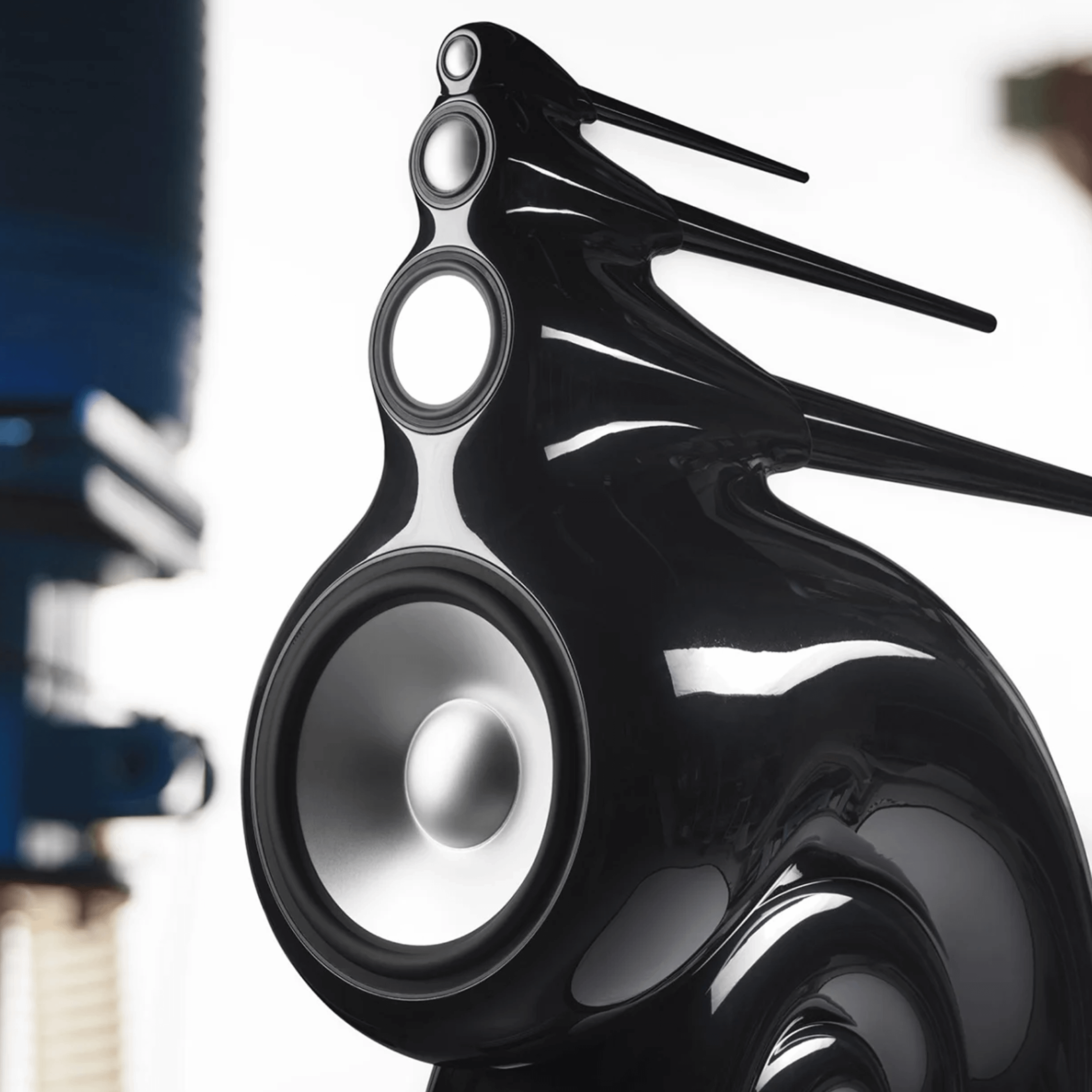
The Nautilus is one of those speakers that even non-audiophiles recognize. It looks like a seashell from a sci-fi movie, and it’s been around—more or less unchanged—since the 1990s.
What makes Nautilus special?
It’s a four-way active speaker. Each driver (tweeter, midrange, and two larger drivers) gets its own amplifier channel, controlled by an external active crossover box.
Behind each driver is a long, tapered tube filled with damping material. This tube absorbs the rear energy from the driver, instead of letting it bounce around inside a box, which helps kill internal resonances and reflections.
The cabinets are labor-intensive sculptures, still largely handcrafted and finished to order.
In other words, when you buy Nautilus, you’re buying:
A statement piece that also happens to be an extremely capable high-end speaker.
A system that requires multiple high-quality power amps and thoughtful setup.
Something you don’t casually tuck next to an IKEA TV bench.
Nautilus isn’t the most practical choice for a typical living room. It’s more like owning an exotic supercar—not because you “need” it, but because you want that experience.
How to Choose the Right B&W Range (and Specific Models)
Now that we’ve mapped out the landscape, here’s a more practical way to think about your options.
1. What’s your primary use?
Mostly movies & TV, with some music:
Look for matching fronts and a center channel.
Realistically, you’ll want a sub or two as well, even with big towers.
Nautilus, if you want the full science-project-meets-art-piece experience and can support active amplification.
2. How big is your room, really?
Small room (up to ~15 m² / 160 ft²) Stand-mounts like 606/607 S3, 705 S3, 705 S3 Signature, or 805 D4 are more than enough. Towers can overload the space with bass.
Medium room (~15–30 m² / 160–320 ft²) This is where 603 S3, 704 S3, 703 S3, and 702 S3 shine. 804 D4 or 803 D4 can also work in well-treated rooms.
Large / open-plan rooms (30 m²+ / 320 ft²+) 702 S3, 702 S3 Signature, 803 D4, 802 D4, or 801 D4 (Signature / Abbey Road if you’re going all-in). Nautilus sits beyond room-size rules and more in “do you have the budget, amps, and space to show them off?” territory.
3. Budget and upgrade path
If you’re thinking long-term, you can build in stages:
Stage 1 – 600 Series S3 Start with 603 S3 + HTM6 S3 + a decent sub. Later you can reuse the 600s as surrounds and move up to 700 or 800 for your main L/R.
Stage 2 – 700 Series (S3 or Signature) Great long-term middle ground. 702/703 S3 towers and 705 S3 stand-mounts are “endpoint” speakers for a lot of people. Signature models make sense if you know you won’t be jumping to 800s but want something extra-special.
Stage 3 – 800 Series Diamond / Signature / Abbey Road This is “plan the rest of the system around the speakers” territory. You’ll want high-quality amplification, good sources, and some attention paid to room acoustics.
Wildcard – Nautilus Realistically, you don’t “upgrade” into Nautilus. You decide to build a whole system around it.
Final Thoughts: Matching the Speaker to the Listener
All of the Bowers & Wilkins speakers we’ve covered share a common goal: detailed, neutral-leaning sound with strong imaging and a clear midrange. As you move up the range:
Tweeters go from Titanium (600) to Carbon (700) to Diamond (800 & Signature).
Cabinets get more complex and inert.
Crossovers improve, and the speakers become more revealing of what’s upstream.
The big question isn’t “Which model is objectively the best?”—that’s easy (Nautilus and 800 Series Signature live at the very top). The real question is:
Which speaker makes sense for your room, your system, and your priorities, without forcing the rest of your life to orbit around it?
If you’re stepping into high-end for the first time, the 600 Series S3 is a fantastic starting point.
If you’re chasing studio-grade performance and have the space and budget to back it up, 800 Series Diamond (and the 800 Signatures) are where you’ll probably end up.
And if you want your speakers to be art, science, and conversation piece all at once, Nautilus is still in a league of its own.
Whichever path you choose, the upside of B&W’s lineup is that the “house sound” stays fairly consistent. You can start with something like a 600 Series system and, over time, climb your way up to 700, Signature, or 800 without feeling like you’re switching brands entirely—just turning up the resolution, scale, and refinement as you go.