

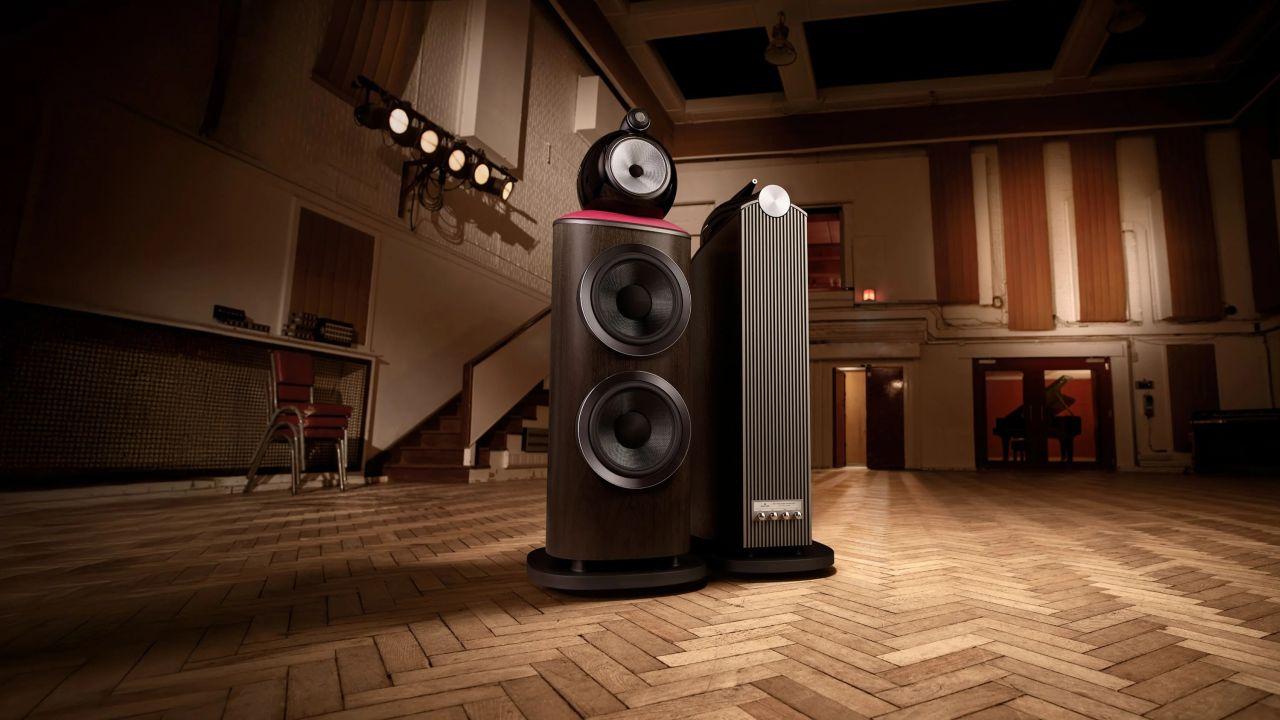
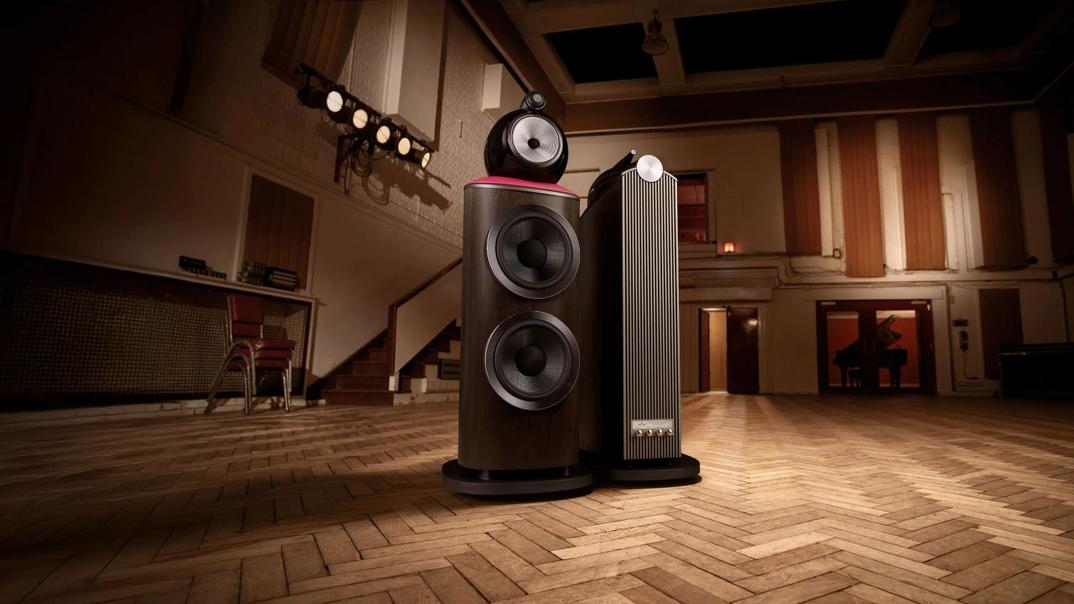
Imagine listening to your favorite song exactly the way it sounded in the studio where it was recorded. That’s the promise Bowers & Wilkins (B&W) loudspeakers strive to deliver. In fact, the same B&W speakers that have been used as reference monitors in legendary studios like Abbey Road are influencing the sound in living rooms around the world.
B&W’s flagship 800 Series Diamond loudspeakers have set the standard for critical listening – trusted by top engineers to reveal music “uncorrupted and faithful in every nuance to the original,” a design philosophy the company calls True Sound.
Now, through trickle-down innovation, the acoustic engineering perfected in those icons of the studio cascades into B&W’s more attainable 700 and 600 Series speakers. The result is a lineup that brings reference-level performance to a wider audience, letting everyday listeners experience music “the way the artist always intended.”
Walk into Abbey Road Studios’ control room and you’ll find Bowers & Wilkins speakers at the heart of the action. This isn’t a recent fad – it’s a partnership that dates back 45 years. In 1980, B&W’s founder John Bowers brought his then-new model 801 to Abbey Road for a demo, proclaiming it “a new generation of loudspeakers designed for both the professional and the exceptionally critical listener.” The Abbey Road engineers immediately recognized its value and adopted the B&W 801 as their monitor of choice.
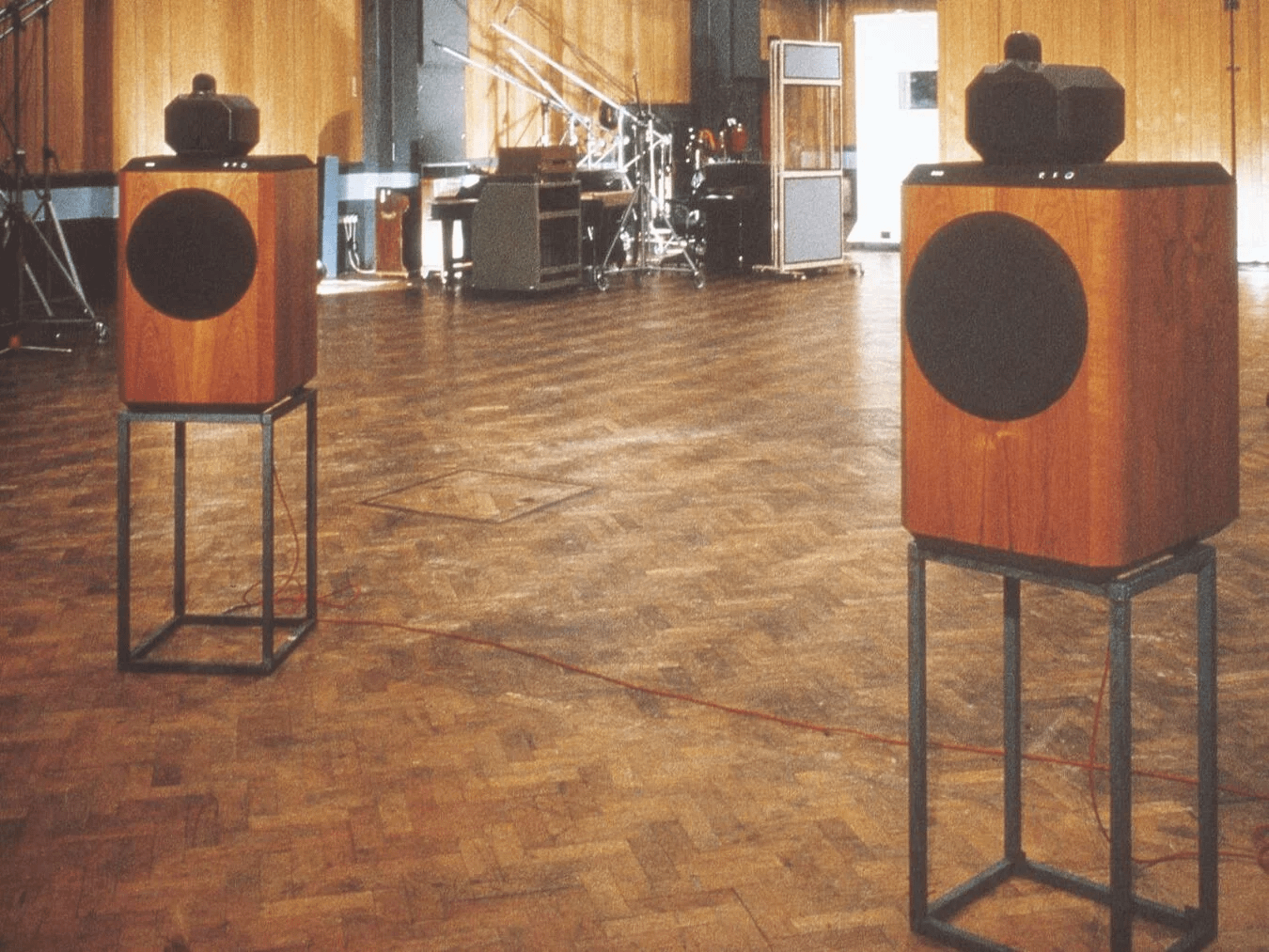
Abbey Road became the first studio in the world to use B&W 800 Series speakers as reference monitors, cementing a relationship that has spanned six generations of the 800 Series since.
Why do studios like Abbey Road (and others such as the BBC and Skywalker Ranch) rely on B&W? The answer lies in B&W’s ability to deliver truthful, highly revealing sound. The 800 Series Diamond monitors are engineered to be acoustically transparent, acting like a flawless pane of glass for sound.
When music is mixed or mastered on these speakers, engineers hear every detail exactly as it is – so when you play back that music on a B&W speaker at home, you’re hearing it as the artist and producer intended. This “studio legacy” means B&W’s top-of-the-line speakers effectively define what “reference sound” is in professional audio. From the Beatles to modern pop and film scores, countless recordings have been crafted with B&W 800 Series speakers guiding the way.
Importantly, B&W has made this same level of accuracy available to home listeners. The 800 Series Diamond models (such as the current 801 D4 flagship) are available for audiophiles who demand studio-quality sound in their listening rooms. These are the very speakers used in Abbey Road’s Studio One, offered in domestic guise – even including a limited Abbey Road Edition of the 801 D4 to celebrate the storied partnership.
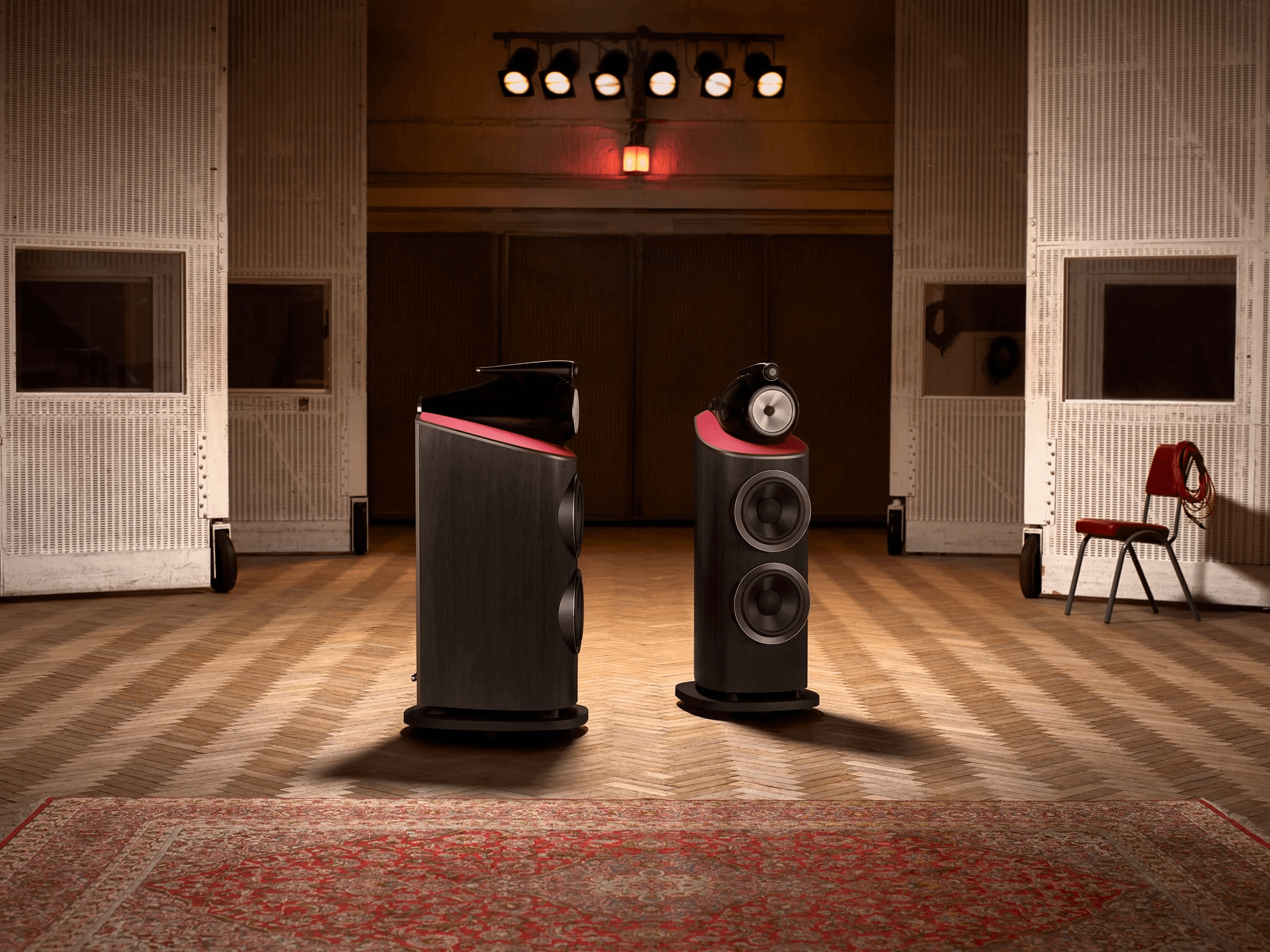
But even if the $70,000/pair price tag of an 801 D4 Abbey Road Edition is out of reach, fear not: B&W’s genius is how it bridges the gap between studio and home. The company ensures that the core engineering innovations of the 800 Series “cascade” down to its more accessible lines. In other words, B&W’s studio-grade DNA is shared with the speakers that everyday music lovers can enjoy in a living room or home theater.
One of Bowers & Wilkins’ greatest strengths is its trickle-down approach to technology. The company pours massive resources into research & development for its flagship models (indeed, B&W invests in R&D more than perhaps any other speaker maker, with a 50+ engineer team and advanced facilities in Steyning, England).
When they create a breakthrough for a $30,000 reference speaker, that innovation doesn’t stay confined to the cost-no-object model – over time, it finds its way into more affordable speakers. This means B&W owners at all price points benefit from the company’s cutting-edge engineering.
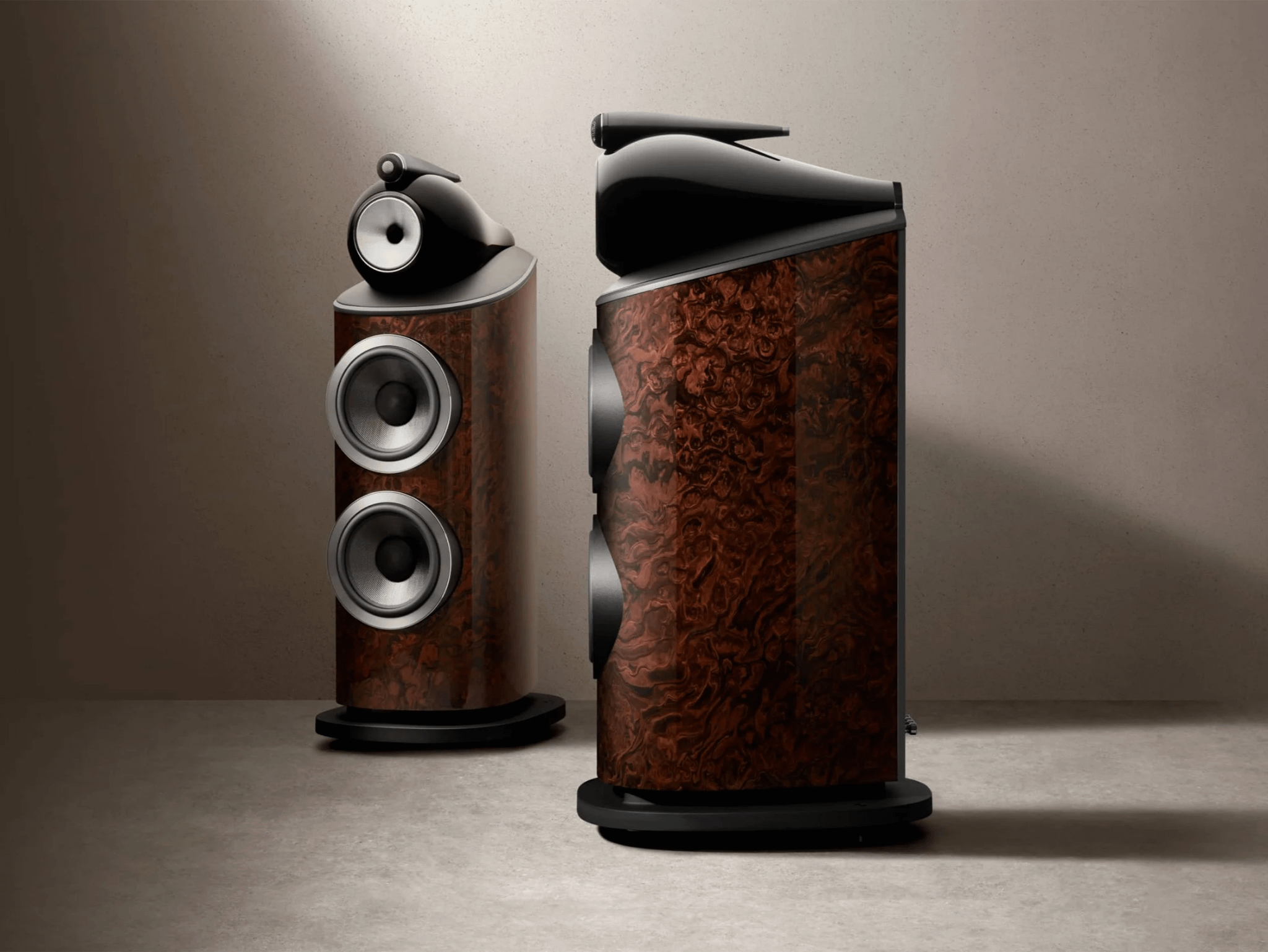
Let’s look at some of the key innovations and how they flow from the 800 Series into the 700 and 600 Series:
B&W’s Continuum cone is a prime example of trickle-down tech. Debuting in the 800 Series Diamond, Continuum replaced B&W’s famous yellow Kevlar cones after an eight-year development effort. This silver-grey woven composite material delivers astonishingly open and neutral midrange sound, thanks to controlled breakup behavior that minimizes coloration.
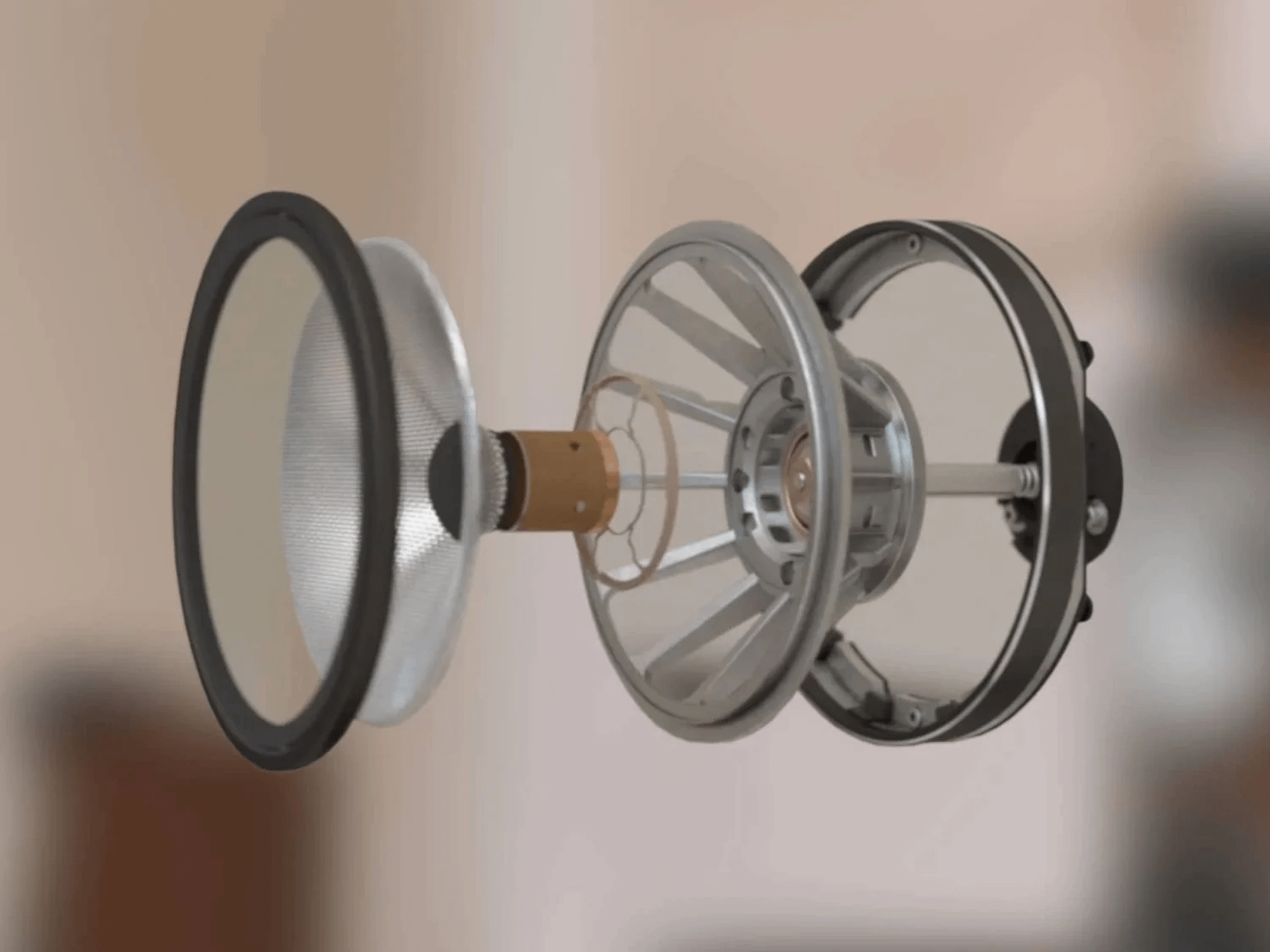
Originally reserved for the flagship models, Continuum is now found across every series – it’s used in every model in the 700 range and even in the latest 600 Series speakers, directly inherited from the 800 Series Diamond.
By using Continuum drivers in speakers at lower price tiers, B&W ensures that the clarity of vocals and instruments – the heart of the music – remains consistently high. Even the entry-level 600 Series, which introduced Continuum cones to replace older aramid fiber (Kevlar) drivers, delivers a more transparent midrange than one would ever expect at its price.
The Diamond dome tweeter is a hallmark of the 800 Series Diamond – a 1-inch dome made of actual synthetic diamond, which is incredibly stiff yet light. Its breakup frequency is around 70 kHz, far above the audible range, resulting in ultra-clear, distortion-free highs.
Of course, diamond is expensive, so for the 700 Series B&W developed the next best thing: the Carbon Dome tweeter. This design uses a dual-layer dome (an aluminum dome reinforced with a carbon coating and a carbon ring) to push breakup to 47 kHz, bridging the performance gap between conventional metal tweeters and the diamond unit. B&W calls it the best-performing “non-Diamond” tweeter they’ve ever made. In practice, the 700 Series’ carbon tweeter yields beautifully detailed, sweet treble that approaches flagship-level resolution.
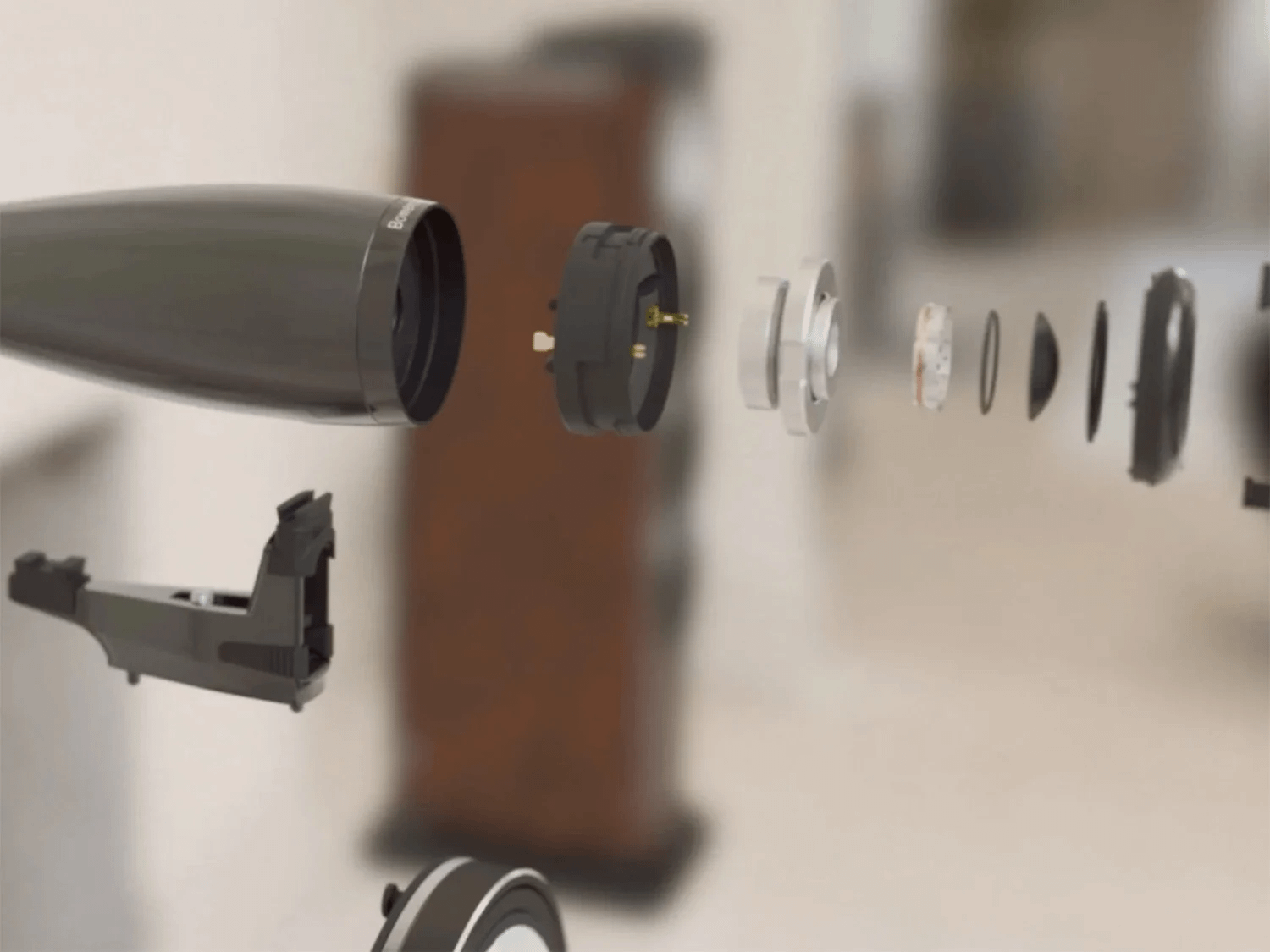
Meanwhile, the 600 Series has its own trickle-down tweeter tech: the latest models use a Decoupled Double Dome tweeter (now made of titanium in the Series 3 generation) with a tuned rear chamber tube, a design derived from earlier 800/700 series work. This double-dome tweeter extends frequency response to around 38 kHz – again well beyond human hearing – ensuring crisp and smooth high frequencies without harshness.
No matter which series you choose, high-frequency performance carries the B&W pedigree, so you’ll hear cymbals, strings, and vocals with remarkable clarity and realism.
In addition to what the tweeter diaphragm is made of, where the tweeter is placed is another trick B&W pioneered. Decades ago, B&W introduced the idea of mounting the tweeter in a separate enclosure on top of the speaker cabinet – the famous Tweeter-on-Top design seen in the 800 Series Nautilus and Diamond models.

This positioning minimizes diffraction (the speaker cabinet interfering with the tweeter’s sound) and yields pinpoint imaging. That once-exclusive design has now trickled down to the 700 Series. Several 700 Series speakers – from the 702 S3 floorstander to the 705 S3 stand-mount – feature an all-aluminum Tweeter-on-Top module, derived directly from the 800 Series’ approach.
B&W even lengthened and re-engineered the tweeter body for the 700 Series, improving its decoupling and reducing distortion for an even cleaner treble. The models in the 700 line that don’t have an external tweeter still benefit from the research: they use the same vented voice coil and improved magnets, plus an internal decoupling mechanism, to achieve similarly open high-end response.
In short, the iconic look of a B&W speaker with a “pod” on top isn’t just for the flagship anymore – and even when it’s not visible, the underlying tech is hard at work in the affordable models.
B&W’s obsession with midrange purity goes beyond the cone material. In the 800 Series, the midrange driver is often in its own Turbine head or isolated enclosure, physically decoupled from the bass cabinet to avoid vibrations muddying the critical mid frequencies.
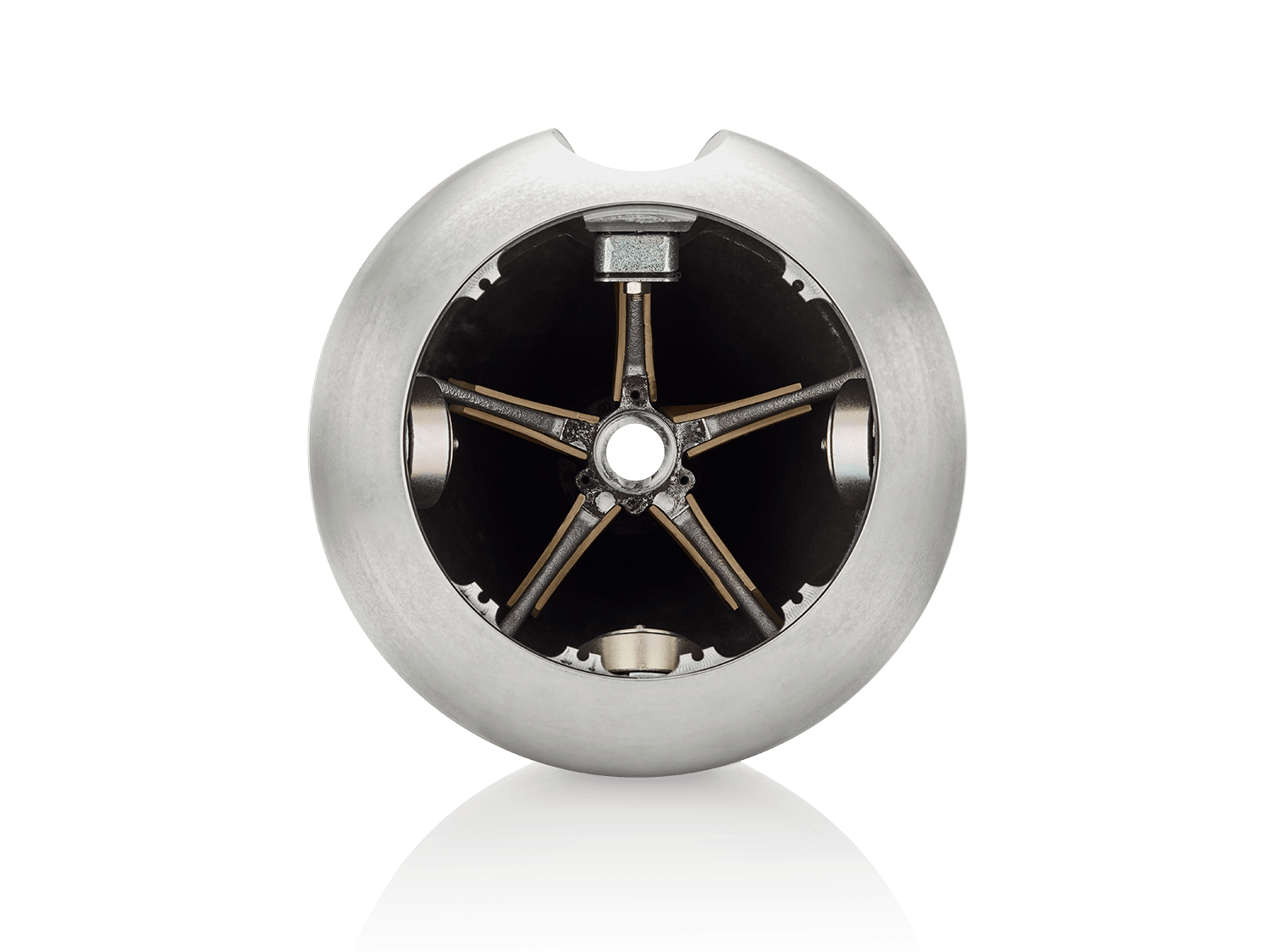
The new 800 D4 models introduced a revolutionary Biomimetic Suspension for the midrange: replacing the traditional fabric spider (the springy ring that centers the driver) with a minimalist, web-like support that eliminates the sound radiation a typical spider can produce. This innovation took years of development and first appeared in the cost-no-object 800 D4. Now, with the latest 700 Series (S3), the three-way models have inherited this Biomimetic Suspension system in their midrange drivers.
Combined with techniques like midrange decoupling (the 700’s midrange is mounted on isolated “pods” in a curved baffle) and B&W’s Fixed Suspension Transducer (FST) surround-less cone edge, the trickle-down suspension tech yields “astonishing midrange transparency” in the 700 Series.
Even the smaller two-way 700 and 600 models see benefits: their mid/bass drivers were upgraded with improved motor systems and chassis tweaks derived from the upper ranges to ensure voices and instruments remain clean and free of distortion.
Reproducing deep bass with power and accuracy has been another area of innovation. B&W’s 800 Series uses Aerofoil cone bass drivers – light, stiff “sandwich” cones with a variable thickness profile (thicker in the middle, thinner at edges) that resembles an airplane wing cross-section.
This design, developed using aerospace materials, gives superior rigidity where needed to prevent bass distortion. In the 700 Series, B&W implemented next-generation Aerofoil bass cones (in a slightly simplified form using paper/carbon fibers) to deliver similarly tight, clean bass response. The new 700 Series woofers use this Aerofoil profile to reduce cone breakup and distortion on hard-hitting low frequencies.
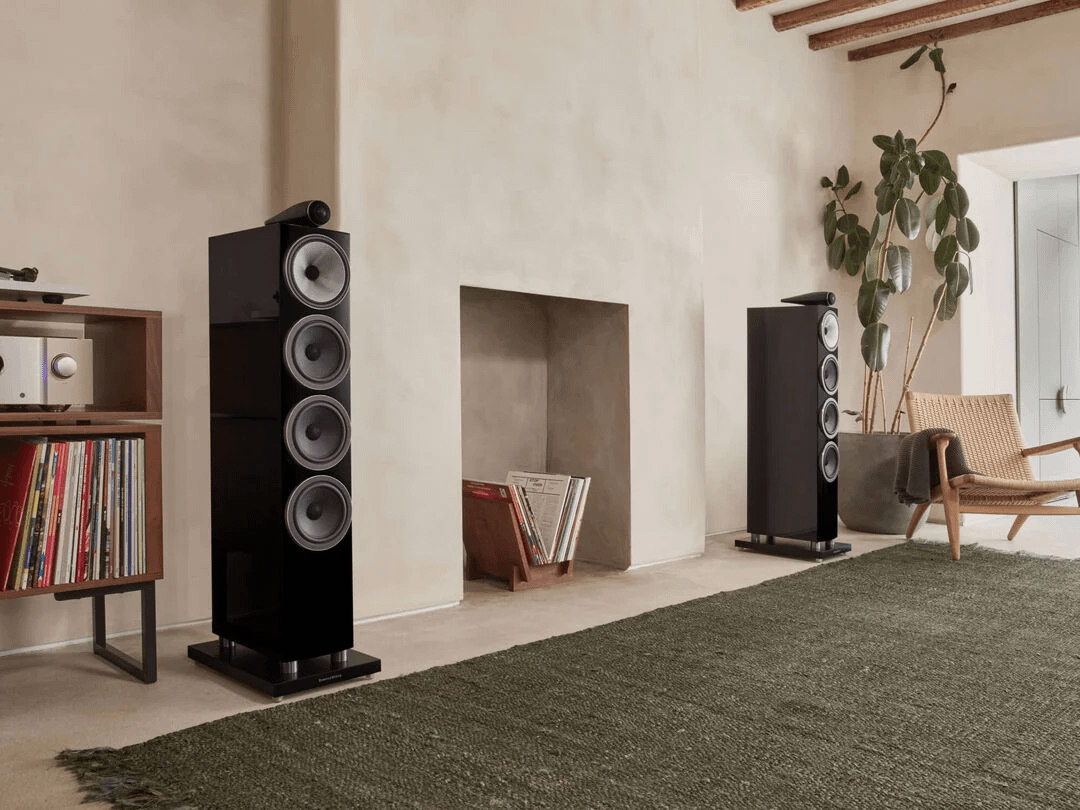
Meanwhile, the 600 Series woofers have been refined with trickle-down knowledge as well – they use a paper cone tuned for power with precision, benefiting from revised motor structures originally developed for the 700 Series, so the bass in a 600 Series speaker remains punchy yet controlled.
Additionally, B&W’s signature Flowport technology (the dimpled bass reflex port that reduces air turbulence) is present in all series, albeit with model-specific tweaks. In the 600 Series, for example, the port tuning and positioning were adjusted (borrowed from higher models’ learnings) to ensure clean bass whether the speaker is near a wall or in open space.
A less flashy but crucial part of B&W’s engineering that trickles down is the cabinet construction. B&W pioneered internal Matrix bracing – a grid of interlocking panels inside the speaker – back in the 1980s to make cabinets ultra-rigid. The 800 Series still uses an advanced Matrix (with aluminum bracing elements in the D4 generation) to virtually eliminate any box resonance.
The 700 Series cabinets, in turn, have been redesigned with lessons from the 800: the newest 700s feature a curving front baffle and strategic bracing to minimize vibrations and diffraction. Even the 600 Series benefits from this lineage – while it doesn’t have the expensive curved plywood enclosures of the 800, it does have very solid MDF cabinets with reinforced front baffles and internal bracing inspired by B&W’s high-end work.
In short, B&W’s decades of research into cabinet and acoustic design filter down so that no matter the model, you get a speaker built on sound scientific principles for optimal audio performance.
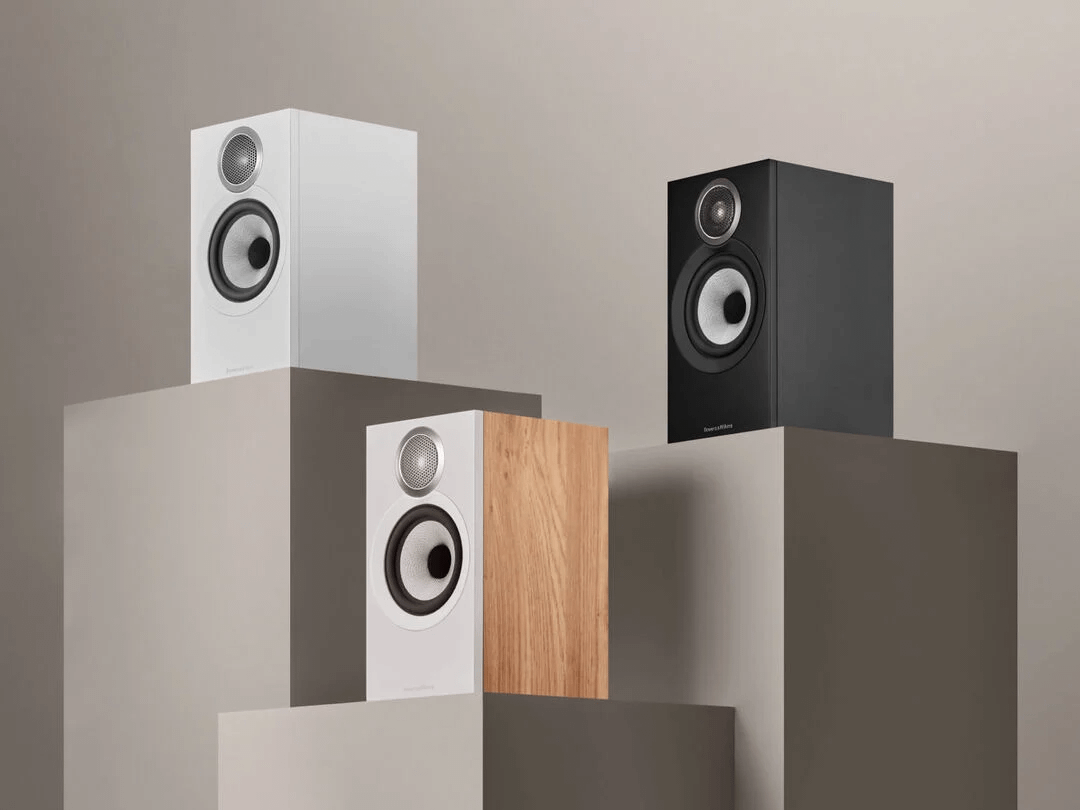
The sum of all this trickle-down innovation is that B&W’s entry and mid-level speakers aren’t using off-the-shelf generic parts – they’re built around the same concepts and materials as the world’s best speakers. It’s why an affordable B&W bookshelf can punch far above its weight in clarity and accuracy. As Andy Kerr, B&W’s Director of Product Marketing, puts it: by incorporating reference-quality 800 Series technologies into the 700 Series, they’ve “made studio-quality sound more accessible than ever.”
And that ethos applies equally to the 600 Series. B&W continuously proves that pushing the limits at the high end allows the entire product range to advance. For listeners, it means whichever Series fits your budget, you’re still getting a dose of that Abbey-Road-approved engineering in your home.
One remarkable aspect of Bowers & Wilkins’ loudspeaker lineup is how it delivers performance for every room and every listener. Whether you’re outfitting a professional studio, a dedicated home theater, or a cozy apartment living room, there’s a B&W model optimized for your space – and it will carry the same sonic DNA as the rest.
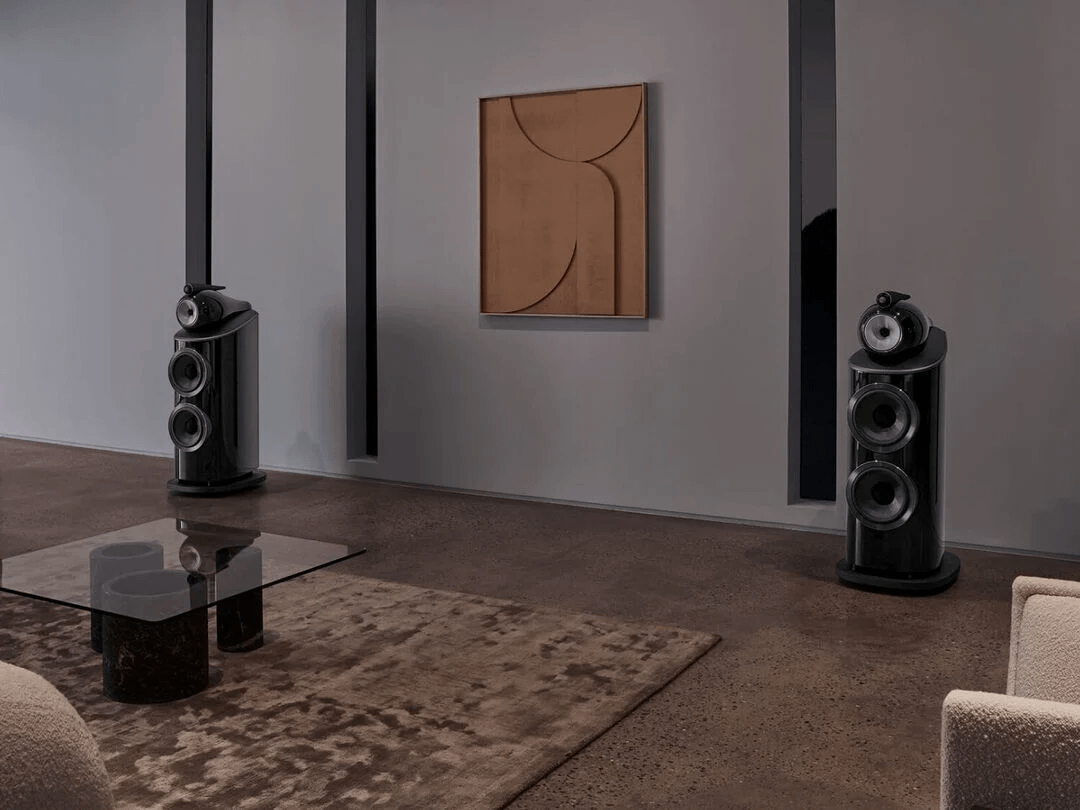
The 800 Series Diamond includes everything from the no-holds-barred 801 D4 tower (an imposing floorstander suitable for large rooms or studios) to the more compact 805 D4 stand-mount speaker (read our review) that brings flagship sound to smaller spaces. Likewise, the 700 Series offers three floorstanding towers and three stand-mount/bookshelf models, plus center speakers for surround setups.
Love the idea of those studio-grade 800s but need something a bit more living-room-friendly? A 704 S3 slim tower or 707 S3 bookshelf from the 700 Series might be the perfect audiophile solution – they’re easier to fit into typical home environments while still leveraging the tech that made the 800 Series world-famous.
For those just starting to explore high-performance sound, the 600 Series provides perhaps the most compelling argument that “small can still be beautiful.” The new 600 S3 range, for example, spans the 603 S3 floorstander for full-range sound in medium to large rooms, the 606 S3 and 607 S3 bookshelf speakers for tighter spaces, and even a HTM6 S3 center channel for building out a surround system. B&W intentionally designed the 600 Series to be as versatile as possible – “there’s a 600 Series loudspeaker for everyone,” whether you’re a vinyl-loving purist in a listening den or a streaming enthusiast setting up in a multipurpose family room.

You can mix and match models to suit your room size and listening habits, and yet the experience remains consistent in character. Because all these speakers share common technologies (tweeters, cones, crossovers tuned with similar philosophy), moving up or down the B&W line doesn’t drastically change the fundamental “voice” of the sound. A larger model will give you more bass and output for bigger rooms, but even the smallest B&W will present music with the same family traits: clarity, balance, and that engaging “live” quality B&W is known for.
Not only do the speakers scale to room sizes, but they also accommodate different usage – from stereo music to immersive home theater. B&W’s inclusion of dedicated center channel speakers in the 700 and 600 Series means you can build a seamless surround-sound system with matching timbre across all channels (so a movie soundtrack’s dialogue and effects sound cohesive).
If you’re a two-channel music listener, a pair of B&W towers or stand-mounts will paint a holographic stereo image in your room, much like they do in the studio. If you’re a cinephile or gamer, those same speakers can deliver explosive dynamics and precision imaging for a truly cinematic experience at home. The performance is reference-grade at every level – the difference is simply choosing the model that fits your room and budget. B&W has effectively brought their studio monitors to every room, from the largest auditorium to the smallest bedroom.
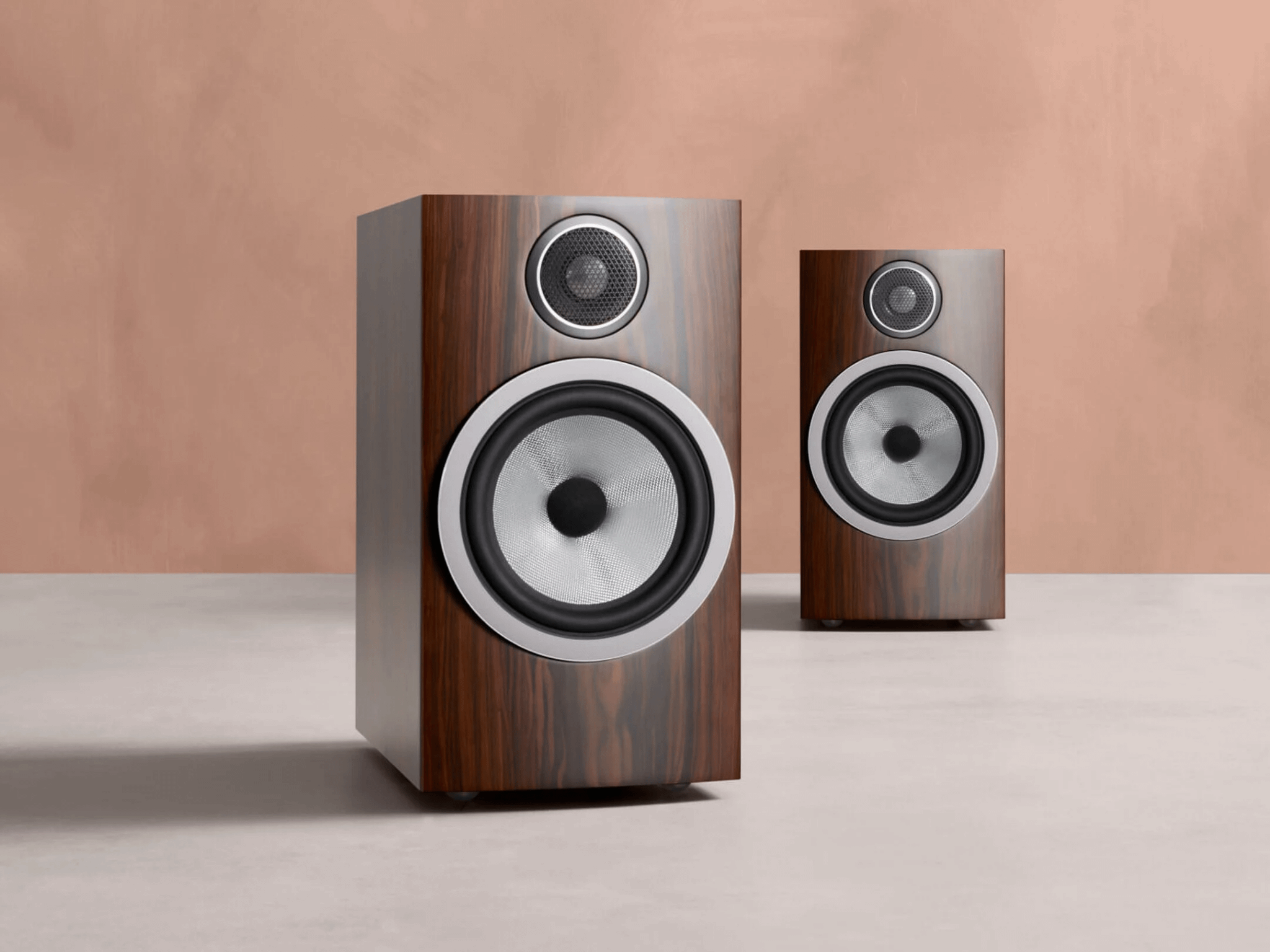
It’s also worth noting that B&W’s focus on “performance for every room” extends to practical details that help you integrate speakers into your living space. For instance, all current 600 Series models come with features like threaded inserts for secure stand-mounting and wall-mount options for the smaller speakers, making it easier to place them optimally without fuss.
Thoughtful design elements like the front-porting on some models or the flowport tuning ensure you can place speakers nearer to walls if needed without booming bass. B&W knows that a speaker only shines if it’s set up right for the room – so they’ve made sure even the more affordable lines are user-friendly in real homes (not just ideal listening rooms). This attention to real-world use cases reflects the company’s overarching mission: to get great sound to you wherever you listen.
While we’ve focused heavily on technology and performance, one should not overlook the fact that Bowers & Wilkins speakers are also beautifully crafted pieces of furniture and design. The marriage of craftsmanship and technology is central to the B&W ethos. These loudspeakers are built to be as pleasing to the eye as they are to the ear.
Take a glance at an 800 Series Diamond speaker and you’ll notice the flowing curves of its cabinet, the separate turbine head for the midrange, and the gleaming solid aluminum tweeter housing – it’s an industrial design icon in the audio world. These aesthetic choices aren’t just for show: the curves avoid sharp edges that cause diffraction, the separate enclosures eliminate vibrations, and the solid tweeter body provides a resonance-free structure for the delicate dome.
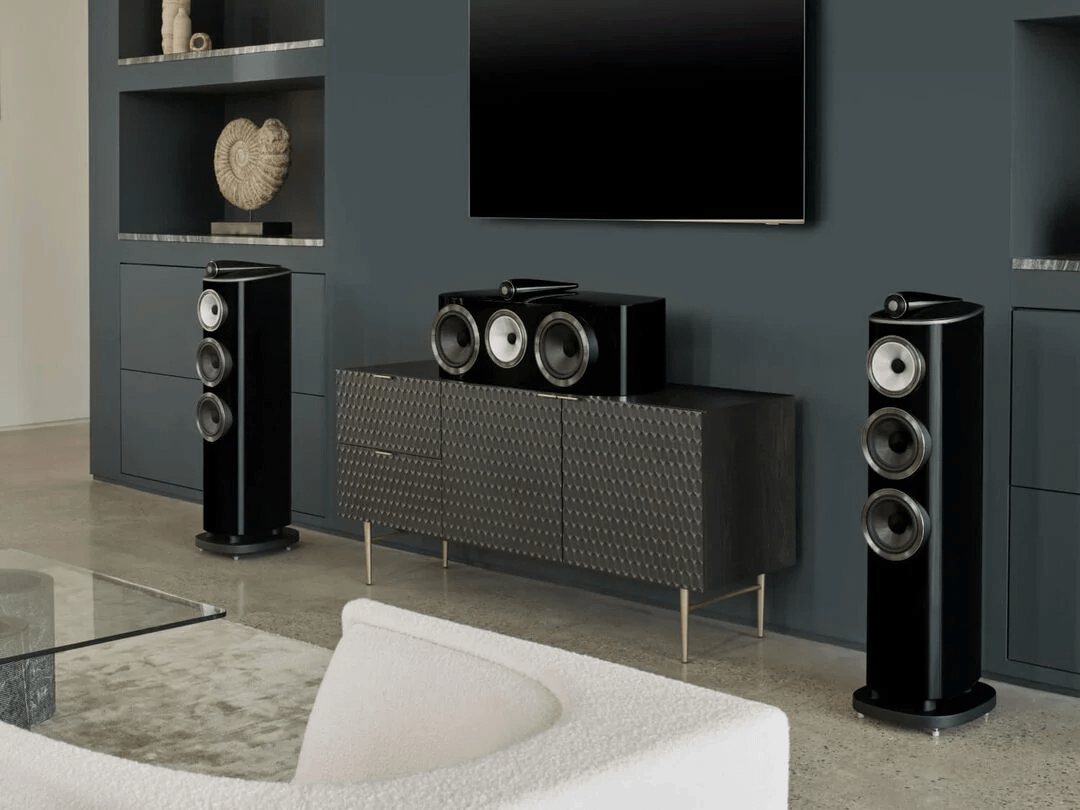
Form follows function, but the form is undeniably striking. In fact, crafting the 800 Series cabinets (with their complex curves and layers) is a labor-intensive process – B&W’s top woodworkers and engineers spend on the order of 100 hours to create a single finished 800 Series speaker cabinet with perfect curves and luxurious piano-gloss or wood veneer finish. It’s old-world craftsmanship applied to high-tech design.
That commitment to quality is present all the way down the lineup. The 700 Series, for example, inherited a new curved baffle design not only to improve sound but also to give the speakers a slimmer, more elegant look in the room. B&W offers finishes like high-gloss black, satin white, and rich wood veneers so that these speakers can complement modern décor or classic furniture.
The special Signature Editions of certain models push the aesthetic to another level: B&W recently released 800 Series Signature versions of the 801 and 805, each available in stunning unique finishes – an eye-catching Midnight Blue Metallic (with blue Connolly leather trim to match) or a California Burl Gloss wood veneer with black leather accents. They are practically functional art pieces, every bit as much about visual and tactile luxury as about sound.
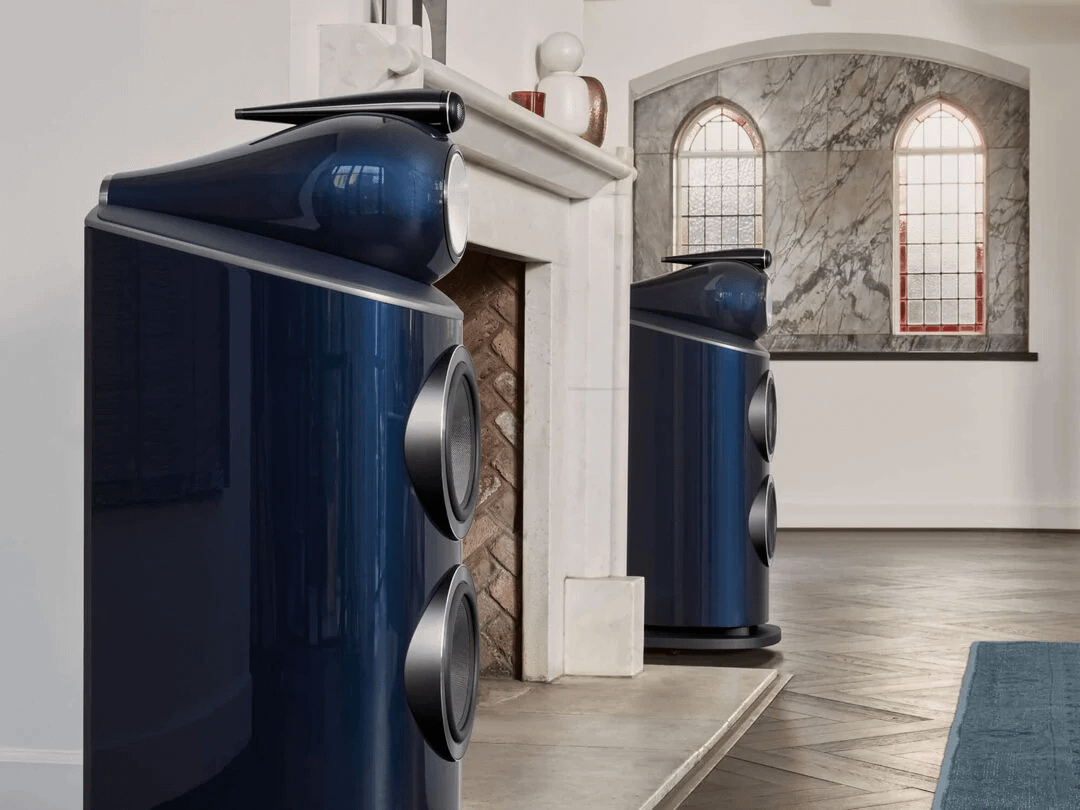
Even the more mainstream models like the 600 Series have gotten style updates – the latest generation features trim and details that give them a clean, modern appearance (plus two standard finish options, black or white, that fit easily into most homes).
Under the surface, B&W’s craftsmanship extends to the smallest details: things like the quality of components and internal assembly. For instance, B&W often uses high-grade capacitors in their crossovers (and doubles them up in critical circuits for better stability) – a technique they highlighted in the 800 Signature series to eke out even better sound. Mechanical parts like the tweeter grille are engineered not just for protection but for acoustic transparency; B&W went through over 25 iterations of a new tweeter mesh for the Signature line to maximize openness while keeping the dome safe.
The company’s decades of experience mean that even hidden elements, like the way a driver is bolted to the cabinet or how the port is flared, have been obsessively refined. This is where the heritage of 50+ years of speaker building shows – B&W has accumulated knowledge on what makes a speaker reliable and long-lasting, not just great-sounding.
When you purchase a B&W loudspeaker, you’re investing in that heritage. It’s likely to serve you faithfully for many years, both because it’s built solidly and because its design is somewhat timeless (sonically and aesthetically).
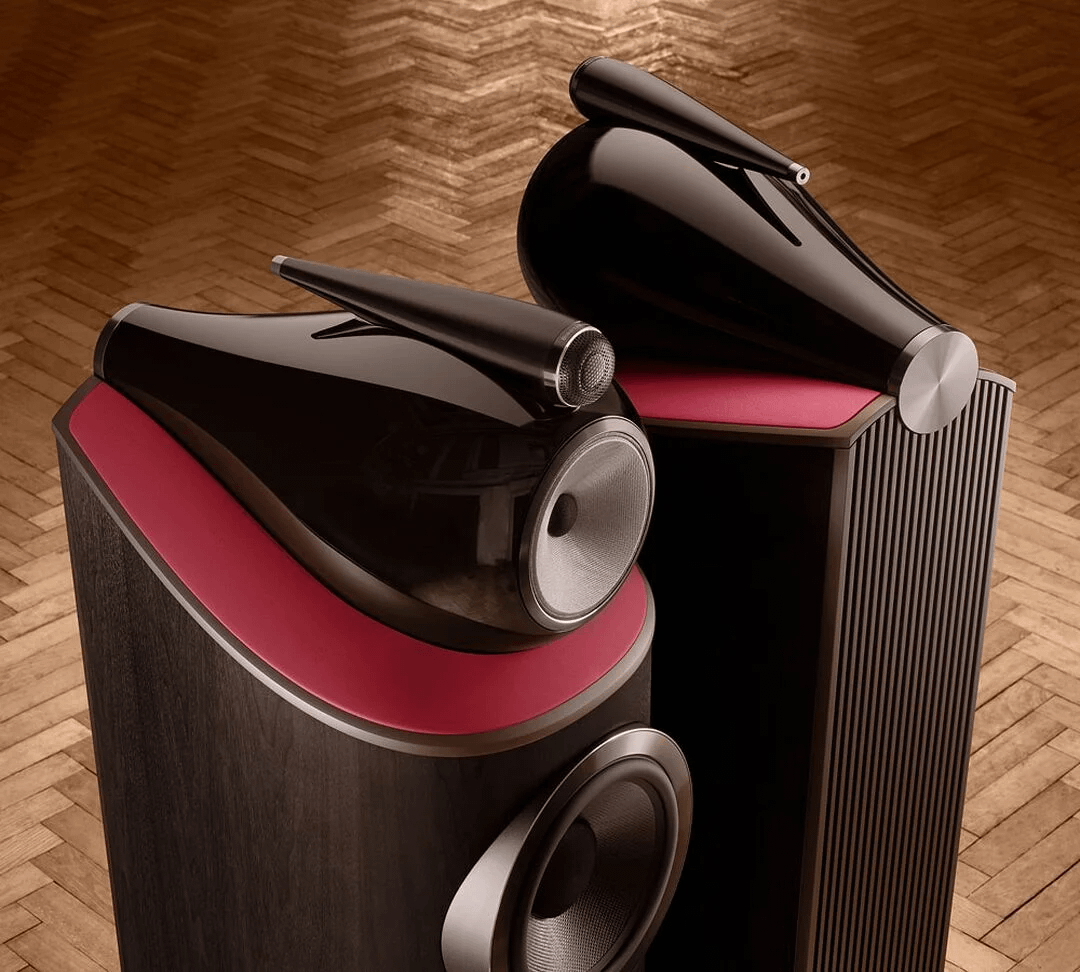
In essence, Bowers & Wilkins exemplifies the union of science and art in audio. The craftsmanship meets technology credo is why their speakers often end up in luxury living spaces and design magazines, and in world-class studios and hi-fi labs. They look as comfortable next to a grand piano or a designer sofa as they do next to mixing consoles and rack gear.
Owning a B&W speaker means you don’t have to compromise on style versus sound – you get the best of both. It’s a continuation of a philosophy John Bowers himself embraced from the beginning: create the best-sounding speaker possible, and make sure its form reflects the excellence of its function.
From Abbey Road to your living room – this isn’t just a catchy phrase, but an accurate description of B&W’s legacy and impact. Few loudspeaker manufacturers can claim the pedigree that Bowers & Wilkins has: their products have shaped the sound of music in the studio, and then that same sound has been delivered to music lovers at home. By perfecting technologies at the top and cascading them downward, B&W ensures a continuity of performance across their lineup that truly sets them apart.
A budget-conscious newcomer can start with a 600 Series setup and know they’re getting a taste of what makes the 800 Series beloved by professionals. An enthusiast can step up to the 700 Series and enjoy a huge portion of the flagship’s performance at a fraction of the cost. And at the summit, the 800 Series Diamond (and especially the special Signature and Abbey Road editions) continues to push the envelope of what’s possible in sound reproduction, securing B&W’s place as a benchmark for loudspeaker design worldwide.
In a world where technology moves fast, B&W’s approach also future-proofs their speakers. The innovations they pioneer today in the lab will likely be in your next speakers a few years down the road. It’s a continuous trickle-down that benefits consumers and keeps B&W at the cutting edge.
The company’s unwavering focus on True Sound – maintaining that clear window to the music – means that no matter which model you own, you’re part of this rich lineage. It’s not just marketing speak; when B&W says they deliver “the way the artist intended,” it’s backed up by the fact that those very artists and studios used B&W to hear their work in the first place.
Ultimately, the legacy of Bowers & Wilkins loudspeakers is a story of making the extraordinary accessible. It’s about taking the magic from one of the world’s most hallowed studios and distilling it into speakers that anyone can enjoy at home. From the studio legacy of the 800 Series Diamond, through the trickle-down innovation fueling the 700 and 600 Series, and with craftsmanship gracing each product, B&W has created an unbroken chain of excellence.
The next time you press play on a favorite track, if you’re listening through B&W speakers, take a moment to appreciate that connection – you’re hearing a bit of Abbey Road in your own living room, carried by the decades of passion and engineering that define Bowers & Wilkins’ heritage. That is the B&W legacy: truly timeless sound for every listener






Privacy Policy
Terms and Conditions - Affiliate Policy
Home Security
© Copyright 2008-2026.
11816 Inwood Rd #1211, Dallas, TX 75244