

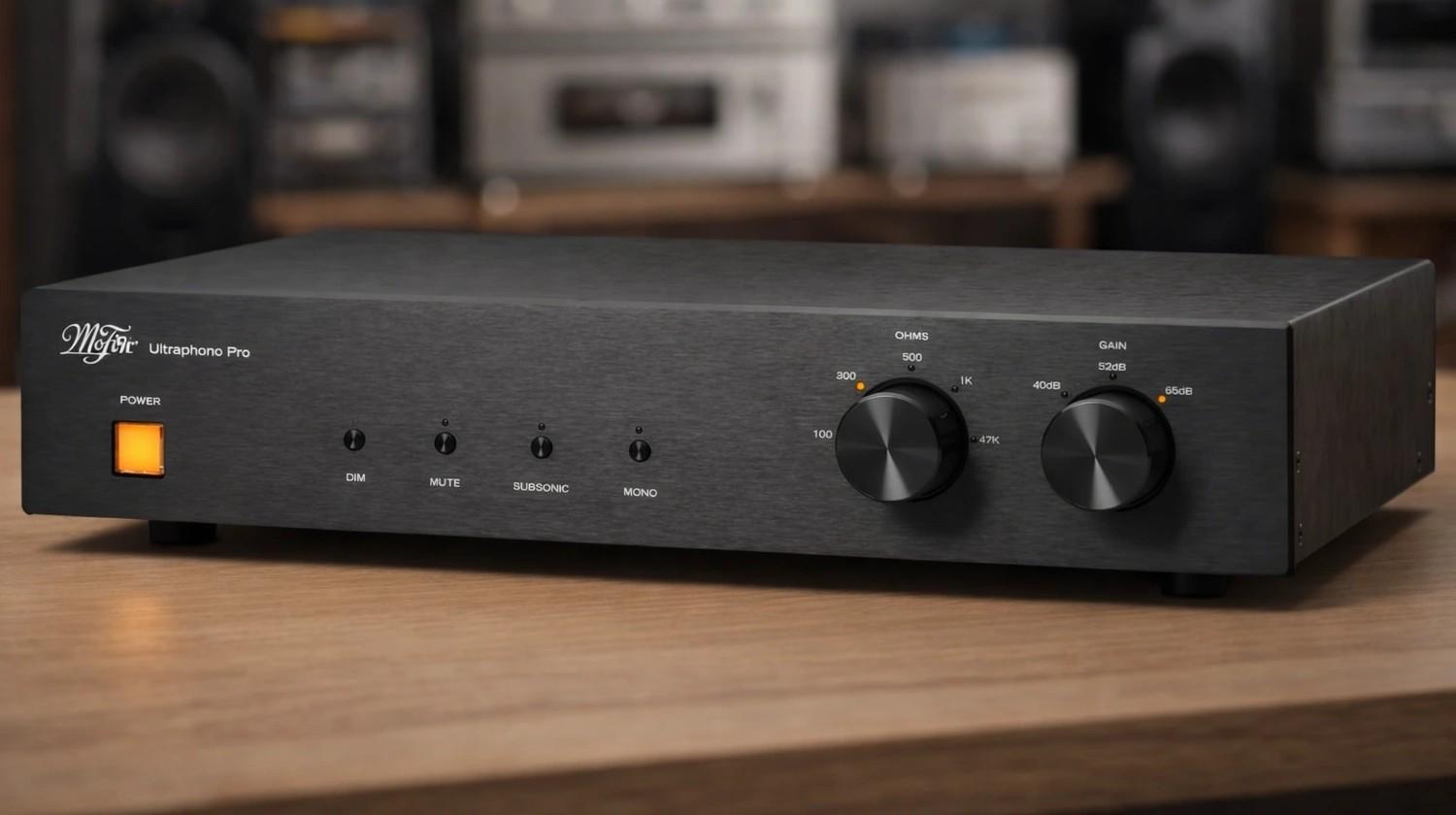
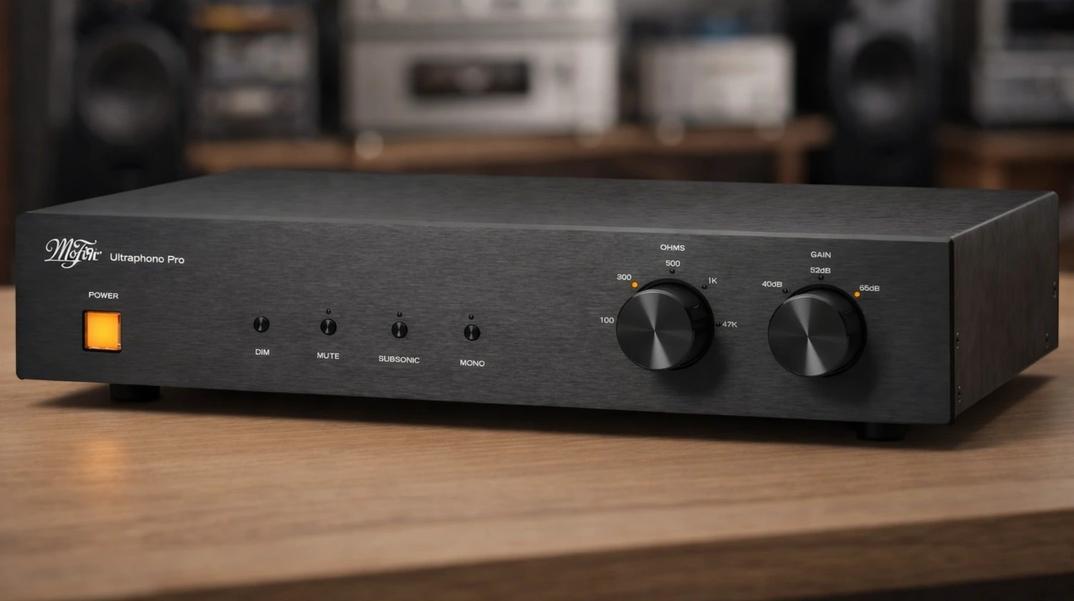
Vinyl fans who’ve been eyeing high-end phono preamps but don’t want to spend $5,000 now have a new option to consider: the MoFi Electronics UltraPhono Pro, priced at $2,495. While it borrows heavily from MoFi’s top-tier MasterPhono, the UltraPhono Pro trims things down without losing sight of what really matters: clean gain, low noise, and enough flexibility to work with a wide range of turntable setups.
Let’s take a closer look at what it does, how it fits into MoFi’s broader lineup, and what kind of listener might benefit from it.
If you’ve been around the vinyl scene for a while, you’ve likely heard of MoFi (Mobile Fidelity Sound Lab), the company behind some of the most highly regarded audiophile vinyl pressings out there. MoFi Electronics is the hardware side of that legacy, and the UltraPhono Pro is its latest phono preamp, following in the footsteps of the flagship MasterPhono.
But here’s the difference: while the MasterPhono is a no-compromise, $5,000 dual-chassis preamp designed to do it all, the UltraPhono Pro brings much of the same design philosophy to a single-box format at half the price. It doesn’t try to be everything. Instead, it focuses on delivering the features that most vinyl listeners actually use.
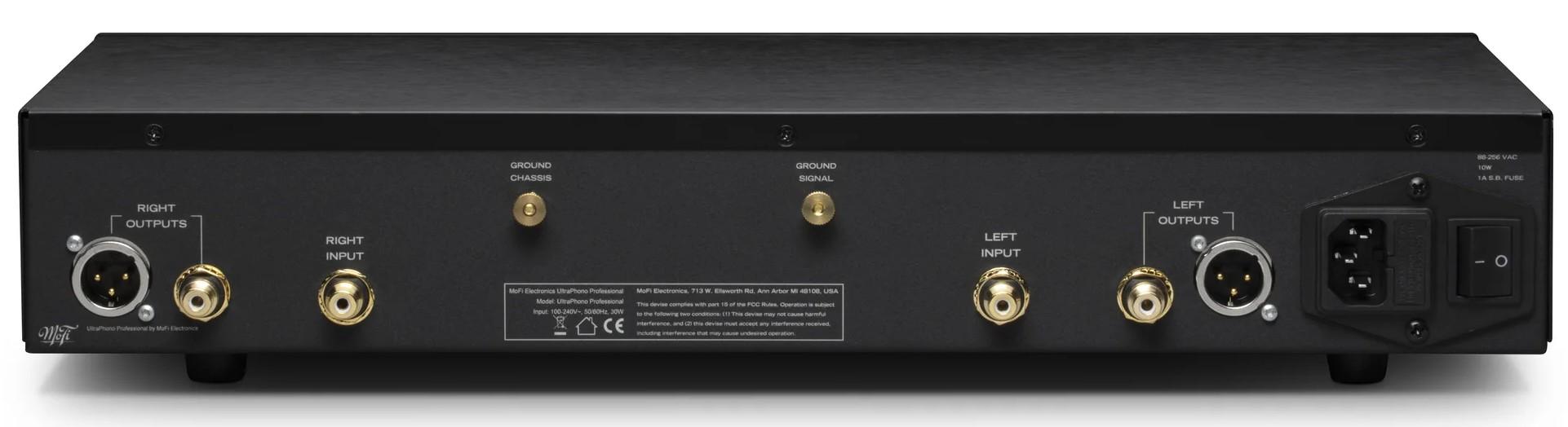
That means one input, a solid set of front-panel controls, support for both moving-magnet (MM) and moving-coil (MC) cartridges, and balanced as well as unbalanced outputs.
The circuitry behind the UltraPhono Pro was designed by Peter Madnick, a respected name in audio engineering. Like its big brother, the UltraPhono Pro uses fully discrete J-FET and MOSFET input and output stages, avoiding off-the-shelf op-amps in favor of a custom analog design.
The signal path is DC-coupled and servo-controlled, meaning it avoids capacitors in key parts of the chain and instead relies on feedback loops to maintain signal integrity. It also uses a passive RIAA equalization stage, which applies the standard vinyl playback curve with tight tolerances—MoFi claims ±0.05 dB accuracy.
Under the hood, there’s a seven-stage regulated power supply, and the company has clearly paid attention to noise, which is always a big concern when amplifying the tiny signals that come off a phono cartridge. According to MoFi, the UltraPhono Pro achieves signal-to-noise ratios of 93dB (MM) and 85dB (MC), with low distortion and a wide 10Hz–50kHz frequency response.
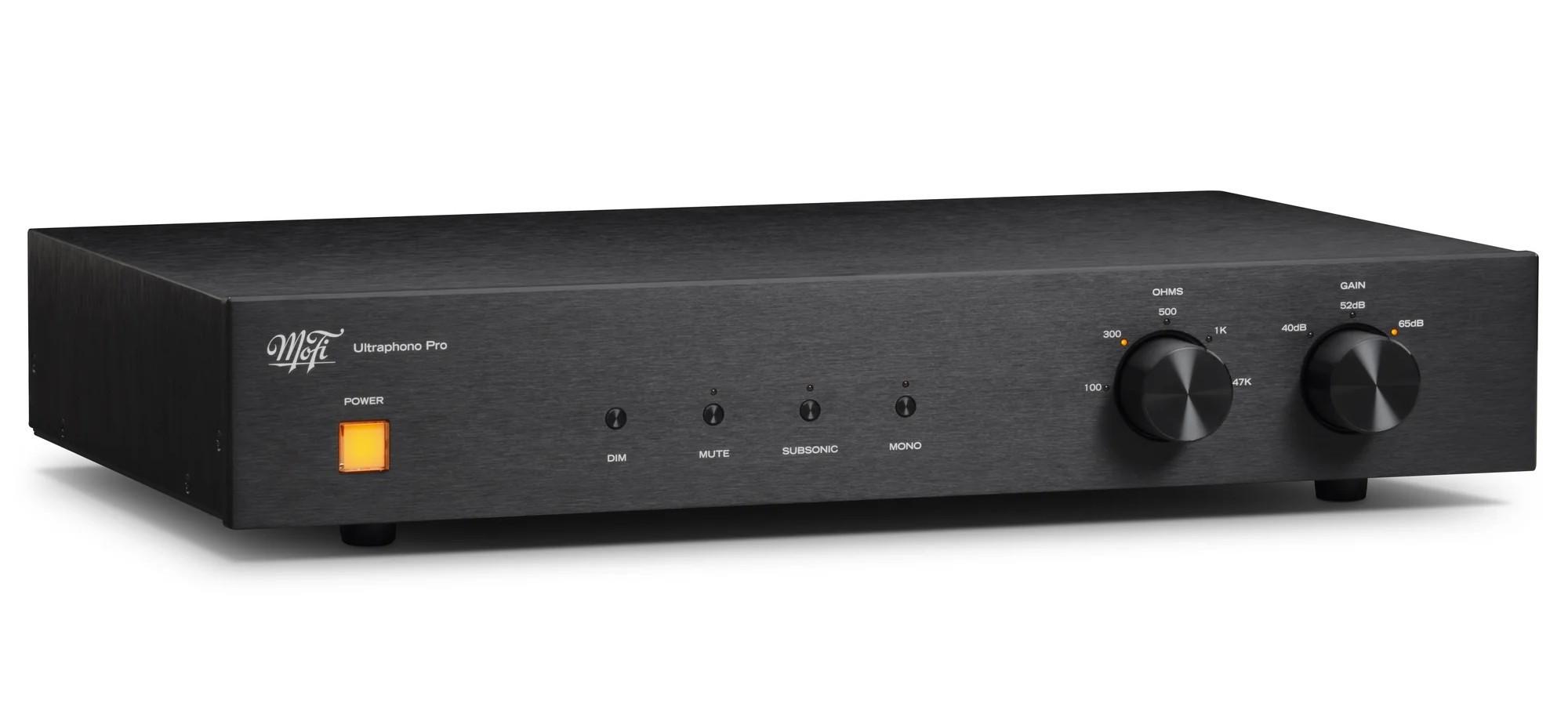
Setting up a phono stage can be intimidating, especially for MC cartridges that often require careful matching. MoFi has tried to simplify this with a front-panel layout that makes gain and loading options easy to access.
There are three gain settings (40dB, 52dB, 65dB), with an extra +6dB available via the balanced XLR outputs. That gives you a lot of flexibility, whether you're running a high-output MM cart or a low-output MC design.
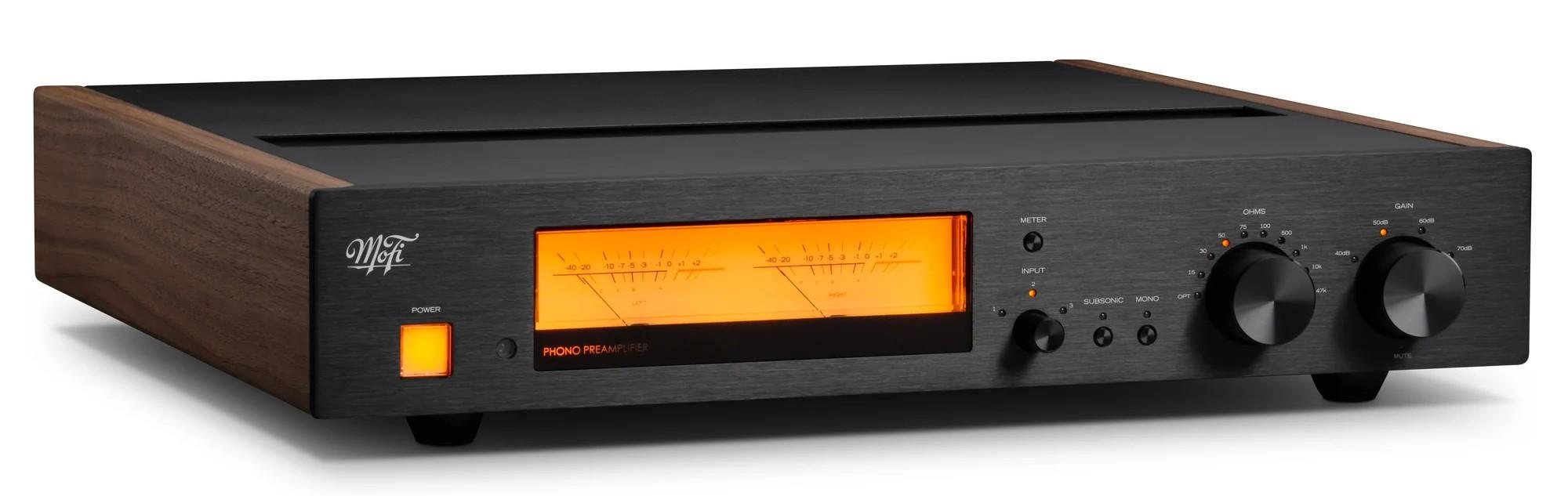
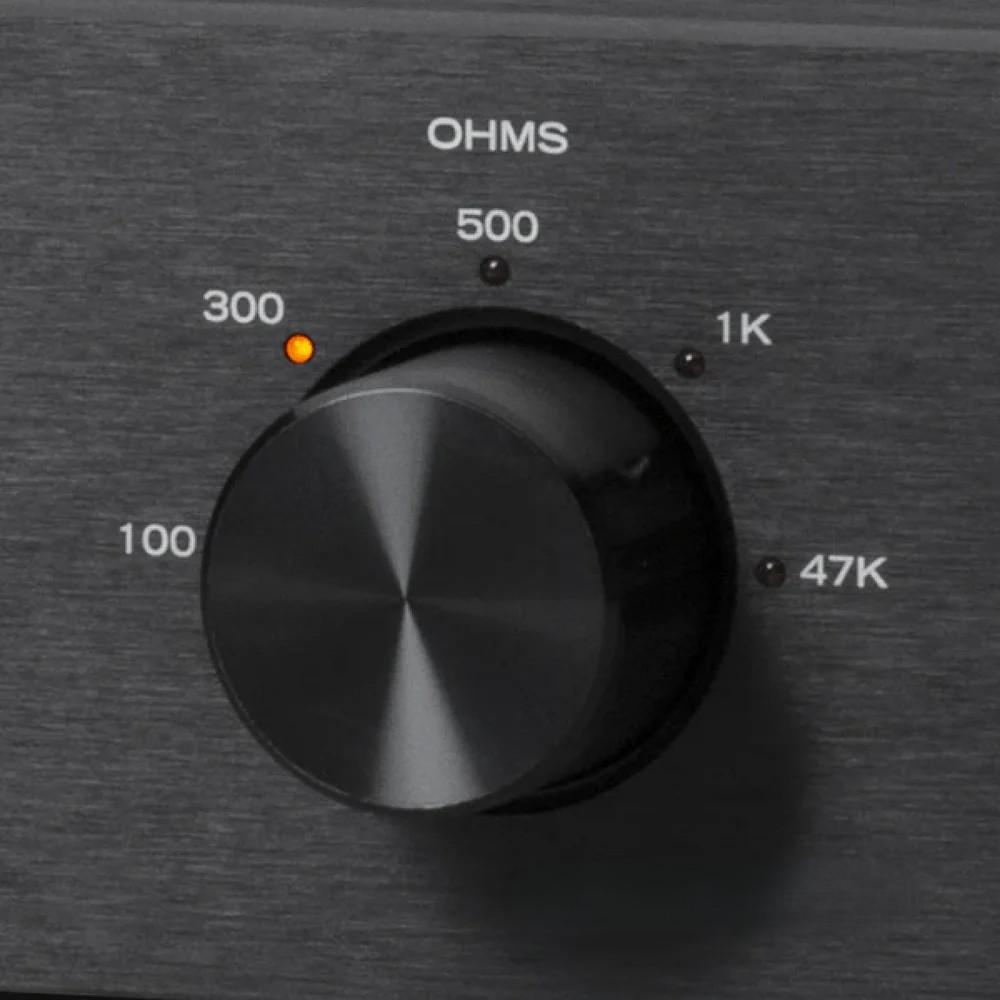
For resistive loading, the UltraPhono Pro offers five selectable options: 100, 300, 500, 1k, and 47k ohms—again, all accessible from the front panel. The loading is handled by sealed gold-on-gold relays, which not only look good on the spec sheet but should ensure long-term reliability and clean switching.
Also included are toggles for mono mode, a subsonic filter (to help with warped records and low-frequency rumble), mute, and dimmable faceplate lighting.
In many ways, the UltraPhono Pro is a classic trickle-down product. It doesn’t offer the dual-chassis isolation, metering, or digital control features of the MasterPhono, but it retains the parts of the design that affect audio performance the most.
For example, both models are fully balanced, support MC and MM cartridges, and feature tight RIAA equalization. They also use discrete analog circuits, carefully matched components (some resistors are specced at 0.1%), and servo control for DC stability.
What you’re giving up with the UltraPhono Pro is mostly bells and whistles, features that are nice to have but not essential for many listeners.
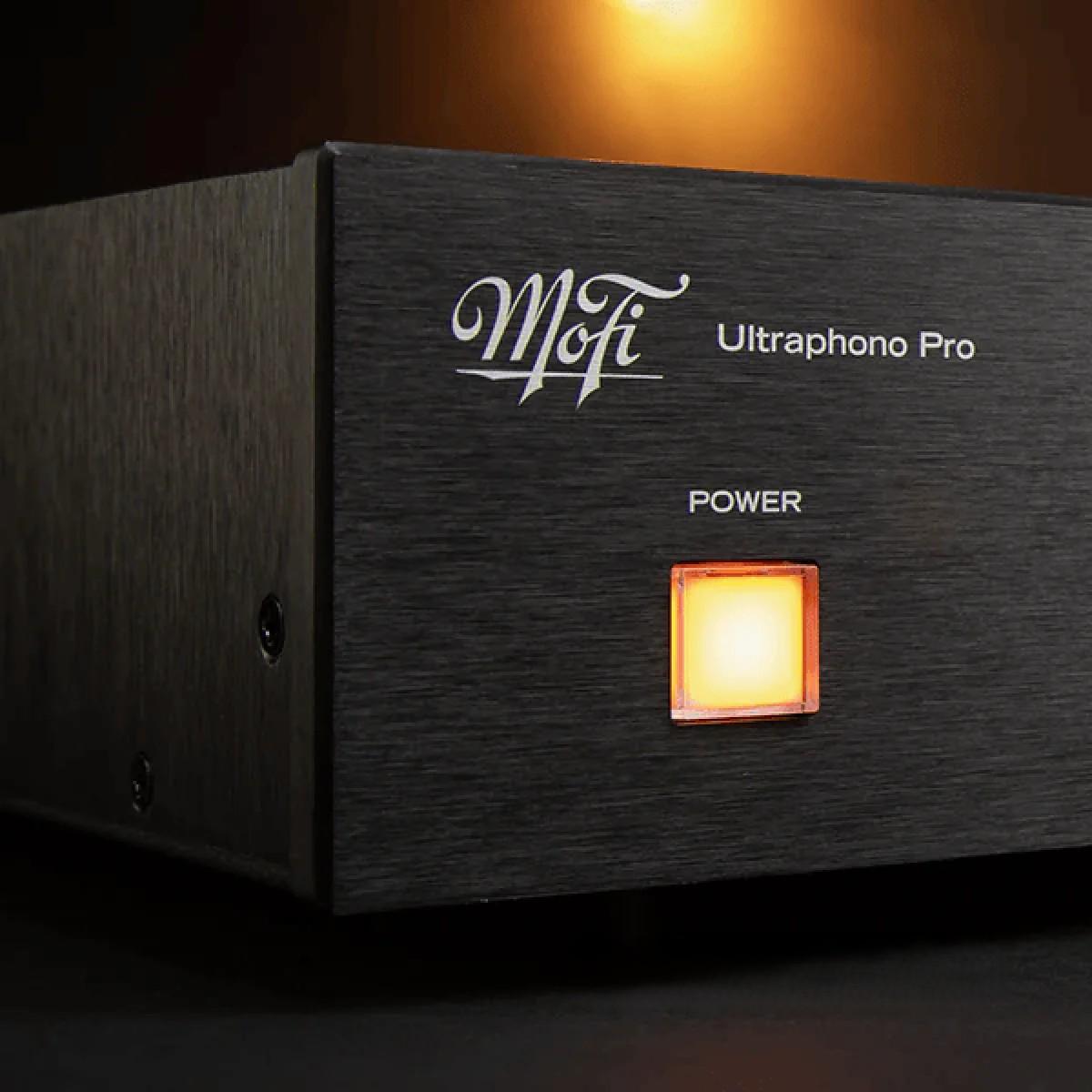
At $2,495, the UltraPhono Pro steps into a competitive part of the phono preamp market. Two notable rivals in this space are the McIntosh MP100 (also priced at $2,500 at Crutchfield) and the Musical Fidelity M6 Vinyl (priced at $2,199 on Amazon).
The McIntosh MP100 brings the iconic brand’s design language and a slightly different feature set, including built-in analog-to-digital conversion for users who want to digitize their vinyl collection. It also offers both MM and MC compatibility, balanced outputs, and adjustable loading—but its design is more traditional, and it uses op-amp-based circuitry rather than the fully discrete approach found in the MoFi.
Meanwhile, the Musical Fidelity M6 Vinyl is known for its high headroom and triple-input architecture, which can be a draw for users running multiple turntables. It offers six gain settings and adjustable loading, with a sound that leans toward clarity and neutrality. However, its setup is done via rear-panel DIP switches, which might be less convenient for users who change cartridges frequently.
Where the MoFi UltraPhono Pro stands out is in its balance between clean, discrete analog performance and front-panel accessibility. It may not include digital features or multiple inputs, but it focuses on low-noise analog performance and practical usability, making it especially appealing to those running a single high-quality turntable and cartridge setup who prioritize sonic precision over extras.
So, who does it make sense for?
If that sounds like your situation, the UltraPhono Pro is MoFi Electronics’ attempt to slot a carefully stripped-down, high-spec phono stage into the space where a lot of real-world vinyl listeners are shopping.
It’s not trying to reinvent vinyl playback or be a Swiss Army knife for every possible use case. Instead, it focuses on clean analog gain, accurate RIAA equalization, low noise, and user-friendly controls, things that matter whether you’re spinning a $20 reissue or a rare first pressing.
Related Reading:





Privacy Policy
Terms and Conditions - Affiliate Policy
Home Security
© Copyright 2008-2026.
11816 Inwood Rd #1211, Dallas, TX 75244