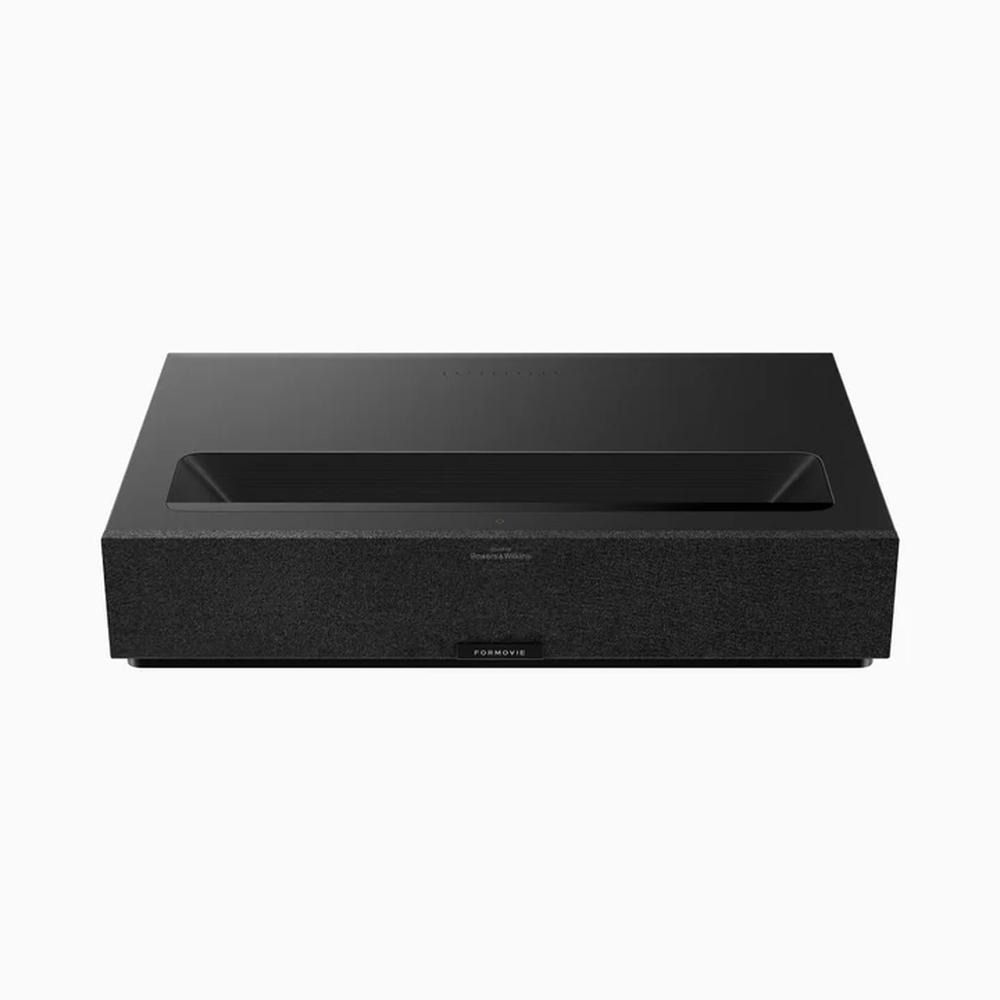
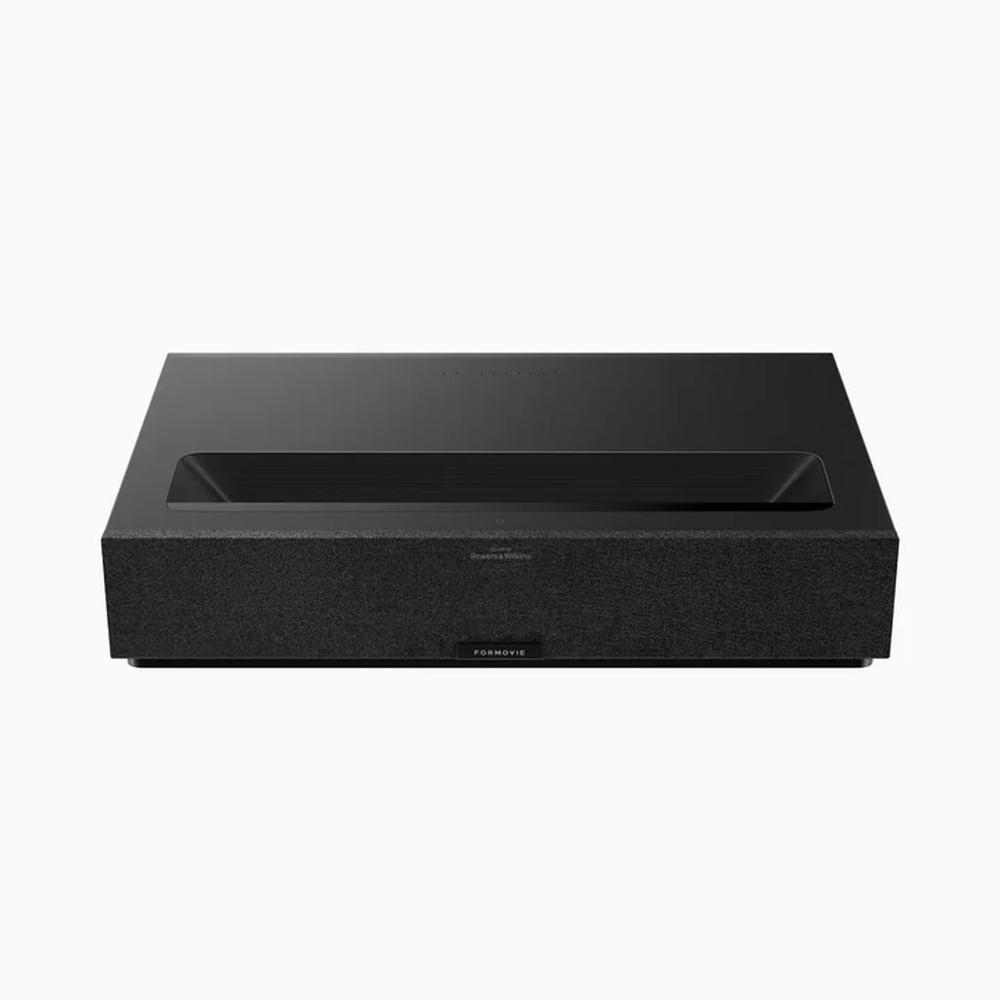
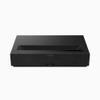
The home theater projector landscape changed significantly when Formovie launched their Theater Premium model in late 2023. This ultra-short throw (UST) projector represents a major step forward in bringing cinema-quality experiences home, and after extensive testing, we've found it offers some compelling advantages over both traditional long-throw projectors and high-end TVs.
The standout feature of the Formovie Theater Premium is its ALPD 4.0 RGB+ triple laser system. Unlike single-laser projectors that use a phosphor wheel to create colors, this projector uses three distinct laser sources (red, green, and blue) to produce incredibly pure colors. In our testing, this translated to noticeably more vivid and accurate colors compared to traditional projectors, especially in scenes with deep reds and vibrant greens.
What's particularly impressive is the 107% BT.2020 color gamut coverage - in plain English, this means the projector can display more colors than most TVs and traditional projectors. During our movie sessions, this was especially noticeable in nature documentaries and modern blockbusters that take advantage of wide color ranges.
With 2200 ISO lumens of brightness (a standardized measurement that's more accurate than regular lumens), this projector handles both dark home theaters and rooms with some ambient light admirably. We tested it in various lighting conditions and found it maintained impressive picture quality even with moderate afternoon sunlight - though like all projectors, it performs best in controlled lighting.
The 3000:1 contrast ratio might seem modest compared to OLED TVs, but in practice, the image quality holds up remarkably well. The inclusion of Dolby Vision support (relatively rare in projectors) means you get enhanced HDR performance with compatible content, resulting in more detailed shadows and highlights.
Built-in Google TV represents a significant upgrade from the previous model's Android TV system. The interface is more intuitive, and we particularly appreciated the content recommendations and universal search features. Having Netflix pre-installed (a common pain point with many projectors) is a welcome addition.
With an 18ms input lag in game mode, this projector is surprisingly capable for gaming. While testing with a PS5, we noticed minimal delay in fast-paced games like Call of Duty. The support for 120Hz at 1080p is particularly useful for competitive gaming, though serious esports players might still prefer a dedicated gaming monitor.
The 0.21:1 throw ratio means you can place the Formovie Theater Premium incredibly close to your wall or screen. In practical terms, to achieve a 100-inch image, you only need about 5.5 inches of distance from the wall. This makes it perfect for rooms where a traditional projector's long throw distance isn't practical.
During our setup process, we found the 8-point keystone correction particularly helpful for achieving a perfectly rectangular image, even when the projector wasn't perfectly aligned with the screen.
In a dedicated home theater setting, this projector truly shines. The combination of 4K resolution, triple laser technology, and Dolby Vision support creates an impressive cinematic experience. We tested various content types:
The Bowers & Wilkins speaker system deserves special mention. While most projector speakers are an afterthought, this system provides surprisingly robust sound. During testing, we found it adequate for casual viewing, though serious home theater enthusiasts will still want a dedicated audio system.
While the Formovie Theater Premium sits in the premium price category, it offers several advantages that justify the investment:
Compared to similar-sized OLED TVs, the projector offers:
No product is perfect, and transparency about limitations helps make informed decisions:
After extensive testing and regular use, the Formovie Theater Premium stands out as a remarkable achievement in home theater technology. It successfully bridges the gap between traditional projectors and modern smart TVs, offering a compelling solution for those seeking a premium large-screen experience.
What's particularly impressive is how it addresses many traditional projector shortcomings - brightness, smart features, and ease of installation - while maintaining excellent image quality. The triple laser technology provides tangible benefits in color reproduction and longevity, while the ultra-short throw design makes it practical for a wide range of rooms.
For those considering a high-end TV or projector purchase, the Formovie Theater Premium deserves serious consideration, especially if you're looking to create a true cinema experience at home without dedicating an entire room to a traditional projector setup.
Yes, for home theater enthusiasts seeking a premium viewing experience, the Formovie Theater Premium offers excellent value. With its triple laser technology, Dolby Vision support, and 2200 ISO lumens brightness, it delivers superior picture quality that justifies its price point, especially when compared to high-end TVs of similar size.
The projector outputs 2200 ISO lumens, which provides enough brightness for most home theater environments and can even handle moderate ambient light. This makes it suitable for both dedicated theater rooms and living rooms with some light control.
The projector can display images from 80 inches to 150 inches diagonally. For optimal home theater performance, we recommend a 100-120 inch screen size, which provides an immersive viewing experience while maintaining excellent brightness and clarity.
Yes, with an 18ms input lag in game mode, ALLM support, and 120Hz capability at 1080p, it's well-suited for gaming. While not as fast as dedicated gaming monitors, it provides a responsive experience for most gamers seeking a large-screen format.
With its 0.21:1 throw ratio, the projector needs very little space. For a 100-inch image, it only needs to be placed about 5.5 inches from the wall, making it ideal for rooms where traditional projector placement isn't practical.
While the Formovie Theater Premium can project onto a white wall, we recommend using an ALR (Ambient Light Rejecting) screen designed for UST projectors to maximize picture quality and contrast, especially in rooms with ambient light.
The triple laser light source is rated for 30,000 hours of use, which means you could use the projector for 4 hours every day for 20 years before seeing significant brightness degradation. Unlike traditional bulb projectors, there's no need for expensive lamp replacements.
Yes, the Formovie Theater Premium comes with Google TV built-in, including pre-installed Netflix and access to other major streaming services. This eliminates the need for external streaming devices in most cases.
The Bowers & Wilkins speakers provide surprisingly good audio quality for built-in speakers. While dedicated home theater enthusiasts will likely want a separate audio system, the built-in speakers are more than adequate for casual viewing.
Yes, the Formovie Theater Premium handles daytime viewing well, especially when paired with an ALR screen. The 2200 ISO lumens brightness provides enough output to maintain picture quality with moderate ambient light, making it suitable for sports viewing parties and regular TV watching.
We've done our best to create useful and informative comparisons to help you decide what product to buy. Our research has used advanced automated methods to create this comparison and perfection is not possible - please contact us for corrections or questions. These are the sites we've researched in the creation of this article: techradar.com - projectorscreen.com - avsforum.com - rtings.com - nothingprojector.com - formovie.com - bmcav.com.au - projectorcentral.com - digitalcinema.com.au - projectorreviews.com - techpowerup.com - nothingprojector.com
| Formovie Theater Premium |
|---|
| Brightness - Critical for ambient light performance: 2200 ISO lumens |
| Contrast Ratio - Determines black level depth and overall picture pop: 3000:1 |
| Color Gamut - Indicates color range and vibrancy: 107% BT.2020 |
| Throw Ratio - Determines how close to wall the projector needs to be: 0.21:1 |
| Input Lag - Important for gaming responsiveness: 18ms in Game Mode |
| Resolution: Native 4K (3840 x 2160) |
| HDR Support: Dolby Vision, HDR10, HDR10+ |
| Screen Size Range: 80" to 150" |
| Light Source Lifespan - How long before significant brightness loss: 30,000 hours |
| Audio System: 15W x2 Bowers & Wilkins speakers |
| Smart Platform: Google TV with built-in streaming |
| Gaming Features: ALLM, 4K/60Hz, 1080p/120Hz support |
| Projection Technology: ALPD 4.0 RGB+ Triple Laser |
| Keystone Correction: 8-point/4-point adjustment |
The $3,499 BenQ V5000i distinguishes itself with superior brightness at 2,500 ANSI lumens and exceptional gaming performance, featuring input lag as low as 8.7ms at 1080p/240Hz. Its higher brightness output makes it more versatile for rooms with ambient light, while its advanced MEMC motion handling technology delivers smoother action for sports and gaming content. The built-in 40W Trevolo sound system also provides notably better audio quality than most projector speakers, though serious home theater enthusiasts will still want external speakers.
While the BenQ commands a $700 premium over the Formovie, it justifies this price difference for specific use cases. The $3,499 BenQ V5000i offers more comprehensive color management controls for fine-tuning, better bright-room performance, and significantly more responsive gaming capabilities. However, the lack of Dolby Vision support might give pause to dedicated movie enthusiasts, and those with light-controlled rooms may find the extra brightness unnecessary. The decision largely comes down to whether gaming performance and bright-room versatility are worth the additional investment.
🤖 Read Detailed Comparison
👌BenQ V5000i Ultra Short Throw 4K Laser Projector Details
💵 See BenQ V5000i Ultra Short Throw 4K Laser Projector Price
The Samsung Premiere 9 distinguishes itself with class-leading brightness at 3,450 ISO lumens and Samsung's advanced Quantum 4K processor, though it commands a premium price at $5,999. Its superior brightness handling makes it significantly more versatile for everyday viewing, particularly in rooms with ambient light where the Formovie Theater Premium might struggle. The Premiere 9's 40W 2.2.2 channel audio system delivers more powerful and immersive sound, while Samsung's Tizen OS provides a more polished and user-friendly smart TV experience with better native app support, including Netflix and a dedicated Gaming Hub for cloud gaming services.
While the Samsung Premiere 9 offers tangible advantages in brightness and overall polish, buyers should carefully consider whether these improvements justify more than doubling their investment. The slightly shorter throw ratio (0.19:1 vs 0.21:1) allows for marginally closer wall placement, and Samsung's superior processing delivers better upscaling of non-4K content. However, it lacks Dolby Vision support and doesn't quite match the Formovie's contrast levels in dark room viewing. The decision largely comes down to viewing environment and budget - the Premiere 9 excels in bright, multipurpose rooms where its additional brightness and refined user experience can be fully appreciated, but home theater enthusiasts with controlled lighting might find the Formovie's value proposition more compelling.
🤖 Read Detailed Comparison
👌Samsung Premiere 9 4K Ultra Short Throw Laser Projector Details
💵 See Samsung Premiere 9 4K Ultra Short Throw Laser Projector Price
The Hisense PL2 ($2,198) makes its mark with superior brightness, delivering 2700 ANSI lumens that provide better performance in rooms with ambient light. While it doesn't match the Formovie's color accuracy, its more forgiving brightness levels make it more versatile for everyday use in typical living spaces. The PL2's implementation of Google TV feels more polished and stable, with fewer reported issues during streaming and smart feature usage. Its automated geometry correction and more straightforward setup process also make it more approachable for users new to ultra short throw projectors.
At $600 less than the Formovie Theater Premium, the Hisense PL2 represents excellent value for users who prioritize versatility over absolute picture quality. Its 85% DCI-P3 color coverage and HDR performance are still impressive, even if they don't reach the Formovie's standards in controlled lighting. While its built-in audio isn't as refined as the Bowers & Wilkins system, the money saved could be put toward a quality external sound system. For most users seeking a premium TV alternative that can handle varied lighting conditions and mixed content viewing, the PL2's balance of performance and price makes it a compelling choice.
🤖 Read Detailed Comparison
👌Hisense PL2 4K Ultra Short Throw Projector Details
💵 See Hisense PL2 4K Ultra Short Throw Projector Price
The BenQ V5010i distinguishes itself with superior brightness at 2,500 ANSI lumens, making it a more versatile choice for rooms with ambient light or daytime viewing. Its standout feature is exceptional out-of-box color accuracy, eliminating the need for professional calibration in most cases. Gamers will appreciate the significantly lower input lag under 20ms at 4K/60Hz, making it more suitable for fast-paced gaming. The powerful 40W audio system, with dedicated woofers and tweeters, provides robust sound that fills larger spaces effectively.
However, the BenQ V5010i comes with a higher price tag ranging from $3,499 to $4,499, and lacks Dolby Vision support, which may disappoint serious movie enthusiasts. While its 95% BT.2020 color gamut coverage is impressive, it doesn't quite match the Formovie's color range. The simpler smart features mean you'll likely need an external streaming device for the best experience. That said, for those prioritizing brightness, gaming performance, and out-of-box accuracy - particularly in multi-purpose rooms - the premium price may be justified by its superior real-world performance in challenging lighting conditions.
🤖 Read Detailed Comparison
👌BenQ V5010i 4K Ultra Short Throw Projector Details
💵 See BenQ V5010i 4K Ultra Short Throw Projector Price
The Formovie C3 ($1,899) represents a more budget-friendly approach to UST projection, offering solid performance at a significantly lower price point. While it uses a single laser ALPD system instead of the Theater Premium's triple laser setup, it still delivers respectable image quality in controlled lighting conditions. The C3 maintains core features like 4K resolution and basic HDR support, making it an attractive option for users building their first home theater setup. Its FengOS platform, while limited compared to Google TV, handles basic smart features adequately, though most users will want to add an external streaming device.
At $1,100 less than the Theater Premium, the C3's value proposition is clear for certain use cases. In dedicated theater rooms where ambient light can be controlled, the brightness difference becomes less significant, and the C3's image quality holds up well for movie watching. However, potential buyers should consider their viewing environment carefully - the C3's lower brightness and basic HDR processing make it less suitable for bright rooms or as a primary TV replacement. It's best suited for users who prioritize movie watching in controlled lighting conditions and are willing to trade some premium features for significant cost savings.
🤖 Read Detailed Comparison
👌Formovie C3 Ultra Short Throw Laser Projector Details
💵 See Formovie C3 Ultra Short Throw Laser Projector Price
The Ultimea Thor T60 differentiates itself primarily through its impressive 4,000 ANSI lumens brightness output, nearly double that of the Formovie Theater Premium. At $4,999, it commands a significant premium but delivers exceptional bright-room performance that makes it more versatile for living rooms and spaces with ambient light. The Thor T60's 120% BT.2020 color gamut coverage exceeds the Formovie's capabilities, though the real-world impact of this difference may be subtle to most viewers. Its implementation of MEMC (Motion Estimation Motion Compensation) technology provides notably smooth motion handling for sports and fast-moving content.
While the Ultimea Thor T60 offers superior raw performance in terms of brightness and color gamut, its higher price point and slightly higher input lag (25ms versus 18ms) make it a more specialized choice. The Thor T60's Android TV 11 interface, while functional, doesn't quite match the refinement of the Formovie's Google TV implementation. However, for users with challenging room conditions or those who prioritize maximum brightness and color volume over absolute value, the Thor T60's premium performance capabilities justify its higher cost. It's particularly well-suited for installations where ambient light control is limited or where HDR impact in brighter conditions is a priority.
🤖 Read Detailed Comparison
👌Ultimea Thor T60 4K Ultra Short Throw Laser Projector Details
💵 See Ultimea Thor T60 4K Ultra Short Throw Laser Projector Price
The Epson EpiqVision Ultra LS650 stands out primarily for its impressive 3,600 ANSI lumens brightness, making it a compelling alternative for spaces with significant ambient light. Its 3LCD technology eliminates rainbow artifacts entirely and offers consistent color performance, though it can't match the Formovie's wide color gamut and Dolby Vision capabilities. The Epson's more forgiving setup process and reliable performance have made it popular among users who prioritize hassle-free operation over absolute picture quality, and its frequent discounts from the $2,799 MSRP to $2,499 make it an attractive value proposition.
Where the Epson LS650 falls short is in its more basic HDR support, higher input lag for gaming, and less sophisticated smart TV implementation. However, for viewers primarily watching sports, TV content, or using their projector in varying light conditions, these limitations may be less important than its superior brightness and consistent performance. The Epson's Yamaha-tuned audio system delivers room-filling sound that, while not quite matching the refinement of the Formovie's Bowers & Wilkins speakers, provides a satisfying listening experience for casual viewing without additional audio equipment.
🤖 Read Detailed Comparison
👌Epson EpiqVision Ultra LS650 4K Ultra Short Throw Laser Projector Details
💵 See Epson EpiqVision Ultra LS650 4K Ultra Short Throw Laser Projector Price
The NexiGo Aurora Pro stands out with its higher brightness output of 2,400 ANSI lumens and impressive 6,000:1 dynamic contrast ratio, making it particularly effective in rooms with ambient light. Its significantly lower input lag of 17.8ms at 4K/60Hz makes it a superior choice for gaming, while the robust 60W Dolby Atmos sound system delivers better built-in audio performance. The Aurora Pro's laser dimming technology and enhanced contrast capabilities provide noticeably deeper blacks and better shadow detail, especially in darker scenes.
While priced $550 less, the Aurora Pro does make some compromises with a more basic Android TV implementation and less refined color accuracy out of the box. However, its higher brightness and contrast ratio offer tangible benefits for everyday viewing, particularly in multi-purpose rooms where light control isn't always possible. The NexiGo Aurora Pro represents excellent value for those prioritizing gaming performance and brightness over color accuracy and smart features, though it may require external streaming devices for the best content access.
🤖 Read Detailed Comparison
👌NexiGo Aurora Pro 4K Ultra Short Throw Projector Details
💵 See NexiGo Aurora Pro 4K Ultra Short Throw Projector Price
The AWOL Vision LTV-2500 distinguishes itself primarily through its gaming capabilities and dark room performance. With an impressive 15ms input lag at 4K/60Hz (dropping to 8ms at 1080p/120Hz), it's significantly more responsive than the Formovie Theater Premium for gaming. The AWOL also offers superior contrast performance in controlled lighting conditions, making it particularly well-suited for dedicated home theater environments. Its native 3D support and longer 25,000-hour laser life are additional advantages for specific use cases.
However, the AWOL's 2000 ANSI lumens brightness and older Android 9.0 operating system make it less versatile for bright room viewing and everyday use compared to the Formovie Theater Premium. While both projectors are priced at $2,999, the AWOL is frequently available at $2,499 during promotions, making it an especially compelling value for users prioritizing gaming performance or dedicated theater use in controlled lighting conditions. The decision between the two largely comes down to usage scenario - the AWOL excels in specific use cases while the Formovie offers more versatility for mixed-use environments.
🤖 Read Detailed Comparison
👌AWOL Vision LTV-2500 Ultra Short Throw 4K Projector Details
💵 See AWOL Vision LTV-2500 Ultra Short Throw 4K Projector Price
The AWOL Vision LTV-3500 Pro ($5,999) stands out primarily for its impressive 3,500 ANSI lumens brightness, which offers significantly better performance in well-lit rooms. This higher brightness, combined with its exceptional gaming capabilities featuring 15ms input lag at 4K and 8ms at 1080p/120Hz, makes it a compelling option for users who prioritize versatility across different lighting conditions and entertainment types. The inclusion of comprehensive HDR support, including Dolby Vision, HDR10+, and HLG, along with its ability to handle larger screen sizes up to 150 inches, demonstrates its premium positioning in the UST projector market.
However, at more than twice the price, the value proposition becomes more nuanced. While the AWOL offers superior brightness and gaming performance, its contrast ratio of 2,500:1 falls slightly short of the Formovie's capabilities, and its Android 9.0 system with included Fire TV Stick isn't as elegant as an integrated streaming solution. The AWOL's primary advantages are most noticeable in specific use cases - particularly bright room viewing and serious gaming - making it a worthwhile investment only for users who specifically need these capabilities or have an unconstrained budget for their home theater setup.
🤖 Read Detailed Comparison
👌AWOL Vision LTV-3500 Pro Ultra Short Throw Projector Details
💵 See AWOL Vision LTV-3500 Pro Ultra Short Throw Projector Price
The $9,495 Leica Cine 1 differentiates itself with premium build quality and exceptional lens design, leveraging Leica's century-long optical expertise. Its Summicron lens system, featuring four aspherical elements, delivers outstanding edge-to-edge clarity with minimal chromatic aberration – a common issue in UST projectors. The higher 3,000 ANSI lumen brightness rating provides additional headroom for daytime viewing, though in practical use, the difference isn't as dramatic as the numbers suggest. The premium materials and construction quality also hint at potentially better long-term reliability.
However, the Leica's significant price premium becomes harder to justify when comparing actual performance metrics. While its image quality is excellent, it lacks some modern features like comprehensive HDR support and advanced gaming capabilities. The VIDAA smart platform feels limited compared to Google TV, often requiring an external streaming device. For most home theater enthusiasts, the Leica's marginal improvements in image quality and build materials may not warrant the substantial price difference, making it primarily appealing to luxury buyers who prioritize brand prestige and premium construction over value considerations.
🤖 Read Detailed Comparison
👌Leica Cine 1 120" 4K Ultra Short Throw Laser Projector Details
💵 See Leica Cine 1 120" 4K Ultra Short Throw Laser Projector Price
The Hisense PX3-PRO delivers significantly higher brightness at 3,000 ANSI lumens, making it roughly 25-30% brighter than the Formovie in real-world conditions—a crucial advantage for rooms with ambient light or daytime viewing. Its TriChroma RGB laser system produces exceptional color accuracy with 110% BT.2020 coverage and remarkable DCI-P3 precision at 99.82%, resulting in more vivid and accurate colors straight out of the box. For gaming enthusiasts, the Hisense stands in a class of its own with 14ms input lag at 120Hz, support for up to 240Hz refresh rates at 1080p, and advanced features like Auto-Low Latency Mode and Variable Refresh Rate that make it genuinely competitive with high-end gaming displays. The projector also includes IMAX Enhanced certification and more comprehensive connectivity with three HDMI ports, including two full-bandwidth HDMI 2.1 connections.
The trade-off for these premium features is a higher price point that positions the Hisense PX3-PRO as the more expensive option in this comparison. While it justifies the cost with superior brightness performance that extends usability across different lighting conditions and gaming capabilities that serve multiple household members, casual viewers primarily watching movies in controlled lighting may find the extra investment unnecessary. The Hisense's Harman Kardon audio system, while decent, doesn't match the Formovie's Bowers & Wilkins setup for pure sound quality. For buyers who prioritize maximum brightness for versatile room usage, serious gaming performance, or want the most advanced UST technology available, the PX3-PRO represents the premium choice that delivers measurably better performance in challenging conditions, though the value proposition depends heavily on whether you'll utilize its standout capabilities.
🤖 Read Detailed Comparison
👌Hisense PX3-PRO Projector Details
💵 See Hisense PX3-PRO Projector Price
The XGIMI Aura 2 ($2,699) stands out with its innovative Dual Light 2.0 technology, combining LED and laser light sources to effectively reduce the speckle effect common in laser projectors while maintaining excellent brightness at 2,300 lumens. Its motorized lens cover provides welcome protection for the optics, and the more energy-efficient design consumes significantly less power at 180W compared to the Formovie's 320W. The Harman Kardon speaker system delivers impressive audio quality, though it doesn't quite match the Formovie's Bowers & Wilkins setup, and the hybrid light engine produces natural-looking colors with 99% DCI-P3 coverage.
Where the XGIMI Aura 2 falls slightly short is in gaming performance, with higher input lag making it better suited for casual gaming, and its Android TV platform lacks native Netflix support, requiring an external streaming device. However, at $100 less than the Formovie, it represents excellent value for viewers who prioritize artifact-free viewing and energy efficiency over absolute color accuracy and gaming performance. The XGIMI's slightly higher brightness and better speckle control might even make it preferable for bright room viewing, though both projectors perform similarly in most real-world conditions.
🤖 Read Detailed Comparison
👌XGIMI Aura 2 Ultra Short Throw Laser Projector Details
💵 See XGIMI Aura 2 Ultra Short Throw Laser Projector Price
The $6,499 LG CineBeam HU915QB stands out with its impressive 3,000 ANSI lumens brightness and exceptional 2,000,000:1 contrast ratio, making it particularly effective in rooms with ambient light. Its advanced calibration capabilities, including CalMAN integration and 15-point warping adjustment, offer professional-grade setup options that serious home theater enthusiasts will appreciate. The built-in 2.2Ch 40W audio system also delivers more powerful sound than the Formovie, though most users will likely pair either projector with a dedicated audio system.
However, the significant price premium of the LG is difficult to justify for most users when compared to the Formovie Theater Premium's performance and features. While the LG CineBeam offers superior brightness and contrast, it lacks Dolby Vision support, has higher input lag for gaming, and uses the more limited webOS platform instead of Google TV. Unless you specifically need the LG's advanced calibration features or maximum brightness capability, the Formovie Theater Premium delivers comparable real-world performance at less than half the price, making it the better value for most home theater setups.
🤖 Read Detailed Comparison
👌LG CineBeam HU915QB 4K UHD Laser Projector Details
💵 See LG CineBeam HU915QB 4K UHD Laser Projector Price
The Epson EpiqVision Ultra LS800 ($3,448) stands out primarily for its exceptional brightness of 4,000 lumens, which is nearly double that of the Formovie Theater Premium. This significant brightness advantage makes the Epson a more versatile choice for rooms with ambient light or where complete light control isn't possible. Its 3LCD technology, while different from the triple laser approach, delivers impressive color accuracy and a remarkable 2,500,000:1 dynamic contrast ratio. The built-in Yamaha 2.1 sound system also provides noticeably better audio quality, potentially eliminating the need for external speakers in casual viewing situations.
Where the Epson falls short is in HDR support, offering only basic HDR10 compared to the Formovie's comprehensive Dolby Vision and HDR10+ capabilities. However, it makes up for this with superior gaming performance, boasting a slightly lower input lag of 16.7ms. While the $649 price premium over the Formovie Theater Premium is significant, it's justified if you prioritize brightness and versatility over absolute picture quality in dark room conditions. The Epson excels in multi-purpose rooms where varying lighting conditions and diverse content types, from movies to games to sports, are the norm.
🤖 Read Detailed Comparison
👌Epson EpiqVision Ultra LS800 3LCD Laser Projector Details
💵 See Epson EpiqVision Ultra LS800 3LCD Laser Projector Price
The Formovie Theater ($2,299) established itself as a benchmark in the UST projector market with its excellent price-to-performance ratio. It shares the same fundamental ALPD 4.0 RGB+ triple laser technology, delivering impressive color accuracy and contrast levels that rival more expensive competitors. In dedicated home theater environments with controlled lighting, it matches the Premium model's picture quality in most aspects, making it an attractive option for movie enthusiasts who prioritize pure performance over additional features.
Where the original Theater model shows its age is primarily in brightness output (1,800 vs 2,200 ISO lumens), gaming performance (43ms vs 18ms input lag), and smart platform integration. The standard Theater relies on Android TV 11, which requires some manual setup for streaming apps like Netflix, and its first-generation Bowers & Wilkins sound system, while good, doesn't quite match the Premium's audio refinements. However, at $700 less than the Premium model, it remains a compelling choice for buyers who have dedicated theater spaces and don't need the Premium's bright-room flexibility or gaming capabilities.
🤖 Read Detailed Comparison
👌Formovie Theater Ultra Short Throw Triple Laser Projector Details
💵 See Formovie Theater Ultra Short Throw Triple Laser Projector Price
The VAVA Chroma ($3,499) stands out with its powerful 60W Harman Kardon speakers and slightly higher rated brightness of 2500 ANSI lumens, though real-world testing suggests similar actual brightness performance. Its 106% BT.2020 color gamut coverage and triple laser technology deliver impressive colors, while the 0.233:1 throw ratio allows for flexible placement options in most rooms. The inclusion of 3D support out of the box may appeal to viewers who enjoy this format, though the basic Android TV implementation and limited streaming app support show its age compared to newer models.
However, at $700 more than the Formovie Theater Premium, the VAVA Chroma struggles to justify its higher price point. While it provides capable performance, it lacks Dolby Vision support and shows higher input lag for gaming. The older Android TV system receives less frequent updates, and users have reported more challenging customer support experiences. Unless found at a significant discount, the VAVA Chroma's higher price and fewer features make it harder to recommend for most home theater enthusiasts looking for the best value in current UST projector technology.
🤖 Read Detailed Comparison
👌VAVA Chroma Triple Laser Projector Details
💵 See VAVA Chroma Triple Laser Projector Price
The Formovie 4K Max stands out primarily for its impressive 4,500 ANSI lumens brightness, which is more than double that of the Theater Premium. This significant boost in brightness at $3,699 makes it a compelling option for users who need to overcome substantial ambient light in living rooms or multi-purpose spaces. While it uses a simpler single laser ALPD 3.0 system, the raw brightness output makes it more versatile for daytime viewing and sports watching, where maintaining image visibility in well-lit conditions is more important than absolute color accuracy.
However, the trade-offs for this additional brightness become apparent when comparing other features to the Theater Premium. The Formovie 4K Max lacks Dolby Vision support, offers more limited color gamut coverage at 80-85% NTSC, and uses the more restricted Fengmi OS instead of Google TV. The higher price point becomes harder to justify unless maximum brightness is your primary concern, as you're essentially paying $900 more for better bright-room performance while giving up superior color accuracy, better gaming features, and a more user-friendly smart platform. For users who can control their viewing environment's lighting, the extra brightness may not warrant the additional cost and feature compromises.
🤖 Read Detailed Comparison
👌Formovie 4K Max Ultra Short Throw Laser Projector Details
💵 See Formovie 4K Max Ultra Short Throw Laser Projector Price
The Hisense PX2-PRO distinguishes itself with superior brightness at 2400 ANSI lumens and more responsive gaming performance, featuring a 30-35ms input lag at 4K/60Hz. Its TriChroma laser technology takes a different approach to achieving the impressive 107% BT.2020 color coverage, and while it may require professional calibration for optimal performance, it delivers excellent picture quality, particularly in rooms with ambient light. The integration of the latest Google TV platform provides a more refined smart TV experience with better app support and content recommendations, while its automatic geometric correction and smartphone-based calibration features make initial setup significantly easier.
For $200 more than the Formovie, the Hisense PX2-PRO offers several practical advantages that may justify the premium for certain users. Its higher brightness makes it more versatile for multi-purpose rooms and daytime viewing, while the lower input lag provides a noticeably better gaming experience. However, it does have some limitations compared to the Formovie, including a more restricted maximum screen size of 130 inches, less impressive native contrast, and lower quality built-in audio. The dynamic contrast system, while effective, doesn't quite match the Formovie's natural black levels in dark room viewing conditions.
🤖 Read Detailed Comparison
👌Hisense PX2-PRO TriChroma 4K Ultra Short Throw Laser Cinema Projector with Dolby Vision, Dolby Atmos, & Google TV Details
💵 See Hisense PX2-PRO TriChroma 4K Ultra Short Throw Laser Cinema Projector with Dolby Vision, Dolby Atmos, & Google TV Price
The Hisense PL1 ($2,499) offers a more streamlined approach to UST projection, with its single blue laser and phosphor wheel design providing reliable performance at a lower price point. While it doesn't match the Theater Premium's color gamut, its 85% DCI-P3 coverage delivers satisfying picture quality for most content. The PL1's automatic geometry correction and more intuitive setup process make it particularly appealing for users who want a simpler installation experience. Its VIDAA operating system, while more limited in app selection, tends to be more stable and responsive in day-to-day use.
At $300 less than the Theater Premium, the Hisense PL1 represents excellent value for users who prioritize reliability and ease of use over absolute color accuracy. Its 120-inch maximum screen size will satisfy most home theater needs, though it can't match the Theater Premium's 150-inch capability. The PL1's 30W Dolby Atmos audio system provides capable sound, and while gaming performance is adequate with 43ms input lag, it's not optimized for competitive gaming. For buyers seeking a balanced combination of performance and value, with minimal setup complexity, the PL1 presents a compelling alternative that delivers 90% of the premium UST experience at a more accessible price point.
🤖 Read Detailed Comparison
👌Hisense PL1 Laser Cinema Projector Details
💵 See Hisense PL1 Laser Cinema Projector Price
The Yaber K300s stands out primarily for its exceptional value proposition and surprisingly powerful audio system. At roughly $1,700 less than the Theater Premium at the time of writing, it delivers impressive 1080p performance with Triple RGB Laser technology achieving 150% NTSC color coverage, plus dual 15W JBL speakers that output a robust 30W total with bass extension down to 50Hz. Many users report the built-in audio is powerful enough to eliminate the need for external speakers entirely – something the Theater Premium's more refined but less powerful Bowers & Wilkins system doesn't quite match. The K300s also offers slightly better placement flexibility with its 0.18:1 throw ratio, allowing 100-inch images from just 9.7 inches away, and maintains the same ultra short throw convenience that makes UST projectors so appealing.
While the Yaber K300s can't match the Theater Premium's 4K resolution or 2,200-lumen brightness, it excels in controlled lighting environments where its 1,000 ANSI lumens provide perfectly adequate brightness for evening viewing. The 1080p resolution remains sharp and detailed for screen sizes up to 90 inches, especially when watching streaming content, cable TV, or gaming at standard resolutions. For buyers seeking ultra short throw convenience without premium pricing, or those who prioritize strong built-in audio over maximum image quality, the K300s represents outstanding value. The significant cost savings could be invested in a premium ambient light rejecting screen or sound system, potentially creating a more balanced overall experience than spending the full premium on 4K resolution alone.
🤖 Read Detailed Comparison
👌Yaber K300s Triple Laser Ultra Short Throw Projector Details
💵 See Yaber K300s Triple Laser Ultra Short Throw Projector Price
The Epson QS100 stands out with its exceptional 4,500 lumens brightness output, more than doubling the Formovie's light output and fundamentally changing where and when you can use the projector. This brightness advantage translates to usable image quality during daytime viewing, in rooms with windows, or anywhere ambient light control isn't perfect. The 3LCD laser technology ensures equal color and white brightness while eliminating rainbow artifacts, and the variable throw ratio (0.16:1 to 0.22:1) provides more installation flexibility than the Formovie's fixed positioning. Gaming performance is also superior with 4K/120Hz support and Auto Low Latency Mode, plus the projector operates remarkably quietly at just 20-34 dB.
However, the Epson QS100's premium positioning comes with trade-offs that make it less accessible for many users. It lacks the built-in audio system and smart TV functionality that make the Formovie a complete entertainment solution, requiring additional investments in external speakers and streaming devices. The pixel-shifting 4K technology, while excellent, doesn't match the Formovie's true native resolution for absolute detail accuracy. The significantly higher price point positions it as a specialized display component for high-end installations rather than an all-in-one entertainment system. For users with controlled lighting environments who value comprehensive features and native 4K resolution, the Formovie offers better overall value, while the Epson excels when maximum brightness and professional-grade performance justify the premium investment.
🤖 Read Detailed Comparison
👌Epson QS100 4K PRO-UHD Ultra Short Throw Projector Details
💵 See Epson QS100 4K PRO-UHD Ultra Short Throw Projector Price
The AWOL Vision LTV-3000 Pro excels in gaming performance with exceptional 15ms input lag at 4K/60Hz and an even more impressive 8ms at 1080p/120Hz, making it one of the best ultra short throw projectors for competitive gaming and fast-paced content. This represents a massive advantage over the Formovie's 43ms input lag, transforming gaming from a compromised experience into console-quality responsiveness on a massive screen. The AWOL Vision also provides superior connectivity with three HDMI ports instead of the typical two, along with comprehensive smart home integration supporting Control4, Crestron, and other professional automation systems. Its 36W Dolby Atmos speakers deliver higher volume output, and the included Fire TV Stick 4K Max offers more flexible streaming options, though at the cost of managing dual interfaces compared to the Formovie's integrated Google TV experience.
From a technical standpoint, the AWOL Vision LTV-3000 Pro supports a broader range of HDR formats including HDR10+ and HLG alongside Dolby Vision, ensuring maximum compatibility with various content sources. However, it typically commands a higher price while delivering lower contrast (2,500:1 versus 3,000:1) and slightly less brightness (2,000 versus 2,200 ISO lumens) than the Formovie. The AWOL Vision's value proposition centers on its gaming capabilities and extensive connectivity – if you're a serious gamer or need multiple HDMI inputs for various sources, the premium is justified. For users who prioritize gaming performance above all else or require professional smart home integration, the AWOL Vision LTV-3000 Pro offers capabilities that the Formovie simply cannot match, though most home theater-focused users will find the Formovie's superior contrast and integrated experience more compelling for movie watching.
🤖 Read Detailed Comparison
👌AWOL Vision LTV-3000 Pro 4K Ultra Short Throw Laser Projector Details
💵 See AWOL Vision LTV-3000 Pro 4K Ultra Short Throw Laser Projector Price
The Hisense L9Q delivers flagship-level performance that significantly exceeds the Theater Premium in several key areas, most notably its exceptional 5,000 ANSI lumens brightness—more than double the Theater Premium's output. This brightness advantage translates to real-world benefits: the L9Q maintains vibrant, punchy images even in bright living rooms with windows, supports effective screen sizes up to 200 inches, and eliminates the need for blackout curtains during daytime viewing. The L9Q also achieves superior color accuracy with 110% BT.2020 coverage and Pantone validation, ensuring professional-grade color reproduction that content creators intended. Its 5,000:1 contrast ratio compared to the Theater Premium's 3,000:1 delivers noticeably deeper blacks and more three-dimensional image depth, particularly impactful during dark movie scenes or HDR content.
Where the Hisense L9Q truly distinguishes itself is through its integrated 116W 6.2.2-channel Devialet audio system, which essentially eliminates the need for external speakers that the Theater Premium would require for serious home theater use. This premium surround sound setup supports Dolby Atmos and DTS:X, creating genuinely immersive audio that matches the projector's visual capabilities. However, these flagship features come at a premium cost that may not justify the investment for all users. The L9Q's slightly higher 12ms input lag versus the Theater Premium's sub-18ms performance represents minimal practical difference for gaming, while its 0.18:1 throw ratio offers only marginally closer wall placement than the Theater Premium's 0.21:1. For users who prioritize maximum brightness, integrated premium audio, and professional color accuracy regardless of cost, the L9Q represents the pinnacle of UST projector technology, but those seeking excellent performance with better value consideration will find the Theater Premium meets most needs at a more accessible price point.
🤖 Read Detailed Comparison
👌Hisense L9Q Triple Laser Ultra Short Throw Projector Details
💵 See Hisense L9Q Triple Laser Ultra Short Throw Projector Price
Original price was: $499.99.$369.99Current price is: $369.99.
Original price was: $579.99.$318.99Current price is: $318.99.


Privacy Policy
Terms and Conditions - Affiliate Policy
Home Security
© Copyright 2008-2026.
11816 Inwood Rd #1211, Dallas, TX 75244