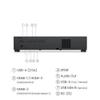
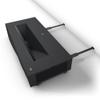
$3,499.00
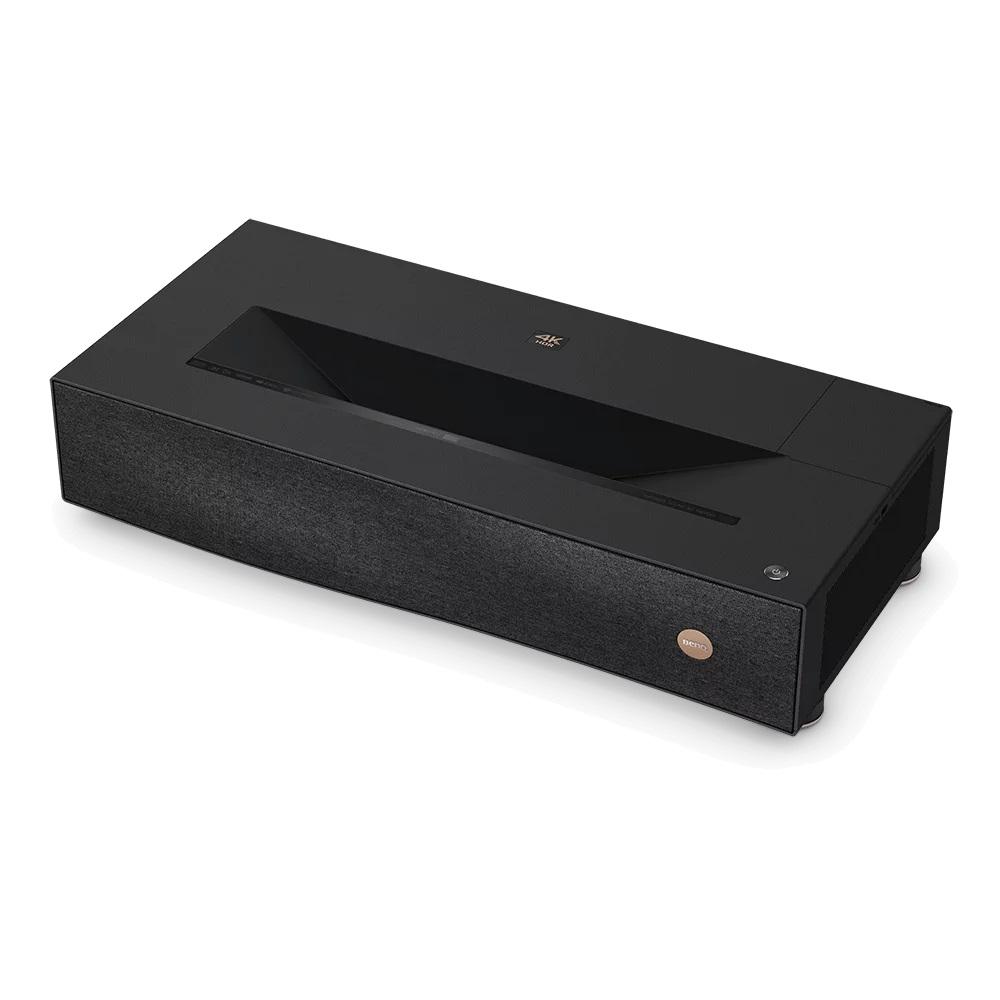
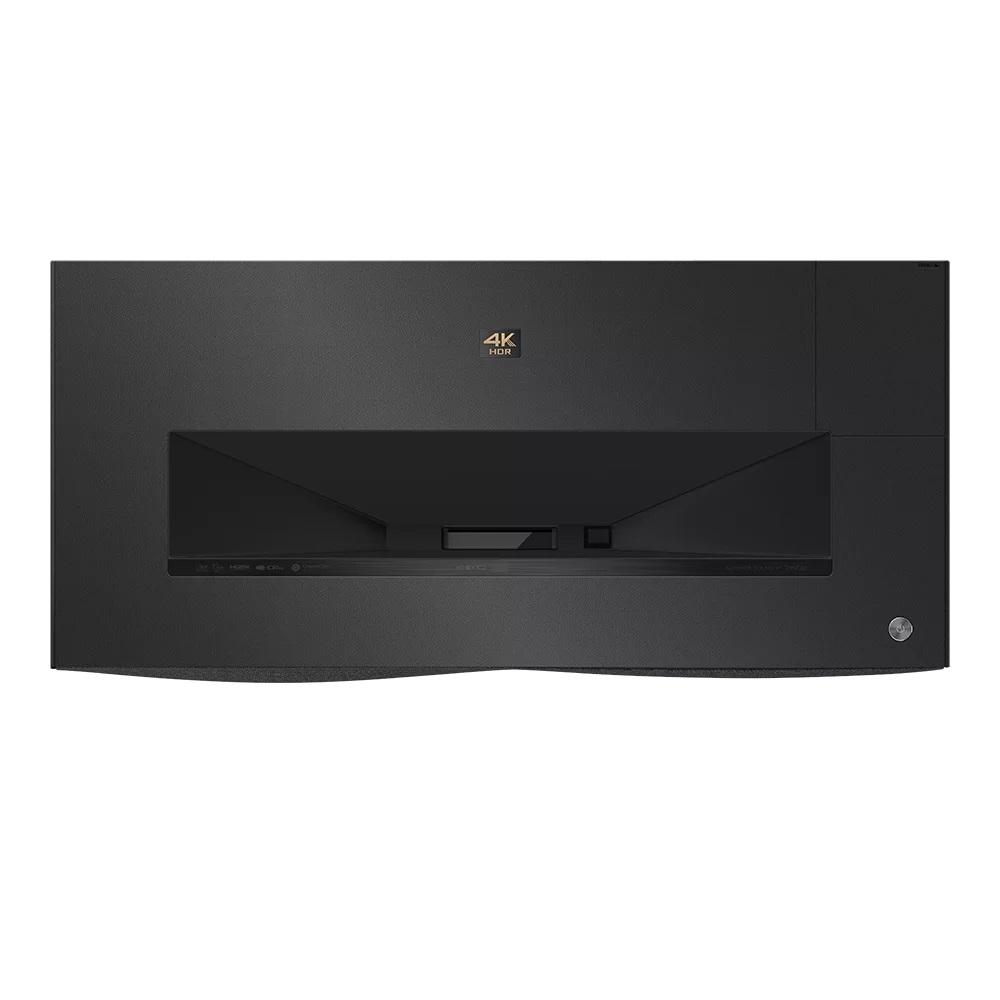
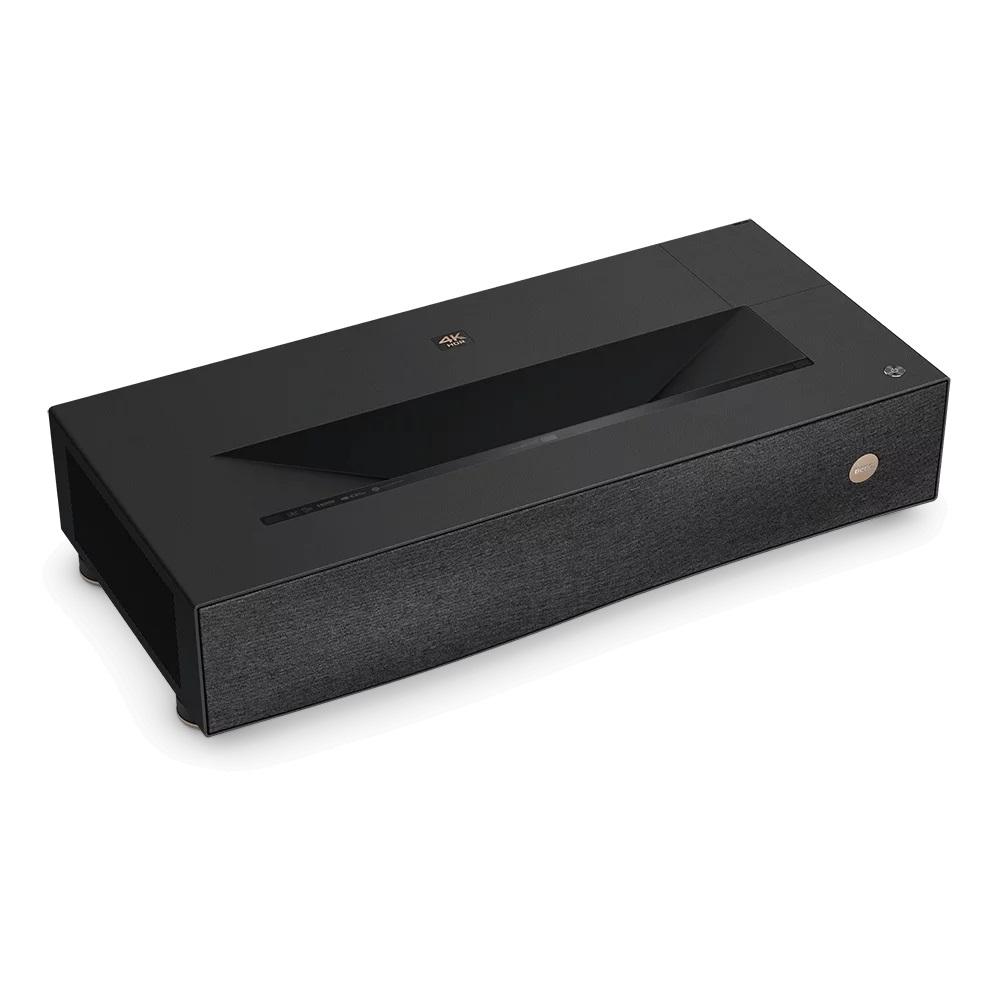
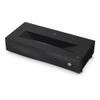
When BenQ released the V5000i in late 2023, they made quite a splash in the ultra-short throw (UST) projector market. After extensive testing, I can confidently say this projector brings some impressive innovations to home theaters, particularly for those seeking both cinema and gaming excellence.
The standout feature has to be the RGB triple laser system - a significant upgrade from traditional single-laser projectors. Instead of using a blue laser with color wheels (which can cause that annoying rainbow effect some viewers notice), this projector uses three separate lasers for red, green, and blue. In practice, this means incredibly accurate colors and deeper, more vibrant images. During our testing, the color accuracy was immediately noticeable, especially in HDR content where the wide color gamut really shines.
At 2,500 ANSI lumens, it's bright enough for most rooms with some ambient light, though you'll still want to control lighting for the best experience. In our dedicated theater room, it performed beautifully even with some accent lighting on, though direct sunlight will wash out the image like any projector.
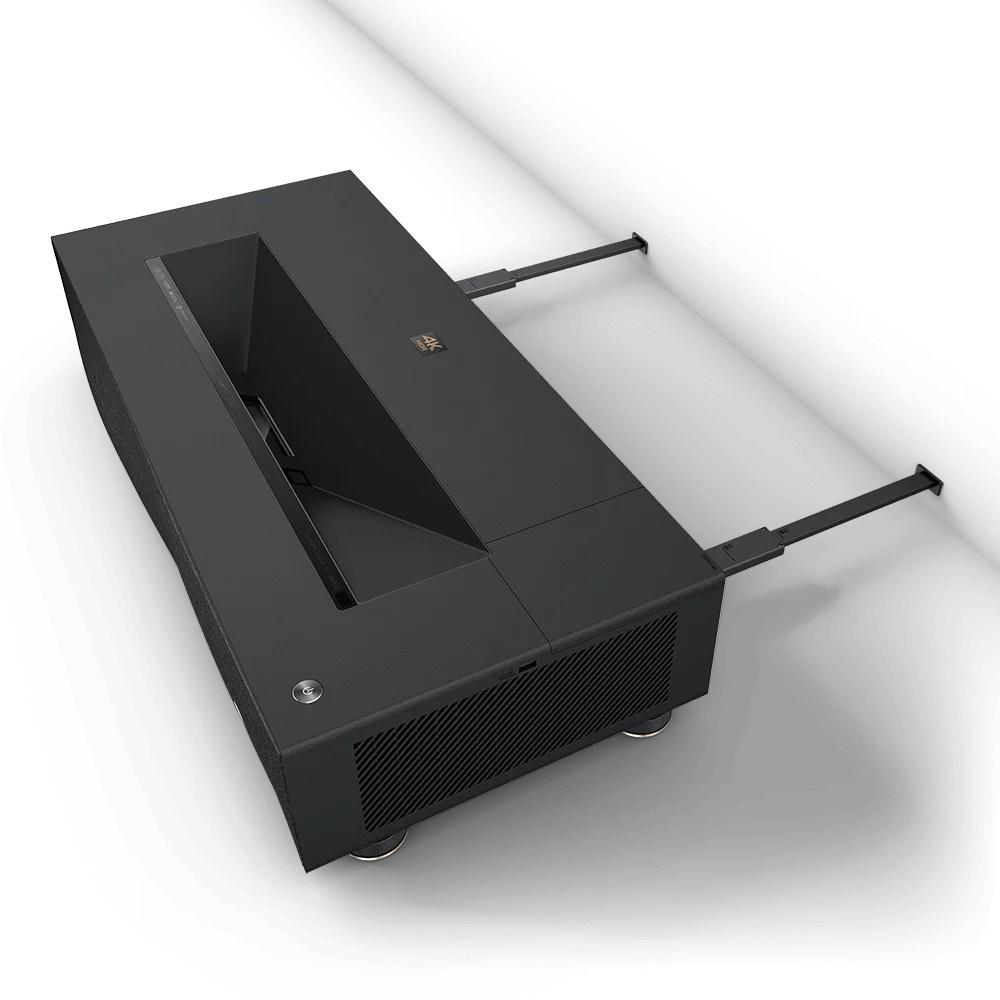
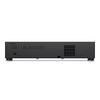
One of the clever things about UST projectors like the V5000i is their placement flexibility. Unlike traditional projectors that need to sit far back in the room, this one sits just inches from your wall. For perspective, you can get a massive 100-inch image with the projector just 8.2 inches from the screen. This makes it perfect for rooms where mounting a traditional projector isn't practical.
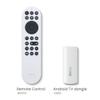
The Android TV 11 interface is snappy and intuitive, though you'll want to plug in your streaming devices via HDMI for the best performance. The built-in 40W Trevolo speakers are surprisingly capable - much better than typical projector speakers - though any serious home theater setup should pair this with a proper sound system.
This is where the V5000i really separates itself from many competitors. The gaming features include:
In practical terms, this means you can game on a massive screen without the lag issues that plague many projectors. During our testing with both PS5 and PC games, the responsiveness was impressive - you really can game competitively on this.
The HDR performance deserves special mention. With HDR10+ support, the projector can adjust brightness and contrast on a scene-by-scene basis, making for more dynamic and impactful images. The local contrast enhancer divides the picture into 1,000 zones for independent adjustment, which helps maintain detail in both bright and dark scenes.
Color accuracy out of the box is excellent, though we did spend some time fine-tuning using the 11-step color temperature controls. For movie buffs, the cinema preset offers the most accurate colors, while the vivid mode can add some punch for sports or gaming in brighter rooms.
After extensive testing in various scenarios, here's where the V5000i really shines:
At $3,499, the BenQ V5000i sits in the premium segment of UST projectors. However, when you consider it can replace both a high-end TV and gaming display while offering a much larger image size, the value proposition becomes clearer. The three-year warranty also adds peace of mind to the investment.
Since its launch, BenQ has released several firmware updates improving HDR handling and gaming performance. The Android TV platform also continues to receive updates, keeping the smart features current. Compared to previous BenQ models, the V5000i represents a significant step forward in color accuracy and gaming capabilities.
The BenQ V5000i represents a sweet spot for home theater enthusiasts who want both excellent movie performance and gaming capabilities. The RGB triple laser technology, combined with sophisticated HDR handling and gaming features, makes it a versatile performer that can serve as the centerpiece of a modern entertainment setup.
While it's not the brightest UST projector available (the Epson LS800 offers more lumens), and it's not the least expensive (the Hisense PX2-Pro offers similar features for less), it strikes an excellent balance between performance, features, and usability. The combination of accurate colors, low input lag, and smart features makes it a compelling choice for those who want a premium home theater experience without the space requirements of traditional projectors.
For anyone considering a high-end TV or projector upgrade, the V5000i deserves serious consideration, particularly if you value both movie watching and gaming performance. Just remember to budget for a good ALR (Ambient Light Rejecting) screen to get the best possible image quality - it's an essential pairing for any UST projector.
For home theater enthusiasts seeking both premium movie and gaming performance, the V5000i is worth the investment. At $3,499, it offers excellent value with its RGB triple laser technology, low input lag, and versatile smart features. However, consider your room's lighting conditions and budget, as there are less expensive options available for those who don't need gaming features.
The V5000i outputs 2,500 ANSI lumens, which is bright enough for most home theater environments with controlled lighting. While it can handle some ambient light, it performs best in darker rooms or with proper light control.
This UST projector can display images from 80" to 120" diagonal. For optimal performance, a 100" screen from just 8.2 inches away is recommended, making it perfect for most home theater setups.
Yes, the V5000i excels at gaming with its 17.9ms input lag at 4K/60Hz and support for 1080p up to 240Hz. It includes ALLM (Auto Low Latency Mode) and HDMI 2.1, making it ideal for modern gaming consoles.
Yes, for best results, an ALR (Ambient Light Rejecting) screen designed for UST projectors is strongly recommended. Standard projector screens won't optimize the image quality and may result in reduced contrast and brightness.
The RGB triple laser light source is rated for approximately 20,000 hours of use, which means about 10 years of viewing at 5-6 hours per day before any significant brightness reduction.
The V5000i can effectively replace a traditional TV in most home theater setups, offering a larger screen size and superior color accuracy. However, it works best in rooms with some light control and proper screen mounting options.
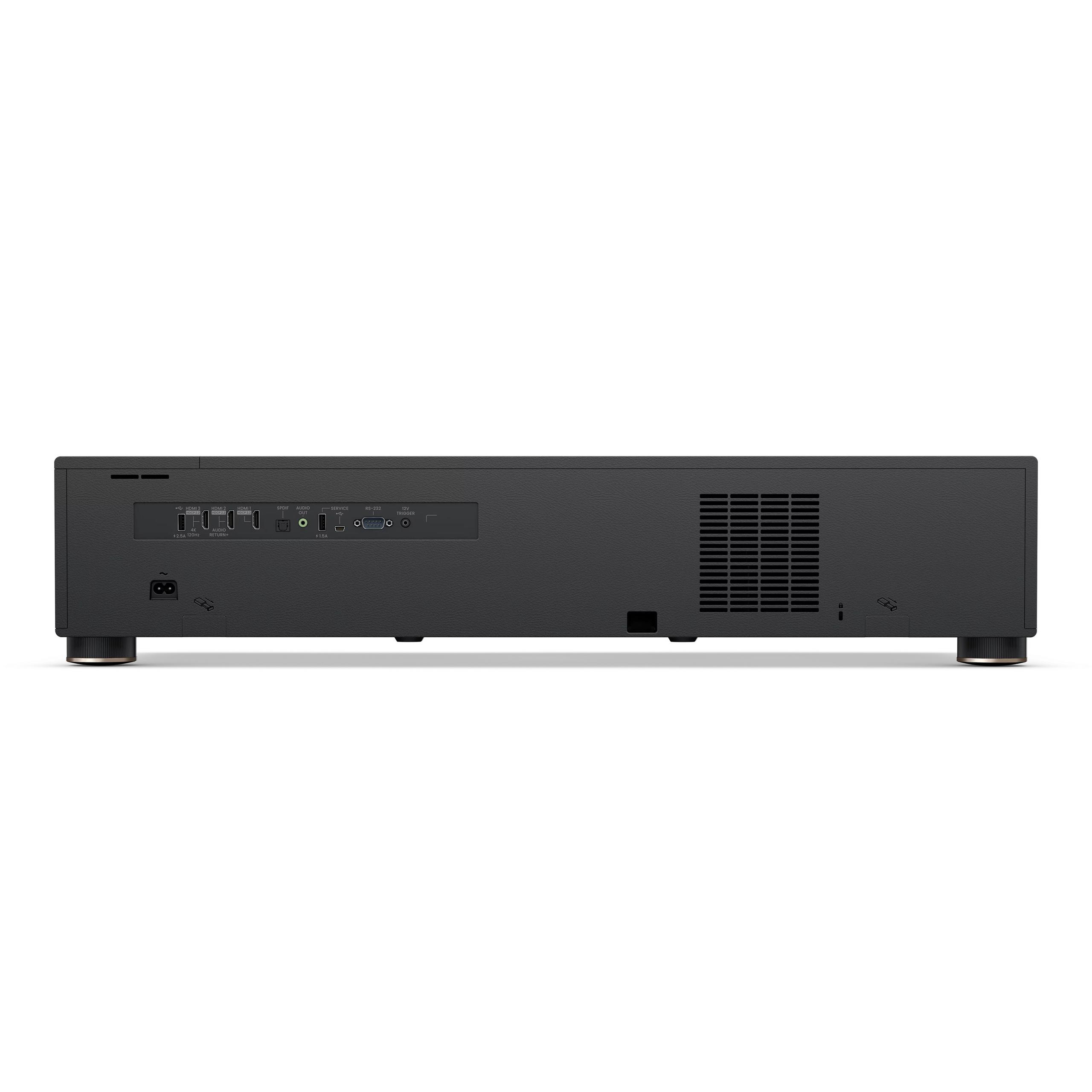
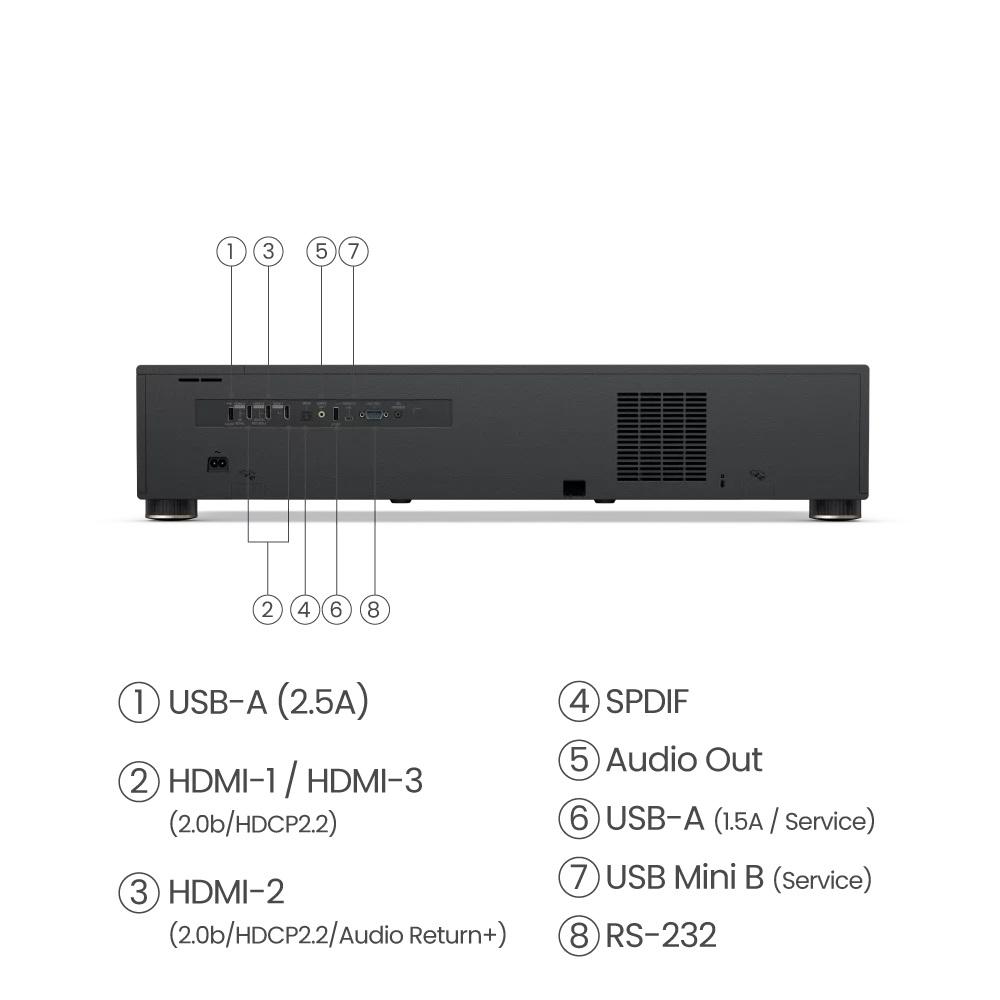
The built-in 40W Trevolo speakers are better than most projectors, but for a true home theater experience, you'll want to connect external speakers or a sound system through the eARC-enabled HDMI port.
Yes, with Android TV 11 built-in and multiple HDMI inputs, the V5000i supports 4K streaming from both native apps and external devices like Apple TV or Roku.
Setup is straightforward with powered focus adjustment and geometric correction tools. However, proper placement and screen alignment are crucial for UST projectors, so take time to position it correctly for the best image quality.
We've done our best to create useful and informative comparisons to help you decide what product to buy. Our research has used advanced automated methods to create this comparison and perfection is not possible - please contact us for corrections or questions. These are the sites we've researched in the creation of this article: projectorscreen.com - projectorscreen.com - avsforum.com - techradar.com - projectorreviews.com - projectorcentral.com - digitaltrends.com - digitaltrends.com - ooberpad.com
| BenQ V5000i Ultra Short Throw 4K Laser Projector |
|---|
| Brightness - Critical for ambient light performance: 2,500 ANSI Lumens |
| Light Source - RGB Triple Laser delivers superior color accuracy: 98% DCI-P3, 95% BT.2020 coverage |
| Throw Ratio - Determines how close to wall it needs to be: 0.25:1 (100" image from 8.2 inches) |
| Input Lag - Lower numbers mean better gaming response: 17.9ms at 4K/60Hz |
| HDR Support - Better HDR means more dynamic range in bright/dark scenes: HDR10+, HDR10, HLG |
| Resolution - Native resolution affects image clarity: 4K UHD (3840 x 2160) |
| Contrast Ratio - Higher contrast means better black levels: 3,000,000:1 Dynamic |
| Gaming Support - Determines compatibility with modern consoles: 4K/60Hz, 1080p up to 240Hz |
| Sound System - Built-in audio quality for standalone use: 40W Trevolo speakers with Dolby/DTS |
| Smart Platform: Android TV 11 |
| Dimensions: 30 x 6.4 x 14 inches (H x W x D) |
| Weight: 29 pounds |
The Samsung Premiere 9 ($5,999) distinguishes itself with significantly higher brightness, outputting 3,450 lumens compared to the BenQ's 2,500. This substantial difference makes the Samsung a more versatile choice for bright rooms and larger screen sizes, maintaining vibrant images even with ambient light present. Its sophisticated 40W 2.2.2 channel Dolby Atmos audio system provides notably better built-in sound, creating a more immersive experience with clear dialogue and effective spatial audio effects. The Tizen OS interface, while more limited in app selection than Android TV, offers a more polished and responsive smart TV experience with excellent integration with other Samsung devices.
The premium price point of the Samsung positions it as a more premium offering, justified primarily by its superior brightness and better HDR handling. While both projectors use triple laser technology, the Samsung's implementation, combined with its quantum processor, delivers more impactful HDR highlights and better overall contrast in real-world viewing conditions. However, unless you specifically need the extra brightness for daytime viewing or larger screen sizes, or value the superior built-in audio system, the significant price difference may be hard to justify. The Samsung excels in versatility and ease of use, but its gaming performance, while adequate, doesn't match the BenQ's lower input lag and higher refresh rate capabilities.
🤖 Read Detailed Comparison
👌Samsung Premiere 9 4K Ultra Short Throw Laser Projector Details
💵 See Samsung Premiere 9 4K Ultra Short Throw Laser Projector Price
The Hisense PL2 represents a compelling alternative at $2,200, offering slightly higher brightness at 2,700 ANSI lumens and the ability to project larger images up to 150 inches. While it uses a single blue laser system instead of RGB triple laser, it still achieves impressive color performance with 85% DCI-P3 coverage and adds Dolby Vision support. The Google TV interface feels more polished than BenQ's Android TV implementation, and the larger maximum screen size provides more flexibility for different room configurations.
Where the Hisense PL2 really shines is in its value proposition, delivering 90% of the BenQ's performance at roughly two-thirds the price. While it doesn't match the gaming capabilities or absolute color accuracy of the BenQ, the differences in regular viewing scenarios are subtle enough that many users might not notice them. The Hisense PL2 particularly excels in brighter rooms thanks to its higher brightness output, making it an excellent choice for multipurpose living spaces where ambient light control isn't always possible. Unless you specifically need the BenQ's gaming features or require reference-level color accuracy, the Hisense PL2 offers better value for most home theater enthusiasts.
🤖 Read Detailed Comparison
👌Hisense PL2 4K Ultra Short Throw Projector Details
💵 See Hisense PL2 4K Ultra Short Throw Projector Price
The BenQ V5010i builds upon the V5000i's foundation with a redesigned audio system featuring dedicated tweeters and woofers that promises improved bass response. While sharing the same core specifications including 2,500 ANSI lumens brightness, RGB triple laser technology, and 4K resolution, the V5010i maintains the excellent color coverage and HDR support that made its predecessor successful. The updated model continues to support key gaming features like Auto Low Latency Mode and high refresh rates, suggesting similar gaming performance to the V5000i.
However, as a newer release from September 2024, the V5010i currently lacks extensive real-world testing and user feedback to fully validate its performance claims. While it appears to offer comparable image quality and features, potential buyers should weigh the benefits of waiting for more comprehensive reviews against the proven track record of the V5000i. The V5010i's value proposition will become clearer once pricing stabilizes and more user experiences emerge, particularly regarding its enhanced audio capabilities and any potential refinements to the user experience.
🤖 Read Detailed Comparison
👌BenQ V5010i 4K Ultra Short Throw Projector Details
💵 See BenQ V5010i 4K Ultra Short Throw Projector Price
The Formovie C3 ($1,899) stands out as a compelling alternative for budget-conscious home theater enthusiasts, offering remarkable value while still delivering impressive 4K performance. Despite using a simpler single laser + phosphor light source, it manages to produce excellent contrast and black levels that rival more expensive projectors. Its compact design and shorter throw ratio allow for slightly more flexible placement options, needing only 22 inches from the wall for a 100-inch image.
However, compared to the BenQ V5000i, the Formovie C3 shows its limitations in bright room performance and gaming capabilities. The lack of built-in streaming apps for markets outside China means you'll need to factor in the cost of an external streaming device. While it performs admirably in controlled lighting conditions for movie watching, its lower brightness and color accuracy make it less versatile for mixed-use scenarios. Still, at nearly half the price of the BenQ, it represents an excellent entry point into premium UST projection technology for those primarily focused on movie viewing in dedicated home theater spaces.
🤖 Read Detailed Comparison
👌Formovie C3 Ultra Short Throw Laser Projector Details
💵 See Formovie C3 Ultra Short Throw Laser Projector Price
The Ultimea Thor T60 ($4,999) stands out primarily for its impressive 4,000 ANSI lumens brightness rating, which is significantly higher than the V5000i's 2,500 lumens. This extra brightness makes it more versatile for challenging viewing environments, particularly in living rooms with large windows or significant ambient light. The Thor T60 also claims a wider color gamut, covering 120% of BT.2020, and features a slightly shorter throw ratio that allows for more flexible placement options. Its RGB triple laser system and Dolby Vision support contribute to excellent picture quality, especially in HDR content.
However, the Thor T60's premium price point puts it in a different value category, costing $1,500 more than the V5000i. While its superior brightness justifies the cost for bright-room scenarios, it lacks the comprehensive gaming features and verified performance metrics of the V5000i. The Thor T60 also has less documented smart features and streaming capabilities, making it a more specialized choice for users who prioritize maximum brightness over gaming performance and smart functionality. For dedicated home theater use in controlled lighting, the extra brightness may not justify the additional investment.
🤖 Read Detailed Comparison
👌Ultimea Thor T60 4K Ultra Short Throw Laser Projector Details
💵 See Ultimea Thor T60 4K Ultra Short Throw Laser Projector Price
The $2,799 Formovie Theater Premium stands out with its Dolby Vision support and excellent value proposition, offering similar core performance at a significantly lower price point. Its triple laser system delivers impressive color coverage with 107% of the BT.2020 color space, and the slightly shorter throw ratio of 0.21:1 allows for more flexible placement options. The inclusion of Dolby Vision processing is particularly noticeable when watching HDR content, providing more natural and dynamic image quality compared to standard HDR10.
While the Formovie offers compelling features, it does have some trade-offs compared to the BenQ. Its lower brightness rating of 2,200 ISO lumens means it performs best in controlled lighting conditions, and its gaming performance, while adequate for casual use, can't match the BenQ's exceptional input lag times. However, for movie enthusiasts who prioritize image quality in a dedicated home theater setting, the $2,799 Formovie Theater Premium represents an excellent value, delivering premium features and performance at a more accessible price point.
🤖 Read Detailed Comparison
👌Formovie Theater Premium 4K Ultra Short Throw Projector Triple Laser UST with Dolby Vision 2200 ISO Lumen Laser TV Details
💵 See Formovie Theater Premium 4K Ultra Short Throw Projector Triple Laser UST with Dolby Vision 2200 ISO Lumen Laser TV Price
The Epson EpiqVision Ultra LS650 ($2,499) stands out primarily for its impressive 3,600 lumens brightness output, which is significantly higher than the BenQ's 2,500 lumens. This extra brightness makes it particularly well-suited for rooms with ambient light, offering more flexibility in viewing conditions. While it doesn't offer true 4K resolution like the BenQ, Epson's 4K PRO-UHD pixel-shifting technology still delivers sharp, detailed images that most viewers will find perfectly satisfactory. The Epson also features a more robust built-in audio system with its 50W Yamaha 2.1 setup, making it a more complete out-of-the-box solution for those who might not immediately invest in external speakers.
At $1,000 less than the BenQ, the Epson LS650 represents excellent value for users who prioritize brightness over absolute color accuracy and gaming performance. Its laser phosphor light source still provides consistent, long-lasting illumination rated for 20,000 hours, and its Android TV integration offers the same convenient smart features. While it may not match the BenQ's gaming capabilities or color reproduction, it excels as a versatile home entertainment projector that can handle everything from casual gaming to sports watching in varying light conditions. For many users, especially those setting up in multipurpose rooms rather than dedicated home theaters, the Epson's combination of high brightness and lower price point might actually make it the more practical choice.
🤖 Read Detailed Comparison
👌Epson EpiqVision Ultra LS650 4K Ultra Short Throw Laser Projector Details
💵 See Epson EpiqVision Ultra LS650 4K Ultra Short Throw Laser Projector Price
The NexiGo Aurora Pro ($2,449) stands out with its impressive contrast ratio and gaming capabilities, offering 1080p gaming at up to 240Hz with just 9ms input lag. Its RGB laser light source delivers excellent color coverage, though it requires more calibration than the BenQ to achieve optimal accuracy. The $1,050 lower price point makes it an attractive alternative, especially for users who already have streaming devices and don't need the more polished smart TV interface.
Where the NexiGo really shines is in dedicated home theater environments with controlled lighting. Its 6,000:1 dynamic contrast ratio and Dolby Vision support create stunning dark scenes, while its 60W sound system with dedicated woofers and tweeters outperforms most built-in projector audio. However, it lacks the BenQ's refined out-of-box performance and ambient light handling capabilities, making it less versatile for bright room viewing. For buyers prioritizing dark room performance and gaming features over color accuracy and smart features, the NexiGo Aurora Pro offers compelling value.
🤖 Read Detailed Comparison
👌NexiGo Aurora Pro 4K Ultra Short Throw Projector Details
💵 See NexiGo Aurora Pro 4K Ultra Short Throw Projector Price
The AWOL Vision LTV-2500 offers some compelling advantages over the BenQ V5000i, particularly in brightness and value. With 3,000 ANSI lumens compared to the BenQ's 2,500, it performs noticeably better in rooms with ambient light, making it more versatile for everyday viewing scenarios. At $2,999, it's also $500 less expensive while still delivering excellent picture quality and impressive HDR performance. The AWOL's superior brightness and more straightforward setup process make it an attractive option for users who prioritize hassle-free operation over precise calibration options.
However, the AWOL falls short in gaming performance and lacks some of the advanced features found in the BenQ. While the AWOL Vision LTV-2500 provides good overall image quality, it doesn't match the BenQ's color accuracy or calibration flexibility. For dedicated home theater enthusiasts who want the absolute best in gaming performance and color precision, the BenQ's additional cost may be justified. But for those primarily interested in movies, TV shows, and casual viewing in varying light conditions, the AWOL represents excellent value and might be the more practical choice.
🤖 Read Detailed Comparison
👌AWOL Vision LTV-2500 Ultra Short Throw 4K Projector Details
💵 See AWOL Vision LTV-2500 Ultra Short Throw 4K Projector Price
The AWOL Vision LTV-3500 Pro ($6,999) stands out primarily for its superior brightness at 3,500 ANSI lumens, which is 1,000 lumens brighter than the BenQ V5000i. This additional brightness makes a noticeable difference in rooms with ambient light, maintaining vivid colors and contrast even during daytime viewing. The AWOL also delivers broader HDR support with Dolby Vision capability and covers an impressive 107% of the BT.2020 color space, resulting in more nuanced and vibrant images, particularly in HDR content. Its gaming performance is slightly better too, offering 8ms input lag at 1080p/120Hz compared to the BenQ's 17.9ms.
However, these improvements come at a significant price premium - nearly double the cost of the V5000i. While the AWOL's enhanced performance is noticeable, particularly in brighter environments or for dedicated home theater use, many users might find it difficult to justify the additional expense. Unless you specifically need the extra brightness for a bright viewing environment or are a dedicated enthusiast seeking the absolute best picture quality, the BenQ V5000i offers a more balanced price-to-performance ratio for most users.
🤖 Read Detailed Comparison
👌AWOL Vision LTV-3500 Pro Ultra Short Throw Projector Details
💵 See AWOL Vision LTV-3500 Pro Ultra Short Throw Projector Price
The Leica Cine 1 stands out with its superior 3,000-lumen brightness and exceptional Summicron lens system, which delivers noticeably better edge-to-edge clarity and reduced chromatic aberration compared to other UST projectors. The premium optics and higher brightness make it particularly effective in rooms where ambient light can't be fully controlled. However, at $9,495, it commands a significant premium over the BenQ V5000i, and while it excels in pure cinema performance, it lacks specific gaming optimizations and smart TV features.
In real-world use, the Leica Cine 1's advantages become most apparent when viewing high-quality 4K content in challenging lighting conditions. The superior lens quality and brightness provide a more refined image with better uniformity across the entire screen. However, these improvements, while noticeable to enthusiasts, may not justify the substantial price difference for many users, especially considering the BenQ's stronger gaming capabilities and more comprehensive feature set. The Leica Cine 1 is best suited for serious home theater enthusiasts who prioritize pure image quality over versatility and value.
🤖 Read Detailed Comparison
👌Leica Cine 1 120" 4K Ultra Short Throw Laser Projector Details
💵 See Leica Cine 1 120" 4K Ultra Short Throw Laser Projector Price
The Hisense PX3-PRO delivers impressive real-world advantages that make it a compelling alternative, starting with its significantly brighter 3,000 ANSI lumen output that provides 20% more light than the BenQ V5000i for better performance in rooms with ambient lighting. Its support for both Dolby Vision and HDR10+ gives it a clear edge for streaming content, automatically optimizing Netflix, Disney+, and Apple TV+ movies scene by scene for better contrast and color accuracy. The projector's flexibility shines with its 80-150 inch screen size range, allowing installations that the BenQ simply can't accommodate, while its 50-watt Harman Kardon audio system with Dolby Atmos processing delivers genuinely impressive built-in sound that reduces the need for external speakers.
Perhaps most importantly, the Hisense PX3-PRO typically costs several hundred dollars less while offering this broader feature set, making it an exceptional value proposition for most home theater applications. Its Google TV platform provides a more polished smart TV experience with better app integration and Netflix certification that some projector platforms lack. While it can't match the BenQ V5000i's specialized gaming performance or precise color calibration capabilities, the Hisense PX3-PRO covers more use cases effectively – from bright room viewing and large screen installations to premium streaming content and built-in audio quality. For users who aren't competitive gamers or color accuracy purists, the Hisense delivers superior overall value by excelling at the features that matter most for everyday home entertainment.
🤖 Read Detailed Comparison
👌Hisense PX3-PRO Projector Details
💵 See Hisense PX3-PRO Projector Price
The XGIMI Aura 2 ($2,699) stands out with its innovative Dual Light 2.0 technology, which combines LED and laser sources to reduce laser speckle while maintaining excellent color accuracy. Its standout feature is the powerful 60W Harman Kardon sound system, which delivers room-filling audio that may eliminate the need for external speakers in many setups. The projector also impresses with its streamlined setup process and built-in Android TV, though the interface can occasionally feel sluggish.
While it can't quite match the V5000i's gaming performance or color accuracy, the Aura 2 delivers 99% of the DCI-P3 color space and offers sufficient brightness for most viewing environments at 2,300 ISO lumens. At $800 less than the BenQ, it represents excellent value for users primarily focused on movie and TV content. The inclusion of Dolby Vision support and the upcoming IMAX Enhanced certification (via firmware update) further strengthen its position as a compelling alternative for home theater enthusiasts who don't need advanced gaming features.
🤖 Read Detailed Comparison
👌XGIMI Aura 2 Ultra Short Throw Laser Projector Details
💵 See XGIMI Aura 2 Ultra Short Throw Laser Projector Price
The LG CineBeam HU915QB ($6,499) stands out with its higher 3,000 ANSI lumens brightness and premium build quality, making it particularly well-suited for rooms with ambient light. Its superior light output combines with a slightly better throw ratio of 0.19:1, allowing for closer wall placement than the BenQ. The LG's contrast performance and color accuracy are marginally better in controlled lighting conditions, though the real-world difference is subtle to most viewers. Where the LG really shines is in its refined image processing and superior dark room performance, making it an excellent choice for dedicated home theater spaces.
However, at nearly double the price of the BenQ, the LG's advantages become harder to justify for many users. While it offers premium performance, the improvements in picture quality are incremental rather than transformative. The LG also lacks the gaming-focused features of the BenQ, with higher input lag and no specific gaming optimizations. For buyers setting up a dedicated home theater room where absolute performance is the priority and budget isn't a primary concern, the LG makes a compelling case. But for most users, the additional investment may be better spent on other aspects of their home theater setup, such as a premium screen or audio system.
🤖 Read Detailed Comparison
👌LG CineBeam HU915QB 4K UHD Laser Projector Details
💵 See LG CineBeam HU915QB 4K UHD Laser Projector Price
The Epson EpiqVision Ultra LS800 ($3,448) stands out primarily for its exceptional brightness, delivering 4,000 lumens compared to the BenQ's 2,500 lumens. This significant brightness advantage makes it more versatile for everyday viewing in well-lit rooms and spaces where controlling ambient light isn't practical. The Epson also features a class-leading 0.16:1 throw ratio, allowing for even closer wall placement, and its 3LCD technology eliminates any possibility of rainbow artifacts that some viewers might notice with DLP projectors.
While the Epson can't match the BenQ's superior color accuracy or advanced gaming features, it offers compelling value for buyers primarily concerned with bright-room performance and versatility. Its Yamaha-tuned audio system provides better built-in sound, and the shorter throw ratio offers more flexible placement options. However, home theater enthusiasts and serious gamers might miss the BenQ's HDR10+ support, HDMI 2.1 capabilities, and wider color gamut, making the Epson better suited for casual viewing environments where convenience and brightness take priority over absolute picture quality.
🤖 Read Detailed Comparison
👌Epson EpiqVision Ultra LS800 3LCD Laser Projector Details
💵 See Epson EpiqVision Ultra LS800 3LCD Laser Projector Price
The Formovie Theater stands out with its superior color performance, offering an impressive 107% coverage of the Rec.2020 color space and slightly higher 2,800 ANSI lumens brightness. At $2,999, it presents a compelling value proposition, costing $500 less while delivering excellent picture quality for movie viewing. The inclusion of three HDMI 2.1 ports and Dolby Vision support adds to its appeal for home theater enthusiasts, while its certified Netflix app integration provides a more seamless streaming experience.
However, where the BenQ V5000i excels in gaming performance and installation flexibility, the Formovie Theater takes a more focused approach on pure home theater performance. While both projectors utilize advanced triple laser technology, the Formovie Theater prioritizes color accuracy and brightness over gaming features, making it an ideal choice for dedicated home theater spaces where movies and TV content are the primary focus. Its slightly more efficient 0.23:1 throw ratio also means it can be placed marginally closer to the wall, though the difference is minimal in real-world applications.
🤖 Read Detailed Comparison
👌Formovie Theater Ultra Short Throw Triple Laser Projector Details
💵 See Formovie Theater Ultra Short Throw Triple Laser Projector Price
The VAVA Chroma ($3,499) stands out with its impressive 60W Harman Kardon sound system, which delivers noticeably better built-in audio than the BenQ's speakers. This makes it particularly appealing for users who want a simpler setup without external speakers, or for multipurpose rooms where a full audio system isn't practical. While its ALPD 4.0 triple laser system can't match the BenQ's color accuracy, it still produces bright, engaging images that most viewers will find satisfying, especially in rooms with some ambient light.
However, the VAVA lacks several key features that home theater enthusiasts might miss. It doesn't support HDR10+ or advanced gaming features, and its Android TV implementation isn't as refined. At the same price point as the BenQ, the VAVA Chroma represents better value for users who prioritize simplicity and built-in audio quality over cutting-edge performance. The choice ultimately comes down to use case - hardcore gamers and home theater enthusiasts will prefer the BenQ's superior image quality and gaming features, while those seeking a more straightforward, all-in-one solution might find the VAVA Chroma's balance of features more appealing.
🤖 Read Detailed Comparison
👌VAVA Chroma Triple Laser Projector Details
💵 See VAVA Chroma Triple Laser Projector Price
The Hisense PL1 offers compelling value at $2,497, featuring Dolby Vision HDR support and a more refined Google TV smart platform. Its superior 1,804:1 contrast ratio delivers deeper blacks and better shadow detail in dark scenes, while the broader 80-120 inch projection range provides more installation flexibility. Despite using a single blue laser light source, it still achieves respectable color performance with 85% DCI-P3 coverage, and its more compact 17-pound design makes installation and positioning significantly easier.
While the Hisense PL1 can't match the BenQ's gaming performance or peak brightness, it compensates with practical advantages for movie and TV viewing. The combination of Dolby Vision support, higher contrast ratio, and newer smart TV interface creates an excellent viewing experience at a substantially lower price point. The $1,000 saved could be invested in a quality ALR screen or sound system, making it a more practical choice for users primarily focused on movie and streaming content consumption. However, its 46.6ms input lag means serious gamers should carefully consider whether the cost savings justify the compromise in gaming performance.
🤖 Read Detailed Comparison
👌Hisense PL1 Laser Cinema Projector Details
💵 See Hisense PL1 Laser Cinema Projector Price
The Formovie 4K Max ($3,699) distinguishes itself with class-leading brightness, delivering 4,500 ANSI lumens compared to the BenQ V5000i's 2,500 lumens. This significant brightness advantage makes it considerably more versatile for rooms with ambient light or windows, maintaining vibrant images even during daytime viewing. Released in early 2024, it features the latest ALPD 3.0 laser technology and offers a larger maximum screen size of 200 inches. While its single laser system doesn't match the BenQ's color accuracy, it provides good overall picture quality and comes with advanced 8-point keystone correction for easier installation and alignment.
For $200 more than the BenQ V5000i, the Formovie 4K Max offers better value for users who need flexibility in their viewing environment. Its higher brightness and larger maximum screen size make it more adaptable to various room conditions and viewing preferences. However, it falls short in gaming performance with higher input lag and lacks the refined color accuracy of the BenQ's triple laser system. The decision between these projectors largely depends on your room conditions and priorities - the Formovie excels in brightness and versatility, making it the better choice for multipurpose rooms and environments where lighting control is limited.
🤖 Read Detailed Comparison
👌Formovie 4K Max Ultra Short Throw Laser Projector Details
💵 See Formovie 4K Max Ultra Short Throw Laser Projector Price
The Hisense PX2-PRO offers compelling value at $2,997, featuring Dolby Vision HDR support and an impressive 107% coverage of the BT.2020 color space. Its ability to project up to a 130-inch image provides greater flexibility for larger spaces, and the inclusion of Google TV delivers a more refined smart platform experience with better content recommendations and app integration. The TriChroma RGB laser system maintains excellent color accuracy and brightness consistency over its 25,000-hour rated lifespan, while the automatic geometric correction via smartphone makes initial setup significantly easier for the average user.
Where the Hisense PX2-PRO falls short is primarily in gaming performance, with its 30-35ms input lag being nearly twice that of the BenQ, and it lacks support for high refresh rates beyond 60Hz. However, its implementation of Dolby Vision and Dolby Atmos creates a more cinema-like experience for movie watching, and the $500 lower price point makes it a more attractive option for home theater enthusiasts who prioritize movie and TV viewing over gaming. The 30W Dolby Atmos sound system, while not as powerful as the BenQ's Trevolo speakers, provides better spatial audio effects with compatible content, though most users will likely pair either projector with an external sound system.
🤖 Read Detailed Comparison
👌Hisense PX2-PRO TriChroma 4K Ultra Short Throw Laser Cinema Projector with Dolby Vision, Dolby Atmos, & Google TV Details
💵 See Hisense PX2-PRO TriChroma 4K Ultra Short Throw Laser Cinema Projector with Dolby Vision, Dolby Atmos, & Google TV Price
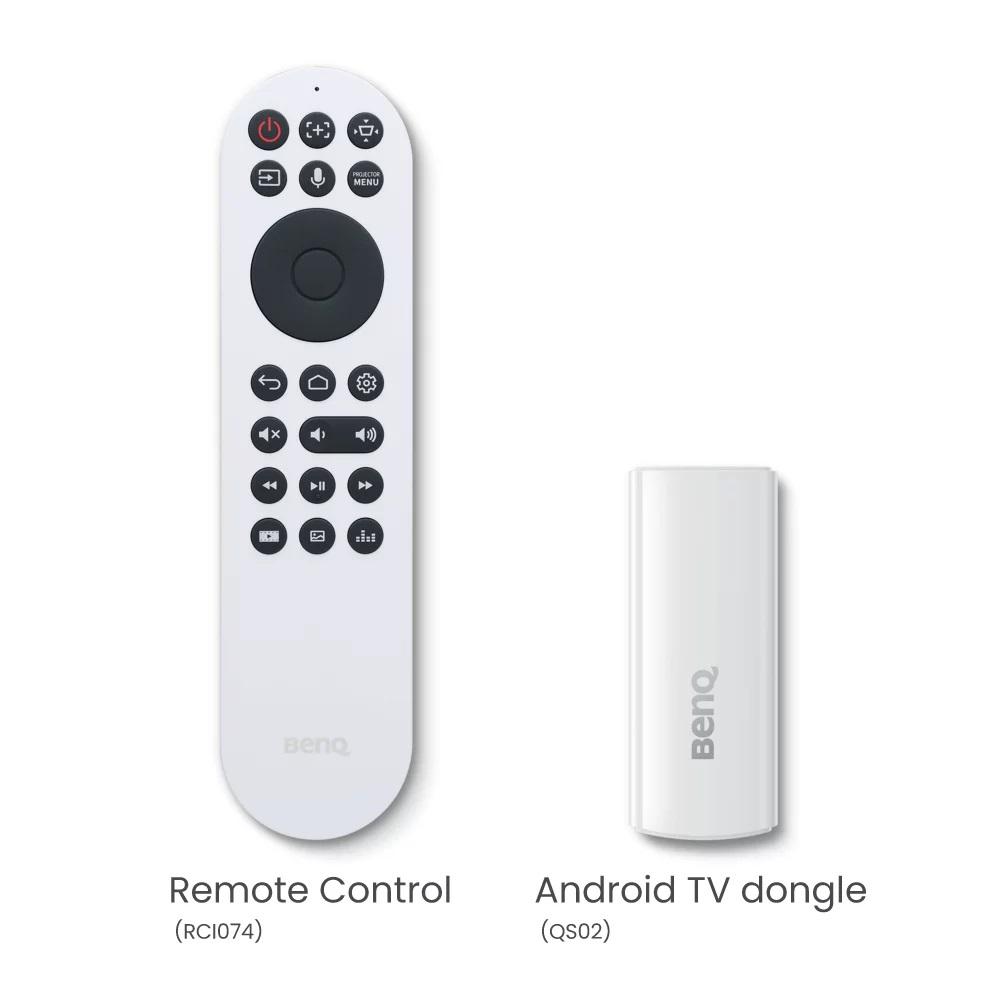
The Yaber K300s takes a radically different approach to UST projection, prioritizing portability and accessibility over maximum performance. At just 4 pounds and measuring 11.4" × 8.8" × 3.3", it's genuinely portable in ways that transform how you think about projector usage – you can easily move it between rooms, take it to friends' houses, or set it up temporarily for outdoor movie nights. The compact design doesn't sacrifice essential features, as the K300s includes fully integrated smart TV functionality with over 7,000 apps including Netflix, eliminating the need for external streaming devices that the V5000i requires through its Android TV dongle. The dual 15W JBL speakers deliver surprisingly robust audio with deep bass response, often eliminating the need for external speakers in smaller spaces where the projector excels.
While the Yaber K300s can't match the V5000i's native 4K resolution or 2,500-lumen brightness, it delivers impressive 1080p performance with vibrant colors covering 150% NTSC and adequate 1,000 ANSI lumens for controlled lighting environments. The real advantage lies in its exceptional value proposition – delivering roughly 70% of premium UST performance at approximately 30% of the cost. This makes laser projection technology accessible to mainstream buyers who previously couldn't justify the investment, including renters, students, or families wanting big-screen entertainment without permanent room modifications. For users who primarily stream content from Netflix, YouTube, and gaming consoles rather than premium 4K Blu-rays, the Yaber K300s provides a thoroughly satisfying large-screen experience with the flexibility to adapt to different living situations and the convenience of an all-in-one entertainment solution.
🤖 Read Detailed Comparison
👌Yaber K300s Triple Laser Ultra Short Throw Projector Details
💵 See Yaber K300s Triple Laser Ultra Short Throw Projector Price
The Epson QS100 represents a different philosophy entirely, prioritizing raw brightness and professional integration over the V5000i's all-in-one convenience. With an exceptional 4,500 lumens of both color and white brightness, the Epson QS100 produces nearly double the light output, making it genuinely usable in bright living rooms during daytime hours and capable of supporting massive 130 to 160-inch screens while maintaining image quality. Its 3LCD technology with blue laser phosphor eliminates rainbow artifacts entirely, while professional features like ISF certification, IP control compatibility with Crestron and Control4 systems, and advanced geometry correction make it ideal for custom home theater installations. The Epson QS100 also offers superior placement flexibility with its 0.16:1 throw ratio, allowing it to sit closer to screens in tight spaces.
This brightness advantage comes at the cost of color accuracy and convenience features that define the V5000i experience. The Epson QS100 completely lacks smart TV functionality, requiring external streaming devices, and includes no built-in audio system, necessitating additional investment in soundbars or home theater speakers. While it supports gaming with ALLM and 4K@60Hz capability, it can't match the V5000i's comprehensive gaming features like 4K@120Hz support and ultra-low input lag modes. The Epson QS100 typically commands a significant price premium and represents a higher total system cost when factoring in required accessories, though users dealing with challenging bright room conditions or needing screens larger than 110 inches will find its brightness capabilities justify the investment where the V5000i would struggle to deliver acceptable image quality.
🤖 Read Detailed Comparison
👌Epson QS100 4K PRO-UHD Ultra Short Throw Projector Details
💵 See Epson QS100 4K PRO-UHD Ultra Short Throw Projector Price
The AWOL Vision LTV-3000 Pro delivers significantly higher brightness at 3,000 peak lumens, making it substantially better for bright living rooms and daytime viewing where the BenQ might struggle with image washout. Its standout feature is Dolby Vision support—extremely rare among ultra short throw projectors—which provides superior tone mapping and dynamic range for premium Netflix, Disney+, and 4K Blu-ray content. The AWOL also covers a wider 107% BT.2020 color gamut and includes comprehensive smart home integration with Control4 and Crestron systems, plus full 3D capability for users with existing movie collections. Most importantly, it typically costs several hundred dollars less than the BenQ while delivering these premium features.
However, the AWOL Vision LTV-3000 Pro comes with significant setup challenges that may frustrate many users. Its default color calibration is notoriously poor with a heavy blue cast that makes skin tones look unnatural, requiring either professional calibration or extensive manual adjustment to achieve the image quality it's capable of producing. The dual-interface experience with Android 9.0 plus Fire TV Stick creates unnecessary complexity compared to the BenQ's seamless native Android TV integration. While the AWOL Vision LTV-3000 Pro offers better raw specifications and value on paper, it demands more technical expertise and patience to reach its potential, making it better suited for enthusiasts willing to invest time in optimization rather than users who want great performance immediately.
🤖 Read Detailed Comparison
👌AWOL Vision LTV-3000 Pro 4K Ultra Short Throw Laser Projector Details
💵 See AWOL Vision LTV-3000 Pro 4K Ultra Short Throw Laser Projector Price
The Hisense L9Q represents a flagship approach to UST projection, delivering nearly double the brightness at 5,000 ANSI lumens compared to the V5000i's 2,500 lumens. This dramatic brightness advantage transforms real-world usability—the L9Q maintains vivid colors and strong contrast even in well-lit living rooms during daytime viewing, where the V5000i would appear washed out. Beyond brightness, the Hisense L9Q offers remarkable screen size flexibility from 80-200 inches compared to the V5000i's fixed 100-inch limitation, and features superior color accuracy with 110% BT.2020 coverage and Pantone validation. Its integrated Devialet 116W 6.2.2 surround sound system also aims to eliminate the need for external speakers entirely, representing a complete home theater solution rather than just a display device.
However, the Hisense L9Q comes at a significant cost premium and makes trade-offs that matter to specific users. Its 12ms input lag, while respectable, can't match the V5000i's gaming-optimized 8.7ms response time, and it lacks HDMI 2.1 support for high refresh rate gaming that serious gamers demand. The L9Q also consumes roughly double the power and offers only two HDMI ports versus the V5000i's three, plus it lacks 3D support entirely. For users who primarily game, are satisfied with 100-inch screens, or already have quality audio systems, the Hisense L9Q's premium features may not justify its substantially higher cost—making the V5000i's focused approach and competitive pricing the more practical choice for many buyers.
🤖 Read Detailed Comparison
👌Hisense L9Q Triple Laser Ultra Short Throw Projector Details
💵 See Hisense L9Q Triple Laser Ultra Short Throw Projector Price
Original price was: $499.99.$369.99Current price is: $369.99.
Original price was: $579.99.$318.99Current price is: $318.99.


Privacy Policy
Terms and Conditions - Affiliate Policy
Home Security
© Copyright 2008-2026.
11816 Inwood Rd #1211, Dallas, TX 75244