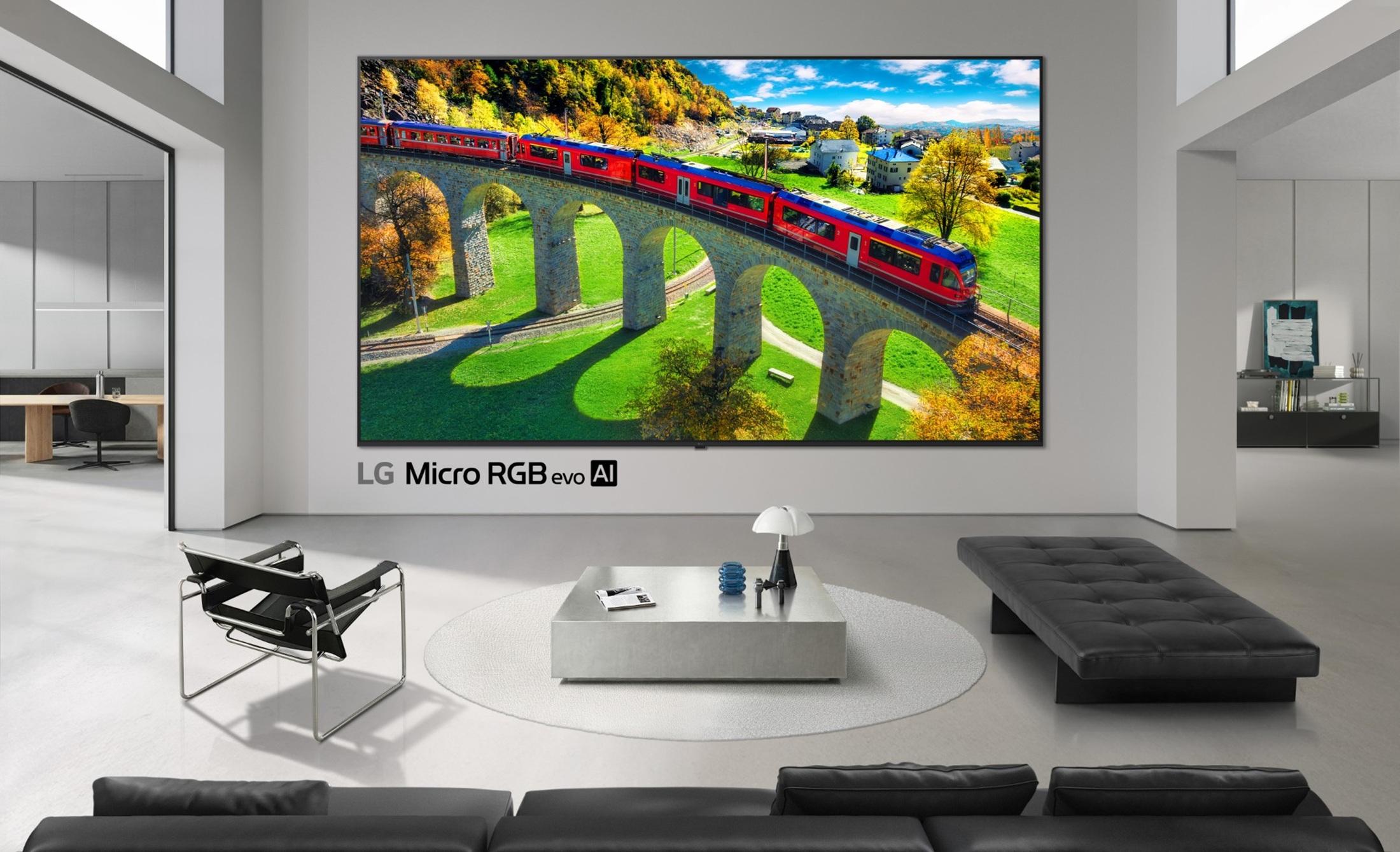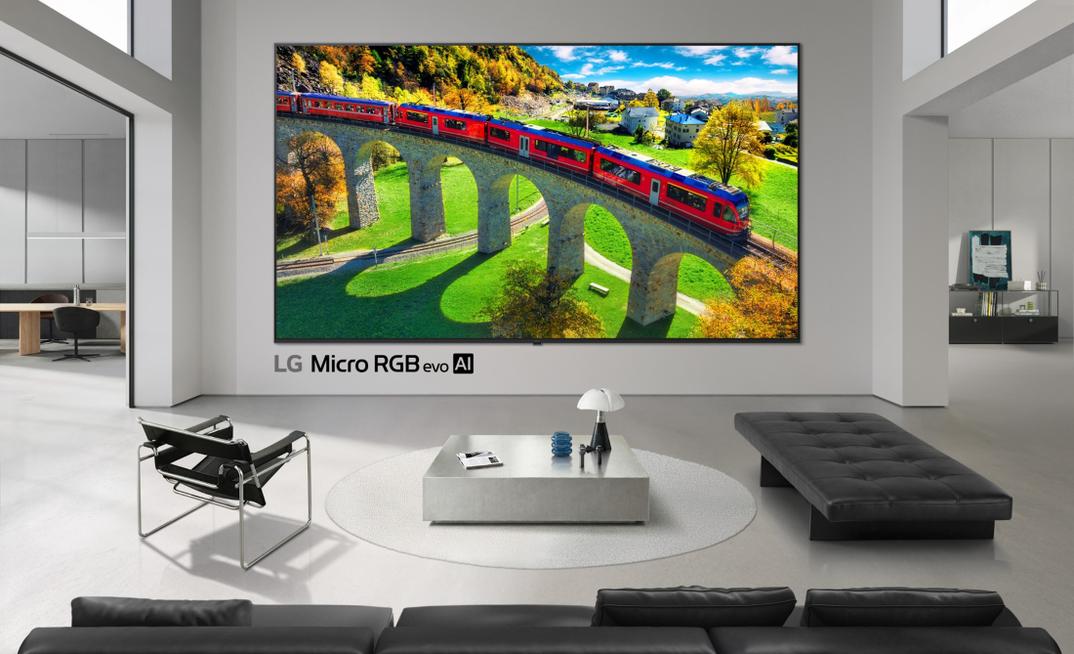
LG is heading into CES 2026 with a new kind of TV on display—literally. The company just revealed the Micro RGB evo, a new flagship LCD lineup that blends its Mini LED backlight tech with some of the precision processing found in its OLED models. It’s called the MRGB95, and it’s coming in some pretty massive sizes: 75, 86, and 100 inches.
But before you assume this is LG’s take on Micro LED (like Samsung’s wall-sized models), here’s the twist: it’s not that. The “Micro RGB evo” name is a little misleading. This is still an LCD TV, just one with a brand-new kind of backlight system and a whole lot of AI processing under the hood.
At its core, this TV is using Mini LED technology, but instead of relying on the usual white LEDs or a Quantum Dot layer, LG is using separate red, green, and blue (RGB) micro LEDs directly in the backlight. That means the colors don’t need to be filtered or boosted—they’re already baked in. The idea is that you get more accurate color, better brightness, and tighter control over contrast, especially in really bright or dark scenes.
That setup is powered by LG’s α11 (Alpha 11) AI Processor Gen 3. This is the same processor found in LG’s top-tier OLED models, but now it’s being used in an LCD TV for the first time. LG says the chip is smart enough to individually manage the RGB backlight zones and make adjustments in real time to sharpen up images and balance lighting.
Local dimming is a big part of what makes high-end LCD TVs look good, and this one has more than a thousand dimming zones. That’s not quite OLED-level precision (where each pixel lights up on its own), but it’s a solid number for a backlit TV.
LG is calling its system “Micro Dimming Ultra,” and while that sounds like a fancy buzzword, it’s really about making sure that contrast and detail hold up across different scenes—like when you’re watching a dark movie and don’t want everything to turn gray. It won’t beat OLED black levels, but it’s trying to get closer than what typical LCDs can offer.
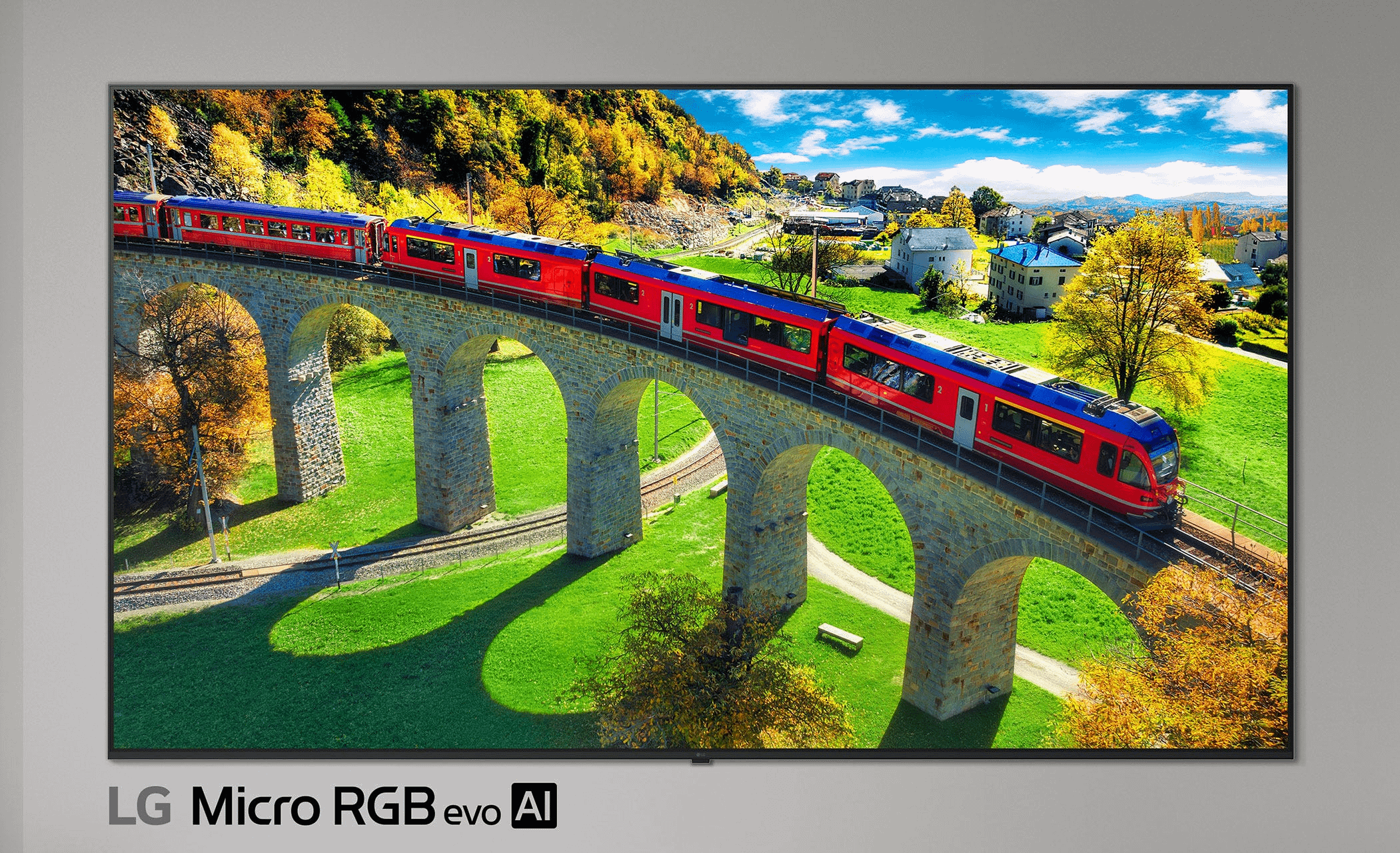
LG is putting a lot of emphasis on color performance here. Thanks to the RGB backlight, the company says the Micro RGB evo covers 100% of the BT.2020, DCI-P3, and Adobe RGB color gamuts. That’s a big range—especially for content creators or anyone watching HDR movies and shows.
Of course, how accurate that color looks in your living room will depend on your settings. Many TVs advertise wide color gamuts, but default modes like "Vivid" can still oversaturate things. Still, if tuned well, the MRGB95 could appeal to people who care about color precision.
The α11 processor isn’t just about lighting control—it also brings a new kind of AI upscaling to the table. LG calls it Dual Super Upscaling, and it works by processing two types of upscaling methods at once. The goal is to keep sharpness intact while maintaining a natural-looking picture, even when watching lower-resolution content.
On the software side, the Micro RGB evo runs LG’s latest webOS platform. That means support for the usual streaming apps, a personalized home screen ("My Page"), and voice-powered features like AI Concierge and a built-in chatbot. It’s designed to make finding content and adjusting settings a little easier, especially in a house with multiple users.
If you're looking for something to fit in a small apartment, this might not be the TV for you. LG is only releasing the MRGB95 in larger sizes—starting at 75 inches and going up to 100. That lines up with the trend of more people buying giant TVs for home theaters and shared living spaces.
There’s no official word yet on pricing, but given the tech involved—and the size of these screens—it’s safe to assume this won’t be in budget territory. LG also hasn’t shared details on HDMI ports or gaming features, but based on the processor’s capabilities, 4K at high refresh rates (possibly up to 165Hz) could be supported.
The MRGB95 isn’t the only model LG has planned. There are two more ranges coming: the MRGB85B, which is expected to be a more affordable version, and the MRGB9M, which includes LG’s updated ZeroConnect wireless box for cable-free setups. Both are expected to share many of the same smart features, but with some performance trade-offs depending on price.
Other brands like Samsung, Hisense, and TCL are also working on TVs with RGB LED backlights, so we’ll likely see even more options in this space throughout the next year. What LG is doing differently here is tying everything back to its OLED processing engine—and that could make a noticeable difference in picture quality.
“Achieving the utmost visual fidelity is the goal of any display, and with the LG Micro RGB evo, we have achieved a milestone previously thought impossible for this category,” said Park Hyoung-sei, president of the LG Media Entertainment Solution Company. “This launch marks the evolution of the RGB TV, redefining industry standards to offer uncompromising performance for customers who demand exceptional color accuracy.”
LG’s Micro RGB evo TV isn’t a radical reimagining of TV tech, but it’s definitely a fresh take on what LCDs can do—especially in large-screen formats. It combines familiar Mini LED concepts with a backlight structure that leans on separate RGB LEDs and a processor smart enough to manage it all.
If the real-world performance matches LG’s claims, the MRGB95 could be a strong option for people who want large screens, big brightness, and serious color—all without jumping into OLED or Micro LED territory. Pricing, availability, and hands-on impressions will be key, and with CES 2026 just around the corner, we won’t have to wait long to learn more.
Related Reading:






Privacy Policy
Terms and Conditions - Affiliate Policy
Home Security
© Copyright 2008-2026.
11816 Inwood Rd #1211, Dallas, TX 75244