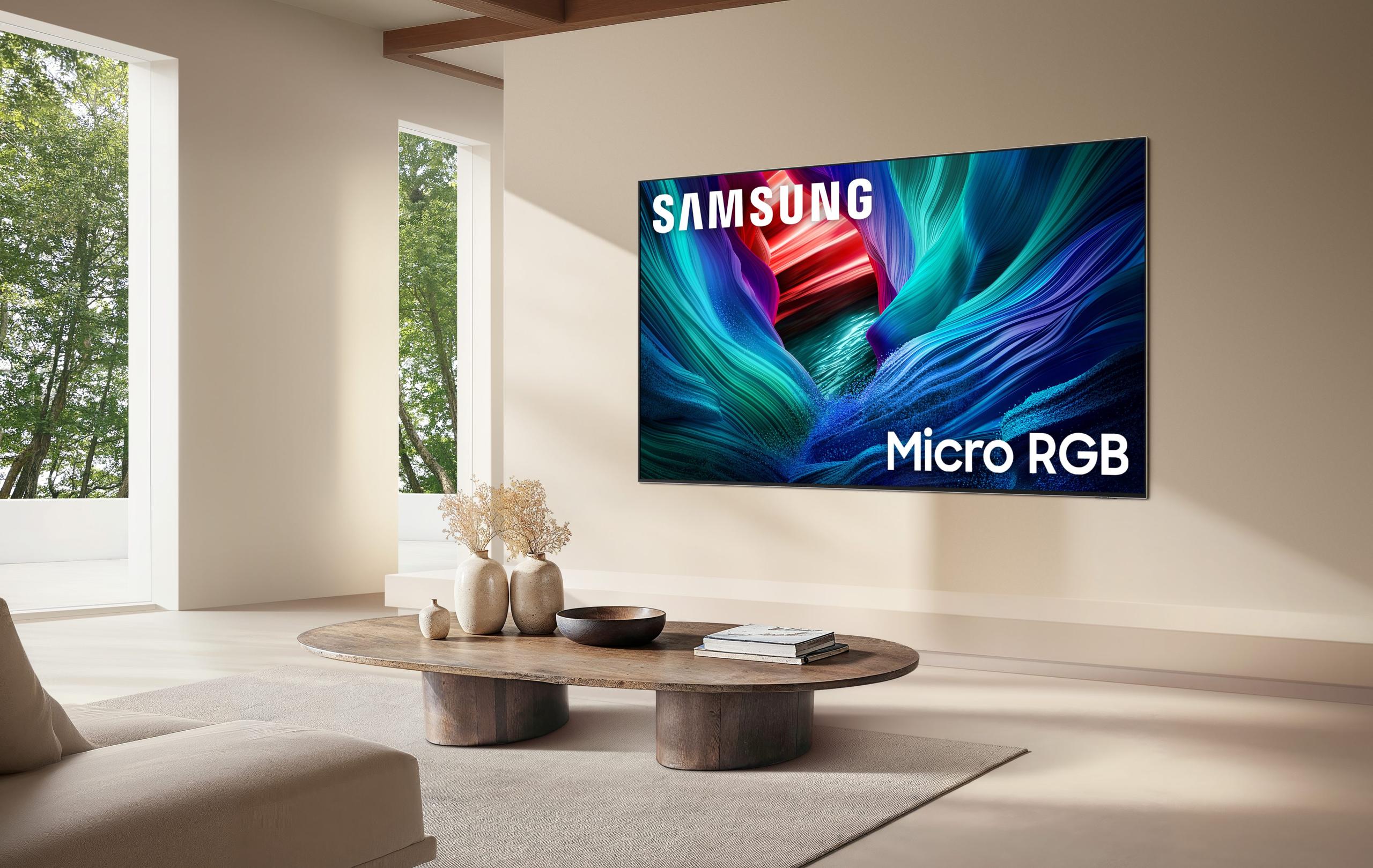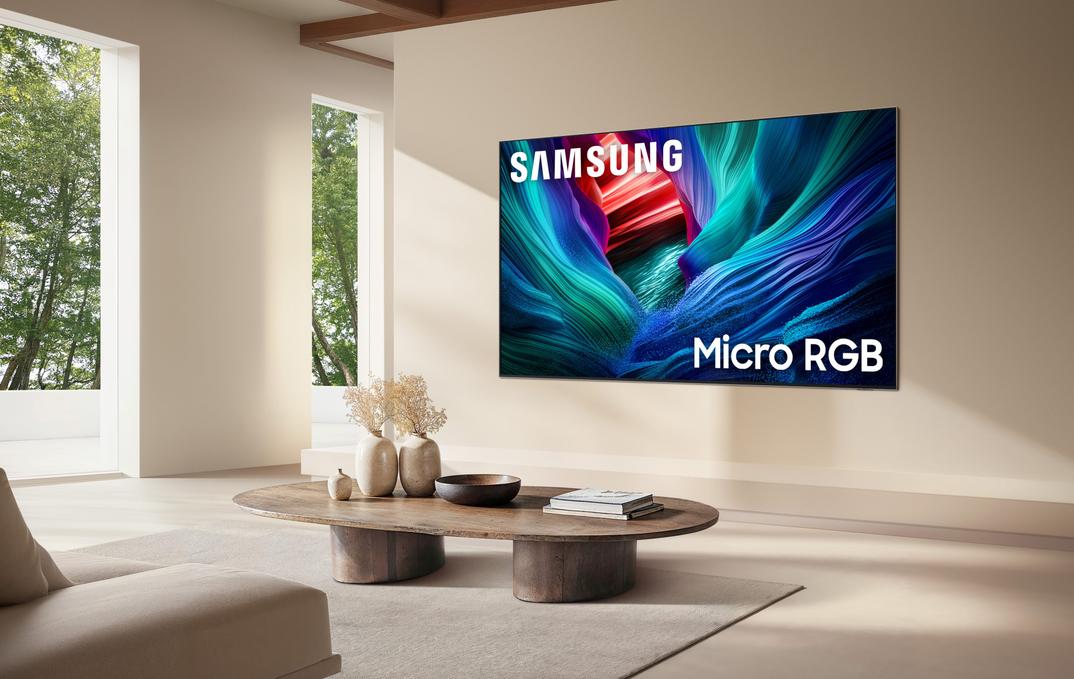
Samsung has just taken the wraps off something big—literally. The company’s new Micro RGB TV is a massive 115-inch model that uses a brand-new kind of backlight tech. It’s the first TV to feature a micro-scale RGB LED backlight, which might sound complicated, but here’s the short version: instead of the usual white or blue LEDs with filters in front, it uses tiny red, green, and blue LEDs—each less than the width of a human hair—placed directly behind the screen.
The idea is that by controlling each of these colors individually, the TV can produce incredibly accurate shades and tones. Samsung says the Micro RGB TV hits 100% of the BT.2020 color standard, a benchmark for wide color gamut set by the International Telecommunication Union. That’s rare for TVs, and the claim is backed by certification from VDE, a German engineering institute that tests displays for accuracy.
The price? $29,999 in the U.S. This is very much a high-end, early-adopter product. But like most new tech, there’s a good chance the concept will trickle down into more affordable models over the next few years.
Most TVs today—whether LED, QLED, or even some “mini-LED” sets—use a backlight made of white or blue LEDs shining through color filters. The Micro RGB TV skips that step. Instead, it uses individually controlled red, green, and blue micro LEDs in the backlight. This means it can fine-tune the light source itself for better control over brightness and color, rather than relying on filters to get the job done.
It’s powered by Samsung’s Micro RGB AI Engine, which adjusts colors and brightness in real time, frame by frame. It also has something called “Color Booster Pro” to lift dull-looking scenes and make them pop more—ideally without the over-processed look that some TV “enhancements” are notorious for.
Other features include:

The term “Micro-LED” gets thrown around a lot, so let’s break it down. In a true Micro-LED display (like the ones Samsung shows off at trade shows), each pixel is its own microscopic LED that emits red, green, or blue light directly. That means perfect blacks, extremely high brightness, and no burn-in. The downside? They’re insanely expensive and mostly exist in commercial installations or prototypes.
The Micro RGB TV isn’t quite that. Instead, it uses RGB micro LEDs as a backlight for an LCD panel. You’re still looking through an LCD layer, but the backlight is much more advanced than traditional white LED systems. Think of it as the middle ground between mini-LED (today’s premium backlight tech) and full Micro-LED.
Should OLED worry about this? Well, OLED still has a major strength: pixel-level control. Each pixel turns itself completely off to make blacks truly black, something backlit TVs—no matter how advanced—still can’t do quite as well.
That said, OLED can’t get as bright as LED-based TVs, and it’s more vulnerable to burn-in over time. RGB Micro-LED backlighting could offer an interesting alternative: better color accuracy, potentially higher brightness, and a much longer lifespan than OLED panels. It’s not replacing OLED just yet, but it gives buyers another high-end option to consider.

Samsung isn’t the only brand experimenting with RGB backlights. Hisense has its own take: the 116UX RGB Mini-LED TV, which also uses red, green, and blue LEDs instead of white ones. But there are some differences in how the two brands approach the tech.
| Feature | Samsung Micro RGB | Hisense RGB-MiniLED |
| Color coverage | 100% BT.2020 | Official: up to 95%; reported ~97% |
| Backlight design | Sub-100µm micro RGB LEDs for fine control | RGB LED clusters with local dimming |
| Brightness | Not officially stated | Claimed up to 8k-10k nits |
| AI processing | Micro RGB AI Engine + Color Booster Pro | Hi-View AI Engine X |
| Smart platform | Tizen OS + Bixby + Vision AI | Google TV + Dolby Vision IQ |
| Price | $29,999 (U.S.) | $29,999 (U.S.) |
Hisense’s model goes for extreme brightness—8,000-10,000 nits is huge, especially for HDR highlights—while Samsung’s play is all about microscopic precision in the backlight itself. Both are trying to get as close as possible to OLED-like color control while keeping LED’s brightness and durability advantages.
Samsung and Hisense might be making the most noise right now, but they’re not the only ones experimenting with RGB backlighting. A few other big names in the TV world are getting ready to join the race.
Sony has confirmed it’s working on its own RGB Mini-LED TVs, with the next-generation Bravia 10 model expected to be the first to feature the tech. Instead of the usual white LEDs with filters, Sony plans to use red, green, and blue LEDs directly in the backlight—similar in concept to Samsung and Hisense.
Powered by its XR Backlight Master Drive system, the goal is to deliver richer color volume, better saturation, and more detail in both highlights and shadows. The Bravia 10 isn’t expected until around 2026, and early signs suggest it’ll land in the same ultra-premium price tier as Samsung’s and Hisense’s flagship RGB models.
TCL has also been mentioned as one of the companies exploring RGB Mini-LED technology. While the brand hasn’t announced a release date yet, many expect TCL’s first RGB Mini-LED TVs to arrive by 2026, with the promise of more affordable options than the giant, high-priced models we’re seeing today.
Here’s a quick refresher on where these technologies land:
Samsung’s Micro RGB sits between RGB Mini-LED and true Micro-LED, aiming to bring some of the benefits of emissive displays without the astronomical price tag of full Micro-LED.
So, who is this TV for? Right now, this is for serious home theater enthusiasts with both the budget and the wall space for a 115-inch screen. At $29,999, it’s not going to be a mainstream pick anytime soon. But the fact that Samsung says smaller sizes are coming suggests this could eventually show up in more living-room-friendly formats.
If you’re into movies, sports, or gaming and want cutting-edge LED tech without going OLED, this could be a tempting option—once it’s available in more practical sizes and at lower prices.




Privacy Policy
Terms and Conditions - Affiliate Policy
Home Security
© Copyright 2008-2026.
11816 Inwood Rd #1211, Dallas, TX 75244