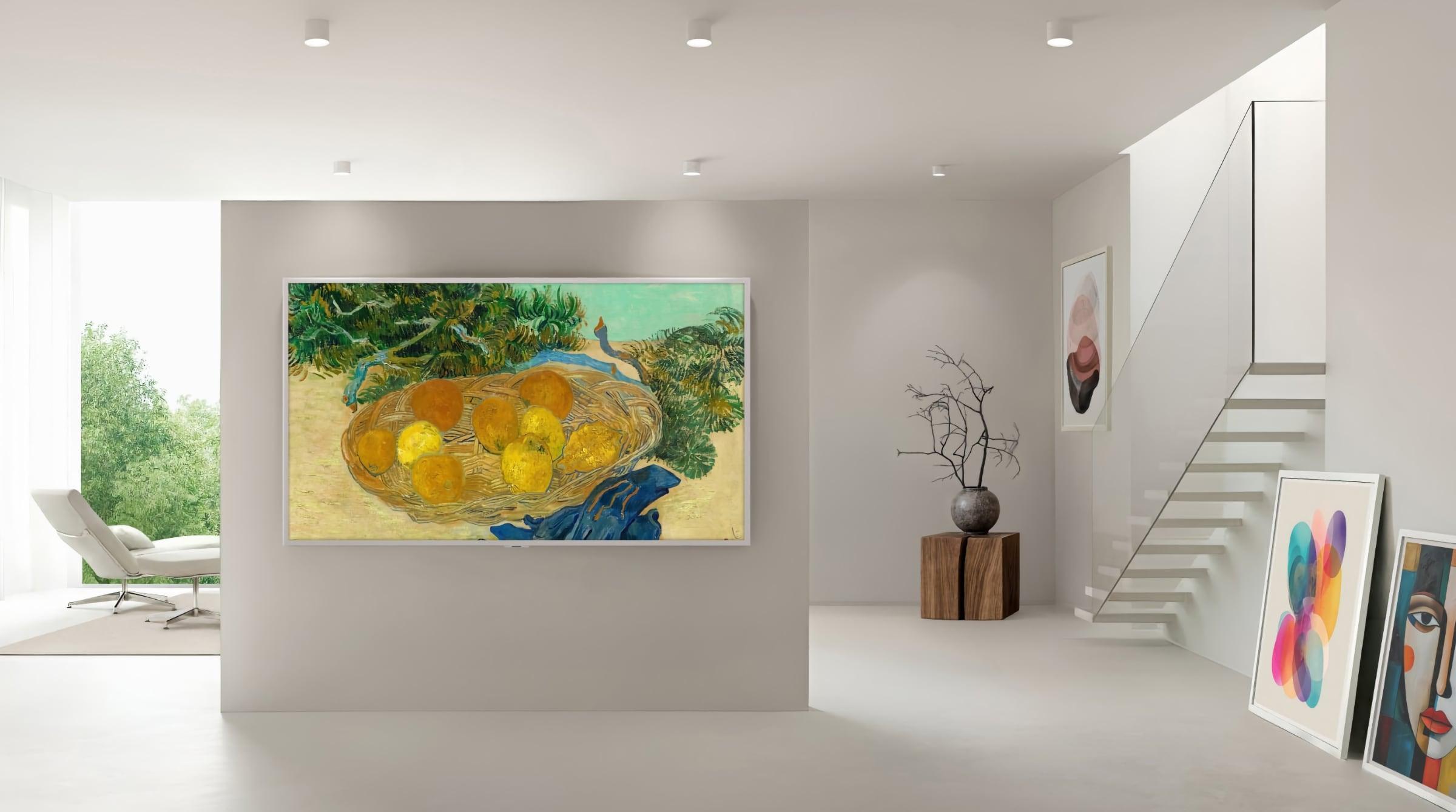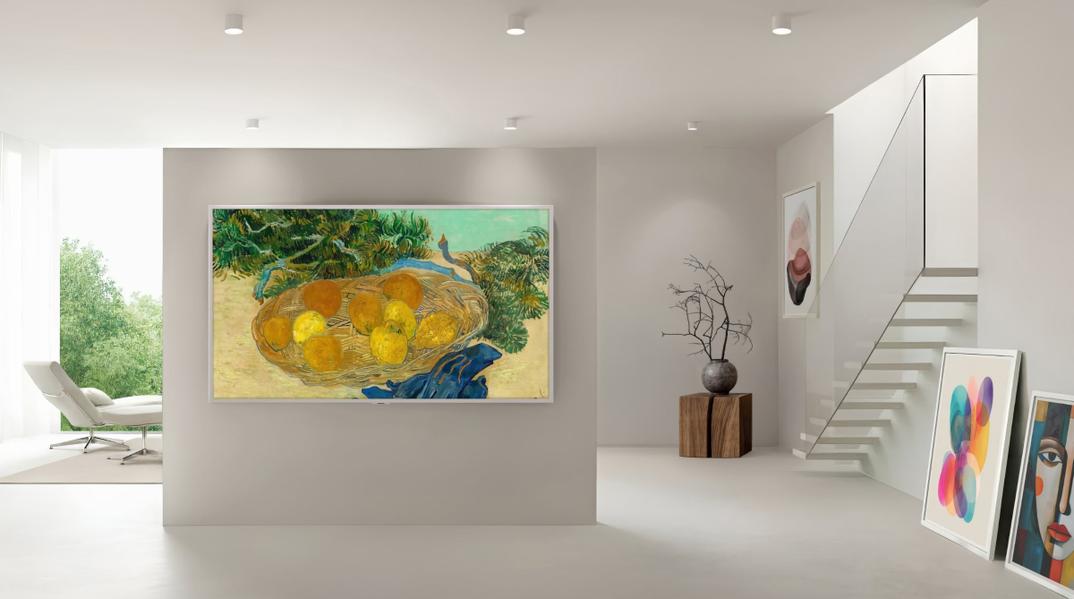
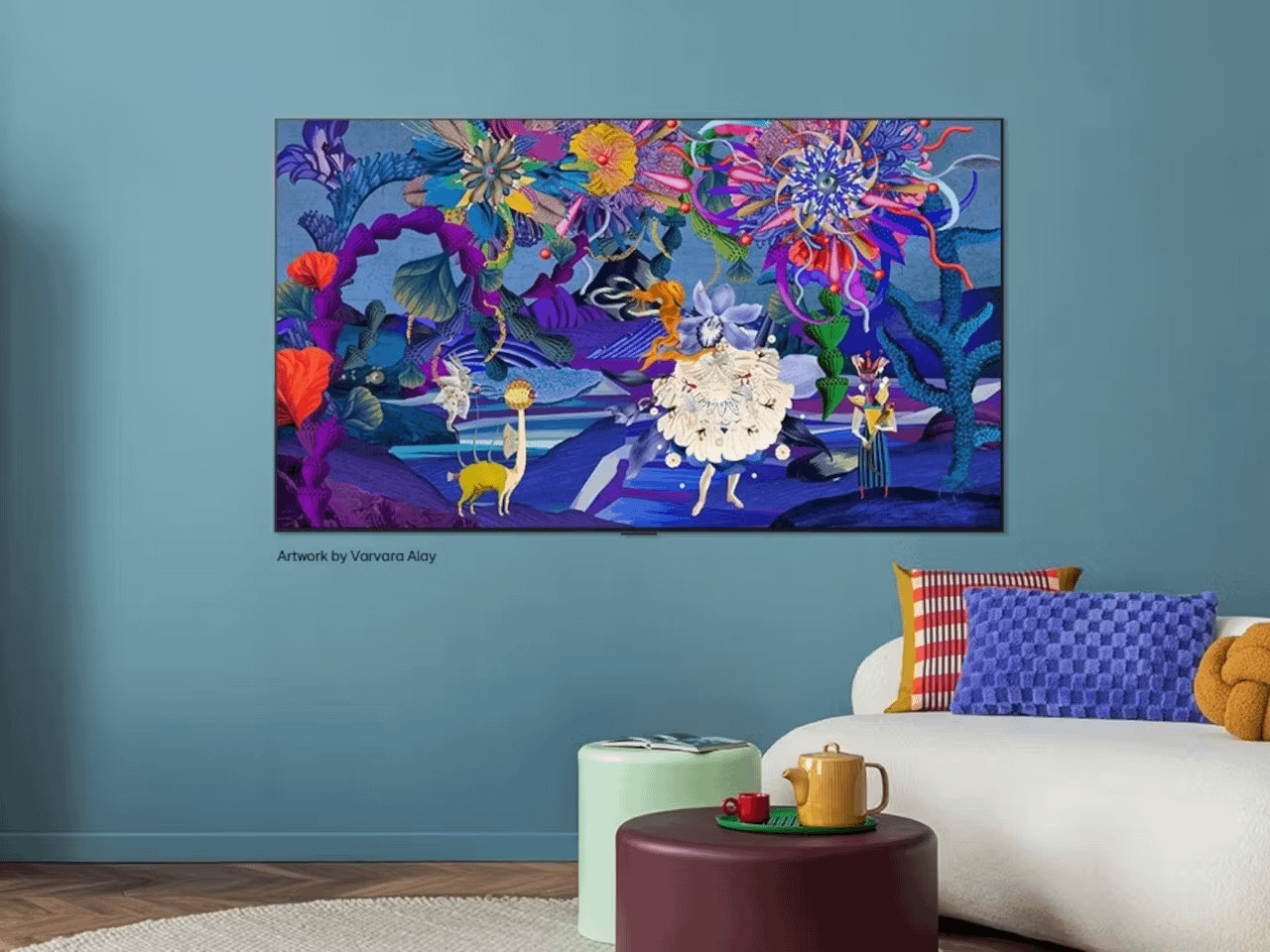
At CES 2026, LG will officially join the “Art TV” trend with the launch of the Gallery TV—a lifestyle-focused display that doubles as both a home theater screen and a digital artwork showcase. If it reminds you of Samsung’s The Frame, you’re not wrong. LG’s version goes for a similar look and feel, with a few key differences under the hood.
Instead of using OLED like many of LG’s flagship models, the Gallery TV relies on MiniLED backlighting and a matte LCD panel. It’s available in 55- and 65-inch sizes and is designed to hang flush on the wall, like a painting. You can even swap out the magnetic frames to match your decor.
This isn’t LG’s first stylish screen, but it’s the brand’s clearest response yet to the idea that a TV doesn’t have to look like a TV. The Gallery TV is meant to blend in with your living space, especially when it’s not in use.
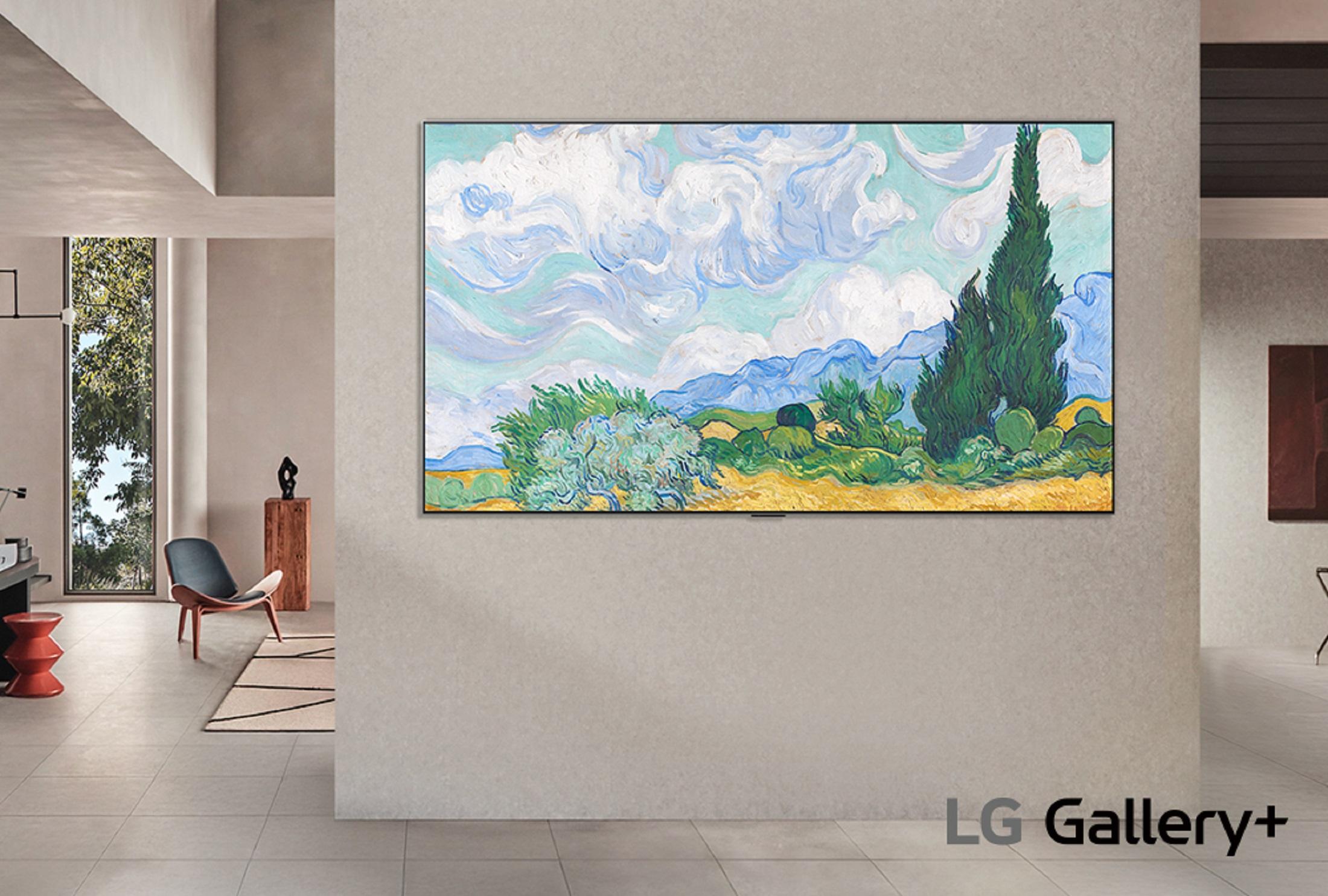
When idle, it switches into “Gallery Mode,” showing digital artwork, photos, or AI-generated images. LG says it worked with museum curators to make sure that textures and colors appear more natural, even under different lighting conditions. To help with that, the screen has a matte coating that cuts down on reflections, and built-in sensors adjust brightness and color balance depending on how much light is in the room.
You won’t find an OLED panel here, though. LG went with MiniLED for this one, which should help the screen get bright enough for daylight viewing. But don’t expect the same deep black levels you’d get from an OLED. It also looks like the panel might be edge-lit, which can sometimes affect uniformity—something to keep in mind if you plan to watch a lot of movies in dark rooms.
One of the biggest features on the Gallery TV is LG’s new Gallery+ service, introduced this summer. This is where the TV pulls its artwork from—over 4,500 pieces, including everything from classic-style paintings and photography to cinematic visuals and even game artwork. The content library gets refreshed monthly.
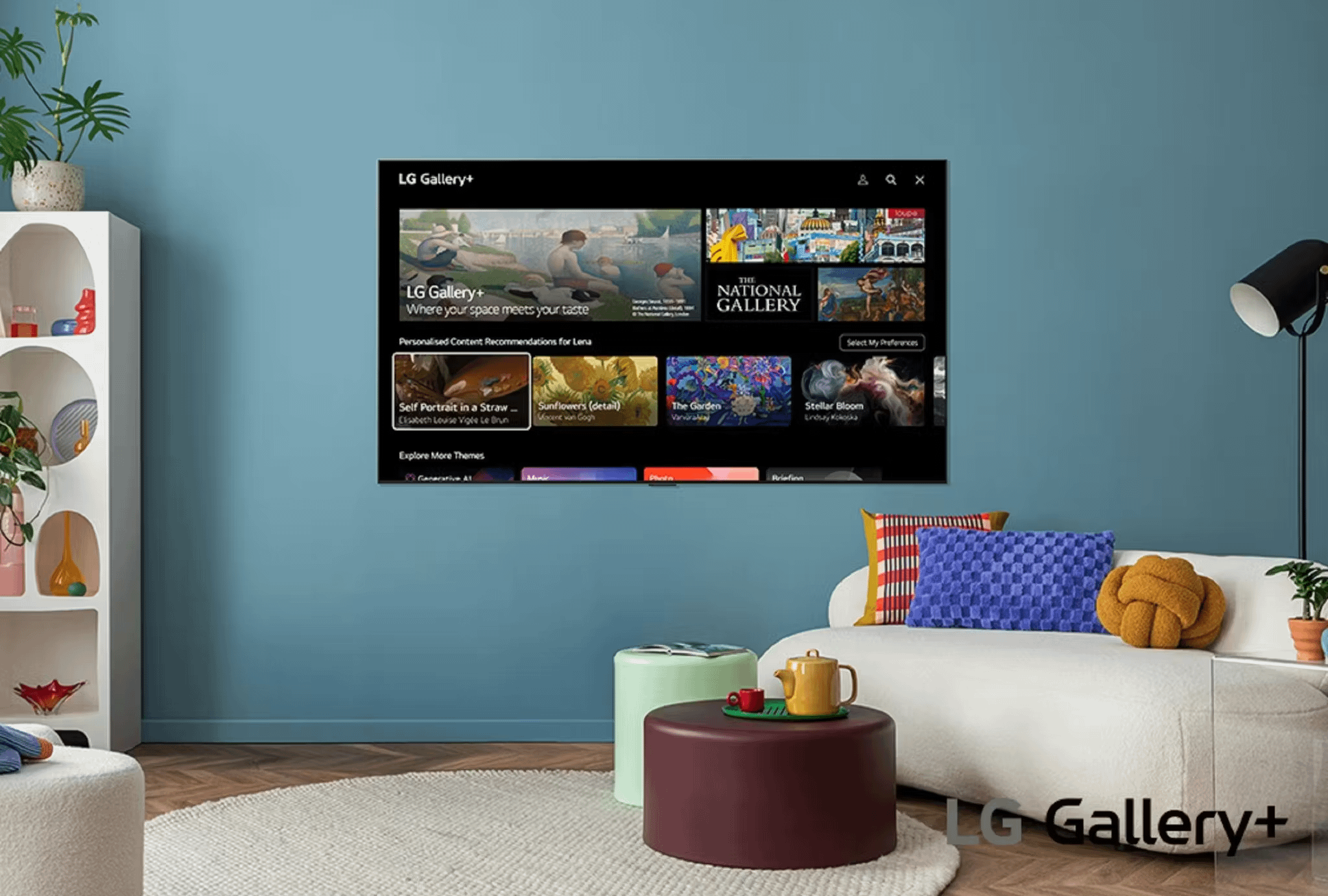
Some of the artwork is available for free, but if you want full access to the entire collection, you’ll need a paid subscription. LG hasn’t said how much that will cost yet.
If none of the available visuals fit your vibe, you can upload your own photos or even generate new ones using built-in AI tools. And to complete the ambiance, Gallery+ can play background music—either from a built-in library or streamed from your phone via Bluetooth.
When you’re not showing off digital art, the Gallery TV functions as a regular 4K TV. It’s powered by LG’s Alpha 7 AI processor, which handles upscaling and picture optimization, and it includes AI Sound Pro for virtual surround sound (up to 9.1.2 channels).
This isn’t a flagship-level panel, though. The refresh rate is 60Hz, which is fine for TV shows and casual use but may not satisfy serious gamers. If you’re looking for top-tier performance, especially for fast-moving content, one of LG’s OLED models might be a better fit.
Another thing to consider is cable management. Samsung’s Frame uses a single nearly-invisible cable that connects to a separate box, which helps keep the wall-mounted TV looking clean. LG has its own version called the Zero Connect Box, which is completely wireless—but that’s currently only available on higher-end models like the M-series and Wallpaper OLEDs. For now, it’s unclear whether the Gallery TV will support it or if you’ll need to find your own way to hide the cords.
Samsung’s Frame has been around since 2017 and has pretty much owned the Art TV space ever since. Other brands like Hisense's CanvasTV and TCL's NXTFRAME and NXTVISION have jumped in more recently with budget-friendly versions. LG entering the game now suggests that the lifestyle TV category is gaining momentum, especially with more buyers looking for screens that don’t dominate the room.
“We will continue to lead the market by expanding our lifestyle TV lineup, transforming the screen into a companion that fluidly adapts to our customers’ preferences,” said Park Hyoung-sei, president of the LG Media Entertainment Solution Company. “Our goal is to enrich customers’ lives by providing the freedom to design every aspect of their personal space.”
Gallery TV doesn’t completely reinvent the format, but it gives LG fans another option if they want something more design-conscious than a typical black rectangle on the wall. The customizable frames, large content library, and matte finish give it plenty of flexibility, especially for living rooms, bedrooms, or spaces where aesthetics matter just as much as entertainment.
Still, there are trade-offs. Choosing MiniLED over OLED might help with price and brightness, but it also means you lose out on OLED’s inky black levels. And with a 60Hz refresh rate, this isn’t aimed at gamers or cinephiles chasing the absolute best specs.
LG says the Gallery TV will be available sometime in 2026. Pricing hasn’t been announced yet, and there’s no word on whether more sizes are planned beyond the 55- and 65-inch models.
As more TVs try to blend into our living spaces, the Gallery TV arrives at the right moment. Whether it stands out enough to shake up the category—or just offers a solid alternative—will depend on how it’s priced and how polished the user experience ends up being. We'll probably learn more next week at CES 2026.
Related Reading:






Privacy Policy
Terms and Conditions - Affiliate Policy
Home Security
© Copyright 2008-2026.
11816 Inwood Rd #1211, Dallas, TX 75244