

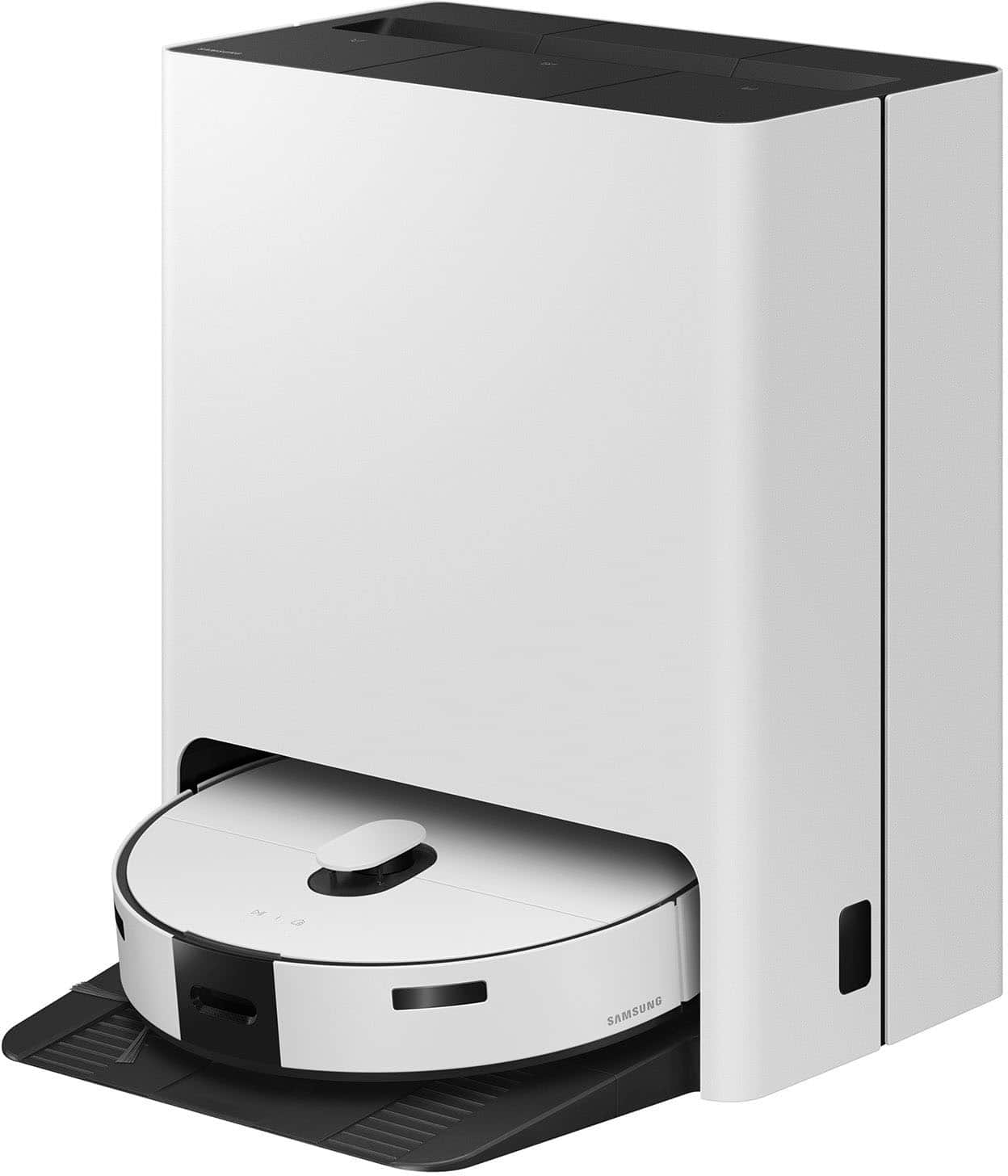
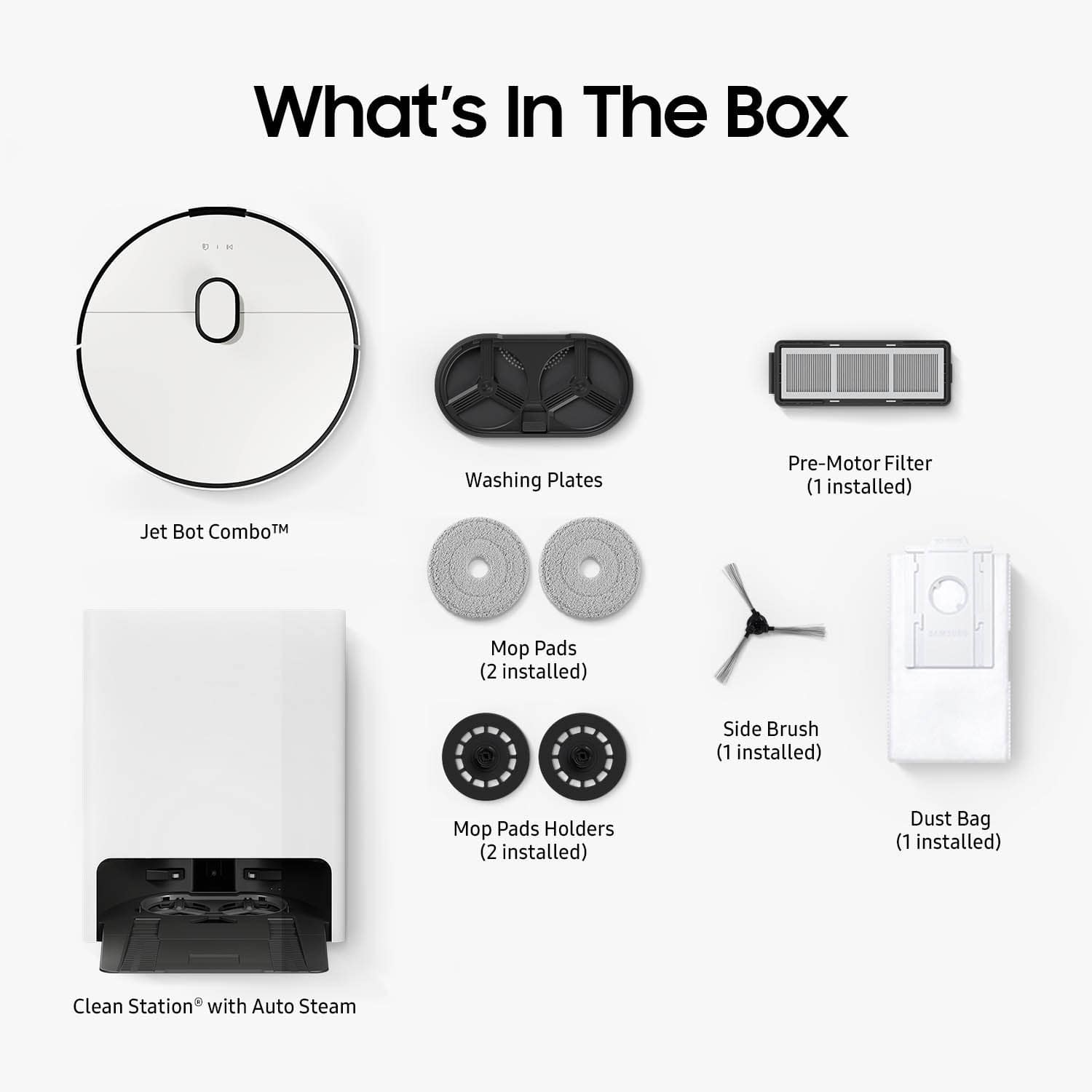
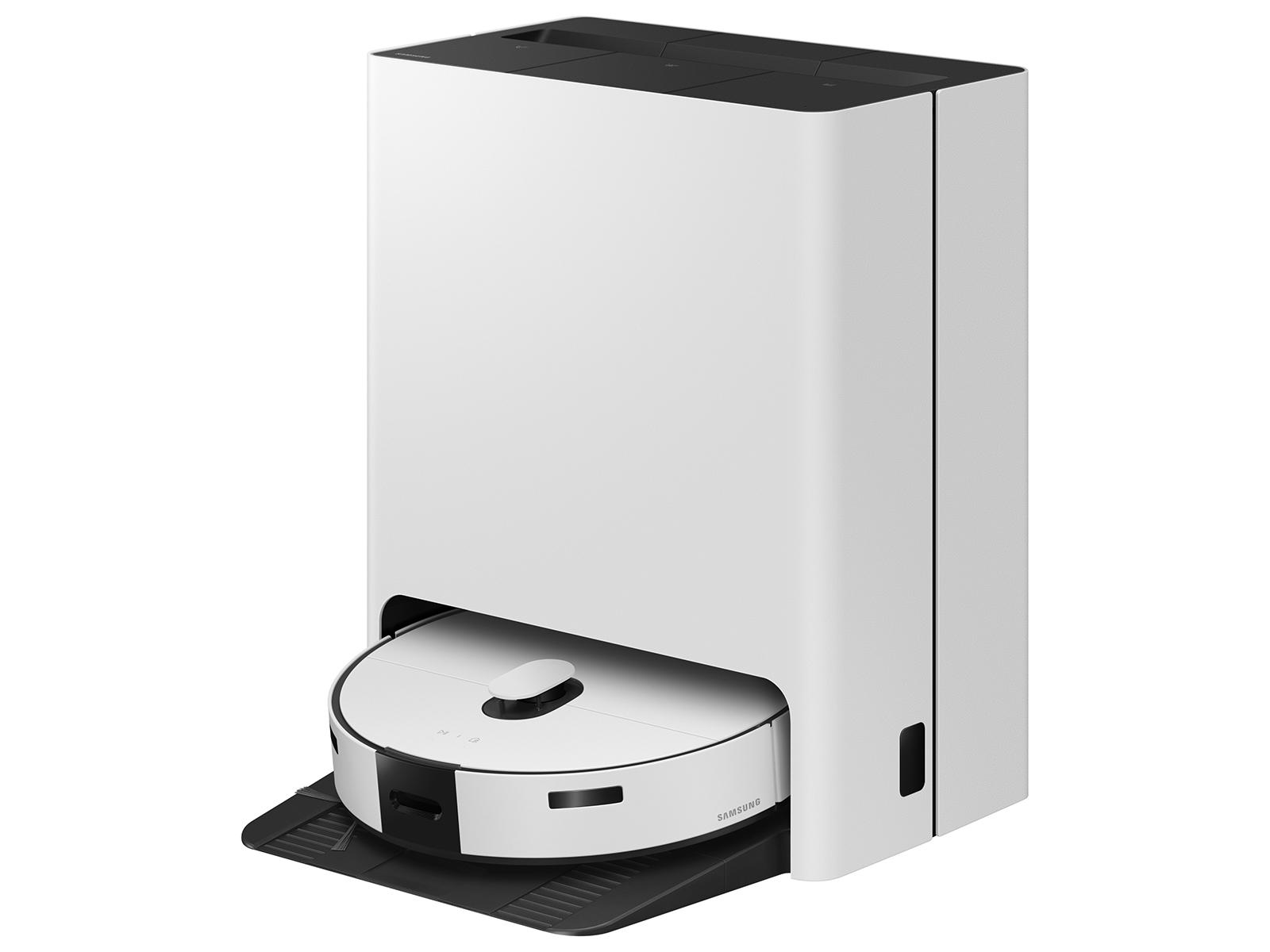

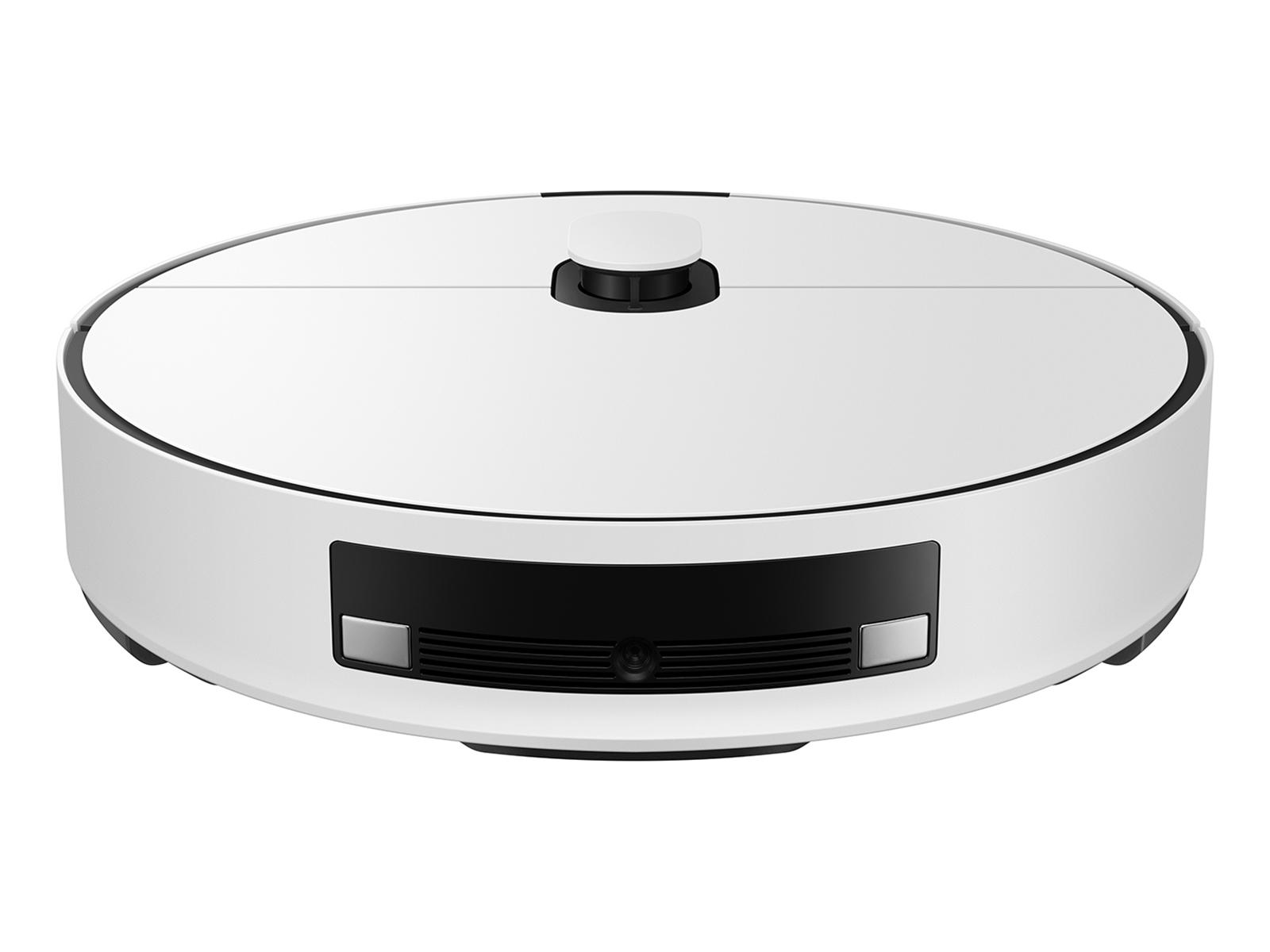
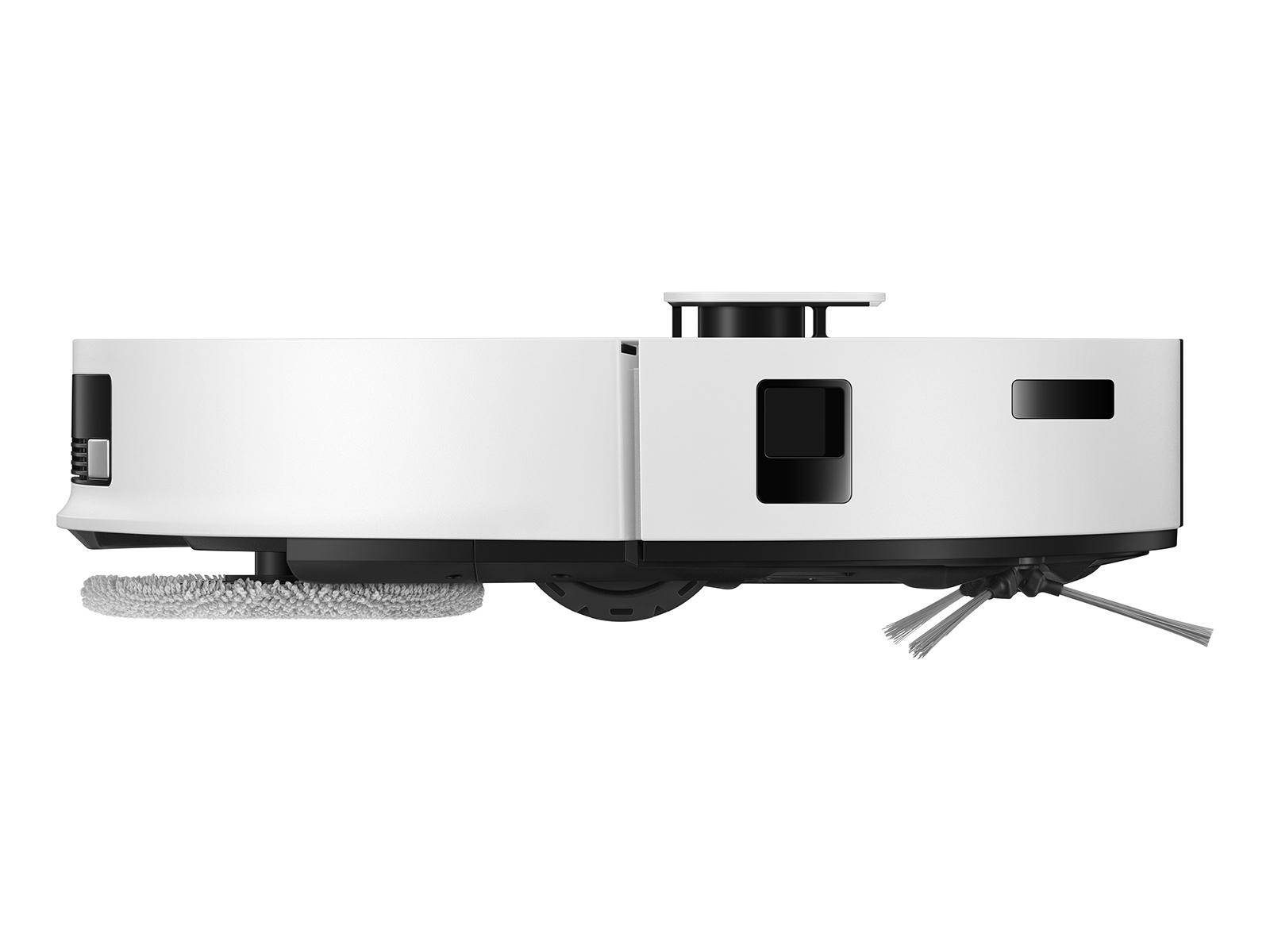
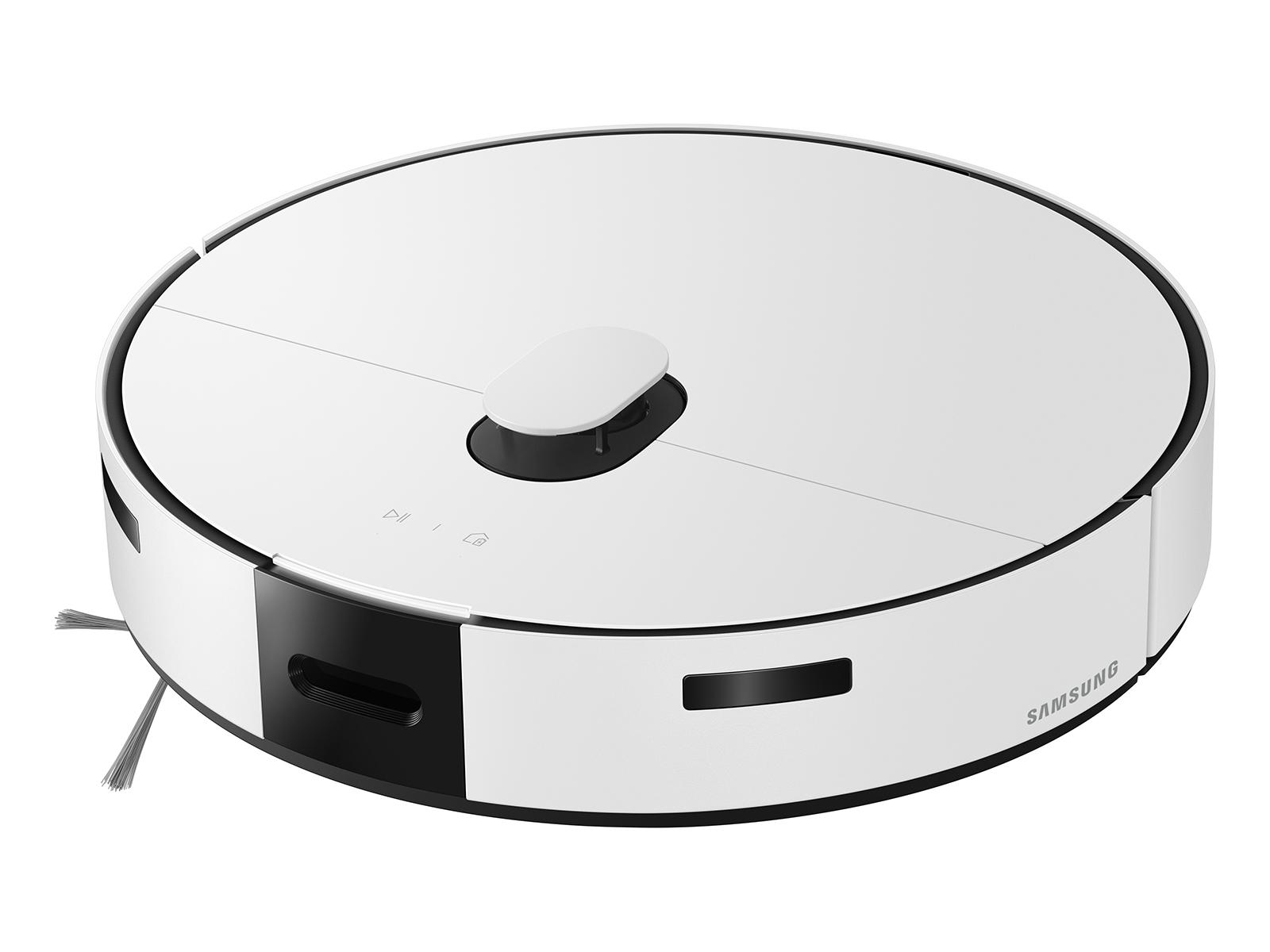
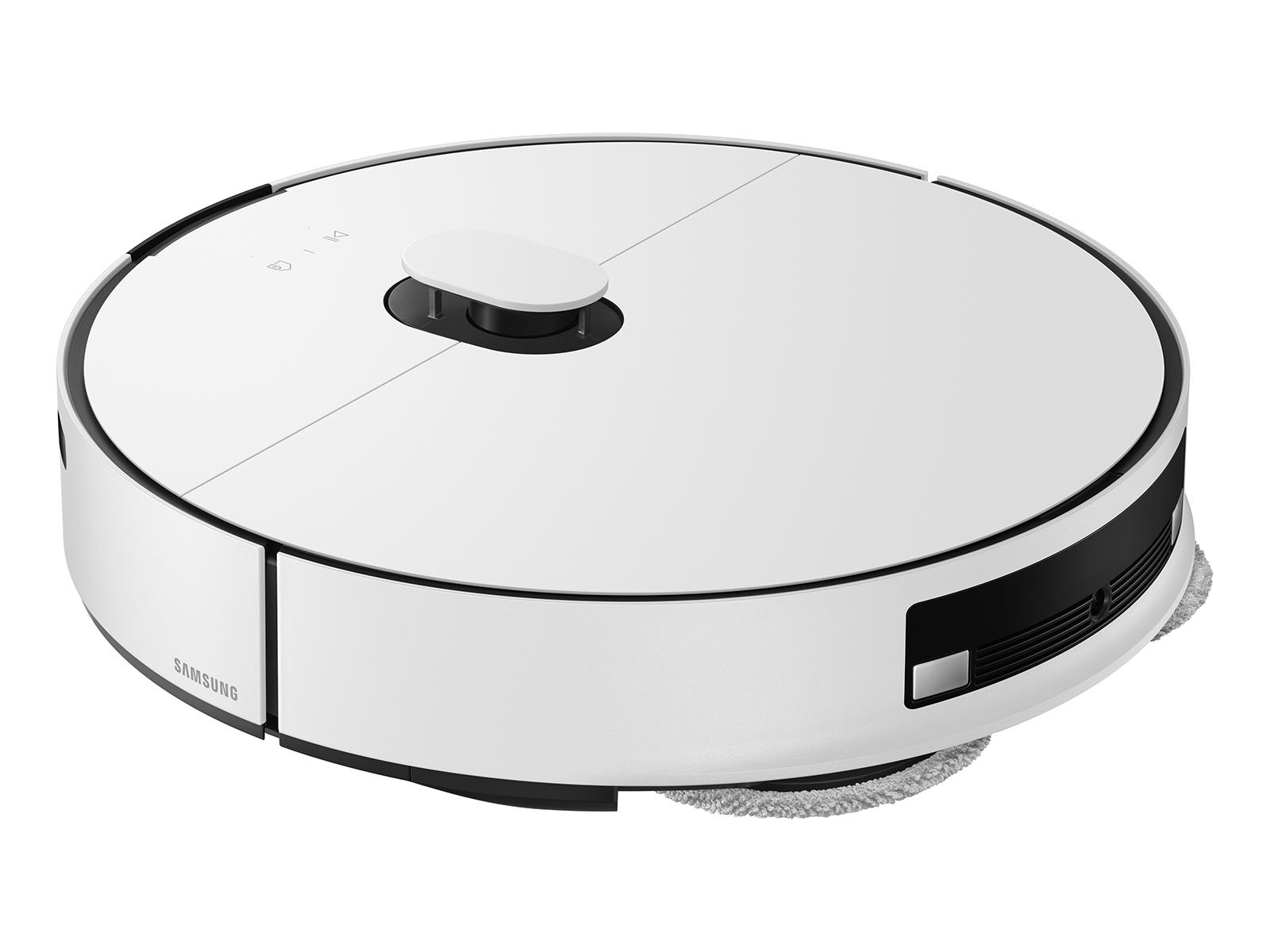
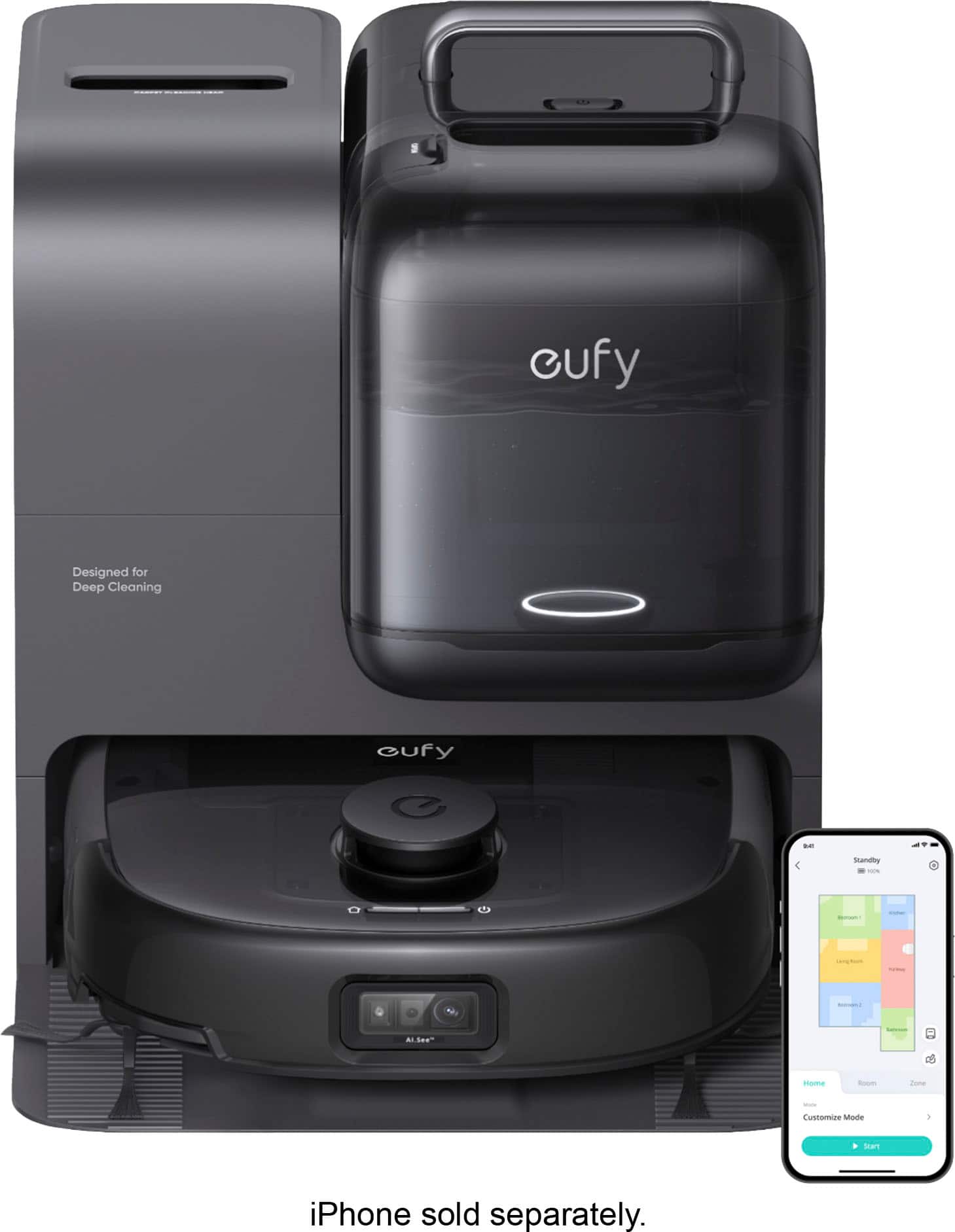
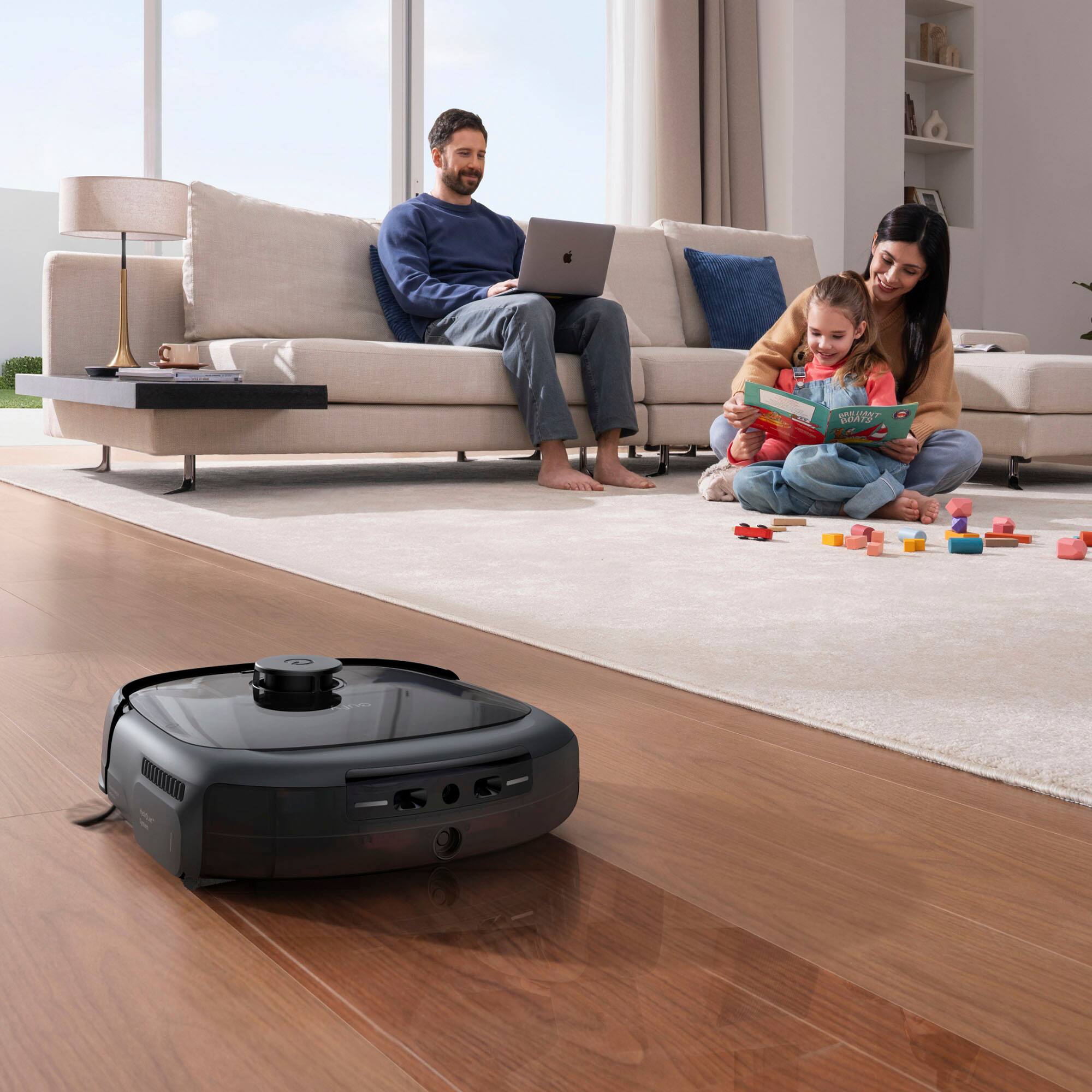
Robot vacuum and mop combos have become the ultimate "set it and forget it" cleaning solution, but choosing between premium models like the Samsung Bespoke Jet Bot Combo and Eufy Omni E28 requires understanding what really separates good from great in this rapidly evolving category.
Both products launched in 2024, representing the latest generation of cleaning robots that go far beyond the simple "bump and clean" models of just a few years ago. These aren't your basic Roomba-style vacuums—they're sophisticated cleaning systems with advanced navigation, powerful suction, integrated mopping, and self-maintenance stations that handle the messy work for you.
The robot vacuum category has matured dramatically since the early days of random bouncing patterns and constant cliff sensor failures. Today's premium models use LiDAR (Light Detection and Ranging)—the same laser technology that helps self-driving cars navigate—to create precise maps of your home. This means they clean in efficient, methodical patterns rather than wandering around hoping to hit every spot.
The key performance factors that separate premium models from budget options include suction power (measured in Pascals), navigation precision, mopping effectiveness, and most importantly, how much maintenance they actually eliminate. A robot vacuum that requires constant attention defeats the entire purpose.
For suction power, anything above 2,000 Pa handles daily debris well, while 4,000+ Pa tackles pet hair and deeper carpet cleaning. Navigation systems using LiDAR create accurate floor plans and avoid obstacles, while camera-based systems excel at recognizing specific objects like pet waste or shoes. Mopping systems vary dramatically—some just drag a damp cloth, while others use pressurized water jets and spinning pads that actually scrub.
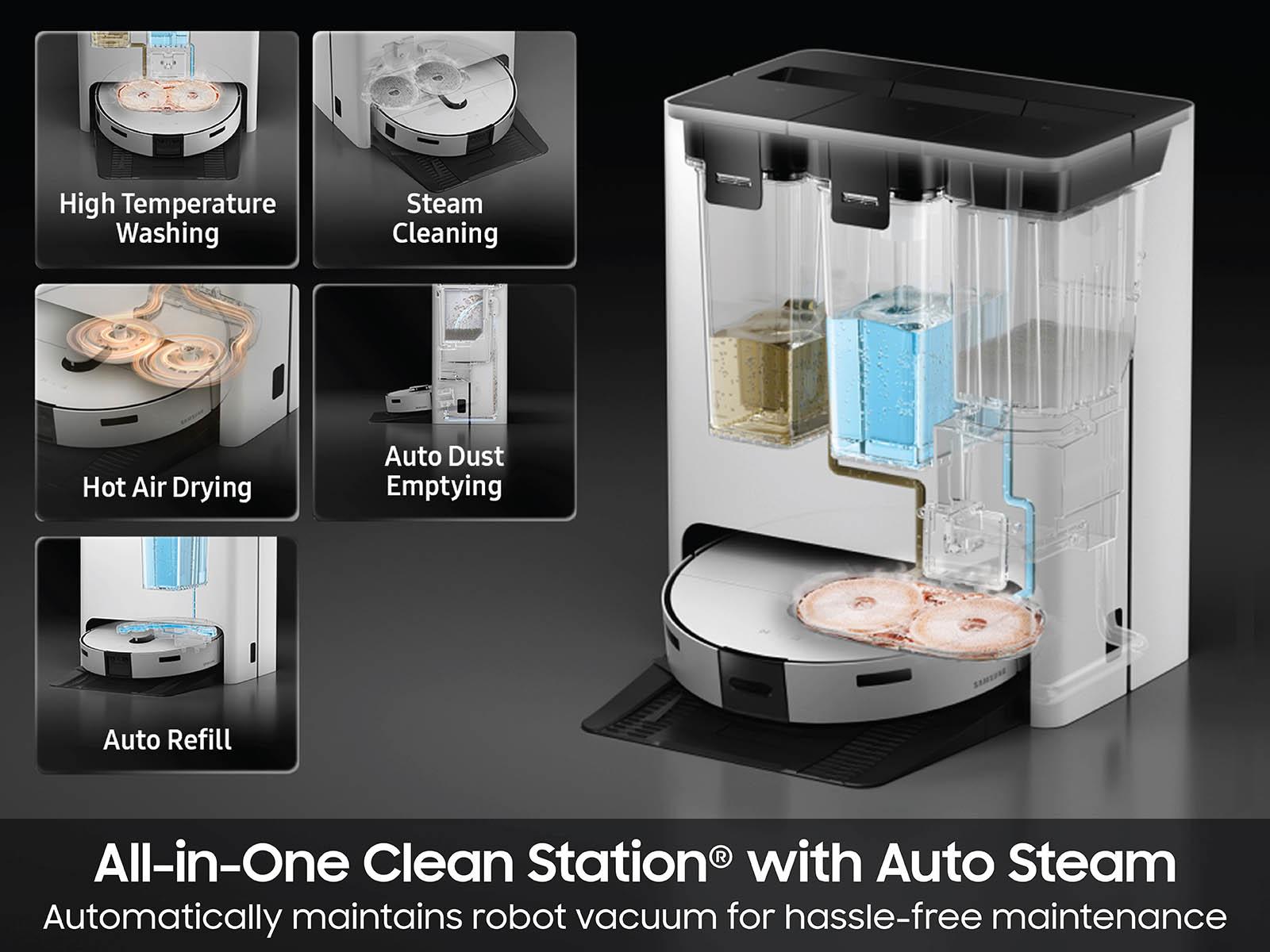
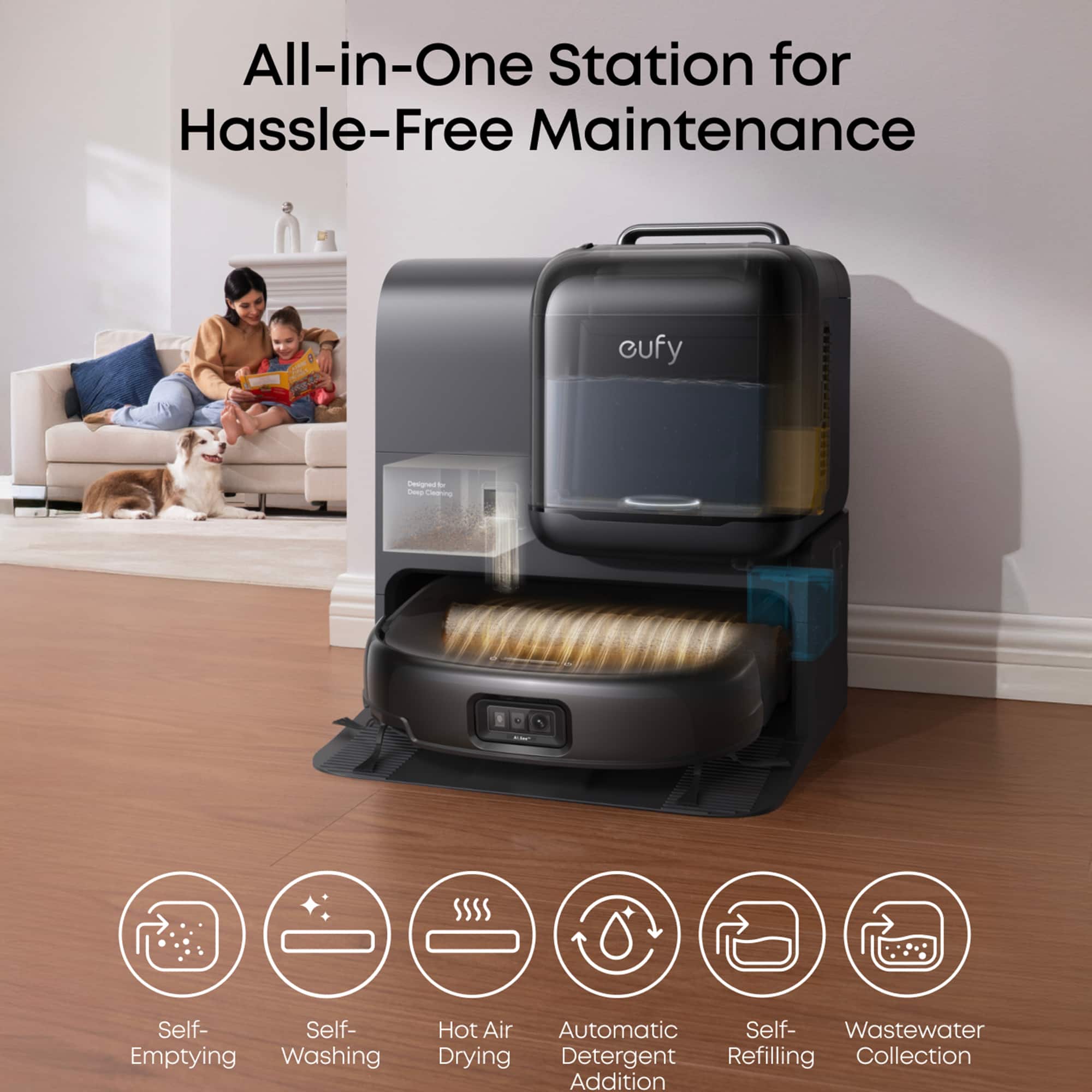
The self-maintenance station is where these premium models justify their price. Basic models require you to empty dustbins and clean mop pads manually. Advanced stations automatically empty debris, wash and dry mop pads, refill water tanks, and even dispense cleaning solution. The more automated these tasks, the less you think about floor cleaning.
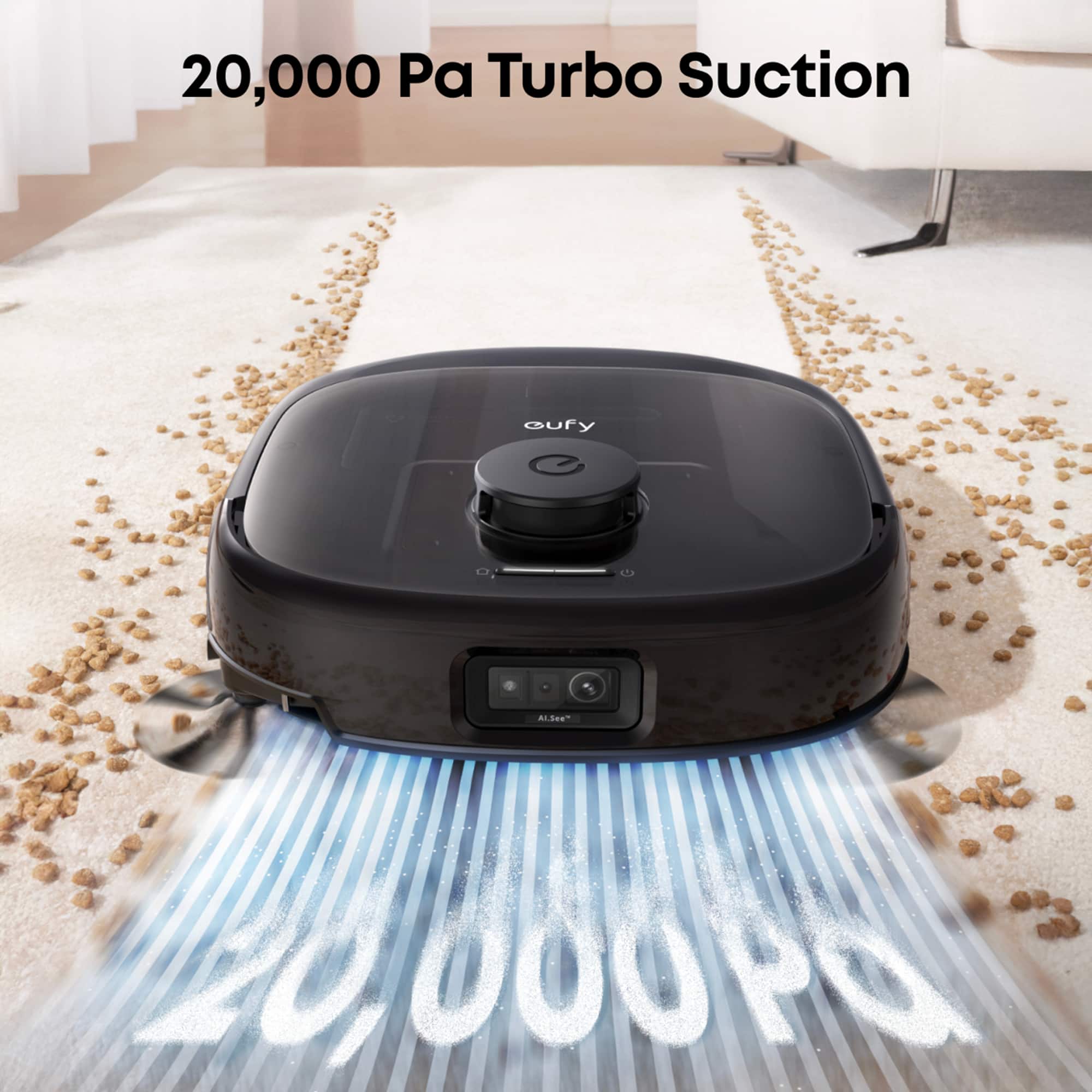
The most significant performance difference between these models is raw suction power. The Eufy Omni E28 delivers 20,000 Pa of suction—that's genuinely impressive and puts it in the top tier of robot vacuums available at the time of writing. For context, most premium models range from 6,000-12,000 Pa, so Eufy's number represents a substantial performance advantage.
The Samsung Bespoke Jet Bot Combo maxes out at 6,000 Pa, which falls into the "adequate but not exceptional" category. In real-world terms, this means the Samsung handles daily maintenance well—picking up crumbs, dust, and light debris—but struggles with deeper carpet cleaning or homes with heavy pet hair.
Suction power directly impacts cleaning effectiveness on carpets, where embedded dirt and pet hair require more aggressive extraction. If you have thick carpeting, multiple pets, or family members who track in significant dirt, the Eufy's superior suction makes a noticeable difference in cleaning results.
Both models use LiDAR for mapping, but their approaches to obstacle avoidance reveal different philosophies. The Samsung employs dual 3D depth cameras alongside its laser navigation, creating what Samsung calls a more comprehensive understanding of the environment. This system covers 79% more area compared to conventional LiDAR setups and achieves near-perfect obstacle avoidance in testing.
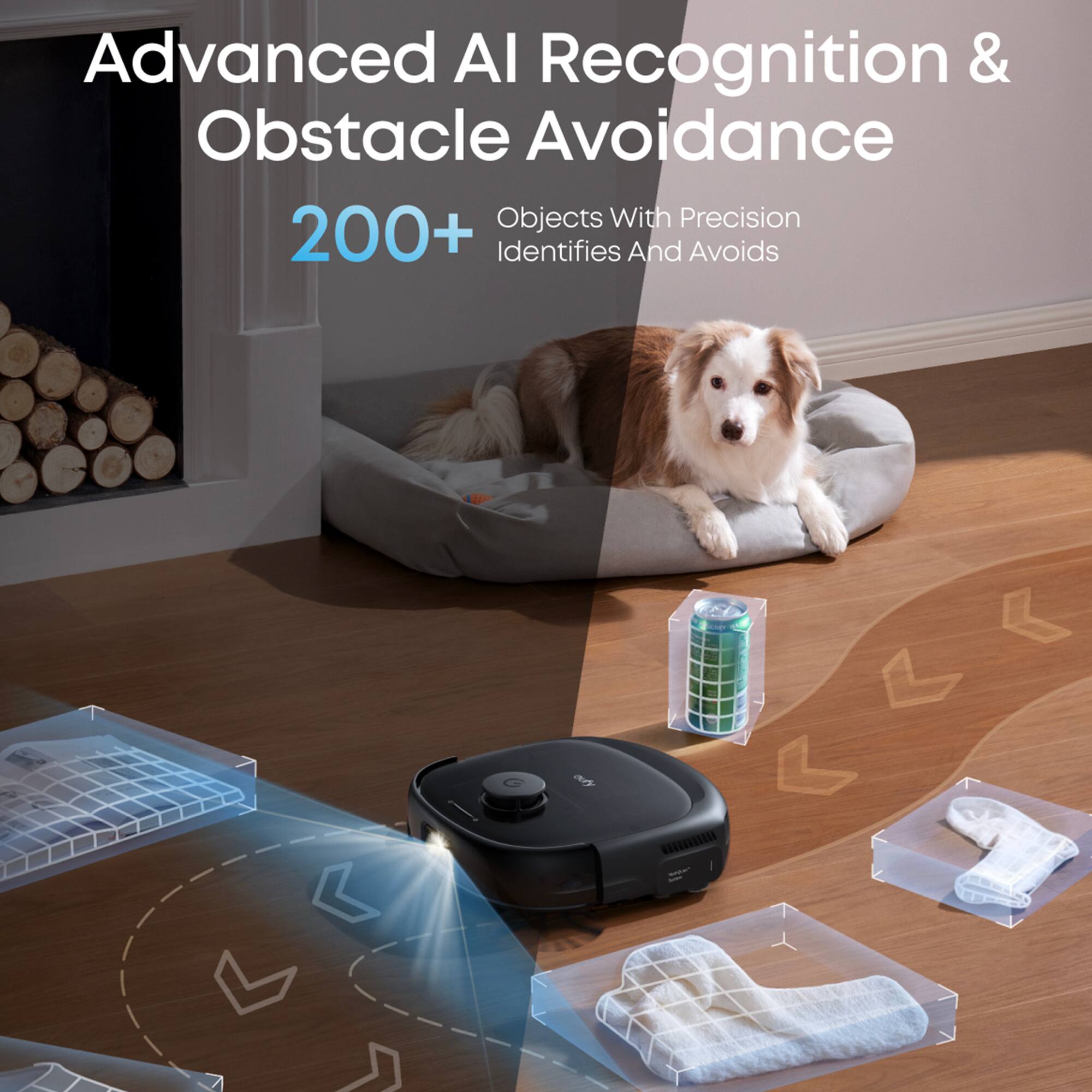
The Eufy uses its AI.See technology with RGB camera recognition to identify over 200 different object types. In practical testing, it successfully avoided 23 out of 24 obstacles, which represents excellent performance but slightly below the Samsung's nearly flawless record.
For navigation precision, Samsung's dual-sensor approach creates more accurate maps faster—completing initial mapping in about 5 minutes compared to longer setup times for many competitors. However, users report that Samsung's navigation can be overly cautious, causing the robot to linger in areas longer than necessary and resulting in slower overall cleaning times.
The Eufy strikes a better balance between thoroughness and efficiency, completing cleaning cycles more quickly while maintaining good coverage. If you value faster daily cleanings over perfect navigation precision, the Eufy's approach may suit you better.
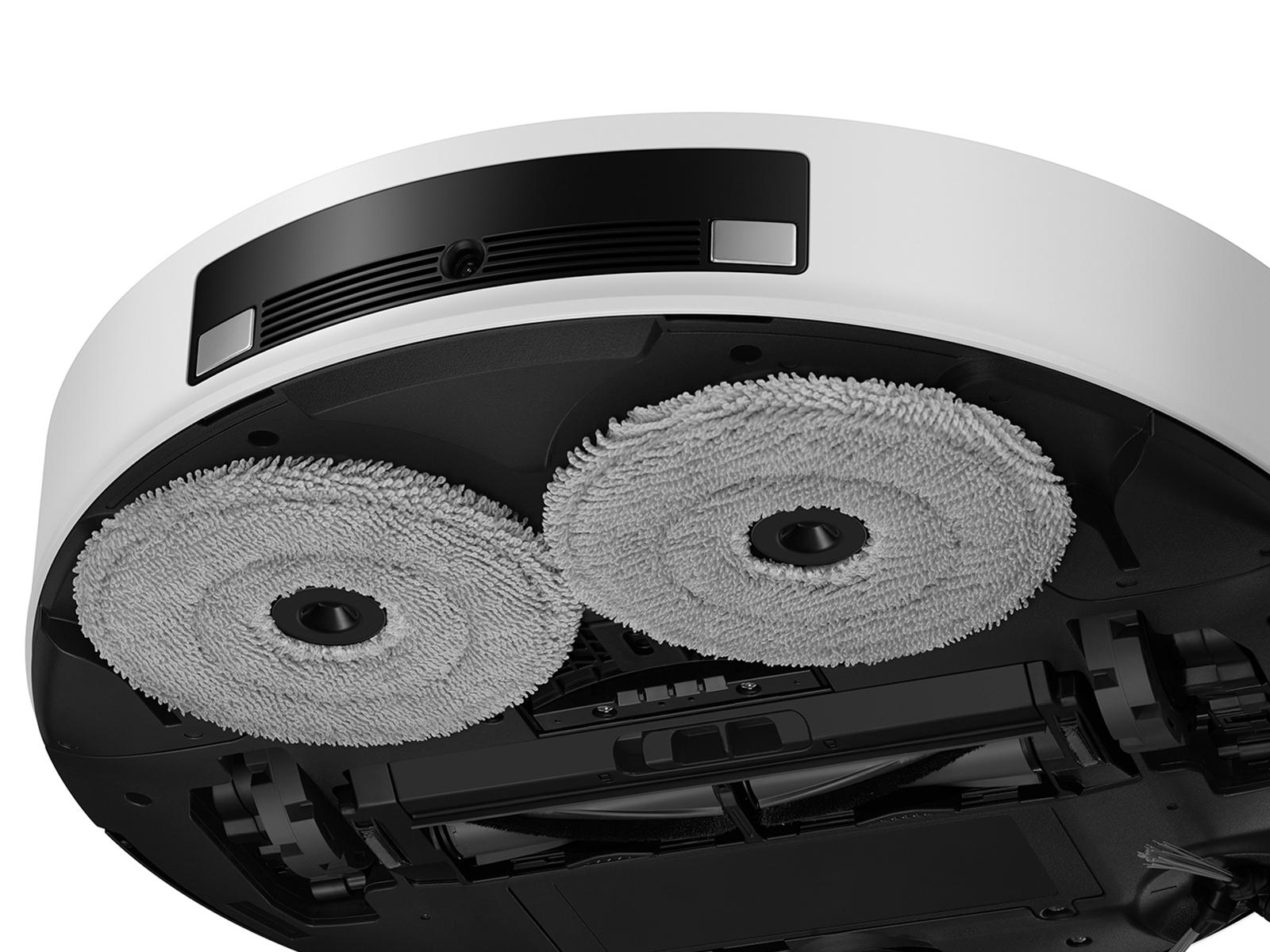
Mopping represents where these models take fundamentally different approaches. The Samsung uses two spinning mop pads that rotate at 170 RPM and can lift 10mm when detecting carpet. More impressively, the pads can completely detach when encountering thick pile carpets, preventing any water contact with carpet fibers.
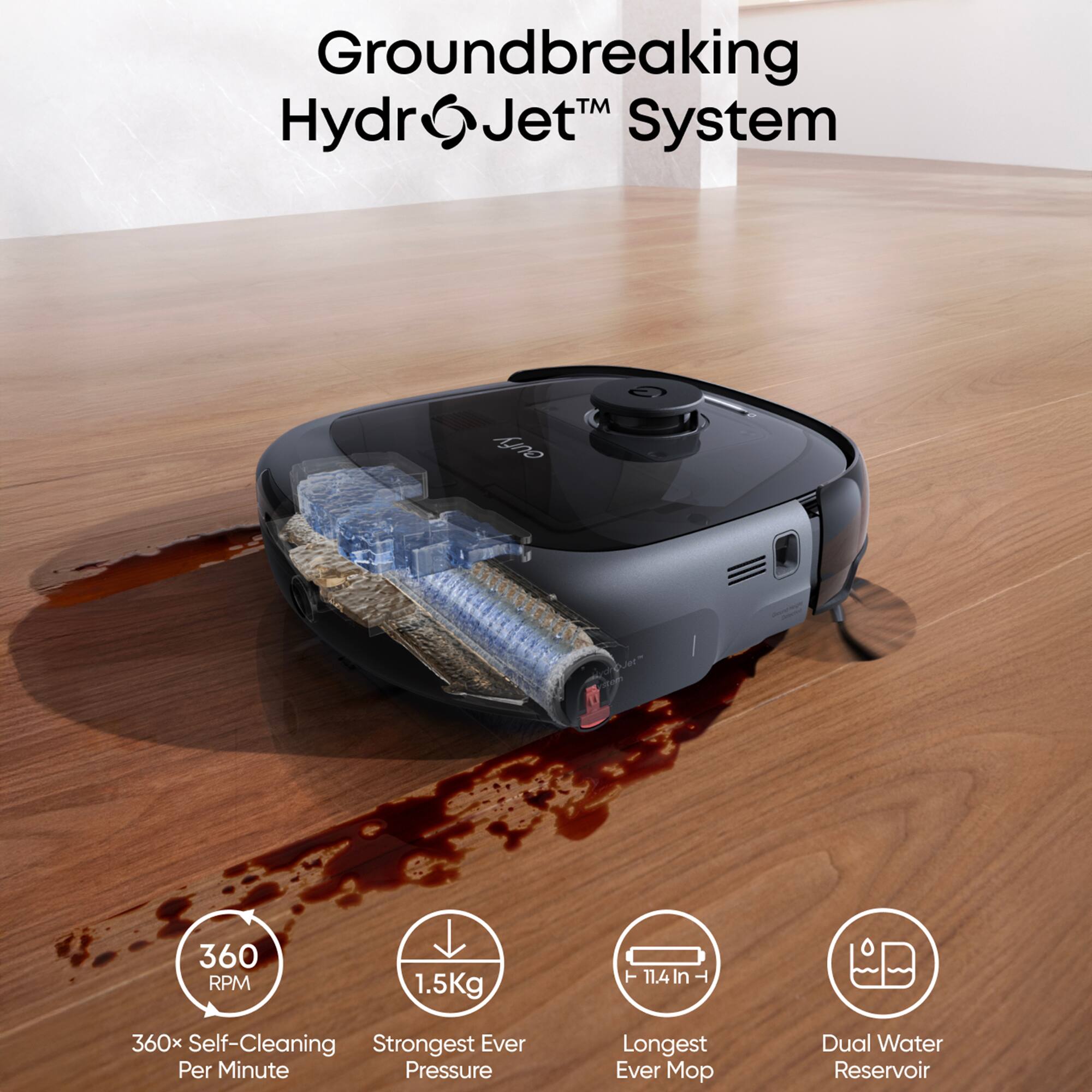
The Eufy's HydroJet system uses an 11.4-inch roller that spins at 180 RPM while applying 1.5kg of downward pressure—essentially mimicking the pressure you'd apply when manually mopping. The roller lifts 10.5mm for carpet avoidance, and the system continuously cleans the roller 360 times per minute during operation.
Both approaches work well, but the Samsung's steam sanitization sets it apart for hygiene. The cleaning station washes mop pads with hot water and steam, claiming to eliminate 99.99% of bacteria including E. coli. This steam cleaning technology is relatively rare among robot vacuums and provides a level of sanitization that standard hot water washing can't match.
The Eufy's continuous roller cleaning prevents the common problem of spreading dirty water around your floors—a significant advantage over robots that use static mop pads that get progressively dirtier during cleaning cycles.
Edge cleaning remains the Achilles' heel of most robot vacuums due to their round shape, and this comparison highlights a clear winner. The Samsung struggles with corners and baseboards, lacking the specialized brushes needed for thorough edge cleaning. Reviews consistently note this as a significant weakness.
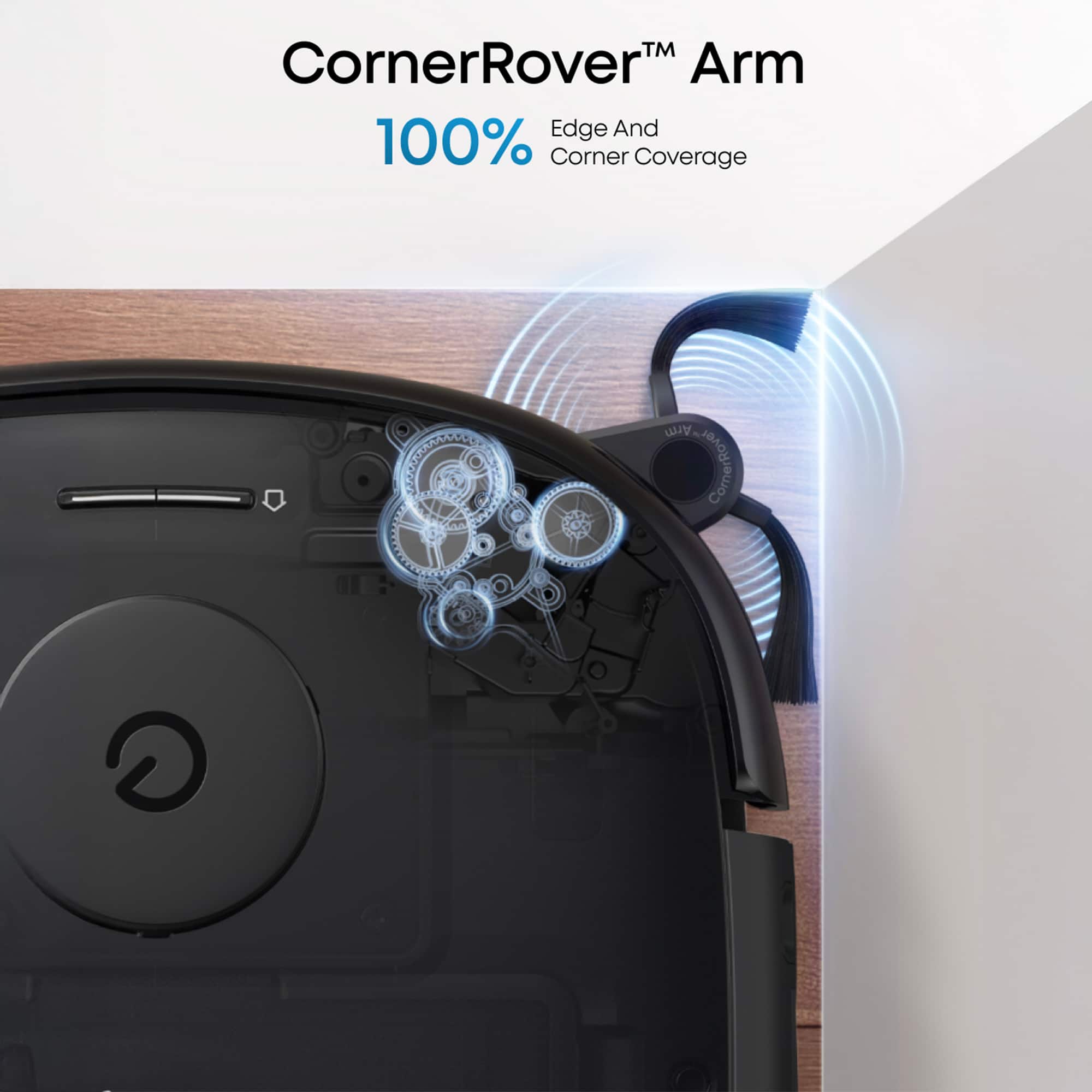
The Eufy addresses this with its CornerRover arm and dual side brushes that extend automatically when approaching edges. This isn't just marketing—the difference in corner and baseboard cleaning is substantial enough that many users notice it immediately.
If you have a home with lots of corners, baseboards, or furniture edges where debris accumulates, this difference alone might determine your choice. The Samsung's superior obstacle avoidance won't matter much if it's leaving dirt along your walls.
The Samsung integrates natively with SmartThings, making it genuinely useful for homes already invested in Samsung's ecosystem. This goes beyond basic app control—you can create automation routines that coordinate cleaning with other smart home devices, like starting a cleaning cycle when everyone leaves for work.
The live video monitoring feature using the front-facing camera allows pet observation and even video calls with pets while away. While this might sound gimmicky, pet owners find it genuinely useful for checking on anxious pets or monitoring their behavior during cleaning cycles.
However, Samsung's software experience has been problematic since launch, particularly on iOS devices. Users report app crashes, navigation glitches, and features that don't work reliably. While many issues have been addressed through updates, the initial software experience was frustrating enough to impact user satisfaction significantly.
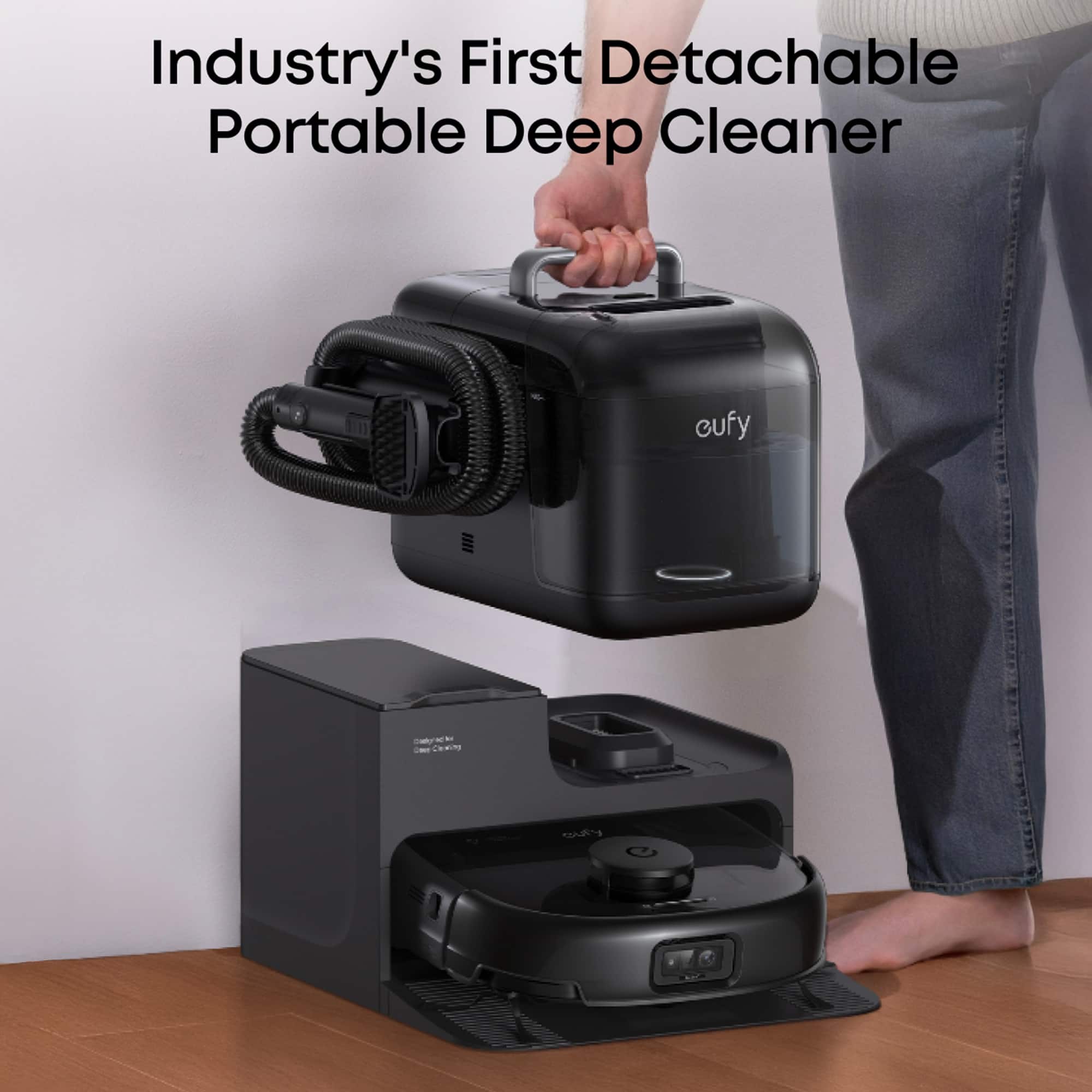
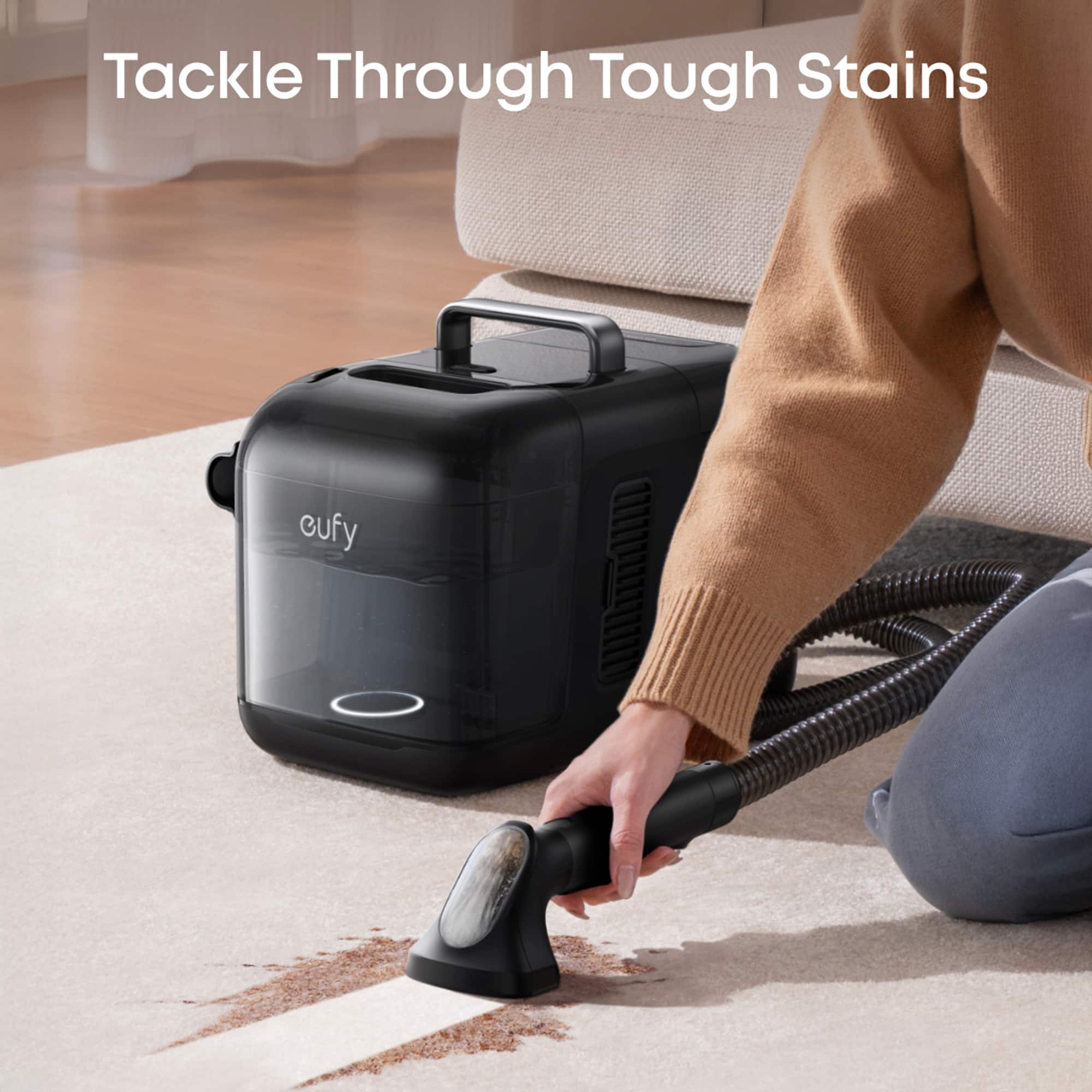
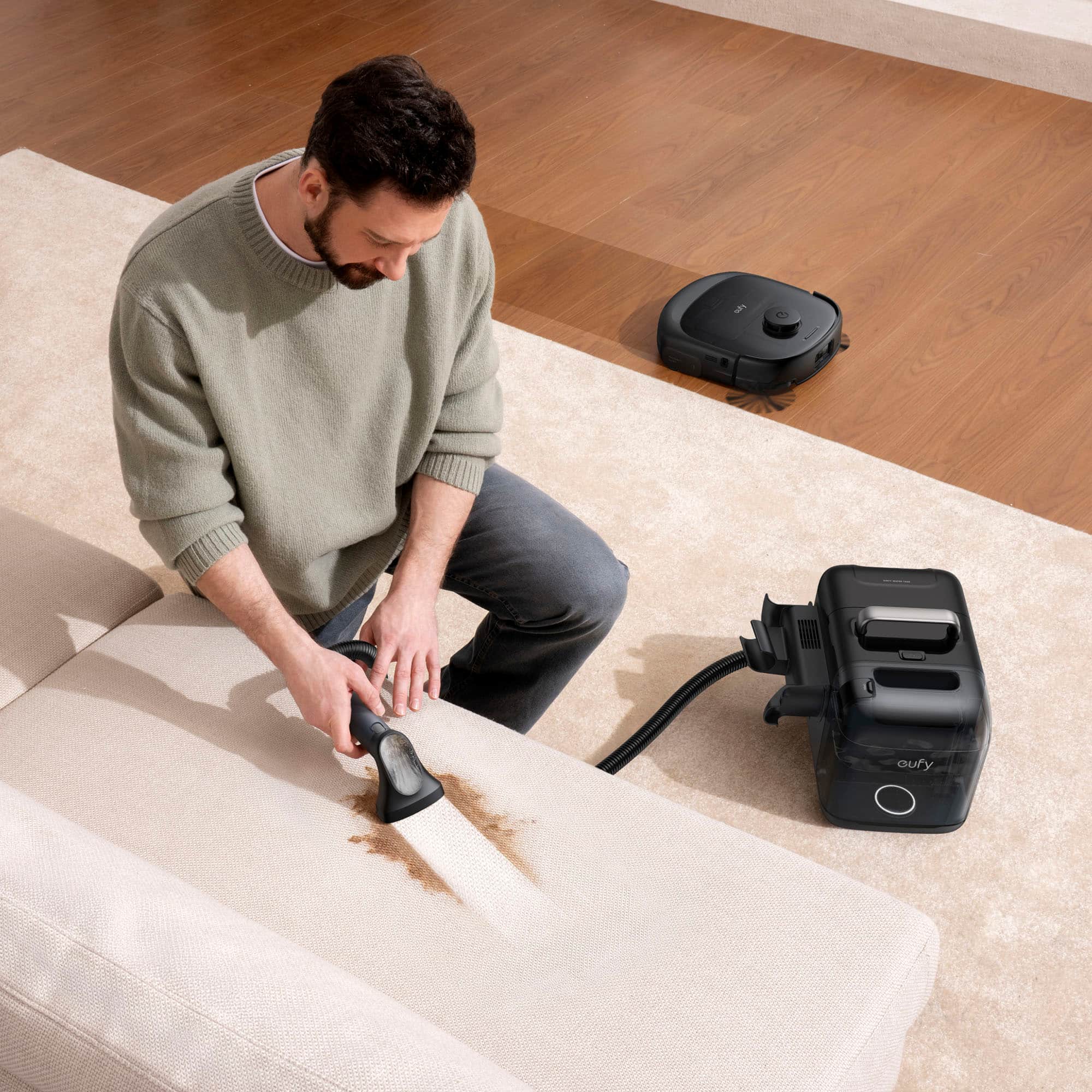
The Eufy's most distinctive feature is its FlexiOne portable deep cleaner—essentially a detachable carpet cleaner that docks within the main station. This isn't just a marketing add-on; it's a genuinely useful second appliance that handles spot cleaning on stairs, upholstery, car interiors, and area rugs.
Users report that this portable cleaner performs comparably to dedicated carpet cleaning machines for small jobs. It uses the main station's water supply and can handle everything from pet accidents to wine spills on furniture. Having this capability integrated into your robot vacuum system eliminates the need to purchase and store a separate carpet cleaner.
The practical value here is significant—instead of buying a $1,500 robot vacuum plus a $200 carpet cleaner, you get both functions in one system with shared water tanks and storage.
For dedicated home theater rooms, both models present advantages and challenges. The Samsung's superior obstacle avoidance handles complex wiring and AV equipment better, while its quieter operation (74 dB) is less likely to disturb listening sessions. The ability to schedule cleaning during specific times makes it practical for theater rooms used primarily in evenings.
The Eufy operates at 60 dB, making it significantly quieter during cleaning cycles. This lower noise floor is particularly important in acoustically treated rooms where sound pollution from cleaning cycles could be more noticeable. The portable deep cleaner also handles theater seating upholstery cleaning without requiring professional service calls.
Both models support virtual barriers through their apps, allowing you to protect sensitive AV equipment or prevent cleaning during scheduled viewing times.
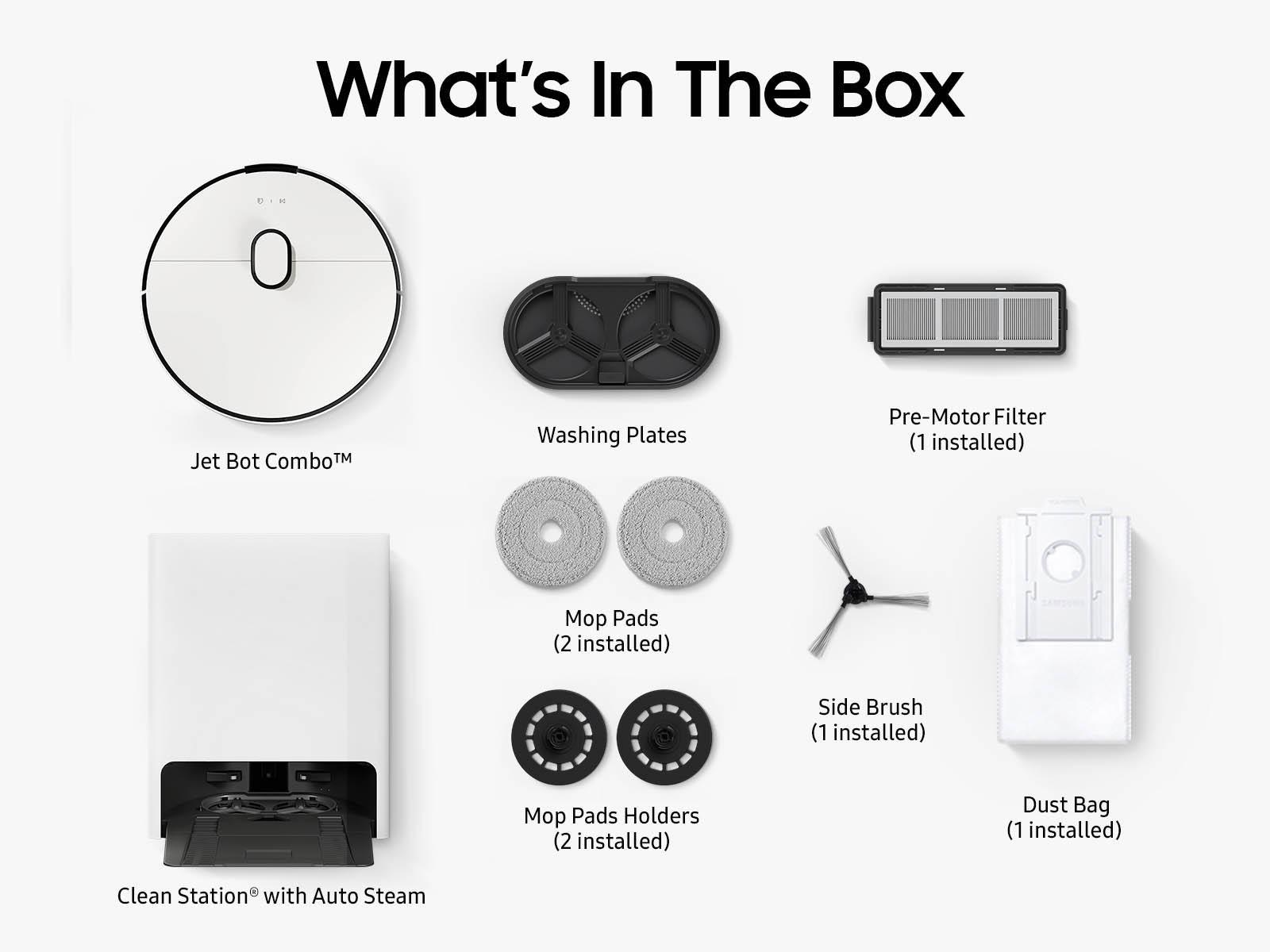
The cleaning station capabilities determine how much these robots actually reduce your workload. The Samsung requires dust bag changes every 2-3 months and mop pad replacement periodically, but the steam sanitization reduces the frequency of manual mop maintenance.
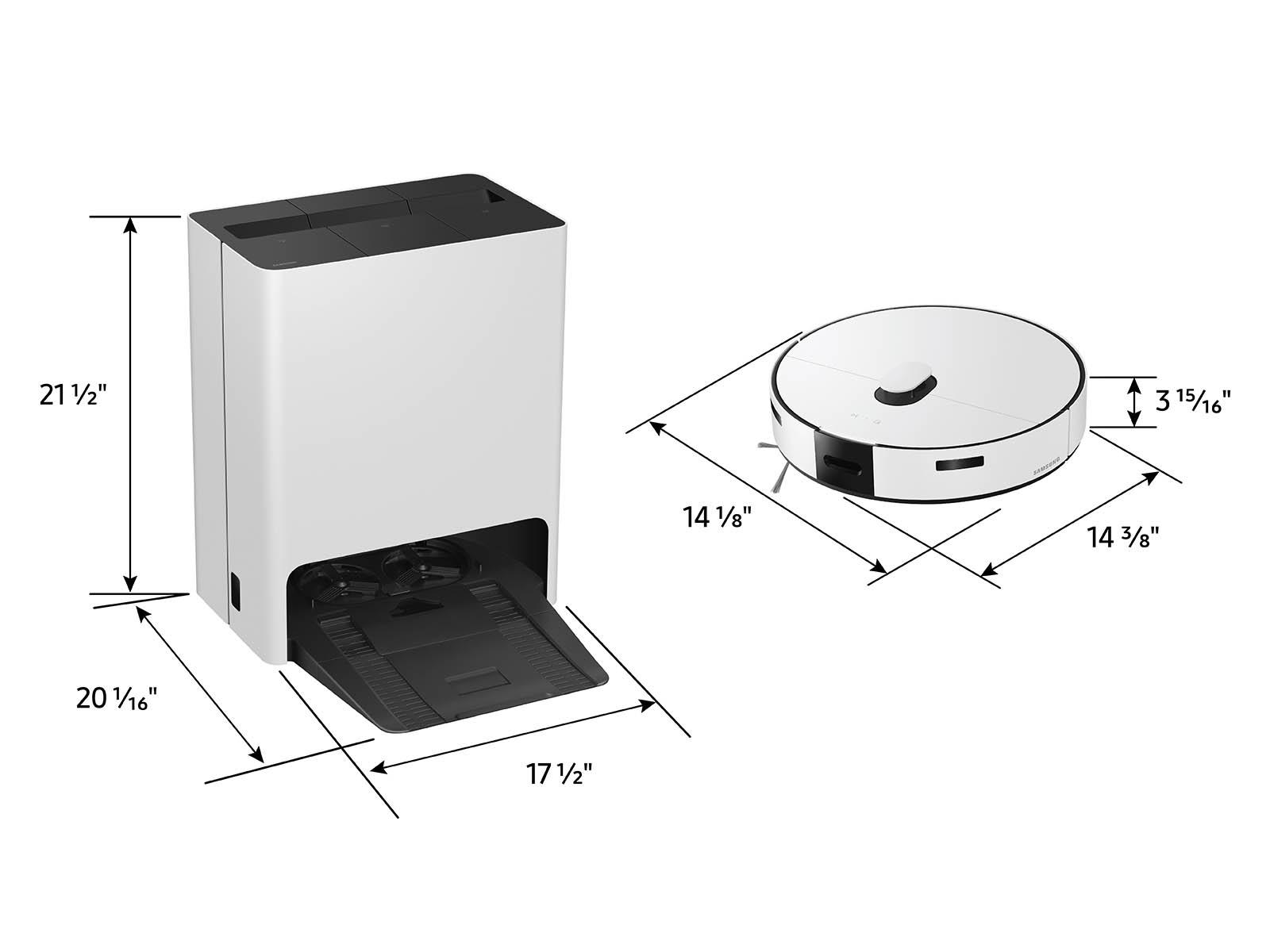
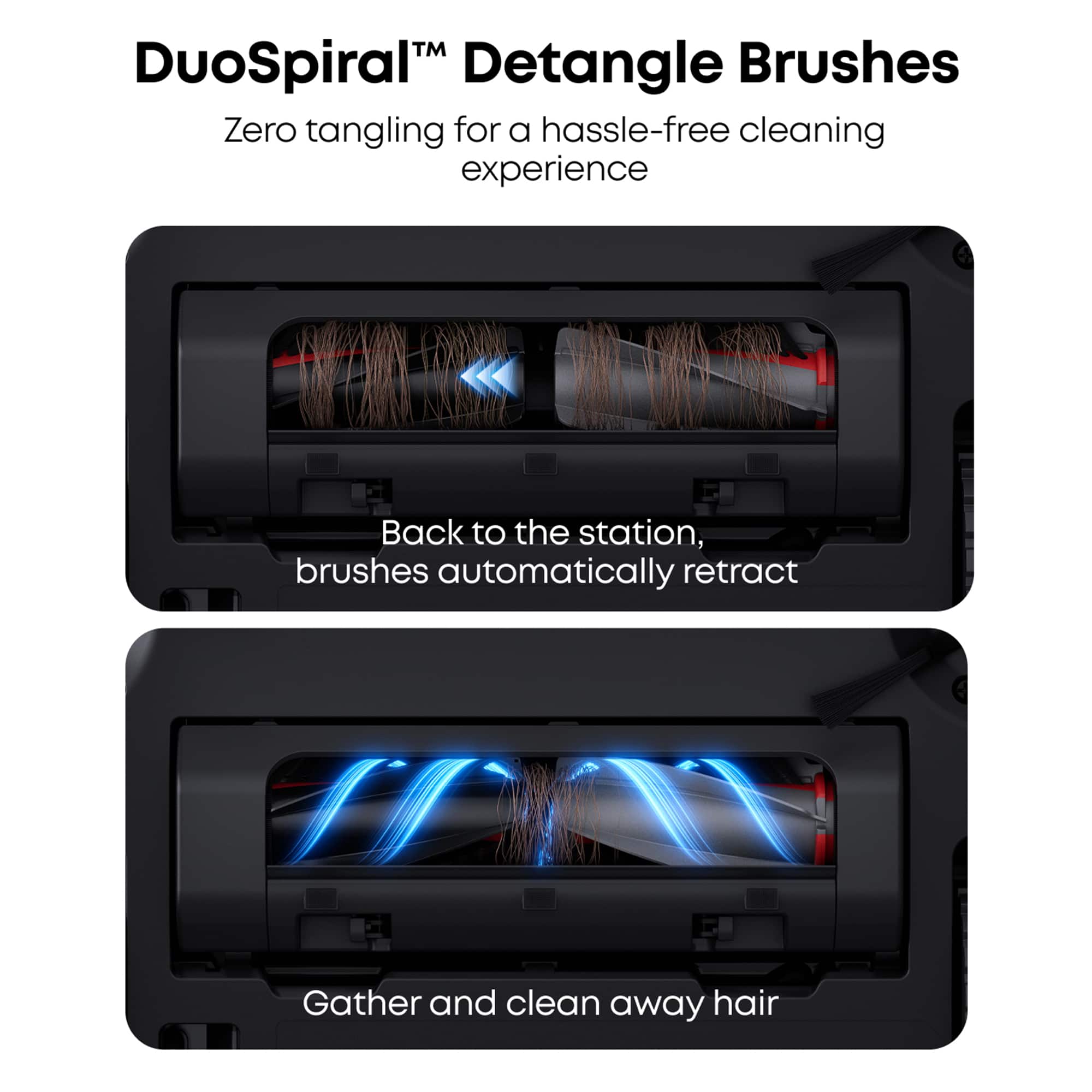
The Eufy claims up to 75 days between dust bag changes due to its larger 3L capacity versus Samsung's 2.5L. The DuoSpiral anti-tangle brushes require less frequent hair removal—a significant advantage for pet owners who otherwise find themselves cutting hair from brush rollers weekly.
Both systems handle water tank management automatically, but the Eufy's larger clean water tank (2.5L vs Samsung's 4L station capacity) means less frequent refills for larger homes.
At the time of writing, both models commanded premium pricing in the robot vacuum category, with the Samsung positioned slightly higher due to its smart home integration features. However, value assessment depends heavily on your priorities.
The Samsung justifies premium pricing through advanced AI features, superior obstacle avoidance, and steam sanitization technology. If you're already invested in Samsung's smart home ecosystem or prioritize navigation precision and hygiene features, the premium makes sense.
The Eufy delivers superior cleaning performance through higher suction power and better edge coverage, plus adds genuine versatility with its portable deep cleaner. For most users focused on cleaning effectiveness rather than smart home integration, the Eufy provides better value per dollar spent.
Choose the Samsung Bespoke Jet Bot Combo if you prioritize smart home integration, have a complex layout requiring precise navigation, or value hygiene features like steam sanitization. It's particularly suitable for Samsung ecosystem users who want seamless device coordination and don't mind paying premium pricing for advanced AI features.
The Samsung makes sense for users with simple floor plans, minimal edge cleaning requirements, and existing SmartThings setups. Pet owners who value live monitoring capabilities will appreciate the camera features, assuming the software bugs have been resolved.
Choose the Eufy Omni E28 if cleaning performance is your primary concern. The superior suction power, better edge cleaning, and included portable deep cleaner provide more practical cleaning value for most households. It's particularly suitable for homes with pets, thick carpeting, or users who want maximum cleaning versatility.
The Eufy represents better value for users focused on cleaning effectiveness rather than smart home integration. Families with children, pet owners, and anyone dealing with high-traffic areas will benefit from its superior debris pickup and spot cleaning capabilities.
For most buyers, the Eufy's combination of powerful cleaning performance and practical versatility outweighs the Samsung's advanced but sometimes unreliable smart features. Unless you specifically need Samsung ecosystem integration or steam sanitization, the Eufy delivers better results for daily floor maintenance needs.
| Samsung Bespoke Jet Bot Combo | Eufy Omni E28 |
|---|---|
| Suction Power - Higher numbers mean better debris pickup, especially on carpets | |
| 6,000 Pa (adequate for daily cleaning) | 20,000 Pa (exceptional deep cleaning power) |
| Navigation Technology - Better systems clean more efficiently and avoid obstacles | |
| dToF LiDAR + dual 3D cameras (superior obstacle avoidance) | iPath™ LiDAR + AI.See™ camera (recognizes 200+ objects) |
| Mopping System - Different approaches to wet floor cleaning | |
| Dual spinning pads with steam sanitization | HydroJet™ roller with continuous cleaning (360x/min) |
| Edge Cleaning - Critical for thorough floor coverage along walls | |
| Limited capability (noted weakness in reviews) | CornerRover™ arm + dual side brushes (significantly better) |
| Battery Life - Longer runtime means fewer interruptions for large homes | |
| 180 minutes | 216 minutes |
| Self-Emptying Capacity - Larger bags mean less frequent maintenance | |
| 2.5L dust bag (2-3 months between changes) | 3L dust bag (up to 75 days between changes) |
| Unique Features - Standout capabilities that set each model apart | |
| Steam mop sanitization + SmartThings integration | FlexiOne™ portable deep cleaner included |
| Carpet Protection - How well it avoids wetting carpets during mopping | |
| 10mm mop lift + complete pad detachment for thick carpets | 10.5mm roller lift with automatic detection |
| Noise Level - Important for homes with sleeping schedules or quiet preferences | |
| 74 dB (moderate noise during operation) | 60 dB (significantly quieter) |
| Smart Home Integration - Compatibility with voice assistants and home automation | |
| Native SmartThings + Alexa/Google/Bixby | Alexa/Google/Siri + Matter protocol support |
| Water Tank Capacity - Larger tanks cover more area before refilling | |
| 4L clean water (station capacity) | 2.5L clean water (covers up to 8,000 sq ft) |
| Anti-Tangle Technology - Reduces hair wrap-around on brushes | |
| Standard brush design (hair tangling reported) | DuoSpiral™ detangle brushes (minimal maintenance) |
The Eufy Omni E28 significantly outperforms the Samsung Bespoke Jet Bot Combo in suction power, delivering 20,000 Pa compared to Samsung's 6,000 Pa. This means the Eufy provides over three times the suction strength, making it much more effective at deep cleaning carpets and picking up embedded pet hair and debris.
The Samsung Bespoke Jet Bot Combo uses dual spinning mop pads with steam sanitization that kills 99.99% of bacteria, while the Eufy Omni E28 features a HydroJet™ roller system that continuously cleans itself 360 times per minute. Both systems effectively clean hard floors, but Samsung's steam feature provides superior hygiene.
The Eufy Omni E28 is better suited for pet owners due to its powerful 20,000 Pa suction, DuoSpiral™ anti-tangle brushes that prevent hair wrap-around, and superior edge cleaning with the CornerRover™ arm. The Samsung offers live pet monitoring through its camera but lacks the cleaning power for heavy pet hair removal.
The Samsung Bespoke Jet Bot Combo excels in navigation with dual 3D cameras and LiDAR that covers 79% more area than conventional systems, achieving near-perfect obstacle avoidance. The Eufy Omni E28 uses AI.See™ technology to recognize over 200 objects and successfully avoids most obstacles, but Samsung's navigation is more precise overall.
The Eufy Omni E28 significantly outperforms the Samsung in edge cleaning. The Eufy features a CornerRover™ arm and dual side brushes that automatically extend to clean baseboards and corners thoroughly, while edge cleaning is noted as a major weakness in Samsung reviews.
The Samsung Bespoke Jet Bot Combo offers steam mop sanitization, native SmartThings integration, and live video pet monitoring. The Eufy Omni E28 includes a revolutionary FlexiOne™ portable deep cleaner that detaches for manual spot cleaning of stairs, upholstery, and car interiors—essentially providing two cleaning appliances in one system.
The Eufy Omni E28 requires less hands-on maintenance thanks to its larger 3L dust bag (75 days capacity), anti-tangle brush design, and continuous mop roller cleaning. The Samsung needs more frequent attention due to hair tangling issues and a smaller 2.5L dust capacity, though its steam sanitization reduces mop pad maintenance.
The Eufy Omni E28 offers longer runtime with 216 minutes of battery life compared to the Samsung's 180 minutes. The Eufy also covers larger areas with its 2.5L water tank handling up to 8,000 square feet, while Samsung's system is better suited for smaller to medium-sized homes.
The Eufy Omni E28 operates significantly quieter at 60 dB compared to the Samsung Bespoke Jet Bot Combo's 74 dB noise level. This 14-decibel difference makes the Eufy much less disruptive during cleaning cycles, especially important for homes with sleeping schedules or noise-sensitive residents.
The Samsung Bespoke Jet Bot Combo offers superior smart home integration with native SmartThings compatibility, advanced automation routines, and comprehensive app customization. The Eufy provides solid app control and supports Matter protocol for broad compatibility, but lacks Samsung's advanced ecosystem integration features.
The Eufy Omni E28 delivers superior cleaning value with its 20,000 Pa suction power, better edge cleaning, included portable deep cleaner, and longer battery life. The Samsung justifies premium pricing through advanced smart features and steam sanitization, but the Eufy provides more practical cleaning benefits for most households.
Choose the Samsung Bespoke Jet Bot Combo if you prioritize smart home integration, precise navigation, and steam sanitization for hygiene. Choose the Eufy Omni E28 if you want superior cleaning performance, better edge coverage, and maximum versatility with the included portable deep cleaner—it's the better choice for most homes focused on cleaning effectiveness.
We've done our best to create useful and informative comparisons to help you decide what product to buy. Our research uses advanced automated methods to create this comparison and perfection is not possible - please contact us for corrections or questions. These are the sites we've researched in the creation of this article: techradar.com - samsung.com - techradar.com - vacuumwars.com - samsung.com - versus.com - samsung.com - samsung.com - versus.com - youtube.com - samsung.com - moderncastle.com - youtube.com - craneappliance.com - betterhousekeeping.com - youtube.com - finucaneselectrical.com - appliancehomestore.com - bestbuy.com - homethings4u.com - american-homeappliance.com - nordamappliance.com - sklaveryappliance.com - sammobile.com - kahians.com - bestbuy.com - vacuumwars.com - vacuumwars.com - youtube.com - youtube.com - youtube.com - tomsguide.com - youtube.com - youtube.com - youtube.com - homedepot.com - michaelsleen.com - youtube.com - youtube.com - bikmantech.com - rcwilley.com - crutchfield.com - eufy.com - eufy.com - bestbuy.com - eufy.com - vacuumwars.com - eufy.com

Privacy Policy
Terms and Conditions - Affiliate Policy
Home Security
© Copyright 2008-2026.
11816 Inwood Rd #1211, Dallas, TX 75244