

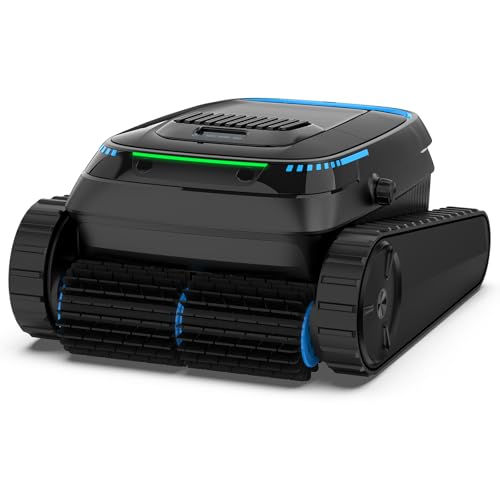
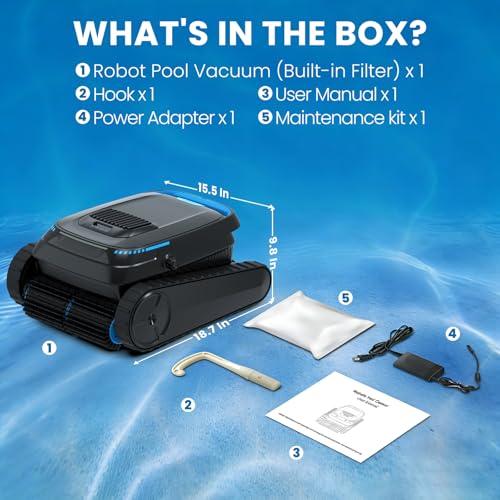
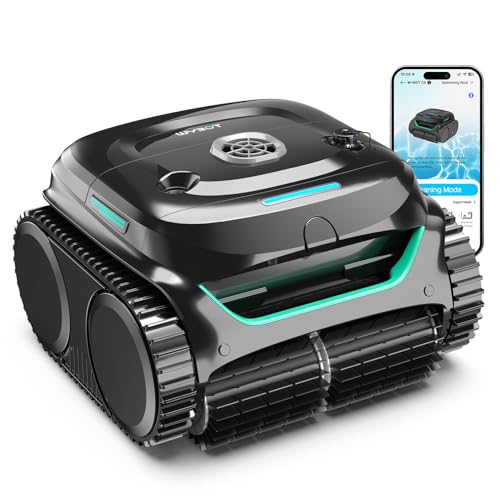
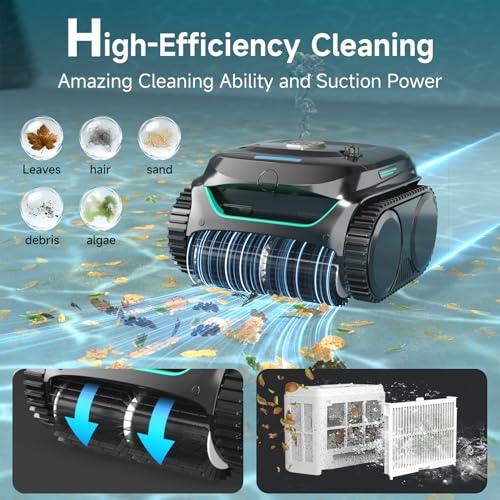
Pool maintenance has come a long way from the days of manually scrubbing with brushes and dragging heavy vacuum heads around. Cordless robotic pool cleaners represent the latest evolution in this space, promising to handle the dirty work while you relax poolside. But with several models hitting the market in recent years, choosing the right one requires understanding some key differences that aren't immediately obvious.
The BOTLUXE PC10 and WYBOT C2 both launched in the past couple of years as pool owners increasingly demanded freedom from the tangled cords and complex setups of traditional robotic cleaners. These battery-powered units can drop into your pool, clean systematically, and park themselves at the edge when finished—no hoses, no connections to your pool's filtration system, and no wrestling with 50-foot power cords.
Understanding what makes a good cordless pool robot requires looking beyond the marketing claims. The most critical factors are coverage area (how much pool surface area they can clean on a single charge), filtration effectiveness (their ability to capture different types and sizes of debris), battery performance (runtime versus charging time), navigation intelligence (whether they clean systematically or just wander around), and practical usability (how easy they are to set up, retrieve, and maintain).
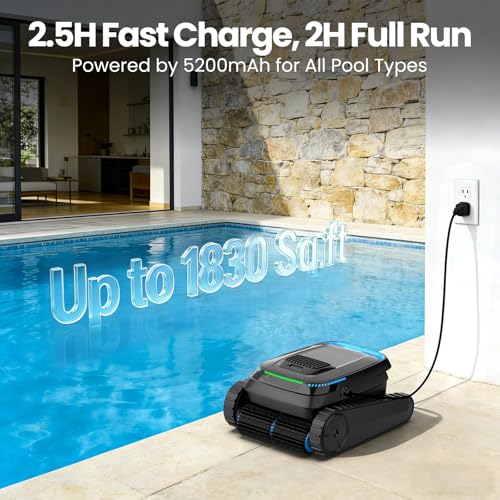
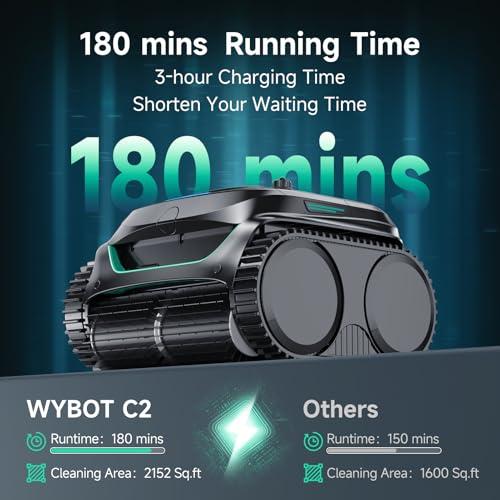
When comparing the BOTLUXE PC10 and WYBOT C2, the most striking difference is their coverage capabilities. The WYBOT C2 can handle pools up to 2,152 square feet with an impressive 180-minute runtime in its Eco mode, while the BOTLUXE PC10 covers pools up to around 800-1,830 square feet (specifications vary depending on the source) with a 120-minute runtime.
This difference matters more than you might initially think. Pool cleaning isn't just about raw runtime—it's about whether the robot can complete a thorough cleaning cycle in your specific pool before its battery dies. A larger pool requires not just more time, but more systematic navigation to ensure complete coverage. The WYBOT C2's extended runtime gives it multiple opportunities to cover areas that might be missed in a single pass, especially important for pools with complex shapes or obstacles.
The BOTLUXE PC10's shorter runtime isn't necessarily a limitation for average-sized backyard pools. Most residential pools fall in the 600-1,200 square foot range, well within its capabilities. However, if you have a larger pool or one with multiple levels, steps, or spa attachments, the extra runtime of the WYBOT C2 becomes essential rather than just convenient.
Runtime isn't just about pool size, though. Both cleaners slow down when dealing with heavy debris loads. A pool full of autumn leaves or post-storm cleanup will drain the battery faster as the motors work harder to maintain suction through clogged filters. The WYBOT C2's extended battery gives you more margin for these demanding situations.
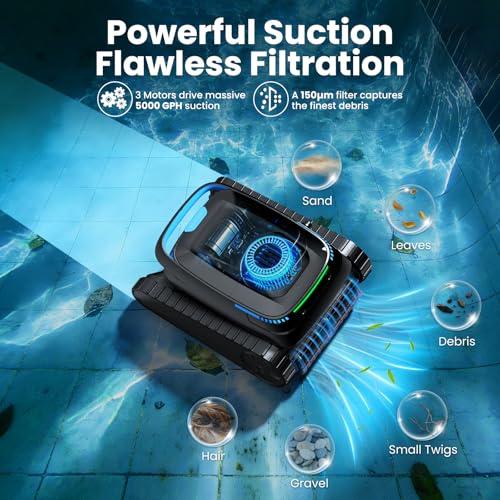
Here's where things get technically interesting. The BOTLUXE PC10 delivers 45,000 pascals (Pa) of suction pressure—a measurement of how forcefully it can pull debris into its filter system. Pascals measure pressure differential, essentially how hard the robot can "suck" compared to atmospheric pressure. The WYBOT C2 instead advertises 3,592 gallons per hour (GPH) of water flow, which measures volume rather than pressure.
These different measurements make direct comparison tricky, but user reviews consistently suggest the BOTLUXE PC10 has more aggressive suction power. This translates to better performance with stubborn debris like embedded algae, sand that's settled into pool surface textures, and heavier items like small rocks or large leaves that might otherwise get pushed around rather than picked up.
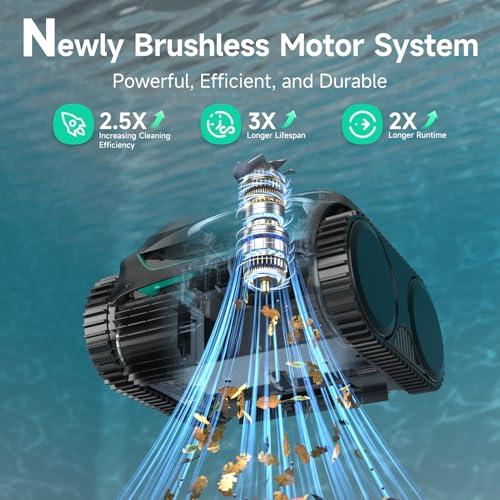
The WYBOT C2's brushless motor design prioritizes efficiency over raw power, which explains its longer runtime. Brushless motors generate less heat and drain batteries more slowly than traditional brushed motors, but they typically produce less instantaneous torque. This design choice makes sense for the WYBOT C2's extended cleaning approach—it may take multiple passes to grab everything, but it has the runtime to do so.
In practice, this means the BOTLUXE PC10 excels in pools that accumulate heavier debris or have textured surfaces that trap dirt. Pools surrounded by trees, those with pebble-tec finishes, or pools that see heavy use will benefit from its more aggressive approach. The WYBOT C2 works better for maintenance cleaning in pools that don't face extreme debris challenges.
The filtration systems reveal perhaps the biggest philosophical difference between these cleaners. The BOTLUXE PC10 uses a single 180-micron filter with a generous 4-liter capacity. To put 180 microns in perspective, that's about twice the width of a human hair—fine enough to catch sand, small leaves, and most visible debris, but not microscopic particles.
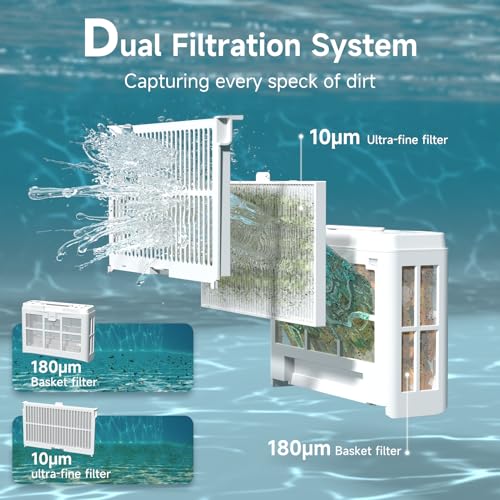
The WYBOT C2 takes a more sophisticated approach with its dual-layer filtration system. It combines 180-micron large-particle cartridges for catching the obvious stuff with an additional 10-micron ultra-fine filter. Ten microns is incredibly small—smaller than most bacteria and fine enough to catch pollen, algae spores, and the microscopic particles that make pool water look cloudy even when there's no visible debris.
This dual filtration system represents a significant technological advancement. Most pool owners don't realize that water clarity depends heavily on these microscopic particles. You can manually vacuum all the visible debris and still have water that looks slightly hazy because of particles too small to see individually but numerous enough to affect light transmission through the water.
The trade-off is filter maintenance. The WYBOT C2's 3-liter capacity fills up faster than the BOTLUXE PC10's 4-liter basket, especially the ultra-fine filter when dealing with heavy microscopic particle loads. However, users report that the dual system actually reduces overall maintenance because the water stays clearer longer, reducing the need for manual skimming and chemical adjustments.
Both systems feature easy-rinse filters that can be cleaned with a garden hose, but the WYBOT C2's dual setup means more components to manage. The ultra-fine filter also requires more careful handling since the fine mesh can be damaged by aggressive rinsing.
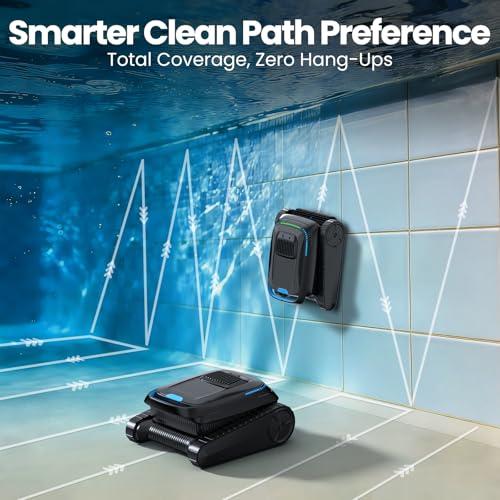
Modern pool robots have moved far beyond the random-bounce navigation of early models. The BOTLUXE PC10 uses what it calls "intelligent zig-zag patterns" with onboard sensors for obstacle detection. This system creates visible cleaning tracks as it moves, allowing you to see exactly where it's been and identify any missed areas.
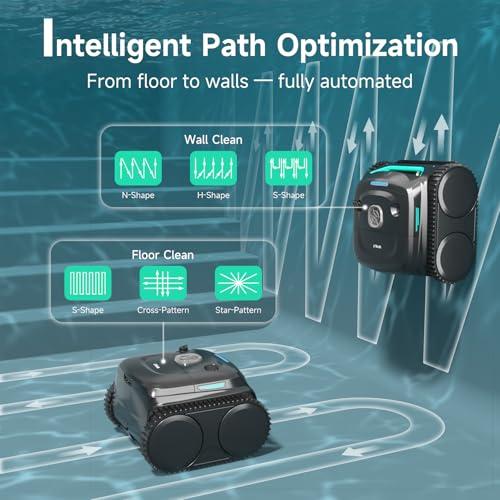
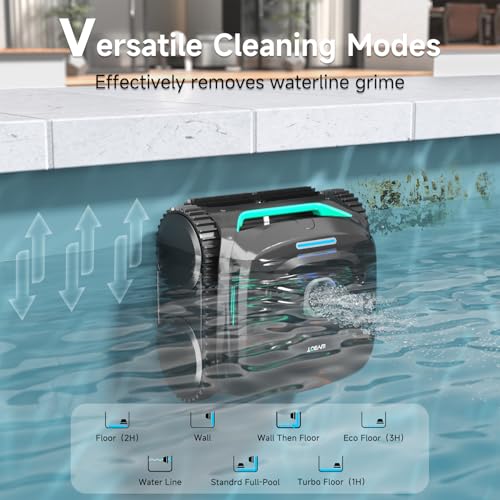
The WYBOT C2 goes further with its built-in gyroscope and intelligent path planning. Gyroscopes are the same sensors used in smartphones to detect orientation—they allow the robot to maintain awareness of its position and direction even when moving through water. The WYBOT C2 offers six customizable cleaning paths including Star, Cross, and S-patterns for floors, plus H and N patterns specifically optimized for wall cleaning.
This navigation sophistication shows up most clearly in pools with complex shapes. Kidney-shaped pools, those with multiple depths, or pools with built-in spas and steps challenge simple navigation systems. The WYBOT C2's path planning helps ensure these areas get covered systematically rather than accidentally.
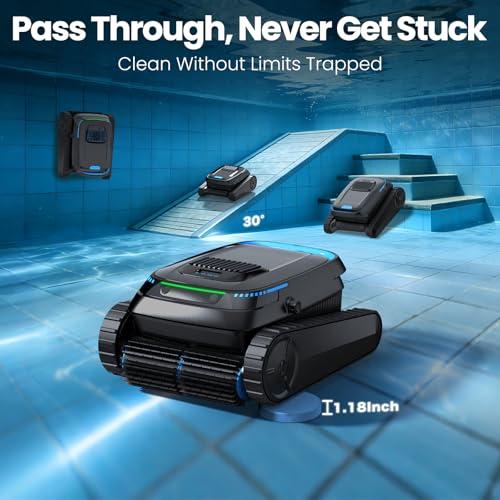
However, the BOTLUXE PC10's simpler approach has advantages too. Complex navigation systems represent more potential failure points, and some users prefer the predictability of straightforward zig-zag patterns. The BOTLUXE PC10 also climbs walls more reliably, handling slopes up to 30 degrees with its caterpillar tread design.
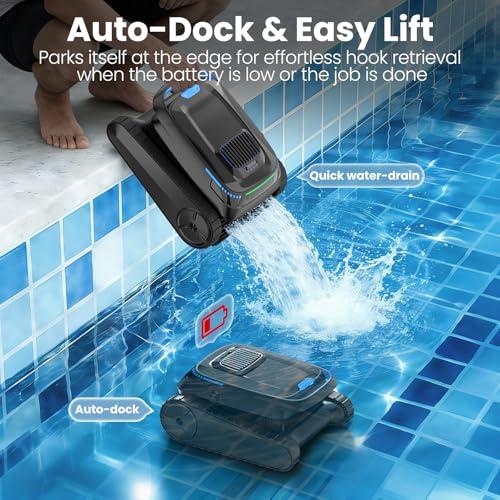
Both robots feature auto-parking systems that bring them back to the pool edge when their batteries run low or cleaning cycles complete. This eliminates the need to fish them out from the deep end with a pool pole, though the WYBOT C2's lighter 20-pound weight versus the BOTLUXE PC10's 29.5 pounds makes retrieval notably easier.
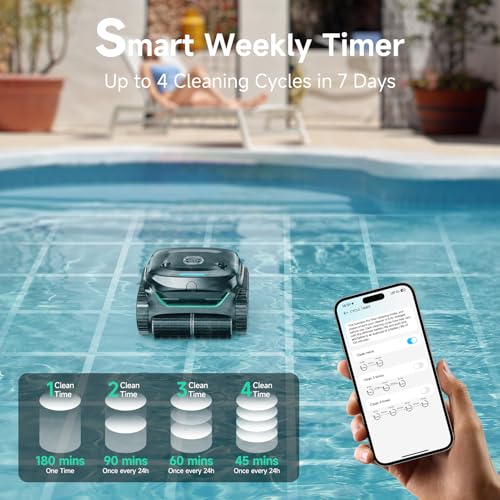
Here's where the WYBOT C2 clearly separates itself from the competition. Its companion app provides scheduling for up to four cleanings per week, cycle timers for automated daily operations, and specialized modes like "Extra-Dirty Pool Cleaning" for post-storm cleanup.
The app functionality extends beyond basic scheduling. You can split the 180-minute runtime across multiple days—for example, running 60-minute floor cleanings three times per week rather than one marathon session. The app also receives over-the-air updates, meaning the robot's capabilities can improve over time as the manufacturer adds features or optimizes performance.
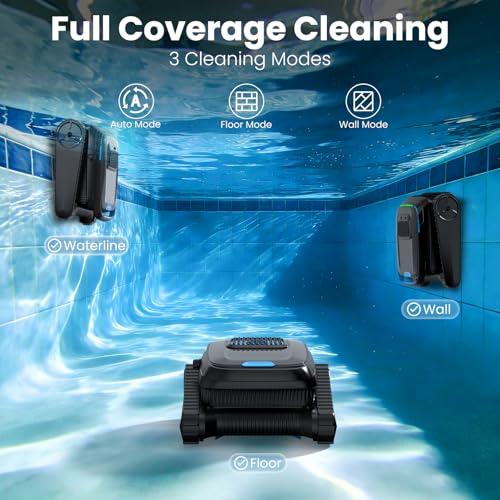
The BOTLUXE PC10 takes the opposite approach with its switch-based operation. Select your mode (Auto, Floor Only, or Wall Only), drop it in the pool, and it starts cleaning. LED indicators show battery status and confirm mode selection. This simplicity appeals to users who want reliable pool cleaning without smartphone dependency.
The app versus manual control debate often comes down to personal preference, but there are practical considerations. App control allows for cleaning when you're not home, essential for maintaining proper pool chemistry and preventing algae growth. However, apps require ongoing developer support and can become obsolete if manufacturers stop updating them.
Based on extensive user feedback and expert reviews, both robots deliver on their basic promises but excel in different scenarios. The BOTLUXE PC10 consistently receives praise for its aggressive debris pickup and reliable wall climbing. Users report it handles autumn leaf cleanup effectively and works well in pools with heavy bather loads that introduce oils and debris.
The WYBOT C2 earns consistent high marks for water clarity improvement. Users specifically mention that their pools look clearer after cleaning cycles, attributing this to the dual filtration system's ability to capture microscopic particles. However, some reviews note that its gentler suction sometimes requires multiple passes to pick up heavier debris that the BOTLUXE PC10 would grab in one pass.
Both robots handle multiple surface types well—tile, concrete, vinyl, and fiberglass—but the BOTLUXE PC10's more aggressive tread design gives it an edge on textured surfaces where debris can become embedded. Pool owners with smooth surfaces often prefer the WYBOT C2's gentler approach, which reduces wear on pool finishes over time.
Battery life in real-world conditions varies significantly from manufacturer claims. Both robots experience reduced runtime when dealing with heavy debris loads, cold water, or when batteries age over time. The WYBOT C2's longer baseline runtime provides more margin for these variables, while the BOTLUXE PC10's faster 2.5-hour charging time helps compensate for its shorter runtime.
At the time of writing, both robots fall into the mid-range pricing category for cordless pool cleaners, though the WYBOT C2 typically commands a premium for its advanced features. The value equation depends heavily on your specific pool and usage patterns.
For pools under 1,200 square feet with moderate debris loads, the BOTLUXE PC10 often provides better value. Its strong suction power handles most cleaning challenges effectively, and its simpler design typically means lower long-term maintenance costs and fewer potential failure points.
The WYBOT C2's premium makes sense for larger pools, tech-savvy users who want comprehensive automation, or pools requiring the finest filtration. Its dual filter system can reduce the need for supplemental chemical treatments and manual skimming, potentially offsetting its higher initial cost through reduced ongoing maintenance.
Both robots come with meaningful warranties and customer support, important considerations given their electronic complexity and water exposure. The WYBOT C2's over-the-air update capability suggests longer software support life, while the BOTLUXE PC10's simpler design promises reliable mechanical operation regardless of software support.
Choose the BOTLUXE PC10 if you have an average-sized pool (under 1,500 square feet) with moderate to heavy debris challenges. Its stronger suction power excels with embedded algae, sand, and larger debris like leaves and twigs. Pool owners who prefer simple, reliable operation without app dependency will appreciate its straightforward switch-based controls. It's also the better choice if you're dealing with textured pool surfaces or challenging debris like pine needles or seed pods that require more aggressive pickup.
The WYBOT C2 makes more sense for larger pools requiring extended cleaning cycles, users prioritizing water clarity over pure cleaning power, and tech enthusiasts who want comprehensive automation features. Its dual filtration system delivers superior results for microscopic particle removal, making it ideal for pools that struggle with cloudiness or fine debris like pollen. The app scheduling becomes essential for busy pool owners who want to maintain their pools without hands-on involvement.
Consider your long-term needs too. Pool environments change—trees grow larger and drop more debris, families use pools more heavily over time, and your tolerance for maintenance tasks may decrease. The WYBOT C2's flexibility and advanced features provide more adaptation possibilities, while the BOTLUXE PC10's proven simplicity ensures reliable service regardless of changing circumstances.
Both robots represent significant improvements over older corded models and basic suction cleaners, but they target different priorities within the pool cleaning spectrum. The key is matching their strengths to your specific situation rather than simply choosing the one with the most features or lowest price.
| BOTLUXE PC10 Robotic Pool Cleaner | WYBOT C2 Cordless Robotic Pool Cleaner |
|---|---|
| Pool Coverage Area - Determines if the robot can handle your pool size effectively | |
| Up to 800-1,830 sq ft (specifications vary) | Up to 2,152 sq ft |
| Battery Runtime - How long it cleans before needing a recharge | |
| 120 minutes maximum | 180 minutes in Eco Mode |
| Suction Power - Critical for picking up heavy debris and embedded dirt | |
| 45,000Pa (strong aggressive suction) | 3,592 GPH water flow (gentler, efficiency-focused) |
| Filtration System - Affects water clarity and debris capture effectiveness | |
| Single 180-micron filter, 4L capacity | Dual-layer: 180μm + 10μm ultra-fine filters, 3L capacity |
| Cleaning Modes - Flexibility for different cleaning needs | |
| 3 modes: Auto, Floor Only, Wall Only | 7 modes including Full, Floor, Wall, Waterline, Turbo, Eco |
| Smart Features - App control and automation capabilities | |
| Switch-based operation, LED indicators, no app required | WYBOT app with scheduling, cycle timers, OTA updates |
| Navigation Technology - How systematically it covers your pool | |
| Smart zig-zag patterns with obstacle sensors | Built-in gyroscope with 6 customizable cleaning paths |
| Weight - Affects ease of handling and retrieval | |
| 29.5 pounds (heavier but more robust) | 20 pounds (easier to lift and maneuver) |
| Charging Time - How long between cleaning sessions | |
| 2.5 hours | 3-3.5 hours |
| Wall Climbing Capability - Important for complete pool cleaning | |
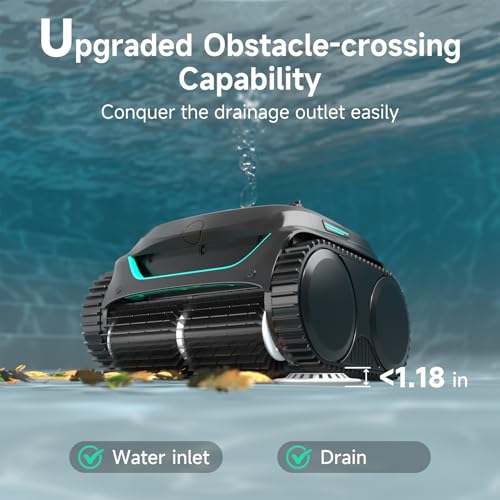
| Up to 30° slopes with caterpillar treads | Multi-surface compatibility with enhanced obstacle crossing |
| Best For - Target user scenarios | |
| Average pools, heavy debris, users wanting simple reliable operation | Large pools, tech users, those prioritizing water clarity and automation |
The WYBOT C2 handles larger pools significantly better, covering up to 2,152 square feet with its 180-minute runtime in Eco Mode. The BOTLUXE PC10 covers pools up to 800-1,830 square feet with a 120-minute runtime, making it better suited for average-sized residential pools.
The BOTLUXE PC10 delivers stronger suction at 45,000Pa, making it more effective for heavy debris and embedded dirt. The WYBOT C2 uses a gentler 3,592 GPH water flow approach that prioritizes efficiency and longer runtime over raw cleaning power.
The WYBOT C2 features superior dual-layer filtration with both 180-micron and 10-micron ultra-fine filters that capture microscopic particles for exceptional water clarity. The BOTLUXE PC10 uses a single 180-micron filter with larger 4L capacity, effective for visible debris but less comprehensive for fine particles.
The WYBOT C2 requires the WYBOT app for full functionality including scheduling up to 4 cleanings per week and accessing all 7 cleaning modes. The BOTLUXE PC10 operates with simple switch controls and LED indicators, requiring no app or smartphone connectivity.
The WYBOT C2 weighs 20 pounds, making it significantly easier to lift and maneuver compared to the BOTLUXE PC10 at 29.5 pounds. This weight difference becomes noticeable during regular retrieval and maintenance tasks.
The BOTLUXE PC10 charges faster at 2.5 hours, while the WYBOT C2 takes 3-3.5 hours for a full charge. However, the WYBOT C2's longer runtime often means less frequent charging is needed.
The BOTLUXE PC10 excels with heavy debris like leaves due to its stronger 45,000Pa suction power and aggressive cleaning approach. While the WYBOT C2 can handle leaves, its gentler suction may require multiple passes for heavily debris-laden pools.
Both robots clean walls and waterlines, but with different strengths. The BOTLUXE PC10 climbs slopes up to 30 degrees with reliable caterpillar treads. The WYBOT C2 offers specialized wall cleaning patterns and waterline-only modes for targeted cleaning.
The BOTLUXE PC10 typically offers better value for average-sized pools with its strong performance and lower complexity. The WYBOT C2 justifies its premium through advanced features like dual filtration, app control, and extended coverage for larger pools.
The BOTLUXE PC10 offers 3 straightforward modes: Auto, Floor Only, and Wall Only. The WYBOT C2 provides 7 modes including Full, Floor, Wall, Waterline-only, Turbo, and Eco modes, plus 6 customizable cleaning paths for more targeted cleaning options.
The BOTLUXE PC10 requires less maintenance with its simpler single-filter design and no app dependency. The WYBOT C2 has more components with its dual filtration system but may reduce overall pool maintenance through superior fine particle removal.
Both the BOTLUXE PC10 and WYBOT C2 work on all major pool surfaces including tile, concrete, vinyl, and fiberglass in both inground and above-ground pools. The BOTLUXE PC10 performs better on textured surfaces, while the WYBOT C2 is gentler on delicate pool finishes.
We've done our best to create useful and informative comparisons to help you decide what product to buy. Our research uses advanced automated methods to create this comparison and perfection is not possible - please contact us for corrections or questions. These are the sites we've researched in the creation of this article: mryouwho.com - manuals.plus - youtube.com - youtube.com - youtube.com - youtube.com - youtube.com - youtube.com - youtube.com - the-gadgeteer.com - us.air-robo.com - youtube.com - youtube.com - youtube.com - us.air-robo.com - youtube.com - ubuy.tg - bestbuy.com - wybotpool.com - youtube.com - wybotpool.com - thepoolnerd.com - lowes.com - youtube.com - walmart.com - business.walmart.com - bestbuy.com - homedepot.com - target.com - eu.wybotpool.com - youtube.com - youtube.com - lowes.com - eftm.com - youtube.com - poolwarehouse.com

Privacy Policy
Terms and Conditions - Affiliate Policy
Home Security
© Copyright 2008-2026.
11816 Inwood Rd #1211, Dallas, TX 75244