

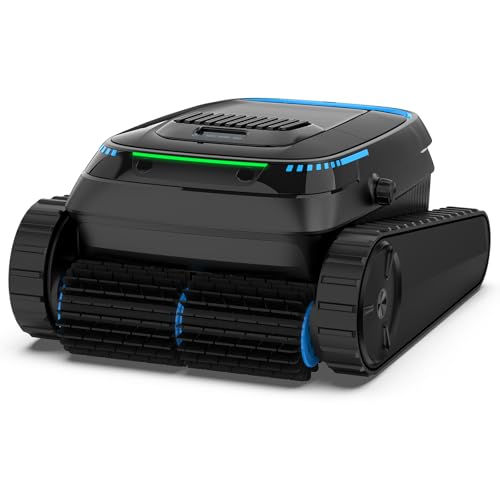
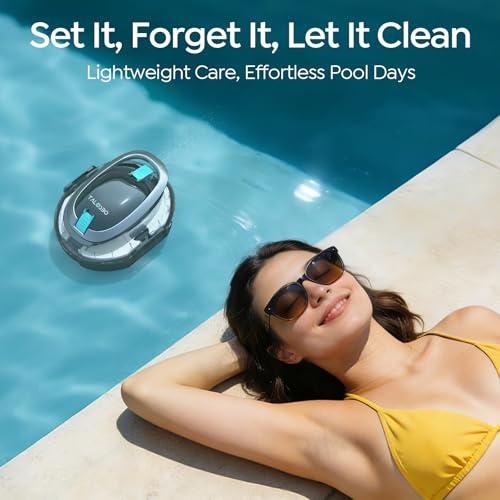
Pool cleaning used to mean dragging out the manual vacuum, wrestling with hoses, and spending your weekend scrubbing walls instead of relaxing poolside. Robotic pool cleaners changed that game entirely. These self-contained units crawl around your pool on their own, sucking up debris and filtering water without any connection to your pool's main system. They're like little underwater robots with one job: keeping your pool spotless while you do literally anything else.
But here's where it gets tricky—not all robotic cleaners are created equal. The BOTLUXE PC10 and TALOSBO S2 represent two completely different approaches to automated pool cleaning, and choosing between them requires understanding what each one actually does well.
Before diving into these specific models, it's worth understanding what separates a good robotic cleaner from a mediocre one. The core technology revolves around three main systems: suction power (measured in pascals or gallons per hour), navigation intelligence (how the robot maps and moves through your pool), and filtration capability (what size particles it can capture and how much debris it can hold).
The suction system uses internal pumps and motors to create negative pressure, pulling water and debris through the unit. Navigation ranges from simple random patterns to sophisticated mapping that ensures complete coverage. Filtration combines physical screens (measured in microns—smaller numbers catch finer particles) with collection baskets that determine how long the robot can clean before needing maintenance.
Both the BOTLUXE PC10 and TALOSBO S2 launched in recent years as manufacturers recognized the growing demand for cordless convenience. The PC10 arrived as part of the trend toward more powerful, comprehensive cleaning systems, while the S2 emerged from the push to make robotic cleaning accessible to smaller pool owners who previously couldn't justify the investment.
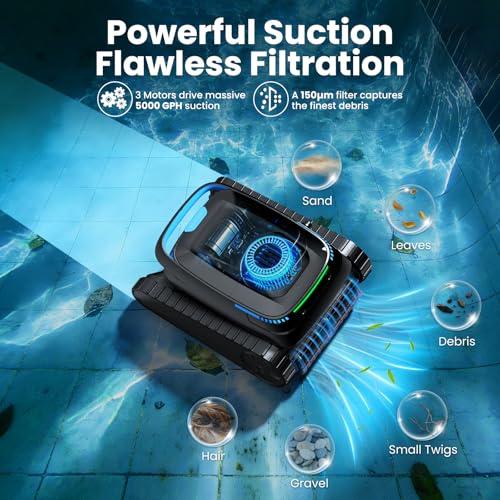
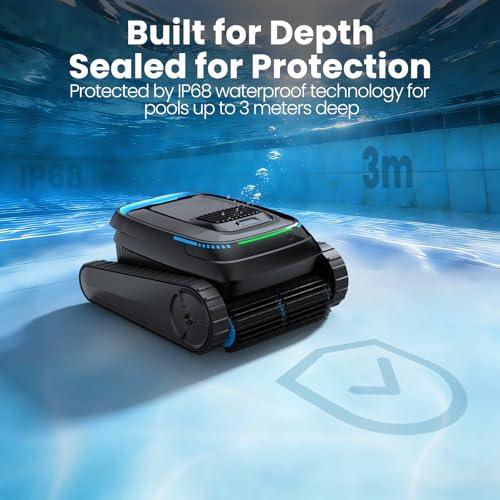
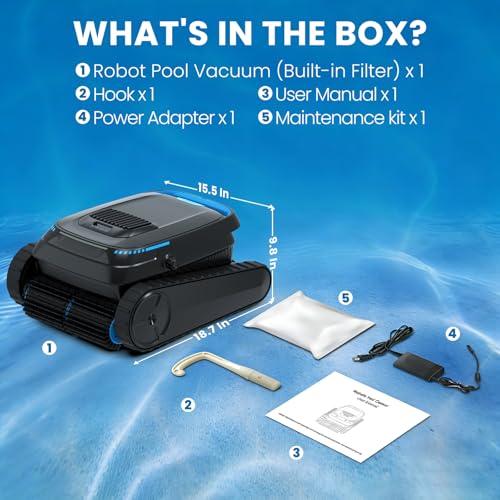
The BOTLUXE PC10 takes the "leave nothing to chance" approach. This 29.5-pound unit generates 45,000Pa of suction—that's roughly equivalent to a shop vacuum's power, but designed to work underwater. The dual-drive motor system combines a propulsion motor (for movement) with a dedicated pump motor (for suction), creating enough force to pull sand, leaves, and even small twigs off pool surfaces.
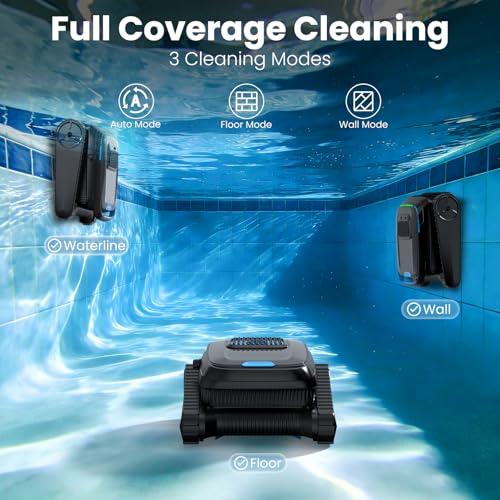
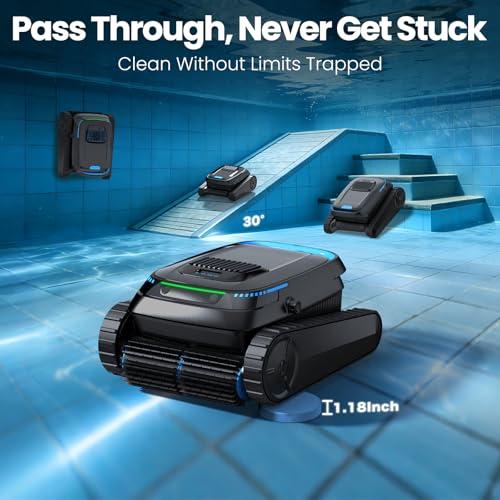
What makes the PC10 stand out is its caterpillar tread system. Instead of wheels, it uses flexible rubber tracks similar to those on construction equipment. These treads grip pool surfaces and climb slopes up to 30 degrees, meaning it can transition from shallow to deep ends, navigate steps, and even clean vertical walls. This isn't just marketing fluff—the ability to clean walls matters tremendously because that's where algae typically starts growing, and manual wall cleaning is genuinely exhausting work.
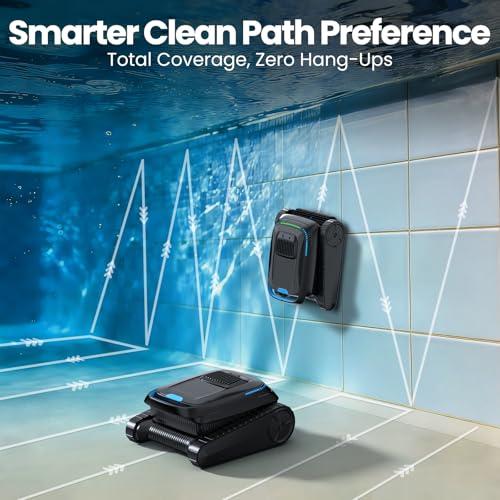
The navigation system employs what BOTLUXE calls "intelligent positioning technology," which translates to smart sensors that help the robot map your pool and follow systematic zig-zag patterns. Unlike random-moving cleaners that might hit the same spot three times while missing corners entirely, the PC10 creates visible cleaning tracks that show exactly where it's been.
The 4-liter filter basket represents another significant advantage. That's roughly four times larger than basic robotic cleaners, meaning it can handle pools with heavy debris loads—think post-storm cleanup or opening a pool after winter—without stopping mid-cycle for filter cleaning. The 180-micron filtration captures particles smaller than fine sand, which is crucial because it's often the smallest debris that makes water look cloudy.
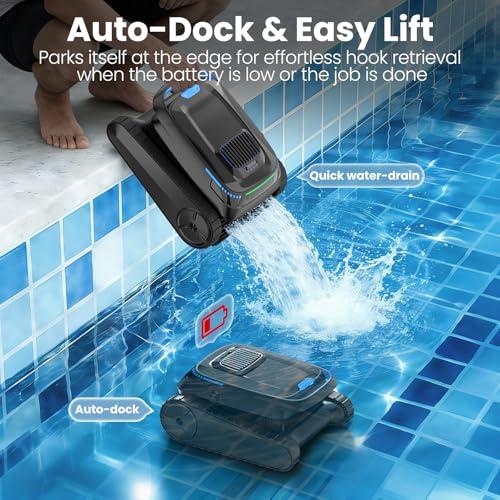
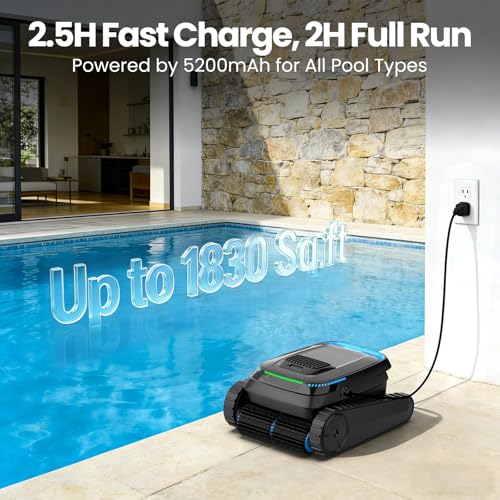
Battery technology deserves special mention here. The 5200mAh lithium-ion battery provides 120 minutes of runtime, but more importantly, it maintains consistent suction throughout that entire period. Cheaper units often see suction drop as the battery depletes, but the PC10 maintains performance until it automatically returns to the pool edge for retrieval.
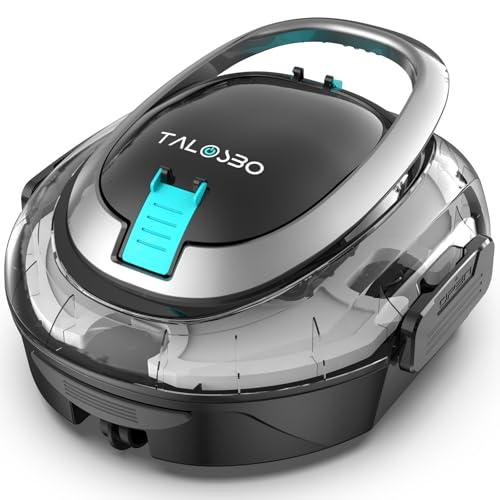
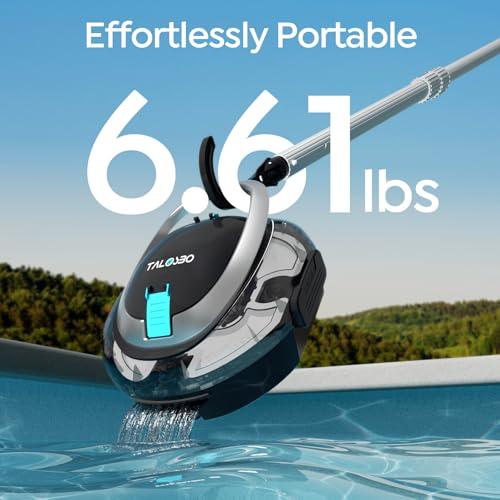
The TALOSBO S2 takes a fundamentally different approach. At 6.6 pounds, it's essentially the smartphone to the PC10's laptop—smaller, more portable, but with focused capabilities rather than comprehensive features.
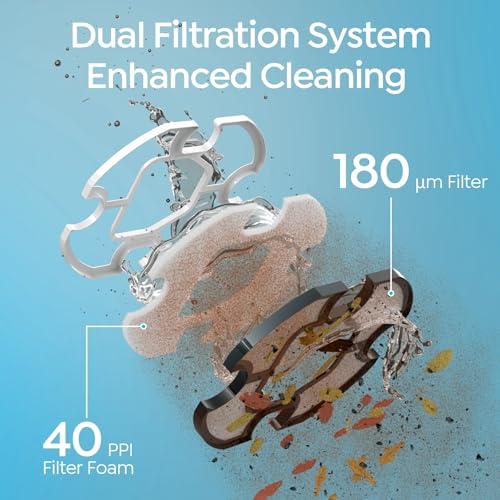
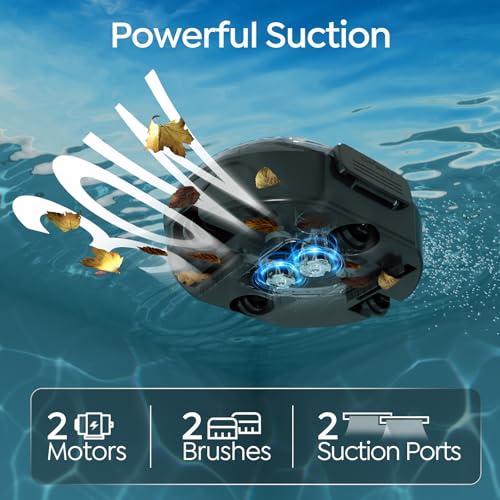
The S2's dual-motor system generates 1928 GPH (gallons per hour) of flow, which translates to solid suction for routine debris pickup. While this doesn't match the PC10's raw power, it's perfectly adequate for maintaining pools that don't see heavy debris accumulation. The dual-layer filtration combines a 180-micron screen with a 40 PPI (pores per inch) sponge, creating multiple opportunities to trap particles of different sizes.
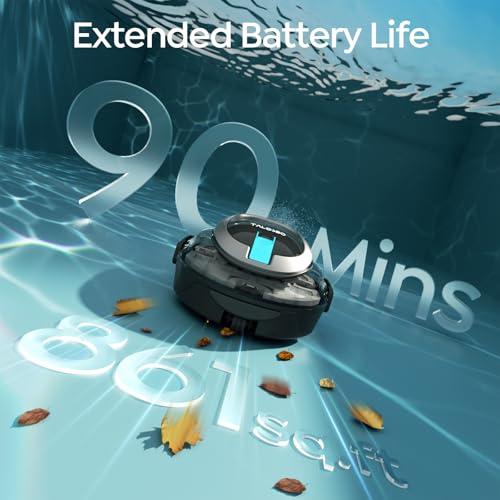
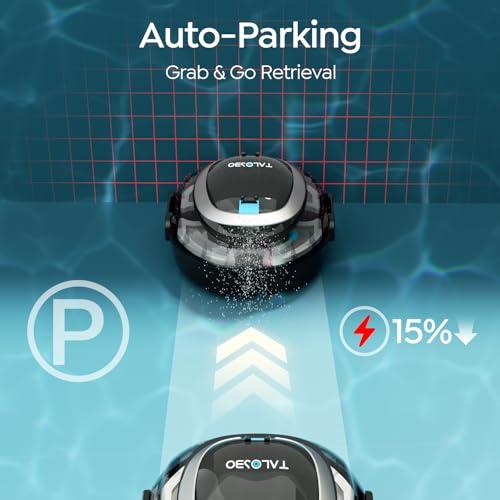
Where the S2 makes compromises becomes clear in its navigation and coverage. This unit uses random movement patterns rather than intelligent mapping, essentially bouncing around your pool until the 90-minute battery runs down. For flat-bottom pools under 16 feet in diameter, this random approach can provide adequate coverage. The auto-parking feature ensures it ends up near the pool wall for easy retrieval, which is genuinely convenient.
The transparent shell design serves a practical purpose beyond aesthetics—you can see exactly how much debris has accumulated without opening the unit. This visual feedback helps with maintenance timing and gives you confidence that the cleaning cycle was worthwhile.
The suction power difference between these units is substantial and shows up immediately in real-world use. The PC10's 45,000Pa generates enough force to pull settled debris from pool corners and crevices where lighter units might just push particles around. This matters most after storms, during fall leaf season, or when opening pools that have sat unused.
Based on user feedback and testing data, the PC10 handles everything from fine silt to large leaves without choking, while the S2 excels with routine maintenance but struggles when debris loads exceed its capacity. The S2's smaller motor simply can't generate enough suction to handle heavy accumulations efficiently.
Navigation represents perhaps the biggest performance gap between these units. The PC10's systematic cleaning patterns ensure complete coverage even in complex pool shapes, while the S2's random movement can leave spots untouched, particularly in rectangular pools or areas with obstacles.
Our research into user experiences reveals that PC10 owners consistently report seeing clear cleaning tracks and complete debris removal, while S2 users often need to run multiple cycles or manually direct the unit to missed areas. For pools with simple shapes and minimal obstacles, random navigation works fine, but complex layouts demand smarter movement patterns.
This is where the fundamental design philosophy differences become crystal clear. The PC10 treats wall cleaning as essential—and rightfully so, since walls represent roughly 70% of a pool's total surface area. The caterpillar treads provide enough grip to maintain contact while climbing, and the waterline cleaning mode specifically targets the scum line where oils and debris accumulate.
The S2 simply wasn't designed for wall cleaning, limiting it to floor-only maintenance. For pool owners who don't mind manual wall brushing or have minimal wall contamination, this limitation might not matter. But for anyone seeking truly hands-off pool maintenance, floor-only cleaning feels incomplete.
The PC10's 4-liter filter capacity translates to dramatically less maintenance interruption. Based on user reports, most pools require filter cleaning only after 2-3 complete cycles, versus the S2's smaller capacity that often fills up mid-cycle during heavy debris periods.
The maintenance experience differs significantly too. The PC10 requires lifting a heavier unit but offers quick filter access and thorough cleaning capability. The S2's lightweight design makes handling easier, but the transparent shell design, while visually appealing, can make determining actual capacity levels tricky.
The BOTLUXE PC10 justifies its higher price point (at time of writing, roughly 3-4 times the S2's cost) for pools where comprehensive cleaning matters most. Inground pools with varying depths, pools surrounded by trees, and larger installations all benefit from the PC10's superior power and wall-cleaning capability.
Pool owners who value convenience above all else find the PC10 compelling because it truly delivers hands-off maintenance. Set it to AUTO mode, drop it in the pool, and retrieve it two hours later after it's cleaned floors, walls, and waterline completely. For busy homeowners or those who view pool maintenance as a necessary chore rather than an enjoyable activity, this level of automation provides genuine value.
The unit also makes sense for pools with challenging debris situations—properties with heavy tree cover, pools used frequently by children (who tend to track in more dirt), or installations in areas with frequent storms. The combination of powerful suction and large filter capacity handles these situations without requiring constant intervention.
The S2 excels in scenarios where its limitations don't matter. Small above-ground pools, particularly round models under 16 feet in diameter, represent ideal use cases. These pools typically have simpler debris patterns, less wall contamination, and lower overall maintenance requirements that align perfectly with the S2's capabilities.
Budget-conscious pool owners also find compelling value in the S2. At time of writing, it costs significantly less than comprehensive robotic cleaners while still providing automated floor cleaning. For pools that primarily need routine sand and small debris removal, the S2 delivers adequate performance at a fraction of the cost.
The lightweight design creates unique advantages for certain users. Pool owners who frequently remove their cleaner for pool activities, those with limited storage space, or anyone uncomfortable handling heavier equipment appreciate the S2's portability. At 6.6 pounds, anyone can easily lift it from the pool without assistance.
Both units represent relatively recent entries in the robotic pool cleaner market, arriving as cordless technology matured enough to provide sufficient runtime for complete cleaning cycles. The PC10 embodies the current trend toward more sophisticated navigation and comprehensive cleaning coverage, while the S2 reflects manufacturers' efforts to bring robotic cleaning to price-sensitive market segments.
The cordless revolution in pool cleaning mirrors similar developments in other appliance categories—eliminating the hassle of power cords while maintaining adequate performance. Earlier robotic cleaners required power connections that limited range and created safety concerns, making the current generation's battery-powered operation a genuine improvement.
Pool size and complexity should drive your primary decision. Pools over 600 square feet, installations with steps or varying depths, and any pool requiring wall cleaning all point toward the BOTLUXE PC10. The performance differences in these scenarios aren't marginal—they're fundamental.
For smaller, simpler pools where floor cleaning provides adequate maintenance, the TALOSBO S2 offers genuine value. The key question becomes whether you're comfortable with its limitations in exchange for significant cost savings and enhanced portability.
Consider your maintenance philosophy too. Pool owners who want comprehensive, hands-off cleaning should invest in the PC10 despite its higher cost. Those who view robotic cleaners as one tool among many in their maintenance arsenal might find the S2 perfectly adequate for its intended role.
The math often works out favorably for the PC10 when you factor in time savings from wall cleaning automation and reduced manual maintenance. But for pools where those benefits don't apply, paying for capabilities you won't use makes little sense.
Ultimately, both units succeed within their intended markets. The BOTLUXE PC10 delivers professional-grade cleaning for demanding installations, while the TALOSBO S2 makes robotic pool cleaning accessible to smaller pools and tighter budgets. Choose based on your specific needs rather than general recommendations—the right answer depends entirely on your pool and priorities.
| BOTLUXE PC10 Robotic Pool Cleaner | TALOSBO S2 Cordless Robotic Pool Cleaner |
|---|---|
| Suction Power - Determines how effectively the cleaner removes stubborn debris and fine particles | |
| 45,000Pa (equivalent to shop vacuum power for heavy debris) | 1928 GPH flow rate (adequate for routine maintenance) |
| Pool Coverage - Defines what areas of your pool will actually get cleaned | |
| Floor, walls, and waterline with smart zig-zag navigation | Floor only with random movement patterns |
| Runtime - How long the cleaner operates before needing a recharge | |
| 120 minutes (enough for complete large pool cleaning) | 90 minutes (sufficient for smaller pools under 16 ft) |
| Weight - Affects how easy it is to remove from pool and store | |
| 29.5 pounds (requires two hands but built for durability) | 6.6 pounds (easily lifted with one hand) |
| Pool Compatibility - Determines which pool types and sizes work best | |
| Up to 800 sq ft, inground and above-ground, handles slopes up to 30° | Up to 861 sq ft, flat above-ground pools only, no slope capability |
| Filter Capacity - How much debris it holds before needing to be emptied | |
| 4L basket with 180-micron filtration (handles heavy debris loads) | Dual-layer filtration with transparent shell (requires frequent emptying) |
| Climbing Ability - Whether it can clean walls and navigate pool features | |
| Caterpillar treads climb walls, steps, and obstacles | No wall climbing, gets stuck on uneven surfaces |
| Navigation Intelligence - How efficiently it covers your entire pool | |
| Smart mapping with systematic cleaning patterns | Random movement with auto-parking feature |
| Charging Time - How long you wait between cleaning sessions | |
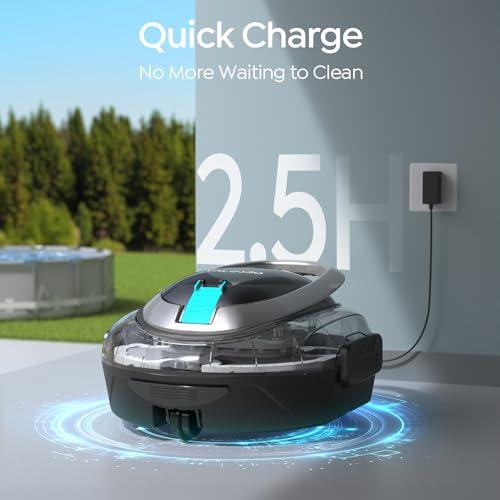
| 2.5 hours for full charge | 2.5 hours for full charge |
| Cleaning Modes - Flexibility in targeting specific pool areas | |
| Three modes: AUTO (full pool), FLOOR only, WALL only | Single automatic mode for floor cleaning |
The BOTLUXE PC10 is significantly better for large pools, handling up to 800 square feet with its powerful 45,000Pa suction and 120-minute runtime. The TALOSBO S2 works best for smaller pools up to 16 feet in diameter, making the PC10 the clear choice for larger installations.
Only the BOTLUXE PC10 can clean walls and steps thanks to its caterpillar treads that climb slopes up to 30 degrees. The TALOSBO S2 is limited to floor cleaning only and cannot handle walls, steps, or uneven surfaces.
The BOTLUXE PC10 delivers much stronger suction at 45,000Pa compared to the TALOSBO S2's 1928 GPH flow rate. This makes the PC10 better for heavy debris removal and thorough cleaning, while the S2 handles light maintenance adequately.
The BOTLUXE PC10 runs for 120 minutes on a single charge, while the TALOSBO S2 operates for 90 minutes. Both charge in about 2.5 hours, but the PC10's longer runtime makes it better for larger pools requiring extended cleaning cycles.
The TALOSBO S2 is much easier to handle at only 6.6 pounds compared to the BOTLUXE PC10's 29.5 pounds. If you frequently remove your cleaner from the pool or have limited physical strength, the lightweight S2 offers a significant advantage.
The BOTLUXE PC10 works excellently with both inground and above-ground pools, especially those with varying depths and complex features. The TALOSBO S2 is designed specifically for flat above-ground pools and struggles with inground pools that have slopes or depth changes.
The BOTLUXE PC10 features superior filtration with a large 4L basket and 180-micron screening that captures ultra-fine debris. The TALOSBO S2 uses dual-layer filtration but has a smaller capacity, requiring more frequent emptying during heavy debris periods.
The BOTLUXE PC10 navigates obstacles effectively using smart sensors and caterpillar treads that handle steps, drains, and ladders. The TALOSBO S2 frequently gets stuck on obstacles and works best in simple, flat pools without complex features.
The TALOSBO S2 offers better value for small, simple above-ground pools where its limitations don't matter. The BOTLUXE PC10 provides better value for larger or complex pools requiring comprehensive cleaning, despite its higher upfront cost.
The BOTLUXE PC10 uses intelligent zig-zag patterns that systematically cover your entire pool without missing spots. The TALOSBO S2 uses random movement patterns that can miss areas but includes auto-parking to end near the pool wall for easy retrieval.
The BOTLUXE PC10 requires less frequent maintenance thanks to its large 4L filter basket that handles more debris before needing to be emptied. The TALOSBO S2 requires more frequent filter cleaning but is easier to handle due to its lightweight design and transparent shell.
Both the BOTLUXE PC10 and TALOSBO S2 work with saltwater pools, though the S2 specifically mentions compatibility up to 5,000 PPM with post-use freshwater rinsing. The PC10's more robust construction may handle saltwater environments better long-term.
We've done our best to create useful and informative comparisons to help you decide what product to buy. Our research uses advanced automated methods to create this comparison and perfection is not possible - please contact us for corrections or questions. These are the sites we've researched in the creation of this article: mryouwho.com - manuals.plus - youtube.com - youtube.com - youtube.com - youtube.com - youtube.com - youtube.com - youtube.com - the-gadgeteer.com - us.air-robo.com - youtube.com - youtube.com - youtube.com - us.air-robo.com - youtube.com - ubuy.tg - talosbo.com - pricehistory.app - talosbo.com - youtube.com - beta.walmart.com - youtube.com - youtube.com - youtube.com - youtube.com - talosbo.com - talosbo.com - talosbo.com - youtube.com - talosbo.com - talosbo.com - talosbo.com - bestbuy.com - walmart.com - talosbo.com - tiendamia.com.uy - talosbo.com

Privacy Policy
Terms and Conditions - Affiliate Policy
Home Security
© Copyright 2008-2026.
11816 Inwood Rd #1211, Dallas, TX 75244