

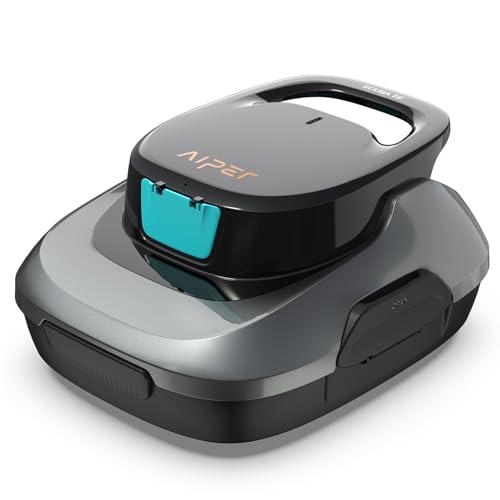
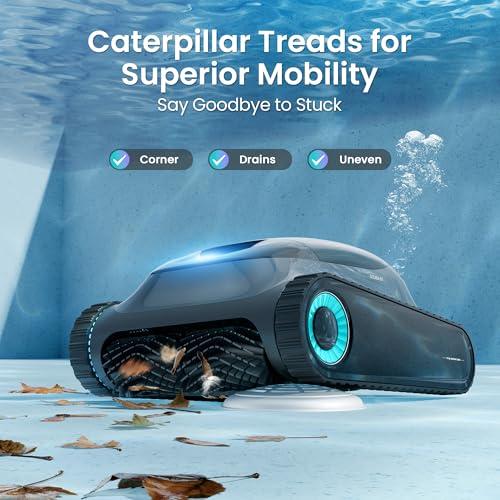
The world of pool cleaning has changed dramatically over the past few years. Gone are the days when your only options were hauling out a heavy vacuum or wrestling with tangled cords that somehow always managed to knot themselves around pool fixtures. Enter cordless robotic pool cleaners—devices that promise to drop into your pool and handle the dirty work while you relax.
But here's the thing: not all cordless cleaners are created equal. The Aiper Scuba SE and Aiper Scuba S1 represent two very different approaches to cordless pool cleaning, and understanding these differences could save you from making an expensive mistake.
Before diving into specifics, let's talk about why cordless pool cleaners exist in the first place. Traditional corded robotic cleaners pack serious power—they can run indefinitely and typically deliver superior suction. But they come with real drawbacks: installation complexity, cord management nightmares, and the constant worry about electrical safety around water.
Cordless cleaners solve these problems by going battery-powered. The trade-off? They must balance cleaning power against battery life, which means compromises. Some handle this better than others.
When evaluating any cordless pool cleaner, focus on these critical factors:
Battery efficiency: How long does it actually clean (not just how long the battery lasts), and how much cleaning power remains as the battery drains?
Debris handling capability: Can it actually pick up what's in your pool, or does it just push stuff around?
Navigation intelligence: Does it clean systematically or randomly bump around hoping for the best?
Pool compatibility: What pool types, sizes, and surface materials can it handle effectively?
The Aiper Scuba SE and Aiper Scuba S1 approach these challenges very differently, which explains their vastly different price points and target audiences.
Released in 2024, both models represent Aiper's current cordless offerings, but they're designed for completely different pool owners. Think of the Scuba SE as the budget-friendly option that gets you into cordless cleaning, while the Scuba S1 aims to deliver a more premium experience with advanced features.
At the time of writing, the SE typically sells for under $200 during promotional periods, making it one of the most affordable cordless pool cleaners available. The S1, meanwhile, commands a premium—usually selling for 3-4 times the SE's price, positioning it as a mid-range cordless option.
But price alone doesn't tell the whole story. These cleaners target fundamentally different pool types and cleaning needs.
Suction power determines whether a pool cleaner actually cleans or just takes a leisurely swim while accomplishing nothing. This is measured in gallons per hour (GPH) or gallons per minute (GPM)—basically, how much water (and debris) the cleaner can process.
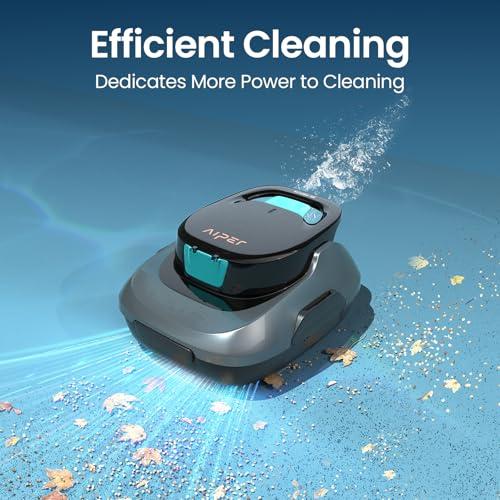
The Scuba SE delivers 1,200 GPH (or 20 GPM) through its dual-motor setup. While this sounds respectable on paper, real-world performance tells a different story. Our research into user experiences reveals a consistent pattern: the SE struggles with anything beyond light surface debris. Leaves, small twigs, and even sand often get pushed around rather than collected. The motors simply don't generate enough sustained suction to handle typical pool debris loads.
The Scuba S1, by contrast, boasts 4,200 GPH suction—more than three times the SE's output. This comes from a three-motor configuration: two drive motors plus a dedicated brushless filtration motor. The brushless design is significant because it maintains consistent power output and generates less heat, allowing for sustained performance throughout the cleaning cycle.
But here's where it gets interesting: even with superior specs, the S1 isn't perfect. As the battery drains during cleaning, suction power gradually decreases. This means the last 30 minutes of cleaning aren't as effective as the first 30 minutes. It's a fundamental limitation of battery-powered devices that corded cleaners don't face.
Battery specifications can be misleading because manufacturers often cite maximum runtime under ideal conditions, not actual cleaning performance.
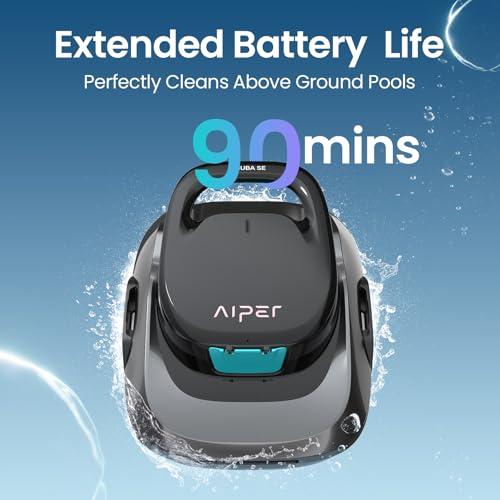
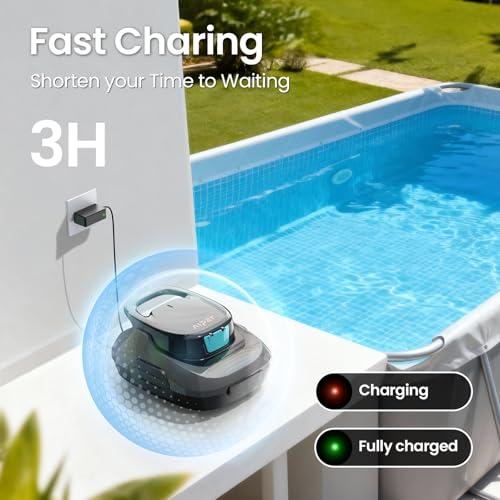
The Scuba SE advertises 90 minutes of runtime from its 2,600 mAh battery. However, user reports consistently indicate 60-70 minutes of actual cleaning before the device needs retrieval and recharging. The 3-4 hour charging time means you're looking at a 1:3 ratio of cleaning to charging time.
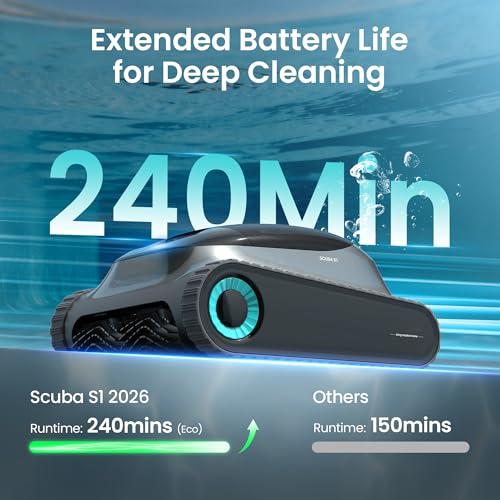
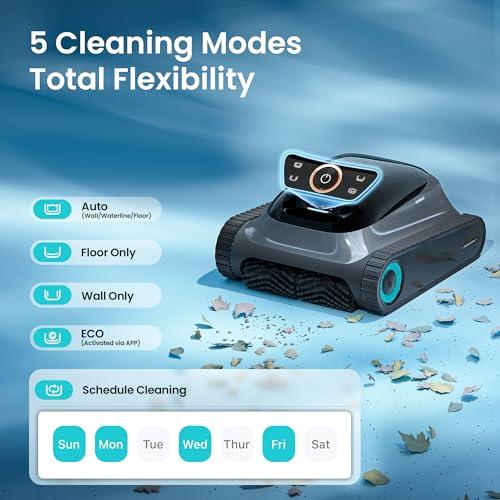
The Scuba S1 promises 180 minutes from its larger 7,800 mAh battery pack. While this represents a significant improvement, the reality is more complex. The S1 offers multiple cleaning modes that dramatically affect runtime:
The problem? Most pools need the Auto Mode for comprehensive cleaning, which means you're still looking at frequent recharging sessions. And unlike the SE, which can complete its limited cleaning cycle in one session, the S1 often requires multiple cycles for thorough pool cleaning.
This is where the two models diverge most dramatically.
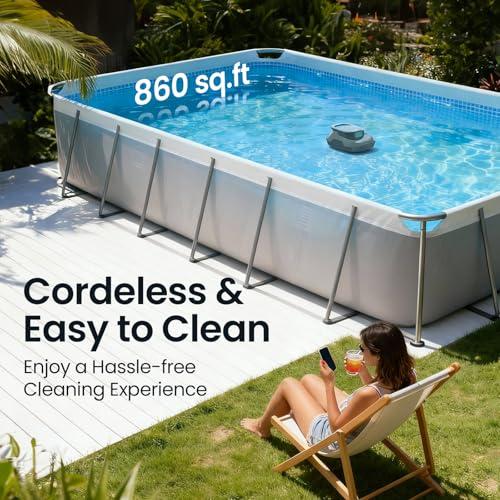
The Scuba SE uses what's essentially random navigation. It bumps around your pool floor, hopefully covering most areas through trial and error. This approach works adequately for very simple, flat-bottomed above-ground pools under 860 square feet, but it's frustrating for anything more complex. User reports frequently mention finding the SE stuck in corners, repeatedly cleaning the same areas while missing others entirely.
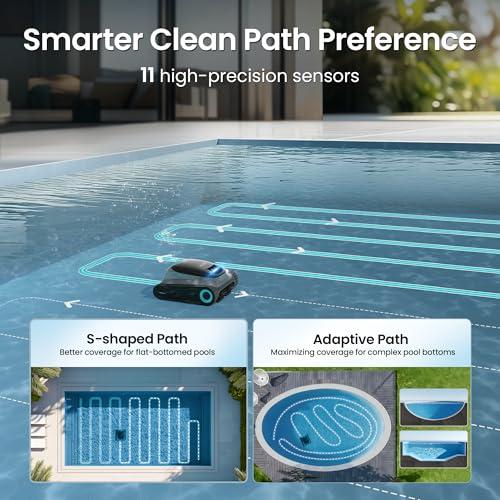
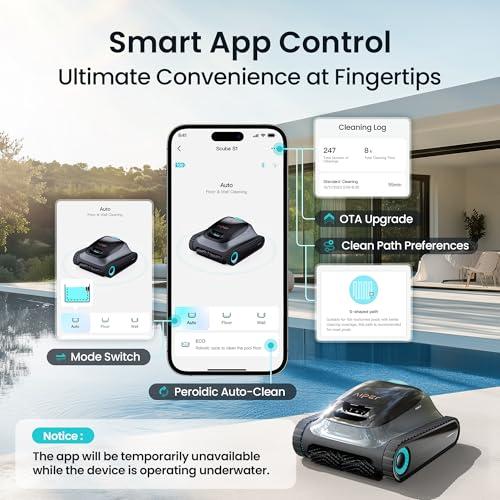
The Scuba S1 employs Aiper's WavePath™ Navigation Technology 2.0—a system that uses acceleration sensors, inertial sensors, and algorithms to map your pool and clean systematically. On floors, it follows S-shaped patterns. On walls, it uses N-shaped patterns. This sounds impressive, and it does work better than random navigation, but it's not foolproof.
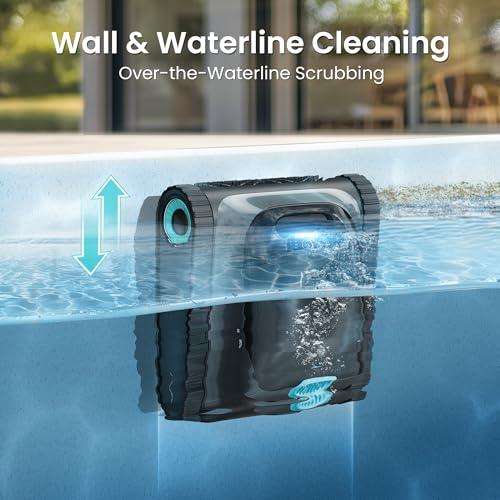
Here's the critical difference: the SE can only clean pool floors, while the S1 can climb walls up to 105 degrees and clean waterlines. This capability alone justifies much of the price difference for in-ground pool owners, since 90% of bacteria and algae growth occurs at the waterline where water meets air.
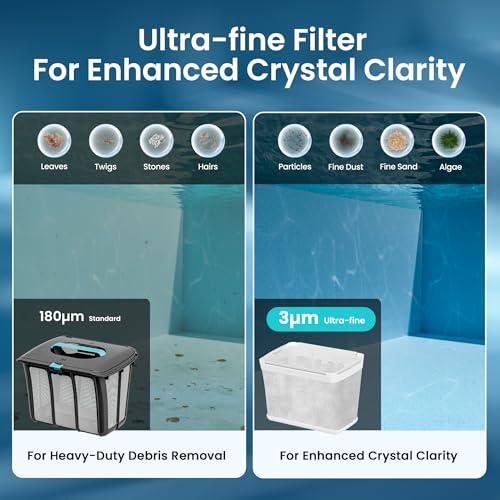
Both models use a 180-micron primary filter, which captures visible debris like leaves, hair, and insects. But that's where the similarities end.
The Scuba SE relies on a single-layer filtration system with a 2-liter debris basket. While adequate for light loads, this system struggles with fine particles like sand and algae. Many users report needing to run additional cleaning cycles or manually vacuum to achieve truly clean water.
The S1 features a dual-layer approach: the standard 180-micron filter plus an optional 3-micron MicroMesh™ ultra-fine filter. This ultra-fine filter uses hydrophilic fibers (water-attracting materials) in a multi-layer structure to capture particles invisible to the naked eye. The top-loading 3.5-liter basket also makes maintenance easier and extends cleaning sessions before requiring emptying.
The ultra-fine filtration is particularly valuable for pools with sand-based filtration systems or areas with fine sediment problems.
At the time of writing, the Scuba SE represents the entry point into cordless pool cleaning. For owners of small, simple above-ground pools, it offers genuine value despite its limitations.
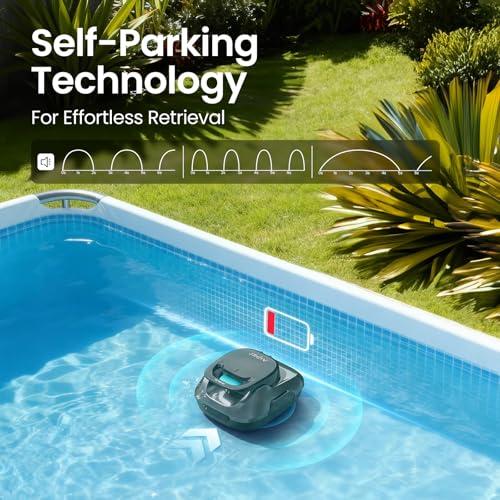
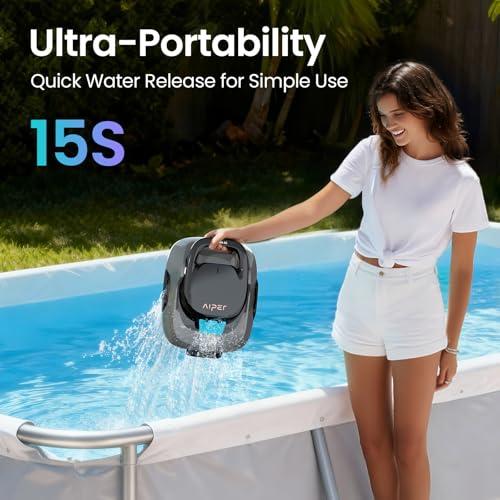
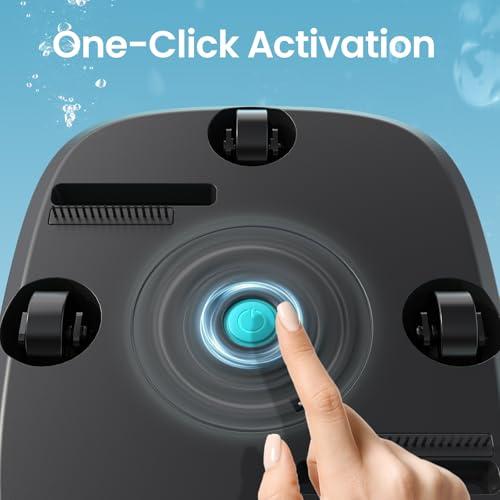
The SE excels in convenience factors: one-click activation, auto-parking when the battery runs low, and a rapid water release system that drains 80% of stored water in 15 seconds for easier retrieval. The cordless design eliminates the complexity and safety concerns of electrical connections around water.
However, you need realistic expectations. This isn't a hands-off solution. You'll likely need to manually remove larger debris before cleaning, monitor the device to ensure it doesn't get stuck, and potentially run multiple cycles for thorough cleaning. Think of it as an assistant rather than a replacement for manual pool maintenance.
The S1 attempts to bridge the gap between budget cordless cleaners and premium corded models. At 3-4 times the SE's price, it needs to justify that premium through performance.
The wall and waterline cleaning capability alone makes this worthwhile for most in-ground pool owners. Manual waterline scrubbing is time-consuming and often requires getting into the pool. The S1's ability to handle this automatically represents real labor savings.
The advanced navigation also reduces frustration. Instead of watching your cleaner repeatedly bump into the same corner, you can reasonably expect systematic coverage. The multiple cleaning modes add flexibility—you can run quick floor-only sessions for maintenance or comprehensive wall-and-floor cycles for weekly deep cleaning.
But here's the reality check: at its price point, the S1 competes with entry-level corded cleaners that offer superior reliability and performance. The cordless convenience comes at a significant cost in cleaning capability.
The Scuba SE works best for:
I've found that owners who succeed with the SE typically use it 2-3 times per week for light maintenance rather than expecting it to handle weekly deep cleans.
The Scuba S1 makes sense for:
The key insight: if you have an in-ground pool and currently spend significant time manually cleaning walls and waterlines, the S1's automation can genuinely improve your pool maintenance experience.
Both models face fundamental limitations that stem from their cordless design. Battery technology simply can't match the sustained power delivery of corded units. As batteries drain, motor performance degrades, which means the last portion of any cleaning cycle is less effective than the beginning.
The SE's single-drive motor setup provides barely adequate power even when fully charged. The S1's triple-motor configuration delivers genuinely better performance but at the cost of faster battery drain and increased complexity.
Navigation technology, while improved in the S1, still can't match the sophisticated mapping systems found in premium corded cleaners. Both units occasionally miss spots, get confused by complex pool shapes, or require manual intervention.
Choose the Scuba SE if you have a small, simple above-ground pool, prioritize budget over performance, and don't mind being actively involved in the cleaning process. It's a reasonable entry point that beats manual vacuum cleaning for basic maintenance.
Choose the Scuba S1 if you have an in-ground pool requiring wall cleaning, value systematic navigation over random patterns, and accept paying a premium for cordless convenience despite performance limitations compared to corded alternatives.
Consider corded alternatives if you have a large pool (over 1,600 square feet), need truly hands-off operation with weekly scheduling, or prioritize maximum cleaning performance over cordless convenience.
The bottom line: both models represent compromises between convenience and performance. The SE offers affordable automation with significant limitations, while the S1 provides better capabilities at a premium price that may not justify the performance gains compared to corded competitors in similar price ranges. Your pool size, type, and maintenance preferences will determine which compromise makes sense for your situation.
| Aiper Scuba SE | Aiper Scuba S1 |
|---|---|
| Target Pool Type - Determines which cleaner will actually work in your pool | |
| Above-ground pools only, flat floors | In-ground pools, handles slopes up to 105° |
| Pool Size Coverage - Maximum area each can effectively clean | |
| Up to 860 sq.ft (struggles with larger areas) | Up to 1,600 sq.ft (systematic coverage) |
| Cleaning Areas - What parts of your pool get cleaned | |
| Floor only (no walls or waterline) | Floor, walls, and waterline (comprehensive) |
| Battery Runtime - How long it cleans before needing recharge | |
| 90 min advertised, 60-70 min real-world | 180 min advertised, varies by cleaning mode |
| Suction Power - Determines debris pickup effectiveness | |
| 1,200 GPH (struggles with leaves and larger debris) | 4,200 GPH (handles heavier loads better) |
| Motor Configuration - Affects power and reliability | |
| 2 motors (1 drive, 1 pump) | 3 motors (2 drive, 1 brushless filtration) |
| Navigation System - How intelligently it moves around your pool | |
| Random bumping pattern (misses areas, gets stuck) | WavePath™ 2.0 with sensors (systematic S/N patterns) |
| Filtration System - What debris sizes it can capture | |
| Single 180μm filter, 2L basket | Dual-layer: 180μm + optional 3μm ultra-fine, 3.5L basket |
| Cleaning Modes - Flexibility for different cleaning needs | |
| One basic mode only | Four modes: Auto, Eco, Floor, Wall |
| Wall Climbing Ability - Critical for in-ground pool owners | |
| None (floor only) | Yes, climbs walls up to 105° and cleans waterline |
| Price Category - Value positioning at time of writing | |
| Budget option (under $200 promotional) | Premium cordless (3-4x SE price) |
| Best For - Ideal user scenarios | |
| Small above-ground pools, tight budgets, basic maintenance | In-ground pools, comprehensive cleaning, systematic coverage |
The key difference is pool compatibility and cleaning coverage. The Aiper Scuba SE is designed for above-ground pools and only cleans floors, while the Aiper Scuba S1 targets in-ground pools and can clean floors, walls, and waterlines. The S1 also has significantly more suction power at 4,200 GPH compared to the SE's 1,200 GPH.
The Aiper Scuba SE is specifically designed for above-ground pools up to 860 square feet with flat bottoms. The Aiper Scuba S1 is engineered for in-ground pools and may be overkill for most above-ground setups, though it can technically work in larger above-ground pools that need wall cleaning.
No, the Aiper Scuba SE can only clean pool floors. It lacks the motors and navigation system needed for wall climbing. If you need wall cleaning, the Aiper Scuba S1 is designed specifically for comprehensive cleaning including walls and waterlines.
The Aiper Scuba SE provides about 60-70 minutes of real-world cleaning time despite advertising 90 minutes. The Aiper Scuba S1 offers up to 180 minutes depending on the cleaning mode selected, with Eco mode running 45 minutes every 48 hours for maintenance cleaning.
The Aiper Scuba S1 has significantly better suction at 4,200 GPH compared to the SE's 1,200 GPH. This means the S1 can handle larger debris like leaves and twigs more effectively, while the SE struggles with anything beyond light surface debris.
The Aiper Scuba SE is limited to pools up to 860 square feet and works best in smaller, simpler shapes. The Aiper Scuba S1 can handle pools up to 1,600 square feet with its systematic navigation system, making it better suited for larger installations.
The Aiper Scuba SE uses a basic single-layer 180-micron filter with a 2-liter basket. The Aiper Scuba S1 features a dual-layer system with both 180-micron and optional 3-micron ultra-fine filters, plus a larger 3.5-liter top-loading basket for easier maintenance.
Both models have reliability concerns common to cordless cleaners, but the Aiper Scuba S1 generally performs more consistently due to its advanced navigation system and stronger motors. The SE frequently gets stuck and requires manual intervention, while the S1 provides more systematic cleaning coverage.
The Aiper Scuba SE uses random navigation, essentially bumping around hoping to cover all areas. The Aiper Scuba S1 uses WavePath™ Navigation Technology 2.0 with sensors and algorithms for systematic S-shaped floor patterns and N-shaped wall patterns, resulting in more thorough coverage.
Both the Aiper Scuba SE and S1 offer cordless convenience but sacrifice some cleaning power compared to corded models. The SE works for basic maintenance in small pools, while the S1 provides a middle-ground option for those wanting comprehensive cleaning without cords.
Value depends on your pool type and needs. The Aiper Scuba SE offers excellent value for small above-ground pools where basic floor cleaning suffices. The Aiper Scuba S1 provides better value for in-ground pool owners who need wall and waterline cleaning capabilities, despite its higher price.
The Aiper Scuba SE works best in pools under 860 square feet with simple, flat shapes. The Aiper Scuba S1 handles pools up to 1,600 square feet and can navigate more complex shapes, slopes, and features thanks to its advanced navigation system and stronger motors.
We've done our best to create useful and informative comparisons to help you decide what product to buy. Our research uses advanced automated methods to create this comparison and perfection is not possible - please contact us for corrections or questions. These are the sites we've researched in the creation of this article: thepoolnerd.com - aiper.com - roboticreviews.com - aiper.co.za - youtube.com - swim-fun.com - poolpad.com - robotshop.com - youtube.com - nabridas.mu - thepoolnerd.com - walmart.com - youtube.com - poolandspawarehouse.com.au - poolbots.com - vitafilters.com - roboticreviews.com - youtube.com - reviewed.com - thepoolnerd.com - thepoolnerd.com - poolandspawarehouse.com.au - poolbots.com - youtube.com - youtube.com - youtube.com - youtube.com - youtube.com - aiper.com - gearbrain.com - aiper.com - poolandspawarehouse.com.au - youtube.com - aiper.store - pbtech.com - walmart.com - houseofexcellence.store - poolbots.com - piscinarium.com - youtube.com - nabridas.mu - youtube.com - factorypure.com

Privacy Policy
Terms and Conditions - Affiliate Policy
Home Security
© Copyright 2008-2026.
11816 Inwood Rd #1211, Dallas, TX 75244