

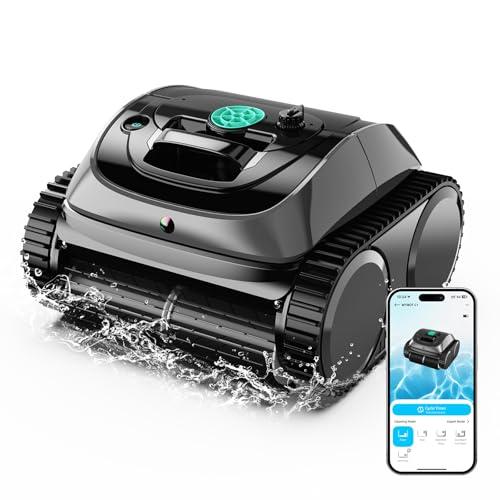
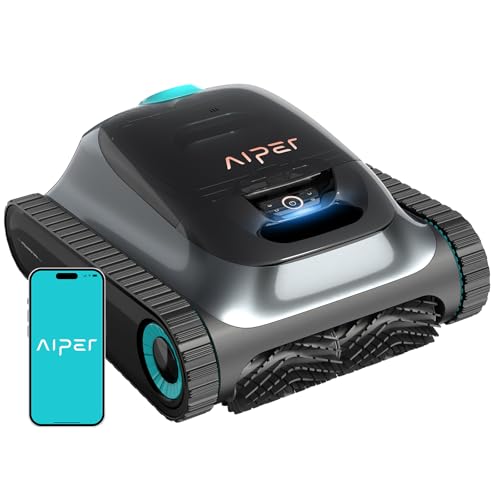
If you've ever spent a Saturday morning skimming leaves and scrubbing pool walls, you know exactly why cordless robotic pool cleaners have become such game-changers. These battery-powered cleaning robots promise to handle all that tedious work while you relax poolside. But with so many options flooding the market, choosing between models like the WYBOT C1 and Aiper Scuba S1 can feel overwhelming.
After diving deep into user reviews, technical specifications, and real-world performance data, I've found these two cleaners represent very different philosophies in pool maintenance. One prioritizes smart features and convenience, while the other focuses on raw cleaning power and reliability. Let me break down exactly what that means for your pool—and your wallet.
Before we compare these specific models, it's worth understanding what makes cordless robotic cleaners tick. Unlike traditional suction-side cleaners that connect to your pool's filtration system, or pressure-side units that use your pool's return jets, cordless robots are completely self-contained. They carry their own filtration system, navigation computer, and battery pack.
The key components that determine performance include the filtration motor (which creates suction to pull debris into the unit), drive motors (which move the cleaner around), and navigation sensors (which help the robot map your pool and avoid obstacles). The filtration system typically includes a debris basket where larger items like leaves collect, plus various filter media designed to catch different particle sizes.
Modern cordless cleaners have evolved significantly since their introduction. Early models from around 2018-2019 were essentially glorified pool vacuums with basic random movement patterns. Today's units like the WYBOT C1 (released in 2024 with a 2026 upgrade) and Aiper Scuba S1 (updated in 2025) incorporate sophisticated navigation algorithms, app connectivity, and multi-stage filtration systems that rival their corded counterparts.
When evaluating pool cleaners, suction power measured in gallons per hour (GPH) tells you how much water the unit processes. Think of it like the CFM rating on a shop vacuum—higher numbers generally mean better debris pickup, but the complete picture involves filter design and brush effectiveness too.
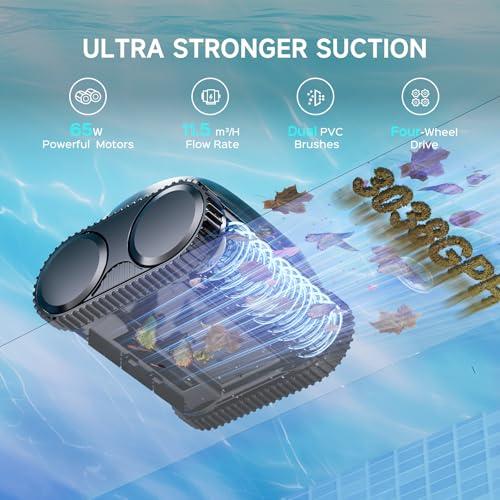
The Aiper Scuba S1 dominates this category with 4,200 GPH of suction power, significantly outpacing the WYBOT C1's 3,038 GPH. But raw numbers don't tell the whole story. The S1 achieves this through a brushless filtration motor combined with dual drive motors. Brushless motors are more efficient and longer-lasting than traditional brushed motors because they don't have physical contacts that wear down over time.
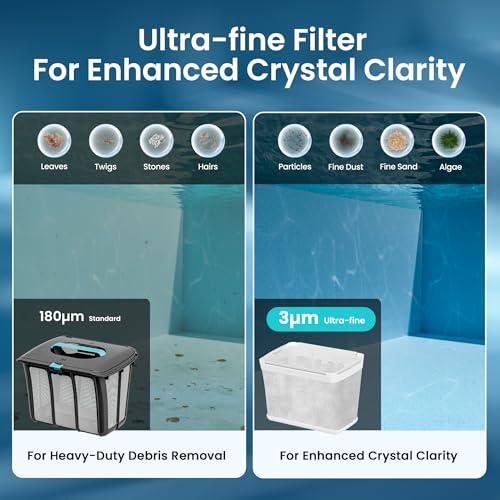
Where the Aiper S1 really shines is its dual-layer filtration system. The primary filter uses a standard 180-micron mesh (a micron is 1/1000th of a millimeter) to catch visible debris like leaves and bugs. But the game-changer is the optional 3-micron MicroMesh ultra-fine filter. To put that in perspective, this secondary filter catches particles roughly 60 times smaller than what your eye can see—things like fine sand, algae spores, and microscopic debris that make water look cloudy.
The WYBOT C1 takes a simpler approach with its single 180-micron filter and dual PVC brushes. While this system effectively handles typical pool debris, it lacks the fine particle filtration that sets the S1 apart. If you live in an area with fine sand or deal with persistent water clarity issues, that secondary filtration becomes crucial.
From our research into user experiences, the S1's superior filtration shows up most clearly in challenging conditions. Pool owners dealing with sandstorms, heavy pollen, or algae blooms consistently report better results with the dual-filter system. However, for routine maintenance in typical suburban pools, both cleaners handle the basics like leaves, bugs, and general debris effectively.
Modern pool cleaners use various navigation technologies to ensure complete coverage without wasting battery life cleaning the same spots repeatedly. This is where the WYBOT C1 and Aiper S1 take notably different approaches.
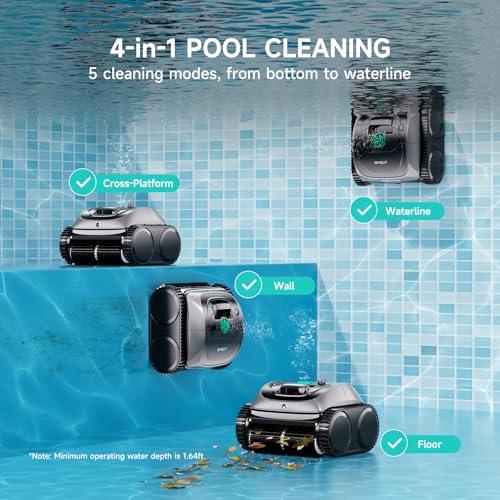
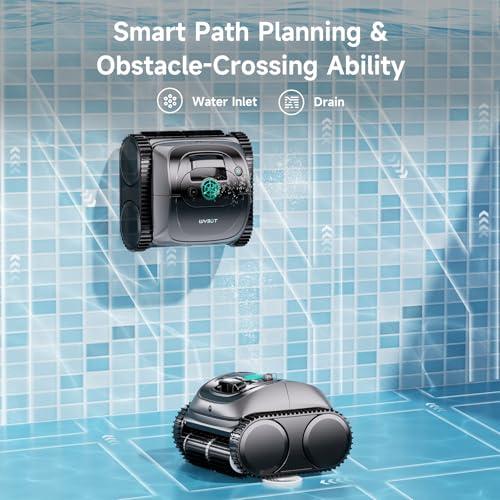
The WYBOT C1 employs gyroscope-based navigation with what the company calls S-path and N-path patterns. Gyroscopes are the same sensors that help your smartphone know which way you're holding it. In pool cleaners, they help maintain straight lines and consistent patterns even when dealing with slopes or currents. The C1 offers five distinct cleaning modes: full pool, floor only, walls only, wall then floor, and eco mode.
This flexibility matters more than you might think. The "wall then floor" mode, for example, tackles the dirtiest areas first when the battery is strongest, then finishes with floors where debris naturally settles. The eco mode runs shorter, more frequent cycles that work well for regular maintenance.
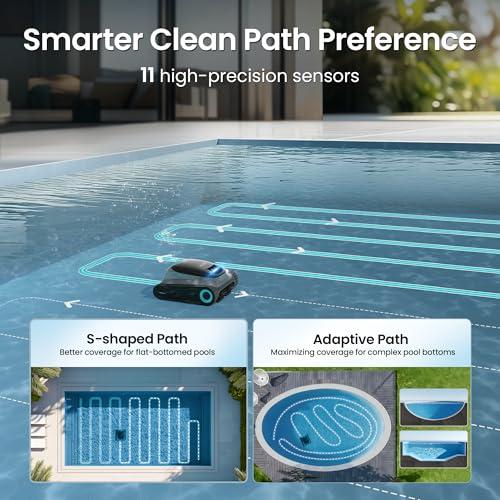
The Aiper S1 uses what they call WavePath Navigation Technology 2.0, which combines acceleration sensors (detecting movement and direction changes) with inertial sensors (tracking position and rotation). The system creates systematic cleaning patterns—S-shaped for floors and N-shaped for walls—designed to minimize overlap while ensuring complete coverage.
In real-world testing documented by users, the S1 achieves impressive coverage statistics: 95% floor coverage and 90% wall coverage. However, there's a catch. Many users report that while the S1 covers ground systematically, it often requires multiple cleaning cycles to fully remove all debris. The robot might push larger leaves around initially, requiring three or four complete cycles for a truly spotless pool.
The WYBOT C1 takes a different approach. Its intelligent mode allocation means it spends more time in problem areas and adapts its pattern based on what it encounters. While it might not achieve the same systematic coverage percentages as the S1, users report more consistent single-cycle cleaning performance.
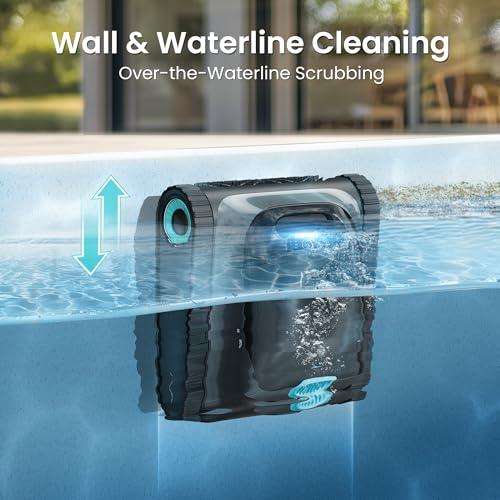
Most pool contamination happens where air meets water—the waterline where oils, sunscreen, and bacteria accumulate. This makes wall climbing and waterline cleaning crucial features that separate good cleaners from great ones.
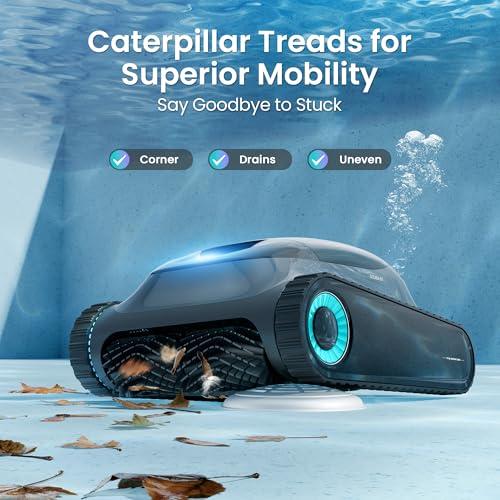
Both cleaners handle basic wall climbing, but their approaches differ significantly. The Aiper S1 uses caterpillar treads (think miniature tank tracks) that maximize surface contact for better grip. This design allows it to climb walls angled up to 105 degrees—impressive for any pool cleaner. The treads also help it navigate obstacles and uneven surfaces more effectively than wheel-based systems.
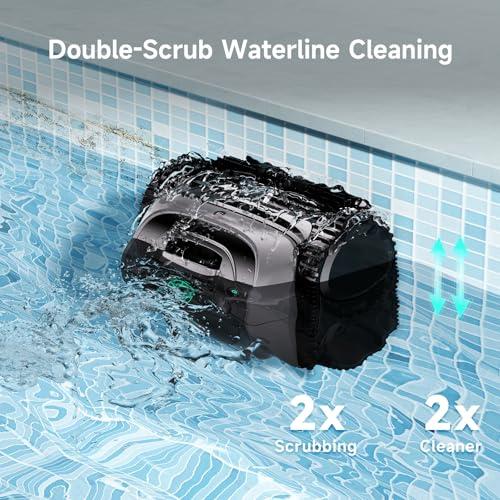
The WYBOT C1 uses a four-wheel drive system with specialized treads, but its standout feature is active waterline scrubbing. While many cleaners simply climb to the waterline, the C1 actually scrubs this critical area where 90% of bacteria typically resides. This isn't just marketing speak—the waterline is genuinely where most pool sanitation problems start.
From user feedback we've analyzed, the difference shows up in long-term pool health. WYBOT C1 users report fewer algae problems and cleaner-feeling water, likely because of this focused waterline attention. The S1 climbs walls more reliably and handles steep angles better, but doesn't provide the same focused waterline sanitization.
Battery technology represents the biggest limitation of cordless cleaners compared to their corded cousins. You're trading the convenience of no cords for the constraint of limited runtime.
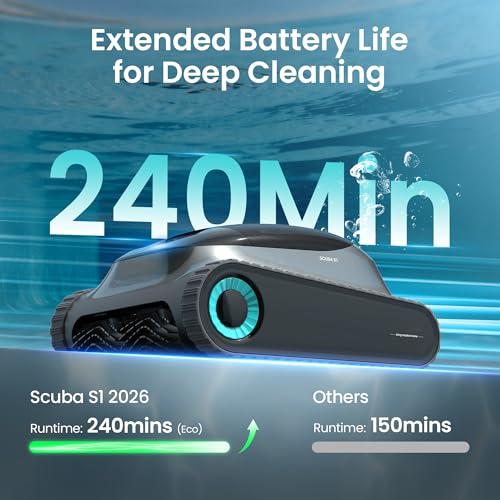
The Aiper S1 leads here with up to 180 minutes of runtime from its 7,800 mAh lithium battery. For context, that's enough power to thoroughly clean pools up to 1,600 square feet in a single session. The charging time runs 3-4 hours, which means you could potentially run two complete cycles per day if needed.
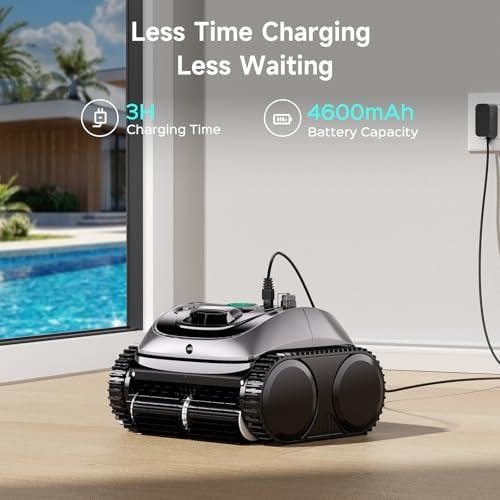
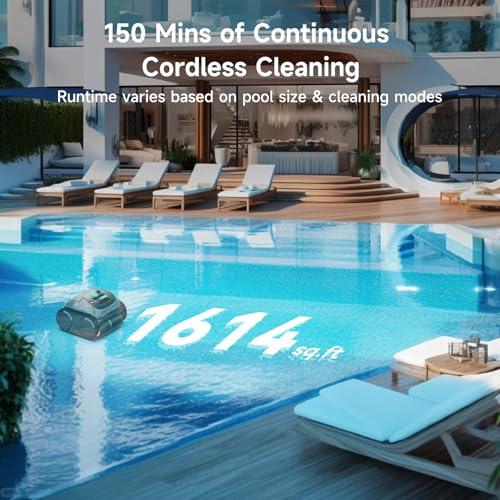
The WYBOT C1 offers 120-150 minutes from its 4,600 mAh battery, also requiring 3-4 hours to charge. While this sounds inferior on paper, the difference in real-world performance isn't as dramatic as the numbers suggest. The C1's more efficient cleaning patterns and intelligent mode selection often accomplish complete cleaning in less time than the S1's methodical but repetitive approach.
Here's where things get interesting: user reports consistently mention that the S1 often needs multiple cycles to completely clean a pool, while the C1 typically finishes the job in one go. However, the C1's major weakness emerges when you need back-to-back cleaning sessions. Several users report frustration with having to wait for recharging between cycles when dealing with heavy debris loads.
The practical takeaway? If you clean regularly and your pool doesn't get extremely dirty between sessions, the WYBOT C1's runtime suffices. If you're dealing with storm cleanup or have been neglecting maintenance, the S1's longer runtime becomes essential.
Modern pool cleaners increasingly blur the line between appliances and smart home devices. Both cleaners offer smartphone apps, but their philosophies differ markedly.
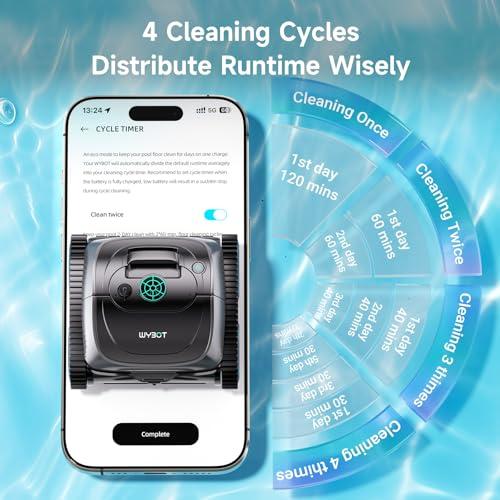
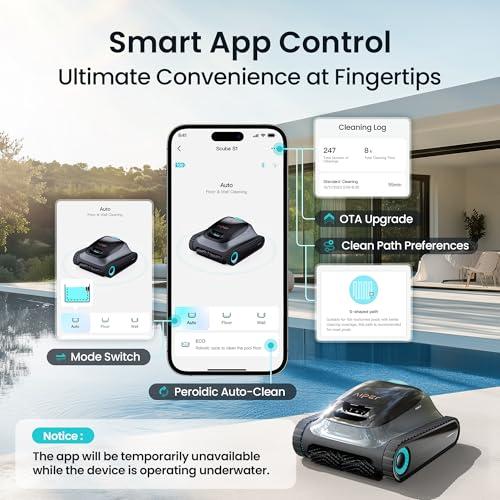
The WYBOT C1 embraces the smart home concept fully. Its app provides over-the-air (OTA) updates that can improve performance and add features long after purchase—similar to how your smartphone gets better over time. You can schedule weekly cleaning cycles, monitor progress remotely, and customize cleaning modes from anywhere.
The self-parking feature deserves special mention. When cleaning finishes, the C1 automatically navigates to a pool wall for easy retrieval. This might sound minor, but anyone who's spent time fishing a cleaner out of the deep end appreciates this convenience.
The Aiper S1 takes a more traditional approach. While it has app connectivity, it's designed to work perfectly without smartphone dependence. You can drop it in the pool, press the power button, and walk away. This simplicity appeals to users who want effective cleaning without dealing with apps, connectivity issues, or feature complexity.
Both approaches have merit. The WYBOT C1 suits tech-savvy users who appreciate automation and remote monitoring. The S1 appeals to those who prefer straightforward, reliable operation without digital complexity.
Cordless pool cleaners face harsh conditions: chlorinated water, UV exposure, and constant mechanical stress. Build quality directly impacts long-term value.
The Aiper S1 benefits from brushless motor technology throughout its drivetrain. Brushless motors last significantly longer because they eliminate the physical contact points that wear out in traditional motors. Combined with the caterpillar tread system, this design suggests better long-term durability.
The WYBOT C1 uses a mix of motor types, with brushless technology in the main filtration motor but traditional motors elsewhere. However, it compensates with more sophisticated software and sensor systems that can adapt to changing conditions and potentially extend mechanical component life through smarter operation.
User reports from the first year of ownership show both cleaners holding up well, but the S1 demonstrates fewer motor-related issues. However, the C1's software updates have resolved several early performance quirks, showcasing the advantage of updateable firmware.
At the time of writing, both cleaners occupy the premium segment of the cordless market, with pricing typically ranging from the mid-$400s to low $600s depending on retailers and current promotions. The WYBOT C1 generally comes in at the lower end of this range, while the Aiper S1 commands a premium for its superior hardware specifications.
But purchase price tells only part of the story. The S1's dual filtration system requires replacement filters, adding ongoing costs. The ultra-fine filters aren't permanent—they need periodic replacement to maintain performance. The WYBOT C1 uses simpler, less expensive filter media that's easier to clean and lasts longer.
Energy costs favor both models over corded alternatives, but the S1's larger battery means higher electricity usage for charging. Over a typical swimming season, this difference amounts to only a few dollars, but it's worth considering for environmentally conscious buyers.
The bigger value consideration involves time and effort. If the S1 requires multiple cleaning cycles to achieve what the C1 accomplishes in one session, the time spent managing cleaning schedules becomes a hidden cost. Conversely, if the S1's superior filtration prevents water clarity problems that require additional chemical treatments, it pays for itself in reduced maintenance.
After extensive research into user experiences and technical capabilities, clear patterns emerge about who should choose which cleaner.
Choose the WYBOT C1 if you:
Choose the Aiper S1 if you:
My recommendation leans toward the WYBOT C1 for most pool owners. Its combination of smart features, efficient single-cycle cleaning, and active waterline scrubbing addresses the real-world pain points of pool maintenance. The lower purchase price and comprehensive app control make it particularly appealing for first-time robotic cleaner buyers.
However, the Aiper S1 excels in challenging conditions where its superior filtration and extended runtime become crucial. If you live in a dusty area, deal with frequent storms, or have ongoing water clarity problems, the S1's hardware advantages justify the premium price.
Both cleaners represent significant improvements over manual pool maintenance and basic suction cleaners. The choice ultimately depends on whether you prioritize smart convenience (WYBOT C1) or raw cleaning power (Aiper S1). Either way, you'll spend a lot more time enjoying your pool and a lot less time maintaining it.
| WYBOT C1 Cordless Robotic Pool Cleaner | Aiper Scuba S1 Robotic Pool Cleaner |
|---|---|
| Suction Power - Higher GPH means better debris pickup and water circulation | |
| 3,038 GPH (adequate for most debris types) | 4,200 GPH (superior power for heavy debris loads) |
| Filtration System - Dual-layer systems catch finer particles for clearer water | |
| Single 180μm ultra-fine filter with dual PVC brushes | Dual-layer: 180μm primary + optional 3μm MicroMesh ultra-fine filter |
| Battery Runtime - Longer runtime means fewer charging interruptions | |
| 120-150 minutes (sufficient for medium pools) | Up to 180 minutes (better for large pools or heavy cleaning) |
| Cleaning Modes - More modes provide better customization for different needs | |
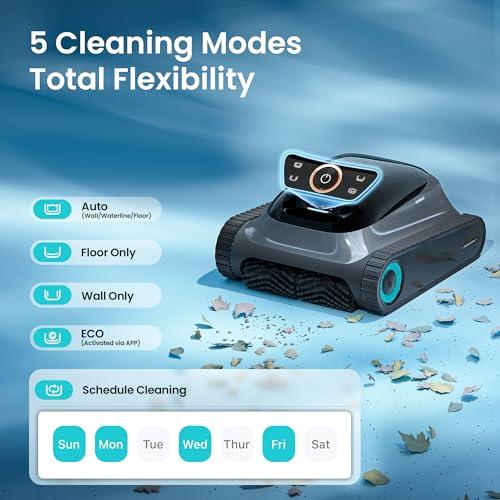
| 5 modes: full, floor, wall, wall then floor, eco floor | 4 modes: Floor, Wall, Automatic, Eco |
| Navigation Technology - Better navigation means more thorough coverage | |
| Gyroscope-based with S-path and N-path patterns | WavePath 2.0 with acceleration and inertial sensors |
| Wall Climbing Capability - Important for complete pool sanitization | |
| Up to 9.8 ft depth with active waterline scrubbing | Up to 105° sloped walls with caterpillar treads |
| App Control Features - Smart features reduce manual intervention | |
| Full app control with OTA updates, weekly scheduling, self-parking | Basic app control, designed for independent operation |
| Pool Coverage - Maximum pool size the cleaner can effectively handle | |
| Up to 1,614 sq. ft., pools up to 65 ft length | Up to 1,600 sq. ft., pools up to 50 ft length |
| Motor Technology - Brushless motors last longer and run more efficiently | |
| Independent water pump motor with dual PVC brushes | 2 drive motors + 1 brushless filtration motor |
| Filter Maintenance - Easier maintenance means less ongoing hassle | |
| Top-loading single filter, easy hose rinse | 3.5L top-load basket plus replaceable ultra-fine filters |
| Charging Time - Faster charging means less downtime between sessions | |
| 3-4 hours for full charge | 3-4 hours for full charge |
| Weight and Portability - Lighter units are easier to handle and store | |
| 17.6 lbs (lightweight and portable) | Lightweight design with caterpillar tread mobility |
The Aiper Scuba S1 has significantly stronger suction at 4,200 GPH compared to the WYBOT C1's 3,038 GPH. This means the Scuba S1 can handle heavier debris loads and clean more efficiently, especially in pools with lots of leaves or sand.
The Aiper Scuba S1 offers longer runtime with up to 180 minutes of cleaning time, while the WYBOT C1 provides 120-150 minutes per charge. For larger pools or heavy cleaning sessions, the Scuba S1's extended battery life is a clear advantage.
Both cleaners handle walls well, but they excel in different ways. The Aiper Scuba S1 can climb steeper walls (up to 105°) thanks to its caterpillar treads, while the WYBOT C1 features active waterline scrubbing that specifically targets bacteria-prone areas where the wall meets the water surface.
Yes, both offer smartphone apps, but with different focuses. The WYBOT C1 provides comprehensive app control with weekly scheduling, OTA updates, and remote monitoring. The Aiper Scuba S1 has basic app functionality but is designed to work independently without requiring smartphone interaction.
The Aiper Scuba S1 wins for fine particle filtration with its dual-layer system that includes an optional 3μm ultra-fine filter alongside the standard 180μm filter. The WYBOT C1 uses a single 180μm filter, which handles typical debris well but can't match the Scuba S1's microscopic particle capture.
The WYBOT C1 offers more flexibility with 5 cleaning modes (full, floor, wall, wall then floor, eco floor), while the Aiper Scuba S1 provides 4 modes (Floor, Wall, Automatic, Eco). The WYBOT C1's additional "wall then floor" mode is particularly useful for efficient cleaning cycles.
Both the WYBOT C1 and Aiper Scuba S1 require the same 3-4 hours for a complete charge. However, the Scuba S1 provides more cleaning time per charge, making it more efficient for users who need extended cleaning sessions.
Both cleaners work with similar pool sizes. The WYBOT C1 handles pools up to 1,614 sq. ft. and 65 ft in length, while the Aiper Scuba S1 covers up to 1,600 sq. ft. and 50 ft in length. The differences are minimal for most residential pools.
The WYBOT C1 has simpler maintenance with its single top-loading filter that rinses clean with a hose. The Aiper Scuba S1 offers a larger 3.5L debris basket but requires replacement of the ultra-fine filters over time, adding ongoing maintenance costs.
Yes, both the WYBOT C1 and Aiper Scuba S1 work on concrete, fiberglass, vinyl, and tile surfaces. The Scuba S1's caterpillar treads provide better traction on slippery surfaces, while the WYBOT C1's four-wheel drive system handles most pool surfaces effectively.
The WYBOT C1 leads in smart features with self-parking (automatically positions itself near the pool wall when done), OTA software updates, and comprehensive scheduling options. The Aiper Scuba S1 focuses on reliable basic operation with fewer automated convenience features.
The WYBOT C1 typically offers better value for most users with its lower price point, smart features, and efficient single-cycle cleaning. The Aiper Scuba S1 justifies its premium with superior filtration and longer runtime, making it worth the extra cost for pools with challenging debris conditions or users who prefer maximum cleaning power.
We've done our best to create useful and informative comparisons to help you decide what product to buy. Our research uses advanced automated methods to create this comparison and perfection is not possible - please contact us for corrections or questions. These are the sites we've researched in the creation of this article: bestbuy.com - prnewswire.com - youtube.com - youtube.com - wybotpool.com - youtube.com - roboticreviews.com - eu.wybotpool.com - youtube.com - youtube.com - bestbuy.com - wybotpool.com - roboticreviews.com - therobotdirect.com - walmart.com - youtube.com - wybotpool.com - youtube.com - fcc.report - wybotpool.com - roboticreviews.com - youtube.com - reviewed.com - thepoolnerd.com - thepoolnerd.com - poolandspawarehouse.com.au - poolbots.com - youtube.com - youtube.com - youtube.com - youtube.com - youtube.com - thepoolnerd.com - aiper.com - gearbrain.com - aiper.com - poolandspawarehouse.com.au - youtube.com - aiper.store - pbtech.com - walmart.com - houseofexcellence.store - poolbots.com - piscinarium.com - youtube.com - nabridas.mu - youtube.com - factorypure.com

Privacy Policy
Terms and Conditions - Affiliate Policy
Home Security
© Copyright 2008-2026.
11816 Inwood Rd #1211, Dallas, TX 75244