

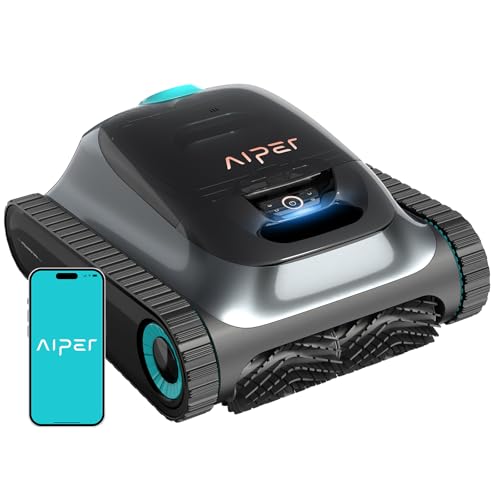
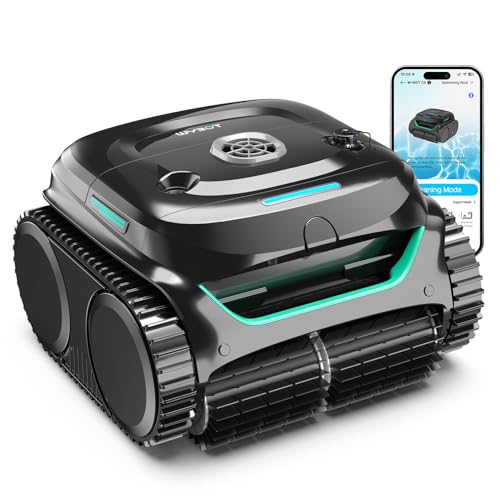
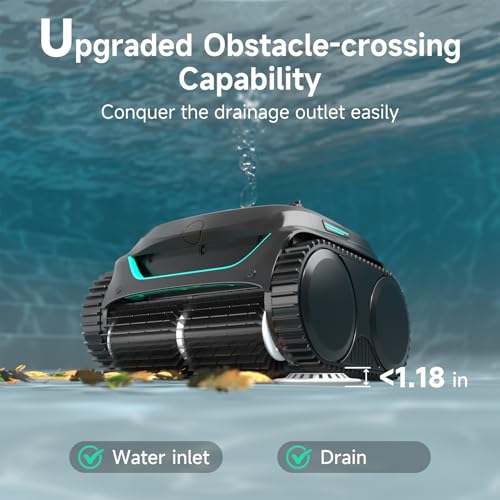
Pool cleaning has come a long way from the days of manual vacuuming and skimming. Today's cordless robotic pool cleaners promise to handle the dirty work while you relax poolside, but not all robots are created equal. We've been closely following the evolution of cordless pool cleaning technology, and two models have consistently stood out in our research: the Aiper Scuba S1 and the WYBOT C2. Both represent significant advances in battery-powered pool maintenance, but they take notably different approaches to the same fundamental challenge.
Cordless robotic pool cleaners emerged as a game-changing alternative to traditional corded models around 2018-2019, with significant improvements in battery technology and motor efficiency driving adoption. Unlike their tethered cousins that plug into your pool's electrical system or require lengthy power cords, these battery-powered units operate independently. This means no more untangling cables, no power cord draped across your deck, and no complicated installation procedures.
The technology behind these cleaners centers on lithium-ion batteries (similar to what powers electric vehicles), brushless motors for efficiency, and increasingly sophisticated navigation systems. The key challenge manufacturers face is balancing cleaning power with battery life—more suction means shorter runtime, while longer operation often comes at the cost of cleaning intensity.
The Aiper Scuba S1, released in 2022, represents Aiper's premium cordless offering, featuring their proprietary WavePath Navigation 2.0 system and an advertised 150-minute runtime. The WYBOT C2, also launched in 2022, takes a different approach with dual-layer filtration and multiple cleaning modes designed for varying pool conditions. At the time of writing, both models fall into the mid-to-premium price range for cordless pool cleaners, though the specific pricing varies by retailer and seasonal promotions.
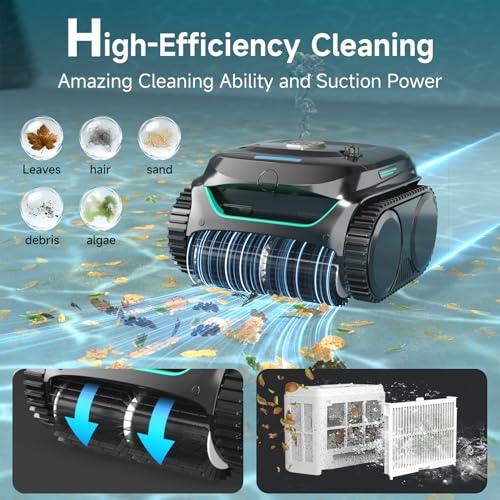
When we dive into the technical specifications, the Aiper Scuba S1 initially appears to have a significant advantage with its 4,200 gallons per hour (GPH) water flow rate compared to the WYBOT C2's 3,592 GPH. To put this in perspective, GPH measures how much water the cleaner processes through its filtration system—higher numbers typically translate to stronger suction and more effective debris pickup.
However, our research into user experiences and expert reviews reveals a critical issue with the Aiper S1: its suction power isn't consistent throughout the cleaning cycle. Multiple independent tests have documented that while the unit starts strong, suction deteriorates noticeably as the battery drains. This creates a frustrating scenario where the cleaner becomes less effective precisely when it should be finishing its most thorough work.
The WYBOT C2, while starting with lower peak suction, maintains more consistent performance throughout its cleaning cycle. This steady output often results in more thorough overall cleaning, even though the raw numbers suggest otherwise. It's a perfect example of why real-world performance testing matters more than spec sheet comparisons.
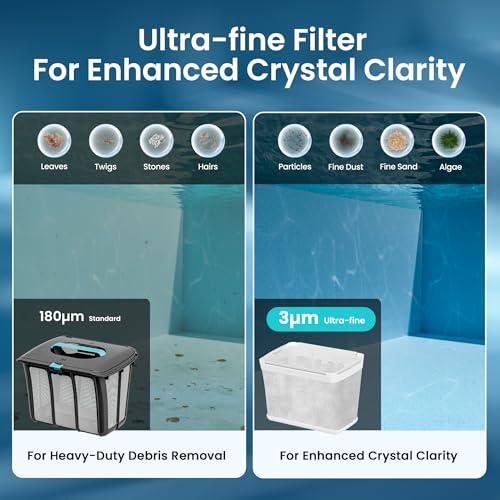
Here's where the two models diverge dramatically. The Aiper Scuba S1 uses a single mesh filter system, which works adequately for visible debris like leaves and larger particles but struggles with fine contaminants. Fine debris includes things like pollen, dust, and the microscopic algae particles that can make your pool water look cloudy even after cleaning.
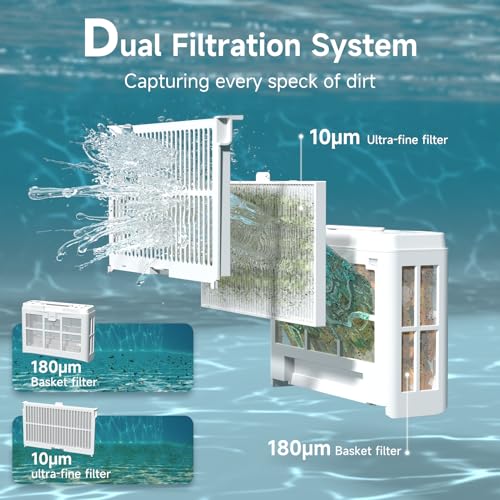
The WYBOT C2 takes a completely different approach with its dual-layer filtration system. The first layer uses a 180-micron cartridge (a micron is 1/1000th of a millimeter) to catch larger debris, while a secondary 10-micron ultra-fine filter captures particles you can't even see. To understand the significance: human hair is about 80 microns in diameter, so the ultra-fine filter catches particles eight times smaller than hair width.
This dual-system approach means the WYBOT C2 not only removes visible debris but also addresses the fine particles that contribute to cloudy water and require frequent manual filtering. Based on user feedback we've analyzed, pools cleaned with the dual-filtration system consistently achieve better water clarity and require less supplementary chemical treatment.
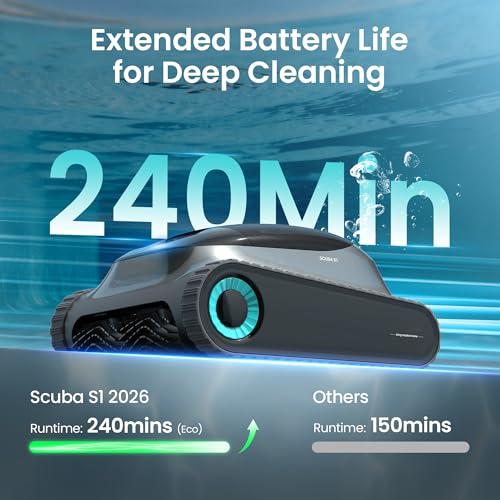
Battery performance represents the most critical factor in cordless pool cleaner satisfaction. The Aiper Scuba S1 advertises an impressive 150-minute runtime, but here's where marketing meets reality: extensive user testing and expert reviews consistently report actual runtime closer to 60-70 minutes under normal cleaning conditions.
This discrepancy isn't just disappointing—it's operationally disruptive. Many pool owners report needing to run the Aiper S1 through multiple charge cycles to complete a thorough cleaning, especially in larger pools or during heavy debris seasons. With a 2.5-3 hour charging time, this means your pool cleaning extends over multiple days rather than a single efficient session.
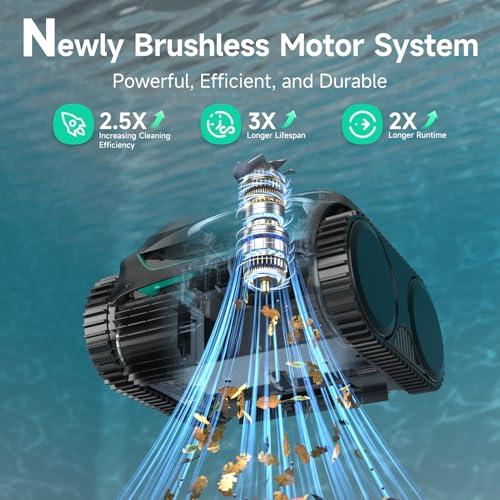
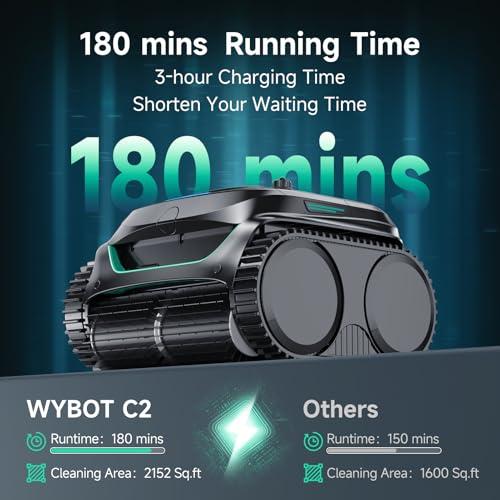
The WYBOT C2 advertises 180 minutes in Eco Mode, and user experiences suggest this is much more achievable in real-world conditions. The unit's brushless motor technology (motors without physical brushes that create friction and waste energy) contributes to this efficiency. More importantly, the longer effective runtime means most pool owners can complete full cleaning cycles without interruption.
Pool coverage depends on two factors: the maximum area the cleaner can handle and how intelligently it navigates that space. The WYBOT C2 covers up to 2,152 square feet compared to the Aiper S1's 1,600 square feet—a difference of over 550 square feet that matters significantly for larger residential pools.
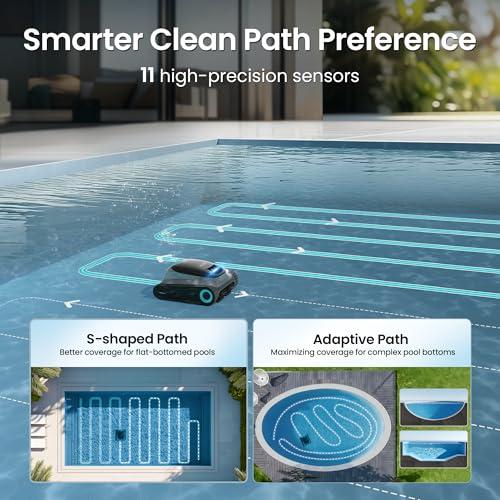
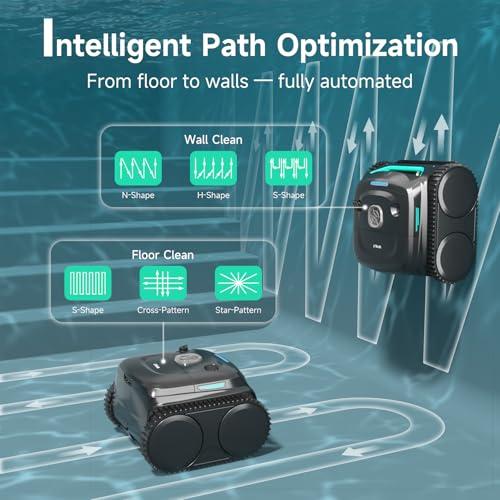
The Aiper Scuba S1 features WavePath Navigation 2.0, which uses acceleration sensors and inertial guidance to create systematic cleaning patterns. On paper, this sounds sophisticated, and the technology does help avoid the random bumping patterns of older robotic cleaners. The system creates S-shaped patterns on floors and N-shaped patterns on walls for comprehensive coverage.
However, our research into user experiences suggests the navigation advantage doesn't always translate to better cleaning results. The WYBOT C2 uses sensor-based path planning that, while less advanced-sounding, appears to deliver more reliable coverage in practice. Users consistently report fewer missed spots and more thorough cleaning cycles.
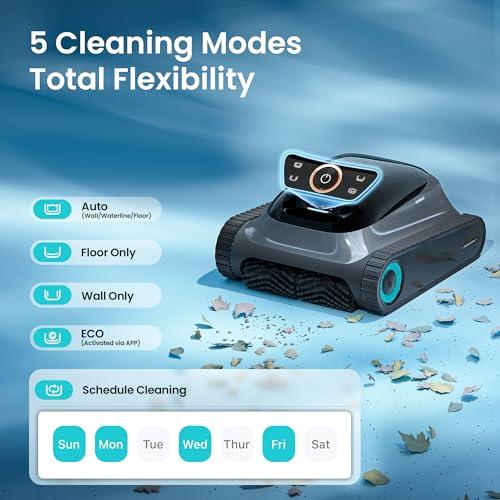
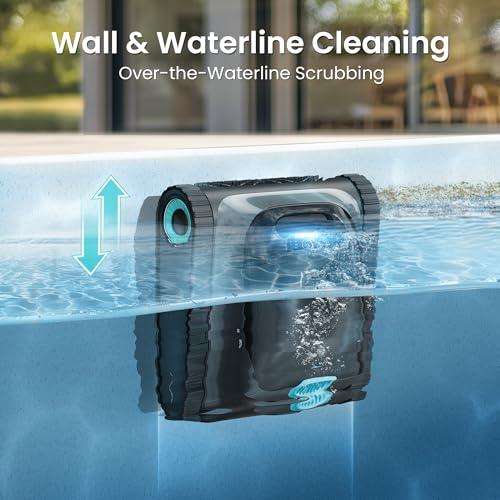
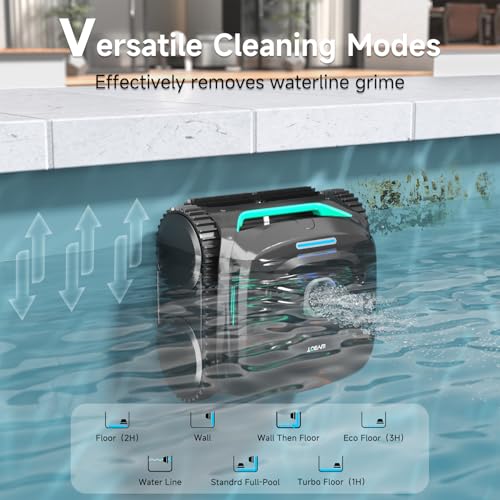
The WYBOT C2 significantly outshines the Aiper S1 in operational flexibility. While the Aiper S1 offers four cleaning modes (Auto, Eco, Floor, and Wall), the WYBOT C2 provides seven distinct options: Full, Floor, Wall, Waterline-only, Wall then Floor, Turbo, and Eco.
This variety matters more than it might initially appear. Waterline-only mode, for instance, targets the area where 90% of bacteria and algae buildup occurs—the interface between water and air where organic matter accumulates. Turbo mode allows intensive cleaning for heavily soiled conditions, while Eco mode extends battery life for routine maintenance.
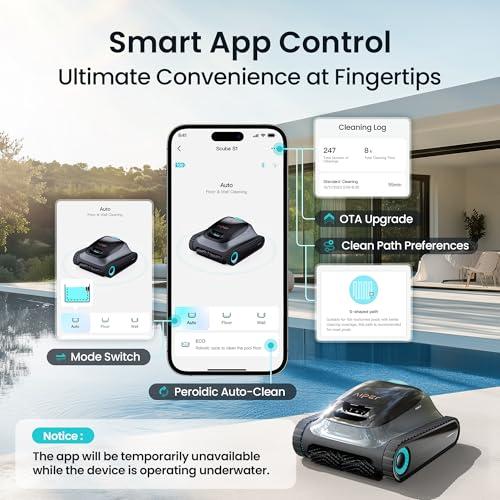
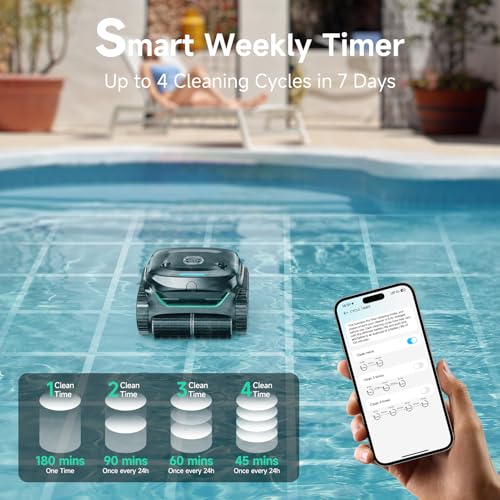
The WYBOT C2 also includes app-based scheduling that allows up to four cleanings per week with customizable timing. This level of automation transforms pool maintenance from a reactive chore to a proactive system. The Aiper S1 lacks comprehensive scheduling features, requiring more hands-on management.
At the time of writing, both models fall into similar price ranges, though specific pricing varies significantly based on retailer promotions and seasonal sales. The value comparison, therefore, comes down to performance per dollar rather than absolute cost differences.
The Aiper S1 initially appears to offer premium features at a competitive price point, especially considering its advanced navigation system and high advertised suction power. However, the substantial gap between advertised and actual runtime significantly undermines this value proposition. Pool owners essentially pay for 150 minutes of cleaning but receive 60-70 minutes of effective operation.
The WYBOT C2 delivers more predictable performance that aligns with its specifications. The dual-filtration system also reduces long-term maintenance costs by decreasing the need for manual cleaning and supplementary chemical treatments. When factoring in the time and effort saved from more effective cleaning cycles, the WYBOT C2 often represents better long-term value despite comparable upfront costs.
Pool owners with smaller pools (under 1,500 square feet) who prioritize advanced navigation technology and don't mind more hands-on operation. If you enjoy monitoring and managing your pool cleaning cycles and your pool doesn't require extended runtime for thorough cleaning, the Aiper S1's sophisticated navigation might appeal to you.
The Aiper S1 also works well for pool owners who primarily deal with larger debris (leaves, twigs) rather than fine particles. Its single filtration system handles visible debris adequately, and the strong initial suction power can tackle surface-level cleaning effectively.
Most pool owners, particularly those with larger pools or anyone who values set-and-forget convenience. The WYBOT C2's reliable runtime and dual filtration make it ideal for comprehensive pool maintenance with minimal intervention.
If you live in an area with significant fine debris (pollen, dust storms, or fine sand), the WYBOT C2's ultra-fine filtration becomes essential. Pool owners who have struggled with cloudy water or frequent algae issues will particularly benefit from the 10-micron filtration capability.
The extensive cleaning modes also make the WYBOT C2 perfect for pool owners who want to optimize their cleaning strategy based on seasonal conditions or specific pool challenges.
Since both models launched in 2022, we've seen continuous improvements through over-the-air updates and manufacturing refinements. The WYBOT C2 has received several software updates that improve navigation efficiency and add new scheduling options. The Aiper S1 has also received updates, though these haven't significantly addressed the fundamental runtime limitations.
Looking forward, both manufacturers are likely focusing on battery efficiency improvements and more sophisticated debris detection systems. The cordless pool cleaner market has matured significantly since the early models of 2018-2019, with current units offering reliability that approaches corded models while maintaining the convenience of wireless operation.
Based on our extensive research into user experiences, expert reviews, and technical specifications, the WYBOT C2 emerges as the more reliable choice for most pool owners. Its consistent performance, superior filtration, and operational flexibility address the real-world challenges of pool maintenance more effectively than the Aiper S1's impressive-but-inconsistent specifications.
The Aiper S1 isn't without merit—its advanced navigation system represents genuine technological innovation, and for the right pool and owner, it can deliver satisfactory cleaning. However, the significant performance gaps between advertised and actual runtime create operational frustrations that undermine its premium positioning.
For pool owners seeking reliable, comprehensive cleaning with minimal hassle, the WYBOT C2 offers better long-term satisfaction. Its dual filtration system alone justifies consideration, while the extended runtime and flexible cleaning modes provide the automation most busy pool owners actually want.
The cordless robotic pool cleaner market continues evolving rapidly, but based on current technology and performance data, the WYBOT C2 represents the better investment for most residential pool maintenance scenarios.
| Aiper Scuba S1 | WYBOT C2 |
|---|---|
| Pool Coverage Area - Determines maximum pool size you can effectively clean | |
| Up to 1,600 sq.ft (suitable for most residential pools) | Up to 2,152 sq.ft (better for larger pools) |
| Water Flow Rate - Higher numbers mean stronger suction power | |
| 4,200 GPH (excellent on paper, but performance degrades with battery) | 3,592 GPH (consistent throughout cleaning cycle) |
| Actual Runtime - Real-world battery life based on user testing | |
| 60-70 minutes (significantly less than advertised 150 min) | ~120-180 minutes in Eco Mode (meets advertised specs) |
| Filtration System - Critical for water clarity and debris capture | |
| Single mesh filter (struggles with fine particles like sand/dust) | Dual-layer: 180μm + 10μm ultra-fine (captures microscopic debris) |
| Cleaning Modes - More modes = better customization for different pool conditions | |
| 4 modes (Auto, Eco, Floor, Wall) | 7 modes (Full, Floor, Wall, Waterline-only, Wall then Floor, Turbo, Eco) |
| Navigation Technology - Affects cleaning thoroughness and missed spots | |
| WavePath 2.0 with sensors (sophisticated but inconsistent results) | Sensor-based path planning (simpler but more reliable coverage) |
| App Features - Important for automated scheduling and convenience | |
| Basic app control, limited scheduling | Advanced scheduling (up to 4 cleanings/week), cycle timers |
| Wall Climbing Capability - Essential for complete pool cleaning | |
| Climbs walls up to 105° (good performance) | Full wall and waterline cleaning (consistent performance) |
| Filter Capacity - Larger capacity means less frequent emptying | |
| 3.5L basket (adequate for most debris loads) | 3L capacity (slightly smaller but dual-layer captures more) |
| Charging Time - How long between cleaning cycles | |
| 2.5-3 hours (frequent recharging needed due to short runtime) | 3-3.5 hours (less frequent charging due to longer runtime) |
| Best For - Ideal user scenarios | |
| Smaller pools, tech enthusiasts who don't mind hands-on operation | Larger pools, users wanting reliable set-and-forget cleaning |
The WYBOT C2 offers superior real-world battery performance with up to 180 minutes of runtime in Eco Mode that actually matches user experiences. The Aiper Scuba S1 advertises 150 minutes but consistently delivers only 60-70 minutes in testing, requiring multiple charging cycles to complete thorough cleaning.
The WYBOT C2 covers up to 2,152 square feet, making it better for larger residential pools. The Aiper Scuba S1 handles pools up to 1,600 square feet. This 550+ square foot difference matters significantly if you have a larger pool or want room to upgrade your pool size in the future.
The Aiper Scuba S1 has higher advertised suction at 4,200 GPH compared to the WYBOT C2's 3,592 GPH. However, the Aiper S1's suction power deteriorates as the battery drains, while the WYBOT C2 maintains consistent suction throughout the entire cleaning cycle.
The WYBOT C2 features superior dual-layer filtration with a 180-micron cartridge for large debris plus a 10-micron ultra-fine filter for microscopic particles like dust and pollen. The Aiper Scuba S1 uses a single mesh filter that allows fine particles to slip through, requiring more manual cleaning.
The WYBOT C2 offers 7 cleaning modes including Full, Floor, Wall, Waterline-only, Wall then Floor, Turbo, and Eco modes. The Aiper Scuba S1 provides 4 modes: Auto, Eco, Floor, and Wall. More modes allow better customization for different pool conditions and debris types.
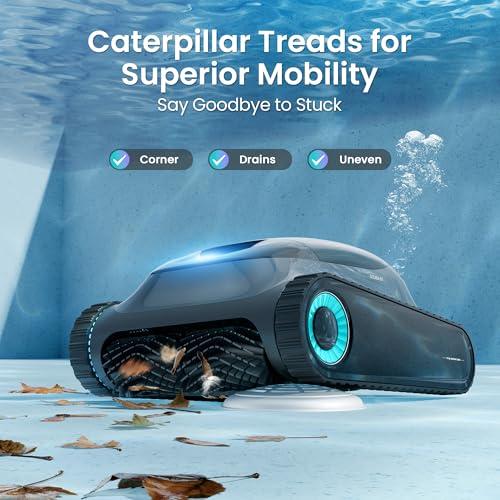
Yes, both the Aiper Scuba S1 and WYBOT C2 can climb walls and clean waterlines. The Aiper S1 climbs walls up to 105 degrees, while the WYBOT C2 offers dedicated waterline-only cleaning mode for targeted maintenance where bacteria and algae typically accumulate.
The WYBOT C2 excels in automation with app-based scheduling for up to 4 cleanings per week and customizable cycle timers. The Aiper Scuba S1 has basic app control but lacks comprehensive scheduling features, requiring more hands-on management for regular maintenance.
The Aiper Scuba S1 charges in 2.5-3 hours, while the WYBOT C2 requires 3-3.5 hours. Despite the slightly longer charging time, the WYBOT C2 offers better value since its longer runtime means less frequent charging cycles overall.
The WYBOT C2 significantly outperforms the Aiper Scuba S1 for fine debris due to its 10-micron ultra-fine filter that captures particles invisible to the naked eye. The Aiper S1's single mesh filter allows fine particles like sand, dust, and pollen to pass through.
Both the Aiper Scuba S1 and WYBOT C2 work on concrete, fiberglass, vinyl, and tile surfaces. They're designed for in-ground pools and can handle various pool shapes including round, square, and irregular configurations with steps and slopes.
The WYBOT C2 typically offers better long-term value despite similar pricing to the Aiper Scuba S1. The WYBOT C2's reliable runtime, superior filtration, and comprehensive automation features reduce maintenance time and costs, while the Aiper S1's performance gaps between advertised and actual specs can be frustrating.
Choose the WYBOT C2 if you want reliable, set-and-forget pool cleaning with superior filtration and longer runtime. Choose the Aiper Scuba S1 if you have a smaller pool, prefer advanced navigation technology, and don't mind more hands-on operation with frequent recharging cycles.
We've done our best to create useful and informative comparisons to help you decide what product to buy. Our research uses advanced automated methods to create this comparison and perfection is not possible - please contact us for corrections or questions. These are the sites we've researched in the creation of this article: roboticreviews.com - youtube.com - reviewed.com - thepoolnerd.com - thepoolnerd.com - poolandspawarehouse.com.au - poolbots.com - youtube.com - youtube.com - youtube.com - youtube.com - youtube.com - thepoolnerd.com - aiper.com - gearbrain.com - aiper.com - poolandspawarehouse.com.au - youtube.com - aiper.store - pbtech.com - walmart.com - houseofexcellence.store - poolbots.com - piscinarium.com - youtube.com - nabridas.mu - youtube.com - factorypure.com - bestbuy.com - wybotpool.com - youtube.com - wybotpool.com - thepoolnerd.com - lowes.com - youtube.com - walmart.com - business.walmart.com - bestbuy.com - homedepot.com - target.com - eu.wybotpool.com - youtube.com - youtube.com - lowes.com - eftm.com - youtube.com - poolwarehouse.com

Privacy Policy
Terms and Conditions - Affiliate Policy
Home Security
© Copyright 2008-2026.
11816 Inwood Rd #1211, Dallas, TX 75244