

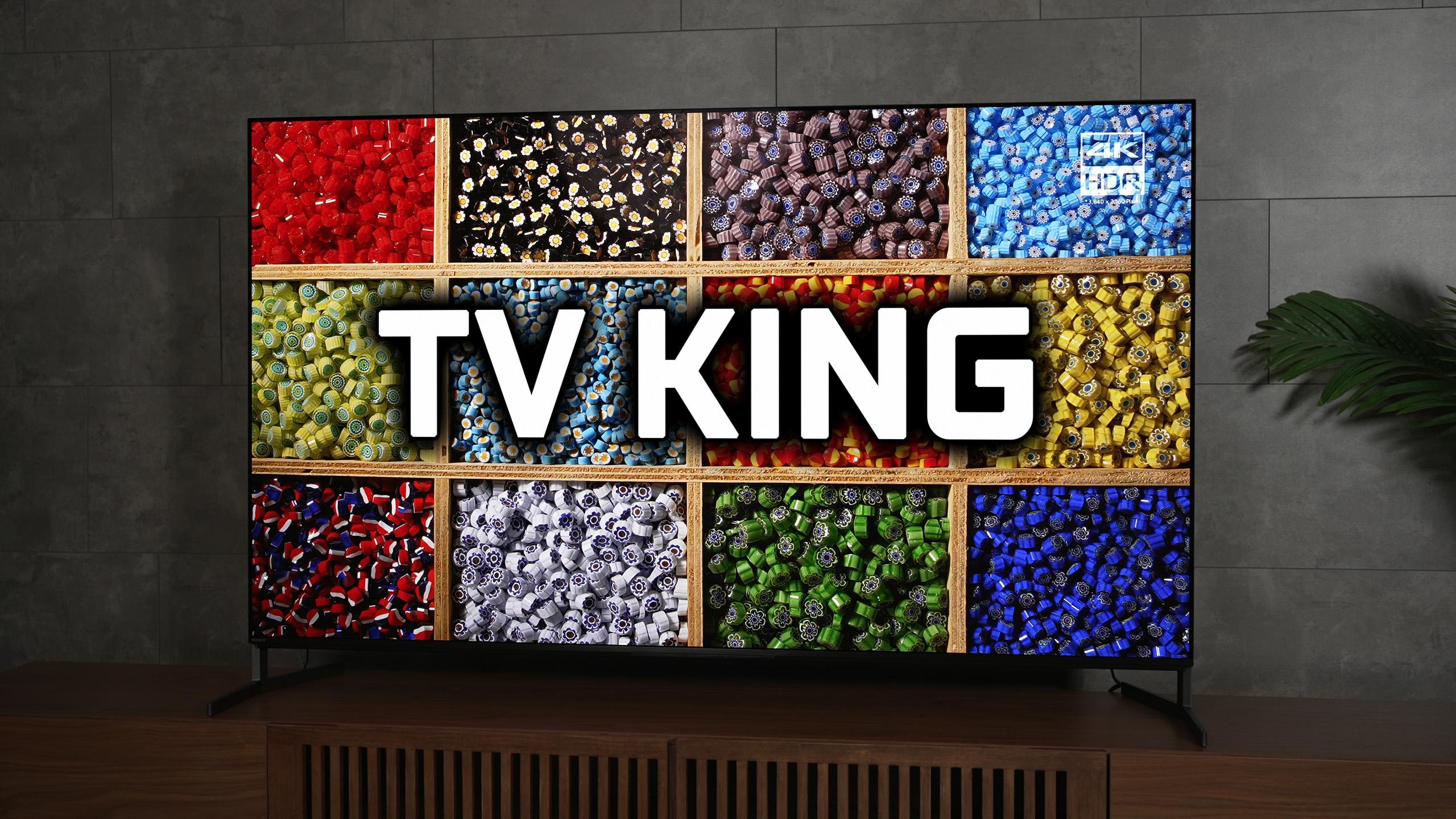

If you’ve been looking to buy a TV in 2025—whether it's for console gaming, PC gaming, or movie watching—then chances are you've been keeping an eye on the Value Electronics TV Shootout. Every year, it sets the stage for what’s considered the best display on the market, and for many people, it’s become the go-to event to separate the true kings from the rest. I’ve always respected the shootout and everyone behind it, especially Robert who organizes the event. But with the 2025 results now out, I wanted to weigh in.
I agree with a lot of what was decided, but there are also a few areas where I have a different perspective—especially when it comes to performance in bright room conditions. So I’ve put together my own scoring, based on hands-on time with major 2025 contenders. Let’s dive in.
The Sony Bravia 8 Mark II won the 2025 Value Electronics Shootout and, for dark room movie viewing, I agree with that decision. But when it comes to bright rooms, gaming, and motion handling, my rankings diverge—especially in how poorly I think QD-OLED performs with ambient light. That said I believe all four TVs are excellent and each has their category where they pull ahead, and can definitely recommend all of them. Ultimately what's best for you comes down to your personal viewing habits.
Here's a quick spec snapshot of the contenders:
Panasonic is the ONLY one that supports all HDR formats.

Without further ado, let’s jump into the categories.
When it comes to sheer panel brightness, the LG G5 (Full Review Here) is the clear winner. Its new four-layer W-OLED panel delivers a stunning level of luminance, particularly in highlights.

While all four models are bright by OLED standards, the Bravia 8 Mark II comes in technically last—but you can reduce the gap by calibrating its vivid mode. Even then, it's just a little bit behind. Still, for pure nits, the G5 takes the crown.
Color is where QD-OLED panels shine, and both the Sony Bravia 8 Mark II and the Samsung S95F (Full Review Here) dominate this category.

While LG’s four-layer panel helps the G5 and the Panasonic get closer, they still fall short of QD-OLED's superior color rendering. Rich saturation and accuracy are just more pronounced on Sony and Samsung’s offerings, especially in HDR content. It’s a two-way tie here between the Bravia 8 and the S95F.
This one is huge for dark room viewing. The Sony Bravia 8 Mark II clearly leads with the cleanest rendering of near-black content. The LG G5 struggles here—particularly from a PC connection, where I’ve noticed dithering artifacts and crushed shadow detail.
If you don’t know what dithering is, it can appear as a crawling or noisy effect in dark gray scenes, and it’s not something you’ll see often on QD-OLED. LG needs to let users fully disable dithering for PC use. This gives Sony the edge, while LG lands at the bottom in this area.
Now we’re talking about motion interpolation—not gaming. This is something I use a lot for TV and movie watching.

Sony, Panasonic, and LG all offer strong performance here, but Samsung completely drops the ball. On both the S95F and S90F, motion interpolation was so bad it was unusable, even on lower settings. It just looked wrong and made the image feel unstable.
That alone makes the S95F a no-go for me when it comes to movie and TV viewing, but for many the use of motion interpolation may never even cross your mind, so don’t count them out.
This is the most controversial category and where I disagree heavily with the Value Electronics shootout. The idea that a QD-OLED won here baffles me. QD-OLED is a poor choice in bright rooms in my opinion. The panel turns magenta, contrast tanks, and shadow detail is lost in ambient lighting. I’ve lived with QD-OLED displays in my studio, and the minute a strong light source hits the panel, it’s over.

The LG G5 and Panasonic are absolutely dominant here. I had studio lights aimed directly at the G5, and the image still held up beautifully. It didn’t wash out and retained detail. That simply doesn’t happen with QD-OLED.
The Bravia 8 II is better than the Samsung in this respect since it is sporting a glossy coating, but it's still far behind the W-OLED options. Meanwhile, the Samsung’s matte panel spreads the light across the display, which destroys contrast even more. For bright rooms, it’s W-OLED or bust.
This is a category where QD-OLED absolutely destroys W-OLED. All OLEDs have solid viewing angles compared to LCDs or Mini-LEDs, but QD-OLEDs like the Bravia 8 II and S95F don’t exhibit the green tint off-angle that W-OLEDs do.

The image remains consistent, making these panels ideal for larger viewing areas. If you care about off-axis performance, Sony and Samsung win handily.
Here’s where things get interesting. The LG G5 and Samsung S95F both support 165Hz, VRR, and have solid input latency numbers. I prefer the G5 slightly here, mostly due to LG’s more consistent firmware and great HGIG handling.

The Panasonic comes next at 144Hz, still excellent but not quite at the G5/S95F level. Meanwhile, the Bravia 8 Mark II comes in last with a 120Hz cap, worst input latency, and currently broken HGIG handling. It’s not bad per se, but it’s noticeably behind the others for fast-paced gaming.
If you take gaming out of the equation and focus purely on content watching, here’s how I’d rank them:

These scores are very tight. Even the "last place" S95F is a fantastic TV—if you have all four side by side, many viewers wouldn’t even notice the differences unless they were looking for them. That’s how good all of these are. But in terms of contrast, color, accuracy, and depth, the Sony just slightly edges ahead for movie lovers.
Adding gaming into the equation changes things up:

Again, all four are excellent, and the margins are razor-thin. But for different use cases, the winners shift.



Privacy Policy
Terms and Conditions - Affiliate Policy
Home Security
© Copyright 2008-2026.
11816 Inwood Rd #1211, Dallas, TX 75244