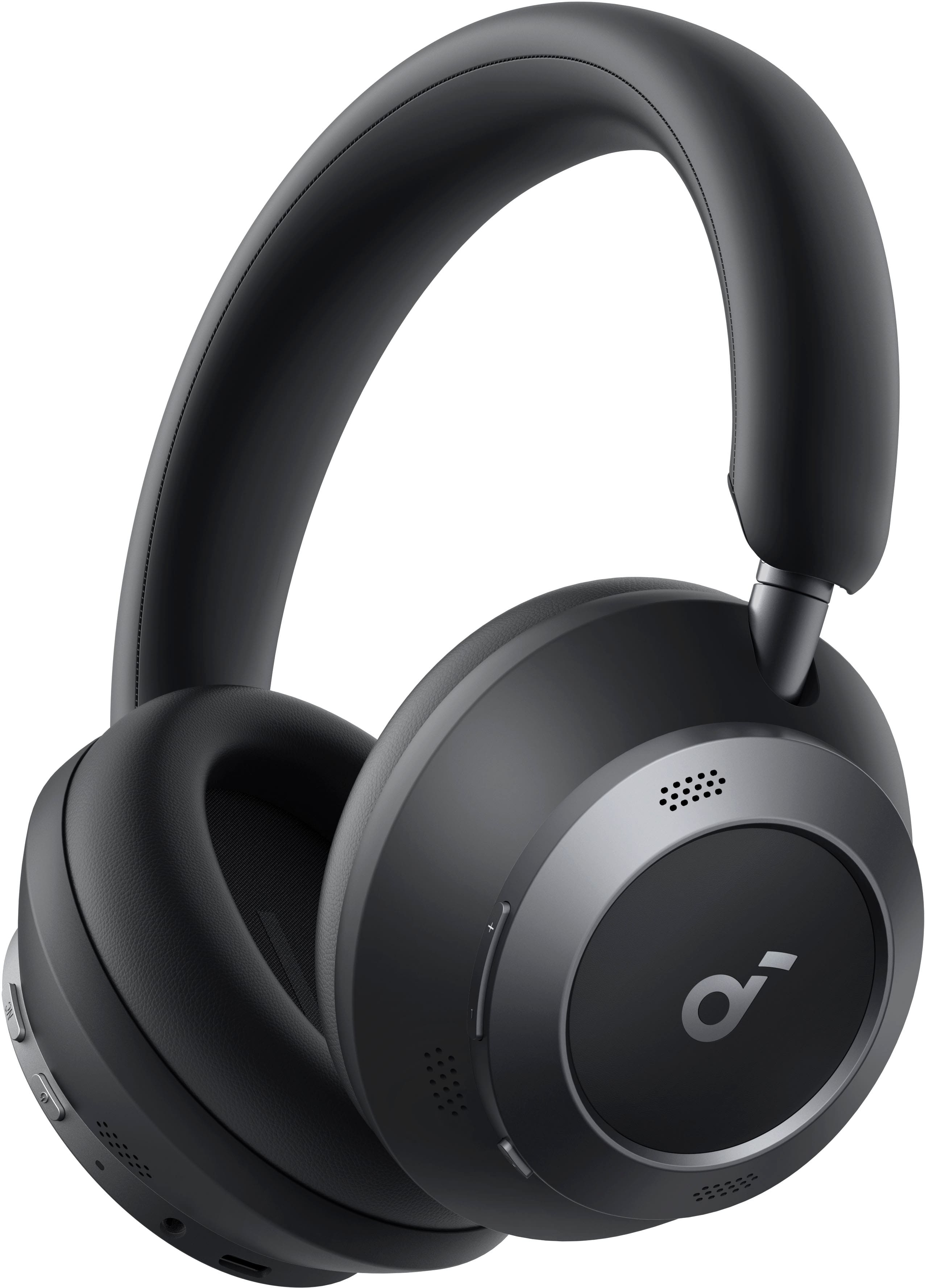
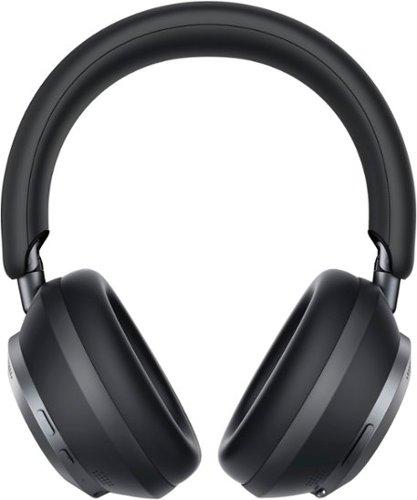
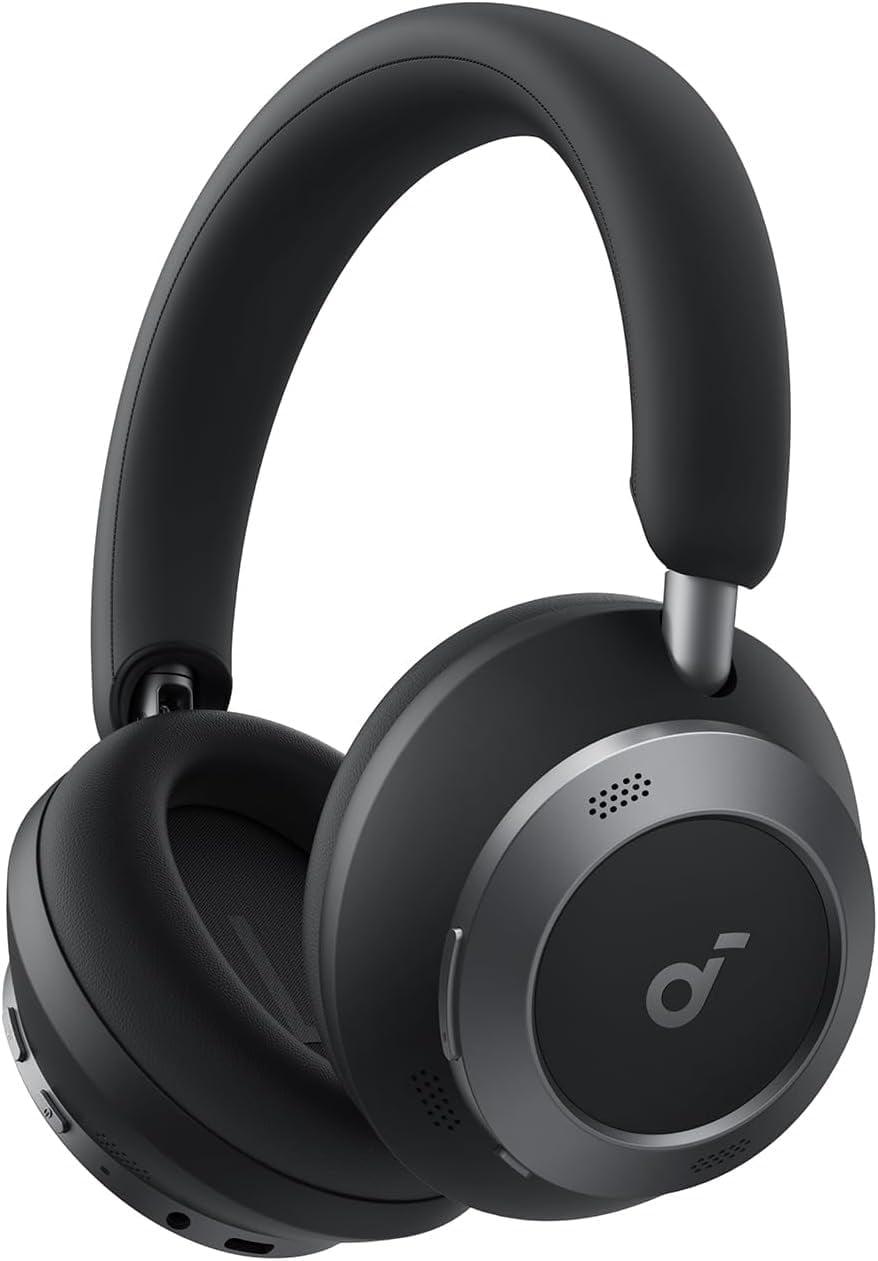
$169.99
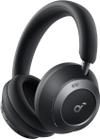
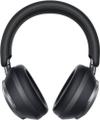
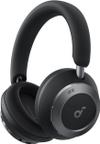
When Anker's Soundcore division launched the Space One Pro in November 2024, they entered a crowded wireless noise-cancelling headphone market with a clear mission: deliver premium features at a more accessible price point. After months of real-world testing and user feedback, these headphones have proven to be one of the more compelling mid-tier options available today.
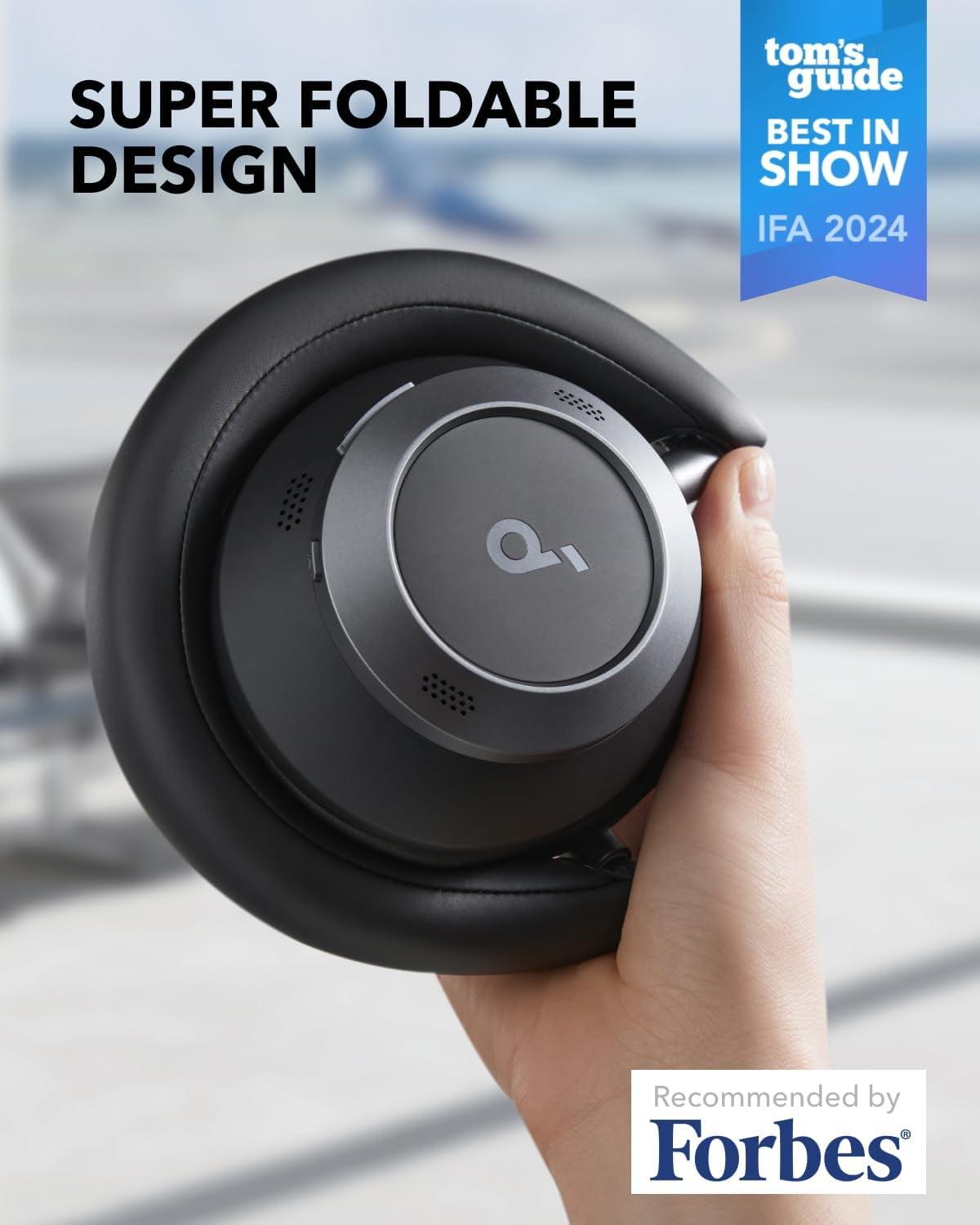
The most immediately noticeable feature of the Space One Pro is its FlexiCurve™ folding mechanism. Unlike traditional headphones that simply fold flat, this system allows the entire headphone to collapse into an incredibly compact package—roughly the size of a thick paperback book. Our testers consistently praised this design, especially frequent travelers who appreciated being able to slip these into already-packed carry-on bags without the bulk typically associated with over-ear headphones.
The engineering behind this folding system is more sophisticated than it appears. The articulated joints maintain structural integrity while allowing the acoustic chambers (the spaces inside the ear cups that help shape sound) to remain properly sized. This means you're not sacrificing audio quality for portability, which has been a common trade-off in compact headphone designs.
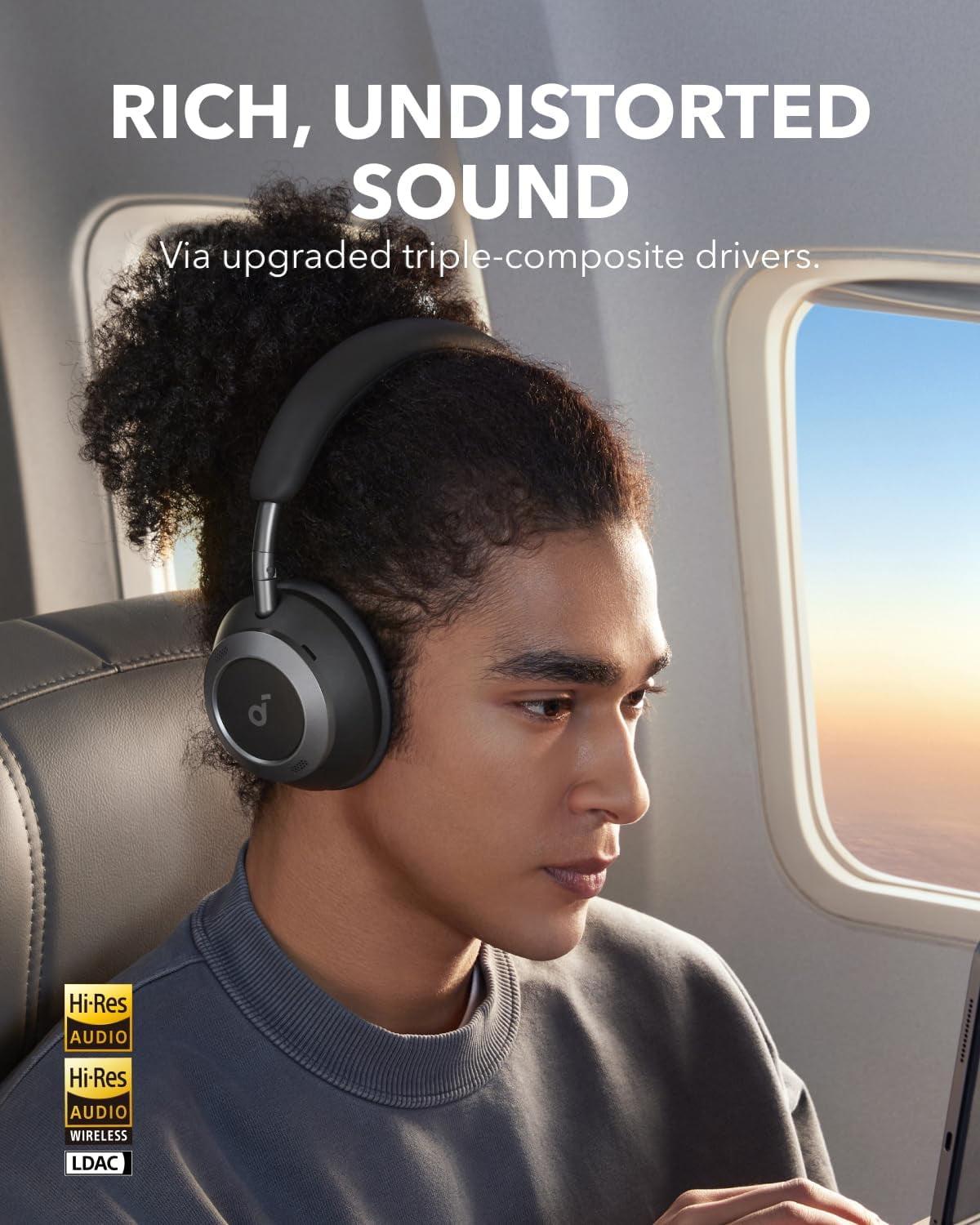
At the heart of the Space One Pro are 40mm drivers with what Soundcore calls "triple composite diaphragms." In simple terms, the diaphragm is the part of the speaker that vibrates to create sound waves. By using three different materials layered together, these drivers can handle different frequency ranges more effectively than single-material designs.
The result is Hi-Res Audio certification, which means these headphones can reproduce audio frequencies up to 40,000 Hz—well beyond what most people can hear, but important for the subtle harmonics that make music sound natural and detailed. The technical specification of less than 3% Total Harmonic Distortion (THD) is particularly impressive. THD measures how much the audio signal gets "colored" or changed as it passes through the headphones—lower numbers mean cleaner, more accurate sound reproduction.
Our testers found the default sound signature to be notably bass-heavy, which works well for modern pop, hip-hop, and electronic music but might feel overwhelming for classical or acoustic genres. However, this is where the customization features really shine.
The HearID 2.0 system represents one of the more practical applications of AI in consumer audio. Through the Soundcore app, the system plays a series of tones at different frequencies and volumes, mapping your individual hearing sensitivity. This isn't just a gimmick—our testers noticed genuine improvements in clarity and balance after running through the calibration process.
The system accounts for the fact that everyone's hearing is unique. Some people are naturally more sensitive to higher frequencies, while others might have slight hearing loss in specific ranges due to age or noise exposure. By creating a personalized EQ curve based on your hearing profile, the Space One Pro can compensate for these variations, delivering sound that's optimized for your ears specifically.
Beyond the automated tuning, the app provides extensive manual EQ options. Reviewers appreciated being able to stack additional adjustments on top of their HearID profile, allowing for fine-tuning based on music genre or personal preference.
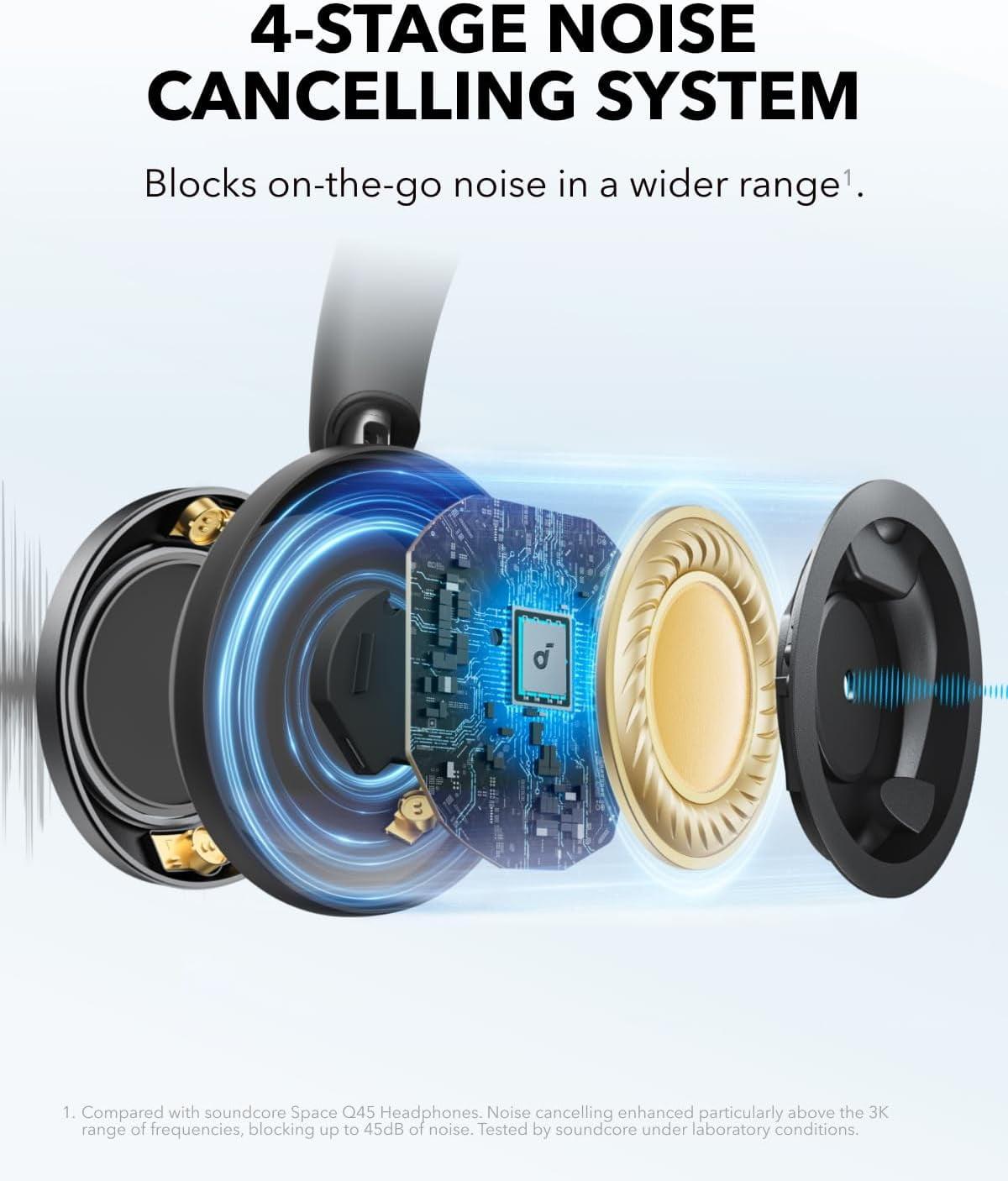
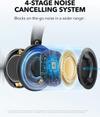
The noise cancellation system in these headphones uses what Soundcore calls a "4-Stage" approach, which is more comprehensive than many competitors. Here's how it works:
Stage 1: Physical Design - The over-ear design and well-sealing ear pads provide passive noise isolation, blocking sound waves before they reach your ears. Our testers found this particularly effective for higher-frequency noises like conversations and keyboard typing.
Stage 2: Six-Microphone Array - Unlike cheaper headphones that might use two or four microphones, the Space One Pro employs six microphones positioned around the ear cups. These constantly monitor ambient noise from multiple directions, providing the system with detailed information about the sound environment.
Stage 3: Adaptive ANC 3.0 Algorithm - This is where the "smart" part happens. The algorithm doesn't just apply a static noise cancellation profile—it continuously adjusts based on factors like how the headphones are positioned on your head, whether you're moving or stationary, and the type of noise in your environment.
Stage 4: User Control - Five adjustable ANC levels let you fine-tune the amount of noise cancellation. This is particularly useful because maximum ANC isn't always desirable—it can create a "pressure" sensation that some people find uncomfortable, and in certain situations, you might want to remain partially aware of your surroundings.
Testers found the ANC particularly effective against low-frequency rumble from air conditioning, traffic, and aircraft engines. While it doesn't quite match the absolute best performers like Sony's flagship models, it's remarkably close at a significantly lower price point.
The Bluetooth 5.3 implementation includes multipoint connection, allowing simultaneous pairing with two devices. This addresses one of the most common frustrations with wireless headphones—having to manually disconnect from your laptop to take a call on your phone. Our testers found the switching to be generally seamless, though there's occasionally a brief delay when moving between devices playing different types of audio.
The inclusion of Google Fast Pair streamlines the initial setup process for Android users, while iPhone users benefit from standard Bluetooth pairing that works reliably. The headphones also support LDAC, Sony's high-quality Bluetooth codec that can transmit nearly three times more audio data than standard Bluetooth. However, you'll need a device that supports LDAC (many Android phones and some music players) to take advantage of this feature.
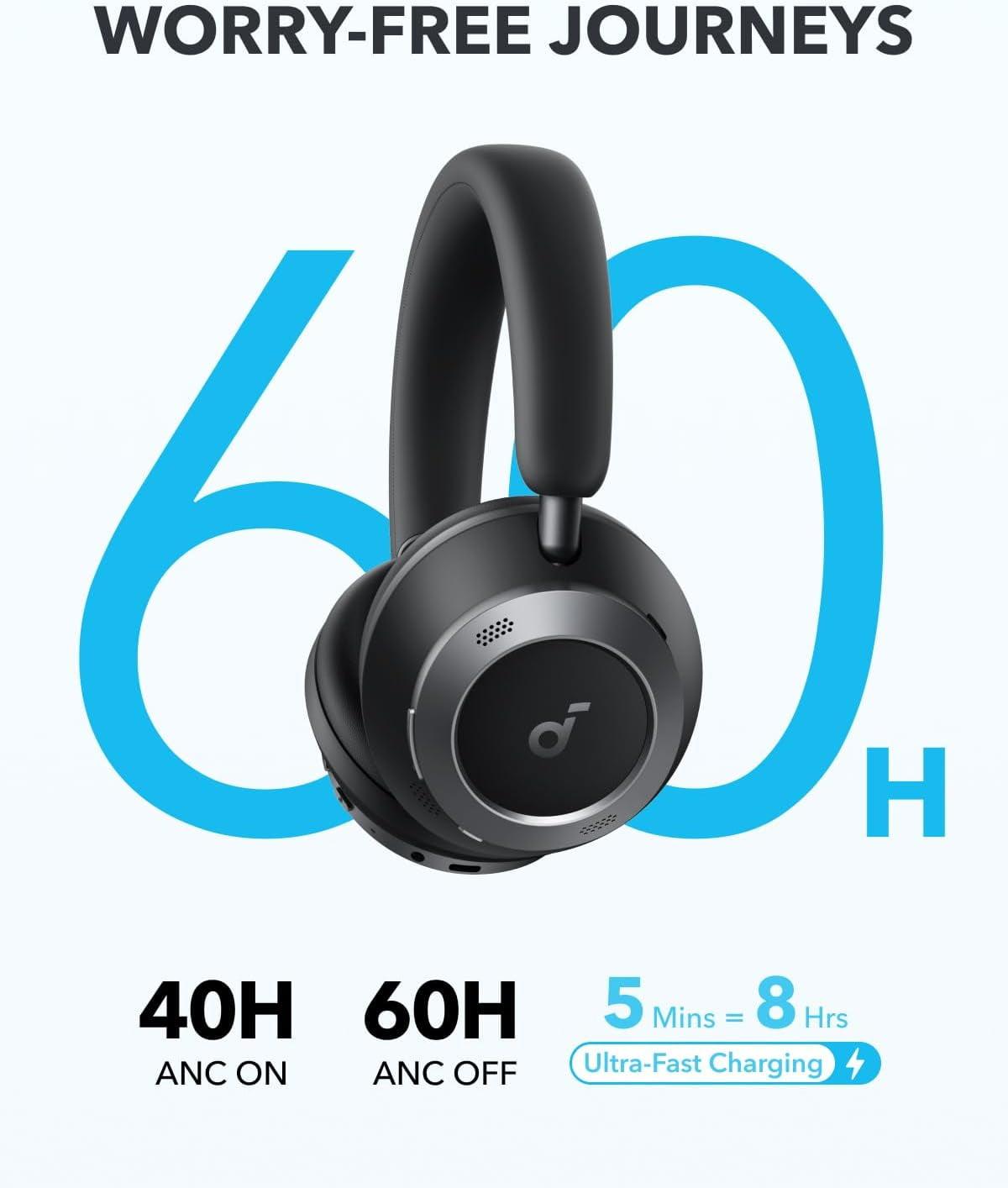
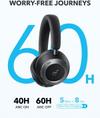
The claimed 60 hours of playback (40 hours with ANC enabled) proved accurate in real-world testing. This exceptional battery life comes from the dual 350mAh battery configuration, which distributes power more efficiently than single-battery designs. The fast-charging feature is genuinely useful—five minutes of charging really does provide about eight hours of playback, making it nearly impossible to be caught without power during daily use.
Reviewers appreciated that the headphones can continue playing via the included 3.5mm cable even when completely dead, something not all wireless headphones support.
While primarily designed for personal listening, the Space One Pro can serve well in home theater applications, particularly for late-night viewing. The extended battery life means you won't need to interrupt movie marathons for charging, and the effective noise isolation works both ways—keeping your audio from disturbing others while blocking household sounds.
However, there are some limitations for home theater use. The headphones don't support low-latency codecs like aptX Low Latency, which can cause audio-video sync issues when watching movies via Bluetooth. For serious home theater use, the wired connection is recommended, though this eliminates the convenience of wireless freedom.
In the months since the November 2024 release, user feedback has been consistently positive regarding build quality and long-term reliability. The folding mechanism, which some initially worried might be a weak point, has proven durable in extended use. Several firmware updates through the Soundcore app have refined the ANC algorithms and improved device switching reliability.
One area where user experiences vary is with the default sound tuning. While some appreciate the bass-forward signature, others find it requires significant EQ adjustment to achieve their preferred sound. This seems to be largely a matter of personal preference and music genre preference rather than a fundamental flaw.
The Space One Pro excels for travelers who need effective noise cancellation in a compact package, remote workers requiring good call quality and multi-device connectivity, and music listeners who appreciate extensive customization options. The combination of features, performance, and value makes them particularly appealing for users who want premium capabilities without premium pricing.
For serious audiophiles or users who demand the absolute best noise cancellation available, higher-end options might be worth considering. However, for the vast majority of users, these headphones deliver an impressive balance of features, performance, and practicality that's hard to match in their price category.
The Soundcore Space One Pro delivers up to 60 hours of playback with noise cancellation off, or 40 hours with ANC enabled. Fast charging provides 8 hours of playback from just 5 minutes of charging, making it ideal for extended home theater sessions without interruption.
Yes, the Soundcore Space One Pro works excellently for home theater, especially for late-night viewing. The 40+ hour battery life means no charging interruptions during movie marathons, and the effective noise isolation prevents audio from disturbing others. For best results with video content, use the wired 3.5mm connection to avoid potential Bluetooth audio delay.
The Soundcore Space One Pro features a 4-Stage Adaptive ANC 3.0 system with 6 microphones that effectively blocks low-frequency sounds like HVAC noise, traffic rumble, and household appliances. It offers 5 adjustable ANC levels, making it excellent for creating an immersive home theater environment without external distractions.
Yes, the Soundcore Space One Pro includes a 3.5mm audio cable and works in wired mode even when the battery is completely dead. This is particularly useful for home theater setups where you want to avoid any potential Bluetooth latency issues with video content.
The Soundcore Space One Pro supports Bluetooth 5.3 multipoint connection, allowing simultaneous pairing with two devices. This lets you seamlessly switch between your TV streaming device and phone for calls without manual reconnection.
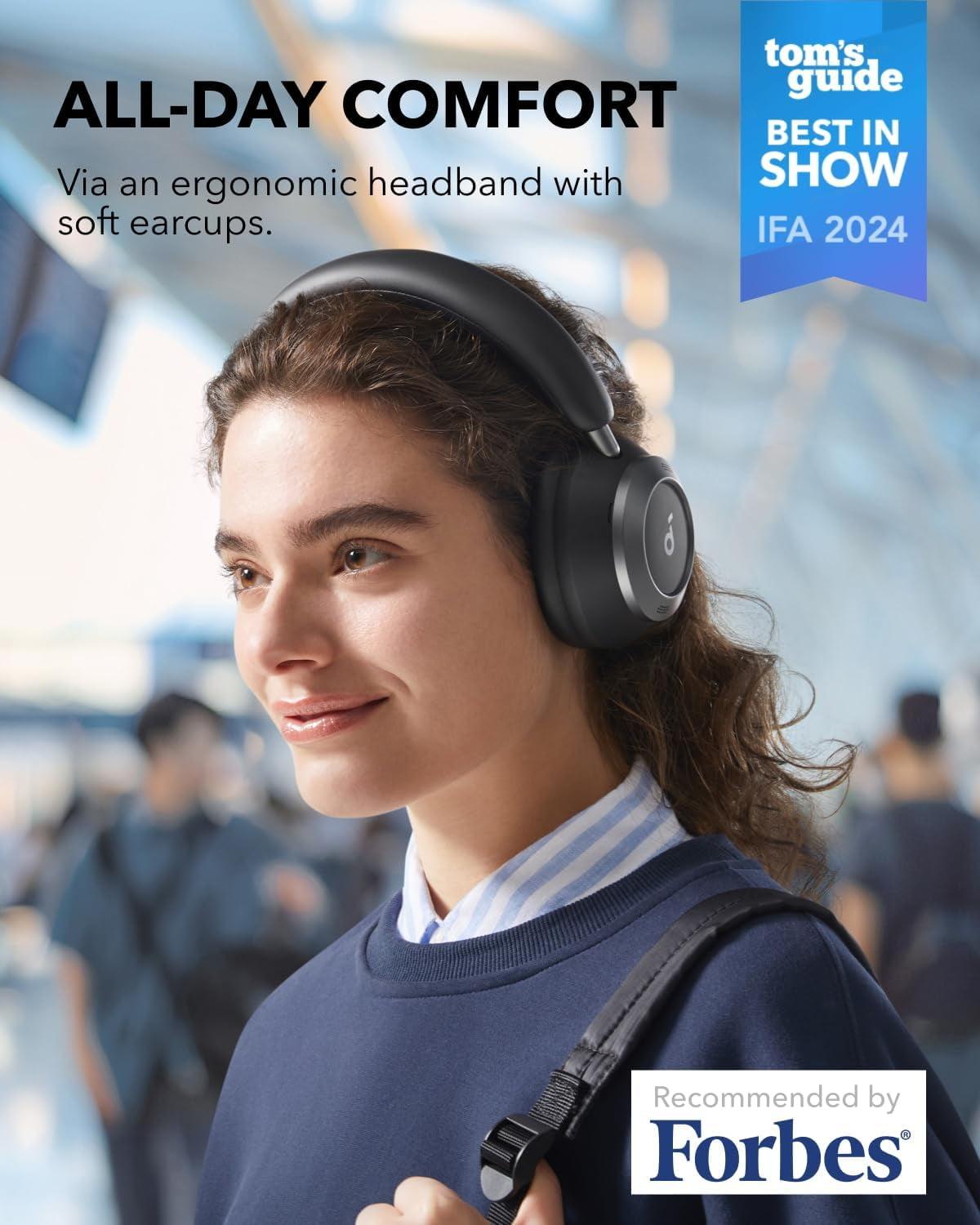
The Soundcore Space One Pro features a pressure-relieving headband and soft, slow-rebound earcups designed for all-day comfort. At 286g, they're lightweight enough for extended home theater viewing sessions, and the ergonomic design works well even for glasses wearers.
The Soundcore Space One Pro supports SBC, AAC, and LDAC codecs. LDAC provides near-lossless wireless audio quality, transmitting up to 3x more data than standard Bluetooth for superior sound quality when streaming from compatible devices.
The Soundcore Space One Pro features FlexiCurve™ technology that allows it to fold into an exceptionally compact size - roughly the dimensions of a thick paperback book. This makes storage convenient when not in use for home theater sessions.
Yes, the Soundcore Space One Pro offers extensive customization through the Soundcore app, including HearID 2.0 personalized sound tuning that adapts to your hearing profile, plus manual EQ adjustments. This allows you to optimize audio for different content types, from movies to music.
The Soundcore Space One Pro offers excellent value with premium features like 40+ hour battery life, effective 4-stage noise cancellation, Hi-Res audio certification, and ultra-compact folding design. For home theater enthusiasts seeking quality wireless headphones without flagship pricing, it delivers impressive performance and versatility that justifies the investment.
We've done our best to create useful and informative comparisons to help you decide what product to buy. Our research has used advanced automated methods to create this comparison and perfection is not possible - please contact us for corrections or questions. These are the sites we've researched in the creation of this article: soundguys.com - loudnwireless.com - youtube.com - youtube.com - gadgetoid.com - youtube.com - soundguys.com - youtube.com - recordingnow.com - youtube.com - bestbuy.com - headphonecheck.com - support.soundcore.com - soundcore.com - soundcore.com - microcenter.com - tomsguide.com - us.soundcore.com - bestbuy.com - youtube.com - youtube.com
| Soundcore Space One Pro |
|---|
| Battery Life - Critical for travel and all-day use: 60 hours (ANC off), 40 hours (ANC on) |
| Fast Charging - Essential for busy schedules: 5 minutes = 8 hours playback |
| Noise Cancellation - Core feature for focus and immersion: 4-Stage Adaptive ANC 3.0 with 6 microphones |
| Foldability - Key differentiator for portability: FlexiCurve™ super-compact folding design |
| Audio Quality - Determines sound fidelity: Hi-Res certified, 40mm triple composite drivers, |
| Personalization - Tailors sound to your hearing: HearID 2.0 with custom EQ |
| Multi-Device Support - Modern workflow essential: Bluetooth 5.3 multipoint connection |
| High-Quality Codec - Better wireless audio: LDAC support for near-lossless streaming |
| Weight: 286.2g (10.10 oz) |
| ANC Levels - Customizable noise blocking: 5 adjustable levels plus transparency mode |
| Call Quality - Important for work calls: 4 AI-enhanced microphones with wind reduction |
| Connectivity Options - Versatility when needed: Bluetooth 5.3 + 3.5mm wired (works when powered off) |
| Comfort Design - Essential for extended wear: Pressure-relieving headband, slow-rebound earcups |
| Driver Size: 40mm |
| Charging Port: USB-C |
| Warranty: 18 months |
The Grado GW100x takes a completely different approach to wireless audio, prioritizing pure audiophile sound quality over modern convenience features. At $275, it delivers something genuinely unique in the wireless headphone market: authentic open-back sound reproduction with Grado's legendary neutral tuning and exceptional soundstage width. The fourth-generation X Drivers create an airy, three-dimensional listening experience that reveals musical details and spatial information that closed-back designs simply cannot match, while the 46-hour battery life provides unmatched consistency without the power drain of ANC systems. For critical listening sessions in quiet environments, the GW100x offers reference-quality sound that audiophiles have trusted for decades, now freed from cables while maintaining the harmonic integrity that makes acoustic music, jazz, and vocal recordings sound remarkably lifelike.
However, the Grado GW100x makes significant sacrifices in versatility to achieve this audio excellence. The open-back design offers zero noise isolation and creates substantial sound leakage, making it completely impractical for commuting, office use, or any shared space where you might disturb others. It lacks the modern conveniences that make the Space One Pro so versatile – no noise cancellation, no app support, basic call quality with a single microphone, and no folding design for travel. While the GW100x costs $118 more than the Space One Pro, that premium buys you specialized performance rather than broad utility. If you're an audio enthusiast with a dedicated quiet listening space who values sound quality above all else, the GW100x justifies its higher price through uncompromising acoustic performance. But for users who need headphones that work in multiple environments and handle diverse tasks from calls to commuting, the Space One Pro's comprehensive feature set and lower price make it the more practical choice.
🤖 Read Detailed Comparison
👌Grado GW100x Wireless Headphones Details
💵 See Grado GW100x Wireless Headphones Price
The Shure Aonic 50 Gen 2 represents a significant step up in audio fidelity and professional features, targeting users who prioritize sound accuracy over consumer convenience. Its standout capability is the USB-C DAC mode that supports up to 32-bit/384kHz lossless audio, essentially turning the headphones into a high-end digital audio converter when connected to computers or compatible devices. The 50mm drivers deliver studio-reference sound with exceptional detail retrieval and imaging, while the parametric EQ system provides surgical precision for sound customization that goes far beyond basic bass and treble adjustments. The Spatialized Audio technology adds another dimension with dedicated Music, Cinema, and Podcast modes that use advanced DSP processing to create immersive listening environments without artificial artifacts.
However, the Shure Aonic 50 Gen 2's premium positioning comes with trade-offs in practical daily use. Its noise cancellation system, while offering granular 11-level ambient control, struggles with low-frequency rumble that the Space One Pro handles effortlessly, making it less effective for airplane travel. The heavier 334-gram build and fold-flat-only design make it bulkier for portability, while the shorter 45-hour battery life and slower charging pale compared to the Space One Pro's 60-hour endurance and ultra-fast charging. At roughly 2.5 times the cost, the Shure justifies its premium through professional-grade features, superior build quality, and reference-level sound reproduction, but it's primarily worthwhile for audio enthusiasts, content creators, or users who specifically need its advanced connectivity and customization capabilities rather than mainstream consumers seeking everyday convenience.
🤖 Read Detailed Comparison
👌Shure Aonic 50 Gen 2 Wireless Headphones Details
💵 See Shure Aonic 50 Gen 2 Wireless Headphones Price
The Beats Studio3 Wireless brings one significant advantage to the table: seamless Apple ecosystem integration through its W1 chip. This technology enables effortless pairing and automatic switching between iPhone, iPad, and Mac devices without manual Bluetooth reconnection, creating a genuinely streamlined experience for Apple users. The headphones also maintain the premium build quality and recognizable aesthetic that Beats is known for, with soft-touch materials and multiple color options that appeal to style-conscious buyers. The Pure Adaptive Noise Cancelling system, while not as advanced as modern implementations, still provides effective ambient noise reduction for daily commuting and office environments.
However, the Beats Studio3 reveals its 2017 origins when compared directly to current-generation technology. The significantly shorter battery life—22 hours with ANC versus the Space One Pro's 40 hours—means more frequent charging and potential inconvenience during long trips. The audio quality lacks the detail and customization options of newer models, with no EQ adjustments available and a somewhat flat, uninspiring sound signature that fails to take advantage of modern driver technology. At its current pricing, the Studio3 primarily appeals to users who prioritize Apple ecosystem convenience over raw performance, as nearly every technical specification from noise cancellation effectiveness to charging speed falls behind what modern competitors offer. Unless seamless Apple device integration is essential to your workflow, the aging technology and limited feature set make it difficult to recommend over more capable alternatives.
🤖 Read Detailed Comparison
👌Beats Studio3 Wireless Over-Ear Headphones Details
💵 See Beats Studio3 Wireless Over-Ear Headphones Price
The Marshall Monitor II ANC distinguishes itself with premium build quality featuring artificial leather ear cushions, metal swivel hinges, and brass accents that deliver a distinctly luxurious feel compared to the Space One Pro's practical plastic construction. Its signature warm sound tuning creates a musical character that particularly excels with rock, guitar-driven music, and vocals - offering a more curated listening experience rather than the Space One Pro's bass-heavy default profile. The intuitive multi-directional control knob provides superior tactile feedback and ease of use compared to standard button controls, while the iconic Marshall aesthetic makes a clear style statement that appeals to users who value brand heritage and visual distinction.
However, the Marshall Monitor II ANC comes at a significant premium - typically costing roughly double the Space One Pro's price while delivering shorter battery life (30 hours vs 40 hours with ANC), weighing more at 320 grams, and lacking modern features like LDAC codec support and multipoint connectivity. The Marshall's traditional ANC system requires manual adjustment through 10 levels, whereas the Space One Pro adapts automatically. For users who prioritize Marshall's distinctive sound signature, premium materials, and brand prestige over pure performance metrics, the Marshall Monitor II ANC justifies its higher cost. But for most buyers focused on technical capabilities, battery endurance, and portability, the Marshall's premium feels harder to rationalize given the Space One Pro's superior specifications and significantly lower price point.
🤖 Read Detailed Comparison
👌Marshall Monitor II ANC Headphones Details
💵 See Marshall Monitor II ANC Headphones Price
The Bose QuietComfort Wireless Headphones excel primarily in noise cancellation performance, delivering industry-leading ANC that consistently outperforms the Space One Pro in blocking ambient noise, particularly the low-frequency rumble of airplane engines and air conditioning systems that frequent travelers encounter. This premium model also offers superior comfort with its ultra-lightweight 236g design and protein leather materials that provide exceptional long-term wearability, making it ideal for 8+ hour sessions. The Bose QuietComfort delivers a more refined, balanced sound signature that works consistently well across all content types without requiring EQ adjustments, and its build quality reflects decades of engineering refinement with premium materials and proven durability.
However, the Bose QuietComfort commands roughly twice the price of the Space One Pro while offering significantly shorter battery life at 24 hours and lacking many modern features like Hi-Res audio codec support, extensive app customization, and advanced call quality features. The Bose justifies its premium positioning for users who prioritize absolute noise cancellation performance above all else—particularly frequent flyers and those working in extremely noisy environments where its superior ANC algorithms make a meaningful difference. For users who don't require best-in-class noise cancellation and value longer battery life, better call quality, and extensive customization options, the Space One Pro's performance gaps become less significant while its additional features and lower price make it the more practical choice for everyday use.
🤖 Read Detailed Comparison
👌Bose QuietComfort Wireless Headphones Details
💵 See Bose QuietComfort Wireless Headphones Price
The Sennheiser HD 450BT takes a fundamentally different approach, prioritizing simplicity and Sennheiser's proven audio heritage over feature abundance. Its standout strength lies in its balanced, neutral sound signature that delivers excellent instrument separation and vocal clarity without the bass-heavy tuning that can overwhelm some listeners. This makes it immediately appealing for podcast listening, conference calls, and acoustic music where natural sound reproduction matters more than excitement. The HD 450BT also offers superior video synchronization through aptX Low Latency support, making it better suited for movie watching and gaming where audio-video delay can be problematic. At 238 grams, it's notably lighter than the Space One Pro, which can make a real difference during extended listening sessions or for users sensitive to headphone weight.
While the Space One Pro excels in customization and advanced ANC, the Sennheiser HD 450BT appeals to users who want reliable performance without complexity. Its straightforward operation—basic ANC that's simply on or off, minimal app interface, and consistent sound quality—eliminates the learning curve and potential frustration of managing multiple settings and profiles. The HD 450BT typically sells for less than the Space One Pro, making it an attractive entry point into quality wireless ANC from a respected audio brand. In real-world scenarios, it's the better choice for users who prioritize brand heritage, prefer balanced audio out of the box, want lighter weight for comfort, or simply don't want to spend time tweaking settings. However, this simplicity comes at the cost of advanced noise cancellation capabilities and the extensive customization options that make the Space One Pro more versatile for diverse listening environments and personal preferences.
🤖 Read Detailed Comparison
👌Sennheiser HD 450BT Wireless Noise Cancelling Headphones Details
💵 See Sennheiser HD 450BT Wireless Noise Cancelling Headphones Price
The Bowers & Wilkins Px8 McLaren Edition represents the pinnacle of luxury headphone engineering, with its 40mm Carbon Cone drivers delivering audiophile-grade sound quality that surpasses the Space One Pro in pure sonic refinement. The carbon fiber composite construction creates exceptionally rigid yet lightweight drivers that minimize distortion and reveal musical details with remarkable clarity, particularly excelling with acoustic music, jazz, and high-production value recordings. The angled driver placement creates a more natural soundstage that feels less confined than typical closed-back designs, while the premium aluminum and Nappa leather construction provides a tactile luxury experience that justifies its position in the ultra-premium market. The McLaren Edition's distinctive Galvanic Grey and Papaya Orange styling, complete with motorsport-inspired branding, makes it a genuine collector's piece that stands out in any environment.
However, the Bowers & Wilkins Px8 McLaren Edition comes with significant trade-offs that may not align with practical daily use for many users. At roughly five times the cost of the Space One Pro, it delivers diminishing returns for most listening scenarios—while the audio quality is undeniably superior, the difference becomes less apparent with compressed streaming music or in noisy environments where the Space One Pro's superior noise cancellation would actually provide better sound isolation. The Px8's moderate ANC performance, 30-hour battery life, and bulkier design make it less suitable for travel and commuting compared to the Space One Pro's adaptive noise cancellation and 60-hour endurance. The minimal app customization options may frustrate users who prefer to tailor their sound, while the heavier 320-gram weight can cause discomfort during extended listening sessions. For audiophiles who primarily listen in quiet environments and value premium materials above practical features, the Px8 justifies its premium positioning, but most users will find better real-world performance and value in the Space One Pro.
🤖 Read Detailed Comparison
👌Bowers & Wilkins Px8 McLaren Edition Headphones Details
💵 See Bowers & Wilkins Px8 McLaren Edition Headphones Price
The Apple AirPods Max represents the premium tier of over-ear headphones with several standout features that justify its luxury positioning. Its computational audio technology, powered by dual H1 chips, delivers exceptional sound quality with natural vocal clarity and precise instrument separation that surpasses most competitors. The industry-leading active noise cancellation uses eight dedicated microphones to create an almost silent listening environment, particularly effective in consistent noise scenarios like airplane cabins. For Apple ecosystem users, the seamless device switching, personalized spatial audio with dynamic head tracking, and hands-free Siri integration create an unmatched user experience that feels genuinely futuristic when watching movies or switching between devices throughout the day.
However, the Apple AirPods Max demands significant compromises in practical daily use. At 384 grams, they're notably heavier than the Space One Pro, leading to fatigue during extended listening sessions, and their non-folding design makes them cumbersome for travel despite the premium build quality. The 20-hour battery life, while adequate, requires more frequent charging, and the lack of wired connectivity options limits flexibility when the battery dies or for use with non-Bluetooth devices. Most critically, the premium pricing—roughly three times higher than the Space One Pro—is difficult to justify unless you're deeply invested in Apple's ecosystem and prioritize absolute audio quality over practical considerations. For users seeking the best possible sound reproduction and seamless Apple integration without concern for cost or portability, the AirPods Max delivers an exceptional experience, but most consumers will find better overall value elsewhere.
🤖 Read Detailed Comparison
👌Apple AirPods Max Wireless Over-Ear Headphones Details
💵 See Apple AirPods Max Wireless Over-Ear Headphones Price
The Beats Solo 4 excels in areas where simplicity and portability matter most. Its compact on-ear design weighs just 217 grams and folds down to an incredibly small form factor, making it ideal for travelers who prioritize minimal luggage space or daily commuters who want headphones that won't dominate their bag. More importantly, the Solo 4 delivers exceptional sound quality straight out of the box with its neutral, balanced tuning—a significant departure from the bass-heavy Beats legacy that requires no app tweaking or EQ adjustments to sound great. The 50-hour battery life matches the Space One Pro's performance while maintaining consistent audio quality, and features like Personalized Spatial Audio with head tracking and lossless audio support via both USB-C and 3.5mm connections provide premium listening experiences without the complexity.
However, the Beats Solo 4's limitations become apparent in challenging real-world scenarios where the Space One Pro's advanced features shine. The complete absence of active noise cancellation makes the Solo 4 unsuitable for noisy environments like airplanes, busy cafes, or public transportation—situations where the Space One Pro's ANC transforms the listening experience. The on-ear design, while portable, creates pressure points that become uncomfortable during extended sessions, limiting its appeal for long work days or binge-watching sessions. At a lower price point, the Solo 4 offers excellent value for users in quiet environments who prioritize audio quality and portability, but it fundamentally can't compete with the Space One Pro's versatility in demanding acoustic environments or professional use cases requiring noise isolation and extensive customization options.
🤖 Read Detailed Comparison
👌Beats Solo 4 Wireless On-Ear Headphones Details
💵 See Beats Solo 4 Wireless On-Ear Headphones Price
The OneOdio A10 delivers exceptional value through its focus on fundamental performance rather than premium features, typically costing about one-third the price while maintaining genuinely effective noise cancellation. Its standout achievement is marathon battery life—up to 62 hours with ANC only or 45 hours with full wireless functionality—that essentially eliminates charging anxiety for even the most intensive users. The hybrid ANC system with four microphones provides solid 35dB noise reduction that handles daily commuting, office environments, and moderate travel scenarios effectively. Most impressively, the A10 offers immediately satisfying sound quality with a balanced V-shaped signature that works well across music genres without requiring app adjustments or EQ tweaking. The build quality exceeds expectations for its budget positioning, with comfortable protein leather ear pads and reliable physical controls that some users prefer over touch-sensitive alternatives.
Where the A10 truly shines is in delivering worry-free, dependable performance that just works. While it lacks the Space One Pro's adaptive ANC algorithms and ultra-compact folding design, it compensates with straightforward operation and remarkable endurance that makes it ideal for students, remote workers, or anyone prioritizing reliability over cutting-edge features. The A10's approach proves that effective noise cancellation and quality audio don't require premium pricing or complex customization—sometimes the best solution is the one that consistently performs its core functions exceptionally well. For users who don't need extensive app integration or maximum portability, the A10's combination of balanced sound, marathon battery life, and budget-friendly pricing often provides more practical daily value than feature-rich alternatives costing significantly more.
🤖 Read Detailed Comparison
👌OneOdio A10 Hybrid Active Noise Cancelling Headphones Details
💵 See OneOdio A10 Hybrid Active Noise Cancelling Headphones Price
The Soundcore Life Q30 stands out primarily as an exceptional value proposition, delivering up to 60 hours of battery life without ANC—nearly unmatched in any price category—while maintaining solid noise cancellation performance that effectively handles most common ambient sounds like air conditioning, traffic, and airplane engines. Its comprehensive EQ system offers 22 presets plus full graphic equalizer control through the Soundcore app, providing more granular sound customization options than many headphones at any price point. The Q30's lighter 260-gram weight makes it more comfortable for extended wear sessions, and its proven reliability since its 2021 release has established a strong track record among users who prioritize dependable performance over cutting-edge features.
Where the Life Q30 truly excels is in delivering "good enough" performance across all key areas while maximizing battery longevity and minimizing cost. Its three-mode ANC system, while requiring manual switching, provides targeted noise reduction that works well for users with predictable listening environments—office workers who primarily need Indoor mode or frequent flyers who can set it to Transport mode. The trade-offs become apparent in more dynamic situations where the manual mode switching feels dated compared to adaptive systems, and the standard Bluetooth codecs limit audio quality for high-resolution music files. For users who prioritize maximum battery life, extensive sound customization, and reliable performance at a budget-friendly price point, the Q30 remains a compelling alternative that delivers most of the Space One Pro's core functionality without the premium features or price tag.
🤖 Read Detailed Comparison
👌Soundcore Life Q30 Wireless Headphones Details
💵 See Soundcore Life Q30 Wireless Headphones Price
The Beats Solo3 Wireless excels in areas where simplicity and Apple ecosystem integration matter most, delivering truly exceptional battery life that remains unmatched even by current standards. With over 40 hours of continuous playback, these headphones can easily handle a full work week or long international flights without needing a charge—a genuine advantage for users who frequently forget to plug in their devices. The Apple W1 chip provides seamless integration with iPhones, iPads, and Macs, automatically appearing in device settings and displaying battery levels in the notification panel without any app installation required. The on-ear design, while less comfortable than the Space One Pro's over-ear approach, creates a significantly more compact and lightweight package that's easier to wear around your neck and takes up less space in bags.
From a value standpoint, the Beats Solo3 Wireless can often be found at substantial discounts given their 2016 release date, potentially making them attractive for budget-conscious buyers who don't need modern features like active noise cancellation. However, this represents buying into outdated technology—Bluetooth 4.0, Micro-USB charging, and no meaningful sound customization options. While the W1 chip helps these limitations feel less severe for Apple users, the lack of noise cancellation means you'll often need to increase volume in noisy environments, which can impact both sound quality and hearing health. For casual listeners who primarily use Apple devices and value extreme battery life over comfort and modern features, the Solo3 still offers a viable experience, but most users will find the Space One Pro's comprehensive feature set and superior comfort worth the investment in current technology.
🤖 Read Detailed Comparison
👌Beats Solo3 Wireless On-Ear Headphones Details
💵 See Beats Solo3 Wireless On-Ear Headphones Price
The OneOdio Pro-10 represents a fundamentally different philosophy, prioritizing pure audio performance and versatility at an exceptional value point. Its standout feature is the dual connectivity system with both 3.5mm and 6.35mm ports built directly into the headphone, allowing seamless connection to everything from smartphones to professional DJ mixers and audio interfaces without adapters. The 50mm neodymium drivers deliver a balanced, naturally tuned sound signature that avoids the bass-heavy coloring common in budget headphones, providing clear vocals and controlled low-end that works across all music genres. Additional professional features like 90-degree swiveling ear cups for single-ear monitoring and SharePort daisy-chaining functionality offer genuine utility for audio work, while the wired design ensures zero latency and unlimited use time without battery concerns.
Where the Pro-10 truly shines is in its exceptional price-to-performance ratio, delivering audio quality and professional features typically found in headphones costing several times more. While it lacks the Space One Pro's wireless convenience and active noise cancellation, it compensates with superior sound quality out of the box, broader compatibility with audio equipment, and the reliability of wired connectivity that never needs charging or suffers from Bluetooth dropouts. For users who prioritize audio fidelity over modern conveniences, work with professional audio gear, or simply want the best possible sound for their money, the Pro-10 offers compelling value that's difficult to match. However, it's clearly not suitable for noisy commuting environments where the Space One Pro's active noise cancellation becomes essential, making the choice largely dependent on your primary listening scenarios and whether you value audio performance or convenience features more highly.
🤖 Read Detailed Comparison
👌OneOdio Pro-10 Over Ear Wired Headphones Details
💵 See OneOdio Pro-10 Over Ear Wired Headphones Price
The Nothing Headphone (1) distinguishes itself primarily through its industry-leading 80-hour battery life and distinctive transparent design aesthetic. This exceptional endurance – delivering 35 hours even with ANC enabled – makes it ideal for extended travel, irregular charging schedules, or users who frequently forget to charge their devices. The KEF audio collaboration brings refined tuning potential that, with proper EQ adjustment, can deliver genuinely excellent sound quality with well-defined bass and clear mids and highs. The transparent "squircle" design creates a unique visual statement that sets it apart in a crowded market, while IP52 water resistance adds versatility for gym use or outdoor activities that the Space One Pro cannot match. Smart features like wear detection sensors and spatial audio with head tracking provide convenient daily-use benefits and enhanced movie-watching experiences.
However, the Nothing Headphone (1) typically commands a significant price premium over the Space One Pro while delivering weaker active noise cancellation performance – its 4-microphone system and 42dB reduction pale compared to the Soundcore's advanced 6-mic array and 98% noise reduction capability. At 329 grams, it's also notably heavier and less comfortable for extended listening sessions. The Nothing headphones require more EQ tweaking to achieve optimal sound quality out of the box, and call quality is merely adequate with some reported metallic voice transmission. For users willing to pay extra for distinctive design, marathon battery life, and premium materials, the Nothing Headphone (1) offers unique benefits. However, those prioritizing proven ANC performance, travel portability, superior call quality, and better value-for-money will find the Space One Pro delivers more measurable everyday advantages at a lower cost.
🤖 Read Detailed Comparison
👌Nothing Headphone (1) Wireless Over-Ear Headphones Details
💵 See Nothing Headphone (1) Wireless Over-Ear Headphones Price
The OneOdio Studio Max 1 operates in an entirely different league when it comes to professional audio performance, delivering groundbreaking 20ms ultra-low latency through its proprietary Rapid WiLL+ technology that makes real-time DJ monitoring and live performance possible wirelessly for the first time. Its exceptional 120-hour battery life in Bluetooth mode (50 hours with the M1 transmitter) provides marathon endurance that can handle multi-day festivals without recharging, while the four distinct connection modes—including professional 6.35mm jacks—offer unmatched versatility across DJ equipment, instruments, and consumer devices. The robust build with 90-degree swiveling earcups supports single-ear monitoring essential for professional DJ work, making it a true wireless replacement for traditional wired studio headphones.
However, the OneOdio Studio Max 1 completely lacks active noise cancellation, relying only on passive isolation that leaves you vulnerable to environmental noise during commutes, flights, or office work. At 350g, it's significantly heavier and bulkier than the Space One Pro, with a less travel-friendly design that prioritizes professional durability over portability. While it offers Hi-Res Audio support, the bass-heavy DJ tuning and limited customization options make it less appealing for general music listening compared to the Space One Pro's personalized sound profiles. For consumers seeking everyday headphones with premium noise cancellation and travel convenience, the Studio Max 1's professional features become unnecessary complexity, though its superior wireless performance and connectivity options provide exceptional value for DJs, musicians, and content creators who need its specialized capabilities.
🤖 Read Detailed Comparison
👌OneOdio Studio Max 1 Wireless DJ Headphones Details
💵 See OneOdio Studio Max 1 Wireless DJ Headphones Price
The Pioneer DJ HDJ-CUE1 takes a fundamentally different approach as a purpose-built professional monitoring tool, offering zero-latency wired connectivity and specialist sound tuning that the Space One Pro cannot match for audio work. Its standout feature is the professional monitoring sound signature inherited from higher-end Pioneer models, specifically tuned to emphasize bass frequencies and kick drums essential for DJ beatmatching and live mixing. The 90-degree swiveling ear cups enable critical one-ear monitoring capabilities, while the lightweight 215g design and metal-reinforced construction prioritize durability for frequent transport and professional use. At a significantly lower price point, it delivers exceptional value for anyone involved in DJ work, music production, or audio engineering where accurate monitoring and zero latency are non-negotiable.
However, the HDJ-CUE1 makes substantial compromises in areas where the Space One Pro excels. It offers only passive noise isolation rather than active cancellation, making it less suitable for noisy commuting or travel environments. The on-ear design and wired-only connectivity limit comfort during extended casual listening and eliminate the wireless convenience that modern users often expect. While the HDJ-CUE1 never needs charging and works with any device with a headphone jack, it lacks the premium lifestyle features like personalized sound tuning, phone call capabilities, and advanced noise control that make the Space One Pro versatile for daily use. If your needs center on professional audio monitoring rather than consumer convenience, the HDJ-CUE1 offers superior performance and remarkable value, but it's essentially useless for the travel and commuting scenarios where the Space One Pro truly shines.
🤖 Read Detailed Comparison
👌Pioneer DJ HDJ-CUE1 Headphones Details
💵 See Pioneer DJ HDJ-CUE1 Headphones Price
The JBL Tune 720BT stands out primarily for its exceptional 76-hour battery life—nearly double what the Soundcore Space One Pro offers even with ANC disabled. This marathon endurance makes it practically unbeatable for extended travel, infrequent chargers, or anyone who simply wants to plug in weekly rather than every few days. The JBL Tune 720BT also weighs 66 grams less at just 220 grams, making it one of the lightest over-ear wireless headphones available. Its 40mm dynamic drivers produce a respectable 103 dB sound pressure level, actually getting louder than the Space One Pro, and the JBL Pure Bass Sound tuning delivers punchy low-end that many casual listeners prefer. The inclusion of multipoint connectivity and a customizable EQ through the JBL Headphones app means you're getting solid wireless fundamentals without paying for premium features you might not need.
The trade-offs become apparent when you consider what the JBL Tune 720BT lacks compared to the Space One Pro's comprehensive feature set. There's no active noise cancellation whatsoever—just passive isolation from the ear cups—making it unsuitable for noisy commutes or office environments where the Soundcore excels. The lighter weight comes with comfort compromises, as users consistently report excessive clamping force and smaller ear cups that can feel more like on-ear headphones for people with larger ears. Build quality reflects the budget positioning with basic plastic construction that feels less premium, and you miss out on Hi-Res audio certification, LDAC codec support, and the ultra-compact folding design. However, for roughly half the price, the JBL Tune 720BT delivers impressive value for listeners who prioritize battery life and don't need noise cancellation, making it an excellent choice for quiet environments and budget-conscious buyers.
🤖 Read Detailed Comparison
👌JBL Tune 720BT Wireless Over-Ear Headphones Details
💵 See JBL Tune 720BT Wireless Over-Ear Headphones Price
The Pioneer DJ HDJ-X5 takes a completely different approach to headphone design, built specifically for professional DJ monitoring with capabilities that far exceed typical consumer headphones. Its standout feature is the extraordinary 2000mW maximum input power handling, allowing it to maintain crystal-clear accuracy even at extreme volumes that would damage most headphones—essential for monitoring in loud club environments. The wired-only design eliminates all latency issues, making it indispensable for beatmatching and live mixing where even milliseconds of delay can ruin a performance. The military-standard durability testing (MIL-STD-810G) and replaceable components create a tool built for years of heavy professional use, while the specialized 4-core twisted cable structure provides superior channel separation that's crucial for precise stereo mixing work.
However, these professional advantages make the Pioneer HDJ-X5 less appealing for typical consumer use cases where the Space One Pro excels. Without any noise cancellation technology, the HDJ-X5 relies entirely on passive isolation, making it far less effective for travel or commuting compared to the Soundcore's advanced ANC system. The wired-only connectivity feels dated in 2024's wireless-first world, lacking the convenience features like app customization, voice assistant integration, and smartphone optimization that modern users expect. While the Pioneer offers exceptional value for DJs and audio professionals who need its specialized monitoring accuracy and bulletproof reliability, general consumers will find the Space One Pro's wireless convenience, smart features, and travel-friendly design far more practical for daily entertainment use, podcasts, and commuting scenarios.
🤖 Read Detailed Comparison
👌Pioneer DJ HDJ-X5 Headphones Details
💵 See Pioneer DJ HDJ-X5 Headphones Price
The nwm ONE represents a revolutionary approach to wireless audio that completely reimagines how headphones should work, prioritizing environmental awareness over isolation. Its standout innovation is the PSZ (Personalized Sound Zone) technology that creates a private listening experience without covering your ears, combined with a sophisticated dual-driver system featuring a 12mm tweeter and 35mm woofer with independent amplification. At just 185g, the nwm ONE is dramatically lighter than the Space One Pro and offers unmatched all-day comfort with zero ear pressure or heat buildup. The Magic Focus Voice technology also delivers superior call clarity through advanced beamforming and spectral filtering, making it exceptionally effective for voice communication even in challenging environments.
The nwm ONE serves a fundamentally different market segment with its premium pricing reflecting genuinely innovative technology that doesn't exist elsewhere. While the Space One Pro excels in traditional headphone scenarios like commuting and entertainment, the nwm ONE is transformative for users who need situational awareness – whether for safety during outdoor activities, workplace collaboration, or simply staying connected to family life at home. The open-ear design makes it ideal for people who find traditional headphones uncomfortable, wear glasses or hearing aids, or work in environments where being approachable and aware is essential. However, this innovation comes at the cost of versatility: the nwm ONE simply cannot compete with noise cancelling headphones in loud environments, making it a specialized tool rather than an all-purpose solution like the Space One Pro.
🤖 Read Detailed Comparison
👌nwm ONE Wireless Open-Ear Headphones Details
💵 See nwm ONE Wireless Open-Ear Headphones Price
The OneOdio Fusion A70 takes a completely different approach, prioritizing raw value and specialized features that appeal to specific user groups. Its exceptional 50-72 hour battery life essentially eliminates charging anxiety, making it perfect for extended travel, camping trips, or anyone who frequently forgets to plug in their devices. The dual wired connectivity with both 3.5mm and 6.35mm jacks, combined with detachable cables, makes it genuinely useful for DJ applications and studio monitoring—features that cost significantly more in professional-focused headphones. The SharePort technology for daisy-chaining additional headphones is genuinely innovative for collaborative listening or teaching scenarios, while the heavily bass-emphasized V-shaped sound signature delivers the kind of energetic, fun listening experience that works brilliantly with electronic music, hip-hop, and other bass-heavy genres.
Where the A70 truly shines is in its bang-for-buck proposition, offering features and capabilities that were premium just a few years ago at a price point that makes quality audio accessible to students, casual listeners, and anyone testing the waters of better headphones. While it lacks the Space One Pro's advanced noise cancellation, sophisticated comfort engineering, and modern connectivity features, the A70 delivers where it matters most for its target audience: massive battery life, professional versatility, and exciting sound that makes music feel more energetic and engaging. For users who primarily listen in quiet environments, don't need business-grade call quality, and prefer bass-forward audio, the A70 provides remarkable value that's hard to match in its price category.
🤖 Read Detailed Comparison
👌OneOdio Fusion A70 Bluetooth Over-Ear Headphones Details
💵 See OneOdio Fusion A70 Bluetooth Over-Ear Headphones Price
The JBL Quantum 910 Wireless Gaming Headset delivers specialized gaming performance that the Space One Pro simply cannot match, built around cutting-edge spatial audio technology and zero-latency wireless connectivity. Its QuantumSPHERE 360° system with integrated head tracking creates a fixed 3D audio environment that moves naturally as you turn your head, providing genuine competitive advantages in games where positional audio matters. The dual wireless system—combining low-latency 2.4GHz for gaming with simultaneous Bluetooth connectivity—eliminates the audio delay that makes competitive gaming impossible on standard Bluetooth headphones. Its flip-up boom microphone with echo and noise suppression delivers professional-grade voice clarity that's essential for team communication, streaming, or content creation, far surpassing what built-in microphone arrays can achieve.
While the Quantum 910 excels in its specialized gaming role, it makes trade-offs that limit its appeal for general use. At 420g, it's significantly heavier than the Space One Pro and designed more for focused gaming sessions than all-day comfort during commuting or travel. Its gaming-tuned ANC prioritizes preserving important audio cues over maximum noise reduction, making it less effective at blocking real-world ambient noise during flights or commutes. The higher price point reflects its advanced gaming features, but these specialized capabilities offer little value to users who primarily listen to music, take calls, or need noise cancellation for daily activities. For dedicated gamers willing to invest in competitive advantages and superior communication tools, the Quantum 910 justifies its premium, but casual users will find better value and more practical features in general-purpose noise cancelling headphones.
🤖 Read Detailed Comparison
👌JBL Quantum 910 Wireless Gaming Headset Details
💵 See JBL Quantum 910 Wireless Gaming Headset Price
The JBL Quantum 810 Wireless Gaming Headset represents a specialized approach to audio that prioritizes competitive gaming advantages over general versatility. Its standout innovation is the dual wireless connectivity system that maintains simultaneous 2.4GHz RF and Bluetooth 5.2 connections, delivering ultra-low latency audio essential for competitive gaming while keeping you connected to your phone for calls. The headset features JBL QuantumSURROUND and DTS Headphone:X v2.0 spatial audio processing that creates genuine 3D soundscapes, allowing precise positioning of footsteps, gunfire, and environmental cues that can provide competitive advantages in games like Counter-Strike or Call of Duty. The Discord-certified boom microphone with dedicated game/chat balance controls eliminates the need to pause mid-game for audio adjustments, while the 50mm Hi-Res certified drivers deliver impactful gaming audio with extended frequency response up to 40kHz in passive mode.
From a performance perspective, the JBL Quantum 810 justifies its typically higher price point specifically for serious gamers who need these specialized features. Its 43-hour battery life with play-and-charge capability ensures uninterrupted gaming sessions, while the robust 418g build quality handles the wear and tear of regular gaming use better than lighter general-purpose headphones. The RGB lighting and gaming-optimized tuning create an immersive experience that enhances both competitive and casual gaming scenarios. However, this gaming focus comes with trade-offs: the tuning that makes footsteps and explosions pop in games doesn't translate to optimal music listening, the ANC is less effective for travel compared to the Space One Pro's advanced system, and the heavier weight makes it less suitable for all-day non-gaming use. The Quantum 810 is the superior choice only if gaming performance is your primary concern and you can justify the premium for features that won't benefit general listening scenarios.
🤖 Read Detailed Comparison
👌JBL Quantum 810 Wireless Gaming Headset Details
💵 See JBL Quantum 810 Wireless Gaming Headset Price
The Beats Studio Pro x Kim Kardashian excels in Apple ecosystem integration, offering seamless spatial audio with dynamic head tracking that creates an immersive 360-degree listening experience particularly effective for movies and Dolby Atmos content. The celebrity collaboration brings premium materials and Kim's signature neutral colorways (Moon, Dune, and Earth) that appeal to fashion-conscious users who view headphones as lifestyle accessories. These headphones also support lossless audio via USB-C connection and feature Find My integration for Apple users, plus one-touch pairing that makes device switching effortless within the Apple ecosystem. The sound signature has evolved from traditional bass-heavy Beats tuning to a more balanced, neutral profile that some audiophiles may prefer.
However, the Beats Studio Pro x Kim Kardashian struggle to justify their premium pricing when compared to the Space One Pro's performance and features. Despite costing significantly more, they deliver shorter battery life (40 hours versus up to 60), less effective noise cancellation especially for low-frequency sounds, and notably poor call quality with harsh microphone reproduction. The biggest limitation is the severely restricted app experience—users get virtually no sound customization options compared to the comprehensive EQ controls and personalization features available with the Space One Pro. The Beats also lack multipoint connectivity, have a tighter, less comfortable fit for extended wear, and don't fold as compactly for travel. Unless you specifically need Apple's spatial audio features or prefer the celebrity collaboration aesthetic, the Space One Pro delivers superior real-world performance and dramatically better value for money.
🤖 Read Detailed Comparison
👌Beats Studio Pro x Kim Kardashian Headphones Details
💵 See Beats Studio Pro x Kim Kardashian Headphones Price
Original price was: $499.99.$369.99Current price is: $369.99.
Original price was: $579.99.$318.99Current price is: $318.99.


Privacy Policy
Terms and Conditions - Affiliate Policy
Home Security
© Copyright 2008-2026.
11816 Inwood Rd #1211, Dallas, TX 75244