



It’s been a busy couple of weeks for LG. The South Korean company has rolled out next-gen OLED panel tech with its new Tandem WOLED and Tandem OLED displays, introduced Sound Suite—a Dolby Atmos FlexConnect-based audio system—and revealed Micro LED TVs in three enormous sizes. Now, just ahead of CES 2026, LG is turning its attention back to gaming with the launch of UltraGear evo, a new line of 5K gaming monitors that mix OLED, Mini LED, and AI-enhanced visuals across three distinct models.
The UltraGear evo lineup includes a 27-inch MiniLED, a 39-inch curved OLED, and a 52-inch ultra-wide LCD—each offering high refresh rates and a feature set aimed at different types of gamers. Whether you're into esports-level speed, immersive single-screen setups, or massive panoramic displays, LG’s new monitors are stepping into the spotlight just in time for CES.
If the name sounds familiar, that’s because LG’s been using the UltraGear brand for gaming monitors for years. But the “evo” part is new. Borrowed from LG’s OLED TV lineup, it’s meant to separate these models from the rest of the UltraGear crowd. Think of UltraGear evo as LG’s new home for monitors with top-tier specs, new tech like AI-powered upscaling, and OLED or Mini LED displays.
The first wave includes three monitors, all with 5K-class resolution—but each takes a slightly different approach when it comes to size, display tech, and features.
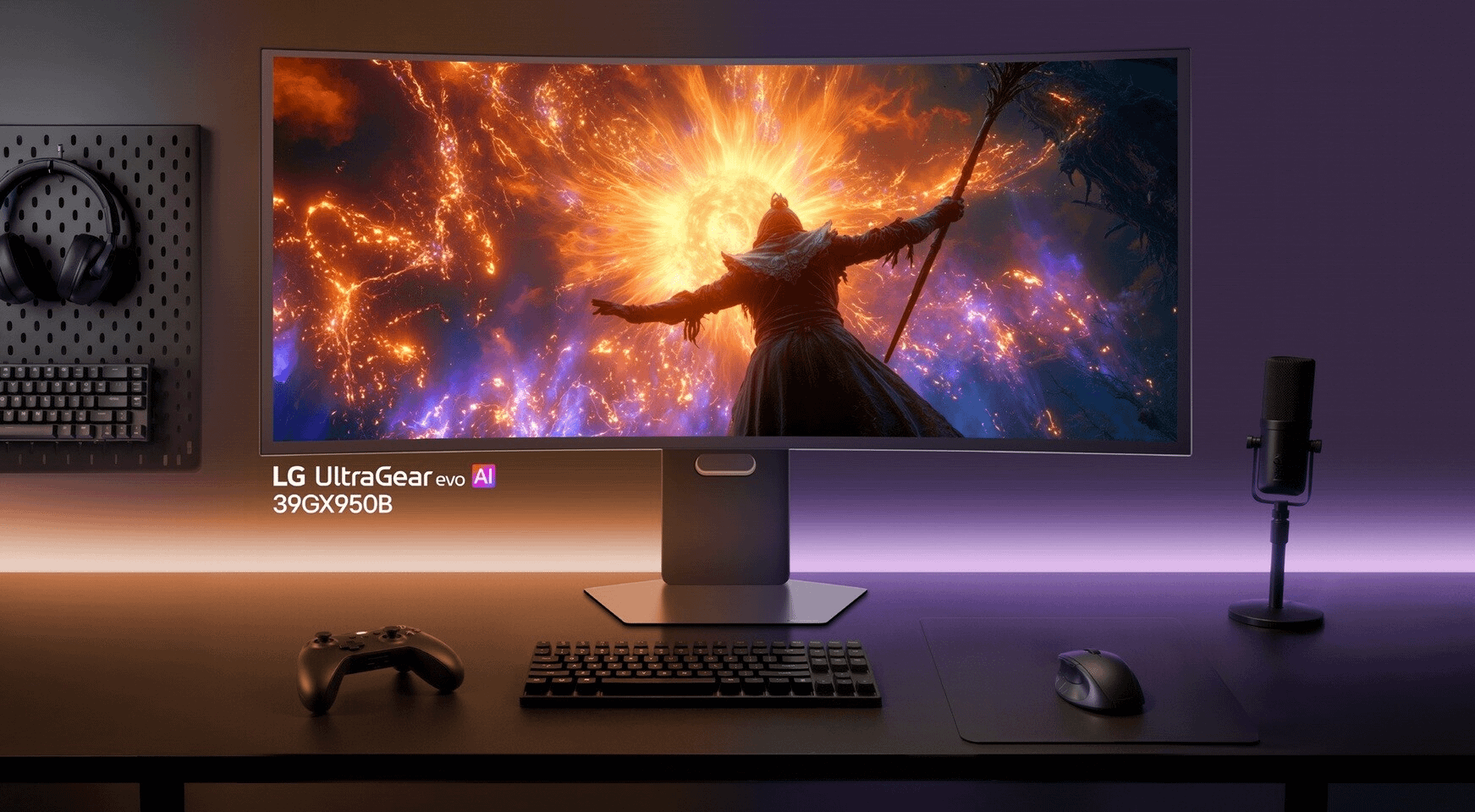
First up is the 39GX950B, which brings OLED and AI together in a 39-inch ultrawide format. It’s a 5K2K resolution display (that’s 5120x2160) with a 21:9 aspect ratio and a 1500R curve—designed to wrap around your field of view without overwhelming your desk. It has the vertical height of a typical 32-inch screen, but stretches wider for more immersive gaming or multitasking.
LG is using what it calls a Primary RGB Tandem OLED panel, which layers blue light sources under separate red and green layers. The goal? Brighter images without giving up on color accuracy or lifespan. The monitor is certified for DisplayHDR True Black 500 and supports up to 165Hz refresh rate at full resolution—or up to 330Hz if you drop the resolution to WFHD (2560x1080). Input lag should be minimal thanks to its 0.03ms (GtG) response time.
But what really stands out is the built-in AI. LG’s using on-device processing to upscale lower-res content to 5K quality, adjust visuals based on what kind of scene you’re playing, and even tweak the audio. The idea is to give you a more polished picture without needing to upgrade your graphics card.
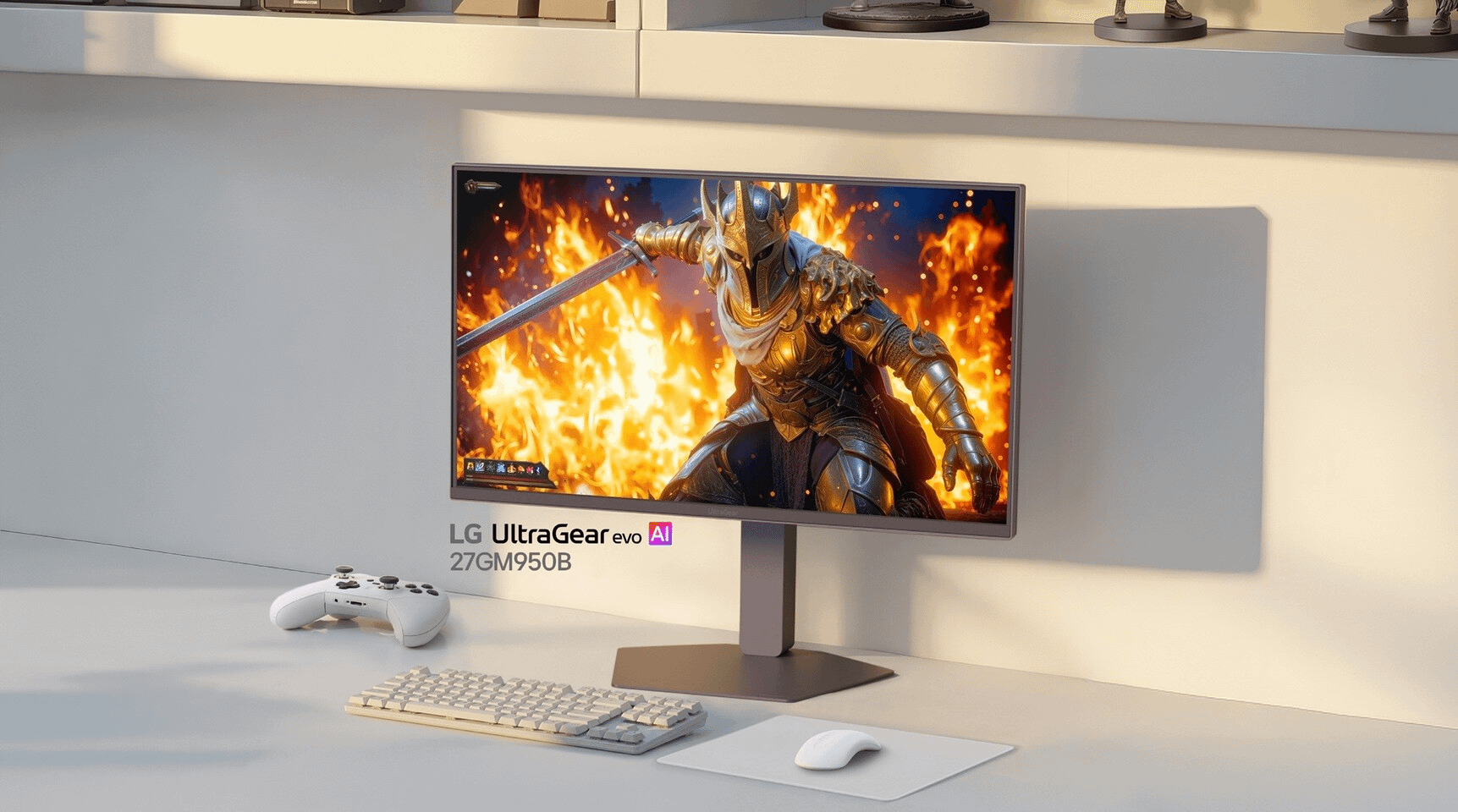
Next is the 27GM950B. This one’s aimed at gamers who want a more traditional screen size but still want high-end specs. It’s the first 5K Mini LED monitor on the market, and LG put a lot of effort into keeping the picture clean and precise.
It has 2,304 local dimming zones—yes, on a 27-inch screen—and uses something LG calls Zero Optical Distance to reduce the gap between the backlight and the LCD panel. This helps cut down on blooming and halo effects that can happen with bright highlights against dark backgrounds.
Like the OLED model, the 27GM950B supports 165Hz at full 5K and 330Hz at QHD (2560x1440). Response time is 1ms (GtG), and brightness can peak at up to 1,250 nits. You also get the same AI features as the 39-inch model, including real-time 5K upscaling, scene-based video tweaks, and adaptive sound.
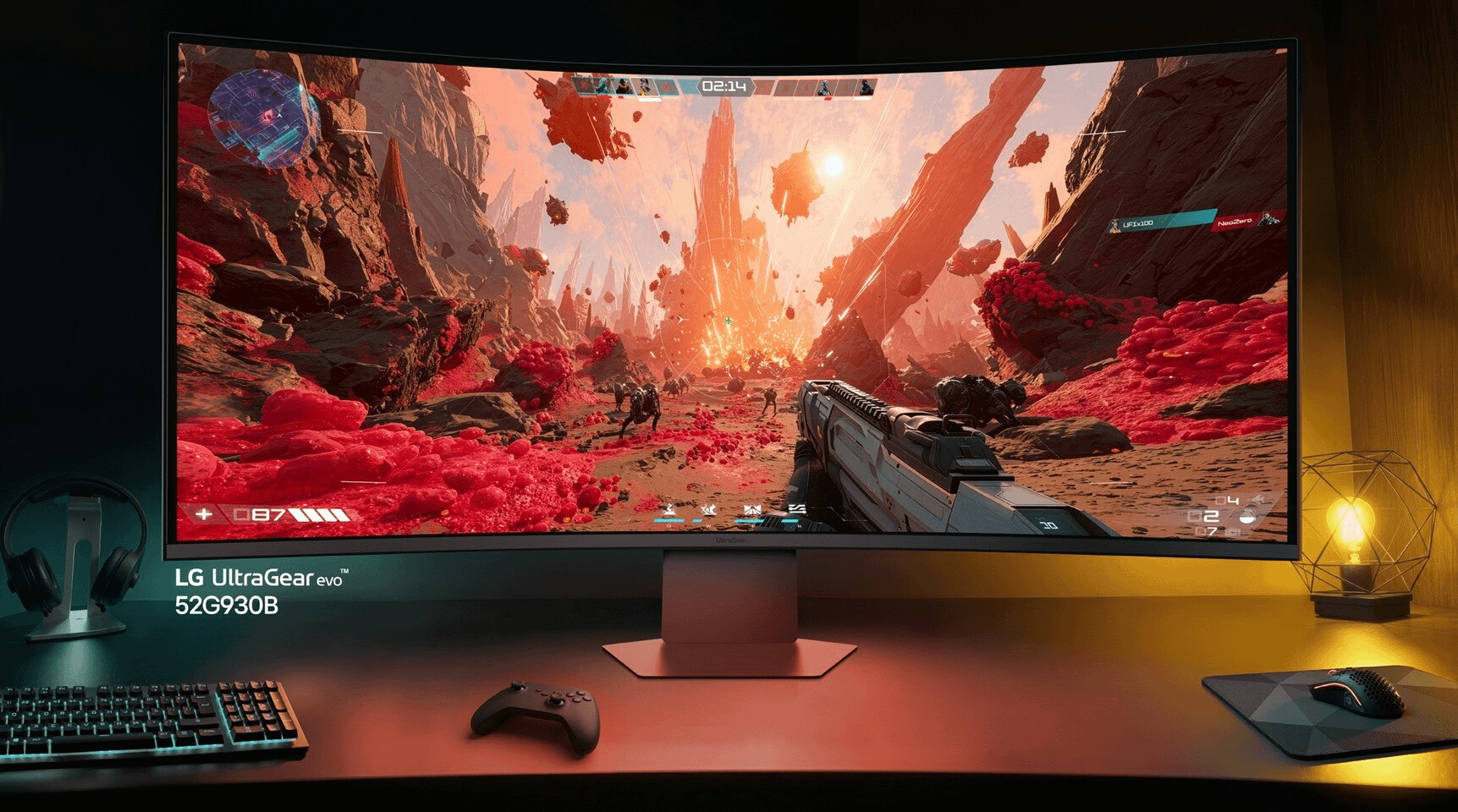
If you’ve ever wished your monitor was the size of a small TV, LG’s new 52G930B might be your kind of thing. It’s the largest of the trio—a 52-inch LCD panel with a 5K2K resolution and a wide 12:9 aspect ratio. That extra width gives you 33% more horizontal space than a standard UHD screen, which could be useful for racing sims, streaming setups, or just juggling multiple windows.
The screen is curved (1000R), so it tries to bring that panoramic view without making you turn your head too much. It’s rated for DisplayHDR 600 and supports a 240Hz refresh rate, though unlike the other two monitors, it doesn’t have Dual Mode or the built-in AI enhancements.
While all three UltraGear evo monitors offer high resolution and fast refresh rates, each one is built with a different kind of gamer in mind. The 27GM950B is the compact, performance-focused option, ideal for competitive players who want sharp MiniLED visuals and low latency. The 39GX950B leans into immersion with its curved OLED panel and AI upscaling features, making it a strong fit for solo gamers who value visual fidelity. Then there’s the 52G930B—a massive display that prioritizes screen space and wide-format flexibility, which could appeal to streamers, sim racers, or multitaskers looking for one monitor to rule them all.
The addition of on-device AI in the 27- and 39-inch models is one of the more unique elements of this launch. These displays can upscale visuals to 5K clarity and adapt both image and sound based on what’s happening onscreen—all without relying on your PC’s graphics card. Whether that actually improves the experience in meaningful ways will depend on the use case, but it’s a notable move toward smarter displays that take more of the workload off your system.
LG plans to showcase all three monitors at CES 2026, with hands-on demos in two themed zones. One is styled after Reddit’s “Dream Setup” aesthetic, while the other will feature a full racing sim powered by the 39GX950B. Pricing and release details haven’t been announced yet, but a global rollout is expected after the show.
Alongside the evo models, LG is also introducing the 27GX790B—a new 27-inch UltraGear monitor that skips the evo branding but still features a QHD Tandem OLED panel and up to 720Hz refresh rate in HD mode. It’ll go on sale during CES and gives gamers yet another option if they’re chasing speed above all else.
With the UltraGear evo launch, LG is clearly trying to segment its gaming monitor lineup into more distinct categories. Whether you care most about fast refresh rates, large screen sizes, or smarter image processing, the variety here suggests LG is aiming to offer something for almost every kind of gamer. CES should give us a better sense of how these features perform in the real world—and whether the AI additions move the needle in a meaningful way.
Related Reading:






Privacy Policy
Terms and Conditions - Affiliate Policy
Home Security
© Copyright 2008-2026.
11816 Inwood Rd #1211, Dallas, TX 75244