

LG Display — the company behind many of the OLED panels in TVs and monitors — is changing the way it talks about its tech. Just ahead of CES 2026, LG Display has introduced a new naming system for its OLED lineup, and it’s more than just a rebrand. It’s also a signal of what’s coming next for TVs, gaming monitors, and even laptops and tablets.
The new names? Tandem WOLED and Tandem OLED. One is for larger screens like TVs and premium monitors, and the other is for smaller devices like tablets, laptops, and in-car displays. But what exactly do these names mean — and should you care? Let’s break it down.
First, what is "Tandem" OLED? The word “Tandem” in this case refers to how the OLED panels are built. Instead of just one layer of OLED pixels, these panels stack multiple layers on top of each other. That layering helps boost things like brightness and lifespan, which is especially important for big screens that are on for hours at a time.
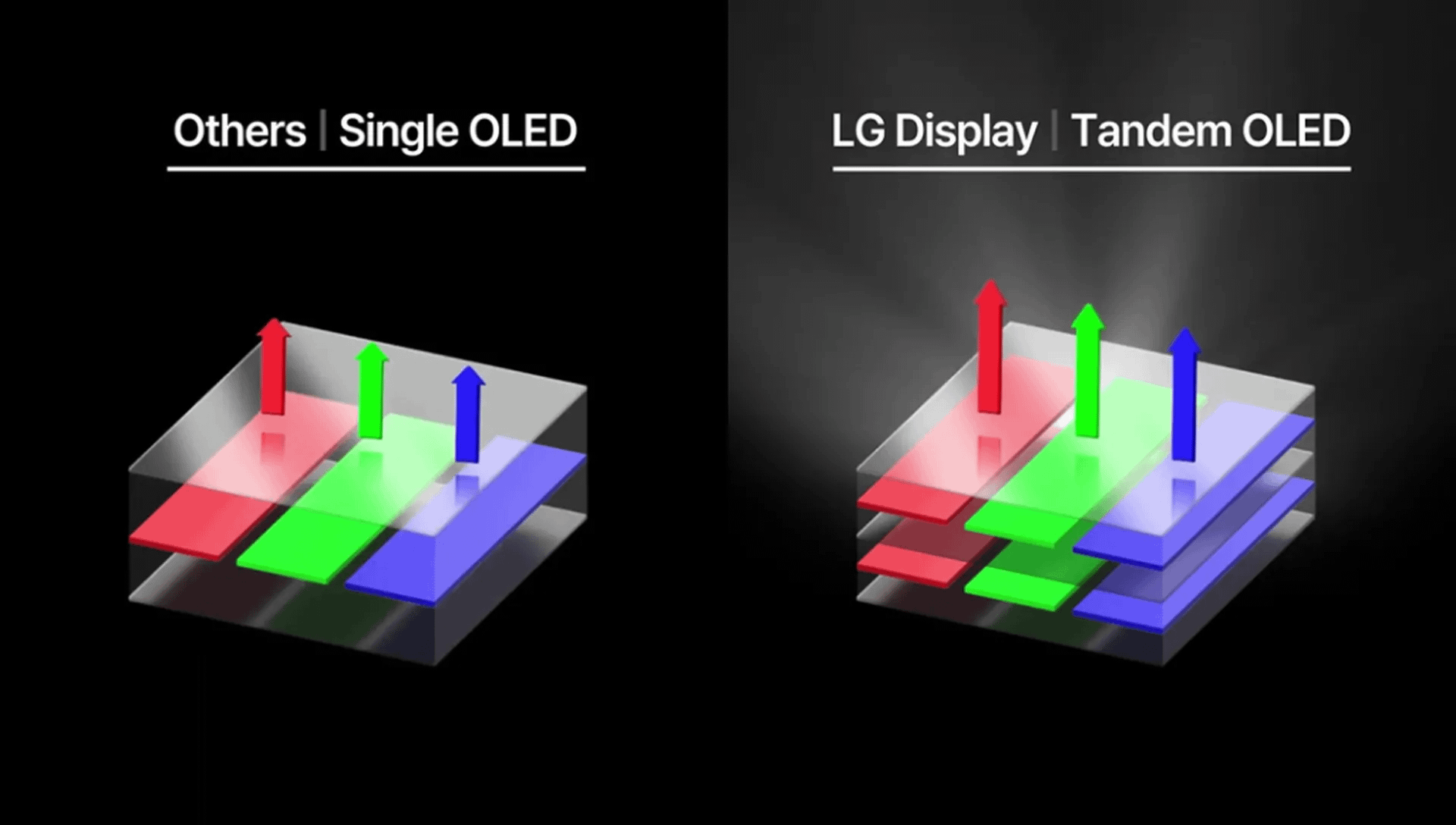
The “WOLED” part means that LG’s panels use a white sub-pixel in addition to red, green, and blue. This white layer helps improve brightness. So, Tandem WOLED panels are the ones you'll find in TVs and gaming monitors, where screen size and brightness really matter. LG Display supplies these panels to a wide range of TV makers, including LG Electronics, Sony, Panasonic, Philips, and others.
On the flip side, Tandem OLED panels are for smaller screens and skip the white layer. Instead, they stack red, green, and blue sub-pixels without the extra white boost. This setup makes the panels thinner and more efficient — great for laptops, tablets, and even car displays. Companies like Apple, Acer, and Asus are expected to use these in upcoming devices.
This is LG Display’s first full OLED branding change in over a decade. Until now, panel names like “OLED EX” and “Primary RGB Tandem” were mostly behind-the-scenes terms. Now, with the Tandem WOLED and Tandem OLED names, the company wants to make it easier for manufacturers — and eventually consumers — to understand what kind of tech is inside.
It’s also a way to make LG’s OLED panels stand out from competing options like Samsung Display’s QD-OLED or TCL’s upcoming RGB OLED panels. While all of these technologies fall under the OLED umbrella, how they create and manage color and light is different — and can affect everything from color accuracy to power use.

Along with the name change, LG Display is teasing new versions of its Tandem WOLED tech. At CES 2026, it plans to showcase something called Primary RGB Tandem 2.0 — the next evolution of the panel tech used in 2025 models like the LG G5 and Panasonic Z95B.
The details are still a bit vague. LG Display’s teaser video claims up to 1,500 nits of peak brightness, but that’s the same level already promised in previous versions. What’s new or improved in the 2.0 update is still unclear, but FlatpanelsHD suggests it may help push brightness even higher than last year’s models — something we’ll likely learn more about at CES.
LG Display also used its teaser video to show off a few new monitor panels aimed at gamers — all under the Tandem WOLED name. These include:
If you’re into fast-paced titles like first-person shooters or esports games, these new panels could be worth keeping an eye on. High refresh rates and fast response times are a big deal in that space.
While the new branding helps clarify LG Display’s lineup, there’s still a lot to learn about how these panels will perform in real-world use. The company is clearly trying to position its Tandem WOLED panels as a strong alternative to Samsung’s QD-OLED and the new RGB OLED panels coming from TCL. At the same time, LG is betting that a simpler naming structure will help consumers (and manufacturers) better understand what makes its panels different.
The Tandem structure — whether it includes the white sub-pixel or not — is designed to improve efficiency, extend panel lifespan, and allow for higher peak brightness. Whether that translates into a noticeably better experience for everyday users remains to be seen.
All eyes will be on CES 2026 in January, where LG Display is expected to go deeper into its plans for Tandem WOLED, Tandem OLED, and the new generation of RGB Tandem 2.0 tech. With more OLED competition than ever, how these panels perform — and how clearly LG communicates the differences — could shape what TVs and monitors we see on shelves next year.
Until then, the big takeaway is this: LG Display’s OLED panels are getting a new name, and that name is meant to reflect how they’re built — and what they’re built for.
Related Reading:




Privacy Policy
Terms and Conditions - Affiliate Policy
Home Security
© Copyright 2008-2026.
11816 Inwood Rd #1211, Dallas, TX 75244

