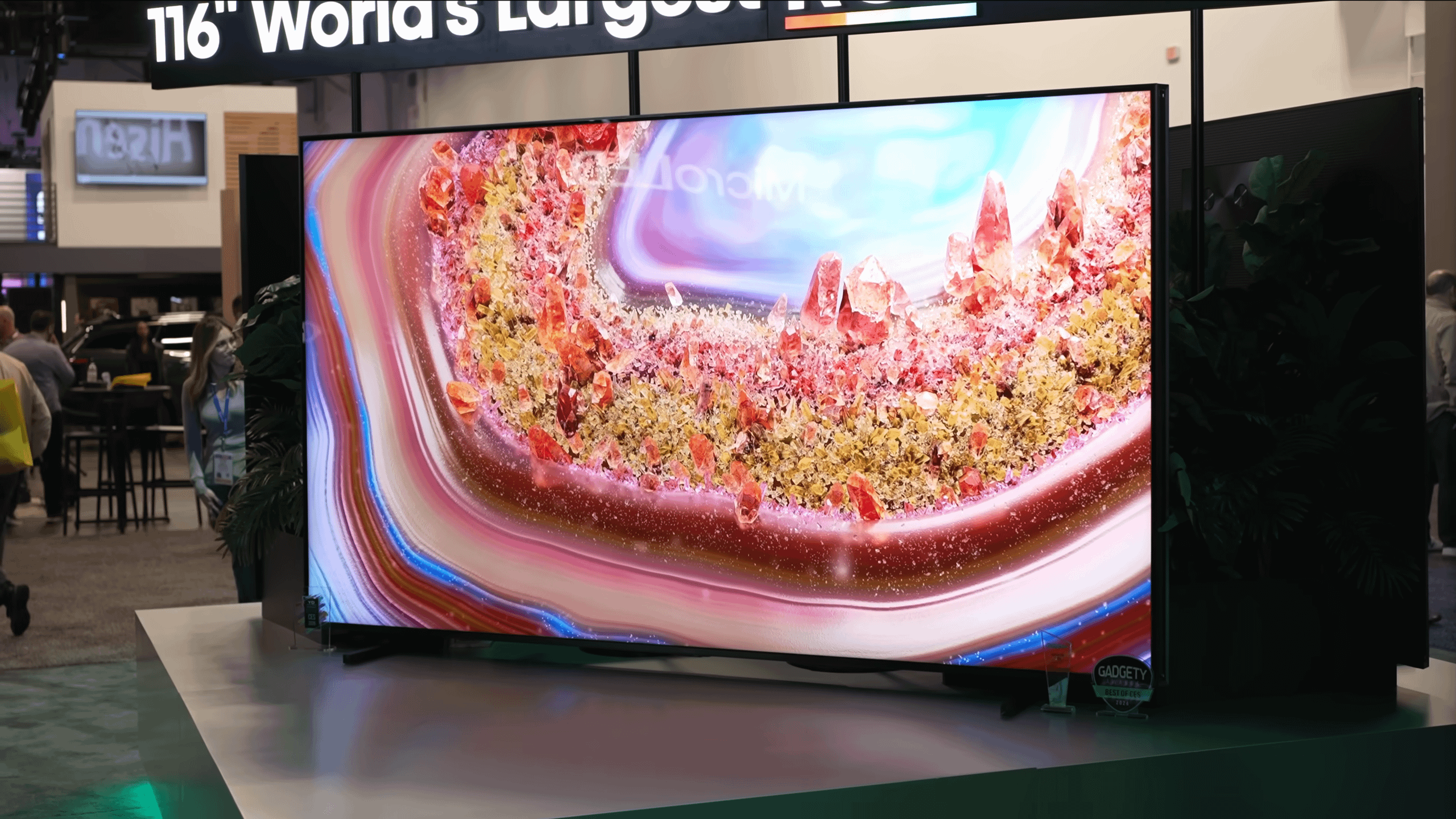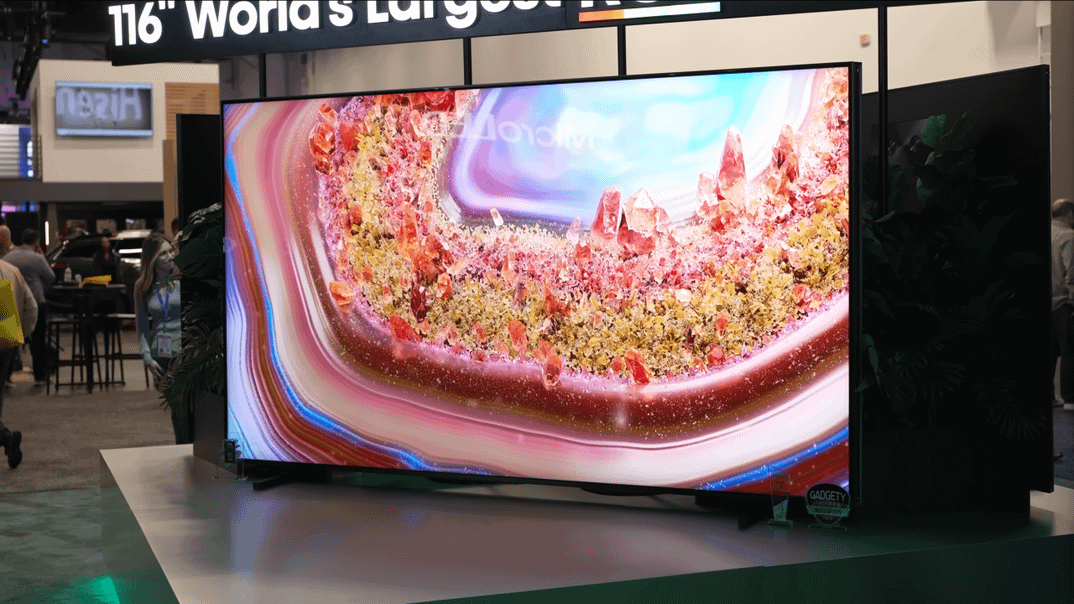
At CES 2026, I walked into Hisense’s booth expecting to see the usual incremental upgrades - more brightness, more zones, maybe a refined version of last year’s RGB Mini-LED. What I didn’t expect was to walk out seriously questioning whether OLED would be able to catch to MIni LED up in terms of color.
The TV that really got me thinking about this was the Hisense 116UXS, a massive 116 inch flagship built around what Hisense calls RGB Mini LED Evo, their second-generation RGB backlight system. But this year, it isn’t just RGB.
It’s RGBC.
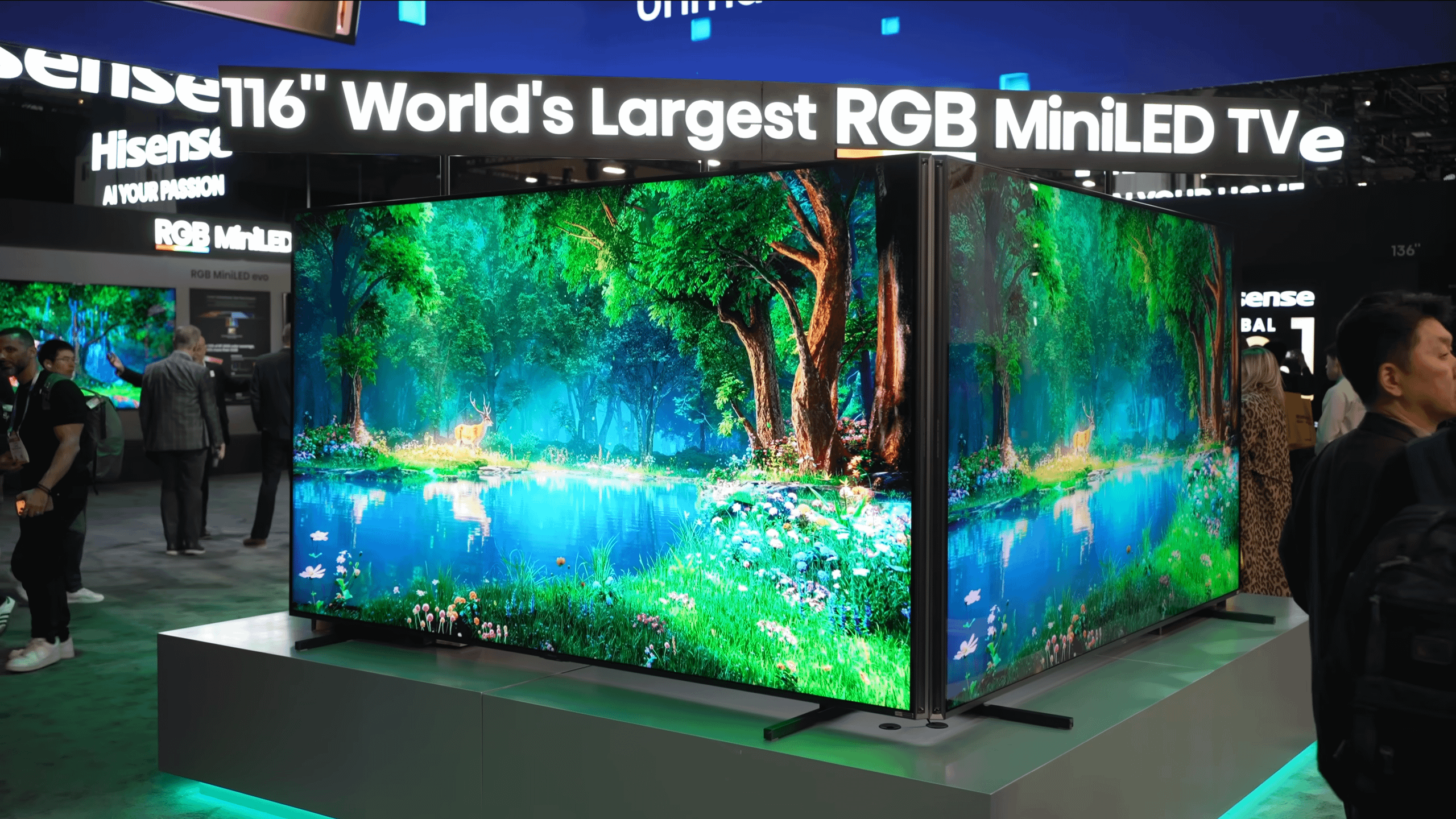
And that single added letter — cyan — is the entire story.
Late last year, Hisense moved away from traditional white or blue LED backlights and began using individual red, green, and blue LEDs in their 116UX. In theory, this shift should eliminate the need for a quantum dot layer and allow the LEDs themselves to generate more precise and deeper color.
This year, they’ve added a fourth color to the backlight: sky blue cyan.
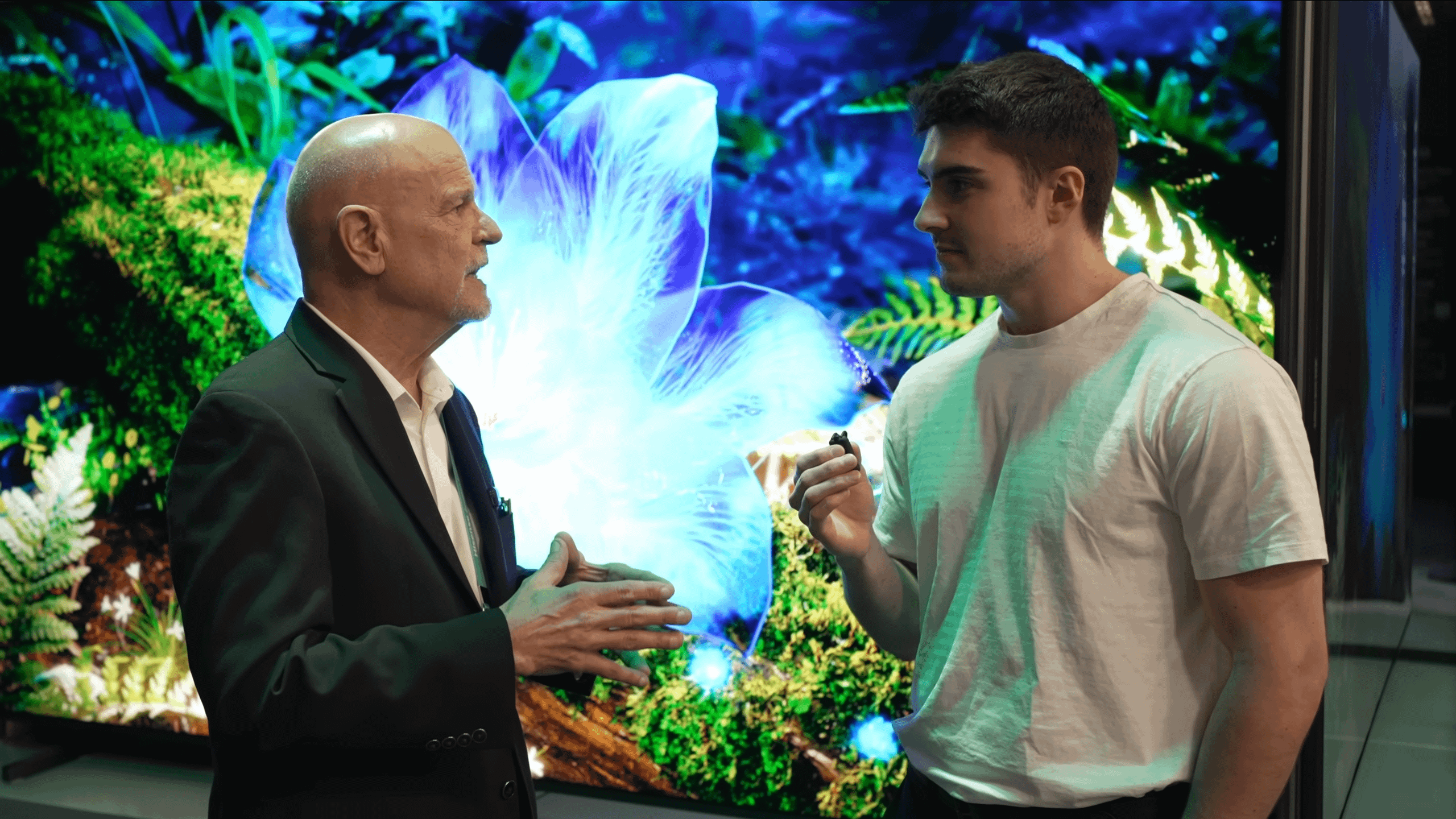
When I spoke directly with Bruce Fairchild, a product specialist at Hisense, he explained that the purpose of adding cyan is to broaden the spectrum between blue and green. In traditional RGB systems, that region can require blending, which limits precision. By inserting a native cyan emitter, they can improve gradation and color saturation across that part of the spectrum.
The practical goal?
And according to Bruce, it enables something even more ambitious: exceeding 100% BT.2020 coverage. This is something that no OLED has been able to achieve,
Specifically, he confirmed that RGB Mini LED Evo can expand beyond the BT.2020 frame because of the fourth color, pushing into roughly 110% BT.2020 coverage.
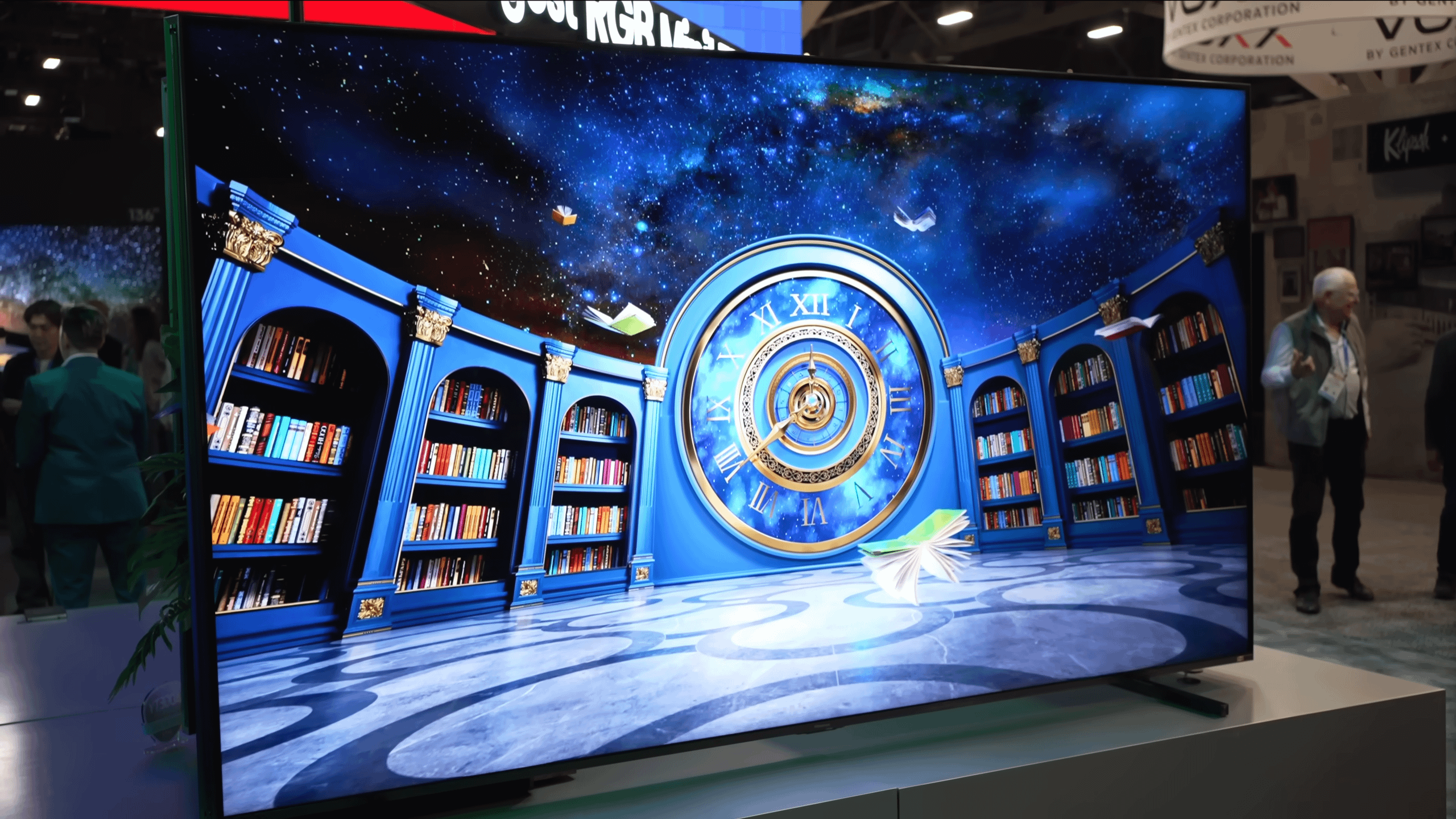
That’s a bold claim. And I’ll be measuring that carefully when I review it. Coverage numbers can vary depending on luminance thresholds and methodology. But architecturally, the reasoning makes sense: expanding spectral emission in the cyan region can physically widen the achievable color space.
If that holds in real-world testing, it’s one of the most aggressive pushes we’ve seen from LCD technology.
Of course, adding another LED doesn’t automatically make a TV better, It makes it more complex.
The 116UXS isn’t just dimming brightness like a traditional Mini LED system. Hisense says they are synchronizing both color dimming and brightness dimming simultaneously across each individual LED using their upgraded High-View AI Engine RGB Gen 2 processor.
Bruce made an interesting point about zone counts. While the TV still uses tens of thousands of zones — roughly similar to first generation — he emphasized that we can’t think about zones in the traditional way anymore. It’s not just light going up or down. They can control hue, saturation, and brightness.
That increases algorithmic complexity significantly, and now each indivudual R, G, & B needs its own control.
If it works, we could see less noticeable blooming on saturated objects, more stable color at high brightness, and improved HDR color volume. If it doesn’t, the added complexity could introduce instability or inconsistencies in challenging scenes.
This is where Mini LED either narrows the gap with OLED — or proves the gap still exists.
Another key upgrade is refresh rate.
RGB Mini LED Evo supports 4K at 180Hz natively, including 180Hz in Game Mode. If you drop to 1080p, it can reach 330Hz.
On a 116-inch panel, motion artifacts can appear amplified to some. Hisense says they’ve improved processing power this year, not just for color control but also for motion performance and color cross-talk reduction.
That processing upgrade is essential. When you’re controlling four backlight colors instead of one — or even three — the computational demand rises dramatically. Bruce specifically noted how much processing power is required to manage four-color backlights and, separately, MicroLED sub-pixels.
If the motion improvements are real, this could be one of the most compelling ultra-large high-refresh displays available, assuming the panel and backlight can keep up, though of course it still won't hold a candle to OLED motion.
One benefit of adding cyan that surprised me was the claim of reduced harmful blue light emissions — up to 80% compared to other technologies.
The reasoning is straightforward: because cyan fills part of the spectrum that traditional blue LEDs strain to cover, the system doesn’t have to push blue as hard. That can reduce disruptive blue light while maintaining accurate blues across the full spectrum.
For people watching very large displays for long periods, especially at night, that could be a meaningful advantage if this proves true in practice.
Of course, OLED still holds a massive advantage in per-pixel contrast. That’s where MicroLED enters the conversation.
Hisense also showed the 163MX, a 163-inch 4K MicroLED display. MicroLED offers infinite contrast similar to OLED but without burn-in risk due to its inorganic light source.
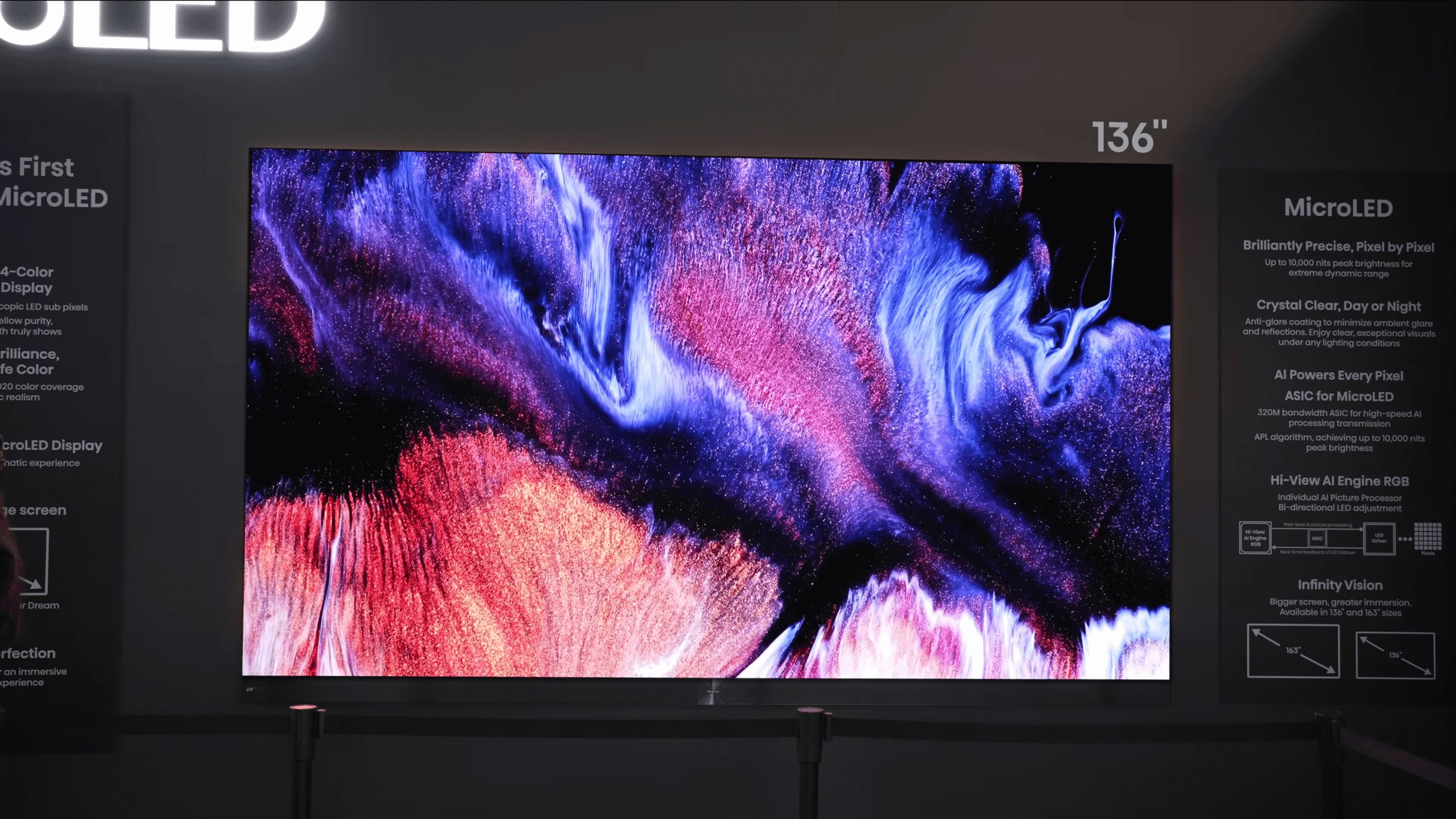
Interestingly, on MicroLED, they aren’t adding cyan — they’re adding yellow.
Instead of RGB, the 163MX uses RGBY, adding a true yellow subpixel. Bruce explained that yellow is perceived as a very bright color by the human eye, but traditional RGB systems synthesize yellow by mixing red and green, which limits gradation. With a dedicated yellow emitter, MicroLED can improve mid-tone richness, particularly in sunsets, golds, and warm tones.
That jump increases the subpixel count from roughly 28 million to over 33 million at 4K resolution.
It’s technically fascinating — but also far from affordable. When I asked about bringing MicroLED under $10,000 or below 100 inches in a single panel, the answer was clear: that’s the ultimate goal, but not anytime soon.
Which brings us back to the 116UXS.
That’s the real question.
OLED still dominates in perfect black levels, per-pixel contrast, and motion. MicroLED represents the theoretical endgame. But Mini LED has been closing the gap year after year through increased brightness and more zones.
The 116UXS is different because it’s not just increasing zone counts or peak nits. It’s expanding the spectral foundation of the backlight itself.
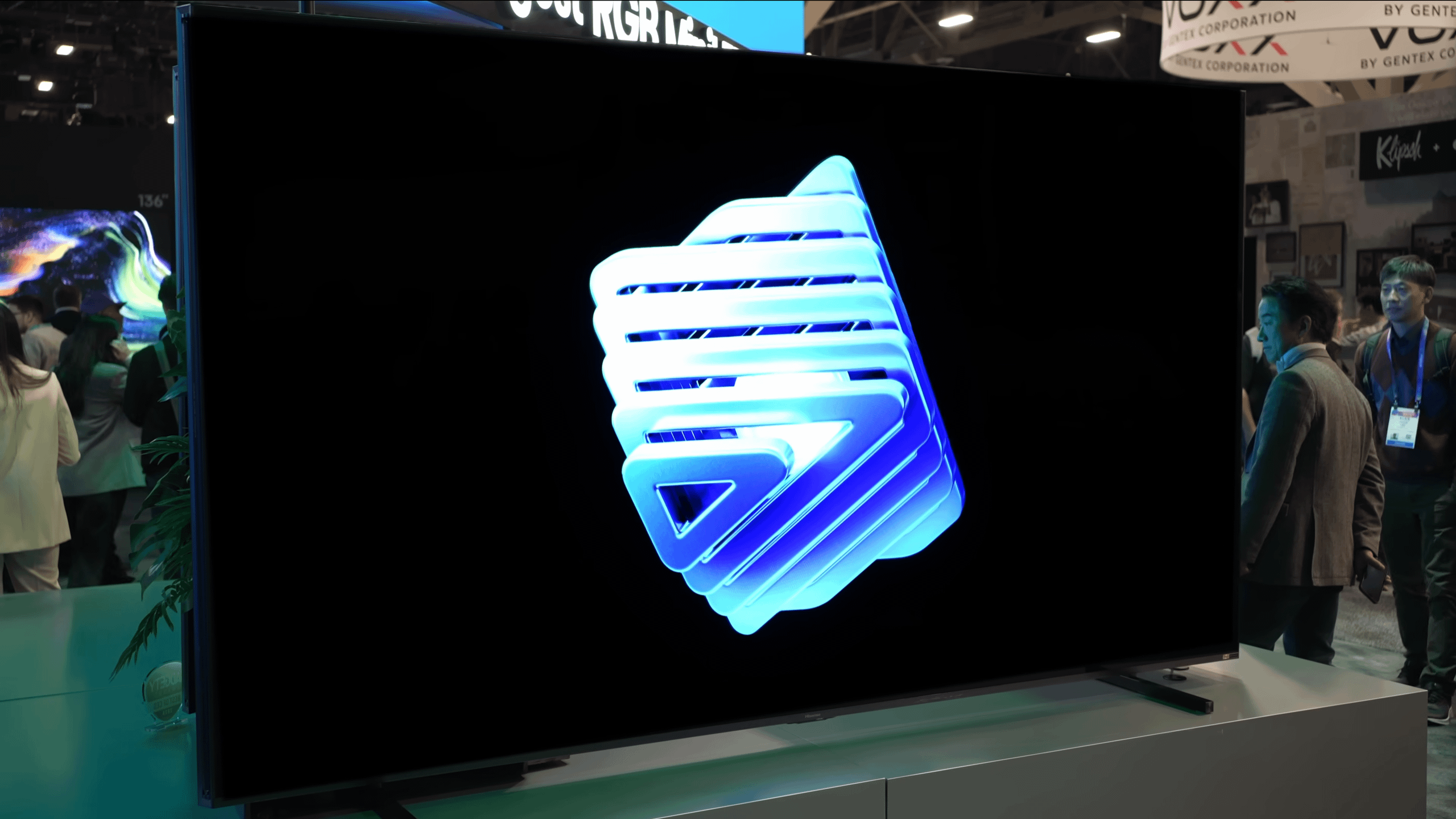
By adding cyan and synchronizing color and brightness dimming at the LED level, Hisense is attempting to attack OLED’s advantage in color precision and HDR impact — without sacrificing brightness.
Whether it succeeds will come down to real-world testing: does it maintain color saturation under high brightness, does blooming stay controlled, does the system avoid reverting to broad-spectrum fallback in difficult scenes, and does motion remain clean at 180Hz?
Right now, these are first impressions. On the show floor, it looked extremely promising.
But the meters & hands on time will decide whether this is the year Mini LED truly challenges OLED — or just another ambitious step forward.
Either way, the 116UXS is one of the most technically interesting TVs of 2026. And it’s absolutely one I’ll be putting through a full review later this year.



Privacy Policy
Terms and Conditions - Affiliate Policy
Home Security
© Copyright 2008-2026.
11816 Inwood Rd #1211, Dallas, TX 75244