

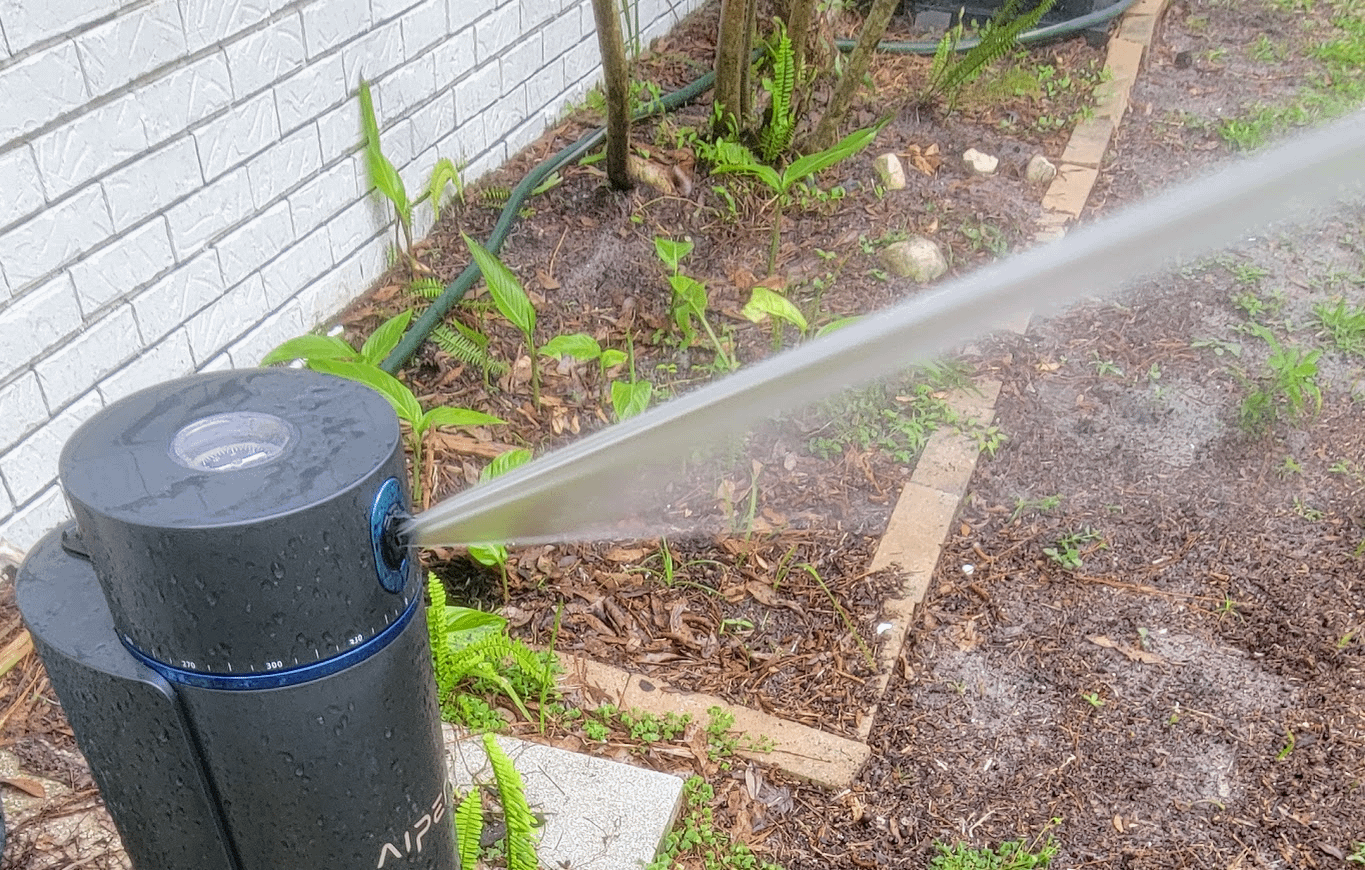

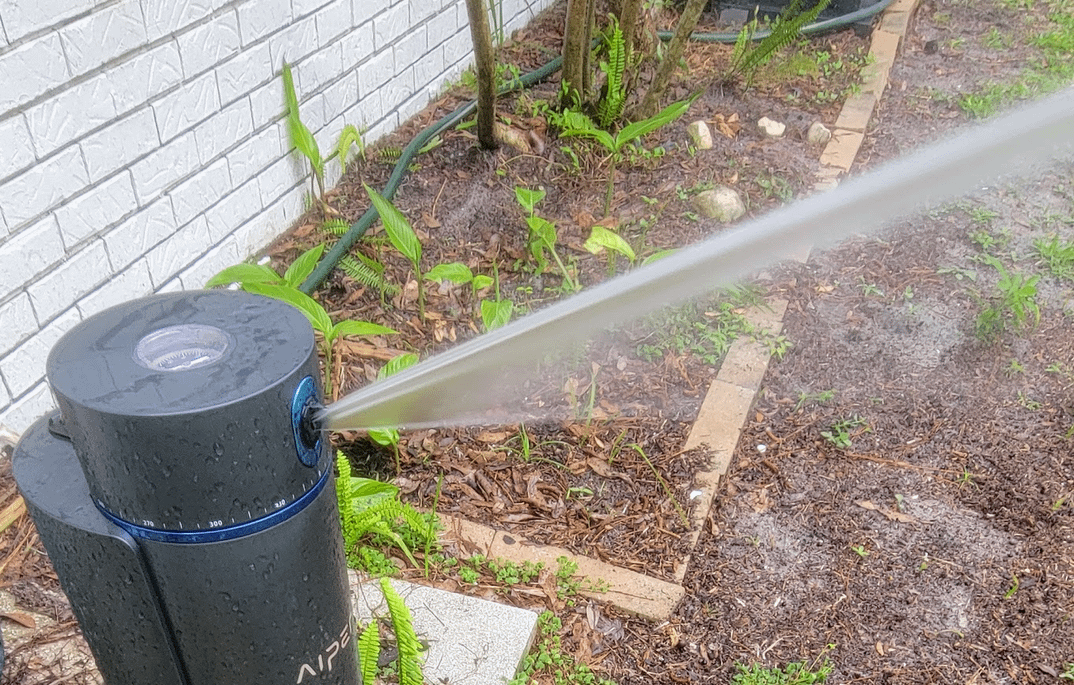
Tested March/April 2026
I almost didn't want to review this. A smart sprinkler felt like a solution looking for a problem I didn't have. I live in Central Florida, my yard is covered by a professionally installed in-ground system with multiple zones, and when that isn't quite enough, the afternoon thunderstorm fills the rest. What exactly was a portable above-ground device going to do for me? Then I spent ten minutes walking my sideyard, looked at the patchy corner that my in-ground system has never quite reached, and put in the order.
Two weeks later, the price, currently on sale for $469, looks very different to me than it did on the product page. Stack it against a $50 oscillating sprinkler on a timer and it's expensive. Stack it against redesigning a section of in-ground irrigation, or installing a system from scratch, and the conversation changes entirely. That's the comparison that matters, and it's what this review is really about.
The device is the Aiper IrriSense 2, a Wi-Fi and Bluetooth connected smart irrigation system from Aiper, a company better known for its cordless robotic pool cleaners. It runs off a standard garden hose and an outdoor outlet, maps custom watering zones through a companion app, and handles scheduling, weather response, and even soil nutrition automatically. What it doesn't require is a shovel, a contractor, or buried pipe.
My sideyard has a problem I'd been ignoring for two years. There's a corner of the property that's home to a wooden playset, a sandbox, a picnic table, and three palm trees. The layout is irregular. The obstacles are scattered at odd angles. My in-ground sprinkler system, designed when the yard was open lawn, treats that whole zone as a single arc of coverage. The result is that the grass near the playset gets patchy in dry stretches, the soil around the sandbox compacts faster than it should, and the area closest to the palm trees stays chronically dry.
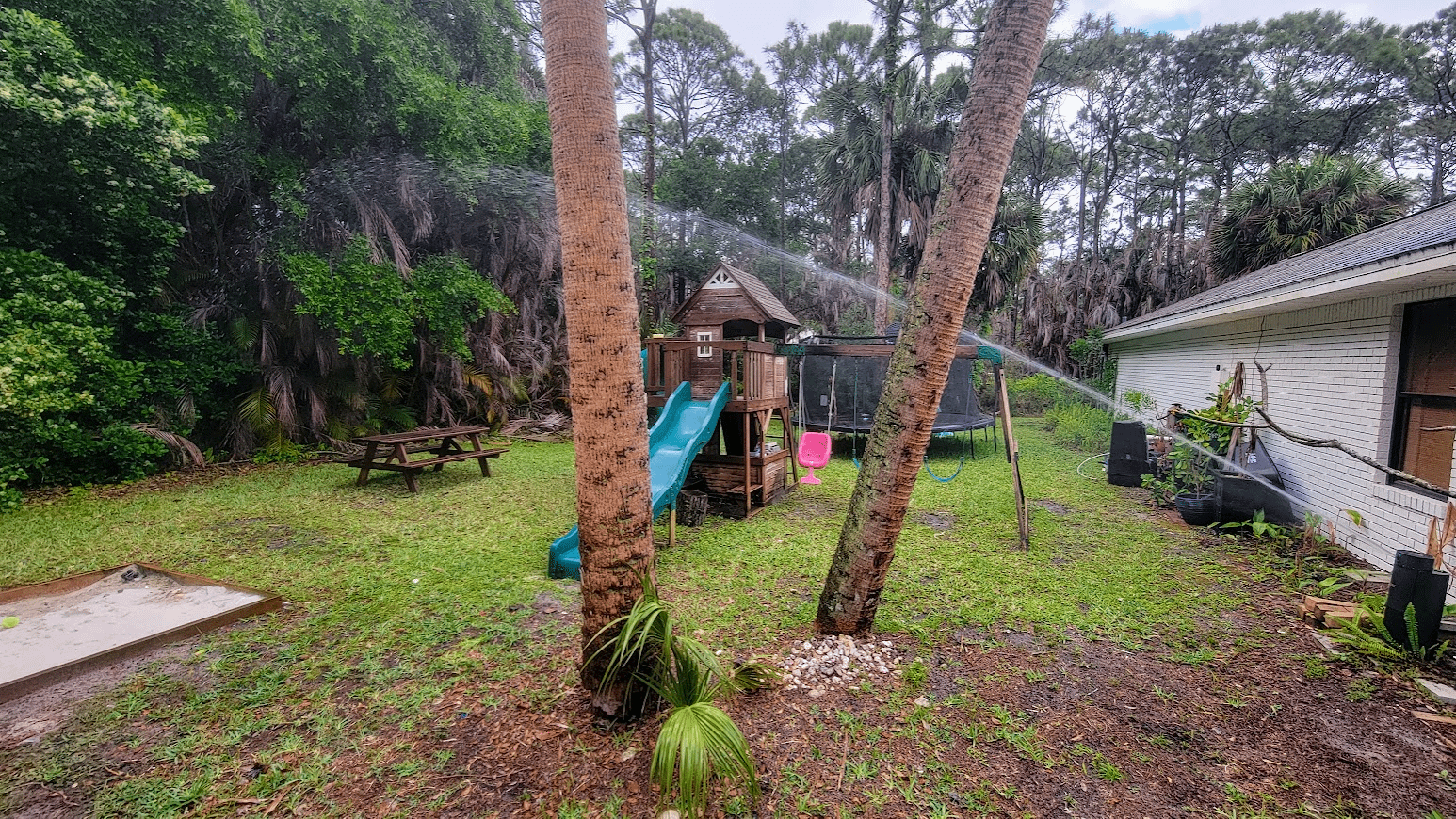
The logical fix would be to redesign that irrigation zone. Add a couple of heads, reroute the pipe, get a contractor out. The problem is that the playset isn't permanent. Neither is the picnic table. They'll move, and the needs of that corner will change with them. Burying pipe and placing fixed heads for a configuration that might look completely different in two years felt like the wrong move.
That's what made the IrriSense 2 interesting to me in the first place. A smart irrigation device that could handle precision zone mapping from a portable, above-ground unit sounded like it might actually match the problem I was dealing with. What I expected was a glorified timed sprinkler. What I got was something closer to a programmable irrigation system that happens to run off a garden hose.
The IrriSense 2 is bigger than I expected. When the box arrived and I pulled out the unit, my first thought was that this is a real piece of hardware, not the compact little gadget I had pictured. It stands about 23 inches tall on its base, and that height is actually part of the design logic. Getting the spray head elevated above ground cover, low plants, and lawn obstacles means the water can travel farther and arc over things that would block a ground-level nozzle.
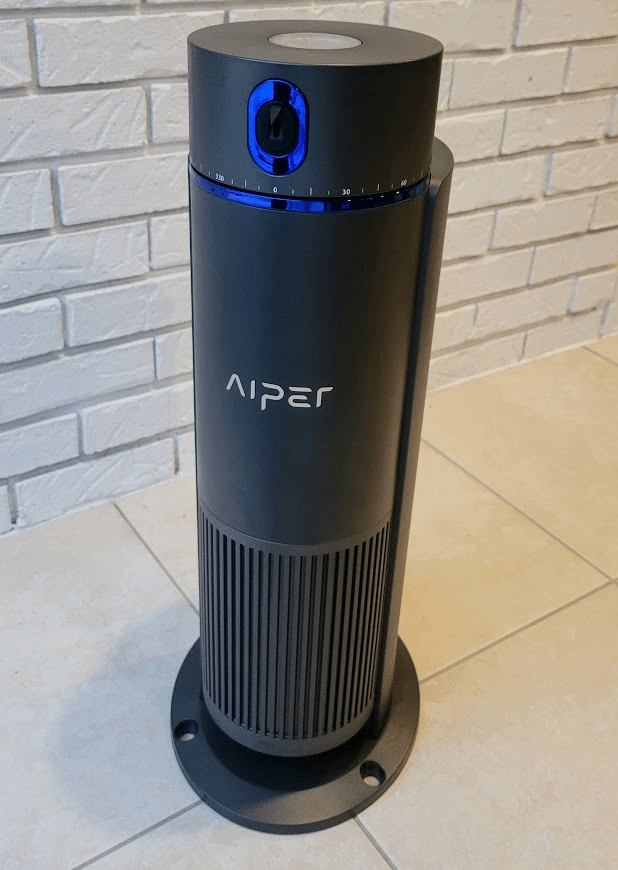
The build quality is solid. The housing feels weather-rated and durable. The rotating rotor head sits on top and has a clean mechanical feel when it moves. The hose connection at the base accepts standard 5/8-inch or 3/4-inch garden hoses, and the power cord runs 33 feet to a standard outdoor outlet.
Before I go any further: use a quality garden hose. This is not a device you hook up with whatever 25-foot green hose has been coiled in your garage for five years. The IrriSense 2 maintains continuous water pressure during operation, and a worn or cheap hose can fail under that kind of sustained load. Invest in a hose rated for continuous use. You're putting a $469 device on top of it; the hose is not the place to cut corners.
It is also worth knowing about the power setup before you finalize your placement. It includes a DC adapter brick that converts the household current, and from there a long section of low-voltage cable runs out to the unit. The adapter brick is weatherized, but I'd still keep the 120V section protected. Use the mounting tabs and attach it to the side of your house if you can. The low-voltage cable from the adapter to the unit is a less critical concern, but keep it clear of foot traffic and lawn equipment.
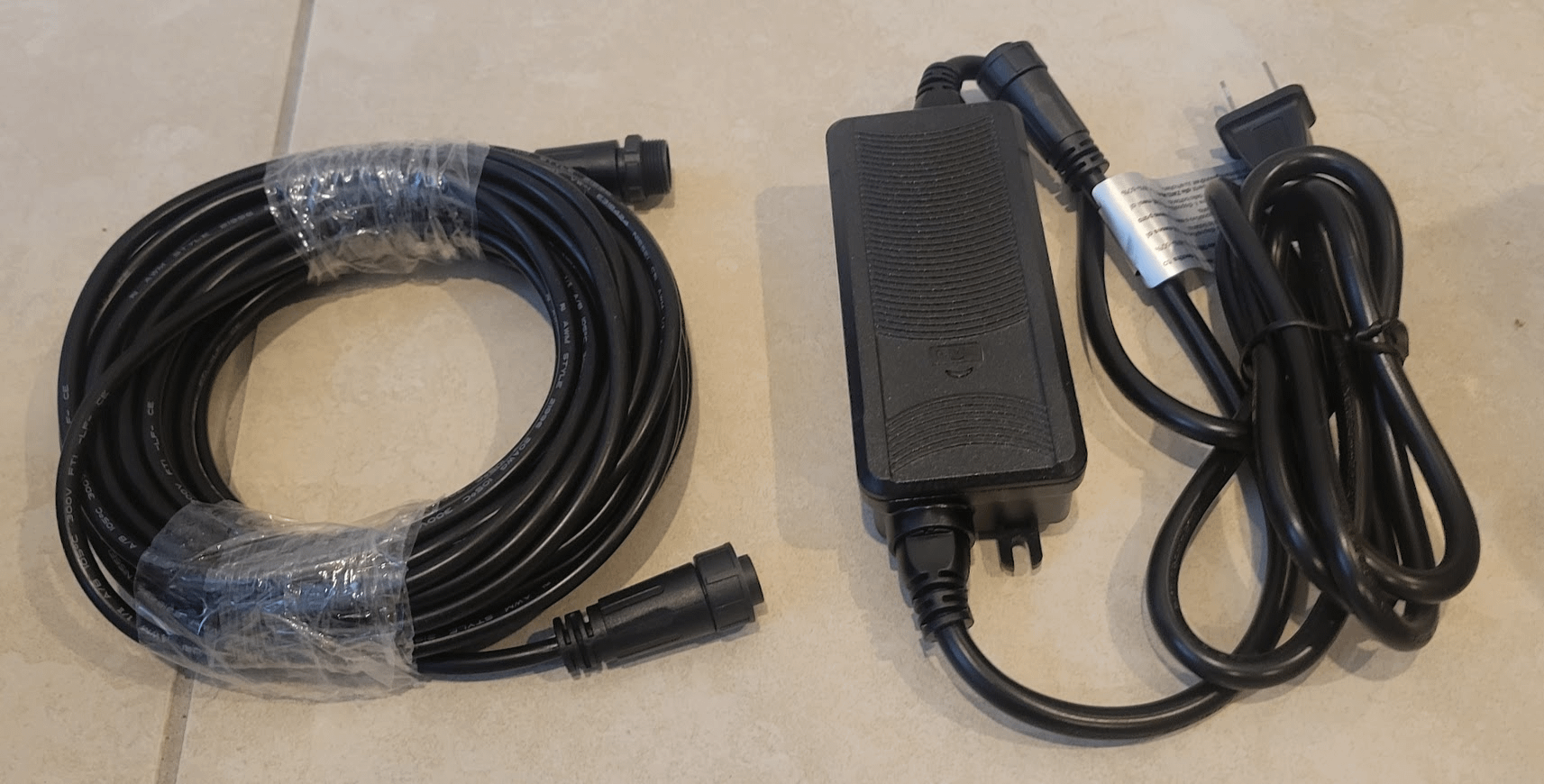
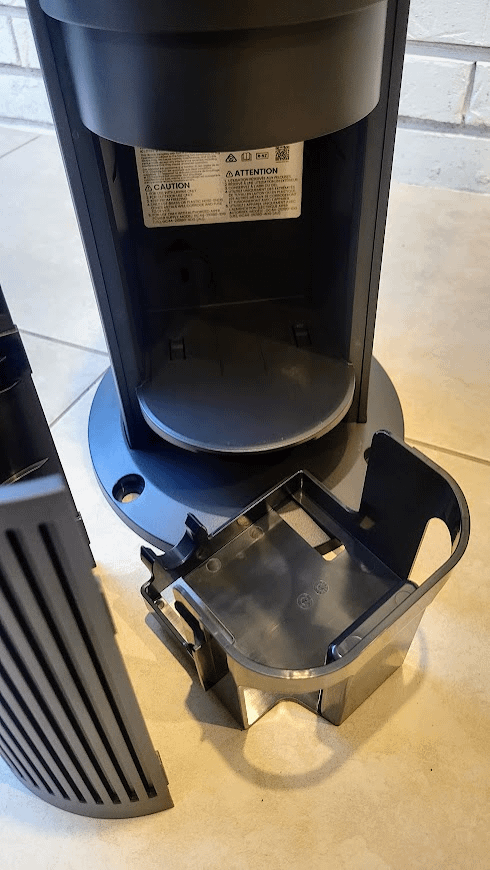
Between the power cord length and your available hose run, your placement options are pretty well defined. I positioned the unit near the center of my problem zone, which gave me roughly equal reach in every direction. With the 33-foot cord, I had to think carefully about where the nearest outdoor outlet was, but I happened to have one close enough already.
The US version also includes an integrated nutrient feeder chamber. You load it with Aiper's SoilPulse Microbial Organic Soil Amendment, a liquid soil treatment, and the device automatically disperses it during watering cycles. It's not a fertilizer, Aiper says it is a microbial and organic formula that strengthens soil and roots for deeper growth, healthier grass, and natural resistance to pests. Up to 3200 sq ft per carton, and they recommend 4 times a year of treatment. I didn't have this on hand, so I can't say much about the results, but it looks promising is produced in the US and is certified by WSDA to be non-toxic, non-hazardous formula safe for people, pets, and the environment.
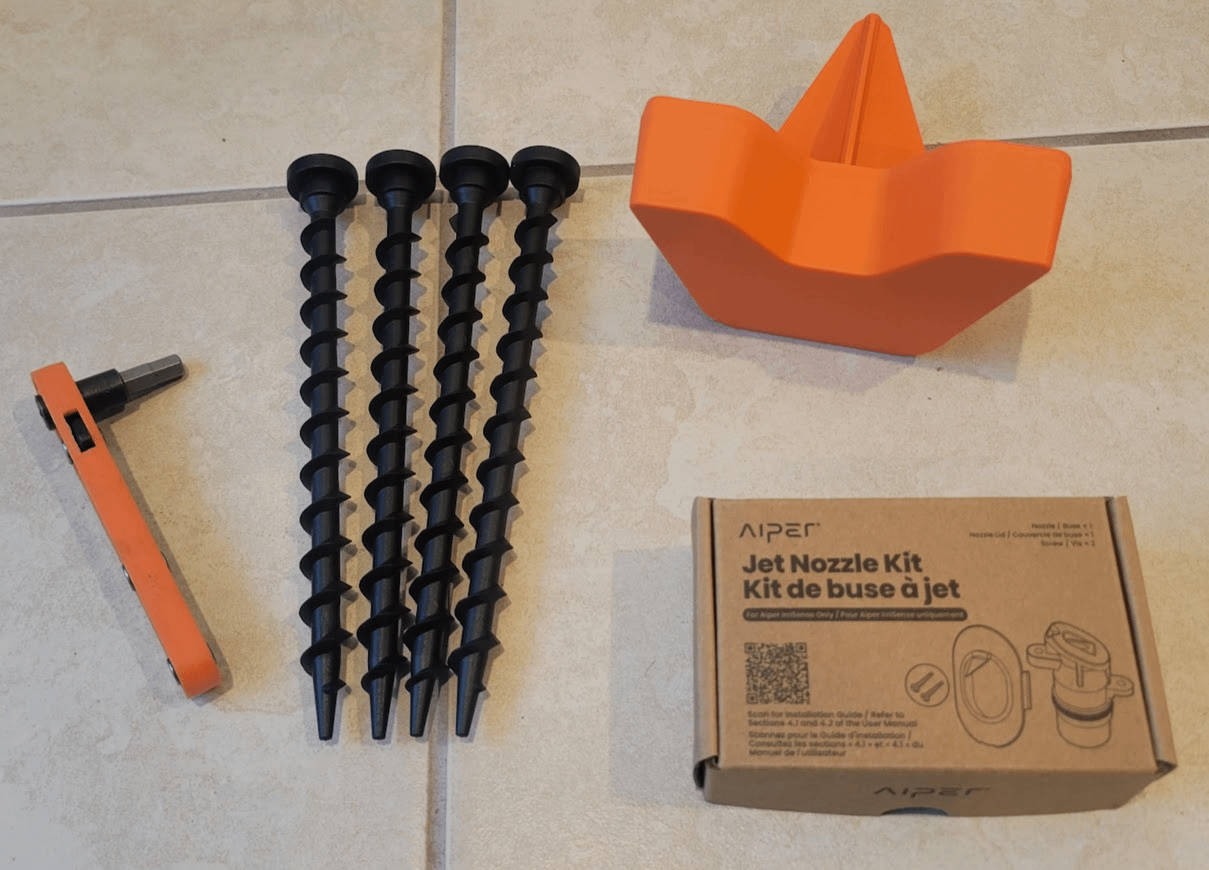
Aiper claims a 15-minute setup, and that's roughly accurate. Screw the hose onto the base, plug in the power cord, download the app, connect to your home Wi-Fi, and you're in business. The physical setup is genuinely simple, hook up the hose and grab the lawn screws and the included ratcheting allen wrench to secure it in place. I simply set mine on a 12x12 concrete paver I had laying around and had no issues with stability.
There was one small snag during the firmware update. The update ran normally and reached 100%, but the app never displayed a completion message. The screen just sat there. If you hit this, don't panic: check the indicator light on the unit itself. Mine was showing a solid green, which I think means the update had completed successfully. I gave it three or four minutes, restarted the app, and everything picked up right where it should have.
This is where the IrriSense 2 starts to separate itself from everything else in this category.
The companion app, available on iOS and Android, gives you a joystick interface to manually control the spray direction in real time. Before I started mapping anything, I ran a quick manual test. My 7-year-old son immediately commandeered the phone and spent several minutes steering the water stream around the yard like it was a video game. That was a good sign, both for the fun factor and for what it revealed about the device: the spray was landing 45 feet from the unit with no trouble.
The spec sheet says maximum range is 39 feet, contingent on water pressure. With solid municipal pressure, I was consistently hitting the far edge of my yard, which measured just over 43 feet from where I'd placed the unit. I want to be clear that this isn't guaranteed performance; it reflects my specific setup. Users on well water or with low flow rates may find the effective range shorter than advertised. But I will say this: the spray traveled noticeably farther than what I get from handheld nozzles attached to the same hose. The device appears to have an internally optimized flow path that maintains pressure more efficiently from the hose connection to the nozzle than a standard handheld attachment does. If you do happen to have lower pressure, Aiper includes a jet nozzle that will increase your range, albeit with a lower flow rate.
For zone mapping, you use the app joystick to trace the outline of the area you want to water. The process is intuitive: steer the spray to each corner or edge of your zone, drop a point, and work your way around the perimeter. The app offers Area, Line, and Point mapping modes to accommodate different shapes and coverage goals, and you can create up to 10 independent zones.
My zone has some crazy geometry. I traced a path that zagged around the base of the slide, zigged back around to the other side of the slide, moved in and around the sandbox, and swept the semicircle along the driveway edge. The whole thing took about 10 minutes and felt more like drawing a map than programming a device.
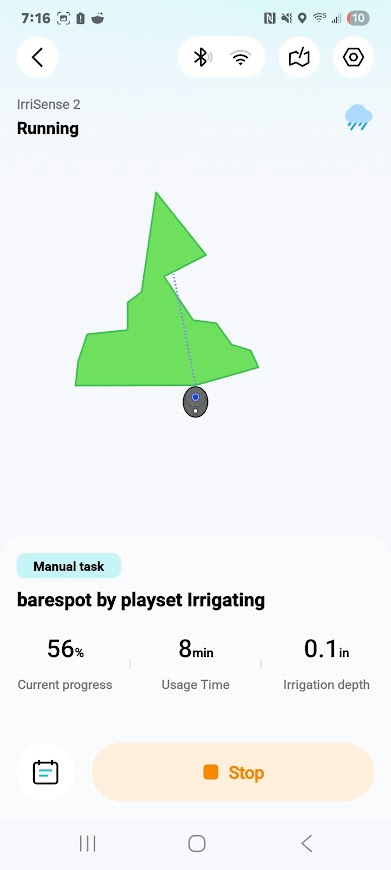
After mapping, the app automatically prompts you to set a schedule. Weekly, biweekly, and monthly repeat options make this straightforward. I set a schedule, triggered a manual run, and watched the spray trace my mapped path exactly, repeating the loop. That moment, watching a device follow a custom path I'd drawn minutes earlier, is when I started thinking this was something different.
The IrriSense 2 has built-in rain detection hardware that pauses watering during active rainfall. It also pulls local forecast data to adjust future schedules automatically, skipping a run before a predicted storm and extending watering during a heat event. The rain sensor is built directly into the top of the unit, so there's no additional hardware to buy or install.
Watering restrictions are more common and more complicated than most people realize, and this is where smart scheduling earns its keep. Across the Southwest, states like California, Arizona, and Nevada have had permanent irrigation limits for years. Here in Florida, the Southwest Florida Water Management District maintains a year-round twice-per-week baseline across the Tampa Bay region and surrounding counties, and right now that baseline is much tighter. The District declared a Modified Phase III Extreme Water Shortage in late March 2026, cutting residents to one watering day per week, overnight only, with daytime watering banned entirely. Those rules run through at least July 1, 2026, and several counties are now issuing citations without a warning for first-time violations. When the rules change again, adjusting the IrriSense 2 schedule takes two minutes in the app. No reprogramming a physical timer, no guessing which window is still legal this week.
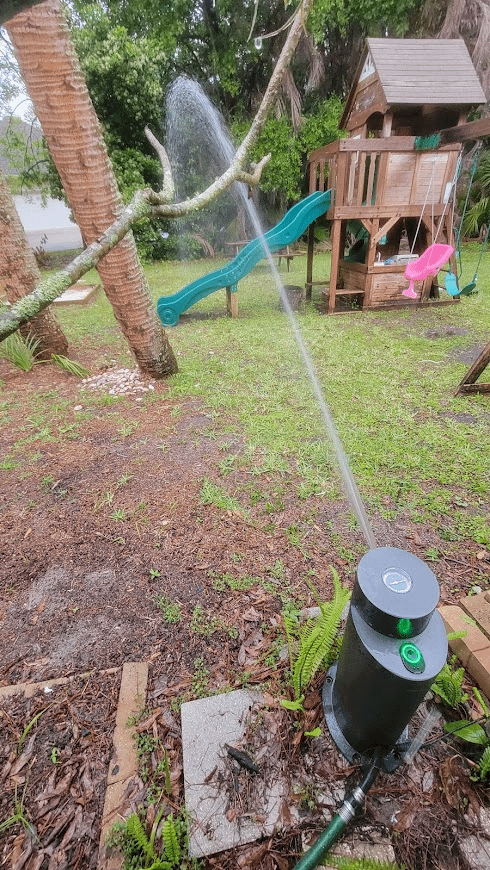
After watching a few full cycles, I started paying attention to how the water actually distributed across the mapped area. This is also where Aiper's EvenRain technology enters the picture, so it's worth talking about what the device is designed to do and what I actually observed at the same time.
EvenRain is Aiper's TÜV-certified delivery system, designed to simulate gentle, natural rainfall rather than blasting water in a hard, direct stream. The practical effect is that soil absorbs the water more completely and surface runoff is reduced. For anyone with sandy Florida soil, which drains fast and compacts under heavy spray, this matters. Water that soaks in stays in the root zone. Water that runs off is just wasted.
The spray diverter on the unit creates a curtain effect, which is intended to cover the intermediate range between the unit and the far edge of the spray arc. In terms of soil absorption, I could see the EvenRain approach working. The water landed gently and soaked in without pooling or sheeting off, even on the compacted soil near the sandbox. But in terms of distribution evenness, the picture was more mixed. The bulk of the water volume tends to land near the outer limit of the stream. Areas close to the unit get covered because the rotor passes over them repeatedly. Areas at the far edge get a good volume of water on each pass. The middle distance felt like it was getting less attention than either end.
Aiper estimates that combining precision zone mapping with weather intelligence and EvenRain delivery can reduce water consumption by up to 40% compared to traditional sprinklers. I can't independently verify that figure after two weeks of use, but the mechanisms behind it are sound. You're watering only where you've mapped, only when rain isn't coming, and with a delivery method designed to maximize absorption. The math makes sense.
Once I thought about it, this is partly a geometry problem. Farther out, you're covering more square footage per degree of arc. The same amount of water has more ground to cover at 35 feet than at 10 feet. The diverter helps, but it doesn't fully equalize the distribution across the full range.
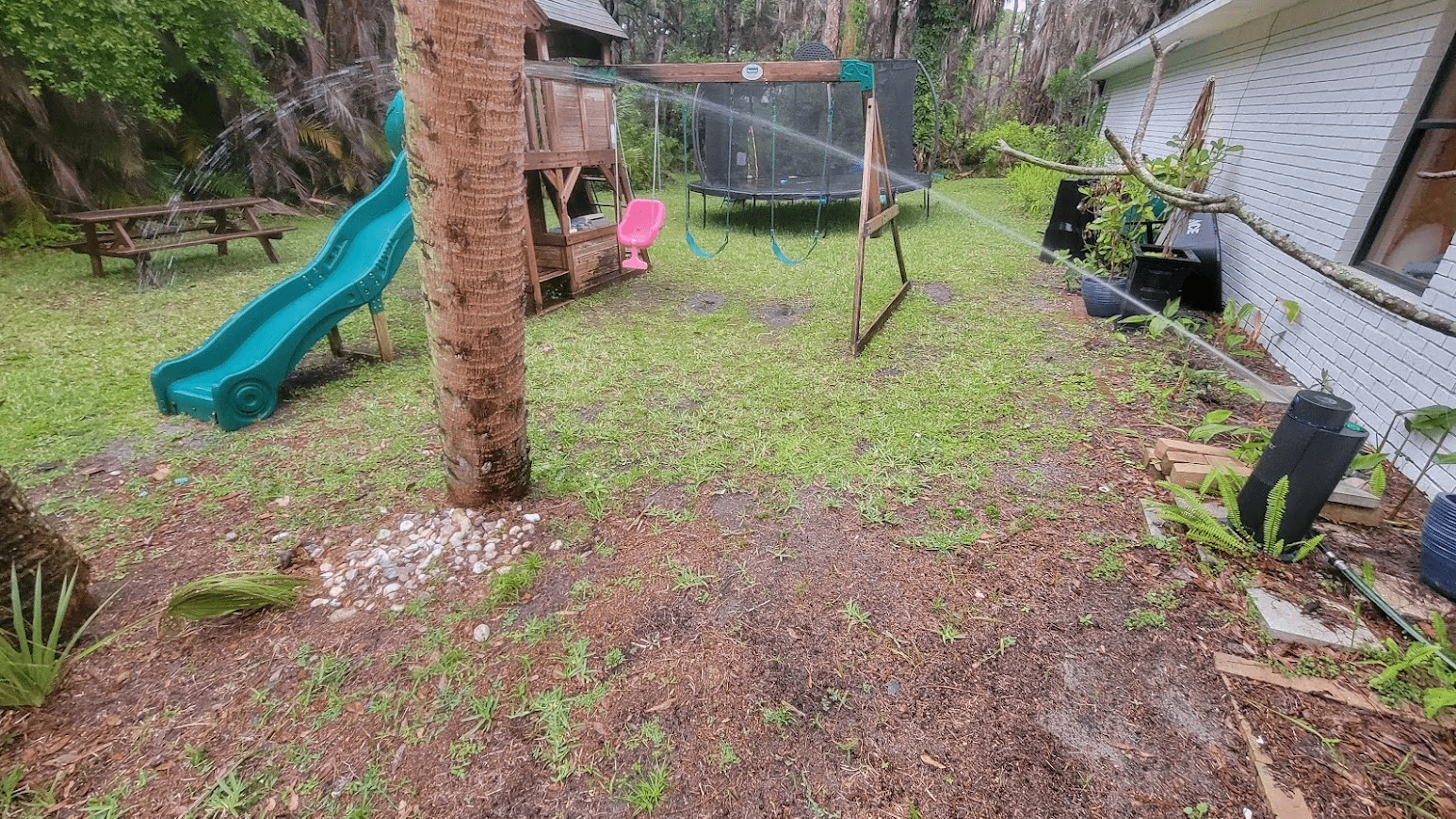
This is the part of testing the IrriSense 2 that genuinely impressed me, and it ties the distribution question back to the zone mapping feature in a way I hadn't anticipated.
Because the unit traces your custom mapped path, the path itself is a variable you can control. I went back into the map editor, added new waypoints, and redesigned the path so it sweeps the same 180-degree coverage zone twice, once at the outer range and again at intermediate distances, with the spray power adjusted for each. The result looks wild on the map screen. It's not a clean arc. It's an irregular back-and-forth that covers the same ground from multiple angles.
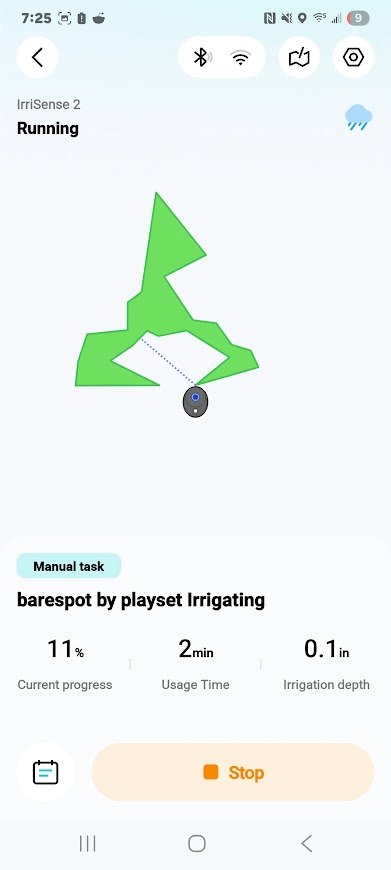
The coverage after the redesign was noticeably more even. The intermediate range that had felt thin now gets a dedicated pass at a spray power dialed in for that distance. It took about 20 minutes to figure out and implement, but it's the kind of thing you do once and never have to revisit unless your yard changes.
This is also what started pushing my thinking in a different direction. A device that lets you engineer a custom spray path and refine it live, with up to 10 zones, is not behaving like a portable sprinkler. It's behaving like a programmable irrigation system.
A professionally installed in-ground sprinkler system for a standard residential yard runs between $5,000 and $10,000 depending on zone count, soil conditions, local permitting, and whether your yard has existing obstacles to work around. That's the upfront cost. The ongoing costs are where the comparison gets interesting.
In-ground systems need regular maintenance. Valve solenoids fail. Heads get clipped by lawn mowers and need replacement. Pipes crack, particularly in climates that experience any freeze. Seasonal maintenance, adjustments after landscaping changes, and occasional professional service calls add up over time in ways that are easy to overlook when you're focused on the installation quote.
The bigger limitation is structural. Once the pipe is in the ground and heads are set, the system is fixed. If your yard changes, your sprinkler system doesn't. Adding a playset changes your coverage needs. Planting a new tree changes them again. Redesigning a section of in-ground irrigation requires excavation, new hardware, and another service call.
The IrriSense 2 has none of those constraints. You move it, re-map it, and you're done. It covers up to 4,800 square feet per unit - for reference, a lot, approximately a third of an acre, is roughly 14,000 square feet. Three units, possibly four for comfortable overlap, would cover the whole property.
Products like the Orbit B-hyve and Rachio smart controllers are strong devices in their category, but that category is different from the IrriSense 2's. Those systems are designed to add intelligence to existing in-ground setups: better scheduling, weather integration, app control. They're upgrades for homeowners who already have buried pipes.
For homeowners who don't have in-ground irrigation, or who have a specific zone that in-ground infrastructure can't efficiently serve, they're not an answer. Standard oscillating sprinklers paired with a smart timer can handle basic scheduling, but they can't map around obstacles, they can't adjust for terrain, and they can't deliver a custom coverage path.
The IrriSense 2 occupies a category largely by itself: a portable, above-ground unit with legitimate zone precision.
Honestly, the most relevant comparison isn't another smart sprinkler. It's the in-ground system you might build instead.
For a homeowner with no in-ground system at all, three or four IrriSense 2 units for full-yard coverage lands in the $1,500 to $2,000 range. An average 4-zone in-ground installation starts around $5k and if you've ever actually lived with one you know it always needs something fixed. Irrisense makes the maintenance and adjustment a job you can do from your couch, instead of trying to hack thru palm tree roots with a spade.
One more cost that rarely shows up in the in-ground versus above-ground comparison: winterizing. In any climate that sees freezing temperatures, an in-ground system has to be blown out with compressed air at the end of the season to clear the pipes before the first freeze. Most homeowners hire a professional to do this, and the cost runs $75 to $150 or more, depending on zone count and local rates. Do it yourself and you need the right compressor, the right fittings, and enough confidence that you've cleared every line completely, because a missed pocket of water can crack a pipe underground and turn a routine seasonal task into a repair job. With the IrriSense 2, winterizing is to disconnect the hose, drain the unit, and bring it inside. That's it.
That comparison doesn't make IrriSense 2 the right answer for everyone. A large property with a long-established yard and an existing in-ground system that's performing well doesn't need to be rethought. But for a new homeowner, a renter who wants real irrigation without committing to a property, or anyone facing a coverage problem that in-ground infrastructure can't solve flexibly, the calculus is different.
I started this review skeptical that I needed another piece of irrigation hardware. No device is perfect. Performance at the upper end of the spray range is genuinely dependent on your water pressure, and users with lower flow rates should temper expectations about hitting that 45-foot figure. And because the unit depends on a hose and an outdoor outlet, placement flexibility has real limits.
But the core technology is impressive. The zone mapping is precise and fast. The live editing capability is genuinely useful and changes how you think about coverage optimization. The weather intelligence handles the scheduling decisions that most people don't want to think about. And the EvenRain delivery system means the water that does fall actually gets absorbed rather than running off.
Smart irrigation is one of those categories that sounds like a luxury until you've actually used it, and then it's hard to remember why you'd go back. Never adjusting your watering schedule as seasons shift. Never accidentally watering the day before a storm because you forgot to check the forecast. Never coming home from a trip to find a parched yard because you couldn't manage a timer remotely. Never dealing with a city fine for watering on the wrong day. Those aren't small things, especially in a climate like Florida's, where a two-week dry stretch in April can undo months of lawn maintenance in a week.
The water conservation piece compounds this. Watering only where you've mapped, only when rain isn't coming, with a delivery method that maximizes absorption, adds up over a season. It's a hard number to pin down precisely, but the Aiper app includes an estimate. If you're paying tiered water rates, the savings are measurable. If you're in a managed community or municipality with usage restrictions, compliance becomes automatic rather than something you track manually.
At $469 on sale, the IrriSense 2 is not an impulse buy. But that price looks different when you compare it to what you'd actually spend to solve the same problem another way.
In-ground installation for a new yard or a new zone runs thousands of dollars. Traditional sprinklers paired with smart timers can't do what this device does. And Aiper's free upgrade program for first-generation IrriSense owners, a genuine rarity in consumer hardware, suggests a company that's thinking about long-term relationships with customers rather than one-time sales.
If you're evaluating this device against a $50 sprinkler, you're comparing the wrong things. Evaluate it against what it would actually cost to achieve the same coverage, precision, and flexibility through conventional irrigation. When you do that, the conversation changes.
For any homeowner with a coverage problem that in-ground infrastructure can't solve simply, or anyone who's been putting off proper irrigation because the installation cost felt unjustifiable, the IrriSense 2 is worth serious consideration. It's smarter than you'd expect, more flexible than it looks, and more useful than I thought I needed it to be.




Privacy Policy
Terms and Conditions - Affiliate Policy
Home Security
© Copyright 2008-2026.
11816 Inwood Rd #1211, Dallas, TX 75244