


EcoSurfer S2 Skimmer + Scuba V3 Pool Robot Review | Tested March 2026
I've been running pool robots for a few years now. I’ve tested an older Wybot, still use my trusty Aiper Scuba S1, and every time a storm comes through or pollen season rolls around, I've thought a surface skimmer sounded like a great idea. A robot that just floats around collecting whatever's on top of the water, charges itself from the sun, and runs without you thinking about it. The concept made obvious sense.
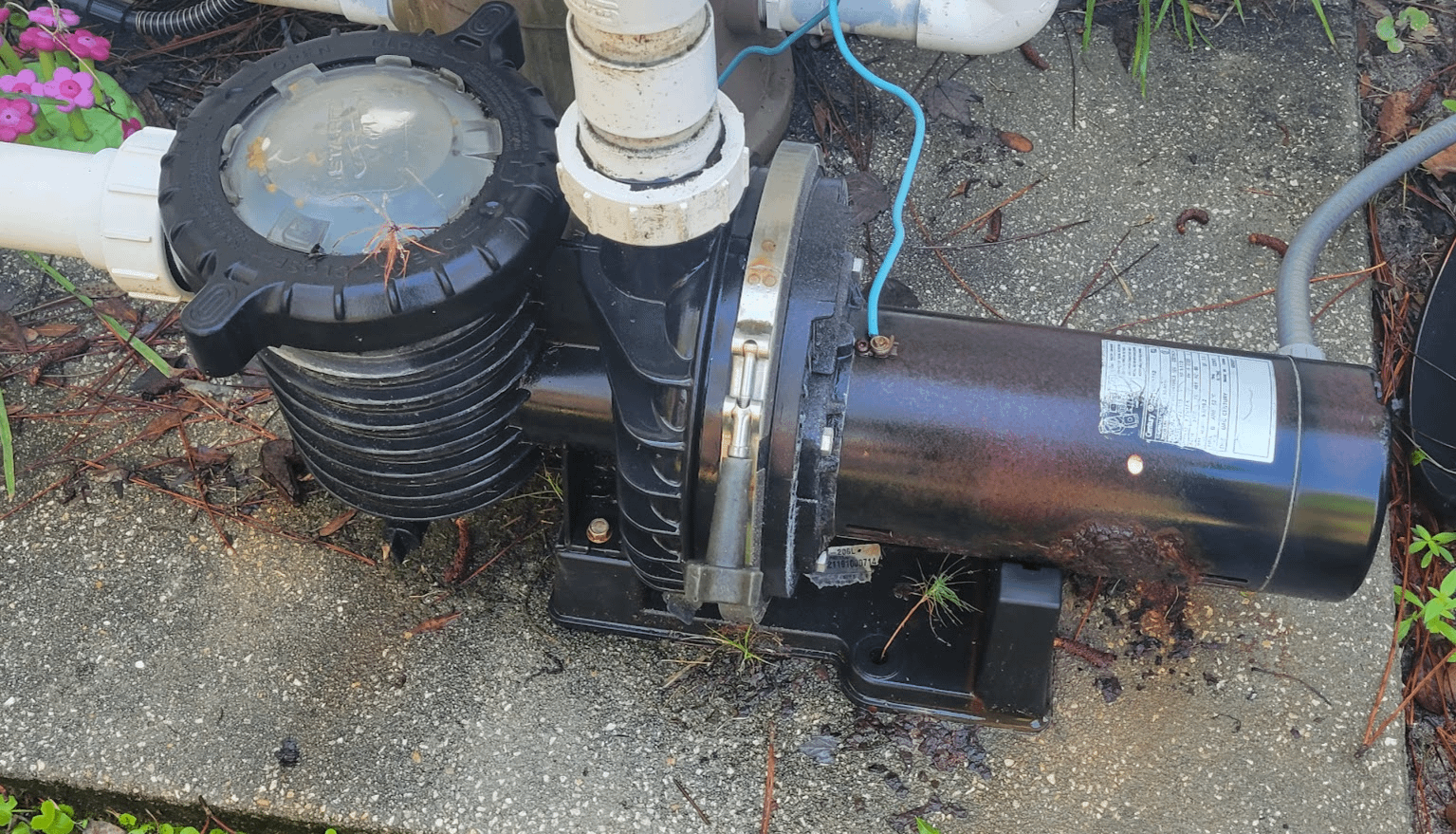
Then my pool pump burned out.
I flipped the breaker to see what was going on, heard the motor hum louder than it should, watched a little smoke curl up, and flipped it right back off. It was early March. Prime pollen season was just beginning - the kind of time of year where a fine brown dust settles on every horizontal surface overnight, your car, your deck, your pool. I'm usually cleaning my cartridge filter more often than normal this time of year just to keep up.
So: no pump circulation, peak pollen, and a pool heading in the wrong direction fast.
I had both the Aiper EcoSurfer S2 and the Aiper Scuba V3 on hand to test, which Aiper sells together as the Experts Duo for $1,299. I dropped them both in and let them run. Short version of this review - a few weeks later, the pump is still broken and the pool still looks great. Using a bit of extra chlorine for safety for sure, but debris is still non-existent.
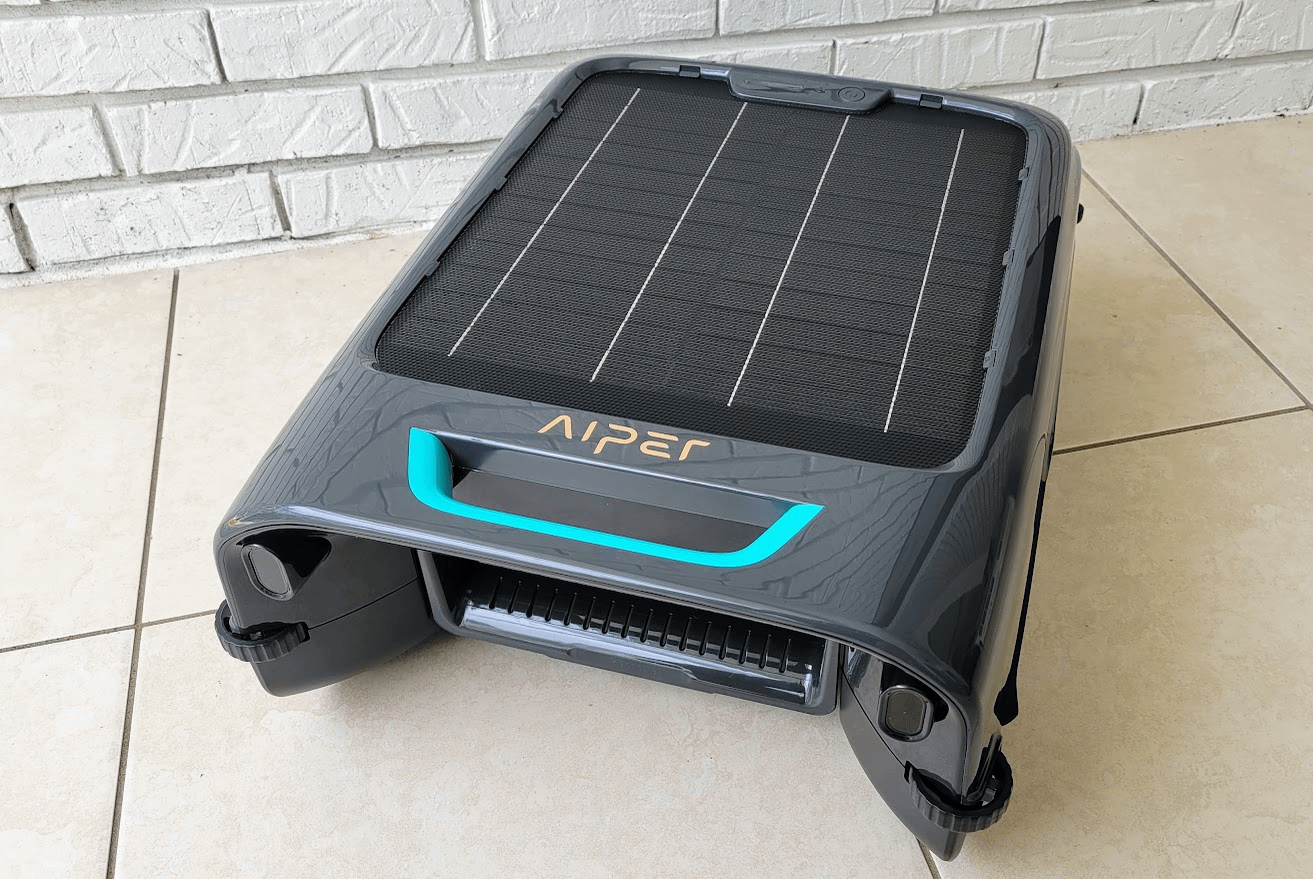
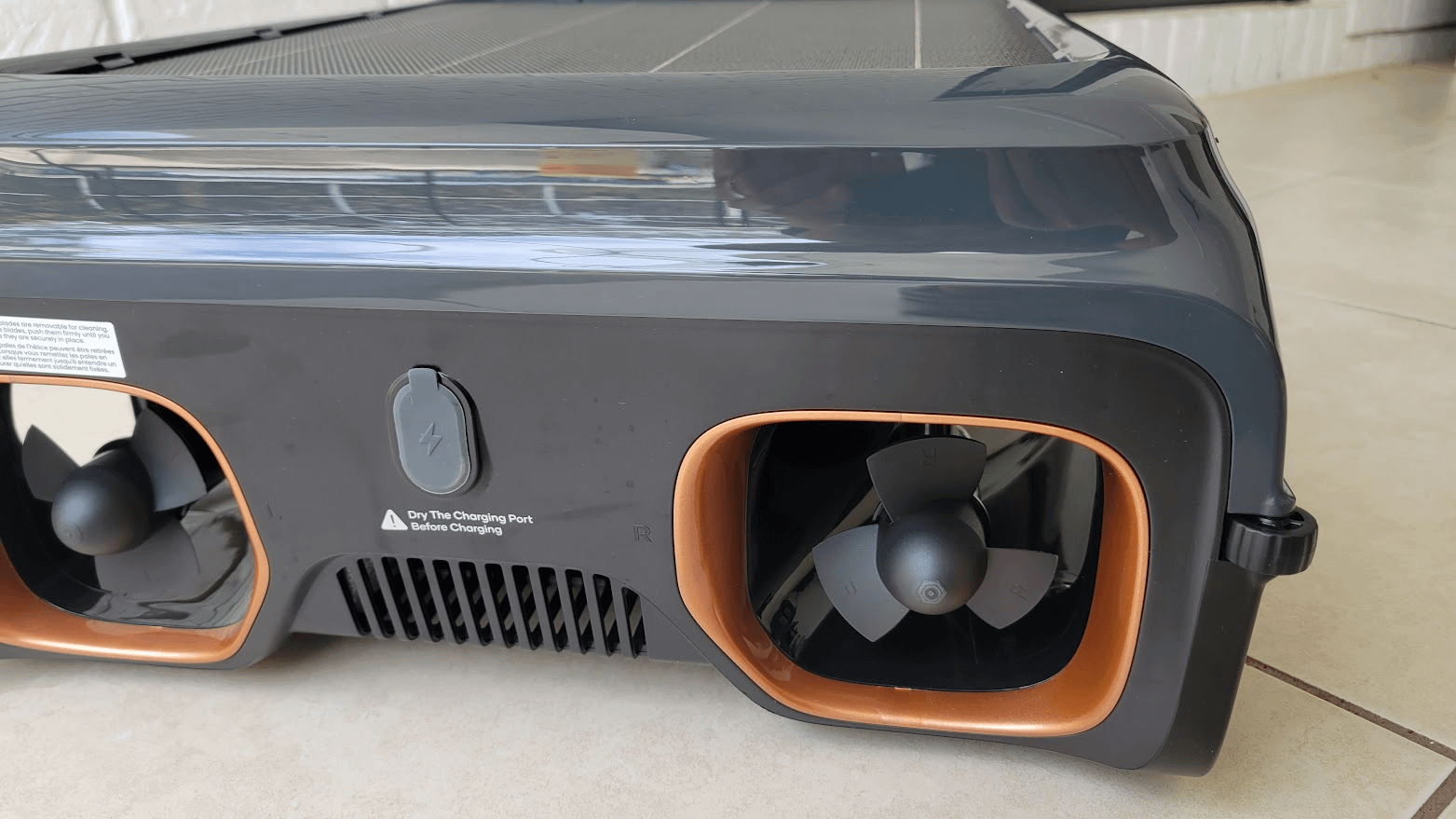
The EcoSurfer S2 skimmer is bigger in person than it looks in product photos, about 21 inches long and 16 wide, but since it's designed to float, it feels light for its size. The shape is more angular and modern than older Aiper skimmers, which had a rounder, catamaran-like look. There are gold and bronze accents on the rear propellers that give it a premium feel.
The housing is built from a UV-resistant plastic and internally has stainless steel hardware. That matters because this thing sits outdoors in direct sun and chemically treated water indefinitely. It also works in saltwater pools. Nothing about the build feels flimsy or cheap.
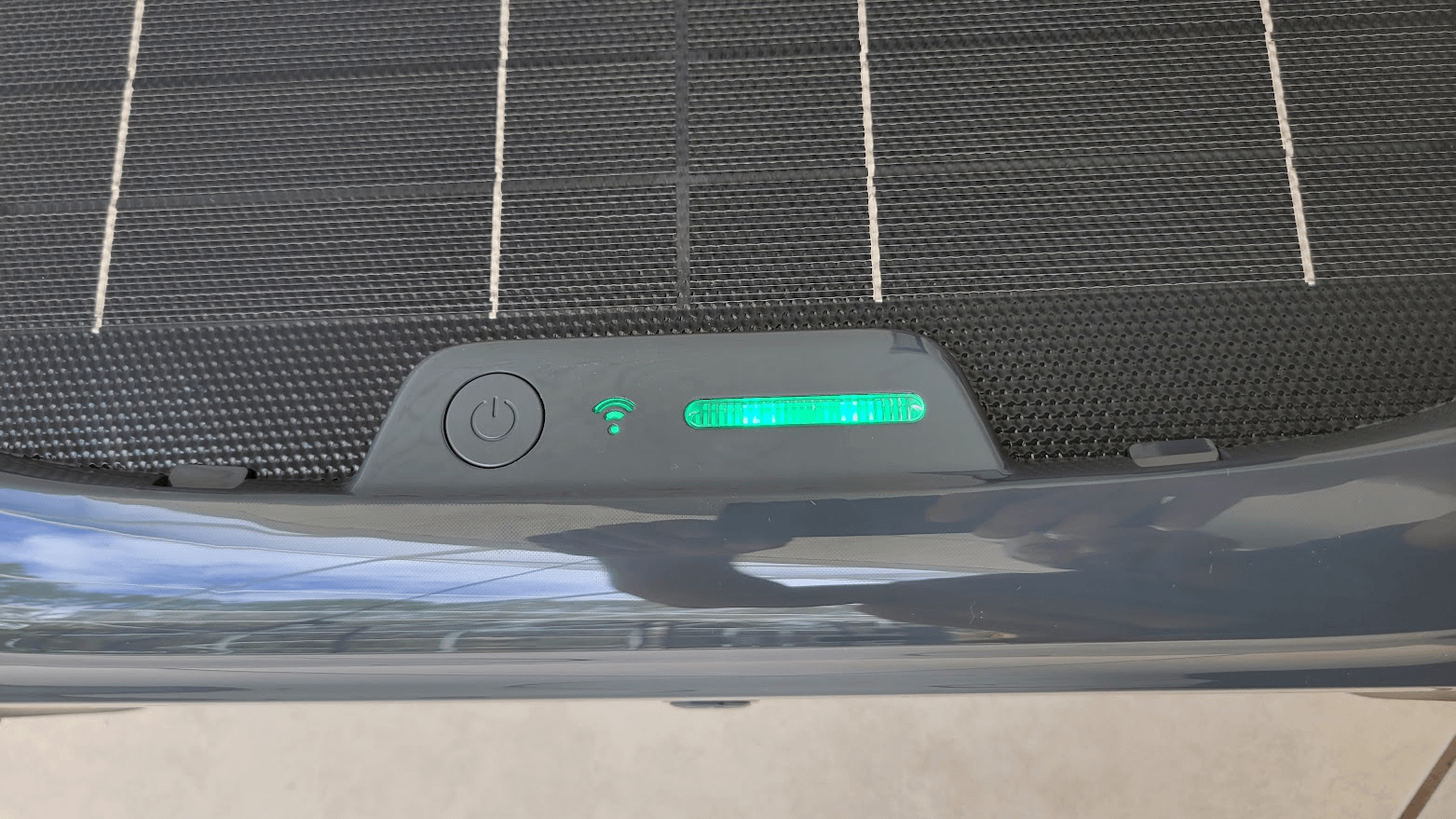
The top of the unit is almost entirely taken up by the solar panel, which makes this product convenient to set and forget. It works well, but there's one design detail I noticed that I haven't seen anyone else mention. The panel has a raised lip running around its edge. Debris and water collect in it and sit on the panel instead of shedding off. It's a minor thing, but I’m finding myself giving it a rinse every week to keep the panel clean and collecting a maximum charge.
The front of the unit has a wide-mouth intake where everything gets pulled in. The rear has two propellers. Underneath, four fold-out legs act as stabilizers that prevent the unit from getting stuck on pool steps or a shallow tanning ledge. The debris basket is accessed through a front side-mounted drawer, which is a better design than the top-access baskets you find on other skimmers. Top-access means pulling a wet basket straight up through the water, which usually results in a splash of murky pool water somewhere you didn't want it. I quickly learned how to pull it out without spilling debris back in the pool, helped by an automatic internal flap.
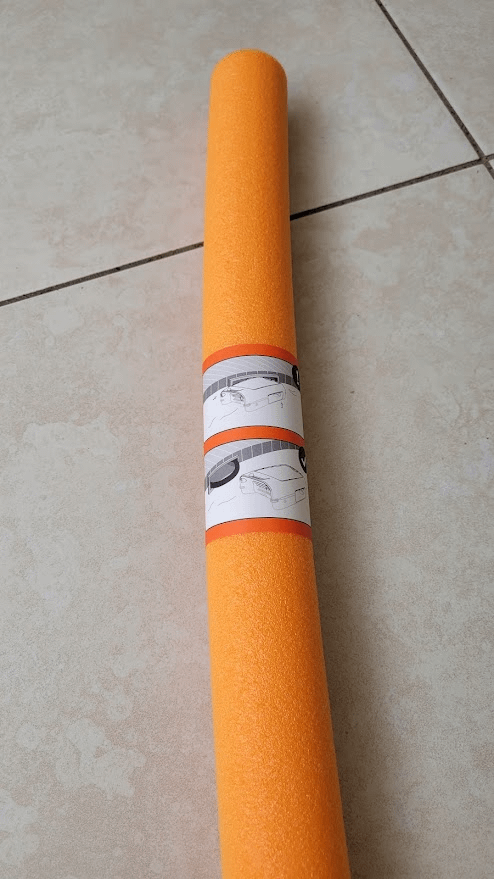
Packaging is solid — everything is cushioned and organized, the setup instructions are printed on a large easy-to-follow poster, and Aiper includes a foam noodle bumper designed to sit around the opening of your pool's skimmer box so the robot doesn't bump into it and get caught.
The EcoSurfer S2 is a surface skimmer. It floats and collects debris from the top of the water — leaves, pollen, bugs, dust, anything floating. It doesn't touch the floor or walls. That's important to understand upfront, because it's doing a job that most floor-cleaning robots are genuinely bad at.
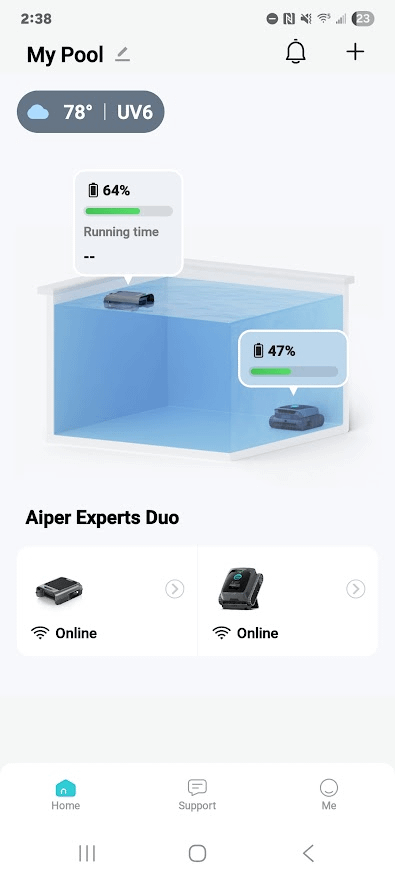
The battery holds 5,200 mAh and can run for up to 35 hours on a full charge from the included DC adapter, which takes four to six hours. But the more useful part is what happens when the battery gets low on its own while it's in the pool. The unit navigates toward the brightest area of the pool, parks there for around 15 minutes to top up from the solar panel on its back, and then resumes cleaning. In good sun, this creates a loop where the unit keeps itself going without any input from you. On bright days during my testing the battery held steady or actually climbed while the unit was running, and I’ve seen it realize it is motoring into the shade and turn around. Over the month I’ve tested it, I charged the unit once after a few cloudy days.
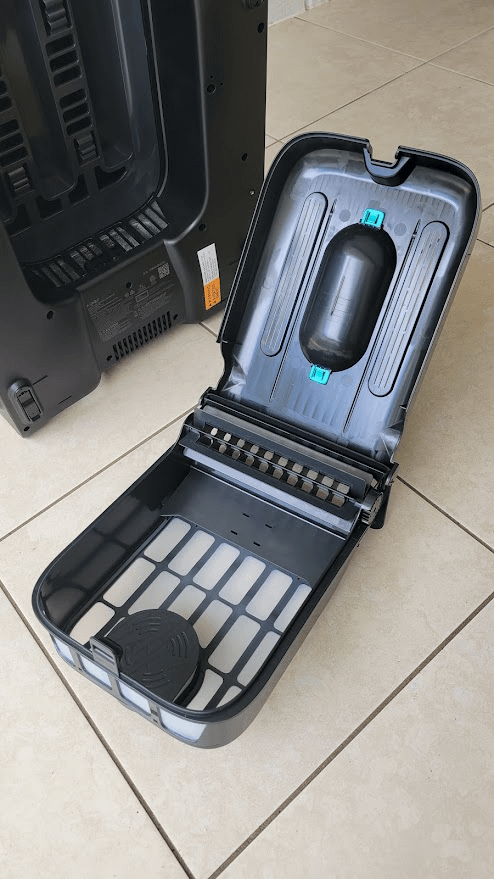
The filter mesh is rated to 150 microns, which is fine enough to catch pollen and dust, not just leaves and large debris. The basket holds 4 liters, enough that in most conditions you're looking at a few weeks between empties rather than daily maintenance. Pulling it out takes about 10 seconds via the side drawer, a rinse under a hose, and it slides back in.
When the unit reverses or decelerates, a baffle inside the intake closes automatically to keep whatever it has collected from floating back out into the pool. This addresses one of the most common complaints about solar skimmers, that every time they stop or turn, a small cloud of debris escapes. That didn't happen in my testing.
Four retractable legs underneath handle steps and shallow areas. There's also a mode that extends the unit's path along the edges and corners of the pool, which makes sense because that's where a lot of debris tends to accumulate. Dual sensors on the front detect walls and obstacles and adjust the path accordingly.
The basket also has a small compartment that holds a 3-inch chlorine tablet for water treatment as the unit moves around. It's a convenient option for casual pool owners who don’t want a separate tablet floater, but I’d be concerned about the chlorine damaging the skimmer’s plastic basket over time. If you're running a dedicated salt system, you'll probably skip it, and larger pools typically will need more tablets at once.
The app connects via Bluetooth for initial pairing and then runs over Wi-Fi. You can set a cleaning schedule, switch to an Eco Clean mode that runs three hours on and three hours off to maximize solar gain, steer the unit manually using an on-screen directional pad, check battery level and cleaning history in real time, and get notifications if it gets stuck. The app also delivers over-the-air firmware updates, which means the product can improve after you buy it. In practice I set a schedule, dropped the unit in the pool, and mostly forgot about it, which is exactly the point.
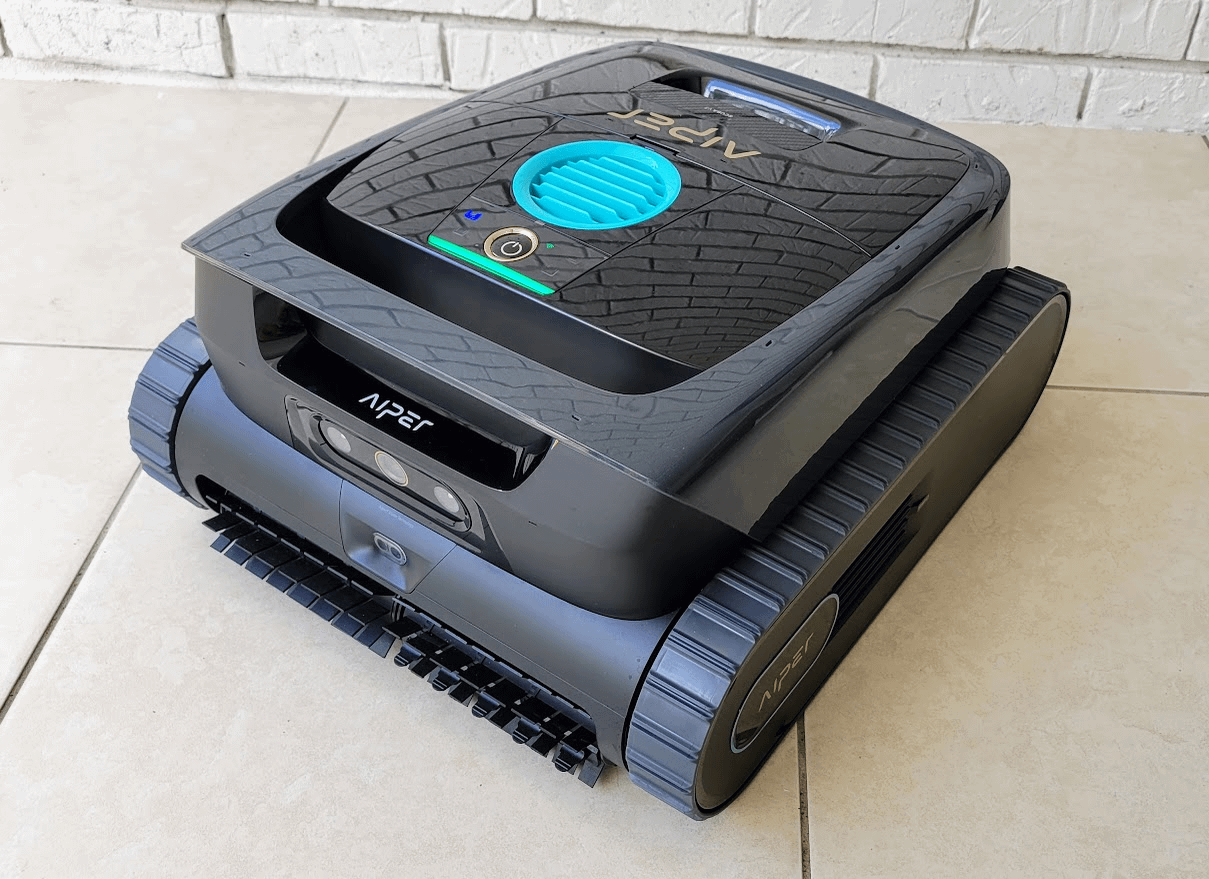
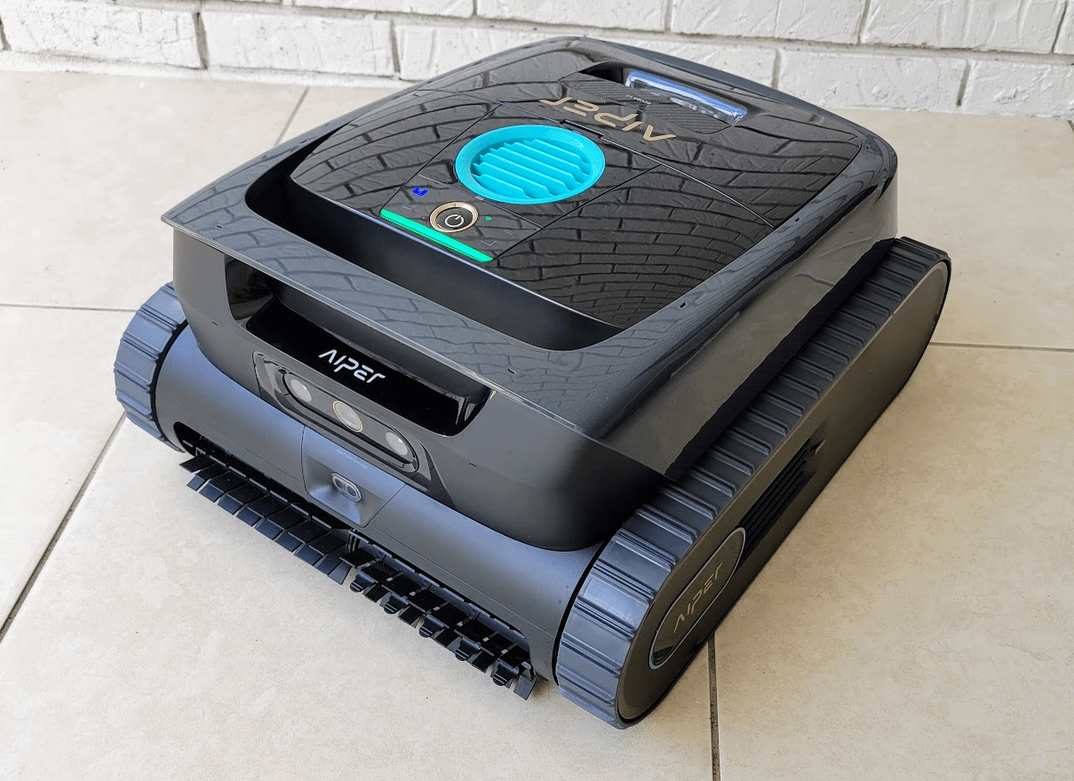
The Scuba V3 is Aiper's current flagship floor and wall cleaning robot. At 18.1 pounds it's noticeably lighter than older high-end pool robots, and the difference is real, you can lift it in and out of the pool one-handed without it being awkward. Anyone who has wrestled a heavier pool robot knows how much this matters after a few weeks of use.
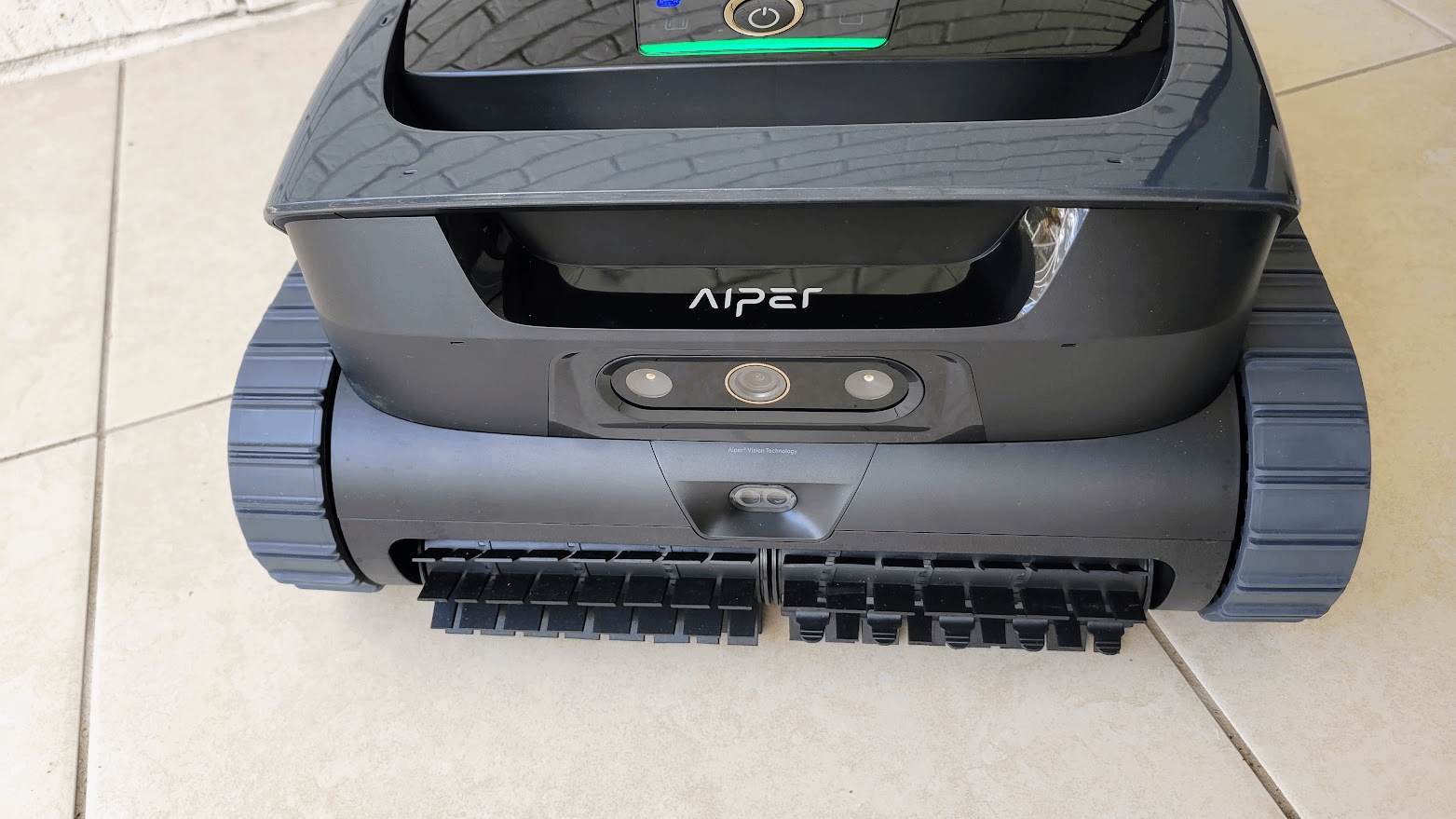
The most visually distinct feature is the front-facing camera housing, which is where the AI vision system lives. This is what allows the unit to actually see the pool, detecting debris, reading the space, and navigating with purpose rather than just following a pre-set pattern. The housing and overall design are undoubtedly premium, with polished plastic and beautiful accents.
There are brushes at both ends of the unit, and this is where I first noticed a difference from the older Scuba S1. The rubber cleaning flaps extend slightly farther out than the previous generation. In practice it means the brushes are making better contact with the pool walls, particularly at the waterline where pollen, body oils, and the usual sunscreen ring tend to accumulate. This combines with side-mounted nozzles that deliver a horizontal jet of water along the waterline, scrubbing off that buildup as part of the regular cleaning cycle.
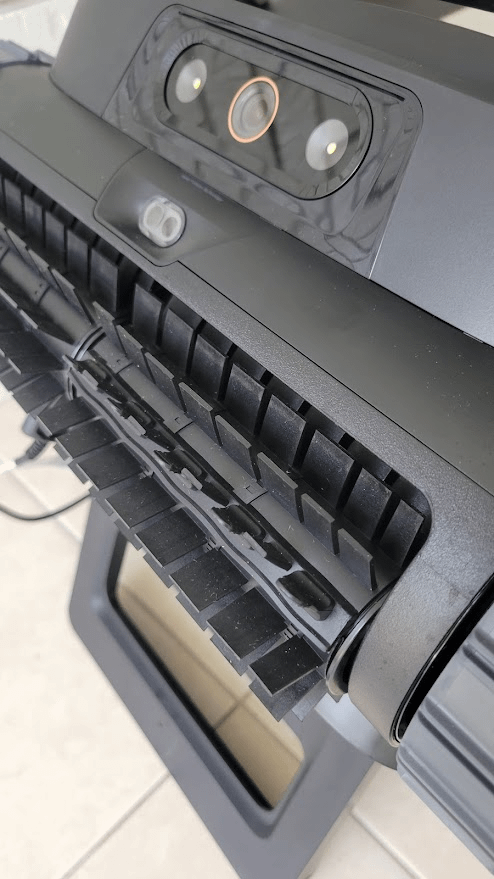
There are also two LED lights mounted on the front that give the vision system what it needs to operate after dark. The unit can run overnight without degraded navigation performance - useful if you want it to clean during off hours and be ready to retrieve in the morning.
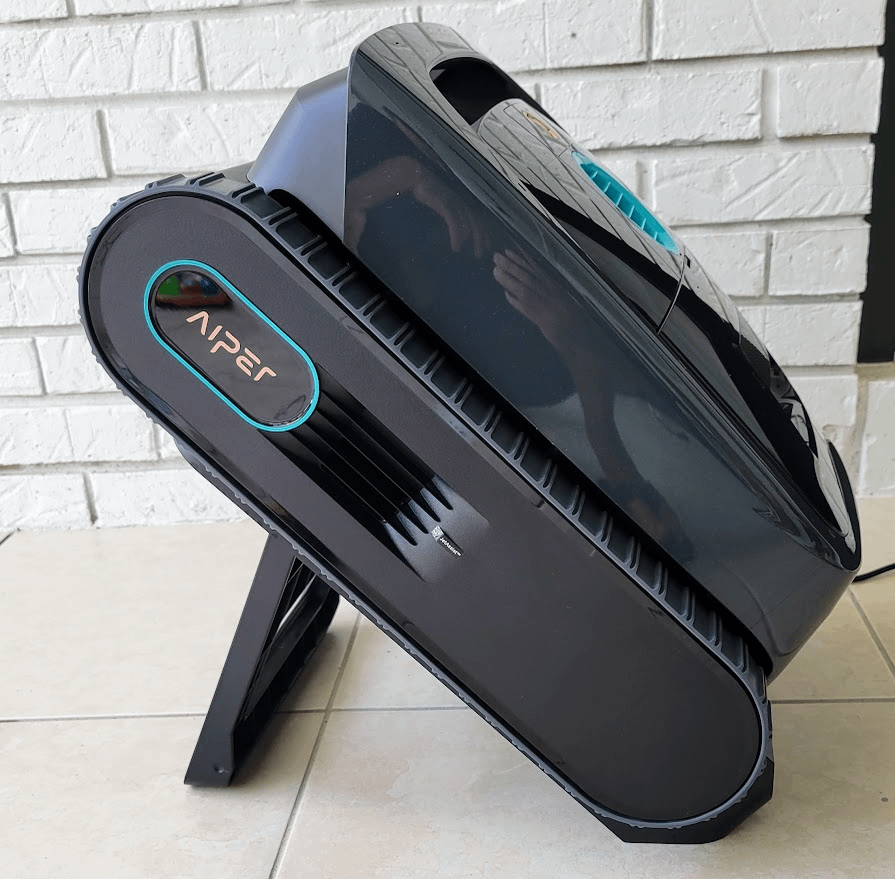
The charging dock is one of the better quality-of-life changes in the product. It comes with a wireless charging dock, you place the unit on it and charging begins automatically. No cable to plug into a wet robot, no cable management, no fumbling with a connector after you've just pulled it out of the pool. You drop it on the dock and walk away. It sounds like a small thing and it is, but with years under my belt of the old plug system, the dock is a definite improvement.
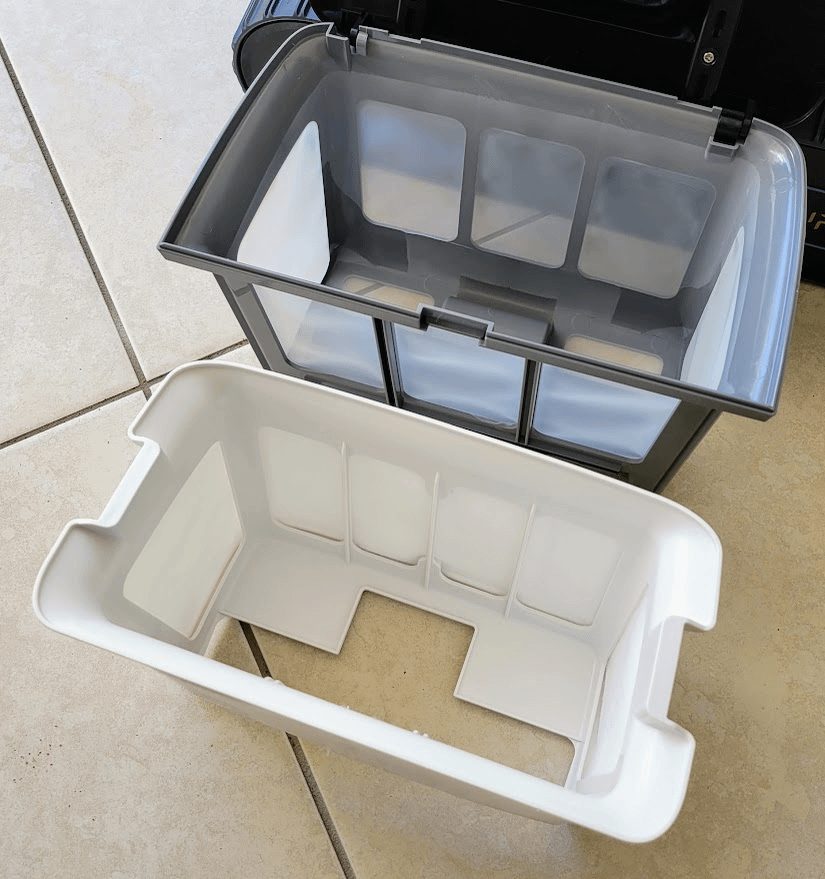
The debris basket has two layers of filtering. The standard basket catches leaves, larger debris, and everyday dirt. A separate MicroMesh insert handles fine particles and slots into the top of the standard basket when you want that level of filtration. Most of the time I’d recommend the increased water flow of the standard mesh, but it’s a nice feature to have a polishing option.
The Scuba V3's AI vision system is what sets it apart from the previous generation, and it's worth explaining how it actually works because it changes the cleaning behavior in a meaningful way. The front camera detects over 20 types of debris within about a two-meter range, and when it spots something, the unit routes toward it directly. Alongside that, depth sensors handle route planning and obstacle avoidance so the unit is mapping the pool as it goes and trying not to cover the same ground twice.
The autonomous planning mode builds a weekly cleaning schedule based on your pool's dimensions, weather conditions, and past cleaning history, then decides when and how to run for the best results. Once it has learned your pool, it adjusts on its own, running more during good conditions, pacing itself during others. The goal is a week of clean pool with as little input from you as possible.
The JetAssist waterline system handles the scrubbing along the top edges of the pool. Side-mounted nozzles push water horizontally along the waterline to clear off the buildup that normally requires manual brushing, sunscreen residue, pollen, dust, oils. The V3 treats this as part of its regular cycle rather than something you have to go back and do separately.
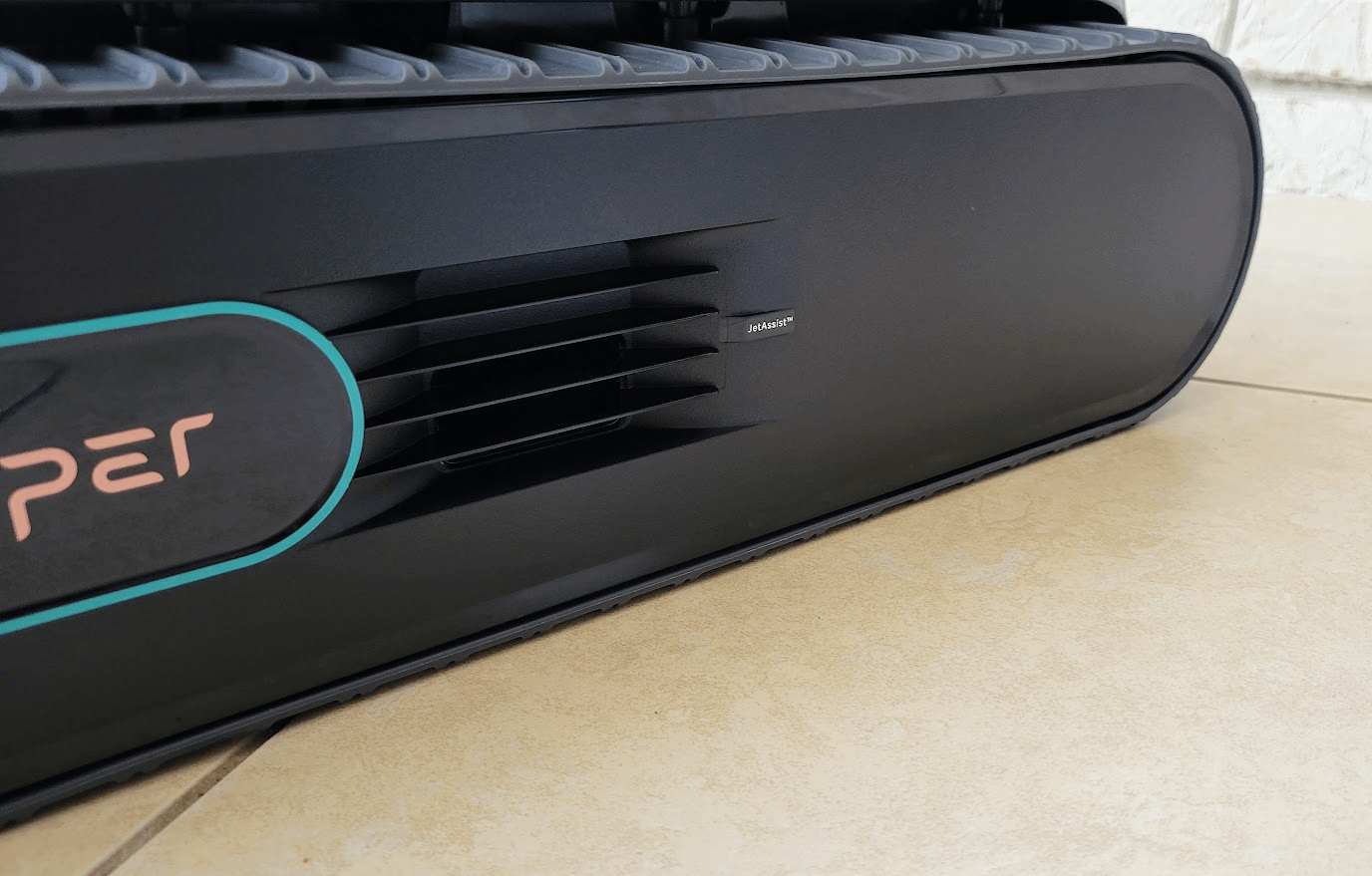
On filtration, the two-layer setup is worth understanding in practical terms. The standard debris basket is the right choice for everyday use, it handles the normal debris load and keeps water flow through the unit strong, which means suction stays effective. The MicroMesh insert is for when you want fine-particle clarity, after a heavy pollen day or a storm, or just periodically when you want the water looking its best. Think of it as a fine-polish option rather than something you run constantly. It loads up with fine particles faster than the standard mesh, and a fully clogged MicroMesh will noticeably reduce suction, so check it regularly if you do use it.
Suction is rated at 4,800 gallons per hour with dual brushes working simultaneously at both ends. When a cleaning cycle finishes, the V3 climbs up to the waterline on its own and parks there, then sends a notification through the app that it's done and ready to be retrieved. You walk out, lift it one-handed, set it on the dock, and it charges automatically. The full retrieval process takes under a minute.
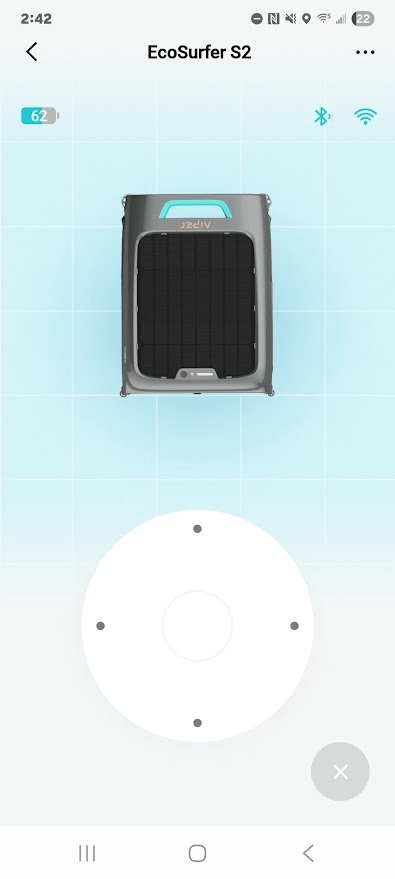
App setup was smooth. Bluetooth pairing connected quickly, and getting onto the Wi-Fi network followed easily from there. Both the V3 and the EcoSurfer S2 appear in the same Aiper app, and each one has its own controls, schedule settings, and status readout. The directional pad in the app for steering the EcoSurfer S2 is a nice touch, you can guide the skimmer to a specific corner from your phone if you want to target an area. It works well and gives you a bit of direct control when you want it.
One thing to note clearly: the V3's app controls work on land only. Once the robot is in the pool and submerged, the wireless connection is gone, something I noticed on other pool robots as well. Set your schedule and preferences before dropping it in.
I want to tell this in the order it happened, because the skimmer went in first.
The pool pump had been out for about a day before I deployed the EcoSurfer S2. The surface was already collecting the brown pollen that arrives in early March in Florida. I charged the S2 fully via the DC adapter, set a schedule in the app, and dropped it in around mid-afternoon.
The next morning the surface was almost completely clean. That sounds like an exaggeration and it isn't. In peak pollen season, with no pump running, the skimmer had collected what would have taken me hours with a net. The debris was in the basket. I emptied it, slid it back in, and watched the unit drift toward the sunny end of the pool.
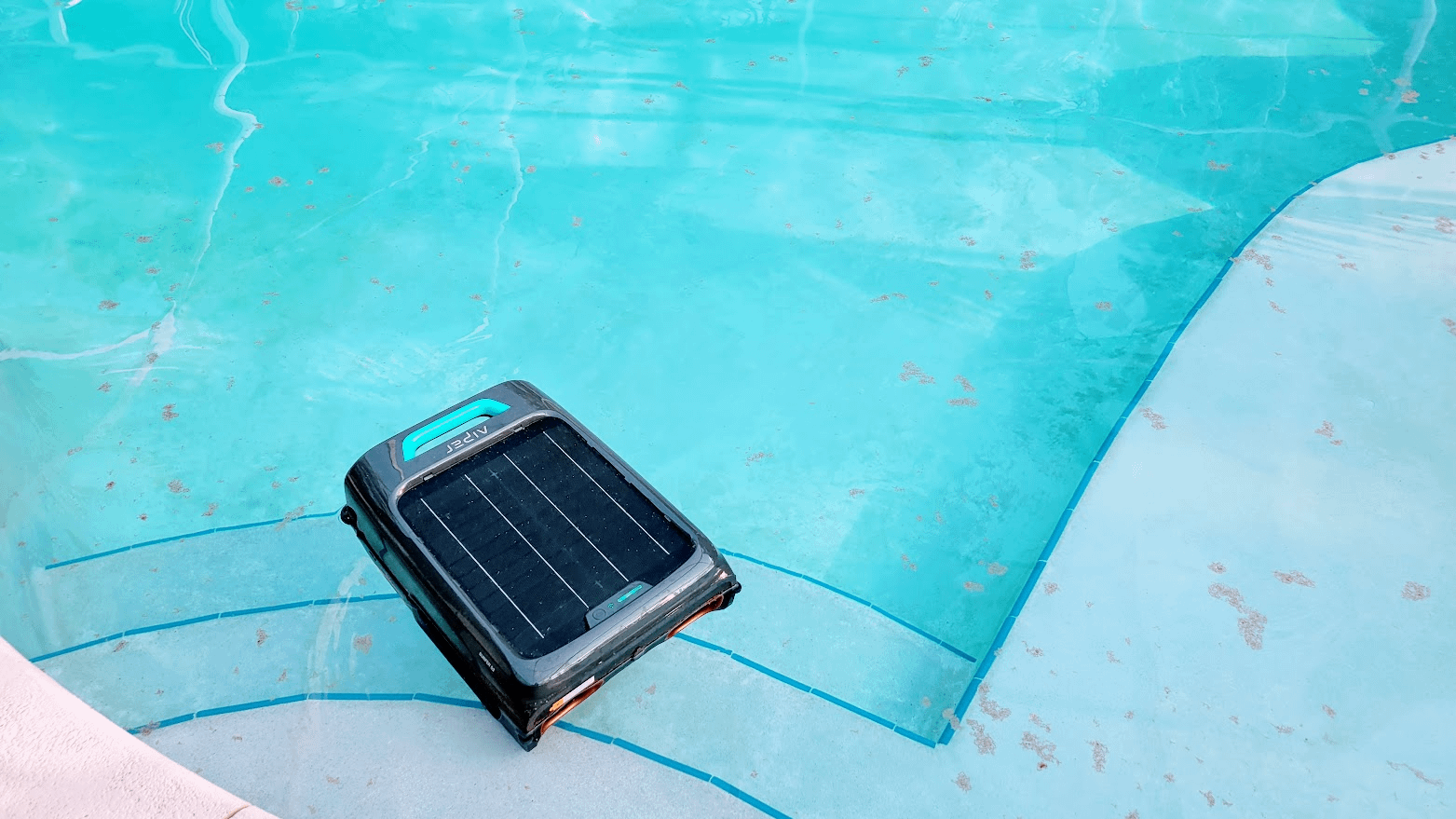
My pool has a screen enclosure, which you might think would reduce the need for a surface skimmer. It doesn't really. Pollen moves through screen mesh easily. Insects find their way in. Fine dust blows through. The S2 was working through a real debris load every day regardless.
What I noticed most over the first couple of weeks was the change to my filter maintenance routine. March is normally when I'm cleaning my cartridge filter more frequently than usual because of everything coming in. Since the S2 started running, that frequency dropped noticeably. Debris that would normally float on the surface, slowly sink, and eventually load the filter was getting caught before it got that far. That downstream benefit, less filter maintenance, doesn't get talked about enough, and it's real.
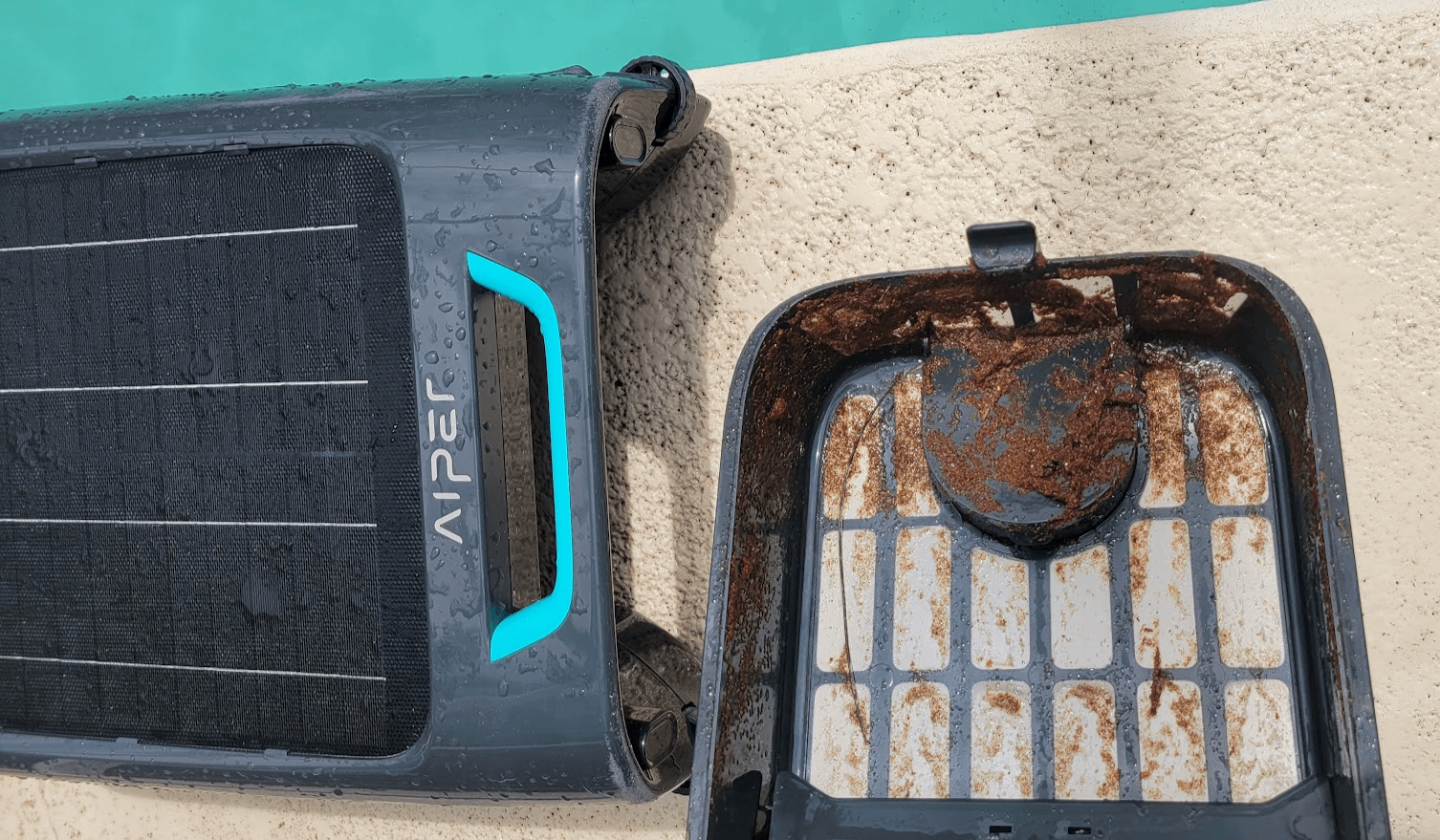
Solar charging handled itself well in good sun. The unit migrated toward the bright end of the pool when the battery dipped, recharged for a few minutes, and got back to work. During a stretch of overcast days combined with pollen and light rain sitting on the solar panel, I did plug it in manually once. Worth knowing if you're in a climate that gets extended grey weather, the DC charging option is there when you need it.
Navigation was reliable throughout. Pool toys, a floating thermometer I forgot to move, the sun shelf at the shallow end, the unit bumped into things, reversed, found a new angle, and kept going. There was one occasion near the steps where it needed to be redirected, but that was the exception.
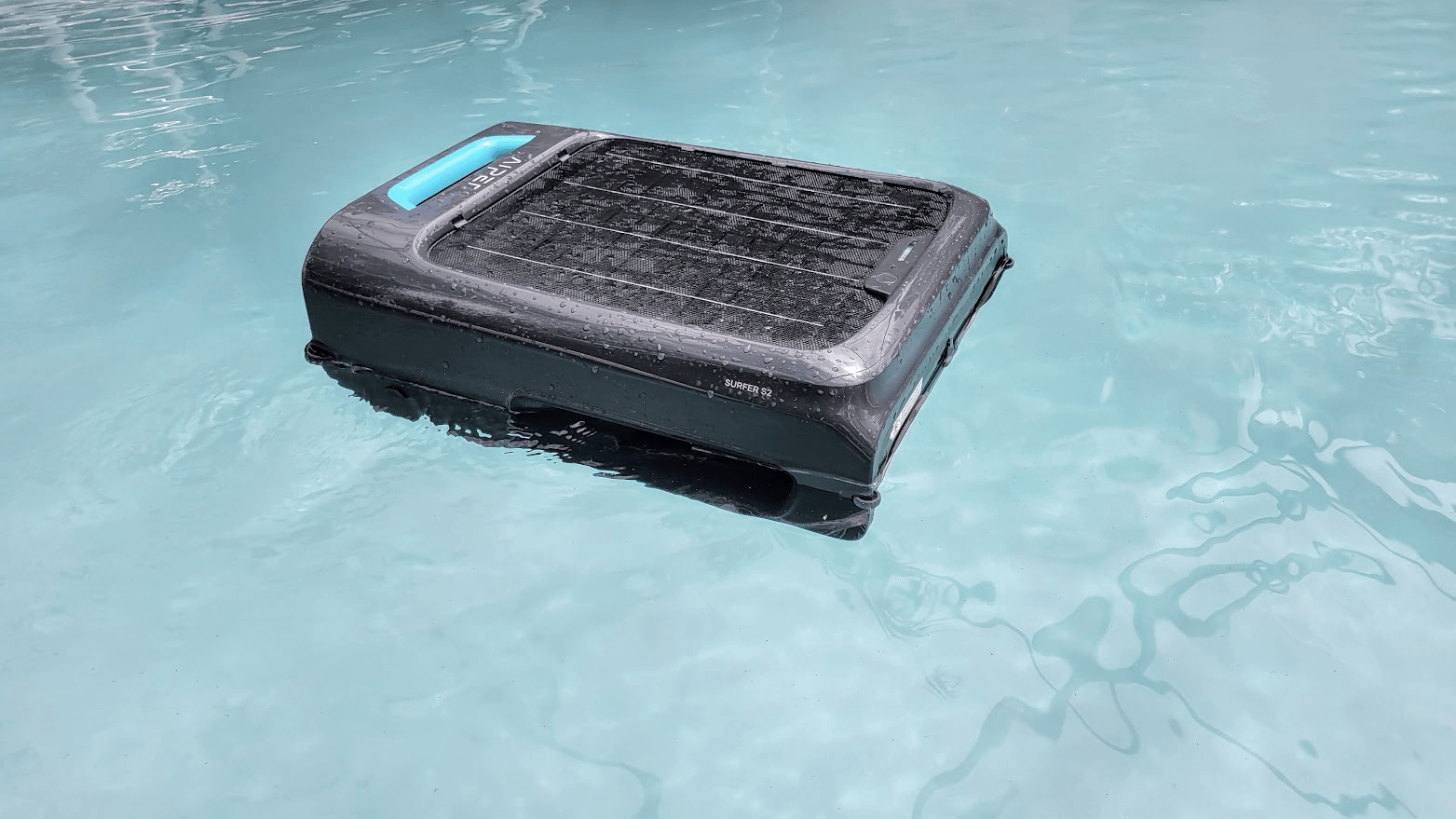
Once the Scuba V3 was in the water alongside it, the full picture came together.
The difference between the V3 and the older Scuba S1 is noticeable in the first few minutes of watching it work. The S1 moved in systematic sweeping patterns regardless of where the debris actually was. The V3 finds things and goes to them. Watching it spot a deadworm and route directly to it — rather than sweeping the whole floor until it eventually got there, feels like a genuine behavioral change, not a marketing point.
My kids regularly leave pool toys in the water. The V3 detects them as obstacles and routes around rather than bumping into them or sucking in a pair of goggles. That alone makes it more practical to run during the day when the pool is in active use.
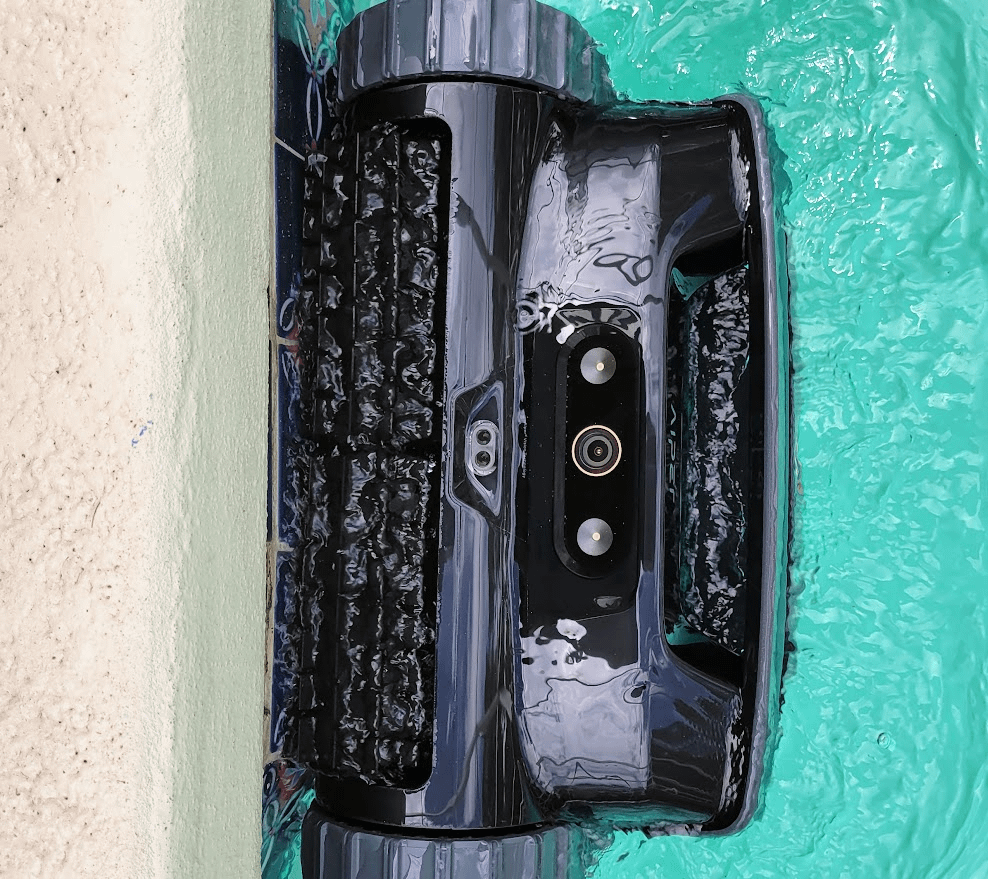
The waterline cleaning was something I noticed specifically in the context of pollen season. The thin line of dust and residue that builds up along the tile at the waterline, the V3 was clearing it consistently. The combination of those extended brush flaps making better physical contact and the horizontal water jets working along the edge meant that buildup was being handled as part of the regular cycle rather than something requiring separate attention.
For filtration I ran the standard debris basket most of the time, which kept suction strong and handled the daily load well. I switched to the MicroMesh insert a couple of times after heavier pollen days when I wanted maximum clarity. The water visibly cleared up further when I did. The practical advice is to treat the MicroMesh as an occasional enhancement rather than the default setting — it loads up with fine particles faster, and reduced suction is noticeable when it's fully clogged.
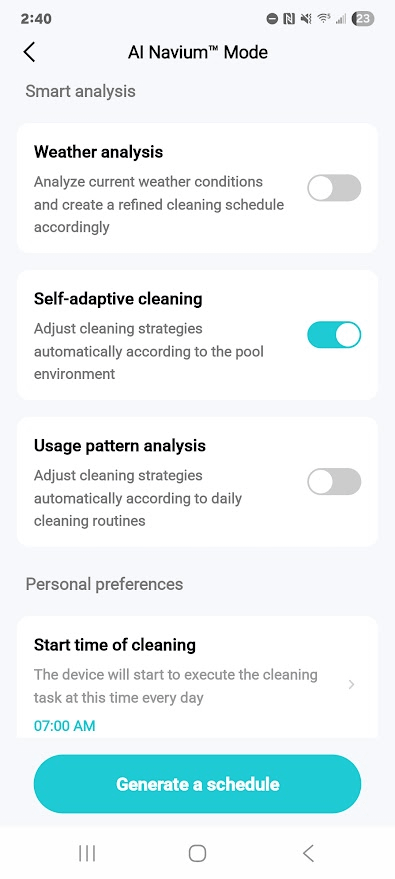
The waterline parking made retrieval easy. When a cycle finished, the V3 climbed to the pool edge and the app sent a notification. Walk out, lift it one-handed, set it on the dock. Done. Compare that to the older approach of fishing around in the water for a heavier robot and the improvement is obvious.
Running both devices simultaneously, the S2 on the surface, the V3 on the floor and walls, the pool stayed genuinely clean throughout a situation that would normally be a real maintenance problem. Guests came over during this period and nobody said anything about the pool looking off. The surface was clear, the floor was clean, the waterline was scrubbed.
A few weeks in, running both devices through peak pollen season with no functioning pump, my takeaway is that the Experts Duo works as a genuine system in a way that individual devices don't quite capture. Each robot handles what the other can't. The EcoSurfer S2 keeps the surface clean and intercepts debris before it reaches the filtration system. The Scuba V3 handles the floor, walls, and waterline. Together they cover the whole pool with very little asked of you.
The EcoSurfer S2 was the piece I didn't realize I was missing. I'd run floor robots before and thought my maintenance setup was mostly handled. Seeing what continuous surface skimming does, both to how the pool looks and to how often the filter needs attention, changed how I think about the whole system. If you're already running a floor robot and you haven't added a surface skimmer, this is the obvious gap to close.
The Scuba V3 is a real step up from the previous generation. The AI targeting behavior works in practice. The waterline cleaning is better. The retrieval and charging experience is easier. At 18 pounds it's light enough that daily use doesn't become a chore.
At $1,299 for the Experts Duo, you're getting two devices that work together, share a single app, cover the full pool, and require very little from you day to day. The two-year warranty and over-the-air firmware updates on both devices add long-term confidence. My Aiper Scuba V1 is still going strong after two and a half years, but the V3 has me seriously hungering for an upgrade.




Privacy Policy
Terms and Conditions - Affiliate Policy
Home Security
© Copyright 2008-2026.
11816 Inwood Rd #1211, Dallas, TX 75244