

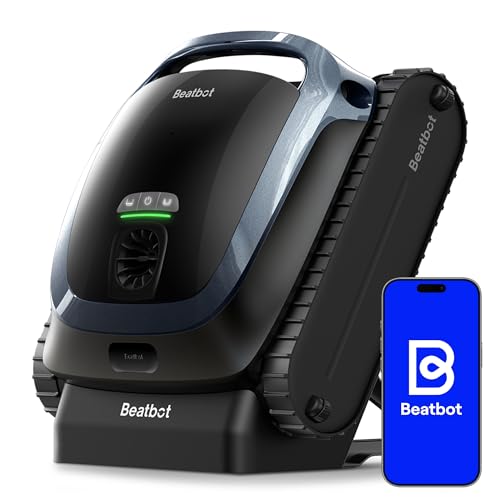
The days of manually scrubbing your pool or wrestling with tangled power cords are finally behind us. Cordless robotic pool cleaners have revolutionized pool maintenance, and two models stand out in today's market: the Seauto Cordless Robotic Pool Cleaner 180W and the Beatbot AquaSense 2. But with significant differences in features, performance, and pricing, choosing between them requires understanding what really matters for your specific pool.
At the time of writing, these represent two distinct approaches to automated pool cleaning – one focused on no-nonsense reliability at a budget-friendly price point, the other pushing the boundaries of what's possible with advanced sensors and intelligent navigation.
Cordless robotic pool cleaners operate on a simple but sophisticated principle: they're essentially underwater robots that combine powerful suction motors with intelligent navigation systems to autonomously clean your pool. Unlike traditional pool vacuums that require manual operation or suction-side cleaners that depend on your pool's filtration system, these battery-powered units work independently.
The key technologies that make modern pool robots possible include lithium-ion batteries (which provide hours of runtime while remaining lightweight), brushless motors (offering powerful suction with minimal energy consumption), and various navigation systems ranging from basic bump-and-turn patterns to advanced sonar and ultrasonic mapping.
What makes this category particularly interesting is how manufacturers balance power consumption with cleaning effectiveness. A robot needs enough suction to pull debris into its filter basket, sufficient battery life to clean an entire pool, and smart enough navigation to avoid getting stuck or missing spots. The physics of underwater operation also presents unique challenges – these robots must maintain traction on slippery surfaces while dealing with water resistance that would stop most land-based machines.
The Seauto 180W and Beatbot AquaSense 2 represent fundamentally different design philosophies that emerged from the rapid evolution of pool cleaning technology over the past few years.
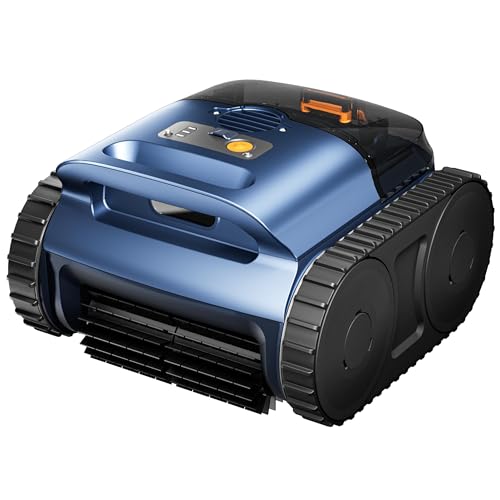
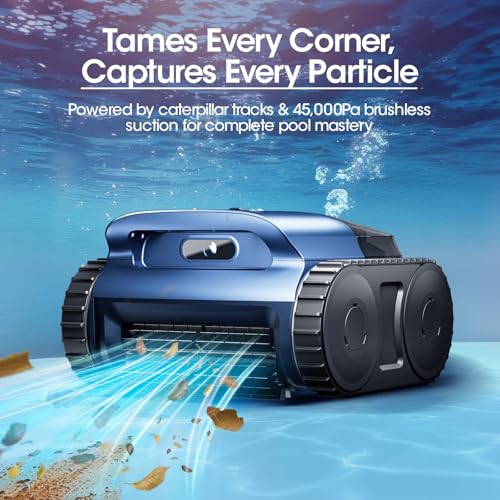
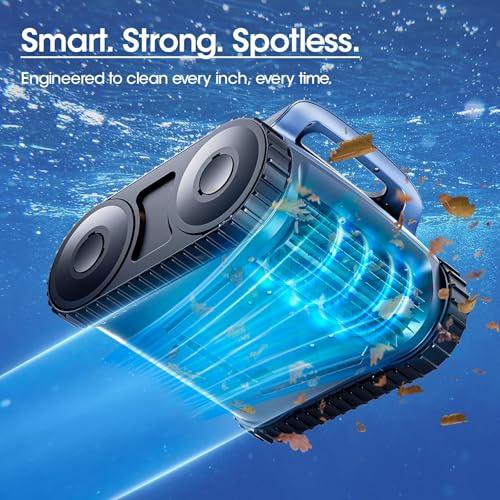
Released in recent years as pool robot technology became more accessible, the Seauto 180W embodies a "keep it simple" approach. Its standout feature is the industrial-grade caterpillar tread design – essentially tank treads that provide exceptional grip on pool surfaces. This isn't just marketing fluff; caterpillar treads distribute weight more evenly and provide superior traction compared to traditional wheels, especially on uneven surfaces like pool steps or textured concrete.
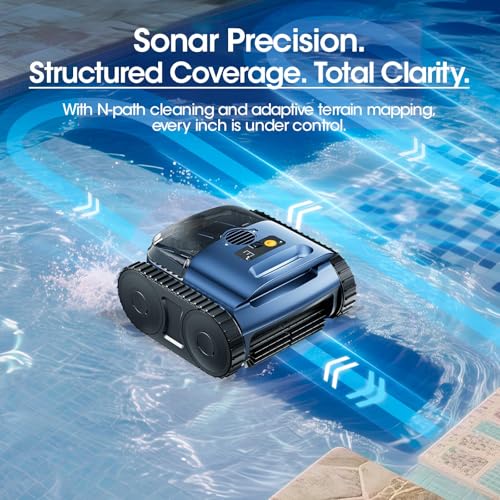
The sonar navigation system represents a middle-ground technology. Sonar works by sending sound waves through the water and measuring how long they take to bounce back, creating a basic map of the pool's shape and obstacles. While not as sophisticated as camera-based or multi-sensor systems, sonar navigation is reliable and works consistently in all water conditions – unlike optical systems that can be confused by algae, debris, or varying light conditions.
What I find particularly appealing about the Seauto 180W is its true one-touch operation. Many "smart" devices today require apps, WiFi setup, and constant connectivity, but sometimes you just want to press a button and have something work reliably. The IP68 waterproof rating (meaning it can handle complete submersion and dust ingress) suggests this robot is built to last rather than impress with flashy features.
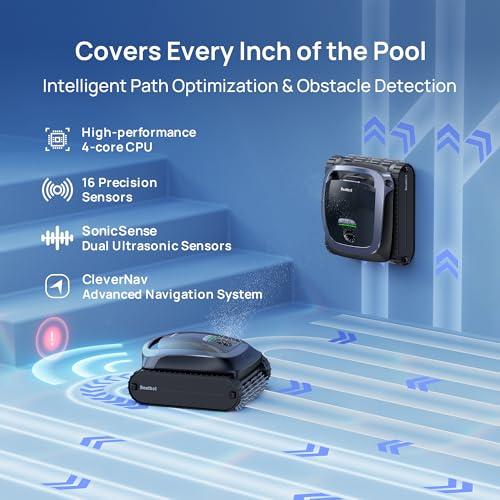
The Beatbot AquaSense 2, released more recently as premium pool robot technology matured, represents the current state-of-the-art in cordless pool cleaning. Its navigation system combines 16 different sensors with 2 ultrasonic sensors – essentially giving it multiple ways to "see" its environment simultaneously.
The CleverNav technology uses what's called intelligent path optimization, employing different cleaning patterns for different surfaces. The S-path pattern for floors maximizes coverage while minimizing overlap, while the N-pattern for walls and waterlines follows the most efficient route to scrub these challenging areas. This isn't just about being fancy – efficient path planning directly translates to better cleaning in less time, which matters when you're working with limited battery power.
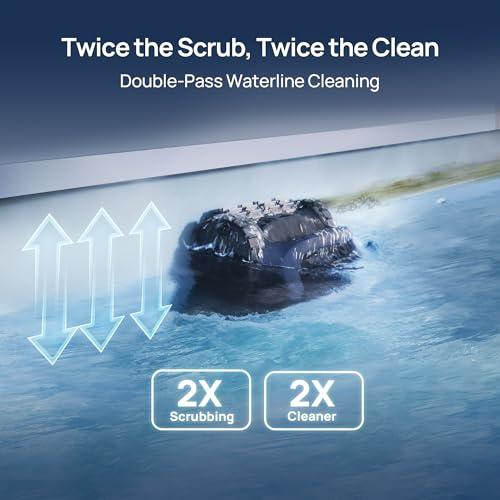
Perhaps most impressively, the Beatbot AquaSense 2 features double-pass waterline scrubbing. The waterline – where the water meets the pool wall – typically accumulates the most stubborn grime from oils, sunscreen, and organic matter. Most robots scrub this area once and move on, but the AquaSense 2 deliberately scrubs twice in each pass, addressing one of the most challenging cleaning tasks in pool maintenance.
Navigation technology fundamentally determines how effectively a robot cleans your pool. Based on our research into user experiences and expert evaluations, the differences here are substantial and immediately noticeable in real-world use.
The Seauto 180W's sonar navigation works reliably for most pool shapes, but it follows relatively simple patterns. Think of it as methodical rather than intelligent – it will systematically cover your pool, but it might clean the same area multiple times while potentially missing others. For rectangular or simple oval pools, this approach works well enough. The caterpillar treads help it maintain course even when the navigation isn't perfect, providing a safety net through superior traction.
In contrast, the Beatbot AquaSense 2's 16-sensor system creates what's essentially a real-time 3D map of your pool environment. The ultrasonic sensors can detect obstacles and walls from a distance, while other sensors monitor things like water depth, surface texture, and even the robot's own orientation. The 4-core CPU processes all this information to make intelligent decisions about where to clean next.
User feedback consistently shows that pools with complex shapes – kidney-shaped, L-shaped, or those with multiple levels and obstacles – benefit significantly from the AquaSense 2's advanced navigation. However, for straightforward pool layouts, the Seauto's simpler approach often proves just as effective while being more predictable and less prone to software glitches.
This is where the technical specifications tell only part of the story. The Beatbot AquaSense 2 claims 5,500 gallons per hour (GPH) of suction power from its 4-motor system, which sounds impressive on paper. However, expert reviews and user experiences reveal that cordless robots face fundamental physics limitations that corded models don't.
The Seauto 180W uses dual 180W brushless motors – that's 360W total motor power dedicated to suction and movement. Brushless motors are more efficient than traditional motors, generating less heat and providing more consistent power throughout the battery cycle. The fact that Seauto specifies the actual motor wattage rather than just GPH ratings suggests confidence in their approach.
Real-world performance data from user reviews indicates that both robots handle large debris like leaves effectively, but struggle with fine particles compared to corded alternatives. This isn't necessarily a flaw – it's a fundamental trade-off of cordless design. The AquaSense 2's larger filter capacity (2 liters) means it can theoretically handle more debris before needing to be emptied, but multiple user reports suggest that the actual suction performance doesn't always match the impressive specifications.
What matters most in daily use is debris pickup consistency. Both robots excel at routine maintenance – keeping up with normal leaf fall, pollen, and general debris. Where they differ is in handling challenging situations like post-storm cleanup or pools that haven't been maintained for several days.
Battery performance represents the biggest constraint for any cordless pool robot, and here the differences become crucial for determining which robot fits your needs.
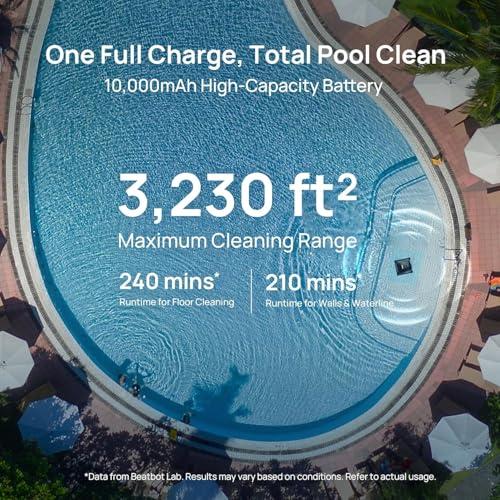
The Beatbot AquaSense 2 features a substantial 10,000 mAh lithium-ion battery that provides up to 4 hours of floor cleaning or 3.5 hours of combined wall and waterline cleaning. These numbers are meaningful because most pools require 2-4 hours for thorough cleaning depending on size and debris load. The wireless charging dock eliminates the hassle of plugging in wet connectors, though it requires a 4-hour charging cycle.
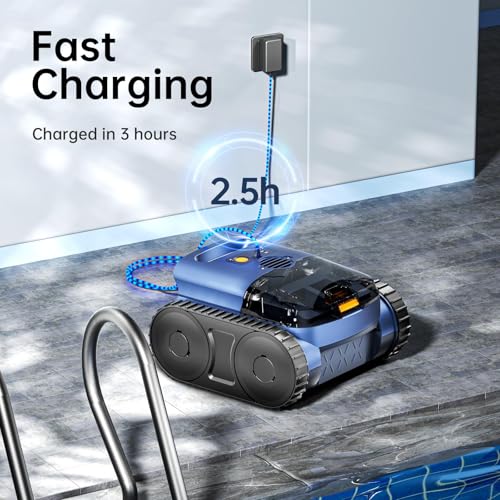
The Seauto 180W doesn't specify its battery capacity, which is concerning from a transparency standpoint. However, user reports suggest adequate runtime for pools within its stated coverage area. The IP68 rating extends to the charging system, which should provide long-term reliability even in challenging outdoor environments.
What's particularly important to understand is how battery performance degrades during operation. Unlike corded robots that maintain consistent suction throughout the cleaning cycle, cordless units gradually lose power as the battery drains. The AquaSense 2's larger battery provides more consistent performance throughout the cleaning cycle, while smaller battery systems may struggle to maintain suction during the final portion of a cleaning session.
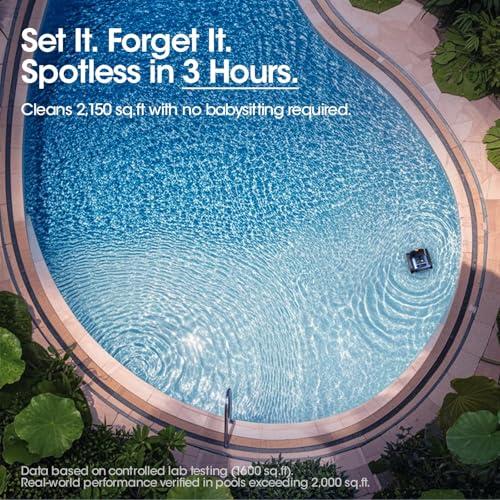
Pool coverage represents one of the clearest differentiators between these robots. The Seauto 180W handles pools up to 2,150 square feet, while the Beatbot AquaSense 2 covers up to 3,230 square feet. These aren't arbitrary numbers – they represent the practical limits of battery life and cleaning efficiency.
For perspective, a typical residential pool measuring 16x32 feet covers about 512 square feet, well within both robots' capabilities. However, larger pools (20x40 feet = 800 square feet) or complex shapes with significant wall area push the Seauto closer to its limits while remaining comfortably within the AquaSense 2's range.
The coverage calculation also depends on pool depth and wall area. Deep pools require more energy for the robot to climb walls and return to the surface, effectively reducing the floor area it can clean on a single charge. The AquaSense 2's ability to handle pools up to 9.84 feet deep gives it significantly more versatility than typical cordless robots.
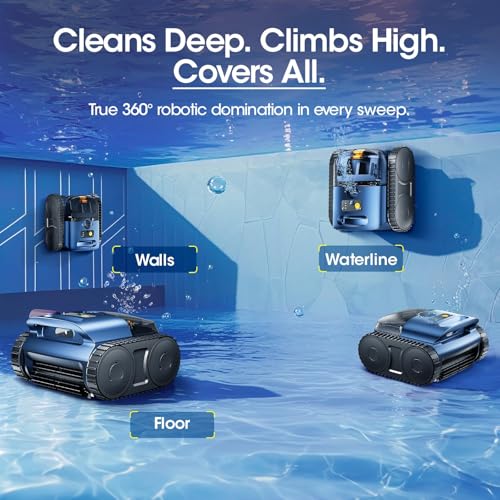
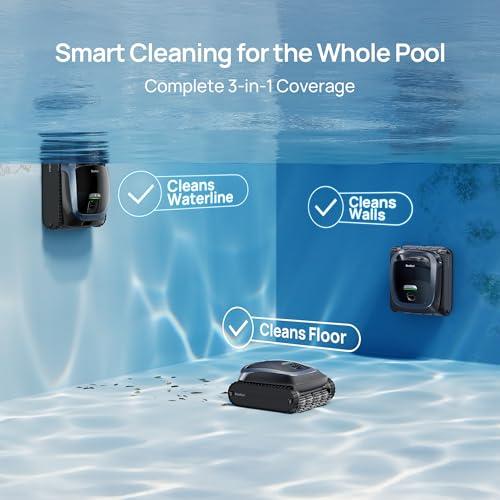
The waterline presents the greatest cleaning challenge in any pool. This area accumulates oils from swimmers, sunscreen residue, and organic matter that creates a persistent scum line. Most robotic cleaners treat waterline cleaning as an afterthought, but the Beatbot AquaSense 2 makes it a primary focus.
The double-pass waterline scrubbing system represents genuine innovation. Instead of a single brush pass that most robots employ, the AquaSense 2 deliberately scrubs each section of waterline twice before moving on. Combined with its N-pattern navigation specifically designed for waterline efficiency, this approach addresses one of the most common complaints about robotic pool cleaners.
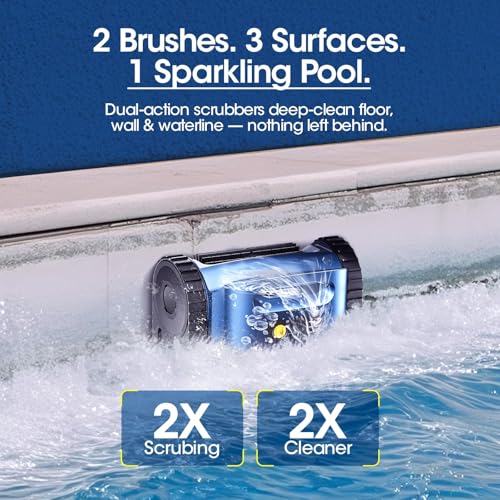
The Seauto 180W includes waterline cleaning in its multi-mode operation, but without specialized patterns or multiple passes. For pools without significant waterline buildup, this may be adequate, but pools in areas with heavy bather loads or environmental contamination will benefit from the AquaSense 2's focused approach.
Both robots claim compatibility with all common pool surfaces – concrete, vinyl, tile, and fiberglass – but their approaches differ significantly. The Seauto 180W's caterpillar treads provide mechanical grip that works consistently across different textures. This design excels on rough concrete or textured surfaces where wheels might slip.
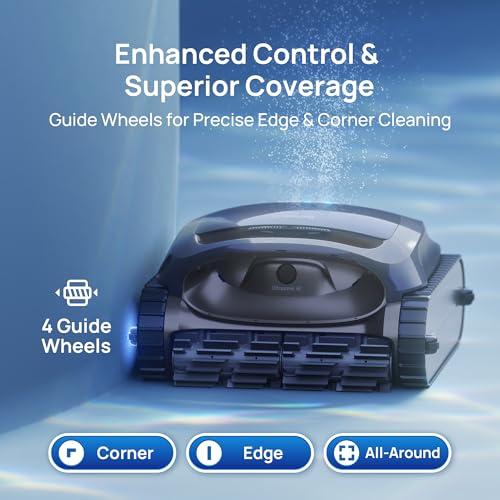
The Beatbot AquaSense 2 uses 4 guide wheels for edge and corner cleaning, combined with its sensor array to adjust cleaning pressure and patterns based on surface type. This intelligent adaptation can provide gentler cleaning on delicate vinyl while increasing aggressiveness on stubborn concrete stains.
User reports consistently indicate that both robots handle standard pool surfaces well, but the Seauto's mechanical approach proves more predictable, while the AquaSense 2's adaptive system provides better results when it works correctly but may occasionally struggle with unusual surface textures or unexpected obstacles.
Based on extensive research into user reviews and expert evaluations, several clear patterns emerge about how these robots perform in daily use.
The Seauto 180W consistently receives praise for reliability and simplicity. Users appreciate that it starts cleaning immediately without setup requirements and generally completes its cleaning cycles without intervention. However, some users report that the basic navigation can be frustratingly inefficient in complex pool layouts, spending too much time in some areas while missing others entirely.
The Beatbot AquaSense 2 impresses users with its intelligent navigation and thorough waterline cleaning, but professional reviews note disappointing suction performance compared to expectations. The advanced features work as advertised, but the fundamental cleaning power doesn't always match the premium positioning. Users also report occasional software glitches and connectivity issues that can interrupt cleaning cycles.
Both robots face the inherent limitation of cordless design – they simply can't match the consistent, powerful suction of corded alternatives. This becomes most apparent in challenging conditions like post-storm debris or pools with fine sediment. However, for routine maintenance cleaning, both prove adequate for their intended use cases.
At the time of writing, these robots occupy different price tiers that reflect their feature sets and target markets. The Seauto 180W positions itself as an accessible entry point into cordless pool cleaning, while the Beatbot AquaSense 2 commands premium pricing for its advanced features.
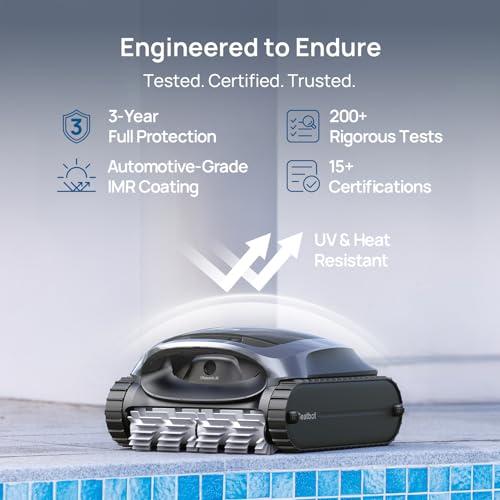
The value calculation extends beyond initial purchase price to include factors like warranty coverage, long-term reliability, and replacement part availability. The AquaSense 2's 3-year comprehensive warranty with full machine replacement represents exceptional coverage in this category, effectively eliminating risk for early adopters of newer technology.
However, the Seauto's simpler design may prove more durable long-term, with fewer complex systems that can fail. The IP68 rating and industrial-grade construction suggest a robot built to last rather than impress, which could provide better value over many years of use.
After evaluating both robots comprehensively, clear usage scenarios emerge where each excels.
Choose the Seauto 180W if you have a straightforward pool under 2,150 square feet, prioritize reliability over advanced features, and prefer simple operation without app dependencies. This robot particularly suits users who want predictable performance without the complexity of smart features. Pools with challenging surfaces or steps will benefit from the caterpillar tread design's superior traction.
The Beatbot AquaSense 2 makes sense for larger pools, complex shapes, or situations where waterline cleaning is a priority concern. Users who appreciate smart technology and don't mind occasional troubleshooting will find the advanced navigation and app control compelling. The larger filter capacity and extended runtime also suit pools with heavier debris loads.
For most pool owners, the choice ultimately comes down to whether you value simplicity and reliability over advanced features and larger coverage. The Seauto 180W delivers solid basic performance at an accessible price point, while the Beatbot AquaSense 2 offers premium capabilities that justify its higher cost only if you can utilize its advanced features effectively.
Neither robot will match the raw cleaning power of high-end corded alternatives, but both provide the convenience and freedom that makes regular pool maintenance more manageable. Choose based on your specific pool characteristics, technical comfort level, and willingness to pay for advanced automation rather than brand prestige alone.
| Seauto Cordless Robotic Pool Cleaner 180W | Beatbot AquaSense 2 |
|---|---|
| Pool Coverage - Maximum pool size each robot can effectively clean | |
| Up to 2,150 sq ft (suitable for most residential pools) | Up to 3,230 sq ft (handles large residential and small commercial pools) |
| Navigation System - How intelligently the robot moves and avoids missed spots | |
| Sonar navigation with basic pool mapping | CleverNav with 16 sensors + 2 ultrasonic sensors, S-path floors/N-path walls |
| Motor Configuration - Power delivery affects suction strength and reliability | |
| Dual 180W brushless motors (360W total) | 4-motor system with 200W brushless motor-pump |
| Suction Power - Critical for debris pickup, especially fine particles | |
| Not specified (motor wattage suggests moderate suction) | 5,500 GPH (though real-world performance may vary) |
| Battery & Runtime - Determines cleaning completion without interruption | |
| Capacity not specified, runtime not detailed | 10,000 mAh, up to 4 hours floor cleaning or 3.5 hours walls/waterline |
| Mobility System - How well it handles pool surfaces and obstacles | |
| Industrial-grade caterpillar treads for superior traction | 4 guide wheels with sensor-guided navigation |
| Waterline Cleaning - Most challenging area that accumulates oils and grime | |
| Standard waterline cleaning in multi-mode operation | Double-pass waterline scrubbing with dedicated N-pattern navigation |
| Filter System - Determines what size debris gets captured | |
| Fine particle filtration (specific capacity not detailed) | Dual-layer 150μm filtration, 2L filter basket capacity |
| Charging Method - Convenience and reliability of power delivery | |
| IP68-rated charging system | Wireless charging dock, 4-hour full charge time |
| Smart Features - App control and automation capabilities | |
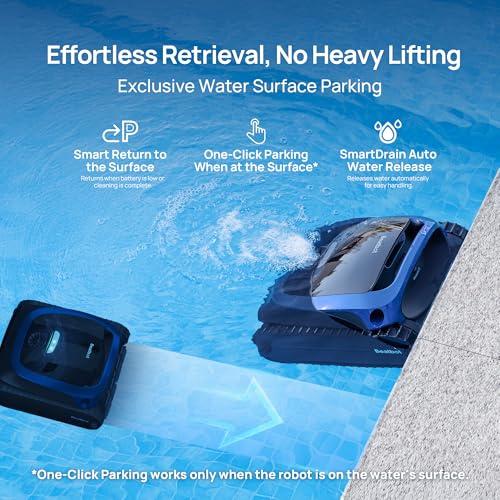
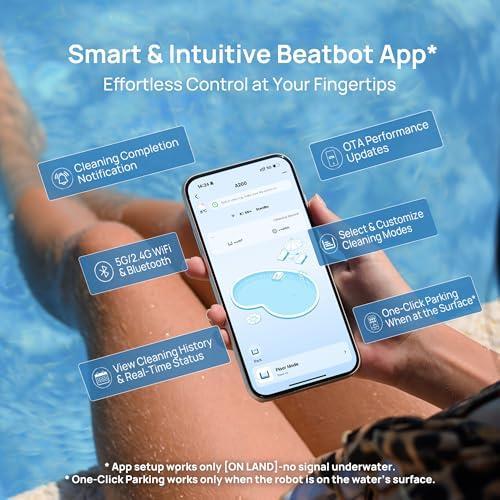
| One-touch operation, no app required | Dual WiFi/Bluetooth connectivity, app control, auto surface parking |
| Cleaning Modes - Flexibility for different cleaning needs | |
| 3 selectable modes (Floor, Wall, Full Coverage) | Multiple modes via app including floor, walls, waterline, and area cleaning |
| Durability Rating - Protection against water and environmental damage | |
| IP68-certified internal architecture | Automotive-grade IMR coating, not IP-rated |
| Warranty Coverage - Protection against defects and failures | |
| Standard warranty (specifics not detailed) | 3-year comprehensive protection with full machine replacement |
The Beatbot AquaSense 2 is better for large pools, covering up to 3,230 square feet compared to the Seauto 180W which handles pools up to 2,150 square feet. If you have a pool larger than 20x40 feet or a complex shape with significant wall area, the AquaSense 2 provides the battery life and navigation intelligence needed for thorough cleaning.
The Seauto 180W uses sonar navigation, which sends sound waves to map basic pool shapes and obstacles. The Beatbot AquaSense 2 uses advanced CleverNav with 16 sensors plus 2 ultrasonic sensors, creating detailed 3D mapping for intelligent path planning. The AquaSense 2 provides more efficient cleaning patterns, while the Seauto offers simpler, more predictable operation.
The Beatbot AquaSense 2 provides up to 4 hours of floor cleaning or 3.5 hours of combined wall and waterline cleaning with its 10,000 mAh battery. The Seauto 180W doesn't specify exact runtime, but user reports suggest adequate battery life for pools within its coverage area. For most residential pools, both should complete cleaning in one charge.
The Beatbot AquaSense 2 excels at waterline cleaning with its double-pass scrubbing system that cleans each waterline section twice per pass. It uses a dedicated N-pattern navigation specifically for waterlines. The Seauto 180W includes basic waterline cleaning but without specialized patterns or multiple passes, making the AquaSense 2 superior for persistent waterline buildup.
Both the Seauto 180W and Beatbot AquaSense 2 work with concrete, vinyl, tile, and fiberglass pools. The Seauto uses caterpillar treads that provide excellent traction on textured surfaces, while the AquaSense 2 adapts its cleaning patterns based on surface type through intelligent sensors.
The Seauto 180W is simpler to operate with true one-touch activation and no app requirements. The Beatbot AquaSense 2 offers more features through app control but requires setup and connectivity. If you prefer straightforward operation, choose the Seauto. If you want smart features and remote control, the AquaSense 2 provides more functionality.
The Beatbot AquaSense 2 claims 5,500 GPH suction with its 4-motor system, while the Seauto 180W uses dual 180W brushless motors. However, real-world performance depends on debris type and battery level. Both handle leaves and large debris well, but may struggle with fine particles compared to corded alternatives.
The Seauto 180W features IP68-certified internal architecture and industrial-grade caterpillar treads designed for durability. The Beatbot AquaSense 2 uses automotive-grade IMR coating and offers a 3-year comprehensive warranty with full machine replacement. Both are built for pool environments, but the AquaSense 2 provides superior warranty protection.
The Beatbot AquaSense 2 specifically supports saltwater pools below 5,000 PPM (parts per million). The Seauto 180W doesn't explicitly mention saltwater compatibility in available specifications. If you have a saltwater pool, verify compatibility before purchasing, though most modern pool robots handle typical saltwater levels.
The Seauto 180W offers better value for basic cleaning needs with reliable performance at a lower price point. The Beatbot AquaSense 2 provides premium features like advanced navigation and specialized waterline cleaning but at a higher cost. Choose the Seauto for budget-conscious buyers or the AquaSense 2 if advanced features justify the investment.
Filter emptying frequency depends on debris load, but the Beatbot AquaSense 2 has a larger 2-liter filter basket compared to the Seauto 180W. Generally, empty filters after each cleaning cycle or when suction performance decreases. The AquaSense 2 may require less frequent emptying due to its larger capacity.
The Seauto 180W excels on steps and uneven surfaces thanks to its caterpillar tread design that provides superior traction and climbing ability. The Beatbot AquaSense 2 uses sensors to navigate around obstacles intelligently but relies on wheels rather than treads. For pools with challenging terrain, the Seauto may perform more reliably.
We've done our best to create useful and informative comparisons to help you decide what product to buy. Our research uses advanced automated methods to create this comparison and perfection is not possible - please contact us for corrections or questions. These are the sites we've researched in the creation of this article: youtube.com - beatbot.com - beatbot.com - beatbot.com - thepoolnerd.com - thepoolnerd.com - youtube.com - youtube.com - roboticreviews.com - youtube.com - youtube.com - pool.shop - walmart.com - youtube.com - beatbot.com - thepoolnerd.com - beatbot.com - thepoolnerd.com - pool.shop - youtube.com - mybeatbot.com - thepoolnerd.com - youtube.com - youtube.com - beatbot.com - youtube.com - youtube.com

Privacy Policy
Terms and Conditions - Affiliate Policy
Home Security
© Copyright 2008-2026.
11816 Inwood Rd #1211, Dallas, TX 75244