

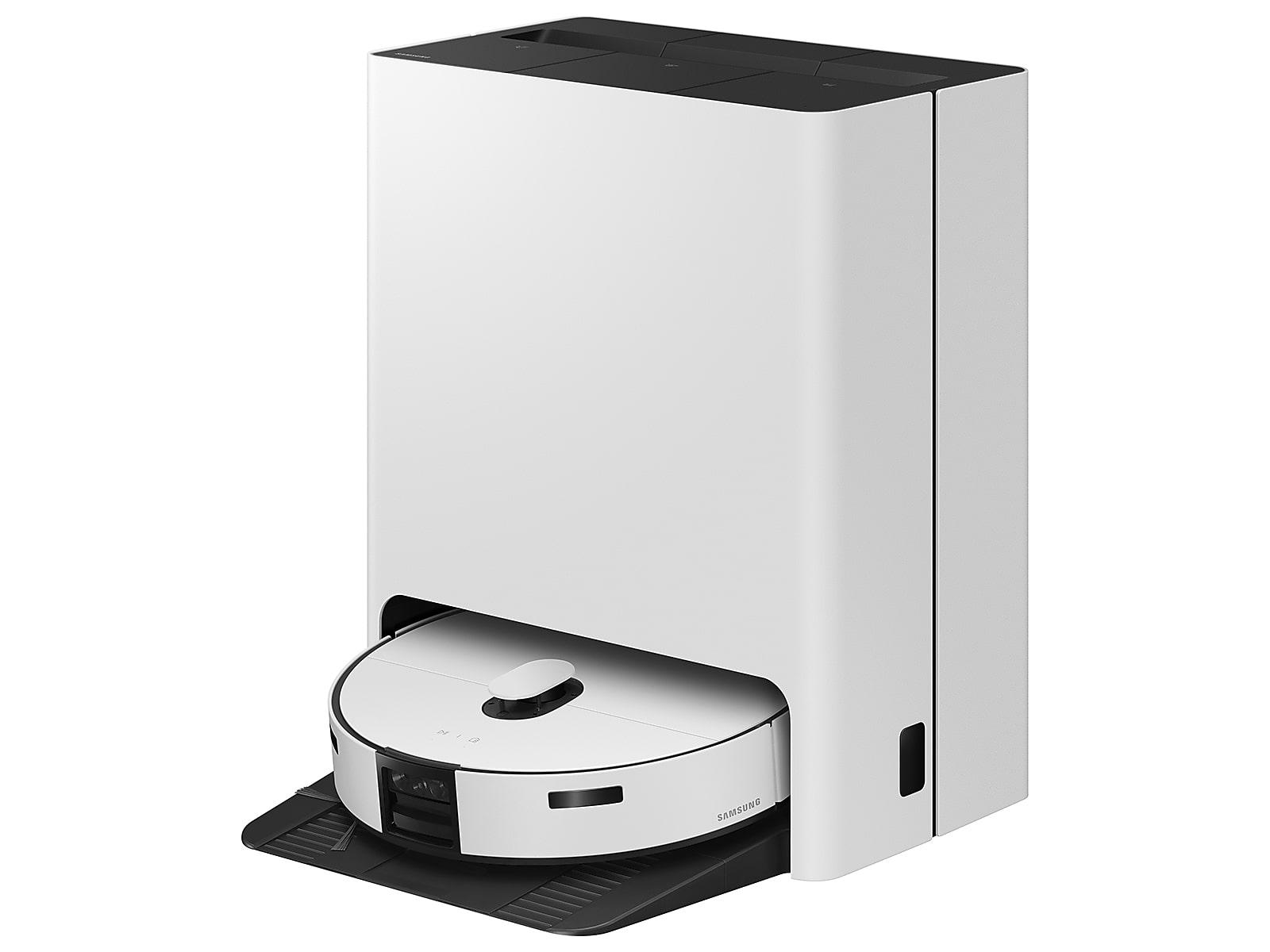

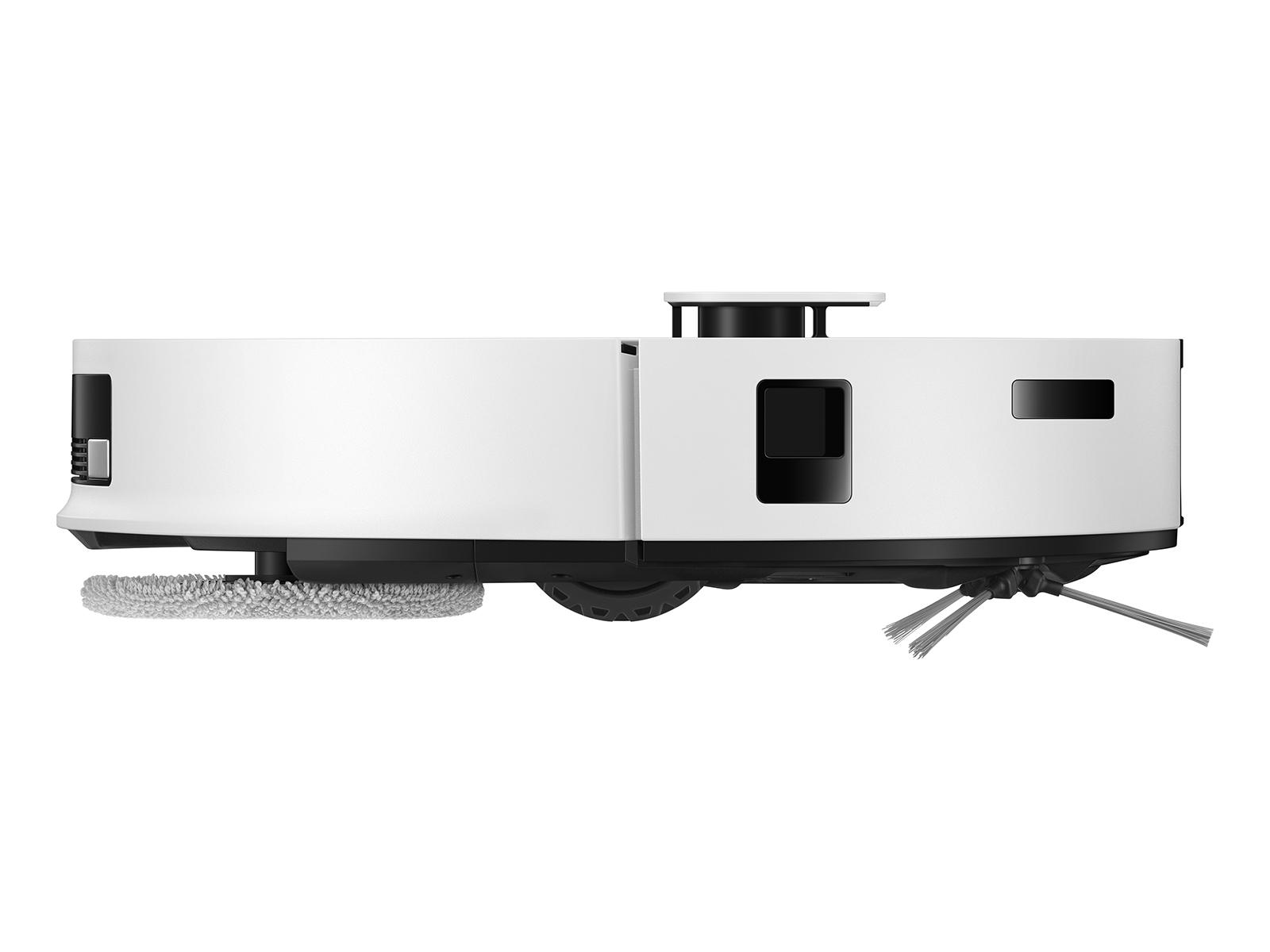
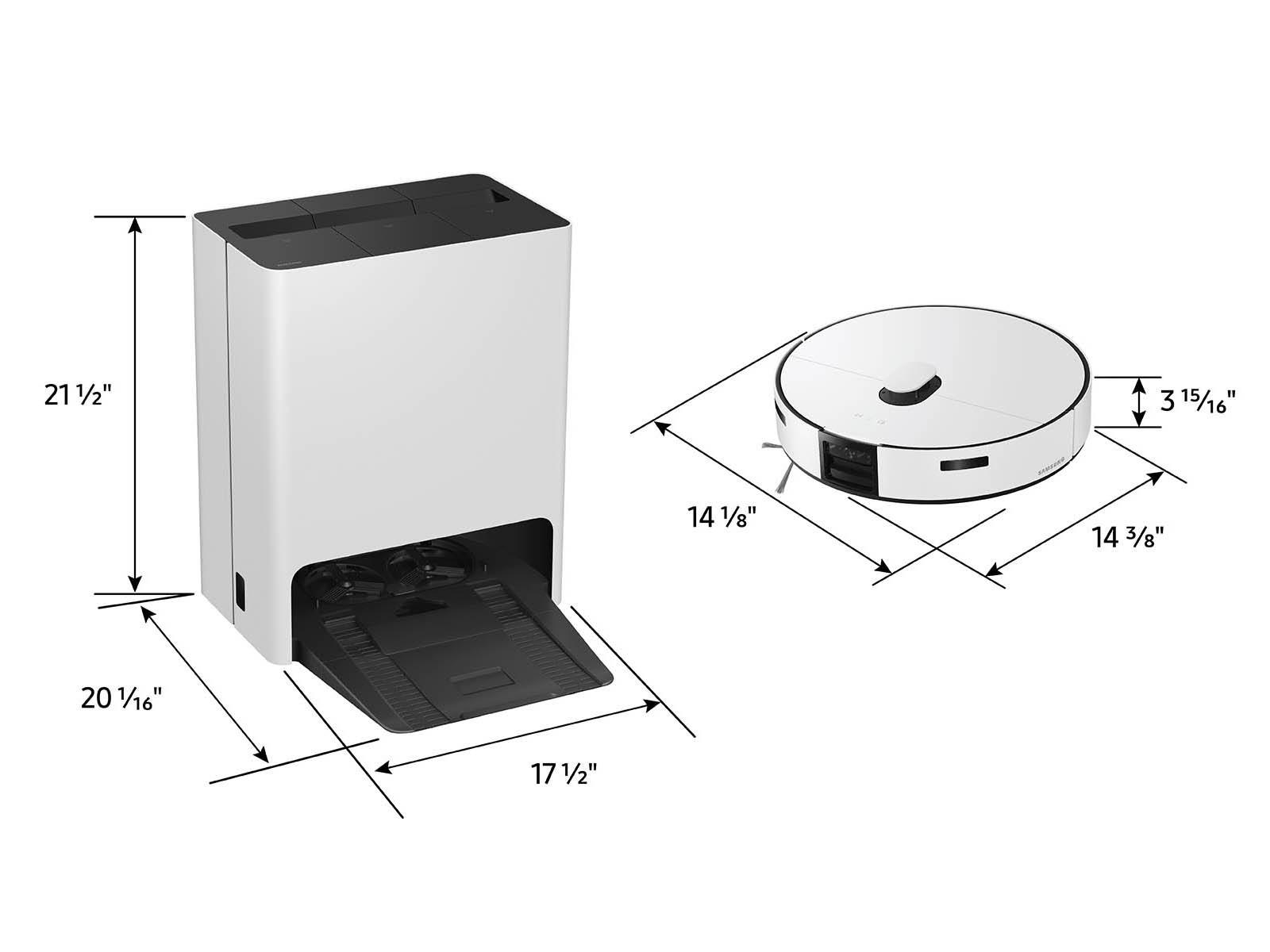
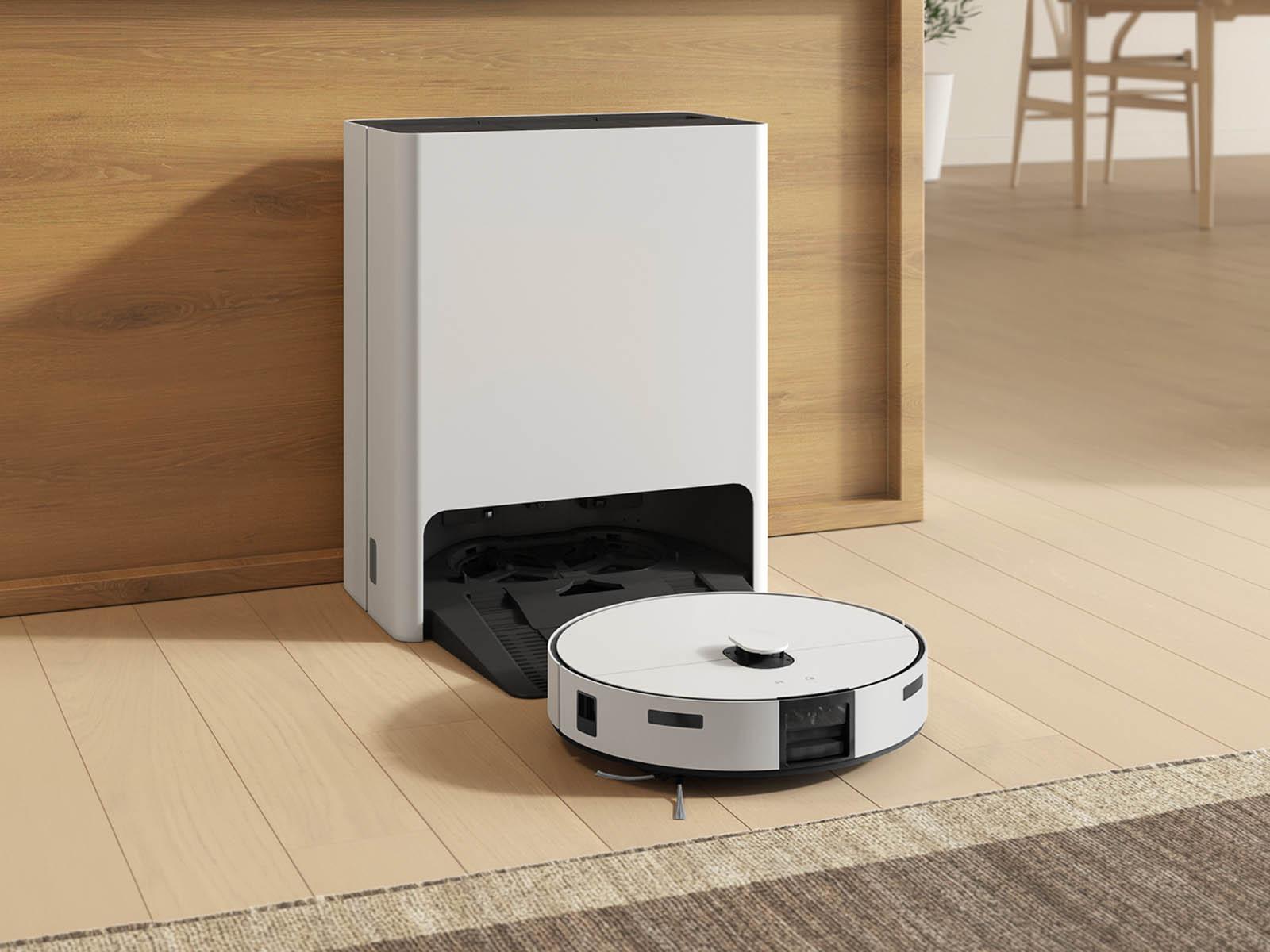
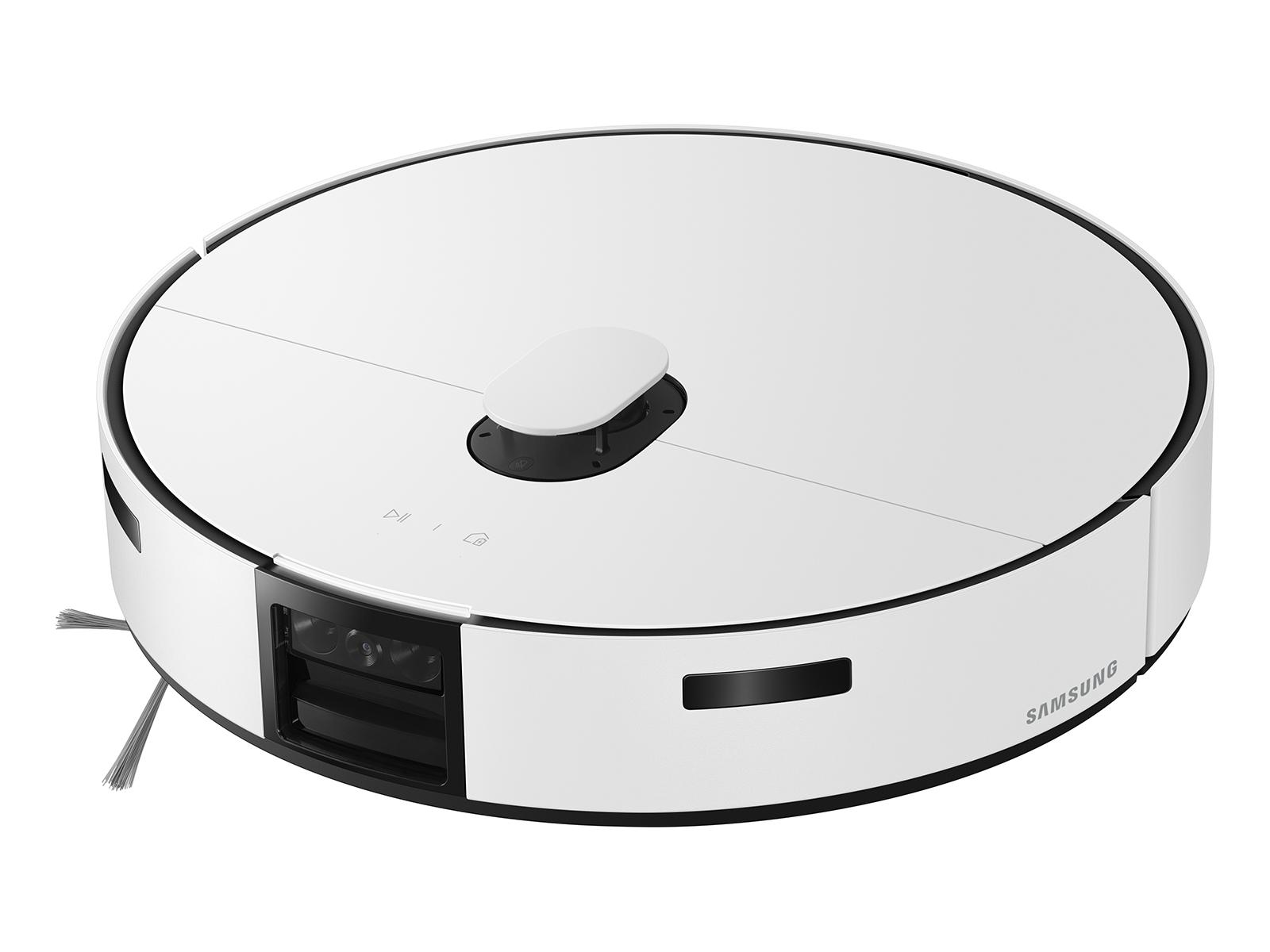

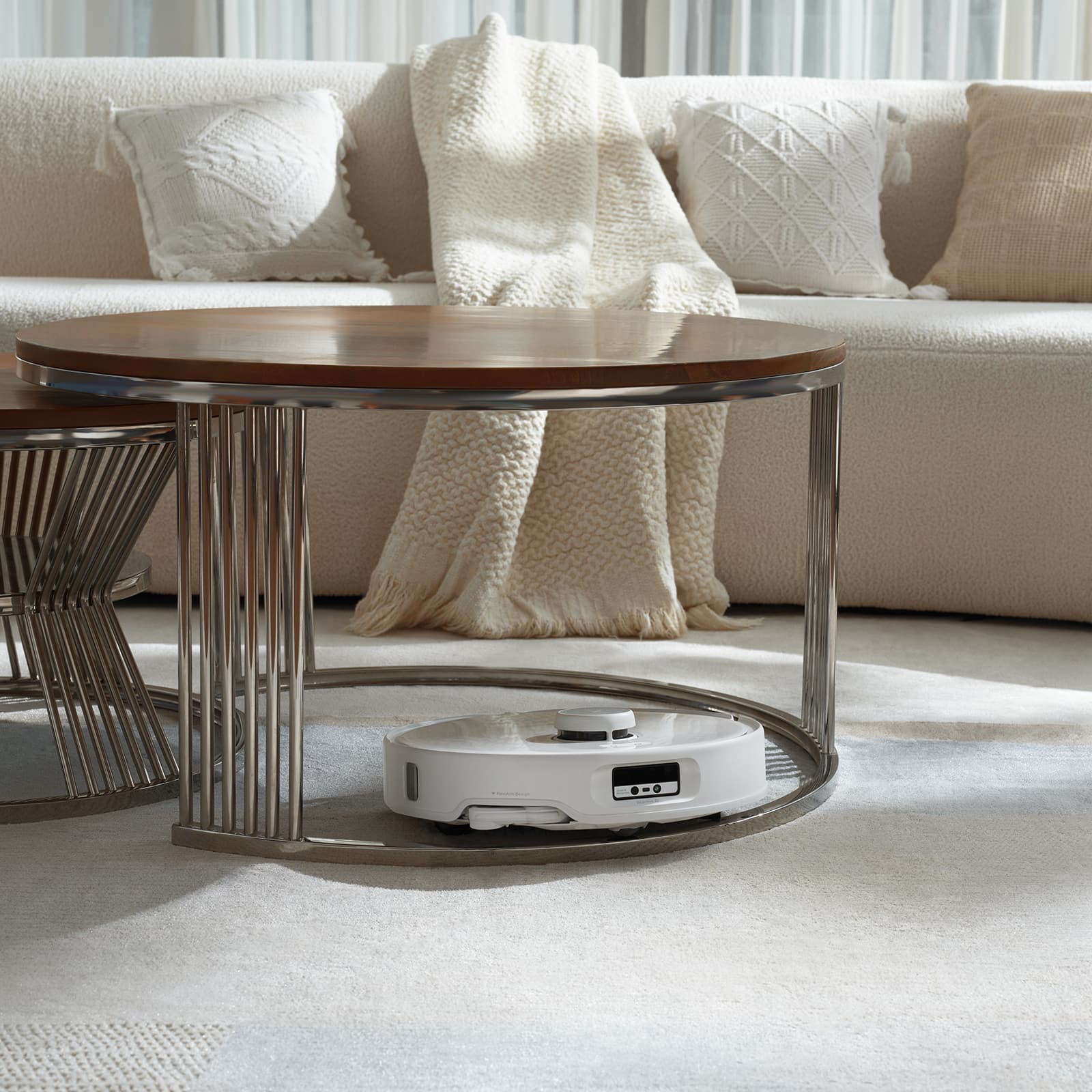
The robot vacuum market has exploded into a high-tech battleground where artificial intelligence meets serious cleaning power. Two standouts dominate the premium end: the Samsung Bespoke Jet Bot Combo AI and the Roborock Qrevo Curv. Both launched in 2024, representing the cutting edge of what automated cleaning can accomplish.
These aren't your basic bump-and-go robots from a few years back. We're talking about machines that can recognize your pet, avoid stepping on charging cables, and even sanitize their own mop pads. The question isn't whether they can clean—it's which one fits your specific home and lifestyle better.
Robot vacuum and mop combos sit at the top of the automated cleaning pyramid. Unlike simpler models that just vacuum, these sophisticated machines handle both dry debris pickup and wet mopping in a single cleaning cycle. They represent a significant investment—both products fall into the premium price category at the time of writing, typically ranging from $1,500 to $1,800.
What you're paying for isn't just convenience. These machines pack serious technology: LiDAR mapping systems that create precise floor plans, AI-powered cameras that identify obstacles, and self-maintenance stations that reduce your involvement to nearly zero. The goal is simple—press a button and return to a completely clean home.
The most important factors when choosing between premium models come down to cleaning performance, navigation intelligence, and how much maintenance you want to handle yourself. Since both products aim to eliminate daily cleaning tasks, small differences in capability translate to big differences in real-world satisfaction.
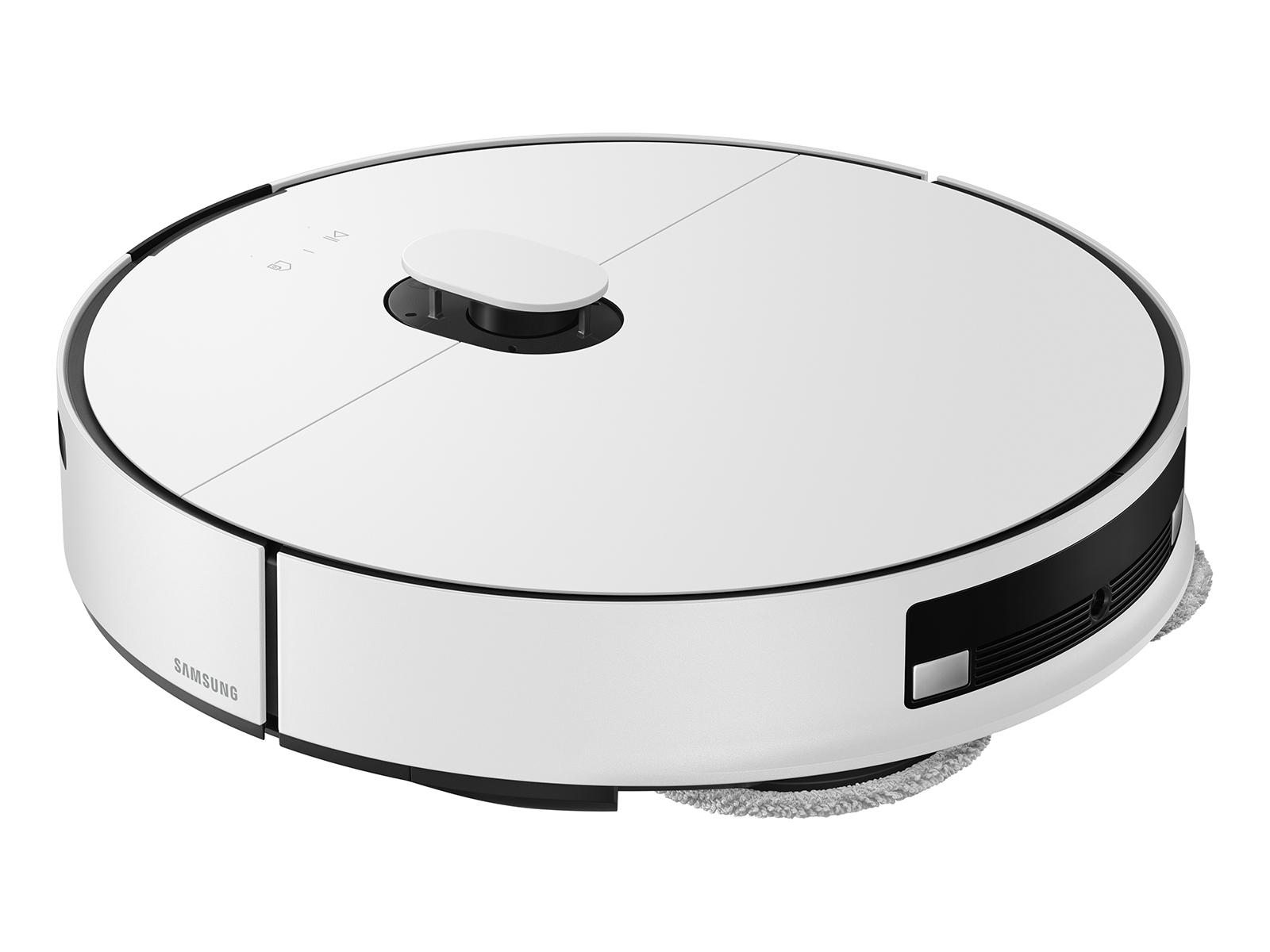
The Samsung Bespoke Jet Bot Combo AI launched in 2024 as Samsung's flagship cleaning robot, building on years of smart home expertise. This machine prioritizes artificial intelligence and seamless integration with Samsung's SmartThings ecosystem.
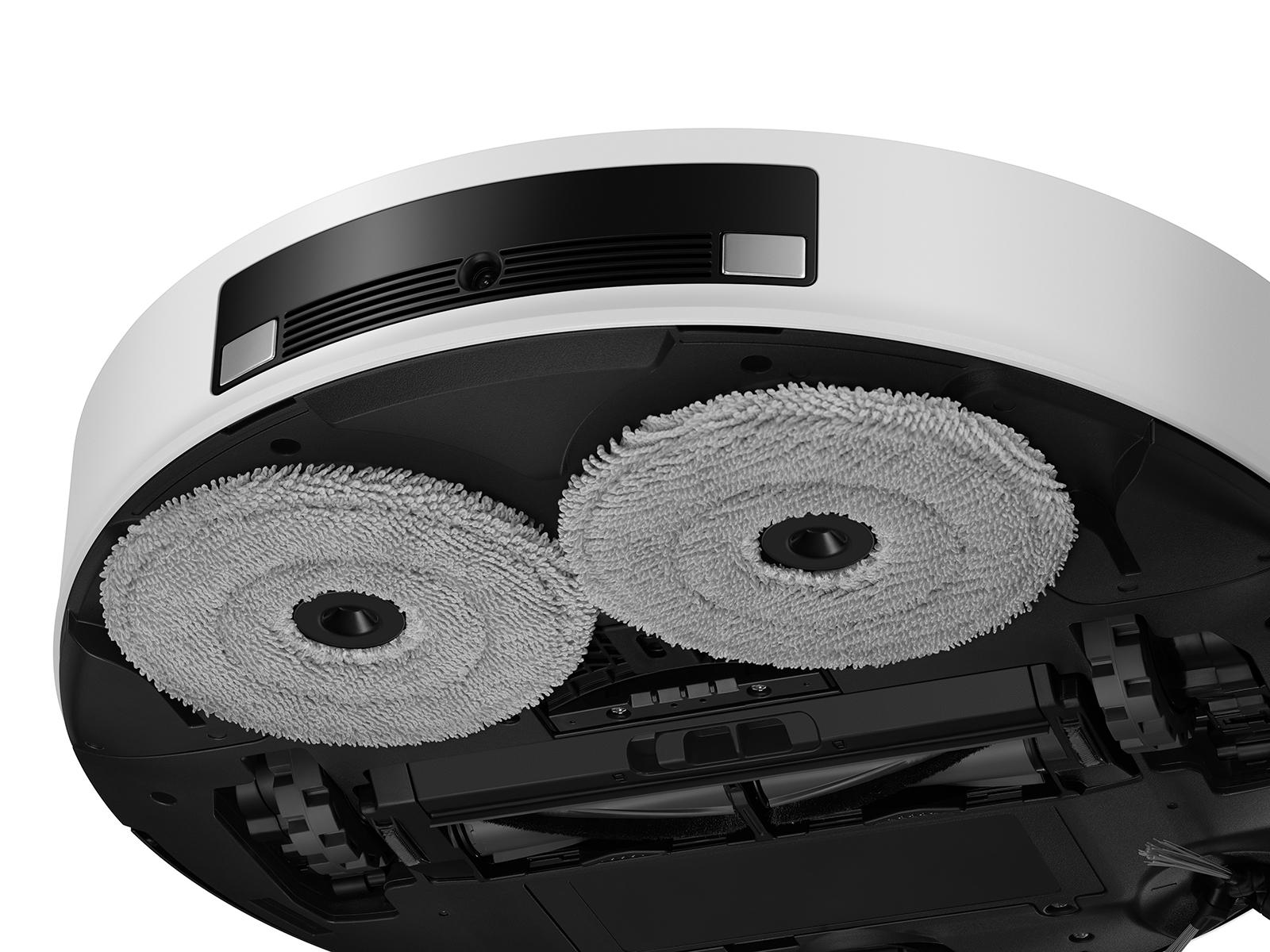
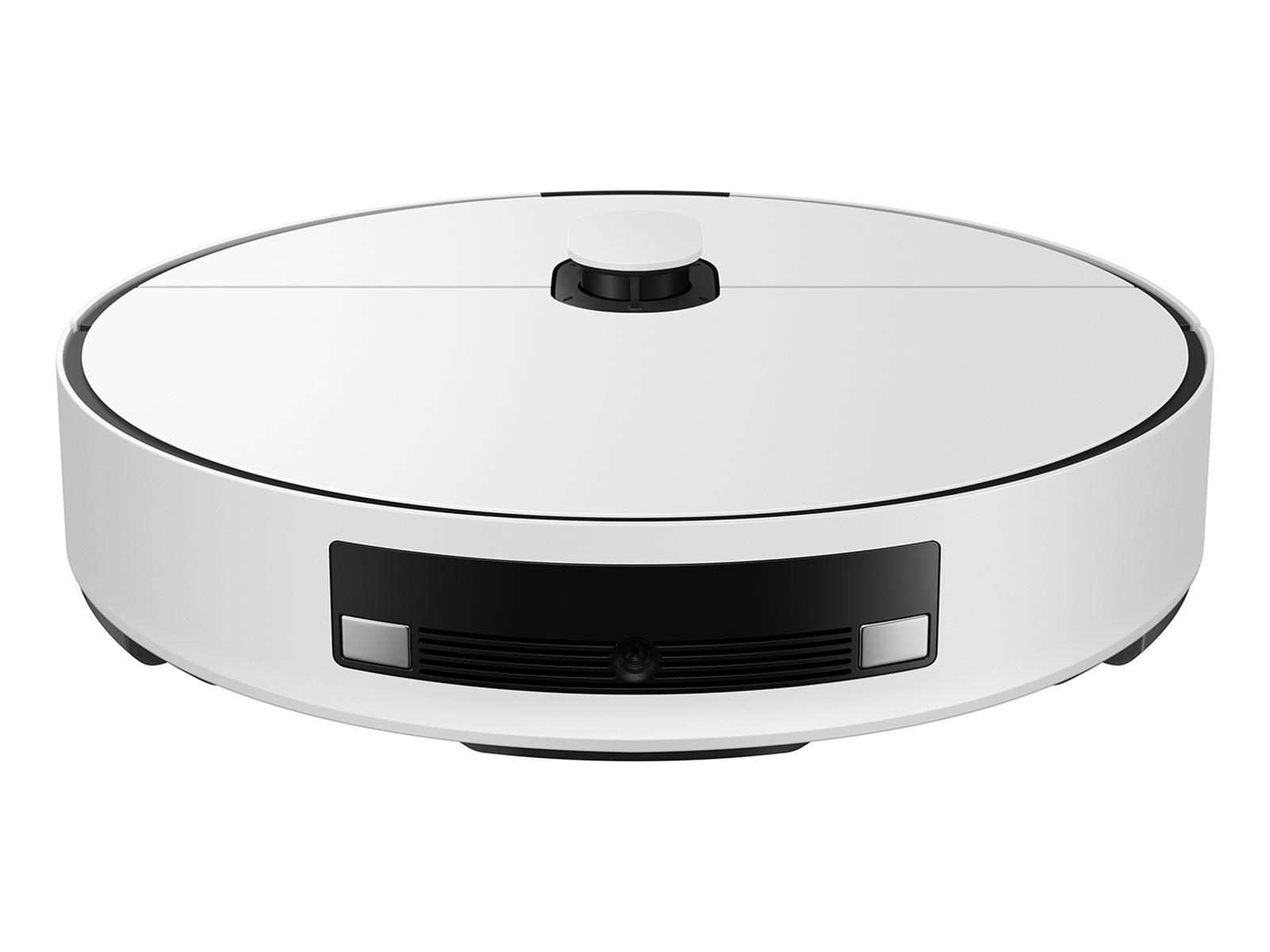
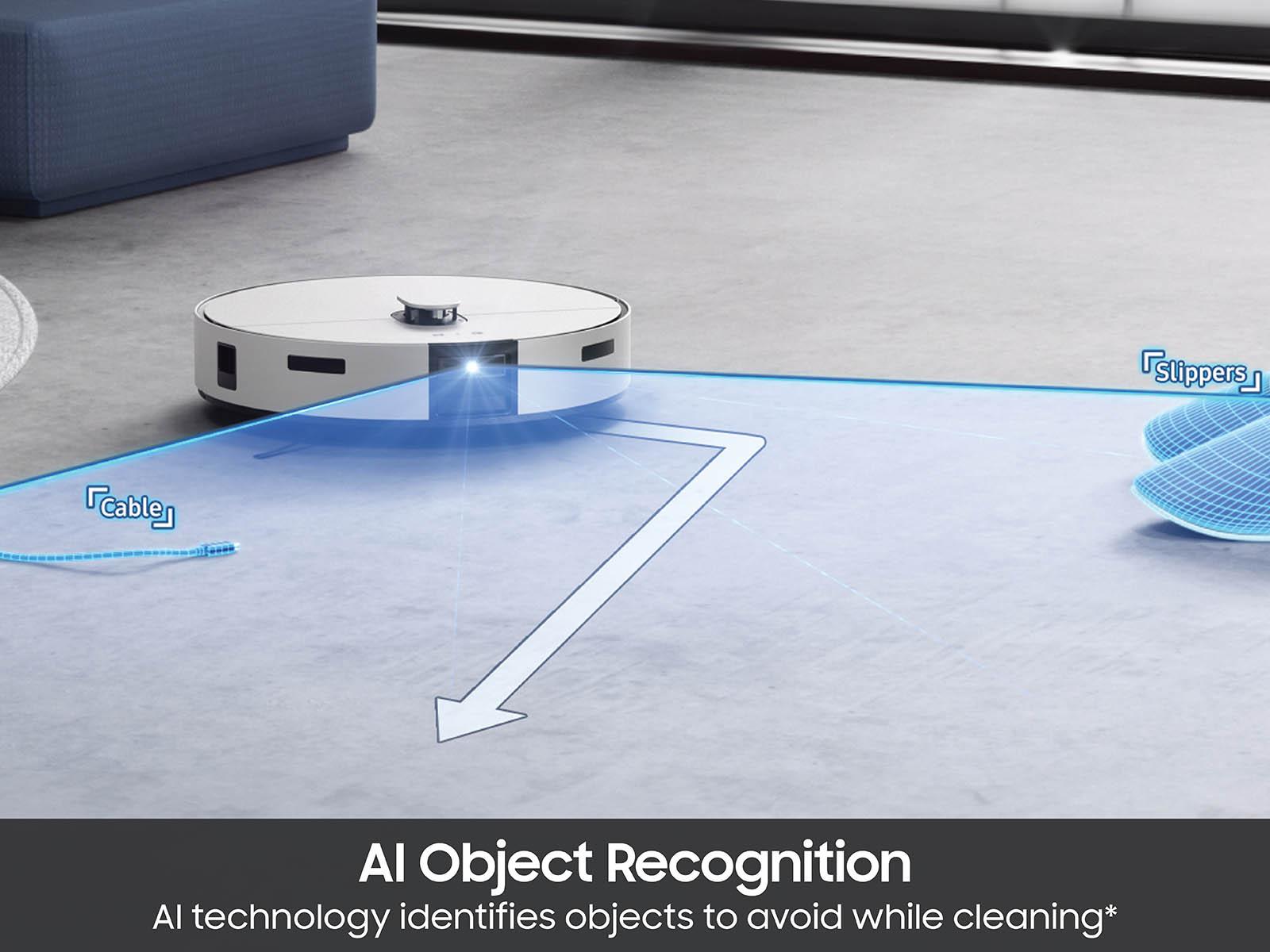
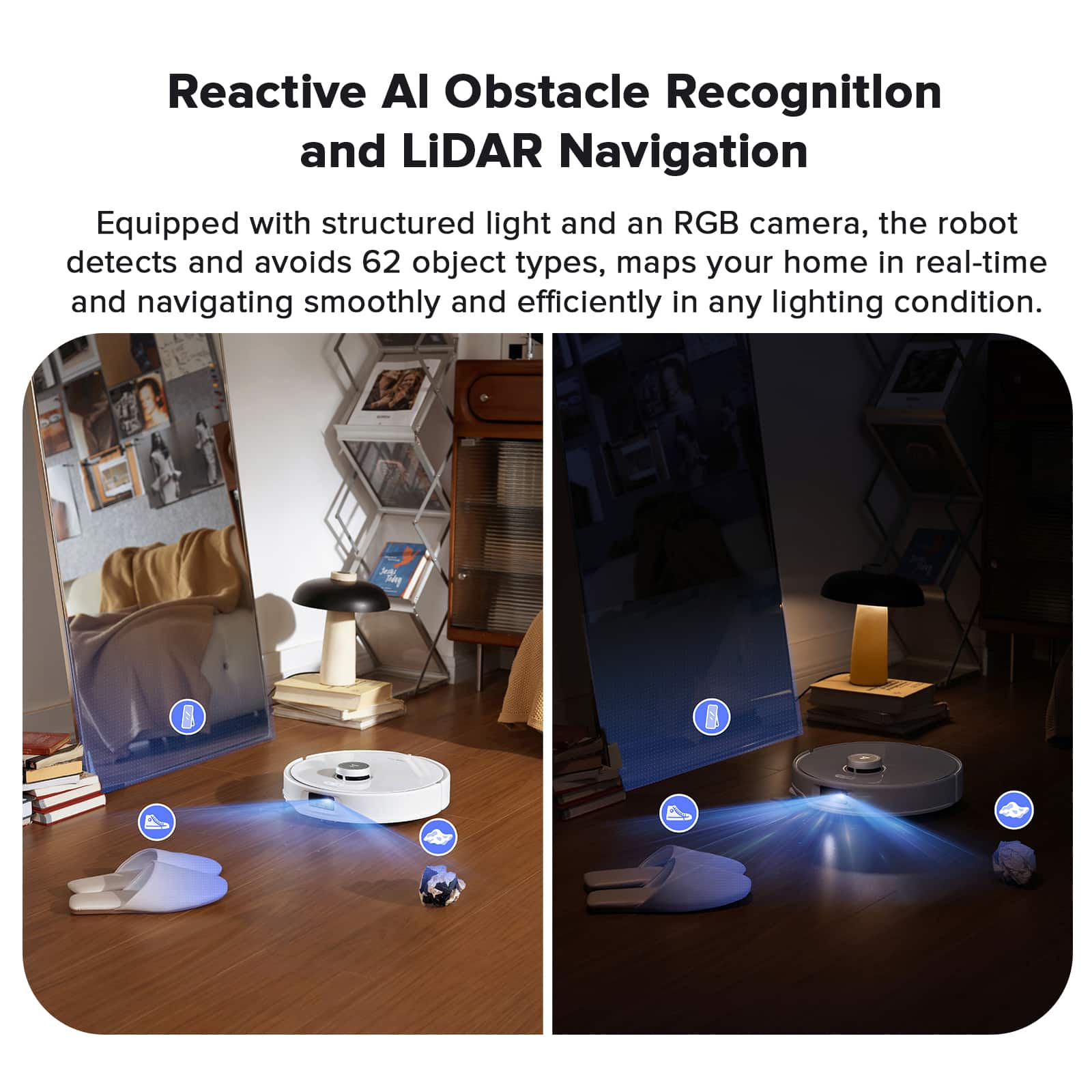
Its standout feature is obstacle avoidance that borders on supernatural. Using dual 3D depth cameras combined with a front-mounted camera, it can detect and navigate around objects that trip up other robots—think lightweight cables, small toys, or even pet waste. The AI system recognizes over 62 different object types, learning your home's layout and hazards over time.
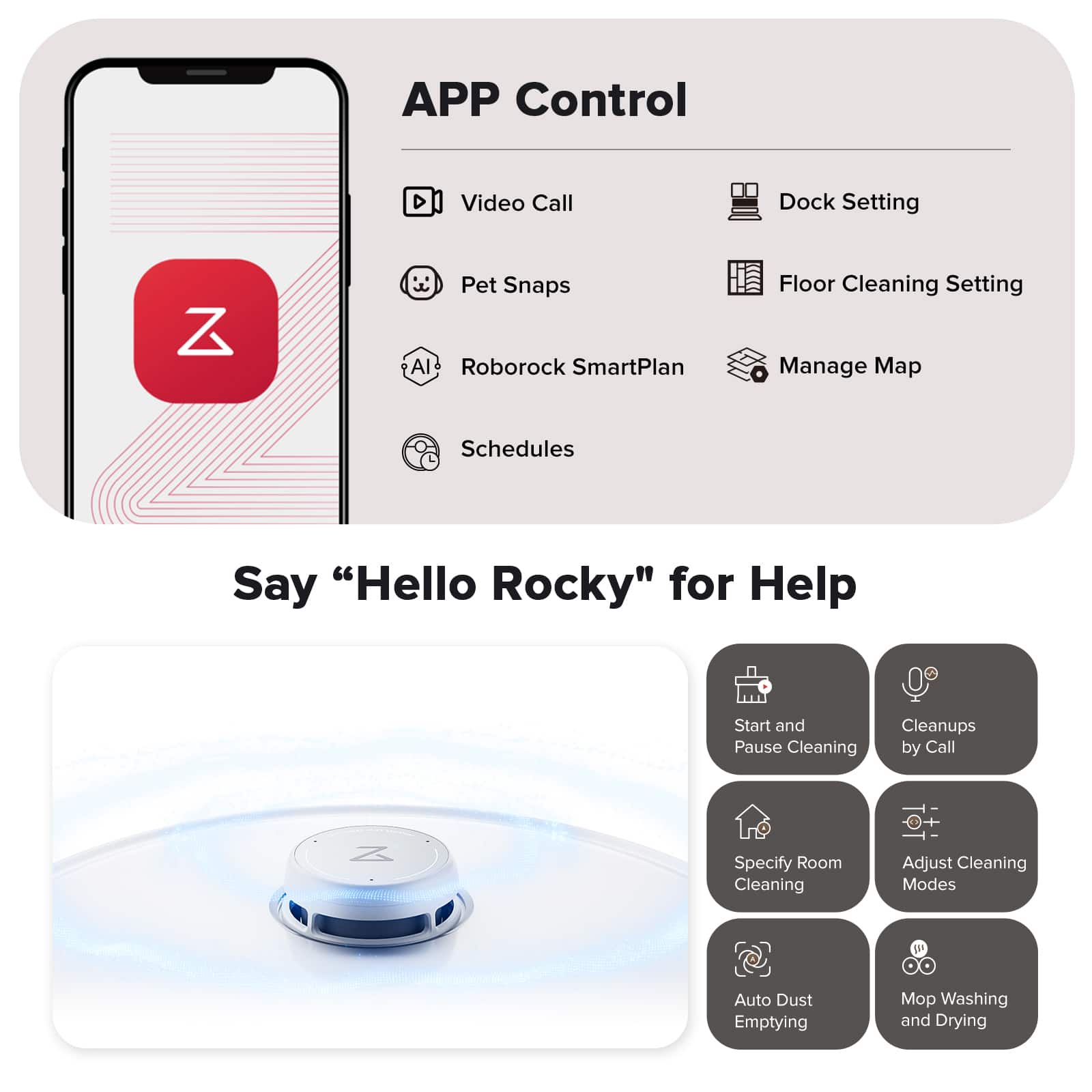
But Samsung didn't stop at smart navigation. The Samsung robot includes a front-facing camera for live video monitoring, essentially turning it into a mobile security system. You can check on pets while away from home or even have video calls through the robot—a feature that sounds gimmicky until you're stuck at work wondering if your cat is okay.
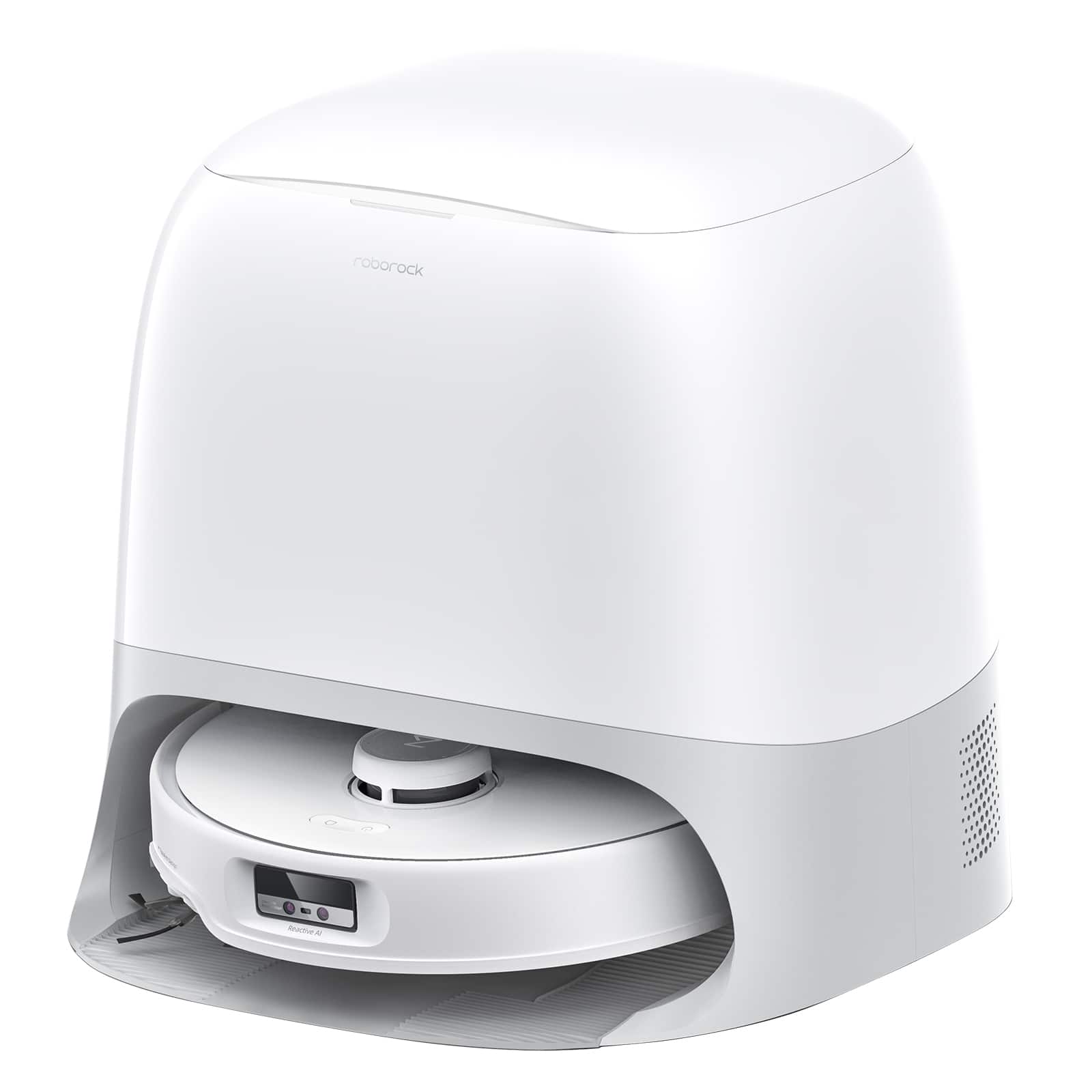
The Roborock Qrevo Curv represents Roborock's 2024 answer to premium cleaning demands, focusing on mechanical innovation and raw cleaning performance. Where Samsung emphasizes AI, Roborock doubles down on engineering solutions to physical cleaning challenges.
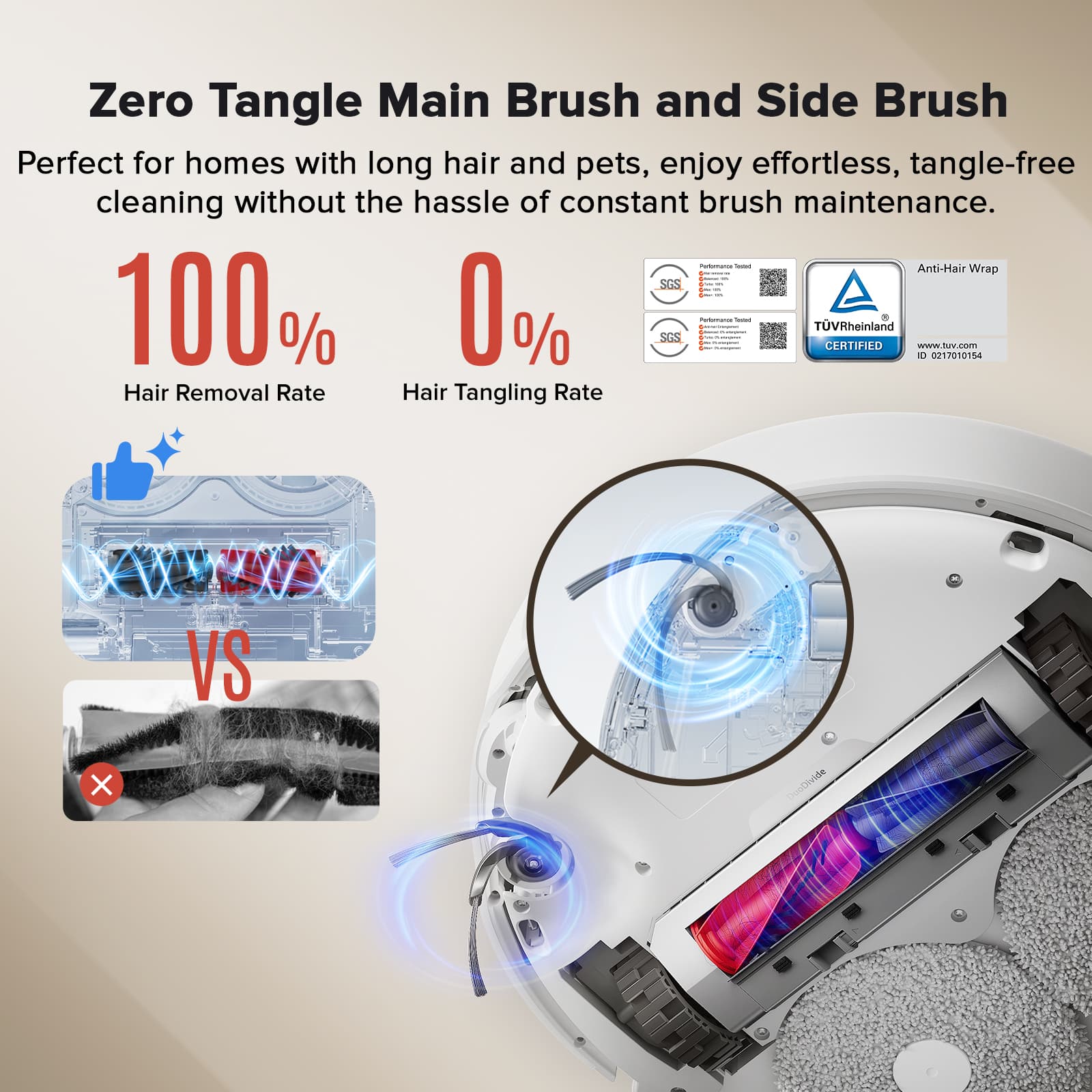
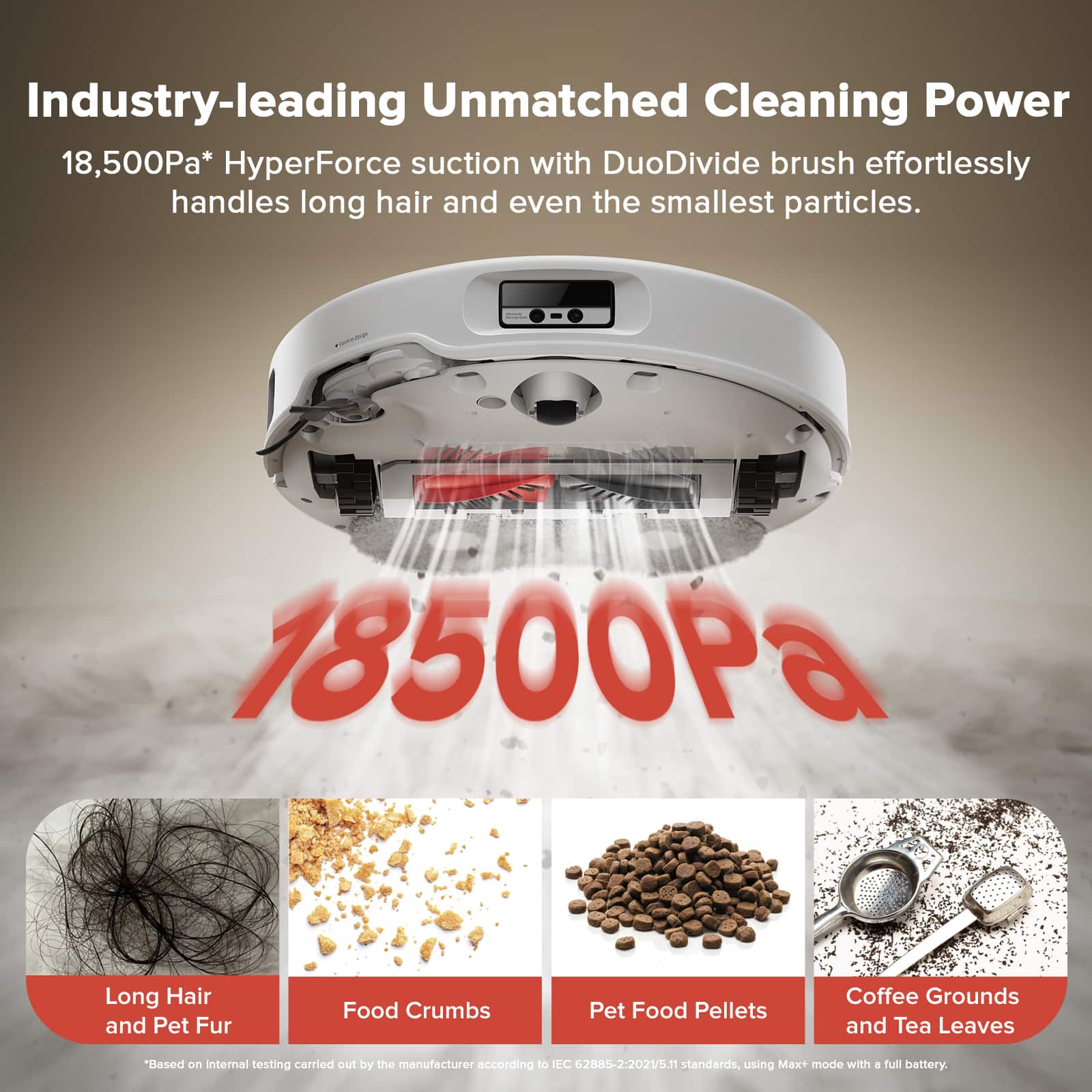
The headline feature is an 18,500 Pa suction motor—that's about three times stronger than the Samsung's 6,000 Pa. But raw power means nothing without smart design. Roborock's DuoDivide main brush splits into two independent sections with a gap in the middle, actively directing hair and debris away from tangling points. It's elegant engineering that solves one of robot vacuuming's most annoying problems.
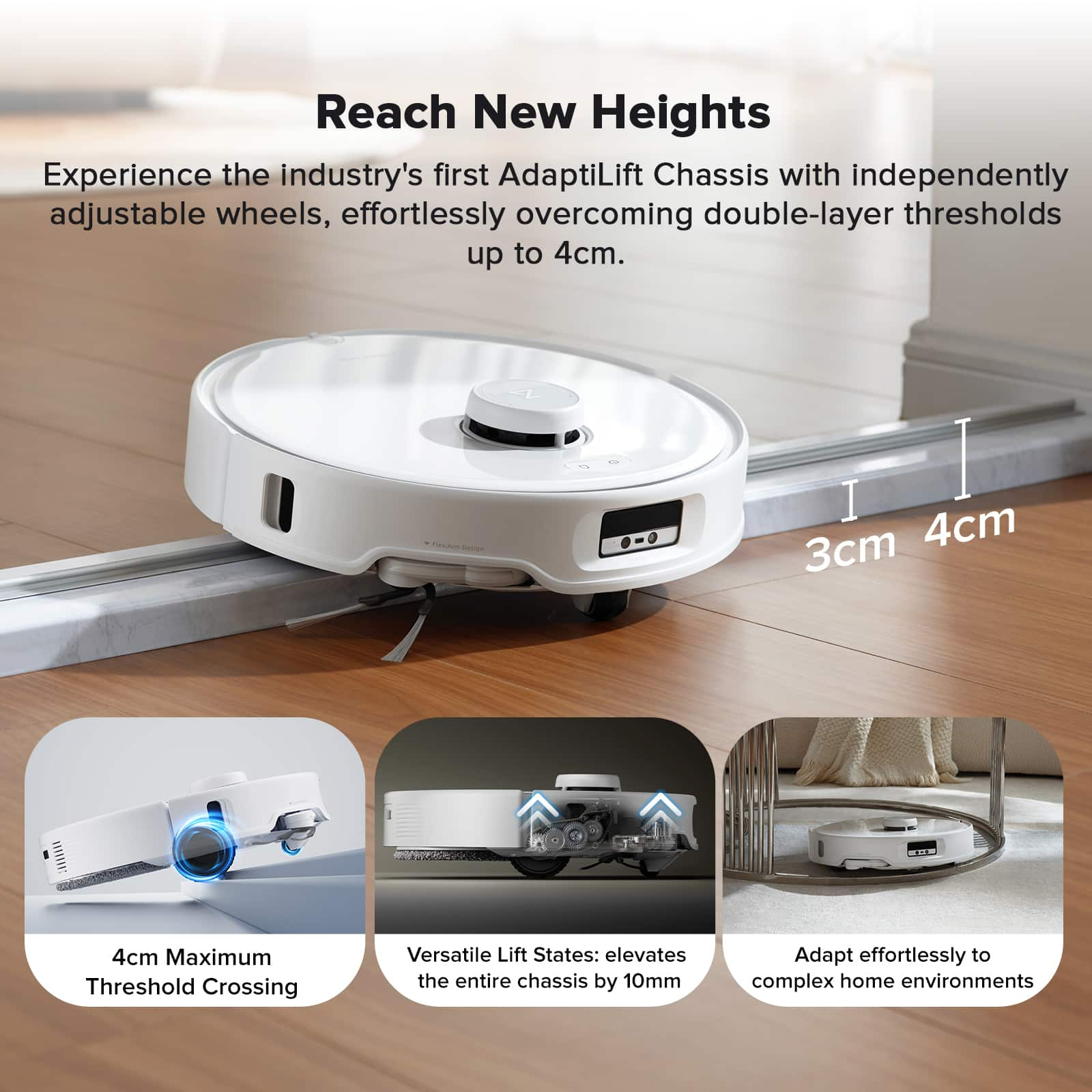
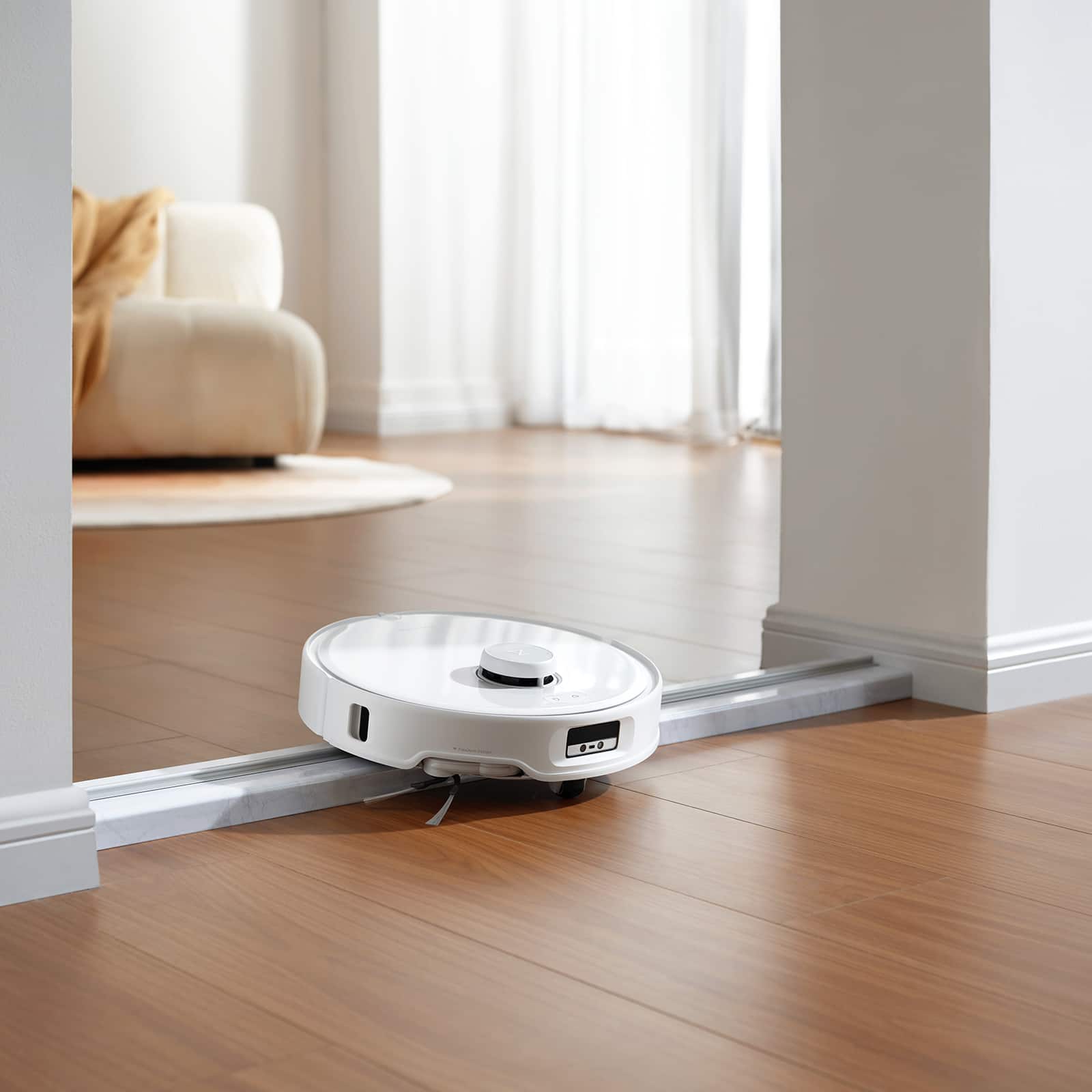
Perhaps more impressive is the AdaptiLift chassis system. This allows the Roborock to raise and lower its wheels independently, climbing over thresholds up to 4 centimeters high—currently the industry's best obstacle clearance. Most robots get stuck on thick rugs or room transitions; this one adapts and keeps cleaning.
Raw suction power creates the foundation for effective cleaning, but how that power translates to actual debris pickup varies significantly between designs.
The Roborock Qrevo Curv dominates here with its 18,500 Pa HyperForce suction system. In controlled testing environments, it ranked 6th out of over 100 robot vacuums for deep carpet cleaning, scoring 86 out of 100 points for removing embedded sand from medium-pile carpet. That's genuinely impressive performance that puts it ahead of many previous flagship models.
The engineering behind this performance goes beyond brute force. The DuoDivide brush system creates two counter-rotating brush sections that work together to agitate carpet fibers and direct debris toward the suction inlet. The gap between brush sections prevents long hair from wrapping around the roller—a common failure point that reduces cleaning effectiveness over time.
By contrast, the Samsung Bespoke Jet Bot Combo AI takes a more measured approach with 6,000 Pa suction. While significantly lower on paper, Samsung focuses on intelligent suction adjustment. The robot automatically increases power when it detects carpets and optimizes airflow based on debris type. This approach prioritizes battery efficiency and noise reduction over maximum power.
In real-world scenarios, the difference is noticeable. Homes with thick carpets, heavy pet shedding, or frequent tracked-in dirt will benefit significantly from the Roborock's superior deep cleaning capability. However, for maintenance cleaning on mostly hard floors with occasional rugs, the Samsung's approach proves adequate while running quieter and longer on each charge.
Modern robot vacuums rely on LiDAR (Light Detection and Ranging) for basic mapping, but obstacle avoidance separates premium models from budget alternatives. Both robots use LiDAR for room mapping, but their approaches to avoiding obstacles differ dramatically.
The Samsung earns industry-leading scores for obstacle avoidance, rating 4.38 out of 5 compared to an industry average of 3.41. This performance comes from combining multiple sensor types: LiDAR for room mapping, dual 3D depth cameras for object detection, and a front-mounted RGB camera for visual confirmation.
What makes this system special is its ability to recognize context. The robot doesn't just see an obstacle—it identifies what that obstacle is and makes smart decisions accordingly. Pet waste gets avoided completely, while a charging cable might get gently moved aside. Small, lightweight objects that confuse other robots pose no problem for Samsung's multi-sensor approach.
The Roborock takes a more straightforward approach, using LiDAR combined with structured light sensors and an RGB camera. While capable, it scores closer to industry average for obstacle avoidance. However, Roborock's strength lies in physical adaptability rather than object recognition.
The AdaptiLift chassis system represents genuine innovation. When the robot encounters a threshold, lip, or obstacle, it can raise individual wheels or lift the entire chassis up to 4 centimeters. This mechanical solution means the Roborock simply climbs over obstacles that would stop other robots entirely.
For cluttered homes with lots of furniture, cables, and small objects, the Samsung's AI-powered avoidance system provides superior navigation. For homes with challenging physical layouts—thick rugs, room transitions, or raised thresholds—the Roborock's mechanical adaptability proves more valuable.
Both robots feature sophisticated mopping systems that go far beyond dragging a damp cloth across the floor. The key differences lie in how they clean their own mop pads and maintain hygiene over time.
The Samsung introduces steam sanitization—a feature virtually unique in the robot vacuum market. After each cleaning cycle, the base station uses steam to sanitize mop pads, achieving 99.99% bacteria removal according to Samsung's testing. This addresses a genuine concern with robot mops: reusing dirty pads can spread bacteria rather than eliminate it.
The steaming process works alongside hot water washing and heated air drying. The Samsung uses dual spinning mop pads that rotate at 170 RPM, applying consistent pressure while moving in overlapping patterns to work on dried stains. When carpet is detected, the mops automatically lift to prevent wetting.
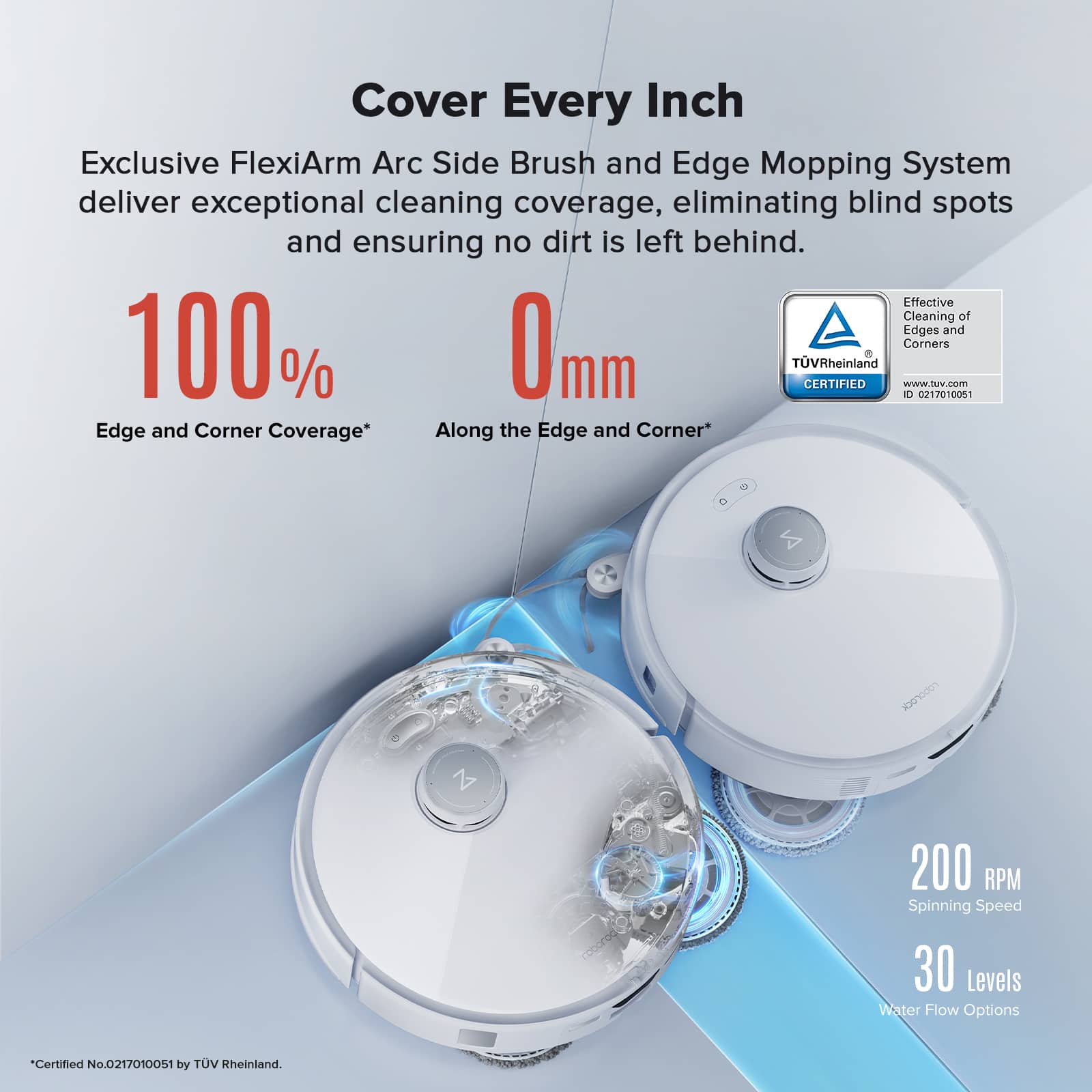
The Roborock forgoes steam but uses even hotter water—up to 80°C (176°F)—for mop pad cleaning. The Multifunctional Dock 3.0 Thermo+ system washes pads multiple times if needed, followed by warm air drying. The robot offers impressive control granularity with 30 different water flow levels and multiple cleaning intensity modes.
Where Roborock shines is edge cleaning. The FlexiArm technology extends both the side brush and mop pad to reach into corners and along baseboards—areas traditional round robots struggle with. This mechanical solution addresses a fundamental limitation of circular robot designs.
For homes prioritizing hygiene—especially with pets or small children—the Samsung's steam sanitization provides peace of mind that's hard to quantify but valuable in practice. For thorough edge-to-edge cleaning coverage, the Roborock's extending arms deliver superior results.
Pet hair presents unique challenges for robot vacuums. Long hair wraps around brushes, reducing cleaning effectiveness and requiring frequent manual intervention. Both robots address this problem differently.
The Roborock achieves near-perfect performance through the DuoDivide anti-tangle brush design. The split brush system with a central gap actively directs hair away from wrap points, while the FlexiArm side brush also features anti-tangle technology. In testing environments, it achieved perfect scores for pet hair tangle resistance and maintained a 99.5% hair removal rate even in homes with heavy shedding pets.
The Samsung takes a software approach, using AI to recognize pets and adjust cleaning patterns accordingly. However, reviews consistently note that hair tangles easily on the side brush, requiring more frequent manual cleaning. For homes with long-haired pets or family members, this becomes a significant maintenance burden.
The difference in real-world impact is substantial. Pet owners using the Roborock report minimal brush maintenance, while Samsung users often need weekly brush cleaning sessions. This isn't just about convenience—tangled brushes reduce cleaning effectiveness, making the robot less capable over time.
The Samsung Bespoke Jet Bot Combo AI treats the robot as a smart home hub rather than just a cleaning appliance. The front-mounted camera enables live video streaming, allowing remote home monitoring through the SmartThings app. You can drive the robot manually, check on pets, or even conduct video calls through the device.
The AI system learns household patterns, identifying family members and pets by sight. It can automatically greet children arriving home from school or locate pets on command. These features sound gimmicky until you experience the peace of mind they provide, especially for pet owners or parents of young children.
Integration with Samsung's SmartThings ecosystem runs deep. The robot coordinates with other Samsung appliances, adjusting cleaning schedules based on home occupancy or coordinating with air purifiers to optimize indoor air quality. For households invested in Samsung's smart home platform, this integration provides genuine value.
The Roborock takes a more utilitarian approach with its "Hello Rocky" built-in voice assistant. This works offline and handles basic commands without requiring external smart speakers. The robot also takes photos of obstacles and pets during cleaning, storing them in the app for review.
While less flashy than Samsung's AI features, Roborock's approach proves more reliable in daily use. User reviews consistently praise the app's stability and straightforward functionality, while Samsung users report occasional bugs and feature interruptions, particularly on iOS devices.
Both manufacturers offer comprehensive smartphone apps, but their philosophies differ significantly. Samsung's SmartThings app provides extensive customization options, allowing users to create complex cleaning routines, set virtual barriers, and adjust dozens of parameters for different rooms.
The depth of control is impressive—you can set different suction levels for each room, adjust mopping water flow, specify cleaning patterns, and create schedules that account for different household routines. The app also provides maintenance tracking, filter replacement reminders, and detailed cleaning reports.
However, this complexity comes with reliability trade-offs. User feedback indicates frequent app crashes, especially on iOS, and occasional connectivity issues that interrupt scheduled cleanings. When the app works properly, it's incredibly powerful; when it doesn't, the robot becomes frustratingly limited.
Roborock's app takes a more straightforward approach, prioritizing reliability over extensive features. The interface is clean and intuitive, with logical organization that makes finding settings easy. Users can still customize cleaning patterns, set no-go zones, and adjust most parameters, but the presentation feels more refined.
The stability difference is significant. Roborock users rarely report app crashes or connectivity issues, while Samsung users frequently mention software-related frustrations. For tech-savvy users who enjoy tweaking settings, Samsung's complexity might appeal; for users who want reliable automation, Roborock's simplicity proves superior.
Noise levels matter significantly for homes with dedicated entertainment spaces. Robot vacuums often run during evening hours when families are relaxing or watching movies, making quiet operation essential for household harmony.
The Roborock Qrevo Curv operates at approximately 61.5 dB during normal cleaning, which is noticeably quieter than many high-suction competitors. Despite its powerful 18,500 Pa motor, Roborock's engineers managed to minimize noise through careful airflow design and sound dampening materials.
The Samsung runs slightly louder during vacuuming but offers a significant advantage during mopping mode, dropping to around 55 dB. This whisper-quiet operation makes it suitable for cleaning while family members sleep or during quiet activities.
For home theater environments, both robots support scheduling that avoids movie time, but the noise characteristics differ enough to influence purchase decisions. The Roborock provides better overall performance with acceptable noise levels, while the Samsung offers ultra-quiet mopping for noise-sensitive households.
Both robots feature comprehensive self-maintenance stations that minimize daily user intervention, but their approaches reflect different engineering philosophies.
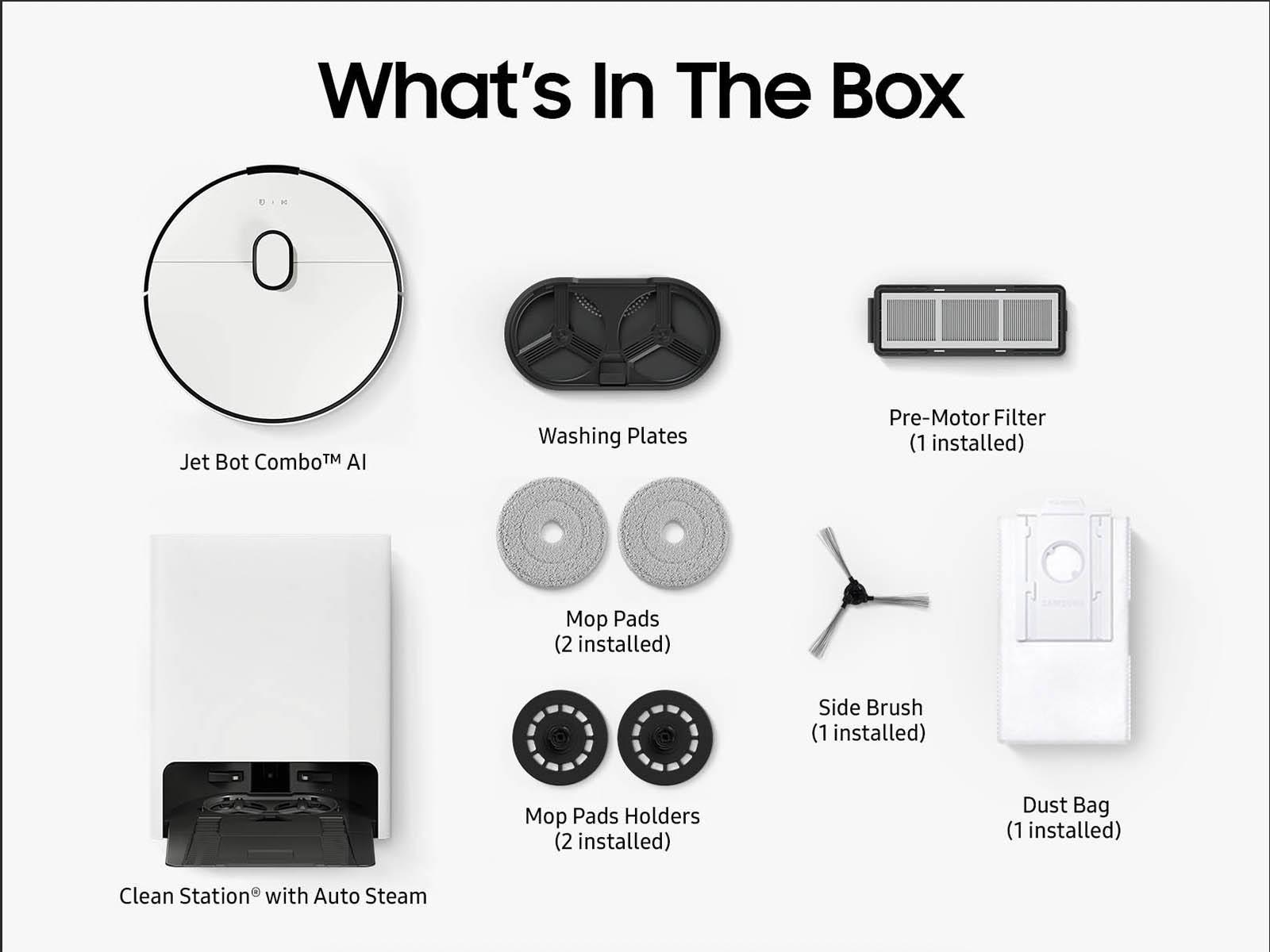
The Samsung All-in-One Clean Station handles debris emptying, mop pad washing with hot water, heated air drying, and unique steam sanitization. The station refills the robot's water tank and empties dirty water automatically. The steam sanitization cycle runs after each cleaning, ensuring mop pads start each cycle bacteria-free.
Station maintenance involves replacing disposable dust bags (2.5L capacity), refilling clean water, and emptying dirty water tanks. The removable tray system makes cleaning straightforward, though users report occasional reliability issues with mop pad connectors.
The Roborock Multifunctional Dock 3.0 Thermo+ performs similar functions but with larger capacities—2.7L dust bags and significantly larger water tanks (4L clean, 3.5L dirty). The higher water temperature (80°C vs Samsung's lower temperature plus steam) provides thorough cleaning without requiring steam generation.
Users report better long-term reliability with Roborock's station, fewer maintenance interruptions, and more predictable performance over time. The larger water tanks mean less frequent refilling, reducing ongoing attention requirements.
Long-term ownership costs extend beyond the initial purchase. Both robots require periodic replacement of filters, brushes, mop pads, and other consumables.
The Roborock's anti-tangle brush design significantly reduces maintenance frequency. Users report much longer intervals between brush cleanings and replacements compared to traditional designs. The DuoDivide system's split design also makes hair removal easier when maintenance is required.
The Samsung requires more frequent brush attention due to hair tangling issues. While replacement parts are readily available, the ongoing time investment for maintenance can become frustrating for busy households.
Both manufacturers offer subscription programs for consumables, but recurring costs are similar between brands. The main difference lies in maintenance frequency rather than part costs, giving Roborock an advantage for low-maintenance households.
You live in a cluttered home where obstacle avoidance takes priority over raw cleaning power. Families with small children, lots of furniture, or pets that leave toys scattered around will benefit enormously from Samsung's superior navigation intelligence.
Smart home enthusiasts invested in Samsung's ecosystem should strongly consider the Samsung. The integration depth and AI features provide genuine value that extends beyond basic cleaning. Remote monitoring capabilities appeal especially to pet owners or parents who travel frequently.
Hygiene-conscious households will appreciate the unique steam sanitization feature. While the performance benefit is hard to quantify, the peace of mind from knowing mop pads are truly sanitized after each use justifies the premium for many families.
Choose Samsung if you're willing to trade some raw cleaning power for advanced AI features and don't mind occasional software quirks for cutting-edge technology.
Your home demands serious cleaning performance. Thick carpets, heavy pet shedding, or high-traffic areas require the superior suction power and deep cleaning capability that only the Roborock delivers.
Pet owners with shedding animals should prioritize the anti-tangle brush system. The maintenance time savings alone justify the purchase for households dealing with long hair or heavy fur accumulation.
Homes with complex floor plans—multiple levels, thick rugs, raised thresholds—benefit from the AdaptiLift chassis system's superior obstacle climbing ability. The mechanical solution handles physical challenges that stop other robots completely.
Choose Roborock if you prioritize cleaning performance over smart features and prefer reliable, straightforward operation with minimal software complications.
Both robots represent excellent value in the premium segment at the time of writing, but they optimize for different priorities. The Samsung Bespoke Jet Bot Combo AI pushes the boundaries of smart home integration and AI-powered navigation, making it ideal for tech-forward households that value convenience and monitoring capabilities.
The Roborock Qrevo Curv focuses on mechanical innovation and cleaning performance, delivering superior results for demanding cleaning scenarios while maintaining excellent reliability.
Neither choice is wrong—the decision comes down to whether you prioritize intelligence and integration or performance and reliability. For most households, the Roborock provides better day-to-day cleaning results with fewer maintenance headaches. But for smart home enthusiasts who want their robot to do more than just clean, the Samsung opens possibilities that extend far beyond traditional vacuuming.
The robot vacuum market continues evolving rapidly, with both manufacturers likely to address current limitations in future models. For 2024, both represent the cutting edge of what's possible when serious engineering meets the everyday challenge of keeping your floors clean.
| Samsung Bespoke Jet Bot Combo AI | Roborock Qrevo Curv |
|---|---|
| Suction Power - Higher numbers mean better deep carpet cleaning and debris pickup | |
| 6,000 Pa (adequate for most homes, focuses on efficiency) | 18,500 Pa (industry-leading power, excels on thick carpets) |
| Navigation & Obstacle Avoidance - Critical for cluttered homes and preventing collisions | |
| Industry-leading AI recognition (4.38/5 rating, detects 62+ object types) | Standard LiDAR + sensors (average performance, mechanical adaptability focus) |
| Hair Tangle Management - Essential for pet owners and long-haired households | |
| Traditional brush design (frequent manual cleaning required) | DuoDivide anti-tangle system (perfect scores, minimal maintenance) |
| Battery Life - Determines cleaning coverage per cycle | |
| Up to 180 minutes (standard for premium robots) | Up to 240 minutes (60 minutes longer, covers larger areas) |
| Threshold Climbing - Important for multi-level homes and thick rugs | |
| Standard wheels (handles typical transitions) | AdaptiLift chassis (climbs up to 4cm, industry-best clearance) |
| Mop Pad Sanitization - Affects hygiene and bacteria elimination | |
| Steam sanitization (99.99% bacteria removal, unique feature) | 80°C hot water washing (thorough cleaning, higher temperature) |
| Smart Home Integration - Value depends on existing ecosystem investment | |
| Advanced AI features, SmartThings ecosystem, live video monitoring | Basic voice control, stable app, focus on cleaning functions |
| Edge & Corner Cleaning - Important for thorough coverage along walls | |
| Single side brush (adequate but limited reach) | FlexiArm extending brush and mop (superior wall coverage) |
| App Reliability - Affects daily usability and scheduling consistency | |
| Feature-rich but buggy (especially iOS, frequent connectivity issues) | Simple and stable (reliable operation, fewer advanced features) |
| Maintenance Station Capacity - Affects how often you need to service the dock | |
| 2.5L dust bag, smaller water tanks (more frequent attention) | 2.7L dust bag, 4L clean/3.5L dirty water (less frequent servicing) |
The Roborock Qrevo Curv significantly outperforms the Samsung Bespoke Jet Bot Combo AI with 18,500 Pa suction versus 6,000 Pa. This three-fold difference translates to superior deep carpet cleaning and debris pickup, especially for homes with thick carpets or heavy pet shedding. The Roborock ranked 6th out of over 100 robot vacuums tested for carpet deep cleaning performance.
The Roborock Qrevo Curv is clearly superior for pet owners due to its DuoDivide anti-tangle brush system, which achieved perfect scores in hair tangle resistance testing. Pet owners report minimal brush maintenance compared to the Samsung Bespoke Jet Bot Combo AI, which requires frequent manual cleaning due to hair tangling on the side brush. The Roborock maintains a 99.5% hair removal rate even in homes with heavy shedding pets.
The Samsung Bespoke Jet Bot Combo AI excels in obstacle avoidance with industry-leading performance, scoring 4.38 out of 5 compared to the 3.41 industry average. Its dual 3D sensors and AI recognition system can detect and avoid 62+ object types, including lightweight cables and small toys that trip up other robots. The Roborock Qrevo Curv offers standard obstacle avoidance but compensates with superior physical adaptability.
The Samsung Bespoke Jet Bot Combo AI offers unique steam sanitization that achieves 99.99% bacteria removal from mop pads—a rare feature in robot vacuums. However, the Roborock Qrevo Curv uses higher temperature hot water (80°C) for mop cleaning and features FlexiArm technology that extends mops to clean edges and corners more effectively. Both provide excellent mopping, but with different hygiene approaches.
The Roborock Qrevo Curv operates at approximately 61.5 dB during normal cleaning, while the Samsung Bespoke Jet Bot Combo AI runs slightly louder during vacuuming. However, the Samsung becomes exceptionally quiet at around 55 dB during mopping mode, making it ideal for noise-sensitive environments or homes with dedicated entertainment spaces.
The Roborock Qrevo Curv provides superior battery performance with up to 240 minutes of runtime compared to the Samsung Bespoke Jet Bot Combo AI's 180 minutes. This 60-minute advantage allows the Roborock to cover larger floor plans in a single cleaning cycle and reduces the need for mid-cleaning recharging sessions.
The Roborock Qrevo Curv requires significantly less maintenance due to its anti-tangle brush design and larger dock capacity (2.7L dust bag vs 2.5L). Users report longer intervals between brush cleanings and less frequent dock servicing. The Samsung Bespoke Jet Bot Combo AI requires more frequent brush maintenance due to hair tangling issues, though it offers unique steam sanitization benefits.
The Samsung Bespoke Jet Bot Combo AI provides superior smart home integration with deep SmartThings ecosystem connectivity, live video monitoring, pet detection, and advanced AI features. It can conduct video calls and provide remote home monitoring. The Roborock Qrevo Curv offers basic smart features with its "Hello Rocky" voice assistant but focuses more on reliable cleaning performance than advanced connectivity.
The Roborock Qrevo Curv is definitively better for thick carpets due to its 18,500 Pa suction power and superior deep cleaning performance. It scored 86 out of 100 points for embedded debris removal from medium-pile carpet. The Samsung Bespoke Jet Bot Combo AI performs adequately on carpets but lacks the raw power needed for deep carpet cleaning in high-traffic areas.
The Roborock Qrevo Curv excels in edge cleaning with its FlexiArm technology that extends both the side brush and mop pad to reach into corners and along baseboards. This mechanical solution addresses the fundamental limitation of round robot designs. The Samsung Bespoke Jet Bot Combo AI uses a single side brush with standard reach, providing adequate but limited edge coverage.
The Roborock Qrevo Curv consistently receives praise for stable app performance with minimal crashes or connectivity issues. Users report reliable operation and intuitive interface design. The Samsung Bespoke Jet Bot Combo AI offers more advanced features but suffers from frequent app bugs, especially on iOS devices, which can interrupt scheduled cleanings and access to advanced functions.
The Roborock Qrevo Curv typically offers better performance value with three times the suction power, superior carpet cleaning, longer battery life, and lower maintenance requirements. The Samsung Bespoke Jet Bot Combo AI provides better smart feature value for tech enthusiasts who prioritize AI capabilities, home monitoring, and advanced obstacle avoidance over raw cleaning performance. Your choice depends on whether you prioritize cleaning power or smart home integration.
We've done our best to create useful and informative comparisons to help you decide what product to buy. Our research uses advanced automated methods to create this comparison and perfection is not possible - please contact us for corrections or questions. These are the sites we've researched in the creation of this article: techradar.com - kahians.com - vacuumwars.com - samsung.com - youtube.com - wickfordappliance.com - eftm.com - samsung.com - samsung.com - advantageappliance.com - youtube.com - samsung.com - bestbuy.com - samsung.com - samsung.com - franksappliance.com - american-homeappliance.com - vacuumwars.com - vacuumwars.com - rtings.com - youtube.com - youtube.com - youtube.com - techradar.com - redditrecs.com - youtube.com - youtube.com - rtings.com - us.roborock.com - versus.com - robotobzor.com - images.ifun.de - roborock.com.my - global.roborock.com - us.roborock.com - us.roborock.com - digitalreviews.net - romania-insider.com - prnewswire.com - us.roborock.com

Privacy Policy
Terms and Conditions - Affiliate Policy
Home Security
© Copyright 2008-2026.
11816 Inwood Rd #1211, Dallas, TX 75244