

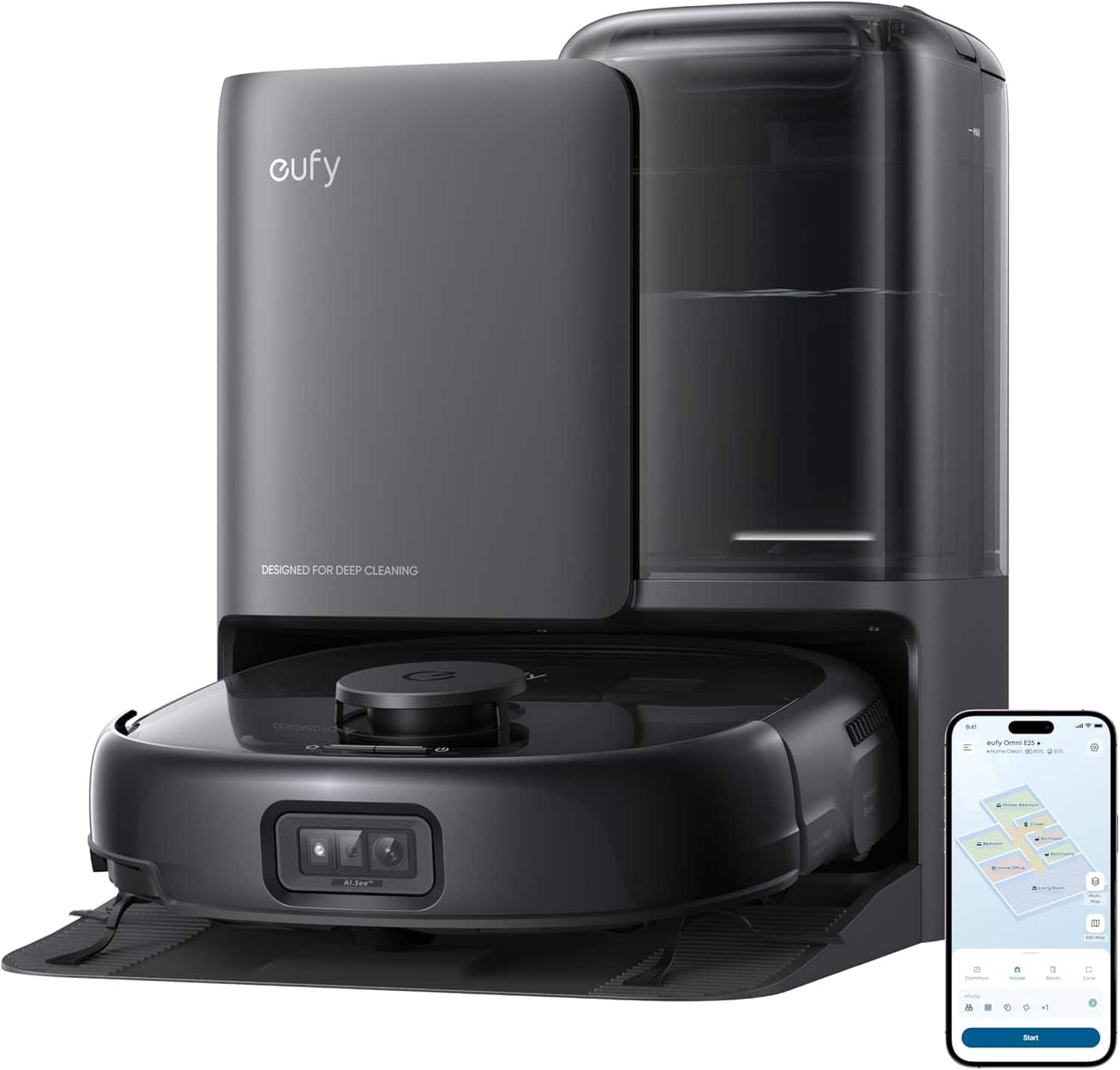
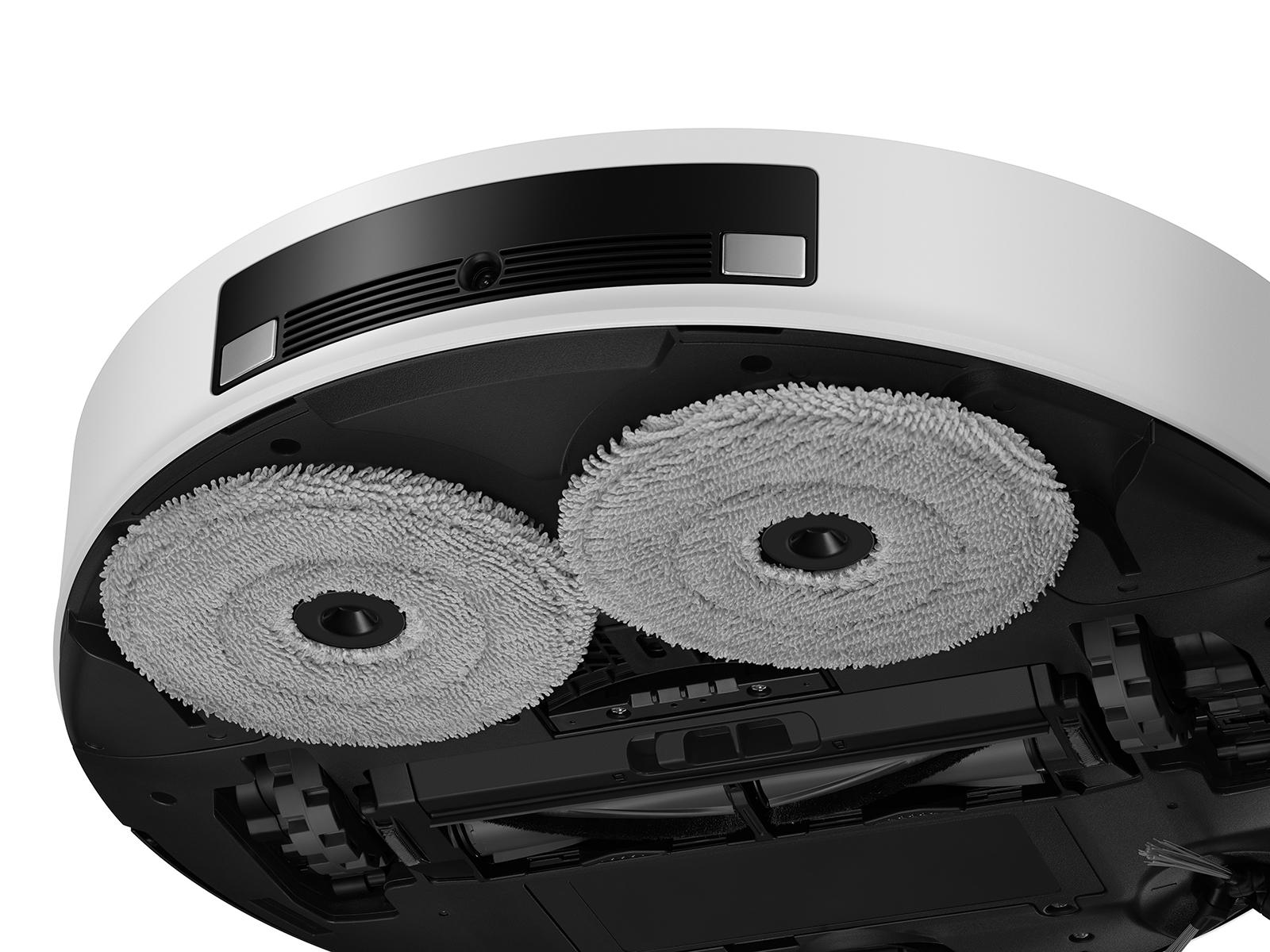

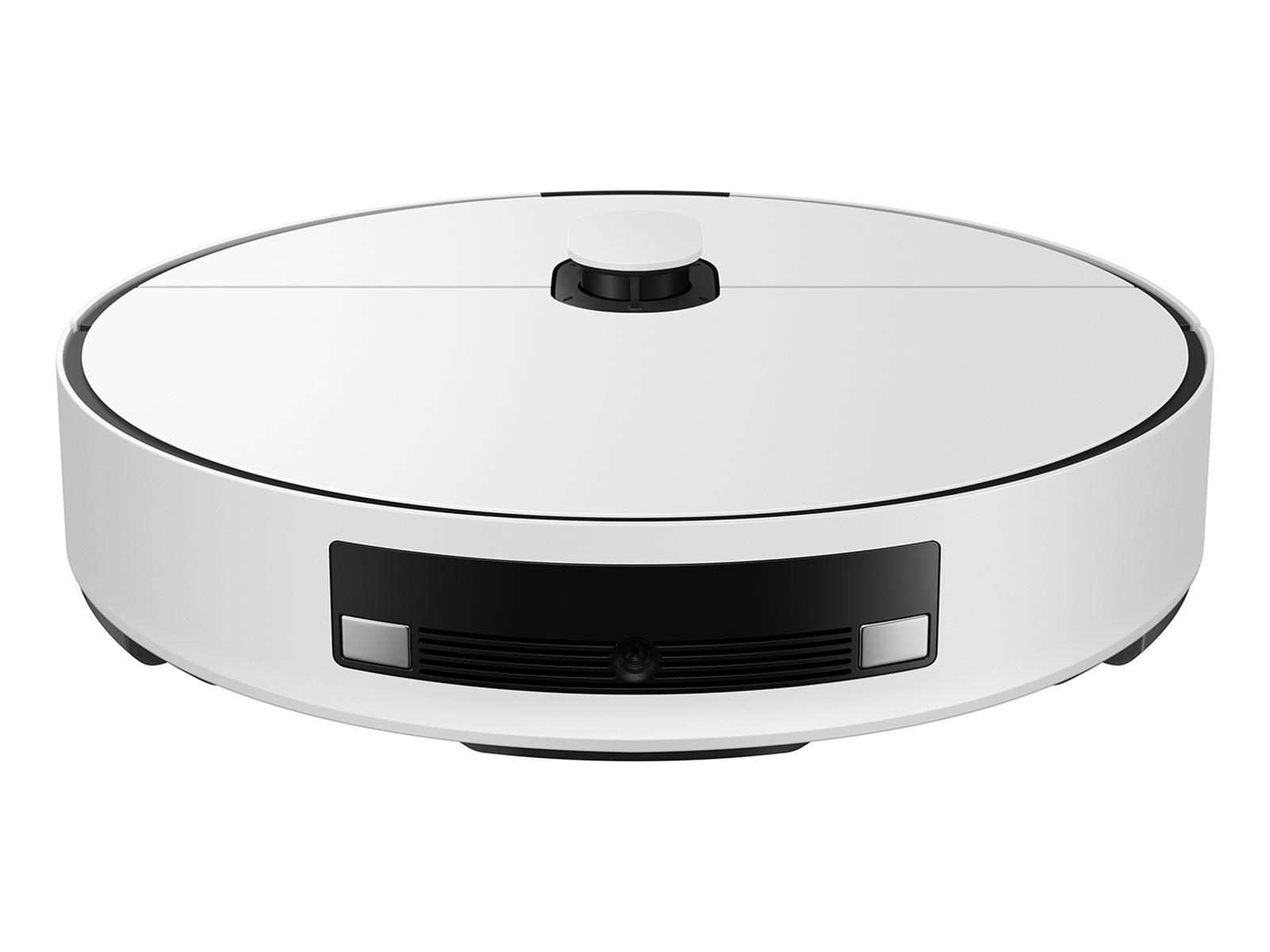
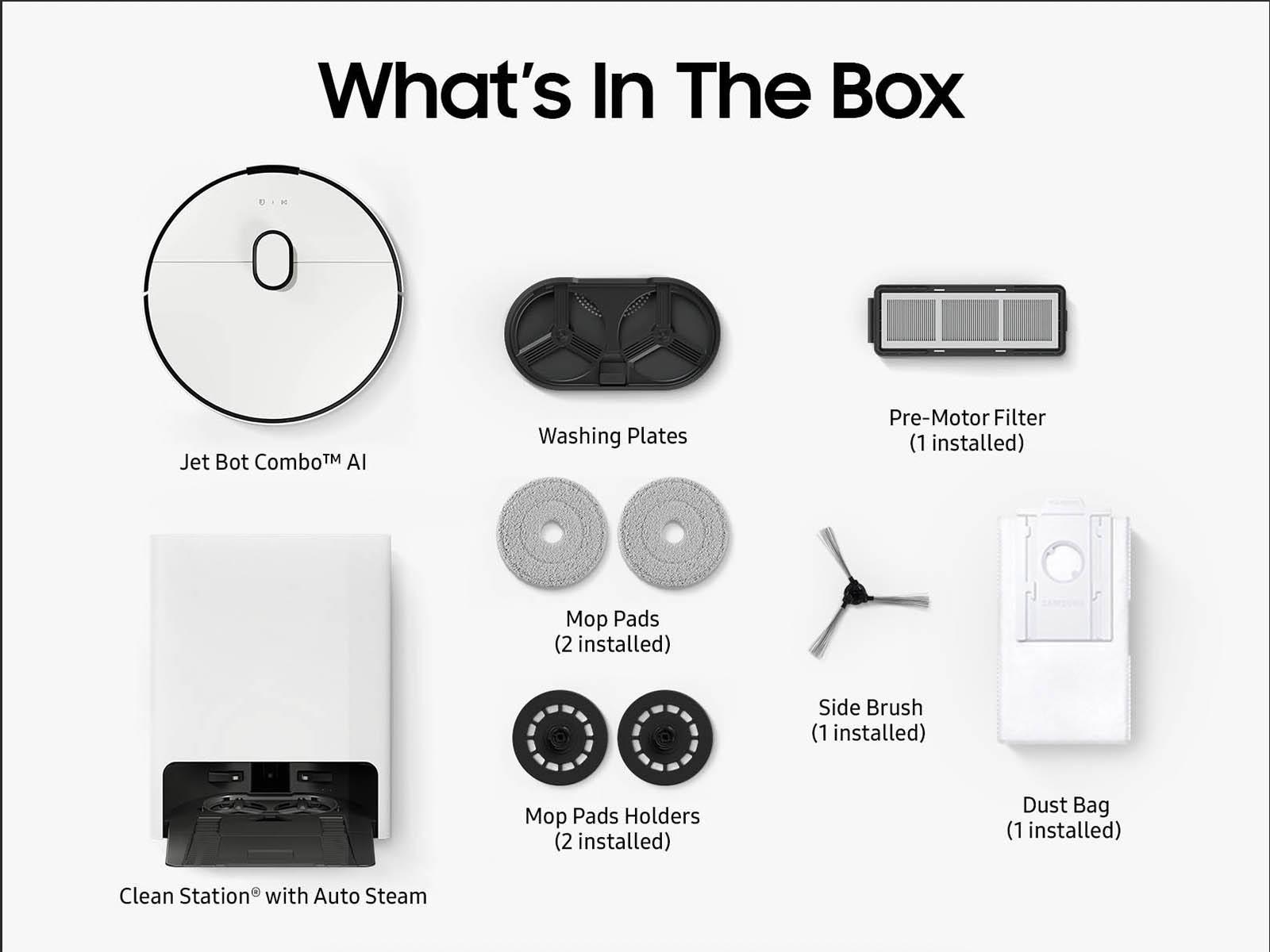
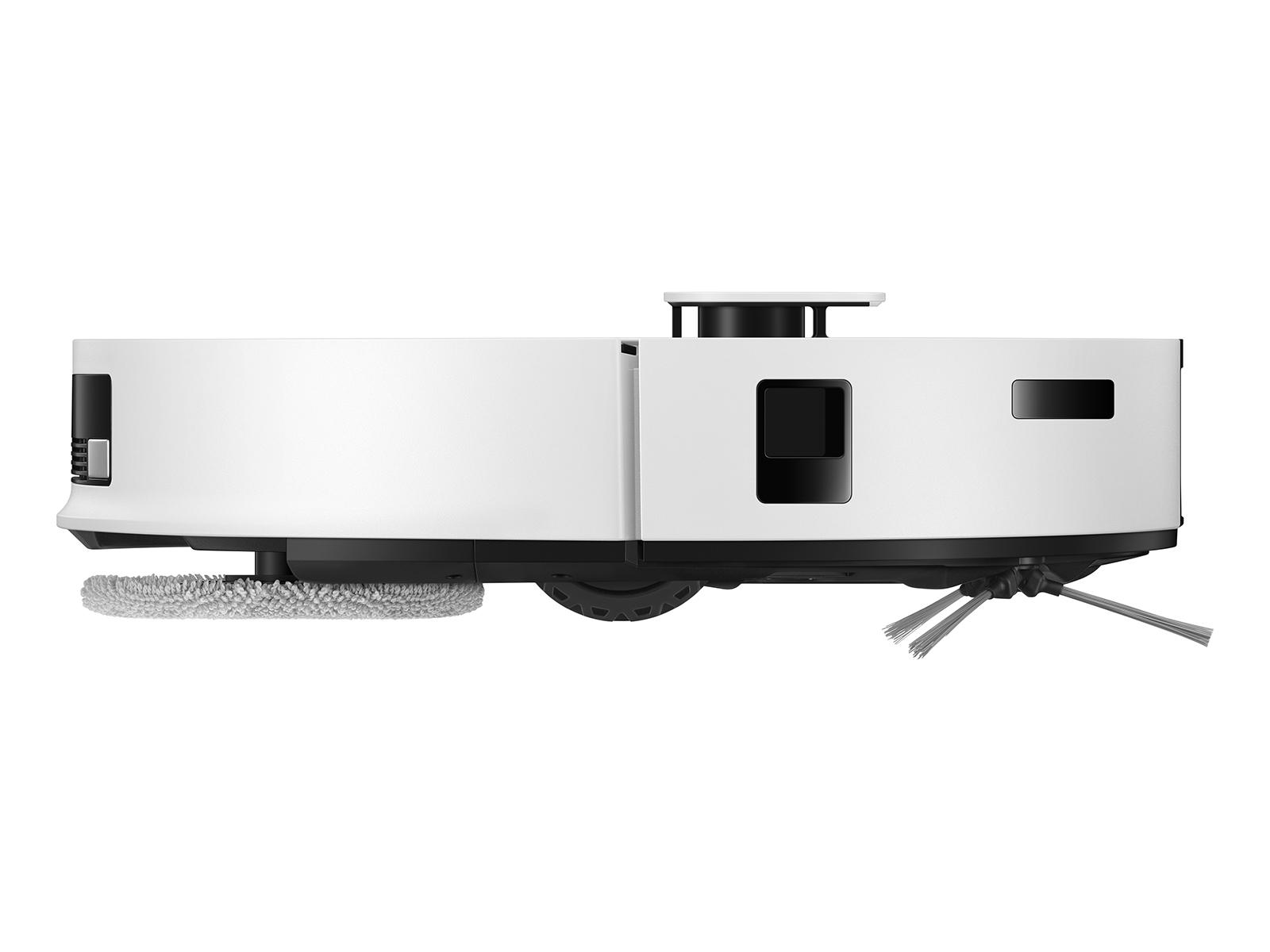
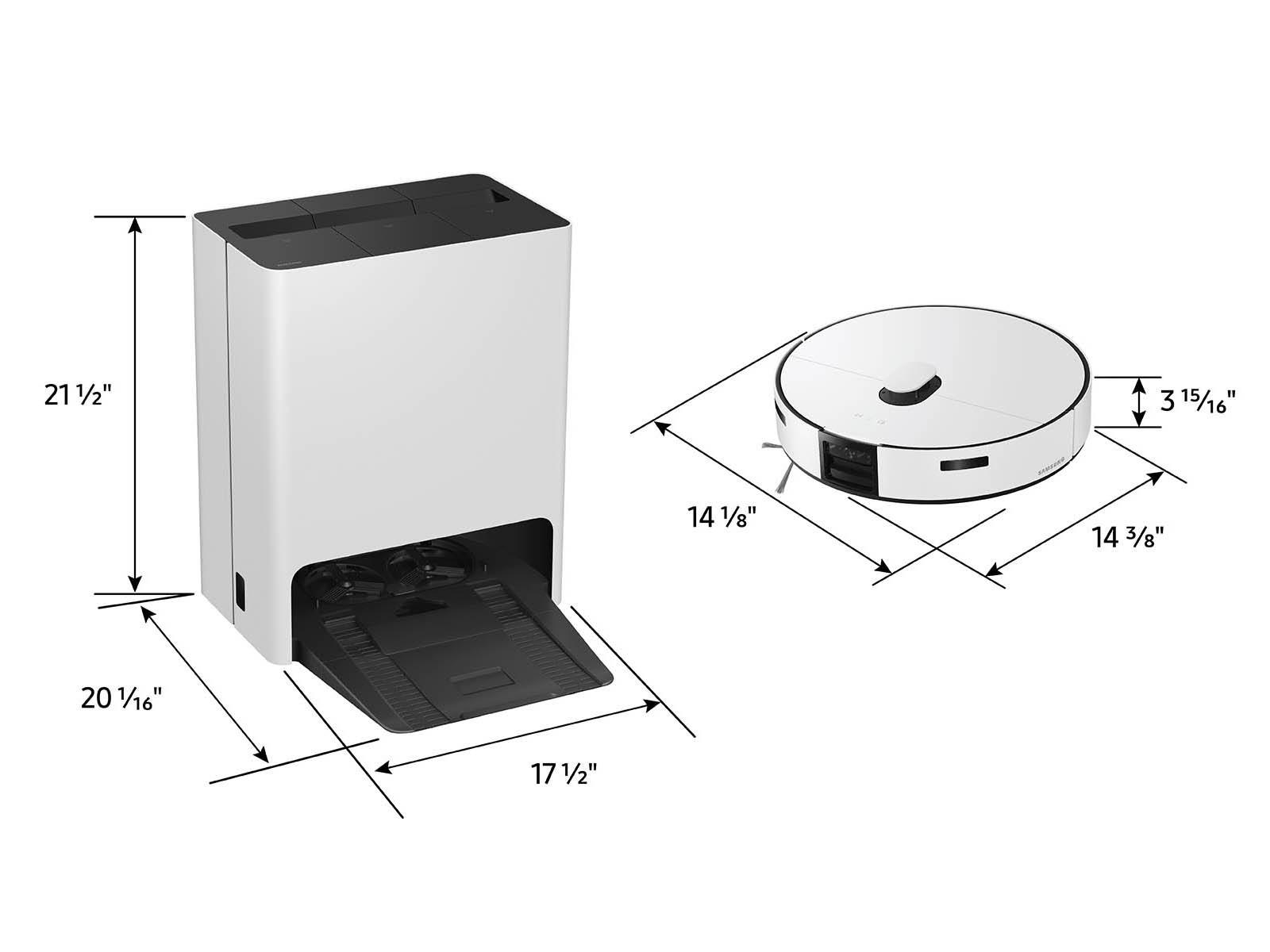
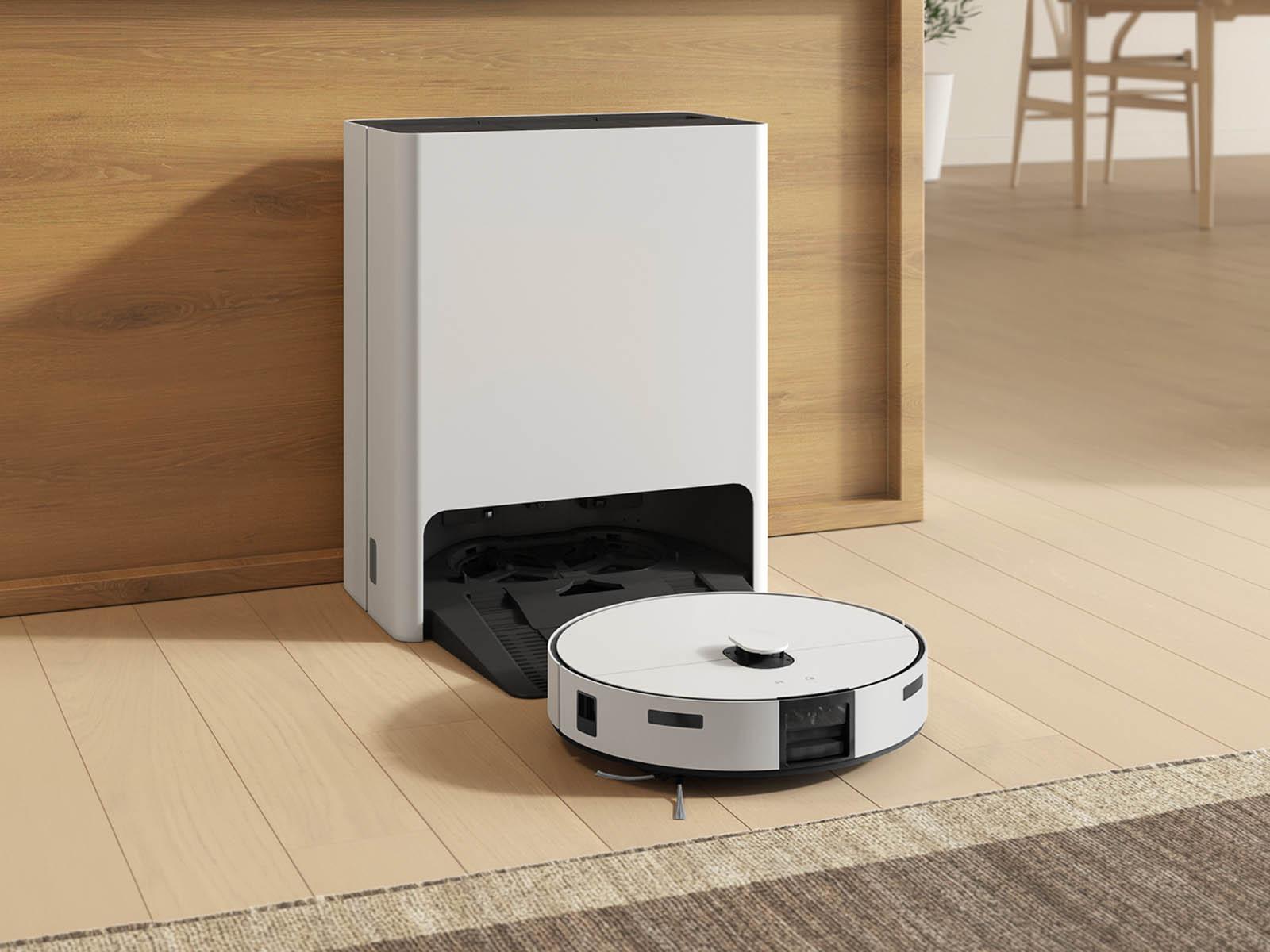
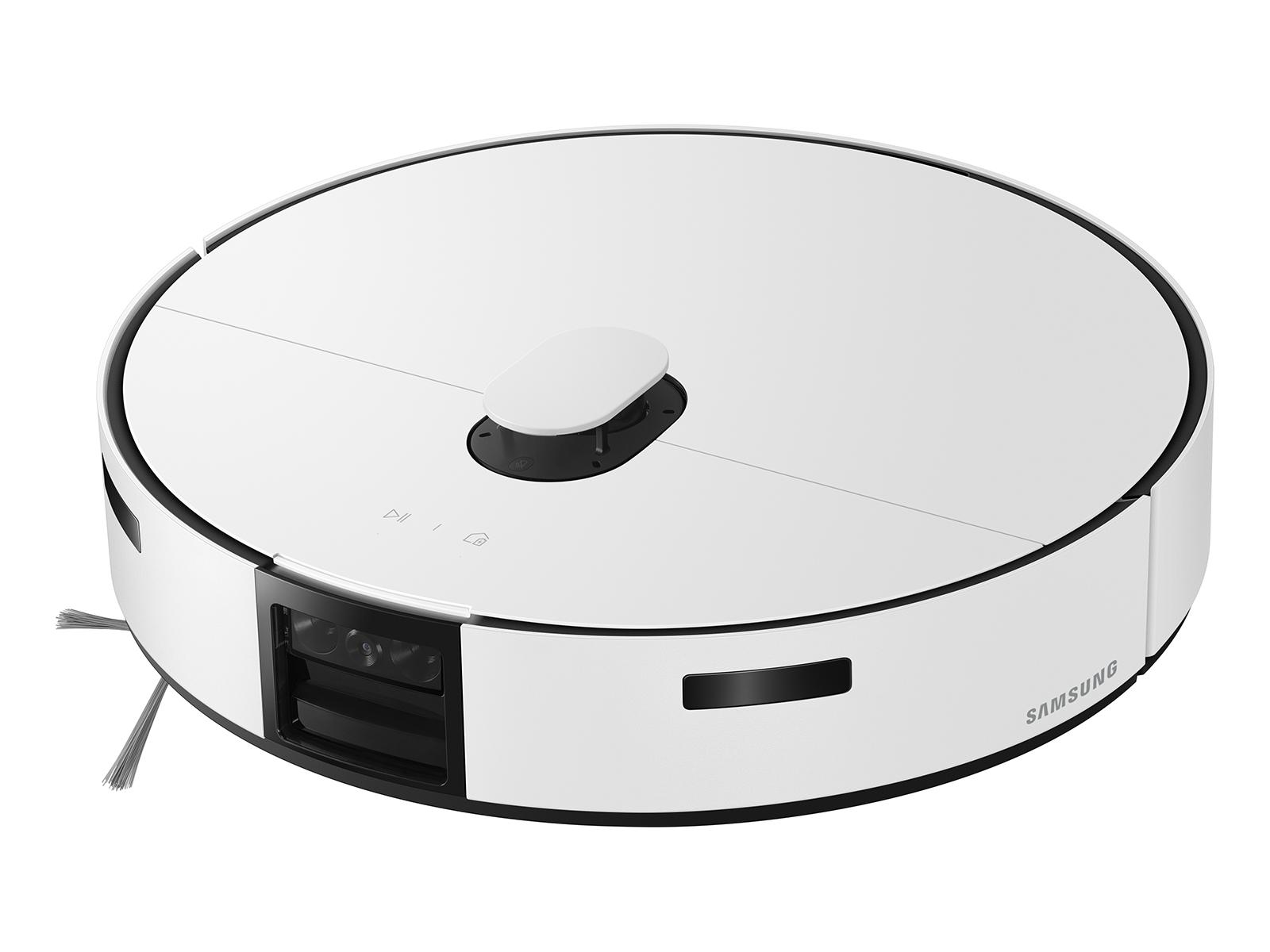
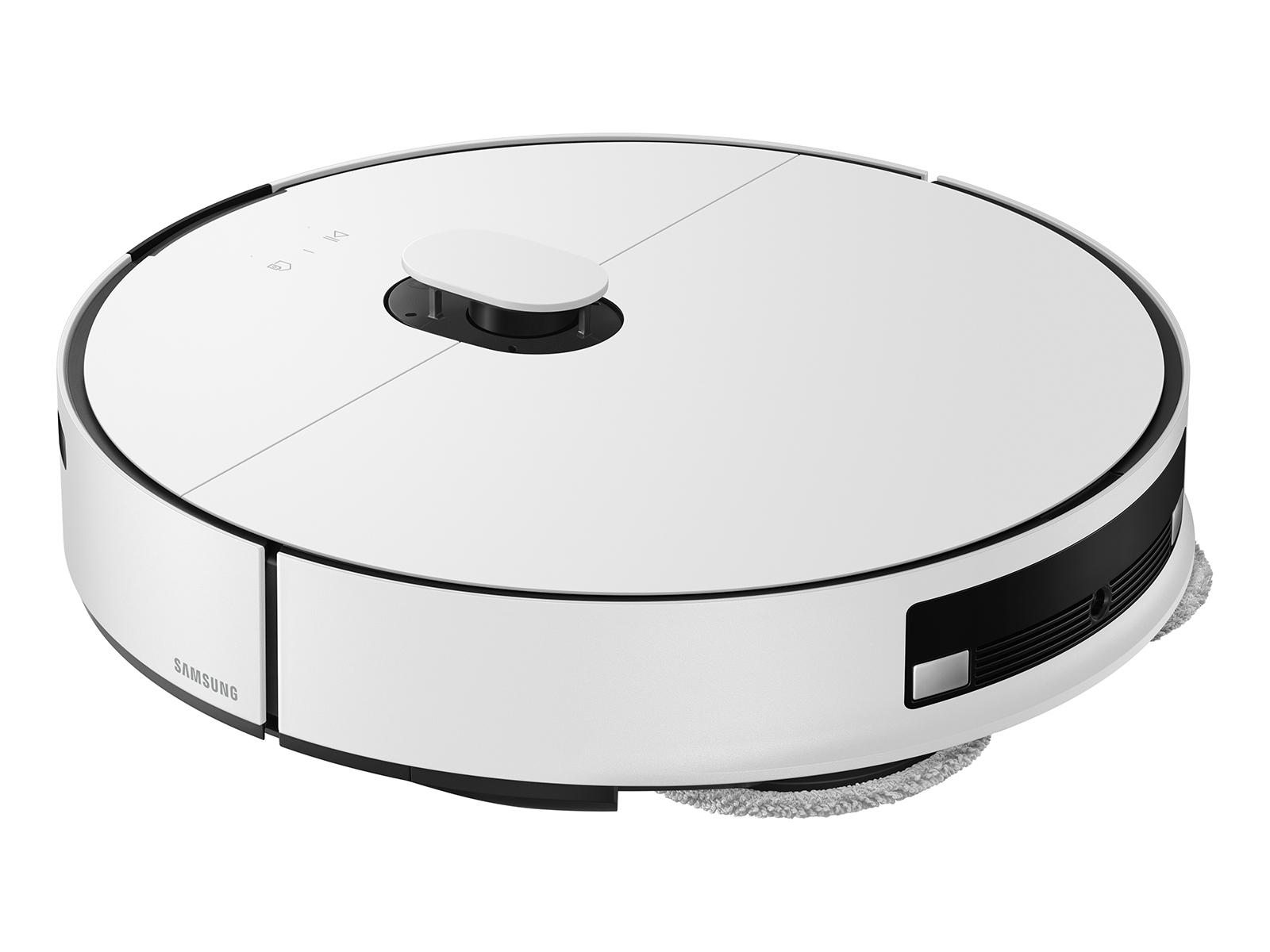
The robot vacuum market has exploded over the past few years, evolving from simple disc-shaped cleaners that bumped around randomly to sophisticated machines that can map your home, avoid obstacles, and even mop your floors. Today's premium robot vacuum and mop combos represent the cutting edge of this technology, promising to handle your entire floor cleaning routine with minimal human intervention.
But with so many advanced features and technical specifications, choosing between top-tier models can feel overwhelming. Two standouts in the premium category are the Eufy Omni E25 and the Samsung Bespoke Jet Bot Combo AI. Both launched in recent years—the Samsung in 2024 and the Eufy in 2025—representing the latest thinking in robot cleaning technology. Yet they take surprisingly different approaches to solving the same problem.
Before diving into these specific models, it's worth understanding what makes today's robot vacuums so much more capable than earlier generations. The biggest advancement has been in navigation technology. Early robot vacuums used simple bump sensors and moved in semi-random patterns, often missing large areas or getting stuck repeatedly.
Modern premium models use LiDAR (Light Detection and Ranging)—essentially laser-based radar that creates detailed 3D maps of your home. Think of it like the spinning sensor you might see on a self-driving car, but miniaturized. This allows the robot to plan efficient cleaning routes, remember where it's been, and return to specific areas as needed.
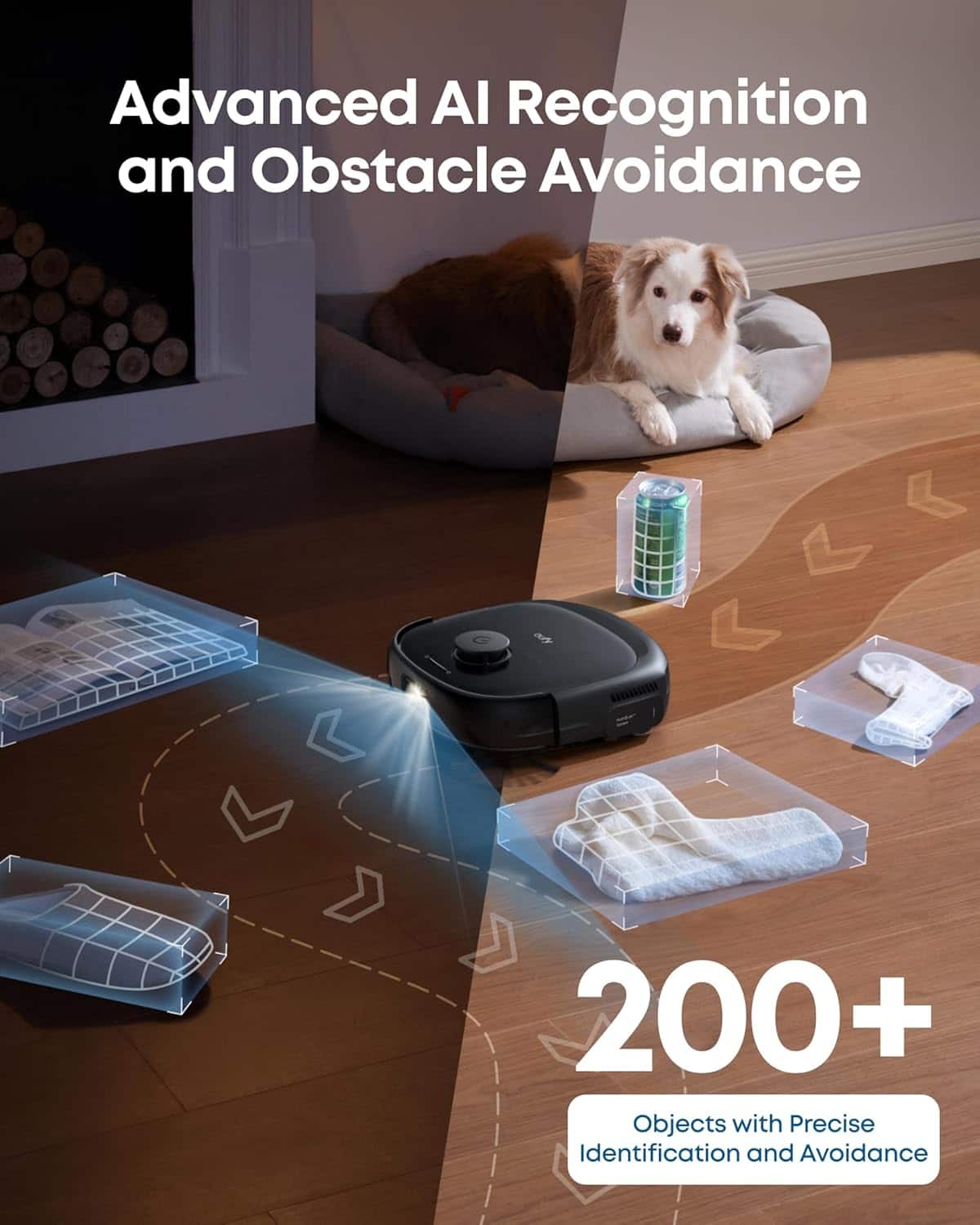
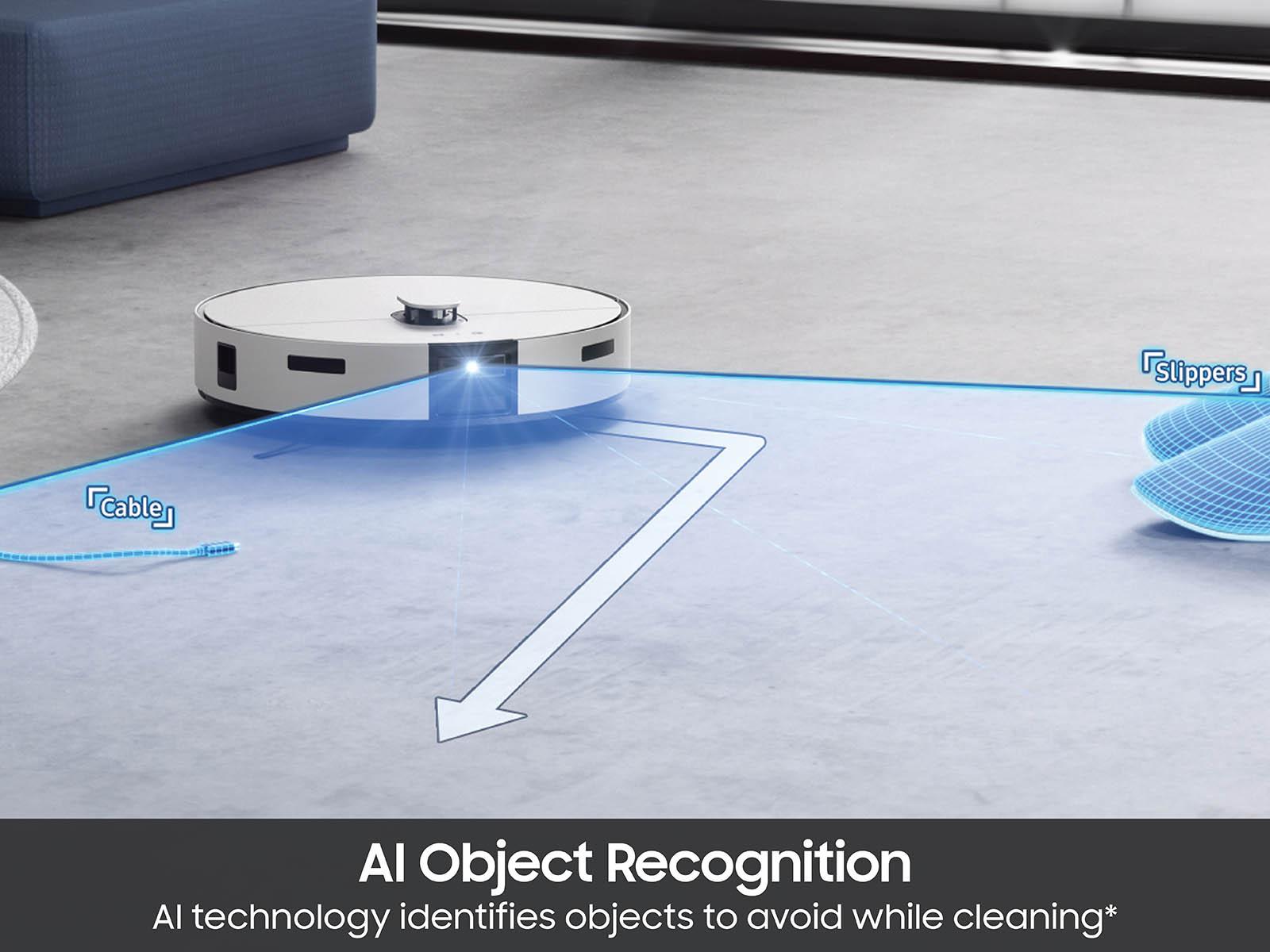
The second major advancement has been in obstacle avoidance. Traditional robots could detect large objects like furniture legs, but would often push around shoes, cables, or pet toys. Today's models use cameras and advanced AI to recognize hundreds of different objects and navigate around them intelligently.
Finally, the integration of mopping capabilities has transformed these devices from vacuum-only machines into complete floor care systems. The challenge is doing this well—early attempts at robot mopping were often underwhelming, but recent innovations have made significant strides.
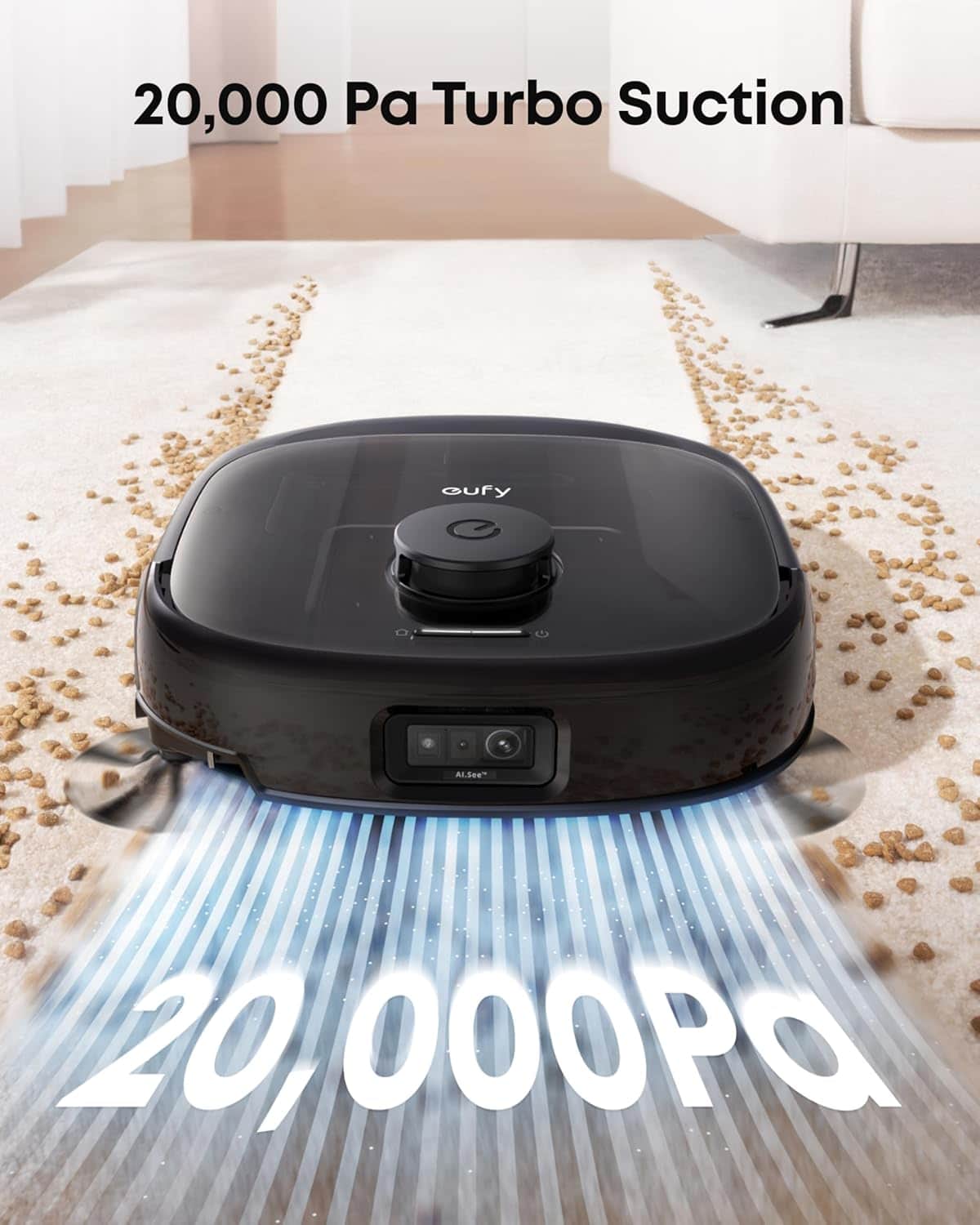
The fundamental difference between the Eufy Omni E25 and Samsung Bespoke Jet Bot Combo AI comes down to philosophy. The Eufy takes what you might call the "brute force" approach—it delivers exceptional raw cleaning power with 20,000 Pa of suction. To put that in perspective, that's more than triple the Samsung's 6,000 Pa and significantly higher than most robot vacuums on the market.
The Samsung, on the other hand, emphasizes intelligence and automation. It features dual 3D depth cameras, advanced AI processing, and what Samsung claims is LiDAR coverage that's 79% more comprehensive than conventional systems. Instead of overpowering dirt and debris, it aims to outsmart them.
This philosophical difference affects everything from how they clean to how much they cost. At the time of writing, the Samsung commands a premium price reflecting its advanced smart features, while the Eufy offers flagship-level performance at a more accessible price point.
When it comes to pure vacuuming ability, the numbers tell a clear story. The Eufy Omni E25 achieved an 88% pickup rate in professional carpet testing—significantly above the 75% average for robot vacuums. This translates to visibly cleaner carpets, especially important if you have pets or high-traffic areas.
The suction power difference is dramatic. Pa (Pascals) measures the pressure differential the vacuum creates—higher numbers mean stronger suction. The Eufy's 20,000 Pa isn't just a marketing number; it represents genuine cleaning capability that you'll notice in real-world use. Deep-set dirt in carpet fibers, pet hair embedded in rugs, and debris in cracks between floorboards all require significant suction to remove effectively.
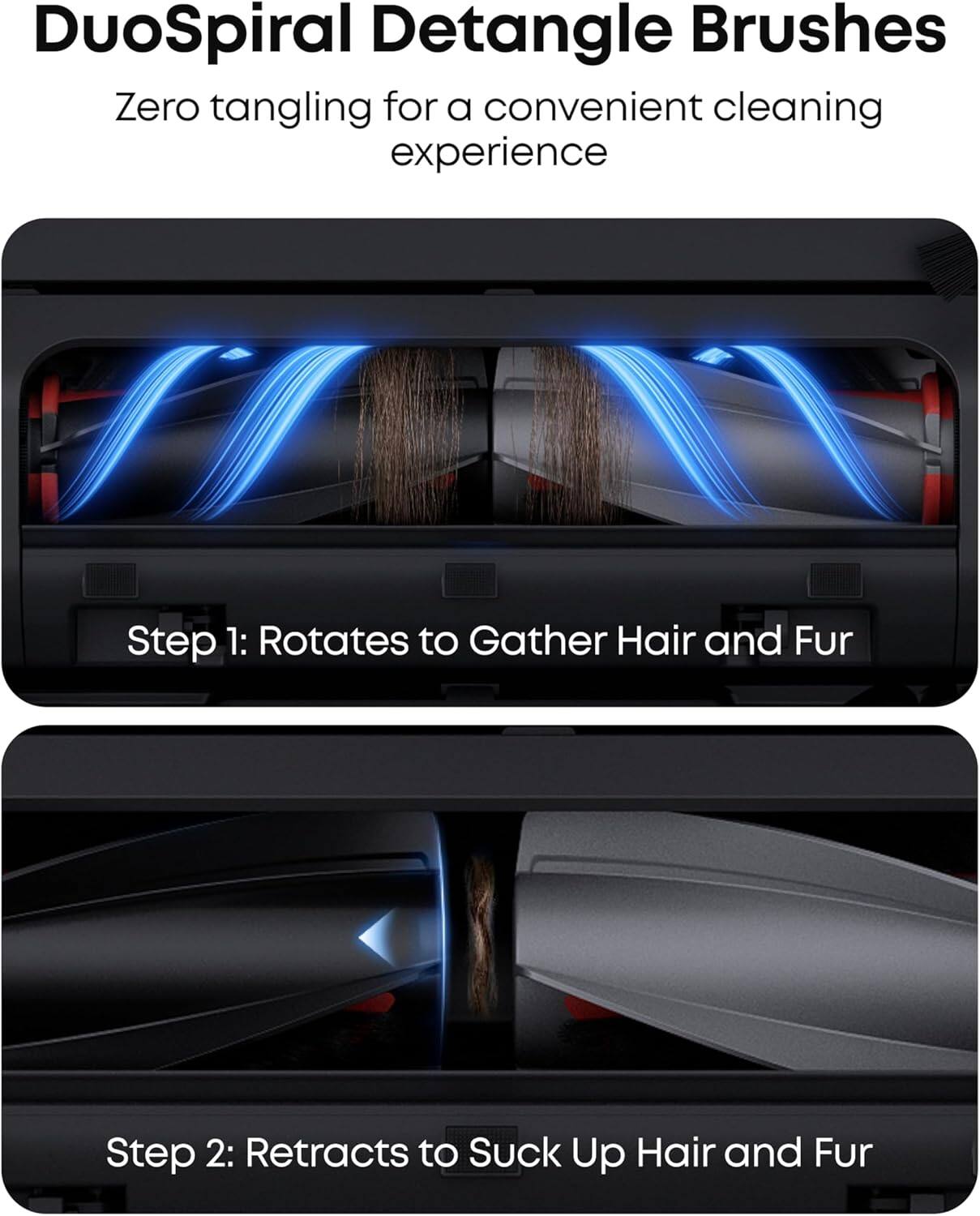
For pet owners, this power advantage is particularly meaningful. The Eufy removed 93% of pet hair in testing, compared to an 81% average for robot vacuums. Perhaps more importantly, its DuoSpiral™ anti-tangle brush design prevented hair from wrapping around the roller entirely—a common frustration with robot vacuums that can leave you manually cutting hair away from brushes.
The Samsung, while delivering decent cleaning performance, falls into the "good enough" category rather than exceptional. Its 6,000 Pa of suction handles daily maintenance cleaning well but may struggle with deep-cleaning tasks or heavily embedded debris.
Both robots represent significant advances in robot mopping, but they achieve this through completely different mechanisms. Understanding these differences is crucial because mopping has historically been the weak point of robot vacuum combos.
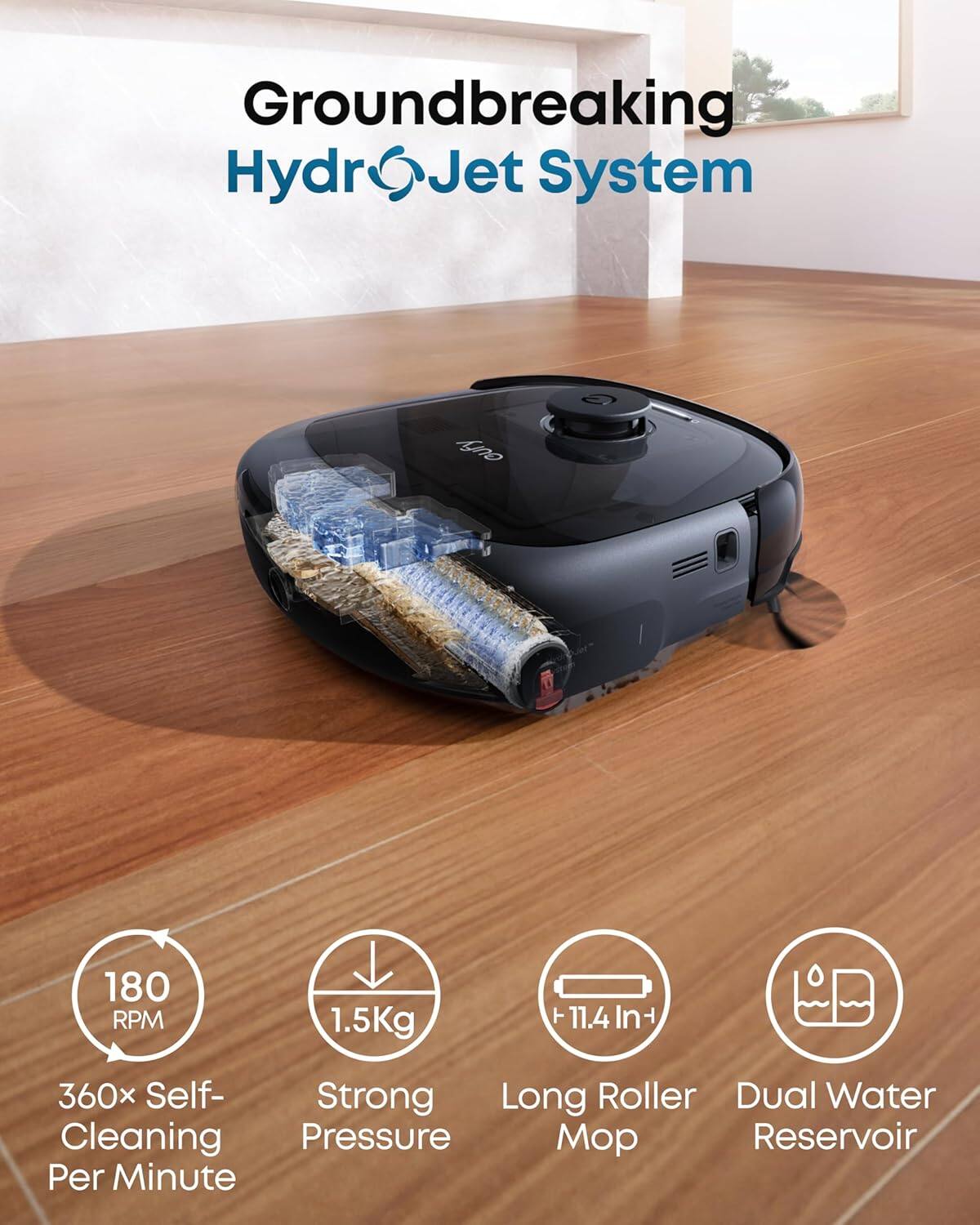
The Eufy's HydroJet™ system uses a roller mop—imagine a small version of the spinning mop head you might find on a commercial floor cleaner. This roller is constantly refreshed with clean water from one reservoir while dirty water is scraped off into a separate tank. The system applies 14.7 Newtons of downward pressure (about 3.3 pounds of force) to help break up stains and dried spills.
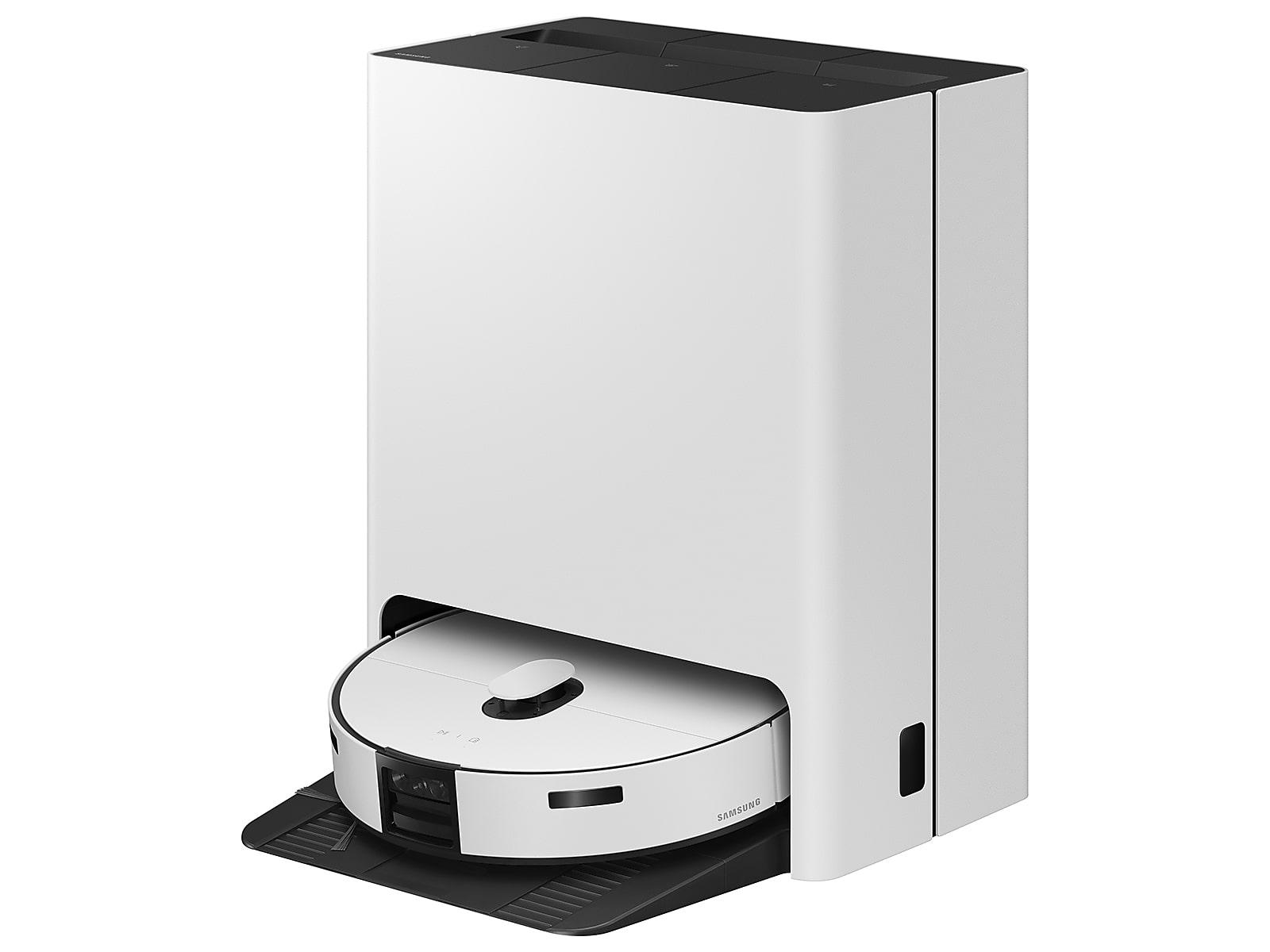
The Samsung takes a more traditional approach with dual spinning mop pads, but elevates it with sophisticated water management and sanitization. The standout feature is steam-based mop pad cleaning—after each cleaning session, the base station not only washes the mop pads with hot water but also uses steam to sanitize them. This is relatively rare in the robot vacuum world and represents a genuine advancement in hygiene.
Both systems automatically detect carpets and either lift their mops or avoid them entirely, preventing the common problem of robot mops dragging wet pads across rugs.
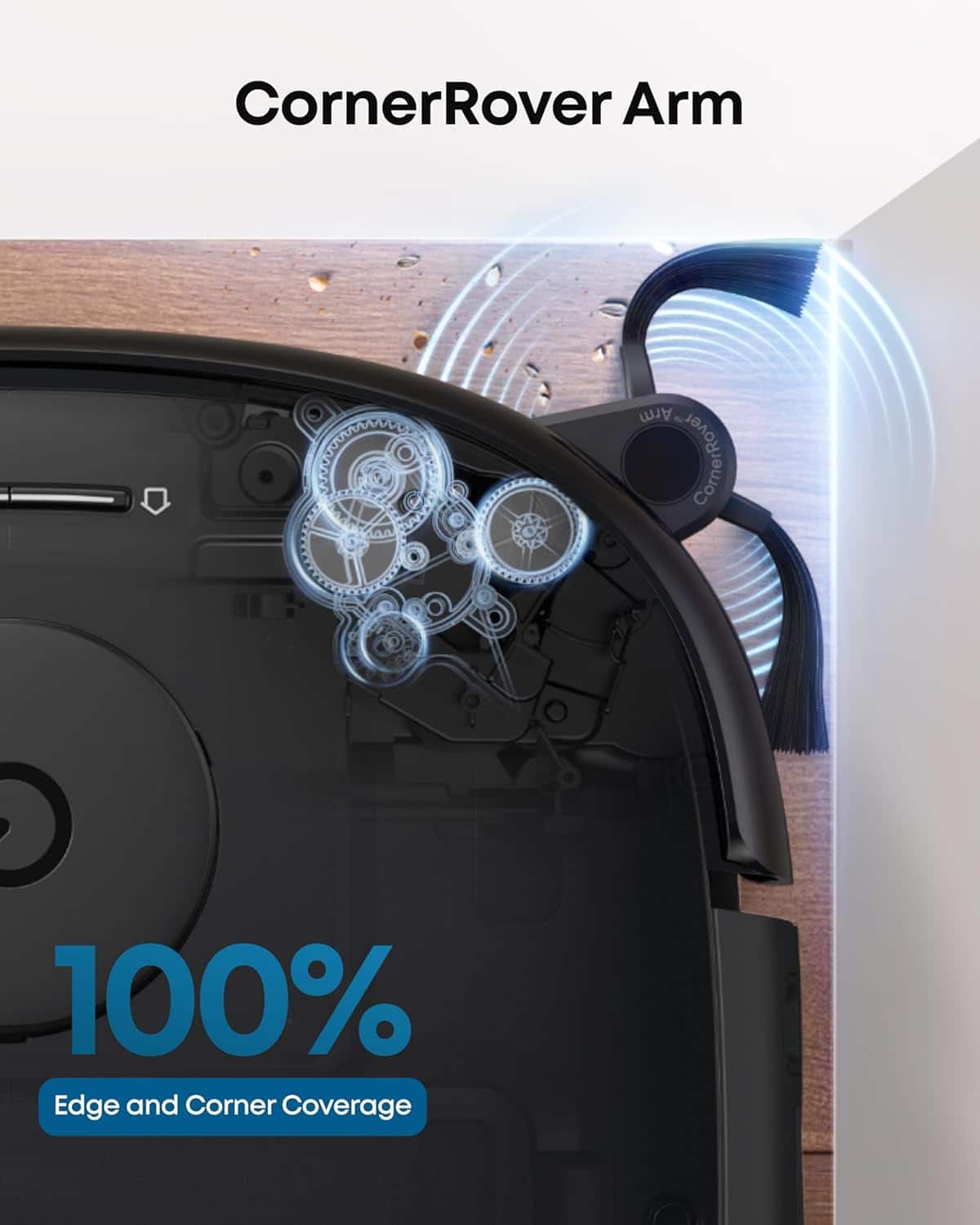
This is where the Eufy shows a clear advantage. Its CornerRover™ system includes an extending arm that reaches into corners and along edges—areas where dirt and debris naturally accumulate but many robot vacuums struggle to clean effectively.
The Samsung, despite its advanced sensors and navigation, lacks extending brushes or mops for comprehensive edge cleaning. This is a notable weakness for a premium-priced robot, as thorough edge cleaning is something users reasonably expect at this price point.
Both robots create detailed maps of your home, but their approaches differ significantly. The Samsung's dual 3D depth cameras provide what the company describes as 79% more coverage than conventional LiDAR systems. In practice, this means more detailed obstacle detection and better navigation in complex environments.
The system excels in cluttered homes—think kids' playrooms with toys scattered around, or living areas with multiple furniture pieces and decorations. Professional testing shows the Samsung successfully navigating around obstacles that confuse other robots, including cables, shoes, and even fake pet waste designed to test robot intelligence.
The Eufy uses a more conventional but still effective LiDAR plus RGB camera combination. It can recognize over 200 different object types, which is impressive, but the Samsung's 3D depth perception gives it an edge in real-world obstacle avoidance scenarios.
The Samsung leverages its position in the broader Samsung ecosystem beautifully. If you already use Samsung appliances or SmartThings devices, the integration is seamless. The robot can participate in broader home automation routines, and its built-in camera enables unique features like pet monitoring and even video calls with family members when you're away.
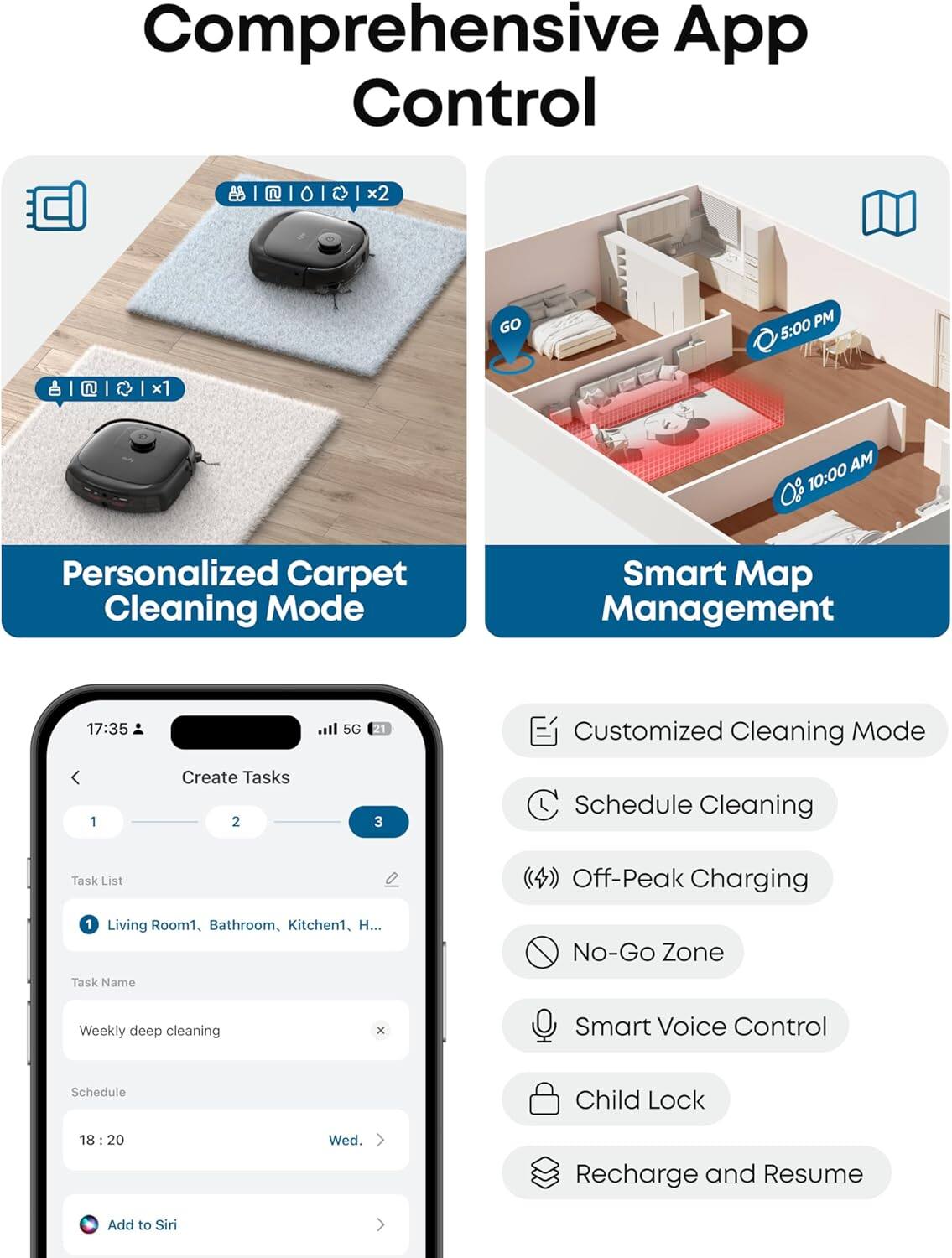
The Eufy supports Matter compatibility, which is the newer smart home standard designed to work across different manufacturers' ecosystems. This is potentially more future-proof but currently offers fewer integrated features than Samsung's mature SmartThings platform.
Both robots include comprehensive base stations that handle most maintenance tasks, but they differ in important ways. The Eufy's Omni Station can operate for approximately 75 days before requiring user intervention—it self-empties debris, refills detergent, and manages water supplies. The 3-liter dust bag capacity is notably larger than many competitors.
The Samsung's Clean Station Steam+ offers more sophisticated mop maintenance with its steam sanitization feature, but requires more frequent attention for optimal performance. The trade-off is between convenience (Eufy's longer autonomous operation) and hygiene (Samsung's superior mop cleaning).
This might seem like a minor point, but the noise difference is significant in daily use. The Eufy operates at 60 decibels—roughly the sound level of normal conversation. The Samsung runs at 74 decibels, which is noticeably louder and closer to the level of a garbage disposal.
For anyone who might run their robot during the day while working from home, or in the evening while watching TV, this 14-decibel difference is meaningful. It's the difference between barely noticing the robot's operation and having it be a minor but constant distraction.
Based on extensive research into user reviews and expert testing, clear patterns emerge. The Eufy delivers consistently reliable performance with minimal app-related issues. Users appreciate its "set it and forget it" operation, though some note it returns to its dock frequently during cleaning sessions to empty its bin or recharge.
The Samsung offers impressive capabilities when everything works correctly, but users frequently report app connectivity issues, particularly on iOS devices. Some describe having to manually troubleshoot the robot's operation more often than they'd prefer for a premium-priced device.
Robot vacuums are significant investments, and long-term reliability matters. The Eufy's simpler mechanical approach with fewer electronic components potentially offers better long-term durability. However, both companies provide solid warranty coverage and customer support.
Consumable costs also factor into long-term ownership. Both robots require replacement bags, filters, and mop pads over time, but the Eufy's longer autonomous operation periods mean fewer consumable changes.
Value performance over features. If your primary goal is the cleanest possible floors with minimal fuss, the Eufy's combination of powerful suction, effective mopping, and quiet operation delivers exceptional results. Pet owners particularly benefit from its superior hair pickup and tangle-free brush design.
The Eufy also makes sense for larger homes or busy households where reliability and minimal maintenance are priorities. Its 75-day autonomous operation means you can truly set it and forget it for extended periods.
Budget-conscious buyers should also gravitate toward the Eufy. At the time of writing, it offers flagship-level cleaning performance at a more accessible price point than comparable premium robots.
Already invested in Samsung's ecosystem or prioritize smart home integration. The native SmartThings compatibility and advanced app features provide value that extends beyond basic cleaning.
Live in a cluttered environment where superior obstacle avoidance is crucial. The Samsung's dual 3D cameras and advanced AI processing excel at navigating complex spaces with multiple obstacles.
Prioritize mop hygiene above all else. The steam sanitization feature is genuinely innovative and provides a level of cleanliness that standard robot mops can't match.
Don't mind troubleshooting technology occasionally. If you enjoy tweaking settings and don't mind dealing with app connectivity issues, the Samsung's advanced features can be rewarding.
After researching both robots extensively, a clear recommendation emerges based on your priorities. The Eufy Omni E25 delivers superior cleaning performance, quieter operation, and better value for most users. Its combination of powerful suction, innovative mopping, and reliable operation makes it the practical choice for households prioritizing clean floors above smart features.
The Samsung Bespoke Jet Bot Combo AI appeals to users who want cutting-edge technology and don't mind paying a premium for advanced features. Its obstacle avoidance is genuinely impressive, and the steam sanitization represents real innovation in robot mop hygiene.
For most households, the Eufy provides the better overall package. Its superior cleaning performance, significantly quieter operation, and more reliable day-to-day experience justify its position as the practical choice. The Samsung is best reserved for smart home enthusiasts who specifically value its advanced AI features and are willing to work through occasional app-related frustrations.
Both represent significant advances in robot vacuum technology, but they serve different user priorities. Choose based on whether you value cleaning performance and reliability (Eufy) or smart features and ecosystem integration (Samsung). Either way, you'll be getting a capable robot that can genuinely handle your floor cleaning with minimal intervention.
| Eufy Omni E25 Robot Vacuum and Mop | Samsung Bespoke Jet Bot Combo AI |
|---|---|
| Suction Power - Most critical for deep cleaning carpets and embedded debris | |
| 20,000 Pa (exceptional power, 3x stronger than Samsung) | 6,000 Pa (adequate for daily maintenance cleaning) |
| Carpet Cleaning Performance - Key metric for homes with rugs and carpets | |
| 88% pickup rate (significantly above 75% average) | Decent performance but below Eufy's level |
| Pet Hair Removal - Essential for pet owners dealing with shedding | |
| 93% removal rate with zero hair tangling on brushes | Good pickup but prone to hair tangling issues |
| Noise Level - Important for daytime cleaning and noise-sensitive households | |
| 60 dB (quiet as normal conversation) | 74 dB (14 dB louder, noticeable difference) |
| Mopping Technology - Different approaches to floor washing effectiveness | |
| HydroJet™ roller mop with continuous self-cleaning | Dual spinning pads with steam sanitization |
| Navigation System - Affects cleaning thoroughness and obstacle avoidance | |
| LiDAR + RGB camera, recognizes 200+ objects | Dual 3D depth cameras + LiDAR, superior obstacle avoidance |
| Edge Cleaning - Critical for corners and baseboards where dirt accumulates | |
| CornerRover™ extending arm for better edge coverage | No extending brushes, weaker edge cleaning performance |
| Battery Life - Determines cleaning coverage per session | |
| 216 minutes vacuum-only, 110 minutes combo mode | 180 minutes runtime with above-average efficiency |
| Autonomous Operation - How long before requiring user intervention | |
| 75 days hands-free with 3L dust bag capacity | Requires more frequent maintenance attention |
| App Experience - Daily usability and smart home integration | |
| Matter compatible, reliable but less feature-rich | SmartThings integration with advanced features but buggy |
| Smart Features - Additional capabilities beyond basic cleaning | |
| Multi-level mapping, zone cleaning, virtual barriers | Pet monitoring, video calls, home security via camera |
| Dustbin Capacity - Affects how often you need to manually empty | |
| 300ml onboard (smaller but auto-empties to 3L station) | 250ml onboard with 2.5L station bag |
| Mop Maintenance - Hygiene and convenience of mop cleaning system | |
| Hot water washing and heated air drying | Steam sanitization plus hot water cleaning (superior hygiene) |
| Value Proposition - Performance and features relative to cost | |
| Flagship cleaning performance at competitive pricing | Premium smart features at higher cost, mid-range cleaning |
The Eufy Omni E25 delivers significantly stronger suction at 20,000 Pa compared to the Samsung Bespoke Jet Bot Combo AI's 6,000 Pa. This means the Eufy provides more than triple the suction power, making it much more effective at deep cleaning carpets and removing embedded debris.
The Eufy Omni E25 excels at pet hair removal with a 93% pickup rate and zero hair tangling thanks to its DuoSpiral™ anti-tangle brushes. While the Samsung can handle pet hair, it's more prone to hair tangling on brushes, requiring more frequent manual cleaning.
The Eufy Omni E25 operates much quieter at 60 dB (similar to normal conversation), while the Samsung Bespoke Jet Bot Combo AI runs at 74 dB. This 14-decibel difference is quite noticeable, making the Eufy better for daytime cleaning or noise-sensitive environments.
Both robots use different but effective mopping approaches. The Eufy Omni E25 features a HydroJet™ roller mop system that continuously refreshes with clean water, while the Samsung uses dual spinning mop pads with steam sanitization for superior hygiene. The Samsung's steam cleaning is more advanced for mop maintenance.
The Samsung Bespoke Jet Bot Combo AI has superior obstacle avoidance with dual 3D depth cameras and advanced AI processing, making it excellent for cluttered homes. The Eufy Omni E25 uses reliable LiDAR plus RGB cameras but doesn't match Samsung's sophisticated obstacle detection.
The Eufy Omni E25 provides better edge cleaning with its CornerRover™ extending arm that reaches into corners and along baseboards. The Samsung lacks extending brushes or mops, making its edge cleaning performance weaker despite its advanced navigation.
The Eufy Omni E25 offers longer runtime with 216 minutes in vacuum-only mode and 110 minutes in combo mode. The Samsung Bespoke Jet Bot Combo AI provides 180 minutes of runtime with above-average battery efficiency across different cleaning modes.
The Eufy Omni E25 requires significantly less maintenance, operating hands-free for up to 75 days with its larger 3L dust bag capacity and automatic detergent refilling. The Samsung requires more frequent attention despite having advanced mop sanitization features.
The Samsung Bespoke Jet Bot Combo AI offers superior smart home integration with native SmartThings compatibility, pet monitoring, video calls, and home security features. The Eufy Omni E25 supports Matter compatibility but has fewer smart features, though it's more reliable in daily operation.
The Eufy Omni E25 offers exceptional value with flagship-level cleaning performance at a more accessible price point. The Samsung commands a premium for its advanced smart features but delivers mid-range cleaning performance relative to its higher cost.
The Eufy Omni E25 is significantly better for carpet-heavy homes due to its powerful 20,000 Pa suction and 88% carpet pickup rate, well above the average robot vacuum. The Samsung's 6,000 Pa suction is adequate for daily maintenance but won't deep-clean carpets as effectively.
The Eufy Omni E25 demonstrates better reliability with consistent performance and minimal app-related problems. The Samsung Bespoke Jet Bot Combo AI offers impressive capabilities when working properly but users frequently report app connectivity issues and require more troubleshooting, particularly on iOS devices.
We've done our best to create useful and informative comparisons to help you decide what product to buy. Our research uses advanced automated methods to create this comparison and perfection is not possible - please contact us for corrections or questions. These are the sites we've researched in the creation of this article: vacuumwars.com - crutchfield.com - vacuumwars.com - youtube.com - bestbuy.com - michaelsleen.com - youtube.com - eufy.com - vacuumadvice.com - youtube.com - ankernordics.com - youtube.com - homedepot.com - versus.com - youtube.com - youtube.com - eufy.com - the-independent.com - eufy.com - bestbuy.com - eufy.com - techradar.com - kahians.com - vacuumwars.com - samsung.com - youtube.com - wickfordappliance.com - eftm.com - samsung.com - samsung.com - advantageappliance.com - youtube.com - samsung.com - bestbuy.com - samsung.com - samsung.com - franksappliance.com - american-homeappliance.com

Privacy Policy
Terms and Conditions - Affiliate Policy
Home Security
© Copyright 2008-2026.
11816 Inwood Rd #1211, Dallas, TX 75244