

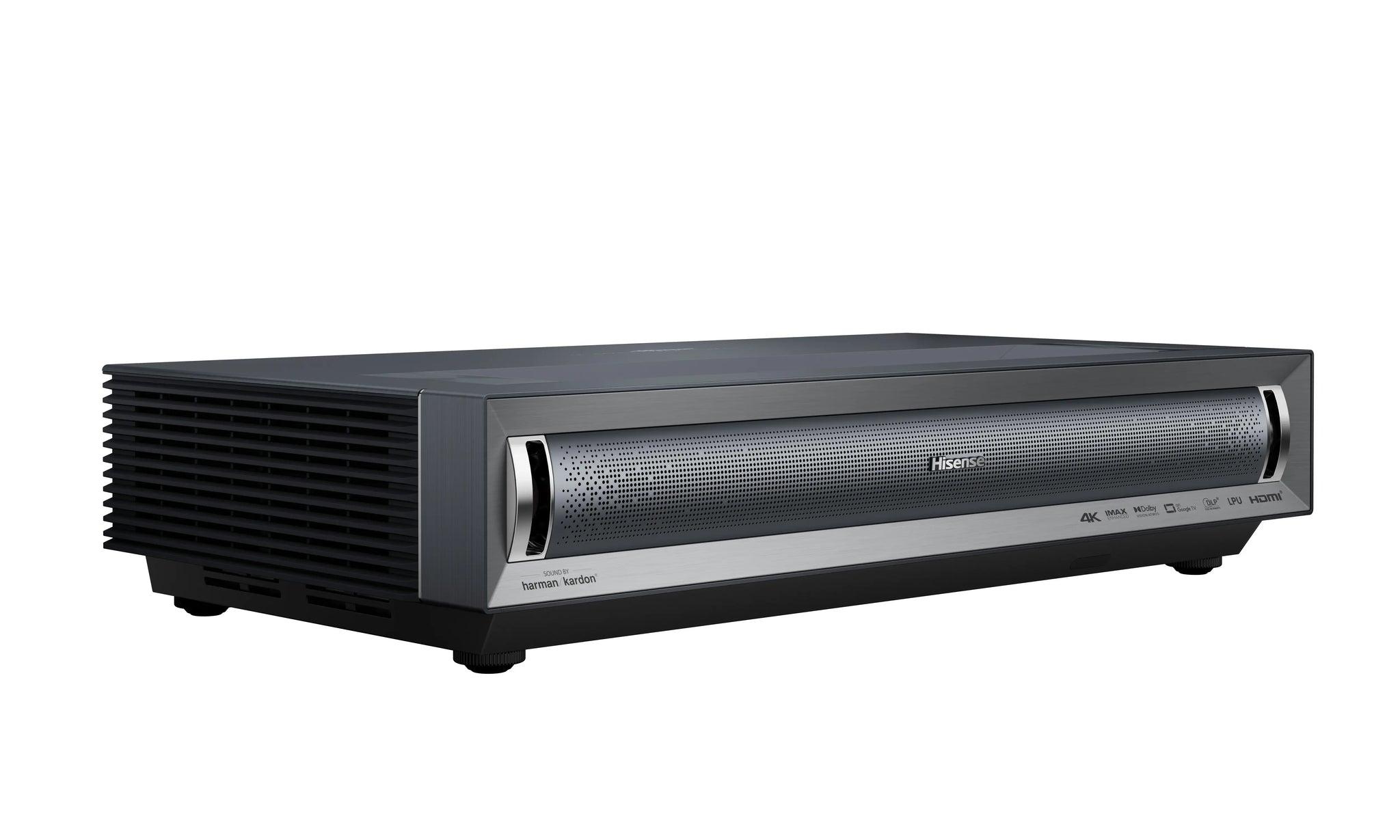
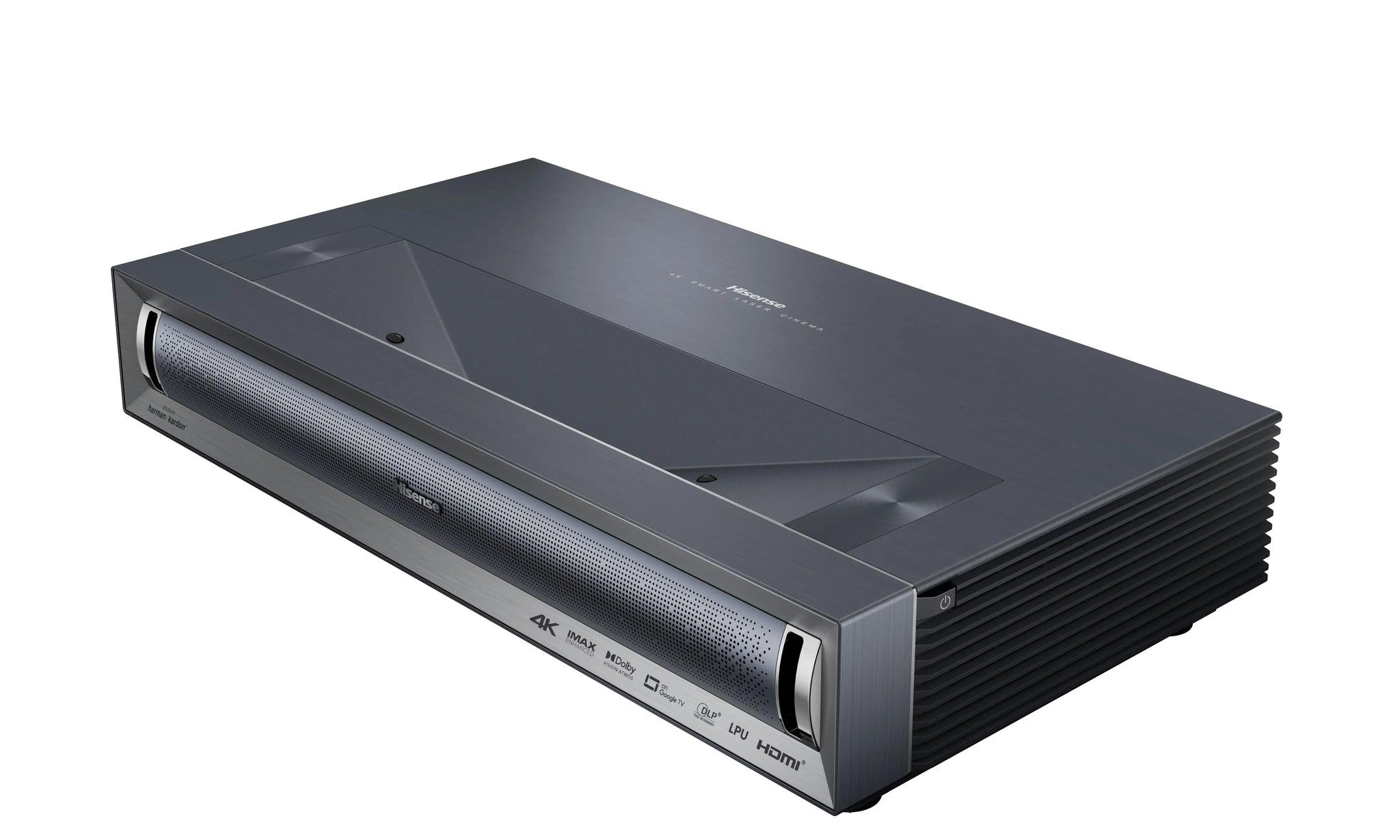
When shopping for a projector that can transform your living room into a movie theater, you'll quickly discover that ultra short throw (UST) projectors represent the cutting edge of home entertainment technology. These remarkable devices can project massive 100-150 inch images while sitting just inches from your wall – no ceiling mounting or dark basement required.
Today we're comparing two standout models that launched in recent years: the Hisense PX3-PRO and the NOMVDIC P2000 UST-RGB. Both promise cinema-quality experiences but take notably different approaches to achieving that goal.
Before diving into our comparison, let's clarify what makes UST projectors special. Traditional projectors need to be mounted far from your screen – often 10-15 feet away for a large image. Ultra short throw projectors flip this concept entirely, using specialized lens systems that can create a 100-inch image from less than a foot away from the wall.
This positioning advantage eliminates common projector headaches: no shadows when someone walks in front, no ceiling mounting hardware, and no long cable runs. The trade-off? UST projectors are significantly more expensive than traditional models, but they're designed to compete directly with premium large-screen TVs.
The technology has evolved rapidly since these laser-based UST projectors first appeared around 2018-2019. Early models suffered from brightness limitations and color accuracy issues, but the latest generation – including both projectors we're examining – represents a major leap forward in performance and reliability.
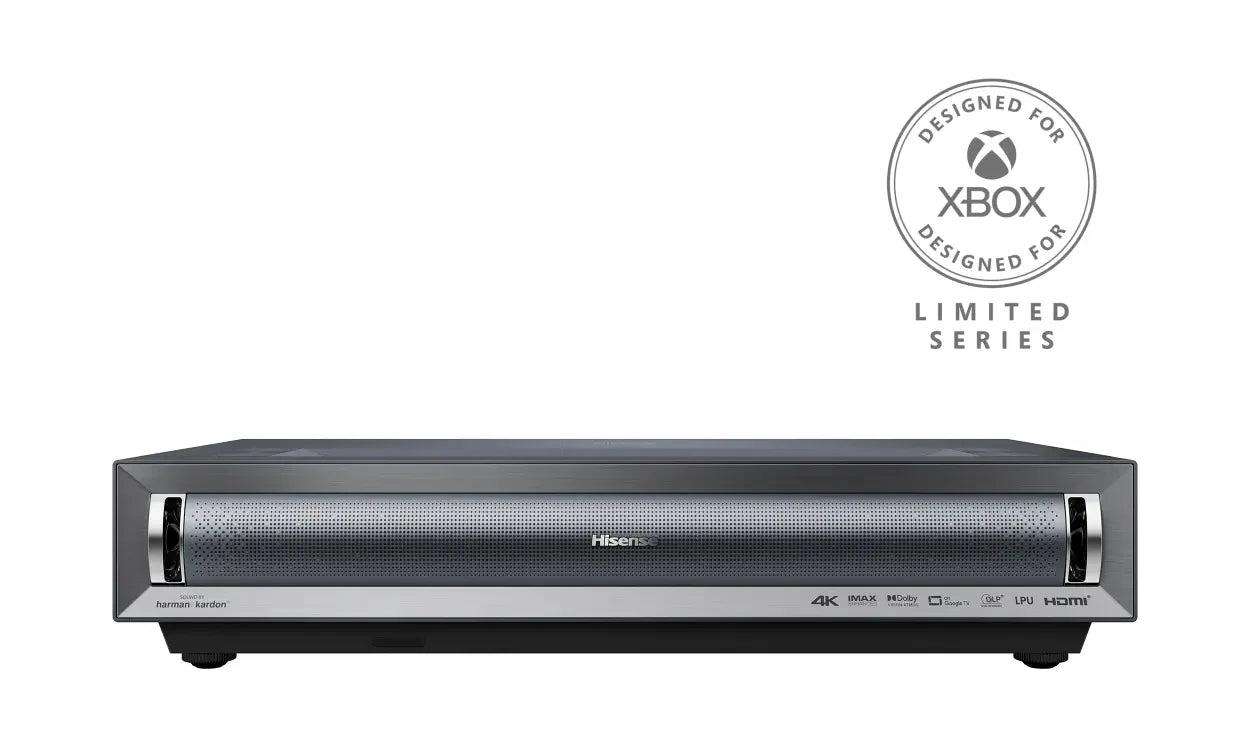
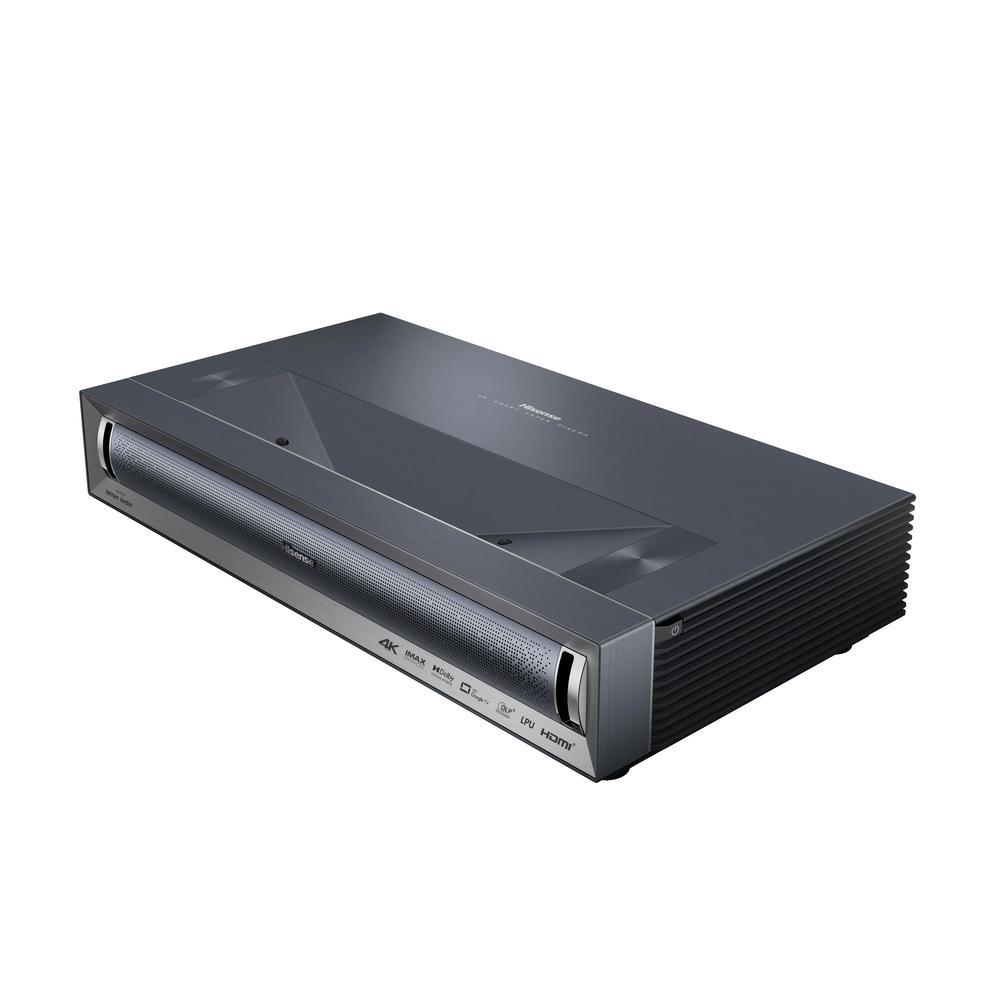
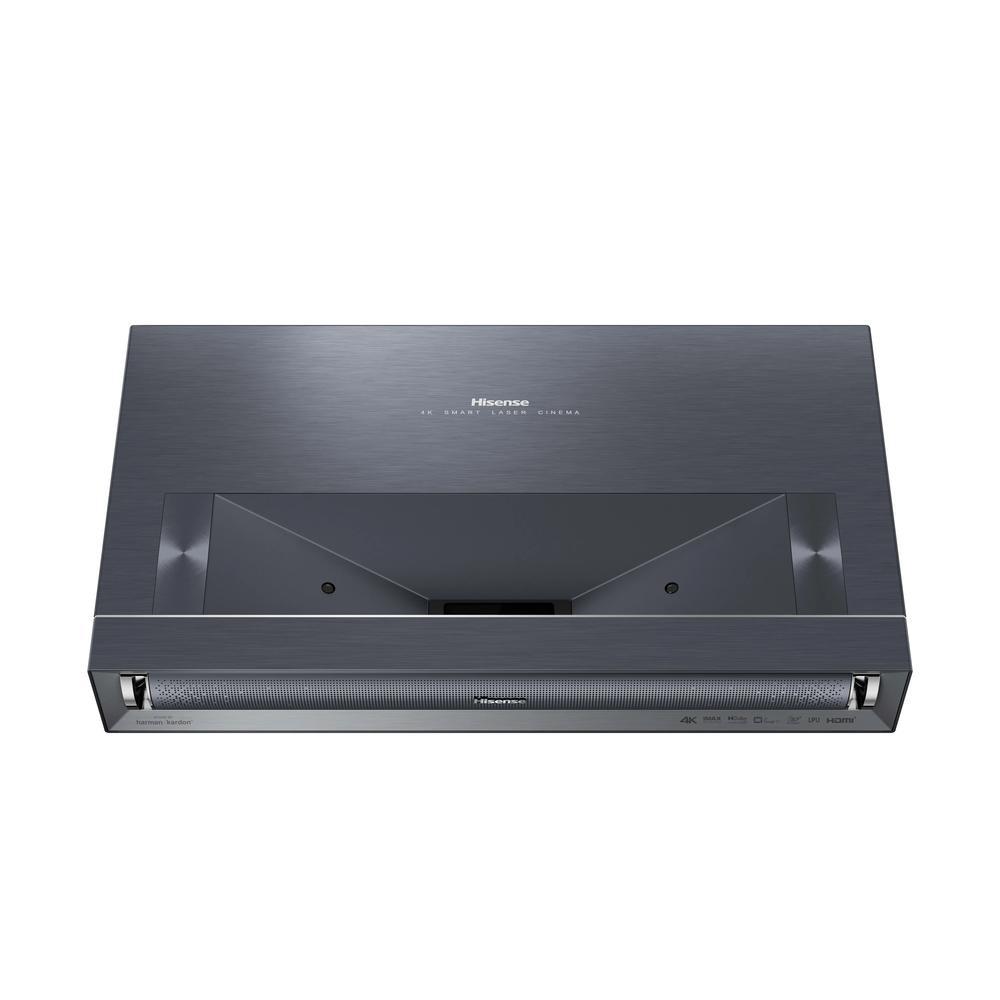
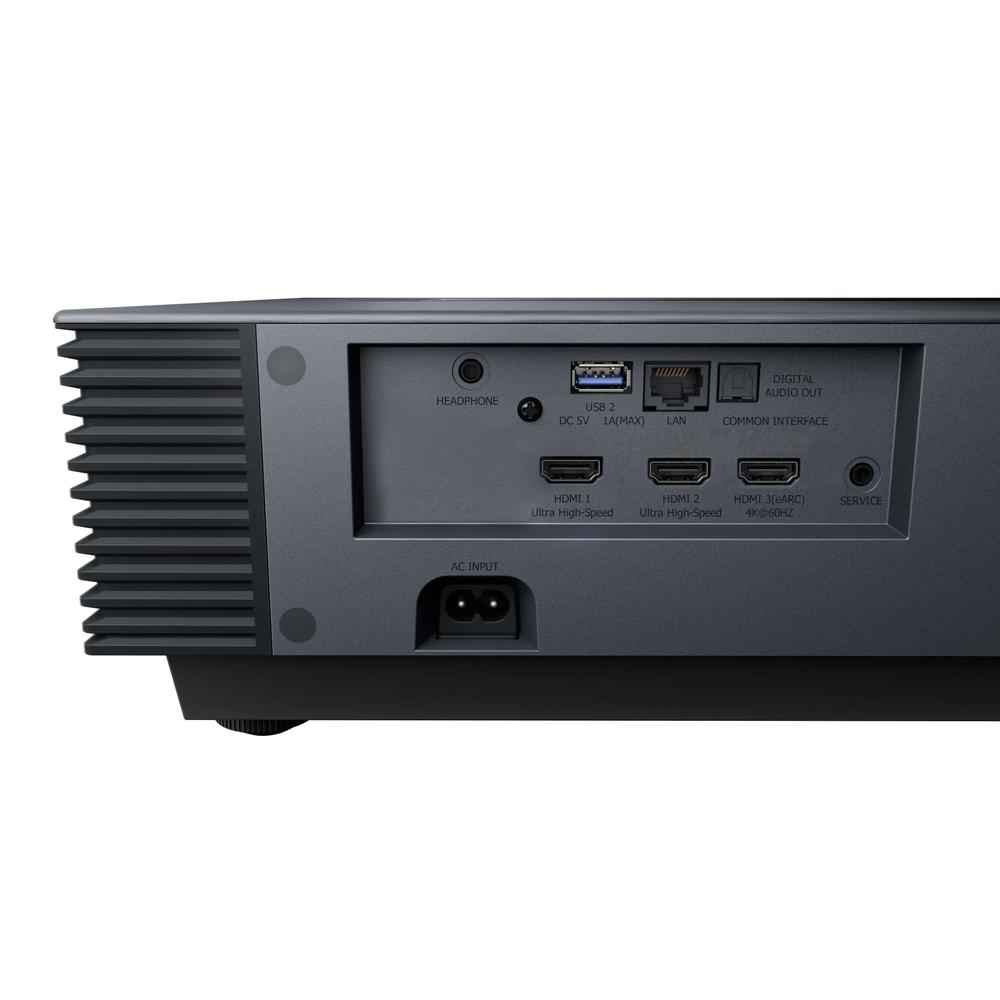
The Hisense PX3-PRO, released in 2023, represents Hisense's premium approach to UST projection. At the time of writing, it typically costs several hundred dollars more than the NOMVDIC, positioning itself as a luxury all-in-one entertainment solution. Hisense has focused heavily on convenience features, smart TV integration, and optimizing performance for varied lighting conditions.
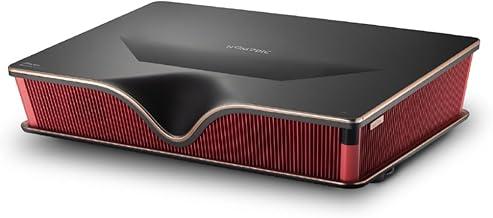
The NOMVDIC P2000 UST-RGB, also a recent arrival, takes a more focused approach. NOMVDIC (pronounced "nomadic") concentrated their engineering efforts on maximizing image quality and color performance while keeping costs more accessible. This projector appeals to enthusiasts who prioritize pure visual performance over convenience features.
When evaluating any projector, brightness measured in ANSI lumens represents perhaps the most crucial specification. This measurement determines whether you can enjoy your projector during the day or need to draw the curtains every time you want to watch something.
The Hisense PX3-PRO delivers an impressive 3,000 ANSI lumens, making it one of the brighter UST projectors available. In practical terms, this brightness level means you can comfortably watch movies or TV shows in a room with some ambient light – windows, table lamps, or even overhead lighting won't completely wash out the image. For families using their living room for multiple purposes throughout the day, this brightness advantage proves invaluable.
The NOMVDIC P2000 produces 2,500 ANSI lumens, which still qualifies as quite bright by projector standards but represents about 20% less light output than the Hisense. This difference becomes most noticeable during daytime viewing or when projecting the largest possible screen sizes. In a dedicated theater room with controlled lighting, 2,500 lumens provides excellent performance, but the reduced output may struggle in brighter environments.
From our research into user experiences, the brightness difference translates to real-world viewing flexibility. Hisense PX3-PRO owners frequently mention successful daytime viewing sessions, while NOMVDIC P2000 users more often describe optimal viewing conditions occurring after sunset or with curtains drawn.
Color reproduction represents where these projectors showcase their most significant differences. Both use advanced laser light sources – a major upgrade from older lamp-based projectors that offered limited color gamuts and required frequent bulb replacements.
The NOMVDIC P2000 employs Appotronics ALPD 4.0 triple laser technology, achieving complete 100% coverage of the BT.2020 color standard. BT.2020, also known as Rec. 2020, represents the color space used for 4K HDR content and encompasses a much wider range of colors than older standards. Think of color gamut coverage like a painter's palette – more coverage means access to more vivid, accurate colors that match what filmmakers intended.
What makes the NOMVDIC particularly impressive is its contrast performance. The projector achieves a dynamic contrast ratio of 3,000,000:1, meaning the difference between the brightest whites and deepest blacks spans an enormous range. This translates to more detailed shadows, more realistic nighttime scenes, and overall more three-dimensional image depth.
The Hisense PX3-PRO takes a different approach, achieving 110% BT.2020 coverage – actually exceeding the standard's requirements. Hisense's TriChroma RGB laser system produces exceptionally vibrant colors, though some experts note that oversaturated colors can sometimes appear less natural than more precisely calibrated displays.
Where Hisense excels is out-of-box accuracy. Based on professional reviews, the PX3-PRO delivers excellent color performance immediately after setup, while the NOMVDIC requires calibration to achieve its best results. For most users, this convenience factor proves significant – not everyone wants to spend hours adjusting color settings.
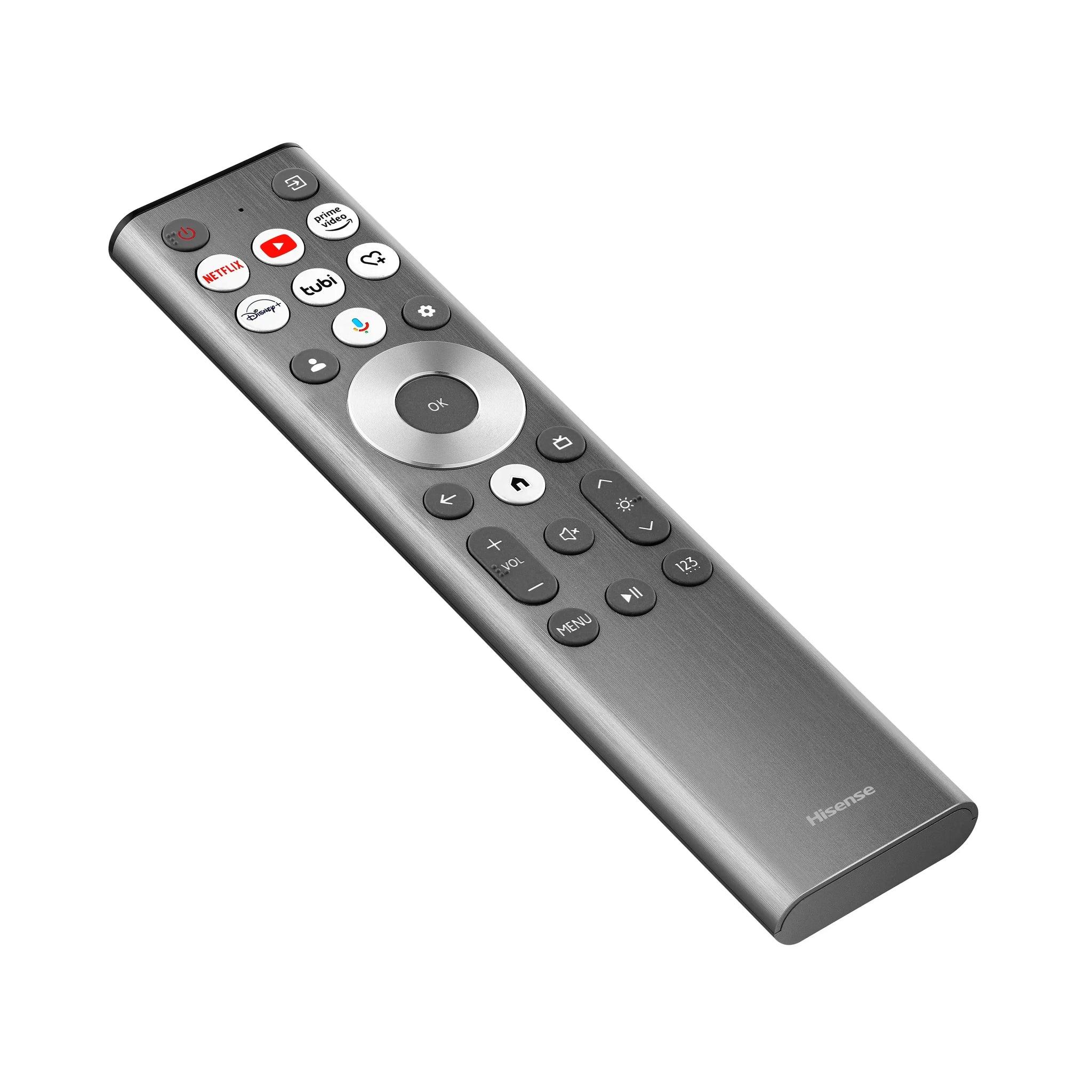
Here's where these projectors diverge most dramatically. The Hisense PX3-PRO includes comprehensive Google TV integration, essentially functioning as a smart TV with native Netflix, Disney+, Amazon Prime Video, and other streaming apps. You can control everything with voice commands through built-in Amazon Alexa and Google Assistant support, cast content from your phone via Chromecast, or use Apple AirPlay for iPhone users.
This integration eliminates cable clutter and device juggling – you simply plug in power and ethernet (or connect to Wi-Fi) and start streaming. The projector also features motorized zoom and focus, meaning you can adjust the image size and sharpness remotely without manually turning adjustment rings.
The NOMVDIC P2000 takes the opposite approach, offering zero built-in smart features. You'll need an external streaming device like an Apple TV, Roku, or Fire TV Stick. While this initially seems like a disadvantage, many home theater enthusiasts prefer this approach because external streaming devices often receive updates more frequently and offer better performance than built-in smart platforms.
The fixed lens design means manual adjustments only, though the NOMVDIC does include digital focus for fine-tuning sharpness. Some users appreciate the simplicity and reliability of fewer moving parts, while others miss the convenience of remote adjustments.
Both projectors include impressive 50-watt Harman Kardon speaker systems – a pleasant surprise given that most projectors offer mediocre audio. These built-in speakers actually eliminate the need for a separate soundbar in many installations, producing room-filling sound that complements the large visual experience.
The Hisense PX3-PRO adds Dolby Atmos support, which creates more immersive surround sound effects when playing compatible content. The NOMVDIC P2000 supports standard Dolby Audio and DTS, still delivering excellent quality but without the advanced positional audio effects.
From user feedback, both audio systems significantly exceed expectations, though dedicated audiophiles will likely still prefer external sound systems for ultimate performance.
Modern UST projectors have evolved into legitimate gaming displays, and both models deliver solid gaming experiences. Input lag – the delay between pressing a controller button and seeing the result on screen – has improved dramatically in recent projector generations.
The NOMVDIC P2000 shows slightly better gaming optimization with its motion compensation technology, which reduces blur during fast-moving scenes. This feature proves particularly beneficial for action games and sports content. Gaming enthusiasts in our research frequently praise its responsive feel and smooth motion handling.
The Hisense PX3-PRO offers competitive gaming performance, though not quite matching the NOMVDIC's specialized motion handling. However, the brightness advantage proves beneficial for HDR gaming, where many games utilize bright, colorful visuals that benefit from the extra light output.
Despite marketing claims about "simple setup," UST projectors require careful positioning for optimal results. Both projectors offer keystone correction (adjusting for angled projection) and focus adjustments, but the Hisense PX3-PRO's motorized controls make fine-tuning significantly easier, especially when mounted in hard-to-reach locations.
The NOMVDIC P2000 weighs notably more at about 23 pounds compared to the Hisense's 20 pounds. While this difference seems minor, it becomes relevant during installation and any future repositioning.
Both projectors work best with specialized ambient light rejecting (ALR) screens, which cost several hundred to over a thousand dollars additional but dramatically improve contrast and reduce the impact of room lighting. A quality ALR screen transforms either projector's performance, making this a crucial budget consideration.
At the time of writing, the Hisense PX3-PRO commands a premium of several hundred dollars over the NOMVDIC P2000 – roughly 15-20% more expensive. This premium essentially pays for integrated smart features, higher brightness, and motorized convenience features.
For mainstream users prioritizing convenience and flexibility, the Hisense premium feels justified. The all-in-one approach eliminates external device costs and complexity while providing better performance in varied lighting conditions.
The NOMVDIC P2000 offers superior performance-per-dollar for the core projection experience. The money saved can fund a premium ALR screen or sound system upgrades. However, adding a quality streaming device brings the total cost closer to the Hisense, reducing the value advantage.
For dedicated home theater installations, the NOMVDIC P2000 often emerges as the preferred choice among enthusiasts. Its superior contrast ratio creates more convincing dark scenes, while the precise color accuracy (after calibration) appeals to videophiles seeking reference-quality reproduction.
The Hisense PX3-PRO excels in mixed-use spaces where the projector doubles as both family entertainment and serious movie viewing. Its brightness advantage and smart features make it more practical for households with varying viewing preferences and schedules.
Choose the Hisense PX3-PRO if you want maximum convenience and flexibility. Its brightness advantage, comprehensive smart features, and motorized adjustments create a premium, user-friendly experience ideal for main living areas with ambient light challenges.
The NOMVDIC P2000 appeals to performance-focused users willing to sacrifice convenience for superior image quality and value. Its exceptional contrast and color accuracy make it perfect for dedicated viewing spaces where you control the lighting environment.
Both projectors represent excellent choices within their respective approaches. The key is matching your priorities – convenience and brightness versus performance and value – to the projector that best serves your specific viewing situation and preferences.
Neither projector will disappoint, but understanding these fundamental differences ensures you'll choose the one that aligns with how you actually plan to use this significant investment in your home entertainment future.
| Hisense PX3-PRO | NOMVDIC P2000 UST-RGB |
|---|---|
| Brightness - Most critical for daytime viewing and larger screens | |
| 3,000 ANSI lumens (excellent for bright rooms) | 2,500 ANSI lumens (good for controlled lighting) |
| Native Contrast Ratio - Determines black levels and image depth | |
| 3,000:1 (good dark room performance) | 3,000,000:1 dynamic (exceptional blacks and shadow detail) |
| Color Gamut Coverage - Affects color vibrancy and accuracy | |
| 110% BT.2020 (oversaturated but vivid colors) | 100% BT.2020 (precise standard compliance) |
| Smart TV Integration - Convenience vs external device needs | |
| Full Google TV with Netflix, voice control, AirPlay | None (requires streaming stick or external device) |
| Lens System - Setup flexibility and positioning options | |
| Motorized zoom and focus (remote adjustable) | Fixed lens with digital focus only |
| Audio System - Whether you need external speakers | |
| 50W Harman Kardon with Dolby Atmos | 50W Harman Kardon with standard Dolby Audio |
| Weight - Installation and portability considerations | |
| 19.8 lbs (easier to position and mount) | 23.4 lbs (more substantial but harder to move) |
| Power Consumption - Long-term electricity costs | |
| 250W (lower operating costs) | 301W (higher power draw) |
| Laser Life - Maintenance-free operation duration | |
| 25,000 hours (10+ years of typical use) | 30,000 hours (12+ years of typical use) |
| HDR Support - Premium content compatibility | |
| Dolby Vision, HDR10+, HDR10 (full premium support) | HDR10, HLG only (basic HDR support) |
| Gaming Performance - Console and PC gaming suitability | |
| Good performance with competitive input lag | Excellent with motion compensation and low lag |
| Out-of-Box Color Accuracy - Setup complexity | |
| Excellent without calibration needed | Requires calibration for best results |
| Value Proposition - Performance per dollar spent | |
| Premium convenience with brightness advantage | Best image quality and contrast for the price |
The Hisense PX3-PRO is significantly brighter at 3,000 ANSI lumens compared to the NOMVDIC P2000 UST-RGB at 2,500 lumens. This 20% brightness advantage makes the Hisense PX3-PRO better for rooms with windows or ambient lighting, while the NOMVDIC P2000 performs best in controlled lighting environments.
The Hisense PX3-PRO includes built-in Google TV with Netflix, Disney+, and other apps, so no external device is needed. The NOMVDIC P2000 UST-RGB has no smart features and requires a streaming stick, Apple TV, or similar device to access content.
The NOMVDIC P2000 UST-RGB achieves 100% BT.2020 color coverage with superior contrast (3,000,000:1 dynamic ratio), making it more accurate for home theater use. The Hisense PX3-PRO covers 110% BT.2020 with excellent out-of-box accuracy but slightly oversaturated colors.
Both the Hisense PX3-PRO and NOMVDIC P2000 UST-RGB can project 65-150 inch diagonal images. The Hisense PX3-PRO performs better at maximum sizes due to its higher brightness, while both work excellently at 100-120 inch sizes.
The NOMVDIC P2000 UST-RGB has a slight gaming advantage with better motion compensation and optimized input lag. However, both projectors offer excellent gaming performance suitable for consoles and PC gaming, with the Hisense PX3-PRO providing good HDR gaming benefits.
Both projectors include impressive 50-watt Harman Kardon speaker systems that eliminate the need for external speakers in most setups. The Hisense PX3-PRO adds Dolby Atmos support, while the NOMVDIC P2000 UST-RGB offers standard Dolby Audio.
The NOMVDIC P2000 UST-RGB typically costs less while delivering superior contrast and color performance, making it better value for image quality. The Hisense PX3-PRO costs more but includes smart features, motorized controls, and higher brightness that justify the premium for convenience-focused users.
Both ultra short throw projectors sit very close to the wall - typically 6-20 inches away to create a 100+ inch image. The exact distance varies by screen size, but both the Hisense PX3-PRO and NOMVDIC P2000 use similar ultra short throw ratios.
The Hisense PX3-PRO is easier to install thanks to motorized zoom and focus that allow remote adjustments. The NOMVDIC P2000 UST-RGB uses a fixed lens requiring manual positioning, though it includes digital focus for fine-tuning.
Both excel for home theater use, but serve different priorities. The NOMVDIC P2000 UST-RGB offers superior contrast and black levels ideal for dark room movie viewing. The Hisense PX3-PRO provides more flexibility for mixed-use spaces with ambient light.
The NOMVDIC P2000 UST-RGB laser is rated for 30,000 hours while the Hisense PX3-PRO lasts 25,000 hours. Both provide 10+ years of maintenance-free operation with typical use, eliminating bulb replacement costs found in traditional projectors.
Choose the Hisense PX3-PRO if you want maximum convenience with smart features, brighter output for daytime viewing, and motorized adjustments. Select the NOMVDIC P2000 UST-RGB if you prioritize superior image quality, better contrast for home theaters, and want the best performance per dollar spent.
We've done our best to create useful and informative comparisons to help you decide what product to buy. Our research uses advanced automated methods to create this comparison and perfection is not possible - please contact us for corrections or questions. These are the sites we've researched in the creation of this article: shop.hisense-usa.com - avsforum.com - youtube.com - projectorcentral.com - avsforum.com - youtube.com - projectorreviews.com - avsforum.com - projectorcentral.com - en.heimkinowelten.de - dreamediaav.com - projectorcentral.com - projectorreviews.com - techradar.com - youtube.com - youtube.com - youtube.com - projectorcentral.com - youtube.com - ustprojector.com - device.report - theappliancesreviews.com - nomvdic.io - nomvdic.io - projectorcentral.com

Privacy Policy
Terms and Conditions - Affiliate Policy
Home Security
© Copyright 2008-2026.
11816 Inwood Rd #1211, Dallas, TX 75244