

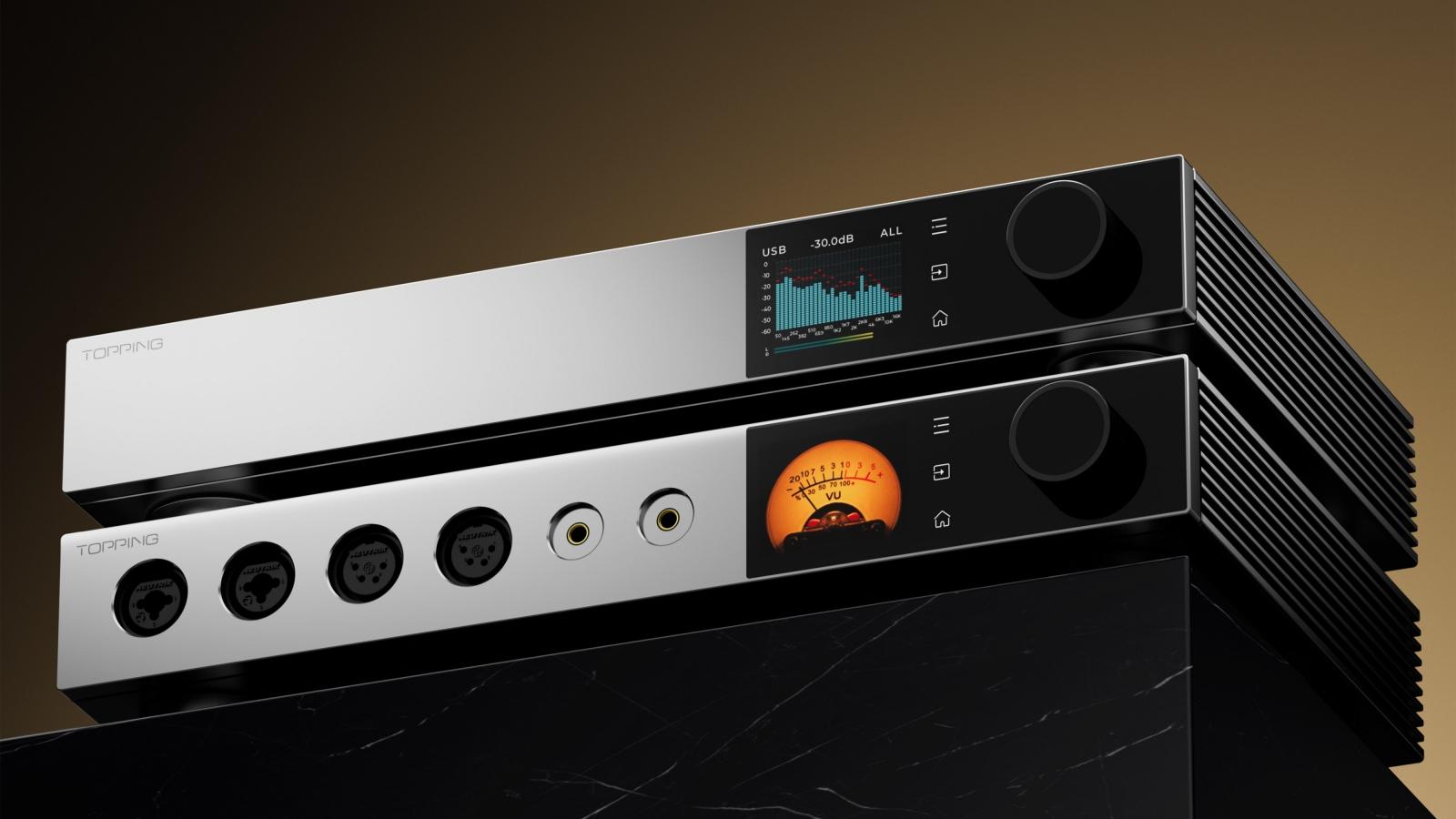
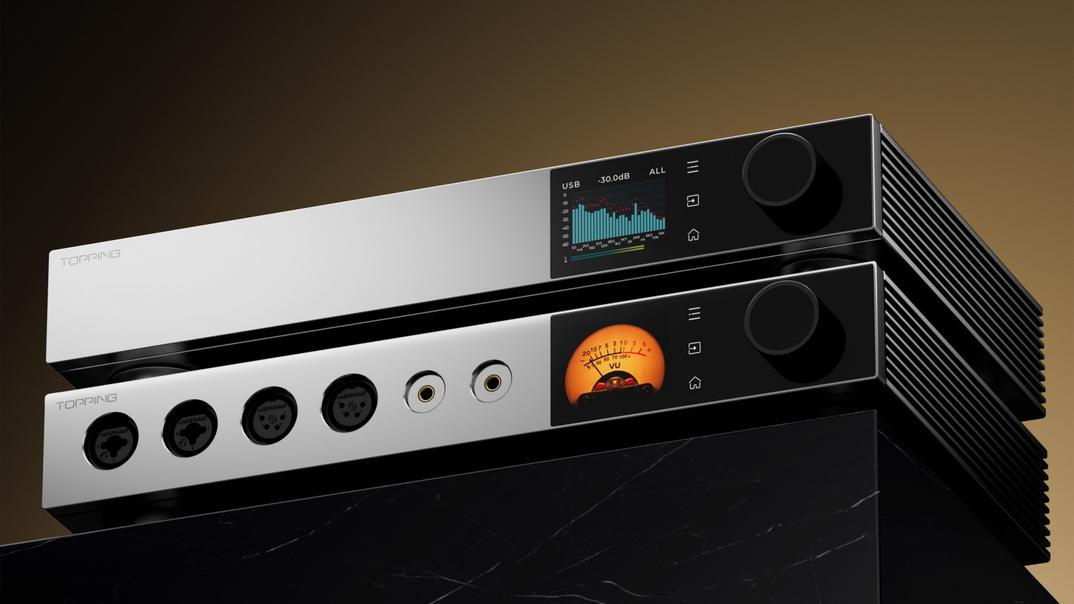
High-end audio gear can sometimes get bogged down in marketing buzzwords, but Topping’s new D900 DAC/preamp makes some genuinely interesting engineering choices worth unpacking. From its discrete 1-bit conversion engine to its built-in analog volume control and deep EQ features, this unit aims to serve both the hi-fi and head-fi crowd with precision—and without depending on third-party DAC chips.
Most DACs rely on chips from companies like ESS, AKM, or Burr-Brown. The D900 takes a completely different route with something Topping calls PSRM, short for Precision Stream Reconstruction Matrix. It’s a custom-built, discrete 1-bit conversion system that Topping developed in-house.
Instead of processing multiple bits of data all at once like traditional delta-sigma DACs, the D900 converts each audio sample into a rapid-fire stream of single-bit pulses. The ratio of ones to zeros in that stream maps to the original waveform. These pulses are then smoothed out with an analog reconstruction filter to create the final output signal.
This approach is similar in spirit to DSD but isn’t format-specific—the D900 applies it across all input formats, whether that’s PCM or DSD. And with 32 discrete conversion elements (up from 16 in the D90 III Discrete), the D900 doubles down on processing precision.
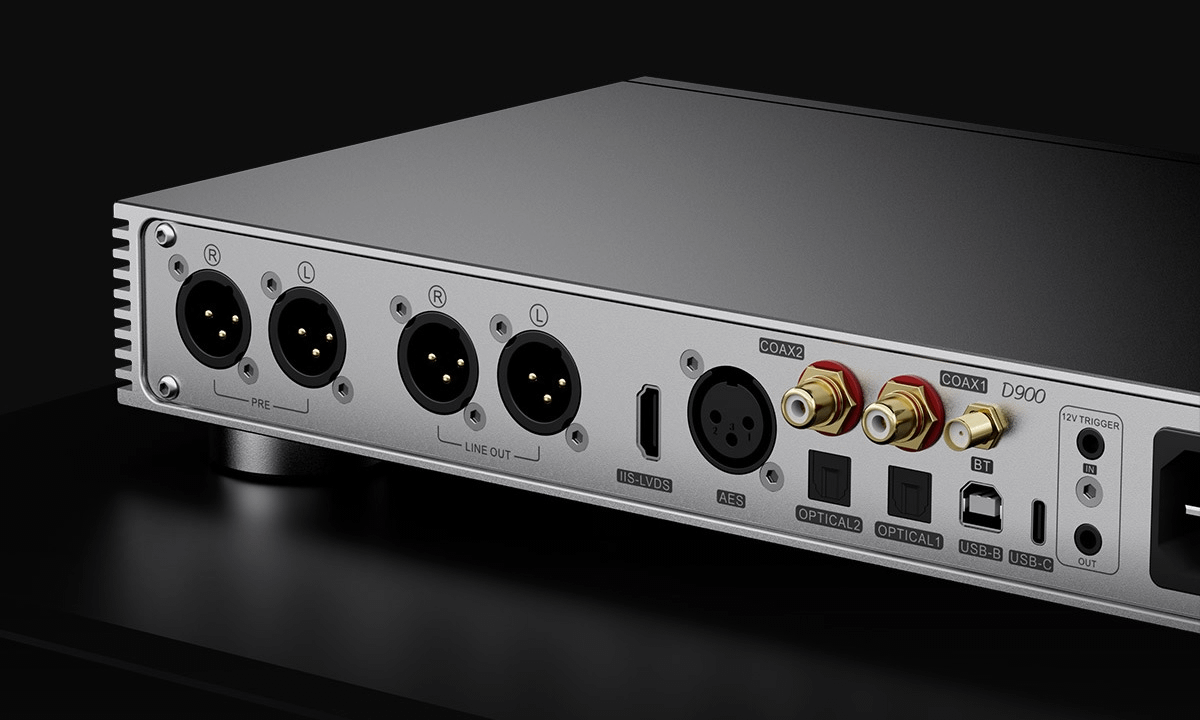
Around the back, the D900 gives you eight digital inputs to choose from:
On the output side, there are two pairs of balanced XLR jacks. One pair is fixed, meant for connecting to something like an integrated amplifier. The other pair is variable and routes through the built-in preamp, making it ideal for feeding power amps or active speakers directly.
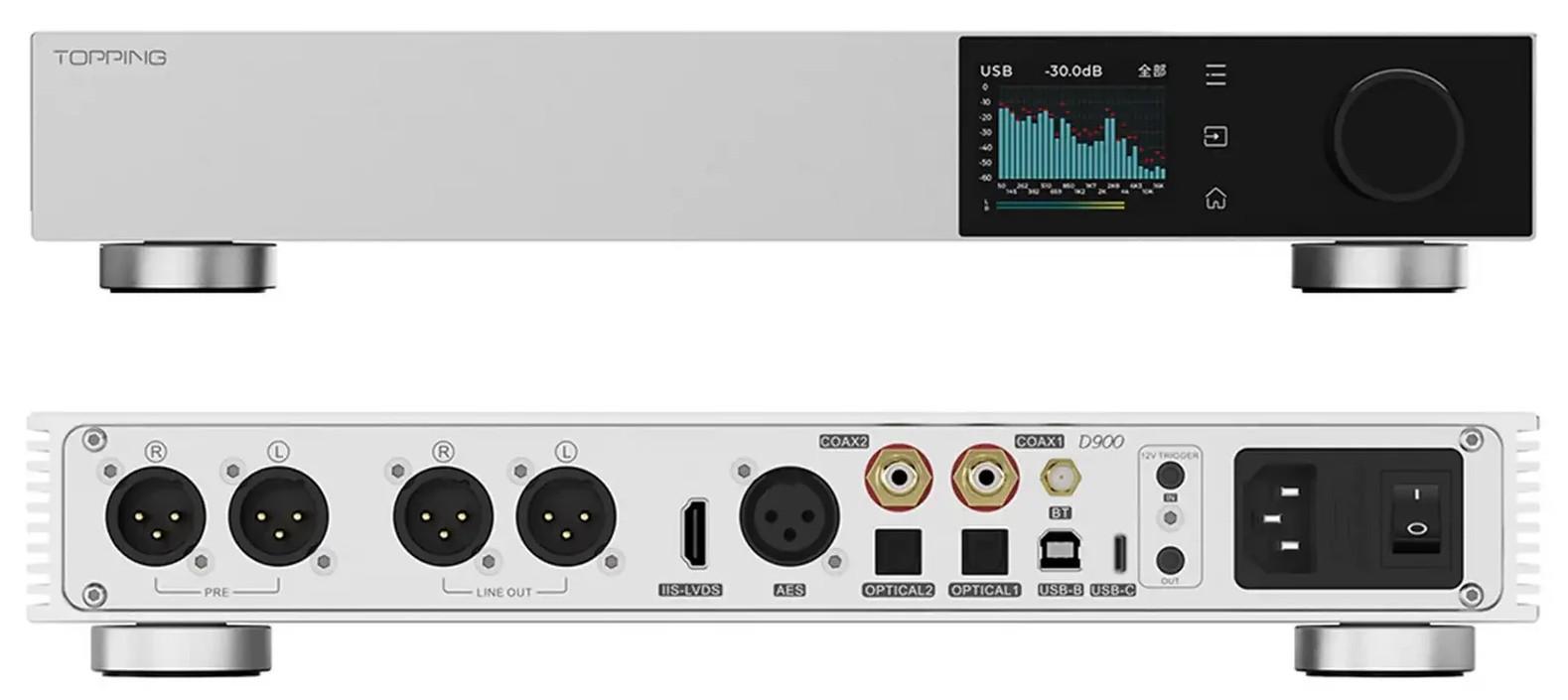
There’s no RCA output, so if you need an unbalanced connection, you’ll need an adapter or XLR-to-RCA cable.
The D900 also includes Bluetooth 5.1 support with a solid range of codecs: LDAC, aptX Adaptive, aptX HD, and more. That means you can stream high-res audio wirelessly if needed.
Yes, the D900 has volume control—but it’s not just a digital slider or a passive knob. Topping uses a fully discrete analog preamp stage with 18 relays (nine per channel) that step the volume in precise 0.5dB increments. This design helps maintain signal integrity and proper impedance matching regardless of volume level.
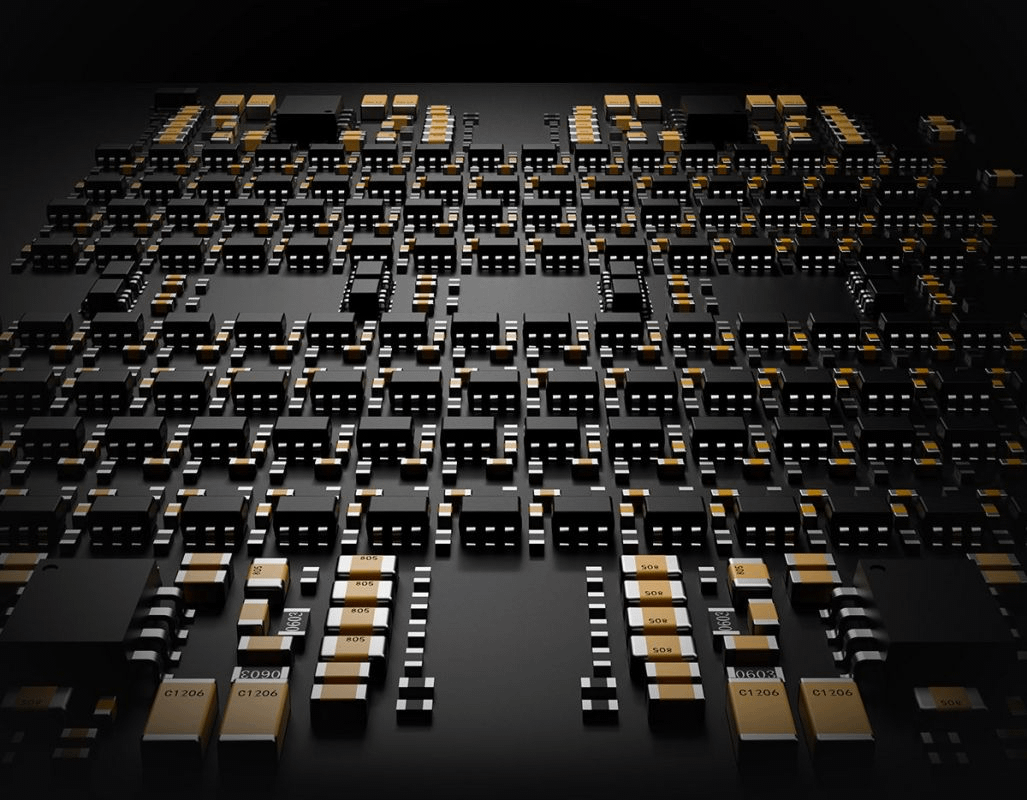
That analog stage is fully balanced and includes a custom-built current-to-voltage (I/V) conversion section, using low-distortion op-amps and carefully selected discrete components. In other words, the analog side of this DAC is taken just as seriously as the digital.
The D900 covers just about every format you’re likely to throw at it:
To keep things running cleanly, Topping uses a CPLD (Complex Programmable Logic Device) to handle clock optimization. CPLDs are known for their predictable timing, which helps reduce jitter—something that can cause subtle (or not-so-subtle) distortion in digital audio playback.
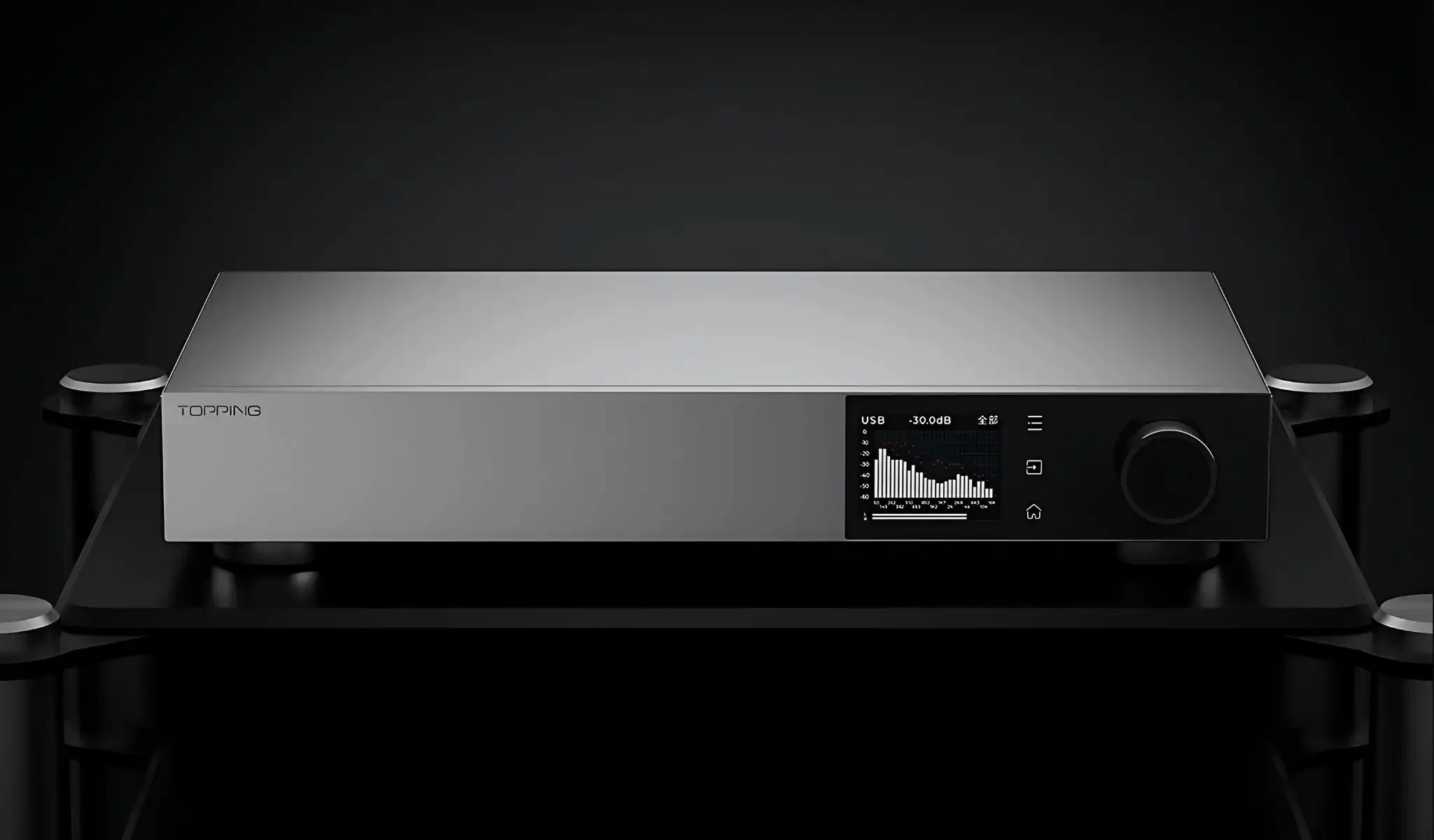
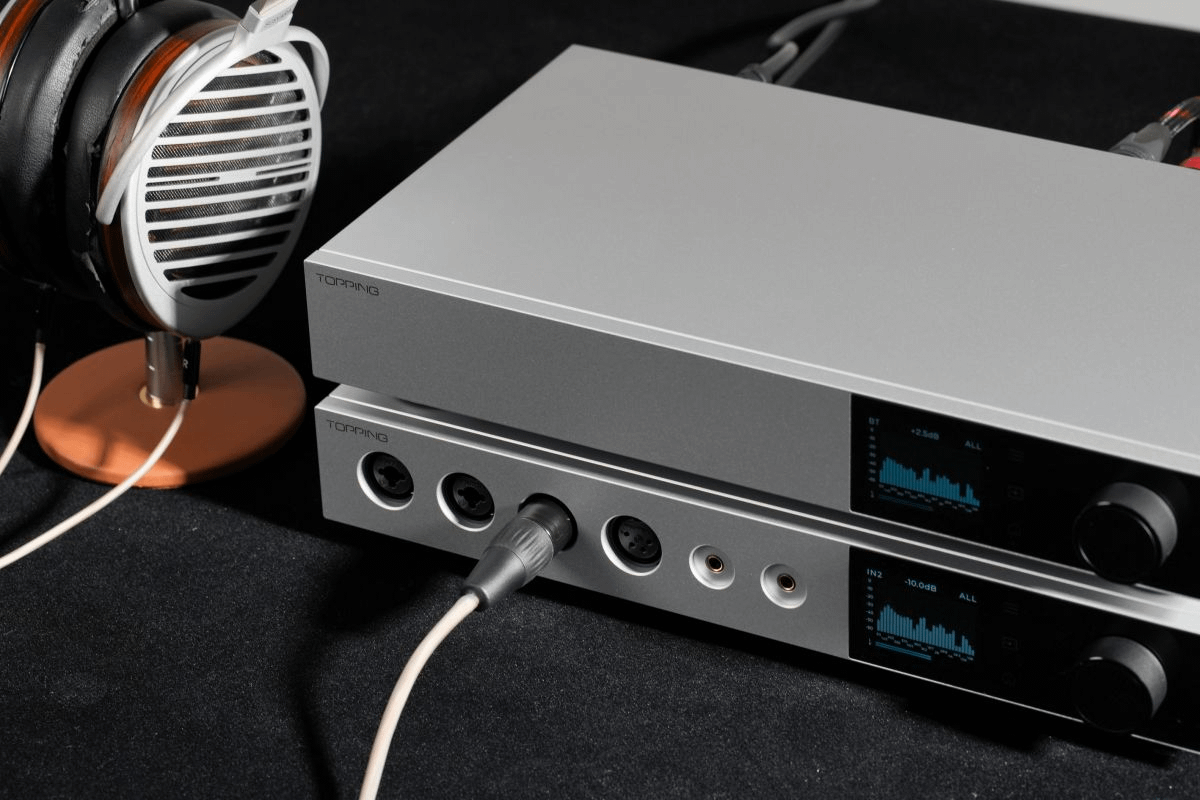
On the front panel, you’ll find a 2-inch color display that’s part of Topping’s Aurora UI. It’s customizable with nine color schemes and different display modes, including a spectrum analyzer and vintage-style VU meters. It’s not just eye candy—information like bit depth, sample rate, and volume is shown clearly.
Controls are a mix of touch-sensitive buttons and a rotary dial, which can be reprogrammed to handle different functions. And yes, there’s also a remote control—and it’s not the flimsy plastic kind. Topping ships the D900 with a machined aluminum remote that matches the rest of the unit’s build quality.
Physically, the D900 is standard hi-fi component size—33 cm wide, 5.7 cm tall, and 21 cm deep. The case is made from thick aluminum panels, with heatsink fins on the sides and vibration-damping feet underneath.
The design isn’t flashy, but it’s clean and solid. It’s clear Topping wants the D900 to blend in with high-end gear while offering some thoughtful design touches that make everyday use easier.
For users who like to tweak the sound, the D900 comes with a 10-band parametric EQ. You can adjust frequency, gain, and bandwidth (Q) for each band using Topping’s free "Topping Tune" software. Profiles can be saved into the DAC’s internal memory, and once they’re uploaded, you don’t need the computer anymore—they can be selected directly from the front panel.
Whether you want to tame room modes, tweak headphone response, or just build your own listening curve, the PEQ system adds a useful layer of customization.
The Topping D900 takes a different path than most DACs in its price range. With its custom-built 1-bit PSRM conversion system, fully balanced analog preamp stage, and thoughtful user interface, it’s designed to be more than just a signal converter—it’s meant to be the control center for an all-digital setup.
Whether you're building out a hi-fi rack or refining your headphone rig, the D900 has the specs and features to keep up. It’s available now on Amazon for $1,799.



Privacy Policy
Terms and Conditions - Affiliate Policy
Home Security
© Copyright 2008-2026.
11816 Inwood Rd #1211, Dallas, TX 75244