

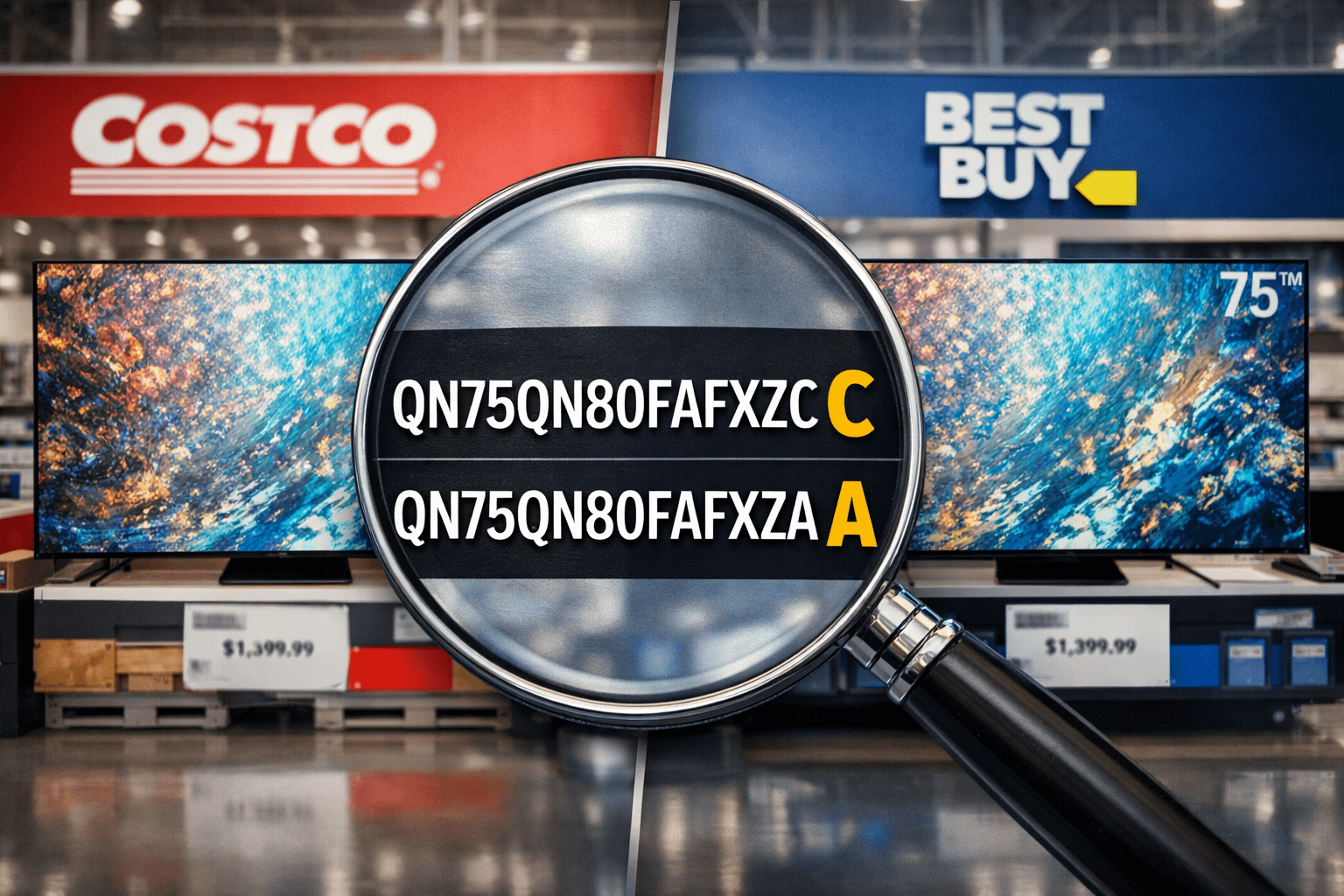
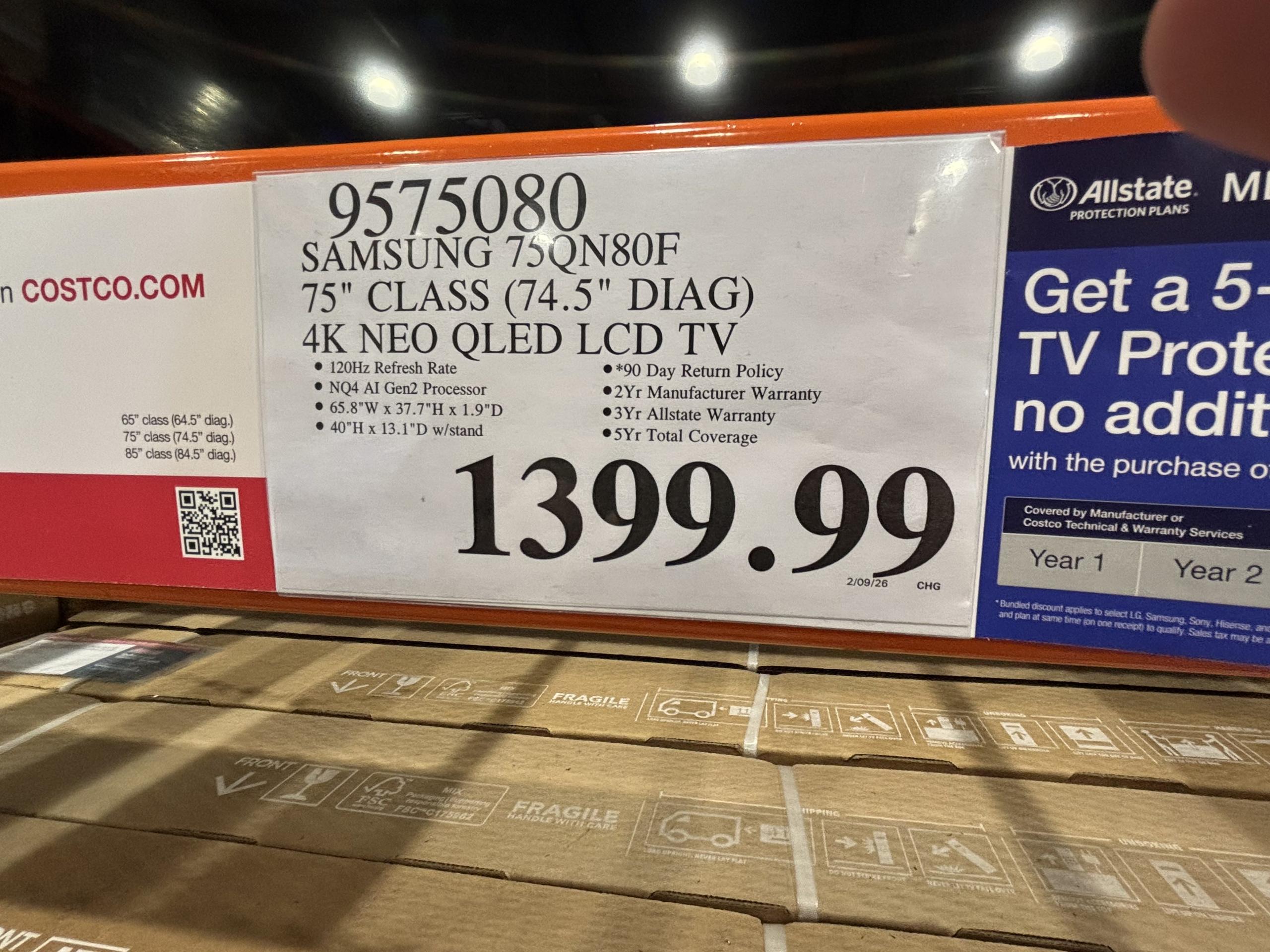
Walk into Costco and you might think you've spotted a great deal: a Samsung 75" QN80F Neo QLED for $1,399.99. Same size, same series, same technology as the one sitting in Best Buy. Same year. Looks like a no-brainer — go to Best Buy, show them the Costco price, and save some money.
Except it doesn't work that way.
I have to explain this to clients all the time. TVs at Costco, Sams Club and BJs are a good deal, but not the same TVs you can get from a custom integrator or even Best Buy. Try to price match and you'll hit a wall. The reason? One letter at the end of the model number. Something you can't find too easily at either store, the exact full model number. Costco's version ends in C. Best Buy's ends in A. That's it. That's the whole argument. Different model number, no price match, end of conversation.
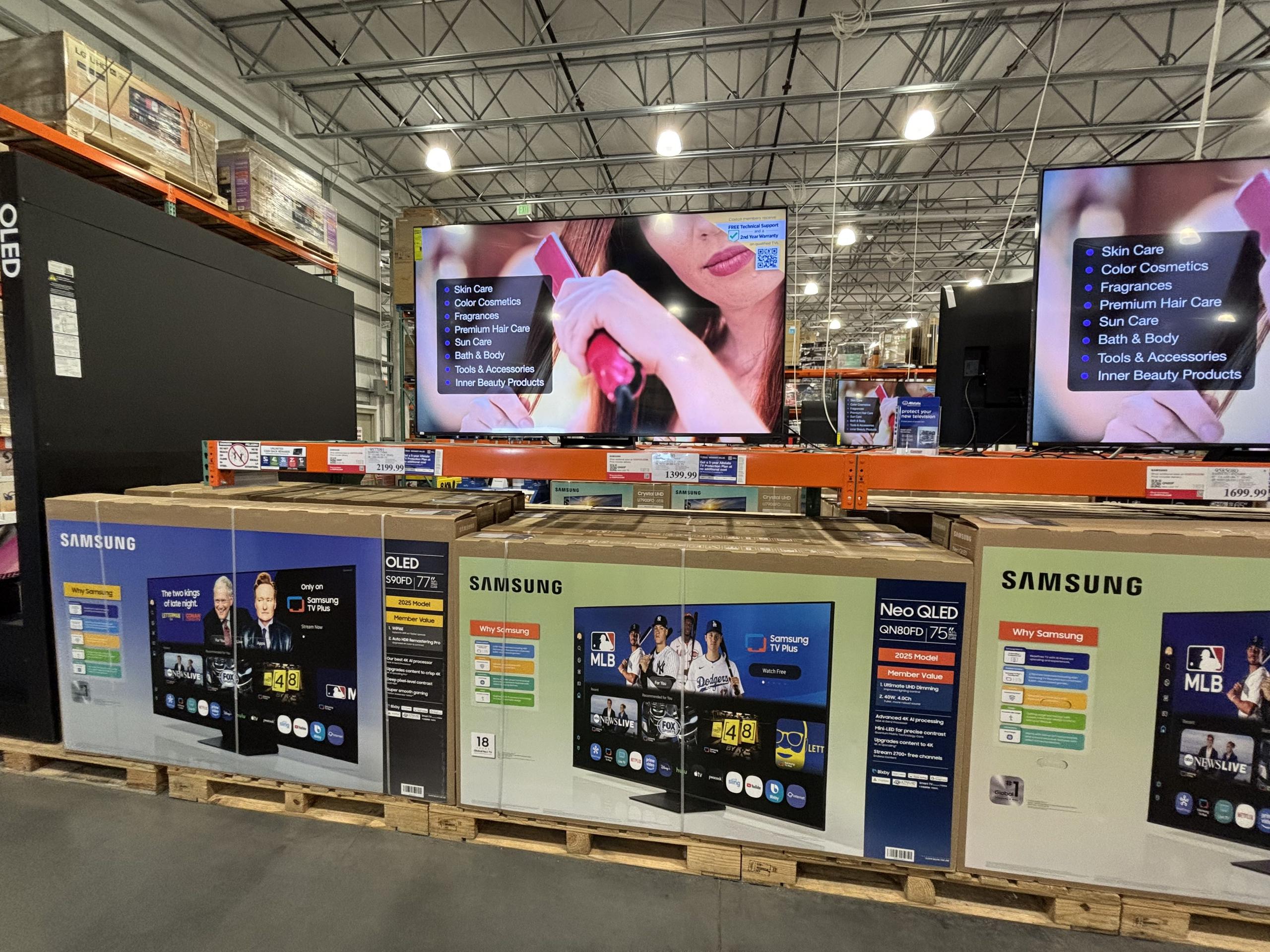
Here's what you're actually comparing:
Costco: QN75QN80FAFXZC
Best Buy: QN75QN80FAFXZA (same SKU at Samsung's official store)
To a retailer, these are different SKUs. Price match policies require identical model numbers, so the conversation ends there — by design. Look at the published specs for both and you'll find the same QN80F series designation, the same Mini-LED Neo QLED panel, 4K, 120Hz, Samsung's NQ4 AI Gen2 processor, HDR10+ support, HDMI 2.1, and the same Tizen smart platform. Neither Samsung nor either retailer publishes any hardware or performance differences tied to that suffix change. Sometimes they are the exact same TV, sometimes there are some small changes.
I pulled up the specs on both TVs, Costco and Best Buy. I could not spot any true differences, but the wording on the specs was slightly different in some lines. Take that how you will.
See the picture below? Notice if you search for the "Samsung 75QN80F" online, you will find it at plenty of other stores. But it's not the same TV... well, it pretty much is, but you won't be price matching it.
Manufacturers use retailer-specific and region-specific suffixes for legitimate logistical reasons — tracking distribution channels, regional markets, warranty routing, bundled accessories. That's all reasonable and fine. What those suffixes don't typically indicate is a different panel, a different processor, or different performance. Unless a manufacturer explicitly spells out a hardware difference tied to a specific suffix, there's no basis for assuming one exists. But not always, you need to check.
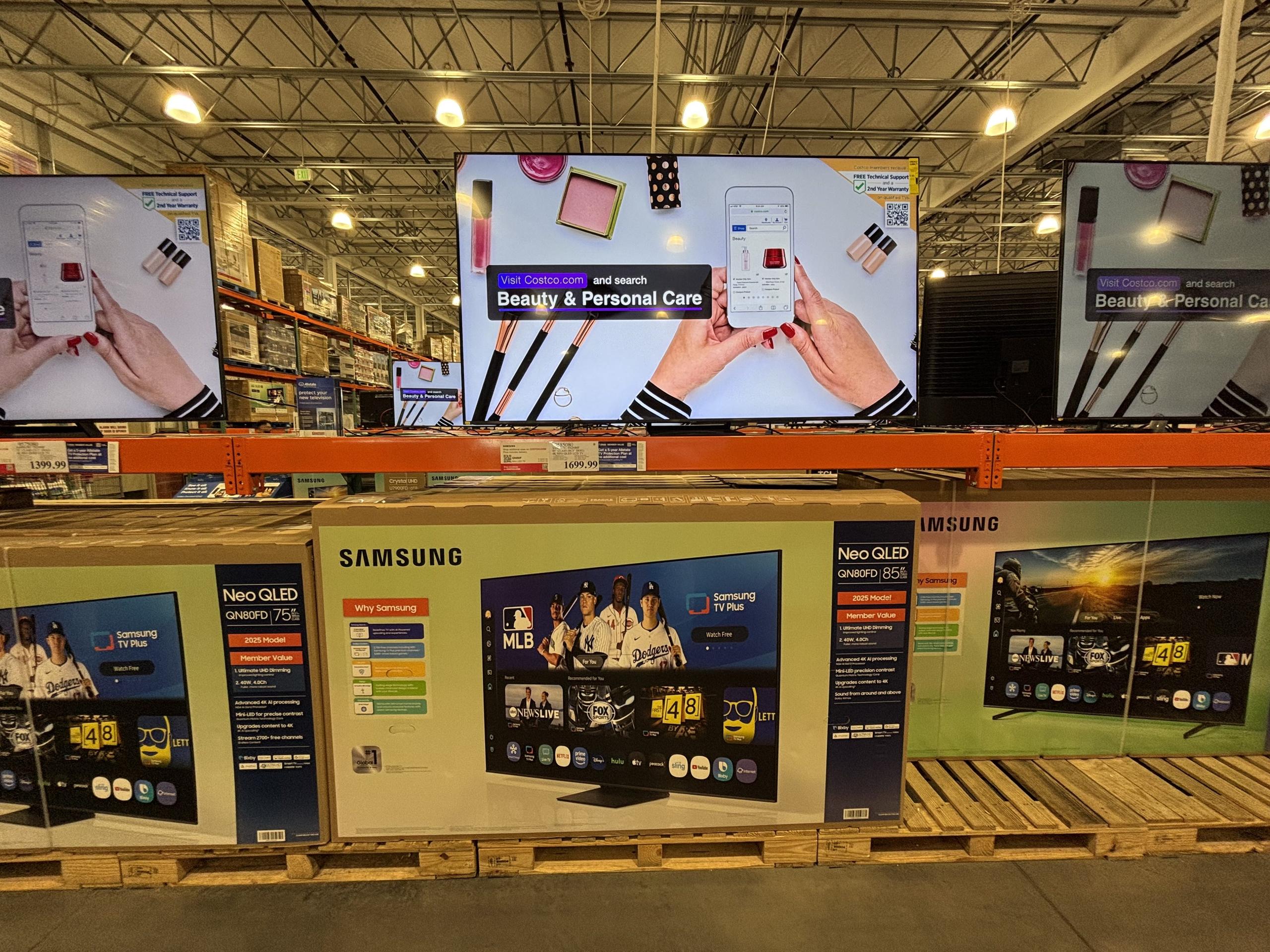
Retailers used to compete on price. That became a problem, especially when warehouse clubs like Costco can undercut traditional electronics stores simply by operating on lower margins and moving volume. The practical solution: make sure the model numbers never match in the first place. Boom, problem solved. Retailer-exclusive SKUs give stores an easy, technically defensible way to decline a price match without ever having to explain why the TVs look, spec, and perform identically.
It's worth being clear — this isn't unique to any one retailer or manufacturer, everyone does it. Retailer-exclusive model numbers are standard practice across TVs, appliances, laptops, and mattresses. If you've ever wondered why two products seem identical but can't be price matched, this is almost certainly why.
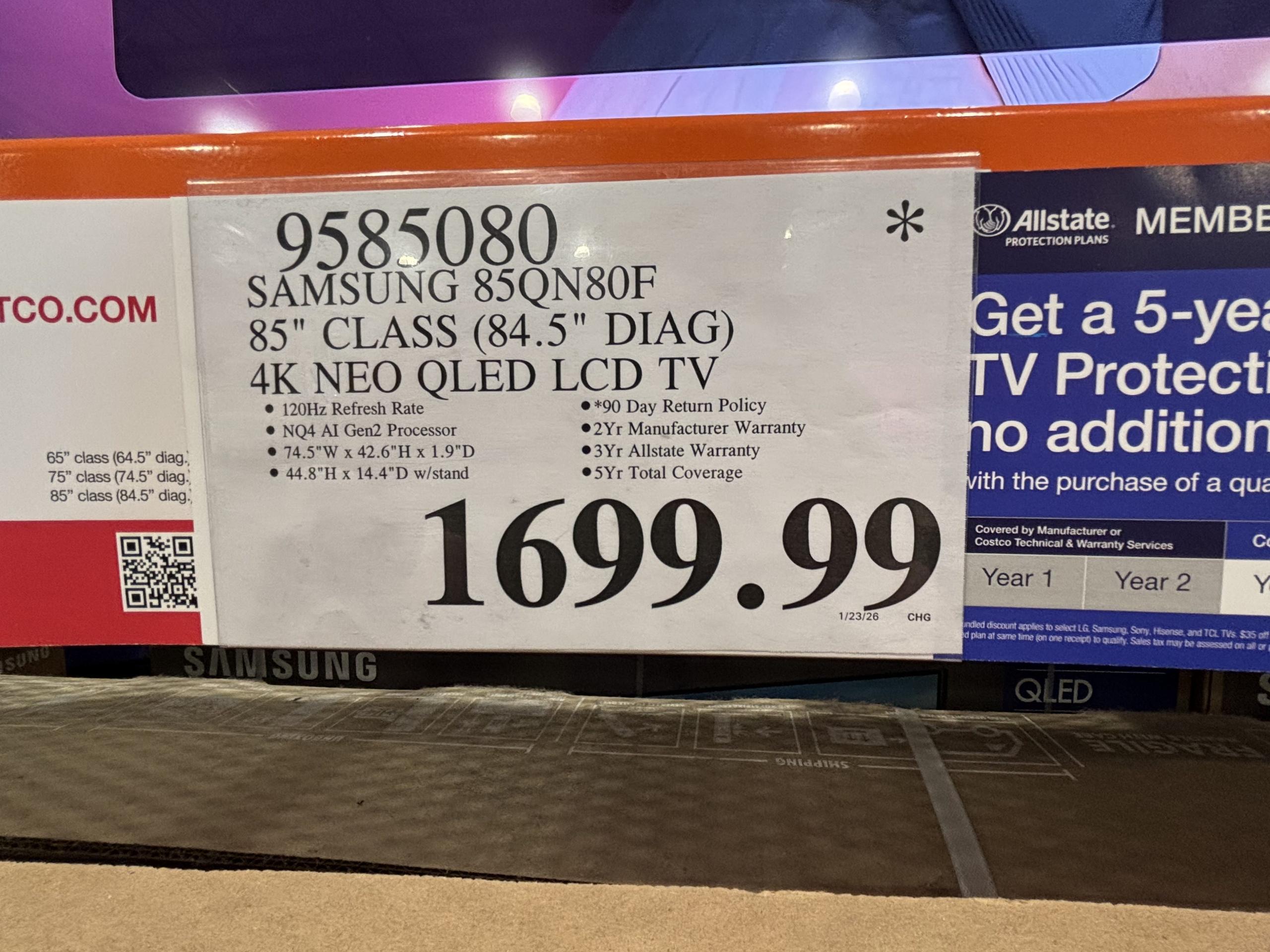
The practical consequences are pretty straightforward. Comparison shopping becomes harder when the same product carries different model numbers at different stores. Price matching — still advertised heavily as a consumer benefit — becomes structurally difficult to actually use or basically impossible. And some shoppers assume the cheaper Costco version must have some hidden compromise, even when no one can point to one. That last part is probably the most frustrating outcome. A lower price starts to feel suspicious when it probably shouldn't.
When you're comparing TVs across retailers, focus on the series name, the year, and the size rather than fixating on the full model string. If someone tells you two televisions are different products, ask them to identify the specific hardware difference. If they can't, then cool, you can save the money and buy the cheaper one. Price differences between retailers often reflect purchasing volume, membership models, and business strategy — not always the television itself, but do take the time to check.
There's nothing illegal or scandalous about retailer-exclusive model numbers. I wouldn't even discourage anyone from buying TVs from Costco, Sams or BJs, they are all great TVs. Manufacturers and retailers are operating within normal business practice. But "normal business practice" and "transparent for the consumer" aren't always the same thing.
If you find what appears to be a better price on what appears to be the same TV, do your homework on the specs before assuming the cheaper one is somehow lesser. Sometimes the only meaningful difference really is one letter — and what that letter controls isn't the television. It's the price.
For advertising please contact the editor at [email protected]



Privacy Policy
Terms and Conditions - Affiliate Policy
Home Security
© Copyright 2008-2026.
11816 Inwood Rd #1211, Dallas, TX 75244