$618.40
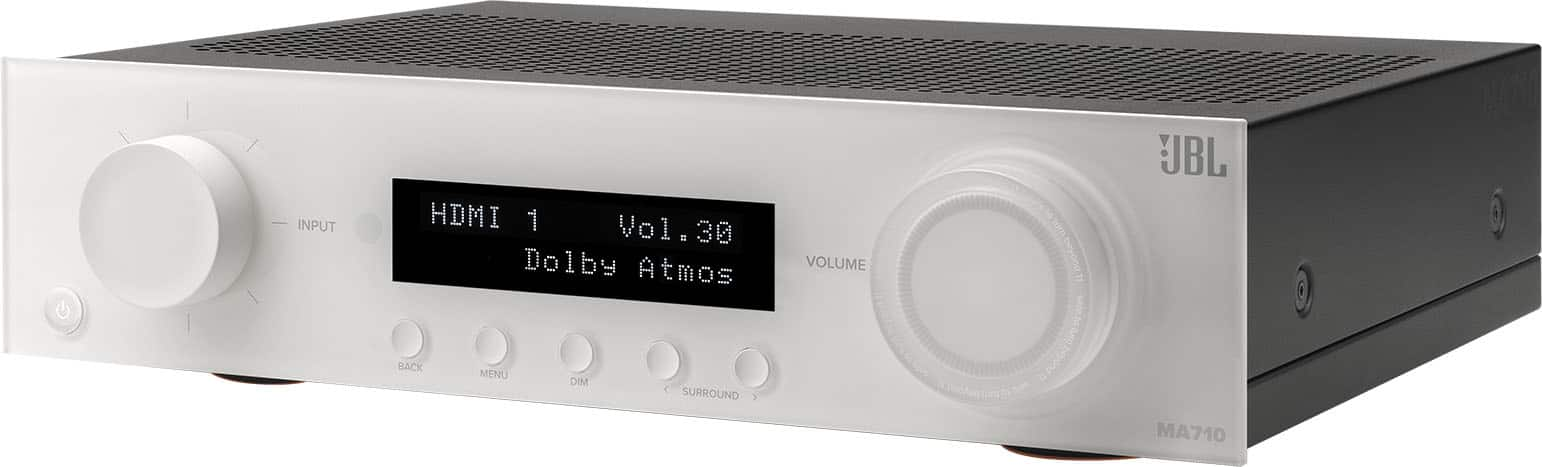
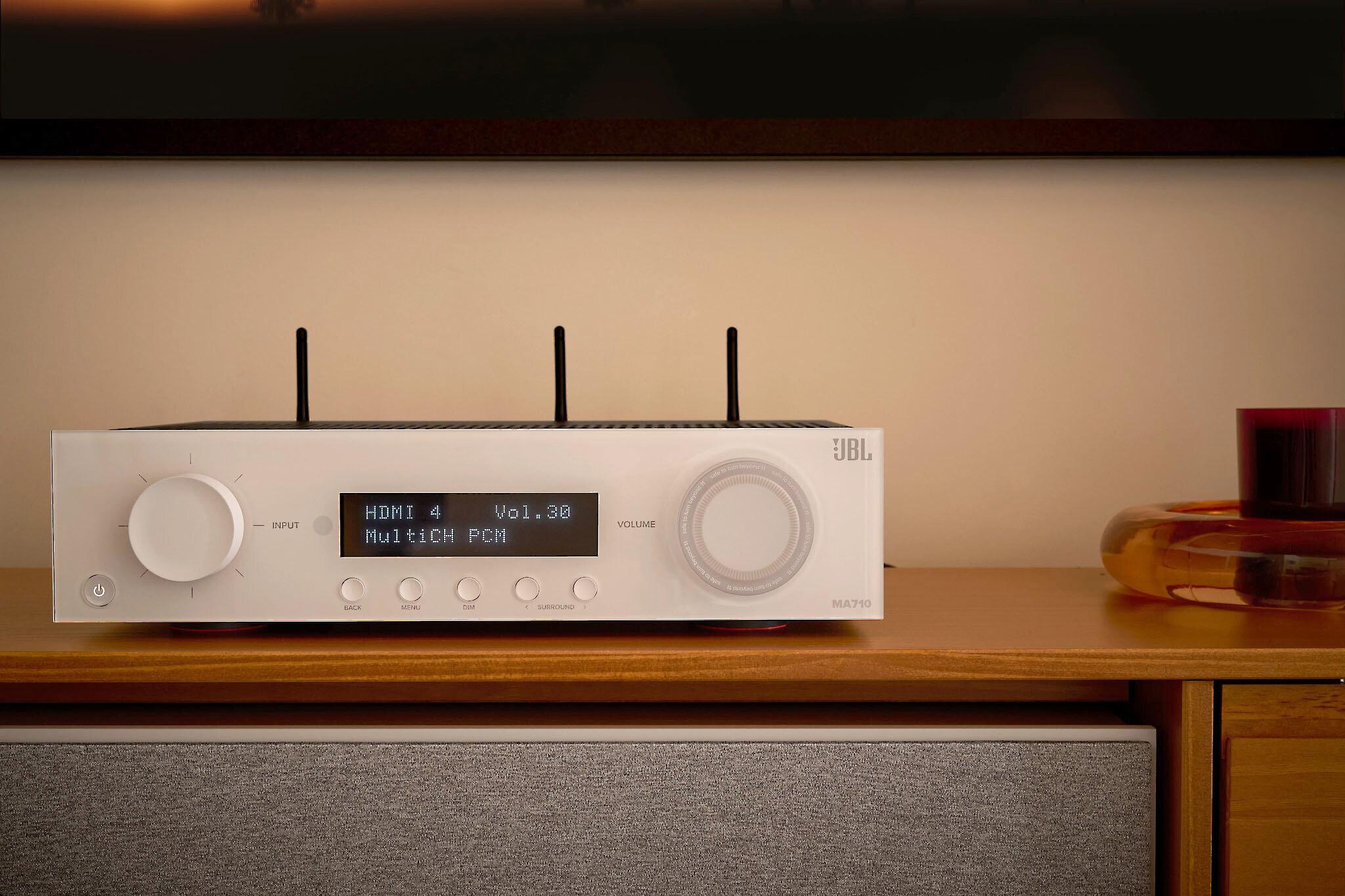
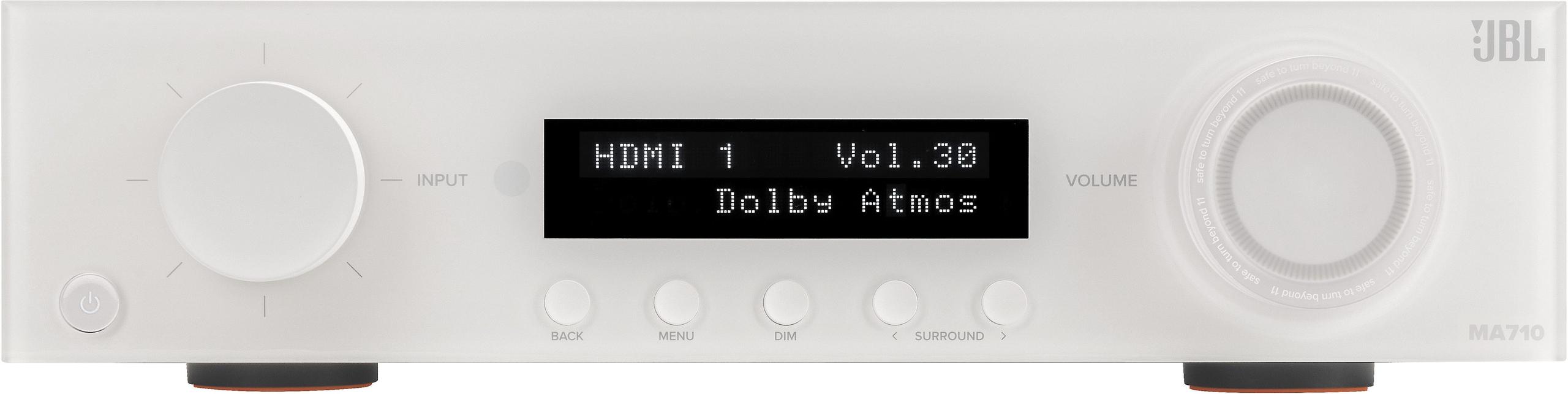
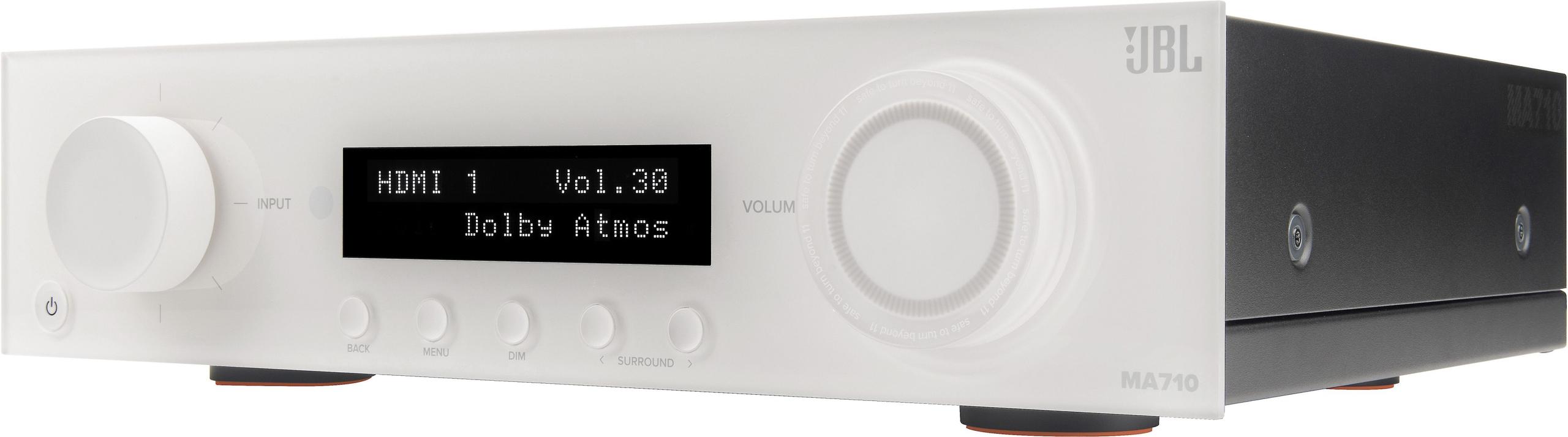
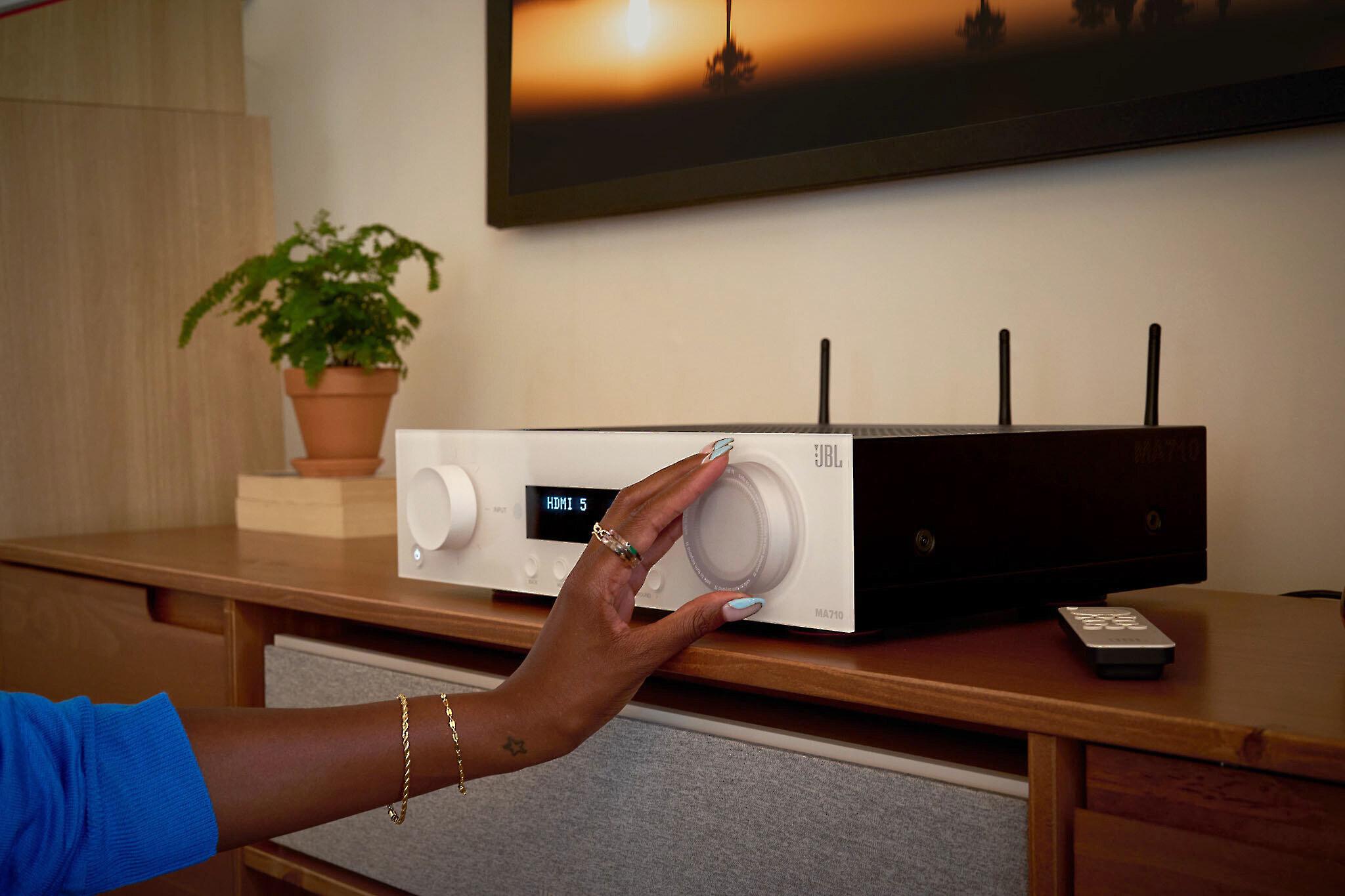
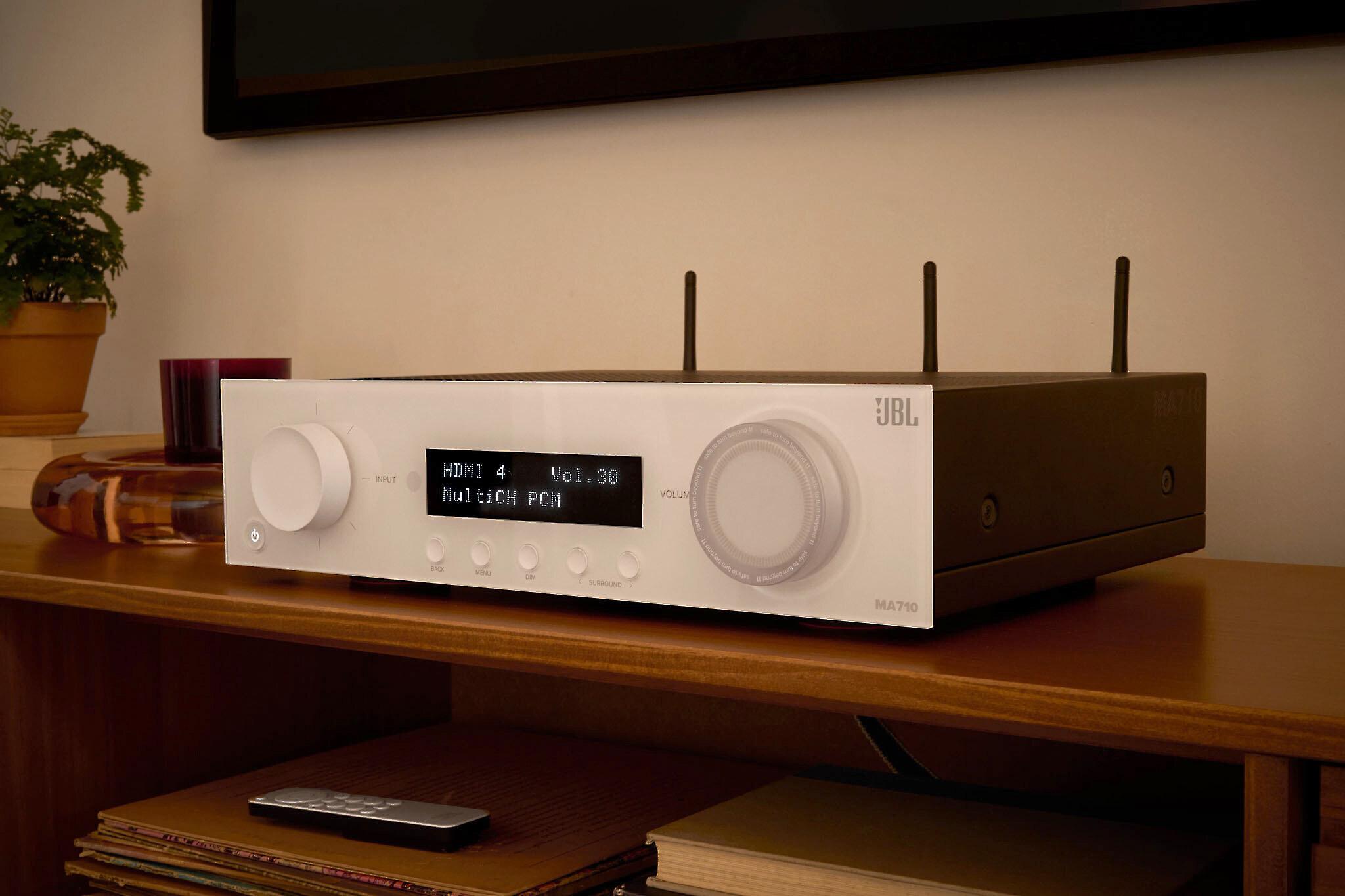
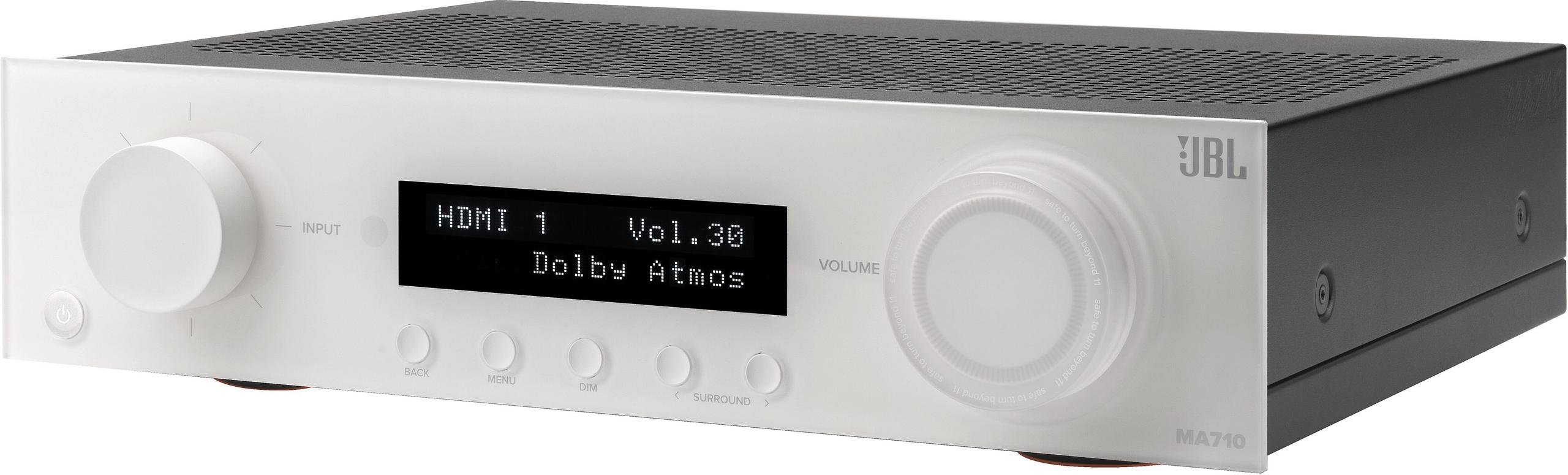
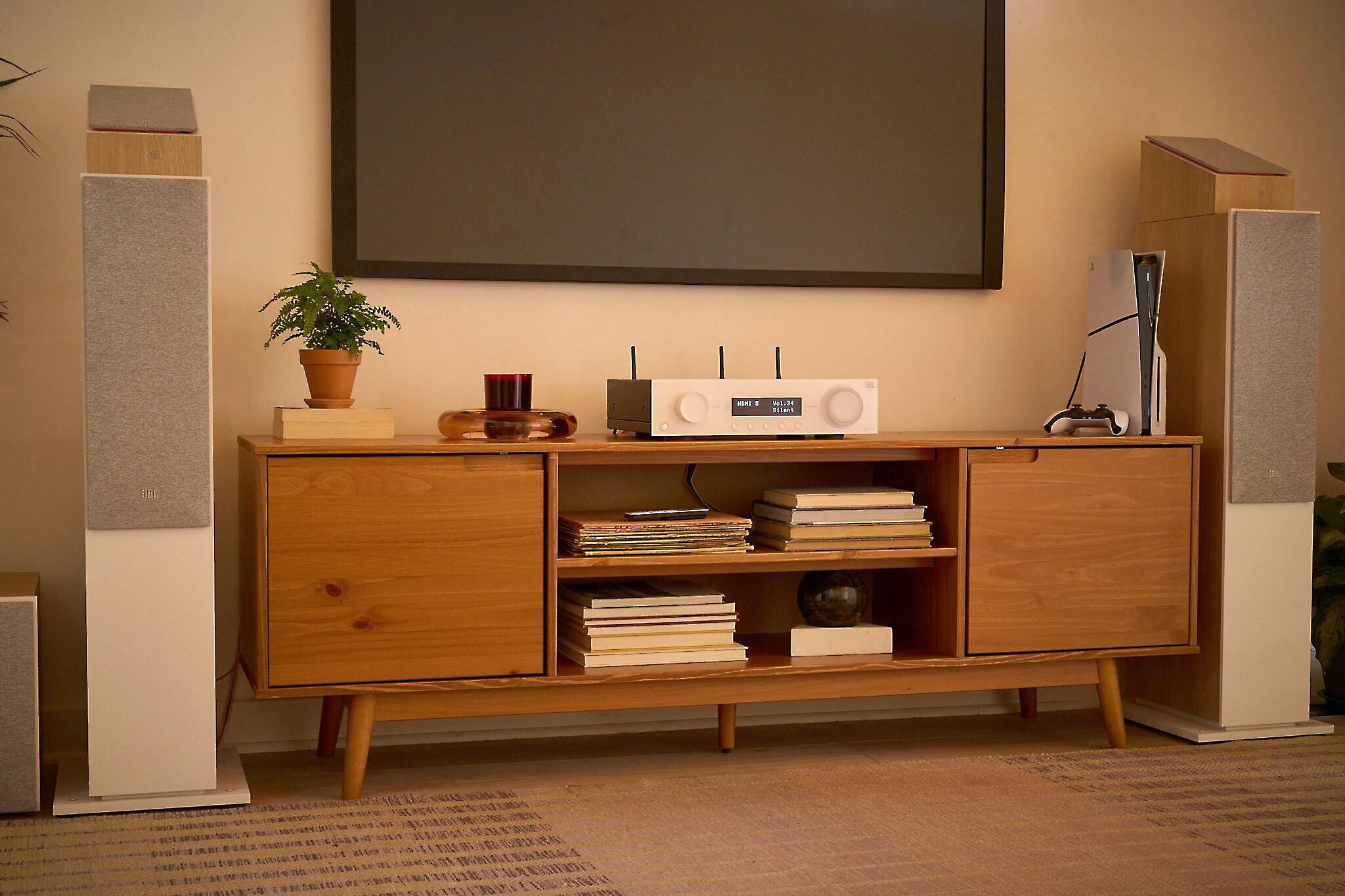
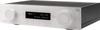
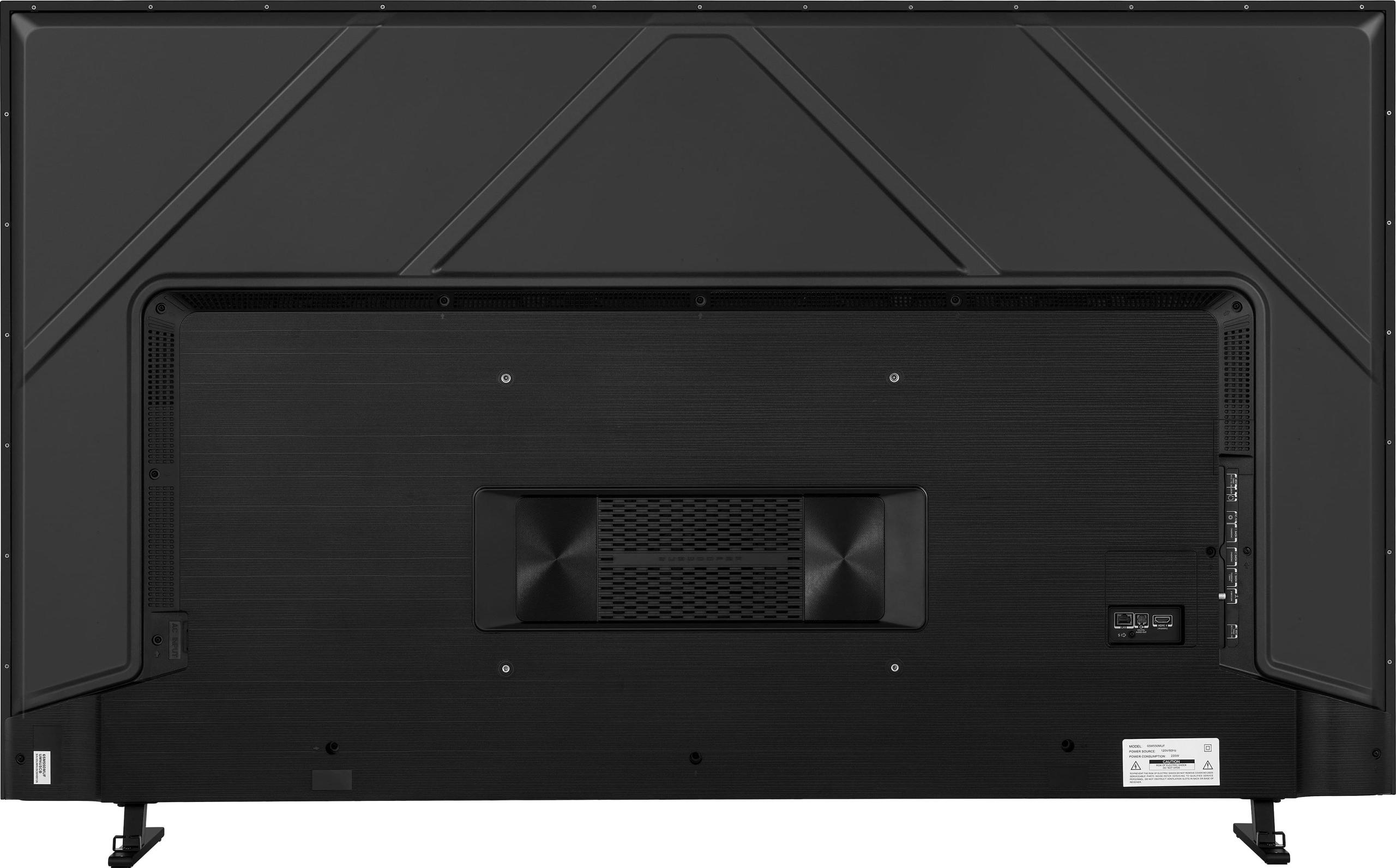
Released in late 2023, the MA710 represents JBL's return to the AV receiver market with a focus on modern features and value. After extensive testing, we've found it hits a sweet spot for users wanting current technology without breaking the bank.
The home theater landscape has changed dramatically since 2020, when HDMI 2.1 began reshaping expectations. Today's receivers need to handle everything from 8K video to immersive audio, while supporting gaming features that simply didn't exist a few years ago. The MA710 enters this market with thoughtful implementation of these modern necessities.
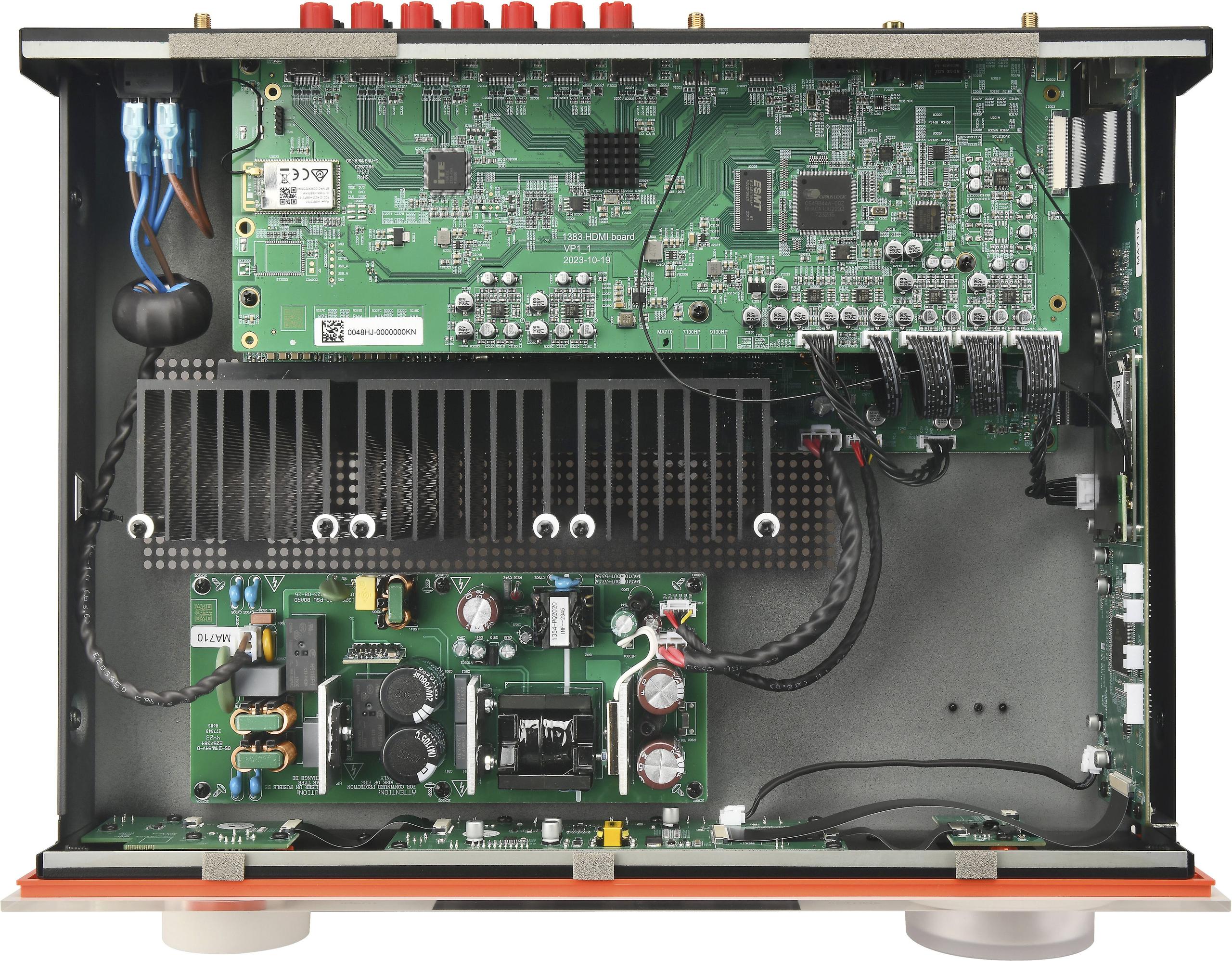
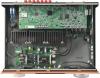
The MA710's 110 watts per channel (when measuring two channels driven into 8 ohms) provides ample power for most home theaters. In our testing with various speaker configurations, we found it drove everything from efficient bookshelf speakers to more demanding floor-standers with confidence. The Class D amplification - a newer, more efficient design compared to traditional Class AB - runs cool and delivers clean power without the heat issues that plagued older receivers.
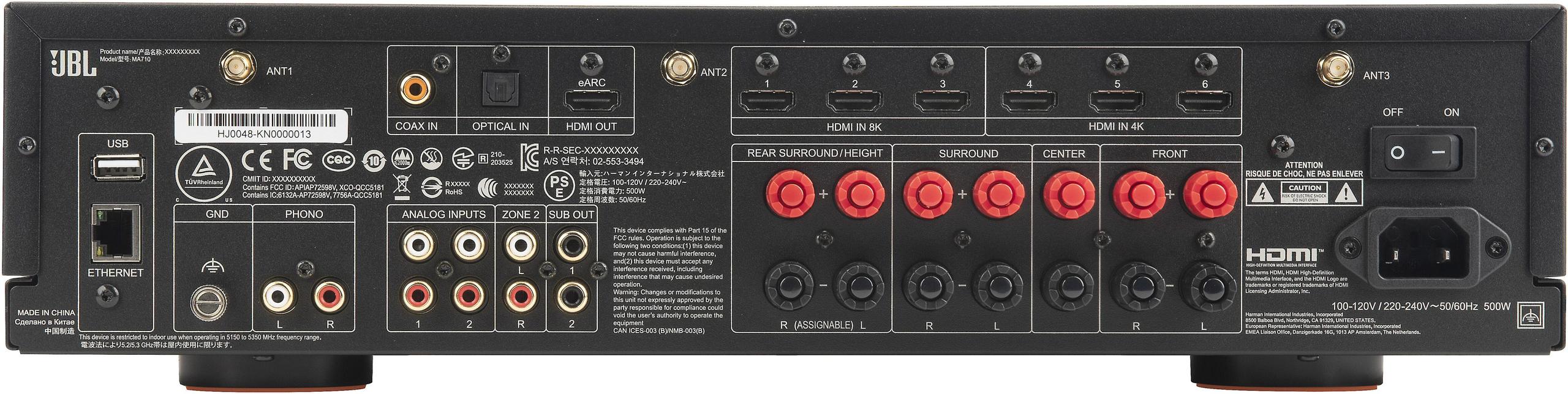
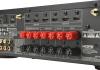
The 7.2 channel configuration allows for several setup options:
HDMI 2.1 support brings significant improvements over previous standards:
During our gaming tests with a PS5 and Xbox Series X, these features worked seamlessly - a notable improvement over some early HDMI 2.1 receivers that had compatibility issues.
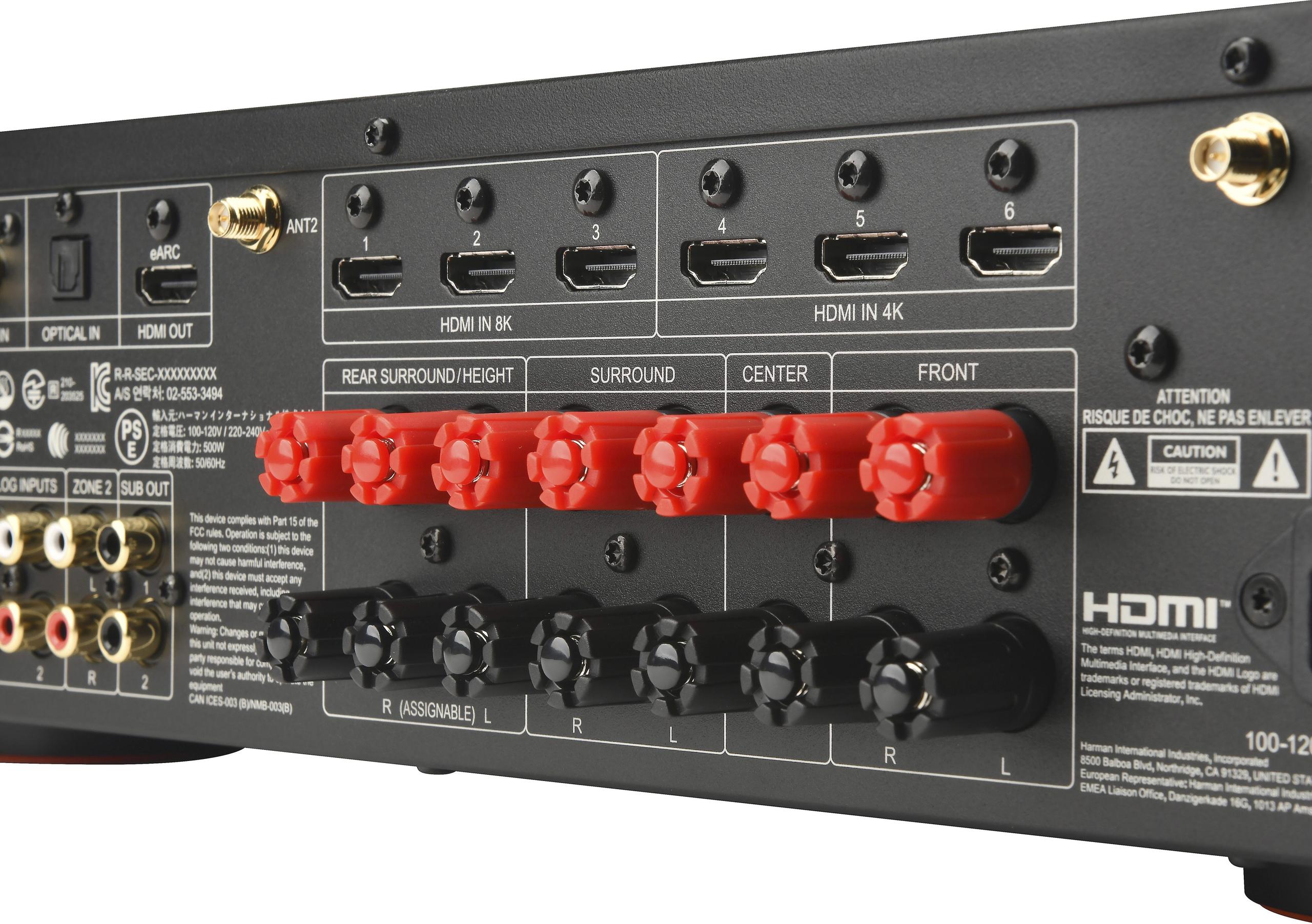
The JBL MA710 embraces modern connectivity needs with:
We found the wireless implementation particularly stable, maintaining solid connections even through walls - something that wasn't always true with older receivers.
For gamers, the MA710 shines with its full HDMI 2.1 feature set. Playing demanding titles like Forza Horizon 5 at 4K/120Hz showed zero display lag or audio sync issues. The receiver automatically switches to game mode when consoles power on, reducing input lag significantly.
Movie playback is where this receiver really shows its value. During our testing with films like Dune and Top Gun: Maverick, the Dolby Atmos processing created a convincing hemisphere of sound. The EZ Set EQ room correction, while not as sophisticated as Audyssey or DIRAC, still provided noticeable improvements in sound staging and bass response.
The inclusion of a moving magnet phono input shows JBL hasn't forgotten about music lovers. Whether streaming high-resolution audio through Tidal or playing vinyl, the MA710 maintains excellent stereo imaging and tonal balance. We particularly appreciated how the receiver handled complex orchestral pieces, keeping instruments clearly separated in the soundstage.
The EZ Set EQ system proves remarkably straightforward compared to more complex room correction systems. While it may not offer the fine-tuning options of premium receivers, it achieves good results with minimal fuss - perfect for users who want quality sound without becoming audio engineers.
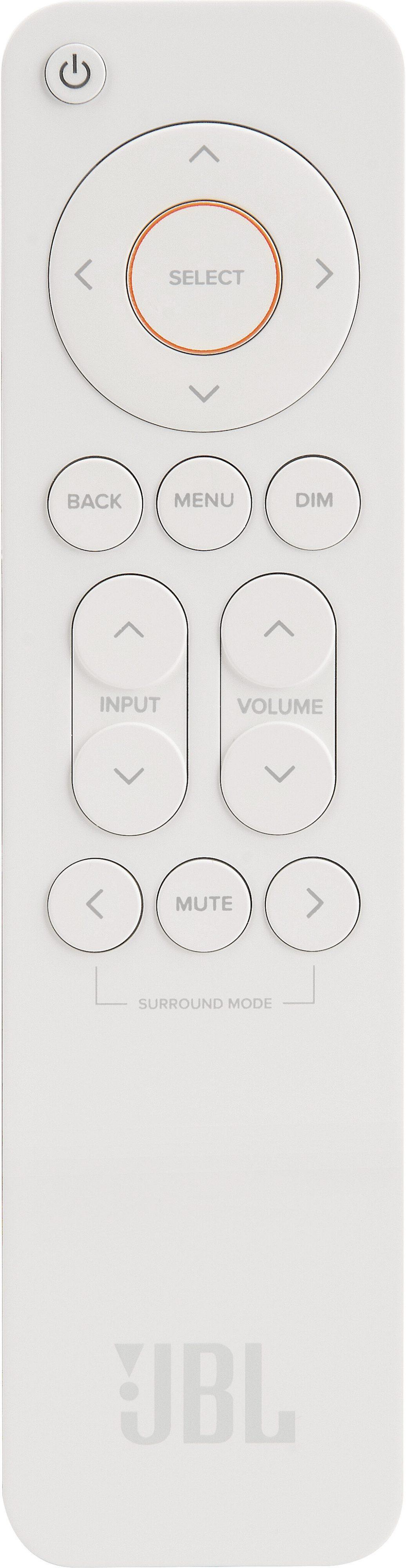
The on-screen display, while not the most modern-looking, provides clear navigation and setup options. We found the learning curve notably gentler than many competing receivers.
At its price point, the MA710 offers an impressive feature set. While it may lack some advanced room correction options found in more expensive units, it nails the essential features most users need:
A few points to consider:
After extensive testing, the JBL MA710 emerges as a compelling option in the mid-range AV receiver market. It particularly excels for users building a modern home theater system with gaming considerations. The combination of current technology, solid power delivery, and straightforward operation makes it an excellent choice for both newcomers and experienced users.
The receiver handles everything from 4K gaming to Dolby Atmos movies with confidence, while maintaining excellent music reproduction capabilities. While it may not offer the absolute latest in room correction technology, its core performance and feature set make it a strong value proposition in today's market.
For those looking to build or upgrade a home theater system with modern gaming capabilities and streaming integration, while maintaining traditional audio quality, the MA710 deserves serious consideration. It hits a sweet spot of features, performance, and price that should satisfy most users' needs well into the future.
The JBL MA710 7.2 Channel 8K AV Receiver offers excellent value for its feature set, particularly for home theater enthusiasts and gamers. With HDMI 2.1 support, Dolby Atmos processing, and 110W per channel, it provides strong performance for its price point. While it lacks some advanced room correction features found in pricier models, it delivers where it matters most.
Yes, the MA710 fully supports Dolby Atmos and can power a 5.1.2 speaker configuration, ideal for immersive home theater audio. It handles all modern surround formats including DTS:X, making it versatile for various content types.
With 110 watts per channel, the receiver is well-suited for small to medium-sized rooms up to about 350 square feet. It provides enough power to drive most speaker setups in typical home theater environments effectively.
Yes, the MA710 includes full HDMI 2.1 support with 4K/120Hz passthrough, VRR, and ALLM, making it ideal for next-gen gaming consoles. These features ensure smooth gameplay and minimal input lag.
The receiver offers multiple streaming options including Wi-Fi, Bluetooth 5.3 with AptX HD, AirPlay 2, and Chromecast built-in. It also supports various music file formats and includes a phono input for turntables.
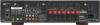
It features 6 HDMI inputs and 1 output, all HDMI 2.1 compatible. This provides enough connectivity for most home theater setups including gaming consoles, streaming devices, and cable boxes.
The MA710 includes EZ Set EQ room correction, making initial setup straightforward. The on-screen display is user-friendly, and basic calibration can be completed in about 15 minutes.
Yes, it supports 8K/60Hz passthrough, making it future-proof for upcoming 8K content. It also handles current 4K/120Hz content without issues.
Yes, it features dual subwoofer outputs, allowing you to connect two powered subwoofers for more balanced and powerful bass response in your home theater.
The JBL MA710 stands out for its complete HDMI 2.1 feature set and solid power output. While some competitors offer more advanced room correction, the MA710 provides excellent value for those prioritizing modern connectivity and reliable performance for home theater and gaming use.

We've done our best to create useful and informative comparisons to help you decide what product to buy. Our research has used advanced automated methods to create this comparison and perfection is not possible - please contact us for corrections or questions. These are the sites we've researched in the creation of this article: bestbuy.com - musicdirect.com - safeandsoundhq.com - bestbuy.com - bestbuy.com - puretheatre.com - crutchfield.com - mm.jbl.com - av-connection.com - electronics.woot.com - worldwidestereo.com - th.jbl.com - skybygramophone.com
| JBL MA710 7.2 Channel AV Receiver |
|---|
| Power Output (8 ohms) - Determines speaker driving capability: 110W per channel (2 channels driven) |
| HDMI Inputs/Outputs - Critical for connecting modern devices: 6 in, 1 out |
| HDMI Version - Enables latest gaming/video features: HDMI 2.1 with 8K/60Hz, 4K/120Hz |
| HDR Support - Important for video quality: HDR10+, Dolby Vision |
| Audio Processing - Enables immersive sound: Dolby Atmos, DTS:X |
| Room Correction - Optimizes sound for your space: EZ Set EQ |
| Wireless Connectivity - For streaming audio: Wi-Fi 2.4/5GHz, Bluetooth 5.3 with AptX HD |
| Advanced Gaming Features: VRR, ALLM, eARC |
| Special Inputs - For vinyl enthusiasts: Moving Magnet Phono Input |
| Subwoofer Outputs - For bass management: Dual outputs |
| Weight: 13.8 lbs |
| Dimensions: 17-1/16" W x 4-5/16" H x 15-3/16" D |
| Warranty: 2 years |
The Denon AVR-S760H ($549) demonstrates its value proposition with a more refined and proven feature set at a lower price point. Its standout Audyssey MultiEQ room correction technology delivers notably better sound optimization than JBL's EZ Set EQ, particularly valuable for challenging room acoustics. The integrated HEOS platform provides a more comprehensive streaming ecosystem, while its mature HDMI 2.1 implementation has proven more reliable for gaming and high-end video passthrough. Though rated at a lower 75W per channel, real-world testing shows the Denon delivers clean, detailed sound that belies its power specifications.
Where the Denon really shines is in its overall integration and ease of use. The receiver offers better voice assistant compatibility, more thorough setup guidance, and a more established track record for firmware updates and long-term support. While it may lack the JBL's Class D efficiency and modern aesthetic, it compensates with superior audio processing, more refined streaming capabilities, and better real-world HDMI performance. The lower price point makes it an even more compelling choice for most home theater enthusiasts, especially those prioritizing reliable performance and proven technology over raw power specifications.
🤖 Read Detailed Comparison
👌Denon AVR-S760H 7.2 Channel AV Home Theater Receiver Details
💵 See Denon AVR-S760H 7.2 Channel AV Home Theater Receiver Price
The Denon AVR-S570BT offers compelling value at $319, providing essential home theater features in a more approachable package. Its 5.2 channel configuration and 70W per channel power rating are well-suited for small to medium-sized rooms, and its straightforward setup process makes it particularly appealing for first-time AV receiver users. While it lacks Dolby Atmos support, it handles traditional surround sound formats excellently, delivering clear dialogue and impactful effects. The inclusion of modern gaming features like VRR and ALLM, along with 8K video support, ensures it can handle current gaming consoles and video sources effectively.
Where the Denon really shines is in its balance of features and usability at its price point. The guided setup assistant and basic room calibration system help users achieve good results without extensive audio knowledge. Though it offers fewer inputs and lacks advanced streaming options, its core performance for movies and music remains strong. For many users, especially those with living room setups or modest home theaters, the Denon's capabilities will be more than sufficient, making its lower price point particularly attractive. The main trade-off is future expandability - users won't have the option to add height channels or take advantage of more advanced audio processing later.
🤖 Read Detailed Comparison
👌Denon AVR-S570BT 5.2 Channel AV Home Theater Receiver Details
💵 See Denon AVR-S570BT 5.2 Channel AV Home Theater Receiver Price
The Denon AVR-S970H ($599) stands out with its proven Class AB amplification and comprehensive Audyssey MultEQ room correction system, which delivers more consistent performance across different speaker types and room configurations. Despite its lower rated power of 90 watts per channel, it handles demanding speaker loads more confidently and maintains better sound quality at higher volumes. The mature HEOS streaming platform and refined user interface reflect Denon's extensive experience in the AV receiver market, while the dual HDMI outputs offer additional setup flexibility.
At a lower price point than the JBL, the Denon AVR-S970H provides superior value through its more sophisticated feature set and better real-world performance. Its Audyssey room correction system offers multi-point measurements and more detailed calibration options, resulting in noticeably better sound quality in most rooms. While it may lack the modern aesthetic of the JBL, it compensates with rock-solid reliability, more consistent firmware updates, and better overall system integration. The Denon's proven track record and more robust build quality also suggest better long-term durability, making it a more sensible investment for most home theater enthusiasts.
🤖 Read Detailed Comparison
👌Denon AVR-S970H 7.2 Channel 8K AV Home Theater Receiver Details
💵 See Denon AVR-S970H 7.2 Channel 8K AV Home Theater Receiver Price
The Marantz Cinema 70S ($1,200) distinguishes itself through superior audio refinement and its comprehensive Audyssey MultEQ XT room correction system, which provides notably more sophisticated acoustic optimization than the JBL's basic EQ. Despite its lower power rating of 50 watts per channel, the Class AB amplification delivers a warmer, more nuanced sound signature that audiophiles often prefer. The HEOS ecosystem integration offers a more polished multi-room audio experience, while the inclusion of three 8K-capable HDMI inputs (versus the JBL's single 8K input) provides more flexibility for future-proofing your setup.
However, the Marantz Cinema 70S commands a significant price premium that's nearly double the JBL's cost. While its build quality is superior, featuring a copper-plated chassis and premium components, the real-world performance benefits may not justify the additional investment for everyone. The Marantz excels in critical music listening and smaller to medium-sized rooms where its refined sound character can truly shine, but it lacks the raw power delivery of the JBL's Class D amplification. For those seeking the absolute best in sound quality and room correction, who primarily listen in medium-sized spaces and don't mind paying a premium, the Marantz offers tangible benefits - though many users may find the JBL's value proposition more compelling.
🤖 Read Detailed Comparison
👌Marantz Cinema 70S 7.2 Channel Home Theater Receiver Details
💵 See Marantz Cinema 70S 7.2 Channel Home Theater Receiver Price
The Denon AVR-S770H distinguishes itself with superior room correction through its Audyssey MultEQ system and a more polished user experience across the board. At $519, it offers compelling value with dual HDMI outputs, making it more flexible for setups using both a TV and projector. The receiver's HEOS multi-room audio platform is more sophisticated than JBL's basic zone management, and its mobile app is notably more stable and feature-rich. While its 75W per channel power rating might seem modest on paper, Denon's conservative ratings typically translate to robust real-world performance that easily fills most home theater spaces.
Where the Denon AVR-S770H really shines is in its proven reliability and refined ecosystem. The setup assistant makes initial configuration remarkably straightforward, and the overall user interface feels more modern and intuitive. Though it doesn't match the JBL's advanced Bluetooth codecs or gaming-specific features, it handles core home theater duties exceptionally well. Its more affordable price point makes it an attractive option for users who prioritize stability and ease of use over raw power output. The only notable drawbacks compared to the JBL are its more basic gaming features and lower power rating, though these differences may only matter to specific use cases.
🤖 Read Detailed Comparison
👌Denon AVR-S770H 7.2 Channel Home Theater Receiver Details
💵 See Denon AVR-S770H 7.2 Channel Home Theater Receiver Price
The JBL MA510 5.2 Channel 8K AV Receiver ($509.95) offers many of the same core features as its bigger sibling, including 8K video support, EZ Set EQ room correction, and wireless streaming capabilities, but at a more accessible price point. While it drops to 5.2 channels and reduces power to 75 watts per channel, this configuration still delivers excellent performance for standard surround sound setups in small to medium-sized rooms. The four HDMI 2.1 inputs provide ample connectivity for most users, and the basic gaming features support next-gen consoles, even if they lack some of the advanced capabilities found in the MA710.
For those who don't need Dolby Atmos height channels or aren't concerned with advanced gaming features, the MA510 represents a compelling value proposition. It maintains the same Class D amplification efficiency and sound quality as its more expensive sibling, just with less overall power and channels. While you'll miss out on multi-zone audio and some connection flexibility, the core home theater experience remains largely intact. The $170 savings could be better spent on quality speakers or a subwoofer, especially if you're building a new system from scratch.
🤖 Read Detailed Comparison
👌JBL MA510 5.2 Channel 8K AV Receiver Details
💵 See JBL MA510 5.2 Channel 8K AV Receiver Price
The $1,019.95 MA7100HP steps up from the MA710 with several notable improvements, including higher power output at 125W per channel, an additional HDMI output for multi-display setups, and advanced gaming features like VRR, ALLM, and QFT. Perhaps most significantly, it adds Dirac Live Ready capability, which provides superior room correction compared to the basic EZ Set EQ. For serious home theater enthusiasts, these upgrades can make a meaningful difference, especially in larger rooms or more complex setups where the extra power and flexibility prove valuable.
However, the MA7100HP's $340 premium over the MA710 may be hard to justify for many users. While its enhanced features and power output are impressive, the core performance in typical living room environments isn't dramatically different. Unless you specifically need the dual HDMI outputs, advanced gaming features, or have a larger space that would benefit from the additional power, the basic MA710 delivers most of what makes these new JBL receivers impressive at a more attractive price point. The MA7100HP makes sense for enthusiasts and those with specific needs, but most users won't miss its premium features in everyday use.
🤖 Read Detailed Comparison
👌JBL MA7100HP 7.2 Channel 8K AV Receiver Details
💵 See JBL MA7100HP 7.2 Channel 8K AV Receiver Price
When comparing alternatives, the Sony ES STR-AZ1000ES ($1,098) stands out with its premium ES series build quality and more sophisticated feature set. Its dual HDMI outputs offer greater flexibility for setups with both a TV and projector, while its advanced 360 Spatial Sound Mapping technology creates a more immersive sound field than the JBL's standard processing. The Sony also brings superior integration capabilities, working seamlessly with Sonos, Control4, and other home automation systems, plus it comes with a longer 5-year warranty that reflects its premium positioning.
However, these advanced features come at a significant price premium of roughly $400 over the JBL. While the Sony ES STR-AZ1000ES offers slightly more refined sound quality and better room correction through its D.C.A.C. IX system, the actual power output is comparable at 100 watts per channel versus the JBL's 110 watts. For most users, the real-world performance difference won't justify the extra cost unless they specifically need the dual HDMI outputs or advanced integration features. The Sony makes more sense for complex home theater setups or when integration with other high-end components is a priority.
🤖 Read Detailed Comparison
👌Sony ES STR-AZ1000ES 7.2 Channel A/V Receiver Details
💵 See Sony ES STR-AZ1000ES 7.2 Channel A/V Receiver Price
The Sony STR-AN1000 ($598) stands out with its more sophisticated room correction system and dual HDMI outputs, making it particularly appealing for complex home theater setups. Its 360 Spatial Sound Mapping technology creates virtual speakers that expand the soundstage beyond physical speaker locations, while DCAC IX room calibration offers more precise acoustic optimization than JBL's EZ Set EQ. Sony's integration with streaming services is also more comprehensive, including Sonos compatibility, which could be a deciding factor for those invested in whole-home audio solutions.
While the Sony delivers slightly less power than the JBL, its real-world performance is still excellent for most home theater applications. At $80 less than the JBL, the STR-AN1000 represents strong value, especially for users who prioritize streaming features and room correction over raw power output. However, it lacks the JBL's superior Bluetooth codecs and phono input, making it less appealing for serious music listeners. The choice between these receivers ultimately depends on whether you value Sony's processing features and dual HDMI outputs over JBL's superior amplification and audio-focused design.
🤖 Read Detailed Comparison
👌Sony STR-AN1000 7.2 Channel Home Theater Receiver Details
💵 See Sony STR-AN1000 7.2 Channel Home Theater Receiver Price
The Yamaha AVENTAGE RX-A4A ($995.00) stands out with its superior room correction technology and more refined audio processing. Its YPAO system, which takes multiple measurements around the listening area, consistently produces better results than the JBL's EzSet/EQ, especially in challenging room layouts. The Yamaha also offers more connection flexibility with seven HDMI inputs and three outputs, compared to the JBL's six-in/one-out configuration. The inclusion of Yamaha's MusicCast ecosystem provides more extensive streaming options and sophisticated multi-room capabilities that the JBL can't match.
However, at roughly $315 more than the JBL, the Yamaha RX-A4A needs to justify its premium pricing. While it does offer better build quality with its H-shaped frame and anti-resonance technology, and delivers slightly more refined sound, particularly with music, these improvements may not be worth the extra cost for many users. The Yamaha has also experienced some HDMI 2.1 gaming compatibility issues that the JBL handles more gracefully. For pure home theater use, the Yamaha's advantages in sound quality and room correction might justify the higher price, but for most users, these benefits will be subtle rather than transformative.
🤖 Read Detailed Comparison
👌Yamaha AVENTAGE RX-A4A 7.2 Channel Home Theater Receiver Details
💵 See Yamaha AVENTAGE RX-A4A 7.2 Channel Home Theater Receiver Price
The $949.95 Yamaha Aventage RX-A2A stands out with its superior room calibration system and premium build quality. While it offers slightly less power at 100W per channel compared to the JBL's 110W, the Yamaha's YPAO R.S.C. room correction technology provides notably more sophisticated acoustic optimization, making a real difference in challenging room environments. The addition of MusicCast multi-room capabilities and extended warranty coverage (up to 5 years with registration) demonstrates Yamaha's confidence in their product's longevity.
For the $270 price premium, the Yamaha RX-A2A delivers refinements that serious home theater enthusiasts will appreciate, including more nuanced audio processing and an extra HDMI input. Its user interface is more polished, and the overall sound signature tends toward a more detailed, sophisticated presentation, particularly with music. However, these improvements may not justify the higher cost for users with simpler needs or those primarily focused on movies and gaming, where both receivers deliver similarly strong performance in terms of modern features like 8K video support and gaming-specific capabilities.
🤖 Read Detailed Comparison
👌Yamaha Aventage RX-A2A 7.2 Channel AV Receiver Details
💵 See Yamaha Aventage RX-A2A 7.2 Channel AV Receiver Price
The Yamaha RX-V4A ($451.20) offers compelling value for those who don't need a full 7.2 channel setup. Its standout features include Yamaha's proven YPAO room correction system, which often provides more refined acoustic optimization than JBL's EZ Set EQ, and the established MusicCast ecosystem for whole-home audio integration. While it lacks the extra channels for height speakers, its 5.2 configuration delivers clean, powerful sound that's more than adequate for most medium-sized rooms. The 80 watts per channel might seem modest on paper, but in real-world usage, it drives most speaker systems with authority.
Where the RX-V4A really shines is in its price-to-performance ratio. At roughly $230 less than the MA710, it still provides the core features most users need, including 4K/120Hz support, VRR and ALLM for gaming, and comprehensive HDR compatibility. While it doesn't offer 8K support or the additional HDMI inputs of the MA710, its four HDMI 2.1 inputs are sufficient for typical home theater setups. For buyers who don't need Atmos height channels or 8K capability, the RX-V4A represents an excellent value proposition that doesn't compromise on essential performance.
🤖 Read Detailed Comparison
👌Yamaha RX-V4A 5.2 Channel AV Receiver Details
💵 See Yamaha RX-V4A 5.2 Channel AV Receiver Price
The $649.95 Yamaha RX-V6A stands out from the MA710 primarily through its sophisticated YPAO room correction system, which measures up to eight positions in your room to create a more precise audio profile. This multi-point calibration typically achieves noticeably better results in challenging room layouts, especially when dealing with odd-shaped spaces or problematic acoustics. While it lacks 8K support, its 4K/120Hz capabilities are sufficient for current content, and its traditional amplification design delivers consistently reliable performance that many audiophiles prefer.
Where the RX-V6A really shines is in its mature MusicCast ecosystem, which provides superior multi-room audio capabilities compared to the MA710's more basic zone management. However, it does show its age in gaming features and interface design, lacking the full HDMI 2.1 gaming feature set of the MA710. At $30 less than the JBL, it represents solid value for users prioritizing audio quality and room correction over cutting-edge gaming features and 8K support. The choice ultimately comes down to whether you value advanced audio calibration and proven reliability over future-proofing and gaming optimization.
🤖 Read Detailed Comparison
👌Yamaha RX-V6A 7.2 Channel AV Receiver Details
💵 See Yamaha RX-V6A 7.2 Channel AV Receiver Price
The Marantz NR1510 stands out primarily for its slim form factor and proven reliability, making it an attractive option for space-constrained setups. While it offers less power at 50 watts per channel compared to the MA710's 110 watts, it still delivers adequate performance for small to medium-sized rooms. The Marantz's 5.2 channel configuration handles basic surround sound effectively, though it lacks the height channel capabilities found in the MA710. Its $599 price point represents good value for users who don't need the latest gaming features or 8K support.
Where the Marantz NR1510 falls short is in future-proofing and advanced features. Its HDMI 2.0 ports lack support for next-gen gaming features like VRR and ALLM, and the 4K/60Hz video ceiling might feel limiting as content standards advance. However, for users focused on current 4K content in smaller spaces, who prioritize a compact design and straightforward operation over cutting-edge features, the NR1510 remains a compelling alternative that saves $80 while delivering solid audio performance for most everyday scenarios.
🤖 Read Detailed Comparison
👌Marantz NR1510 5.2 Channel AV Receiver Details
💵 See Marantz NR1510 5.2 Channel AV Receiver Price
The $348.00 Sony STR-DH790 stands out as a compelling alternative at nearly half the price, offering proven reliability and core features that most home theater enthusiasts need. While it lacks 8K support, its 4K/60Hz capability handles current content beautifully, and its 90W per channel power output delivers robust performance for most speaker setups. The Advanced D.C.A.C. room calibration system is particularly refined, often providing more consistent results than newer systems, and its simplified connection options actually make it easier to set up and use for many users.
Where the Sony shows its age is in connectivity options, with just basic Bluetooth and no Wi-Fi streaming capabilities. However, this limitation is easily addressed with an external streaming device, and the saved money could go toward better speakers or a dedicated streaming component. For buyers focused on core home theater performance rather than cutting-edge features, the STR-DH790 represents exceptional value, delivering the essential audio and video processing needed for an immersive home theater experience without the premium price tag of newer models.
🤖 Read Detailed Comparison
👌Sony STR-DH790 7.2 Channel Home Theater AV Receiver Details
💵 See Sony STR-DH790 7.2 Channel Home Theater AV Receiver Price
The Onkyo TX-NR5100 ($440.87) stands out with its comprehensive gaming features and superior smart home integration, offering better value for most users. Its AccuEQ room correction technology provides more sophisticated audio calibration than the JBL's basic EQ, and while it offers less power at 80W per channel, this is still sufficient for most home theater setups. The Onkyo also excels in streaming capabilities, with built-in support for popular services like Spotify, TIDAL, and Amazon Music HD, plus reliable app performance and voice control options through Alexa and Google Assistant.
Where the Onkyo really shines is in its future-proof gaming features, including Variable Refresh Rate (VRR), Auto Low Latency Mode (ALLM), and Quick Frame Transport (QFT) across all HDMI inputs. While it may not match the JBL's raw power output or premium build quality, the Onkyo delivers excellent performance for its price point, making it a compelling choice for anyone who doesn't need the extra headroom for large spaces or power-hungry speakers. Its combination of modern features, reliable performance, and significantly lower price point makes it hard to overlook when comparing these two receivers.
🤖 Read Detailed Comparison
👌Onkyo TX-NR5100 7.2 Channel 8K AV Receiver Details
💵 See Onkyo TX-NR5100 7.2 Channel 8K AV Receiver Price
The Pioneer Elite VSX-LX305 ($854.15) distinguishes itself with 9.2 channels of amplification and premium Dirac Live room correction, providing more flexible speaker configuration options and superior acoustic optimization compared to the MA710. This translates to real-world benefits like the ability to run four height channels for Dolby Atmos (5.1.4 configuration) or a more extensive traditional surround setup (7.1.2), plus noticeably better sound quality in challenging room environments. The Pioneer's inclusion of IMAX Enhanced certification, Sonos integration, and multi-zone capabilities also make it more versatile for complex home theater setups.
While the VSX-LX305 commands a roughly $175 premium over the MA710, this price difference is justified for users who will take advantage of its expanded features. The Dirac Live room correction alone can make a substantial difference in sound quality, especially in rooms with difficult acoustics. However, for users with simpler needs or smaller rooms, these additional capabilities may not justify the extra cost, particularly considering the MA710's more efficient Class D amplification and newer Bluetooth technology. The Pioneer's traditional amplification design also runs warmer and less efficiently than the MA710's Class D solution, though some audiophiles prefer its sound characteristics.
🤖 Read Detailed Comparison
👌Pioneer Elite VSX-LX305 9.2 Channel Network AV Receiver Details
💵 See Pioneer Elite VSX-LX305 9.2 Channel Network AV Receiver Price
The Pioneer VSX-534 ($329.95) stands out as a compelling alternative for those seeking a more budget-friendly option without sacrificing essential home theater performance. While it offers fewer channels (5.2 vs 7.2) and lacks 8K support, its 80 watts per channel delivers clean, reliable power that's more than adequate for most medium-sized rooms. The Pioneer's MCACC room calibration system, though more basic than JBL's EZ Set EQ, still effectively optimizes speaker performance for your space, and its support for Dolby Atmos and DTS:X (albeit without height channels) ensures you'll get engaging surround sound from modern content.
Where the Pioneer VSX-534 really shines is in its value proposition - at less than half the price of the JBL, it delivers the core features most users actually need right now. Its 4K/60Hz capability handles all current streaming content without issue, and while it lacks Wi-Fi connectivity, its Bluetooth 4.2 implementation works reliably for casual music streaming. For viewers who don't need height channels or 8K support, and who primarily watch movies and TV shows in a typical living room setting, the Pioneer offers remarkably similar real-world performance to the JBL in many key areas while keeping several hundred dollars in your pocket.
🤖 Read Detailed Comparison
👌Pioneer VSX-534 5.2 Channel AV Receiver Details
💵 See Pioneer VSX-534 5.2 Channel AV Receiver Price
The Onkyo TX-RZ50 stands out with its more advanced feature set, particularly its implementation of Dirac Live room correction and expanded channel support for up to 7.2.4 Atmos configurations. With 250W per channel (compared to the MA710's 110W), it delivers substantially more power for driving demanding speakers in larger rooms. The THX certification and higher-quality components result in noticeably cleaner sound at high volumes, while the dual HDMI outputs and more comprehensive gaming features like VRR and ALLM on all ports provide greater flexibility for complex setups.
However, these advanced features come at a significant price premium, as the Onkyo TX-RZ50 costs more than twice as much as the MA710. While the Onkyo's superior room correction and additional channels provide tangible benefits for serious home theater enthusiasts, many users won't need these extra capabilities. Unless you're planning to expand beyond a 7.2 or 5.1.2 setup, require the additional power for a large room, or specifically want Dirac Live's advanced calibration capabilities, the price difference may be hard to justify for typical home theater applications.
🤖 Read Detailed Comparison
👌Onkyo TX-RZ50 9.2 Channel Home Theater Receiver Details
💵 See Onkyo TX-RZ50 9.2 Channel Home Theater Receiver Price
The Onkyo TX-NR6100 ($519.00) stands out with its THX certification and more comprehensive streaming ecosystem, including Chromecast built-in and DTS Play-Fi support. While it offers slightly less power at 100W per channel compared to the MA710's 110W, it provides more detailed room calibration through its AccuEQ system, which can make a significant difference in challenging room layouts. The Onkyo's mature platform also demonstrates better app stability and more refined multi-room audio capabilities, though it lacks the full HDMI 2.1 feature set found in the JBL.
At $160 less than the MA710, the TX-NR6100 presents compelling value for users who prioritize audio quality over cutting-edge gaming features. Its traditional amplification design has proven reliable, and while it may run slightly warmer than the JBL's Class D amplification, it delivers excellent performance for both movies and music. The Onkyo's broader ecosystem compatibility makes it particularly attractive for those already invested in whole-home audio solutions or looking to expand beyond a single-room setup. However, users needing full HDMI 2.1 support for next-gen gaming should carefully consider whether the cost savings justify the feature trade-off.
🤖 Read Detailed Comparison
👌Onkyo TX-NR6100 7.2 Channel THX Certified AV Receiver Details
💵 See Onkyo TX-NR6100 7.2 Channel THX Certified AV Receiver Price
The Yamaha R-N602 ($649) represents a more traditional approach to home audio, focusing exclusively on high-quality stereo reproduction through its refined ToP-ART design and dedicated two-channel amplification. While its 80 watts per channel might seem modest compared to the MA710, the power is entirely dedicated to stereo performance, resulting in exceptional musical clarity and dynamics. The R-N602's analog expertise shines particularly bright with vinyl playback, featuring a well-engineered phono stage that outperforms the MA710's basic implementation. Its Pure Direct mode, which bypasses unnecessary circuitry, delivers a level of stereo performance that specialized two-channel designs are known for.
Despite being released in 2016, the R-N602 remains competitive for music enthusiasts, though its streaming capabilities and digital features show their age compared to the MA710. At just $30 less, it's a compelling alternative for those prioritizing music over home theater applications. However, buyers should be aware of its limitations - there's no video processing, no surround sound capability, and no path to expand beyond 2.1 channels. The R-N602 excels in its focused mission of delivering high-quality stereo sound, making it ideal for dedicated listening rooms and music purists who don't need the MA710's broader feature set and surround sound capabilities.
🤖 Read Detailed Comparison
👌Yamaha R-N602 Network Stereo Receiver Details
💵 See Yamaha R-N602 Network Stereo Receiver Price
The Denon AVR-X2800H represents the established, premium approach to AV receiver design with several standout features that justify its higher price point. Most notably, its Audyssey MultEQ XT room correction system provides sophisticated acoustic optimization by measuring up to eight listening positions, creating precise filters that can transform challenging rooms into acoustic sweet spots—a significant advantage over simplified calibration systems. The Denon also offers superior HDMI flexibility with dual outputs and more comprehensive HDMI 2.1 implementation, essential for complex home theater setups or users planning future expansion. Its HEOS multi-room streaming ecosystem enables whole-home audio integration, while refined Class AB amplification delivers the spacious, dialogue-focused sound signature that Denon has perfected over decades of receiver development.
While the Denon AVR-X2800H costs considerably more than the JBL, it delivers tangible benefits for serious home theater enthusiasts. The advanced room correction alone can make mediocre-sounding systems impressive by addressing acoustic problems you might not even realize exist. The dual HDMI outputs prove invaluable for projector setups or multi-zone video distribution, while the comprehensive streaming capabilities and voice assistant support provide long-term utility as smart home ecosystems evolve. For users prioritizing maximum performance, proven reliability, and extensive customization options, the Denon's premium represents sound investment despite the higher cost. However, buyers focused primarily on core functionality and value will find the JBL's simplified approach more appealing, especially given its higher power output and efficient operation at a significantly lower price point.
🤖 Read Detailed Comparison
👌Denon AVR-X2800H 7.2 Channel 8K AV Receiver Details
💵 See Denon AVR-X2800H 7.2 Channel 8K AV Receiver Price
The Onkyo TX-NR7100 brings serious home theater credentials with its 9.2-channel configuration and built-in Dirac Live room correction—a professional-grade acoustic optimization system that typically costs $300-500 when purchased separately. Those extra two channels enable more ambitious Dolby Atmos configurations like 5.1.4 setups with four overhead speakers, creating a more convincing three-dimensional soundfield than the MA710's 7.2 limitations allow. The included Dirac Live makes dramatic improvements in bass response, dialogue clarity, and stereo imaging by correcting both frequency and timing issues that plague most rooms. Additionally, the extensive streaming integration includes Works with Sonos certification, native support for multiple music services, and compatibility with all major voice assistants, making it far more versatile for smart home ecosystems.
However, the Onkyo TX-NR7100 shows its 2022 design age in gaming performance, lacking the comprehensive HDMI 2.1 feature set that makes the MA710 exceptional for modern consoles. Its traditional Class AB amplification runs significantly hotter and heavier, requiring better ventilation and more robust installation compared to the MA710's efficient Class D design. The complex feature set and room correction calibration process also demands more technical knowledge and setup time than the MA710's plug-and-play approach. While the Onkyo TX-NR7100 offers superior long-term value for dedicated home theater enthusiasts willing to invest time in proper setup and room optimization, it represents overkill for users who prioritize gaming performance, energy efficiency, and simplified operation that the MA710 delivers more elegantly.
🤖 Read Detailed Comparison
👌Onkyo TX-NR7100 9.2-Channel AV Receiver Details
💵 See Onkyo TX-NR7100 9.2-Channel AV Receiver Price


Privacy Policy
Terms and Conditions - Affiliate Policy
Home Security
© Copyright 2008-2026.
11816 Inwood Rd #1211, Dallas, TX 75244