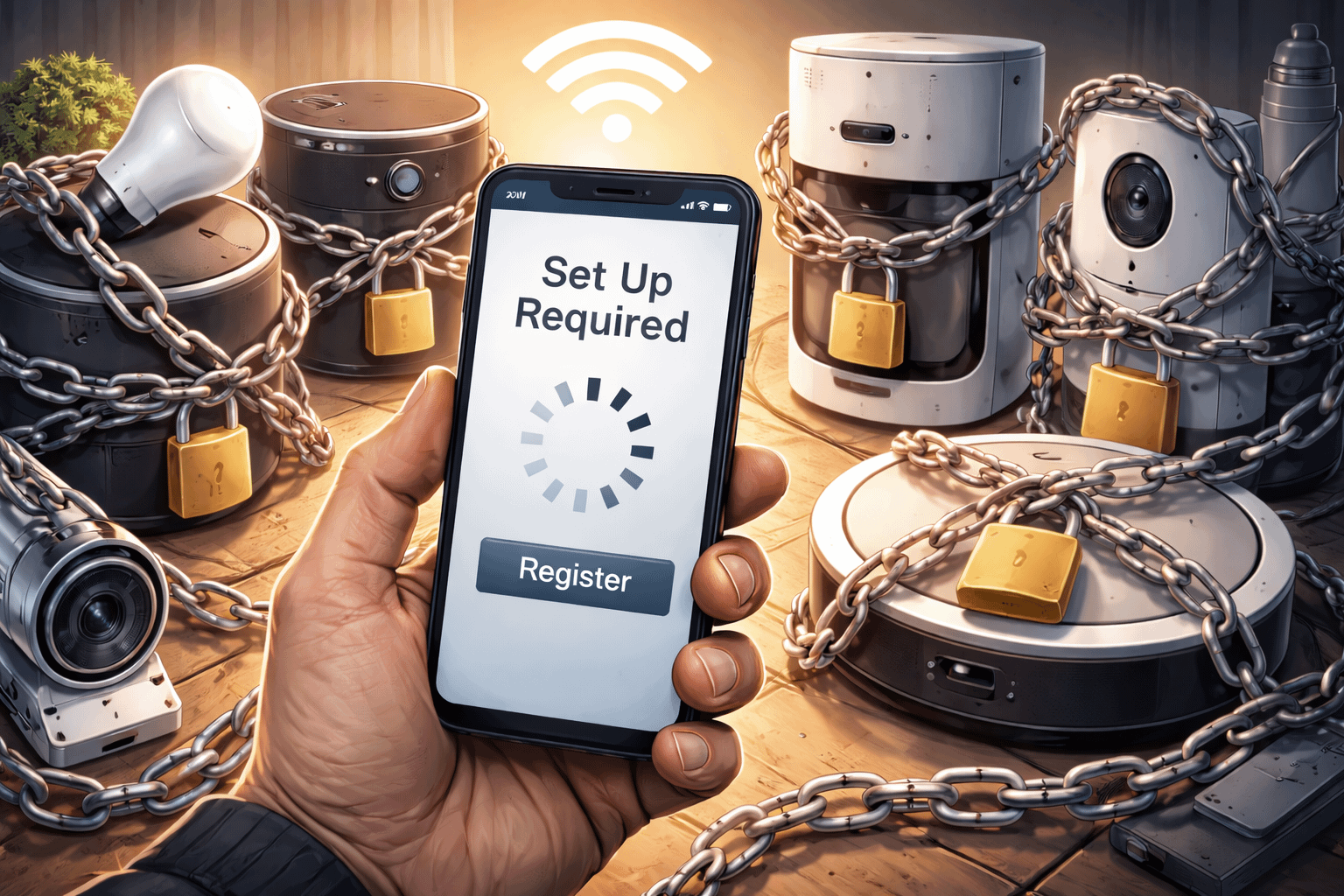
The tech industry has a self-inflicted wound. And it keeps picking at the scab. I keep screaming to myself when I open a product that looks great on paper....then I have to download the app. A lot of times the product is awesome, the app is the anchor that rips down.
There is a disease spreading through consumer electronics. It does not discriminate. It infects premium products and budget products alike. It has claimed pool robots, coffee makers, projectors, fans, speakers, power tools, and yes — light bulbs. Actual light bulbs.
The disease is the mandatory app.
Not the optional app. Not the supplemental app that adds nice-to-have features for power users. The mandatory app. The hostage app. The app that sits between you and the product you paid for, arms crossed, refusing to let you in until you've handed over your email address, agreed to a privacy policy no human has ever actually read, connected to Wi-Fi, allowed push notifications, and created an account with a password that requires at least one uppercase letter, one number, and the blood of your firstborn.
This is not innovation. This is extortion with a loading spinner.
Somewhere in the mid-2010s, a product designer sat in a conference room, stared at a connected coffee maker, and had a thought that seemed brilliant at the time: "What if everything was an ecosystem?"
That designer should be tried at The Hague.
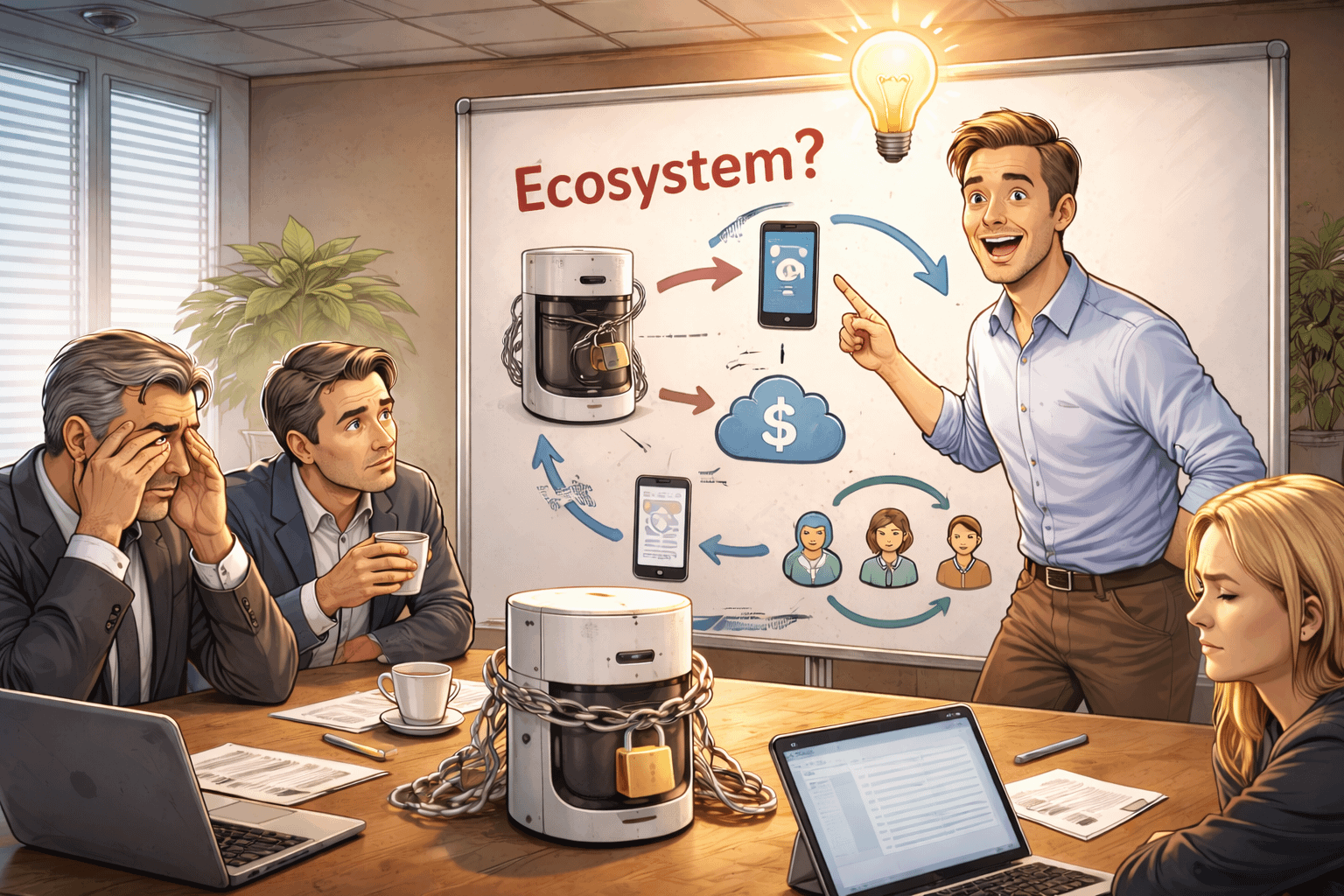
The logic, charitably interpreted, went something like this: smartphone apps allow for remote control, firmware updates, and user data collection. User data is valuable. Ecosystems create lock-in. Lock-in means repeat customers. Therefore, apps good.
The part that got quietly glossed over: apps also create friction, failure points, security vulnerabilities, privacy concerns, software debt, and a support nightmare that does not end. Ever. Because apps need updates. Updates break things. Things that are broken require fixes. Fixes require developers. Developers cost money. And eventually, companies decide the app is too expensive to maintain — at which point they quietly sunset it, and your $400 hardware becomes an expensive paperweight.
This has already happened. It is happening right now. And nobody seems sufficiently outraged.
Let's be honest about what the mandatory app actually costs the consumer. And I do not mean money, though that's in there too. I mean the full, unvarnished toll:
This is the app tax. It is levied against every customer, it is never disclosed on the box, and the companies charging it have decided, apparently collectively, that you will just absorb it and say nothing.
Here is what makes this particularly galling: the hardware is often excellent.
Genuinely. The engineering is solid. The build quality is impressive. The engineers who designed the physical product clearly knew what they were doing. And then, in the last hundred meters of the race, some product manager decided it needed an app — and handed the baton to a team that built something slow, buggy, confusing, and designed with all the visual warmth of a tax filing portal.
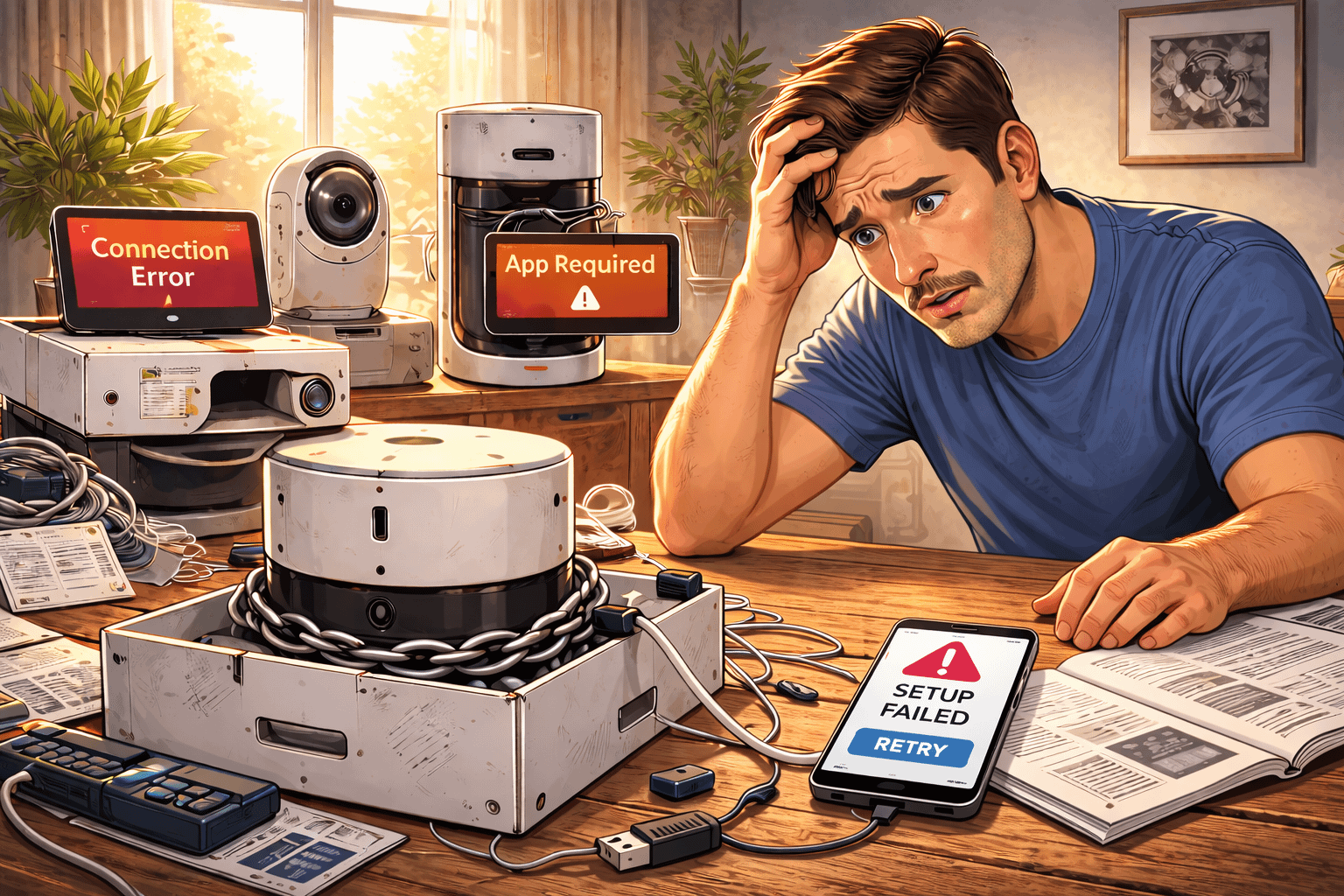
Reviewers see this constantly. You unbox something genuinely impressive. You feel that initial surge of excitement. And then you hit the "Download our app to get started" screen and you watch the product review mentally recalibrate in real time.
The app is slow. The app crashes on setup. The app cannot find the device on the network. The app requires an account, which requires an email confirmation, which goes to spam. You reconnect. You re-pair. The firmware update fails halfway through. You try again. The app force-closes.
By this point, you do not care how good the hardware is. You have been ground down. The experience is the product. And the experience is terrible.
Manufacturers take note: reviewers are documenting this. Customers are returning products over this. Amazon reviews for app-dependent products read like war diaries. You are burning your own reputation on the altar of an ecosystem nobody asked for.
It is not all grim. There are companies — smaller, leaner, unburdened by ecosystem ambitions — that have looked at the app-for-everything trend and made a different call.
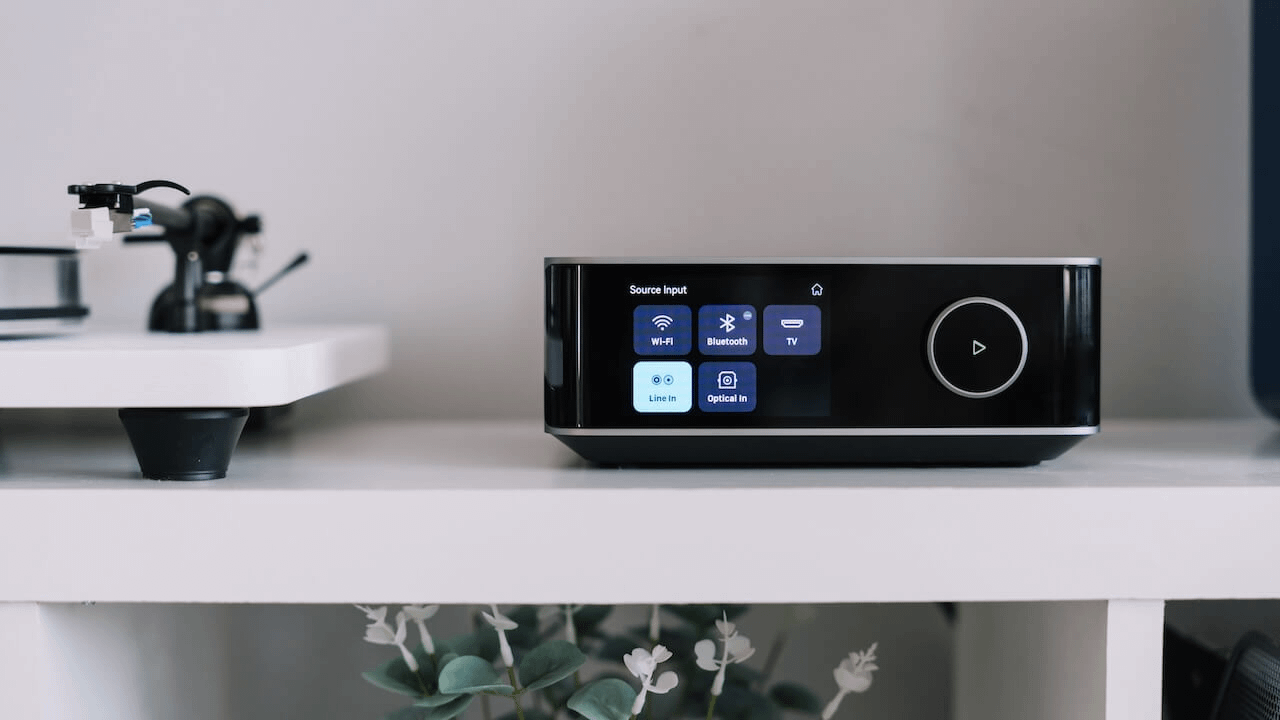
Take the better audio brands. Companies like WiiM and SMSL have built streaming devices and DACs that just work. Plug in. Connect. Listen. No account. No registration. No cloud. The app — where it exists — is optional, genuinely useful, and competently built. It adds features rather than gatekeeping them.
Or consider the best pool cleaning robots on the market — the simple ones, not the "smart" ones with companion apps and Wi-Fi scheduling and cloud connectivity. You drop the robot in the pool. You press a button. You pull it out when the battery dies. It has cleaned your pool. Every single time. No firmware update interrupted it midway. No server outage prevented it from operating. No subscription tier restricted its functionality.
These products feel almost radical now. They should not. They are just well-designed.
The market rewards this. Products that work without ceremony accumulate better reviews, generate fewer support tickets, and earn the kind of word-of-mouth that no marketing budget can manufacture. The irony is that stripping away the forced ecosystem would make most of these products more competitive, not less.
This is not an anti-app manifesto. Apps are fine. Apps can be excellent. The distinction matters enormously:
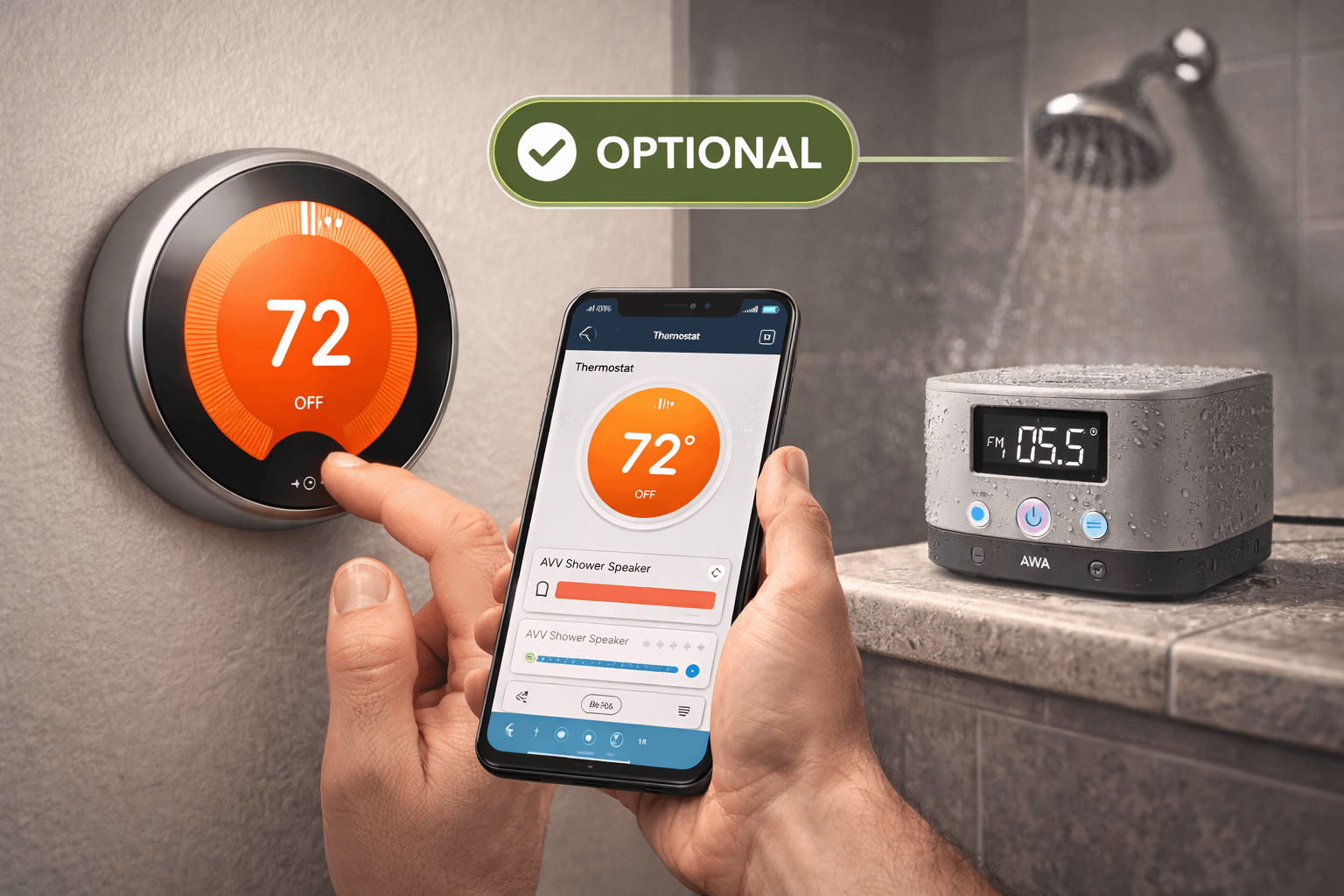
The test is brutally simple: can I use the core functionality of this product without a smartphone present? If the answer is no, the product has a design flaw. Full stop. No amount of feature richness in the app compensates for that fundamental failure.
Good hardware is sovereign. It operates independently. It does not require permission from a cloud service to function. It does not check in with a server to confirm its own existence. It works.
There is a reason the mandatory app has become so prevalent, and it is not because product designers suddenly forgot how to build things that work without a smartphone. The mandatory app is a funnel.
Get the customer into the app. Get the customer into the account. Get the customer comfortable with cloud connectivity. Then, six months after purchase, introduce the premium tier. The features they've been using? Those are "Basic." The features they actually want? Those are $4.99 a month now. Enjoy your free trial.
This is not speculation. This has happened. This is happening. Robot vacuum brands have done it. Security camera companies have done it. Exercise equipment companies have done it with particular enthusiasm. You bought the hardware. You own the hardware. And now the hardware does not work without a subscription to the software.
The consumer electronics industry is watching the software industry's subscription model playbook and copying it page by page. The mandatory app is step one.
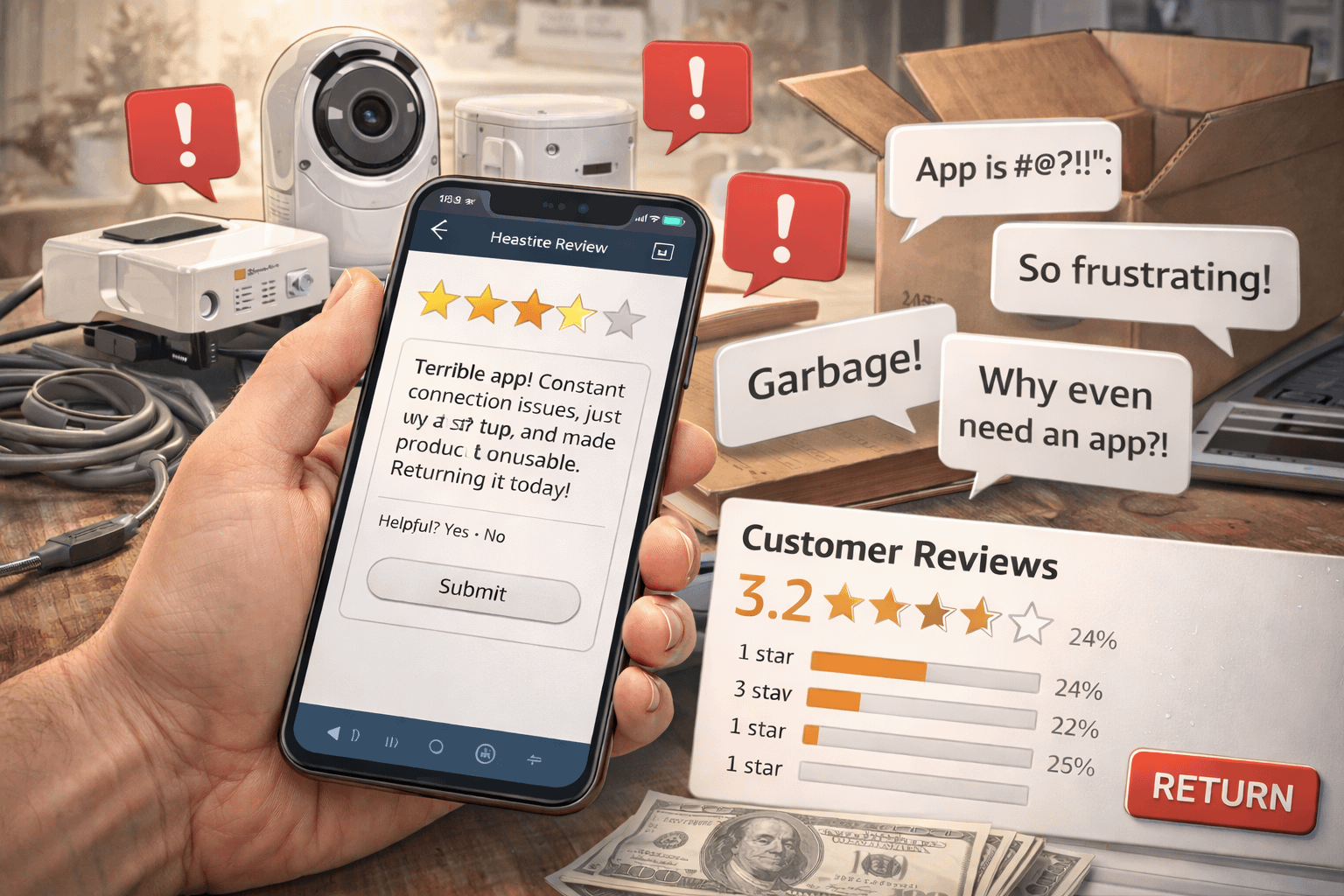
Manufacturers need to hear this clearly: the app experience is part of the product experience. When reviewers rate your product, the app gets rated too. When customers return products, app frustration is in the return reason. When your Amazon listing sits at 3.2 stars, scroll down. Read the one-star reviews. Count how many mention the app.
Go ahead. I'll wait.
The fix is not complicated, though it requires discipline. It requires product teams to ask — with real honesty — whether the app is genuinely adding value or just adding complexity. It requires executives to resist the siren song of data collection and ecosystem lock-in. It requires someone in the room to have the nerve to say: "This feature should be a button, not a menu screen, not an app, not an account."
And it requires consumers to vote with their wallets. Return the products that held their basic functions hostage. Leave the reviews. Ask, before purchasing, whether the product requires an app. Make that a dealbreaker.
There is a quiet satisfaction to products that do not need to announce themselves. They do not ping you. They do not require setup. They do not send firmware updates at 2am. They do not nag you to rate your experience. They do not ask for your birthday.
They just work.
In an era obsessed with connectivity, platforms, and recurring revenue, the most radical thing a product can do is operate independently. The most memorable products of the next decade will not be the ones with the most ambitious apps. They will be the ones that respected their customers enough to simply function.
The industry has a choice. Build products, or build dependency. Build things that last, or build things that expire when the server does.
The button was right there the whole time. You just had to let people press it.
For advertising please contact the editor at [email protected]




Privacy Policy
Terms and Conditions - Affiliate Policy
Home Security
© Copyright 2008-2026.
11816 Inwood Rd #1211, Dallas, TX 75244