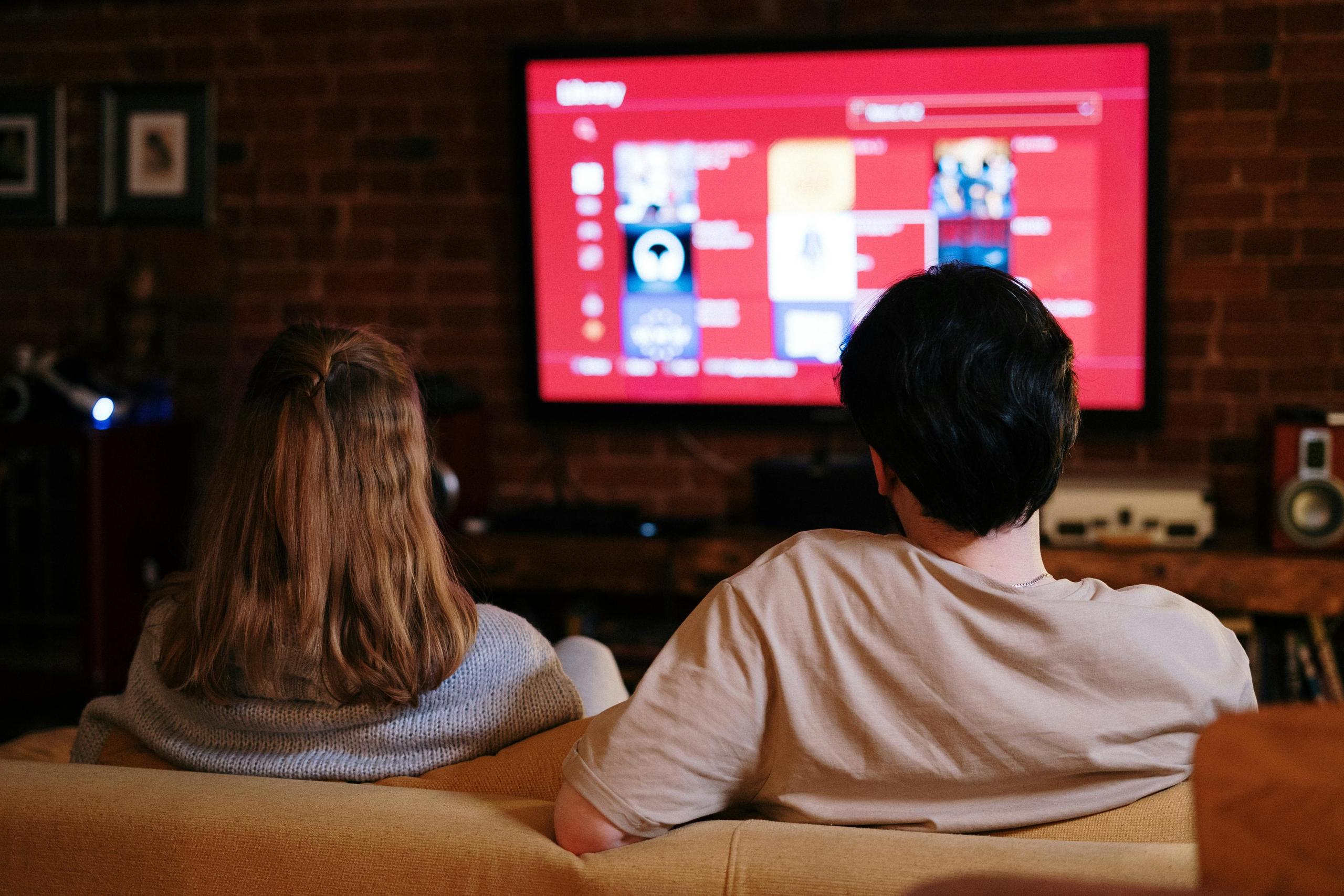


Traditionally, popular home theater models lock their users into specific ecosystems, making it hard to mix, match, and adjust components from different manufacturers. Many major brands (e.g., Samsung, Sony, LG) offer apps that only work with their original products. Users are stuck with limited functionality or must juggle multiple apps to control different devices. That is where cross-platform application development comes to light.
Just imagine controlling your entire home theater setup — TV, speakers, lights, projector, and streaming devices — from a single app, regardless of brand or origin. Cross-platform app development allows users to unify control over their setup and enjoy a seamless, customized experience every day.
Each device often requires a separate remote control tool or web app, making management inconvenient. If you consider that the main issue with home theater systems is fragmented control, the key to solving the problem lies in the integration method. Fortunately, there are quite a number of possible solutions, depending on the situation and aim.
Solutions for unified control include:
Modern apps leverage universal standards like IP control, Infrared (IR), Bluetooth, and Wi-Fi to ensure smooth compatibility across devices. Since these standards are available worldwide, it makes it possible to orchestrate performance regardless of user location.
Nowadays developers build apps that communicate with multiple brands through open APIs (e.g., Logitech Harmony, iRule, Home Assistant). They can utilize universal APIs like HDMI-CEC, MQTT, Zigbee, and Z-Wave to enable seamless communication between all parts of the system. Connectivity with IoT smart assistants (such as Alexa, Google Home) and Bluetooth/Wi-Fi protocols brings automation, resulting in a smooth user experience.
Based on platforms like Google Home and Amazon Alexa, smart home hub integration enables voice commands and app controls for diverse devices across the whole apartment or building. Such integration tools control home theaters as part of the home ecosystem, making them blend into the general environment.
One-click activation of the entire system is possible with the help of automation and presets. It is extremely helpful for elderly people, children, and those with special inclusive needs (e.g., "Movie Night" – screen down, ambience, 5.1 surround sound, dimmed lights). It also comes in handy when a user needs to limit the possibility to adjust and set specific parameters, or when limited to using only remote apps.
Through the years, integration with Siri, Google Assistant, and other voice assistants has become an integral part of smartphones. Modern developers implement this technology into home theater systems. Despite possible inconveniences, voice control has become one of the top solutions for users in recent years.
Remote access to the system from almost anywhere is not a dream anymore. Cloud-based control solutions bring the possibility to operate the home theater system while the user is on the way home, or when it is impossible to do so manually. Cloud-based management is also crucial in cases when the user has mobility or other accessibility issues.
By its nature, cross-platform app control can be implemented in many different fields and industries. Home theaters are a great example of a system that can be quite fragmented and complex, requiring a universal tool for management. Combining many factors, it helps to identify hidden challenges, reveal innovation prospects, and build a clearer picture of the future for web developers.
There are a few challenges every app developer must be ready to address:
Handling different communication protocols (such as IR, Wi-Fi, Bluetooth and others) can become one of the major challenges for cross-platform app developers. Generally, cross-platform app development combines too many various factors to comply with, making it nearly impossible to fit them all into one integrative system. However, the market is growing rapidly, setting a high bar that pushes developers to look for new ways and combinations to deliver the best user options. Software development solutions by OverCode combine existing utility tools and protocols to ensure a smooth user experience and provide easy-to-use products.
Ensuring real-time responsiveness across diverse devices presents a challenge as developers struggle to keep up with rapidly growing market innovations and comply with overall technological progress. The ability to control the system in real time without interruptions makes the software a preferred choice for users. This is why such responsiveness is key to success in the field. Users must trust the product and be able to manage the system as a whole at any time with immediate response.
Also, it has become increasingly difficult to create a unique, user-friendly, intuitive interface for a universal home theater remote control app. This challenge makes app developers more interested in the process. There are numerous apps to try, but the major goal is to ensure an immersive, unforgettable, yet pleasant experience for users. Only a few apps are able to make such an impression while remaining easy to operate.
Updates and maintenance add complexity to the developer's routine. When platforms release updates (for example, new Android or iOS versions), all set integrations may malfunction. To avoid this, developers must ensure compatibility of system components and continuously update existing software.
Network latency and offline mode are other challenges to overcome. For example, wireless networks or Bluetooth can introduce delays, especially in large homes. A good control system should support smooth offline functionality, ensuring essential features work without an internet connection.
Modern home theater systems are now evolving toward fully integrated, elaborate, AI-driven ecosystems. The main goal may be described as creating a unified, intelligent, easy-to-use home theater hub that anticipates user preferences and delivers seamless, immersive entertainment.
Innovations for further consideration and development include:
Cloud and edge computing development is an essential step toward faster processing and personalized settings (stored in secure cloud environments). Such cloud-based integrations to sync devices with home theater products are crucial to designing a truly up-to-date web app.
AI-powered automation is another way to enhance reliability, intuitiveness, and seamlessness of the user experience. To achieve this goal, smart assistants analyze user habits to adjust lighting, sound, ambience, and display settings automatically. AI-powered learning is vital to adapt controls based on user behavior patterns.
Gesture and voice commands are refreshing the smart home ecosystem market. Hands-free control through natural user gestures or simple voice recognition has already made traditional remote controls obsolete in many cases. Enhanced voice recognition for natural, hands-free commands is not only easy to operate but also delivers an immersive home theater experience to the user.
IoT and smart home integration means seamless connection with smart TVs, speakers, projectors, etc. for full-room control. Those who have experienced the smoothness and ease of the process will never return to outdated technologies.
Haptic and immersive technologies are expected to expand widely in the near future. For instance, advanced haptic feedback and spatial audio are hard to overestimate for a more cinematic experience.
Cross-platform development is the key to flexible, future-ready, and user-friendly home entertainment systems. So, why does cross-platform app development matter for the future of home entertainment?
Freedom of choice is all about a wide scale of possibilities. First of all, users can mix brands without sacrificing control. A unified ecosystem delivers one app to manage audio, video, lighting, and automation, reducing possible gaps between brands.
Enhanced user experience lies in simplifying complex setups with modern one-touch controls. Users can control home theater systems from any device (smartphones, tablets, computers, smart TVs, voice assistants) without compatibility issues.
Future-proofing ensures that as new mobile devices and gadgets emerge, software updates keep home theater management systems compatible. In addition, scalability supports new devices and technologies (such as AR/VR, 8K streaming, AI-powered automation) without constant need for redesign.
A single codebase (for example, React Native, Flutter) speeds up general development of the software and reduces app maintenance costs. Cost and development efficiency makes the product less difficult and less expensive to create.
User accessibility means that, with all modern instruments and protocols, home theater software becomes more obtainable for users. Products that work across platforms make home entertainment more inclusive and widely available.
To overview the best cross-platform solutions for home theater entertainment, there are several top-quality web products to try. They all work with Apple devices as well as Android-based ones, and they are easy to download for anyone to use. Here are some examples of competitive home theater control systems:
To sum up, cross-platform app development is dismantling smart home ecosystem barriers. It offers more flexibility, immersiveness, and convenience for home theater enthusiasts, particularly when compared with outdated tools such as traditional remote controls.
Whether you're a casual movie lover or an AV fan, cross-platform apps are redefining how we experience home entertainment, providing one universal remote at a time.




Privacy Policy
Terms and Conditions - Affiliate Policy
Home Security
© Copyright 2008-2026.
11816 Inwood Rd #1211, Dallas, TX 75244