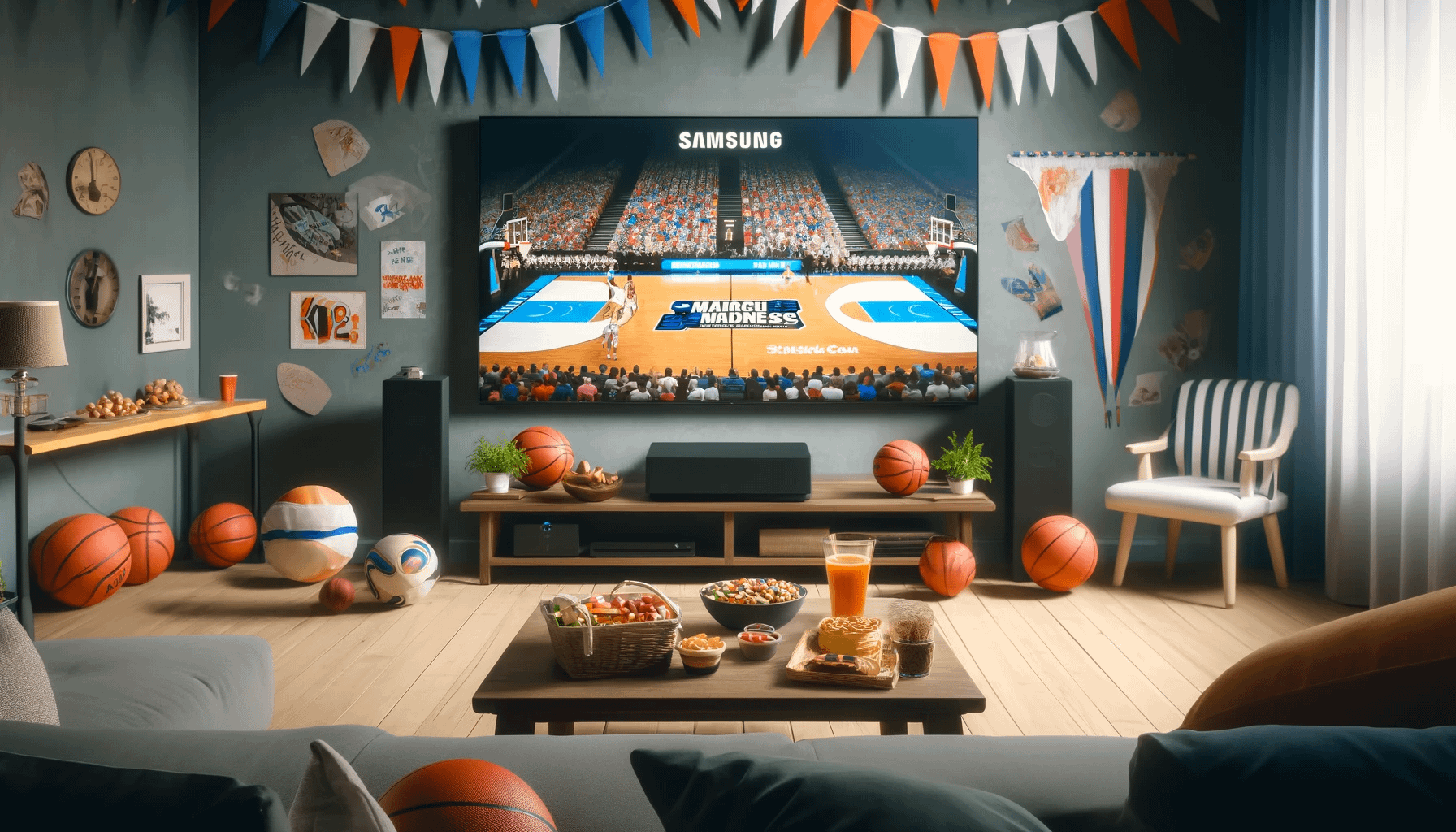

Remember when TVs were just for watching shows and movies? Those days are long gone. Today's smart TVs have evolved into powerful educational hubs that are changing how we learn at home. With their expansive screens, app ecosystems, and internet connectivity, these devices are bringing interactive education into living rooms across the country.
What makes smart TVs particularly compelling for education is their accessibility. Unlike specialized educational tech that might break the bank, many households already own a smart TV. Their large, high-definition displays create an immersive visual experience that's perfect for engaging learners of all ages.
For students who already utilize online resources and sometimes search for services to type my paper for me when facing tight deadlines, smart TVs expand their toolkit even further. These devices complement online learning by providing a larger canvas for research, collaborative brainstorming, and accessing educational content that can inspire better writing and critical thinking.
"The shift from passive viewing to interactive learning represents one of the most significant transformations in home education technology," says tech education specialist Sarah Chen. "Smart TVs create a communal learning space where family members can participate together, rather than hunching over individual devices."
This communal aspect is particularly valuable. While smartphones and tablets offer portability, they're inherently solitary devices. Smart TVs, by contrast, bring people together, allowing parents to guide children through educational content or enabling study groups to collaborate on projects.
The app ecosystem is where smart TVs truly shine as educational tools. Here's what's making waves in the educational smart TV space:
Apps like Duolingo and Rosetta Stone have reimagined language learning for the big screen. The large display makes it easier for multiple users to practice pronunciation together, while interactive exercises keep engagement high.
"We've seen families establish weekly language nights where everyone gathers around the TV to learn Spanish or Mandarin together," notes language education researcher Miguel Fernandez. "The communal experience creates accountability and makes practice more consistent."
For young minds curious about science and technology, platforms like Khan Academy and Tynker bring complex concepts to life through visual demonstrations and interactive coding challenges.
What makes these apps particularly effective on smart TVs is the ability to see details clearly. A coding lesson on a smartphone might require squinting, but on a 55-inch display, every element of the code is clearly visible, making it easier for beginners to follow along.
Apps focused on creativity and art benefit tremendously from the large canvas of a smart TV. Platforms like SketchUp and CreativeLive offer tutorials that guide users through everything from digital illustration to photography composition.
The visual fidelity of modern smart TVs means aspiring artists can see subtle details in techniques being demonstrated—something that's lost on smaller screens.
One of the most powerful aspects of smart TV learning is how it visualizes complex ideas. Traditional textbooks might describe how a volcano erupts, but educational apps on smart TVs can show it happening in high-definition 3D, with the ability to pause, rewind, and explore different aspects of the eruption.
Modern educational apps don't just present information—they interact with learners. Quiz features provide immediate feedback, helping users understand mistakes and correct them on the spot. Many apps also track progress over time, creating a satisfying sense of achievement as skills develop.
Perhaps most importantly, smart TVs are bringing back collaborative learning in an age of increasingly individualized screen time.
"We're seeing families solve math problems together or compete in educational trivia games," explains educational technologist James Park. "This shared experience not only reinforces learning but also strengthens family bonds through a shared activity."
Despite their potential, educational smart TVs aren't without challenges:
The same device that offers Khan Academy also provides access to Netflix and YouTube. Creating boundaries between entertainment and education requires discipline, especially for younger learners.
Many families are addressing this by creating separate user profiles—one for entertainment and one dedicated to educational apps—or by using parental controls to limit access to entertainment during designated learning times.
Most educational apps require reliable internet, which can be a barrier for households in rural areas or those with limited connectivity. Some app developers are beginning to address this by offering downloadable content that can be accessed offline, but this remains an area for improvement.
While educational content is more beneficial than passive entertainment, it still contributes to overall screen time. Education experts recommend balancing smart TV learning with physical activities, hands-on projects, and outdoor exploration.
To get the most educational value from your smart TV, consider these expert tips:
The educational capabilities of smart TVs are still evolving. As artificial intelligence becomes more sophisticated, we're likely to see more personalized learning experiences that adapt to individual learning styles and pace.
Augmented reality features are also on the horizon, with the potential to transform living rooms into immersive learning environments where historical events can be "experienced" or scientific principles demonstrated through 3D projections.
Voice control is another frontier, with advances potentially allowing learners to engage in conversational learning with AI tutors through their TVs.
Smart TVs represent a powerful and accessible entry point into the future of education—one where learning isn't confined to classrooms or limited by geography. By thoughtfully integrating these devices into home learning strategies, families can create engaging educational experiences that complement traditional schooling.
The transformation of the TV from a passive entertainment device to an interactive learning tool reflects a broader shift in how we think about education—moving from consumption to participation, from isolation to collaboration, and from rigid structures to flexible, personalized learning journeys.
The future of education isn't just about new technologies; it's about reimagining how we learn. And that reimagining is happening right now, one smart TV at a time.






Privacy Policy
Terms and Conditions - Affiliate Policy
Home Security
© Copyright 2008-2026.
11816 Inwood Rd #1211, Dallas, TX 75244