


We'd like to thank ProjectorScreen.com for their assistance with our projector evaluations and testing. Their yearly shoot-out, extensive selection and helpful attitude makes our life easier when we need to dig in a little more.
The BenQ W5850 is the company's latest flagship laser cinema projector, priced at around $7,000 and targeted at serious home theater enthusiasts who want big-screen cinematic performance without climbing into the rarefied air of Sony or JVC's top-tier native 4K projectors. On paper, it looks compelling. In practice, it mostly delivers — but the market it's landing in has changed a lot, and that context matters when you're deciding whether to write that check.
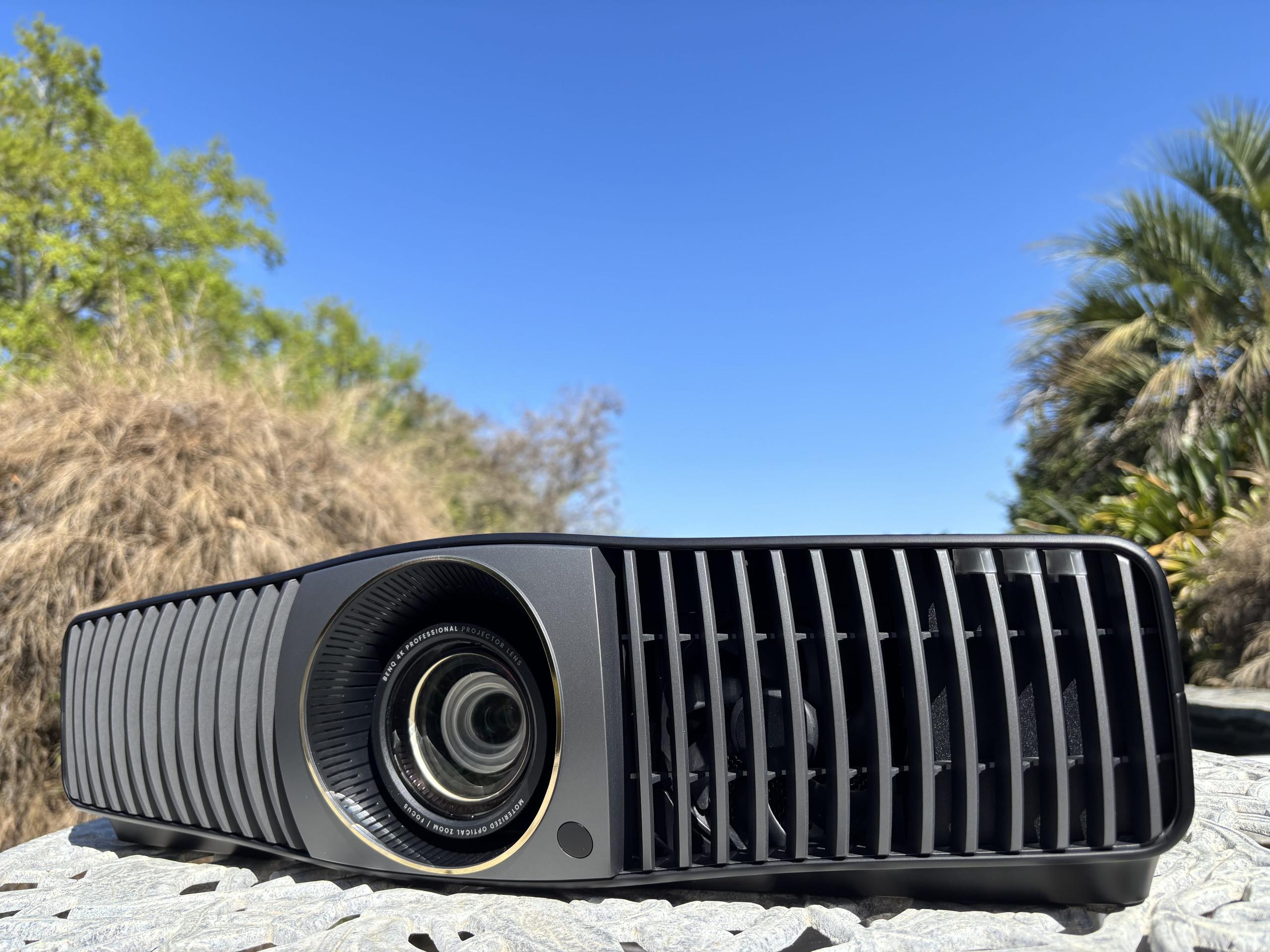
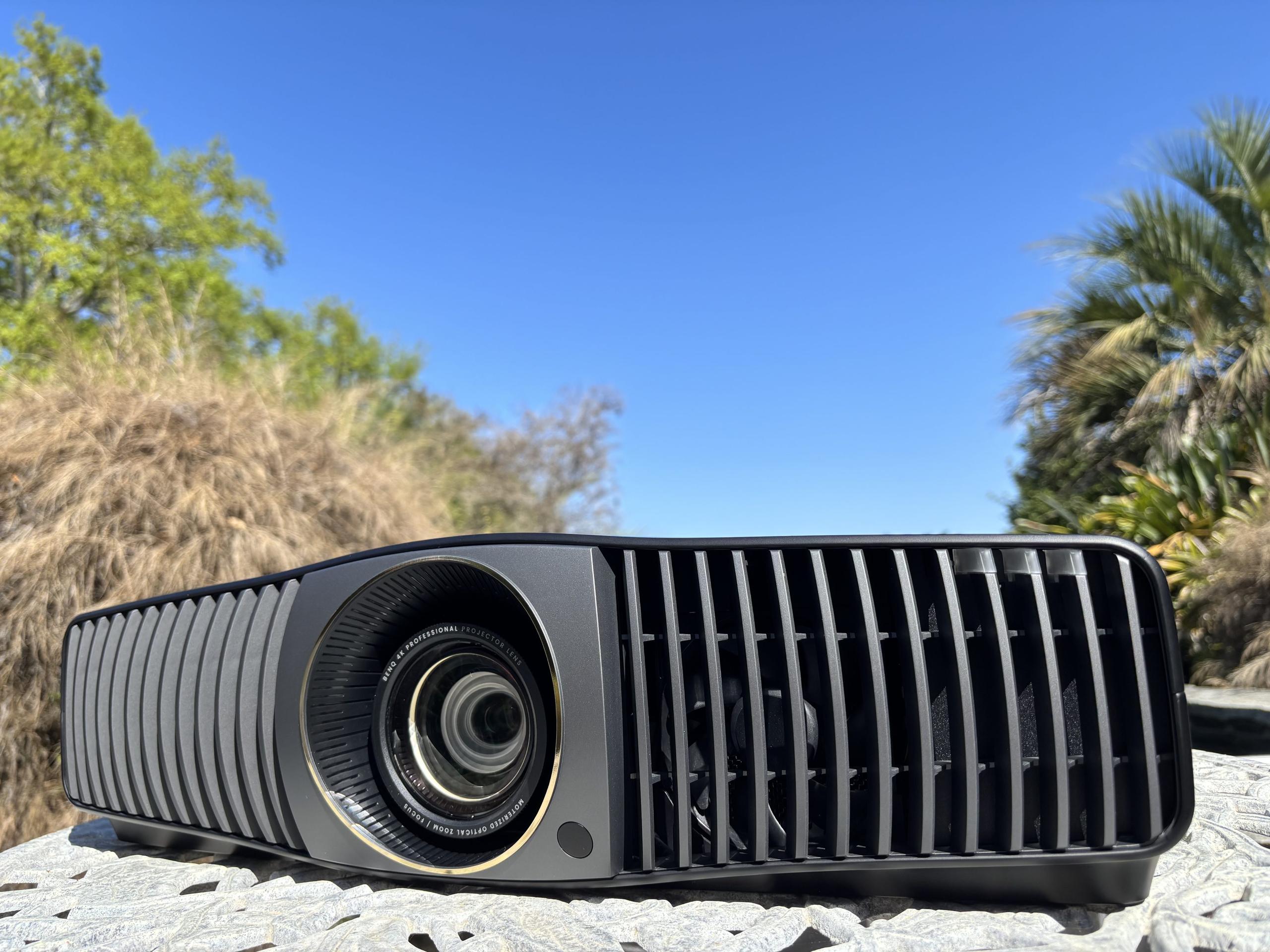
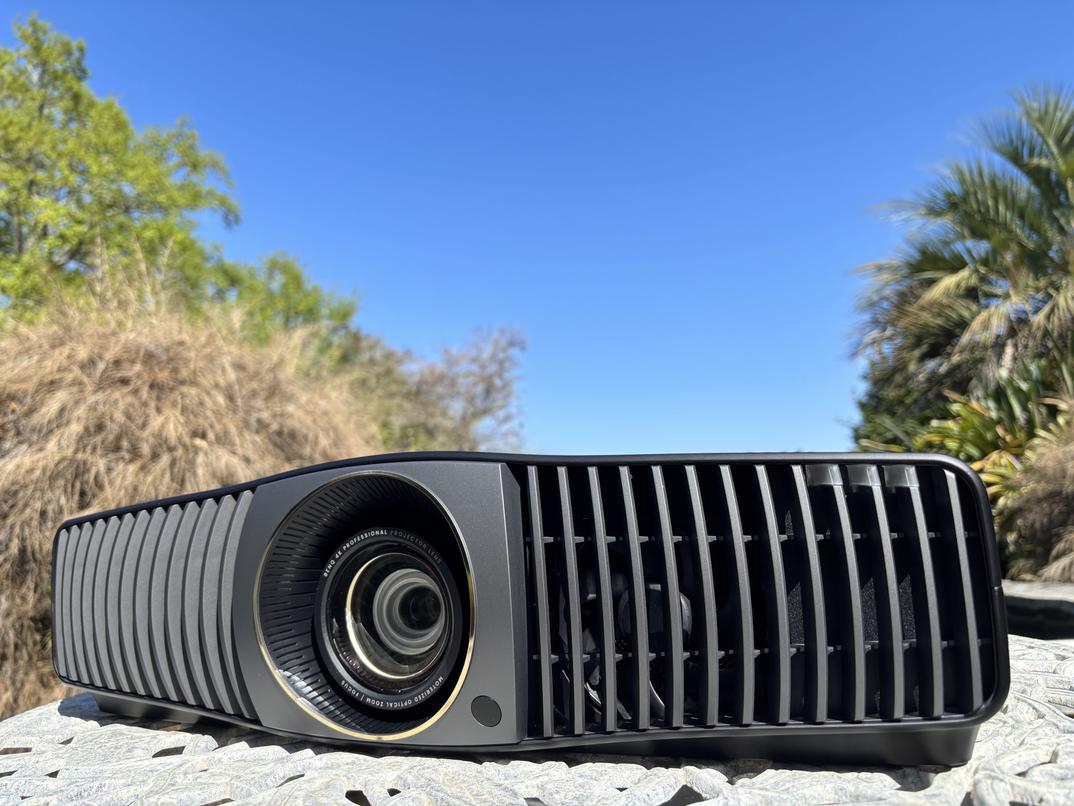
Let's get one thing out of the way immediately: this is not a projector you buy for your living room. The W5850 is purpose-built for dedicated theater spaces — dark rooms, permanent ceiling mounts, proper acoustic treatment, the works. It's a substantial piece of kit, and it looks the part. Build quality is solid throughout, with nothing feeling cheap or flimsy. The lens assembly in particular feels well-engineered, which matters when you're talking about a projector that's going to live on your ceiling for a decade. It's a pro level install projector, not a "buy on Amazon and have fun by your pool" projector.
For installation, BenQ gives you real flexibility. Motorized lens controls handle zoom, focus, and shift without you needing to physically reposition the unit, which is genuinely appreciated when you're up on a ladder trying to fine-tune placement. The vertical and horizontal lens shift range is generous, and the 1.6x optical zoom gives integrators and DIY installers plenty of room to work with in terms of throw distance and screen placement.
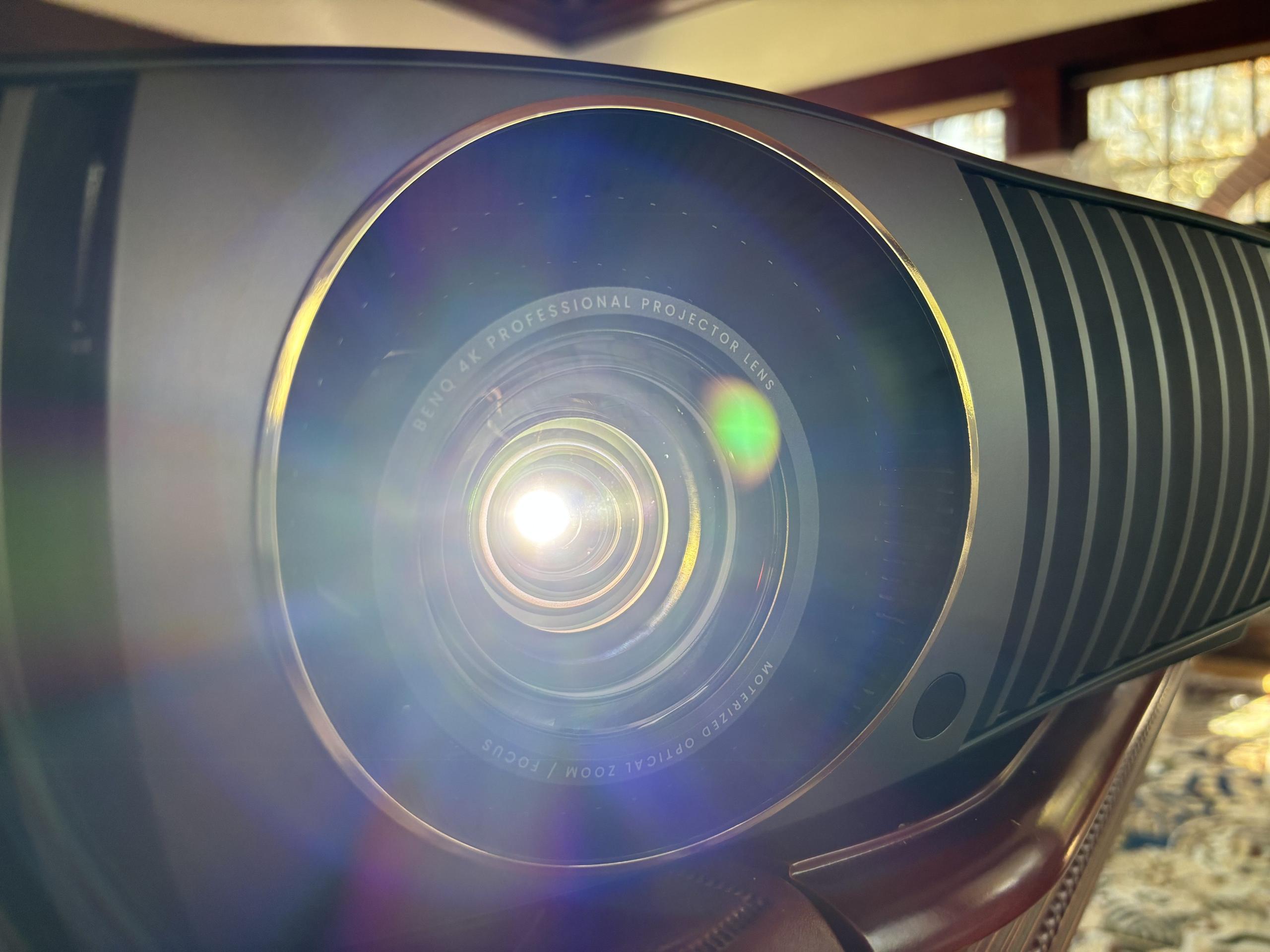
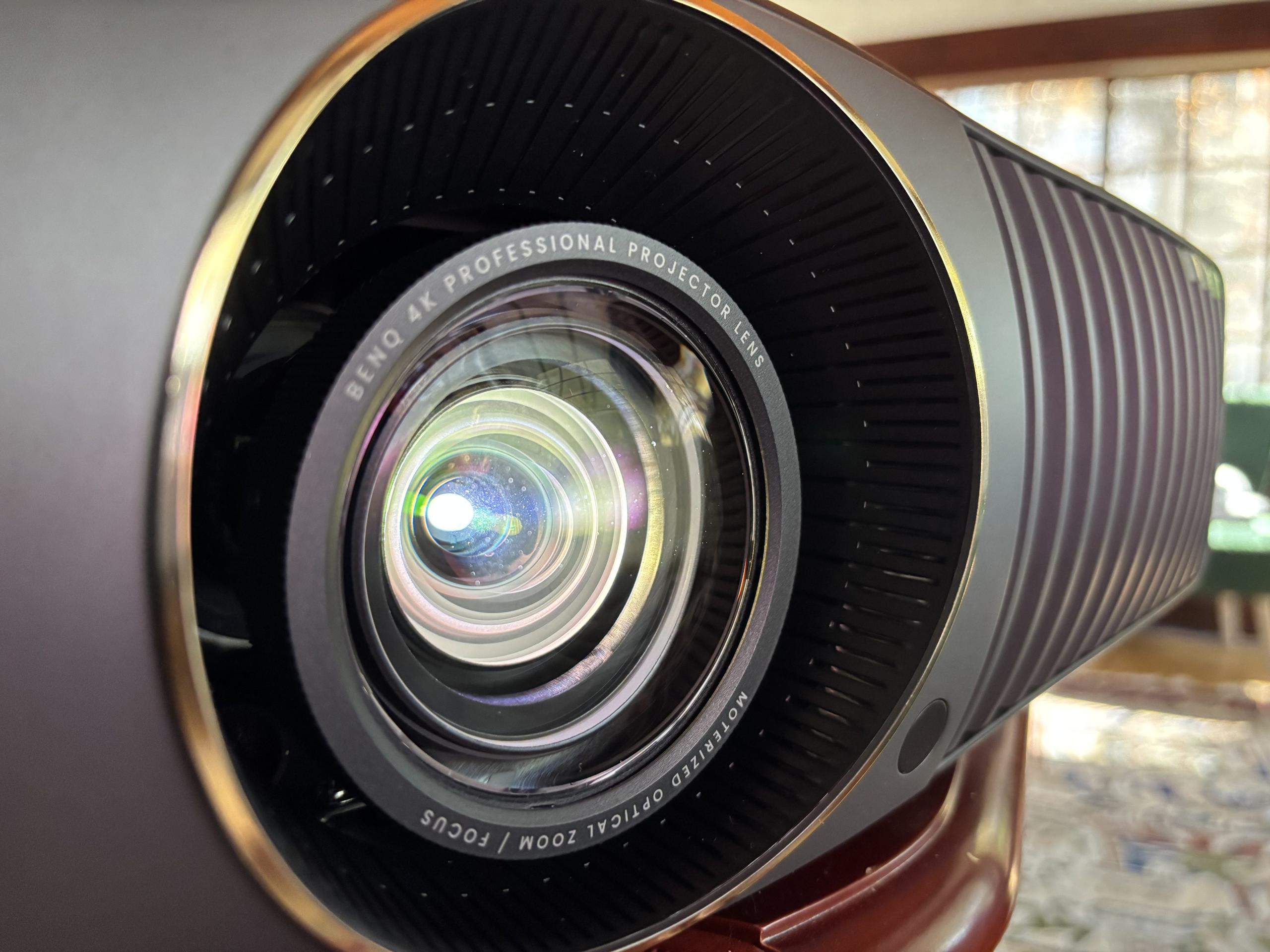
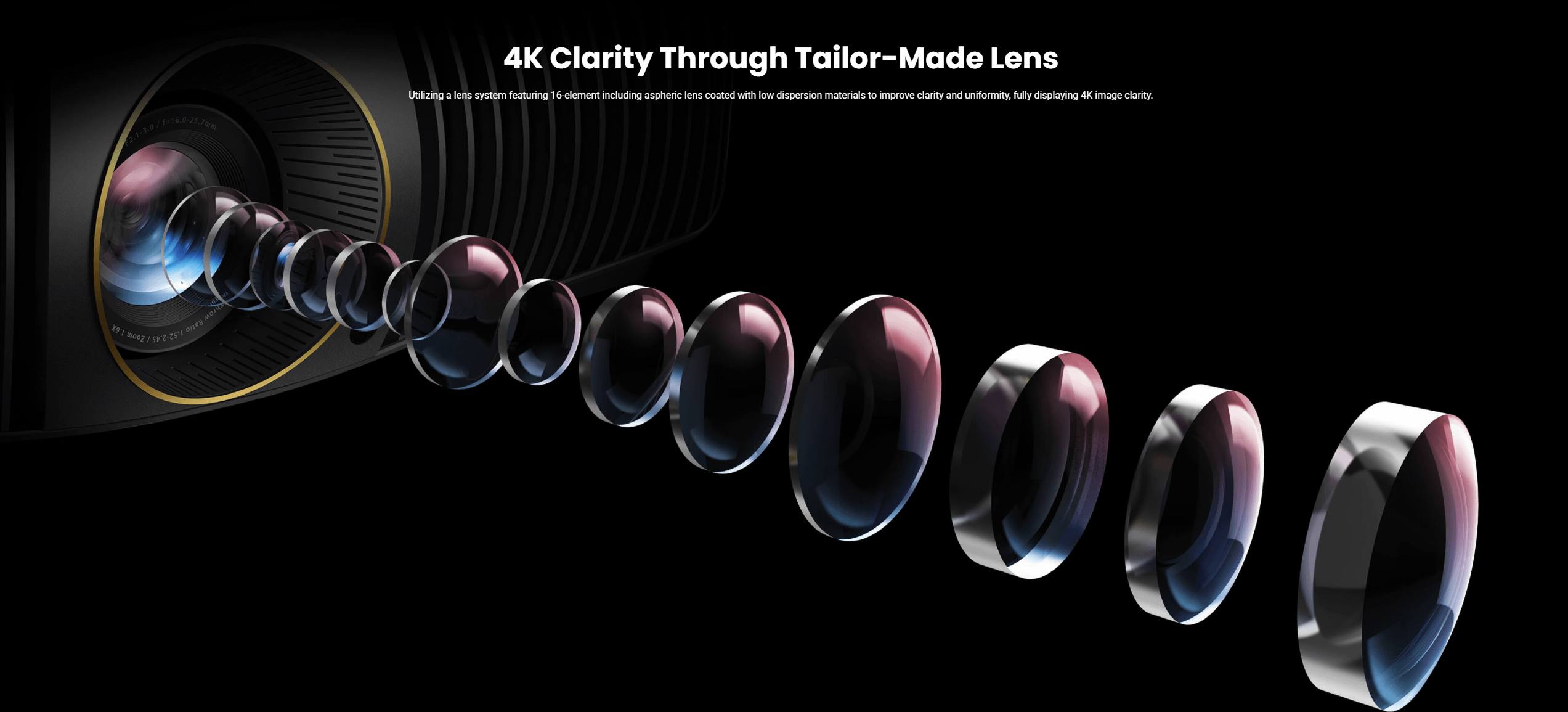
One of the most practical improvements BenQ made with the W5850 over its predecessor is the new optical lens system, and it's worth spending a moment on because it's not just a spec-sheet improvement — it changes real-world installation significantly.

The new lens allows the W5850 to project a larger image from a shorter throw distance. That might sound like a minor tweak, but in practice it opens up a lot of options. Many dedicated home theaters are working with constrained dimensions — a basement room that's 14 feet deep, a bonus room with an awkward column, a space where the ceiling mount position is dictated by the joists above. I see it all the time and it's the primary driver in many systems. In those situations, having more screen for less throw is a meaningful advantage. A room that previously maxed out at a 110-inch image with the W5800 might now comfortably push to 130 inches with the W5850 without moving the projector an inch. For anyone building or upgrading a theater in a smaller space, that flexibility alone is a legitimate reason to choose the W5850 over the previous generation.
Here's where I'll be honest about a frustration. The setup experience on the W5850 feels behind where the market is heading. There's no AI-assisted image alignment, no automated geometry correction, no smart room calibration — you're doing this manually, the old-fashioned way. For experienced installers who've been aligning projectors for years, that's not a crisis, but a pain, trust me I know. But after spending time with newer projectors that walk you through alignment automatically and can correct geometry with minimal fuss, coming back to full manual adjustment feels noticeably tedious.
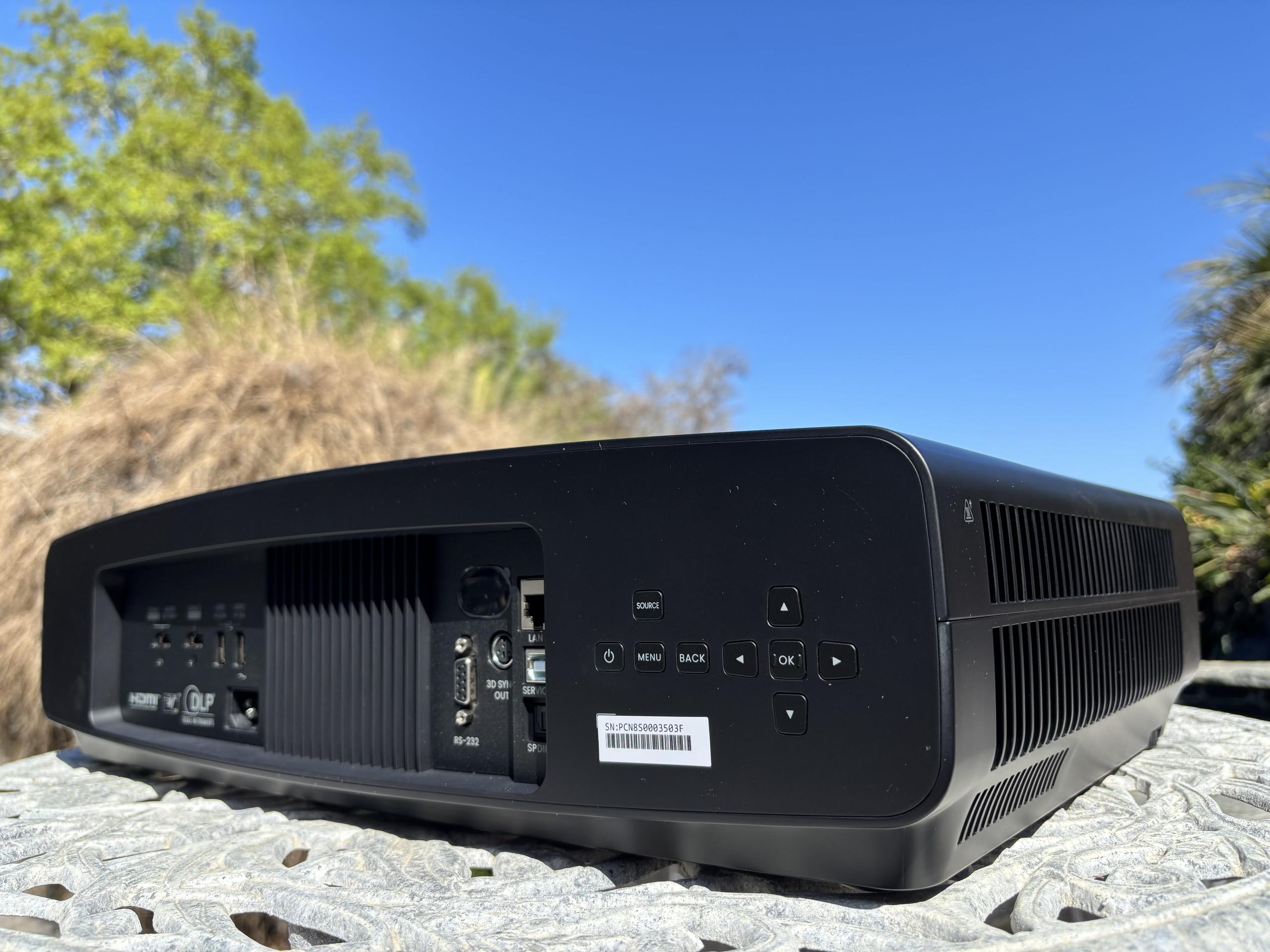
To be clear, you can absolutely get the W5850 dialed in perfectly — it just takes more time and patience than it probably should at this price point. If you're having a professional installer set it up, they'll handle it without issue. If you're a first-time projector buyer doing this yourself, budget some extra time and be prepared to work through the process carefully. The payoff is worth it, but the path there is bumpier than it needs to be.
Color calibration out of the box is actually quite good, with BenQ's factory calibration doing solid work before you even touch the settings. If you want to go further, hiring an ISF-certified calibrator will squeeze more out of it, but the out-of-box picture is already well above average.
The W5850 uses BenQ's 4K DLP XPR imaging system, which shifts the DLP chip rapidly to deliver the full 8.3 million pixels of UHD resolution. The result is genuinely sharp. On a 130-inch screen, fine detail holds up extremely well — film grain, facial texture, fabric patterns, background detail in wide shots — all of it comes through cleanly without looking processed or artificially sharpened. This is a projector clearly designed with large-screen viewing in mind, and it earns that positioning.
For comparison, some cheaper 4K projectors use pixel-shifting techniques that can look slightly soft at large screen sizes. That's not an issue here. The W5850 holds its sharpness across the whole image, edge to edge, which matters a lot when you're sitting 10–12 feet from a 130-inch screen.
Color performance is genuinely one of the W5850's strongest suits, and it's where BenQ has clearly focused a lot of engineering effort. Full 100% DCI-P3 color coverage means the projector can reproduce the entire color space used in modern cinema mastering. Combined with BenQ's CinematicColor processing and factory calibration, the result is color that looks accurate rather than just vivid.
This matters more than some people realize. A lot of projectors, particularly cheaper ones, push saturation to make colors look punchy and impressive in demo mode — but that vividness comes at the cost of accuracy. Skin tones start looking slightly orange or oversaturated. Color grading from filmmakers gets distorted. The W5850 avoids that trap. Colors are rich but honest, and cinematic content in particular — where directors and colorists spend enormous time crafting specific looks — comes through the way it was intended. Watching a well-graded film on this projector is a genuinely satisfying experience.
The laser light engine is rated at 2,600 lumens, which is enough to drive a large screen in a properly light-controlled environment. In a dedicated theater with blackout conditions, you'll have no issues at screen sizes up to 150 inches and potentially beyond, depending on your screen gain. If you're trying to use this in a room with ambient light, you'll want to manage expectations — this isn't designed for that use case, and no projector at this size and quality level really is.
HDR support covers HDR10, HDR10+, and HLG, so you're covered across all the major formats. HDR performance is solid — highlights are handled well, color saturation in HDR content looks convincing, and the overall presentation holds up against the source material. The projector does a good job of tone-mapping HDR content for projection, which is a non-trivial challenge given that projectors operate at much lower peak brightness than OLED or high-end LCD displays.

Black levels are the one area where I'll temper expectations. For a DLP projector, the W5850 does well — contrast is respectable, and shadow detail is handled properly. But if you're cross-shopping against Sony's VPL-XW7000 or a JVC NZ series projector, those LCoS-based machines produce noticeably deeper blacks and better native contrast. It's not a dramatic failing of the W5850 — it's simply a fundamental characteristic of DLP versus LCoS technology. If inky blacks are your top priority, that's worth factoring into your decision.
This is one of the W5850's clearest long-term advantages over lamp-based projectors, and it's worth understanding why. The laser light source is rated for up to 20,000 hours of use — compared to the 2,000–4,000 hours you'd typically get from a traditional lamp before it needs replacing. At a typical usage pattern of 4–5 hours per day, 20,000 hours translates to well over a decade of operation before the light source degrades significantly. You will very likely upgrade to a completely different projector before this laser engine gives you any trouble.
Beyond longevity, laser projection also maintains consistent brightness over time. Lamp projectors dim gradually as the bulb ages, which means the picture you're watching in year three is measurably dimmer than what you saw on day one. Lasers don't do that — the light output stays consistent. Startup is also faster and there's no warm-up period to worry about. For day-to-day use, these are the kinds of quality-of-life improvements that you stop noticing precisely because they stop being problems.
Here's the part of this review where I have to be straight with you, because at $7,000 it would be irresponsible not to be. The sub-$10,000 projector market has become genuinely competitive in a way it wasn't even two or three years ago. Established brands like Epson and Sony have been pushing hard at various price points, but more importantly, newer players have entered the market with projectors that offer surprisingly strong performance at significantly lower prices.
I recently reviewed the Valerion VisionMaster Max, which came in at a substantially lower price point and delivered performance that closed the gap more than I expected. It's not a perfect replacement for the W5850 — build quality, support infrastructure, and long-term reliability are all areas where BenQ's track record counts for something — but if your decision is purely about what image you're getting for your money, the gap is narrower than the price difference suggests.
BenQ knows this. The pressure from value competitors is real, and it's ultimately good for the market because it forces manufacturers to justify their pricing with tangible performance advantages. The W5850 does have those advantages — the lens system, the color accuracy, the laser engine reliability, the installation flexibility — but you need to decide whether those advantages are worth the premium over newer challengers.
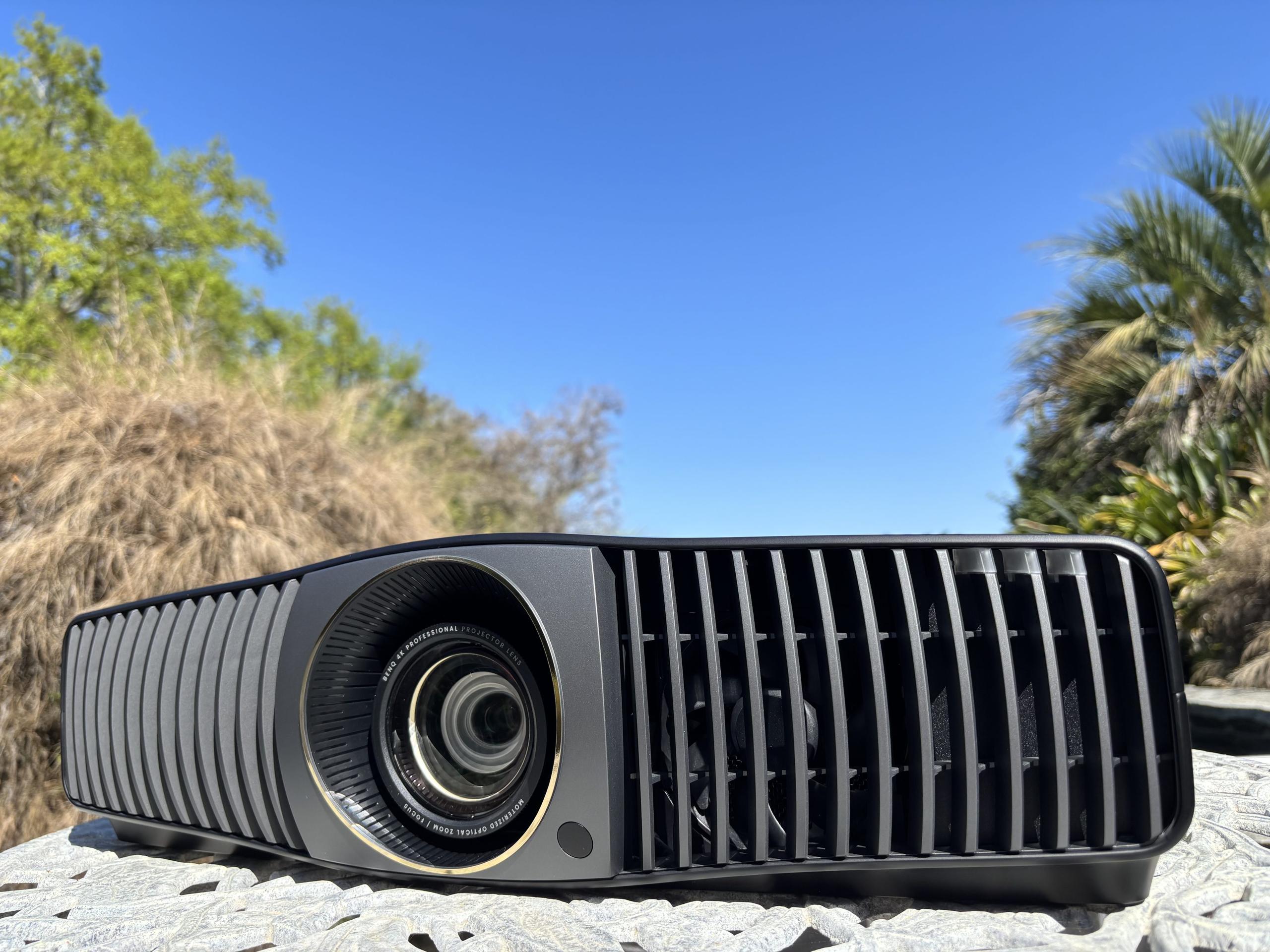
The W5850 makes the most sense in a few specific situations. If you're working with a smaller dedicated theater room where the improved throw lens ratio makes a meaningful difference, that's a genuine reason to choose this over competitors. If you're prioritizing long-term reliability and want a projector backed by BenQ's established support network, that's worth paying for. If color accuracy for film content is your primary focus and you want a projector that gets it right out of the box without extensive calibration work, the W5850 delivers.
If you're purely optimizing for performance per dollar and you're willing to do some homework on newer entrants to the market, I'd encourage you to compare carefully before committing. The W5850 is a good projector — it's not a case of BenQ delivering a poor product. It's a case of the market moving fast enough that good is no longer automatically sufficient at $7,000.
The BenQ W5850 is a well-built, accurate, installation-flexible laser cinema projector that does most things very well. The lens improvements over the W5800 are practical and appreciated, the color performance is genuinely excellent, and the laser light engine makes long-term ownership straightforward. The setup process needs modernizing, and the black levels won't satisfy anyone coming from a high-end LCoS machine — but those are known quantities going in.
The harder question is whether it's the right $7,000 spend right now, given what else is on the market. If you've done that homework and the W5850 still comes out on top for your specific needs and room, you won't be disappointed. Just don't buy it without doing that homework first.
For advertising please contact the editor at [email protected]



Privacy Policy
Terms and Conditions - Affiliate Policy
Home Security
© Copyright 2008-2026.
11816 Inwood Rd #1211, Dallas, TX 75244