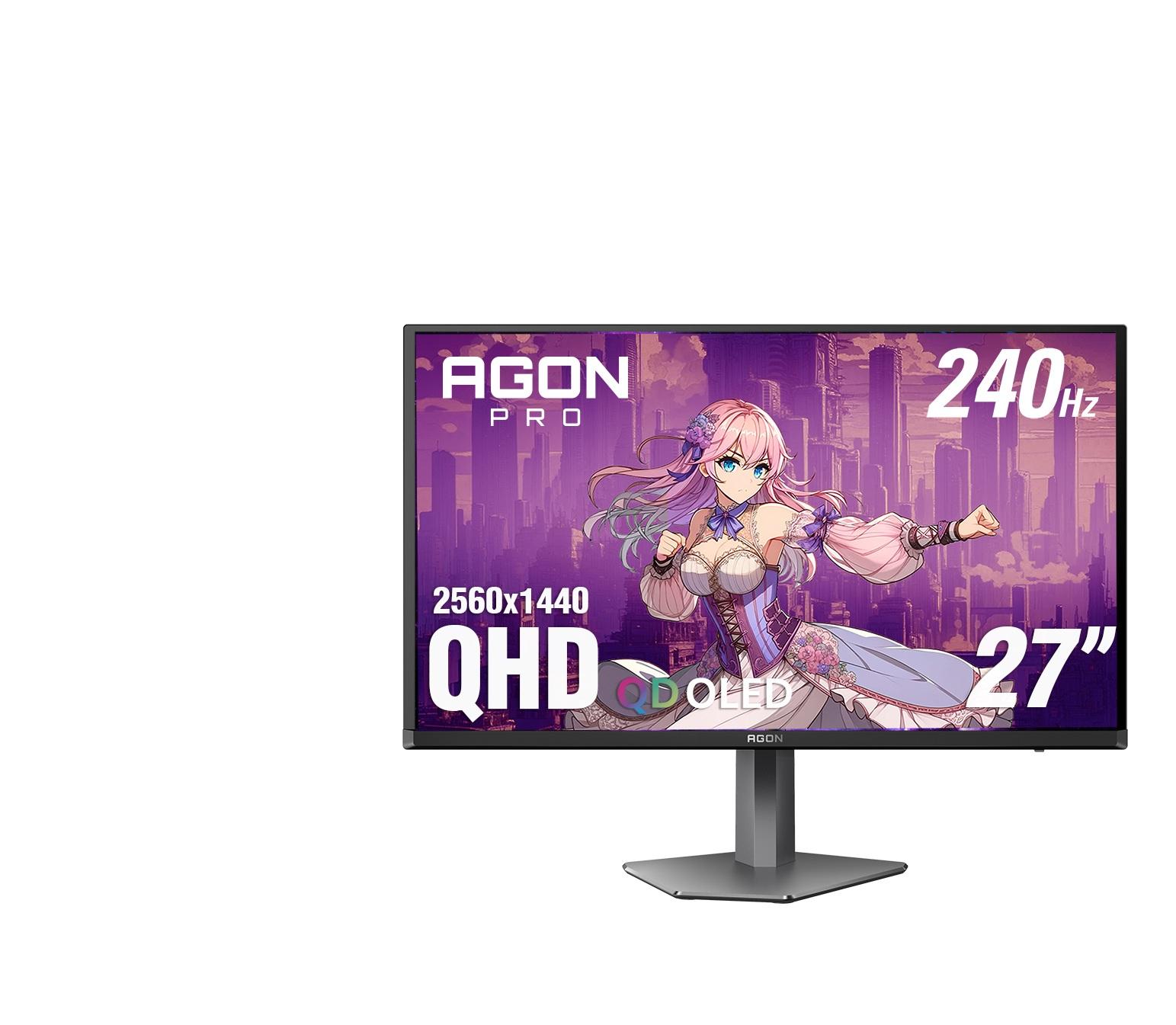
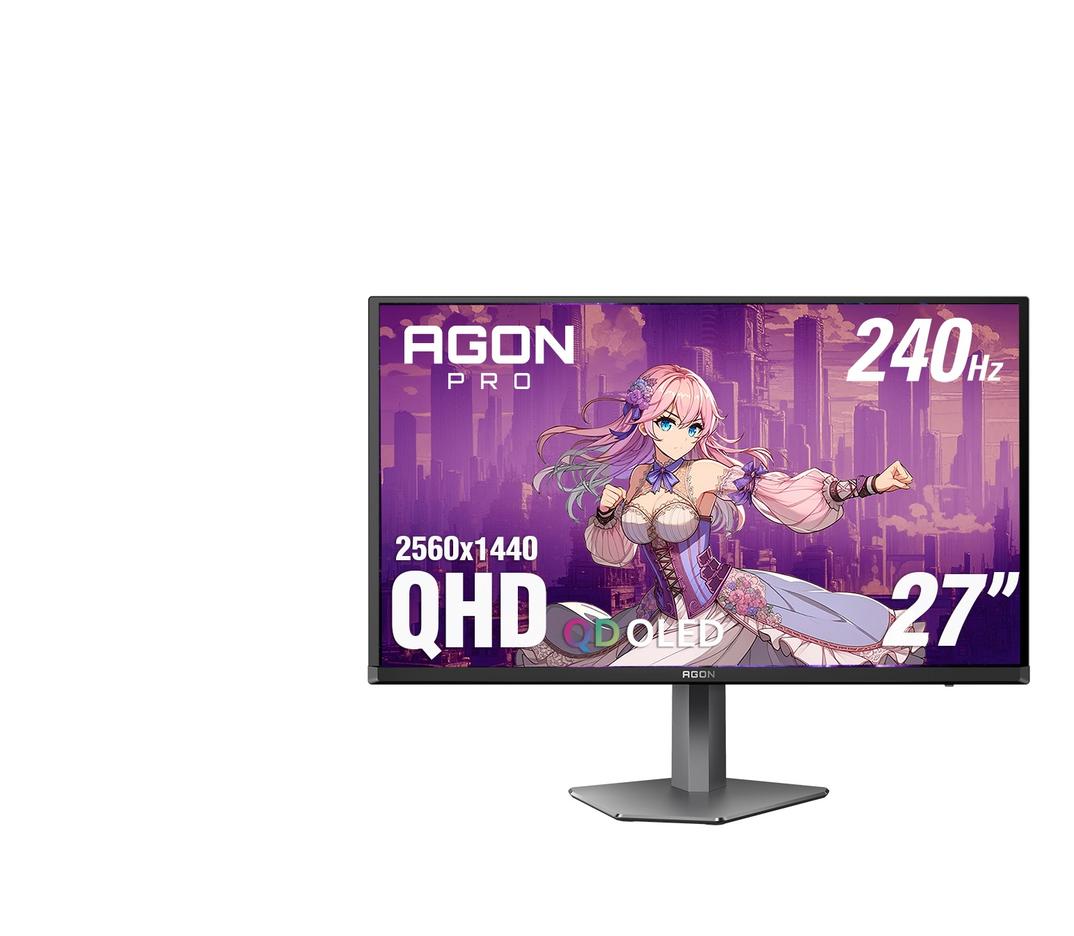
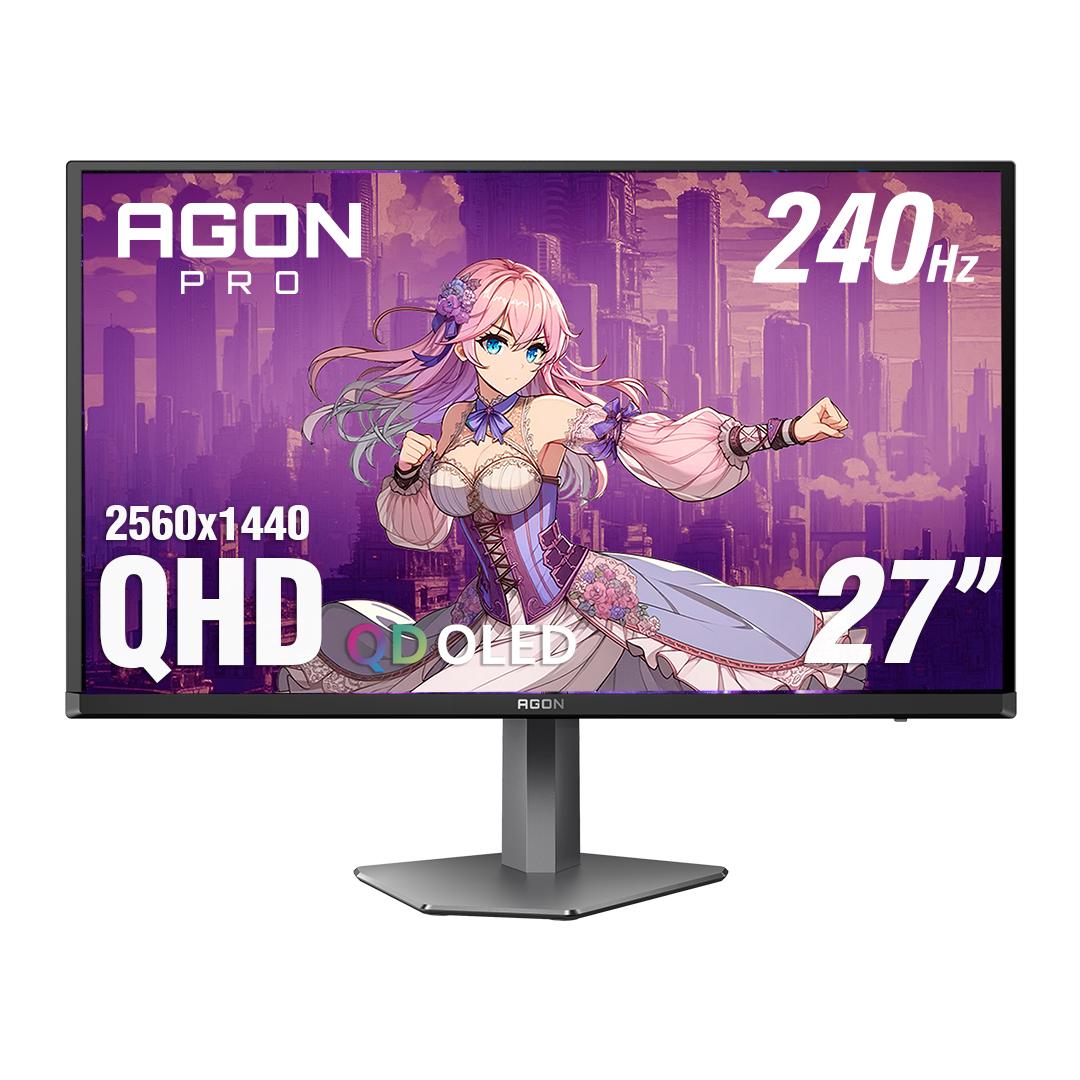
AOC has been quietly building one of the most competitive OLED lineups at any price point, and the AGON PRO series is where that effort is most visible. The AG276QZD2 and AG326UD sit at opposite ends of what QD-OLED can offer in 2025: one is a 27-inch 1440p panel tuned almost entirely around competitive gaming performance, the other a 32-inch 4K display built for the kind of experience where you actually want to slow down and look at things.
On paper, they share the same foundational DNA — QD-OLED panels, near-instant pixel response, wide color gamut, HDR True Black support. In practice, using one after the other feels like switching between completely different philosophies about what a monitor is for.
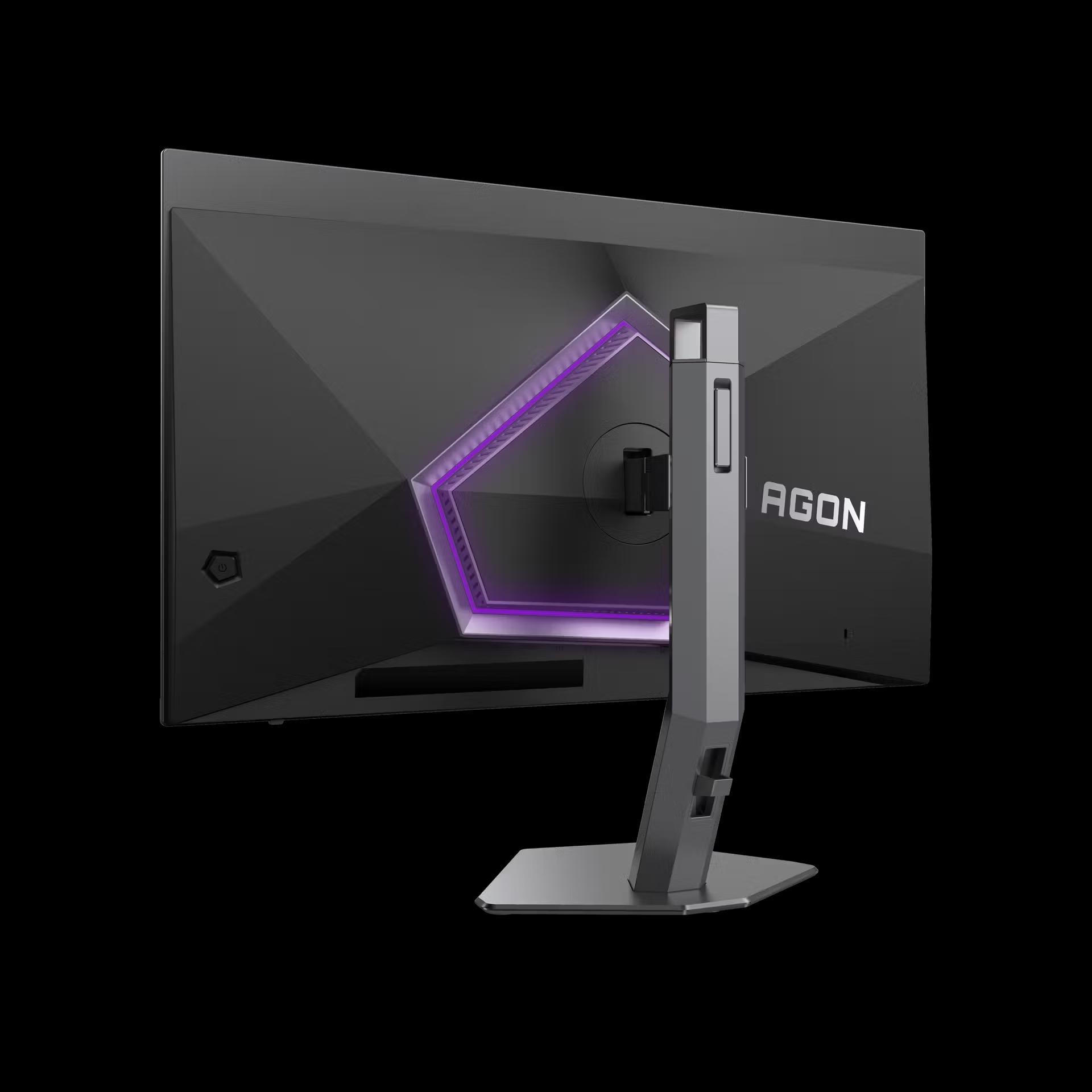
Both monitors follow AOC's established AGON PRO design language: dark matte finish, subtle RGB lighting along the back edge that diffuses against a wall rather than screaming at you, and a stand that actually does its job. Height adjustment, tilt, and swivel are all present — the kind of ergonomics that should be standard but still aren't on every monitor at this price. Neither display feels cheap when you're adjusting it.
The bezels are thin, the OSD controls are physical buttons rather than a joystick (a minor annoyance), and the cable management routing in the stand is functional if not elegant. Port selection on both includes DisplayPort 1.4, HDMI 2.0, and USB-A hub ports — adequate for most setups, though the lack of HDMI 2.1 on the 4K model is worth noting if you're considering console use at high refresh rates.
These are workhorses. They don't demand to be noticed the way some gaming monitors do, which is either a feature or a limitation depending on your taste.
| Monitor | AOC AG276QZD2 | AOC AG326UD |
|---|---|---|
| Screen Size | 27" | 31.5" |
| Resolution | 2560×1440 (QHD) | 3840×2160 (4K) |
| Panel Type | QD-OLED | QD-OLED |
| Refresh Rate | 240Hz–280Hz class | 165Hz |
| Response Time | ~0.03ms | ~0.03ms |
| HDR | True Black / HDR400 | True Black HDR400 |
| Use Case | Competitive gaming | Immersive gaming / productivity |
| GPU Demand | Moderate | Very high |
| Sweet Spot | FPS / esports | AAA / content creation |
This is where QD-OLED earns its price premium, and both monitors deliver it fully.
The fundamentals are the same on each panel: absolute black levels that no LCD technology can match, contrast that makes HDR content look genuinely different rather than just slightly brighter, and color volume that extends into saturated reds and greens in a way that standard OLED can't reach. Motion is effectively perfect — no ghosting, no overshoot, just clean movement at any speed.
Where they diverge is in what the panel size and resolution combination does to the overall image.
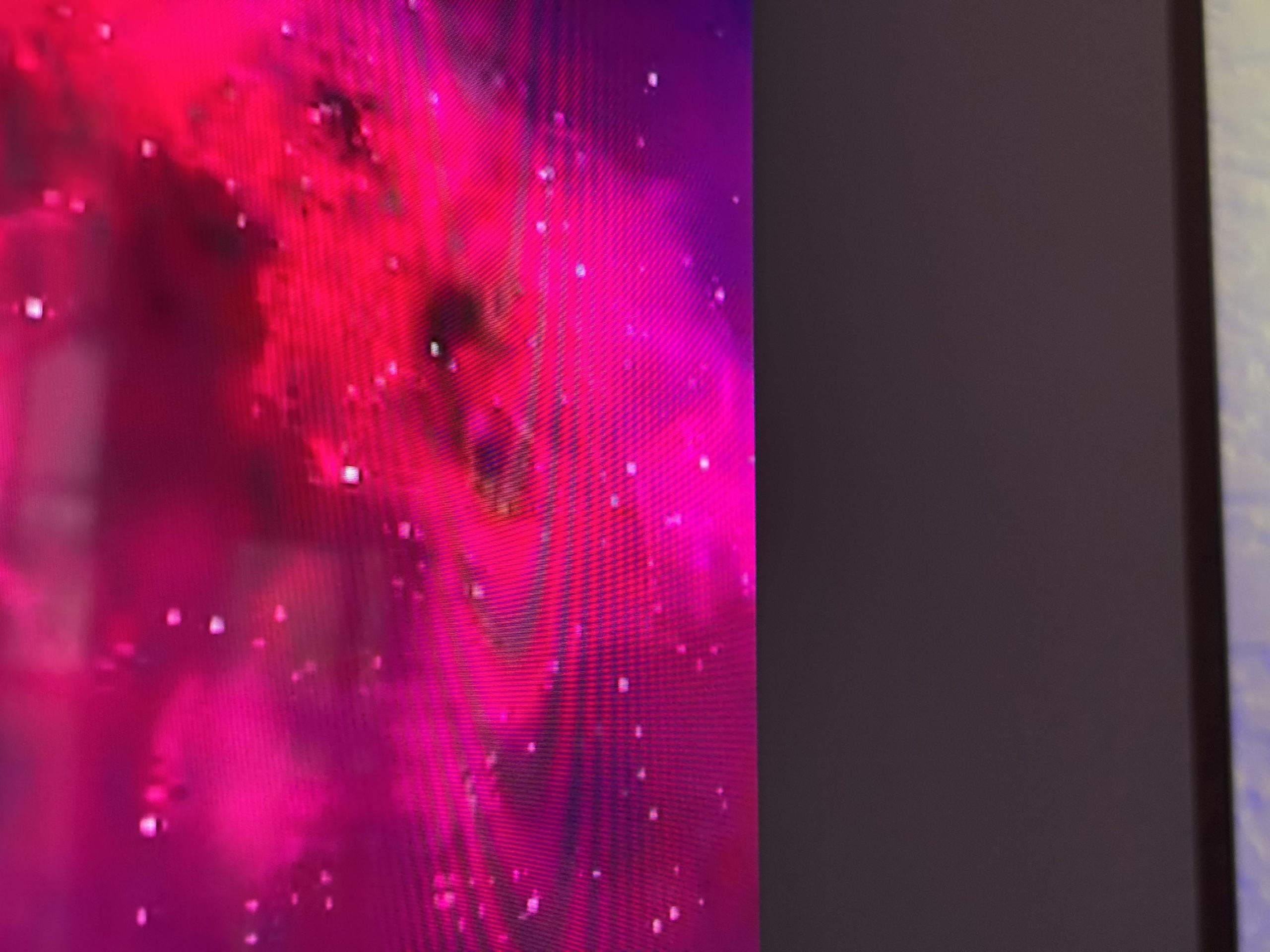
AG276QZD2: At 27 inches and 1440p, you're sitting at roughly 109 PPI. That's not a particularly dense display by modern standards, and the subpixel structure of QD-OLED — which uses a triangular arrangement rather than the standard RGB stripe — means text rendering isn't as clean as an equivalent IPS panel at the same resolution. It's manageable, and most people adjust to it quickly, but it's worth knowing going in. For gaming, though, none of that matters: the image is vivid, fast, and punchy in a way that genuinely changes how games look.
AG326UD: The jump to 4K at 32 inches pushes pixel density to around 140 PPI, and it makes a substantial difference. Text is significantly cleaner. UI elements read more crisply. Fine detail in games — foliage, distant geometry, texture work — resolves in a way that the 1440p panel simply can't reproduce. This is also where the QD-OLED color characteristics really shine: 4K HDR content on this panel, particularly with a capable GPU feeding it, is one of the better monitor experiences available at this price.
AG276QZD2
The 240Hz base refresh rate — with official overclock support pushing toward 280Hz — is the defining feature of this monitor. At these speeds, motion clarity is exceptional: fast-moving targets in shooters stay readable, screen edges stay clean during panning, and the combination of refresh rate and OLED response time produces a smoothness that most players notice immediately. Input lag is low, frame pacing is tight, and the 1440p resolution means mid-range GPUs can actually hit the frame rates that justify the refresh rate.
If competitive multiplayer is your primary use case — anything where reaction time and visual clarity under motion matter — this monitor does exactly what it's supposed to. It's not subtle about its priorities.
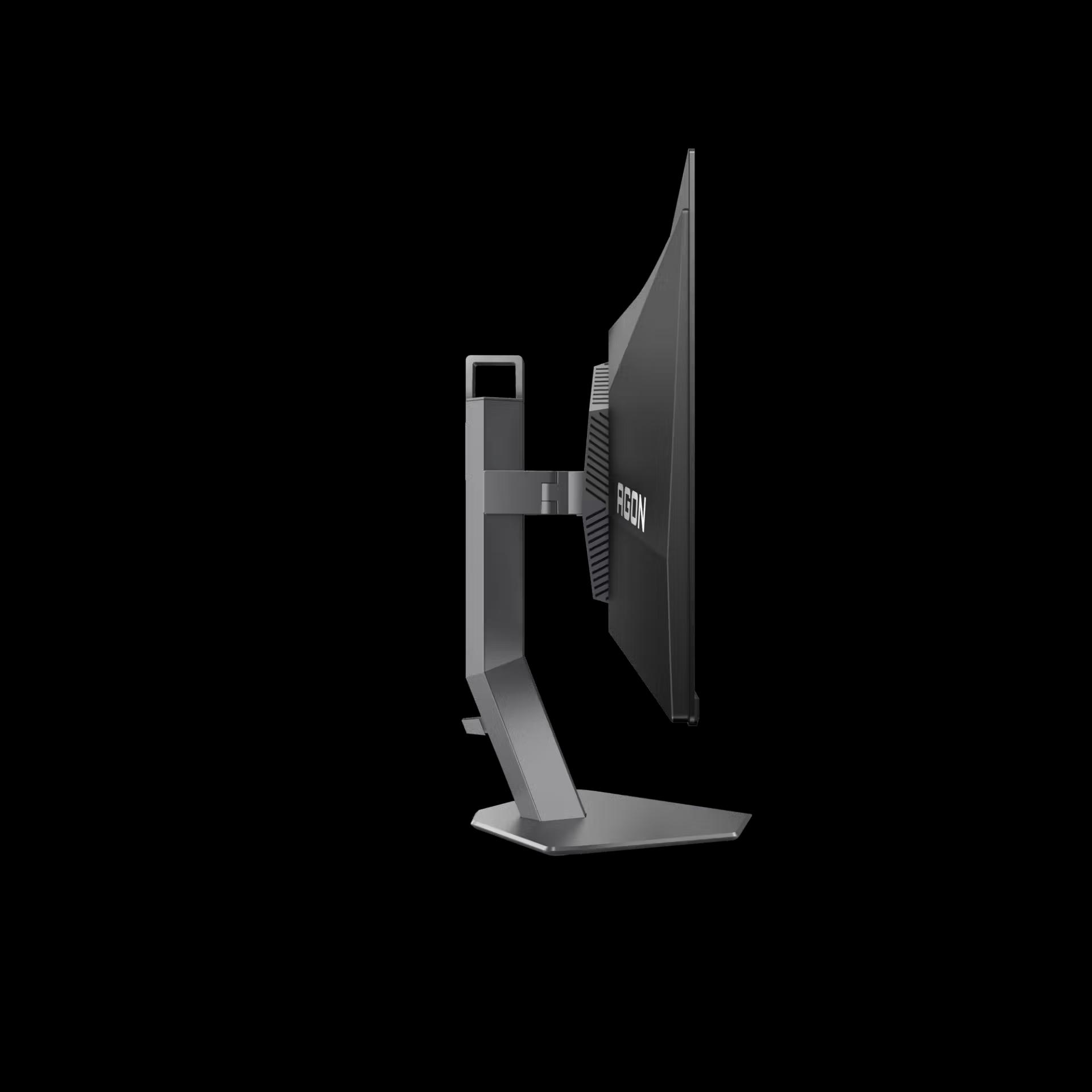
AG326UD
165Hz is still genuinely fast, and coming from a standard 60Hz or even 144Hz display you'll notice the improvement. But the AG326UD isn't making a case on refresh rate — it's making a case on presence. 32 inches of 4K OLED is a meaningful amount of screen, and in open-world or atmospheric games, that scale changes how the game feels. The kind of titles where you're meant to notice the environment — Elden Ring, Red Dead Redemption 2, Cyberpunk 2077 — gain something from this display that smaller monitors don't provide in the same way.
The tradeoff is GPU demand. Feeding a 4K display at 165Hz in modern titles takes serious hardware. Without a current-generation GPU, you'll either be rendering below native resolution or accepting frame rates that don't use the panel's full capability. That's not a knock on the monitor — it's just the reality of 4K gaming in 2025.
This is where the AG326UD builds a stronger case than its specs alone suggest.
For content work — video editing, photo editing, writing, general multi-window desktop use — 4K at 32 inches is a materially different working environment than 1440p at 27. You can fit more on screen without scaling, UI elements are sharper, and the OLED color accuracy makes it legitimate for color-sensitive work. This isn't a specialty reference display, but it's good enough that you're not compromising when doing creative work on it.
The AG276QZD2, by contrast, is less versatile outside of gaming. It's not a bad productivity display, but the lower resolution limits how much you can comfortably fit on screen, and the text rendering — while fine — doesn't have the crispness that makes long reading or writing sessions genuinely comfortable.
Both panels share the same category-level limitations. Burn-in is a real concern with static UI elements — desktop taskbars, browser chrome, persistent HUD elements in games. AOC includes pixel-shifting and refresh features in the firmware, and modern QD-OLED panels have improved substantially in this regard, but it's not a non-issue. If you run a static desktop setup for twelve hours a day, you should think about whether OLED is the right choice.
Peak brightness in SDR is moderate compared to high-end mini-LED panels. HDR content looks excellent because of the contrast baseline, but if you're in a very bright room and want raw nit output, these panels aren't the answer.
The choice comes down to what the monitor is primarily doing.
If gaming — specifically competitive, fast-paced gaming — is the dominant use case and the monitor is essentially a dedicated gaming display, the AG276QZD2 is the stronger choice. The performance headroom is real, the 1440p resolution is GPU-friendly, and the responsiveness at high refresh rates is something you'll notice every session.
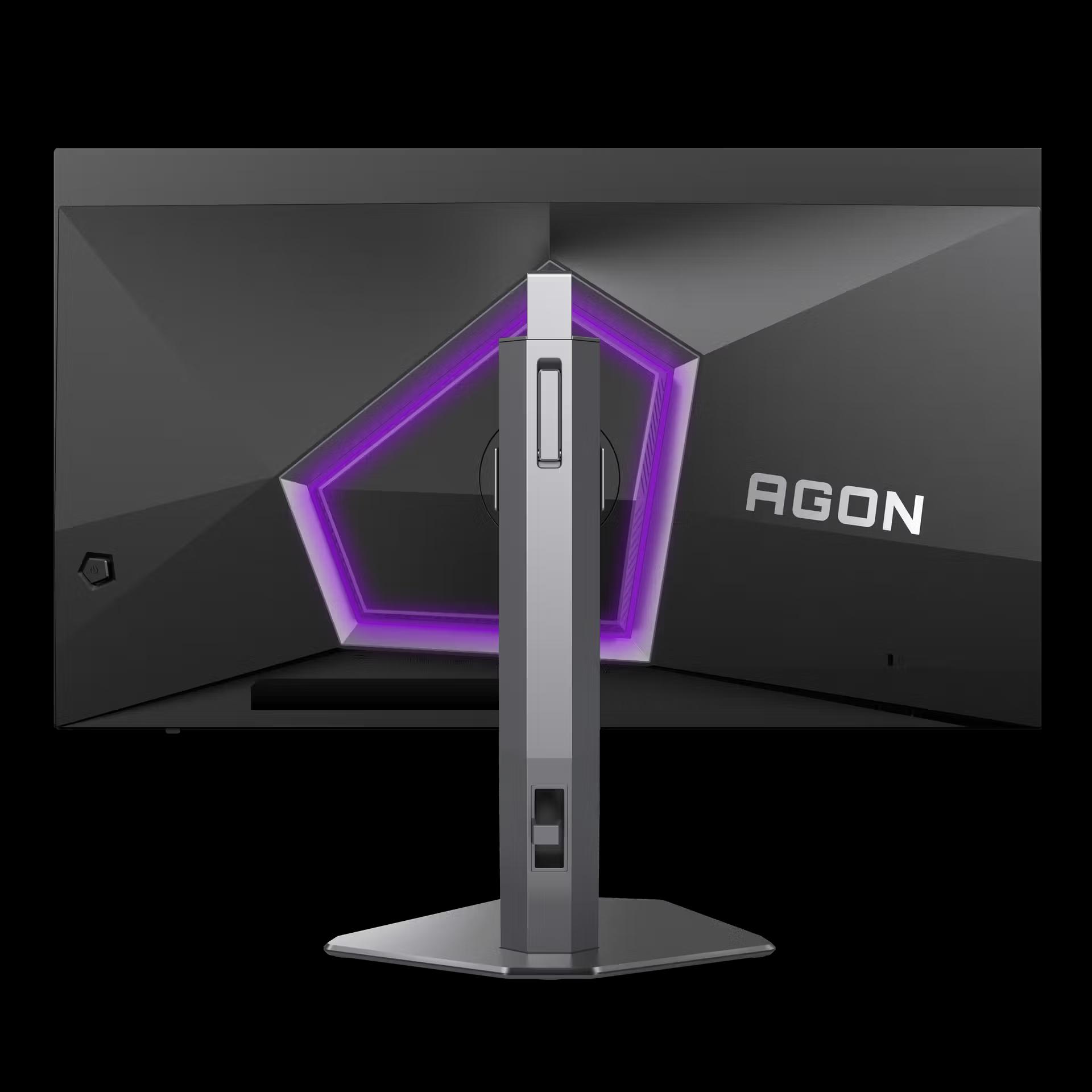
If the monitor is the main display for everything — gaming, work, content consumption, creative tasks — the AG326UD's 4K resolution and larger canvas pay dividends that compound across every use. The 165Hz ceiling is a genuine tradeoff, but for anything outside of competitive multiplayer, it's rarely the limiting factor.
Both are excellent. Neither is a compromise on OLED fundamentals. The question is just which set of tradeoffs you'd rather live with.
For advertising please contact the editor at [email protected]


Privacy Policy
Terms and Conditions - Affiliate Policy
Home Security
© Copyright 2008-2026.
11816 Inwood Rd #1211, Dallas, TX 75244