

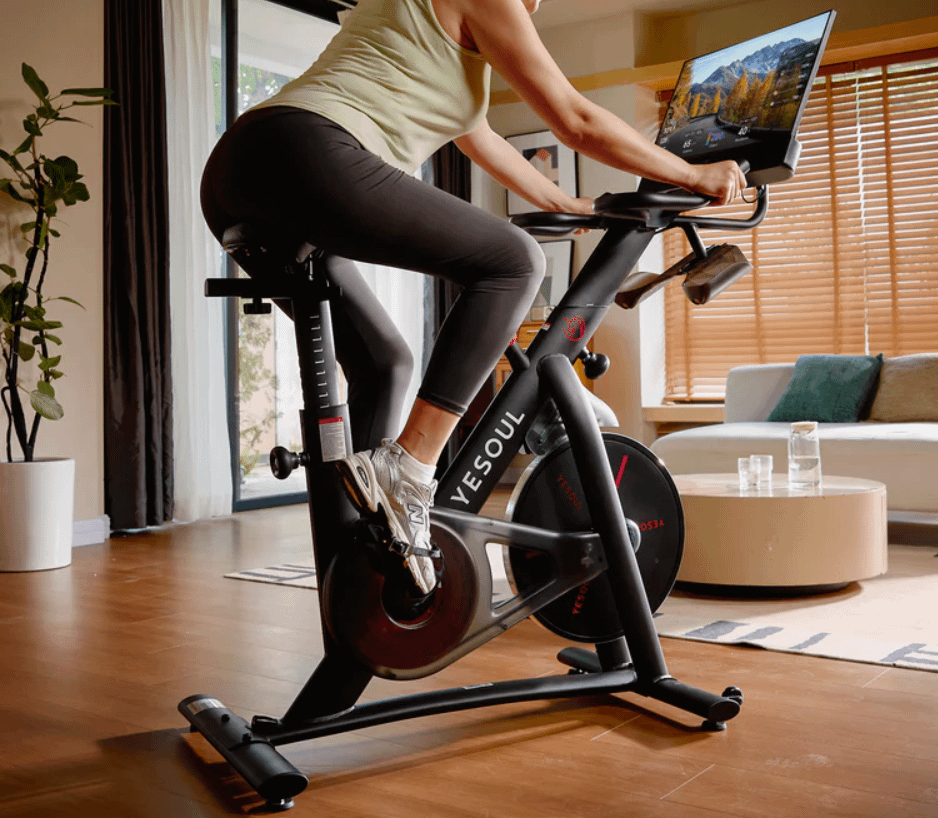

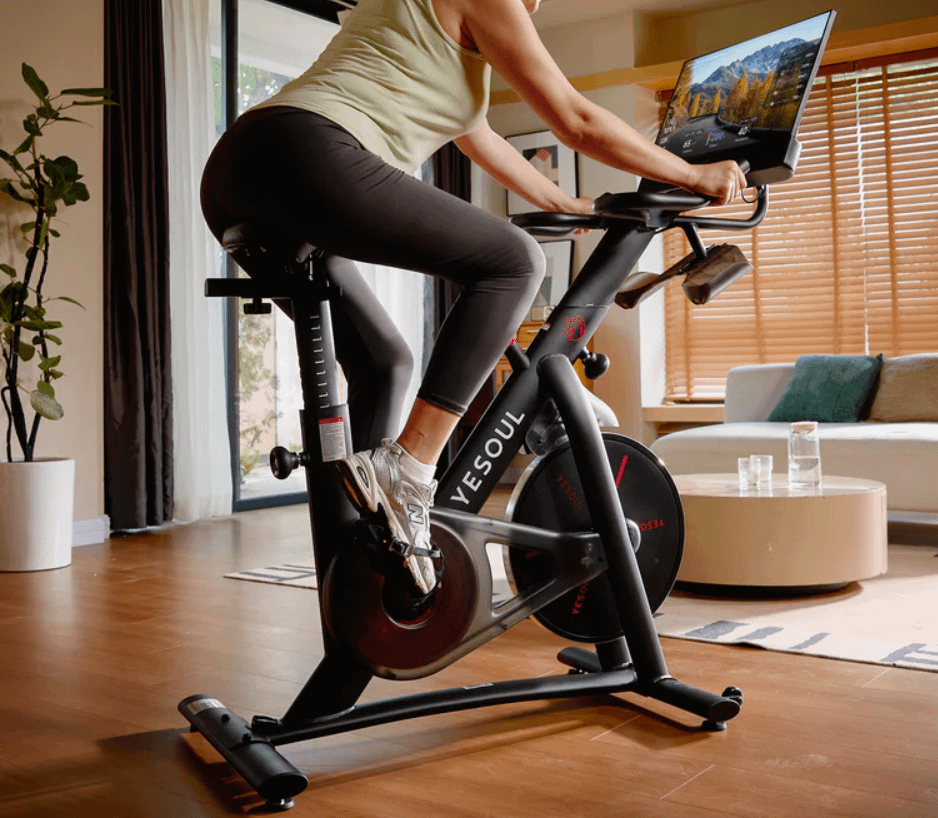
The home fitness market has a little secret: you don't need to spend $2,500 on a Peloton to get a premium indoor cycling experience. After putting the Yesoul G1M Plus through its paces, I can confidently say this $500 bike (currently on sale for as low as $400) delivers about 80% of what Peloton offers for roughly 20% of the cost. The math alone makes it interesting, but the execution is what makes it genuinely impressive.
The Yesoul G1M Plus arrives in a substantial package weighing just over 90 pounds. You'll want a second person to help maneuver the box into position, but the assembly itself is a solo-friendly affair if you're reasonably handy. The included instructions are clear and thorough, walking you through each step with simple hex keys and a screwdriver.
I won't sugarcoat it: this isn't an IKEA nightstand. The assembly took me about two hours working alone, and while everything was straightforward, you're dealing with a heavy piece of exercise equipment that demands attention to detail. Most users report completing assembly in about 25 minutes with the included tools, though I suspect those estimates come from people who've assembled fitness equipment before. Give yourself an afternoon, follow the instructions carefully, and you'll be fine.
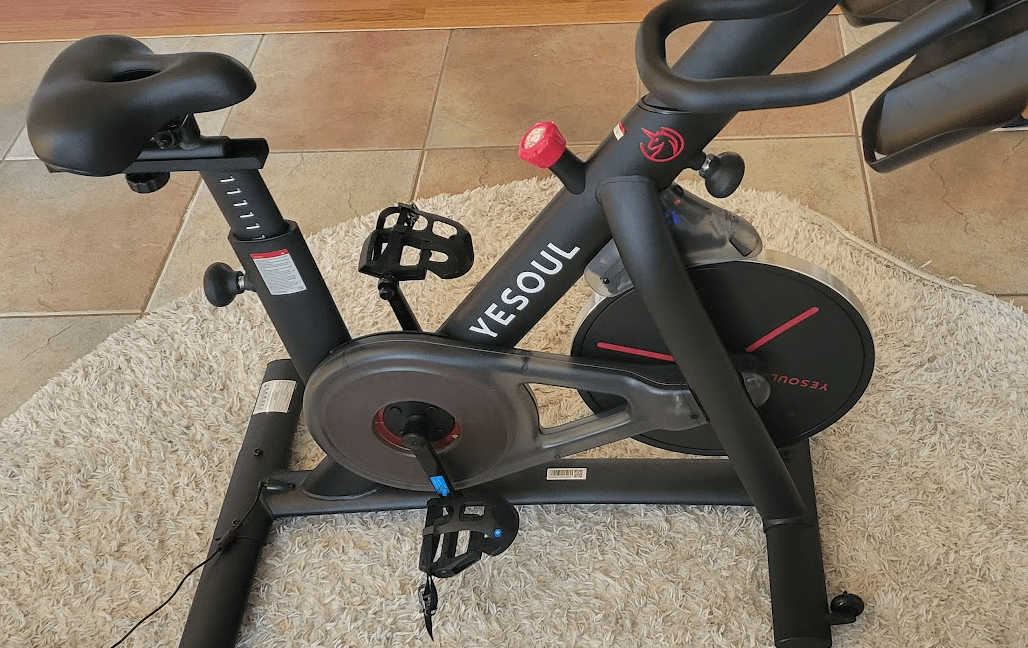
Here's where the Yesoul G1M Plus immediately separates itself from other budget alternatives. The frame is constructed from commercial-grade steel with a piano paint finish that resists scratches and looks genuinely premium. The triangular H-shaped base design creates exceptional stability during intense intervals or when you're standing up during climbs. This thing doesn't wobble or shift, even when you're really pushing hard.
The steel tolerances are tight, the welds are clean, and everything feels like it was engineered to last rather than assembled to hit a price point. The build quality is comparable to bikes costing three times more, and after using it regularly, I have zero concerns about long-term durability. The belt drive system (more on that in a moment) is enclosed behind a protective chain guard, which proved particularly valuable in my household with kids around. It's a small detail that shows thoughtful design.
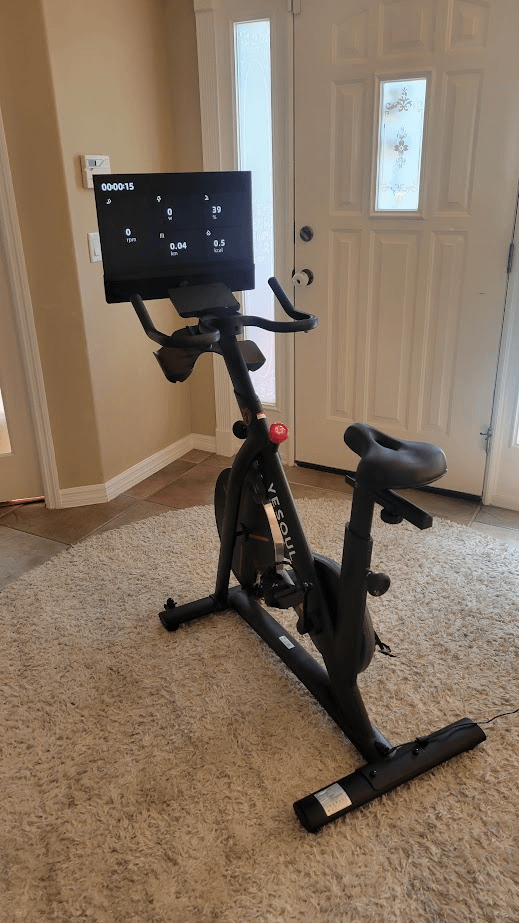
The bike supports riders up to 265 pounds and accommodates heights from 4'9" to 6'2". At 6'2" myself, I found the adjustability fit my frame just fine. The seat moves both vertically and horizontally, as do the handlebars, giving you plenty of range to dial in your perfect position. Very tall riders above 6'3" may find the fit slightly limiting, so if you're particularly tall, you'll want to factor that into your decision.
The 21.5-inch 1080P Full HD display is one of the bike's standout features, and not just because of its size. Yesoul made a crucial decision that Peloton oddly missed: they used a matte finish instead of glossy glass. This matte display is significantly easier to see compared to Peloton's glossy screen, especially in bright rooms. If your workout space has windows or overhead lighting, you'll appreciate this choice immediately. No more squinting at reflections or adjusting blinds mid-ride.
The screen rotates a full 360 degrees, which transforms the bike from a single-purpose cycling machine into a versatile fitness hub. Spin it around for yoga, strength training, or stretching sessions. The display shows real-time metrics including watts (a measure of your power output), RPM (revolutions per minute, or how fast you're pedaling), distance traveled, workout time, and estimated calories burned. This data appears even without a phone connected, which is great for quick rides when you just want to hop on and go.
My only criticism here is a missed opportunity: there's no way to customize which metrics appear or how they're displayed. You get the standard overlay and that's it. For most people this won't matter, but data enthusiasts who want to track specific metrics prominently might find this limiting.
The 6W dual speakers with enhanced bass deliver what I'd call "adequate" sound quality. They're perfect for following along with instructor cues in classes, listening to podcasts, or watching YouTube videos. Everything comes through clearly and you can definitely hear the music during workouts.
However, let's be realistic about what six watts of speaker power can deliver. This isn't going to rock your socks off or provide the immersive audio experience that serious music lovers might want. The bass is present but not particularly powerful. If you're someone who gets motivated by thumping bass lines during HIIT intervals, you'll probably want to connect Bluetooth headphones.
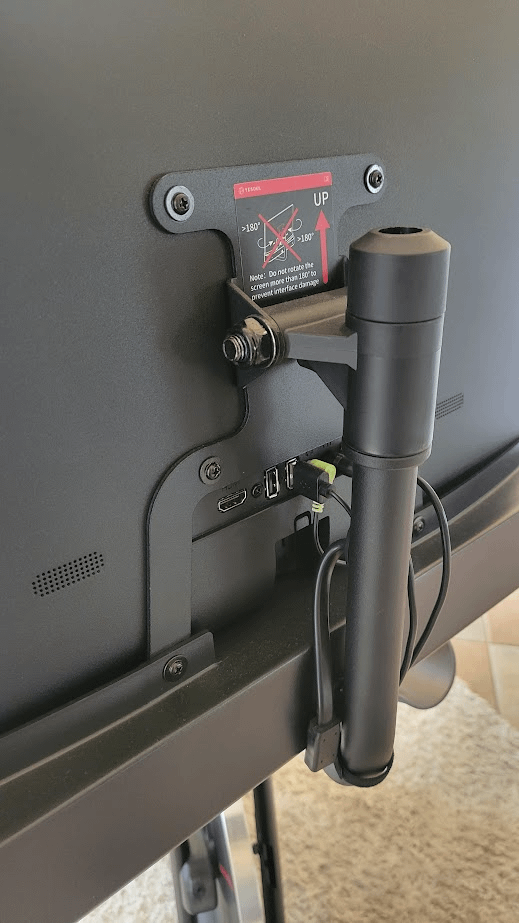
The audio controls deserve praise though. A single button on the soundbar switches seamlessly between Bluetooth mode and screen input. No fumbling through menus or holding buttons for three seconds. Just press and go. It's the kind of thoughtful user interface design that makes daily use pleasant rather than frustrating.
This is where the Yesoul G1M Plus absolutely nails it. The free, unlimited screen mirroring capability is both the bike's secret weapon and its smartest design choice. Using the included HDMI cables and adapters, you can connect virtually any smartphone or tablet and instantly mirror content to the big screen.
I tested this with both my Samsung Galaxy S21 and my wife's iPhone 15 Pro. Both connected instantly without any pairing headaches or compatibility issues. The moment you plug in the cable, your phone's display appears on the bike's screen with the bike's real-time data overlaid at the bottom. It's genuinely plug-and-play, which is increasingly rare in the world of technology.
Here's why this matters more than you might think: you're not locked into any ecosystem. Want to use the official Peloton app? Go ahead. Prefer Zwift's gamified virtual riding? No problem. Feel like watching Netflix while doing a recovery ride? Fire it up. Want to follow free YouTube cycling classes? They're all there. This approach can save you $2,096 in just the first year compared to a Peloton Bike+ with membership.
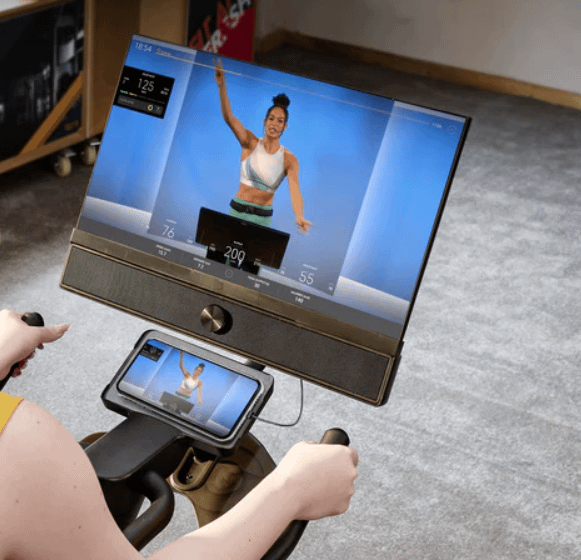
The only technical caveat is that Android phones need DisplayPort support for screen mirroring to work. Most modern Android devices include this, but it's worth verifying if you have an older phone.
The actual riding experience is where budget alternatives typically fall apart, but the Yesoul G1M Plus delivers here too. The magnetic resistance system provides 100 distinct levels of difficulty, adjusted via a traditional resistance knob. Magnetic resistance means there's no friction pad wearing against the flywheel. Instead, magnets move closer or further from the flywheel to increase or decrease resistance, resulting in whisper-quiet operation and virtually zero maintenance.
The silence is genuinely impressive. You can take a 6 AM ride without waking anyone in the house, or hop on for a lunch break ride while others are working or reading nearby. The belt drive system contributes to this quiet operation. Unlike traditional chain drives, belts don't require lubrication and produce minimal noise.
The cast iron and aluminum flywheel creates smooth, consistent momentum that feels far more premium than the price tag would suggest. There's no jerky motion or dead spots in the pedal stroke. The resistance adjusts progressively as you turn the knob, giving you fine control over workout intensity. During high-intensity intervals, the bike remains rock solid without any wobbling or shifting.
One feature the Yesoul lacks compared to premium options like the Peloton Bike+ is automatic resistance adjustment. On Peloton's top model, the bike automatically changes resistance to match instructor cues during classes. The Yesoul requires manual adjustment, which means you need to reach down and turn the knob when the instructor calls for resistance changes. This isn't a dealbreaker, but it's worth noting if you're comparing features directly.
The companion Yesoul Fitness app offers an extensive library of content including live classes, on-demand cycling sessions, scenic virtual rides where the visuals sync to your pedaling speed, strength training, yoga, stretching routines, and even cash-incentivized challenges to keep you motivated. The variety is genuinely impressive for an included app.
The interface works well enough, and there's a large volume of content that justifies the optional subscription price if you choose to pay for premium features. The virtual scenic rides are particularly cool, taking you through various locations worldwide with the video speed matching your effort.
However, English clearly wasn't the primary language during app development. You'll encounter occasional awkward phrasing or menu labels that require a second of mental translation. Nothing is incomprehensible, and everything remains usable, but the experience isn't quite as polished as apps from established Western fitness companies. If you're someone who gets frustrated by imperfect user interfaces, this might bother you more than it bothered me.
The important thing to remember is that you're never forced to use the Yesoul app. Thanks to screen mirroring, you can ignore it entirely and use whatever fitness platform you prefer. The app represents a nice option to have rather than a requirement you're stuck with.
Let's talk about money, because the financial case for the Yesoul G1M Plus is compelling to the point of being almost absurd. The bike regularly sells for $499.99 (already marked down from $899.99), and with discount codes it frequently drops to $399.99. This gets you the complete bike with screen, speakers, and all necessary cables.
Compare this to Peloton's current pricing. The basic Peloton Bike costs $1,695, while the Bike+ runs $2,695. Both require Peloton's All-Access Membership at $44 per month to access classes, bringing your first-year cost to approximately $2,200 for the basic Bike or $3,200 for the Bike+.
With the Yesoul, you could use completely free content on YouTube and spend just $400 total. Or subscribe to the official Peloton app for $12.99 monthly and spend roughly $560 in year one. Using the Yesoul G1M Plus with the Peloton app saves $2,096 compared to buying a Peloton Bike+ with membership in just one year.
That's not a small difference. That's vacation money. That's a significant portion of an emergency fund. That's real savings that compounds when you consider the ongoing subscription costs year after year.
To be fair, there are legitimate reasons Peloton commands its premium pricing. The Peloton Bike+ features a larger 23.8-inch touchscreen, automatic resistance adjustment, a more refined app experience with deeper analytics, premium Sonos-tuned speakers, and arguably better industrial design. The Peloton ecosystem is more polished and integrated, with seamless leaderboards, detailed performance tracking, and a massive library of consistently high-quality classes.
The Yesoul's speakers are merely adequate rather than impressive. The included app has translation quirks. There's no automatic resistance. The screen is smaller. These aren't insignificant differences if you're someone who values premium features and refined user experiences.
But here's the crucial question: are those upgrades worth an additional $2,000 to $2,500? For some people, absolutely. For many others, probably not.
The Yesoul G1M Plus represents exactly the kind of product that makes established premium brands nervous. It takes the core functionality that actually matters for effective workouts and delivers it at a fraction of the cost, while adding smart features like free screen mirroring that arguably make it more flexible than more expensive alternatives.
The frame quality is excellent. The Silent magnetic resistance and belt drive feel genuinely premium. The matte screen works brilliantly in bright rooms. The 360-degree rotation adds versatility. Most importantly, the free screen mirroring gives you complete freedom to choose your content without subscription lock-in.
Is this bike perfect? No. The audio is merely serviceable. The Yesoul app could use polish. Data display customization is absent. Riders over 6'3" might find the fit limiting. But these criticisms feel minor when weighed against what you're getting for $400 - $500.
If you're a fitness enthusiast who wants premium ride quality without premium pricing, a family needing workout versatility, or anyone who values app flexibility over ecosystem integration, the Yesoul G1M Plus deserves serious consideration. It's not trying to be an exact Peloton clone. It's trying to be something smarter: a high-quality bike that gives you the freedom to work out however you want, with whatever content you prefer, without breaking the bank.
At this price point, it succeeds brilliantly.
Pros:
Cons:
Price: $499.99 (regularly on sale for $399.99 with codes) Includes: Bike, 21.5" HD screen, 6W speakers, power adapter, HDMI cables/adapters, 1-year warranty, 30-day returns





Privacy Policy
Terms and Conditions - Affiliate Policy
Home Security
© Copyright 2008-2026.
11816 Inwood Rd #1211, Dallas, TX 75244