

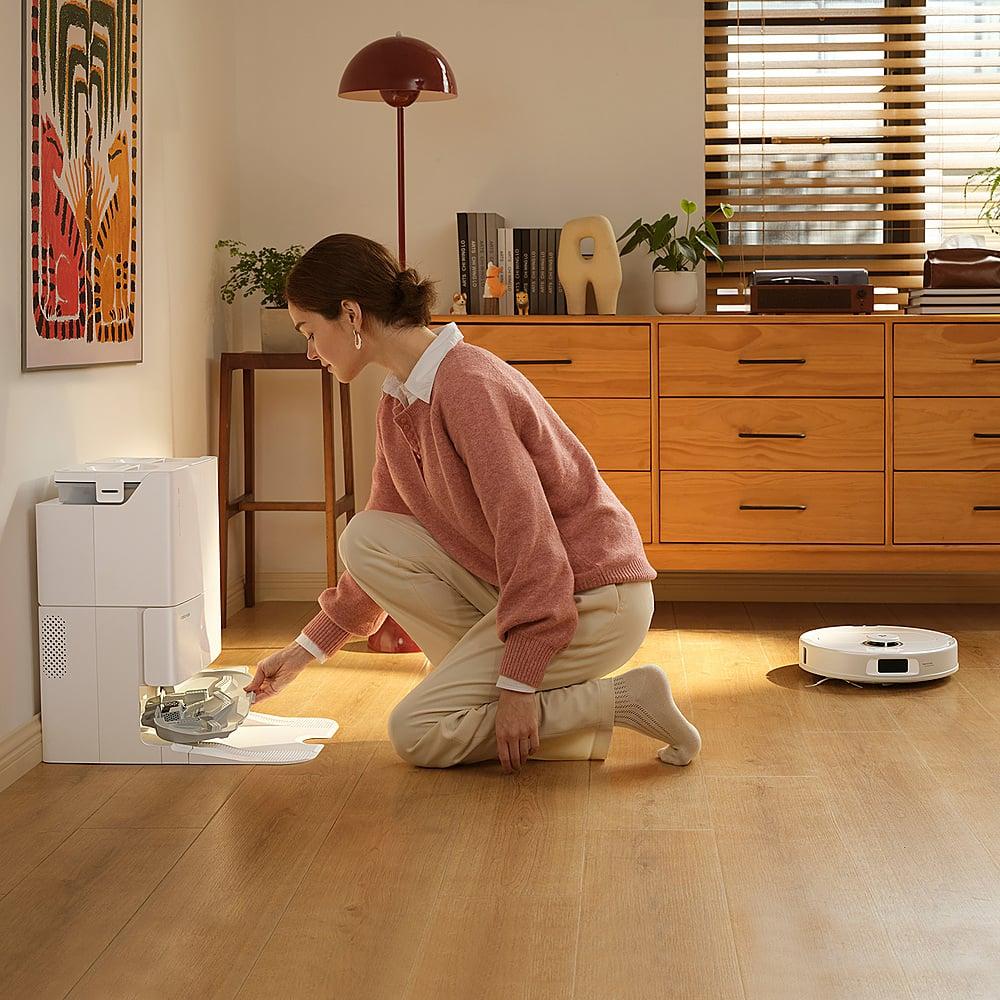
The world of robot vacuums has evolved dramatically over the past few years, transforming from simple disk-shaped cleaning gadgets that bumped around randomly into sophisticated home automation systems. Today's robot vacuum and mop combos represent the cutting edge of this evolution, promising to handle both your dust bunnies and sticky kitchen spills without any human intervention.
But here's the challenge: not all robot vacuum and mop combos are created equal. Some excel at powerful suction but stumble when it comes to mopping. Others deliver impressive wet cleaning but compromise on vacuuming performance. This creates a real dilemma for buyers trying to find the sweet spot between performance and value.
Two models that perfectly illustrate this divide are the MOVA E30 Pro Plus and the Roborock Qrevo Pro. At the time of writing, these robots sit at different price points and take fundamentally different approaches to automated floor cleaning. Understanding their strengths and weaknesses can help you make a smarter buying decision.
Before diving into specifics, it's worth understanding what separates good robot vacuums from great ones. The most important performance metrics aren't always obvious from marketing materials.
Suction power, measured in Pascals (Pa), tells you how much air pressure the vacuum can generate. Higher numbers generally mean better debris pickup, especially on carpets where particles get embedded in fibers. However, raw suction isn't everything—brush design, airflow patterns, and how well the vacuum maintains contact with surfaces all play crucial roles.
Navigation intelligence determines whether your robot cleans efficiently or wastes time bumping into furniture. Modern robots use LiDAR (Light Detection and Ranging)—essentially laser-based radar that creates detailed room maps. This allows them to clean in straight, organized lines rather than wandering aimlessly.
Mopping effectiveness is where things get tricky. Many "mopping" robots simply drag a damp cloth across your floor, which barely qualifies as cleaning. True mopping requires water flow control, scrubbing action, and ideally some form of pressure or agitation to tackle stuck-on messes.
Automation level has become increasingly important as these devices get more sophisticated. The best robots can empty their own dustbins, refill their water tanks, clean their mop pads, and even dry them to prevent mold—all without human intervention.
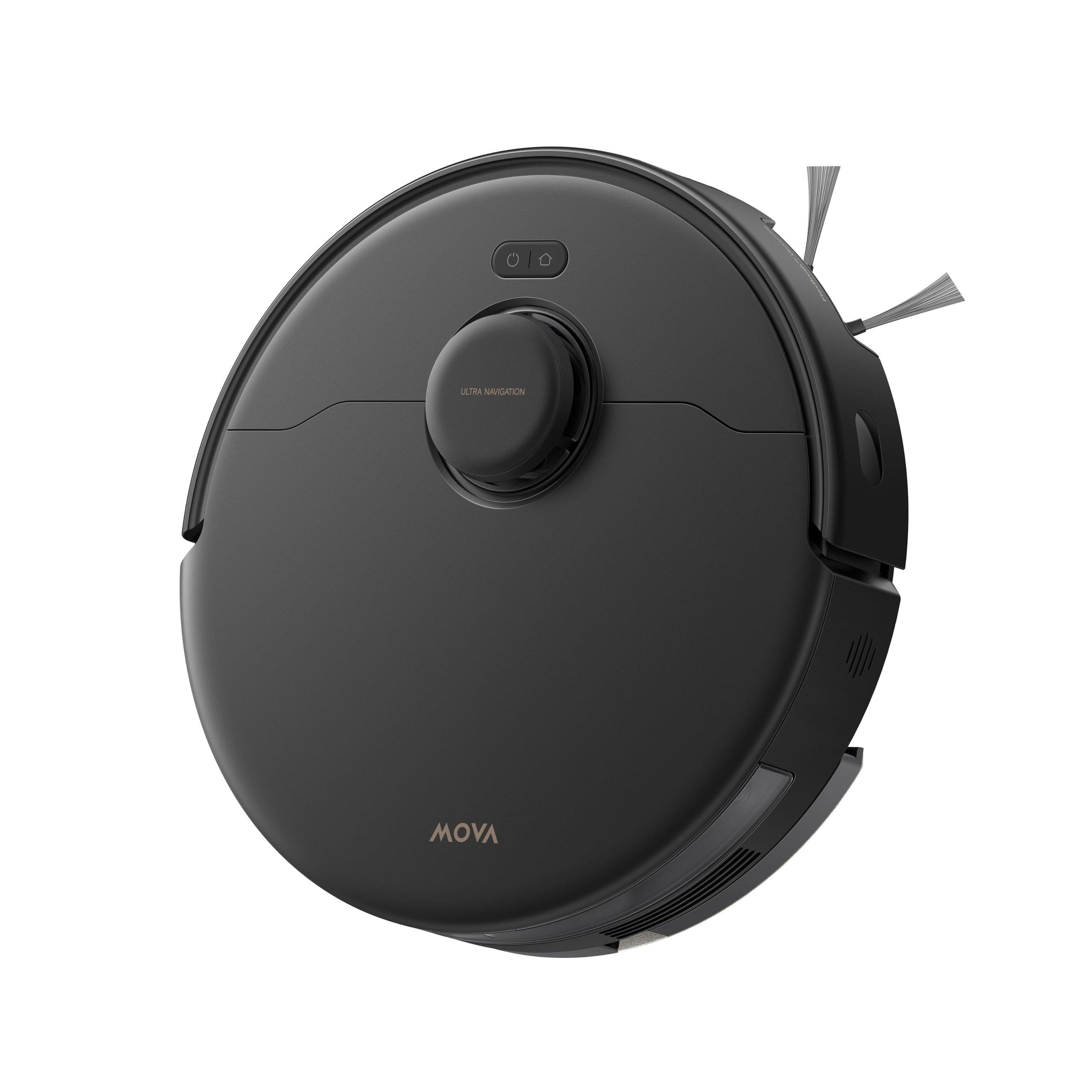
The MOVA E30 Pro Plus, released in 2024, represents what we'd call the "power-first" approach to robot cleaning. MOVA, a newer player in the robotics space, focused on delivering maximum vacuuming performance at a competitive price point. At the time of writing, it typically costs significantly less than premium alternatives while delivering impressive raw suction power.
The Roborock Qrevo Pro, also released in 2024, embodies the "comprehensive automation" philosophy. Roborock, established as a premium brand since their market entry around 2016, has consistently pushed the boundaries of what robot vacuums can do autonomously. The Qrevo Pro represents their latest thinking on how mopping and vacuuming should work together seamlessly.
These different approaches create distinct advantages and limitations that become apparent once you understand how each system actually works.
The most striking difference between these robots lies in their suction specifications. The MOVA E30 Pro Plus generates up to 19,000 Pa of suction pressure through its TurboForce 6 motor—a figure that's genuinely impressive even compared to premium models. To put this in perspective, many high-end robot vacuums max out around 7,000-12,000 Pa, making the MOVA's output nearly double what you'd typically expect.
This raw power translates into real-world benefits, particularly on carpeted surfaces. The MOVA E30 Pro Plus includes an ultrasonic carpet sensor—a technology that uses sound waves to detect when the robot moves from hard flooring onto carpet. When this happens, the vacuum automatically cranks its suction to maximum power, ensuring deep cleaning of embedded dirt and pet hair.
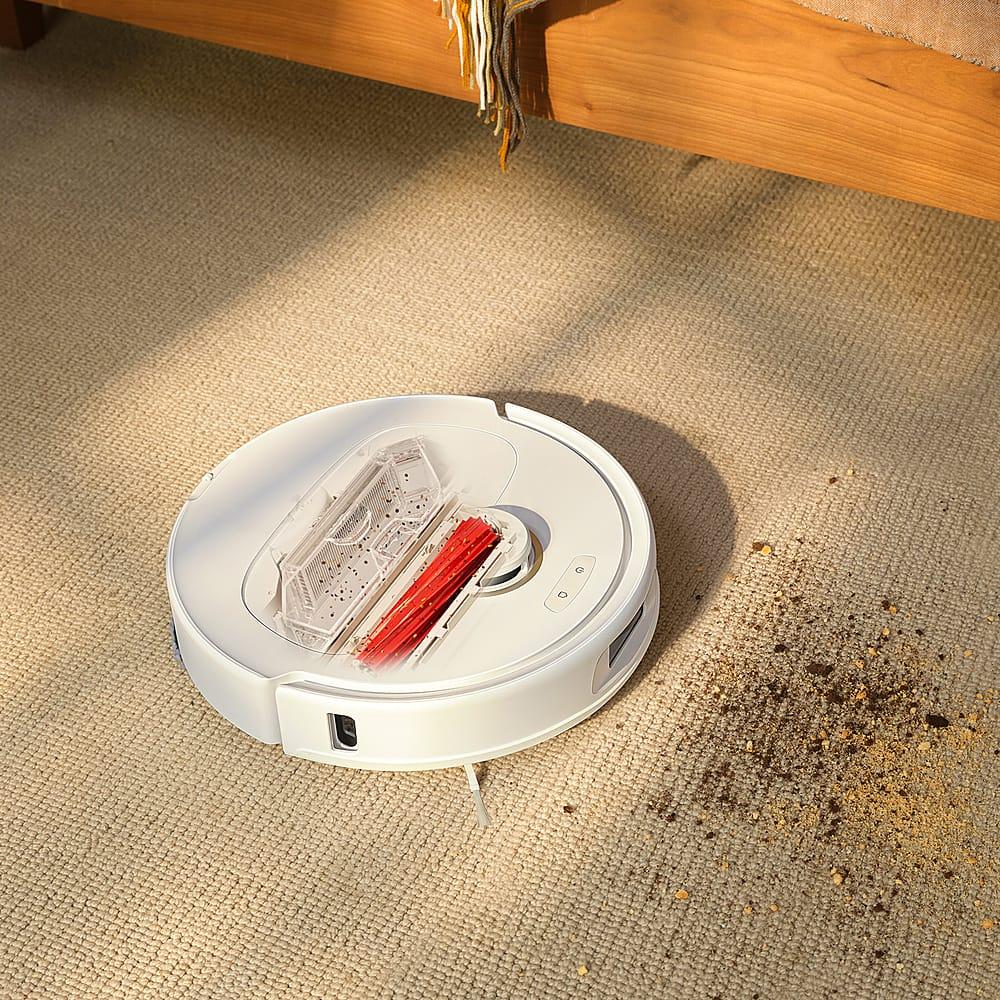
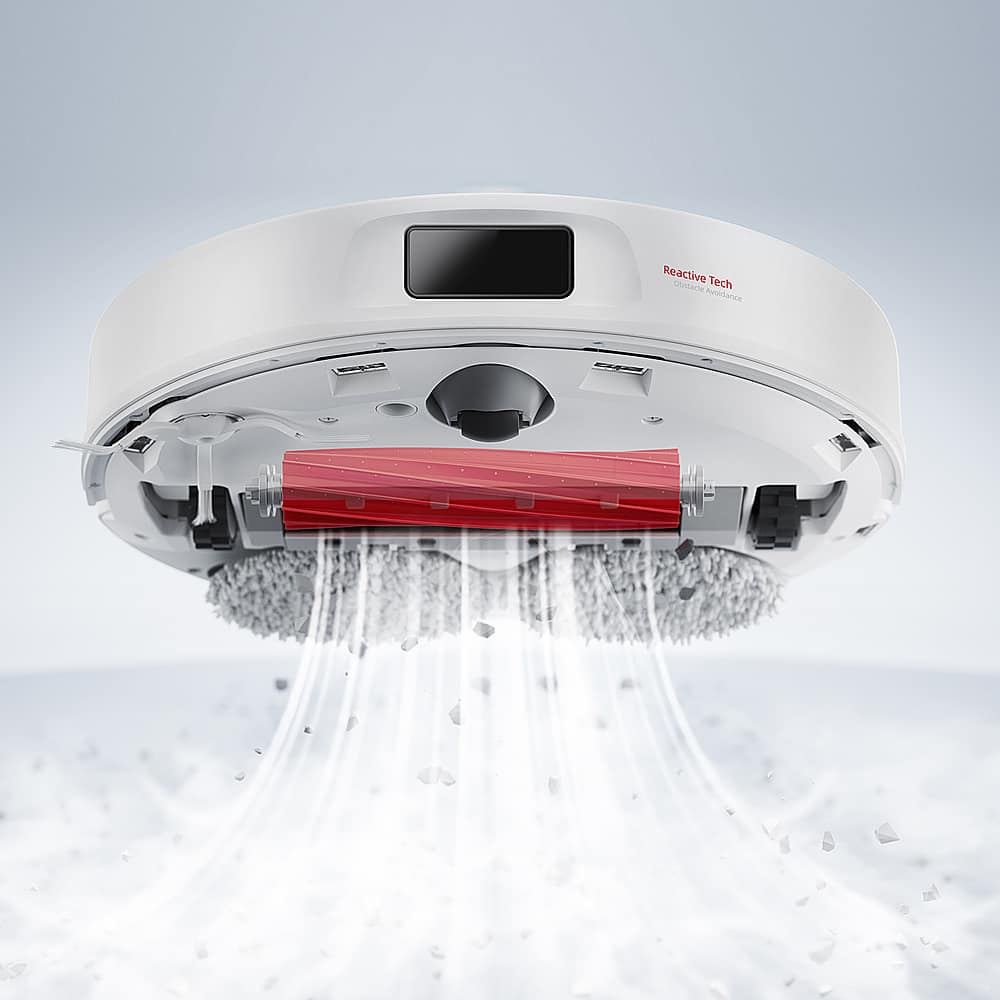
The anti-tangle TroboWave™ DuoBrush system represents MOVA's approach to the age-old problem of hair wrap. By combining TPU (a flexible plastic) and traditional bristles, the brush design channels hair and debris directly into the suction path rather than allowing it to wind around the roller. This is particularly valuable for pet owners who've experienced the frustration of manually unwinding fur from brush rollers.
The Roborock Qrevo Pro, meanwhile, takes a more measured approach with its 7,000 Pa HyperForce suction. While this sounds modest compared to the MOVA's raw numbers, Roborock's engineering focuses on consistent, controlled performance across different surface types. Based on standardized testing data from expert reviews, the Qrevo Pro achieves 92.1% debris pickup on low-pile carpet and 89.2% on high-pile carpet—solid, predictable performance that translates well to real-world cleaning.
The difference in approach becomes clearer when you consider carpet cleaning strategies. Both robots recognize carpeted areas, but they handle them differently. The MOVA E30 Pro Plus relies primarily on brute force suction increase, while the Roborock Qrevo Pro combines moderate suction with dual brush rollers and more sophisticated brush lifting mechanisms.
For homes with significant carpeting, especially thick or high-pile rugs, the MOVA's power advantage becomes meaningful. However, if your floors are primarily hard surfaces with occasional area rugs, the Roborock's more balanced approach may prove more practical day-to-day.
This is where the philosophical divide between these robots becomes most apparent—and where one clearly outperforms the other.
The MOVA E30 Pro Plus treats mopping as a secondary function, and it shows. The system uses a simple drag-mop approach where a cloth pad trails behind the vacuum, dampened with water from an onboard reservoir. Even on the wettest setting, user reviews consistently report that the mop pad remains relatively dry and simply slides across surfaces without applying meaningful pressure or scrubbing action.
This approach might handle light dust or very fresh spills, but it's essentially useless for dried-on stains, sticky messes, or the kind of real cleaning that most people expect from "mopping." The MOVA E30 Pro Plus also lacks mop lifting capability, meaning it will drag the damp pad across carpets and rugs unless you manually remove it or set up no-mop zones in the app.
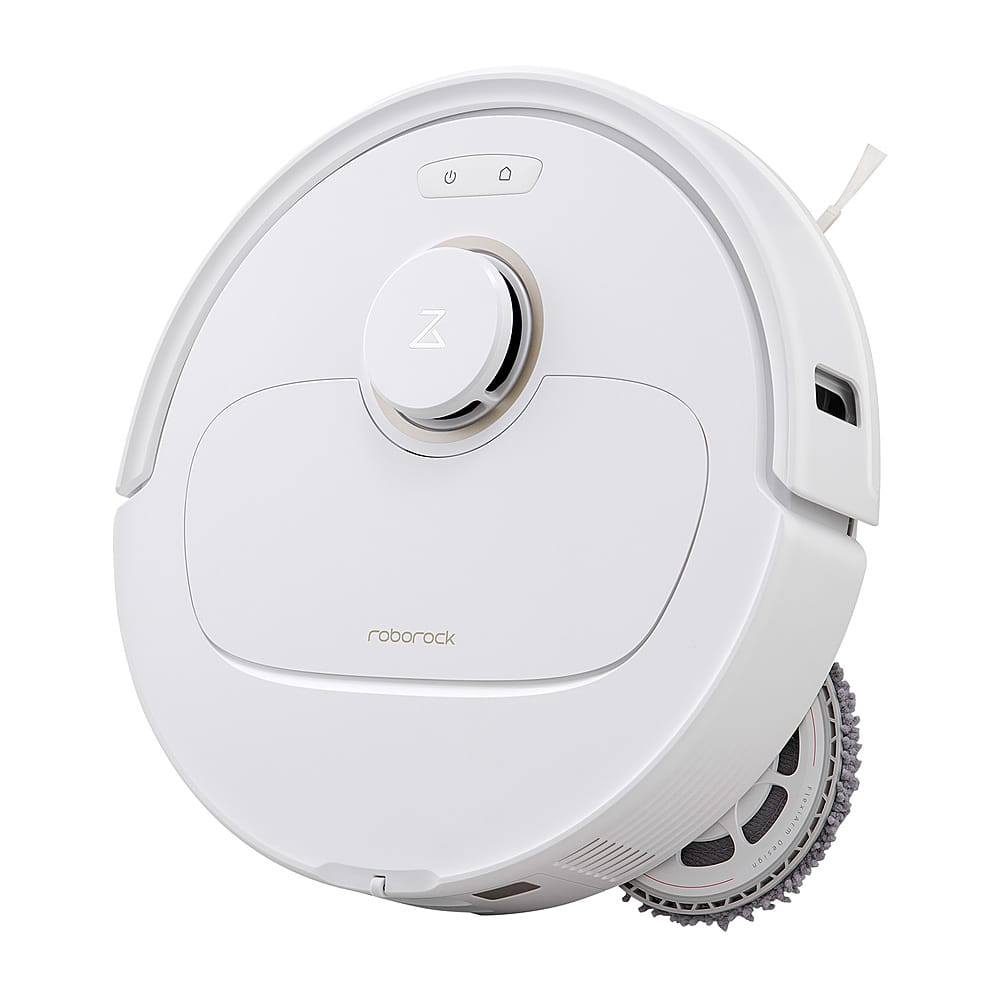
The Roborock Qrevo Pro represents a completely different class of mopping technology. Its dual spinning mop pads actively scrub surfaces rather than just dragging across them. These pads rotate at high speed while the robot moves, creating the kind of agitation necessary to break up dried spills and ground-in dirt.
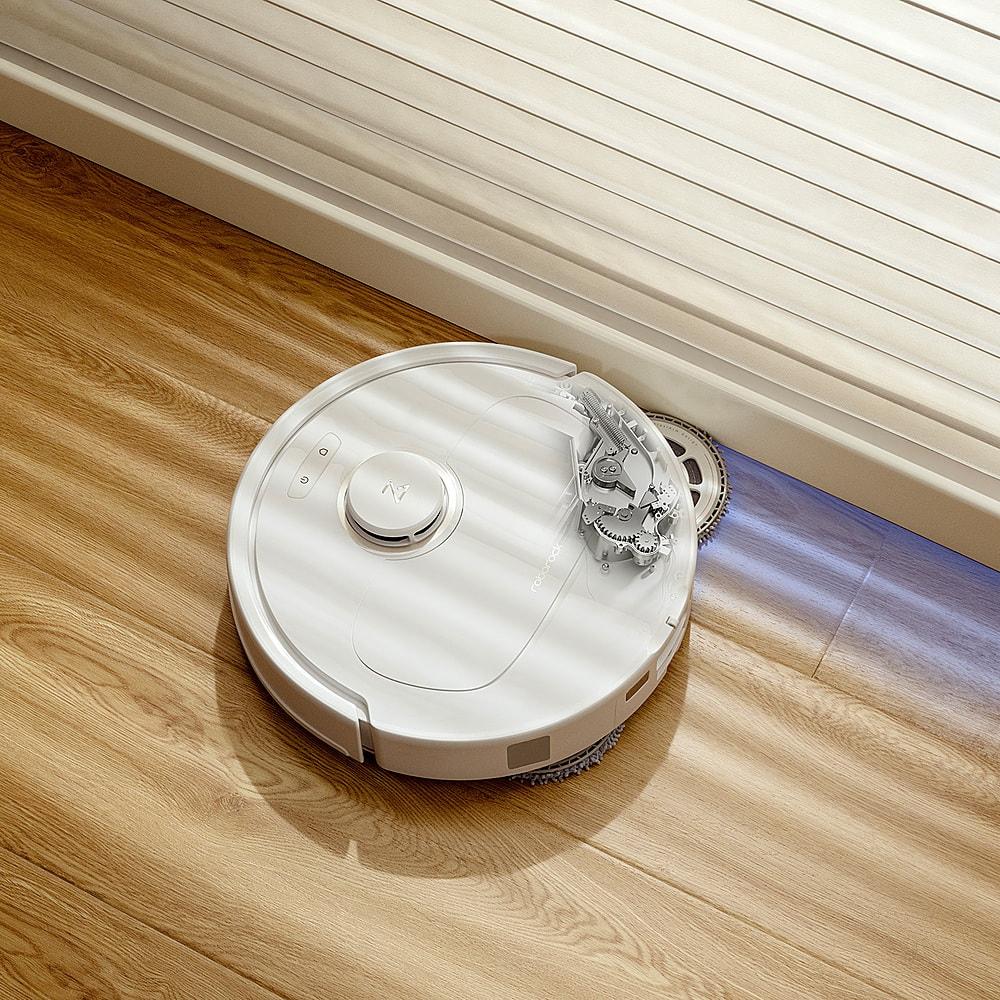
The FlexiArm Design™ represents a genuine innovation in robot mopping. One of the two mop pads can extend outward from the robot's body, allowing it to clean right up against walls and into corners where traditional round robots struggle to reach. This swing-out mechanism addresses one of the fundamental limitations of circular cleaning robots—their inability to effectively clean edges and corners.
Perhaps more importantly, the Roborock Qrevo Pro includes intelligent mop pad management. The robot can lift its mop pads up to 10mm when transitioning onto carpets, preventing wet contamination of rugs and carpet. When the pads get dirty during cleaning, the robot's Intelligent Dirt Detection system analyzes their condition and automatically returns to the dock for rewashing if needed.
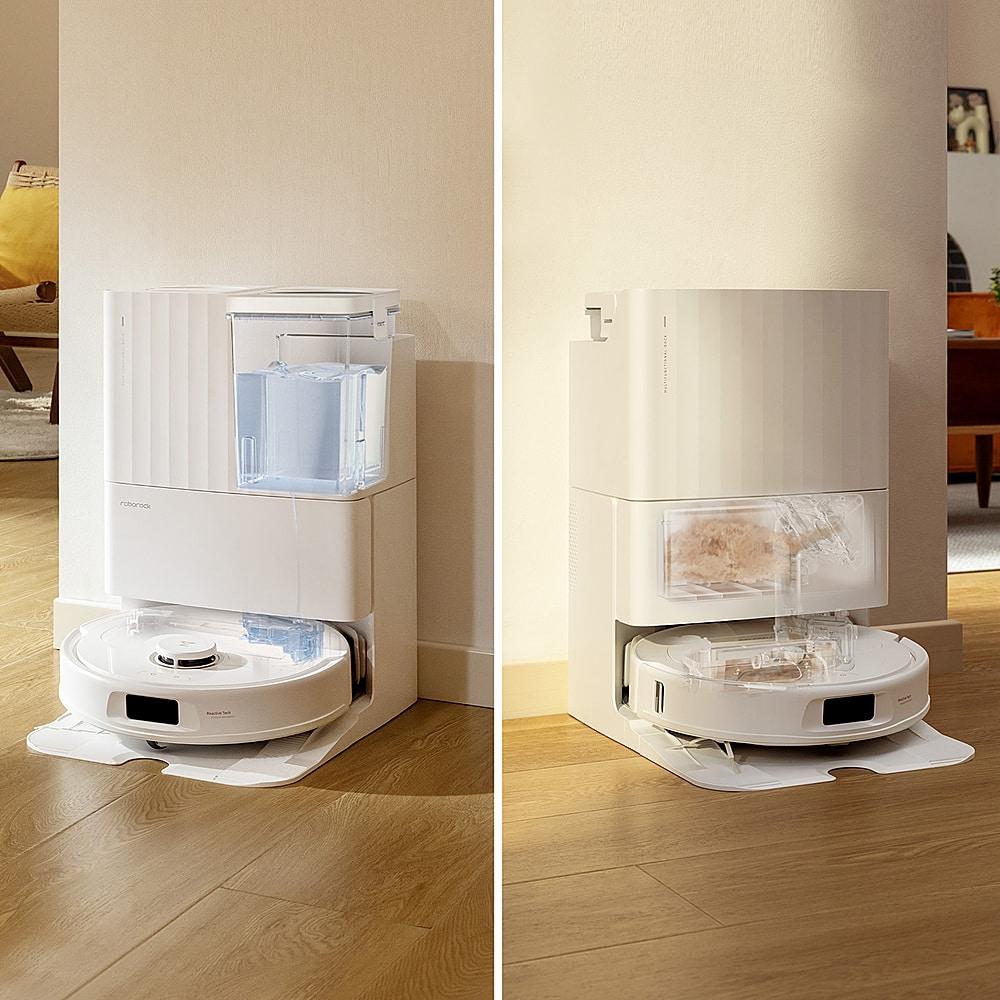
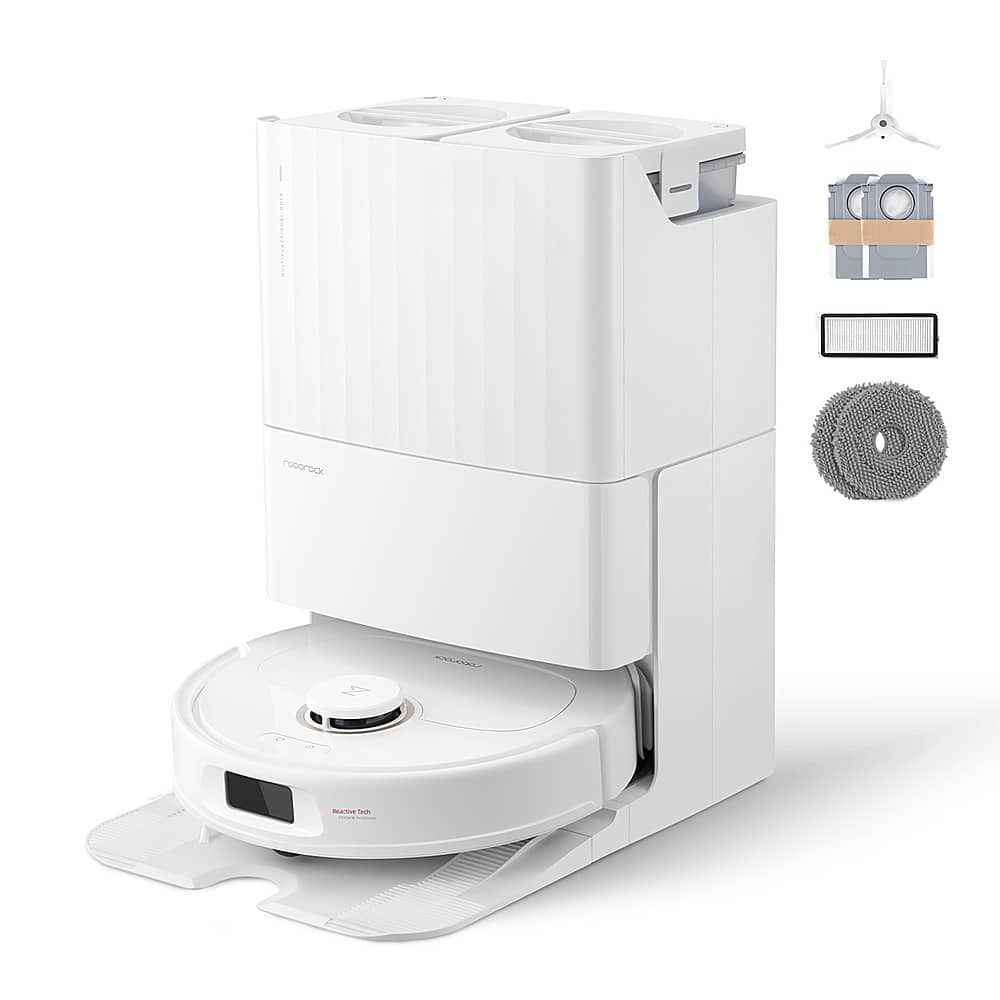
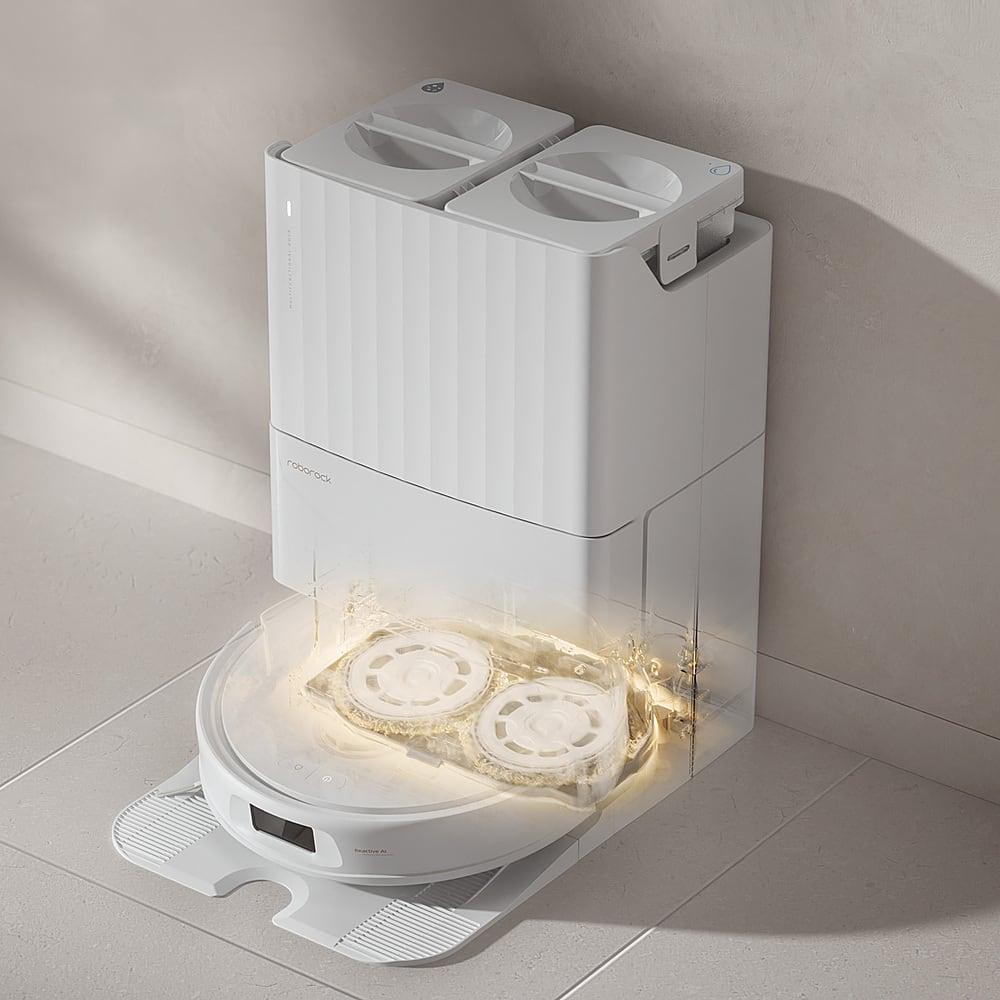
The dock automation represents another level entirely. The Multifunctional Dock 2.0 washes the mop pads with hot water heated to 53.3°C (about 128°F), which has been certified to remove over 99.7% of bacteria. After washing, warm air drying prevents mold and odor development. This means the robot maintains hygienic mop pads automatically—something that's impossible with simpler drag-mop systems.
Both robots use LiDAR navigation, but they implement it differently and with varying degrees of sophistication.
The MOVA E30 Pro Plus focuses on reliable, straightforward navigation. Its LDS (LiDAR Detection System) creates accurate room maps and enables the robot to clean in organized, straight-line patterns rather than the random bumping of older robots. The system includes basic obstacle detection through front-mounted sensors, and user reports suggest it navigates furniture and common obstacles reasonably well.
The MaxiReach side brush deserves mention for its thoughtful design. The 45-degree rubber strip helps guide debris toward the main suction inlet while reducing hair tangles—a small but meaningful improvement over traditional bristle side brushes.
However, the MOVA E30 Pro Plus keeps things relatively simple in terms of smart features. The app provides basic mapping, scheduling, and no-go zone functionality, but it lacks some of the advanced customization options found in premium models.
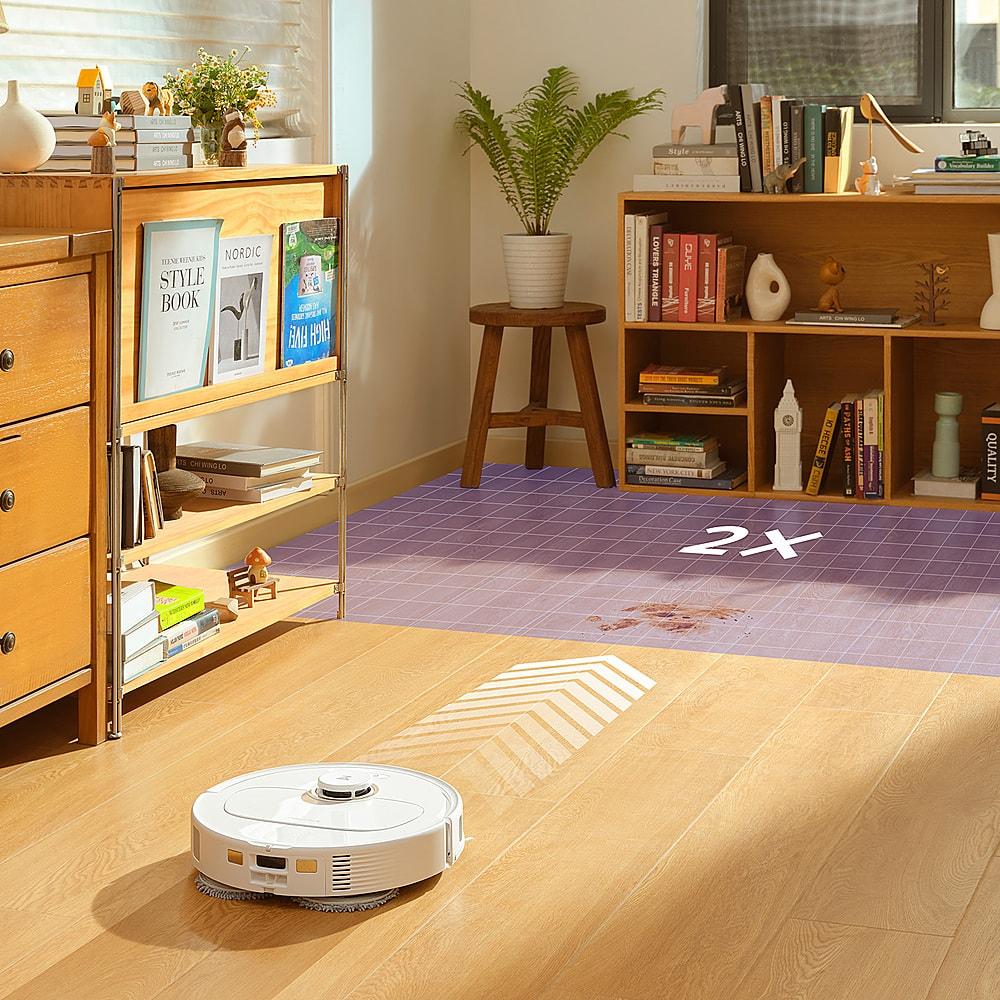
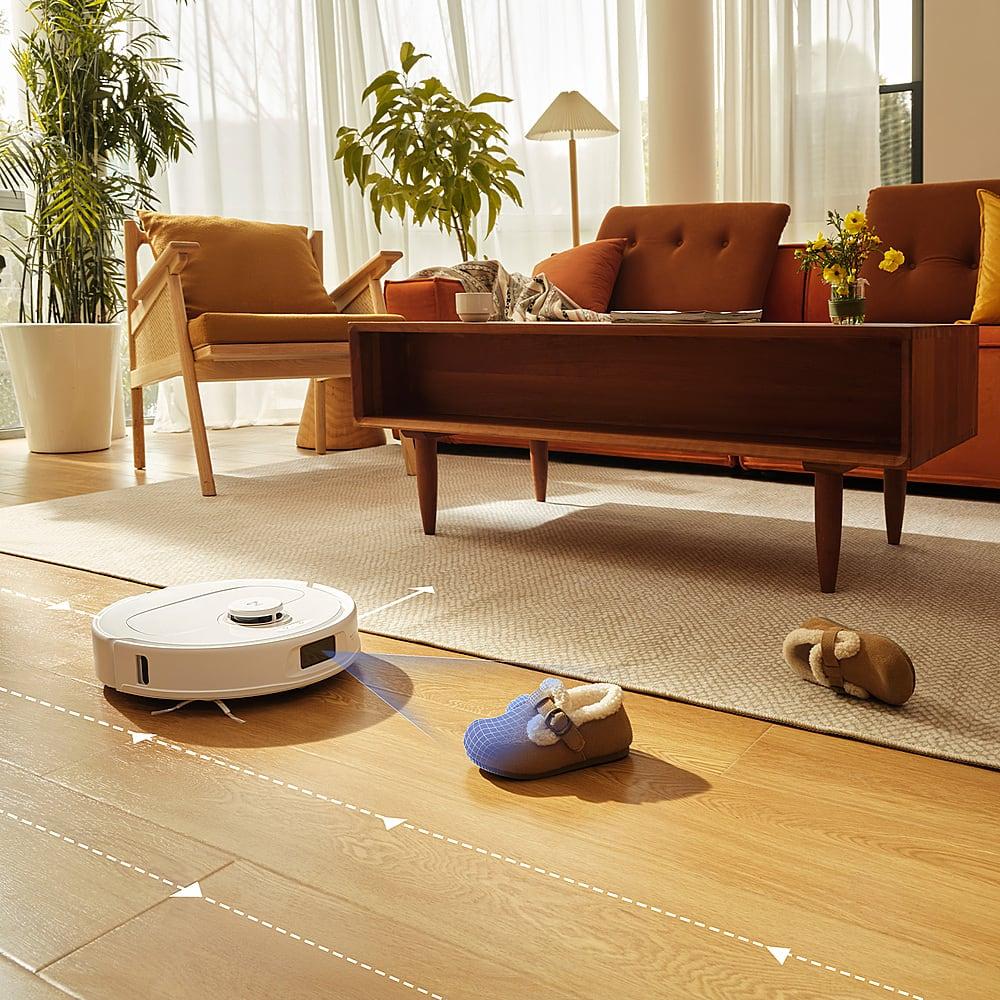
The Roborock Qrevo Pro takes navigation more seriously, combining LiDAR with Reactive Tech obstacle avoidance. This structured light system should theoretically provide superior object recognition and avoidance. However, expert testing reveals mixed results—the system performs well with large obstacles on hard floors but struggles with smaller items, particularly on carpeted surfaces.
This is somewhat disappointing given Roborock's premium positioning. The obstacle avoidance performance falls below average compared to other high-end robot vacuums, which is a notable weakness in a model positioning itself as technologically advanced.
Where the Roborock Qrevo Pro excels is in smart home integration and app sophistication. The Roborock app supports multi-floor mapping (up to four different floor plans), detailed cleaning customization, and integration with major voice assistants. The SmartPlan AI can automatically adjust cleaning modes based on room types—for example, using quieter settings in bedrooms or increasing intensity in high-traffic areas like kitchens.
The degree of automation represents perhaps the biggest practical difference between these robots in daily use.
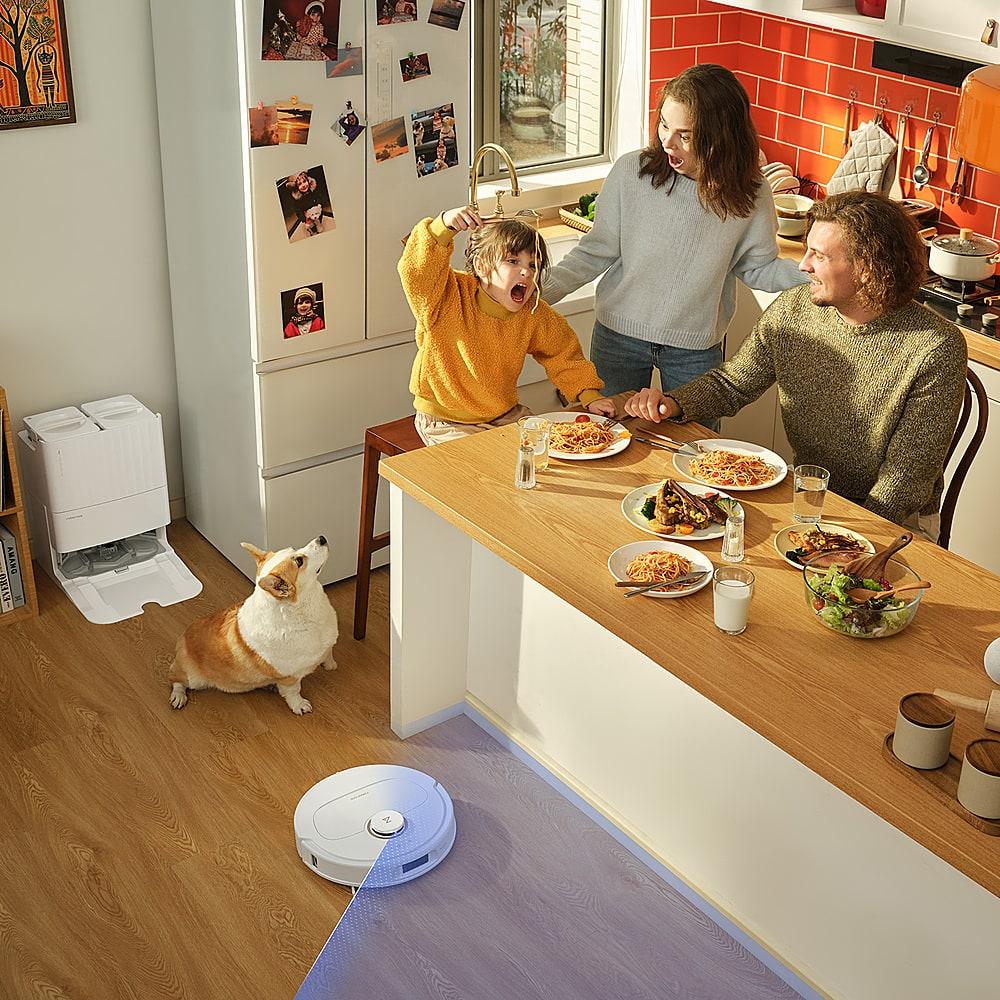
The MOVA E30 Pro Plus includes a self-emptying dock with a generous 5-liter dust bag—larger than many competitors and sufficient for weeks of cleaning cycles. This addresses one of the major maintenance pain points of robot vacuums: constantly emptying tiny onboard dustbins.
However, the automation stops there. Water tank refilling, mop pad maintenance, and other cleaning-related tasks remain manual. For users who primarily want powerful vacuuming with occasional light mopping, this level of automation may be perfectly adequate.
The Roborock Qrevo Pro aims for complete hands-off operation. The Multifunctional Dock 2.0 handles dust emptying, water tank refilling, mop pad washing, and mop pad drying automatically. The system maintains separate clean and dirty water tanks (4.25 liters each), and the robot can operate for extended periods without any human intervention.
This comprehensive automation comes with trade-offs. The dock is large and complex, with more potential failure points than simpler systems. The hot water washing and warm air drying also consume more electricity than basic auto-empty docks. However, for users who want truly automated floor care, the convenience factor is significant.
Expert and user reviews reveal telling patterns about how these robots perform in actual homes.
The MOVA E30 Pro Plus consistently impresses reviewers with its vacuuming performance, particularly on carpets where its high suction power becomes apparent. Pet hair pickup receives positive marks, and the anti-tangle brush design generally works as advertised. Navigation is described as reliable and efficient, with clean line patterns and good coverage.
However, mopping performance receives consistent criticism. Even professional reviewers note that the mop pad stays too dry to be effective, and the lack of scrubbing action means it can't handle real-world messes. Setup quirks, such as confusing carpet avoidance settings, also suggest that the software needs refinement.
The Roborock Qrevo Pro earns praise for its comprehensive approach to floor cleaning, with particular emphasis on its mopping capabilities. The FlexiArm design and spinning mop pads receive positive feedback for actually cleaning hard floors rather than just spreading dirt around. The dock automation works as advertised, with users appreciating the hands-off maintenance.
However, the robot's obstacle avoidance receives criticism from professional testers, scoring well below average in standardized tests. Edge cleaning performance is also disappointing, achieving only 56.5% effectiveness compared to an 87.7% average for robot vacuums generally. The noise level is higher than average at 96 dB during operation, though still reasonable for most households.
At the time of writing, these robots occupy different value propositions that reflect their design priorities.
The MOVA E30 Pro Plus typically costs several hundred dollars less than the Roborock while delivering significantly higher raw suction power. For users who prioritize vacuuming performance and appreciate the large auto-empty dock, this represents excellent value. The cost savings could easily fund several years of replacement mop pads and maintenance supplies for users who want to supplement with occasional manual mopping.
The Roborock Qrevo Pro commands a premium price that reflects its comprehensive feature set and brand reputation. The advanced mopping system, complete dock automation, and sophisticated app features justify the higher cost for users who value convenience and want effective wet cleaning as part of their automated routine.
Neither robot represents poor value in its category, but they serve different priorities and budgets.
For home theater enthusiasts, noise levels during operation become particularly important. Both robots operate at moderate noise levels that shouldn't disturb movie watching when scheduled appropriately.
The MOVA E30 Pro Plus runs quietly enough for operation during casual TV viewing, though the auto-empty dock cycle produces typical self-emptying noise for 10-15 seconds. The Roborock Qrevo Pro operates at slightly higher noise levels (96 dB measured) but includes scheduling features that make it easy to avoid cleaning during entertainment hours.
Both robots can be scheduled to clean when home theaters aren't in use, making noise levels less critical than their ability to effectively clean around entertainment center equipment and cables without getting stuck.
The decision between these robots ultimately depends on your specific needs, floor types, and priorities.
Choose the MOVA E30 Pro Plus if you have predominantly carpeted floors, want maximum suction power for pet hair and embedded dirt, and prefer a more affordable solution that excels at its primary function. It's particularly well-suited for homes where mopping is an occasional need rather than a daily requirement, and for users who don't mind handling water tank maintenance manually.
The MOVA E30 Pro Plus also makes sense if you value simplicity and reliability over advanced features. Its more straightforward design has fewer potential failure points, and the focus on vacuuming performance delivers clear benefits in carpet-heavy homes.
Choose the Roborock Qrevo Pro if you have primarily hard floors that benefit from regular mopping, want comprehensive automation that minimizes hands-on maintenance, and frequently deal with spills or sticky messes that require actual scrubbing action. The advanced dock features and intelligent cleaning modes justify the premium for users who want a true "set and forget" cleaning solution.
The Roborock Qrevo Pro is particularly valuable for busy households where time savings from complete automation outweigh the higher initial investment, and for users who appreciate sophisticated app features and smart home integration.
Both robots have notable limitations that might drive some buyers toward alternatives. If obstacle avoidance is crucial (homes with many small items on floors), neither model excels in this area. If edge cleaning performance is a priority, both fall short of the best-in-class options.
However, for most households looking for automated floor care, both the MOVA E30 Pro Plus and Roborock Qrevo Pro represent solid choices that deliver on their core promises—you just need to match their strengths to your specific cleaning needs and budget priorities.
| MOVA E30 Pro Plus Robot Vacuum and Mop | Roborock Qrevo Pro Robot Vacuum and Mop |
|---|---|
| Suction Power - Critical for carpet cleaning and pet hair pickup | |
| 19,000 Pa (exceptionally high, nearly triple most competitors) | 7,000 Pa (solid performance, industry standard for premium models) |
| Mopping System - Determines if you get real cleaning or just damp dragging | |
| Basic drag mop with minimal water flow (ineffective on dried stains) | Dual spinning mop pads with FlexiArm edge extension (actual scrubbing action) |
| Mop Pad Maintenance - Major factor in ongoing convenience | |
| Manual washing and drying required | Hot water auto-wash (128°F) with warm air drying at dock |
| Mop Lifting - Prevents carpet contamination during mixed cleaning | |
| No mop lifting (must avoid carpets or remove pad manually) | 10mm automatic mop lifting when carpets detected |
| Navigation Technology - Affects cleaning efficiency and furniture safety | |
| LiDAR with basic front obstacle sensor (reliable but simple) | LiDAR + Reactive Tech structured light (advanced but inconsistent performance) |
| Dock Automation Level - Determines how hands-off the experience is | |
| Auto-empty only with 5L dust bag (simple, reliable) | Complete automation: empty, wash mops, refill tanks, dry pads |
| Edge Cleaning Performance - Important for thorough corner and baseboard cleaning | |
| Good performance with MaxiReach 45° side brush | Poor performance (56% effectiveness vs 87% average) despite FlexiArm mop |
| Carpet Detection and Boost - Essential for mixed flooring homes | |
| Ultrasonic carpet sensor with automatic max suction boost | Smart carpet detection with suction adjustment and mop lifting |
| Water Tank System - Affects mopping range and maintenance frequency | |
| Single onboard tank requiring manual refill | Dual 4.25L dock tanks (clean/dirty separation) with auto-refill |
| App Features and Smart Integration - Important for customization and scheduling | |
| Basic mapping, scheduling, no-go zones (functional but limited) | Advanced multi-floor mapping, SmartPlan AI, comprehensive customization |
| Obstacle Avoidance Performance - Critical for homes with small items on floors | |
| Adequate with furniture and large obstacles | Below average, especially with small items on carpet |
| Noise Level During Operation - Matters for daytime use and home theaters | |
| Moderate noise (typical for category) | Higher than average at 96 dB but still reasonable |
| Best Use Case - Who should choose each model | |
| Carpet-heavy homes prioritizing powerful vacuuming at lower cost | Hard floor homes wanting comprehensive automation and effective mopping |
The MOVA E30 Pro Plus delivers significantly more suction power at 19,000 Pa compared to the Roborock Qrevo Pro at 7,000 Pa. This makes the MOVA nearly three times more powerful on paper, which translates to better performance on carpets and for picking up embedded pet hair. However, the Roborock Qrevo Pro uses its moderate suction more efficiently with dual brush systems.
The Roborock Qrevo Pro is vastly superior for mopping with dual spinning mop pads, hot water cleaning, and a FlexiArm system that reaches edges and corners. The MOVA E30 Pro Plus uses a basic drag-mop system that stays too dry even on the wettest setting and can't handle dried stains or sticky messes effectively.
Both robots handle carpets differently. The MOVA E30 Pro Plus excels on carpets with its ultrasonic sensor that automatically boosts suction to maximum when carpet is detected. The Roborock Qrevo Pro performs adequately on carpets but focuses more on hard floor cleaning, though it does lift its mop pads when transitioning to carpet areas.
The Roborock Qrevo Pro requires significantly less hands-on maintenance with its comprehensive dock that automatically empties dust, washes and dries mop pads, and refills water tanks. The MOVA E30 Pro Plus only auto-empties dust into a large 5L bag, but you'll need to manually handle all mop-related maintenance.
Both use LiDAR navigation for mapping, but with different results. The MOVA E30 Pro Plus provides reliable, straightforward navigation that efficiently cleans in organized patterns. The Roborock Qrevo Pro has more advanced Reactive Tech obstacle avoidance, but professional testing shows it performs below average with small items, especially on carpets.
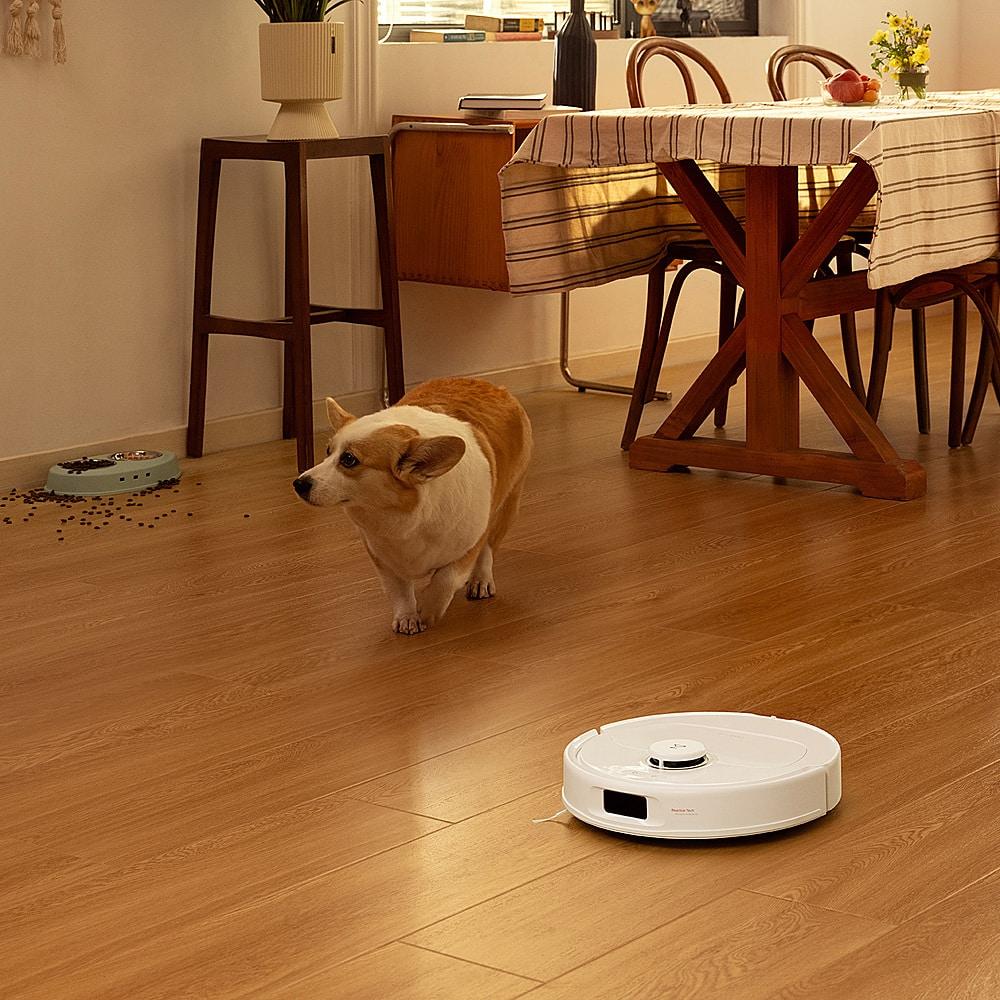
The MOVA E30 Pro Plus is generally better for pet owners due to its powerful 19,000 Pa suction and anti-tangle TroboWave brush system that effectively picks up pet hair without wrapping. While the Roborock Qrevo Pro handles pet hair adequately, its lower suction power makes it less effective for embedded fur in carpets.
Neither robot excels at edge cleaning, but for different reasons. The MOVA E30 Pro Plus has a MaxiReach side brush with a 45° design that performs reasonably well. The Roborock Qrevo Pro has innovative FlexiArm mopping for edges, but surprisingly poor overall edge cleaning performance in testing, achieving only 56% effectiveness.
The Roborock Qrevo Pro offers significantly more advanced smart features including multi-floor mapping for up to 4 floors, SmartPlan AI that adjusts cleaning by room type, and comprehensive app customization. The MOVA E30 Pro Plus provides basic but functional app features with mapping, scheduling, and no-go zones.
Both robots operate at moderate noise levels suitable for most homes. The MOVA E30 Pro Plus runs at typical noise levels for the category, while the Roborock Qrevo Pro measures slightly higher at 96 dB during operation. Both can be easily scheduled to avoid cleaning during quiet hours or home theater use.
Value depends on your priorities. The MOVA E30 Pro Plus offers exceptional vacuuming performance and a large auto-empty dock at a significantly lower price point, making it excellent value for carpet-focused cleaning. The Roborock Qrevo Pro justifies its premium pricing with comprehensive automation and superior mopping capabilities.
The Roborock Qrevo Pro offers up to 180 minutes of cleaning time with its 5200 mAh battery, which is sufficient for most homes and includes smart charging features like off-peak charging scheduling. The MOVA E30 Pro Plus provides adequate battery life for typical cleaning cycles, though specific runtime isn't extensively documented in reviews.
Choose the MOVA E30 Pro Plus if you have mostly carpeted floors, want maximum suction power for pet hair, and prefer a more affordable option that excels at vacuuming. Choose the Roborock Qrevo Pro if you have primarily hard floors, want effective mopping with minimal maintenance, and value comprehensive automation features that justify the higher investment.
We've done our best to create useful and informative comparisons to help you decide what product to buy. Our research uses advanced automated methods to create this comparison and perfection is not possible - please contact us for corrections or questions. These are the sites we've researched in the creation of this article: youtube.com - bestbuy.ca - redditrecs.com - vacuumwars.com - target.com - mova.sg - youtube.com - youtube.com - walmart.com - trouver-tech.com - youtube.com - ebay.com - bestbuy.ca - youtube.com - manuals.plus - manuals.plus - us.mova.tech - rtings.com - vacuumwars.com - moderncastle.com - youtube.com - bestbuy.com - rtings.com - vacuumwars.com - vacuumwars.com - youtube.com - youtube.com - techgadgetscanada.com - us.roborock.com - target.com - youtube.com - roborock.com.my - global.roborock.com - us.roborock.com - homedepot.com - us.roborock.com - youtube.com - global.roborock.com - us.roborock.com - us.roborock.com

Privacy Policy
Terms and Conditions - Affiliate Policy
Home Security
© Copyright 2008-2026.
11816 Inwood Rd #1211, Dallas, TX 75244