

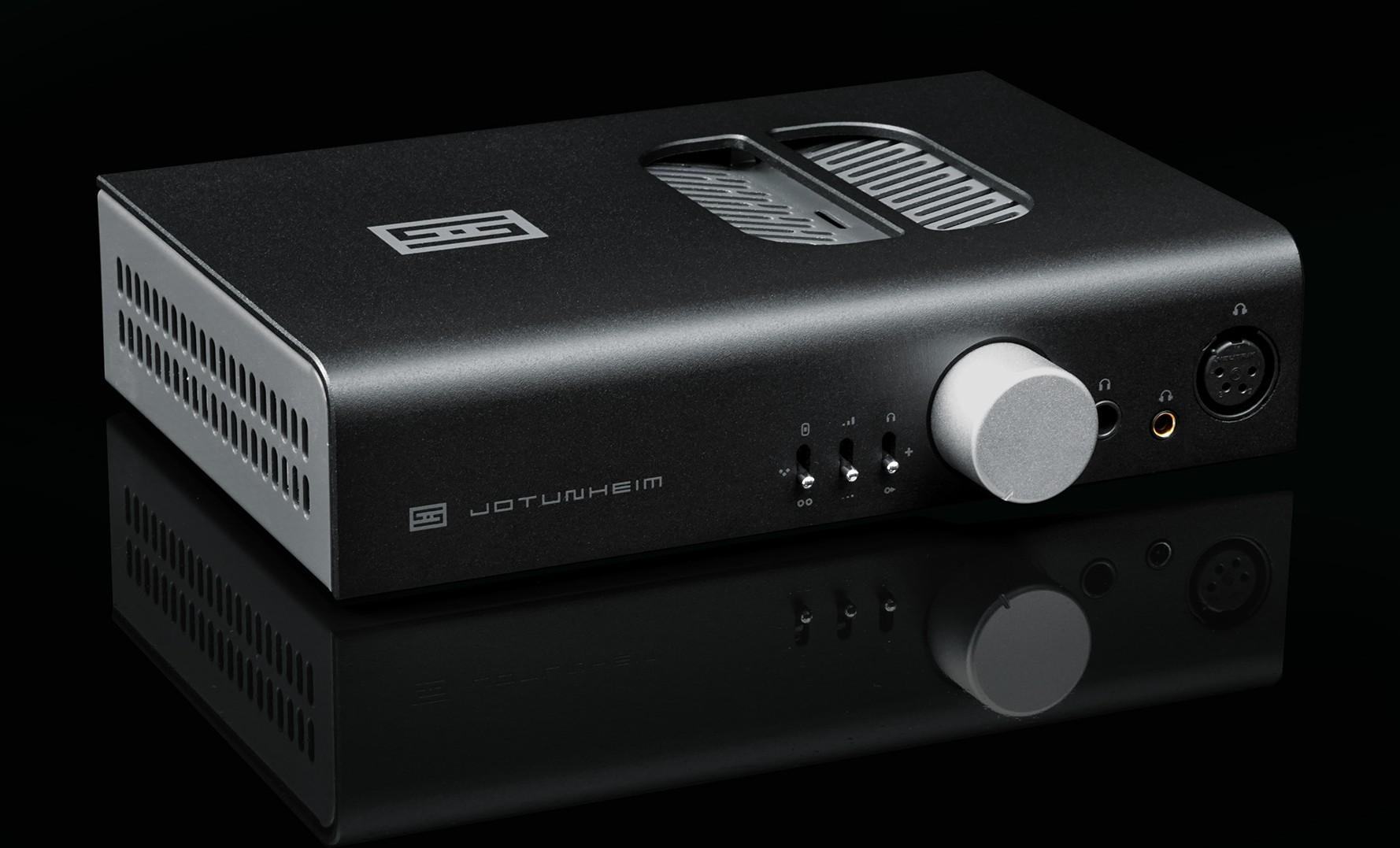
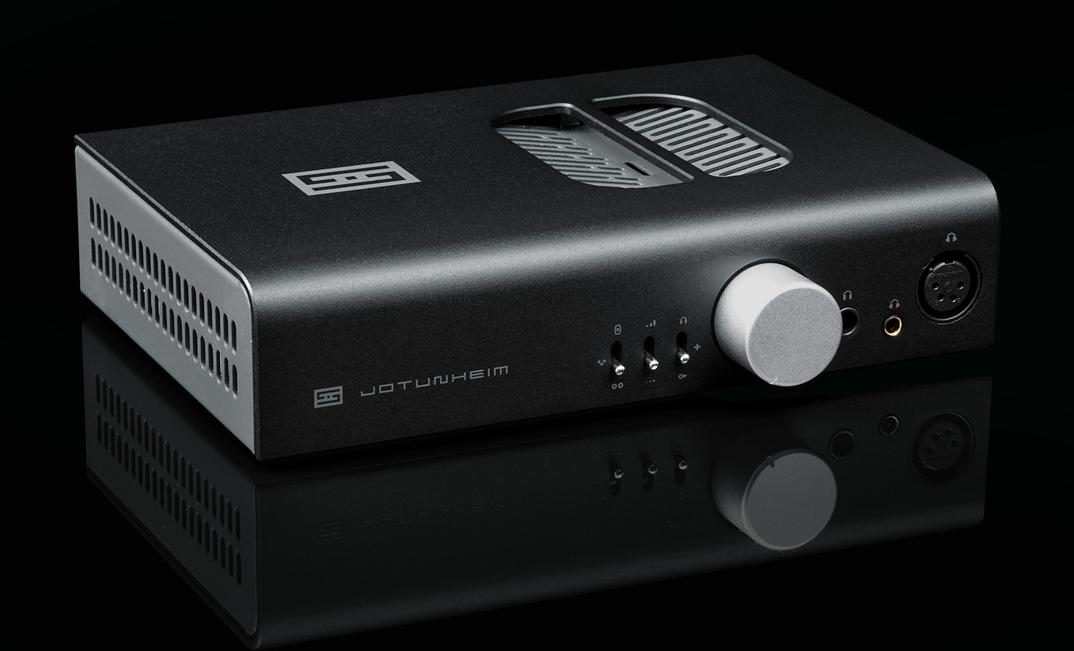
Schiit Audio has rolled out the Jotunheim 3, the newest version of its long-running balanced headphone amplifier. If you’ve followed the Jotunheim line over the years, you’ll notice that this update goes far beyond a small refresh. Schiit has reworked its circuitry, overhauled the output stage, added new connection options, and even introduced an optional DAC module with app-based controls. The goal is pretty simple: make the amp more flexible, quieter, and easier to live with, whether you’re using sensitive in-ears or power-hungry planar headphones.
At first glance, the Jotunheim 3 looks a lot like previous models—same compact metal chassis, same knob, same general layout. But inside, almost everything is new. Jason Stoddard, Schiit’s co-founder, has talked on Head-Fi about the long development process behind this version, which included multiple prototypes and two entirely different circuit design paths before the team settled on the final approach. The result is an amplifier that moves away from the earlier Nexus topology and instead uses a brand-new discrete circuit Schiit calls Prime.
“I’ve called Asgard X a ‘mini Mjolnir,’ and Valhalla 3 a ‘mini Folkvangr’, but this new Jotunheim is a mini nothin’,” said Stoddard. “It delivers high power–6 watts into 32 ohms, 20 volts RMS into higher impedances–and yet has a vanishingly low noise floor though both the balanced and single-ended outputs in low gain mode. So you can really go from the hardest to drive stuff out there to IEMs.”
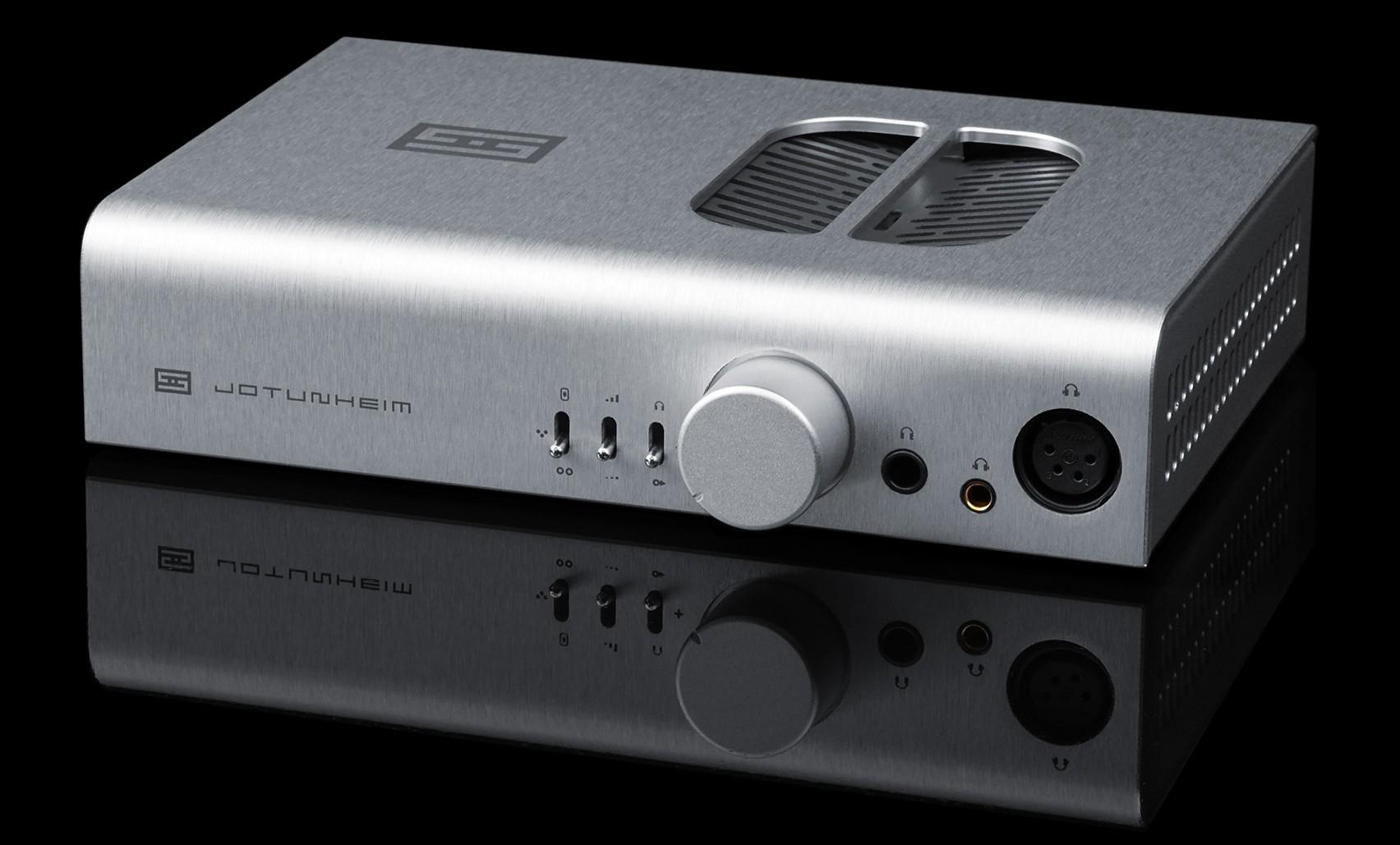
Prime is one of the biggest shifts in the Jotunheim 3. It’s a fully discrete, current-feedback gain stage, meaning Schiit built it from individual electronic components rather than using pre-packaged op-amps. The company says this design allows the amp to achieve strong measured performance using only 10dB of global feedback—far less than the previous version.
If you’re wondering why that matters, here’s the short version: feedback helps clean up distortion, but relying heavily on it can introduce its own quirks. Reducing feedback without increasing distortion takes careful circuit design. That’s part of why Schiit is highlighting Prime so much—it’s one of the few major changes that reshape how the amp behaves with different headphones.
This design change also affects noise performance. Owners of earlier Jotunheim models will remember that the single-ended output wasn’t always as quiet as the balanced one. With the Jotunheim 3, Schiit says the noise floor is extremely low on both, which should make it friendlier to sensitive IEMs.
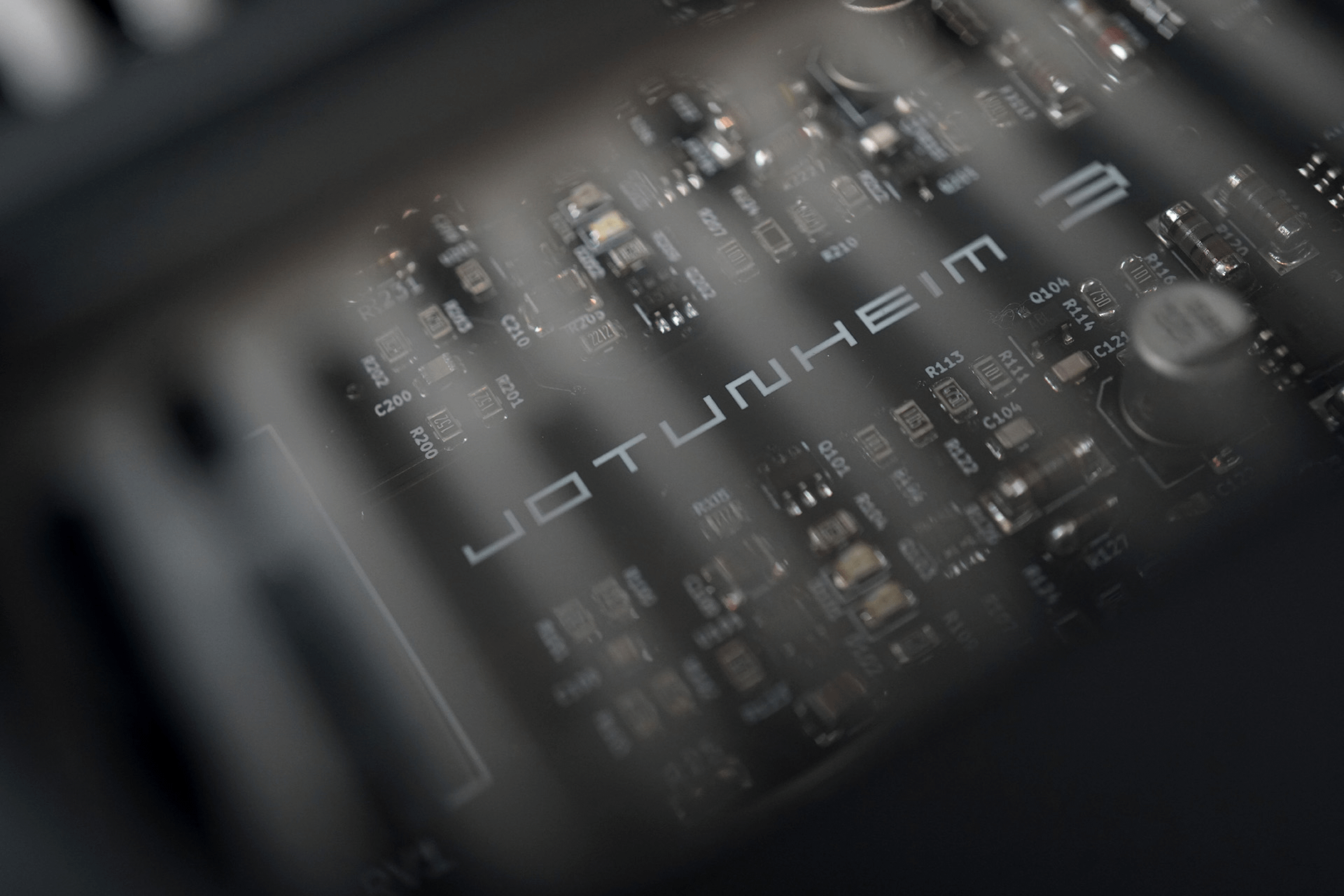
The other major change is the new Continuity A output stage. While it still operates largely in Class A (where the amplifier stays “on” continuously to avoid switching artifacts), Continuity A tries to smooth out the transitions that typically occur when circuits hand off between output devices. Normally, amplifiers use complementary transistor pairs—one for the positive half of the waveform and one for the negative half. These devices don’t always behave the same way, which can lead to distortion.
Continuity A is designed to keep both sides conducting with the same current at the same time. In plain English, the amp avoids abrupt handoffs and stays in that cleaner, more linear operating region for longer, especially with different headphone loads.
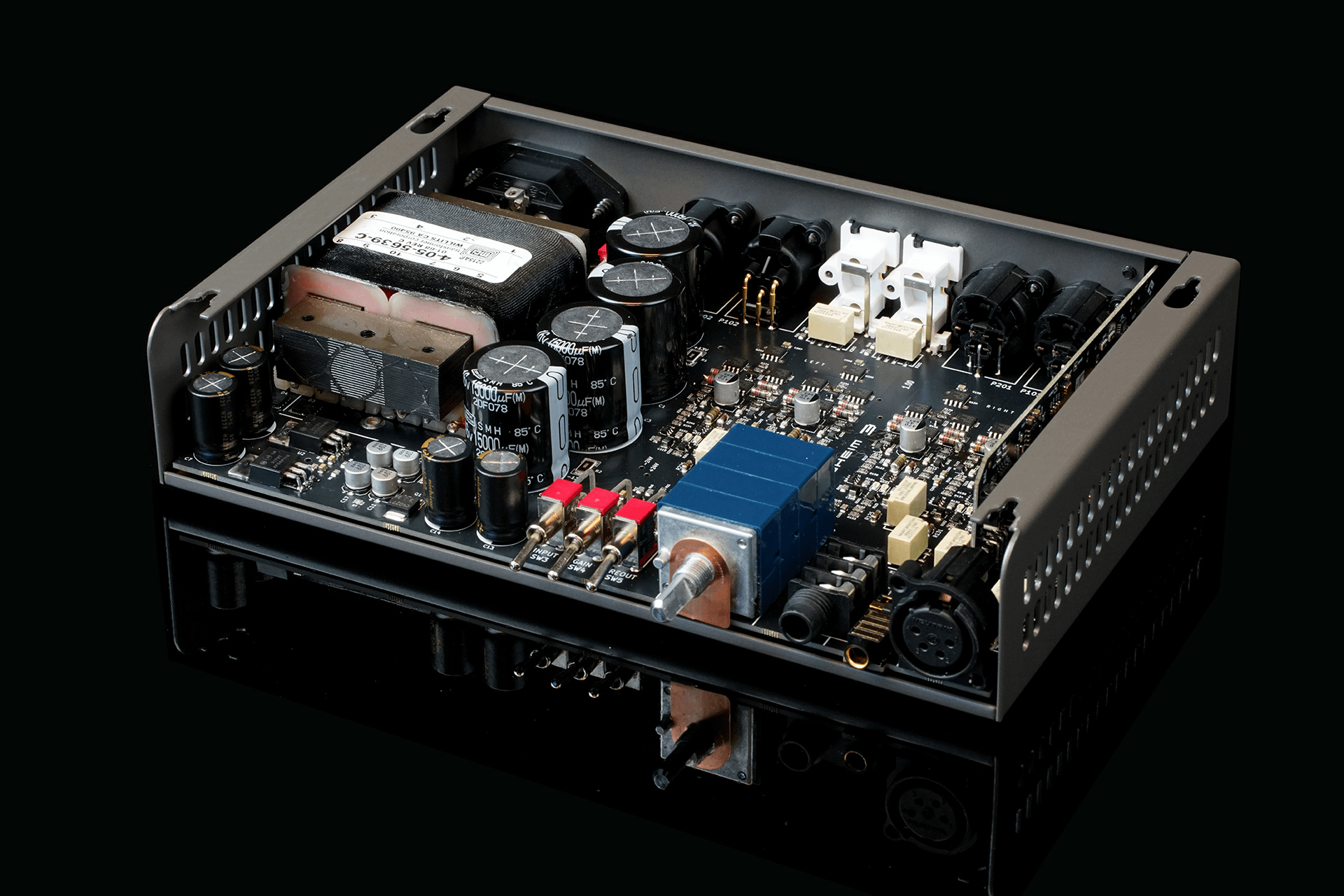
The Jotunheim 3 still puts out up to 6 watts into 32 ohms (just like the Jotunheim 2), but the circuit changes aim to deliver that power with lower distortion and better control overall. Schiit also increased the gain ratio from 4:1 to 6:1, which should help when dealing with quieter recordings or sources with lower output levels.
For those who care about measurements, the Jotunheim 3 is reported to reach a SINAD around 121dB—achieved with the same conservative amount of feedback mentioned earlier. That’s a number targeted squarely at listeners who follow measurement-focused discussions.
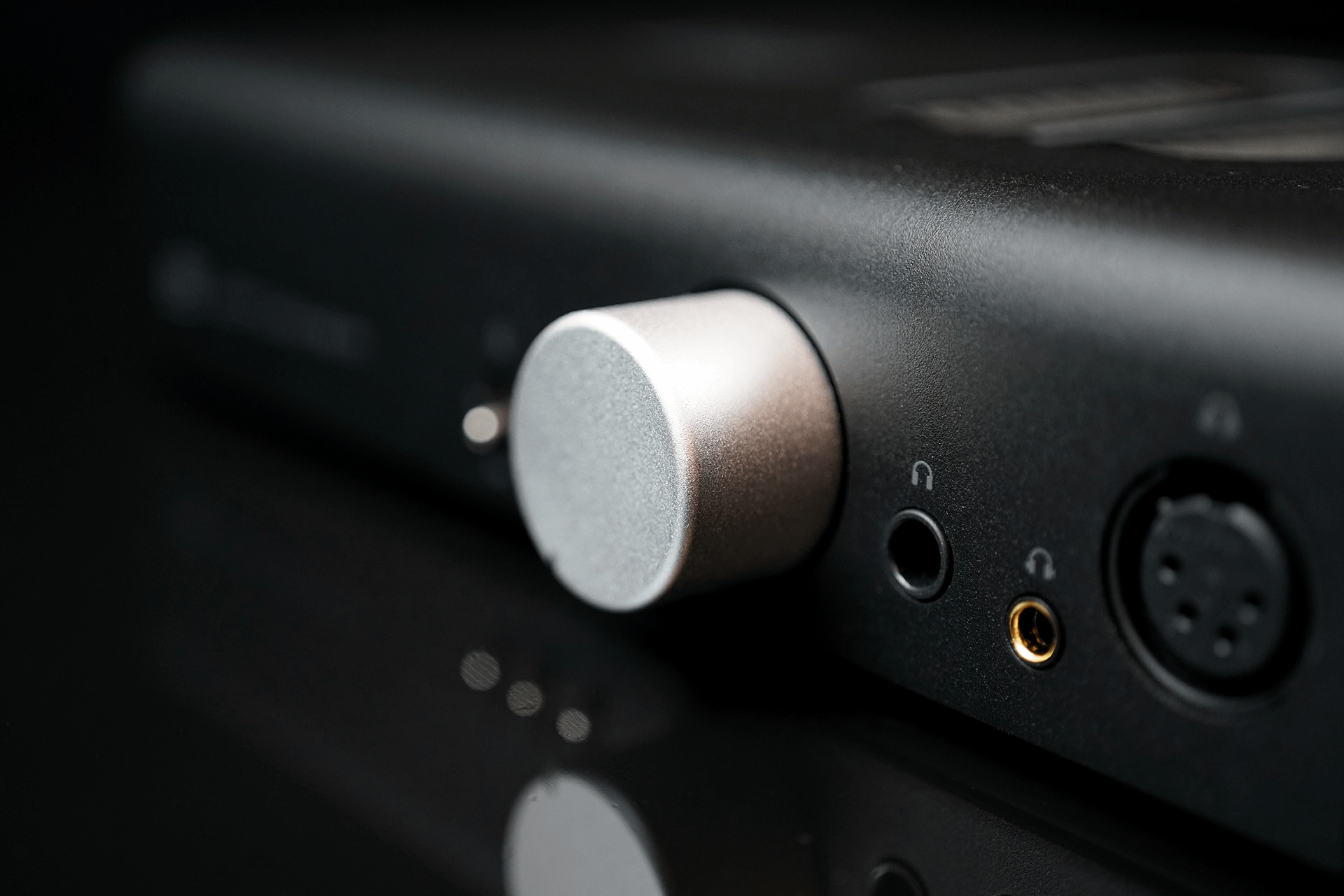
Beyond the internal redesign, Schiit added some quality-of-life improvements. For one, the Jotunheim 3 finally includes a 4.4mm balanced headphone output alongside the 1/4-inch and 4-pin XLR connectors. This is helpful for people who use newer balanced cables commonly found on many headphones today.
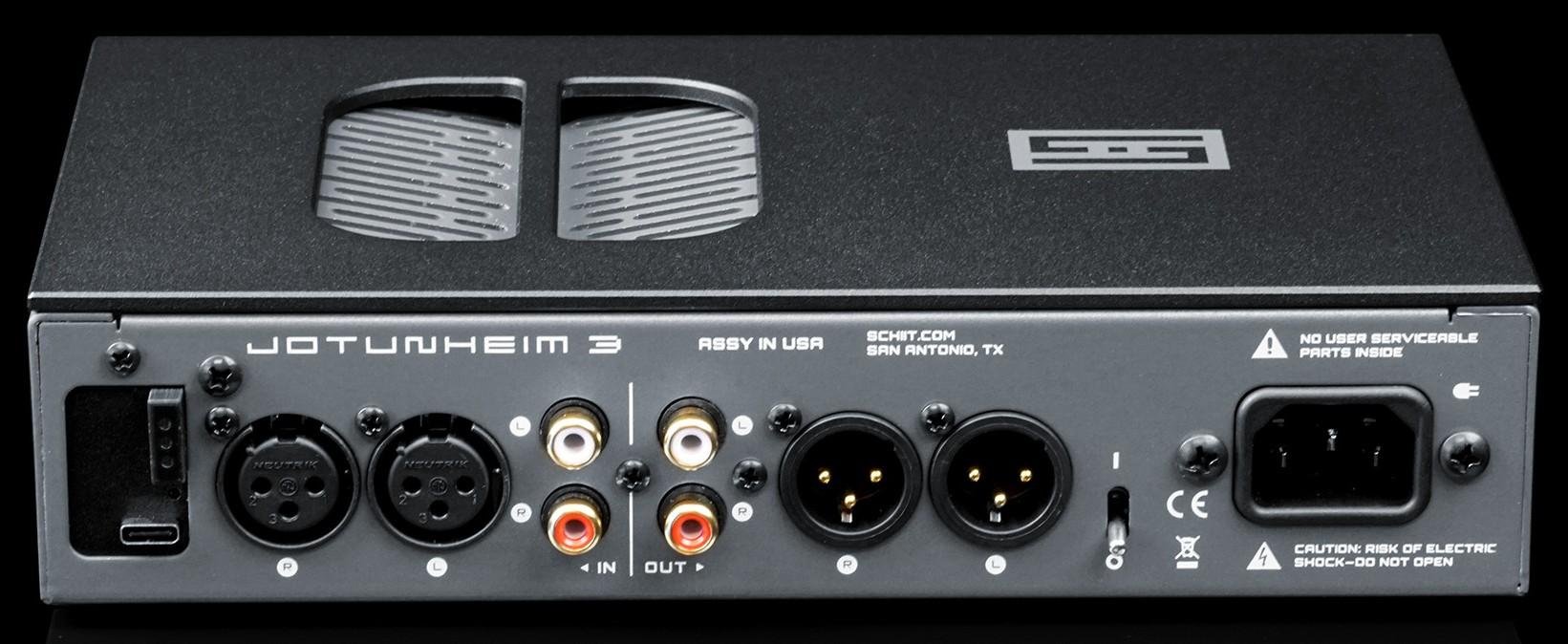
On the rear panel, you’ll find both RCA and XLR inputs, plus balanced and single-ended preamp outputs. A switch on the front lets you choose whether the amp sends signal to your headphones, your speakers, or both. These kinds of options make it easier to build a flexible, desktop-friendly audio setup without constantly plugging and unplugging cables.
Inside, Schiit includes relay-switched inputs, film and silicon capacitors, MELF resistors, and its familiar Alps Blue Velvet volume pot—components that point toward durability and consistency rather than style points.
If you prefer an all-in-one solution, the Jotunheim 3 can be ordered with the optional Mesh DAC. This add-on includes an ES9028 DAC chip, Schiit’s new Unison 384 USB interface, and a digital filter designed by the company.
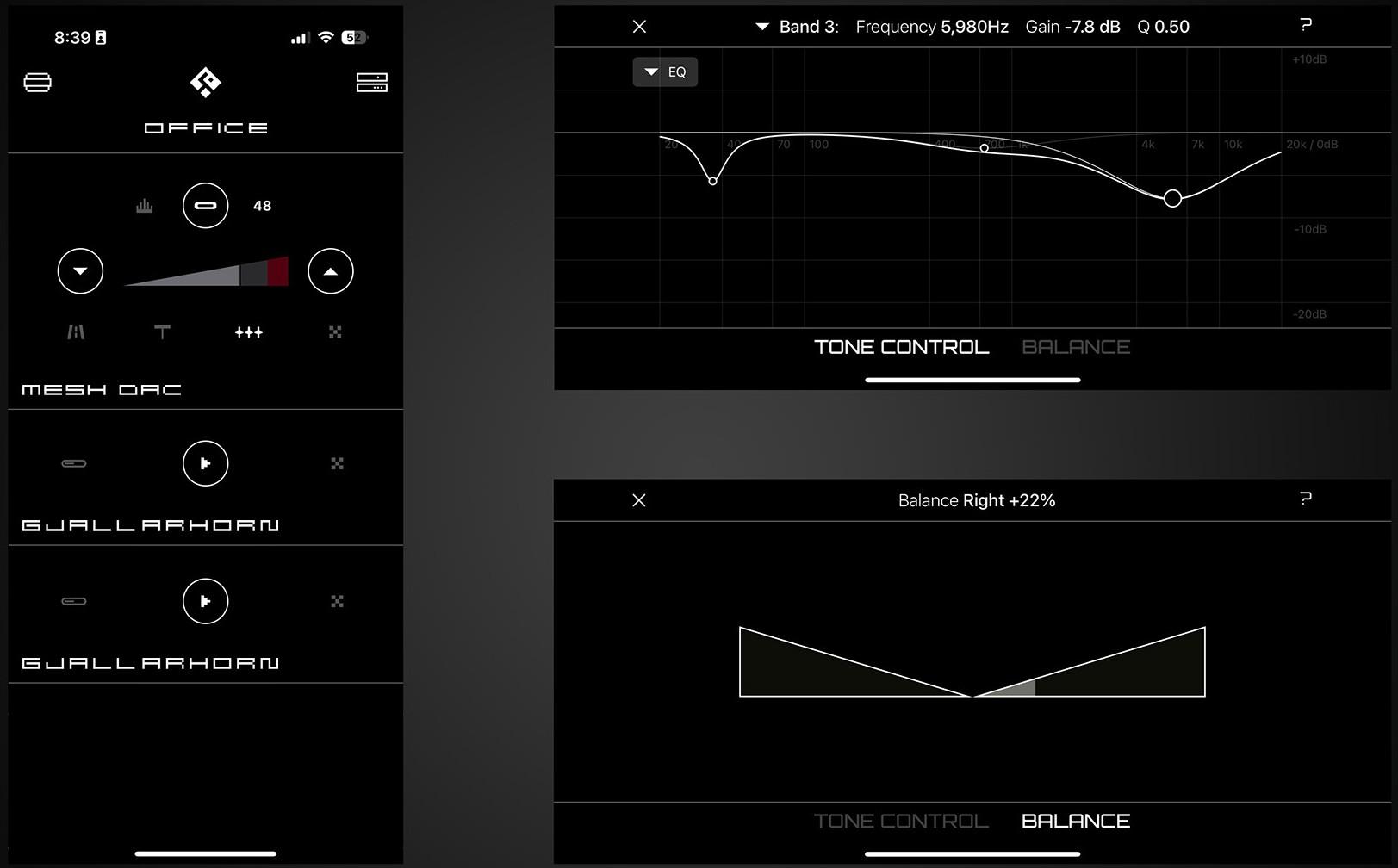
The bigger story, though, is Forkbeard, the companion app included with the DAC module. The app connects via Bluetooth and gives you control over settings you’d normally need physical buttons or menus for, things like:
This makes the Jotunheim 3 one of the few desktop headphone amps that pairs old-school analog design with modern mobile control features.
The Jotunheim 3 is also the first product built entirely on Schiit’s own in-house surface-mount line in Corpus Christi, Texas. The company moved production there after parting ways with a California-based assembly partner. According to Schiit, the shift allows for better oversight of manufacturing and greater flexibility for future products.
Other internal details include a linear power supply with a 48VA transformer and a total unit weight of around 7 pounds. The amp measures 9 inches wide and fits neatly into most desktop setups.
The Schiit Jotunheim 3 is available now at Schiit.com, and you can check their other products at Amazon too.
The base amplifier includes a five-year warranty, and all units are assembled in the United States.






Privacy Policy
Terms and Conditions - Affiliate Policy
Home Security
© Copyright 2008-2026.
11816 Inwood Rd #1211, Dallas, TX 75244